Did Gabriel Blow Into Maryam’s Private Part? Refuting the Crude Misreading of Surah At-Tahrim 66:12
Did Gabriel Blow Into Maryam’s Private Part? Refuting the Crude Misreading of Surah At-Tahrim 66:12
Some polemicists try to mock the Qur’an by claiming that Surah At-Tahrim 66:12 describes Gabriel عليه السلام blowing directly into Maryam’s private part.
This is a filthy and ignorant reading.
The Qur’an is praising Maryam عليها السلام for chastity, purity, obedience, and belief. The verse is not describing indecency. Classical tafsir explains that Gabriel عليه السلام blew into the opening of her garment, the pocket of her shirt, or her sleeve, and that by Allah’s command the effect reached where Allah willed.
The Verse in Question
“And Mary, daughter of Imran, who guarded her chastity, so We breathed into it from Our Spirit, and she believed in the words of her Lord and His scriptures and was among the devoutly obedient.”
The critic claims that because the verse says Maryam guarded herfarj, and then says Allah breathed into it from His Spirit, this allegedly means Gabriel blew directly into her private part.
This argument is not serious exegesis. It is vulgar polemics pretending to be linguistic analysis.
The Core Answer
The classical tafsir explanation is that Gabriel عليه السلام blew into the opening of Maryam’s garment, the pocket of her shirt, or her sleeve. The Qur’an is using refined language connected to her chastity and purity, not crude sexual imagery.
The critic’s mistake is assuming that farj must always mean one physical organ in every context. That is false.
In Arabic, farj can refer to an opening, gap, crack, or slit between two things. It can also refer to the private part depending on context. The meaning must be determined by the usage and tafsir.
The Arabic Meaning of Farj
The Arabic wordfarj can mean an opening, gap, slit, crack, or space between two things. It can also refer to the private part depending on context. The meaning is not determined by vulgar assumption, but by language and context.
Arabic dictionaries mention meanings such as:
- an opening between two things,
- a gap or crack,
- a tear or slit in a garment,
- an opening in clothing,
- and, in other contexts, the private part.
So when the tafsir says the farj here refers to the opening of Maryam’s garment, this is not linguistic gymnastics. It is normal Arabic.
Sincefarj can mean an opening or slit, the phrase can refer to the opening of Maryam’s garment. Classical commentators explicitly took it this way.
Al-Qurtubi on At-Tahrim 66:12
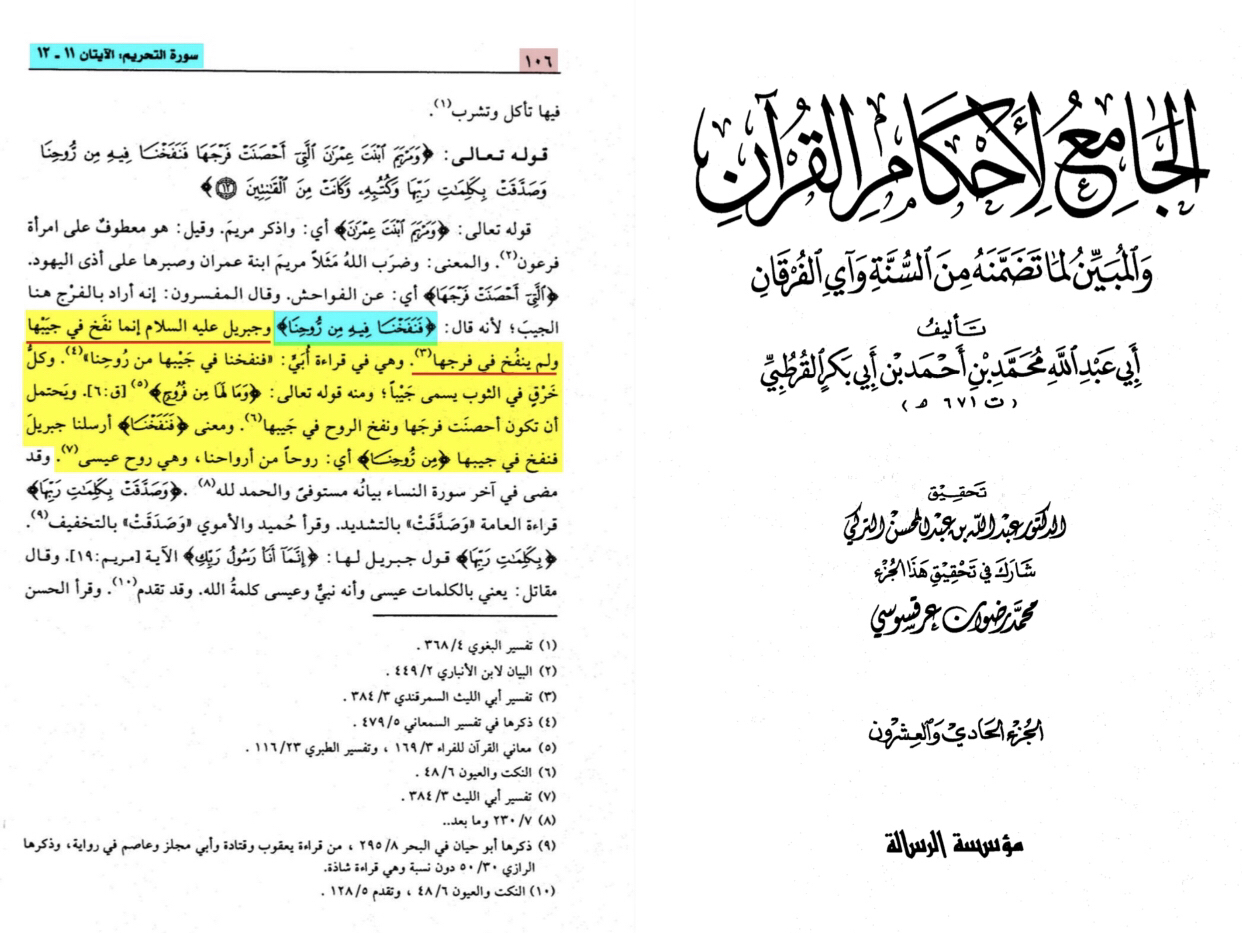
This scan is fromAl-Jāmiʿ li-Aḥkām al-Qurʾān by Al-Qurtubi, volume 21, page 106, under the tafsir of Surah At-Tahrim 66:12. The highlighted passage states that Gabriel عليه السلام blew into Maryam’s garment, not into the private part. It also mentions the reading attributed to Ubayy: “and We blew into her garment.” This directly refutes the crude polemical claim.
Al-Qurtubi explains that Gabriel عليه السلام blew into Maryam’s garment, not into the private part. He also mentions the reading attributed to Ubayy:“and We blew into her garment.”
This is the decisive tafsir point. The critic wants the verse to mean something obscene, while the classical explanation says the blowing was into the garment.
The Qur’an Uses Refined Language About Maryam
The Qur’an describes Maryam عليها السلام as one who guarded her chastity.
It says:
“Who guarded her chastity.”
This is praise, not obscenity.
The meaning is that Maryam preserved herself from unlawful relations, guarded her purity, and was innocent of the slanders thrown against her.
The verse honors Maryam by affirming her chastity. The breathing from the Spirit was by Allah’s command through Gabriel عليه السلام, and the tafsir explains that it occurred through the opening of her garment.
A reader who turns this into a sexualized image is exposing his own filthy imagination, not the Qur’an.
The Opening of Maryam’s Garment
The Qur’an’s description of Maryam’s purity uses refined language, symbolizing her innocence by referencing the openings of her garment. This metaphor highlights her moral and spiritual purity, rejects crude interpretations, and reflects the Qur’an’s eloquence and dignity.
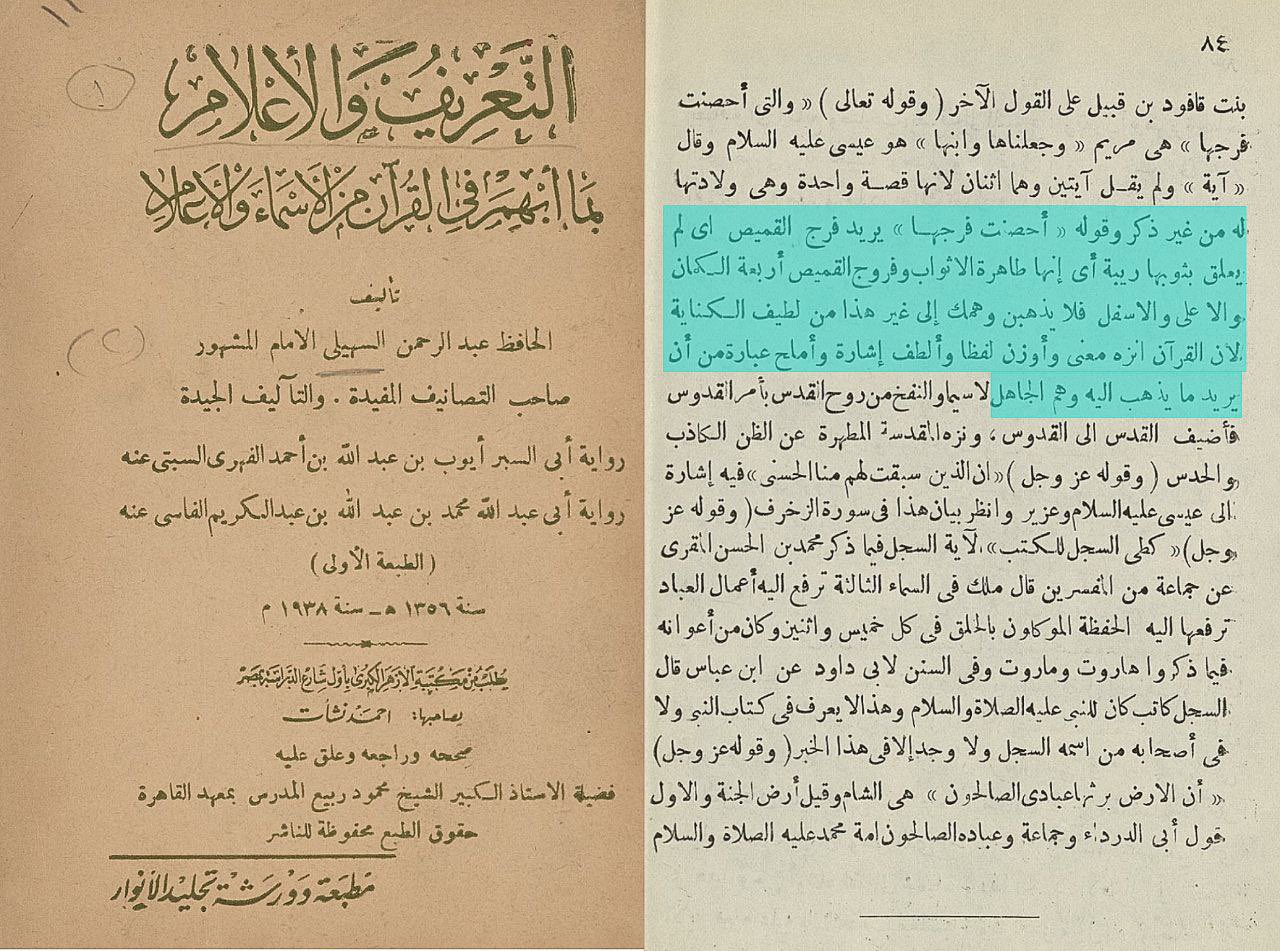
This scan supports the linguistic and rhetorical point that the Qur’an’s wording about Maryam عليها السلام is refined and dignified. It explains that the reference is not meant to create any crude image, but to emphasize Maryam’s chastity and innocence through the language of guarding and purity. This fits the tafsir explanation that the blowing occurred into the opening of her garment, not through any obscene physical contact.
The one into which Gabriel عليه السلام blew was the opening of her garment and her dress, not her private part.
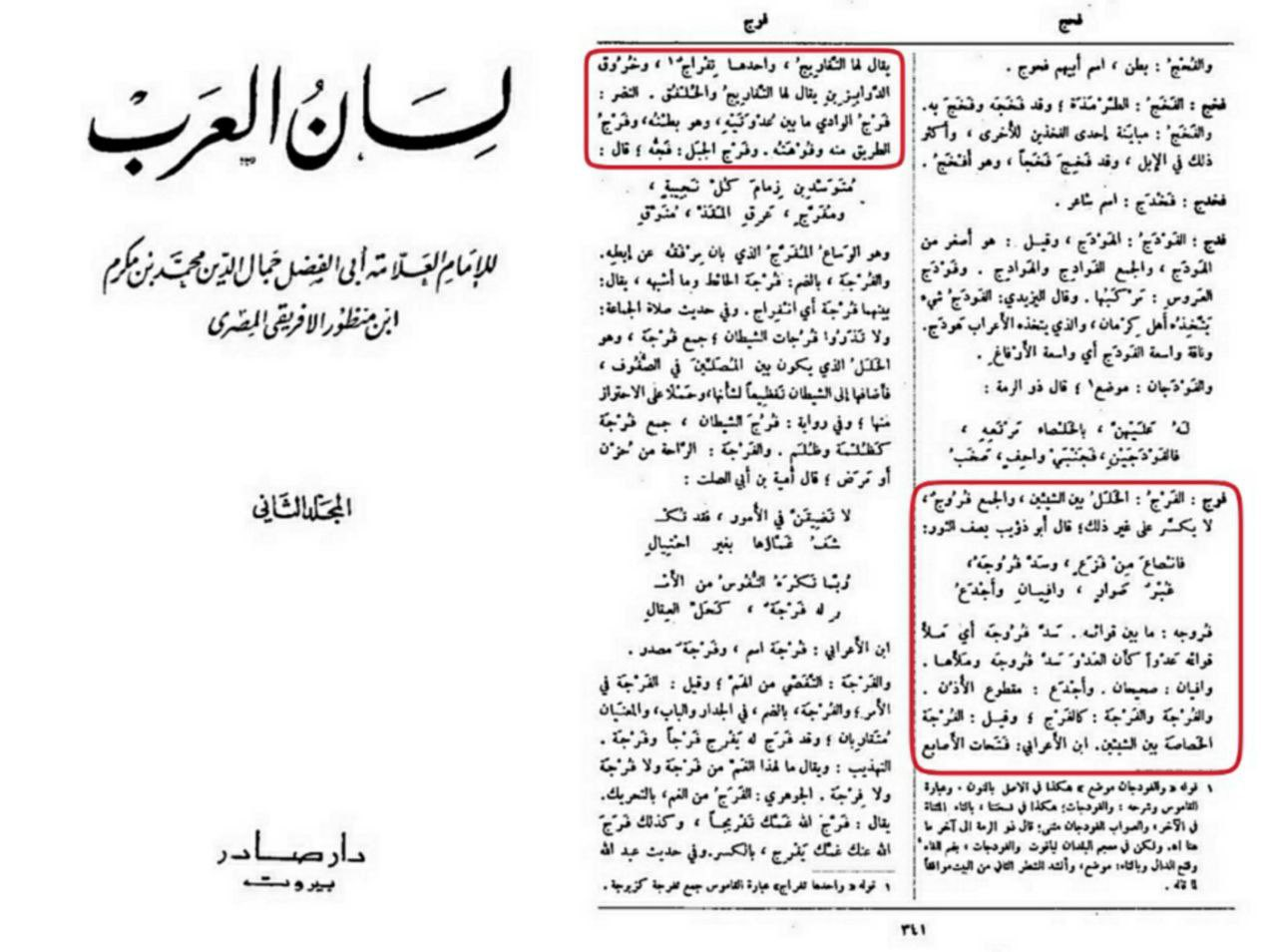
This scan directly reinforces the main tafsir argument: Gabriel عليه السلام blew into the opening of Maryam’s garment and dress. The relevance is that it clarifies the meaning of the verse against the polemical claim that Gabriel blew directly into Maryam’s private part. The scan supports the classical explanation found in the tafsir works: the wording refers to the garment opening, while the creation of Jesus عليه السلام occurred by Allah’s command.
Al-Suhayli’s Warning
The source material cites Al-Suhayli’s point that one should not let the mind wander to anything crude here.
Al-Suhayli explained that the meaning concerns the opening of the shirt, and warned that the mind should not go to anything else. The Qur’an is purer in meaning, more balanced in wording, subtler in indication, and more beautiful in expression than the crude interpretation imagined by the ignorant.
This is exactly right. The Qur’an speaks with dignity. The critic imports vulgarity into the text and then blames the text.
Al-Qurtubi on Al-Anbiya 21:91
“And the one who guarded her chastity, so We breathed into her from Our Spirit, and We made her and her son a sign for the worlds.”
Al-Qurtubi explains that what is meant by farj here can be the opening of the shirt, meaning that no suspicion attached even to her garment and that her clothing was pure.
The farj of the shirt may refer to its openings, such as the sleeve, upper opening, and lower opening.
Al-Qurtubi mentions that what is meant byfarj is the opening of the shirt. He then cites Al-Suhayli’s warning not to let the mind go anywhere crude, because the Qur’an is too pure in meaning and too elegant in expression for the vulgar interpretation of the ignorant.
This destroys the claim. The tafsir does not leave the matter to the polemicist’s imagination.
Al-Qurtubi on Surah Maryam
The same explanation appears in the discussion of Surah Maryam.
“She said, ‘How can I have a boy when no man has touched me, nor am I unchaste?’”
The reports mention that Gabriel عليه السلام blew into the pocket of her garment and sleeve.
Al-Qurtubi reports from Ibn Jurayj that Gabriel عليه السلام blew into the pocket of Maryam’s garment and her sleeve. He also reports from Ibn Abbas that Gabriel took hold of her shirt with his finger and blew into it, and she became pregnant with Jesus عليه السلام by Allah’s command.
This is not direct physical contact with her private part. It is a miracle caused by Allah through the blowing of Gabriel into the garment.
Al-Qurtubi on Al-Imran 3:47
“She said, ‘My Lord, how can I have a son while no man has touched me?’ He said, ‘Thus does Allah create what He wills. When He decrees a matter, He only says to it, “Be,” and it is.’”
Al-Qurtubi mentions that Gabriel عليه السلام blew into the pocket of her coat and sleeve. Ibn Jurayj said this. Ibn Abbas said that Gabriel held her shirt with his finger and blew into it, and she became pregnant with Jesus عليه السلام immediately.
Across the tafsir discussions, the explanation is consistent: the blowing was into Maryam’s garment, shirt, pocket, or sleeve. The critic’s crude claim is not the tafsir explanation.
Al-Baghawi’s Explanation
Al-Baghawi also explains At-Tahrim 66:12 as referring to the pocket of her garment.
Al-Baghawi explains:“So We breathed into it” means into the pocket of her garment.
This is another classical witness against the vulgar reading.
Ibn Kathir’s Explanation
Ibn Kathir explains that Allah sent Gabriel عليه السلام to Maryam, and Gabriel appeared to her in the form of a normal human being. Allah commanded him to blow with his mouth into the pocket of her garment, and the breath descended by Allah’s will, leading to the conception of Jesus عليه السلام.
Ibn Kathir explains that Gabriel عليه السلام blew into the pocket of Maryam’s garment by Allah’s command. The effect of that breath reached where Allah willed, and from that came the conception of Jesus عليه السلام.
The polemicist quotes the verse but ignores the tafsir. That is not an argument. That is selective abuse.
Al-Jalalayn’s Explanation
Tafsir Al-Jalalayn also explains the verse in terms of Gabriel blowing into the opening of Maryam’s garment.
Al-Jalalayn explains that Gabriel عليه السلام breathed into the bosom/opening of Maryam’s garment, and by Allah’s creation and action the effect reached her, so she became pregnant with Jesus عليه السلام.
Again, the tafsir points to the garment, not the obscene reading.
Tafsir Al-Maysar
Tafsir Al-Maysar gives the same meaning.
Al-Maysar explains that Maryam guarded her chastity from fornication, then Allah commanded Gabriel عليه السلام to blow into the bosom of her shirt, and the breath reached her womb, so she became pregnant with Jesus عليه السلام.
This is clear enough. The Qur’an is affirming Maryam’s chastity and explaining a miraculous creation by Allah’s command.
The Pronoun in the Verse
The source material also discusses the pronoun in the relevant verses.
In Al-Anbiya 21:91, the phrase is:
فَنَفَخْنَا فِيهَا
“So We breathed into her…”
In At-Tahrim 66:12, the phrase is:
فَنَفَخْنَا فِيهِ
“So We breathed into it…”
The tafsir explains that the pronoun in At-Tahrim may refer to the farj, understood as the opening of the garment, or to what is contextually indicated, while the meaning remains that the blowing was through Gabriel عليه السلام into her garment by Allah’s command.
Even where the pronoun refers tofarj, the tafsir explains farj here as the opening of the garment. So the critic cannot simply assume the vulgar meaning and ignore the classical explanation.
The pronoun argument collapses because it depends on forcing only one meaning of farj while Arabic and tafsir allow the garment-opening meaning.
Why the Crude Reading Is Impossible
The crude reading fails for several reasons.
First, the verse is praising Maryam’s chastity.
Second, Arabic allows farj to mean an opening or gap.
Third, classical tafsir explains it as the opening of the garment.
Fourth, multiple tafsir sources mention the pocket, sleeve, shirt, garment, or armor.
Fifth, the Qur’an’s language is refined and avoids obscene imagery.
Sixth, the miracle occurred by Allah’s command, not through any sexual process.
The critic ignores Arabic, ignores tafsir, ignores the Qur’an’s praise of Maryam, and then forces the most obscene possible interpretation onto the text. That is not scholarship. It is slander.
The Creation of Jesus Was Miraculous
The Qur’an repeatedly makes clear that Jesus عليه السلام was created by Allah’s command.
“Thus does Allah create what He wills. When He decrees a matter, He only says to it, ‘Be,’ and it is.”
The issue is not biological contact. The issue is divine creation.
Allah created Adam عليه السلام without father or mother. He created Eve from Adam. He created Jesus عليه السلام from Maryam without a father. None of this requires the crude imagery invented by polemicists.
Jesus عليه السلام was created by Allah’s command. Gabriel’s blowing was a means appointed by Allah, not a sexual act and not direct physical violation.
Video Resource for Arabic Speakers
Final Refutation
The claim that the Qur’an says Gabriel blew into Maryam’s private part is false.
The Arabic word farj can mean an opening, gap, slit, or the opening of a garment, depending on context. Classical tafsir explains the verse as Gabriel عليه السلام blowing into the opening of Maryam’s garment, shirt, pocket, sleeve, or armor. Al-Qurtubi explicitly says it was not into the private part and mentions the reading attributed to Ubayy: “and We blew into her garment.”
The Qur’an is praising Maryam’s chastity, not describing obscenity.
The crude interpretation of Surah At-Tahrim 66:12 collapses under Arabic language and classical tafsir. Gabriel عليه السلام blew into Maryam’s garment by Allah’s command, and Allah created Jesus عليه السلام miraculously. The polemicist’s reading is not Qur’anic exegesis; it is vulgar distortion.
Source Notes
- Al-Qurtubi, Al-Jāmiʿ li-Aḥkām al-Qurʾān, vol. 21, p. 106, under At-Tahrim 66:12.
- Al-Qurtubi, tafsir of Al-Imran 3:47.
- Al-Qurtubi, tafsir of Al-Anbiya 21:91.
- Al-Qurtubi, tafsir of Maryam 19:20.
- Al-Baghawi, tafsir of At-Tahrim 66:12.
- Ibn Kathir, tafsir of At-Tahrim 66:12.
- Tafsir Al-Jalalayn, under At-Tahrim 66:12.
- Tafsir Al-Maysar, under At-Tahrim 66:12.
- Al-Alusi, Rūḥ al-Maʿānī, under At-Tahrim 66:12.