Did Prophet Muhammad Copy Prayer from Sumerians? A Complete Refutation
Response to the Allegation: Muslim Prayer is Taken from the Sumerian Civilization
Content of the Doubt
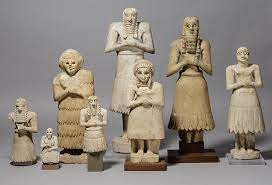
The enemies of Islam claim that the Prophet Muhammad stole the method of prayer from the pagans of the Sumerian civilization. This image is often cited by the enemies of Islam.
The Response to the Doubt is as Follows
Firstly
The Sumerian civilization did not exist at the time of the Prophet Muhammad. In fact, this civilization had already become extinct since the era of the Amorites and Babylonians, dating back to the second millennium BC. In other words, it became extinct more than 2,000 years before the advent of the Prophet Muhammad. At that time, the Sumerian civilization was no longer mentioned. The Sumerians themselves had forgotten their history, language, technology, and even their own names. No one who came later even knew of the existence of this civilization.
The secrets of the Sumerians remained buried in the Iraqi desert until the 19th century, when French and British archaeologists finally discovered Sumerian artifacts. Scholars such as Henry Rawlinson, Edward Hincks, Julius Aubert, and Paul Haupt took the lead in deciphering the Sumerian and cuneiform languages, providing historians with their first glimpse of the long-lost history and literature of Mesopotamia. 1
The Sumerian civilization had become extinct and was forgotten by people hundreds of years before the advent of the Prophet Muhammad.
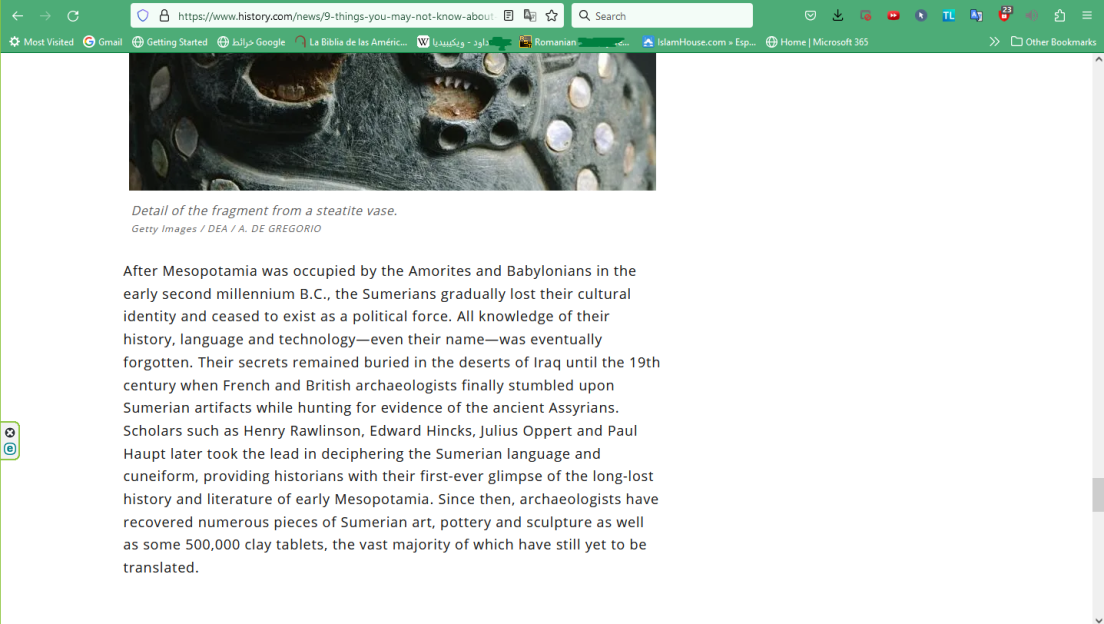
So, we find that the Sumerian civilization had already become extinct since the second millennium BC; that is, it had completely disappeared and no one had ever known of its existence. In fact, the Sumerian civilization had become extinct before the Quraysh tribe emerged, and even before the Arabs had settled in the Mecca region. Therefore, the Prophet Muhammad had no knowledge of it at all and would not have stolen anything from it.
“Thus have We sent you to a nation before which other nations have passed away, that you may recite to them what We have revealed to you, while they disbelieve in the Most Merciful. Say, ‘He is my Lord; there is no deity except Him. Upon Him I have relied, and to Him is my return.’”
If we asked the enemies of Islam: How did the Prophet Muhammad obtain the method of prayer from the Sumerian civilization, and when did he obtain it, as you claim?! The enemies of Islam will not respond with clear and explicit evidence, but will invent false assumptions.
“And they have no knowledge of it. They follow nothing but assumption, and indeed, assumption avails nothing against the truth.”
“And if you obey most of those on the earth, they will mislead you from the way of Allah. They follow not except assumption, and they do not but lie.”
It is not reasonable to abandon the clear truth and follow the assumptions made by the enemies of Islam. Suspicion is no substitute for the truth!
Secondly
The previous statues that you see are the greatest evidence of the truth of Islam. The Holy Quran tells us that God sent prophets and messengers to all previous nations.
“And We had already sent to every nation a messenger, [proclaiming], ‘Worship Allah and avoid false gods.’ And among them were those whom Allah guided, and among them were those upon whom error was justified. So travel through the land and observe what was the end of those who denied.”
God sent messengers to previous nations, such as those who lived in Mesopotamia. There are examples of some prophets who lived in Mesopotamia and spread the religion there, such as: Prophet Noah, Prophet Abraham, Prophet Jonah, and other prophets.
According to the most accurate historical accounts, the Prophet Noah lived in Mesopotamia. The Holy Qur’an tells us that the ship of the Prophet Noah came to rest on Mount Judi and that Noah disembarked there.
“And it will be said, ‘O earth, swallow your water, and O sky, withhold.’ And the water subsided, and the matter was decided, and the ship came to rest on Al-Judi. And it will be said, ‘Away with the wrongdoing people!’”
“And say, ‘My Lord, send me down a blessed abode, and You are the best of those who will be sent down.’”
Mount Judi is located in the northern region of Iraq, that is, in the land of Mesopotamia, which contains the statues you saw.
Then the sons and grandsons of the Prophet Noah began to multiply in that region and spread south, east and west. They prayed there in the same manner of prayer that God had revealed to their father, the Prophet Noah.
How Did Prophet Noah Pray?
How did Prophet Noah pray? Was there any prayer in his time at all? What is the evidence?
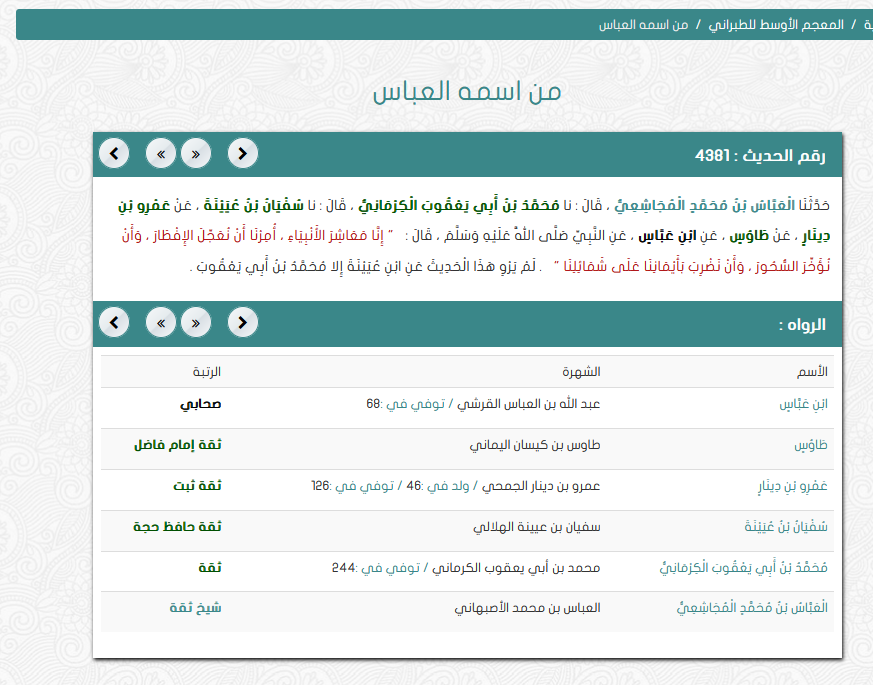
Prophet Noah used to pray the same way as Prophet Muhammad and the same way Muslims pray today. A connected, authentic hadith was narrated on the authority of Al-Abbas bin Muhammad Al-Majashi’i, who said: Muhammad bin Abi Ya’qub Al-Karmani told us: Sufyan bin Uyaynah told us, on the authority of Amr bin Dinar, on the authority of Tawus, on the authority of Ibn Abbas, on the authority of the Prophet Muhammad, who said:
In another narration:
“To place our right hands on our left hands in prayer.”
The phrase “we place our right hands on our left hands” means we place the right hand on the left hand in prayer. All the prophets placed their right hands on their left hands in prayer, and so did the Prophet Noah and his believing sons after him.
“He has ordained for you of religion what He enjoined upon Noah and that which We have revealed to you, [O Muhammad], and what We enjoined upon Abraham and Moses and Jesus - to establish the religion and not be divided therein. Difficult for the polytheists is that to which you invite them. Allah chooses for Himself whomever He wills. He wills and guides to Himself whoever turns back [to Him].”
Many of today’s Islamic laws existed during the time of Noah, Abraham, Jonah, and other prophets who were sent to ancient Mesopotamia. Indeed, all of these prophets preached the religion of Islam in those regions.
“But if you turn away, then I have not asked of you any payment. My payment is only from Allah, and I have been commanded to be of the Muslims.”
“Abraham was neither a Jew nor a Christian, but he was one inclining toward truth, a Muslim [submitting to God]. And he was not of the polytheists.”
Why Did the Sumerians Make These Statues?
Why did the Sumerians make these statues?
Previous nations used to look to righteous people and try to emulate them. People would make statues of those righteous people and place them in public places or in places of worship. As time passed and generations followed, Satan would whisper to people and command them to worship those idols as gods.
“The idols that were among the people of Noah later came to be among the Arabs. As for Wadd, it belonged to Kalb in Dumat al-Jandal. As for Suwa’, it belonged to Hudhayl. As for Yaghuth, it belonged to Murad, then to Banu Ghutayf in al-Jawf, near Saba. As for Ya’uq, it belonged to Hamdan. As for Nasr, it belonged to Himyar, to the family of Dhi al-Kila’. These were the names of righteous men from the people of Noah. When they perished, Satan inspired their people to erect idols in their places of assembly and name them after them. They did so, but they were not worshipped. Then, when those people perished and knowledge was forgotten, they were worshipped.”
The previous story indicates that there were righteous people named: Wadd, Suwa’, Yaghuth, Ya’uq, and Nasr. These righteous people existed since ancient times, so people made statues of those righteous people as an example to follow. However, as the years passed and generations followed, Satan deceived the people and made them worship those statues and associate partners with God. So, God sent the Prophet Noah to them to try to bring them back to the right path.
The same thing happened with the nations that came after the time of Noah; they worshipped idols. For example:
- The Christians worshipped Christ and made idols for him and prostrated themselves before them.
- The Arab tribes worshipped the idols of Wadd, Suwa’, Yaghuth, Ya’uq, and Nasr.
- The tribe of Kalb worshipped the idol Wadd, and the tribe of Hudhayl worshipped the idol Suwa’, and so on.
The same thing happened with the people of Mesopotamia; they worshipped idols and associated partners with God after the Prophet Noah, and so God sent many other prophets to them, including the Prophet Abraham.
- Jews — applied divinity to several people other than God (Exodus 7:1; Psalm 82)
- Christians — applied “God” to Christ and to all the prophets (John 10:34–35); described Jesus as “Son of God” and themselves as sons of God (John 1:12)
- Arabs — followed the monotheism of Prophet Abraham, then later associated partners with God, worshipping Al-Lat, Al-Uzza, Manat, and Hubal
“There has already been for you an excellent example in Abraham and those with him, when they said to their people, ‘Indeed, we are disassociated from you and from whatever you worship besides God. We have rejected you, and there has appeared between us and you animosity and hatred forever until you believe.’ By God alone.”
“And We sent him to a hundred thousand or more. So they believed, and We gave them enjoyment for a time.”
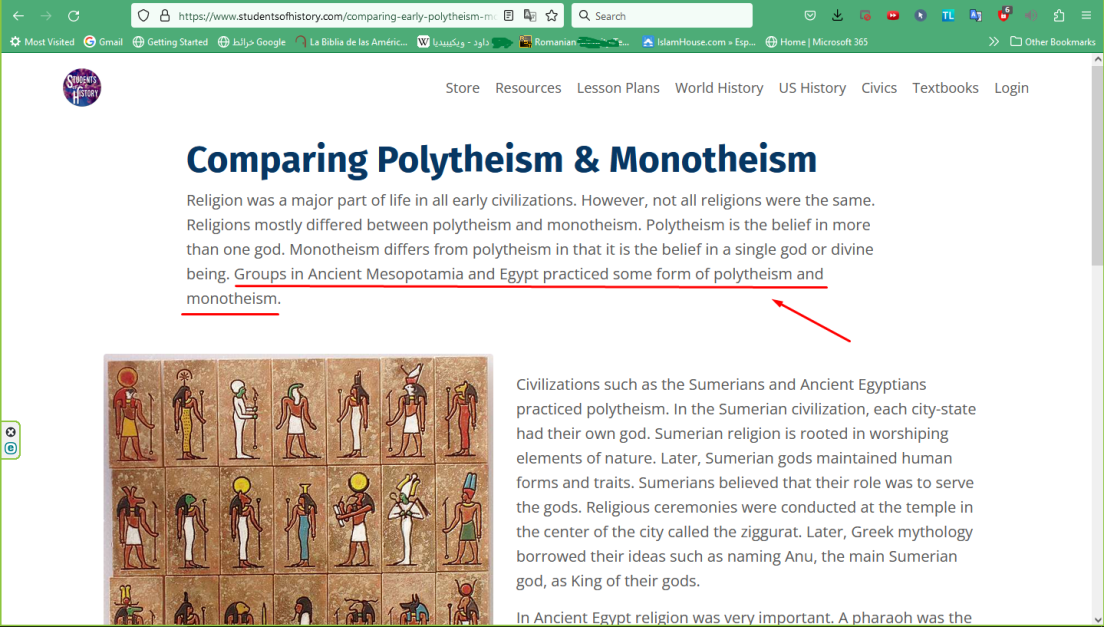
The religions of the Sumerian civilization varied between monotheism and polytheism.
![[attachments/* Except for those who repent, believe, and do righteous deeds. For those will enter Paradise and will not be wronged at all.”*
The previous verses tell us that the nations after the Prophet Noah, Abraham, and Jacob were divided into two groups: some abandoned prayer and indulged in lusts and disbelief, and others remained faithful, repentant, and committed to prayer.
The Flood Story as Further Evidence
The story of the flood mentioned in the myths of Mesopotamia is the best evidence that these people had an idea about the existence of the Prophet Noah, because the story of the flood in the myths of Mesopotamia is originally taken from the story of the flood of the Prophet Noah; it originally talks about the flood of the Prophet Noah, but people added some distortions to the original story, so it turned into a legend carved on stones.
2
“It is often somewhat implicitly assumed that the stories told in the Sumerian epics are based on actual historical events.”
This is what was also decided by: the researcher (Malo), (May Luan), (Rales), (Kramer) and other researchers.
Prayer in the Time of Prophet Abraham
“Our Lord, indeed I have settled some of my descendants in an uncultivated valley near Your Sacred House, our Lord, that they may establish prayer. So make some of the people incline toward them and provide for them from the fruits that they may be grateful.”
“My Lord, make me an establisher of prayer, and [many] from my descendants. Our Lord, and accept my supplication.”
“And when We gave them a place to spend the night not to associate anything with you, and to purify your house. For those who circumambulate, and those who stand, and those who kneel and prostrate.”
Therefore, do not be surprised when you read that the Prophet Muhammad led the prophets in prayer during the Isra and Mi’raj journey.
References & Further Reading
https://www.history.com/articles/9-things-you-may-not-know-about-the-ancient-sumerians
9 Things You May Not Know About the Ancient Sumerians | HISTORY
Check out nine fascinating facts about one of the earliest sophisticated civilizations known to history.
https://www.studentsofhistory.com/comparing-early-polytheism-monotheism
Comparing Early Polytheism & Monotheism
A summary of the differences between Polytheism and Monotheism with early religions in the Ancient world.