

Did Prophet Muhammad ﷺ Visit All His Wives in One Night? Hadith Explained
This narration is often abused by anti-Muslim polemicists to claim that the Prophet ﷺ was driven by lust. The problem is that the objection usually depends on smuggling an assumption into the wording: that visiting one’s wives necessarily means intercourse with all of them. That is not what the basic wording proves, and even where scholars discuss repeated intercourse, there is still no moral objection unless someone first proves that lawful intimacy with one’s wives is blameworthy.
The Hadith Being Used
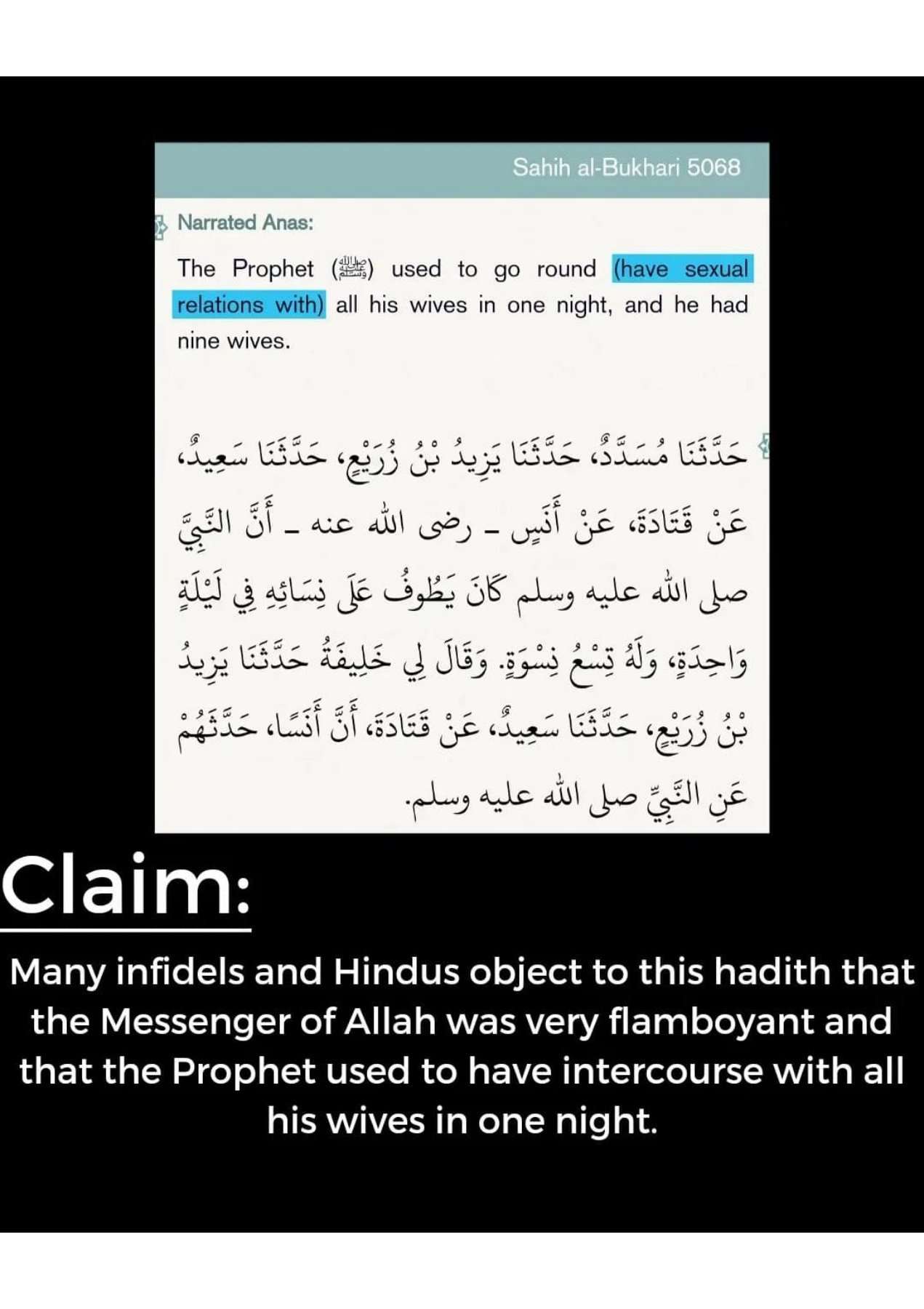
The narration commonly cited states that the Prophet ﷺ used to visit his wives in one night while he had nine wives.
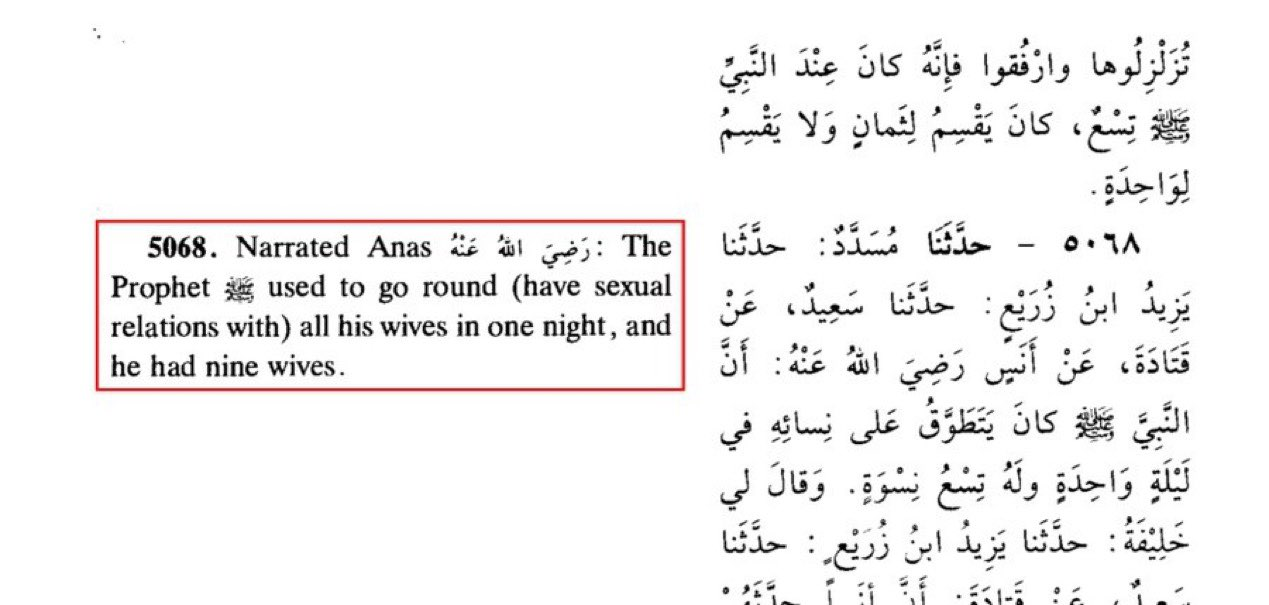
For your info: This scan is being used as the first source for the narration under discussion. The relevant point is the wording that the Prophet ﷺ would visit his wives in one night. The argument depends on whether the wording itself proves intercourse with every wife, or whether it simply states that he visited them.
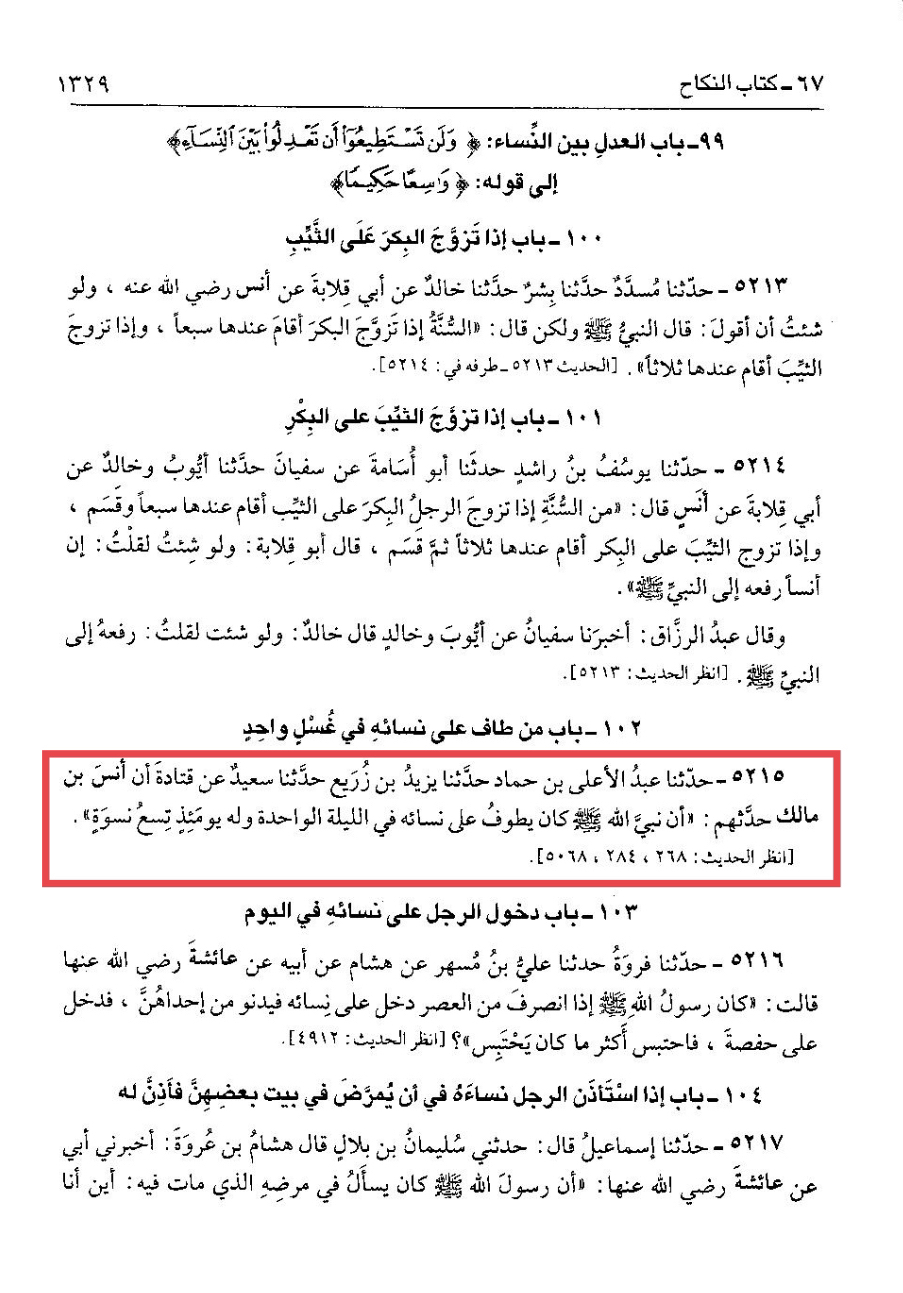
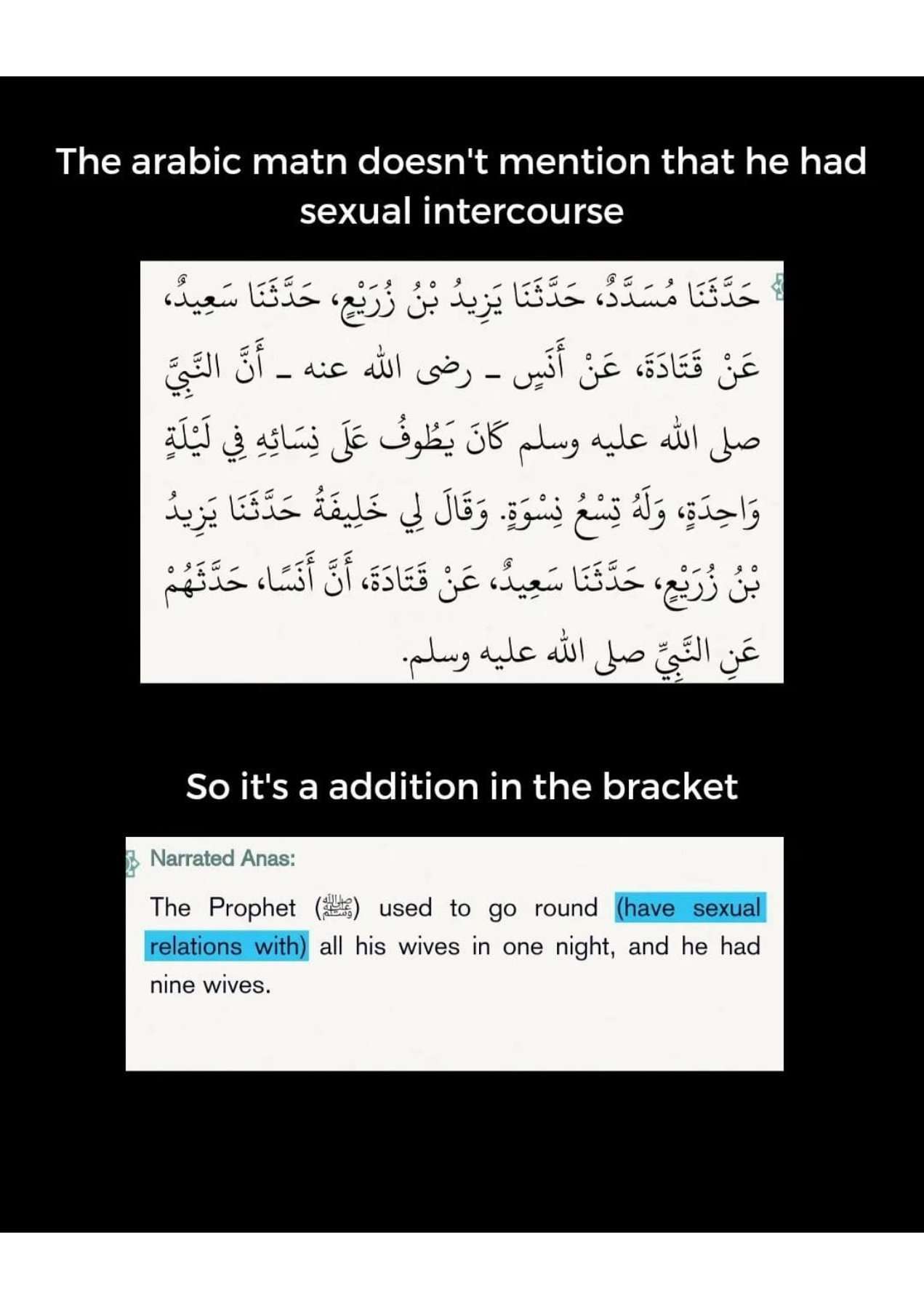
The next scan continues the same report and supports the point that the wording should not be exaggerated beyond what it states.
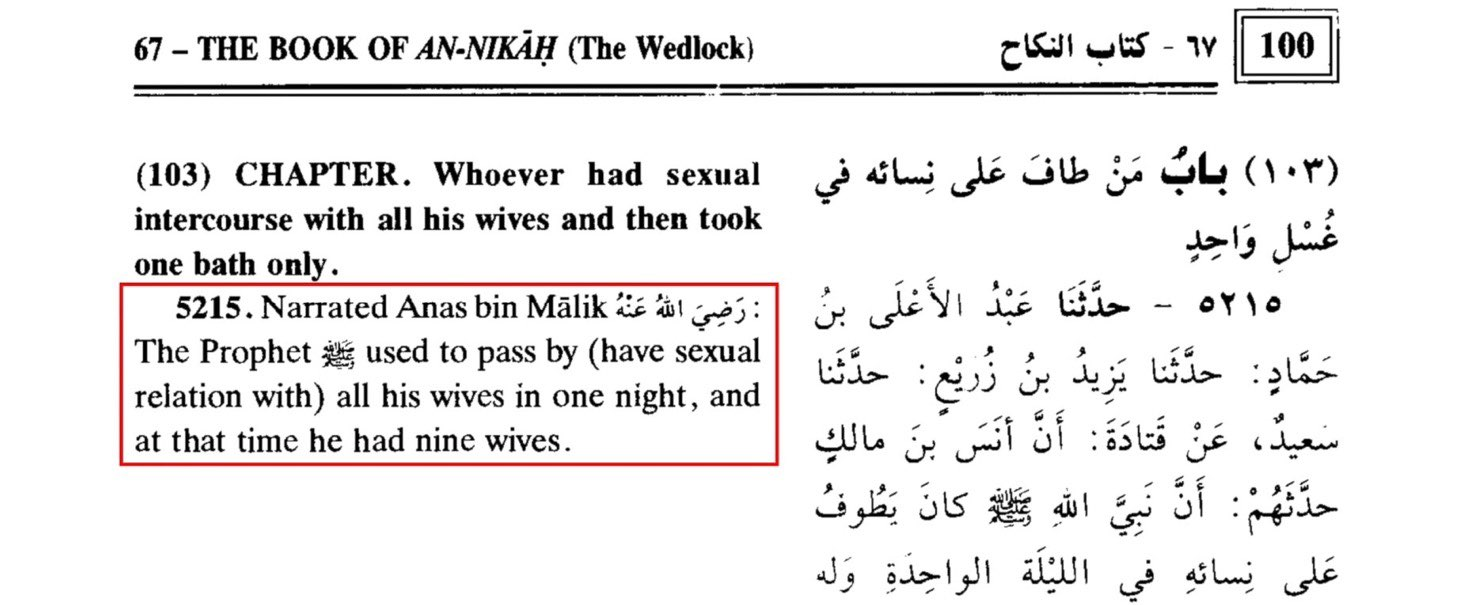
For your info: This scan continues the hadith evidence being cited. The important detail is that the narration is being discussed through its actual wording, not through the polemical interpretation forced onto it. The scan is relevant because it anchors the response in the source text rather than in the accusation.
Grade: Sahih, according to the hadith source being cited.
The allegation is that if the Prophet ﷺ went to all of his wives in one night, then this must mean he had sexual relations with all of them, and therefore the report should be treated as morally shameful.
The claim fails at the first step. The wording cited here says that he visited his wives; it does not, by itself, say that he had intercourse with every wife in that one night. The polemicist is adding that assumption into the text and then attacking the assumption as if it were the hadith itself.
Visiting Does Not Automatically Mean Intercourse
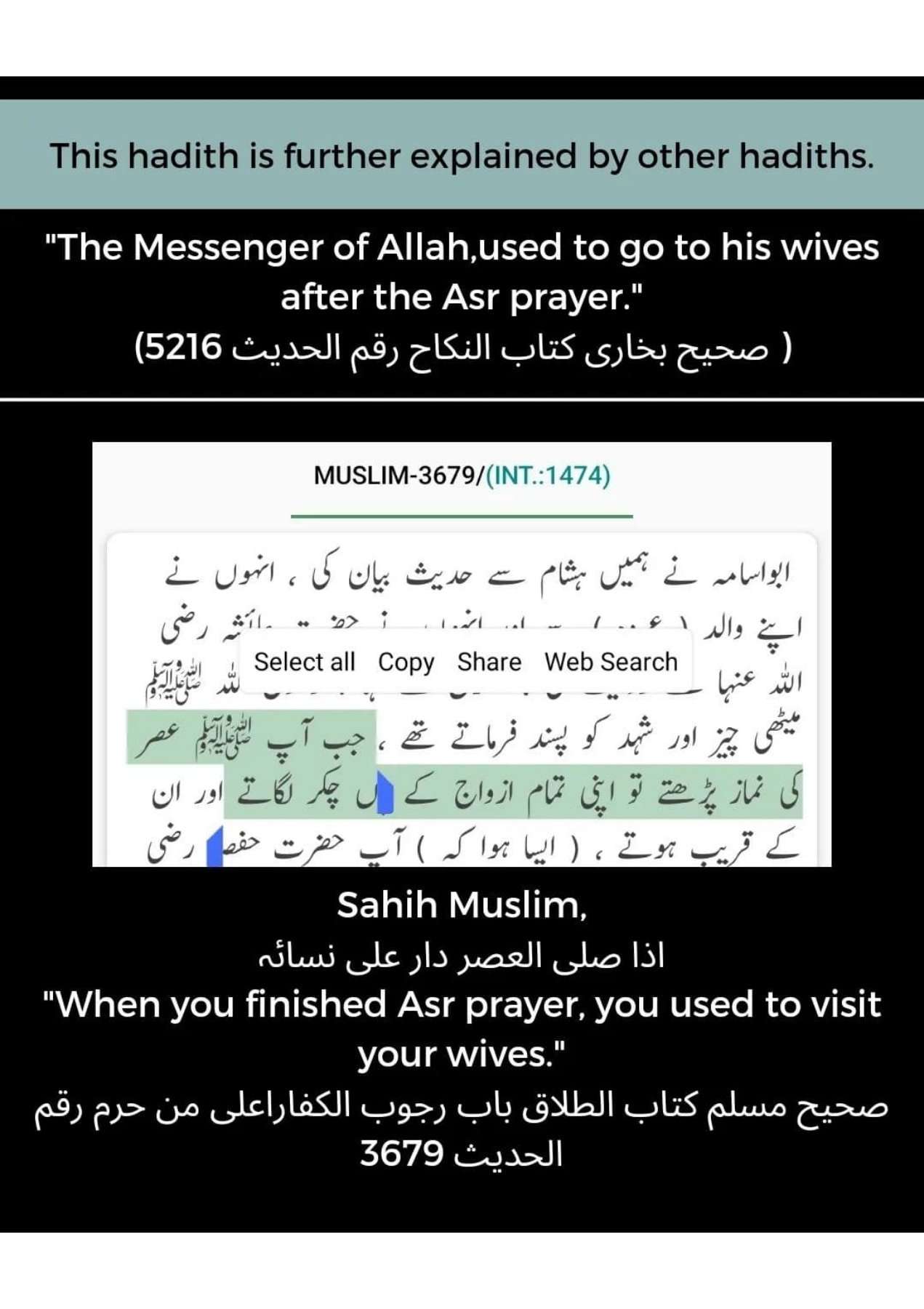
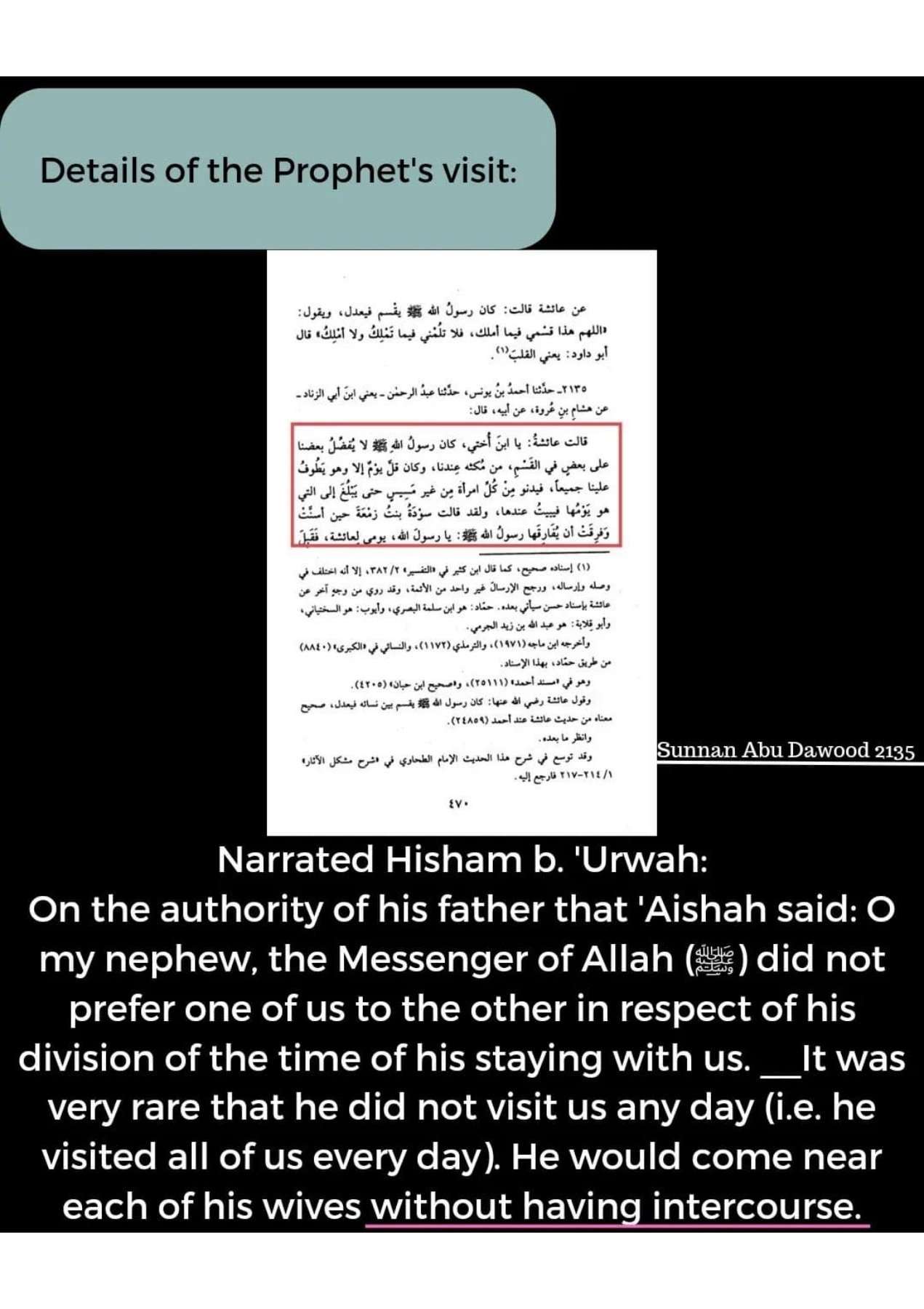
Now, does spending part of the night with one’s wives automatically imply intercourse? No, it does not. We have direct testimony from the wives of the Prophet ﷺ that he would visit them without having intercourse.
For your info: This scan supports the distinction between visiting one’s wives and having intercourse with them. The highlighted relevance is that Aishah رضي الله عنها describes the Prophet ﷺ visiting his wives regularly while explicitly stating that he would come near each wife without intercourse. This directly weakens the polemical assumption that every visit must mean sexual relations.
O my nephew, the Messenger of Allah ﷺ did not prefer one of us to the other in respect of his division of the time of his staying with us. It was very rare that he did not visit us any day. He would come near each of his wives without having intercourse.
Grade: Hasan Sahih — Al-Albani
This is the key distinction: visiting is not identical to intercourse. The narration from Aishah رضي الله عنها makes that explicit. So the objection is not merely weak; it is built on an interpretation that another report directly restricts.
Even Intercourse with One’s Wives Is Not a Moral Problem
There is another problem with the objection. Even if a person argues from other narrations that intercourse occurred, he still has to explain why lawful sexual relations with one’s wives are morally wrong. Merely saying “he had relations with his wives” is not a refutation. It is just describing lawful marriage.
A critic cannot treat lawful marital intimacy as a scandal unless he first proves that marital intimacy itself is shameful. Islam does not treat lawful relations between spouses as dirty, immoral, or embarrassing.
This is where the polemic becomes intellectually lazy. It relies on emotional disgust rather than an actual argument. A husband and wife being intimate is not a moral defect.
Al-Kashmiri’s Explanation
Al-Kashmiri discusses the narrations about repeated intercourse and the issue of ghusl. His explanation shows that even when repetition is discussed, the scholars did not understand this as a moral fault. They discussed it as a fiqh and hadith issue: whether one ghusl means one final ghusl at the end, and how to understand the context of the event.
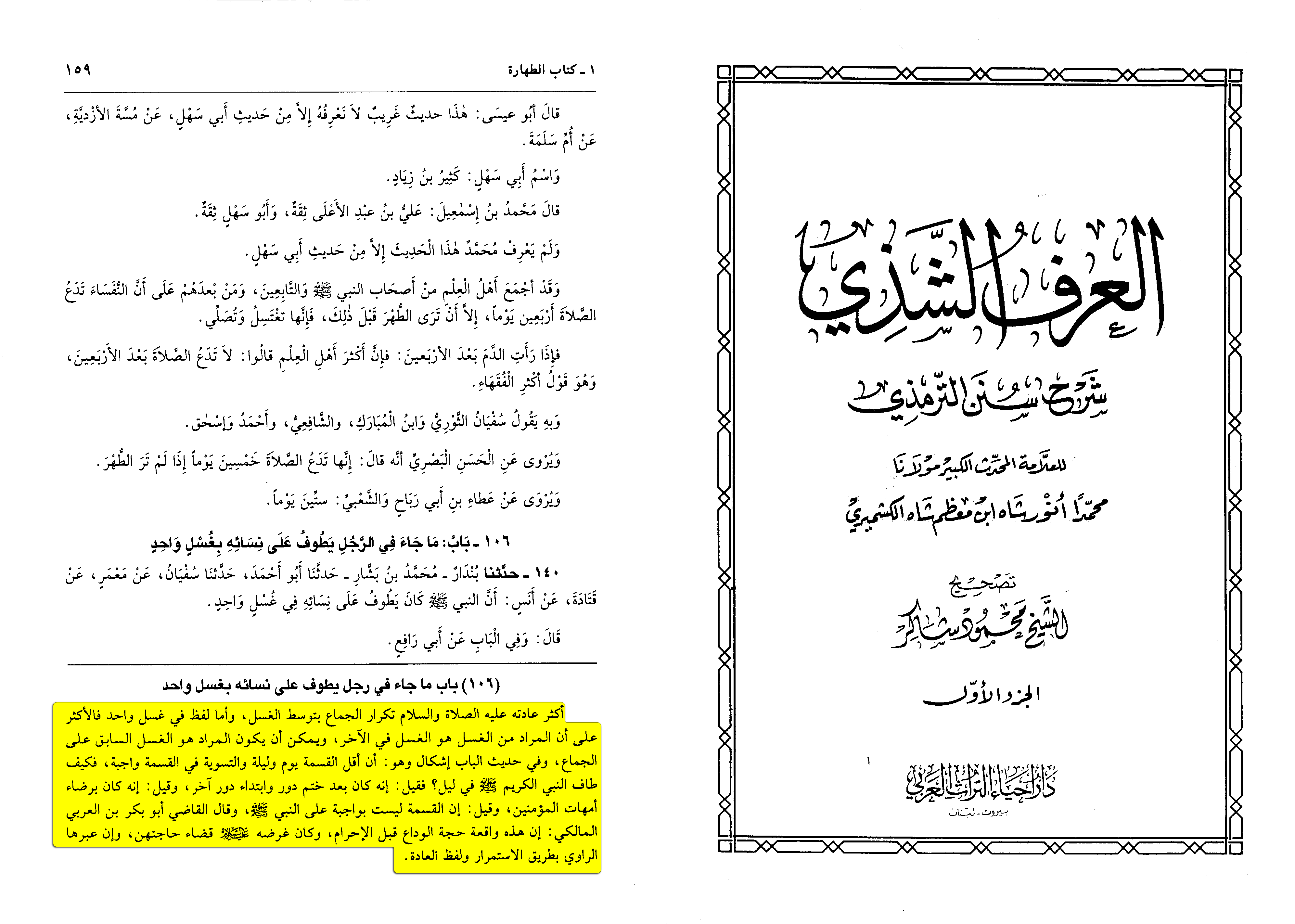
For your info: This scan is from Al-Kashmiri’s discussion in Al-‘Urf Al-Shazi. The relevant part explains that the phrase “with one ghusl” is understood by the majority as meaning one ghusl at the end, not that ghusl was neglected where required. It also mentions the answer of Abu Bakr ibn al-Arabi al-Maliki: that this may have occurred once, in the final period before ihram, with the wisdom of fulfilling the rights and needs of his wives before a period in which he would not be with them.
In the hadith, there is a doubt that is answered by Abu Bakr ibn al-Arabi al-Maliki: that this only happened once in the last ceremony before ihram, and his wisdom ﷺ was to finish all their needs, as he would not see them for a time, even if the narrator explained it by repetition.
The point is simple: the scholars discussed the narration with legal precision, not with the vulgarity of modern polemicists. The report is not a confession of uncontrolled desire. It is either a narration about visiting without intercourse, or in other wordings and discussions, a lawful marital matter with a specific context.
Additional Pages from Islamophobes Nightmare
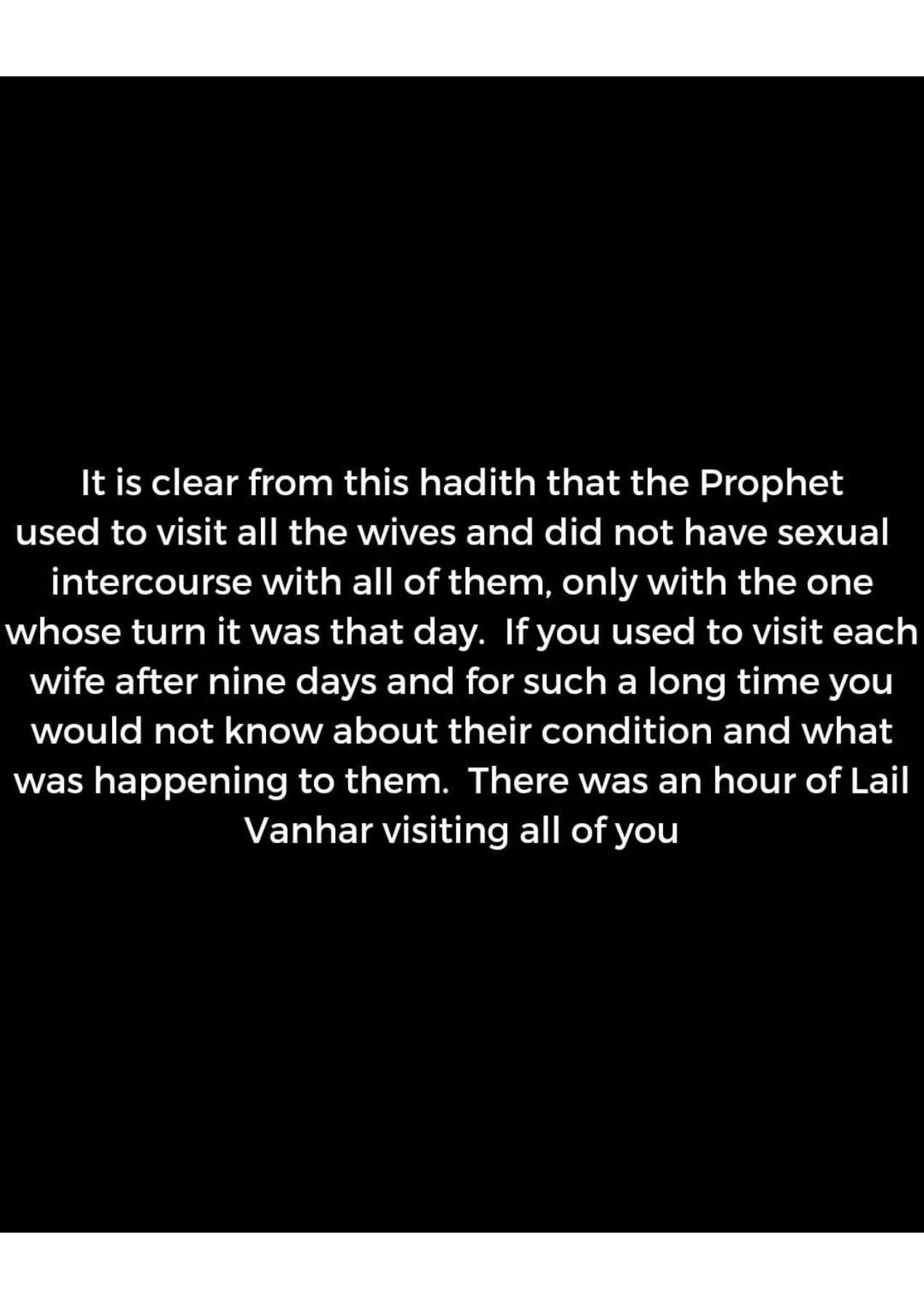
The following page begins the extended discussion from Islamophobes Nightmare on this allegation.
The next page continues the response and develops the argument against reading the narration as proof of blameworthy lust.
The discussion then expands on the surrounding evidence and how the narration should be understood.

The following page continues the explanation and supports the same distinction between polemical assumption and actual hadith wording.
The next scan gives further supporting material for the response.
The final page shown here closes this section of the discussion.
Conclusion
The accusation collapses because it depends on an assumption that the wording does not prove. Visiting one’s wives does not automatically mean intercourse, and Aishah رضي الله عنها explicitly reports that the Prophet ﷺ would visit his wives without intercourse. Even where scholars discuss reports involving repeated marital relations, the matter remains lawful intimacy with wives, not a moral scandal.