
Did Scholars Prefer Keeping Slaves Over Freedom? Context Refutes
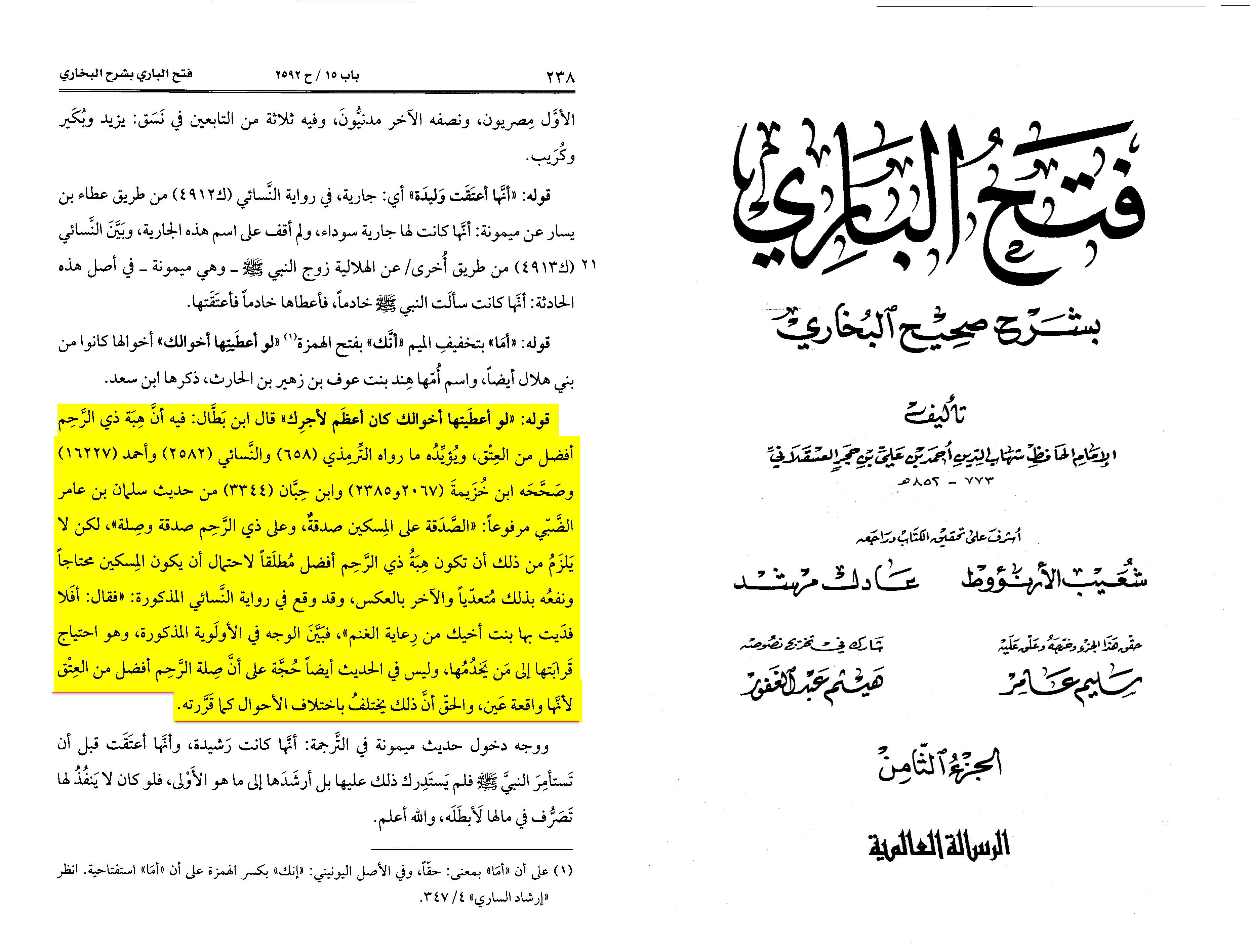
“Ibn Battah used this as an argument that giving a slave away is better than manumitting him. However, it is not necessarily the case that freeing a slave is worse than manumitting him. Rather, this is only due to the possibility that the relative is old or poor (miskin).”
— Ibn Hajar al-Asqalani, Fath al-Bari (8/238)
The point being discussed here is not a general statement that keeping slaves is superior to freeing them. Rather, the discussion concerns specific cases where giving a servant to a needy relative may produce a greater immediate benefit due to poverty, old age, or need.
- freeing the servant completely, or
- giving the servant to a needy person who depends on assistance.
People may still object by saying: “But the servant is still not freed.”
However, the argument being made is practical and contextual. If you had a servant, would it always be better to free him immediately, or could there be situations where giving him to someone genuinely needy produces greater benefit?
This especially applies when:
- the servant is not fully deserving of emancipation at that moment,
- or the owner still has legitimate need of his service,
- or a poor relative depends on that assistance.
At the same time, if the servant deserves emancipation, then freeing him remains a virtuous and encouraged act in Islam.
The discussion is therefore about balancing benefits and obligations, not about denying the virtue of freeing slaves.