Did the Qur’an Borrow Solomon’s Hoopoe Story from Targum Sheni?
Did the Qur’an Borrow the Story of Solomon and the Hoopoe from Targum Esther II?
Table of Contents
- Introduction
- The Claim
- First Response: Surah An-Naml Is Meccan
- Second Response: The Prophet ﷺ Was Illiterate
- Third Response: Targum Sheni Is Later Than the Prophet ﷺ
- Fourth Response: The Oldest Manuscripts Are Centuries Later
- Final Point: Similarity Does Not Prove Borrowing
- Conclusion
Introduction
For every ailment there is a cure…except for foolishness, which baffles even those who try to treat it.
The Claim
A response to the deceitful claim by Ghali Riyad that the Quran borrowed the story of Solomon and the hoopoe from Targum Esther II.
First Response: Surah An-Naml Is Meccan
Firstly: Surah An-Naml is unanimously considered Meccan [I will mention this at the end, citing most commentators], and there were no Jews in Mecca.
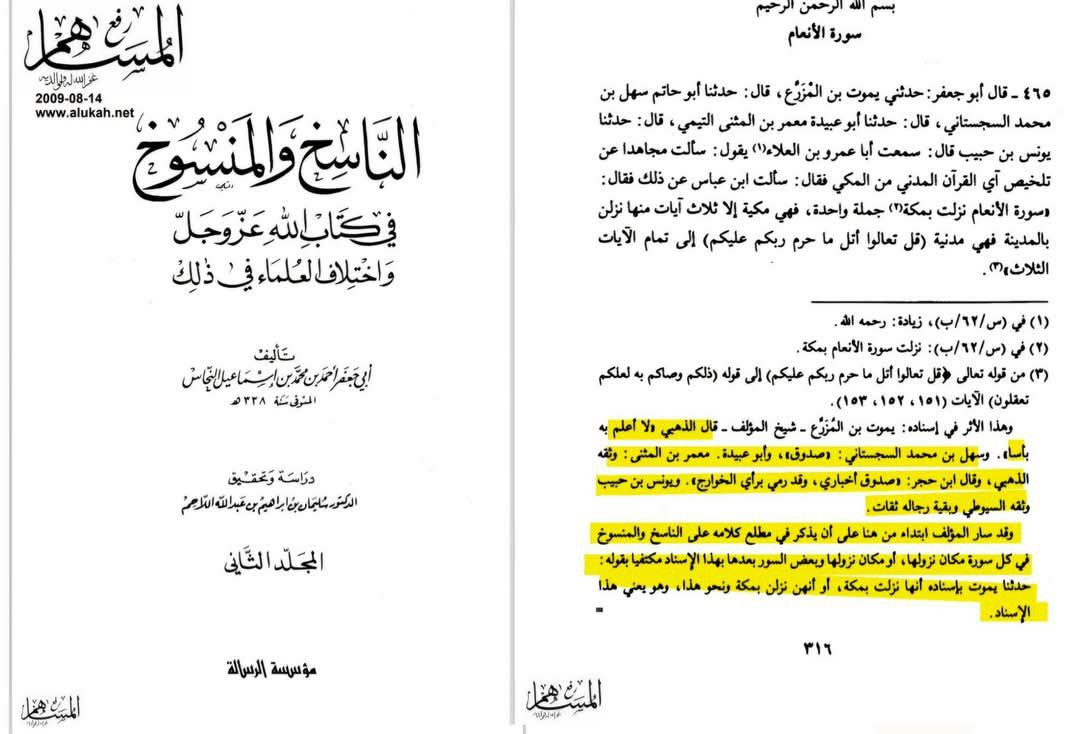
This Arabic scan is fromAl-Nāsikh wa al-Mansūkh fī Kitāb Allāh by Abū Jaʿfar al-Naḥḥās. The highlighted section discusses Sūrat al-Naml and reports that it is Meccan. It also mentions a narration attributed to Qatādah stating that Sūrat al-Naml was revealed in Makkah, with an exception claimed for a few verses. The footnote highlights discussion around the chain of transmission, showing that the author is dealing with the classification of the surah and its Makkan context. This supports the argument that the story of Solomon and the hoopoe belongs to a Meccan surah, not a later Medinan environment.
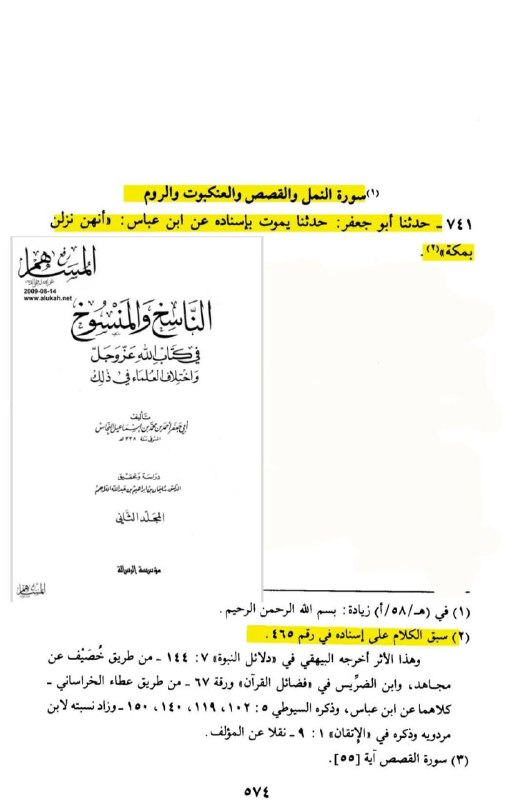
This Arabic scan continues fromAl-Nāsikh wa al-Mansūkh and includes the heading for Sūrat al-Naml and the narration chain. The highlighted text identifies Sūrat al-Naml as Meccan. The page is being used to show that early Muslim exegetical material treated this surah as part of the Makkan revelation, which matters because the borrowing claim depends on assuming access to later Jewish material.
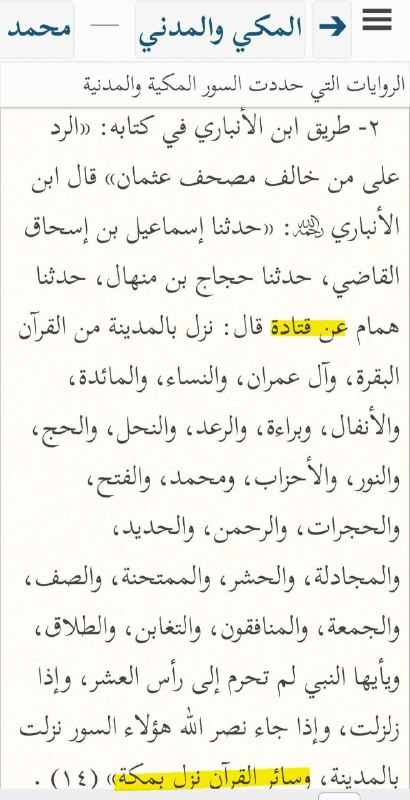
This Arabic scan is from a discussion of Makkan and Medinan surahs. The highlighted narration from Qatādah lists the surahs that were revealed in Medina, then states that the rest of the Qur’an was revealed in Makkah. Since Sūrat al-Naml is not included among the Medinan surahs listed, the implication is that it belongs to the Makkan revelation. This supports the point that Sūrat al-Naml predates the Medinan Jewish context.
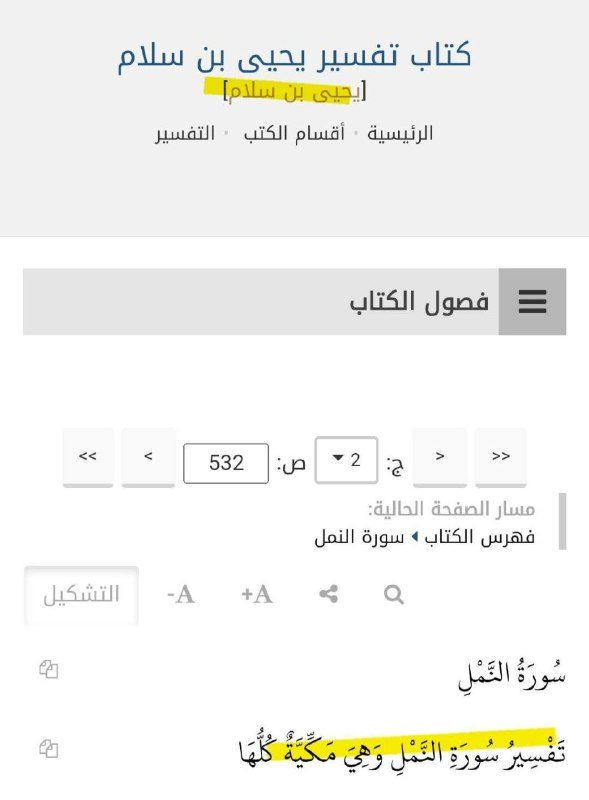
This Arabic scan is from the tafsīr of Yaḥyā ibn Sallām. The highlighted line says: “Tafsīr Sūrat al-Naml, and it is Meccan, all of it.” This is a direct statement from a tafsīr source that the entire surah is Meccan. It supports the argument that the passage about Solomon and the hoopoe was revealed in the Makkan period.
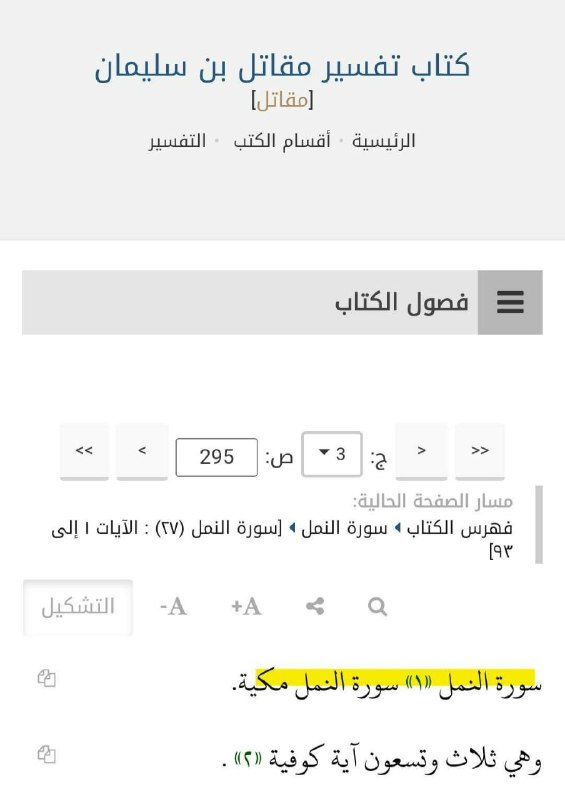
This Arabic scan is from the tafsīr of Muqātil ibn Sulaymān. The highlighted line identifies Sūrat al-Naml as Meccan and mentions its verse count. This reinforces the same point from another early tafsīr source: the surah containing the hoopoe narrative is classified as Makkan.
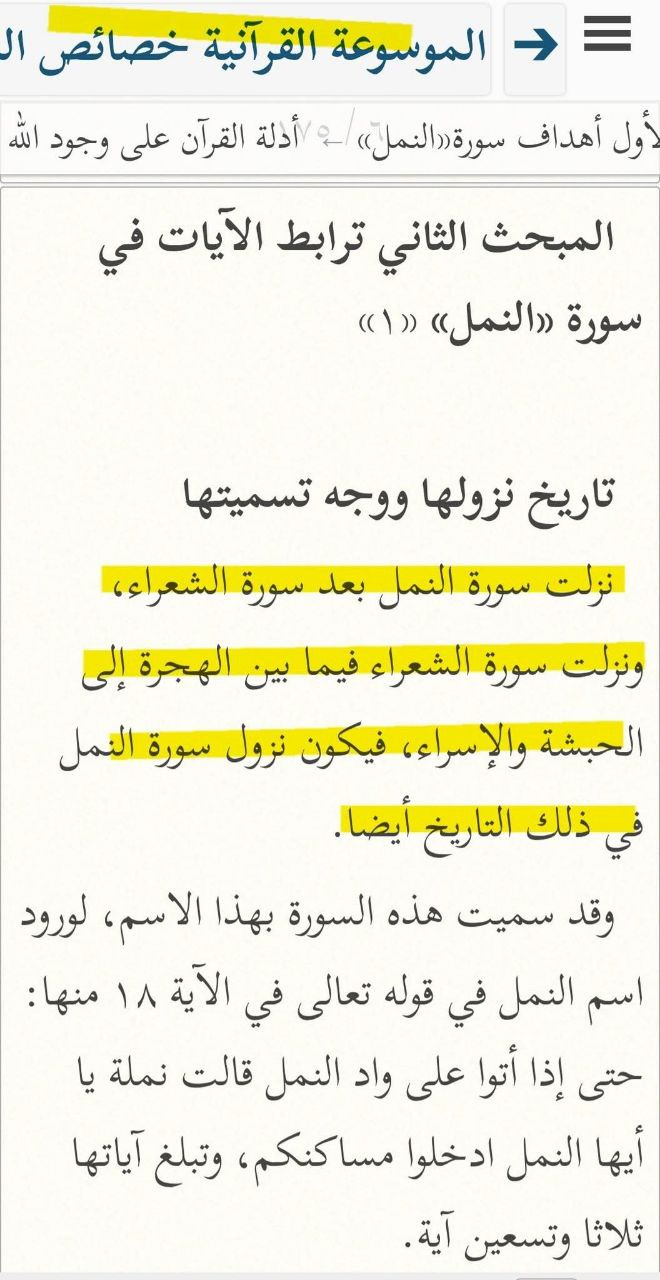
This Arabic scan is from an encyclopedic Qur’anic reference entry on Sūrat al-Naml. The highlighted section says that Sūrat al-Naml was revealed after Sūrat al-Shuʿarāʾ and before Sūrat al-Qaṣaṣ or al-Isrāʾ, placing it within the chronological order of revelation. The page also notes that the surah was named after the mention of the ant in verse 18. This supports the Makkan chronology of the surah.
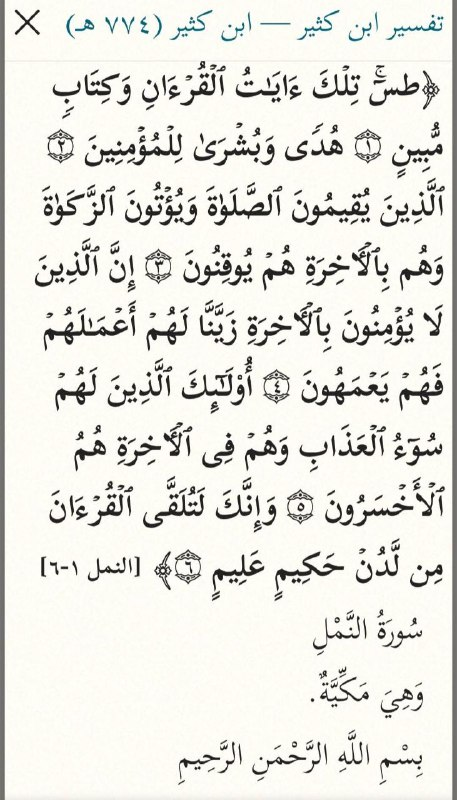
This Arabic scan is from Tafsīr Ibn Kathīr at the opening of Sūrat al-Naml. The page shows the beginning of the surah and identifies it as Meccan. This is important because Ibn Kathīr is one of the major classical tafsīr authorities, and his classification supports the argument that the surah is Makkan.
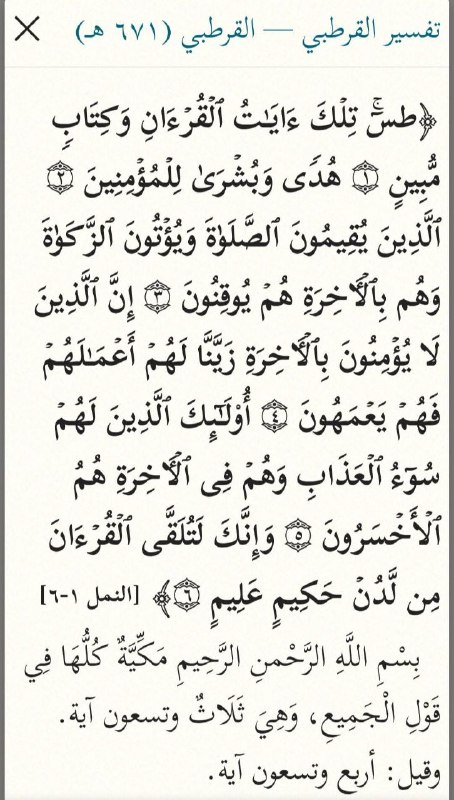
This Arabic scan is from Tafsīr al-Qurṭubī. It states at the opening of Sūrat al-Naml that it is Meccan, and it mentions the verse count. This adds another major classical tafsīr witness for the Makkan classification of the surah.
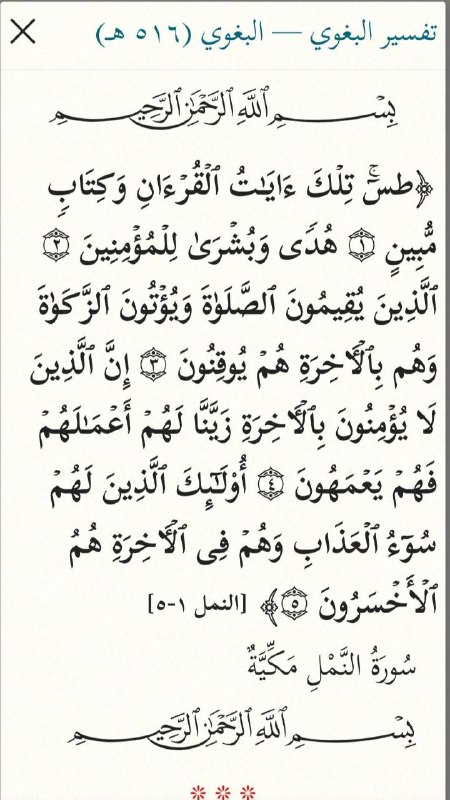
This Arabic scan is from Tafsīr al-Baghawī. At the beginning of Sūrat al-Naml, it identifies the surah as Meccan. This is another classical tafsīr source confirming the same classification.
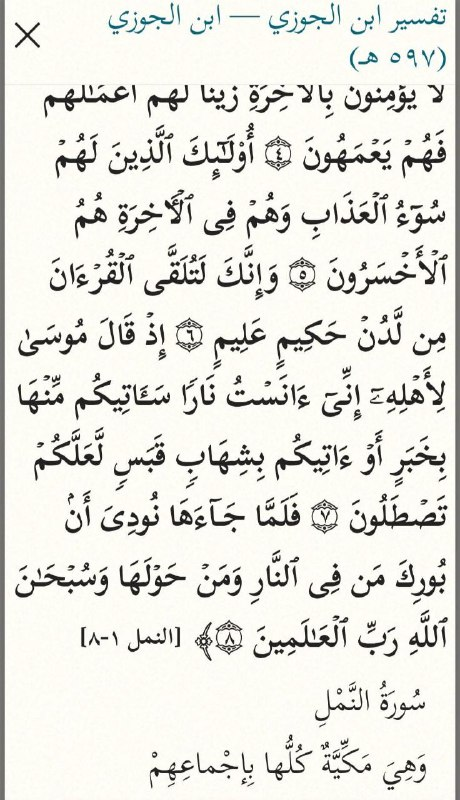
This Arabic scan is from Tafsīr Ibn al-Jawzī. The highlighted statement says that Sūrat al-Naml is Meccan in its entirety by consensus. This is especially useful because it does not merely say “Meccan”; it presents the classification as agreed upon.
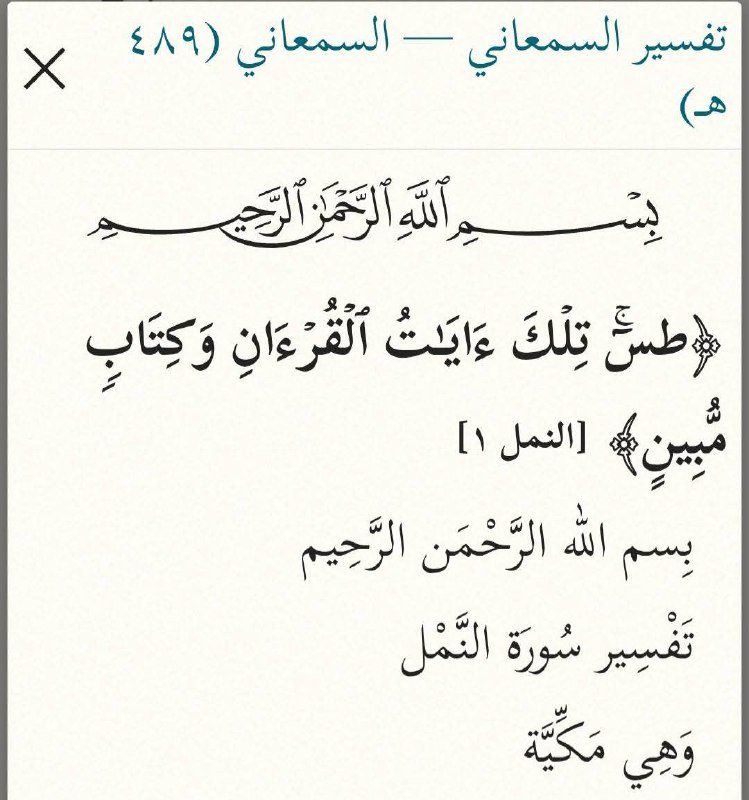
This Arabic scan is from Tafsīr al-Samʿānī. The page opens Sūrat al-Naml and identifies it as Meccan. This adds another classical exegetical source to the chain of evidence for the Makkan classification.
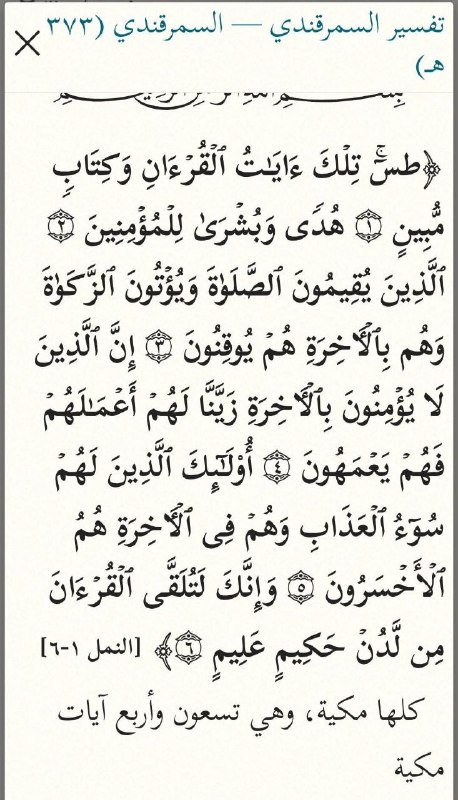
This Arabic scan is from Tafsīr al-Samarqandī. The highlighted line says that Sūrat al-Naml is entirely Meccan and mentions its verse count. This supports the repeated classical position that the surah belongs to the Makkan revelation.
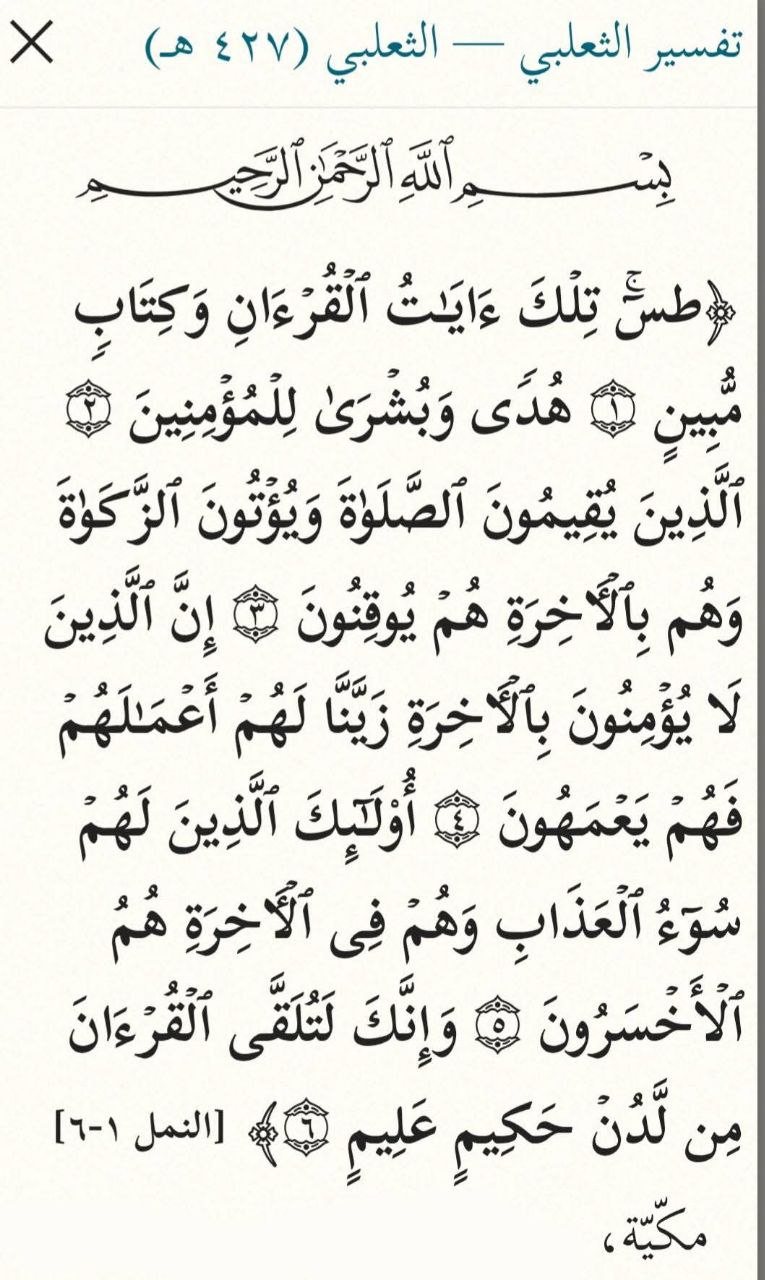
This Arabic scan is from Tafsīr al-Thaʿlabī. The page begins Sūrat al-Naml and identifies it as Meccan. It is another witness from the tafsīr tradition supporting the Makkan setting of the surah.
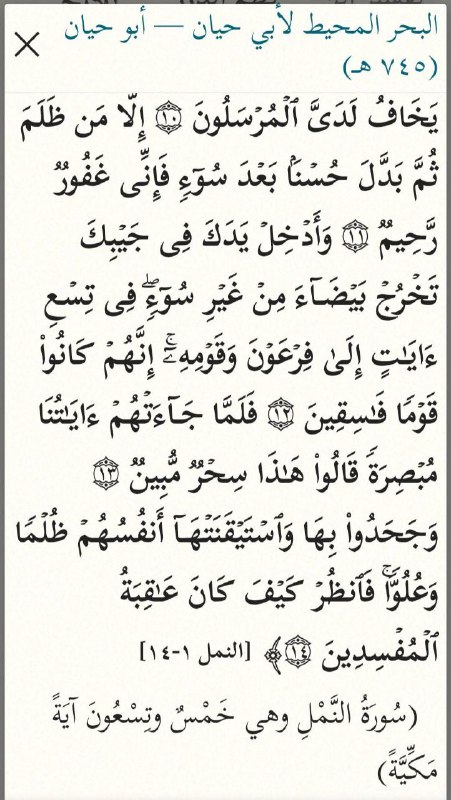
This Arabic scan is fromal-Baḥr al-Muḥīṭ by Abū Ḥayyān. The highlighted portion identifies Sūrat al-Naml as Meccan and gives the verse count. This contributes another major tafsīr source to the evidence that the surah is Makkan.
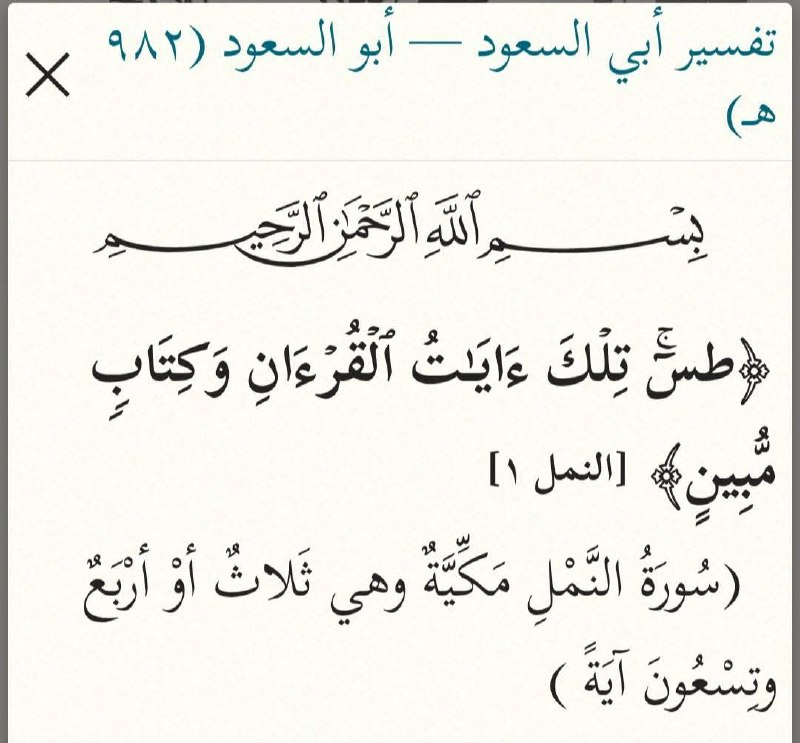
This Arabic scan is from Tafsīr Abī al-Suʿūd. The highlighted text states that Sūrat al-Naml is Meccan and mentions its verse count. This again supports the point that the surah’s classification is not isolated to one tafsīr source.
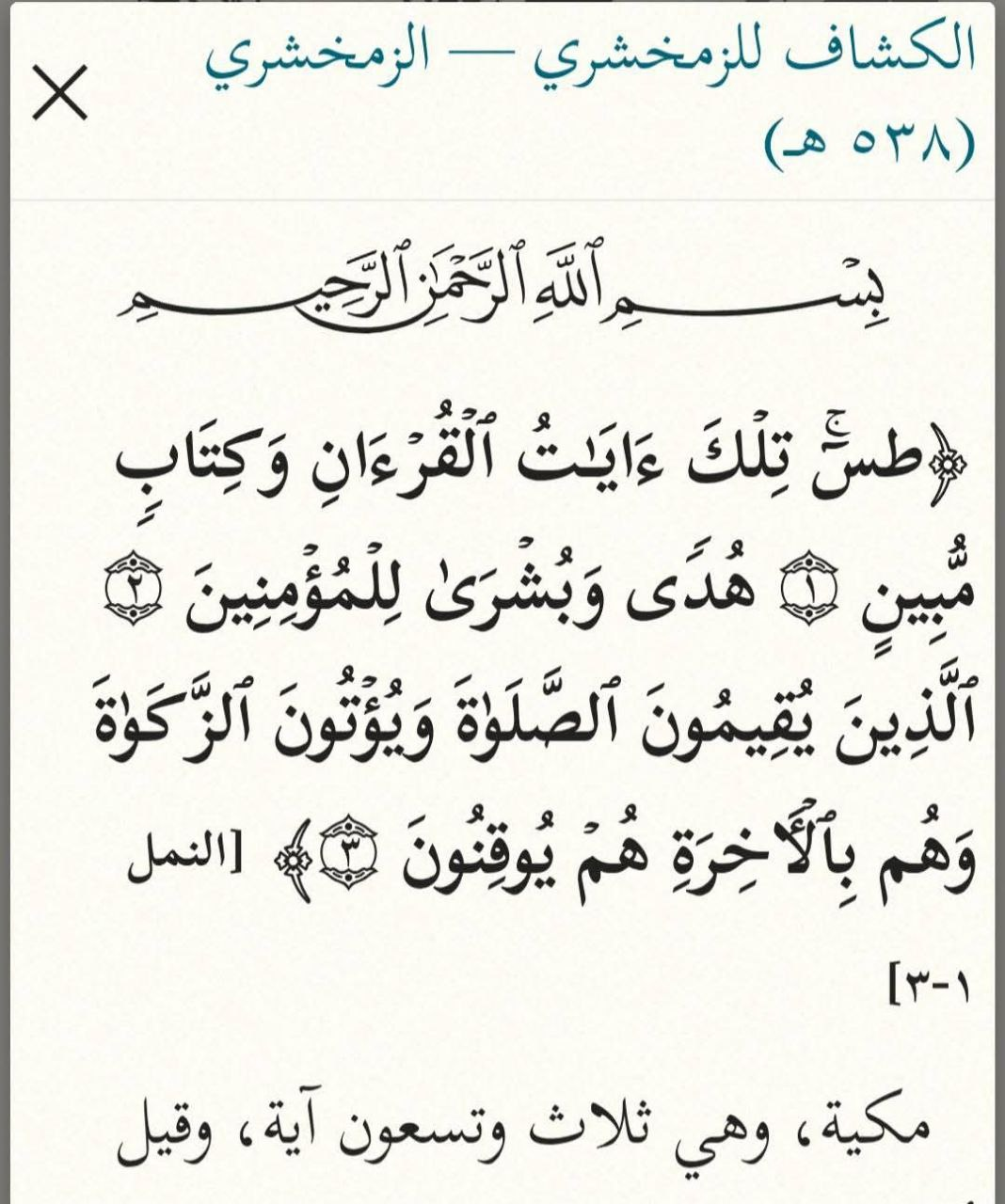
This Arabic scan is fromal-Kashshāf by al-Zamakhsharī. The highlighted section states that Sūrat al-Naml is Meccan and gives the verse count. This shows that even across different exegetical schools, the Makkan classification of Sūrat al-Naml is maintained.
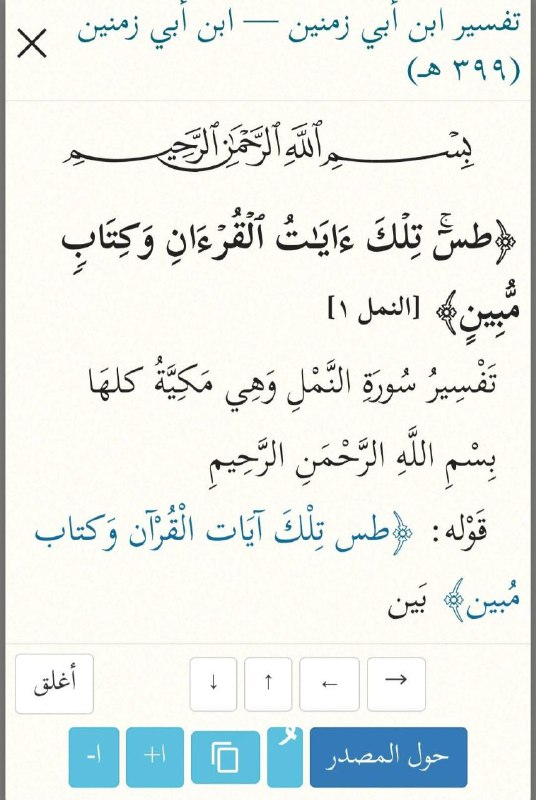
This Arabic scan is from Tafsīr Ibn Abī Zamanīn. The highlighted statement says Sūrat al-Naml is Meccan, all of it. This is another direct statement supporting the complete Makkan classification of the surah.
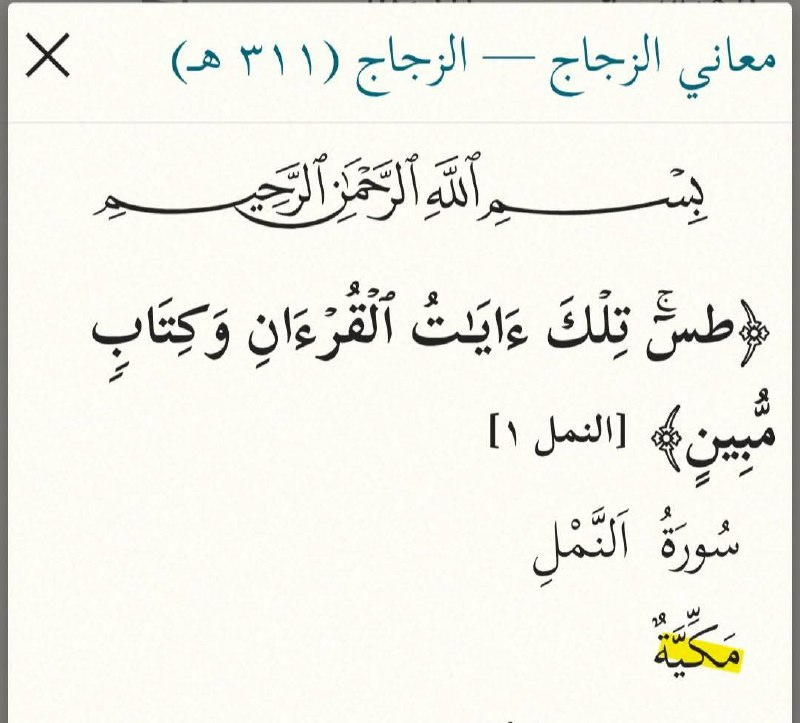
This Arabic scan is fromMaʿānī al-Qurʾān by al-Zajjāj. The highlighted word identifies Sūrat al-Naml as Meccan. This provides another linguistic/Qur’anic commentary source affirming the same point.
Second Response: The Prophet ﷺ Was Illiterate
[48] Al-`Ankabut (The Spider)
[And you did not recite before it any scripture, nor did you inscribe one with your right hand. Otherwise, the falsifiers would have doubted.]
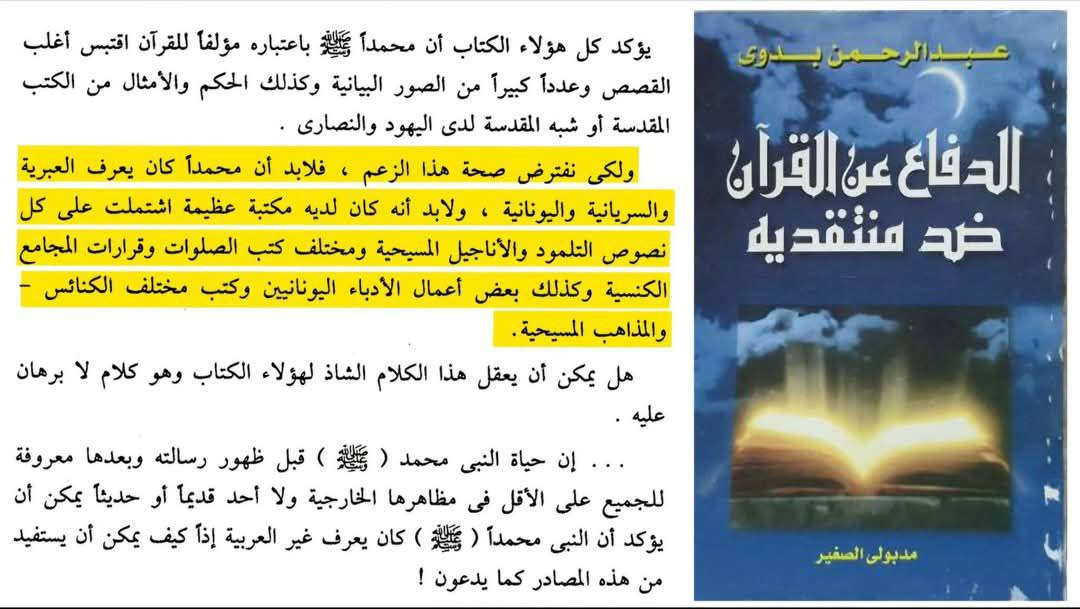
This Arabic scan is from a book titledDefending the Qur’an Against Its Critics. The highlighted passage criticizes the assumption that Muhammad ﷺ knew Arabic, Syriac, Greek, and Latin, and that he had access to a huge library containing Jewish and Christian sacred texts, church prayer books, council decisions, pagan Greek works, and writings from different churches and sects. The page argues that this assumption is unreasonable, especially when the Prophet ﷺ was known as unlettered and could not read non-Arabic sources. It supports the argument that the borrowing claim requires an unrealistic scenario.
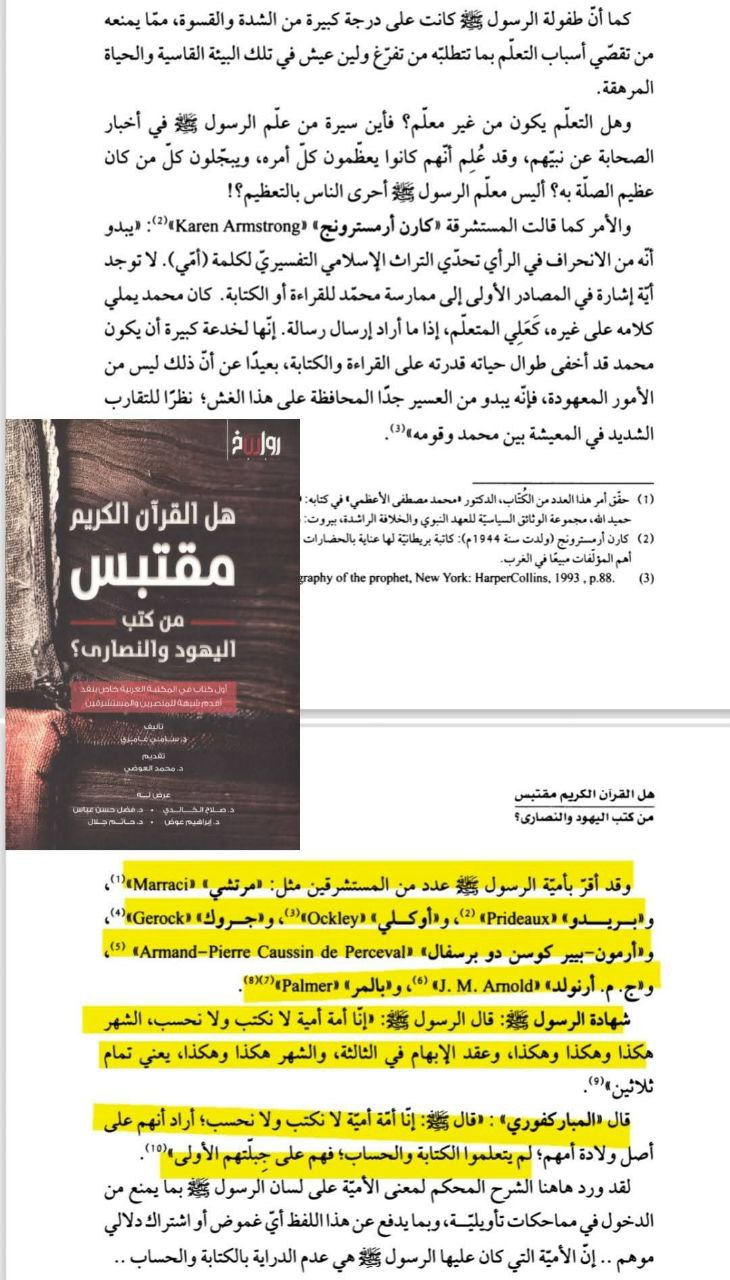
This Arabic scan discusses the illiteracy of the Prophet ﷺ and cites Orientalists and researchers who acknowledged that Muhammad ﷺ could not read or write. The highlighted section names several figures, including Marracci, Prideaux, Ockley, Gerock, Armand-Pierre Caussin de Perceval, Arnold, and Palmer, and says that they rejected the claim that the Prophet ﷺ could read and write. It also quotes a researcher saying that he is certain Muhammad ﷺ did not know writing and reckoning. The scan strengthens the argument that the borrowing accusation requires ignoring the Prophet’s ﷺ known illiteracy.
Then, the book is not Arabic, so how could the Prophet have quoted from it in the first place?
Third Response: Targum Sheni Is Later Than the Prophet ﷺ
And the Prophet died in 632 [the first half of the seventh century].
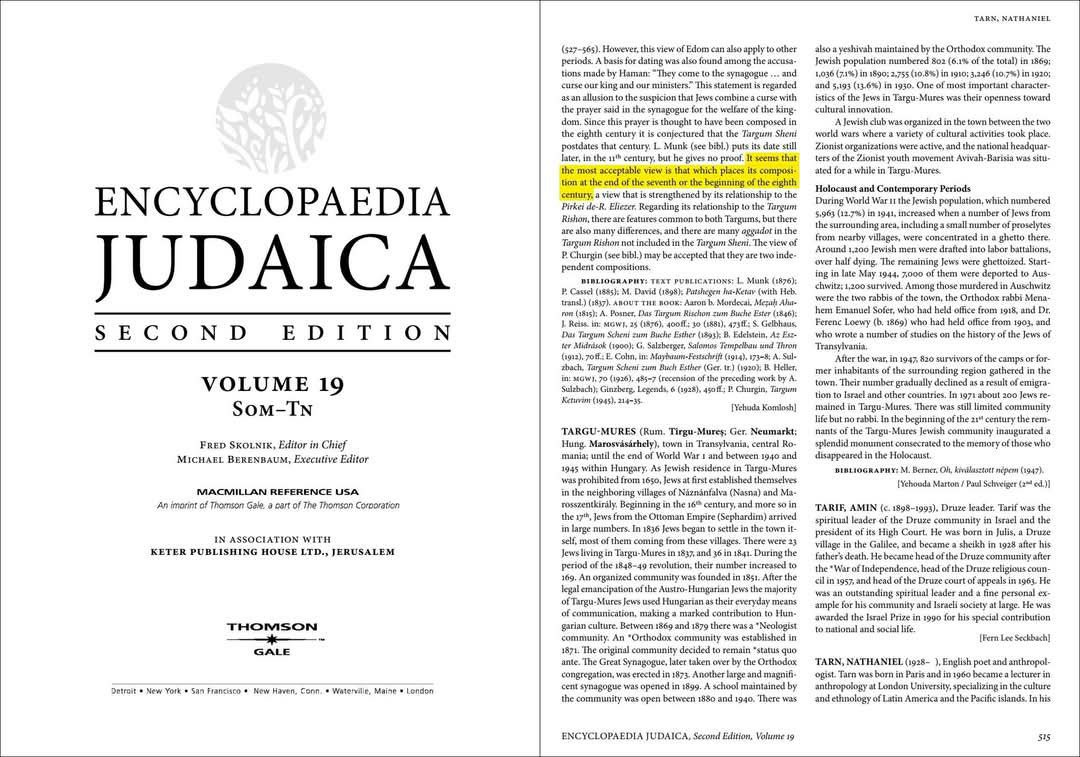
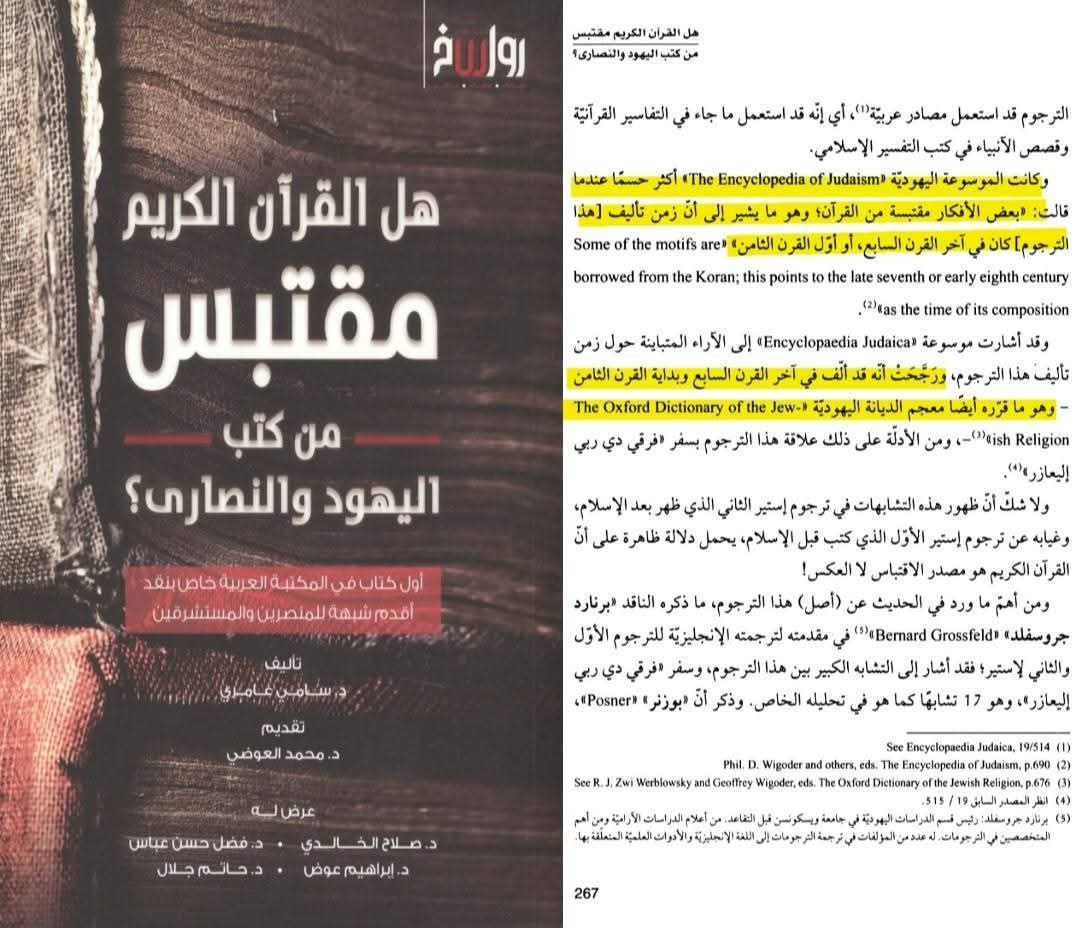
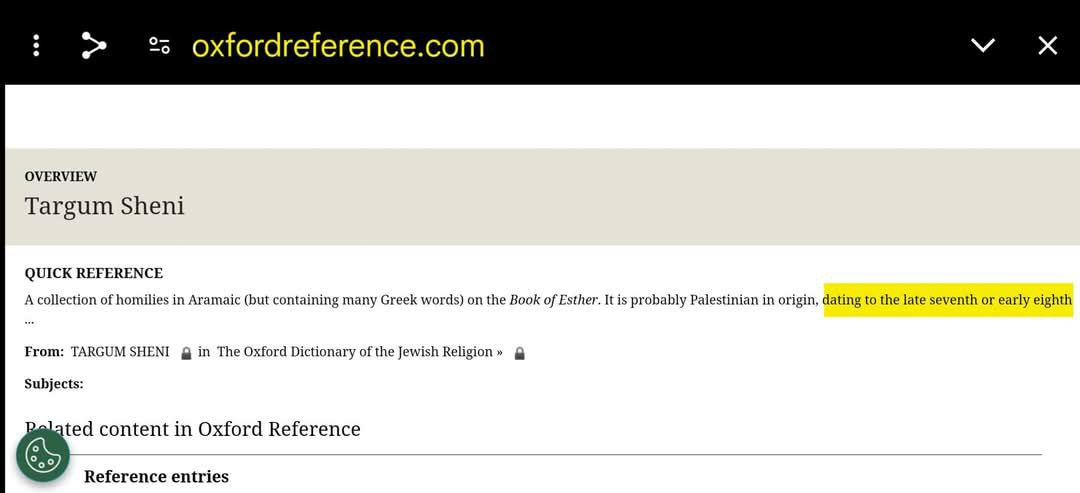
This Arabic scan discussesTargum Sheni and cites The Encyclopedia Judaica and The Oxford Dictionary of the Jewish Religion. The highlighted section says that some motifs in the Targum appear to be borrowed from the Qur’an and that this points to the seventh or early eighth century as the time of composition. It also notes that the Targum has been dated to the end of the seventh century or the beginning of the eighth century. This directly reverses the borrowing claim: if anything, the direction of influence cannot simply be assumed against the Qur’an.
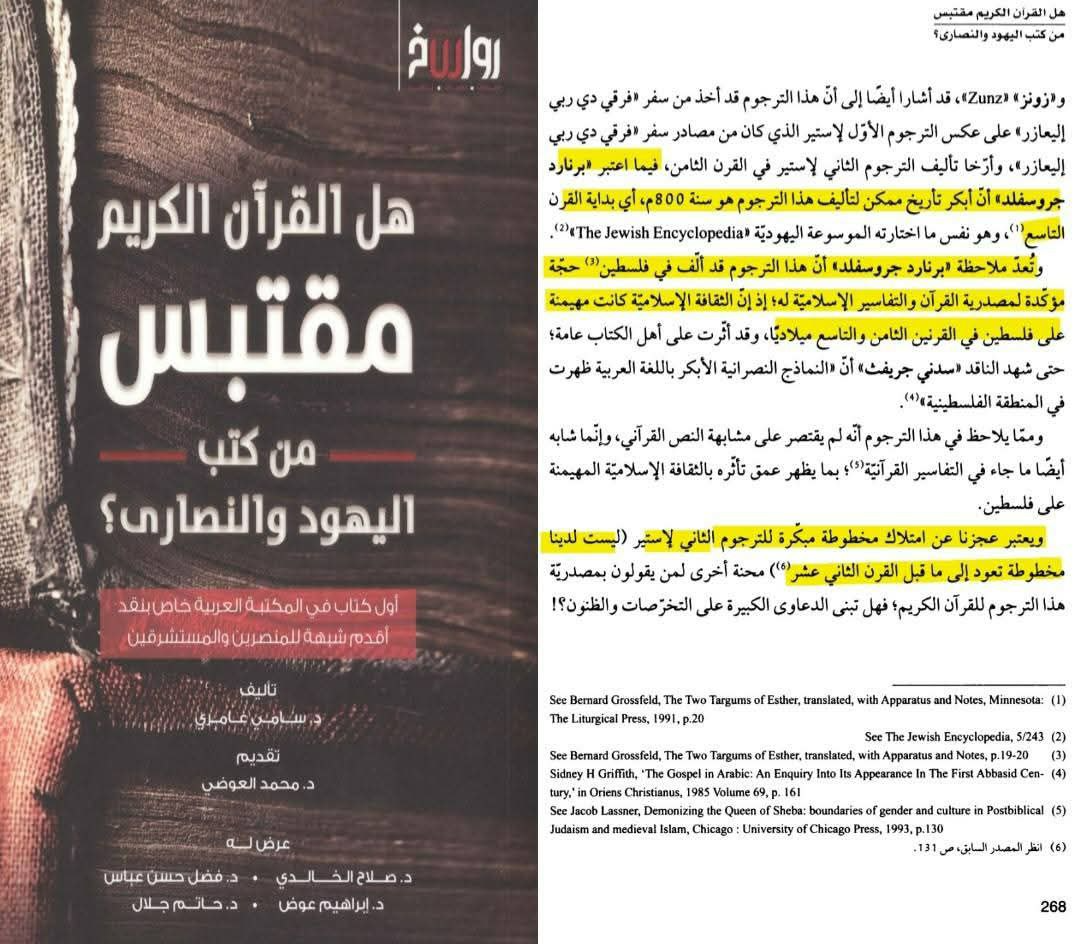
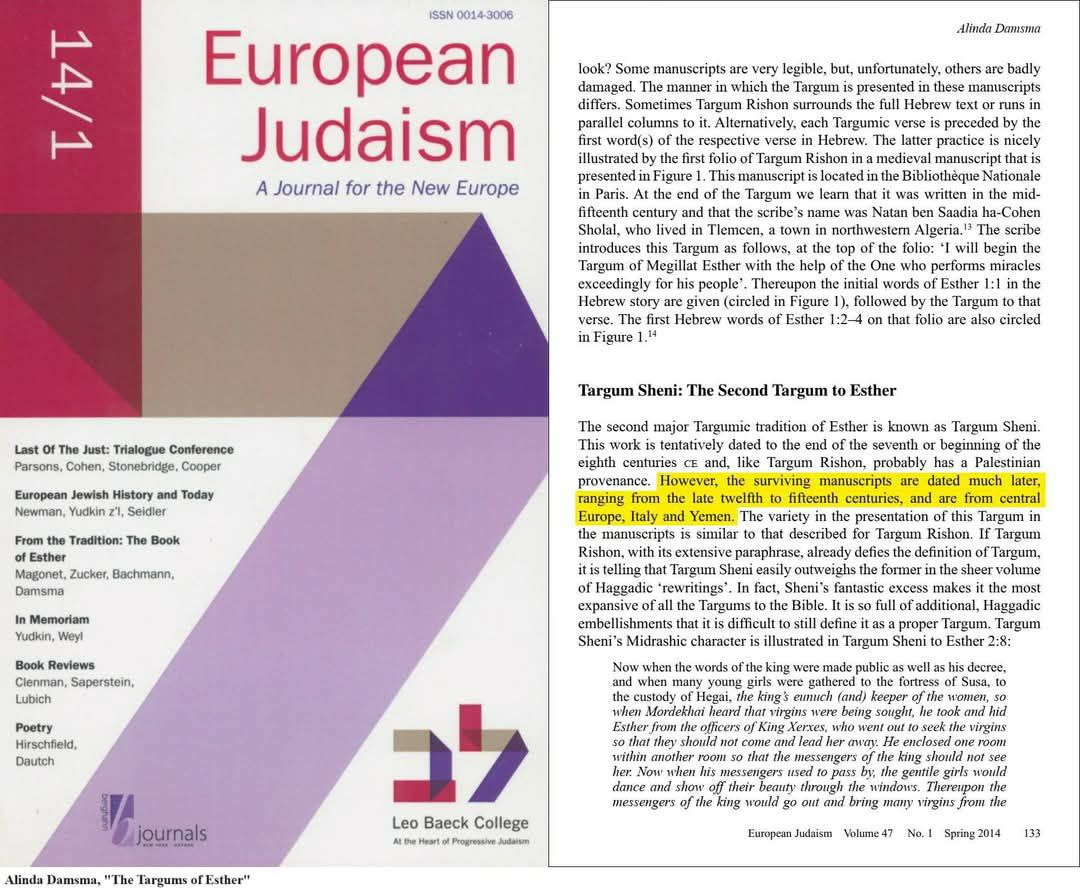
This Arabic scan continues the discussion of the dating ofTargum Sheni. The highlighted section states that scholars have dated the work to around the year 800, meaning the beginning of the ninth century, and also mentions a view connecting it to Palestine after Islamic culture had begun affecting the region. The page then highlights that there is no surviving early manuscript of Targum Sheni before the twelfth century. This is central to the refutation because it makes the accusation of Qur’anic borrowing historically weak.
Fourth Response: The Oldest Manuscripts Are Centuries Later
Fourth: The oldest manuscript of this book is from the twelfth century, centuries after the death of the Prophet
Final Point: Similarity Does Not Prove Borrowing
Fifth: We conclude with what Johannes Quaston [a paraphrase or textual transmission] quoted from Justin Martyr 100-160 AD.
The demons imitated the prophecies of the Old Testament in the secret pagan religions, and this explains the reason for many of the similarities and parallels between the Christian religion and forms of pagan worship. Similarly, philosophers, such as Plato, quoted from the Old Testament, and for this reason we cannot be surprised to find some Christian ideas in Platonic philosophy.
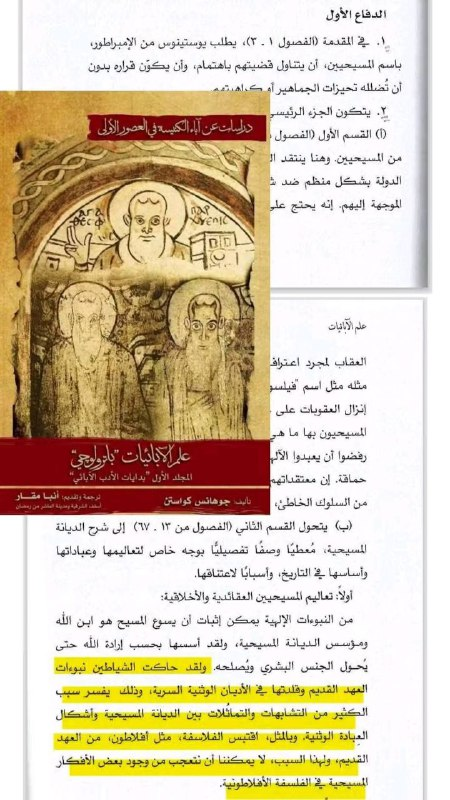
This Arabic scan is from a work on allusions in early church fathers. The highlighted section says that Christian writers adopted philosophical terminology from Platonism and religious expressions from the Old Testament and non-canonical Jewish writings. It explains that this helps account for similarities and overlaps between Christian doctrine, Greek philosophy, and extra-biblical Jewish literature. This supports the broader argument that similarity between texts does not automatically prove direct borrowing by the Qur’an.
Conclusion
The critic claims that the Qur’an borrowed the story of Solomon and the hoopoe from Targum Esther II, but the evidence presented above creates serious problems for that claim:
- Sūrat al-Naml is classified as Meccan by numerous tafsīr authorities.
- The Prophet Muhammad ﷺ was unlettered and did not read or write.
- The alleged source was not Arabic.
- Targum Sheni is dated after the Prophet ﷺ by the very academic sources cited.
- The oldest manuscripts are centuries later.
- Similarity between traditions does not prove Qur’anic borrowing.
So the question remains:
How did the Prophet ﷺ allegedly quote from a non-Arabic work that was composed after his death?