Did the Prophet ﷺ Borrow “No Eye Has Seen” from Paul?
Was the Description of Paradise in Sahih al-Bukhari Taken from Paul?
Table of Contents
- Introduction
- The Claim
- The Hadith in Sahih al-Bukhari
- Paul’s Statement in Corinthians
- First Response: The New Testament Translation Came After the Prophet ﷺ
- Second Response: The Prophet ﷺ Was Illiterate
- Third Response: Paul Himself Says “As It Is Written”
- Fourth Response: Christian Scholars Disagreed About Paul’s Source
- Fifth Response: Paul and Hellenistic Influence
- To Read in Detail
- Conclusion
Introduction
The response to the claim that the description of Paradise in Sahih al-Bukhari is taken from Paul.
The Claim
Some claim that the description of Paradise in Sahih al-Bukhari was taken from Paul’s statement in his letter to the Corinthians.
The Hadith in Sahih al-Bukhari
God, Blessed and Exalted is He, said:
“I have prepared for My righteous servants what no eye has seen, no ear has heard, and no human mind has conceived.”
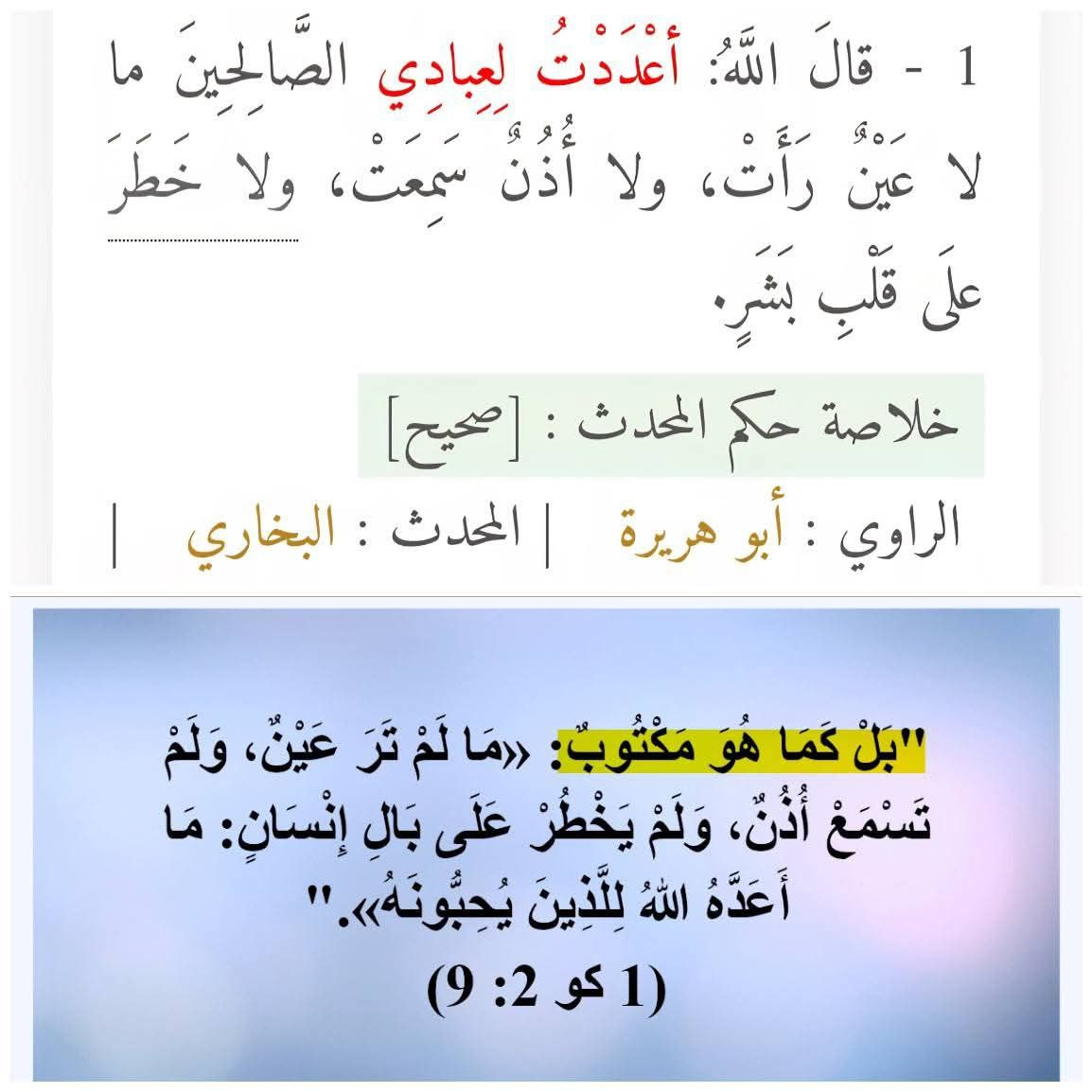
This scan shows the hadith of Abu Hurayrah in Sahih al-Bukhari. The highlighted part contains the wording: “ما هو مكتوب” — “what is written,” followed by the meaning that no eye has seen, no ear has heard, and what has not occurred to the heart of man. The scan is being used to show the Islamic wording of the hadith and its connection to the divine promise prepared for the righteous servants of Allah.
Paul’s Statement in Corinthians
“But as it is written: ‘What no eye has seen, what no ear has heard, and what no human mind has conceived—the things God has prepared for those who love him.’”
In response, we say:
First Response: The New Testament Translation Came After the Prophet ﷺ
Firstly, the translation of the New Testament was done after the Prophet’s death, so it is impossible that it was taken from Paul’s text.
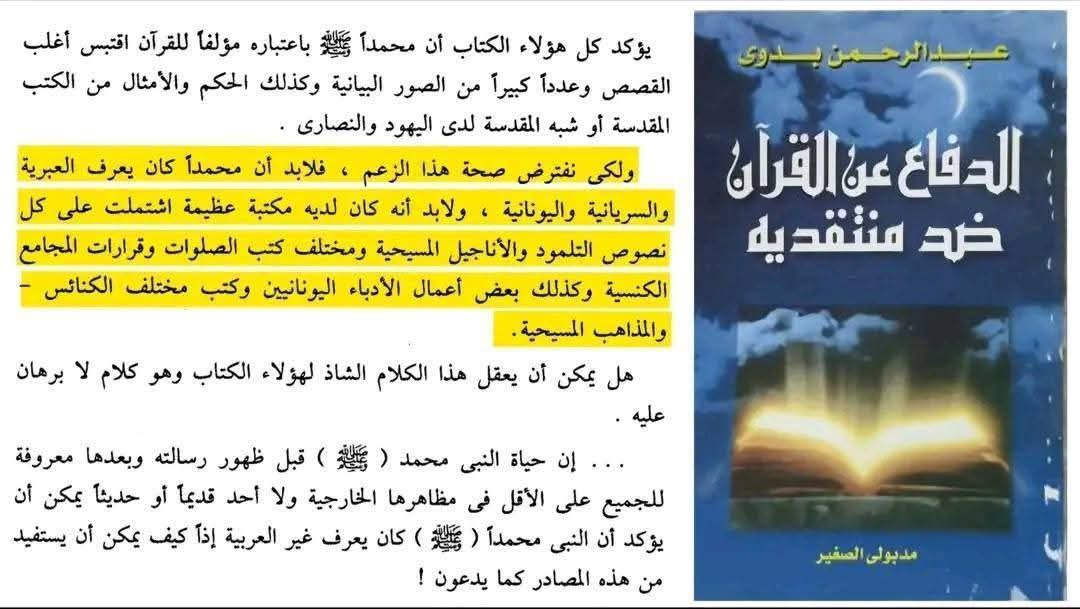
This Arabic scan argues that anyone claiming the Prophet Muhammad ﷺ copied from Jewish or Christian books must assume that he knew Hebrew, Syriac, Greek, and Latin, and that he had access to a massive library containing the Talmud, Christian Gospels, church prayer books, church council decisions, Greek fathers, and writings from different Christian sects. The highlighted section stresses the absurdity of imagining such access in the Prophet’s environment. It then questions whether such a claim is reasonable when the Prophet ﷺ was known among his people as unlettered and did not know foreign languages.
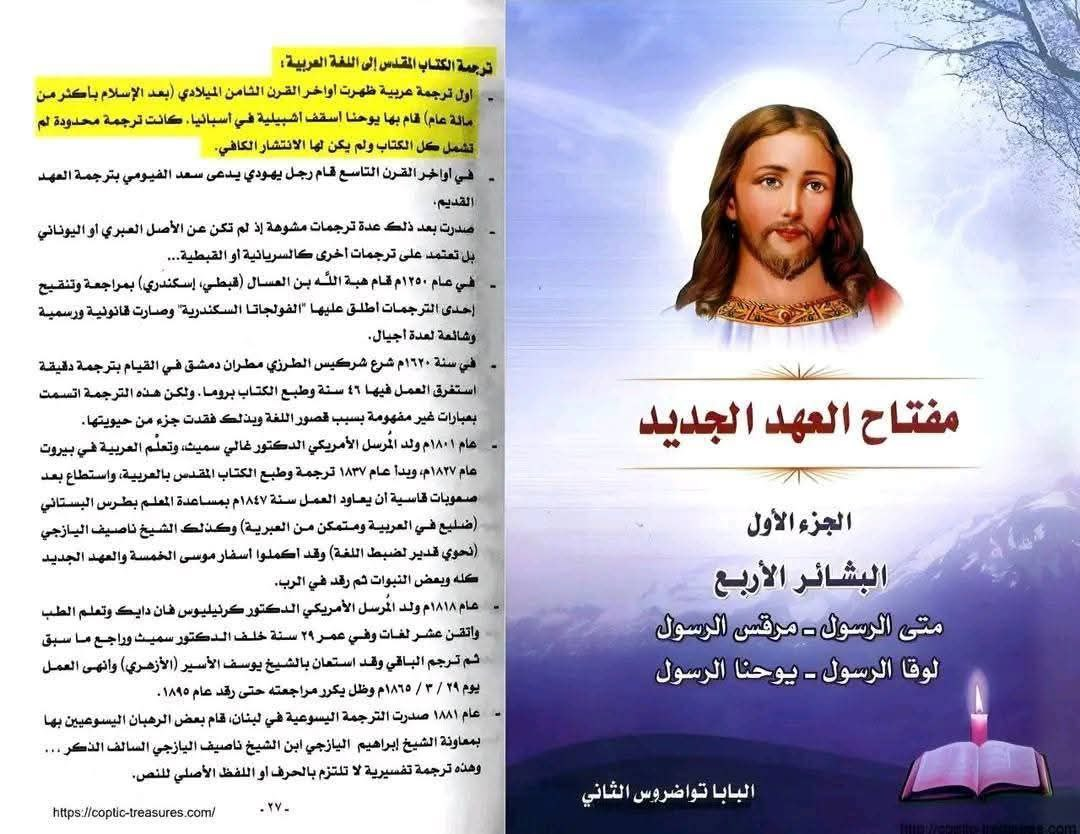
This scan discusses the history of Arabic translations of the Bible. The highlighted section states that the first Arabic translation appeared at the end of the eighth century after Islam, by a person called Matthew, and that it targeted Copts in Asia but was limited and did not include the entire book. The page then mentions later translation attempts, including the thirteenth-century work associated with Saʿd al-Dawlah ibn Jirjis al-Mahdī, and other later Arabic translations. This supports the argument that the Prophet ﷺ could not have copied from an Arabic New Testament translation because such translations were later.
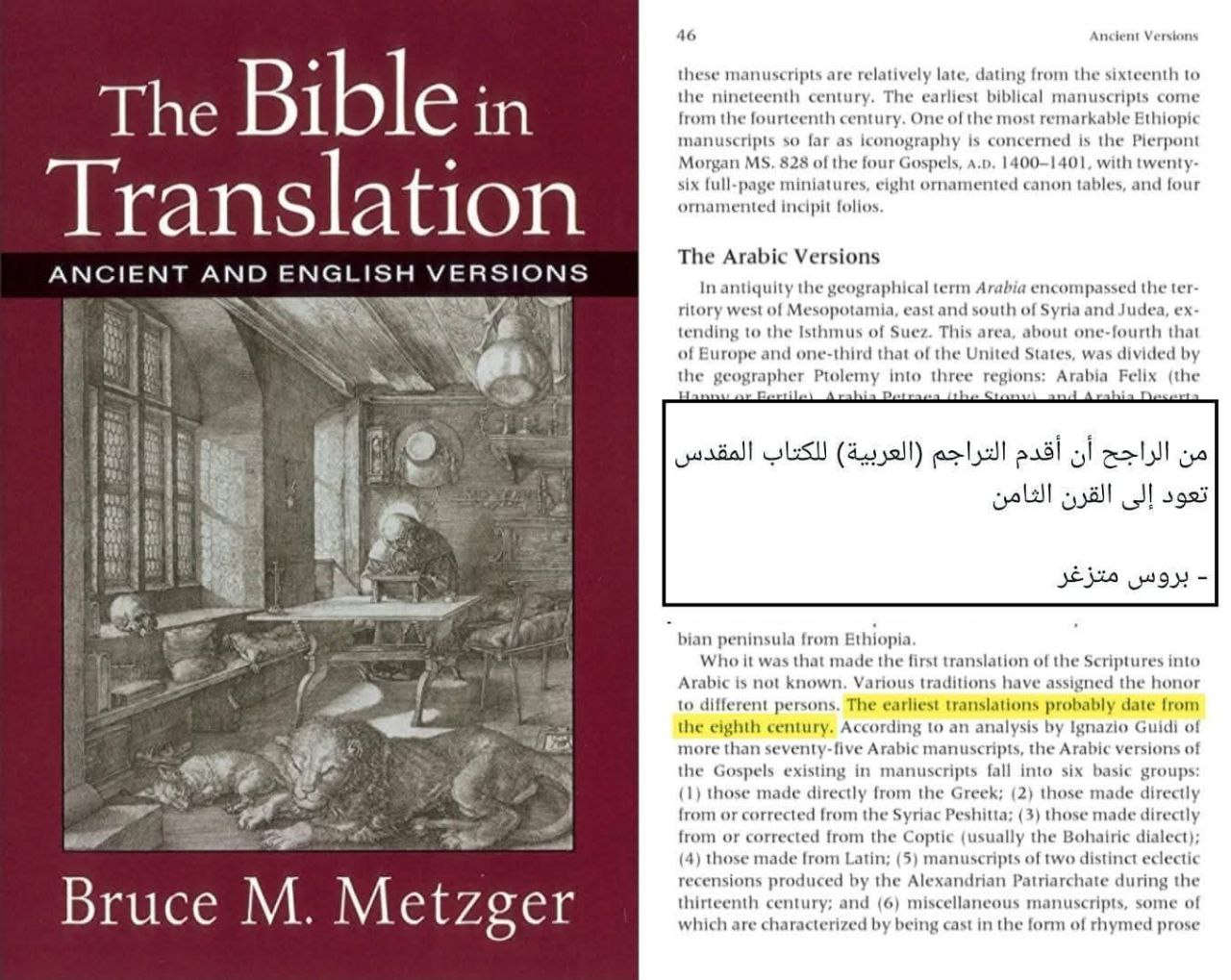
This scan is from Bruce M. Metzger’sThe Bible in Translation: Ancient and English Versions. The highlighted passage states that the earliest translation of the Scriptures into Arabic is debated, but the earliest traditions probably date from the eighth century. The Arabic note on the image says Metzger considers the oldest Arabic translations of the Bible to go back to the eighth century. This directly supports the point that Arabic Bible translations available after the Prophet ﷺ cannot be used as a source for the Qur’an or hadith.
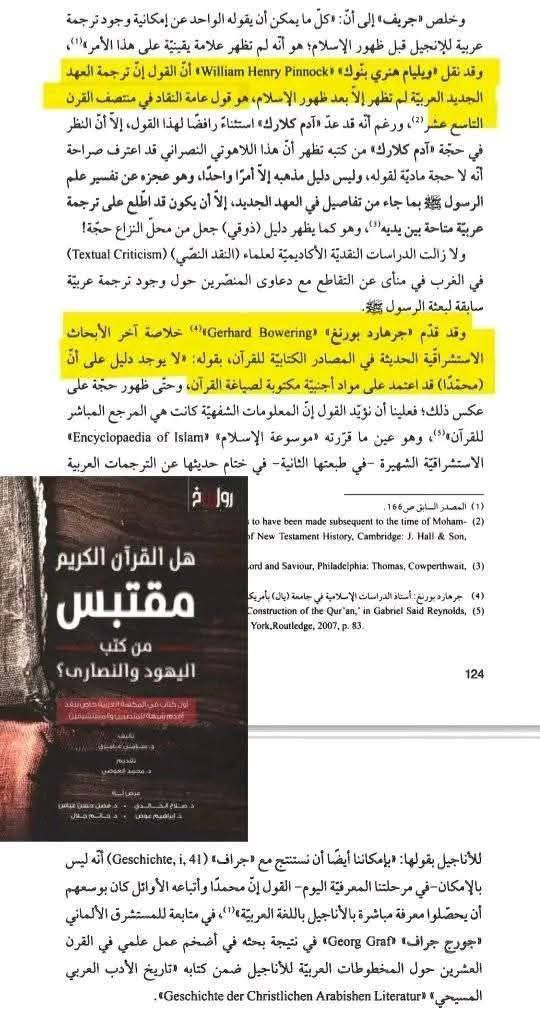
This Arabic scan discusses claims about the existence of pre-Islamic Arabic Bible translations. The highlighted quotation from William Henry Pinnock says that the New Testament did not appear in Arabic before the fourth century after the rise of Islam. The scan also mentions claims by Regnard Bowering regarding possible Syriac-Arabic Christian material, but the page argues that such claims do not establish the existence of an Arabic Bible translation before Islam. The point here is that claims of pre-Islamic Arabic Bible availability are speculative and not sufficient to prove borrowing.
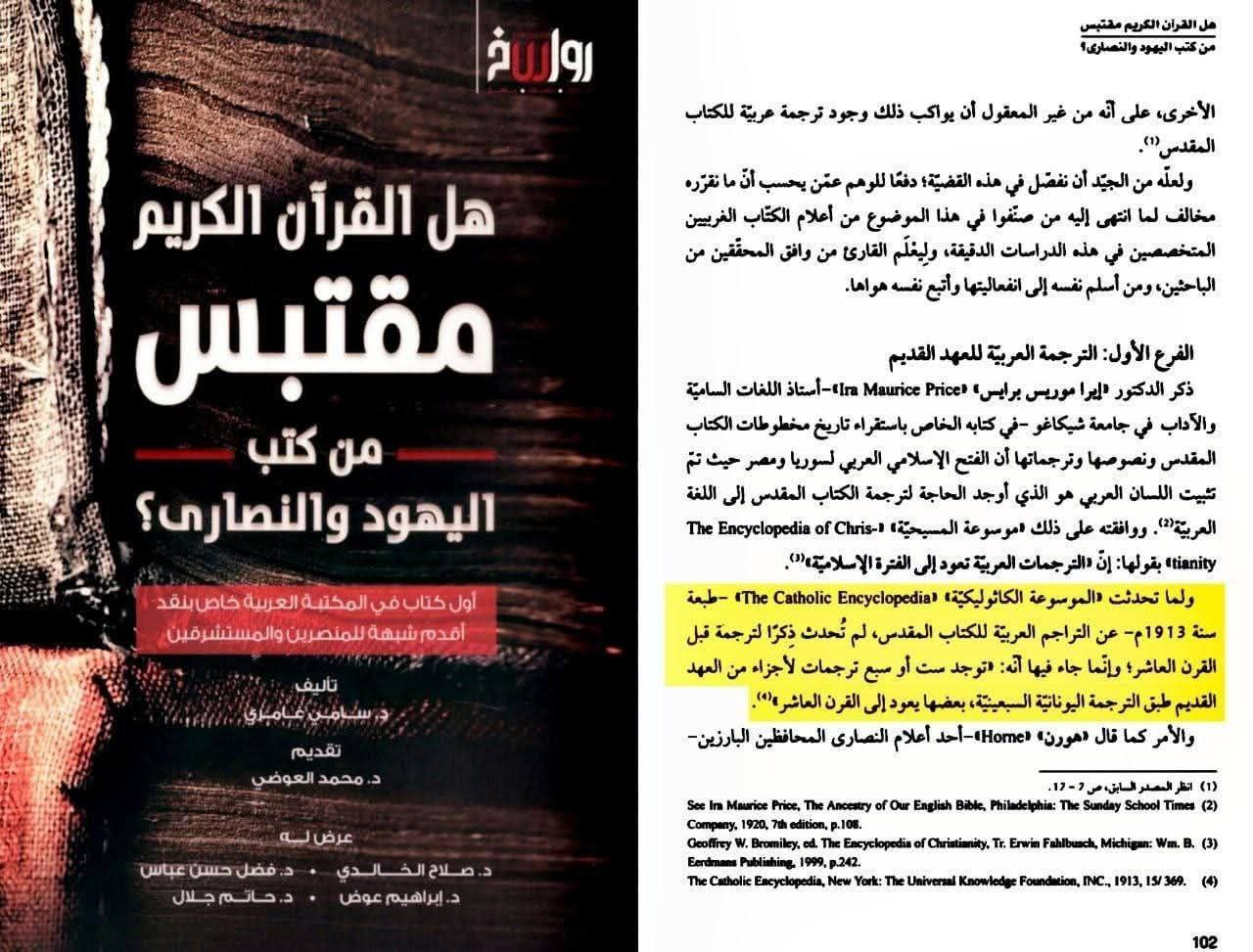
This scan citesThe Catholic Encyclopedia under the discussion of Arabic translations of the Bible. The highlighted section states that Ishaq Velasquez produced an Arabic translation of the Gospels in Cordoba in the year 946 CE, and that there are seven manuscript copies of this translation, some of which go back to the ninth century. This is being used to show that known Arabic translations are late and cannot reasonably be used as alleged sources for the Prophet ﷺ.
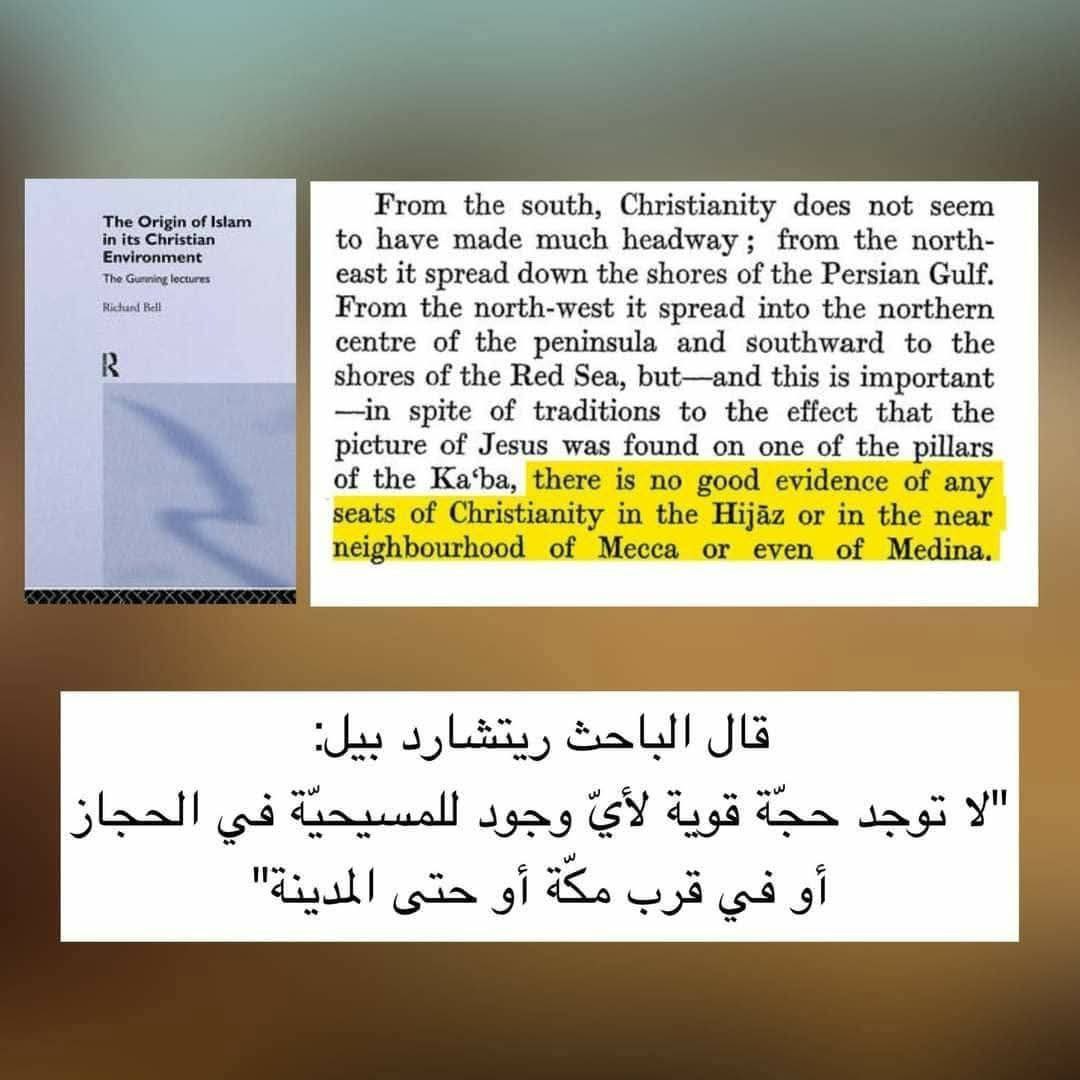
This scan quotes Richard Bell fromThe Origin of Islam in Its Christian Environment. The highlighted English text says there is no good evidence of any seats of Christianity in the Hijaz or near Makkah or even Madinah. The Arabic line below summarizes this: “No strong evidence exists for the presence of Christianity in the Hijaz, near Makkah, or even Madinah.” This supports the argument that the Prophet ﷺ did not have a normal Christian textual environment from which he could supposedly copy Pauline wording.
Second Response: The Prophet ﷺ Was Illiterate
Secondly, he was illiterate.
This point directly weakens the borrowing claim, because the claim assumes access to a written Pauline text, comprehension of its language, and transmission into Arabic. The Prophet ﷺ being unlettered makes this chain historically implausible.
Third Response: Paul Himself Says “As It Is Written”
This means he quoted the text; it is not his own composition.
We do not deny that the Old Testament contains remnants of divine inspiration, and this is one of them.
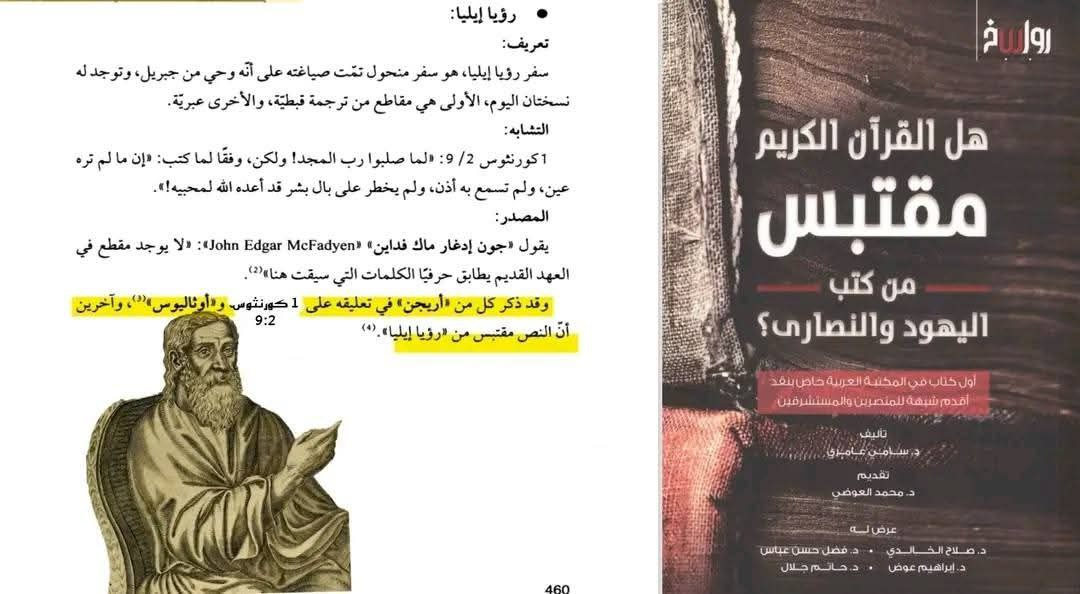
This Arabic scan discusses “The Apocalypse of Elijah” and notes that John Edgar McFadyen says this apocryphal text is not found in the Ethiopic Bible among the canonical books. The highlighted statement says that one specialist in apocryphal literature mentioned that the text is quoted from the Apocalypse of Elijah. This is important because Paul’s phrase “as it is written” indicates that he is quoting from somewhere, and Christian scholars have tried to identify that source.
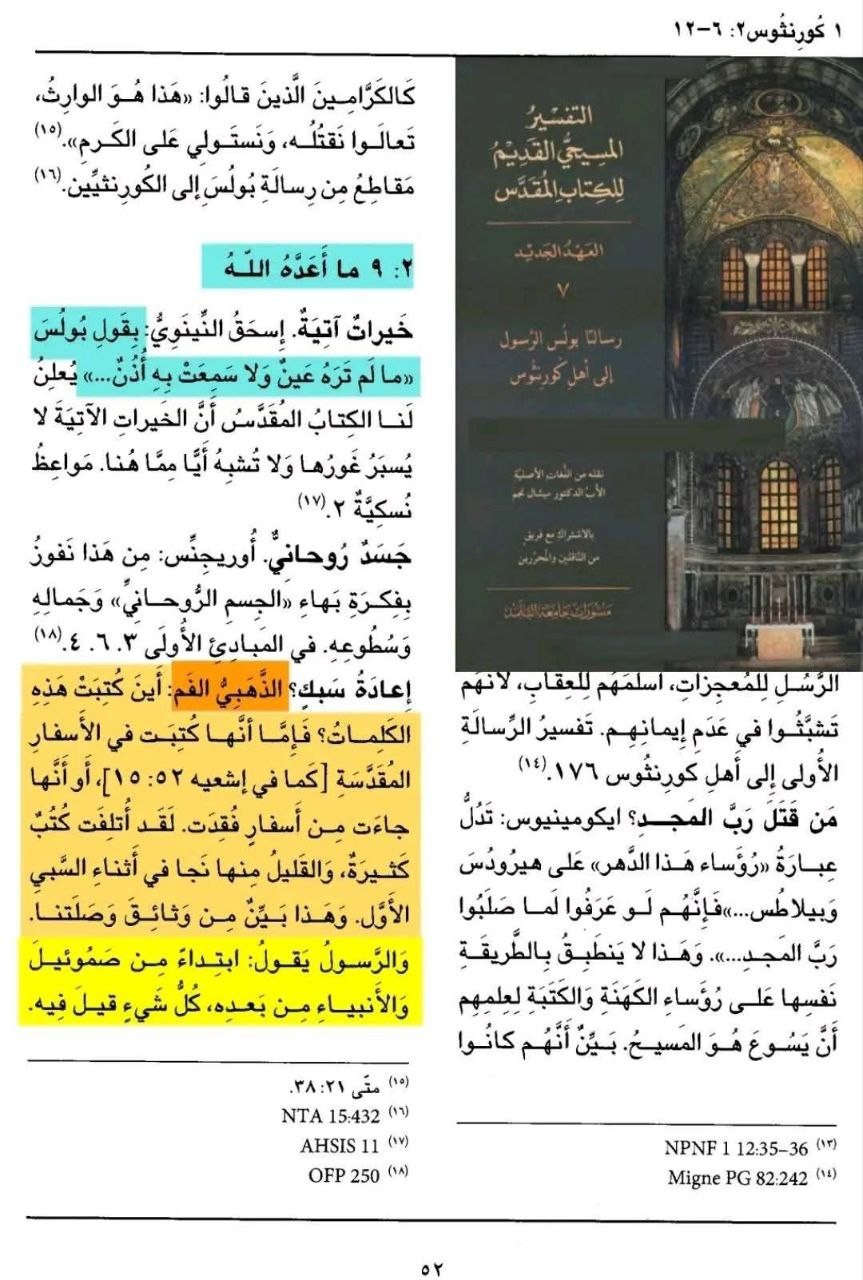
This scan is included as part of the evidence chain discussing possible sources behind Paul’s quotation. The point being supported here is that Paul’s wording was not presented by Paul as an original statement, but as a quotation from something already “written.”
Fourth Response: Christian Scholars Disagreed About Paul’s Source
For example, Origen attributed it to the vision of Elijah, but Jerome strongly refuted this, saying it was in Isaiah.
John Chrysostom said that if it is in the Holy Scriptures, it is in Isaiah, and if not, then it is in lost books, because many books were destroyed, and only a few survived during the first exile.
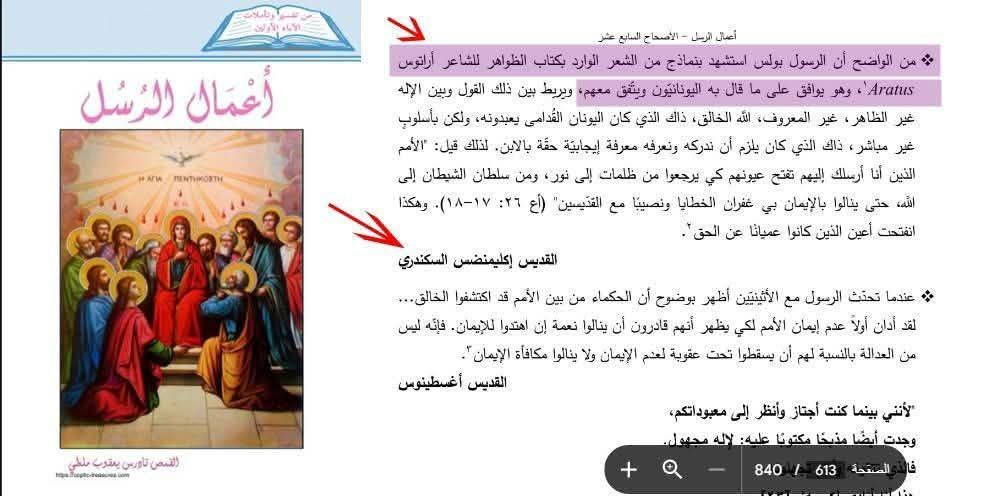
This Arabic scan discusses the saying in Acts 20:35: “It is more blessed to give than to receive.” The highlighted section explains that this statement is not found in the four Gospels and says that Paul quoted it from another source. It then quotes Aratus as an example of Paul drawing on known sources. The scan also mentions Clement of Alexandria and Augustine while discussing how apostolic and patristic writers dealt with such sayings. The relevance here is that Christian sources themselves recognize that New Testament authors sometimes quote from sources outside the currently preserved canonical text.
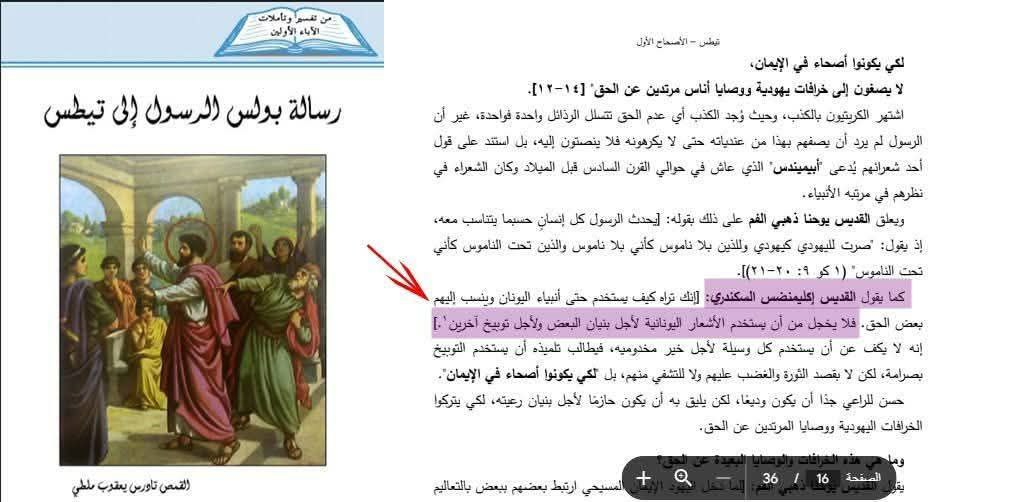
This Arabic scan discusses Titus 1:12 and the saying about Cretans. The highlighted portion says that Saint Clement of Alexandria knew how to use the writings of Greeks and attributed the phrase to the poet Epimenides. It then mentions that others attributed related expressions to Callimachus. This scan supports the broader point that Pauline and New Testament writings contain quotations and references from earlier sources, including Greek literary material, so the mere presence of similar wording does not prove Islamic borrowing from Paul.
Fifth Response: Paul and Hellenistic Influence
Fourthly, the images show some similarities between the Old Testament, paganism, Greek poets, and Paul.
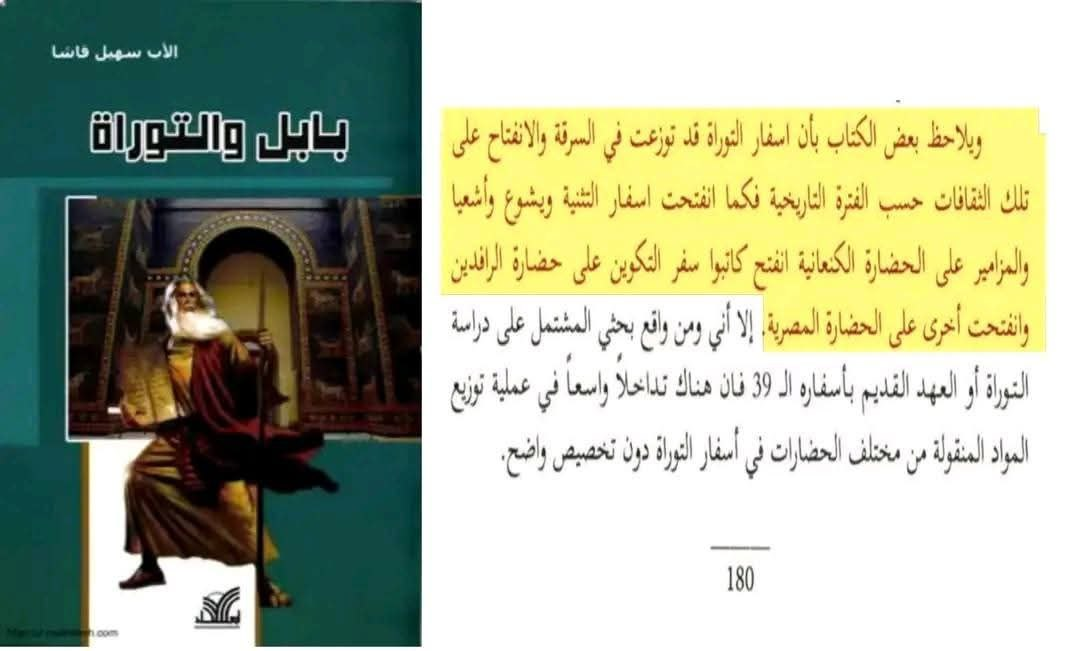
This Arabic scan from Father Suhail Qasha’sBible and Torah discusses how some biblical writings show the influence of surrounding cultures. The highlighted section says that certain books show influence from the history of the Persian Empire, while others absorbed Persian influence and then later Greek/Hellenistic influence. It also says that Hellenistic culture spread in the region and affected Jewish culture. This supports the argument that cultural and textual overlap existed inside Jewish and Christian environments themselves.
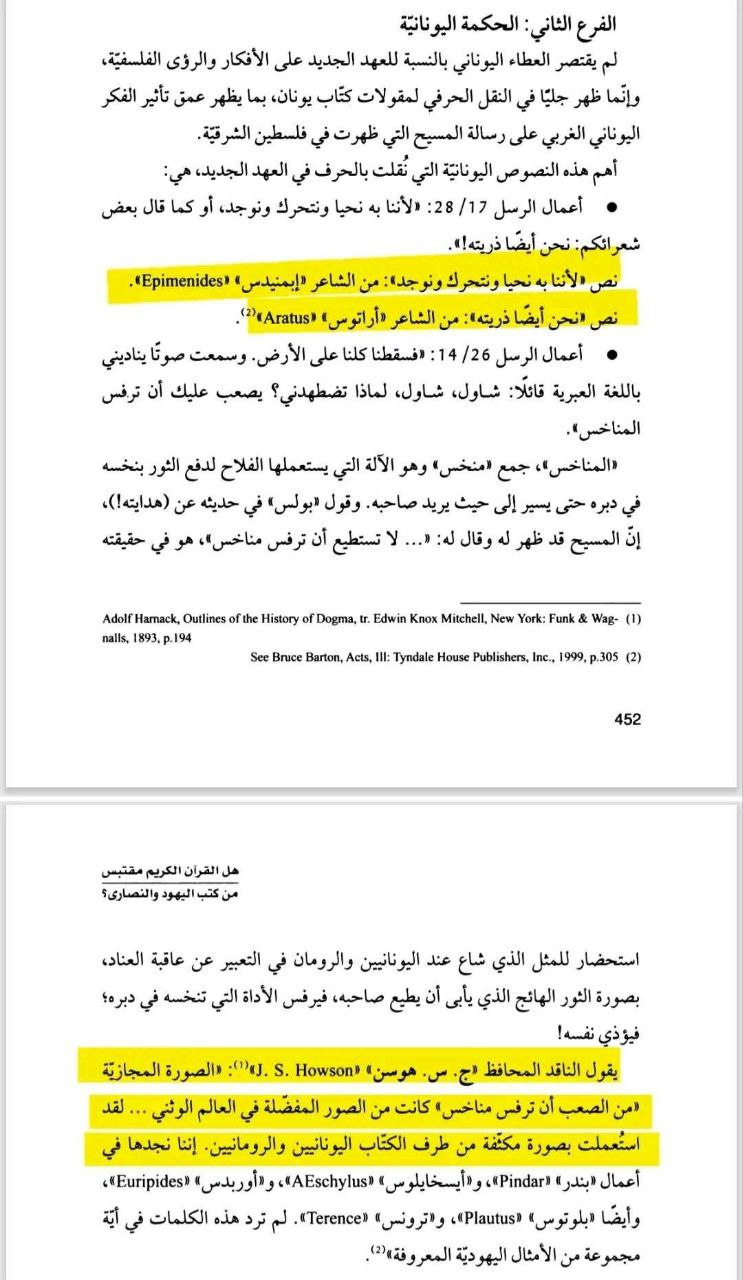
This Arabic scan discusses Greek wisdom and Hellenistic influence in the New Testament. The highlighted section says Paul quoted from Greek poets twice: from Epimenides in Titus, and from Aratus in Acts. The lower highlighted section quotes J. S. Howson, who says that the line “the evil beast of Crete” was familiar in the pagan world and was attributed by ancient writers to Epimenides, with similar references in Callimachus, Aeschylus, and others. This supports the point that Paul’s writings reflect earlier literary and cultural material.
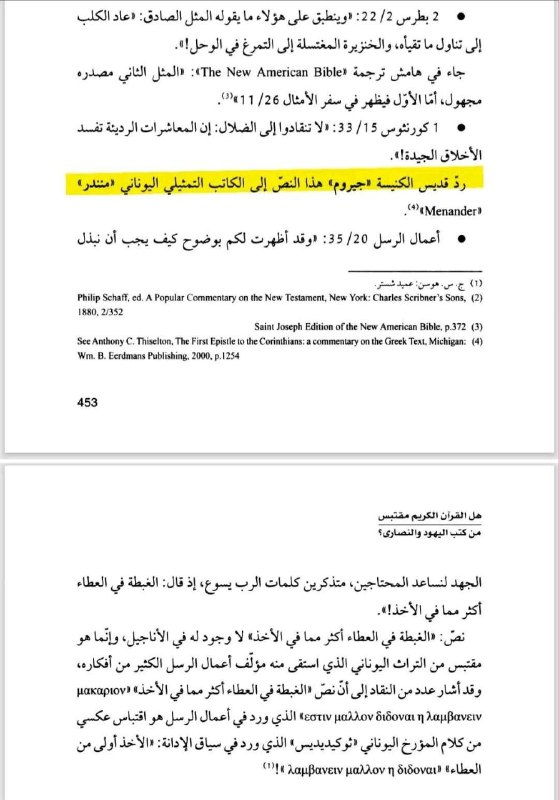
This Arabic scan continues the discussion of New Testament quotations and sources. The highlighted statement says that the Jerusalem Bible attributes a certain text to the Greek poet Menander. The lower section discusses the wording in Acts and explains that the Greek expression used there resembles known literary material. This scan supports the point that New Testament authors, including Paul, used sayings and expressions that had earlier literary backgrounds.
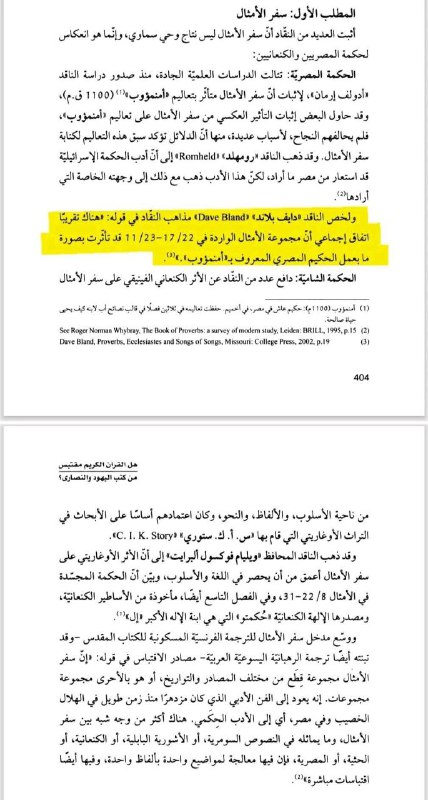
This Arabic scan discusses the Egyptian influence on biblical wisdom literature. The highlighted section says that David Bland concluded that there is almost unanimous agreement that Proverbs 22:17–24:22 was influenced by Egyptian wisdom poetry, specifically the Instruction of Amenemope. The lower paragraph explains that scholars such as A. I. K. Story argued that the Hebrew writer drew from Egyptian material in Proverbs. This supports the wider argument that biblical literature itself contains older literary and cultural parallels.
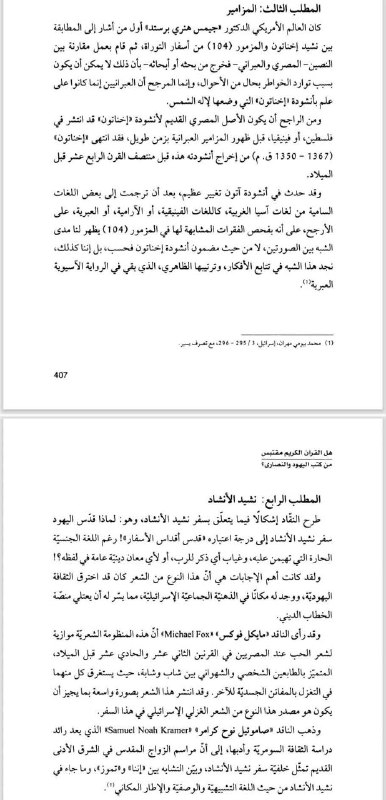
This Arabic scan discusses Psalms and other biblical texts in relation to neighboring ancient literature. It mentions Psalm 104 and its comparison with Egyptian solar hymn material, and also discusses the Song of Songs and possible influence from Syrian and Mesopotamian love poetry. The point is that scholars regularly identify parallels between biblical texts and earlier surrounding traditions, so Christians cannot use mere similarity as proof against Islamic texts while ignoring similar issues within their own textual tradition.
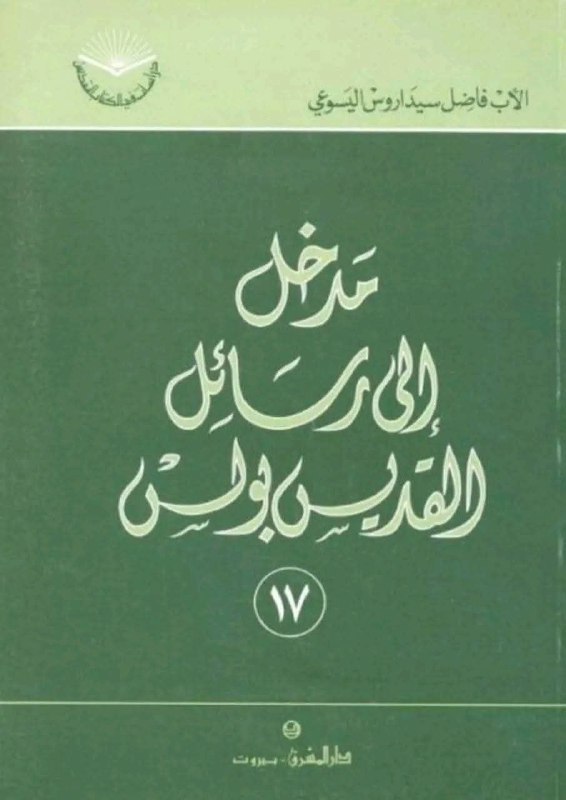
This scan shows the cover ofMadkhal ilā Rasāʾil al-Qiddīs Būlus by Father Fadel Sidraous, SJ. It is included as the source for the discussion of Paul’s background, style, and Hellenistic influence.
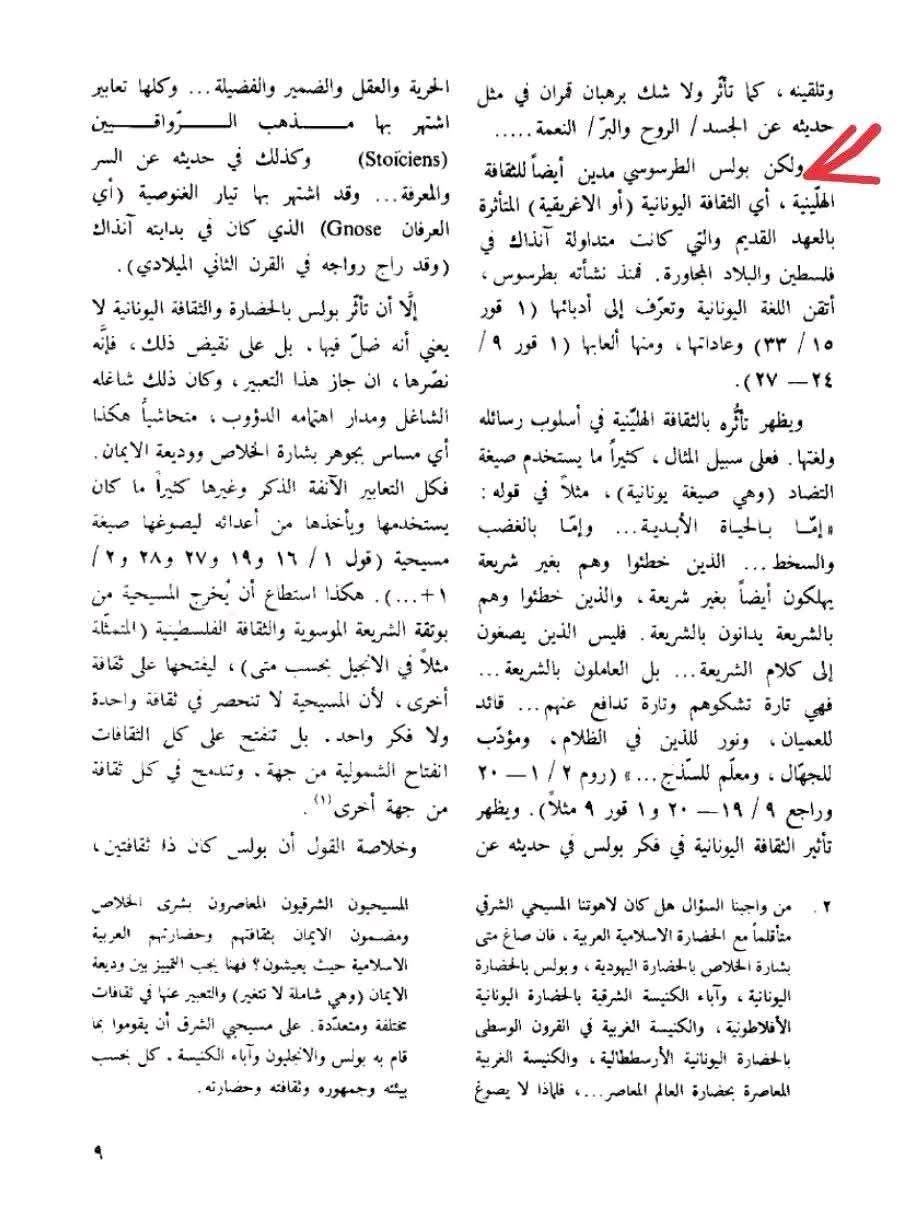
This Arabic scan from Father Fadel Sidraous discusses Paul’s Hellenistic background. The highlighted passage says that Paul of Tarsus was also indebted to Hellenistic culture, meaning Greek culture influenced by the Old Testament and widespread in Palestine and surrounding lands. It says Paul knew the Greek language and its literature from his upbringing in Tarsus, and that this influence appears in the style and language of his letters. This supports the argument that Paul was shaped by a wider Greek cultural environment.
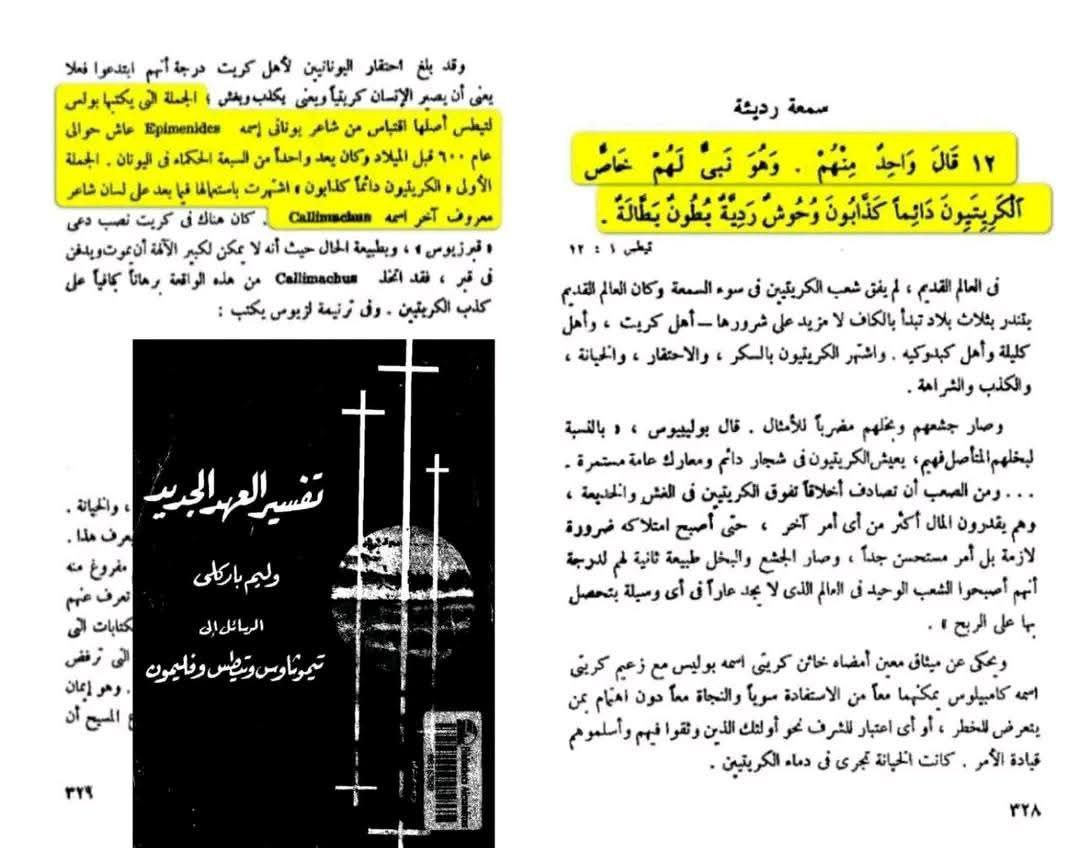
This scan compares biblical and Pauline material with earlier Greek sources. The right side shows Titus 1:12, where Paul quotes the statement that Cretans are always liars, evil beasts, and lazy gluttons. The left side explains that this quotation is traced to the Greek poet Epimenides, and it also mentions Callimachus. The scan is being used to show that Paul’s writings include direct dependence on earlier Greek literary material.
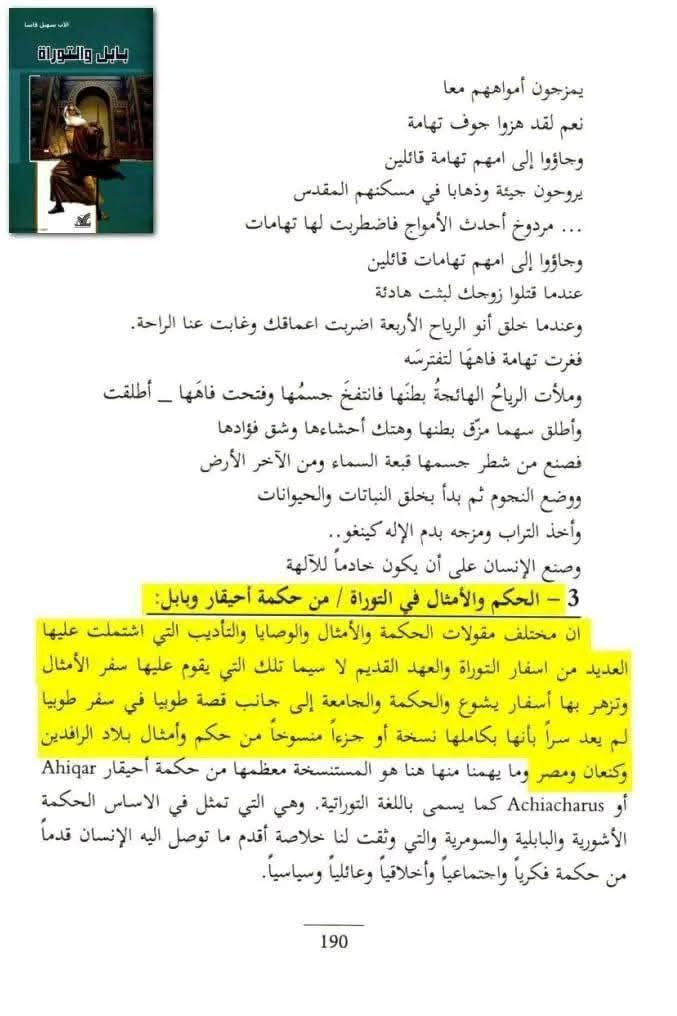
This Arabic scan from Father Suhail Qasha’sBible and Torah discusses wisdom sayings and proverbs in the Torah and Bible. The highlighted section says that different sayings, wisdom statements, commandments, and moral teachings in the biblical books were influenced by various sources, including the wisdom of Ahiqar. It says what matters here is borrowed from Ahiqar’s wisdom, known in Syriac as Achiacharus, which represents ancient Eastern wisdom touching on ethical, social, moral, practical, and political matters. This supports the point that biblical wisdom material itself has parallels and possible borrowings from older Near Eastern literature.
“But Paul of Tarsus is also indebted to Hellenistic culture, that is, Greek culture, which was influenced by the Old Testament and was prevalent at that time in Palestine and the surrounding lands.”
From his upbringing in Tarsus, he mastered the Greek language and became familiar with its literature and customs, including its games.
His Hellenistic influence is evident in the style and language of his letters.
Father Suhail Qasha notes that some writers observe that the books of the Torah were distributed across different historical periods in terms of borrowing and exposure to those cultures.
To Read in Detail
TO READ IN DETAIL
Is the Holy Quran Taken From the Bible_(Academical RESPONSE
Conclusion
The prophet could not have quoted this from Paul because he did not have a copy of the Bible.
Paul himself quoted this text from the Old Testament or from an unknown source.
- The Arabic translation of the New Testament came after the Prophet ﷺ.
- The Prophet ﷺ was illiterate.
- Paul himself says: “as it is written,” meaning he is quoting.
- Christian scholars themselves disagreed about where Paul got the quotation.
- The Bible and Paul’s writings contain many examples of dependence on earlier Jewish, Greek, Hellenistic, and ancient Near Eastern material.
- Similarity does not prove that the Prophet ﷺ copied from Paul.