Is Muhammad (Ahmad) Named in Isaiah 42:1? The "Chosen One" Prophecy Explained
The Name of Ahmad (ﷺ) in Isaiah 42:1
A Textual-Critical Analysis
Tags: #dawah #islamicapologetics #biblical-prophecy #isaiah #muhammad #ahmad
Related: Book of Hosea · Desire of Nations · Name of Prophet in Deuteronomy 33
This article focuses exclusively on Isaiah 42:1 and the objections raised against it. Prior articles have covered the full context of each verse and related prophecies.
See Isa42 (Even Accepted by Jews of Medina
Quranic Foundation
Allah ﷻ said:
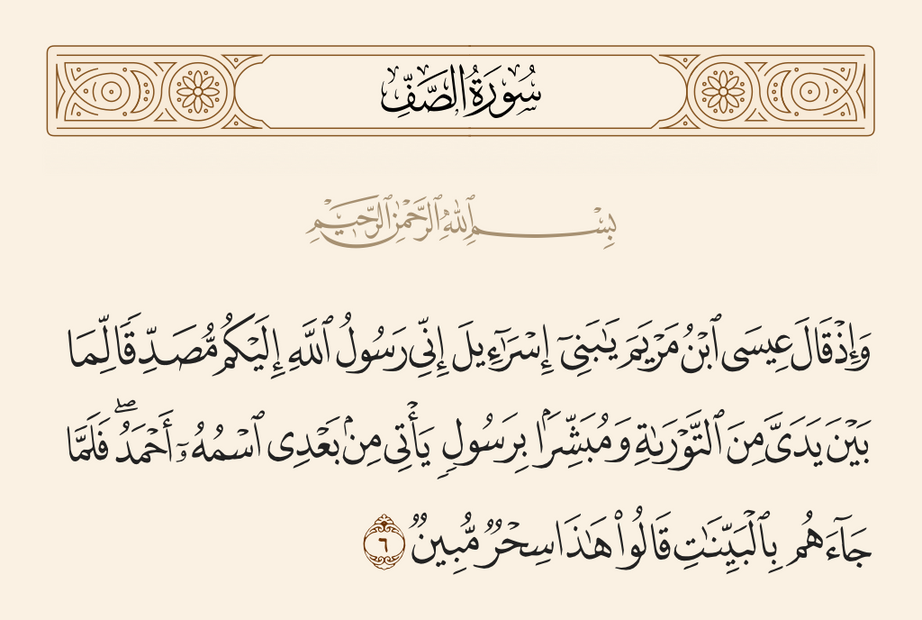
“And [mention] when Jesus, the son of Mary, said: ‘O Children of Israel, indeed I am the messenger of Allah to you, confirming what came before me of the Torah and bringing good tidings of a messenger to come after me, whose name is Ahmad.’”
— Surat Al-Saff: 6
And the Prophet ﷺ said:
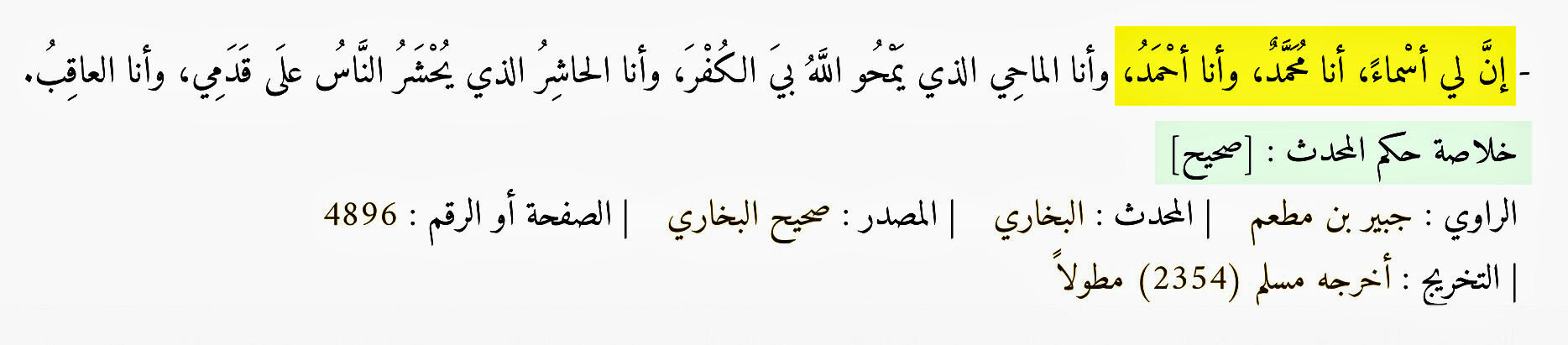
“I have several names: I am Muhammad, I am Ahmad, I am the Eraser through whom Allah erases disbelief, I am the Gatherer at whose feet mankind will be gathered, and I am the Last.”
— Sahih Bukhari 4896 | Narrator: Jubayr ibn Mut’im | Hadith grade: Sahih
The Testimony of Ka’b al-Ahbar
The companion Ka’b al-Ahbar (may Allah be pleased with him) — a learned Jewish convert who brought deep knowledge of the Torah — reported that he found the name “Ahmad” in a copy of the Torah.
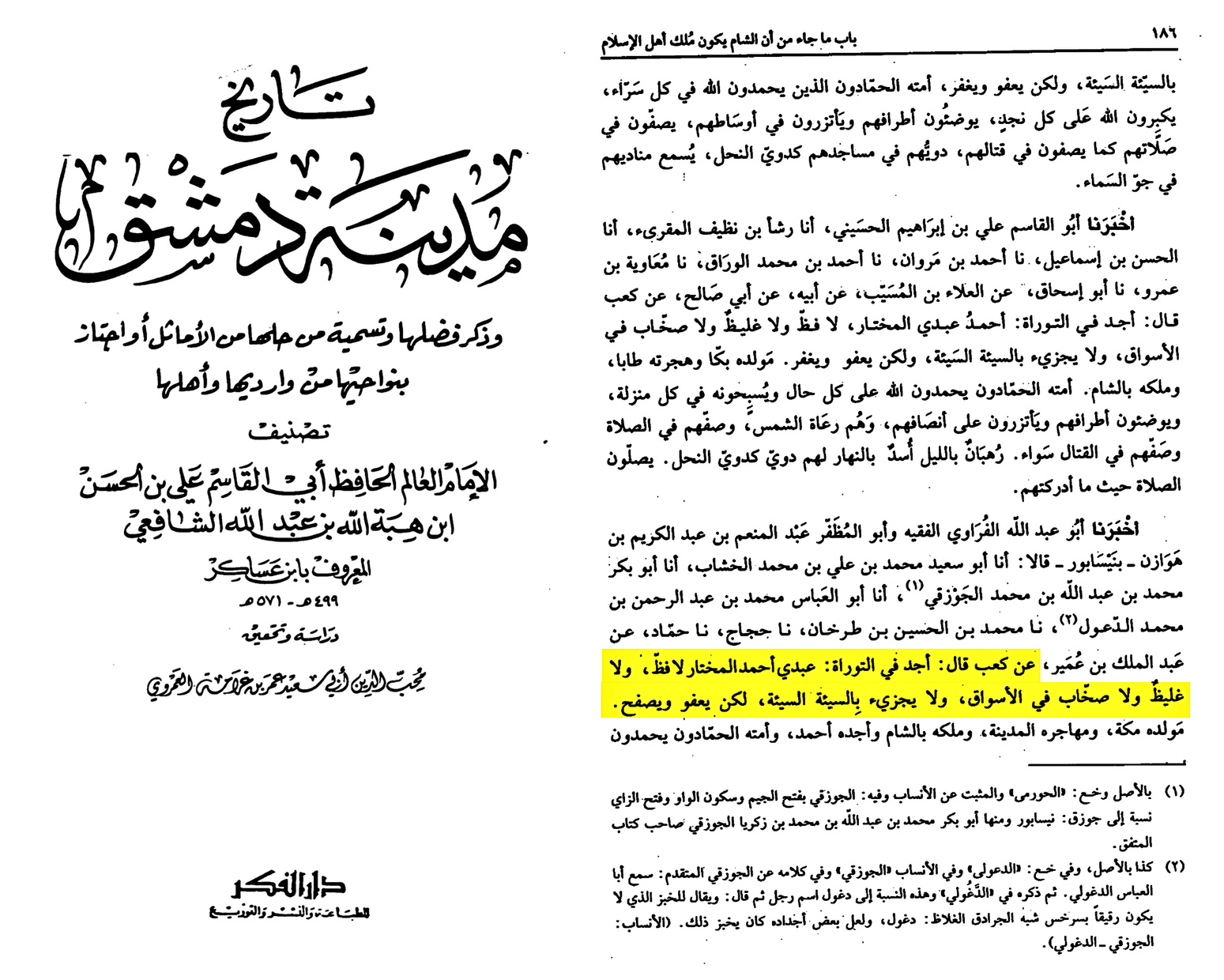
From Tarikh Madinat Dimashq by Ibn Asakir (d. 571 AH). Ka’b al-Ahbar’s words:
“I found in the Torah: Ahmad al-Mukhtar — he is neither harsh nor rude, nor does he shout in the markets, nor repay evil with evil, but pardons and forgives. His birthplace is Makkah, his migration is to Tayba (Medina), and his domain is Greater Syria…”
The closest Biblical text to what Ka’b quoted is Isaiah 42:
1. Behold My servant whom I uphold, My chosen one in whom My soul delights. I have put My Spirit upon him; he will bring forth justice to the nations.
2. He will not cry out or raise his voice, nor make his voice heard in the street.
3. A bruised reed he will not break, and a dimly burning wick he will not extinguish; he will faithfully bring forth justice.
The Masoretic Text vs. the Ka’b Manuscript
The first key difference between Ka’b’s manuscript and the standard Masoretic manuscripts is the word that appears between “My servant” (עבדי) and “My chosen one” (מוכתרי):
| Manuscript | Isaiah 42:1 (middle term) |
|---|---|
| Ka’b’s manuscript | עבדי אחמד המוכתר — “My servant Ahmad, the Chosen” |
| Masoretic text | עבדי אתמך-בו מוכתרי — “My servant whom I uphold, My chosen one” |
The Leningrad Codex — Isaiah 42:1
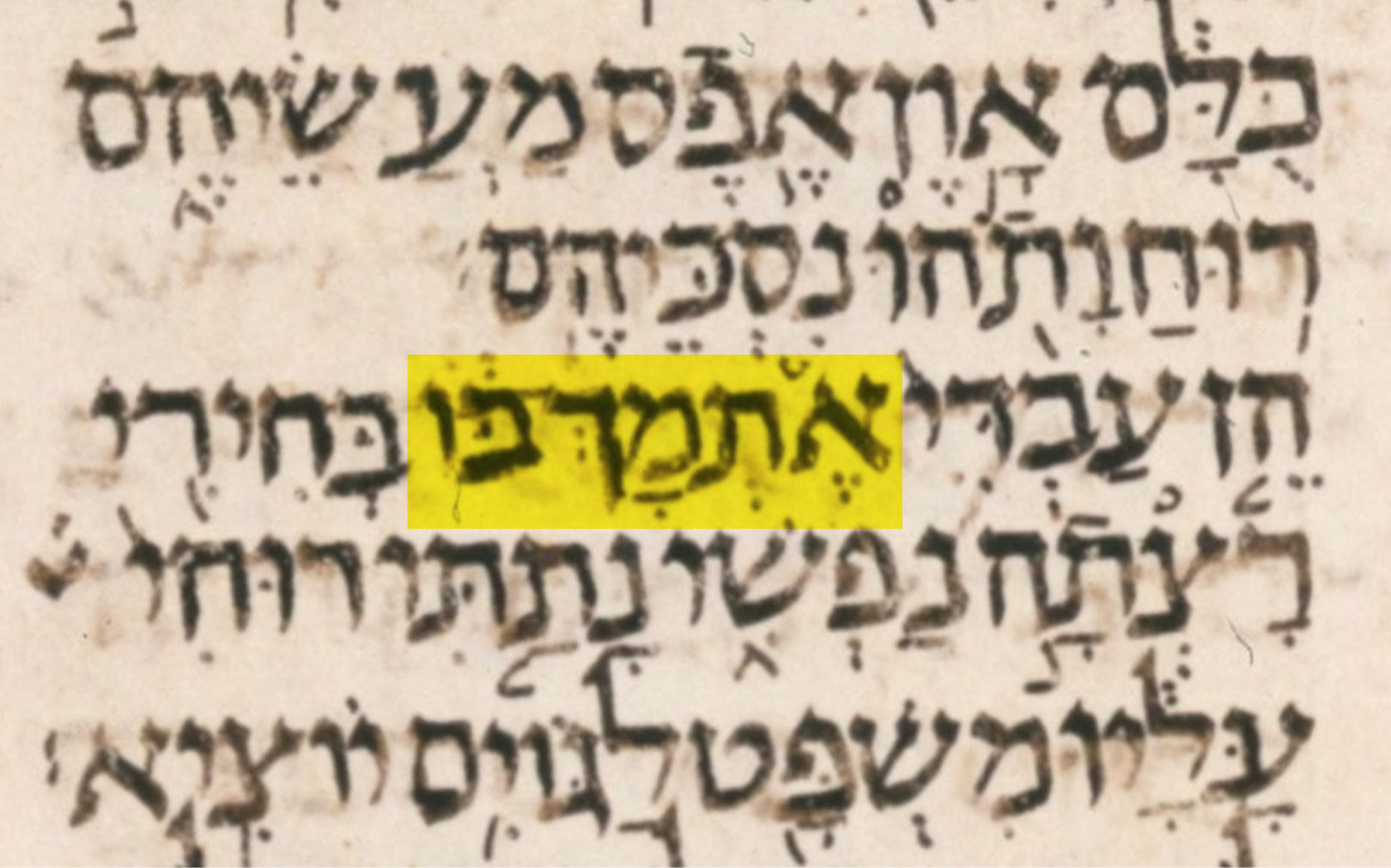
The Leningrad Codex (p. 236) — the oldest complete Hebrew Bible — with the word אֶתְמָךְ-בּוֹ (atamakh-bo) highlighted in yellow.
The full Hebrew text reads:
הֵן עַבְדִּי אֶתְמָךְ-בּוֹ בְּחִירִי רָצְתָה נַפְשִׁי נָתַתִּי רוּחִי עָלָיו מִשְׁפָּט לַגּוֹיִם יוֹצִיא
The phrase אֶתְמָךְ-בּוֹ (atamakh-bo) consists of two parts:
- אֶתְמָךְ (atamakh) — the verb “I uphold,” from root תמך (tamakh)
- בּוֹ (bo) — the pronoun “him”
What Does the Root תמך Mean?
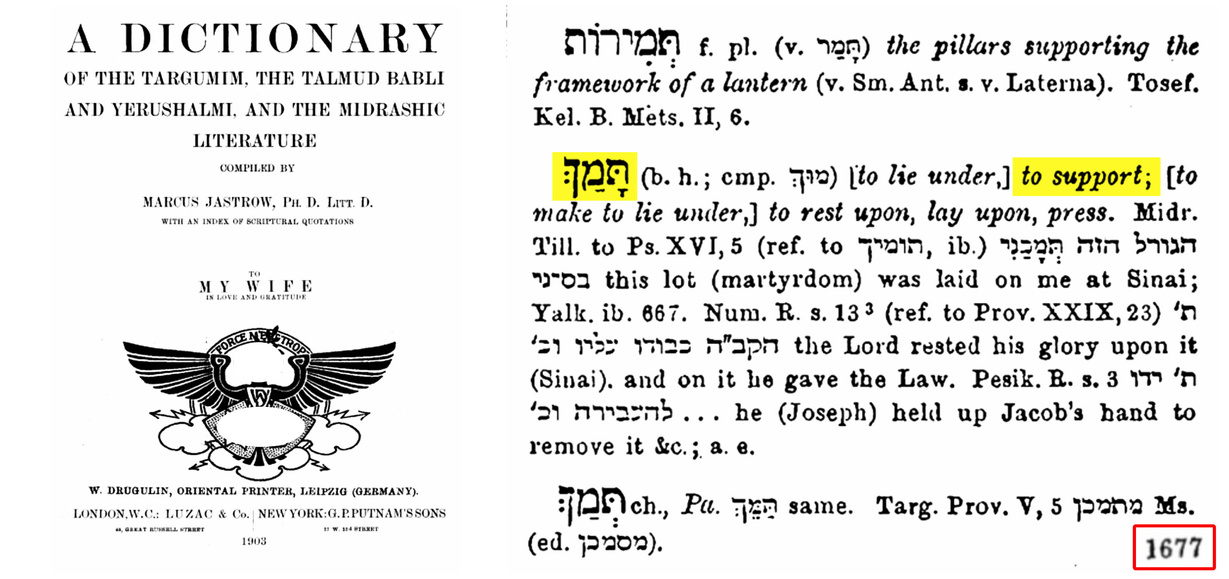
Jastrow’s Dictionary of the Targumim, Talmud Babli and Yerushalmi (1903): root תמך means “to support, to lie under, to rest upon, to press” — with no connection whatsoever to love or affection.
Note: The word “who/whom” (אֲשֶׁר / asher) present in some translations is an interpretive addition and does not appear in the original Hebrew.
Visual Similarity: אתמך vs. אחמד
In Hebrew, the verb אֶתְמָךְ (atamakh — “I uphold”) is visually almost identical to the name אַחְמַד (Ahmad). The differences in the Masoretic script are minor additions easily identifiable on inspection.
Hebrew Square Script Comparison
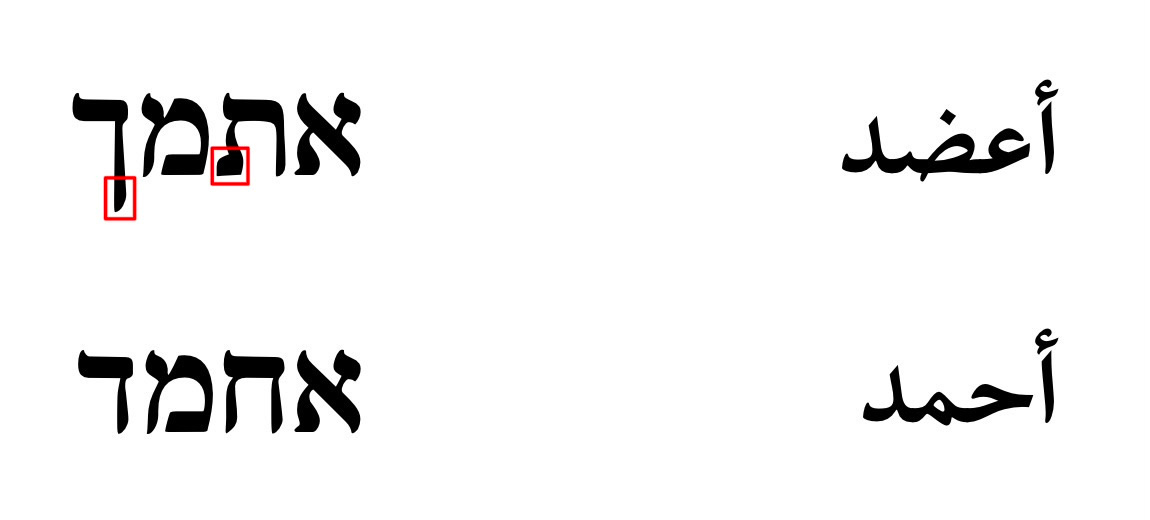
Top row: the Masoretic אתמך (atamakh / “I uphold”). Bottom row: the name אחמד (Ahmad). The small additions in red boxes are the only visual differences.
Imperial Aramaic Script Comparison
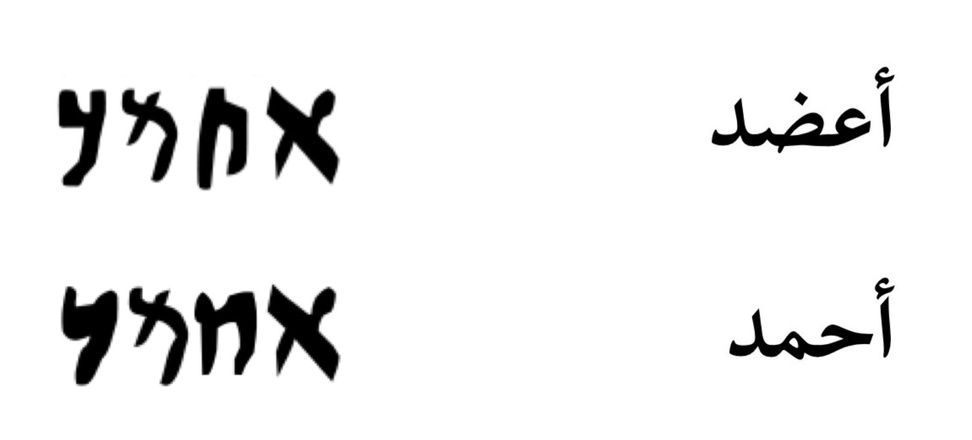
The same comparison in the Imperial Aramaic script — used in the earliest stages of Hebrew manuscript transmission. The similarity is even more pronounced.
The confusion arises through two letter substitutions:
| Ahmad (אחמד) | → confused with | Atamakh (אתמך) |
|---|---|---|
| ח (Khet) | → | ת (Tav) |
| ד (Dalet) | → | כ (Kaf) |
So instead of reading אחמד (Ahmad), an early scribe reads it as אתמך (atamakh) and writes what he read — losing the original name.
Note: The final letter כ (Kaf sofit) is frequently pronounced “Kh,” identical to the Arabic خ — making the auditory confusion even easier.
The Science of Textual Criticism: Scribal Errors
This type of error is well-documented in the science of textual criticism (Naqd al-Nassi), where letter-level visual similarity caused scribes to inadvertently substitute one word for another during copying — what scholars call “visual/ocular errors” (أخطاء العين والرؤية).
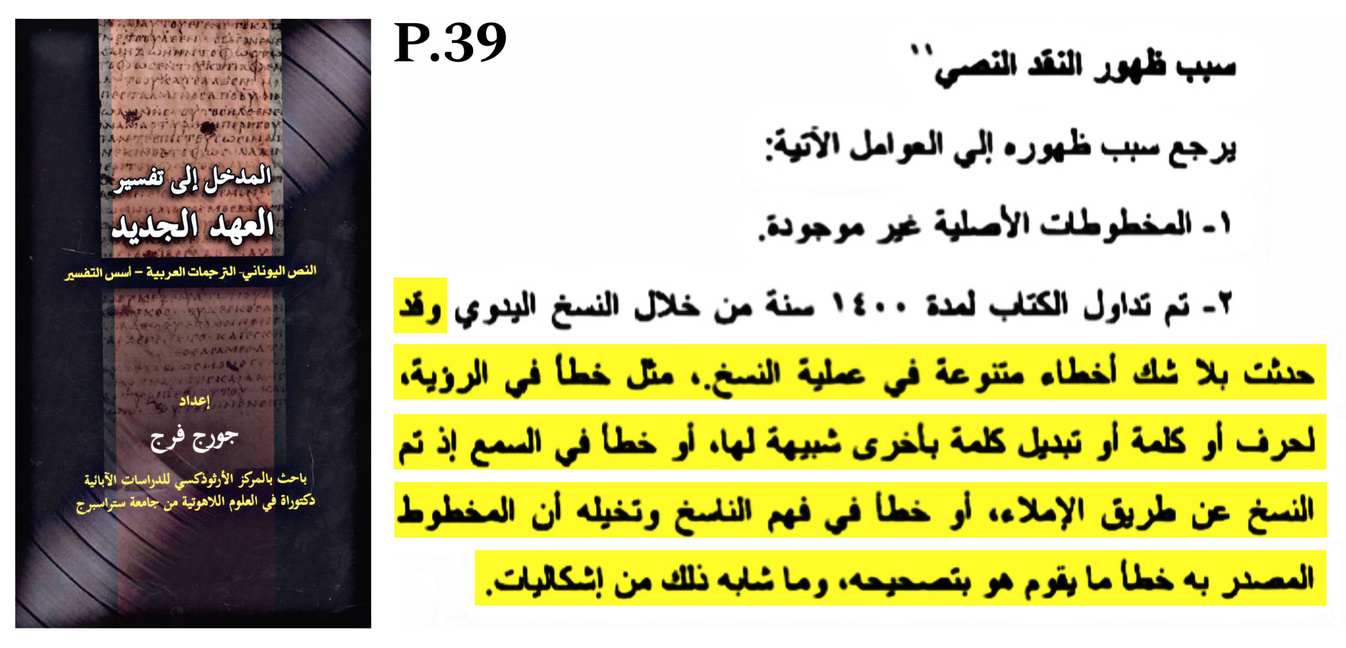
“Introduction to New Testament Interpretation” by George Faraj (p. 39) — describing how, across 1,400 years of manual copying, countless varied errors occurred: visual errors, letter/word substitutions, dictation errors, and scribes “correcting” what they believed to be errors in the source.
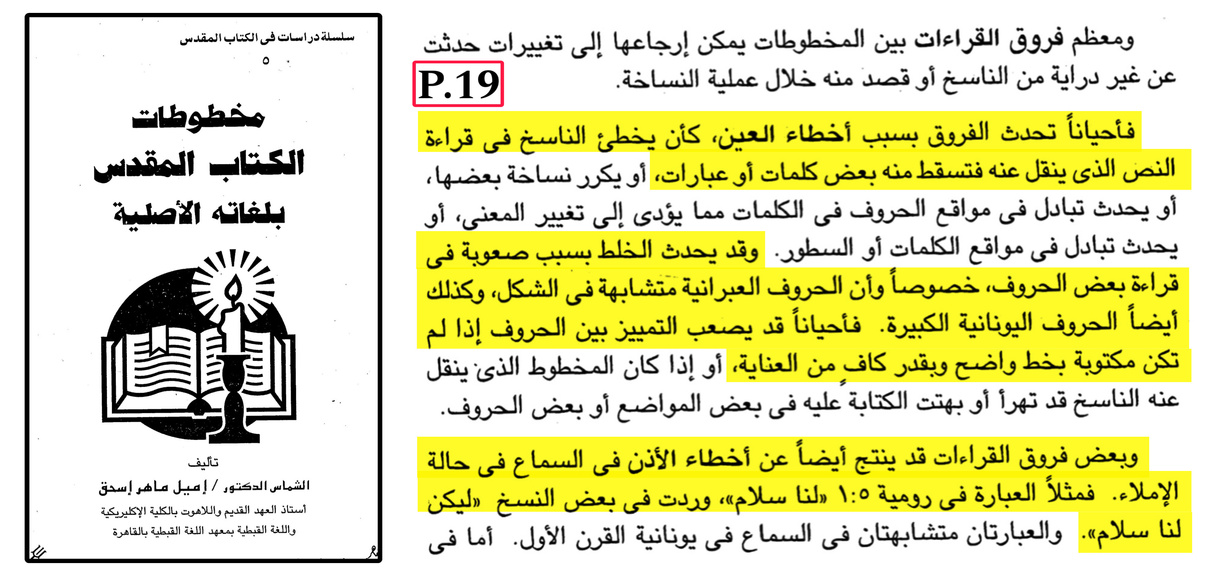
“Biblical Manuscripts in Their Original Languages” — explicitly naming “errors of the eye” as a primary source of manuscript variants. Notes that confusion is especially likely between similar-shaped Hebrew and Greek letters.
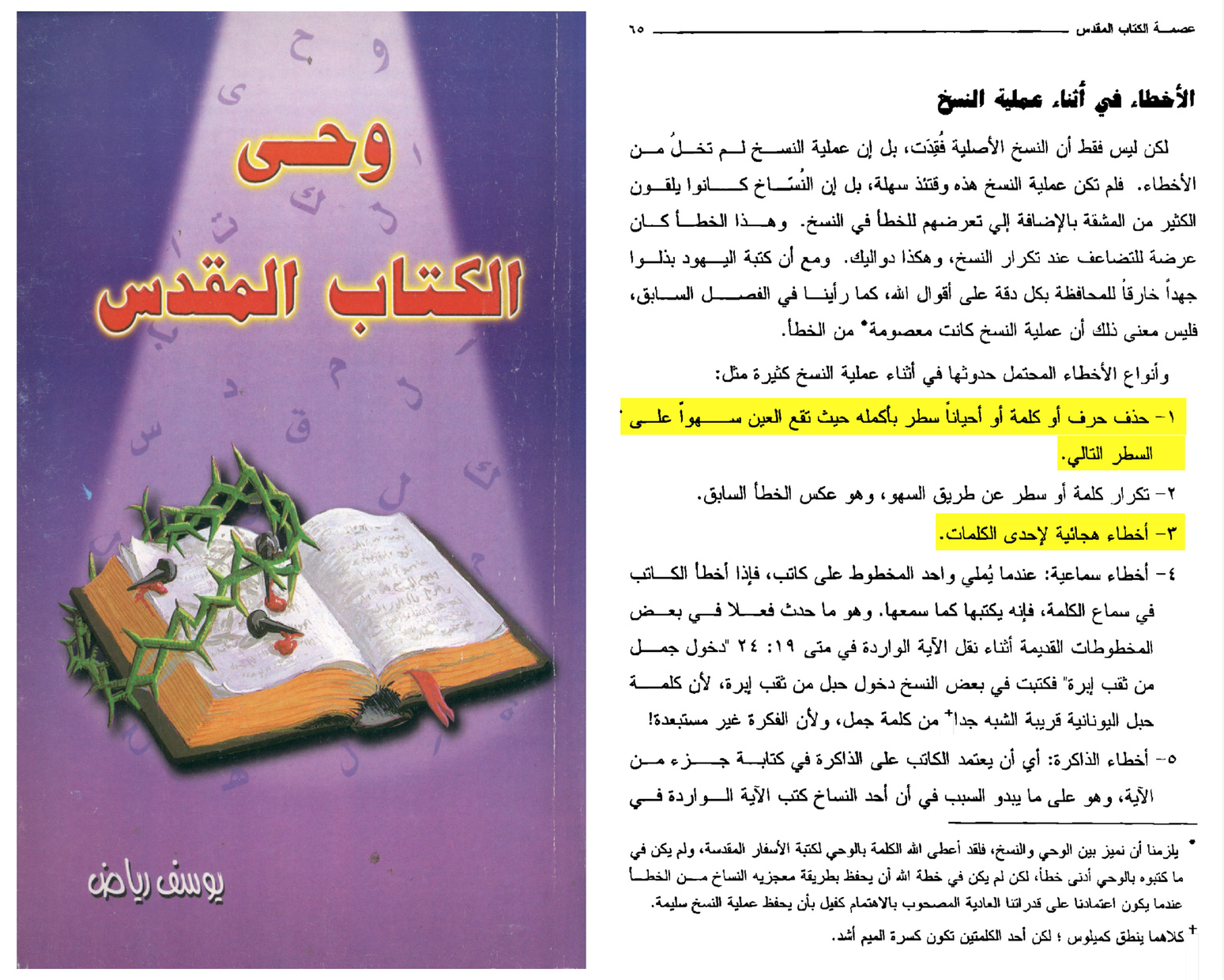
“The Inspiration of Scripture” by Yusuf Riyad — listing the main categories of scribal error: (1) omission of a letter/word/line, (2) repetition, (3) spelling errors, (4) dictation errors, and (5) memory errors.
If the original text of Isaiah 42:1 contained the name Ahmad (אחמד), then there is nothing preventing a scribe from inadvertently replacing it with the similar-looking verb atamakh (אתמך) — particularly in the early stages of manuscript copying.
Three Arguments That Prove the Scribal Error
First Argument: The Literary Pattern of the Bible
The Bible never mentions the two words “My servant” (עבדי) and “My chosen one” (מוכתרי / בחירי) together in a single passage without also naming a prophet alongside them:
| Passage | Terms present | Prophet named |
|---|---|---|
| 1 Kings 11:34 | My servant + whom I chose | David |
| Psalms 89:3 | My chosen one + My servant | David |
| Isaiah 41:8 | My servant + whom I chose | Jacob / Israel |
| Isaiah 44:1 | My servant + whom I chose | Jacob / Israel |
| Isaiah 45:4 | My servant + My chosen | Jacob / Israel |
| Isaiah 42:1 | My servant + My chosen one | ❌ No name — only אתמך |
Isaiah 42:1 is the sole exception — the only passage where no prophet’s name appears alongside both terms. It is precisely here that we find atamakh-bo, whose first segment visually matches Ahmad (אחמד).
“Behold My servant whom I uphold (אתמך-בו), My chosen one in whom My soul delights. I have put My Spirit upon him; he will bring forth justice to the nations.” — Isaiah 42:1
The established Biblical pattern is broken here without cause or justification — unless the original word was a proper name that has since been lost.
Second Argument: The Quotation of Matthew the Evangelist
In Matthew 12:17–21, Matthew quotes Isaiah 42:1 from a Hebrew manuscript — one that did not contain “I uphold him” (atamakh-bo), but instead a word he rendered in Greek as ἀγαπητός (agapetos — “my beloved”):
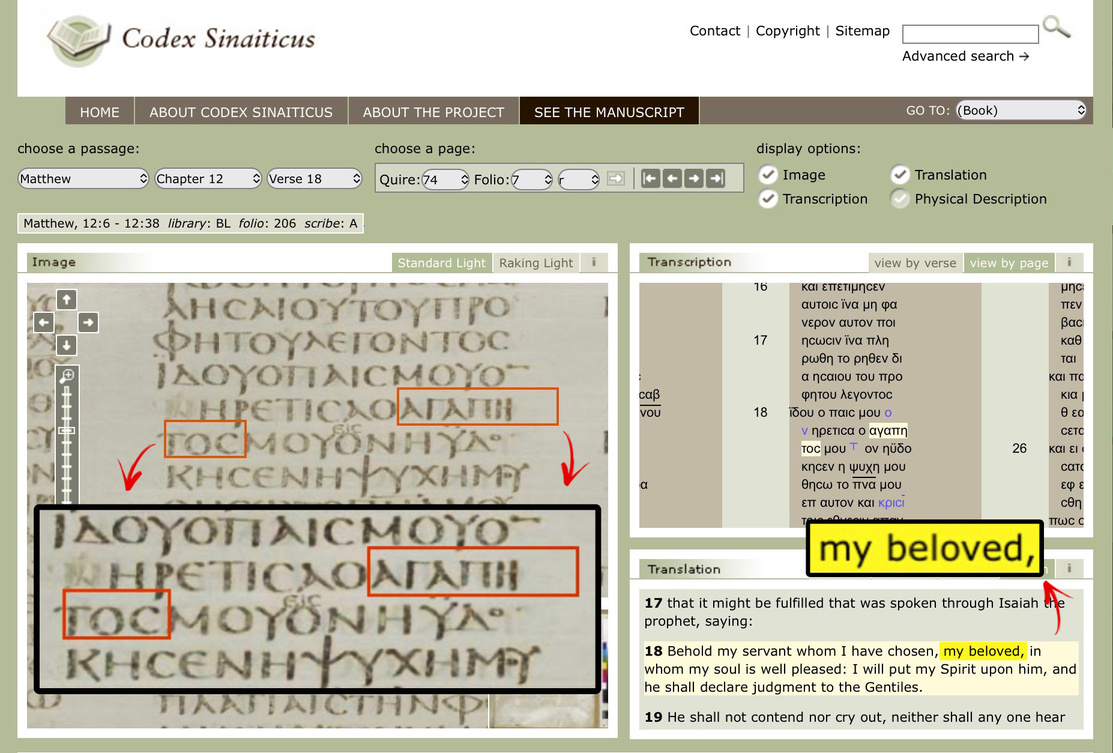
The Codex Sinaiticus — Matthew 12:18, with ἀγαπητός (“my beloved”) visible in the Greek text on the left and highlighted in the translation panel on the right: “Behold my servant whom I have chosen, my beloved, in whom my soul is well pleased.”
Verse 18 reads in full:
“Behold, My servant whom I have chosen, My beloved (ἀγαπητός) in whom My soul is well pleased. I will put My Spirit upon Him, and He will declare justice to the Gentiles.” — Matthew 12:18 (KJV)
This creates two possible explanations for Matthew’s “my beloved”:
| Option | Original Hebrew word | → Matthew’s Greek |
|---|---|---|
| Option 1 | אתמך-בו (atamakh-bo) — “I uphold him” | → “my beloved” (ἀγαπητός)? |
| Option 2 | אחמד (Ahmad) — proper name | → “my beloved” (ἀγαπητός) ✓ |
The decisive question: which word can yield the meaning “love” in Hebrew?
The name Ahmad (אחמד) derives from root חמד (khamad) — meaning “beloved,” “desired,” “praiseworthy.” Words from this root (like מחמד / Mahmad / Muhammad) are consistently translated as “my beloved” or “the desired one.”
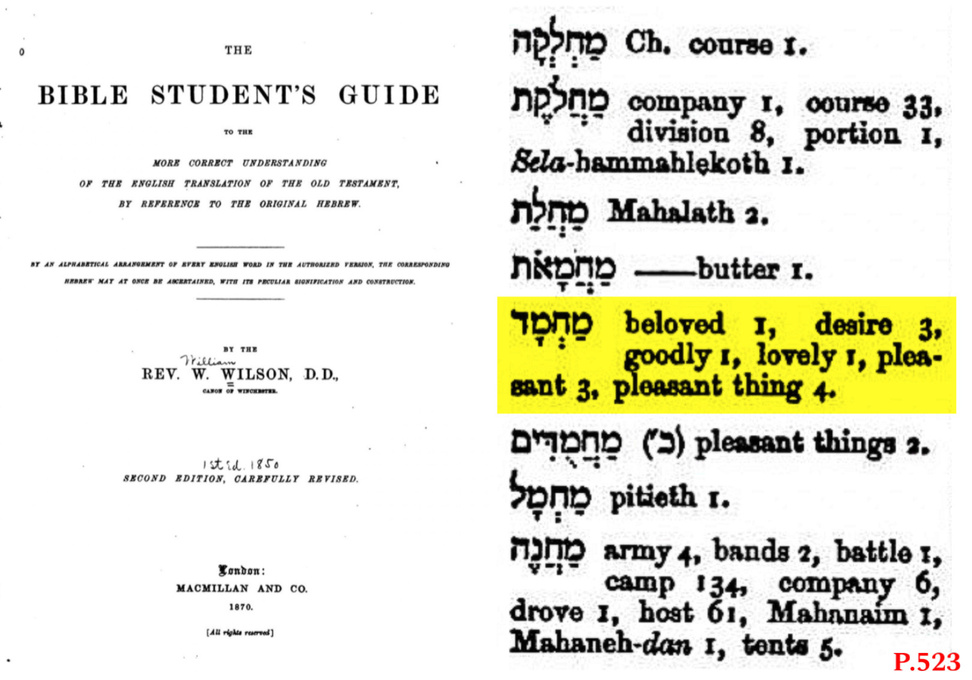
“The Bible Student’s Guide” by Rev. W. Wilson, D.D. (2nd ed., London 1870, p. 523) — confirming that the Hebrew word מחמד (mahmad / muhammad) means “beloved, desire, goodly, lovely, pleasant, pleasant thing.”
The verb atamakh (אתמך), by contrast, comes from root תמך (tamakh) — which means only: support, backing, assistance. It has no connection to love whatsoever in any Hebrew lexicon.
Conclusion: The name Ahmad was present in Matthew’s Hebrew manuscript. He translated it semantically as “my beloved” (ἀγαπητός) — just as one might render the name Sa’id as “Happy” rather than transcribing it phonetically as Saeed.
The expression atamakh found in the Masoretic manuscripts is therefore nothing but a scribal error resulting from letter confusion due to visual resemblance — particularly in the ancient script forms.
Otherwise, if atamakh were truly the original word, it would have been linguistically impossible for Matthew to translate it as “my beloved,” since it comes from a root with no connection to love.
The Dead Sea Scrolls Variant
The word “uphold” in Isaiah 42:1 appears in the Dead Sea Scrolls in a slightly different form — אתמוכה (atamokha):
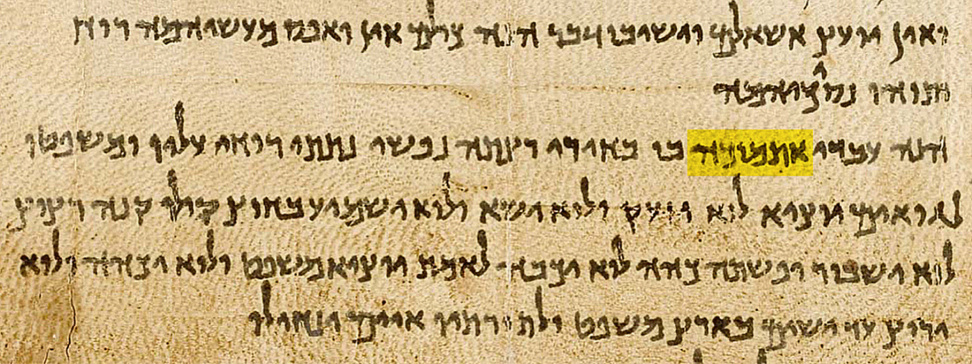
Dead Sea Scrolls fragment of Isaiah — the highlighted word shows אתמוכה (atamokha), a variant form of the Masoretic אתמך.
If atamakh is a corruption of Ahmad, then atamokha in the Dead Sea Scrolls must correspondingly be a corruption of either:
- אחמודה (Akhmuda), or
- אחמידה (Akhmida)
…both being Aramaic dialectal pronunciations of the same name.
Third Argument: The Contextual Indication in Matthew 12:21
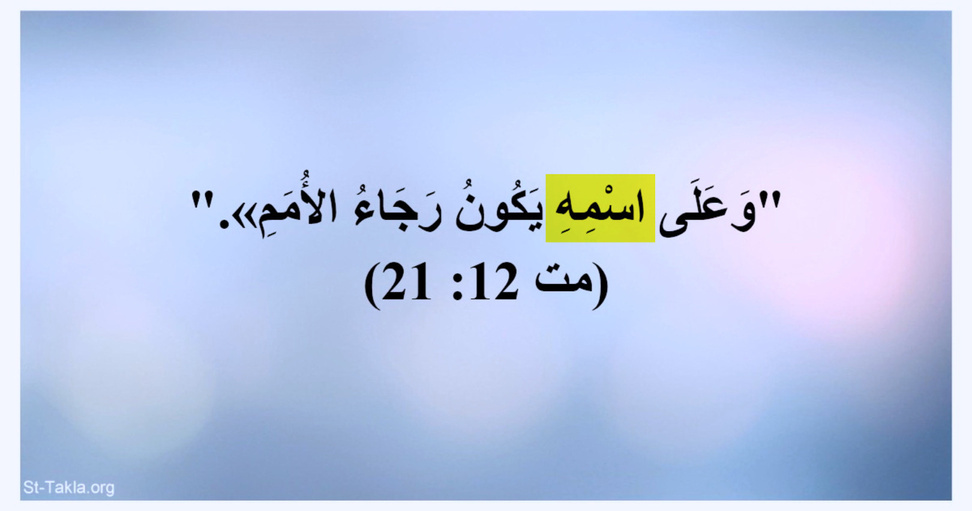
Matthew 12:21 states:
“And in His name the Gentiles will trust.”
Two critical observations must be made:
Observation 1 — A Name is Implied: The phrase “in his name” indirectly points to a proper name being present in the context. The bearer of this name will be “the Desire of all Nations” (חמדת כל-הגוים / khemdath kol ha-goyim) mentioned in Haggai 2:7 — both passages share the same Messianic scope, as scholars universally agree. → See: Haggai 2:7 — Desire of All Nations
Observation 2 — The Verse is Missing from the Masoretic: This verse is entirely absent from the Masoretic manuscripts — the same manuscripts that replace “my beloved / Ahmad” with “I uphold him” (atamakh-bo).
The Septuagint (LXX) version of Isaiah 42:1 includes this verse and mentions the name of Prophet Jacob (יעקב / Ya’qub) in the passage:
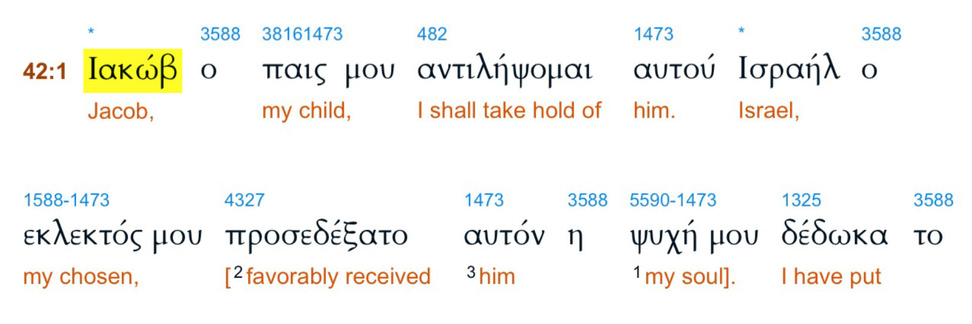
The Septuagint (LXX) interlinear — Isaiah 42:1 begins with Ιακώβ (Jacob) — confirming that even the Greek tradition knew a prophet’s name belonged here.
Yet Matthew did not acknowledge Jacob’s name — he acknowledged a different word translatable as “my beloved.” This proves Matthew was not quoting from the Septuagint. Had he been, he would never have passed up the opportunity to cite Jacob’s name against the Jews, arguing the figure was not Jacob himself but a descendant from his lineage — especially given Matthew’s well-known practice of connecting Old Testament prophecies to Jesus (peace be upon him).
Fourth Argument: Targum Jonathan and Haggai 2:7
Targum Jonathan (תרגום יונתן) — the authoritative Aramaic paraphrase of the Prophets — cites Isaiah 42:1 in full, without the phrase “I uphold him” (אתמך-בו), and substitutes the figure instead with “the Messiah” (מְשִׁיחָא / Meshikha):
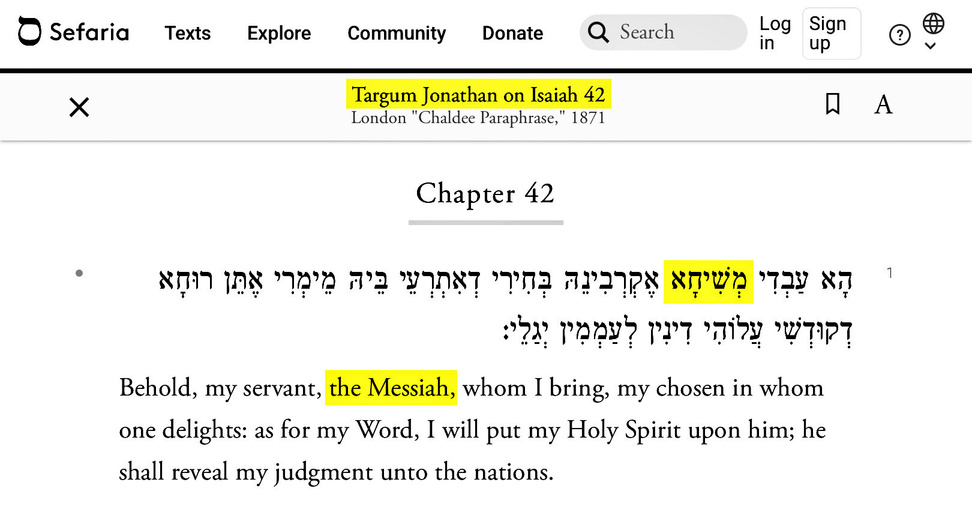
Sefaria — Targum Jonathan on Isaiah 42 (London “Chaldee Paraphrase,” 1871): “Behold, my servant, the Messiah, whom I bring, my chosen in whom one delights… he shall reveal my judgment unto the nations.”
Since Isaiah 42:1 is classified as Messianic — as universally agreed — the most explicit corroborating testimony comes from Haggai 2:7:
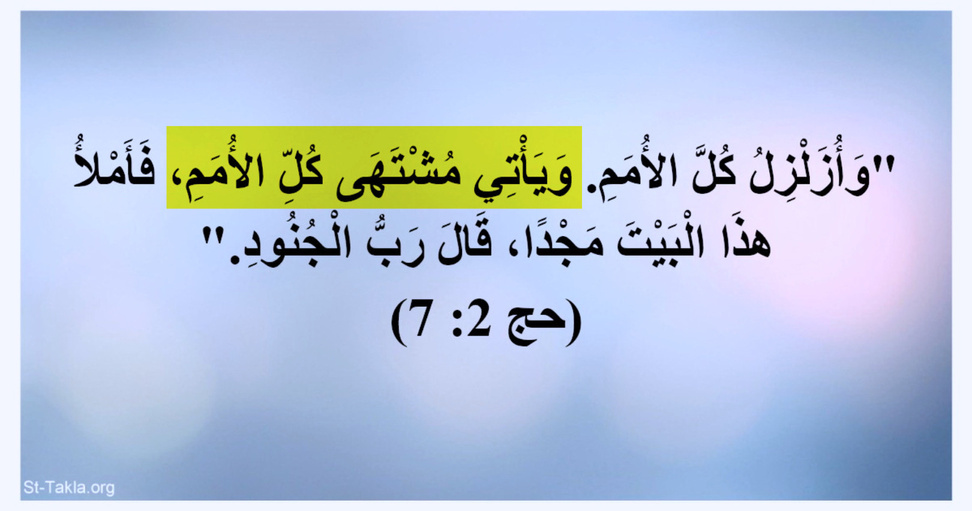
“And I will shake all nations, and the Desire (mushtaha) of all nations shall come, and I will fill this house with glory, says the LORD of hosts.” — Haggai 2:7
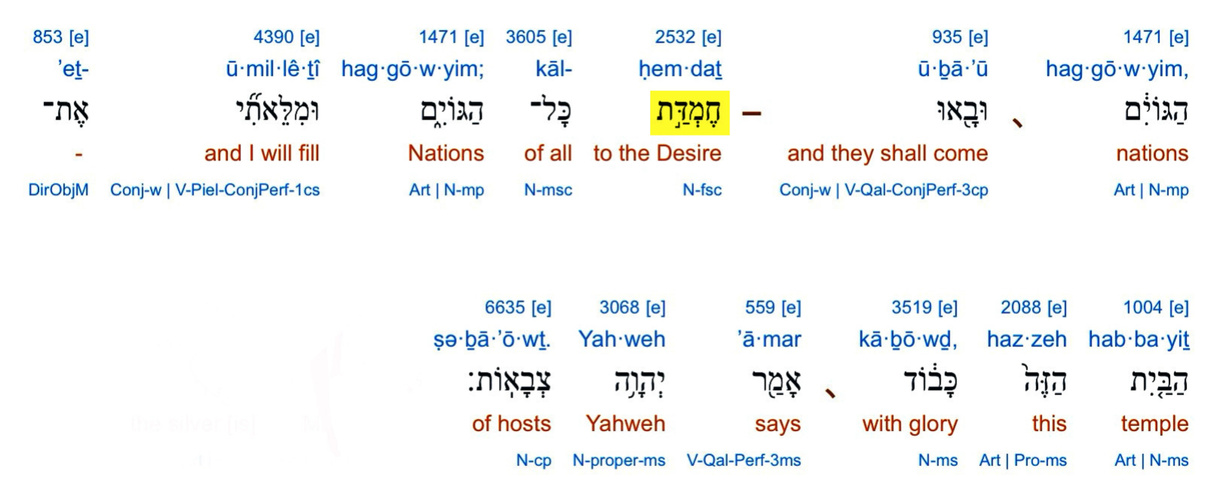
Haggai 2:7 — interlinear Hebrew, with חֶמְדַּת (khemdath — “the Desire”) highlighted in yellow.
The word khemdath (חמדת) derives from root חמד (khamad) — “beloved” / “desired” — making it a direct Hebrew synonym for Ahmad (أحمد) and Muhammad (محمد).
Some scholars considered it a name or title of the awaited Messiah — though they falsely charged that the Prophet ﷺ — far exalted is he above such a claim — appropriated it from Jesus (peace be upon him).
The Parkhurst Lexicon Confirms This
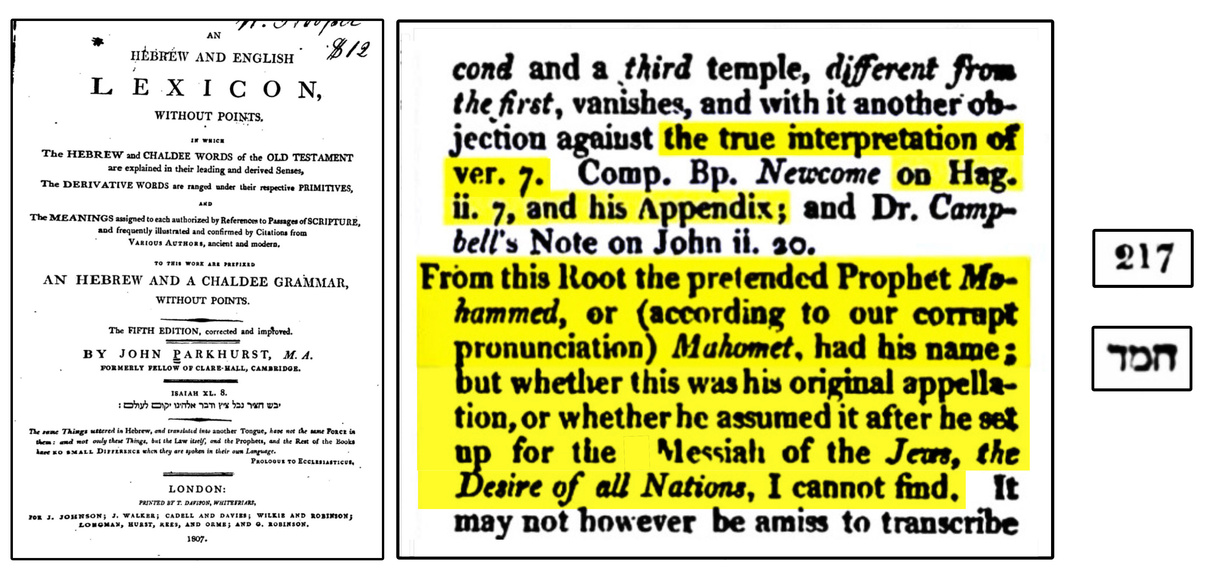
John Parkhurst’s “An Hebrew and English Lexicon, without points” (London, 5th ed., 1807, p. 217):
“From this Root Mohammed, or (according to our corrupt pronunciation) Mahomet, had his name; but whether this was his original appellation, or whether he assumed it after he set up for the Messiah of the Jews, the Desire of all Nations, I cannot find.”
Even hostile Western scholarship openly acknowledged that the name “Muhammad” comes from the root חמד — the same root in Haggai 2:7’s khemdath — “the Desire of all nations.”
Additional Scholarly Commentary
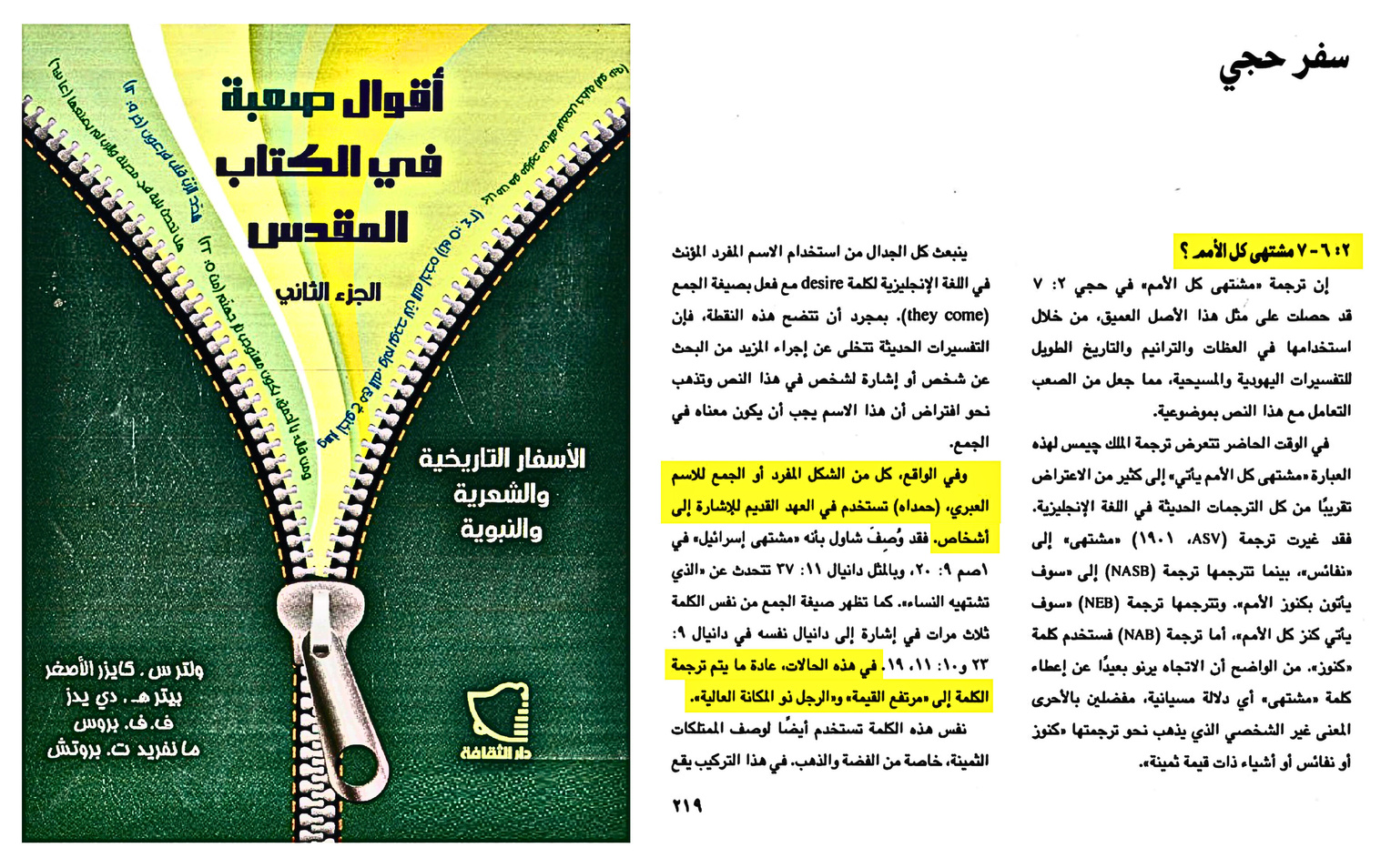
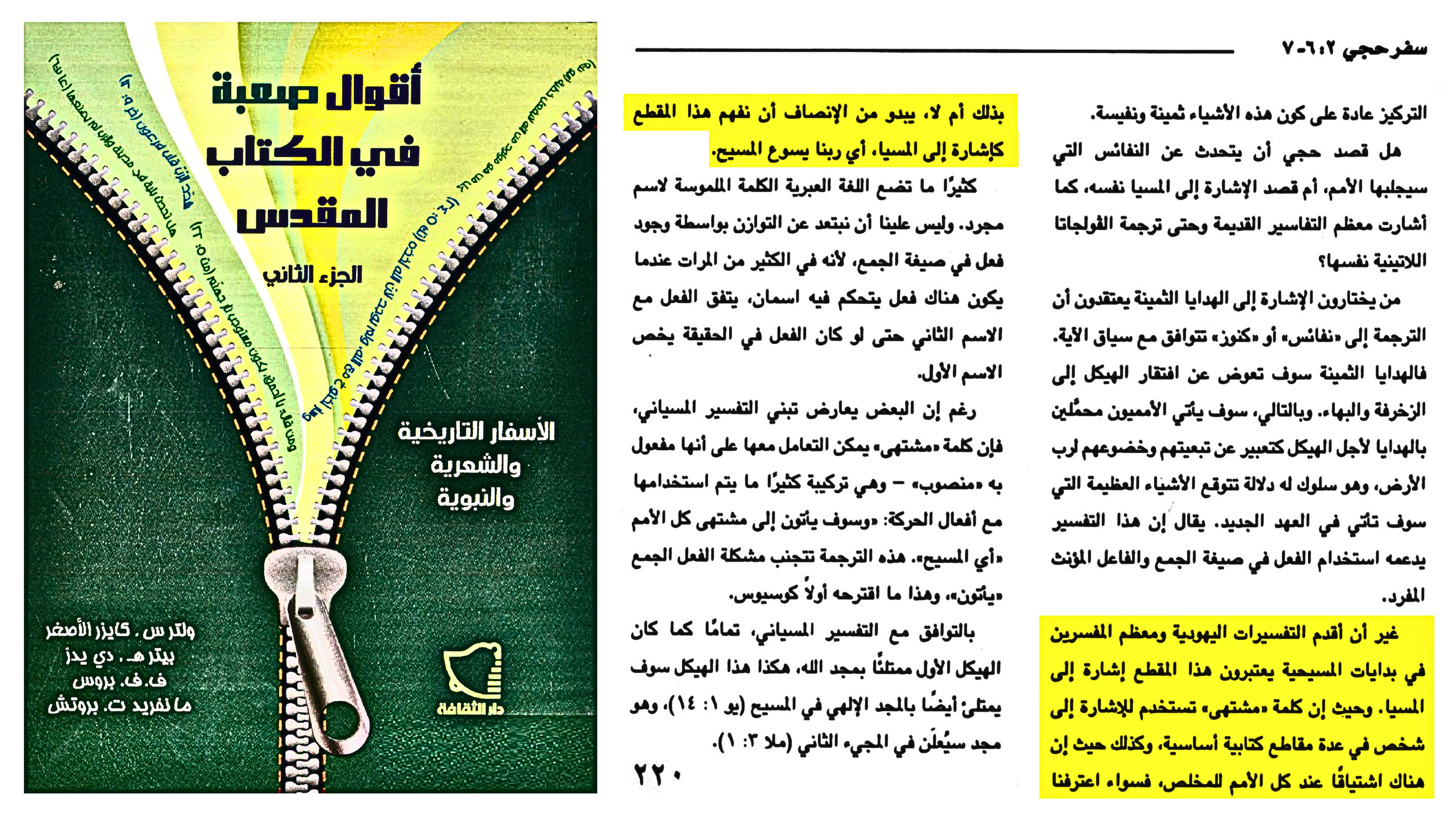
F.F. Bruce et al., “Hard Sayings of the Bible” (Arabic edition) — extended commentary on Haggai 2:6–7. Acknowledges the ongoing scholarly debate over whether “the Desire” (mushtaha) refers to the Messiah or to material treasures, and notes that the oldest Jewish and Christian interpretations understood it as a reference to the Messiah.
The Septuagint Confirms “Ahmad = the Chosen”
The Septuagint (LXX) translation of Haggai 2:7 replaced חמדת (khemdath) with ἐκλεκτά (eklekta — “the Chosen”):
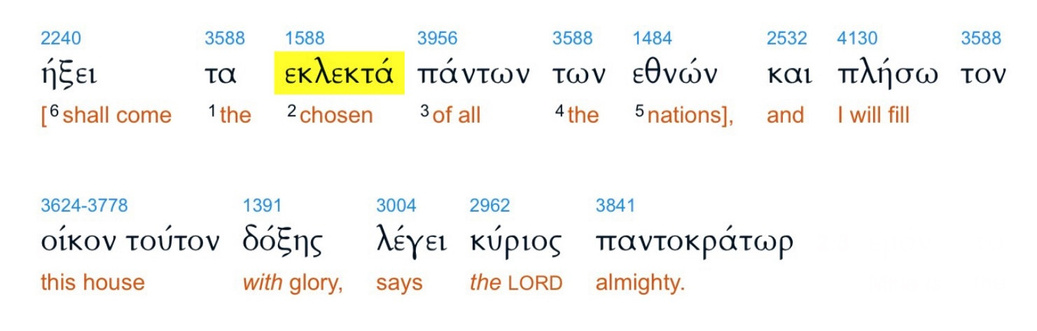
Haggai 2:7 in the LXX — showing ἐκλεκτά (eklekta / chosen) where the Hebrew has חמדת (khemdath / the Desire).
There is no linguistic pathway to translate khemdath (“desire/beloved”) as eklekta (“the Chosen”) — unless one acknowledges that Isaiah 42:1 contains the name Ahmad, the only text that describes the Messiah from root khamad as “chosen” (מוכתר) by Allah:
“Behold My servant Ahmad (אחמד), My chosen one (מוכתר) in whom My soul delights. I have put My Spirit upon him; he will bring forth justice to the nations.” — Isaiah 42:1 (restored reading)
Responding to the Objection: What About בּוֹ (bo)?
The objection: The phrase atamakh-bo has two parts: atamakh and bo. If the first part was originally Ahmad (replaced by scribal error), what about the pronoun bo (“him”)?
There are two possibilities.
Possibility One — ben (בֵּן) Not bo (בּוֹ)
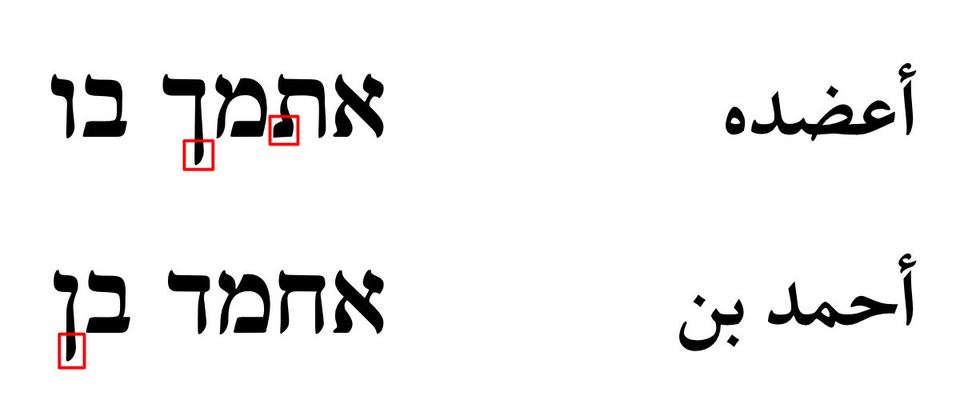
Visual comparison — top: the Masoretic reading אתמך בו (atamakh-bo / “I uphold him”); bottom: the restored reading אחמד בן (Ahmad ibn / “Ahmad son of”). Note the near-identical similarity between ן (final Nun) and ו (Vav).
The original word may have been בֵּן (ben — “son of”) rather than בּוֹ (bo — “him”). The letters נ (Nun) and ו (Vav) are easily confused in ancient script — a well-documented scribal error type.
This would give the original text as: “Ahmad son of Abd Allah” (أحمد بن عبد الله) — including the Prophet’s father’s name in the manuscript.
This reading is supported by a historical testimony from Ka’b al-Ahbar:
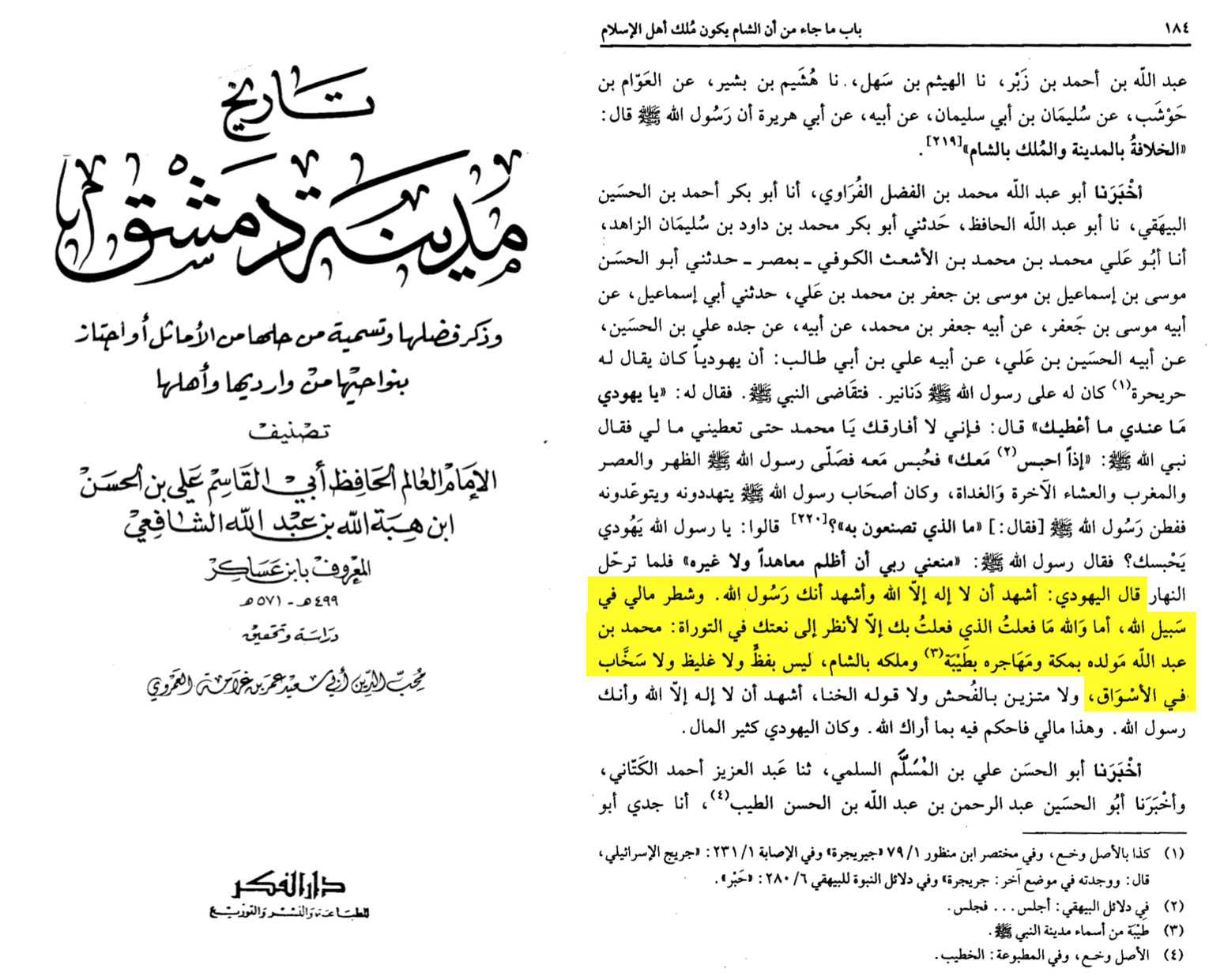
A second narration from Tarikh Madinat Dimashq (p. 184) — the story of a Jewish man named Haribra who reconciled a debt with the Prophet ﷺ. The highlighted portion contains his declaration:
“I bear witness that there is no god but Allah, and I bear witness that you are the Messenger of Allah. And half of my wealth is in the path of Allah. By Allah, what made me act in this way was only because I read your description in the Torah: Muhammad ibn Abd Allah — his birthplace is Makkah, his migration is to Tayba in Greater Syria, he is not harsh nor rude, nor shouting in the markets…”
The root חמד was consistently preserved in their Hebrew text tradition — only the final vocalization shifted between Ahmad and Muhammad.
“Behold My servant Ahmad ibn Abd Allah (أحمد بن عبد الله), My chosen one in whom My soul delights. I have put My Spirit upon him; he will bring forth justice to the nations.” — Isaiah 42:1 (restored)
Possibility Two — bo as a Corrective Addition
The word bo (“him”) may simply be a corrective addition inserted by a later scribe to complete the grammatical sentence — after he misread Ahmad as atamakh (through visual error) and found that atamakh alone did not form a complete sentence as a standalone word, so he added bo (“him”) to complete it grammatically.
Restored reading:
“Behold My servant Ahmad, My chosen one in whom My soul delights. I have put My Spirit upon him; he will bring forth justice to the nations.” — Isaiah 42:1
Summary of Arguments
| # | Argument | What It Proves |
|---|---|---|
| 1 | Biblical literary pattern | Every instance of “My servant + My chosen” contains a prophet’s name — Isaiah 42:1 is the sole exception, precisely where atamakh sits |
| 2 | Matthew’s quotation (ἀγαπητός) | “My beloved” can only derive from root khamad (Ahmad), not from root tamakh (atamakh), which has no connection to love |
| 3 | Matthew 12:21 + Septuagint | The verse “in his name” implies a proper name; it’s absent in Masoretic but present in LXX — which names Jacob — confirming a prophet’s name belongs in the verse |
| 4 | Targum Jonathan + Haggai 2:7 | The Targum replaces the figure with “the Messiah”; Haggai 2:7 confirms the Messiah’s name comes from root khamad; the LXX of Haggai renders khemdath as eklekta (chosen) — only coherent if Isaiah 42:1 names Ahmad the Chosen |
Related Cross-References
Additional Notes on Prophet Muhammad in Bible
→ Isaiah 21: The Arabs and the Descendants of Kedar
Manuscript no. COP_2-8 — Kedar is interpreted as the Quraysh, the tribe of the Prophet ﷺ.
The striking similarity between Isaiah 42’s imagery and the Hijaz region was noted even by 18th-century Anglican priest Charles Foster in his commentary on Isaiah 42.
Related Manuscripts Mentioning Ahmad
Isaiah 16:3 — “Ahmed my beloved / Hammd my beloved”
Version of Father Germanus, Bishop of Saint Catherine’s Monastery — 13th century (1228 AD)
Habakkuk 3:3 — “For God came to us from Teman; He appeared to us from Mount Paran, and the heavens were covered from the rays of the Muhammad, and the earth was filled with his praise.”
Same source — 13th century (1228 AD)
Isaiah 5:1 — “Ahmed Habibi / Ahmed Habibi Hamad Habibi”
Manuscript COP 8-10 — 17th century — Coptic Library (Seal no. 87)
Dawud: https://portal.dnb.de/opac.htm?method=simpleSearch&cqlMode=true&query=nid%3D124465420...
...ing Servant of God Which is from Arab N from the Lineage of Ishmael and Will Break the Idols, I Wonder Who it Is? The Context of the Speech is Very Clear to Those Who Listen and Are Witnesses The...
...42-prophesy-muhammad-the-chosen-servant-prophecy-examined|Isa42 (Even Accepted by Jews of Medina]]