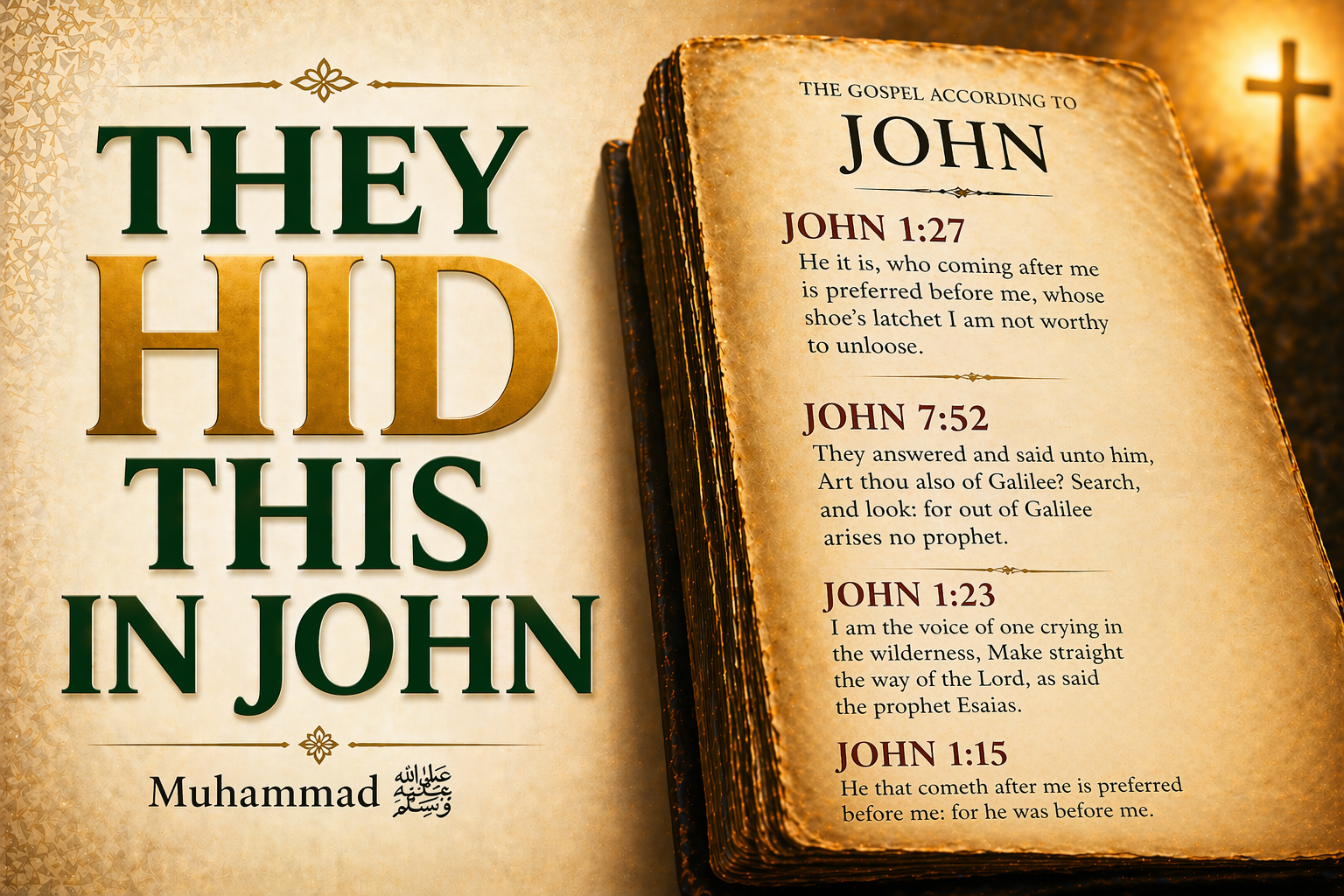
distortions in gospel of john to obliterate the prophecy on the tongue of jesus 3
John 7:52
Distortion of the Text of John 7:52 (No Prophet Has Arisen from Galilee)
Note
In this section, we present a textual problem that faced Bible interpreters and for which they have not and will not find a solution to this day; unless they admit that their Bible has been corrupted!
Quote
Gospel of John 7:52
”They answered and said to him, ‘Are you also from Galilee? Search and see; no prophet has arisen from Galilee.’”
The Jewish Pharisees assert, according to the Bible, that “no prophet has arisen from Galilee,” in the dialogue that took place between them and Nicodemus.
Question
Our question to Christians and those seeking the truth is: Is this statement true? Has no prophet actually arisen from Galilee?
Bible Commentators and Interpreters Admit Error
Quote
Antonius Fikry says in his interpretation of the text:
Quote
(What the Pharisees said here, that no prophet arose from Galilee, is wrong. Deborah was from Galilee, from the tribe of Naphtali, and Elijah the prophet was from Teshebah, which is in Naphtali (1 Kings 1:17), and Elisha was from Abel-meholah in Galilee (1 Kings 16:149). Nahum was from Galilee, and Anna the prophetess, who was present during the days of the anointing, was from the tribe of Asher (Luke 3:63), and Jonah the prophet was from Galilee. Isaiah prophesied about Christ that he would be from Galilee (1:9).)
— Antonius Fikry
Quote
This was the opinion of the interpreter John Gill, who said:
Quote
(If the Pharisees meant that no prophets came from Galilee in the past, then this is 👈 a historical error according to the Old Testament.)
— John Gill
Important
So, according to the commentators, the Jews’ claim that the Old Testament does not contain any reference to a prophet coming from Galilee is certainly wrong.
Prophets appeared in Galilee, which confirms the existence of problems in the text!
Did the Pharisees Make a Mistake and Ignore what Was in Their Holy Book?
Question
The question is:
Did the Pharisees make a mistake and ignore what was in their holy book, to the point that they challenged anyone to produce a text that said that no prophet would emerge from Galilee?!!
Question
👈 Or was the text carrying another correct meaning?
The Jews were talking about the mission of another prophet whose characteristics and place of mission they knew… an awaited prophet?!!
Text Review from the Oldest Manuscripts
Note
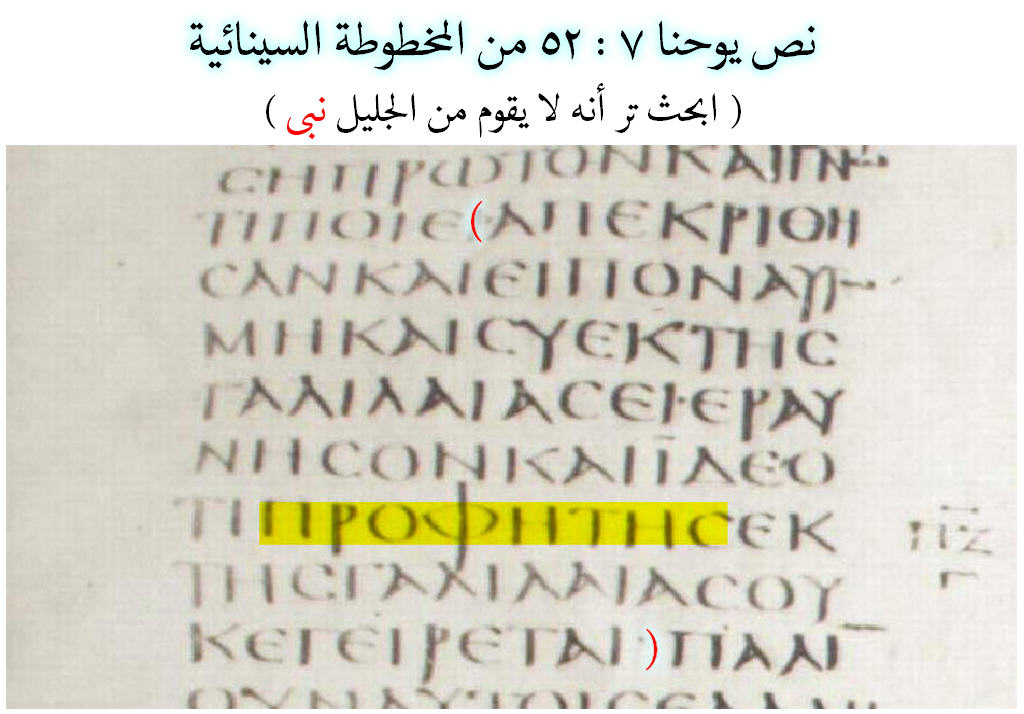
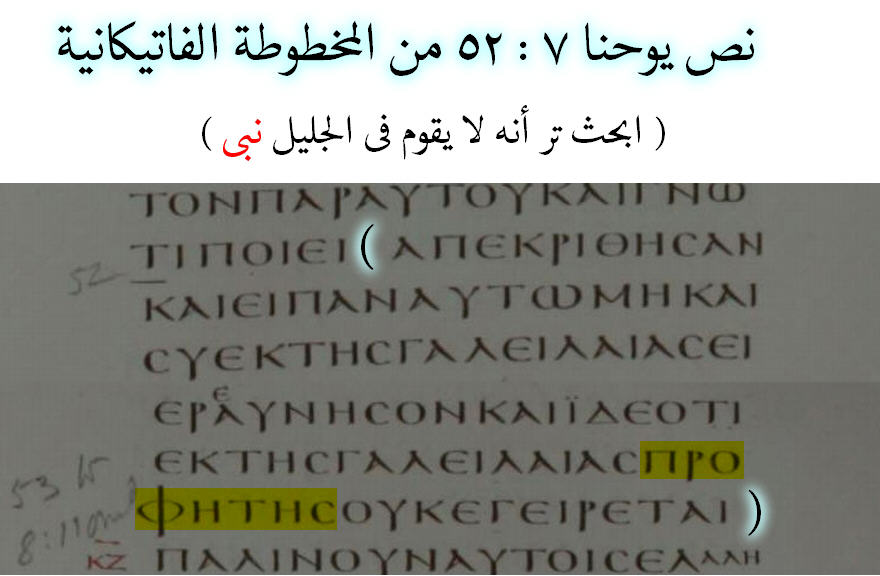
By reviewing the text in the best and oldest manuscripts of the Bible, we found that most of the ancient manuscripts, such as the Sinaiticus Codex and the Vaticanus Codex, contain the following text:
Greek Text
Quote
Search and see that no prophet arises out of Galilee
Quote
Search and see; no prophet shall come out of Galilee.
REFERENCE
Manuscripts:
Codex Sinaiticus
Codex Vaticanus
Note
The Sinaiticus Codex and the text of John: “No prophet has arisen from Galilee”
Here is your content formatted for Obsidian, preserving wording exactly and structuring it cleanly:
Clarification on the Meaning of the Text
Note
👈 Note that the text of John (“No prophet has arisen out of Galilee”) in the oldest manuscripts does not speak of a prophet emerging in the past. On the contrary, it merely confirms that no prophet—any prophet—will emerge from Galilee in the future.
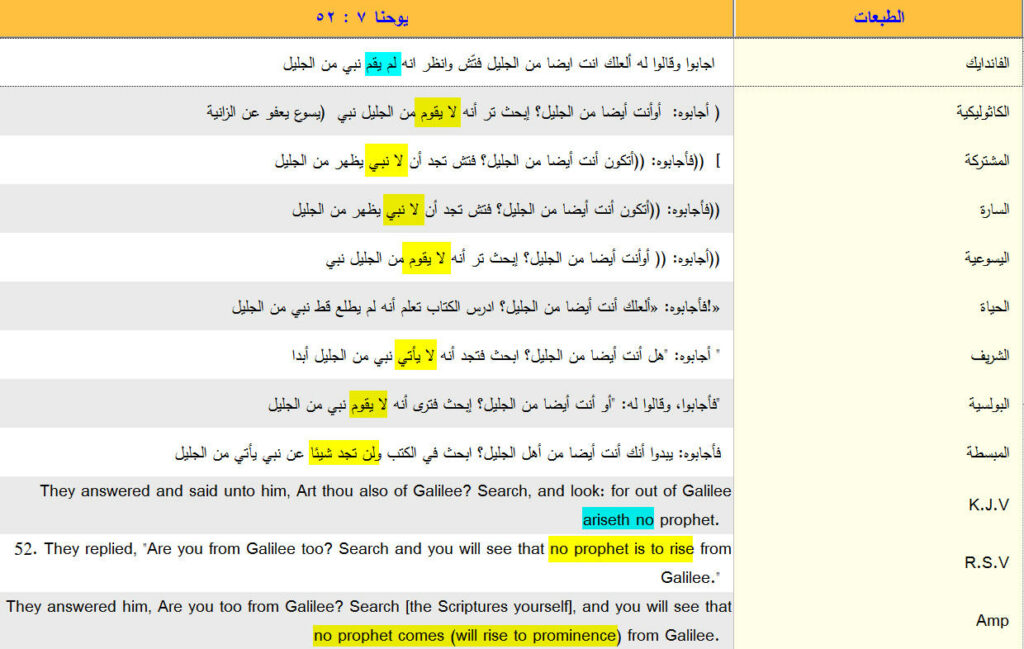
John’s Text (No Prophet Has Arisen from Galilee) in Arabic Versions and Translations
Note
Also, most of the Arabic versions and translations - with the exception of Al-Fandyk and Al-Hayat - such as:
Catholic
Sarah
Joint
Jesuit
Pauline
Simplified
Sharif
Important
Even most of the old translations… mentioned the text with the same meaning:
John’s Text (No Prophet Has Arisen from Galilee) in English Versions and Translations
Note
Also most of the English translations - except for the King James Version (KJV) - such as:
AMP
ASV
NIV
RV
RSV
BBE
CEV
GNB
GW
ISV
NRSV
Important
The text contained the same meaning:
Quote
(Examine the Scriptures, and see that no prophet arises out of Galilee)
John’s Text (No Prophet Has Arisen from Galilee) in Critical Versions
Note
And all the cash versions such as:
Nestle-Aland version
Westcott-Hort version
UBS version
Samuel Tregelles version
Tischendorf version
Important
The text contained the same meaning:
Quote
(ἐγείρεται)
Success
👈 According to manuscripts, all critical translations, and most English and Arabic versions, the text speaks of a future prophet not coming out of Galilee in the future (a future prophecy), not in the past.
Warning
This is according to the Van Dyke Version and the King James Version, which relied in their translation on the worst kind of text: Erasmus’s text, or the “received text” (textus receptus).
The Text in the Oldest Manuscripts and Papyri about the Awaited Prophet
Note
🔥 What’s surprising is that there’s another reading in the oldest manuscripts of the Gospel of John. This reading confirms that the Jews were speaking of the “awaited prophet,” not of any prophet emerging from Galilee.
Papyrus 66 and 75
Important
👈 This reading appears in:
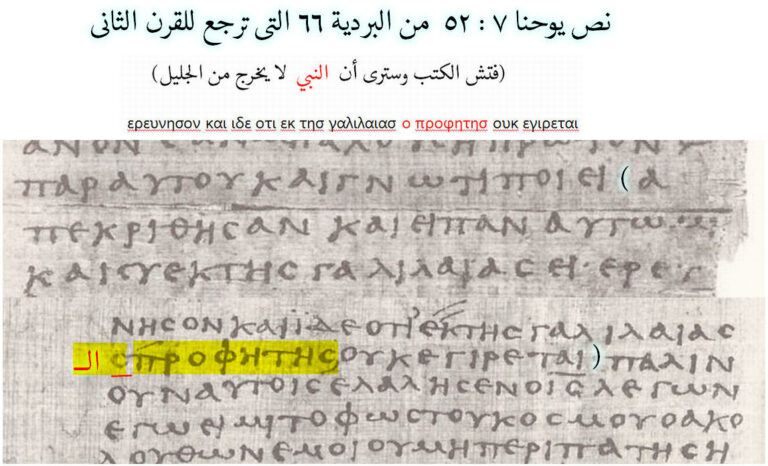
Papyrus 66
Papyrus 75
from the second century.
Note
Papyrus 66 is, of course, one of the earliest examples of the text of the Gospel of John. As such, it has its own significance.
CRITICAL
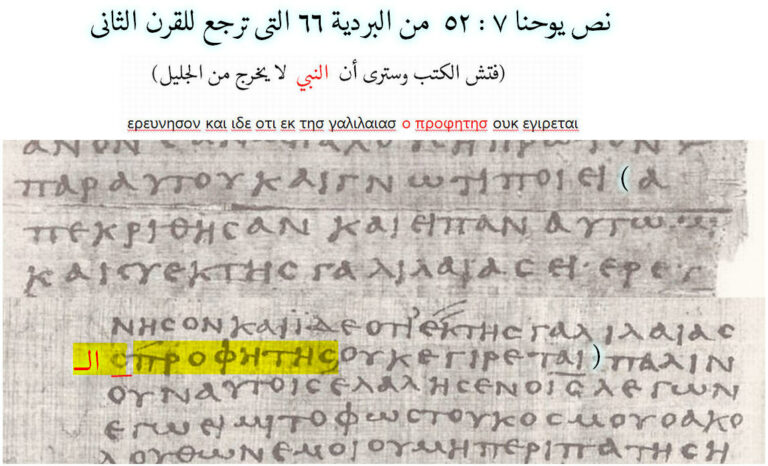
Indeed, the text in Papyrus 66 contains the definite article “the” before “prophet”(προφητησ).
Success
This confirms that the Jews were awaiting the advent of a prophet.
FINAL
Moreover, they knew the location of his mission and knew him by his characteristics, just as they knew their own children.
Here is your content formatted for Obsidian, preserving wording exactly and organizing it with clear structure:
Reading of “The Prophet” in Early Manuscripts
Note
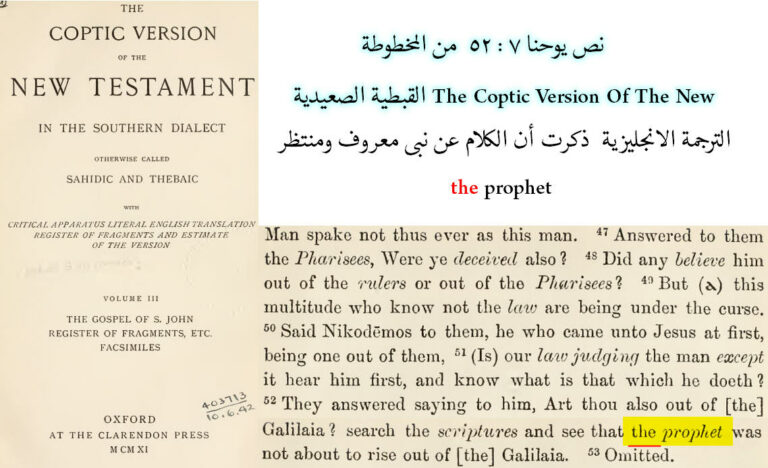
🔥 So there are at least three manuscripts (Papyrus 66, Papyrus 75 and Sahidic Coptic) that carry the reading (ο προφητης – the prophet); this reading supported by the oldest evidence makes the meaning of the text that: the awaited prophet – the prophet of the end of time – does not come out of Galilee and that the place of his appearance is mentioned in the books.
Bruce Metzger’s Opinion
Note
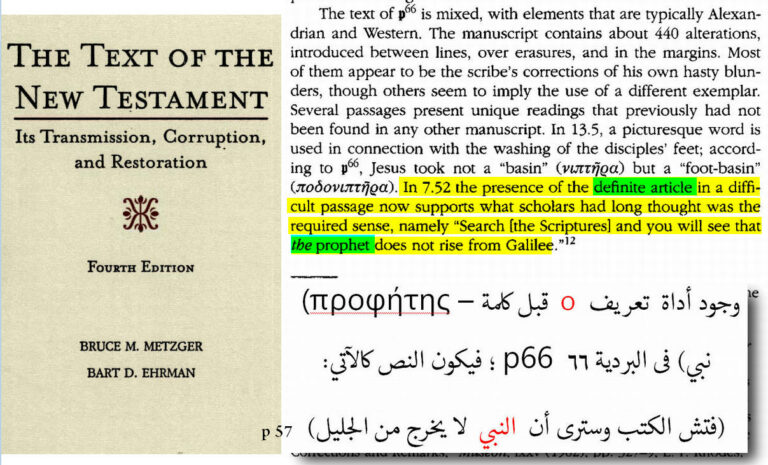
Bruce M. Metzger and Bart D. Ehrman say in their book The Text Of The New Testament: Its Transmission when talking about the oldest papyrus of the Gospel of John known as (P66):
Quote
“In 7.52 the presence of the definite article in a difficult passage now supports what scholars had long thought was the required sense, namely ‘Search [the Scriptures] and you will see that 👉 the prophet does not rise from Galilee.’”
— Bruce M. Metzger
— Bart D. Ehrman
Important
Bruce Metzger and Bart Ehrman speak here about the presence of a definite article before the word (προφήτης – prophet), so the phrase becomes:
Quote
(Search the scriptures and you will see that 👈 the prophet does not come out of Galilee)
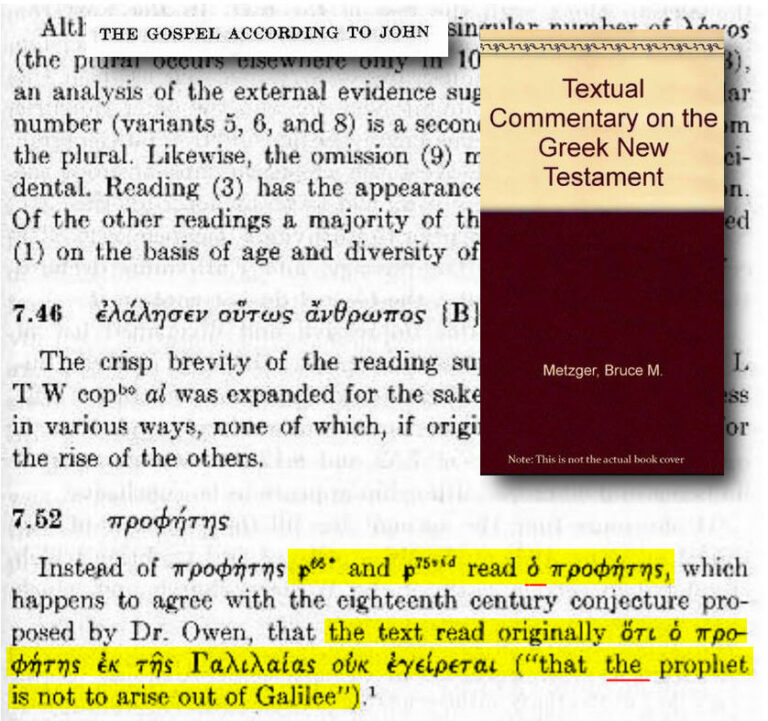
This was also confirmed by Bruce M. Metzger in his book Textual Commentary on the Greek New Testament.
He decided that the original reading is the one mentioned in Papyrus 66 and Papyrus 75, which is (the prophet), which is the opinion that Dr. Owen preferred in the eighteenth century.
1 D8A8D8B1D988D988D8B3 249d5cca0b9f8c7a
Here is your content formatted for Obsidian, preserving wording exactly and structuring it clearly:
Reading Papyrus 66 Explains the Meaning of the Text and Removes the Confusion
Note
This reading is the only reading that explains the meaning of the text and removes the problem and the imagined error in it.
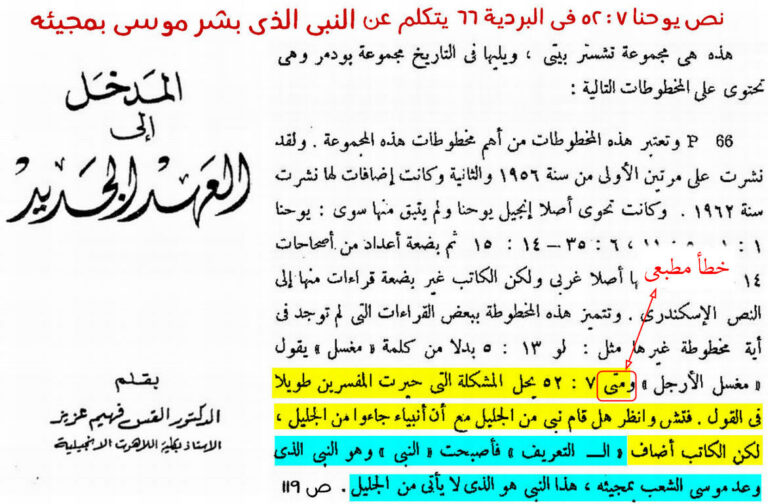
Opinion of Father Fahim Aziz
Note
👈 Therefore, we find Dr. Priest Fahim Aziz saying in his book Introduction to the New Testament:
Quote
(Reading John 7:52 from Papyrus 66 solves the problem that has long puzzled commentators (Search and see whether a prophet has arisen from Galilee); although prophets did arise from Galilee, the writer added the definite article, so it became “the prophet”; and he is the “prophet” whose coming Moses promised the people. This prophet is the one who does not come from Galilee.)
— Fahim Aziz
1 D8A7D984D8B9D987D8AF 1024x672 0cf7d3aff3c1f94b
Note: There is a typo in the book where Matthew is mentioned instead of John
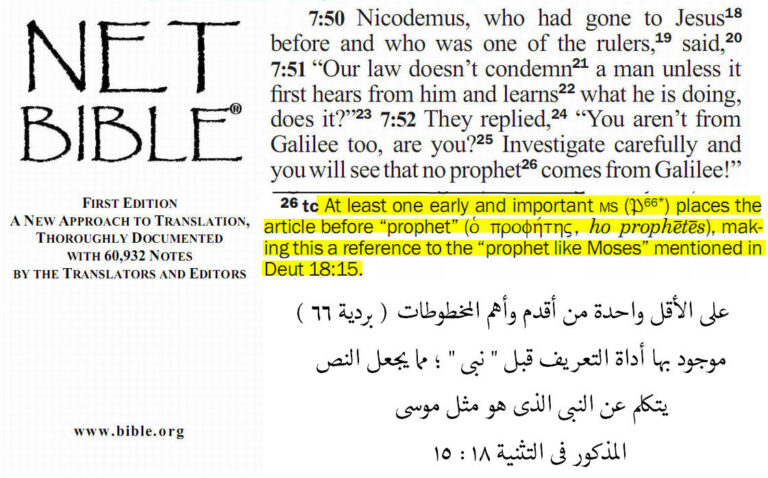
Net Bible Margin
Note
We also read in the margin of the Net Bible version, in which many theologians and researchers of the Bible texts participated, including Daniel Wallace, commenting on the text:
Quote
(At least one early and important ms (P66) places the article before “prophet” (ὁ προφήτης, Jo prophets), making this a reference to the “prophet like Moses” mentioned in Deut 18:15.)*
Important
– Translation of what was mentioned above:
At least one of the oldest and most important manuscripts, “Papyrus 66,” has the definite article before “prophet,” which makes the text speak of “the prophet,” who is like Moses mentioned in Deuteronomy 18:15.
Characteristics of the Awaited Prophet According to the Jews
🔥So, the original reading confirms that the Jews were talking about a specific prophet with specific characteristics; they were awaiting his mission and knew that he would not leave Galilee.
This prophet is like Moses, who is mentioned in Deuteronomy 18:15.
“I will raise up for them a prophet like you from among their brothers, and I will put my words in his mouth, and he will tell them all that I command him.”
This is the awaited prophet, according to the book of the Jews, which they demanded to research; his mission will be in the land of the Arabs (Isaiah 21:13).
“A revelation concerning the land of Arabia: In the woods of Arabia you shall spend the night, O caravans of the Dedanites.”
-And the revelation will come down to him in the mountains of Paran, the homeland of Ishmael, son of Abraham (Deuteronomy 33:2)
“The Lord came from Sinai and dawned on them from Seir; He shone forth from Mount Paran and came with ten thousand holy things.”
“And he lives and gives him of the gold of his youth. And he prays for him continually. He blesses him all day long.”
He will be like Moses and one of the brothers of the children of Israel (from the children of Ishmael) (Deuteronomy 18:18).
“I will raise up for them a prophet like you from among their brothers, and I will put my words in his mouth, and he will speak to them all that I command him.”
These are some of the characteristics mentioned in the Old Testament that herald the emergence of a prophet like Moses, whom the Jews knew as they knew their own children.
So they challenged, with knowledge and confidence, anyone to produce for them any text that spoke of a prophet who would emerge from Galilee. This was especially true given their knowledge that the characteristics and location of this awaited prophet were not in Galilee. Instead, he would emerge from the midst of Mount Paran, where the House of God was located in Arabia.
The Copyist Attempts to Correct the Error
After some pious scribes became aware of the seriousness of this text, one of them tried to delete the definite article. This was pointed out by the German textual critic Wieland Willker in his book Paleographical Problems in Manuscripts of the Gospels. Thus, he says about the reading found in Papyrus 66 (Jn 7.52):
ER Smothers notes a letter of Prof. Martin, the editor of P66, to him. Martin writes: “On p. 52, line 2, the article ο with προφητης as finally written, is paler and, on close inspection, seems to have been 👉 imperfectly scratched. If so, the corrector, whoever he was, wished to remove it.” G. Fee agrees with this view (P66, S&D, 1968, p. 70).
In addition to the above, Professor Martin Bodmer, who personally examined Papyrus 66, explains that the definite article appears in the manuscript in a lighter color than the rest of the text. Furthermore, upon closer examination, he found that someone had attempted to cross out or scribble this letter with the intent of erasing it
And God Almighty spoke the truth when He said: ” Those to whom We gave the Scripture recognize him as they recognize their own sons. But indeed, a party of them conceal the truth while they know [it] .” [Surat Al-Baqarah - Verse: 146]
John 1:27
Here is your content cleanly formatted for Obsidian, preserving your wording and structuring it properly:
John 1:25 — Testimony About the Awaited Prophet
Note
We read from the Gospel of John 1:25 John’s testimony about God’s good news of a prophet who would come at the end of time, whose coming the Jews were waiting for:
Quote
(And this is the testimony of John, when the Jews sent priests and Levites from Jerusalem to ask him, “Who are you?” 20And he confessed and did not deny, but confessed, “I am not the Christ.” 21So they asked him, “What then? Are you Elijah? ” And he said, “I am not.” “Are you the prophet?” And he answered, “No.”)
Important
According to the text, John appeared, and Christ appeared. The prophecy of the appearance of the awaited prophet “Elijah” remained.
Note
We will not delve much into who Elijah is; in light of the differences and contradictions in the texts due to the continuous attempts at distortion, the interpreters of the Bible differed about the person of Elijah; and whether it is the name of a person or an attribute of more than one person…
Important
What concerns us is the existence of a prophet named Elijah whom the Jews were waiting for and whom Christ preached in more than one place.
Prophecies About the Final Prophet
Quote
Matthew 11:14
”And if you are willing to accept it, this is Elijah who is about to come. 15He who has ears to hear, let him hear.”
Note
This final prophet, Christ said that he would come after him:
Quote
John 14:16
”And I will pray the Father, and he will give you another Comforter, that he may abide with you forever,”
Quote
John 15:26
”But when the Comforter comes, whom I will send to you from the Father, even the Spirit of truth, who proceeds from the Father, he will testify of me,”
Quote
John 16:7-8
”I tell you the truth, it is expedient for you that I go away. For if I do not go away, the Helper will not come to you; but if I go away, I will send him to you. 8And when he comes, he will convict the world concerning sin, and concerning righteousness, and concerning judgment.”
Important
This final prophet’s call to the world will be to convict the world concerning sin and to guide to all the truth. His call will be final until the Day of Judgment. He will remain with you forever and will speak only by God’s command and will tell with prophecies and unseen matters, and glorifies Christ, for He bears witness to me:
Quote
John 16:13-14
”When He, the Spirit of truth, comes, He will guide you into all truth; for He will not speak on His own authority, but whatever He hears He will speak, and He will declare to you things to come. 14He will glorify Me, for He will take of what is Mine and declare it to you.”
Success
Clear and explicit texts confirm that there is a final prophet who will come after Christ, and He will be the owner of a complete law that will last until the Day of Resurrection.
Question
Will Christians accept these texts and search for the prophet to whom these characteristics apply? Or will they try to distort and falsify these texts and interpret their meanings?!!!
Example of Distortion — John 1:27
Quote
“He is the one who comes after me, who is preferred before me, the thong of whose sandals I am not worthy to untie.”
Manuscript Evidence
Warning
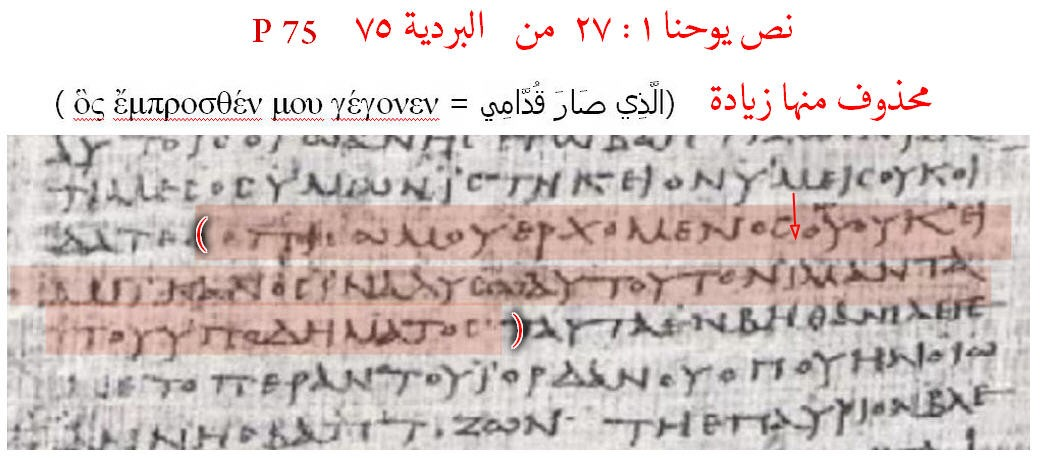
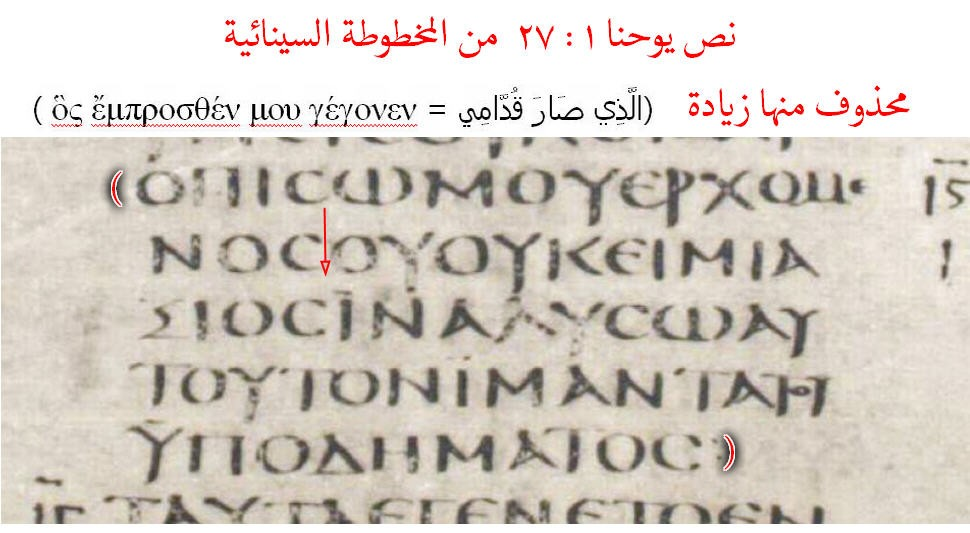
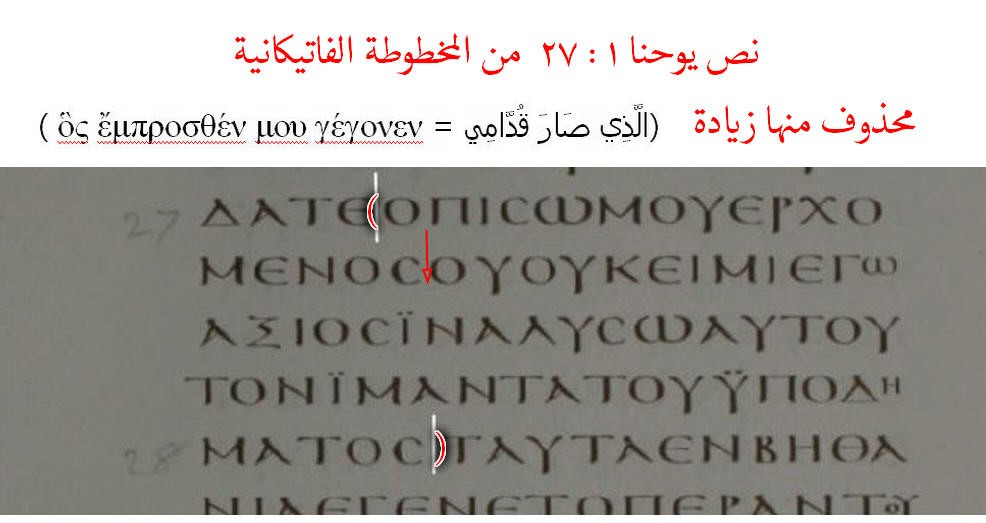
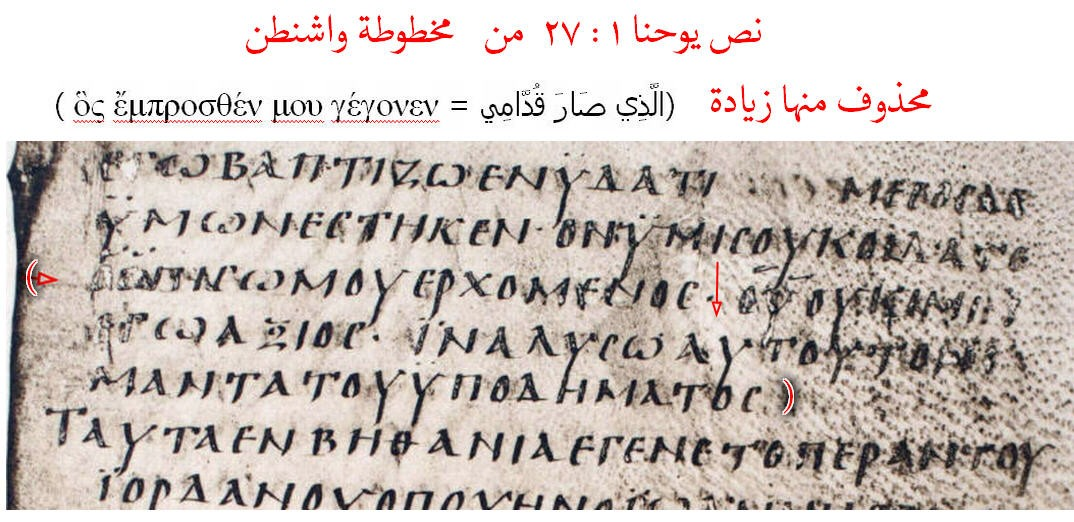
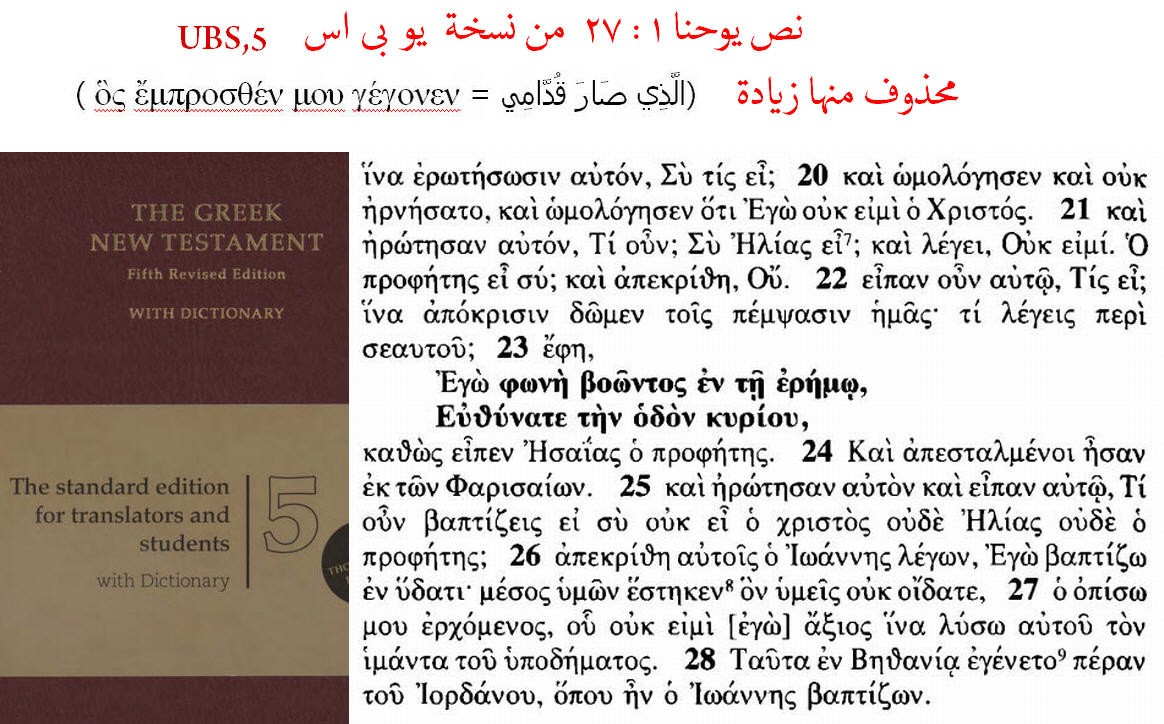
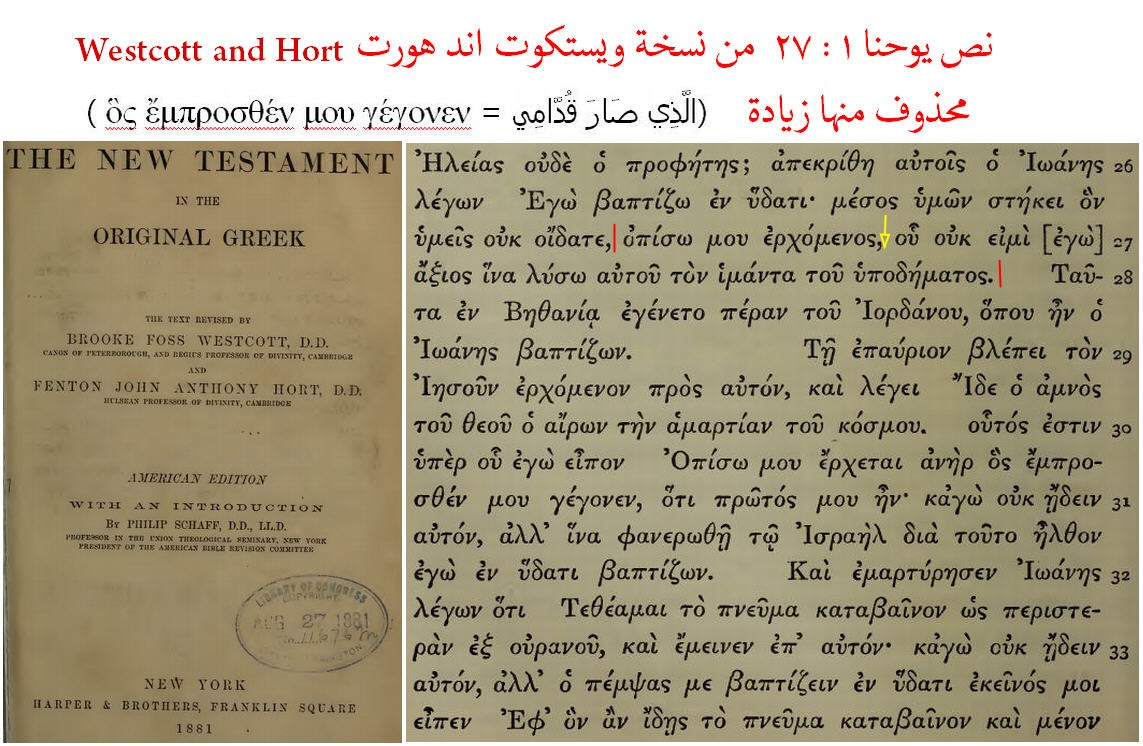
By reviewing this text in the oldest and best manuscripts of the Bible, we found that the addition:
(who is preferred before me = ὃς ἔμπροσθέν μου γέγονεν)
is not found in all the ancient papyri of the Gospel of John; such as:
Papyrus 66 (P66)
Papyrus 75 (P75)
Important
It is also not found in:
Codex Sinaiticus
Codex Vaticanus
Codex Ephraimus
Note
The first presence of this strange addition was in the Alexandrian manuscript from the fifth century AD.
Here is your content formatted for Obsidian, preserving wording and organizing clearly:
Alexandrian Manuscript Reading (With Addition)
Note
While it appeared in the Alexandrian manuscript that contained the addition, the text was as follows:
Quote
n τοῦ ὑποδήματος )
؛
Position of Critical Editions
Important
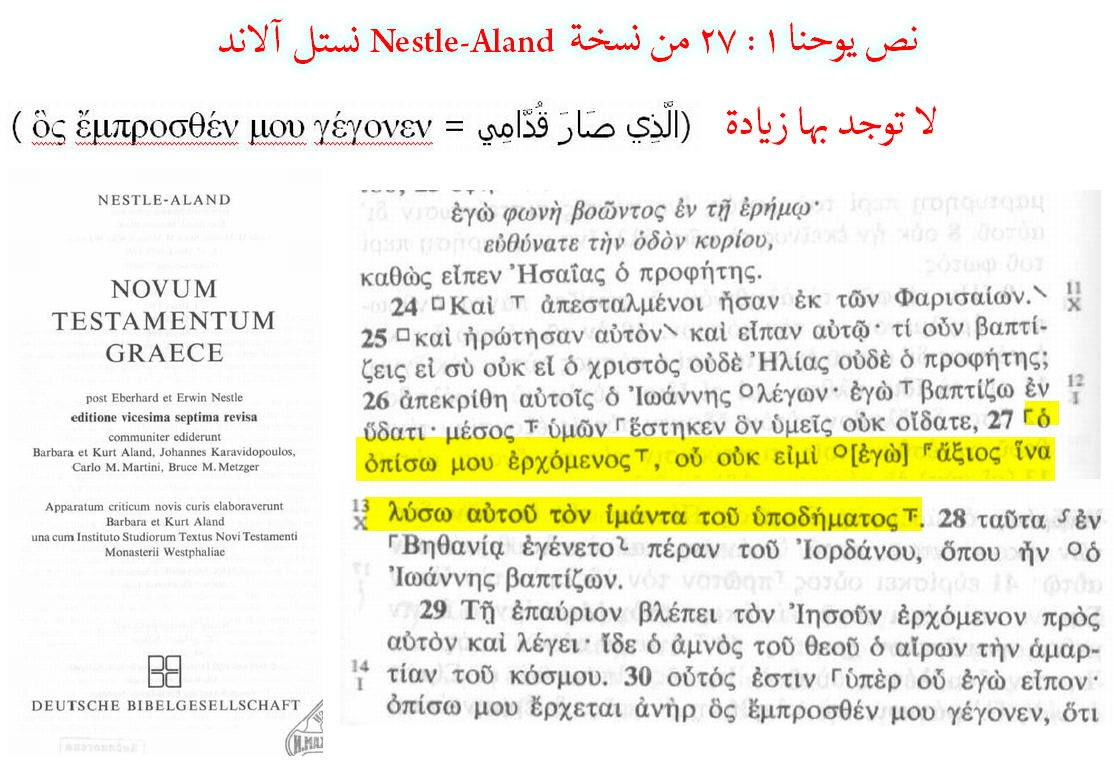
Based on the text found in the oldest and best manuscripts of the Greek New Testament; the critical versions completely ignored this addition, and deleted it from all their critical editions!
Warning
The addition (which has gone before me = ὃς ἔμπροσθέν μου γέγονεν) is not found in:
Nestle-Aland version
Westcott-Hort version
UBS version
Samuel Tregelles version
Note
and other critical versions that relied on the oldest and best manuscripts of the New Testament;
Here is your content formatted for Obsidian, preserving wording and organizing clearly:
Traditional Greek Versions (Textus Receptus)
Note
As for the traditional Greek versions that were translated from the received text of Erasmus,
Quote
they mentioned the addition as it is…
ἐρχόμενος, 👉 ὃς ἔmicro ἄξιος ἵνα λύσω αὐτοῦ τὸν ἱμάντα τοῦ ὑποδήματος.
===؛
English Translations — Majority Reading
Important
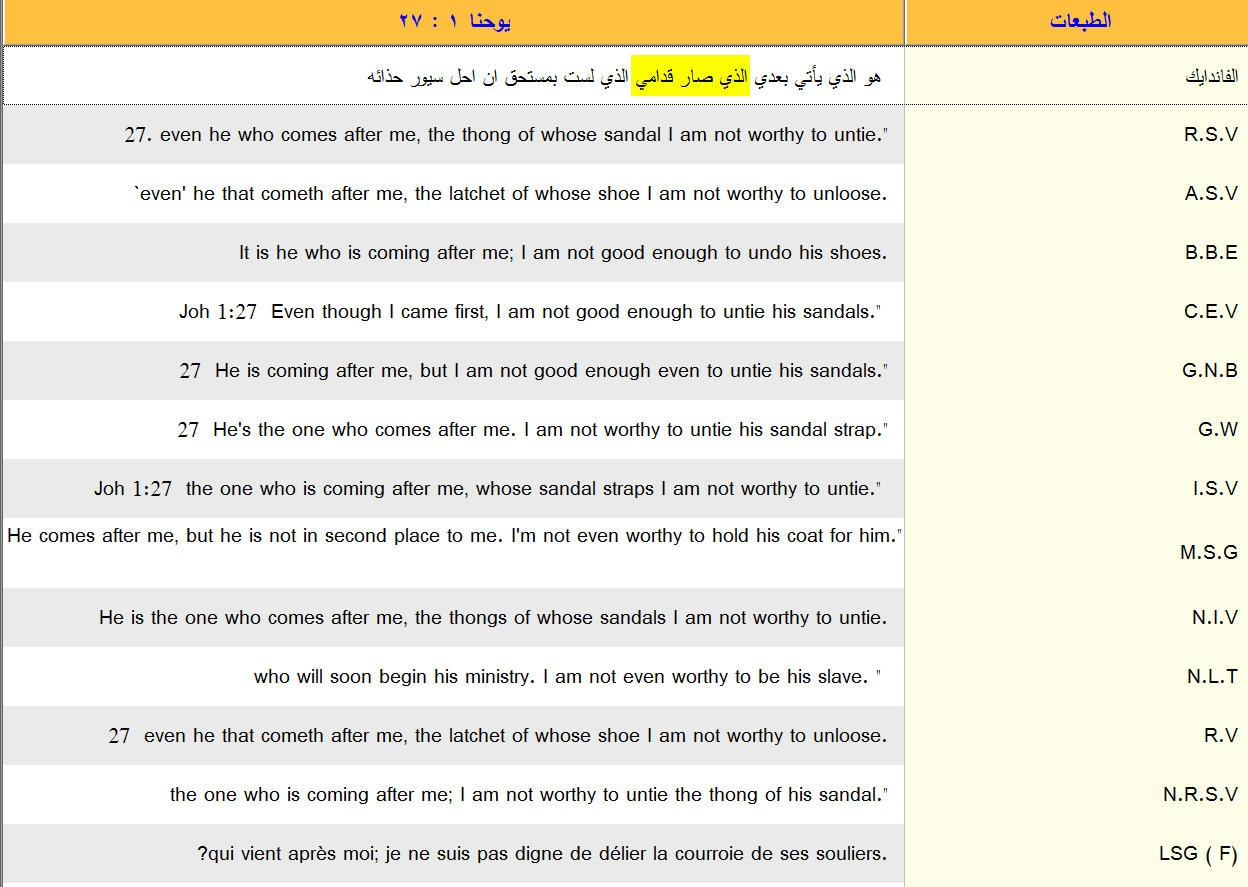
By referring to the English translations of the Bible; we found almost unanimity on deleting this addition from the text (is preferred before me = who came before me);
Note
this anomalous addition was deleted from versions:
RSV
BBE
CEV
GNB
GW
ISV
NRSV
ASV
NIV
RV
… and others
Quote
The text in all of them was as follows: (He is the one who comes after me, the straps of whose sandals I am not worthy to untie)
Textus Receptus-Based Translations
Warning
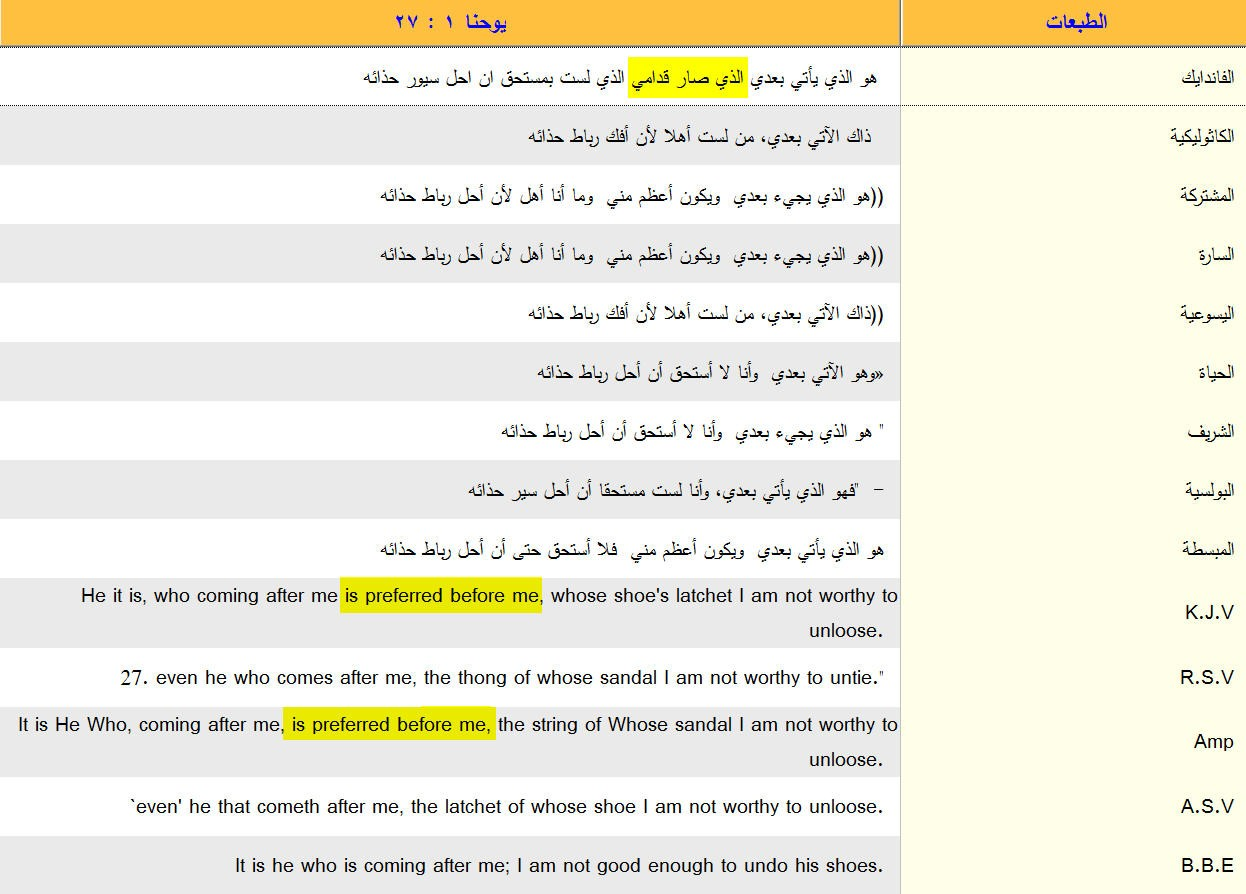
As for the versions that depend in their translation on the received text; the addition was mentioned as is:
King James Version (KJV)
AMP version
Quote
The text in them was as follows: (He it is, who comes after me is preferred before me, whose shoe’s latchet I am not worthy to unloose)
fetch c92339e81b088dd7
Here is your content formatted for Obsidian, preserving wording and organizing clearly:
Basis of Modern Critical Translations
Note
👇
And of course.. the versions that deleted the addition were based on the best and oldest approved manuscripts and followed the path of textual criticism scholars and owners of famous critical versions.
===؛
Modern Arabic Versions and Translations
Note
If we go back to the modern Arabic versions and translations; we will find that the only version that mentioned the addition is the Van Dyck version, which relies in its translation on the received text of Erasmus…
Quote
The text in it was as follows: (He it is, who comes after me, who has become preferred before me, whose shoe’s latchet I am not worthy to untie)
Important
As for all the modern Arabic translations such as:
Jesuit
Pauline
Common
Catholic
Sarah
Simplified
Note
they deleted the addition in recognition of its lack of authenticity.
Quote
and the text in all of them was as follows: (He who comes after me, whose sandal strap I am not worthy to untie)
fetch a401a3c734756435
Here is your content formatted for Obsidian, preserving wording and structuring it clearly:
Conclusion on the Addition in John 1:27
Warning
And so on… despite the absence of this addition in the oldest and best manuscripts of the New Testament, and despite the unanimous agreement of textual critics on its inauthenticity and their deletion of it from their critical copies…
Important
and despite the fact that this addition was deleted by most modern copies and translations in various languages; because they were certain that it was just an addition added by a copyist in the fifth century in an attempt to glorify the status of Jesus and to deny the appearance of a prophet after Christ who would be greater and more perfect than him and the owner of a final law until the Day of Judgment!
Note
However, it is still present among the traditional copies of the Bible that relied in their translation on the received text… the worst of all, and many Christians still believe that it is part of the text of the Holy Bible!!
Testimony of Early Church Figures on Textual Distortion
Note
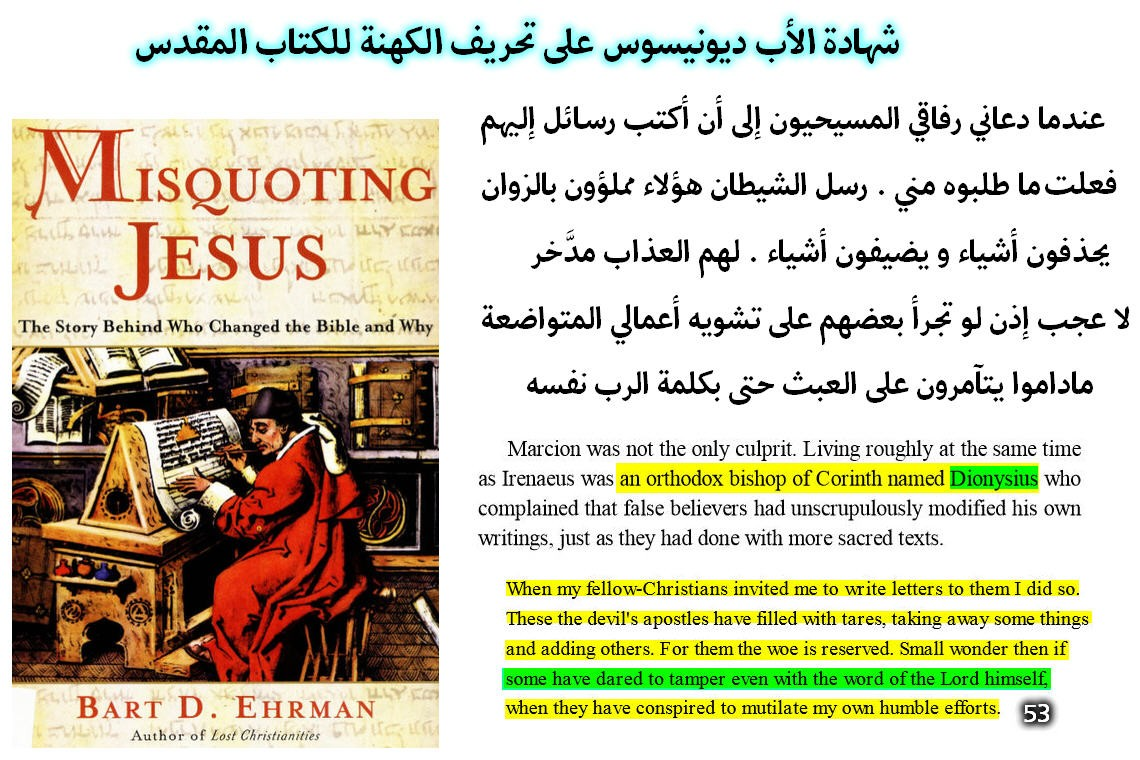
In this context we mention the testimony of Father Dionysius St. Dionysius, Bishop of Corinth and one of the main church leaders in the second century AD, complains about the distortion of the Bible by copyists:
Quote
“When my fellow Christians invited me to write letters to them, I did as they asked. These messengers of Satan are full of tares, they delete things and add things. They have torment reserved for them. No wonder then if some of them dared to distort my humble works since they conspire to tamper with even the word of the Lord Himself.”
REFERENCE
From the book Misquoting Jesus — p. 53 by Bart D. Ehrman Corruption of Bible
fetch 964865bdbdb6feaa
👈 In the second century AD… the scribes were tampering with the word of the Lord Himself!!
So
what about those who came after them who received the text distorted and tampered with; thus increasing its distortion and distortion and distance from the original text?
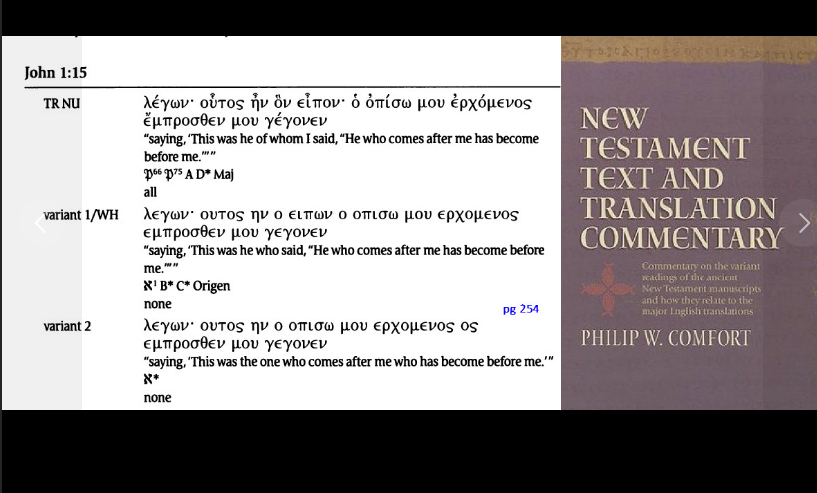
John 1:15 — Textual Variants and the “Coming One”
Note
Core Issue
The phrase “He who comes after me…” in Gospel of John 1:15 shows clear textual instability across early manuscripts—raising the question of whether its meaning was later adjusted to avoid theological implications.
Base Text (TR / Majority)
Quote
“This was he of whom I said, He who comes after me has become before me…”
Greek structure:
λέγων· οὗτος ἦν ὃν εἶπον· ὁ ὀπίσω μου ἐρχόμενος…
OBSERVATION
This reading explicitly ties the statement to John the Baptist: “of whom I said…”
Variant 1 — Alexandrian Shift
Supported by:
Codex Sinaiticus (א)
Codex Vaticanus (B)
Origen
Quote
“This was he who said, He who comes after me has become before me…”
CRITICAL
“I said about him”
And replaces it with:
“he said”
Implication
This breaks the direct testimony chain:
No longer clearly John speaking about someone
Introduces ambiguity about who originally made the statement
Variant 2 — Further Simplification
Supported by:
Sinaiticus variant stream
Quote
“This was the one who comes after me who has become before me.”
CRITICAL
This removes attribution entirely:
No “I said”
No “he said”
Implication
Eliminates speaker identity
Avoids interpretive tension altogether
Pattern of Alteration
Warning
The transmission shows a clear directional trend:
Original (hard reading)
→ “I said about him” (explicit testimony)
...r the marker. This page tests the marginalia and annotation systems. For related reading see [[how-scribes-removed-muhammads-prophecies-from-the-gospel-of-john]], [[does-isaiah-42-prophesy-muhammad-the-chosen-servant-prophecy-examined]], and...