Prophecy in Deuteronomy 33:2
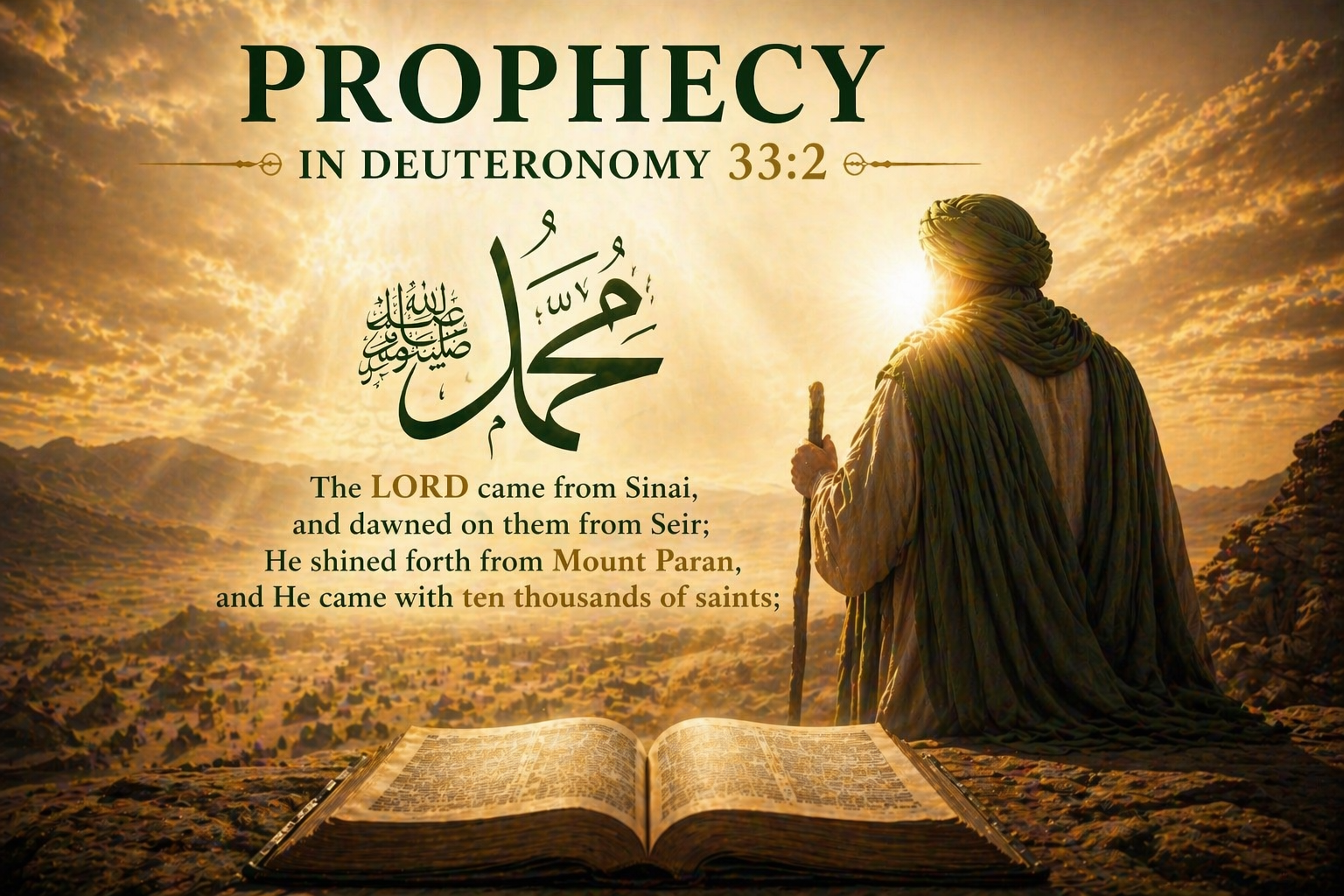
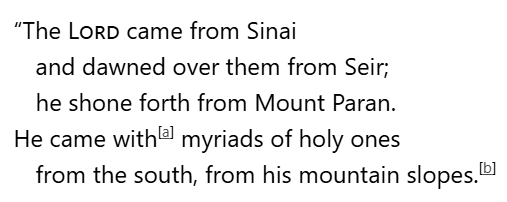
Here Moses Tells the Children of Israel about God’s Manifestation in Three Places, Namely
Sinai is a reference to God giving the Torah to Moses on Mount Sinai.
Seir is a reference to God giving the Gospel to Christ on Mount Seir in the land oF JEWS
And Faran is a reference to God giving the Quran to the Master of Creation on Mount Hira in the land of HIJAZ
Before we present to you the objections of the Christians, we must look at the differences contained in this text between the ancient texts and the translations to see whether the text has been tampered with or not?
1.The Hebrew Masoretic Text

2.Samaritan Text

Differences between the Hebrew and Samaritan texts
Aside from minor letters, the most significant difference between them is evident in the word ואתה mentioned in the Masoretic text (ואתה), while in Samaritan it is ואתו (ואתו). Does the letter אתה change anything?
Yes, the word is composed of two parts: an alif-ta (pronoun). What the Masoretic scribe did was change the waw pronoun to a ha to make the word sound like the word ‘ata’ (came). The Samaritan retained the original reading, which is ‘itu’ (meaning ‘with him’). This is the reading found in the other ancient translations.
The Septuagint Greek Text
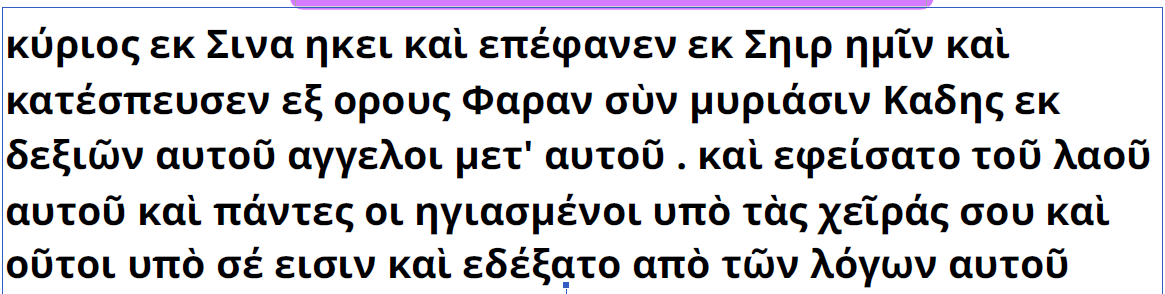
The Lord came from Sinai, and appeared to us from Seir. He hastened from Mount Paran, with ten thousand Kadesh; at his right hand were angels with him. He has protected his people, and all his holy ones are in your hands. They are under you; accept his word.
The Greek text agrees with the Samaritan text in the phrase “with him,” and not “came” as in the Hebrew text.
The following Vulgate Text

Jerome also agreed with the Samaritan text in the word “with him” and not “came” as in the Hebrew text. Furthermore, Jerome corrected the error in the Septuagint translation where the word “Qadesh” was translated as “Qadesh,” which Jerome translated as “the saints,” because the word “Qadesh” denotes holiness and is not the name of a place. We will provide examples of this.
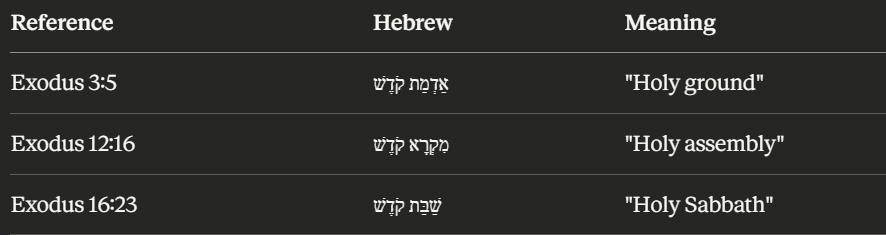
Therefore, the Septuagint erred when it translated “Kodesh” as the city of Kadesh.
Aramaic Targum Onkelos
יְיָ מִסִּינַי אִתְּגְּלִי וְזֵיהֹור יְקָרֵיּה מִשֵּׂעִיר אִתַּחֲזֵי לְנָאִ—אִתְּגְּלִי בִּגְבוּרְתֵיּה עַל טוּרָא דְּפָאָרָן, וְעִמֵּיּה רִבְּוָות קַדִּישִׁין; כְּתַב יַמִּינֵיּה, מִגֹּו אִישְׁתָּא אֹורַיְתָא יְהַב לְנָא. אַף חַבֵּיבִנּוּן לְשִׁבְטַיָּא, כָּל קַדִּישֹׁוהִי בֵּית יִשְׂרָאֵל בִּגְבוּרָא אַפֵּיקִנּוּן מִמִּצְרָיִם; וְאִנּוּן מִדַּבְּרִין תְּחֹות עֲנָנָךְ, נָטְלִין עַל מֵימְרָךְ
Aramaic Targum Jonathan
יְיָ מִן סִינַי אִתְגֵּלִי לְמִתַּן אֹורַיְיָתָא לְעַמֵּיּה בֵּית יִשְׂרָאֵל וּדְנַח זִיו אִיקַר שְׁכִינְתֵּיּה מִגַּבְלָא לְמִיתָנָּה לִבְנֹוי דְעֵשָׂו וְלָא קַבִּילוּ יָתָה הֹופַע בְּהַדְרַת אִיקַר מִטַּוְרָא דְפָאָרָן לְמִיתָנָּה לִבְנֹוי דְיִשְׁמָעֵאל וְלָא קַבִּילוּ יָתָה הֲדַר וְאִתְגֵּלִי בִּקְדוּשָׁא עַל עַמֵּיּה בֵּית יִשְׂרָאֵל וְעִמֵּיּה רִיבַן רִיבְוָון מַלְאָכִין קַדִּישִׁין כְּתַב יְמִינֵיּה וְאֹורַיְיָתָא מִגֹּו שַׁלְהֹובִית אֵישָׁתָא פִּקּוּדַיָּא יְהַב לְהֹון
**Both Targum Onkelos and Targum Jonathan agree with the Samaritan text in reading “with him” — not “came” as in the Hebrew Masoretic text.
**
The Syriac Peshitta
ܡܪܝܐ ܡܢ ܣܝܢܝ ܐܬܐ ܘܕܢܚ ܠܢ ܡܢ ܣܥܝܪ ܘܐܬܓܠܝ ܡܢ ܛܘܪܐ ܕܦܪܢ ܘܥܡܗ ܡܢ ܪܒܘܬܐ ܕܩܕܝܫܐ ܡܢ ܝܡܝܢܗ . ܝܗܒ ܠܗܘܢ ܘܐܦ ܐܪܚܡ ܐܢܘܢ ܠܥܡܡܐ ܘܟܠܗܘܢ ܩܕܝܫܘܗܝ ܒܪܟ ܘܗܢܘܢ ܡܕܪܟܝܢ ܠܪܓܠܟ ܘܡܩܒܠܝܢ ܡܢ ܡܠܬܟ
The Syriac text also agrees with the Samaritan text in using the word “with him” — contradicting the Hebrew Masoretic text.
Conclusion
All ancient texts — Samaritan, Greek, Latin, Aramaic, and Syriac — contradict the Hebrew Masoretic text and adopt the reading: “with him, myriads of holy ones.”
Now we respond to the missionaries’ objections regarding this great prophecy:
SECTION: RESPONSES TO OBJECTIONS
***OBJECTION ***1
“This text does not speak of any future prophecy — it is a report about the past. The text says ‘came,’ ‘shone,’ and ‘appeared’ — all past tense.”
Response: Prophecies in the Bible come in the past tense to indicate the future. This is well established in biblical texts, as we will see:
“He was oppressed and afflicted, yet He did not open His mouth; He was led as a lamb to the slaughter, and as a sheep before its shearers is silent, so He did not open His mouth.” (Isaiah 53:7)
Christians use this text to argue for the alleged crucifixion of Christ — but it is written in the past tense while referring to the future. This is by unanimous agreement of Christian scholars, including John Chrysostom:
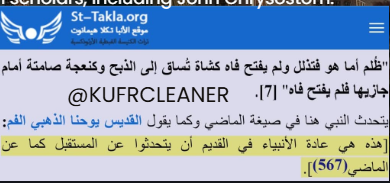
“The prophet here speaks in the past tense, and as St. John Chrysostom says: ‘This is the custom of the ancient prophets: to speak of the future as if it were the past.’ [Reference: 567]”
So, as John Chrysostom said, it is the custom of the prophets to speak of the future as if it were the past.
Example 2: From the Book of Isaiah, Chapter 10
“26 And the Lord of hosts will stir up a scourge against him, like the striking of Midian at the rock of Oreb; and His rod will be over the sea, and He will lift it as He did in Egypt.
27 It shall come to pass in that day that his burden will be taken away from your shoulder, and his yoke from your neck; and the yoke will be destroyed because of the anointing oil.
28 He has come to Aiath, he has passed through Migron; at Michmash he has reviewed his equipment.
29 They have crossed the pass; they have taken up lodging at Geba; Ramah is afraid, Gibeah of Saul has fled.
30 Cry aloud, O daughter of Gallim! Listen, O Laishah — O poor Anathoth!
31 Madmenah has fled, the inhabitants of Gebim have gathered to flee.
32 Today he will halt at Nob; he will shake his fist at the mount of the daughter of Zion, the hill of Jerusalem.
33 Behold, the Lord, the Lord of hosts, will lop off the bough with terror; those of high stature will be hewn down, and the proud will be humbled.
34 And He will cut down the thickets of the forest with iron, and Lebanon will fall by the Mighty One.”
Many texts came in the past tense to indicate the future!!
Now we will present the views of biblical scholars on prophecies that came in the past tense:
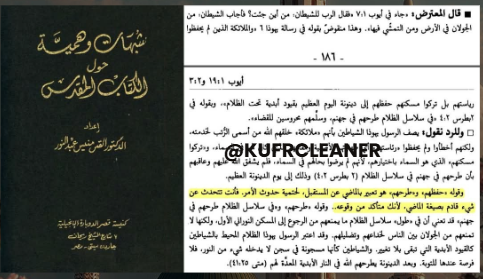
1 — From the book Doubts and Illusions About the Bible by Rev. Menes Abdel Nour:
“The questioner said: In Job 1:6 it says ‘the sons of God came before the Lord, and Satan came also among them.’ This text is incomplete, as it states in Jude 1:6 ‘the angels who did not keep their proper domain have been kept in everlasting chains.’ And the Lord Rod [the translator] says: He describes the angels as ‘creatures,’ that is, their original nature, which God named when he chose the name ‘heavens,’ where they lived, and they fell… their dwelling which is in heaven in the natural order of things, for they did not accept to remain in their natural state by their choice, and so God cast them into hell in chains of eternal darkness, and this will mean on the Day of Eternal Damnation (2 Peter 4:2), and likewise Jude 1:2… And his saying ‘and He bound them’ is an expression about the future, showing the certainty of its occurrence, as though it had already happened. His saying ‘and He cast them into hell’ means He will cast them into the chains of eternal darkness, but that does not mean He prevents them like angels from the heavens — for the chains are not physical chains. The Messenger accused Satan of deceiving people (4:2), and God considered that darkness in which they were imprisoned according to the judgment they deserved on the Day of Eternal Damnation (Matthew 41:25).”
***Rev. Menes Abdel Nour confirms that prophecies come in the past tense but in reality point to the future.
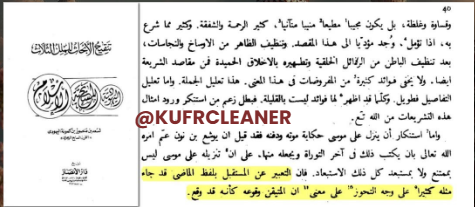
2 — The Words of the Jewish Scholar Ben Kemouna
“…and cruelty, but it can be merciful, very compassionate and tender. And if it is interpreted to this purpose, there will be a reason for it, based on the principles of religion and ethics, after purifying the inner self from the virtues of praise and its appearance and refinement. It also has many benefits from the suppositions. It is not beneficial for those who have few benefits. So let anyone who claims that these laws were revealed by God refrain from speaking of this in a long interpretation. Whatever has already appeared is not beneficial for the few.”
“And as for the claim that God would not come down to Moses except by the end of his life, on the condition that God writes in the last of the Torah to be given to Moses, on the condition that He not prevent it from Moses — so the expression about the future by the past tense often means: the certainty of the one who is certain that it has already occurred.”
Ben Kemmuna also confirms and says: “This came abundantly in this manner.”
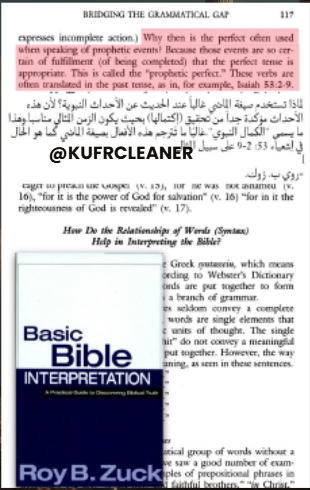
From the book Basic Bible Interpretation: A Practical Guide to Discovering Biblical Truth:
This is a well-known book in biblical interpretation, widely used in theological studies — especially for explaining grammatical rules such as the Prophetic Perfect:
*“Why is the past tense often used when speaking of prophetic events? Because these events are so certain of fulfillment (accomplished) that the perfect tense is appropriate. This is called the ‘Prophetic Perfect.’ These verbs are often translated in the past tense, such as in Isaiah 53:2–9.”
Additional Evidence that Deuteronomy 33:2 is a Future Prophecy
No historical event ever occurred in which divine authority or revelation appeared to the Children of Israel in a great manner — first in Sinai, then in Seir, then in an even greater manner reaching the level of “shining” in Paran.
Therefore, many commentators were puzzled when discussing this text. Critic Peter C. Craigie, commenting on Deuteronomy 33:2, said:
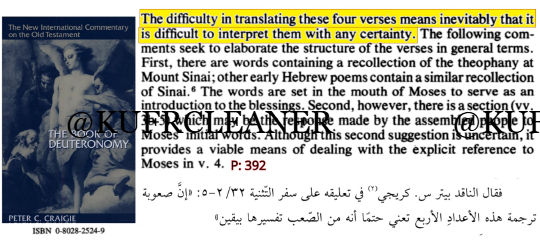
Among the signs of difficulty in understanding the text are the many differences between the Greek, Syriac, Latin Vulgate, and Aramaic Targum translations, as we showed earlier.
Also among the evidence that Deuteronomy 33:2 is a future prophecy is its correspondence with Habakkuk 3:3:
“God came from Teman, and the Holy One from Mount Paran. Selah. His glory covered the heavens, and the earth was full of His praise.” (Habakkuk 3:3)
#2026 projects
But the text also says “came” in the past tense?! The truth is that the text came in a future tense, but the Van Dyke Arabic translation and other Arabic translations adopted the past tense form. Let us examine the original Hebrew:
אֱלֹוַּה מִתֵּימָן יָבֹוא, וְקָדֹושׁ מֵהַר-פָּאָרָן סֶלָה; כִּסָּה שָׁמַיִם הֹודֹו, וּתְהִלָּתֹו מָלְאָה הָאָרֶץ. וְנַגַּהּ כָּאֹור תִּהְיֶה קַרְנַיִם מִיָּדֹו לֹו; וְשָׁם, חֶבְיֹון עֻּזה. לְפָנָיו, יֵלֶךְ דָּבֶר; וְיֵצֵא רֶשֶׁף, לְרַגְלָיו. עָמַד וַיְמָדֶד אֶרֶץ, רָאָה וַיַּתֵּר גּוֹיִם, וַיִּתְפֹּצְצוּ הַרְרֵי-עַד, שַׁחוּ גִּבְעֹות עֹולָם; הֲלִיכֹות עֹולָם, לֹו
“Eloah (God) from the south will come, and the Holy One from Mount Paran — Selah. He covered the heavens with His glory, and the earth was full of His praise. And His brightness will be like light — rays from His hand; and there the hiding of His power. Before Him goes the plague, and the pestilence goes at His feet. He stood and measured the earth, He looked and dispersed the nations. The ancient mountains were shattered, the eternal hills sank; the eternal paths are His.”
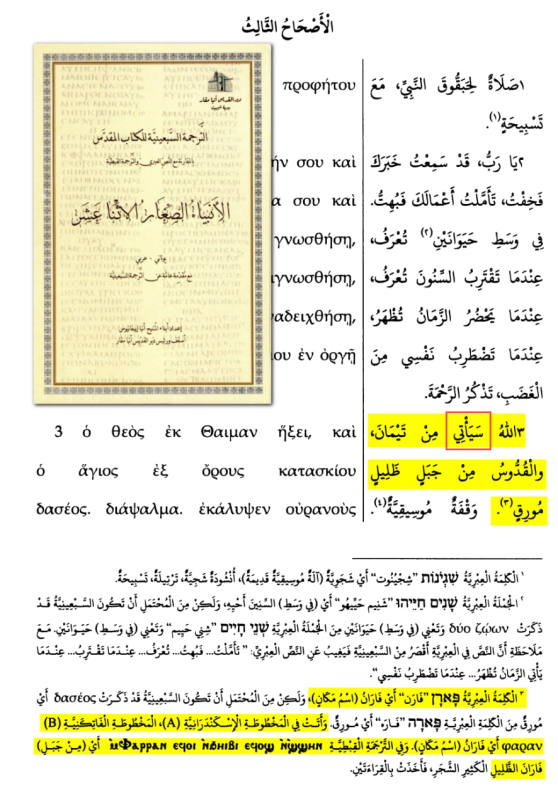
The verb in the Hebrew text is יָבֹוא (yavo) — a present/future tense meaning “will come.” That is why the Septuagint adopted the future tense:
Greek Septuagint — Habakkuk 3:3
ο θεὸς εκ Θαιμαν ηξει καὶ ο αγιος εξ ορους κατασκίου δασέος διάψαλμα εκάλυψεν ουρανοὺς η αρετὴ αυτου̃ καὶ αινέσεως αυτου̃ πλήρης η γη̃. καὶ φέγγος αυτου̃ ως φω̃ς εσται κέρατα εν χερσὶν αυτου̃ καὶ εθετο αγάπησιν κραταιὰν ισχύος αυτου̃. πρὸ προσώπου αυτου̃ πορεύσεται λόγος καὶ εξελεύσεται εν πεδίλοις οι πόδες αυτου̃. εστη καὶ εσαλεύθη η γη̃ επέβλεψεν καὶ διετάκη εθνη διεθρύβη τὰ ορη βία ετάκησαν βουνοὶ αιώνιοι
“God from Teman will come, and the Holy One from Mount Paran — shaded and wooded. Selah. His glory covered the heavens, and His praise filled the earth. And His brightness like light will be fierce by His power. Before His face the word will go, and it will go forth upon feet. He stood and the earth was shaken; He looked and the nations melted. The mountains were broken with force, and the eternal hills sank.”
The Latin Vulgate — Habakkuk 3:3
Deus ab austro veniet et Sanctus de monte Pharan semper operuit caelos gloria eius et laudis eius plena est terra. splendor eius ut lux erit cornua in manibus eius ibi abscondita est fortitudo eius. ante faciem eius ibit mors et egredietur diabolus ante pedes eius
“God from the south will come, and the Holy One from Mount Paran. His glory covered the heavens, and His praise filled the earth. His splendor like light will be — horns in His hands where His strength is hidden. Before His face death will go, and the devil will go before His feet.”
Both the Greek text and the Vulgate adopted the future tense (“will come”) instead of the past tense “came.”
Now We Bring Scholars’ Statements on the Tense of Habakkuk 3:3
Scholar Elizabeth Achtemeier says about Habakkuk 3:3:
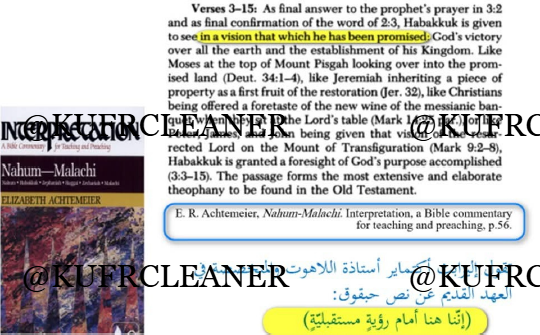
Also from the book Al-Sunan al-Qawim fi Tafsir As far al-Ahd al-Qadim — Commentary on Habakkuk, p. 7:
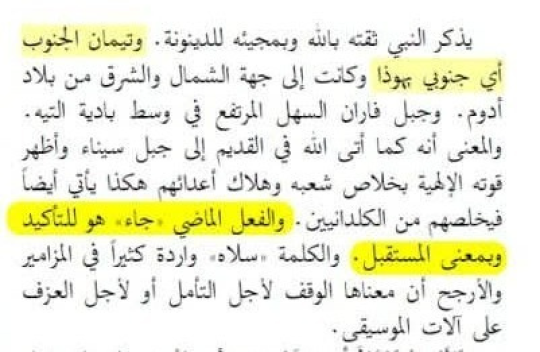
“The past verb ‘came’ is for emphasis and means the future.”
From the footnote of the New English Translation:
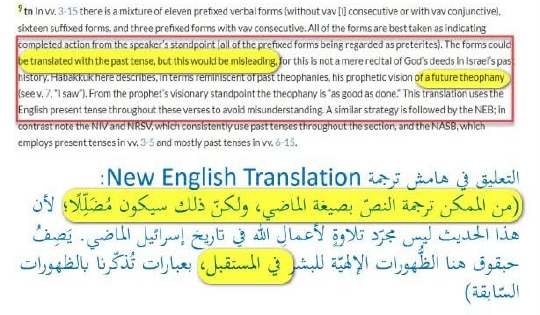
“The commentary in the New English Translation footnote: ‘(It is possible to translate the text in the past tense, but that would be misleading), because this is not a mere recitation of God’s deeds in Israel’s past history. Habakkuk here describes the divine manifestations for humanity in the future, in terms reminiscent of past manifestations.’”
“This English translation refuses to render Habakkuk 3:3 in the past tense, considering that misleading. It adopts the future tense instead.”
We conclude with what St. Jerome said in his commentary on Habakkuk 3:3:
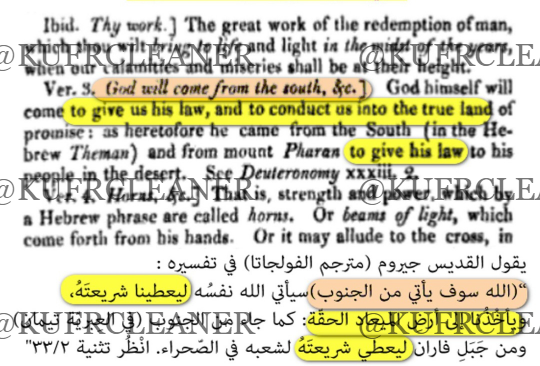
“St. Jerome (translator of the Vulgate) says in his commentary: ‘God Himself will come from the south to give us His law, and He will take us to the land of promise — just as He came from the south (in Hebrew: Teman) and from Mount Paran to give His law to His people in the desert. See Deuteronomy 33:2.’”
“Here Jerome explained the text and clarified its meaning as relating to the giving of the Law in the future, saying: ‘From Mount Paran to give His law.’ Jerome here linked the mention of Paran in Habakkuk 3:3 to the mention of Paran in Deuteronomy 33:2.”
The text of Habakkuk relating to the prophecy of Paran appears in the Septuagint in the future tense.
Conclusion
Since Habakkuk 3:3 mirrors Deuteronomy 33:2 in its reference to Paran, and since Habakkuk 3:3 came in the future tense, Deuteronomy 33:2 must also be understood as referring to the future.
OBJECTION 2
“Moses in these verses is reminding the Children of Israel of God’s manifestations during the Exodus from Egypt to Canaan — it is not a future prophecy, but a recollection of God’s work with them throughout the Exodus journey.”
**Response **— First Point:
Although we follow the People of the Book in attributing this text to Moses, Moses is not the author of this blessing. Moses would not refer to himself as “the man of God” — this title has no mention anywhere in the Five Books attributed to Moses, and Moses was never known by it. In fact, this title was not applied to prophets until the time of the Prophet Samuel:
“He said: ‘Look, there is a man of God in this city, and the man is highly respected; everything he says comes true. Let us go there now; perhaps he will tell us what way we should take.’ Then Saul said to his servant: ‘But look, if we go, what shall we bring the man? For the bread has run out of our vessels, and there is no present to bring to the man of God. What do we have?’” (1 Samuel 9:6–7)
Moses also does not say about himself (before his death): nor does he say “the law Moses commanded us” — for if Moses were the author, to whom does the first person plural pronoun (“us”) in “commanded us” refer?
The word for “law” in the Hebrew text — דָּת (dat) — is a Chaldean word, not a Hebrew one at all. The Children of Israel did not know it until after the Babylonian captivity.
How could Moses have written it approximately one thousand years before the captivity?
From Adam Clarke’s Commentary: “Although the word ‘דת dat’ means ‘law,’ it is a Chaldean term and does not appear in any part of the sacred writings prior to the Babylonian captivity; תּוֹרָה Torah is the term consistently used to express the law at all times prior to the corruption of Hebrew by the Chaldeans.”
Second Point:
The text does not remind the Children of Israel of the Exodus journey here — this claim is a significant error that reasonable people should immediately reject. Moses had already reminded the Children of Israel of those journeys in detail before his death, as stated in Deuteronomy 1:3–6:
“In the fortieth year, in the eleventh month, on the first day of the month, Moses spoke to the children of Israel according to all that the Lord had given him as commandments to them — after he had defeated Sihon king of the Amorites who dwelt in Heshbon, and Og king of Bashan who dwelt in Ashtaroth at Edrei. On this side of the Jordan, in the land of Moab, Moses began to explain this law, saying: ‘The Lord our God spoke to us in Horeb, saying: You have dwelt long enough at this mountain…’”
In the fortieth year (the year of Moses’ death), Moses reminded them of those journeys in detail. So why would he repeat it again in Deuteronomy 33?
The text of Deuteronomy 33:2 is a blessing, as stated in the verse immediately before it:
“And this is the blessing with which Moses the man of God blessed the children of Israel before his death. He said: ‘The Lord came from Sinai, and rose from Seir to them; He shone from Mount Paran, and came from the myriads of the holy ones; from His right hand a fiery law for them.’”
**A blessing relates to the future, not the past.
**
Among examples of blessings relating to the future — as happened with Jacob before his death, from Genesis 49:
“1 — And Jacob called his sons and said: ‘Gather together, that I may tell you what shall befall you in the last days.
2 — Gather together and hear, O sons of Jacob; and listen to Israel your father: …
28 — All these are the twelve tribes of Israel, and this is what their father spoke to them and blessed them; he blessed each one according to his own blessing.”
Also among the evidence that blessings relate to the future — as in the divine promise to Ishmael in Genesis 17:20:
“And as for Ishmael, I have heard you. Behold, I have blessed him, and will make him fruitful, and will multiply him exceedingly. He shall beget twelve princes, and I will make him a great nation.”
We know that Ishmael was blessed and that this great divine promise was fulfilled except with the coming of Islam — as acknowledged by major Jewish and Christian scholars.
Third Point:
Did God’s manifestation occur with the Children of Israel at Sinai, then at Seir, then at Mount Paran? Surprisingly, no theophany occurred at Seir or Mount Paran at all. In fact, the Children of Israel did not even enter Seir, as stated in Numbers 20:21:
“Thus Edom refused to give Israel passage through his territory; so Israel turned away from him.”
And when the author of the Book of Numbers re-narrated the journeys of the Children of Israel in detail in Chapter 33, he did not mention Seir or its mountain at all. Therefore the Children of Israel never entered a place called Seir. So where is the alleged divine manifestation, O worshippers of the cross?!
As for the author of Deuteronomy, due to his ignorance of the narrative in Numbers, he mentioned Seir among the journeys of the Children of Israel — but it is associated with a painful incident: their defeat by the Amorites, who crushed the Children of Israel in Seir. We cite the text saying that the Children of Israel were defeated there in Deuteronomy 1:44–45:
“And the Amorites who dwelt in that
mountain came out against you and chased you as bees do, and drove you back from Seir to Hormah. Then you returned and wept before the Lord, but the Lord would not listen to your voice nor give ear to you.”
Yes indeed — the divine manifestation at Seir was that the Children of Israel were crushed and God did not listen to them!
Then the author of Deuteronomy mentions that the Children of Israel afterwards departed and kept wandering around this painful place — Mount Seir — for many days, until the divine command came to them to turn toward Moab (Deuteronomy 2:1–8).
So the Christians found no historical event in which God manifested at Seir, and so resorted to another trick: claiming that Deborah the prophetess reported it!
They cited the text from Judges which says: “Lord, when You went out from Seir, when You marched from the field of Edom, the earth trembled, the heavens also dripped, the clouds also dripped water. The mountains melted before the Lord, even Sinai, before the Lord God of Israel.” (Judges 4:4–5)
This claim is false and misleading to ordinary Christians. The text speaks about what happened after departing from Seir, not about God’s action within it. When we look at the translations, we will understand the text clearly.
From the Jewish Publication Society (JPS) translation of the Old Testament:
“LORD, when Thou didst go forth out of Seir, when Thou didst march out of the field of Edom, the earth trembled, the heavens also dropped, yea, the clouds dropped water.”
The text did not say that when the Children of Israel descended upon Seir, the mountains shook and the earth trembled and the heavens fell. Rather, it speaks of the advance of the Children of Israel toward Canaan after turning away from Seir. This is what commentator John Wesley said in his commentary:
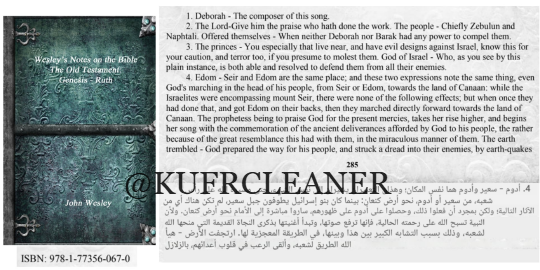
“He admitted that the shaking of the earth, the trembling of the mountains, and all these natural phenomena did not occur until after they had departed from Seir, left it behind them, and set out toward Canaan.”
So where is the alleged divine manifestation in the text of Judges? There is no theophany whatsoever.
Fourth Point:
If Deuteronomy 33:2 truly spoke of the Exodus journey, then we would judge the order of locations in the text to be geographically wrong.
The text says: “The Lord came from Sinai, shone from Seir, and appeared from Mount Paran.”
If this text referred to the journey of the Children of Israel, the order of locations would be wrong — because the Torah tells us that after departing from Sinai, the Children of Israel settled in Paran, and only afterwards circled around the borders of Edom. So how can Deuteronomy 33:2, if speaking of the Exodus journey, place Edom (Seir) before Paran?
Also assuming Deuteronomy 33:2 describes the journey of Israel, the travel itinerary would be absurd and laughable! Because the text says the Children of Israel traveled from Mount Sinai (in Sinai), then to Seir (outside Sinai), then to Paran — which Christians claim is also in Sinai. Imagine: they traveled from Sinai to Seir outside Sinai, then returned again to Paran which is — according to their belief — also in Sinai!
Fifth Point
How can Moses’ speech be about Israel and its past when the rest of the text says:
אַף חֹבֵב עַמִּים — meaning “Lover of peoples” (plural), indicating the speech is not about the people of Israel alone?
The Van Dyke translation changed “peoples” to “people” (singular), as did all other Arabic translations!
Why did they not remain faithful to the text and changed “peoples” to “people”?
Because how could they not be faithful to the text when it clearly states that God is the Lover of all peoples, not only the people of Israel? They only want God to love the Children of Israel alone and no one else. Also in order to conceal from people that Moses’ address here is to a people other than Israel alone, and that the text relates to more than just the Children of Israel.
Note that the word עַמִּים (ammim) in Deuteronomy 33:2, translated as “people” (singular) instead of “peoples” (plural), appears in multiple other texts and was translated as “peoples” (plural):
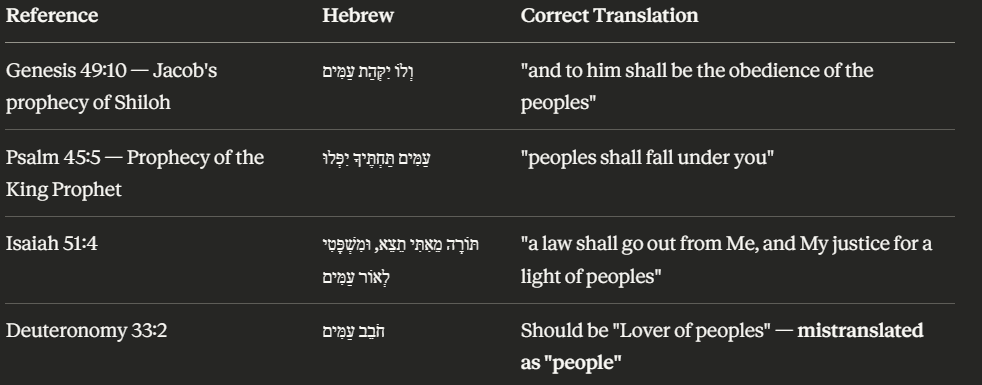
So why was עַמִּים translated as “peoples” in all those texts, but as “people” (singular) in Deuteronomy 33:2? — In order to make ordinary people believe this text concerns the Children of Israel alone.
Sixth Point:
We mentioned earlier that Habakkuk 3:3 matches Deuteronomy 33:2. Since Habakkuk 3:3 came in the future tense, Deuteronomy 33:2 must also refer to the future. If Deuteronomy 33:2 referred to the Exodus journey as the missionaries claim — and since Habakkuk 3:3 mirrors Deuteronomy 33:2 as critics acknowledge — would Habakkuk have been prophesying about the journey of the Children of Israel in the future? No rational person would say this, because Habakkuk the prophet came after Moses, and his text is a future prophecy, not a report about the past.
Conclusion: If Habakkuk 3:3 mirrors Deuteronomy 33:2 in the mention of Paran, and since Habakkuk 3:3 came in the future tense, it is obligatory to also take Deuteronomy 33:2 as referring to the future.
OBJECTION 3
“The text speaks of God’s own coming, His shining, and His appearance — it has nothing to do with a prophet appearing.”
Response:
The text’s mention of the Lord’s coming and shining does not mean He will perform those actions Himself. Rather, He will send one who represents Him in those actions. The term “God” (Elohim) is not exclusive to Him alone — it is applied to those who represent God, whether a divine law from God, a prophet from God, angels, or rulers governing cities with justice. All of these can be referred to by the term “God.”
1 — A judge is called “God” as in Psalm 82:1:
“God stands in the congregation of the mighty; He judges among the gods.”
2 — The angel that appeared to Hagar (peace be upon her) is called “the Lord” as in Genesis 16:13:
“Then she called the name of the Lord who spoke to her: ‘You-Are-the-God-Who-Sees’; for she said, ‘Have I also here seen Him who sees me?’”
Also in Genesis 32:29 and in Judges 13:22.
We now present the views of Jewish and Christian scholars on the term “God” in the Bible:
Rabbi Moses Maimonides says in his book Guide for the Perplexed, Part 2, p. 24:
“I say that every Hebrew knows that the term Elohim (God) is applied to judges, angels, and rulers who govern cities.”
We now present the views of Jewish and Christian scholars on the term “God” in the Bible:
Rabbi Moses Maimonides says in his book Guide for the Perplexed, Part 2, p. 24:
“I say that every Hebrew knows that the term Elohim (God) is applied to judges, angels, and rulers who govern cities.”
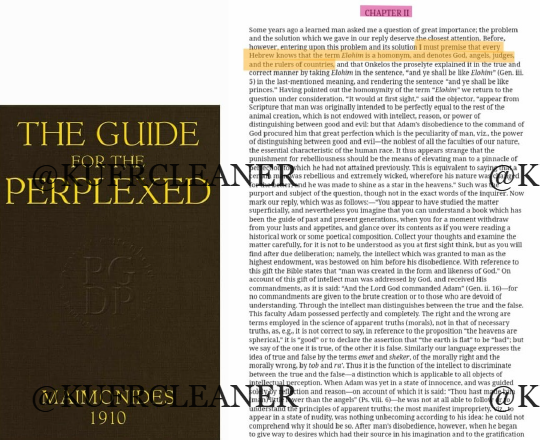
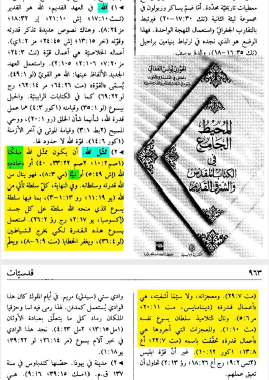
“Also from The Comprehensive Dictionary of the Bible and the Ancient East, under the entry for the Name of God: it states that the term ‘God’ is applied to whoever represents God, whether a king, servant, or prophet.”
Also from the book Hal Mashakel al-Kitab al-Muqaddas (Solving the Difficulties of the Bible) by Rev. Yuhanna Munsi, p. 35:
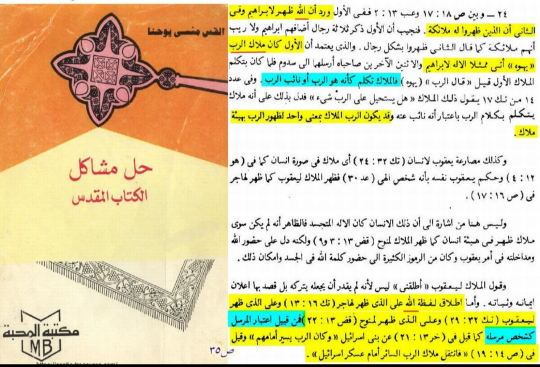
“1 — ‘God’ in the Old Testament: God is the Almighty (1 Samuel 18:17; Job 21:10; Isaiah 45; Ezra 1:2; Psalm 82:2). His power (Joshua 11:6; Psalm 4:2; Isaiah 9:24; Matthew 2:1). His great works (Acts 2:11; 2 Corinthians 10:4). His greatest works are salvation (Acts 4:3) and the resurrection of Christ (2 Peter 1:3). And concerning His power and sovereignty — all authority is from God (Luke 4:6; Romans 13:2). And the Holy Spirit at the end of the age will challenge the power of death (1 Corinthians 15:1).
2 — ‘Like God’: He can be an angel (Genesis 18:2; Psalm 33:22; 40) or ‘a servant of God’ (Isaiah 49:5) or a ‘prophet’ (Micah 8:3). All things have power limited to no boundaries, and among them the power granted by God to Jesus as authority over every spirit (Colossians 2:17; Mark 42:17). This power was used by Jesus to expel demons (Matthew 6:9–8), to forgive sinners (Luke 4:36; Matthew 9:6–8), and He felt in His own being the power of God (1 Corinthians 12:3).”
**Conclusion: **
The term “God” is applied to prophets, angels, judges, and rulers of cities — not only to God Himself.
OBJECTION 4
“No Jewish scholar has ever said this text relates to prophecy and revelation — it is only an Islamic claim.”
Response:
Many Jewish scholars have affirmed that this text relates to the offering of the Law and Prophecy. We cite some Jewish testimonies:
Midrash Tanhuma:
ויאמר ה׳ מסיני בא, מלמד שהחזיר הקדוש ברוך הוא את התורה על כל האומות ולא קבלוה, עד שבא אצל ישראל וקבלוה, שנאמר: וזרח משעיר למו – אלו בני עשו שהם בני שעיר. הופיע מהר פארן – אלו בני ישמעאל, שנאמר: וישב במדבר פארן.
“He said: ‘The Lord came from Sinai…’ This teaches that the Holy One, Blessed be He, offered the Torah to all the nations of the world, but they did not accept it, until He came to Israel and they accepted it. Therefore it says: ‘And He shone on them from Seir’ — these are the sons of Esau, who are the sons of Seir. ‘He appeared from Mount Paran’ — these are the sons of Ishmael, as it says: ‘And he dwelt in the wilderness of Paran.’”
**Targum Jonathan:
**
יי מן סיני אתגלי למיתן אורייתא לעמיה בית ישראל, וזרח זיו איקר שכינתיה מגלעדא למיתנה לבני עשו ולא קבלוה. הופע בהדרת איקר מטורא דפארן למיתנה לבני דישמעאל ולא קבלוה. הדר ואתגלי בקדישא על עמיה בית ישראל ועמיה ריבון ריבון מלאכין קדישין.
“The Lord revealed Himself from Sinai to give the Law to His people the house of Israel. The brightness of the glory of His Shekinah shone from the border to give it to the sons of Esau, but they did not accept it. He appeared in the glory of the majesty from Mount Paran to give it to the sons of Ishmael, but they did not accept it. He returned and revealed Himself in holiness upon His people the house of Israel, and with Him countless myriads of holy angels.”
Pirke De-Rabbi Eliezer:
זרח ה׳ מסיני ובא מהר שעיר ונגלה על בני עשו שניים ויאמר ה׳ מסיני בא וזרח משעיר למו ואין שעיר אלא בני עשו שני וישב עשו בהר שעיר אמר להם ה׳ מקבלים אתם עליכם את התורה אמרו לו ומה כתוב בה אמר להם לא תרצח אמרו לו אין אנו יכולים לעזוב את הדבר שנאמר לו ועל חרבך תחיה ומשם חזר ונגלה על בני ישמעאל שני הופיע מהר פארן ואין פארן אלא בני ישמעאל שני במדבר פארן אמר להם ה׳ מקבלים אתם עליכם את התורה אמרו לו ומה כתוב בה אמר להם לא תנאף אמרו לו אין אנו יכולים לעזוב את הדבר שעשו אבותינו שנגנבו וירדו למצרים שני כי גנובים גנבנו מארץ העברים
“The Holy One shone from Mount Seir and appeared to the sons of Esau, as it is said: ‘The Lord came from Sinai and shone on them from Seir.’ And Seir refers only to the sons of Esau, as it says: ‘And Esau dwelt on Mount Seir’ (Genesis 36:8). The Holy One said to them: ‘Will you accept the Torah?’ They said: ‘What is written in it?’ He said: ‘You shall not murder’ (Exodus 20:13). They said: ‘We cannot abandon the blessing given to our father, for it was said: By your sword you shall live’ (Genesis 27:40). Then from there He returned and appeared to the sons of Ishmael, as it is said: ‘He appeared from Mount Paran.’ And Paran refers only to the sons of Ishmael, as it says: ‘And he dwelt in the wilderness of Paran’ (Genesis 21:21). The Holy One said to them: ‘Will you accept the Torah?’ They said: ‘What is written in it?’ He said: ‘You shall not steal’ (Exodus 20:15). They said: ‘We cannot abandon what our forefathers did — for they were stolen and went down to Egypt, as it is written: for indeed I was stolen from the land of the Hebrews.’”
**Sifre Devarim:
**
ויאמר ה׳ מסיני בא – כשנגלה הקב״ה ליתן תורה לישראל לא בלשון אחד נגלה אלא בארבע לשונות: ויאמר ה׳ מסיני בא – זה לשון עברי. וזרח משעיר למו – זה לשון רומי. הופיע מהר פארן – זה לשון ערבי. ואתא מרבבות קדש – זה לשון ארמי.
“‘The Lord came from Sinai’ — when the Holy One revealed Himself to give the Torah to Israel, He did so not in one language but in four: ‘The Lord came from Sinai’ — this is Hebrew. ‘And He shone from Seir’ — this is Roman (Latin). ‘He appeared from Mount Paran’ — this is Arabic. ‘And He came from the myriads of the holy ones’ — this is Aramaic.”
Also from the commentary of Rabbi Rashi:
“He went there and offered it to the sons of Ishmael to accept it, but they refused.”
שהלך שם ופתח לבני ישמעאל שיקבלוה, ולא רצו.
Also Rashi’s commentary on Habakkuk 3:3:
כשבאת ליתן את התורה חזרת על עשו וישמעאל ולא קבלוה.
“When You came to give the Torah, You offered it to Esau and Ishmael, and they did not accept it.”
There are many more Jewish testimonies, but we suffice with this much.
Two key points derived from the Jewish statements:
Those divine manifestations are linked to the giving of the Law/Prophecy
Mount Paran is specifically associated with the Arab Ishmaelites — essential for establishing the location of Paran
However, did God really offer the Torah to the Arabs? This is a far-fetched interpretation in which the Rabbinic scholars forced themselves in order to escape from acknowledging that the giving of the Law to the sons of Ishmael will be a future event — and also to prevent the privilege from leaving them and going to others. As for their claim that the prophecy was rejected — this does not hold with the text, because the text describes the appearance of prophecy at Sinai merely as “coming,” while describing that same prophecy at Paran with the greater expression “shining” — indicating the acceptance of prophethood, not its rejection.
Also, the Quran denies that any law was ever offered to the Arabs before Islam:
“And We had not given them any books to study, nor sent to them before you any warner.” (Surah Saba: 44)
“And you were not on the side of the Mount when We called, but as a mercy from your Lord, to warn a people to whom no warner had come before you, that they might be reminded.” (Surah Al-Qasas: 46)
From the commentary of Al-Tabari on this verse, quoting Mujahid: “God says: We sent you with this Book and this religion to warn a people to whom no warner came before you — and they are the Arabs to whom the Messenger of God was sent. He sent him to them as a mercy to warn them of God’s punishment for their worship of idols.”
The Arabs received no law before the mission of Muhammad (peace be upon him), as the Jews claim.
OBJECTION 5
“Paran is in Sinai and has no connection to the Arabian Peninsula.”
**Response: **
The matter is not that simple. Jewish and Christian scholars themselves acknowledge the confusion in identifying the location of Paran — to the point that the Encyclopaedia Biblica admitted it is not easy to understand all Old Testament passages related to Paran.
Encyclopaedia Biblica states that ‘It is not easy to understand all the passages of the Old Testament related to Paran
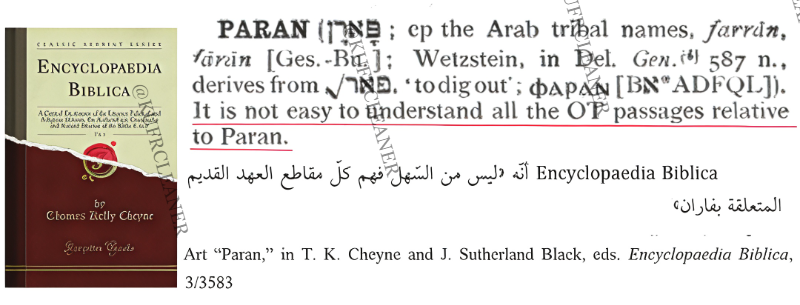
But the authors of the Old Testament preceded them in this confusion!
The author of Numbers places Paran in the Sinai Peninsula: “And afterward the people moved from Hazeroth and camped in the Wilderness of Paran.”
As for the author of Deuteronomy, he placed Paran east of the Jordan! “These are the words that Moses spoke to all Israel beyond the Jordan, in the wilderness, in the Arabah over against Suph, between Paran and Tophel, Laban, Hazeroth, and Dizahab.” (Deuteronomy 1:1)
This glaring contradiction between the Paran of Numbers and the Paran of Deuteronomy caused Adam Clarke to exclaim:
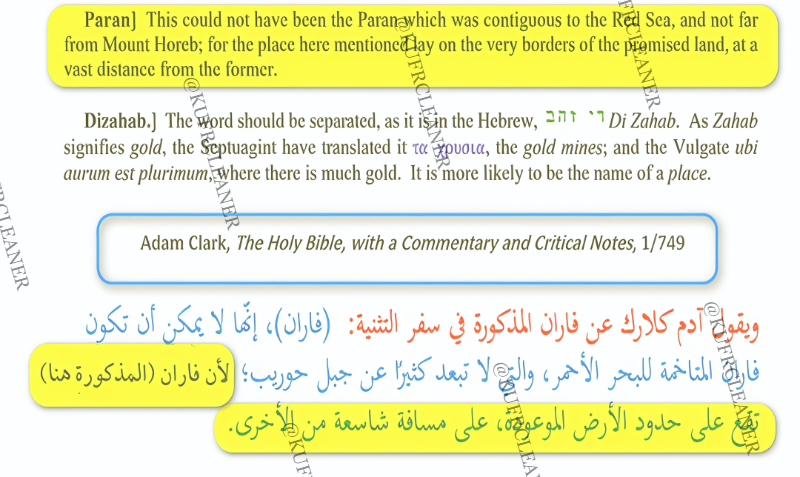
*“Adam Clarke says about the Paran mentioned in Deuteronomy: ‘(Paran) — It cannot be the Paran contiguous to the Red Sea and not far from Mount Horeb; for the place mentioned here lies on the very borders of the Promised Land — at a vast distance from the former (Paran mentioned previously).’”
Also this contradiction led Samuel Rolles Driver to state that the Paran of Deuteronomy is unknown in location:
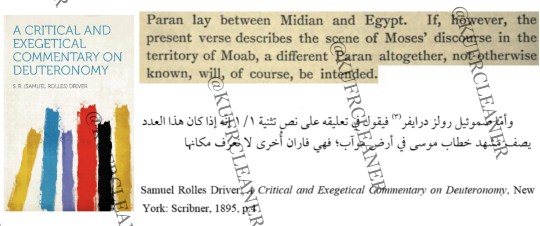
“Samuel Rolles Driver says in his commentary on Deuteronomy 1:1: ‘If this verse describes the scene of Moses’ discourse in the territory of Moab, then it is a different Paran altogether — one whose location we do not know.’”
Also John Wesley said about the Paran of Deuteronomy that it is not the Paran of Numbers:
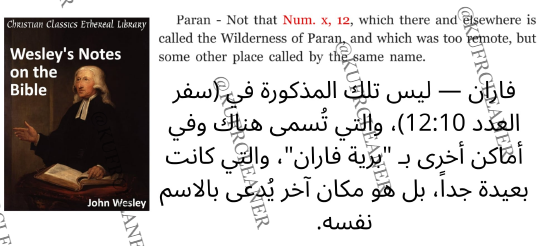
“Paran — not that mentioned in (Numbers 10:12), which there and elsewhere is called the Wilderness of Paran and was too remote, but some other place called by the same name.”
As for the author of 1 Samuel, he placed Paran in the heart of the Jewish lands: “And Samuel died; and all Israel gathered themselves together and lamented him, and buried him in his house at Ramah. And David arose, and went down to the wilderness of Paran.” (1 Samuel 25:1)
Conclusion:
Paran has no single fixed location — and this is an acceptable fact. Alexandria is not only in Egypt but also in Iraq, Iran, Turkey, Afghanistan, Pakistan, and elsewhere. There is nothing preventing the Hijaz from also being called Paran — and this is what we will prove shortly.
However, when Christians refute Muslims regarding Paran being in the Hijaz, they cite 1 Samuel 25:1 as proof that David went down to the wilderness of Paran. If Paran is in the Hijaz as Muslims claim, did David go to the Hijaz?
The stunning answer is: the Paran mentioned in Samuel 1 is an error — it is actually “Maon.” The Septuagint revealed and corrected this glaring error:
και απεθανεν σαμουηλ και συναθροιζονται πας ισραηλ και κοπτονται αυτον και θαπτουσιν αυτον εν οικω αυτου εν αρμαθαιμ και ανεστη δαυιδ και κατεβη εις την ερημον μααν
“And David arose and went down to the wilderness of Maon.”
The Septuagint states that David went down to the wilderness of Maon, not Paran — and this is correct, because this chapter speaks of the story of Nabal in Maon immediately afterward: “Now there was a man in Maon whose work was in Carmel.”
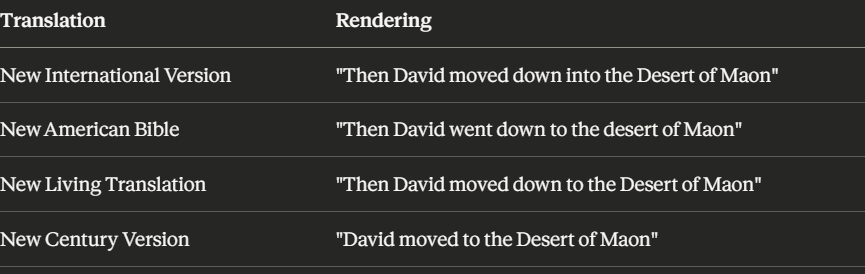
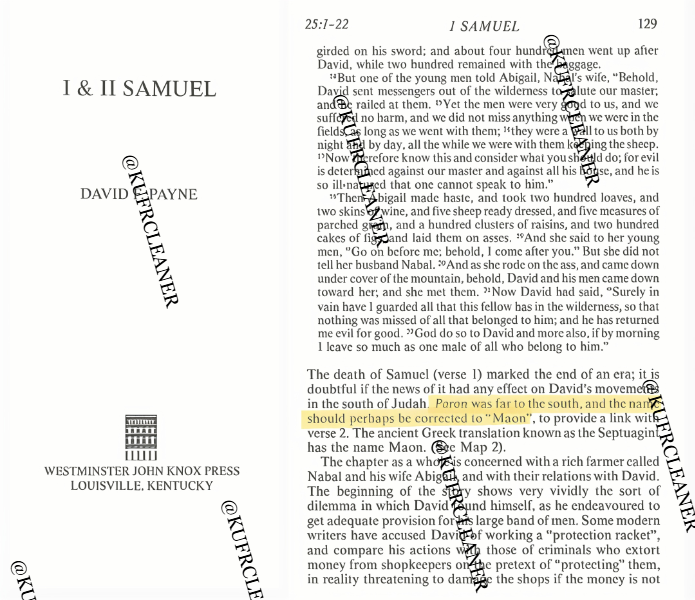
David F. Payne comments on the Paran in 1 Samuel:
“The death of Samuel (verse 1) marked the end of an era; it is doubtful if the news of it had any effect on David’s movements in the south of Judah. Paran was far to the south, and the name should perhaps be corrected to ‘Maon’, to provide a link with verse 2. The ancient Greek translation known as the Septuagint has the name Maon. (See Map 2.)”
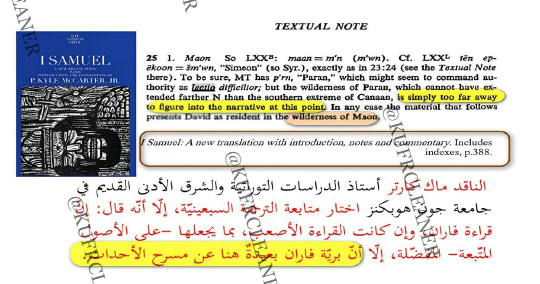
Also Kyle McCarter, professor of biblical studies and ancient Near Eastern studies at Johns Hopkins University, states that the wilderness of Paran is far from the scene of events here:
Conclusion:
David went down to Maon, not Paran.
The Paran located in Sinai is the one spoken of by **Numbers **during the Exodus journey — it is Wadi Feiran in southwestern Sinai. The correspondence of Numbers’ Paran with Sinai’s Feiran reveals a geographical weakness in the author of Numbers, who had the Children of Israel departing from Mount Sinai to Paran — while Feiran is geographically located before Sinai, not after it.
Evidence that the wilderness of Paran is Wadi Feiran: Ptolemy mentioned Sinai’s Paran, which corresponds to Wadi Feiran in southern Sinai. Richard Lepsius, after reviewing the evidence, stated:
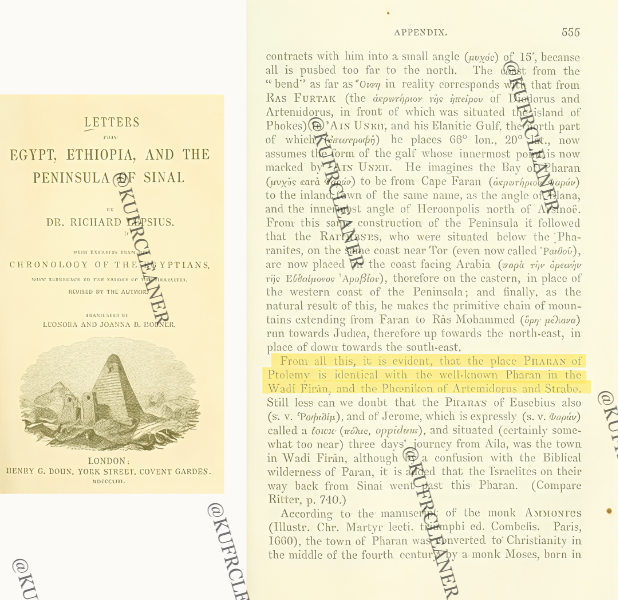
“From all this, it is evident, that the place Pharan of Ptolemy is identical with the well-known Pharan in the Wadi Firân, and the Phœnikon of Artemidorus and Strabo.”
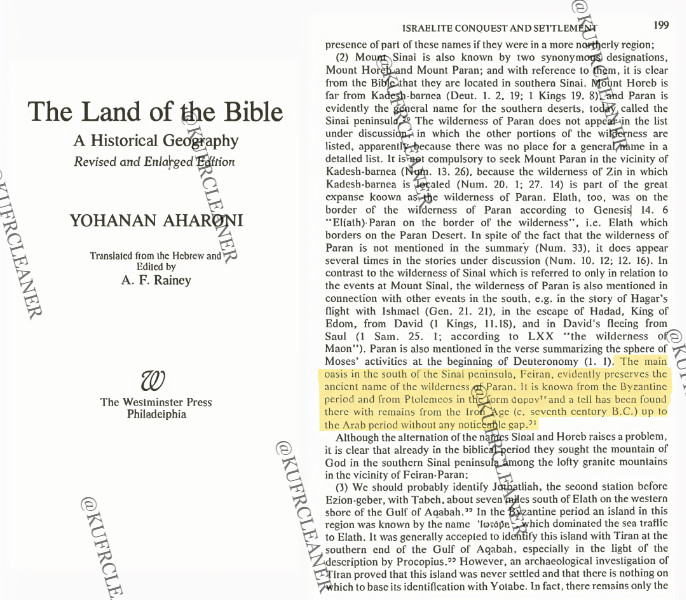
Yohanan Aharoni states:
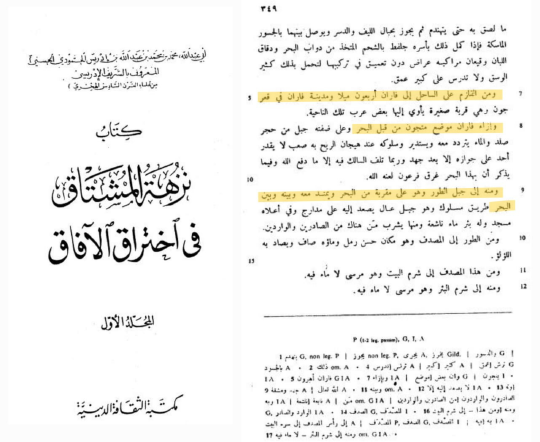
Also, the Arab geographers mentioned Sinai’s Paran together with Al-Tor after Al-Qulzum. Al-Idrisi says in Nuzhat al-Mushtaq:
“From Al-Qulzum along the coast to Paran is forty miles… Opposite Paran is a place accessible from the sea… and from there to Mount Al-Tor, which is near the sea.”
So the author of Numbers fell into a geographical dilemma when he placed Sinai’s Paran after Mount Sinai instead of before it. What did the biblical scholars do to escape this geographical dilemma? They invented a new geography to fit the Exodus journey in Numbers — moving Paran on their own from its true location to northeastern Sinai! They thereby contradicted the actual geography of Sinai in order to preserve the infallibility of the author of Numbers:
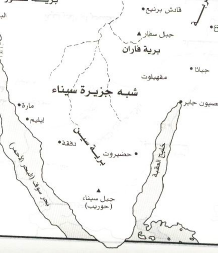
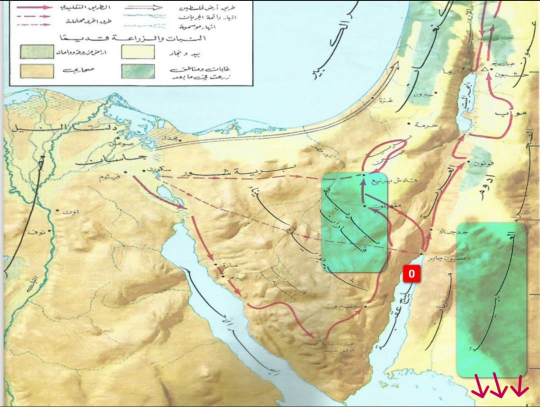
This map illustrates what biblical scholars did — relocating Paran from its actual position in the south to the north/northeast of Sinai in order to preserve the infallibility of the author of Numbers
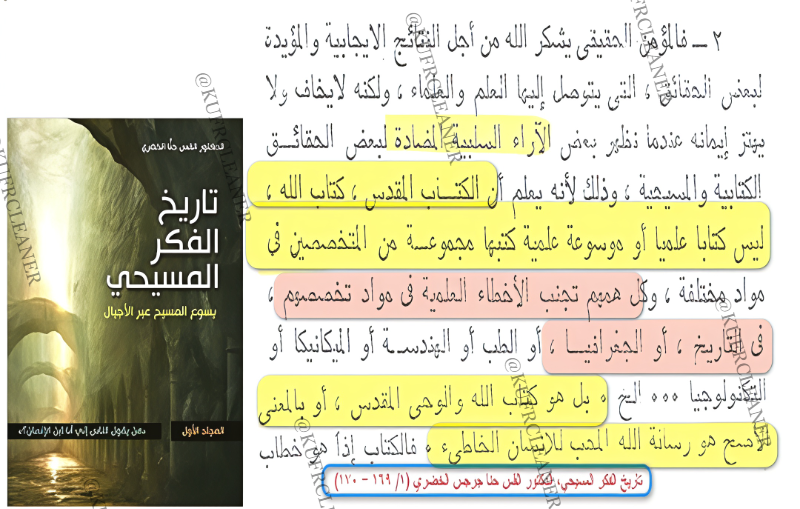
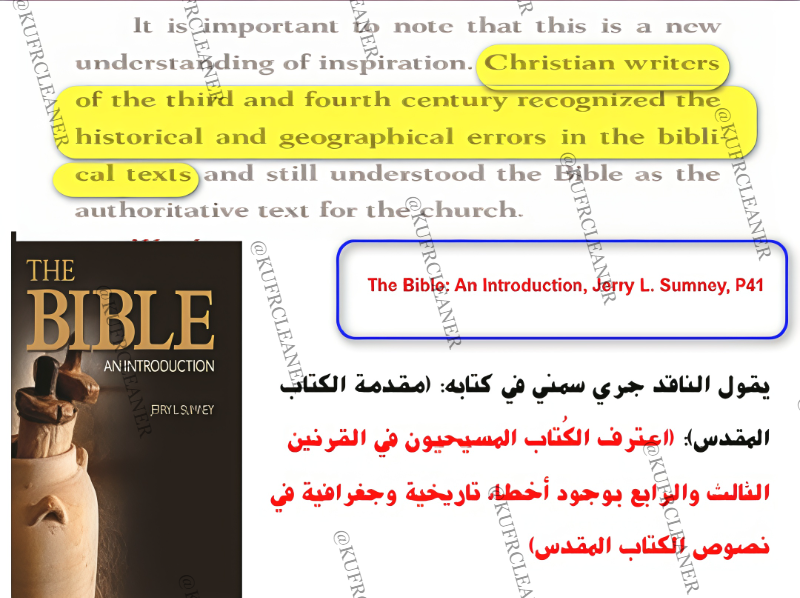
So how can we rely on or trust a book not infallible from error in determining a specific location like Paran — when biblical scholars themselves acknowledge it is not free from errors, whether scientific, historical, or geographical?
Rev. Dr. Hanna al-Khudri states that the authors of the Bible are not infallible from error:
Critic Jerry L. Sumney states in his book The Bible: An Introduction:
So how can we rely on this error-filled, distorted book to determine the geography of Paran?!
Also among the contradictions of the Bible regarding Paran: Numbers tells us the spies Moses sent departed from the wilderness of Paran (Numbers 13, 14). Yet in another passage in Numbers, it says they departed from Kadesh! We will discuss this contradiction in detail.
“Then we departed from Horeb and went through all that great and terrifying wilderness that you saw, on the way to the hill country of the Amorites, as the Lord our God commanded us. And we came to Kadesh-barnea… Then all of you came to me and said: ‘Let us send men before us to spy out the land for us’… The plan seemed good to me, so I took twelve men from you… They turned and went up into the hill country, and came to the Valley of Eshcol… But you were not willing to go up… Then you came near to me every one of you and said: ‘Let us send men to spy out the land before us…’ You mutinied and did not obey the Lord your God… Then the Amorites who lived in those hills came out against you and chased you like bees and drove you through Seir to Hormah. And you returned and wept before the Lord… And you remained in Kadesh many days.” (Deuteronomy 1:19–46)
There is no mention of Paran here whatsoever. Clearly Moses sent the spies from Kadesh, where the Children of Israel were staying at the time.
However, the author of Numbers in another passage states that the spies departed from Kadesh, not Paran (Numbers 32:8–9) — in agreement with the account in Deuteronomy — as though the author of Numbers had a split personality or was co-authored!
But the narrative in Numbers that says the sending of spies was from Paran also agrees with the account in Deuteronomy which says the sending was from Kadesh and not Paran. The author of Numbers says (third person, not in Moses’ own voice): “Then the Lord spoke to Moses saying: ‘Send men to spy out the land of Canaan which I am giving to the children of Israel’… So Moses sent them from the Wilderness of Paran… They went up and spied out the land from the Wilderness of Zin… They came to the Valley of Eshcol… and returned to Moses and Aaron and all the congregation of the children of Israel in the Wilderness of Paran, to Kadesh…” (Numbers 13, 14)
Here Moses commanded the spies to “go up from here to the south” — and they went up from the Wilderness of Zin and then returned to the people at Kadesh. These details contradict the claim that they were in Paran — since Kadesh is in the Wilderness of Zin, not Paran (see Numbers 20:1 and Numbers 33:36). The presence of the Wilderness of Zin and Kadesh in the Numbers account confirms the accuracy of Deuteronomy’s account.
Conclusion: Moses did not send the spies from Paran. He sent them from Kadesh in the Wilderness of Zin — as stated explicitly in Numbers 32:8 and Deuteronomy 1:19.
*As for the Encyclopaedia Biblica, it showed confusion about the location of “El-Paran” in Genesis 14:6, even admitting this text is one of the many corruptions which altered chapter 14 of Genesis:
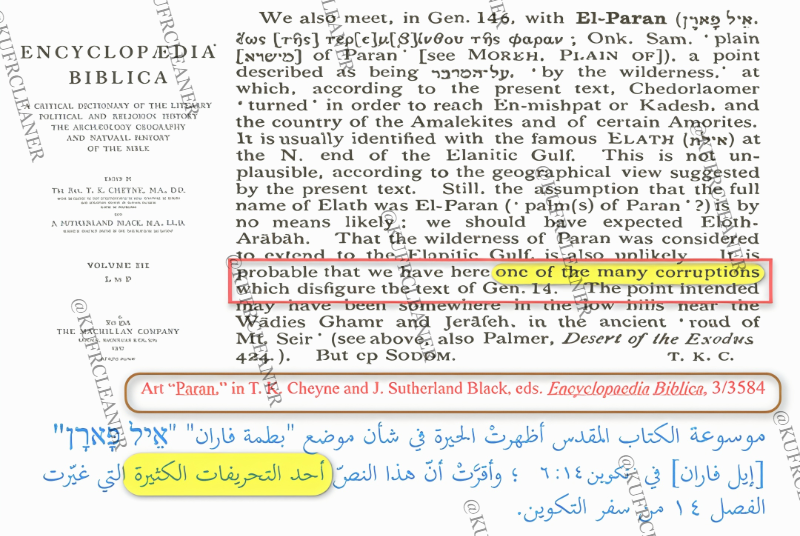
Conclusion: The Bible and biblical scholars were greatly confused in identifying the location of Paran, to the point that the Encyclopaedia Biblica raised the white flag and said: “It is not easy to understand all Old Testament passages related to Paran.”
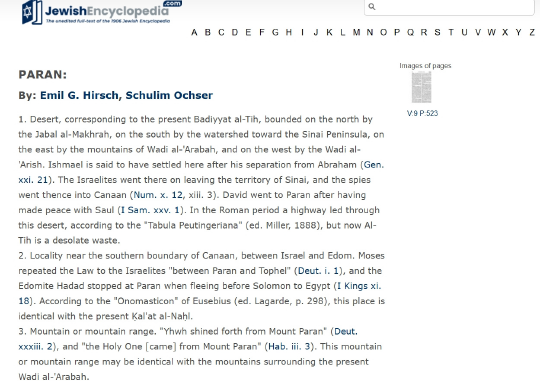
This ***confusion ***also appeared in the Jewish Encyclopedia which — under the entry for “Paran” — references three locations:
Desert — corresponding to present-day Badiyyat al-Tih (Genesis 21:21)
Region between Israel and Edom — corresponding to present-day Qal’at al-Nahl (Deuteronomy 1:1; 1 Kings 11:18)
Mountain or mountain range — Deuteronomy 33:2 and Habakkuk 3:3
IS PARAN THE HIJAZ?
Now we will prove that Paran is located in the Arabian Peninsula:
First: We previously presented Jewish testimonies that Deuteronomy 33:2 relates to the offering of the Law. The Jews said that Paran is linked to the sons of Ishmael, because Ishmael — according to Genesis 21:21 — dwelt in the wilderness of Paran. So Ishmael and his sons dwelt in Paran, and we all know that Ishmael and his sons settled in the Hijaz.
To clarify further — according to the Bible — that the sons of Ishmael settled in the Hijaz, Genesis 25:12–18 states:
“Now these are the generations of Ishmael, Abraham’s son, whom Hagar the Egyptian, Sarah’s maidservant, bore to Abraham. And these are the names of the sons of Ishmael by their names, according to their generations: the firstborn of Ishmael, Nebajoth; then Kedar, Adbeel, Mibsam, Mishma, Dumah, Massa, Hadar, Tema, Jetur, Naphish, and Kedemah. These are the sons of Ishmael, and these are their names by their towns and their settlements — twelve princes according to their tribes. These are the years of Ishmael’s life: one hundred and thirty-seven years; and he breathed his last and died, and was gathered to his people. They dwelt from Havilah to Shur, which is opposite Egypt as you go toward Assyria. He settled in the presence of all his brethren.”
Isa42 (Even Accepted by Jews of Medina
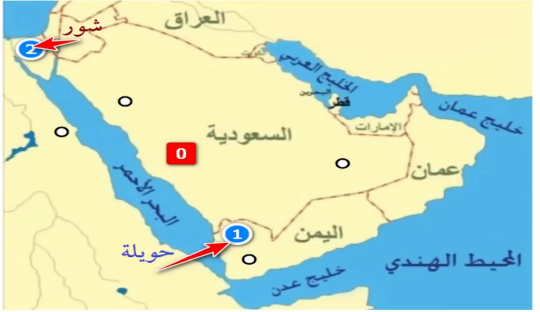
The sons of Ishmael settled in the region between Havilah and Shur.
Where is Havilah?
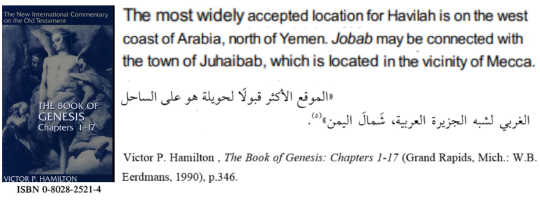
Conclusion: Havilah is located north of Yemen
Where is Shur?
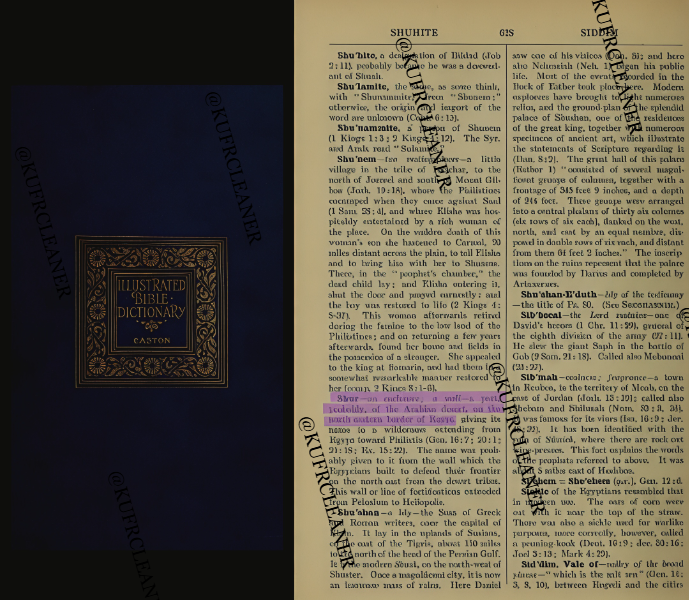
Conclusion: Shur is located on the border of Egypt — i.e., south of Palestine
The region between northern Yemen and southern Palestine is called the Hijaz.
The Hijaz, according to a group of Arab historians, is called Paran. Ibn Makula said in Mu’jam al-Buldan:
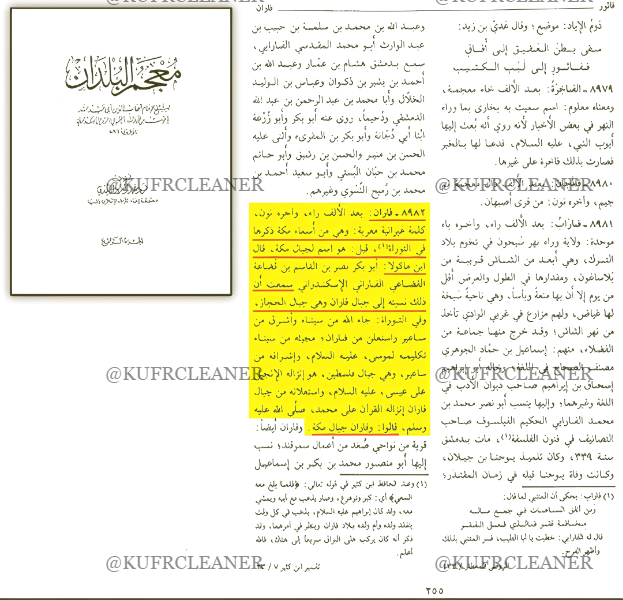
“8982 — Paran: a Hebrew word, and it is one of the names of Mecca. It is said in the Torah: it is the name for the mountains of Mecca. Ibn Makula said: Abu Bakr Nasr ibn al-Qasim al-Fida’i al-Alexandrian — I heard that his attribution was to the mountains of Paran which are the mountains of the Hijaz. And in the Torah: God came from Paran; He traveled from Paran, appearing from Sinai, and His appearing to them from Sinai — He gave it to Moses, and He revealed it to the Christians when He shone upon the land of Palestine in giving the Gospel to Jesus (peace be upon him), and from Mount Paran in giving the Quran to Muhammad, may God bless him and grant him peace. They said: And Paran also means the mountains of Mecca.
Al-Sam’ani says in Al-Ansab:
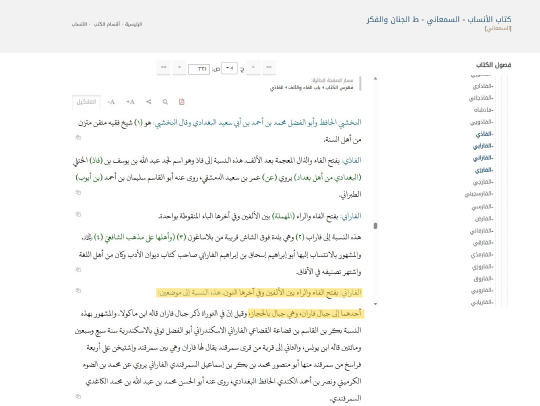
“Al-Farani: with the opening of the Fa’ and Ra’ between two Alifs and ending with Nun. This attribution refers to two places — one of them to the mountains of Paran, which are mountains in the Hijaz. The famous bearer of this attribution is al-Qasim ibn al-Fida’i of Alexandria, who died in the seventh century AH at the age of 724, and belonged to the school of the Shafi’i in jurisprudence. The attribution to it is through Ishaq ibn Ibrahim al-Farani, the companion of Ibrahim the scribe and author of the Diwan of Literature, and the second is Abu Mansur Muhammad ibn Bakr ibn Ismail al-Samarqandi from the village of Paran, who passed through Samarkand…”
Also, the Arabic translation of the Torah by Saadia Gaon — considered the earliest Arabic translation of the Torah — mentions in its translation of Genesis 25:18 that the Ishmaelites settled “from Zawila to Mosul, which is near Egypt, until you come to Mecca, near all his brothers.”
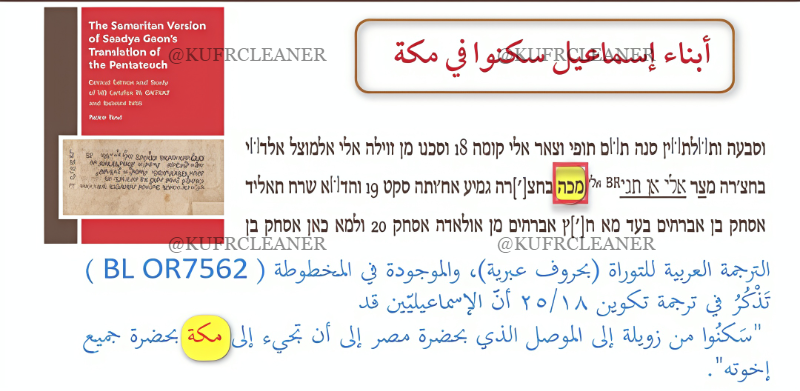
Thus it explicitly mentions Mecca as one of the dwellings of Ishmael.
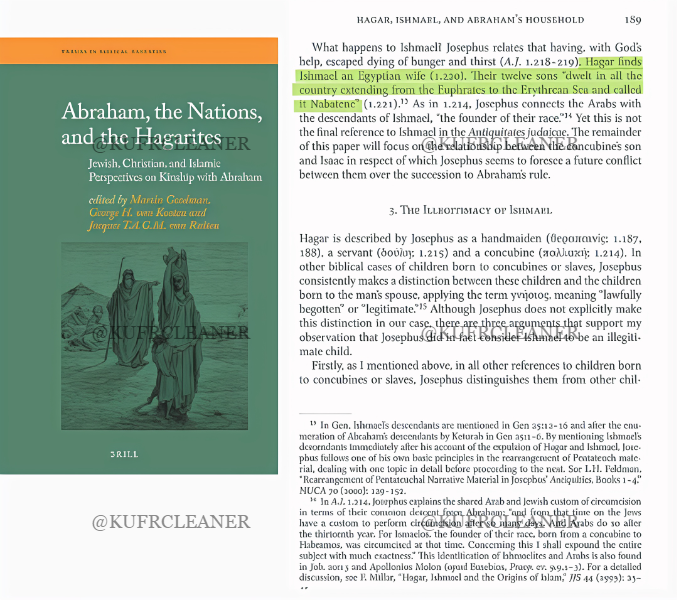
Also Jewish historian Josephus stated that the sons of Ishmael inhabited the country extending “from the Euphrates to the Red Sea (Erythraean Sea)”:
Also from Genesis 16: When Hagar fled from the house of Abraham (peace be upon him), she went near a spring of water in the desert:
“And Abram said to Sarai: ‘Indeed your maid is in your hand; do to her as you please.’ And when Sarai dealt harshly with her, she fled from her presence.
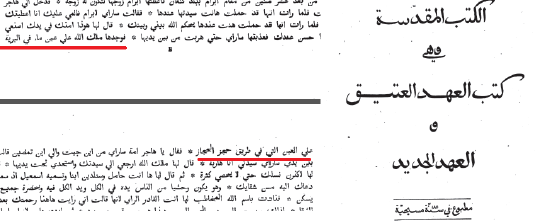
Now the Angel of the Lord found her by a spring of water in the wilderness, by the spring on the way to Shur.”
All scholars agree that the wilderness Hagar went to is Paran. And in a Bible edition of 1811, the wilderness Hagar went to was identified as the Hijaz:
More Proofs in
Also in the text of Deuteronomy 33:2:
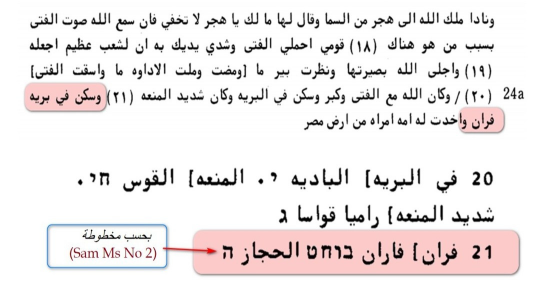
These manuscripts and translations indicate that among the People of the Book, there were those who did not deny that the Hijaz is where Ishmael and his sons lived. Therefore Smith’s Bible Dictionary states:
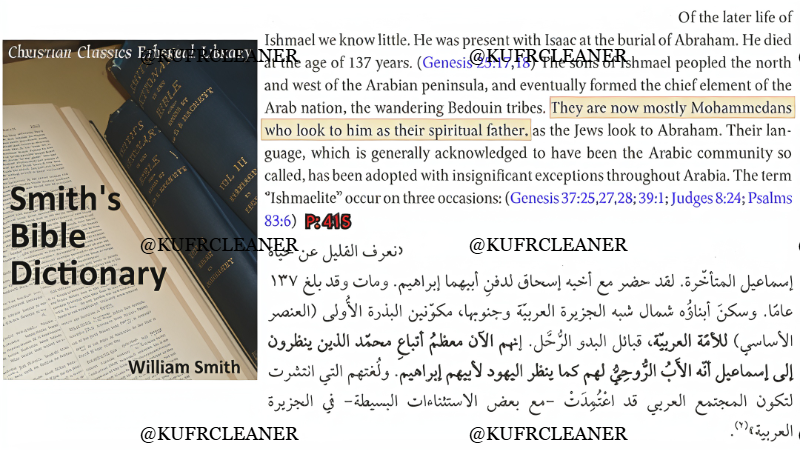
Also, Additional Historical References Proving that Paran is the Hijaz
Testimony of the Armenian Bishop Sebeos, who witnessed the Islamic conquests of Syria and Iraq, testifying that the conquering Arabs came “from the desert of Paran”:
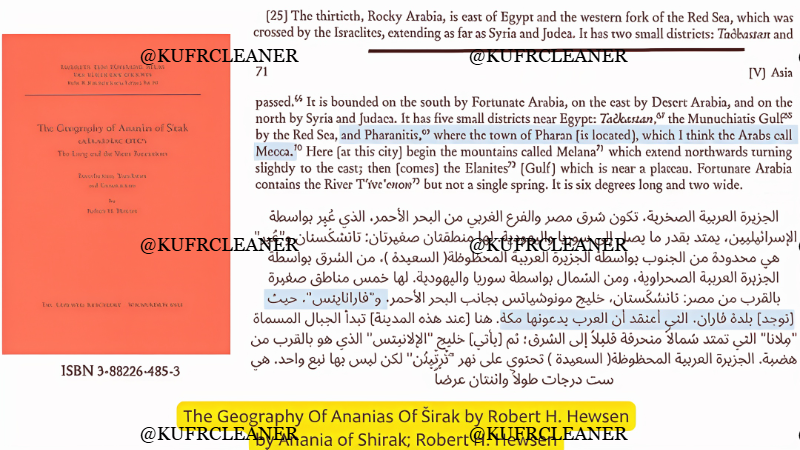
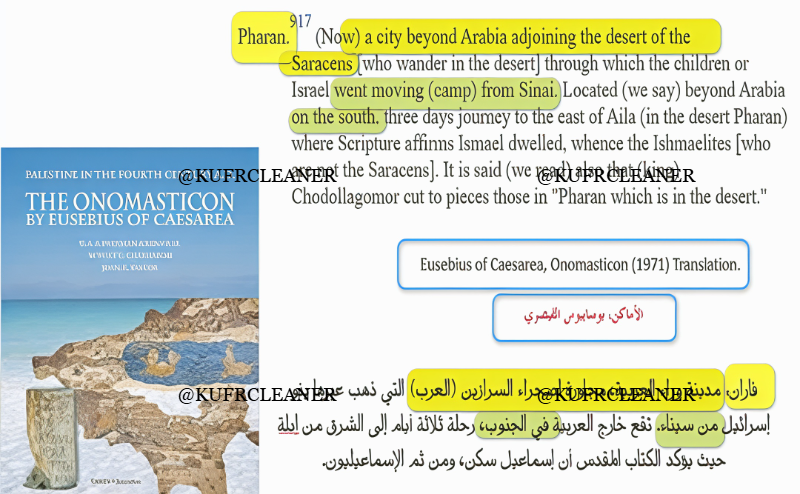
From the book The Onomasticon: Palestine in the Fourth Century A.D. by Eusebius of Caesarea:
Paran here is located south of Arabia indicated by three arrows — and this region is called the Hijaz
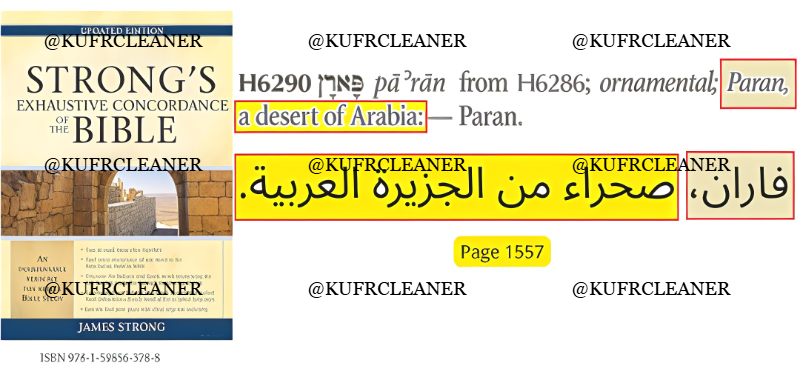
From Strong’s Concordance:
Finally, a challenge to every Christian who believes Paran is only in Sinai — what do you say to Genesis 17:20:
“And as for Ishmael, I have heard you. Behold, I have blessed him, and will make him fruitful, and will multiply him exceedingly. He shall beget twelve princes, and I will make him a great nation.”
If the Paran where Ishmael settled is in Sinai, prove how the divine promise to Abraham was fulfilled — that He would make Ishmael “a great nation” — when Jewish and Christian scholars acknowledge that this promise was fulfilled in the nation of Muhammad (peace be upon him):
Rabbi Bachya ben Asher acknowledges this promise was fulfilled in the nation of Islam:
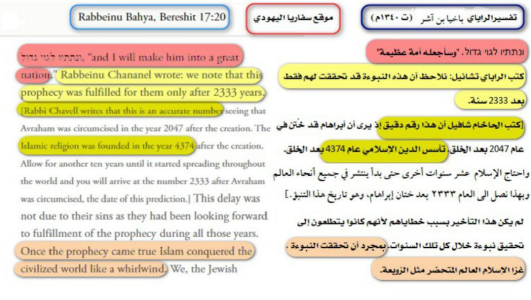
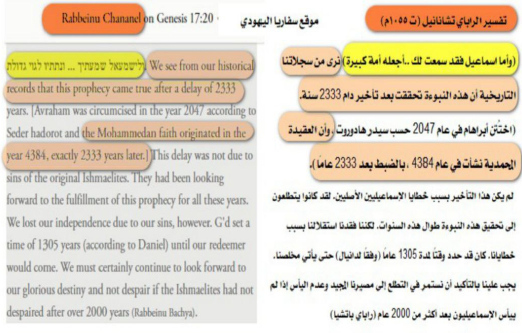
So did the nation of Muhammad (peace be upon him) arise in Sinai? No rational person would say that. It arose in Mecca. Therefore Ishmael settled in Mecca, and God’s promise was fulfilled in Mecca.
Also, another challenge to the Christian who believes Paran is only in Sinai: Is there a single trace of Ishmael in Sinai? You always pride yourselves on the abundance of manuscripts, papyri, and excavations — so is there even one trace of Ishmael and his descendants in Sinai?
Conclusion: The Bible and Christian scholars were greatly confused about the location of Paran and acknowledged the difficulty of determining it precisely. If there is a Paran in Sinai, there is also a Paran in the Hijaz — as proven by Ishmael dwelling in Paran along with his descendants.
OBJECTION 6
“The text does not speak of ten thousand holy ones — it speaks of ‘myriads of Kodesh’ (holy places/the holy).”
Response: The reality is that the majority of modern translations mention the reading “ten thousand holy ones,” such as:
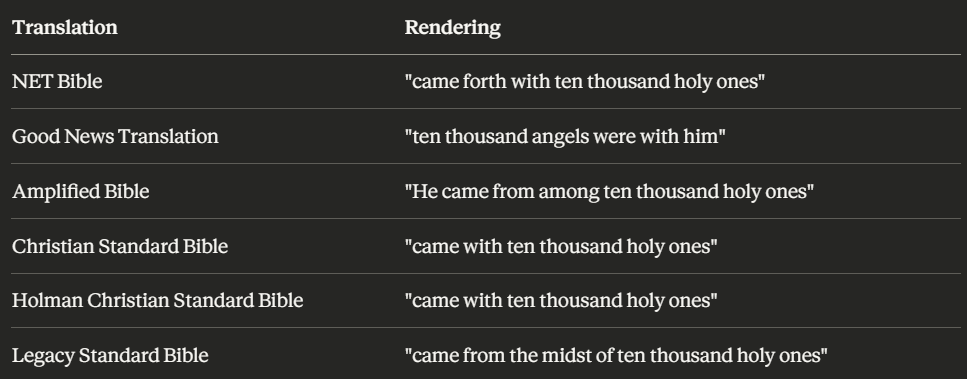
Evidence that “myriads” means ten thousand: From Nehemiah 7:66: “The whole assembly together was forty-two thousand, three hundred and sixty.” This number is explained in Ezra 2:64: “The whole assembly together was forty-two thousand, three hundred and sixty.” Therefore four myriads (ribbavot) = forty thousand, which means one ribbah = ten thousand.
This corresponds to the Conquest of Mecca, when the Prophet (peace be upon him) departed with ten thousand companions:
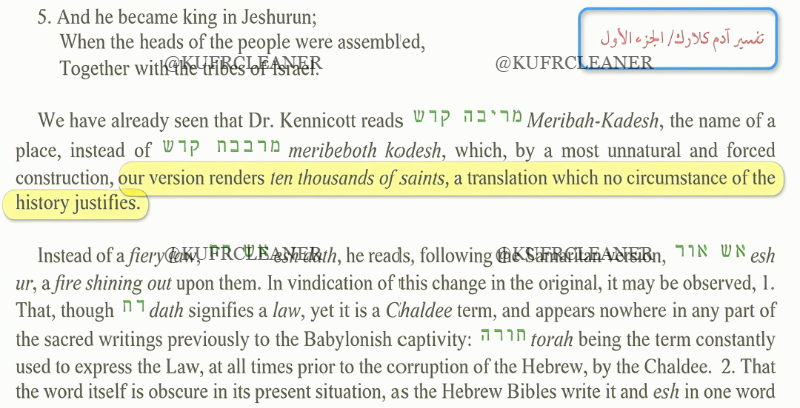
Why Was the Reading of “ten Thousand Holy ones” Removed from the Arabic Versions and Some English Versions?
Adam Clarke explains — it is because there is no historical event in the history of the Children of Israel in which ten thousand holy ones appeared:
FINAL SECTION: THE PROCESSION OF THE THREE HEAVENLY LAWS
1 — The Lord came from Sinai:
Where the Torah was revealed to Moses on Mount Sinai. The Lord said to Moses: “Come up to Me on the mountain and be there; and I will give you tablets of stone, and the law and commandments which I have written, that you may teach them.” So Moses arose and his servant Joshua, and Moses went up to the mountain of God… “And the glory of the Lord abode on Mount Sinai.” (Exodus 24:12–16)
The word for Torah in this text is הַתּוֹרָה (ha-Torah) — translated as “law.”
2 — And He shone from Seir:
Where the Gospel was revealed to the Messiah (peace be upon him). From Mark 1:14–15: “Now after John was put in prison, Jesus came to Galilee, preaching the gospel of the kingdom of God, and saying: ‘The time is fulfilled, and the kingdom of God is at hand. Repent, and believe in the gospel.’”
Note: The phrase “preaching the gospel of God” in the Alexandrian text is:
Scanned block of Greek text — preserved exactly as follows:
Καὶ μετὰ τὸ παραδοθῆναι τὸν Ἰωάνην ἦλθεν ὁ Ἰησοῦς εἰς τὴν Γαλιλαίαν κηρύσσων τὸ εὐαγγέλιον τοῦ θεοῦ
Objection: Seir is in Edom, the Homeland of the Sons of Esau — south of the Dead Sea — and Has No Connection to Palestine
Response: There is a Seir in the land of Edom and also a Seir in Palestine. This is stated in the Jewish Encyclopedia under the word “Seir”:
“Mountain, or mountain range, in Judah, between Kirjath-jearim and Chesalon, on the frontier of Benjamin; therefore, perhaps, the high ridge on which the village of Saris is now situated.”
Also from Strong’s Hebrew on Seir: it is located in the land of Judah. (Reference: Strong’s Hebrew 8165)
Also from Joshua 15:10: “Then the border extended from Baalah westward to Mount Seir, passed along to the side of Mount Jearim on the north (which is Chesalon), went down to Beth Shemesh, and passed along to Timnah.”
Baalah: An ancient Canaanite city linked to the borders of the tribe of Judah
Mount Jearim: A northern mountainous area near Jerusalem
Beth Shemesh: A famous city west of Jerusalem
Timnah: A city on the border of Judah, north of Beth Shemesh
All these locations are in the land of Canaan (Palestine).
3 — And He shone from Mount Paran:
Where the revelation came to the Master of Creation and Best of Humanity, Muhammad (peace be upon him), in the Cave of Hira in the land of Hijaz.
4 — And with Him ten thousand holy ones:
They are the followers of that prophet who believed in him and affirmed the word of God he brought.
...or those who doubt that the Arabian Peninsula or the Hijaz is part of the Qedarites' dwellings, see [[Prophecy in Deuteronomy 33:2]] and [[Genealogy of Muhammad]] of Muhammad]]
...dawned on them from Seir; He shone forth from Mount Paran and came with ten thousand holy things." [[Prophecy in Deuteronomy 33:2]] - He will live in the land where Kedar,...
...https://pub-7bca7524425e4a1b8efbb7265e7ec52e.r2.dev/attachments/mecca-and-yathrib-in-bible-12.png) [[Prophecy in Deuteronomy 33:2]]