PSALMS 72
📖 Psalm 72 — The Prophecy of the Praised One
“His name shall endure forever; his name shall continue as long as the sun. And men shall be blessed in him; all nations shall call him blessed.” — Psalm 72:17
🗂️ Table of Contents
- The Text — Psalm 72 in the Arabic Bible
- The Eleven Attributes of the Prophesied Figure
- Who Are the People of Sheba? — The Linguistic Evidence
- Ancient Arabic Manuscripts — How Early Christians Read This Psalm
- What Christian Scholars Say
- Why It Cannot Be Solomon
- Why It Cannot Be Jesus
- Every Attribute Points to Muhammad ﷺ
- Confirmation from the Hadith
- Conclusion
📜 The Text — Psalm 72 in the Arabic Bible
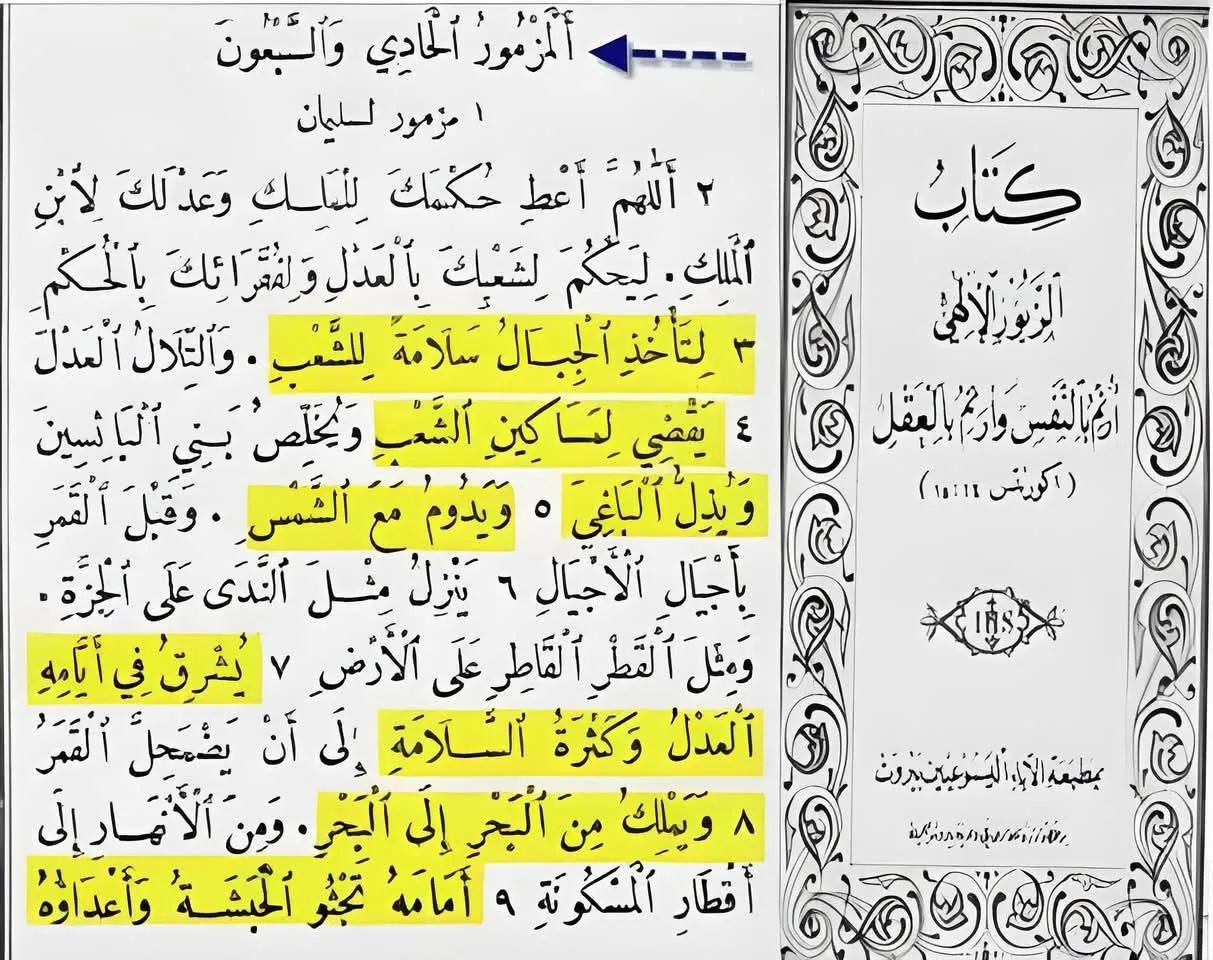
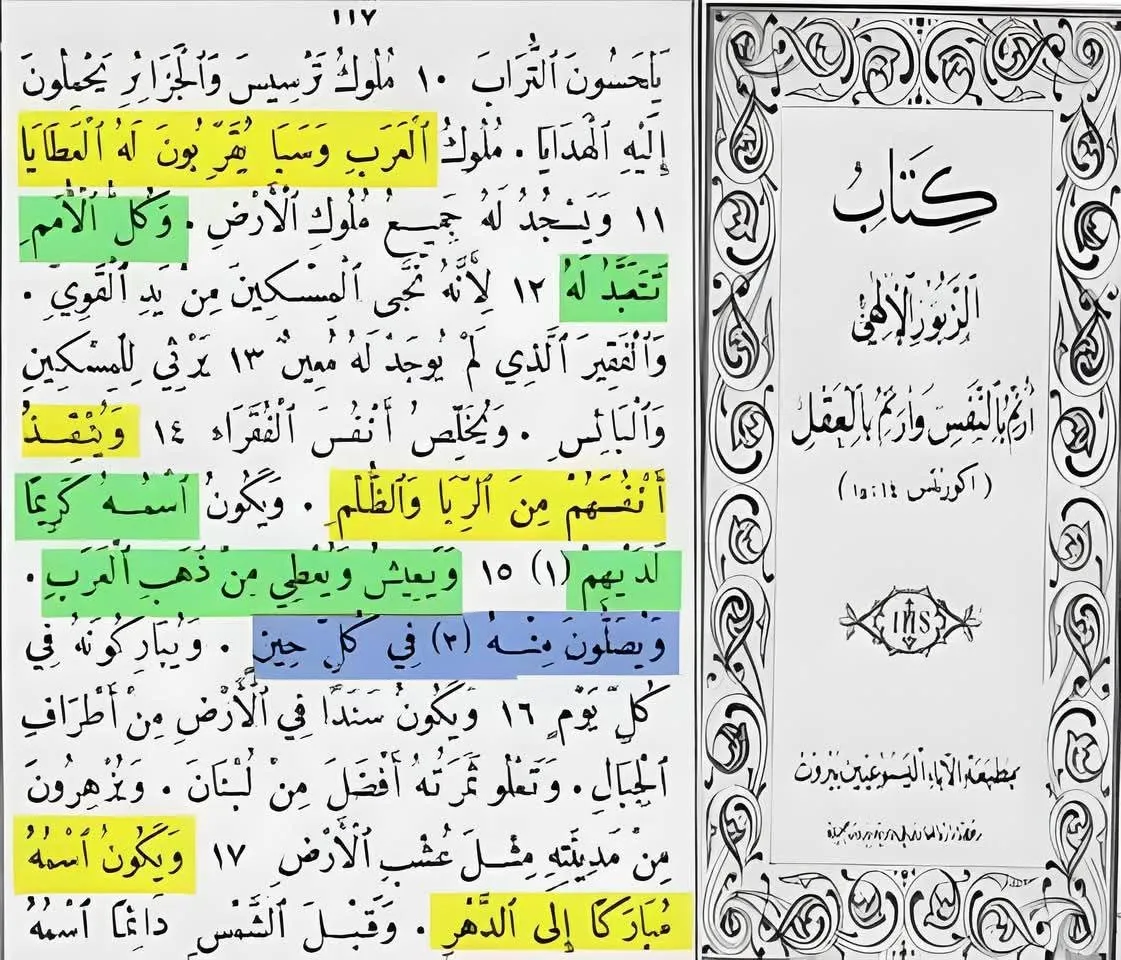
Psalm 71 in the Arabic numbering (Psalm 72 in the Hebrew/Protestant numbering) — a psalm of Solomon — contains a series of attributes describing a future royal figure. The Arabic Bible editions below show the key highlighted verses:
Arabic Bible — Verses 1–9
Arabic Bible — Verses 10–17
📋 The Eleven Attributes of the Prophesied Figure
The following attributes are drawn directly from Psalm 72:
| # | Verse | Attribute |
|---|---|---|
| 1 | 72:3 | He lives among mountains; they bring peace to the people |
| 2 | 72:2–4 | He rules justly, especially caring for the poor and oppressed |
| 3 | 72:5 | He endures as long as the sun and moon — across all generations |
| 4 | 72:7 | Justice (العدل) and abundance of peace (كثرة السلامة) prevail in his days |
| 5 | 72:8 | His dominion extends from sea to sea, from rivers to the ends of the earth |
| 6 | 72:9 | Abyssinia (الحبشة) prostrates before him; his enemies lick the dust |
| 7 | 72:10–11 | Kings of Arabia and Sheba bring him gifts and tribute; all kings bow to him |
| 8 | 72:15 | Prayers are made for him continually — all day long he is blessed |
| 9 | 72:4, 72:14 | He delivers the people from usury (الربا) and injustice (الظلم) |
| 10 | 72:15 | He receives gold of Sheba (gold from the Arabs) |
| 11 | 72:17 | His name is praised forever; all nations call him blessed |
🔤 Who Are the People of Sheba? — The Linguistic Evidence
This is the decisive verse of the entire argument:
“He shall live, and to him will be given of the gold of Sheba; prayer also shall be made for him continually; and daily shall he be praised.” — Psalm 72:15
The identity of “Sheba” (שְׁבָא in Hebrew) is not a matter of debate in scholarship — all major Hebrew lexicons agree:
Brown-Driver-Briggs Hebrew Lexicon
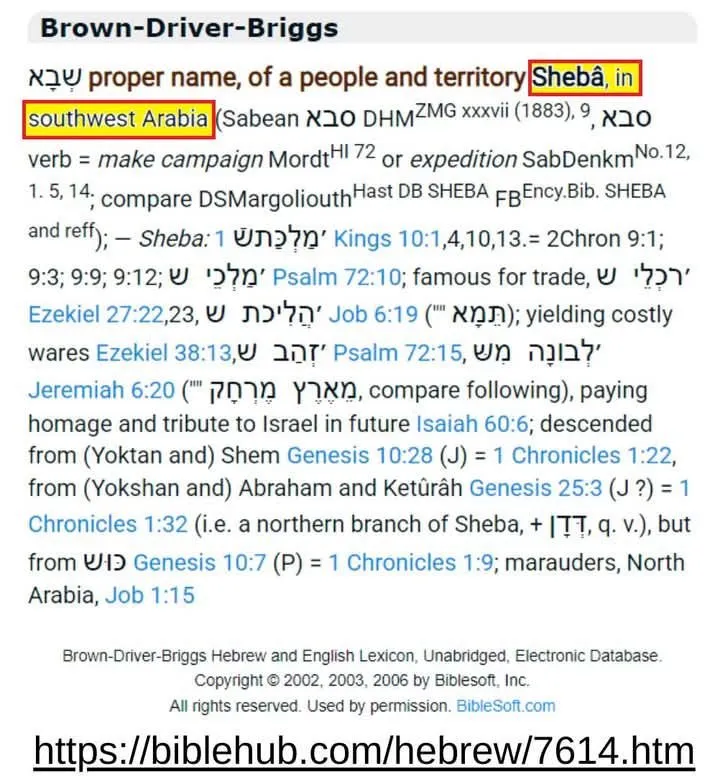
BDB conclusion: “שְׁבָא — proper name of a people and territory, Sheba, in southwest Arabia”
Gesenius’ Hebrew-Chaldee Lexicon
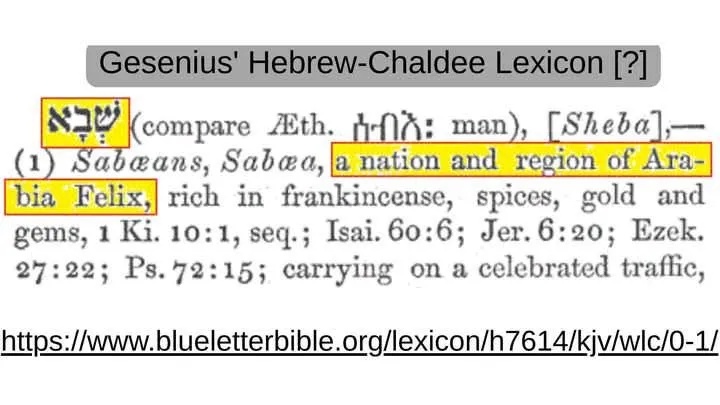
Gesenius’ conclusion: “Sheba — Sabæans, a nation and region of Arabia Felix, rich in frankincense, spices, gold and gems” — citing Psalm 72:15 directly.
JPS 1985 — Sefaria Dictionary
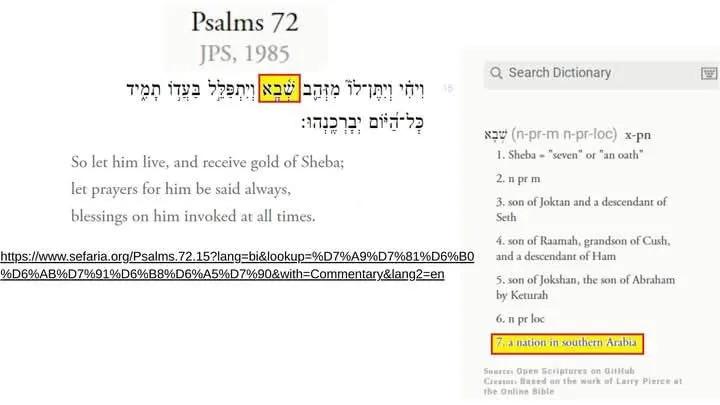
JPS conclusion: Entry 7 for שְׁבָא: “a nation in southern Arabia”
All three independent authorities agree: Sheba = southern/southwest Arabia.
📚 Ancient Arabic Manuscripts — How Early Christians Read This Psalm
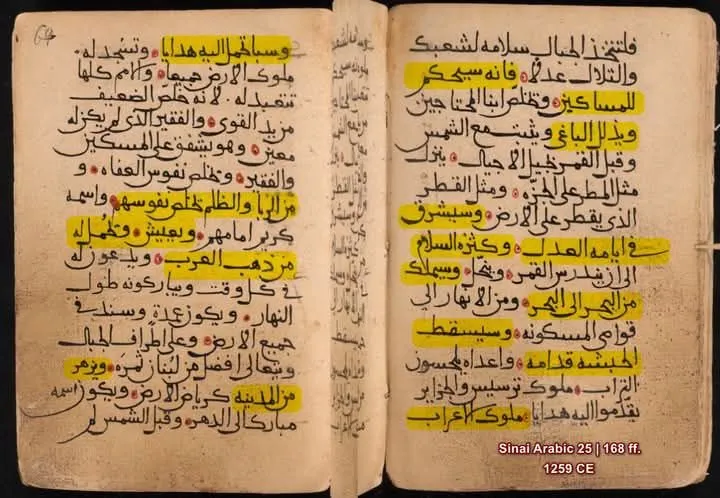
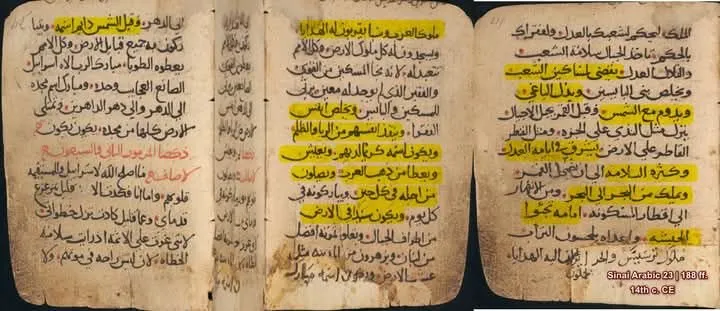
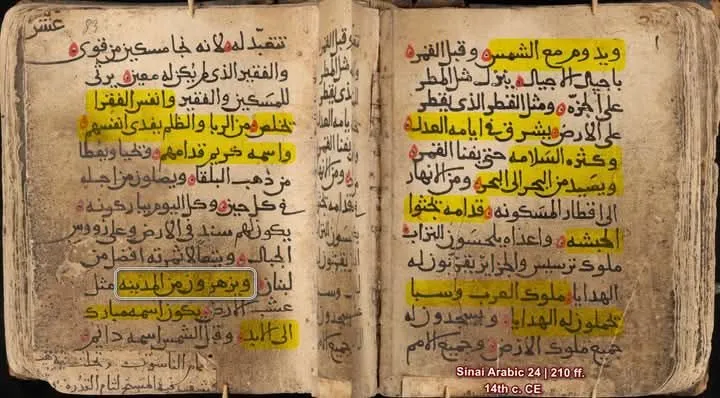
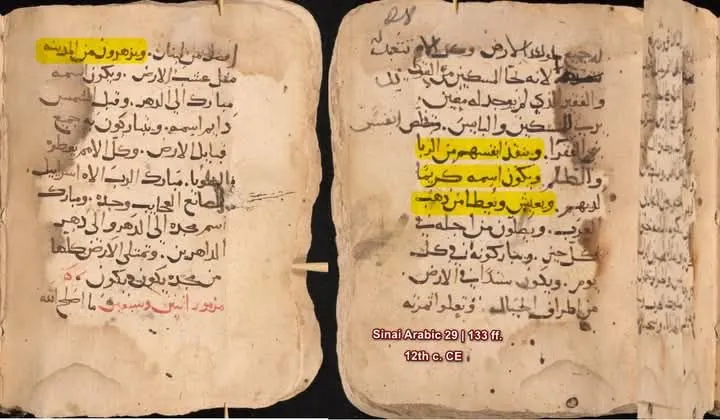
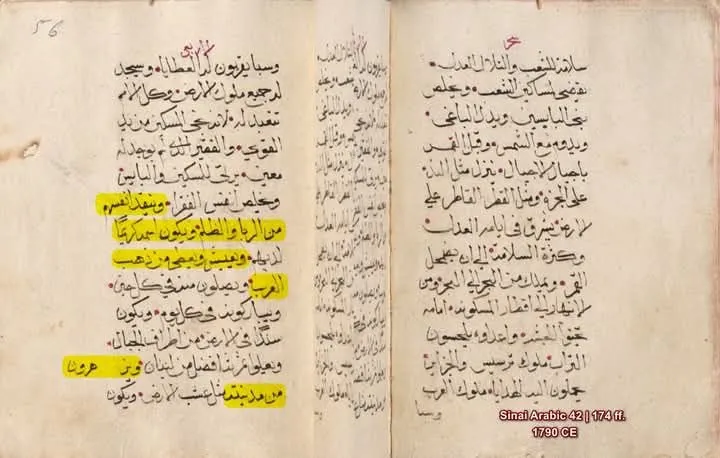
The most powerful evidence is that ancient Arabic-speaking Christian scribes, when translating “Sheba” into Arabic, consistently used the word “العرب” (the Arabs) — not a transliteration of “Sheba.”
This is not a modern Islamic interpretation. This is how Arab Christians themselves read their own scriptures for over a millennium.
Sinai Arabic 21 — 11th Century CE
Sinai Arabic 23 — 14th Century CE
Sinai Arabic 24 — 14th Century CE
Sinai Arabic 25 — 1259 CE

Sinai Arabic 29 — 12th Century CE
Sinai Arabic 42 — 1790 CE
Psalterium Arabice — Paulus De Lagarde, 1876

The scholarly 1876 critical edition of the Arabic Psalms by Paulus de Lagarde confirms the same reading — “العرب” (the Arabs) in verse 15, with the corresponding highlighted passages visible.
Summary of manuscript evidence:
| Manuscript | Date | Reading of “Sheba” |
|---|---|---|
| Sinai Arabic 21 | 11th c. CE | العرب (the Arabs) |
| Sinai Arabic 29 | 12th c. CE | العرب (the Arabs) |
| Sinai Arabic 25 | 1259 CE | العرب (the Arabs) |
| Sinai Arabic 23 | 14th c. CE | العرب (the Arabs) |
| Sinai Arabic 24 | 14th c. CE | العرب (the Arabs) |
| Sinai Arabic 42 | 1790 CE | العرب (the Arabs) |
| Psalterium Arabice | 1876 | العرب (the Arabs) |
🧑🏫 What Christian Scholars Say
Matthew Henry’s Concise Commentary

Matthew Henry — one of the most respected Protestant Bible commentators — states explicitly:
“This is a prophecy of the kingdom of Christ; many passages in it cannot be applied to the reign of Solomon. The kingdom here spoken of is to last as long as the sun, but Solomon’s was soon at an end. Even the Jewish expositors understood it of the Messiah.”
Barnes’ Notes on the Bible

Albert Barnes, another landmark Protestant commentator, clarifies the meaning of verse 15:
On “Prayer shall be made for him continually”: “Not for him personally, but for the success of his reign — for the extension of his kingdom.”
On “Daily shall he be praised”: “Every day; constantly. It will not be only at stated and distant intervals, at set seasons, and on special occasions — but those who love him will do it every day.”
Adam Clarke’s Commentary — Holy Bible (1854 Edition)

Adam Clarke’s commentary further elaborates on the universality and permanence of the figure’s reign, noting the Arabians shall yield him tribute.
Father Tadros Yacoub Malaty — Arabic Christian Commentary

The Coptic scholar Father Tadros Yacoub Malaty, citing St. Augustine, writes that “Sheba” in this psalm refers to “the Arabs”, and that the gold symbolizes wisdom. He also cites Tertullian, who reads the gold of Sheba as symbolizing sovereignty and authority.
Medieval Arabic Tafsir

❌ Why It Cannot Be Solomon
The argument that Psalm 72 refers to Solomon fails on multiple grounds:
-
His kingdom perished — Matthew Henry himself states Solomon’s kingdom was “soon at an end,” while the psalm describes an eternal kingdom that endures “as long as the sun.”
-
No Arab kings submitted to Solomon — The historical record does not support Arab rulers consistently bringing tribute to Solomon in the manner described.
-
No one prays for Solomon daily — Verse 15 requires that people pray for this figure “continually,” “all day long,” “every single day.” No religious community does this for Solomon.
-
Even Jewish commentators — as Matthew Henry notes — recognized this refers to the Messiah, not to Solomon alone.
❌ Why It Cannot Be Jesus
-
Jesus never received gold from Arabian kings — There is no historical record of Arab rulers presenting tribute to Jesus.
-
The “prayer for him” problem — Barnes clarifies the prayer is made for this figure and for the success of his reign — not worship of him as God. This does not fit the Christian theological framework where Jesus is the one prayed to, not prayed for.
-
The eternal earthly kingdom — The psalm describes a kingdom that expands geographically, with sea-to-sea dominion, and with armies that defeat Abyssinia. This describes a temporal political/military reality, not a spiritual kingdom with no earthly throne.
-
“From sea to sea” — Jesus never established a kingdom that stretched from sea to sea in any historical or political sense.
✅ Every Attribute Points to Muhammad ﷺ
| Psalm 72 Attribute | Fulfillment in Muhammad ﷺ |
|---|---|
| Lives among mountains | The Arabian Peninsula — Mecca, Medina, and the Hejaz — is mountainous terrain |
| Rules justly for the poor | The Prophet ﷺ is historically renowned for his justice and care for the poor, the orphan, and the oppressed |
| Endures as long as the sun | The Prophet’s ﷺ legacy, message, and community endure to this day — 1,400+ years and growing |
| Peace and justice in his days | He established the justice of Medina; the Constitution of Medina united diverse tribes under law |
| Kingdom from sea to sea | The Islamic Caliphate stretched from the Atlantic Ocean to Central Asia within decades of his death |
| Defeats Abyssinia / enemies prostrate | Muslim expansion; even the Byzantine Emperor Heraclius feared him (see hadith below) |
| Kings of Arabia bring gold | ”Sheba” = Arabs — proven by BDB, Gesenius, JPS 1985, and seven Arabic manuscripts spanning the 11th–18th centuries. Arab delegations brought gifts and pledged allegiance to the Prophet ﷺ |
| Prayed for continually, every day | Muslims say “ﷺ” (ṣallallāhu ʿalayhi wa-sallam — Peace and Blessings be upon him) multiple times every single day — in every prayer, every adhan, every mention of his name. This is unlike any other prophet in any tradition |
| Delivers from usury and injustice | Islam explicitly prohibited riba (usury) — Quran 2:275–279 — one of the Prophet’s most transformative legal reforms |
| Gold from the Arabs | Arab tribes sent delegations with gifts to the Prophet ﷺ — this is historical record |
| His name praised forever | ”Muhammad” (محمد) literally means “The Praised One” / “The Greatly Praised” — his name is announced five times daily in every adhan across the entire earth, to this day |
On the meaning of the name Muhammad: The Arabic root م-ح-د (ḥ-m-d) means praise. The name Muhammad (محمد) is the intensive form — “the one who is repeatedly, greatly praised.” Psalm 72:17 says his name will be praised forever and all nations will call him blessed. No name in human history has been uttered in praise more frequently, more consistently, or across more nations than Muhammad ﷺ.
📿 Confirmation from the Hadith
Sunan Abi Dawud 4252 — The Earth Was Folded for Him

“My Lord folded for me the earth, so much so that I saw its easts and wests. The kingdom of my community will reach as far as the earth was folded for me.”
This directly corresponds to Psalm 72:8 — “His dominion from sea to sea, from rivers to the ends of the earth.”
Sahih Muslim 523a — Sent to All Mankind

“I have been given superiority over the other prophets in six respects… I have been helped by terror in the hearts of enemies… I have been sent to all mankind and the line of prophets is closed with me.”
This corresponds to Psalm 72:9 — enemies prostrate and lick the dust before him — and Psalm 72:11 — all nations shall serve him.
Hadith of Heraclius — Even the Byzantine Emperor Feared Him

Abu Sufyan narrated: “The question of Ibn-Abi-Kabsha (the Prophet Muhammad ﷺ) has become so prominent that even the King of Bani Al-Asfar (Byzantine) is afraid of him. Then I started to become sure that he would be the conqueror in the near future.”
This corresponds to Psalm 72:11 — “All kings shall bow down before him; all nations shall serve him.”
🏁 Conclusion
The evidence converges from multiple independent directions:
- The Hebrew lexicons (BDB, Gesenius, JPS) all confirm Sheba = southern/southwest Arabia
- Seven ancient Arabic Christian manuscripts (11th–18th centuries) all translate Sheba as “العرب” — the Arabs
- Matthew Henry (Protestant) rules out Solomon — his kingdom collapsed; this prophecy requires an eternal kingdom. He attributes it to the Messiah.
- Barnes (Protestant) clarifies the daily prayer is made for this figure, constantly, every single day
- St. Augustine (cited by Tadros Malaty) also identifies Sheba with the Arabs
- The hadiths independently confirm the global reach, the fear in enemies’ hearts, and the worldwide community
- The name “Muhammad” — meaning the greatly praised one — is the single most fitting match for verse 17: “his name shall endure forever; all nations shall call him blessed”
Neither Solomon nor Jesus satisfies all eleven attributes. Muhammad ﷺ satisfies every single one.
“And his name shall be called Muhammad — the praised one — and his praise will last as long as the sun.”
📎 Sources & References
- Psalm 72, Arabic Bible (Jesuit/Beirut edition)
- Sinai Arabic MSS 21, 23, 24, 25, 29, 42 (11th–18th century manuscripts)
- Psalterium Arabice, Paulus de Lagarde (1876)
- Brown-Driver-Briggs Hebrew Lexicon — BibleSoft / BibleHub
- Gesenius’ Hebrew-Chaldee Lexicon — BlueLetterBible
- JPS 1985 — Sefaria.org
- Matthew Henry’s Concise Commentary on Psalm 72
- Barnes’ Notes on the Bible — Psalm 72
- Adam Clarke’s Commentary — Holy Bible (1854)
- Father Tadros Yacoub Malaty — Tafsir al-Mazamir (Coptic Orthodox)
- Sunan Abi Dawud 4252
- Sahih Muslim 523a
- Sahih Bukhari — Hadith of Heraclius
Article prepared for KufrCleaner — Islamic Dawah Resource Category: Biblical Prophecies → Psalm 72
...ave of Hira, Isaiah 29]] His followers will pray for him and ask for his blessings (Psalm 72:15). [[PSALMS 72]] "And he lives and gives him of the gold of his youth. And he prays for him...
...* or through secular critique — is crucial for sustainable and ethical economic practice. [[PSALMS 72]] We bear witness, O God: = That all the Arabs offered him gifts and tribute. =...