Is the Holy Quran Taken From the Bible_(Academical RESPONSE
Is the Holy Quran Copied from the Bible?
Table of Contents
- Part One — No Arabic Bible Existed at the Time of the Prophet ﷺ
- ⬛ Historical Induction Testimony
- Part Two — The Logical Fallacy Behind the Accusation
- Part Three — The Miraculous Quranic Challenge
- Part Four — Detailed Refutation
- Final Conclusion
- Additional Quotes from Orientalists
- More Additions
- Footnotes & References
Part One — No Arabic Bible Existed at the Time of the Prophet ﷺ
The Historical Evidence
One of the clearest proofs of the absence of an Arabic translation of the Holy Bible at the time of the prophetic mission is the fact that the enemies of our Master Muhammad ﷺ did not refer to this Arabic text when they wanted to deny the truth of the prophecy about him.
When the people of Mecca ran out of options and failed to find a human source for the Quran, they claimed that a foreign youth was the one who taught Muhammad ﷺ what he was calling for.
It is also clearly understood from the hadith narrated by Al-Bukhari in his Sahih that the Arabs did not know an Arabic text for the books of the Jews.
“The People of the Book used to read the Torah in Hebrew and explain it in Arabic to the people of Islam. The Messenger of God ﷺ said: ‘Do not believe the People of the Book, nor disbelieve them, and say: We believe in God and what was revealed to us.’”
What prevented the Arabs from knowing what the Torah contained was that the language of the books of the Jews was Hebrew — which the inhabitants of the Arabian Peninsula did not know.
And in Muhammad’s ﷺ prohibition of asking the People of the Book, there is evidence that the People of the Book monopolized this knowledge.
“O group of Muslims, how can you ask the People of the Book, while your Book, which was revealed to His Prophet ﷺ, is the most recent of God’s news, you read it untouched, and God has told you that the People of the Book changed what God wrote and altered the Book with their own hands, and said it is from God, in order to buy a small price for it. Does not the knowledge that has come to you prevent you from asking them? By God, we have never seen a man among them ask you about what was revealed to you.”
When the Jews used to distort their tongues while mentioning some religious news — giving the impression that their saying this was a transmission from the holy books — the Muslims were unable to review the books to know the accuracy of the transmission. The Jews were reassured that the Muslims had no way to access these books, and that was only because the books of the People of the Book were not available in the Arabic language.
Academic Testimonies
The critic Arthur Vobus decided at the beginning of his research into the oldest Arabic translation of the New Testament in his book “Early Versions of the New Testament” that the claim that our Master Muhammad ﷺ used some of the books of the New Testament in the Arabic language is a possibility that is:
“wrong and not verified. The Qur’an does not help us here, and it must be left out of the discussion.” ³
⬛ Historical Induction Testimony
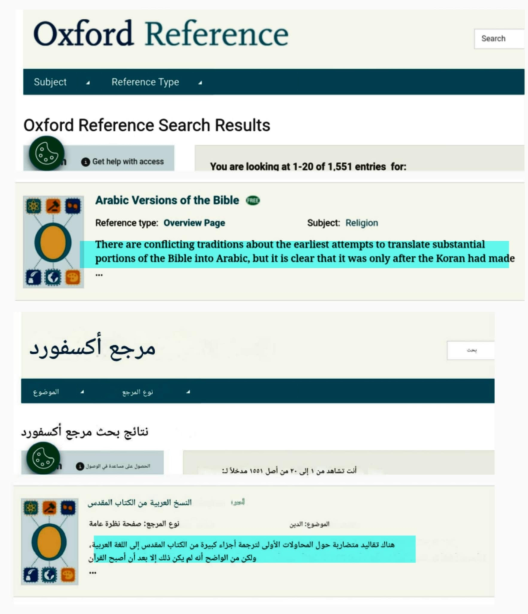
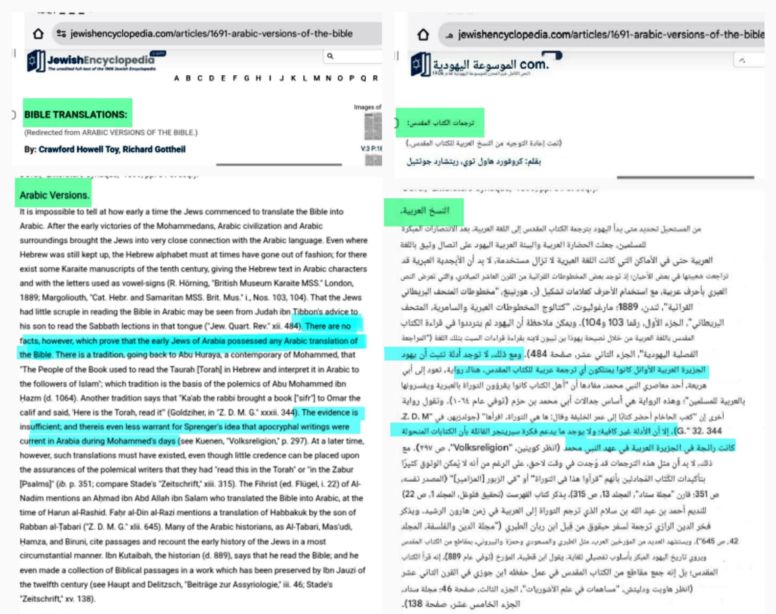
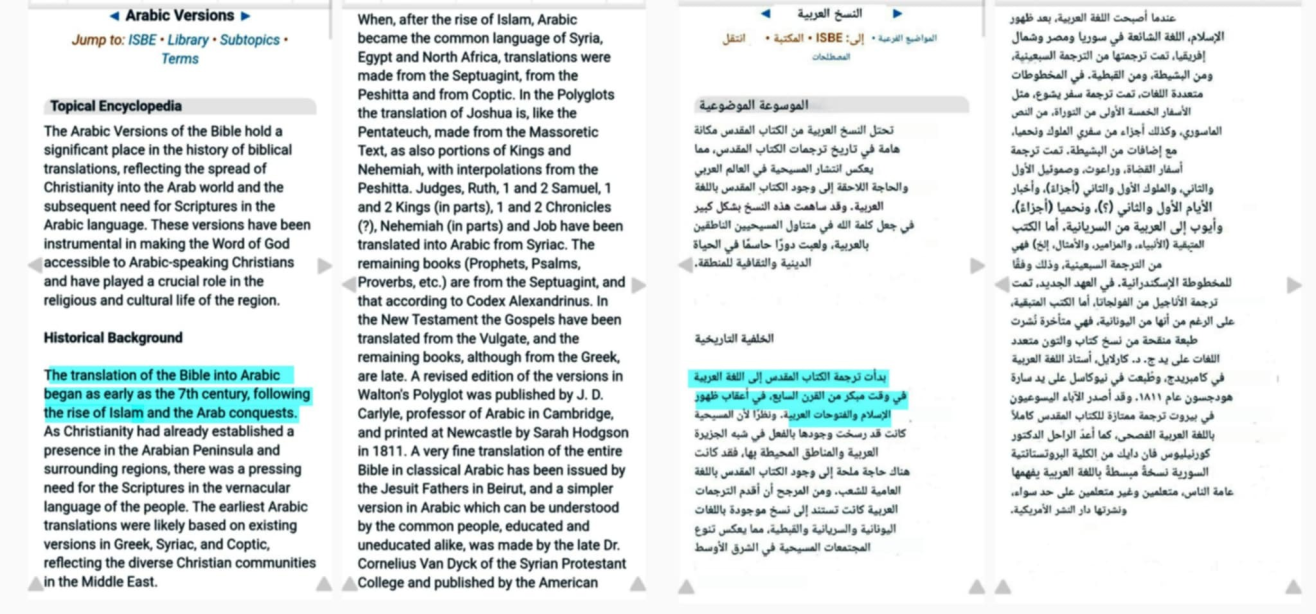
Many academic researchers have testified to the absence of an Arabic translation of these books, and this has been acknowledged by specialized encyclopedias that did not bear the burden of claiming to refute the authenticity of the Holy Qur’an, after it was proven by historical induction that there was no Arabic translation of the Holy Bible during the time of the prophetic mission.
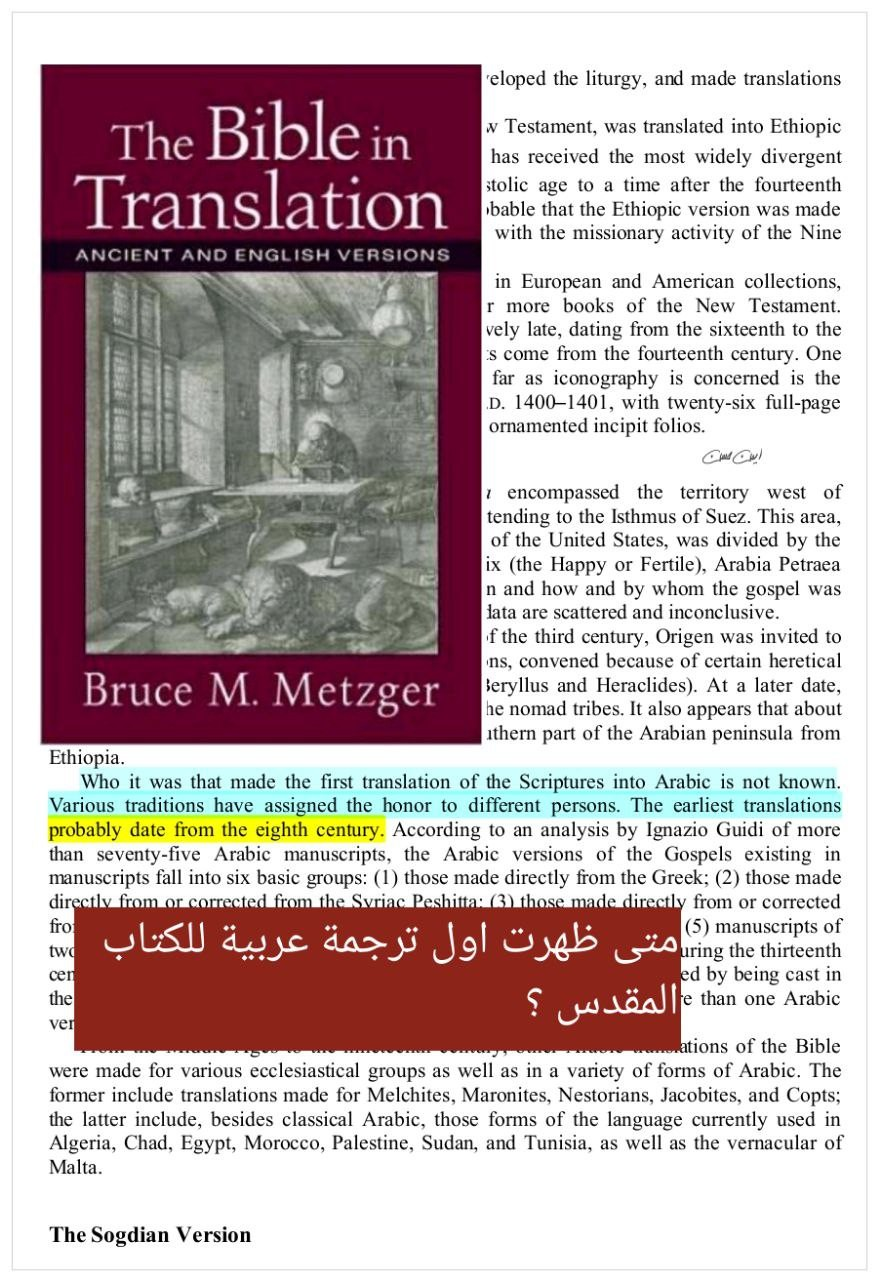
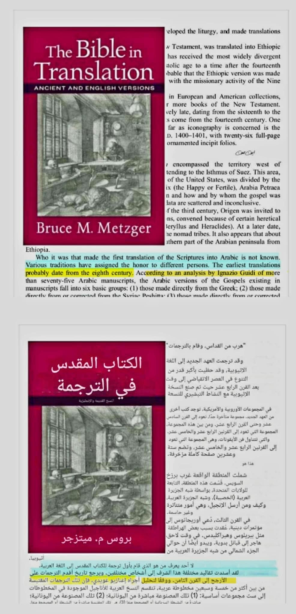
Perhaps the most important person who wrote on the subject of the history of Bible translations in the world’s languages is the researcher Bruce Metzger ⁴ — professor of New Testament language and literature — in his reference book “The Bible in Translation.” He said:
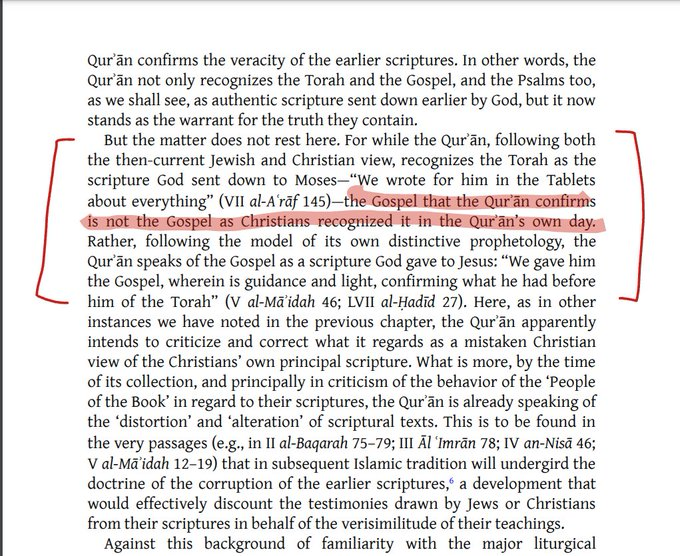
“It is likely that the oldest (Arabic) translations of the Bible date back to the eighth century.” ⁵
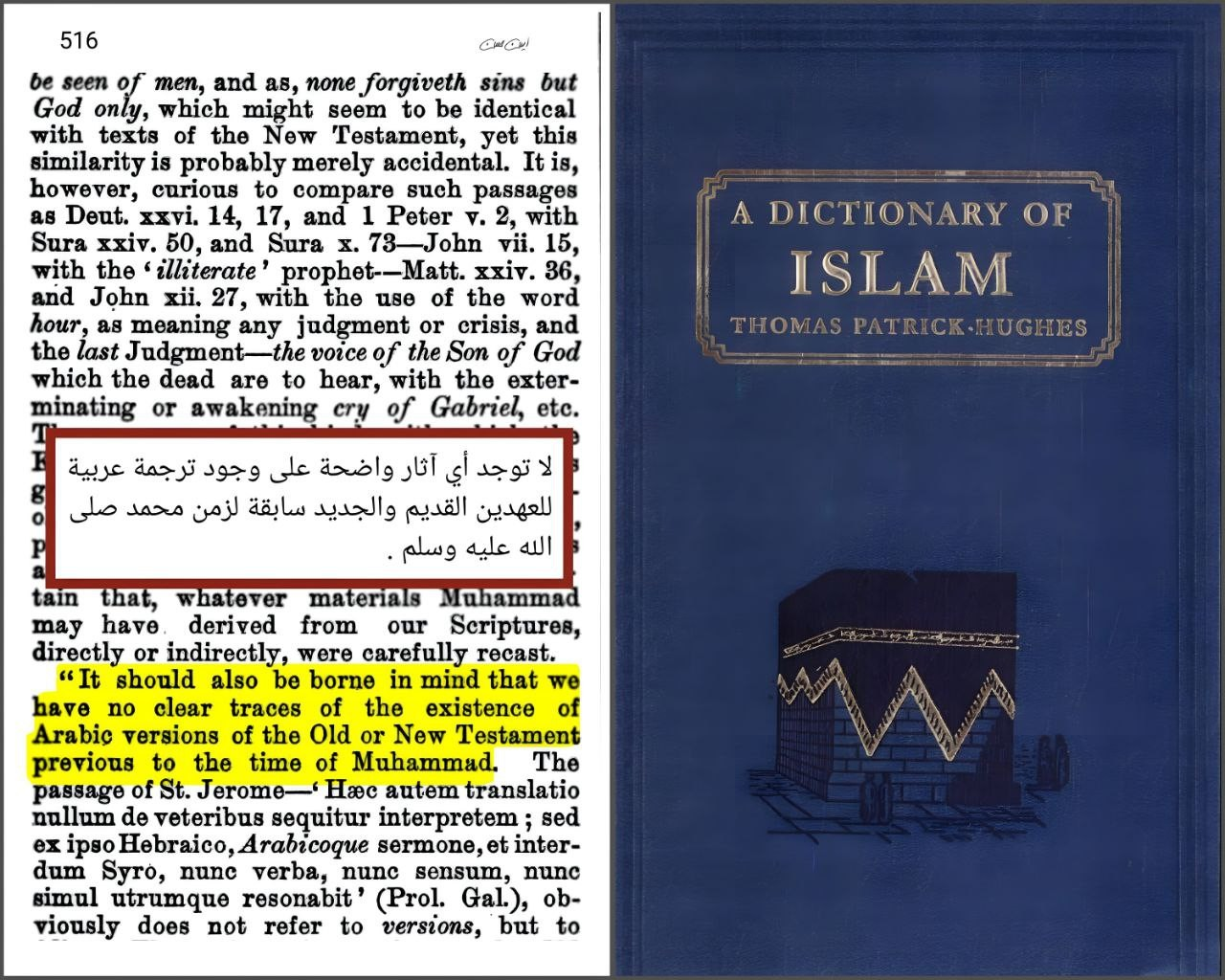
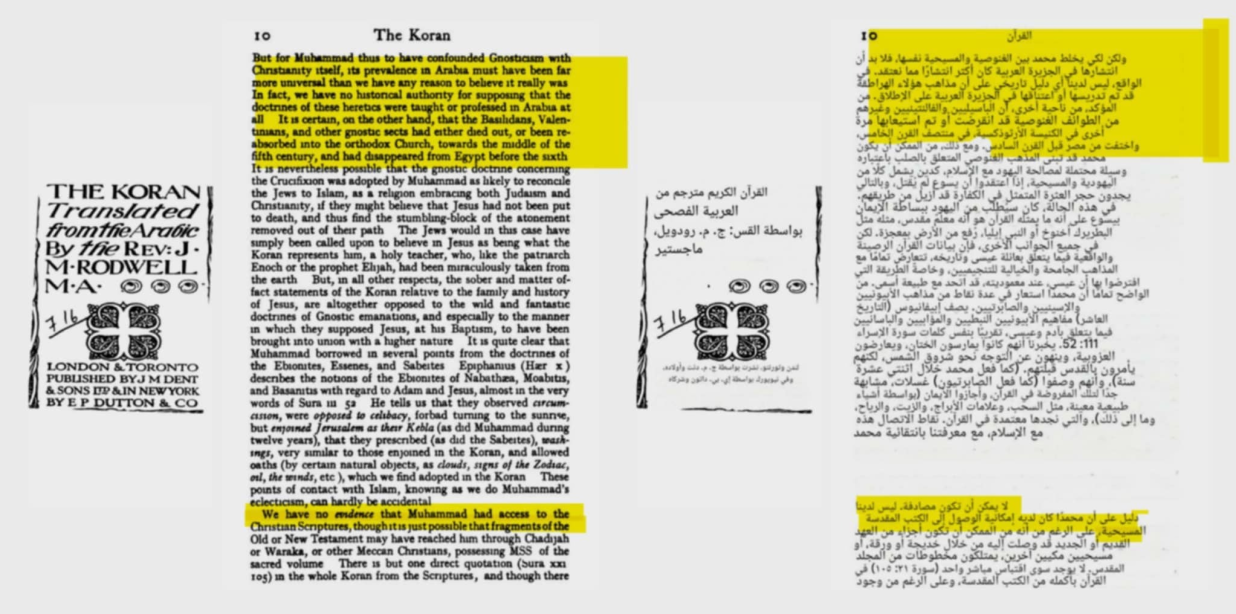
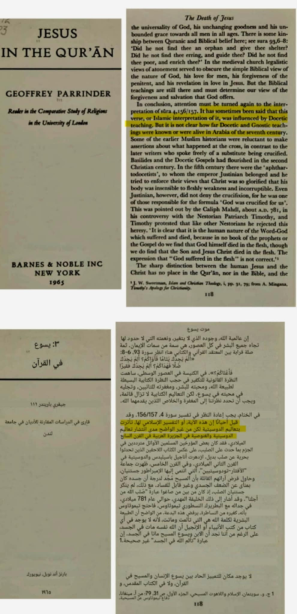
The missionary orientalist Thomas Patrick Hughes in his dictionary “The Dictionary of Islam” — quoting the orientalist J. M. Rodwell:
“There is no evidence that Muhammad had access to the Christian holy books… It must be known that there are no clear traces of the existence of an Arabic translation of the Old and New Testaments prior to the time of Muhammad… The oldest Arabic translation of the Old Testament that has reached us is that of the monk Saadia al-Fayyumi.” ⁶
The Egyptian biblical researcher Albert Estero concluded in his doctoral thesis:
“Perhaps the Arabic translations of the Bible appeared in the last period of Umayyad rule — at the beginning of the eighth century.” ⁷
Among the evidence he used for the absence of an Arabic translation before the advent of Islam:
- The lack of need for the Jews of the Arab countries for this translation
- Inscriptions indicate they used Aramaic
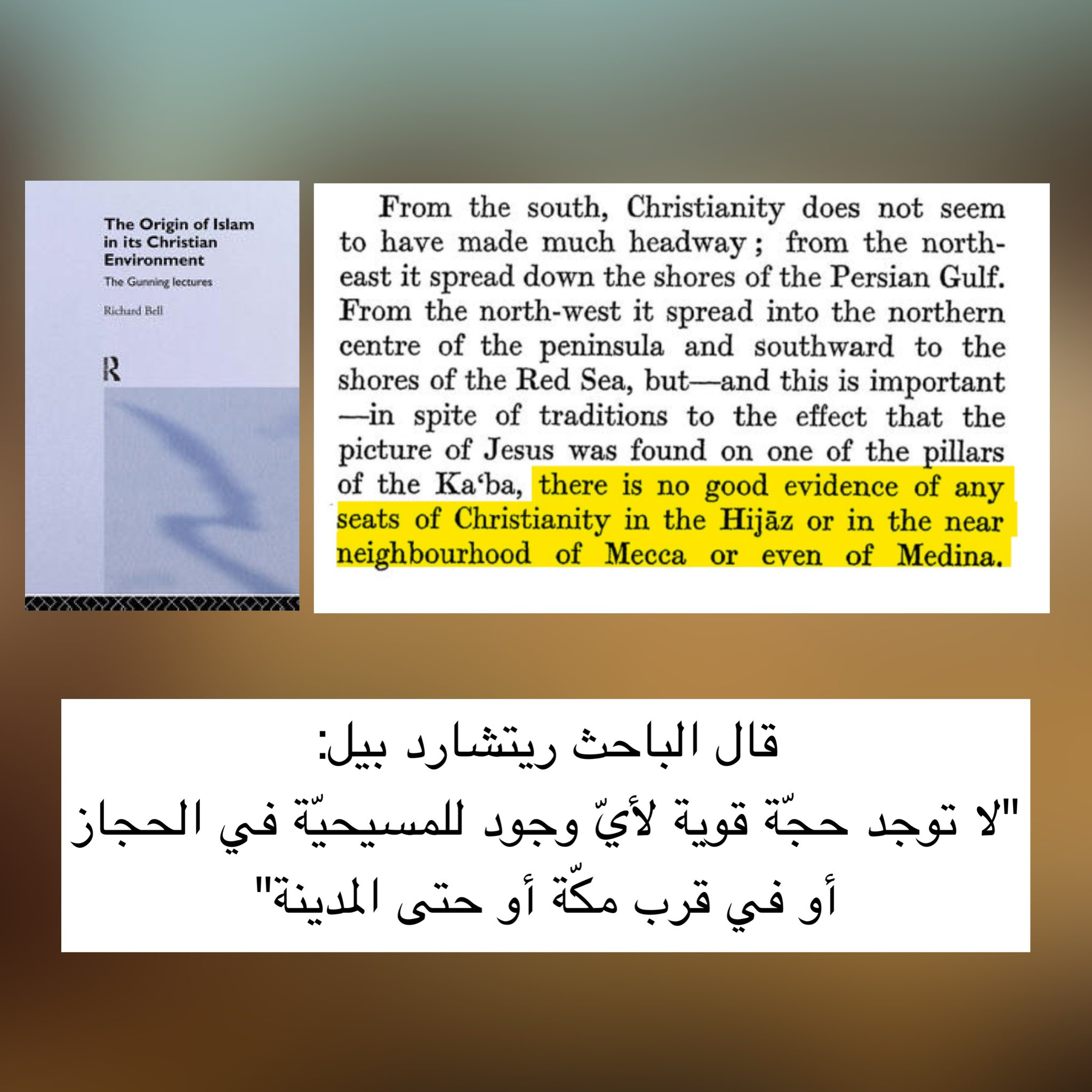
- The absence of a Christian community in the Hijaz
- The liturgy’s reliance on other languages ⁸
The Orientalist and Christian missionary Edward Sale says:
“There is no evidence that Muhammad had any practical knowledge of the Old and New Testaments.” ⁹
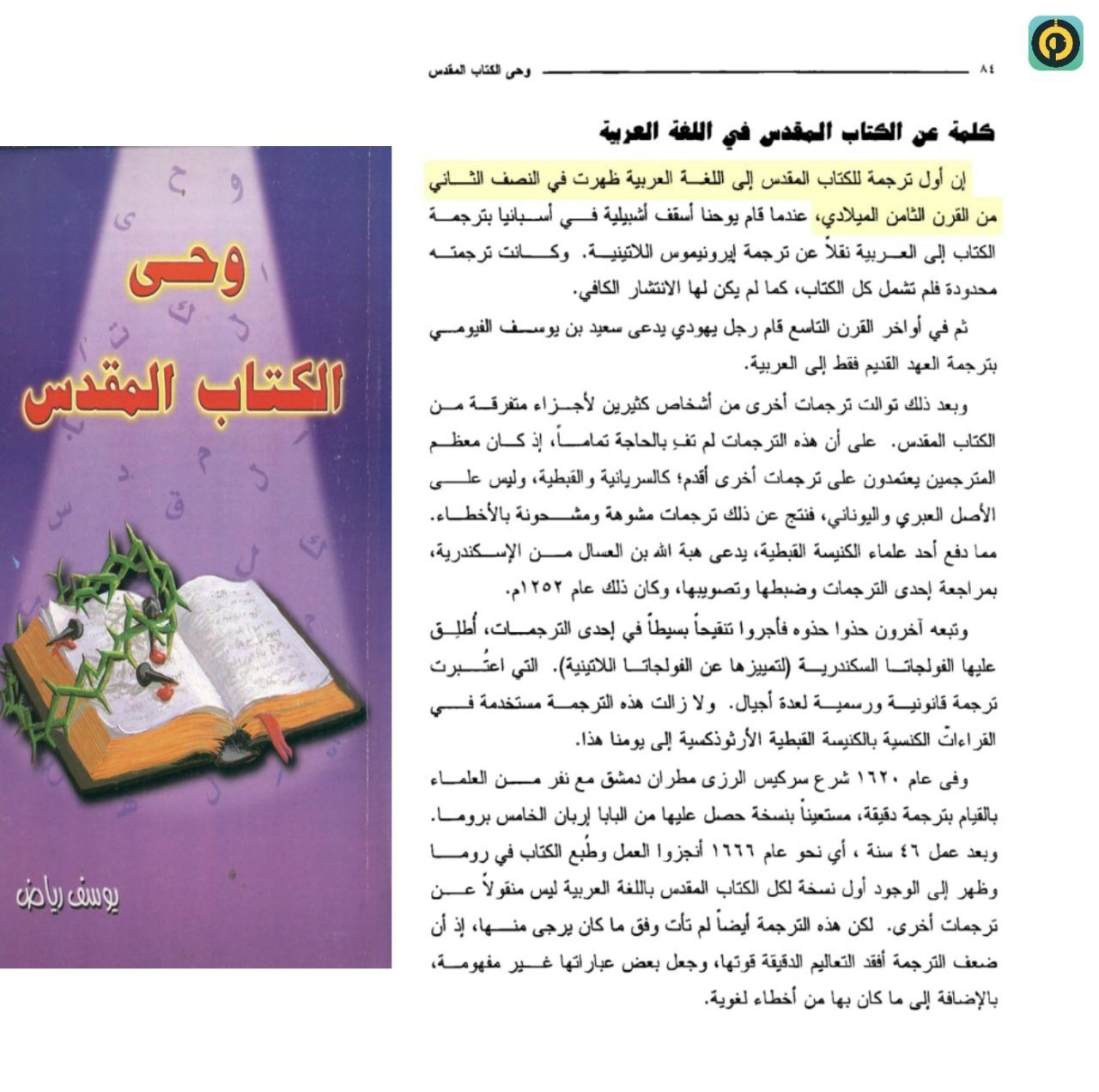
The missionary Youssef Riad says:
“The first translation of the Holy Book into Arabic appeared in the second half of the eighth century AD.” ¹⁰
Professor Dr. Wahib Jurji says:
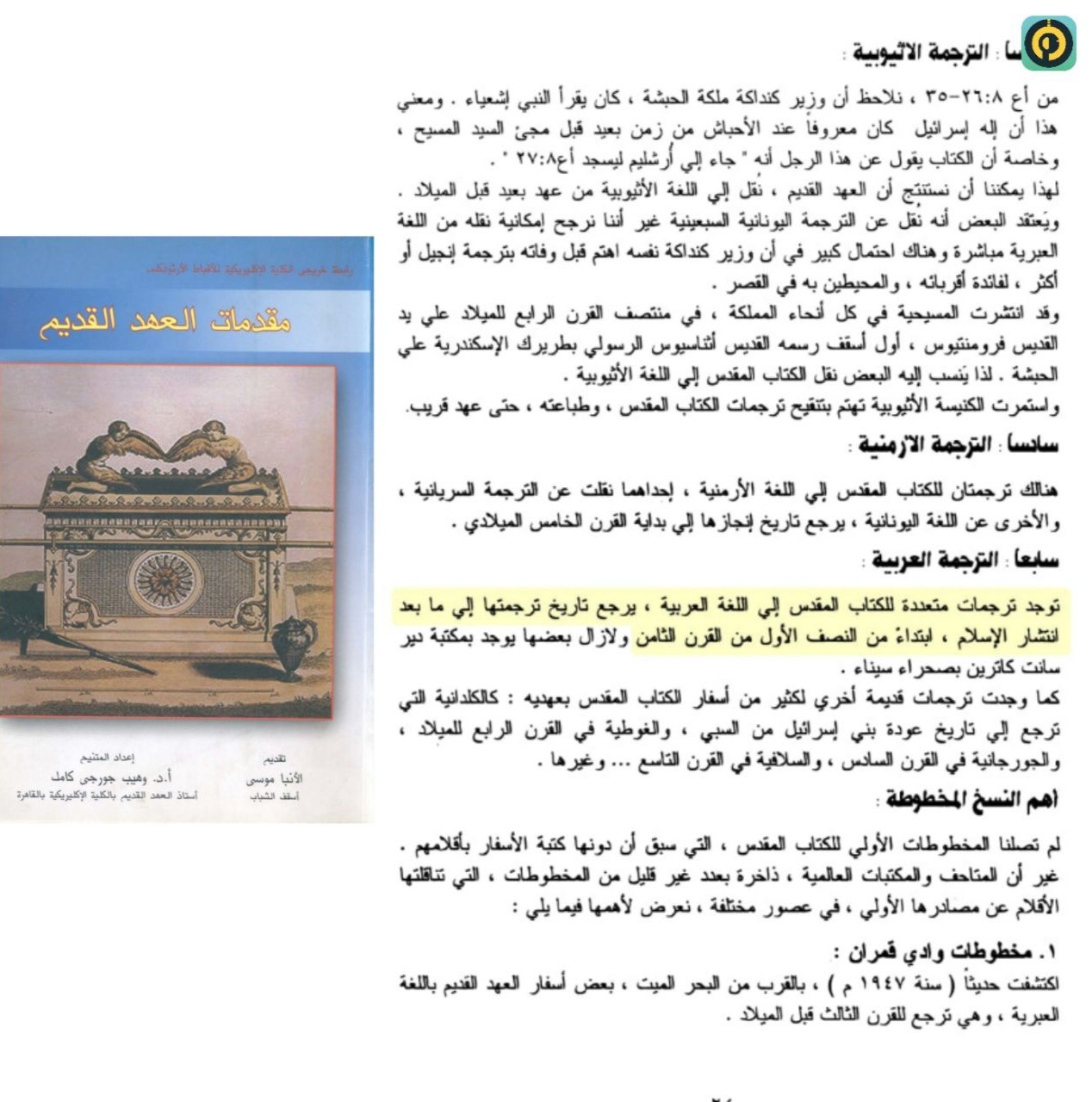
“There are multiple translations of the Holy Book into Arabic, the date of which dates back to after the spread of Islam, starting from the first half of the eighth century.” ¹¹
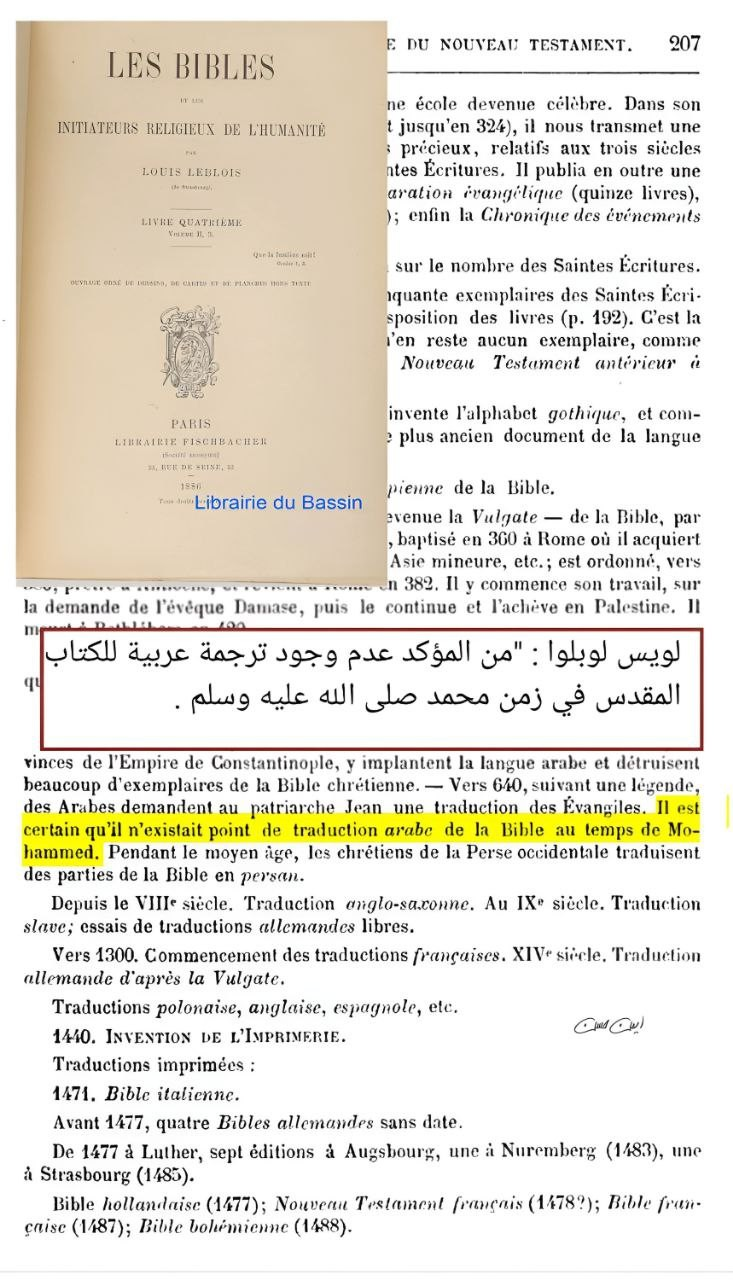
The Orientalist Louis Le Blois says:
“It is certain that there was no Arabic translation of the Holy Book in the time of Muhammad ﷺ.” ¹²
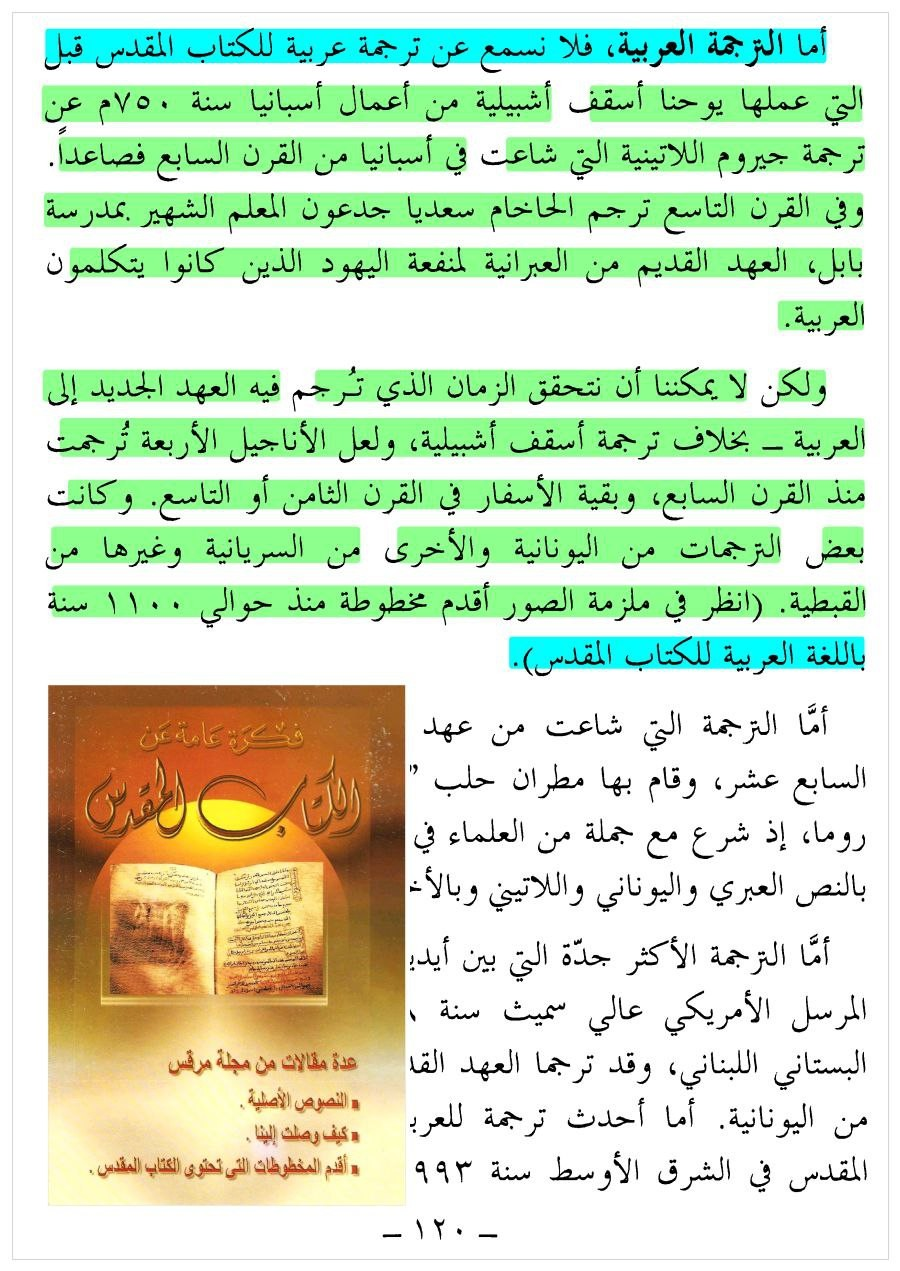
The book “A General Idea about the Holy Bible” says:
“As for the Arabic translation, we do not hear of an Arabic translation of the Holy Bible before the one made by John, Bishop of Seville, Acts of Spain in 750 AD, from the Latin translation of Jerome, which was popular in Spain from the seventh century. In the ninth century, Rabbi Saadia Gideon, the famous teacher of the Babylonian School, translated the Old Testament from Hebrew for the benefit of the Jews who spoke Arabic. However, we cannot ascertain the time in which the New Testament was translated into Arabic — unlike the translation of the Bishop of Seville. Perhaps the four Gospels were translated since the seventh century, and the rest of the books in the eighth or ninth century. Some of the translations were from Greek, others from Syriac, and others from Coptic.” ¹³
Father Paul Al-Feghali confirms:
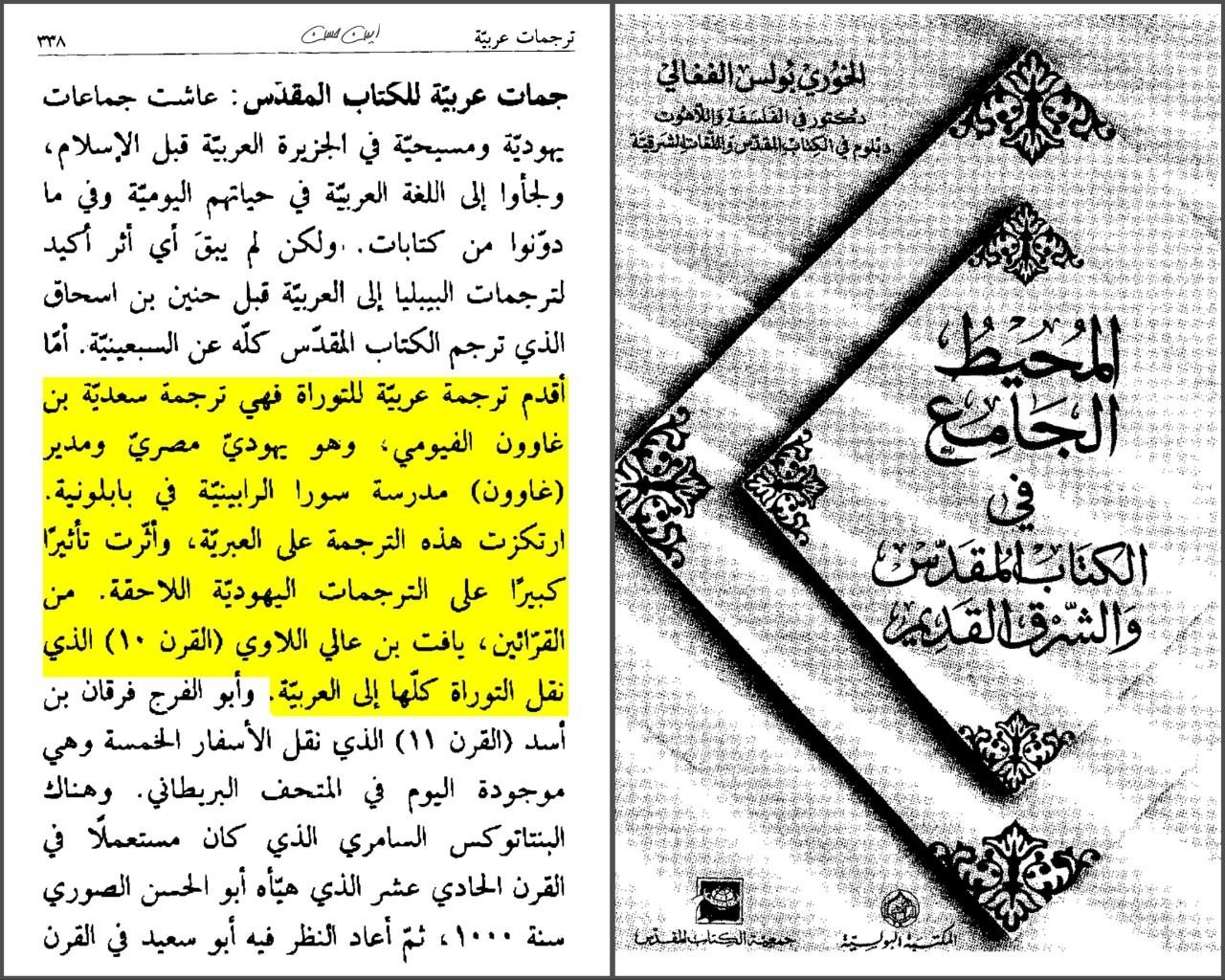
“As for the oldest Arabic translation of the Torah, it is the translation of Saadia bin Gaon Al-Fayyumi, an Egyptian Jew and the director (gaon) of the Sura Rabbinic School in Babylonia. This translation was based on Hebrew, and greatly influenced subsequent Jewish translations.” ¹⁴
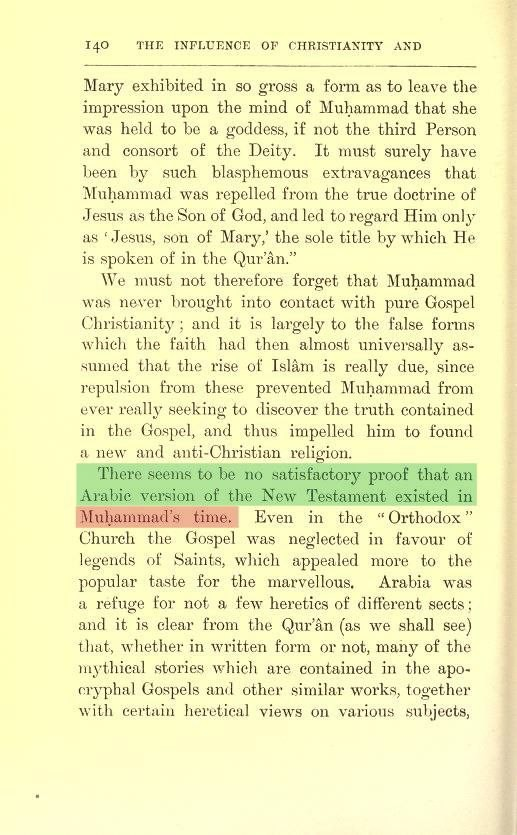
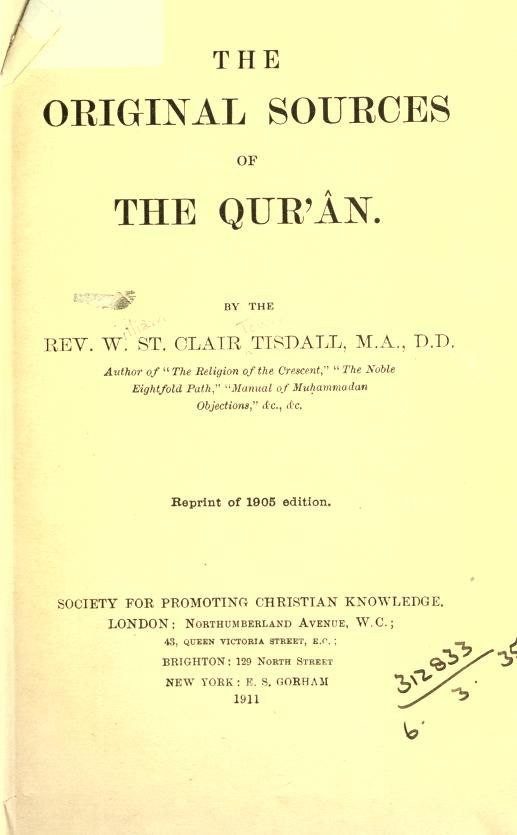
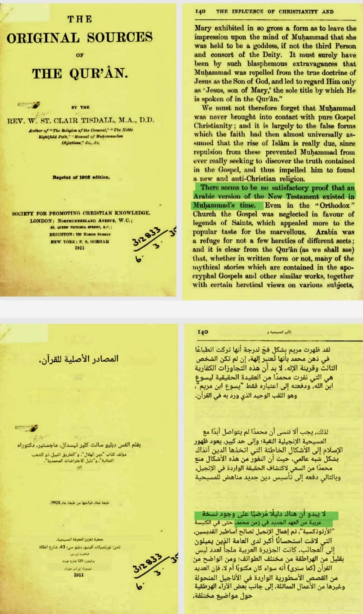
The fanatical orientalist Saint Clair Tsedal — considered the most famous of those who wrote about the claim of quotation — says in his book The Original Sources of the Qur’an:
“It seems that there is no satisfactory argument for the existence of an Arabic translation of the New Testament in the time of Muhammad ﷺ.” ¹⁵
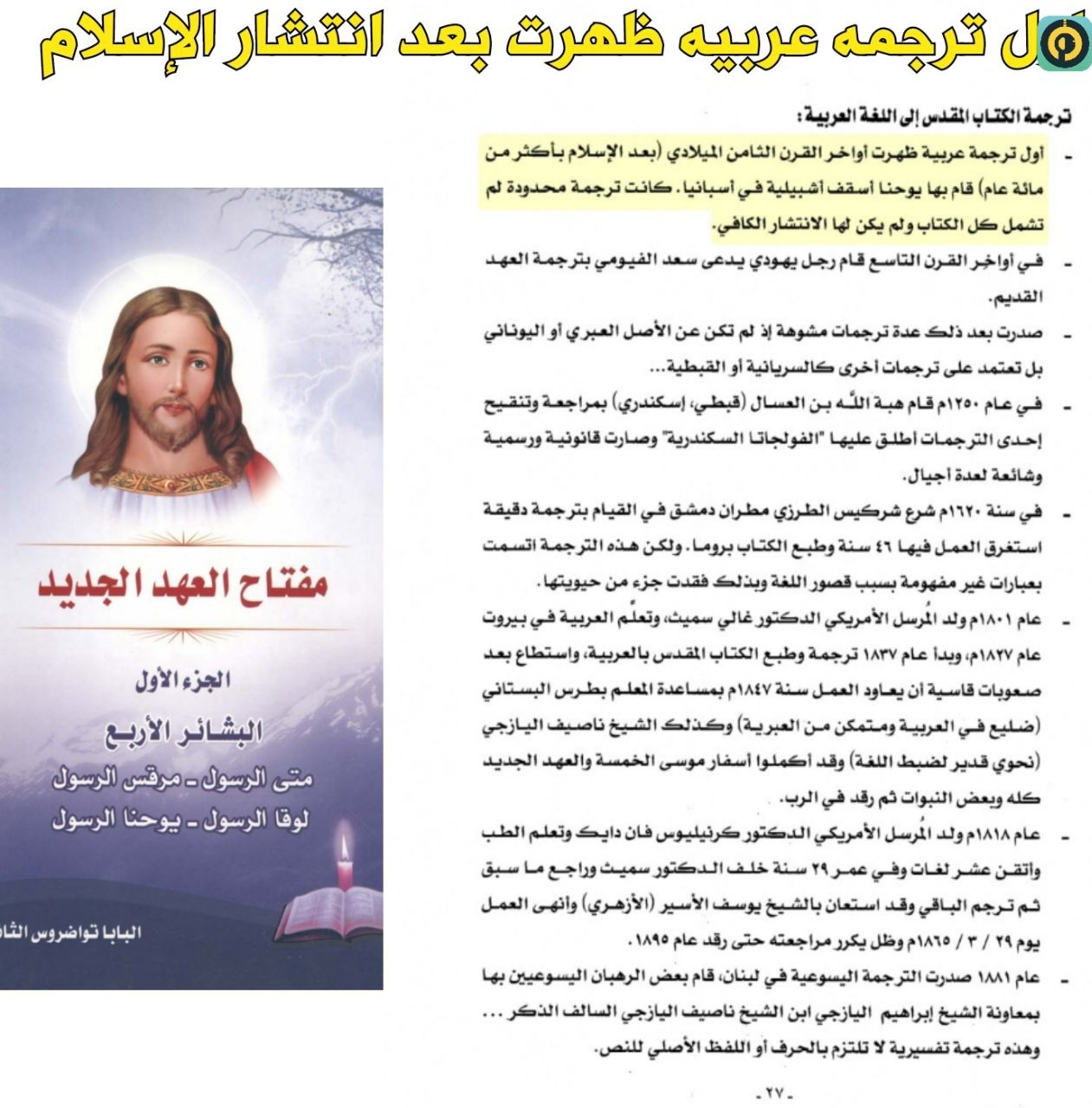
Pope Tawadros, Pope of the Coptic Orthodox Church, said:
“The first Arabic translation appeared in the late eighth century AD (more than a hundred years after Islam) by John, Bishop of Seville in Spain. It was a limited translation that did not include the entire book and did not have sufficient spread. In the late ninth century, a Jewish man named Saad Al-Fayyumi translated the Old Testament.” ¹⁶
Part Two — The Logical Fallacy Behind the Accusation
But what if the source of these books was basically one, as is the case with the Qur’an, the Torah, and the Bible?
It is therefore natural and logical that the following are shared across all of God’s messages throughout human history:
- Beliefs
- The origins of Islamic law
- Stories of the Prophets
- General moral values
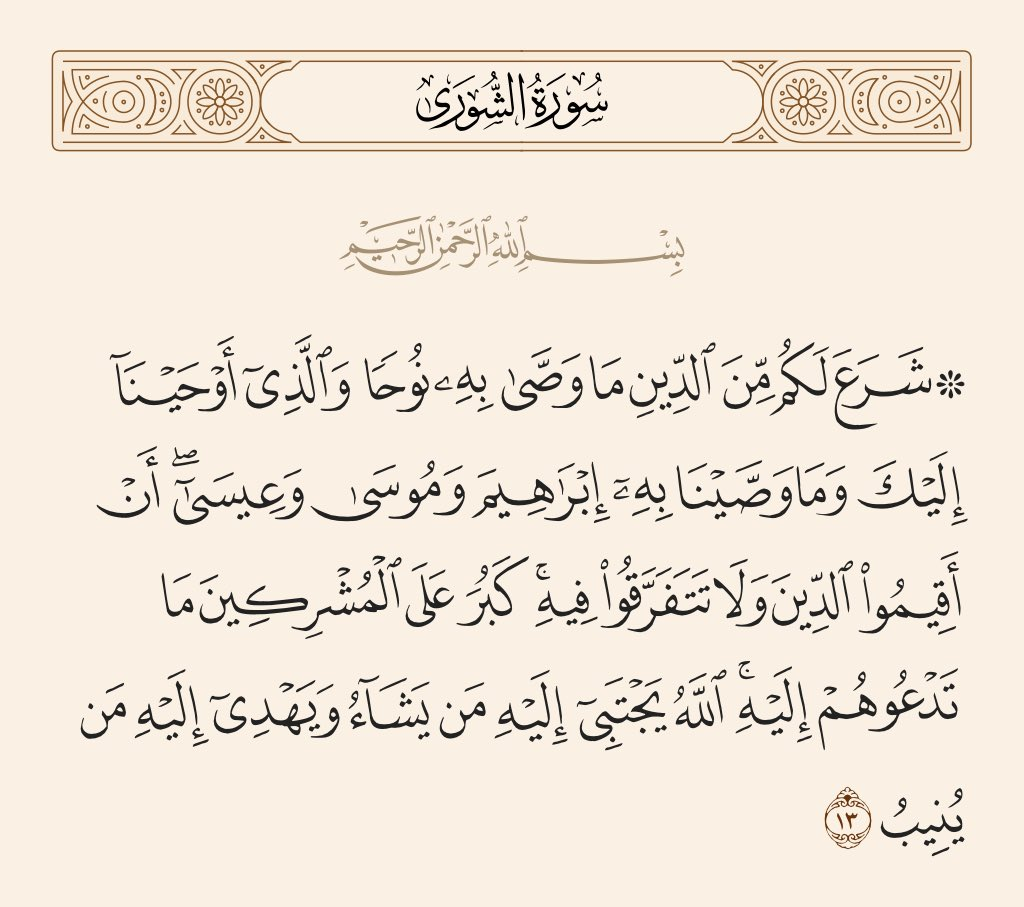
Why not?.. God is one, religion is His religion, and books are His books. Moses, Jesus, and Muhammad ﷺ were nothing but brothers who carried the scrolls of guidance and light to humanity.
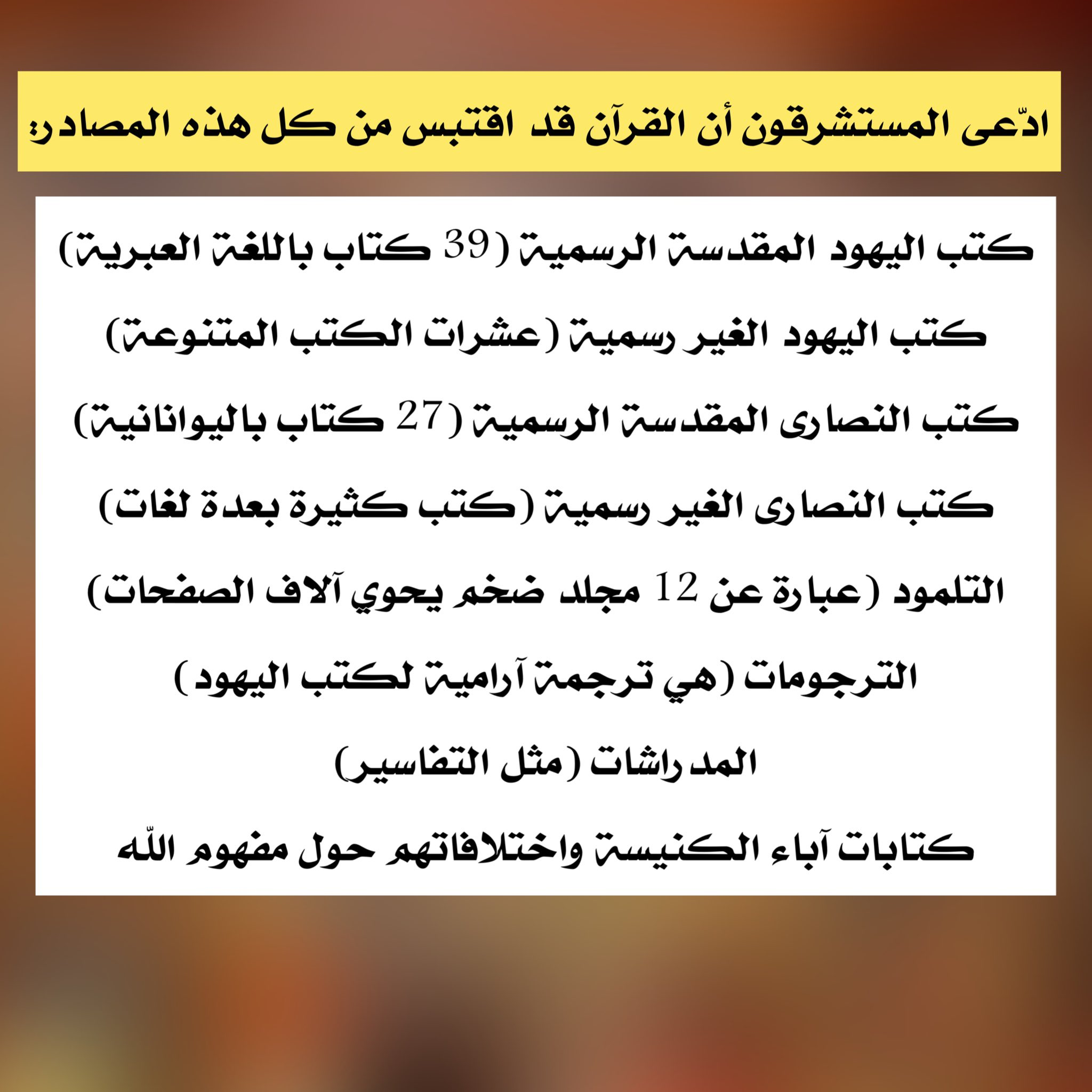
The Orientalists (those with intellectual excesses) renewed this old suspicion and added to the list of alleged sources from which the author of the Qur’an “drew.”
Why do people attribute this to an illiterate Arab man who lived in a desert village?! If that were true, we would have to claim that he had acquired in the land of the Hijaz a library that was the richest library in the world — in the middle of the desert. A suspicious story that hardly anyone can believe in except those who turn away from logic and wade through the waves of stubbornness.
Abdul Rahman Badawi said it well:
“In order to assume the validity of this claim, Muhammad must have known Hebrew, Syriac, Greek, and Aramaic, and he must have had a great library that included all the texts of the Talmud and the Christian Gospels, various prayer books, decisions of church councils, as well as some works of Greek writers, and books of various Christian churches and sects.”
Part Three — The Miraculous Quranic Challenge
If you have any doubt or suspicion that this Qur’an was inspired by God — that Muhammad ﷺ invented it himself or learned it from someone else — then bring only one surah that is similar in eloquence and miracle to the Qur’an, and seek help from whomever you wish. You will fail and be unable to do so. The Qur’an is not the speech of a human being that can be imitated.
You all know the result of this Quranic challenge that has been going on for 1444 years without opposition.
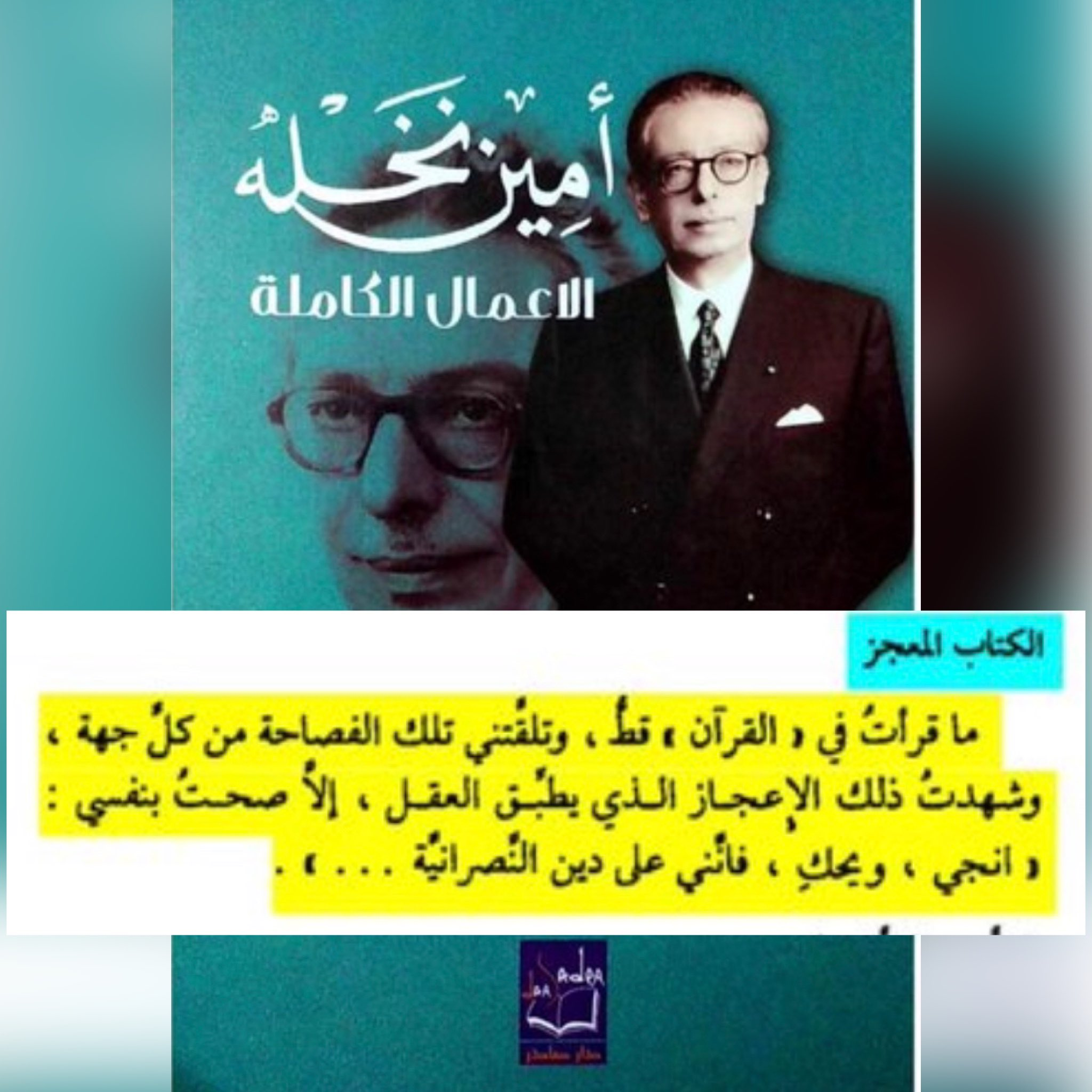
Until the Christian writer and poet Amin Nakhl acknowledged the miraculous nature of the Quran and said:
“I have never read the Qur’an and been so eloquently received from every side, and witnessed such a miracle that defies reason, without saying to myself: ‘Save yourself, woe to you, for I am a Christian.’”
Part Four — Detailed Refutation
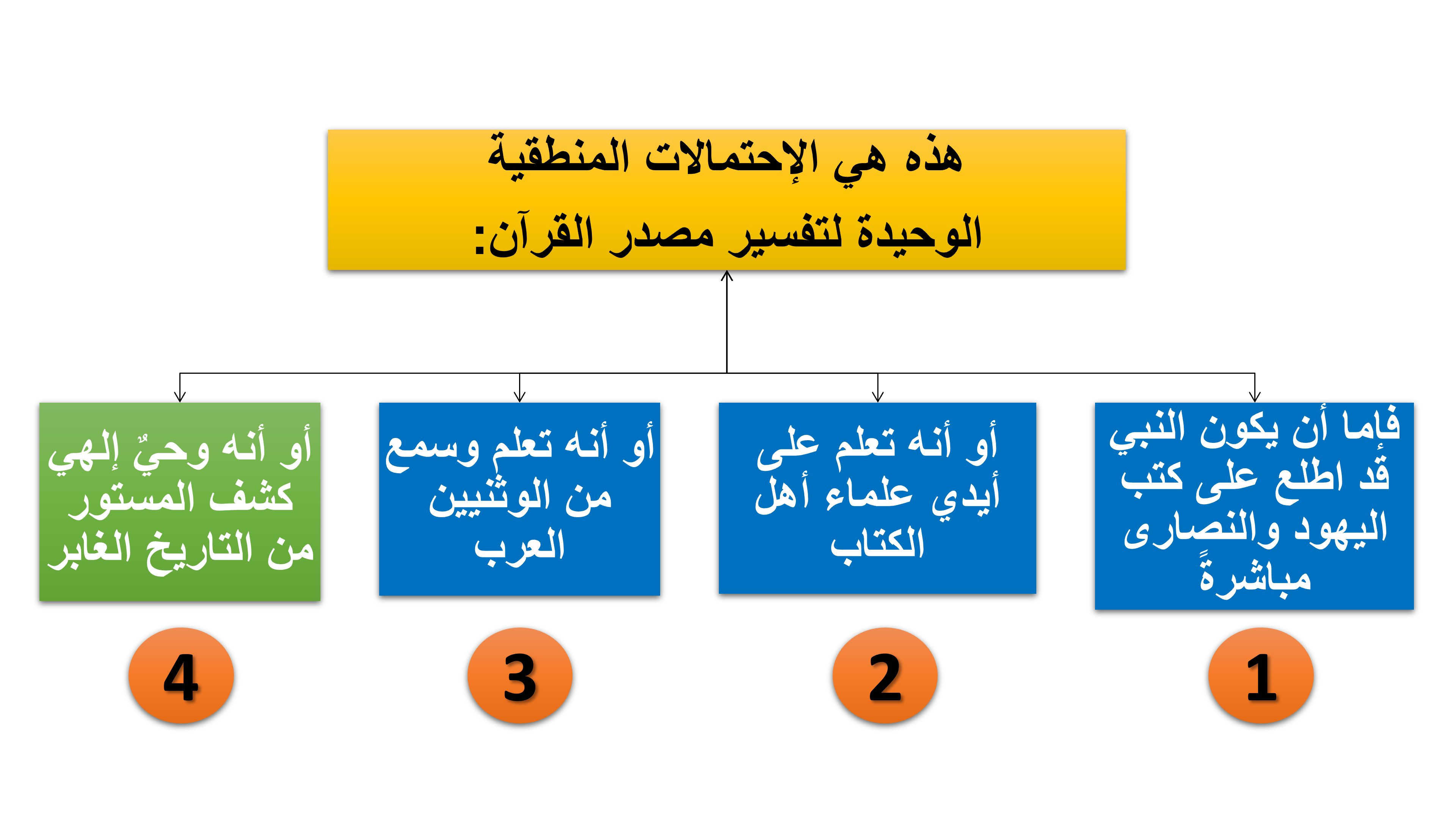
Is a person born a scientist? Absolutely not. Knowledge is acquired either through:
- Direct observation and reading
- A teacher
Therefore, the logical possibilities for interpreting the source of the Qur’an are limited to these two avenues.
First — Could the Prophet ﷺ Read the Books Himself?
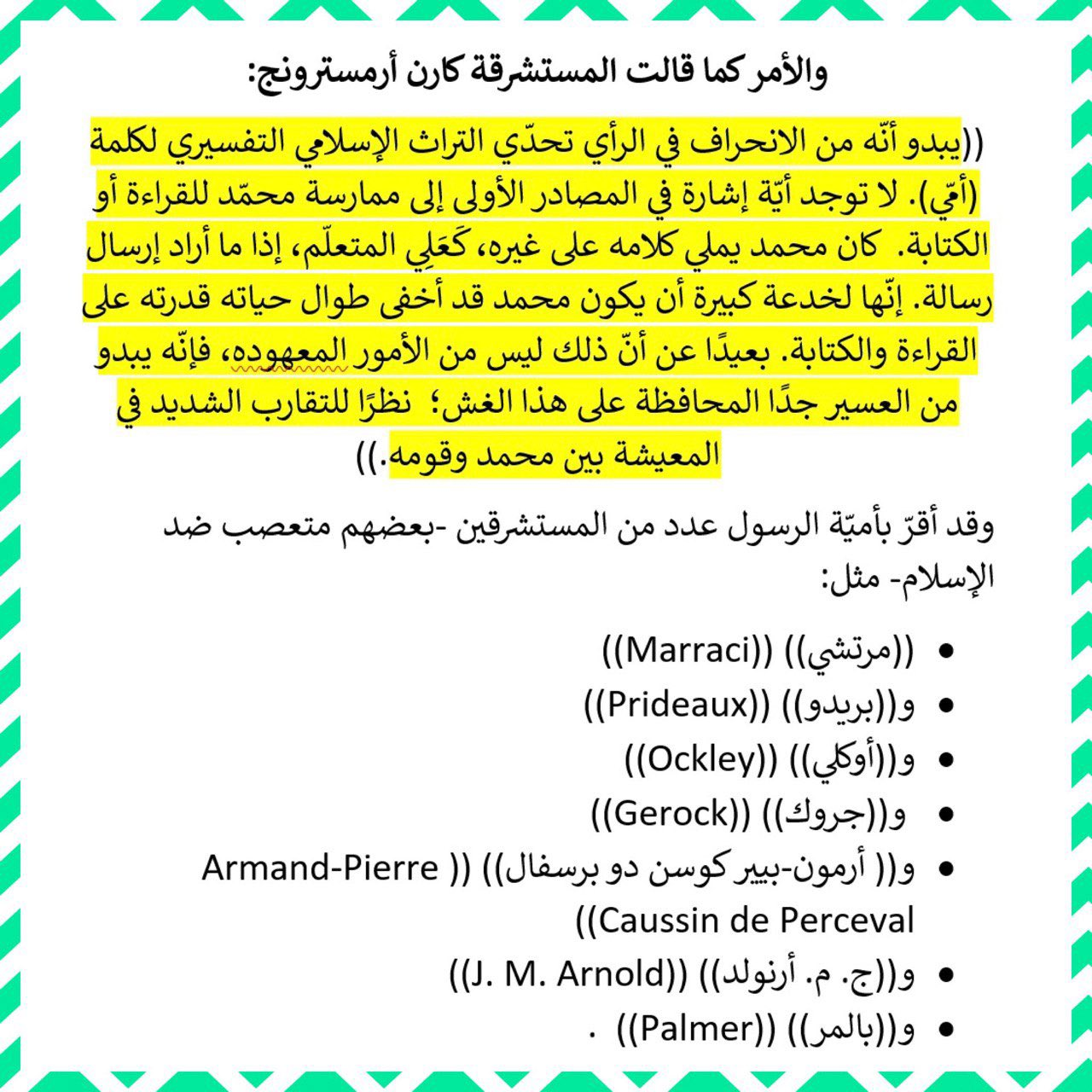
(A) Was the Prophet ﷺ Literate?
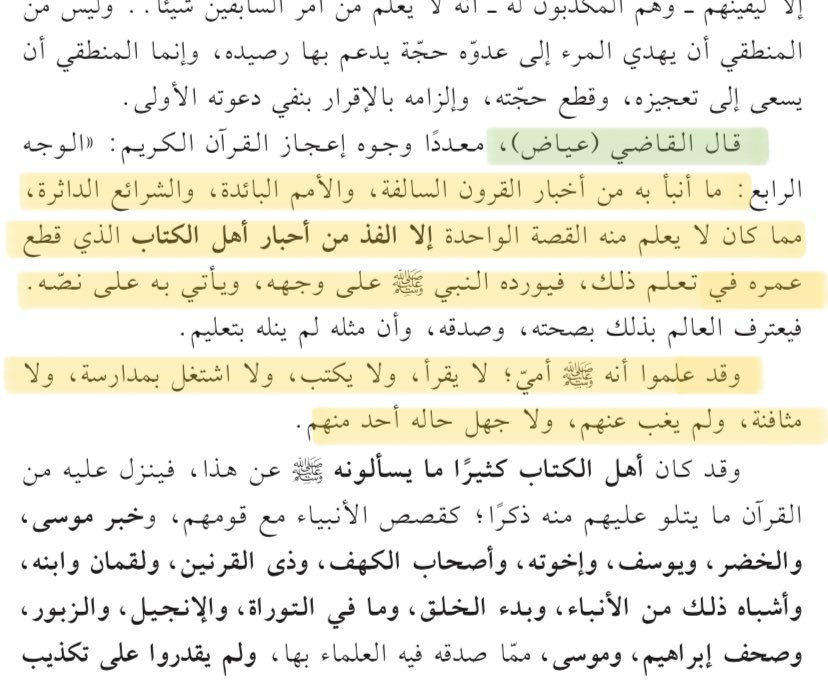
Answer: Absolutely not. History tells us that Muhammad ﷺ and his people were illiterate and could neither read nor write. This is an indisputable fact — so much so that even the most hostile Orientalists to Islam were forced to acknowledge it.
The Quran itself is cited here not only as divine revelation, but also as a historical record that documents the life of the Prophet ﷺ, his situation, and his arguments with his people. God Almighty says:
- {And you did not recite before it any scripture, nor did you inscribe it with your right hand. Then the falsifiers would have had doubts.}
- {You did not know what the Book was, nor what faith was.}
- {Say, “If God had willed, I would not have recited it to you, nor would He have made it known to you. I have indeed remained among you a lifetime before it. Then will you not reason?”}
These verses were revealed and read to his companions and enemies — and they all acknowledged this fact. No one, near or far, among his contemporaries testified that he learned to read and write, or that he studied the books of the Jews and Christians.
(B) Was the Bible Translated into Arabic Before Islam?
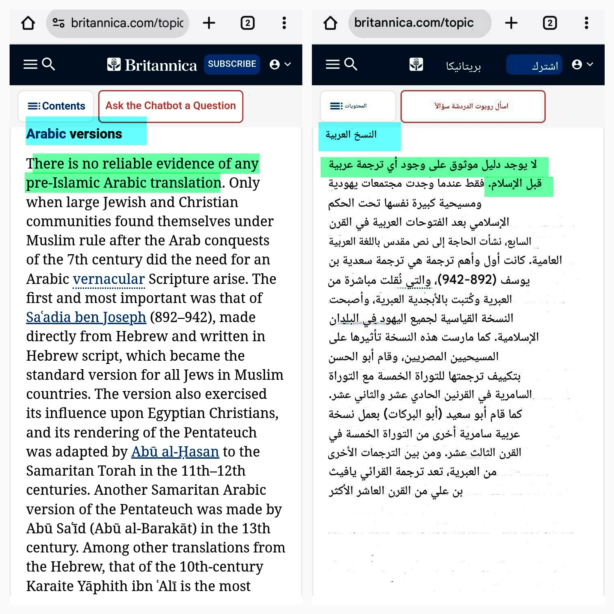
Answer: No, absolutely not. As most academic studies acknowledge — they all deny the existence of any Arabic translation of the holy books before Islam.
| Scholar | Statement |
|---|---|
| 🟡 Bruce Metzger | ”The oldest Arabic translations of the Bible date back to the eighth century” — i.e., after Islam |
| 🔴 Horne | ”The Arabic translations of the Old Testament do not extend beyond the tenth century” |
| 🟣 Encyclopedia of Christianity | ”The Arabic translations date back to the Islamic period” |
| 🟢 Encyclopaedia of Islam | ”It is not possible to say that Muhammad and his early followers could have acquired direct knowledge of the Gospels in Arabic” |
| 🔵 J.M. Rodwell | ”There is no evidence that Muhammad had access to the Christian scriptures… no clear signs of an Arabic translation prior to the time of Muhammad” |
| 🟤 William Henry Pinnock | ”The statement that the Arabic translation of the New Testament did not appear until after the advent of Islam is the statement of most scholars” |
- Since the Prophet ﷺ was an illiterate Arab who could neither read nor write
- Since there was no Arabic translation of the Bible before Islam
It is impossible, then, for the Prophet ﷺ to have read those books — for he was neither a reader, nor were they translated.
Thus, the suspicion that the Prophet ﷺ had direct access to the books of the Jews and Christians is self-evident in its falseness.
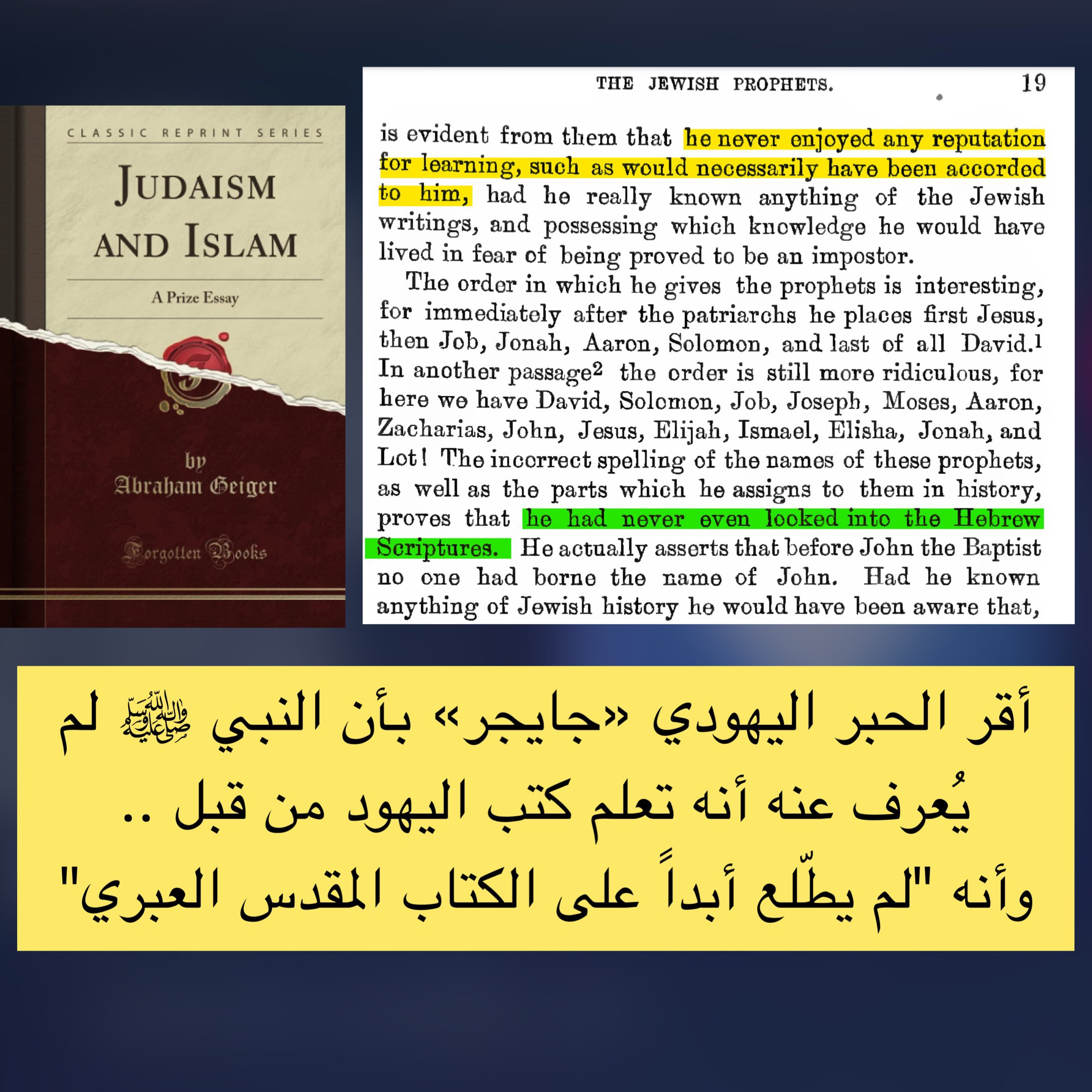
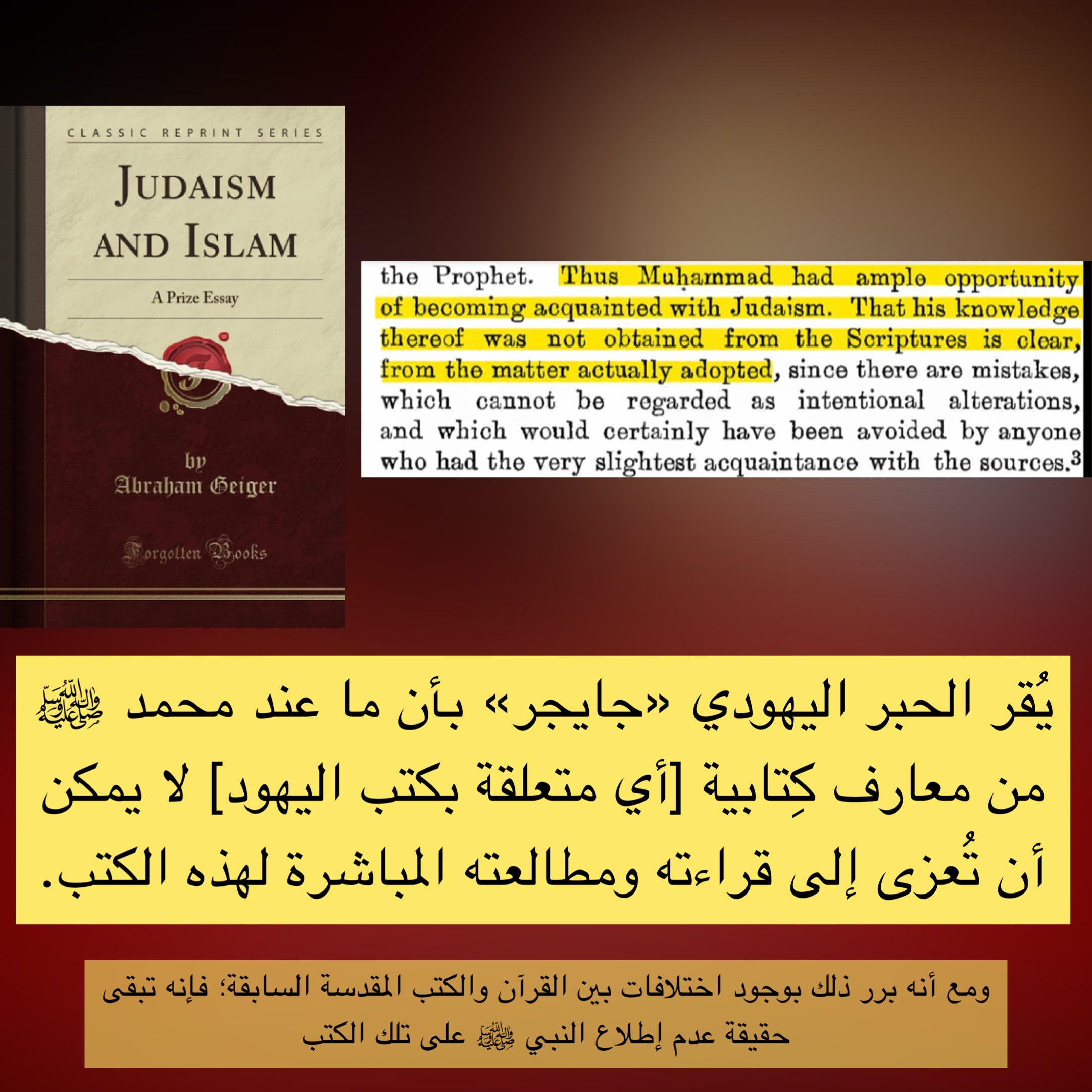
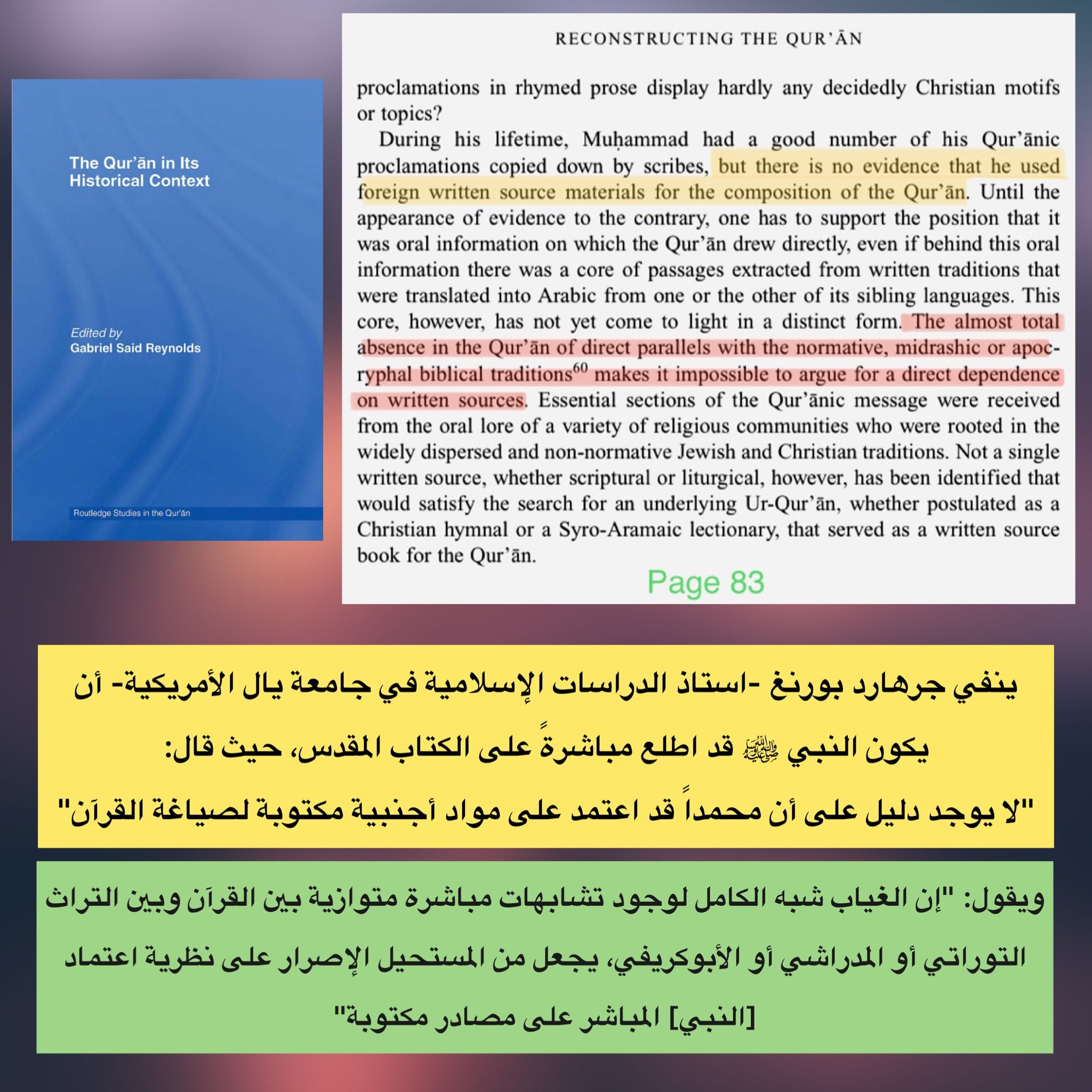
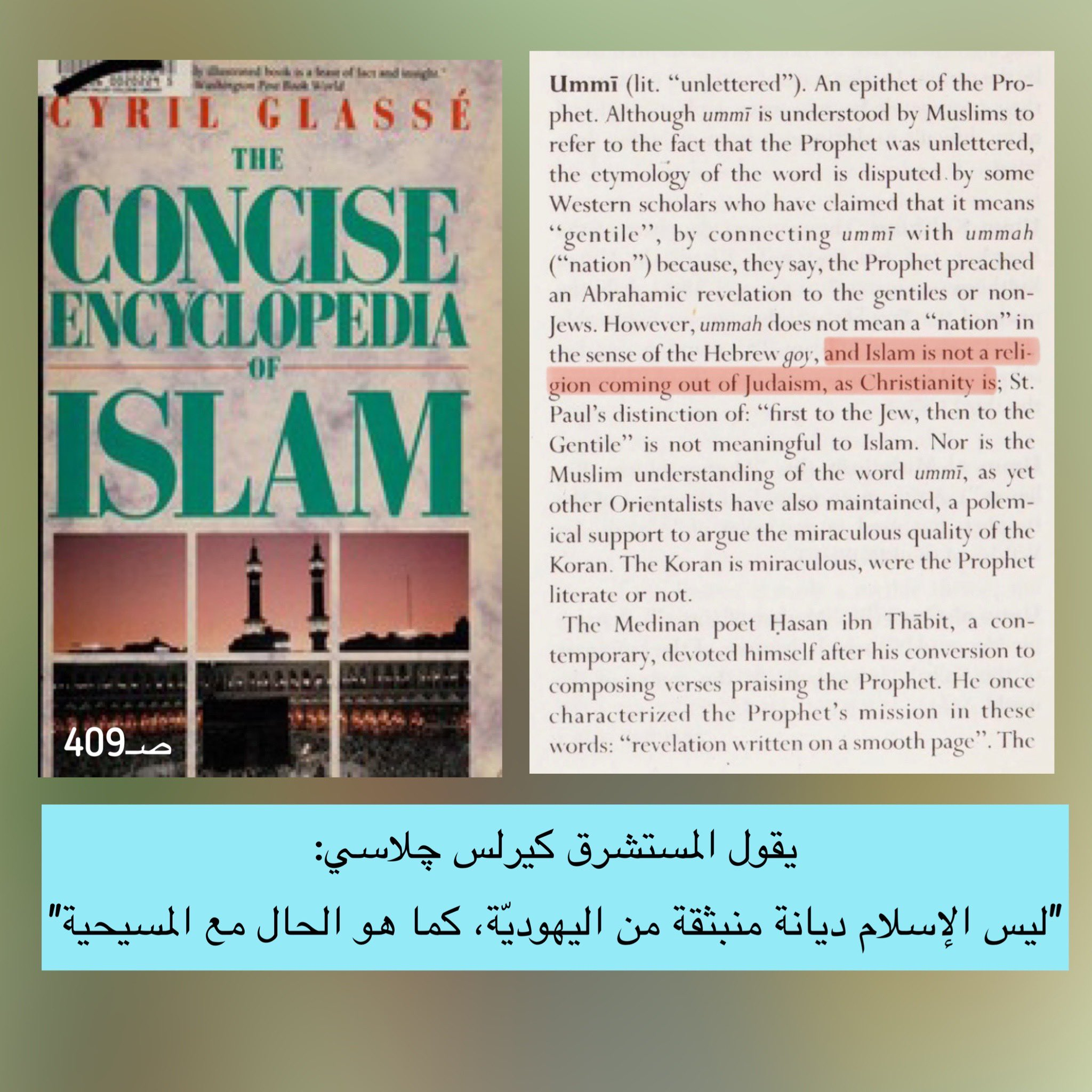
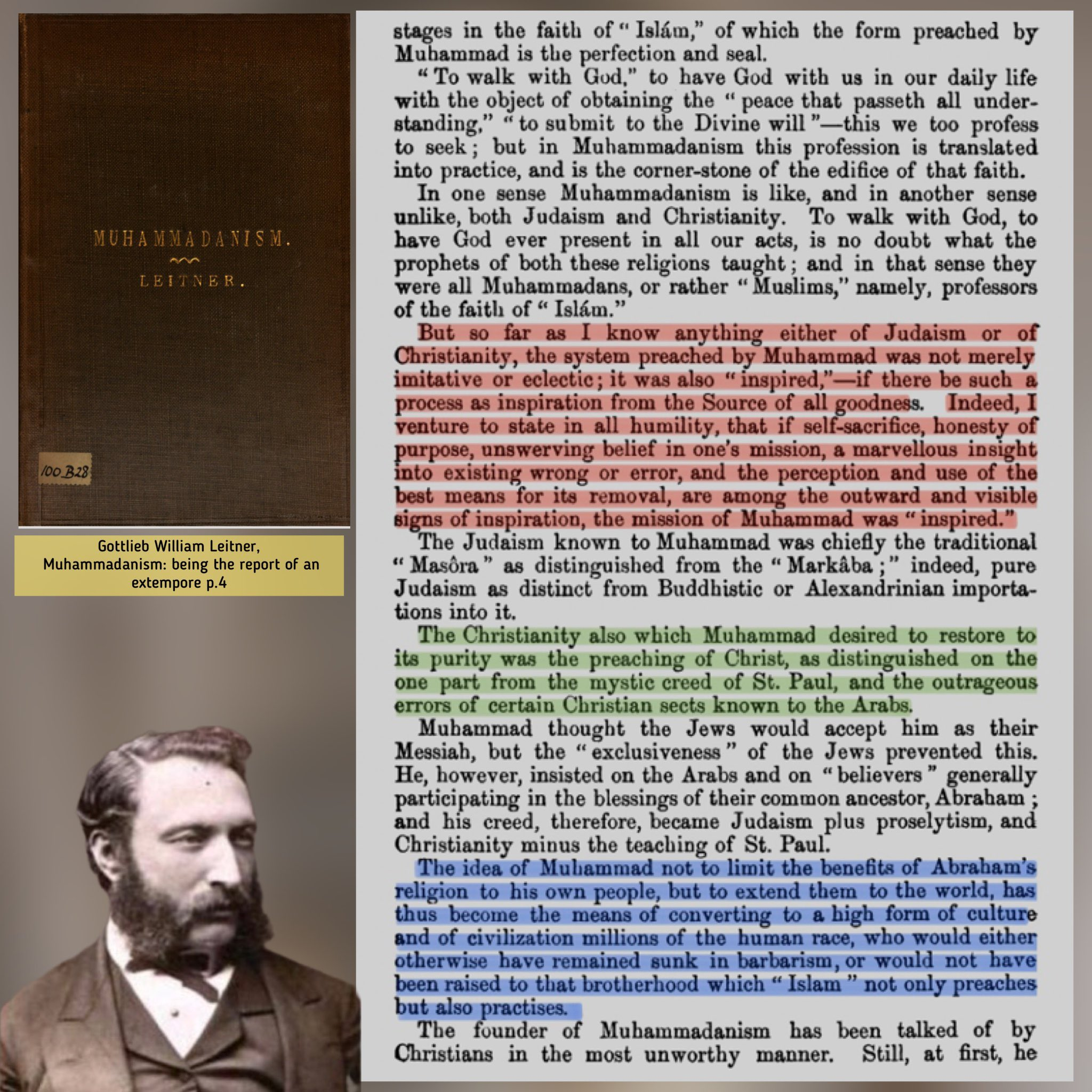
Many Orientalists Acknowledged This Fact
Second — Did He Learn from Scholars of the People of the Book?
So where is the biography of the one who taught the Messenger ﷺ in the Companions’ accounts of their Prophet, when it is known that they held his every command in high esteem and revered everyone who had a significant connection to him? Isn’t the teacher of the Messenger ﷺ the most deserving of reverence?
If his people and contemporaries — Jews and Christians — had known that he had spent a period of his life studying the Jewish and Christian religions at the hands of scholars of the People of the Book, they would have determined for us the place and time in which these abundant and complex biblical sciences were presented to him.
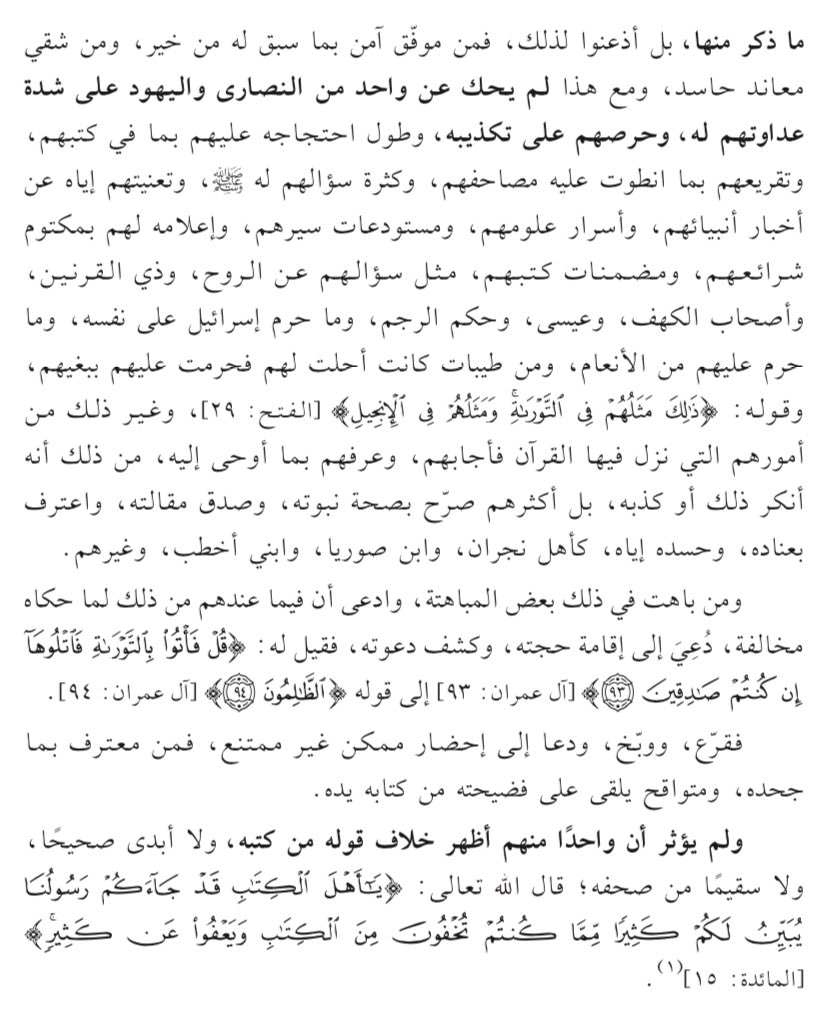
They asked the Prophet ﷺ about matters that only the most distinguished scholars of the People of the Book would know, and they challenged him to answer them in order to test the truth of his prophethood — such as asking about the stories of the prophets and their people, the unseen, the time of the Resurrection, the events of ancient history, and the rulings and laws of those who came before him.
“I will ask you about three things that no one knows except a prophet: What is the first sign of the Hour? What is the first food that the people of Paradise will eat? And why does a child gravitate toward his father or his mother?”
The Prophet ﷺ would answer them without hesitation — saying “Bring [i.e., bring whatever questions you have]” — not caring about what the Jewish or Christian scholars would ask him. He was a prophet to whom revelation was being sent.
If he was taking from the legends of the ancients, wouldn’t he have said: “Wait for me until I review my references”? Instead, he answered with complete precision — and the amazing thing is that these questions are not in one science, but rather in several sciences, some of them medical, some of them occult that no one can know except through revelation.
The mere fact that the People of the Book and the pagan Arabs turned to the Prophet ﷺ to ask him about the news of the ancients is a clear and conclusive proof that this test was very difficult for this illiterate Arab man. If the people knew — or even doubted — his knowledge of the news of the ancients, they would not have offered themselves as evidence for his prophethood.
What kind of knowledge and understanding can be gained in such a quick encounter on a journey? Moreover, the story is fabricated and cannot stand up to modern criticism.
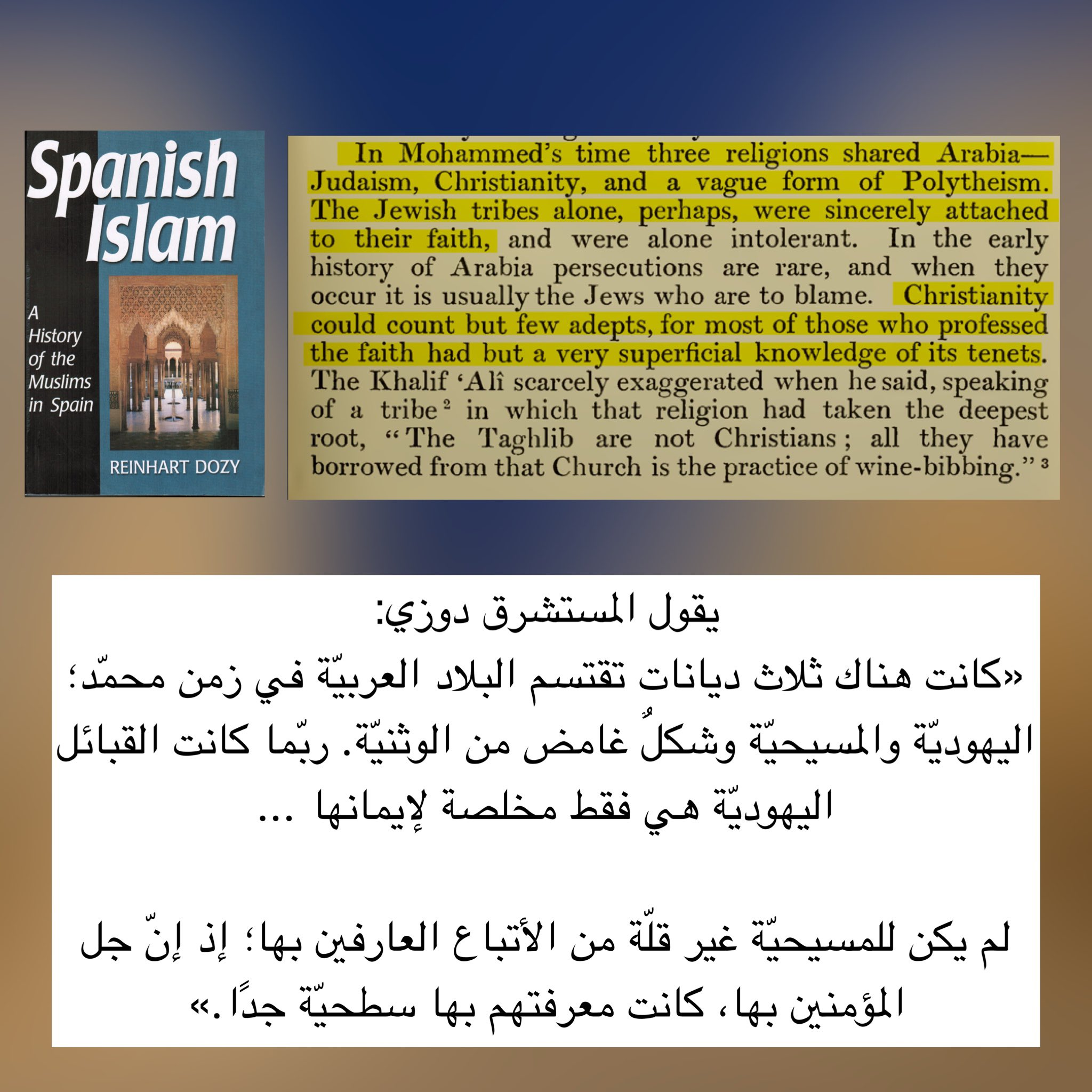
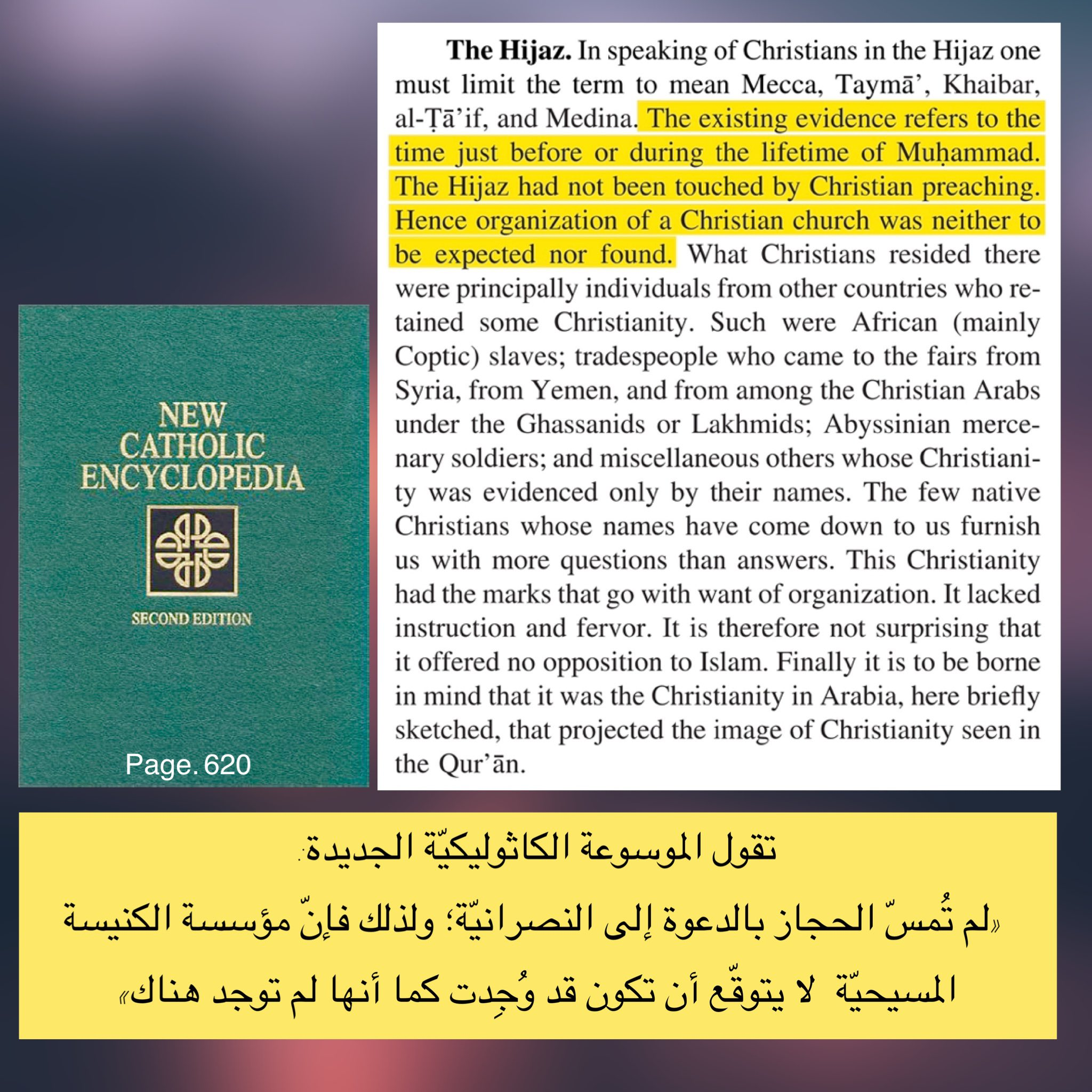
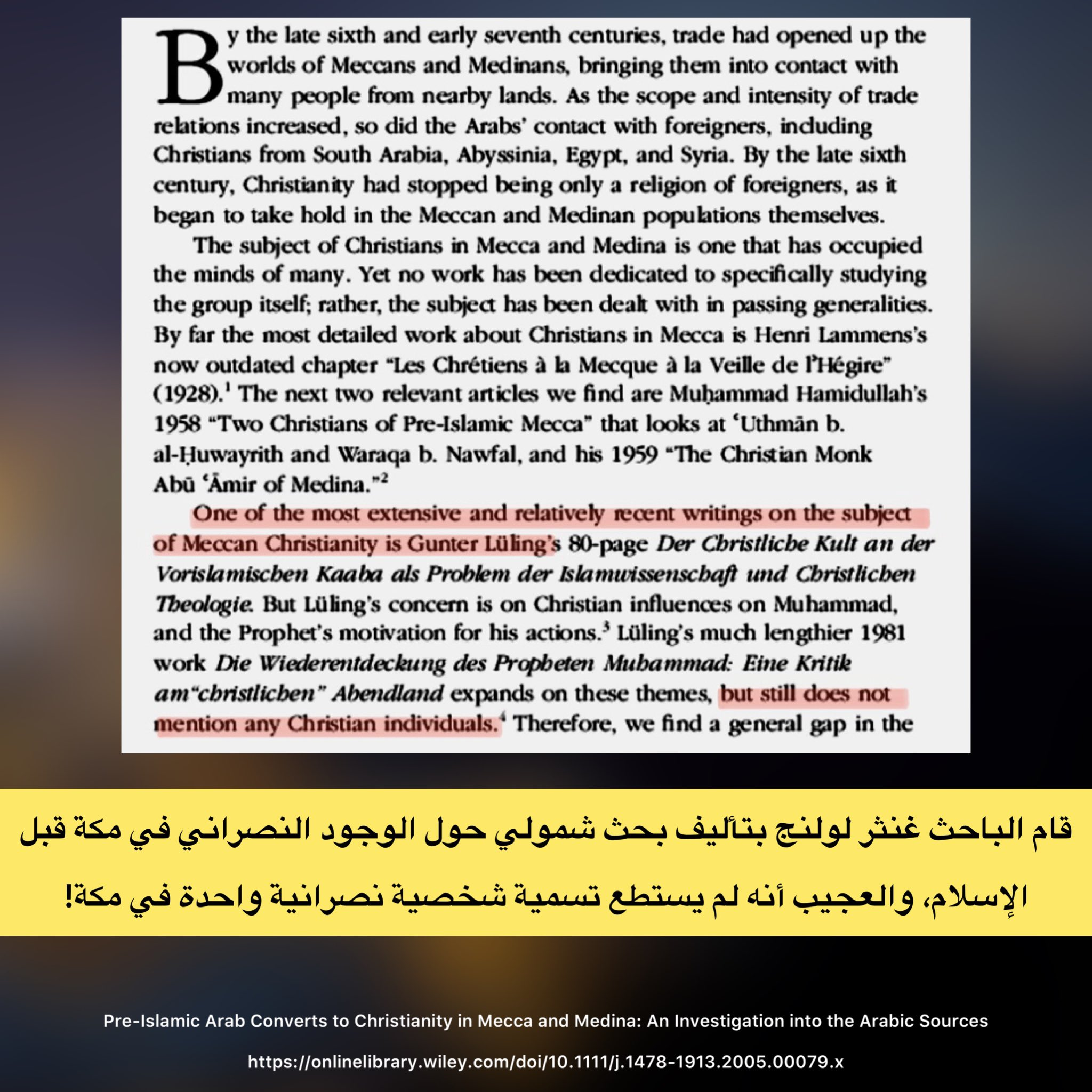
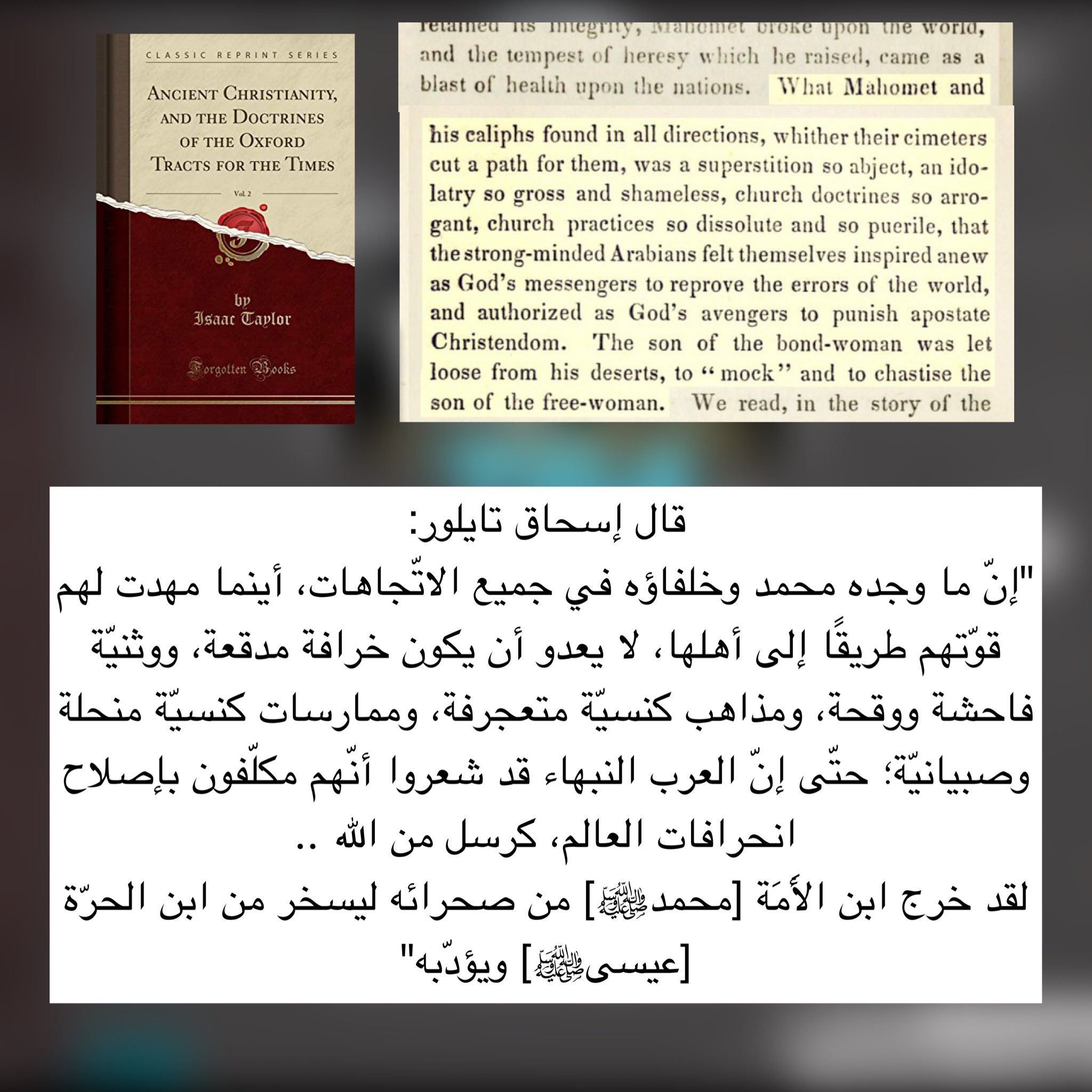
How, then, did Mecca come into contact with Christian religious culture?!
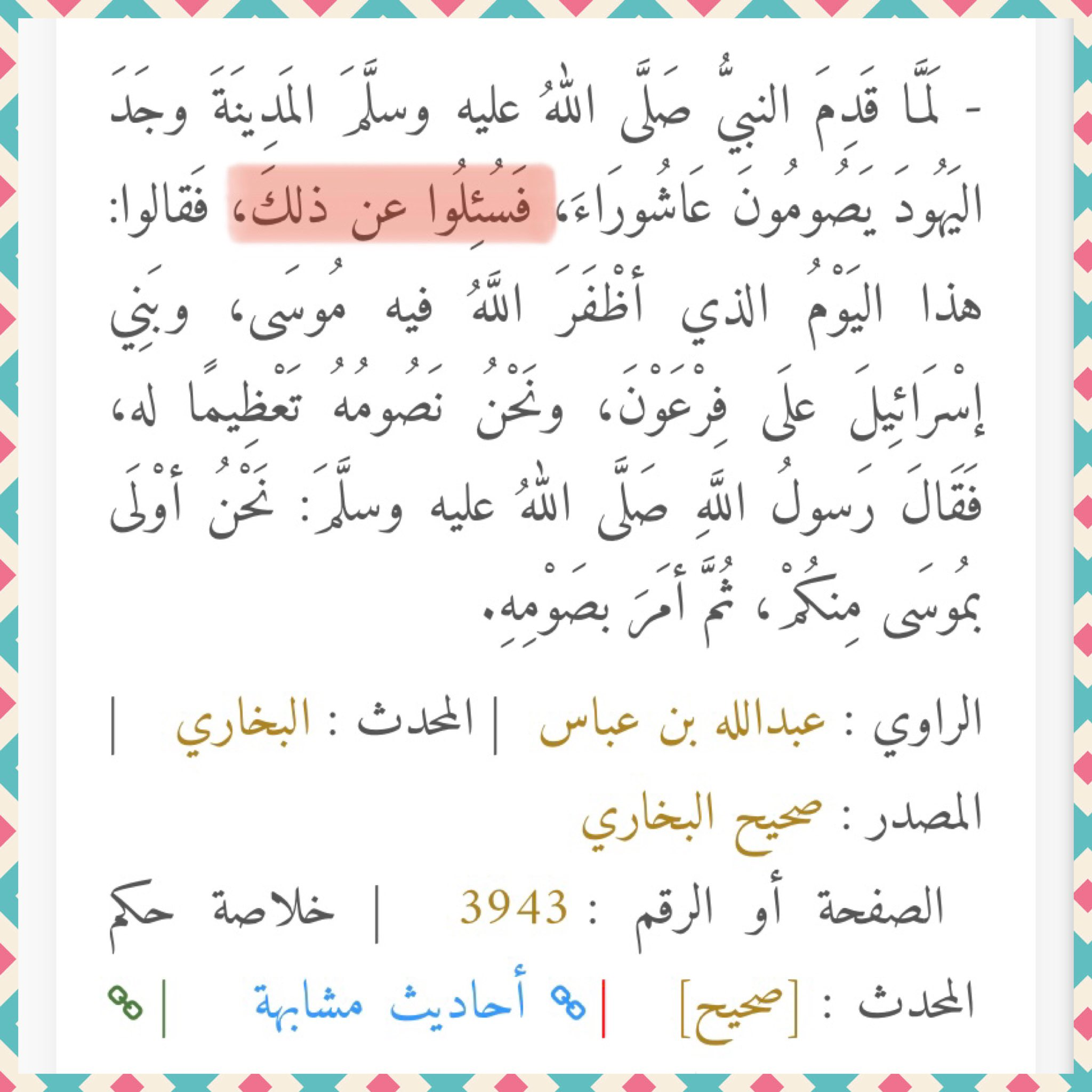
- {O People of the Scripture, why do you argue about Abraham while the Torah and the Gospel were not revealed until after him? Then will you not reason?}
- {All food was lawful to the Children of Israel except what Israel had forbidden to himself before the Torah was revealed. Say, “Then bring the Torah and recite it, if you should be truthful.”}
- {And the Jews say, “The hand of God is chained.” Chained are their hands, and they are cursed for what they said.}
- {And the Jews and the Christians say, “We are the children of God and His beloved.” Say, “Then why does He punish you for your sins?”}
- {Indeed, they have disbelieved who say, “God is the Messiah, the son of Mary…”}
- {Indeed, they have disbelieved who say, “God is the third of three,” while there is no god except one God.}
But that never happened.
Third — Did He Learn from the Arabs of Mecca?
This charge is self-evident in its impossibility:
- The people of Mecca (an illiterate nation) are pagans — too ignorant to possess all the facts that expose or refute what the People of the Book have in their holy books
- Although it is possible that the people of Mecca were aware of some of the stories of the previous prophets, this awareness could not have gone beyond the level of general news such as names and places, without specifying precise details
- The people of Mecca admitted their ignorance of these stories and news, and the Qur’an made this fact an argument for its divinity
“And they said, ‘Legends of the ancients which he has written down, and they are dictated to him morning and evening.’”
The people of Mecca did not dare to say that he was the one who wrote them. These are copious stories that are dictated to him throughout the day — a difficult task that the people of Mecca are not capable of, as it is not part of their culture.
The Qur’an — as a historical witness to that era — mentions the fact that Muhammad’s people were ignorant of that knowledge:
- {These are some of the news of the unseen which We reveal to you, [O Muhammad]. You knew them not, nor did your people, before this.}
- {This is from the news of the unseen which We reveal to you, [O Muhammad], and you were not with them when they decided upon their plan while they were plotting.}
- {And you were not on the western side when We decreed the matter to Moses, nor were you among the witnesses.}
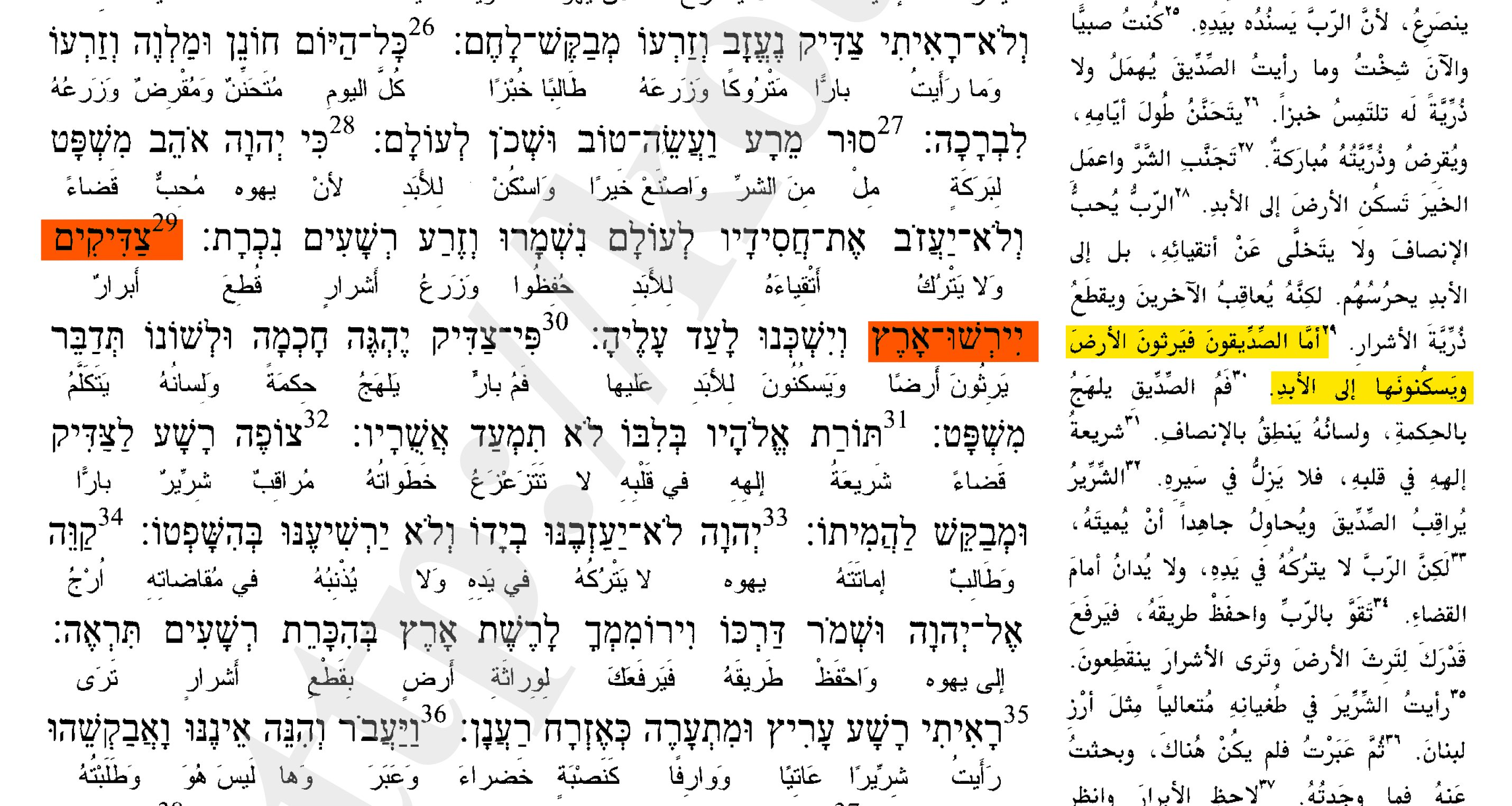
Surat Al-Anbiya, verse 105: “And We had already written in the Psalms, after the remembrance, that the earth will be inherited by My righteous servants.”
This is exactly what was stated literally in Psalm 37, verse 29: “The righteous will inherit the earth.”
It is interesting here that Imam al-Tabari mentioned the difference of opinion among early Muslim scholars in interpreting this verse — most of them not even knowing that the Psalms was the book of David ﷺ. Although the Qur’anic text is clear: {And We gave David the Psalms}.
This indicates the extreme difficulty that existed at that time in getting to know the holy books of the People of the Book. If Muslim scholars in the time of the spread of scriptural knowledge could not locate this small part in the Holy Book — then how could Muhammad ﷺ, the illiterate, who lived in an environment that did not know scriptural knowledge? Unless it was revelation.
Fourth — The Accusation of “Al-Jabr” the Roman Blacksmith
The infidels of Quraysh accused the Prophet Muhammad ﷺ of learning from a Christian slave who worked as a blacksmith in Mecca, named “Al-Jabr.”
How can a foreigner taste the eloquence of this revelation, let alone recite it, let alone be a teacher of it?
We reject this possibility for several reasons:
-
Al-Jabr was a Roman Christian blacksmith — a simpleton at heart whose tongue is foreign and whose reading is nothing more than gibberish that neither Muhammad ﷺ nor any of his people could understand. Is it possible that this ordinary foreigner was the teacher of a Prophet whose book revealed the subtle secrets of the Jewish and Christian religions, as well as truths that the People of the Book concealed from people?
-
If Al-Jabr had been Muhammad’s teacher, he would not have hesitated to announce this before the Quraysh crowd — because he would thereby secure favor with the enemies of this prophet whose increasing followers began to threaten the interests of the Arab tribe.
-
The polytheists’ statement — “It is only a human being who teaches him” — did not come because they truly believed that this Roman youth was the one who taught Muhammad ﷺ. Rather, the polytheists uttered this statement because they knew that what Muhammad ﷺ brought, especially regarding the stories of the prophets and the history of past nations, could not have come from an illiterate Arab. Since there were no scholars in Mecca, the people of Mecca had no way to pass on the slander other than attributing this knowledge to a Christian boy in whom two conditions were met:
- (a) He must have been a resident of Mecca, so that it can be said that he used to meet Muhammad ﷺ and dictate to him morning and evening
- (b) He must be from a different race or religion, so that they may attribute to him knowledge that they do not know — or even that he does not know
It was a compulsion on the part of the people, not a choice.
Final Conclusion
- Since the Prophet ﷺ did not directly review the previous books — as attested by his enemies
- And since he did not learn at the hands of the scholars of the People of the Book — as attested by his enemies
So the One who taught the illiterate Prophet ﷺ is the Master, the All-Knowing of what happened in ancient times and past news. He is the Witness and the Watcher.
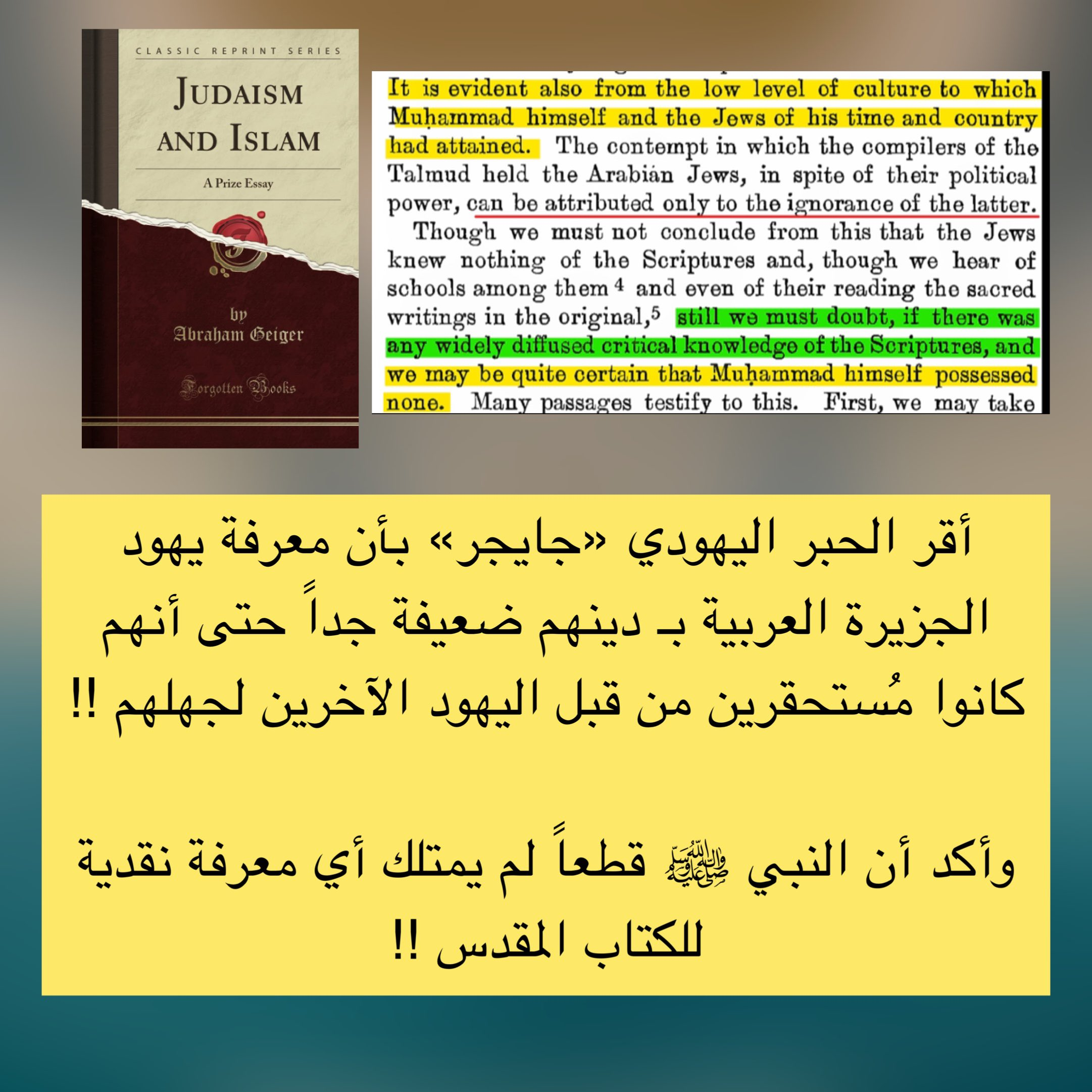
Additional Quotes from Orientalists
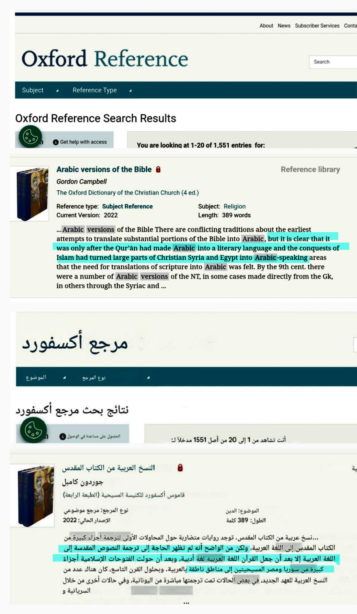
More Additions
Footnotes & References
- Sahih Al-Bukhari, Book of Interpretation of the Qur’an, Chapter: Say: We believe in God and what was revealed to us, Hadith No. 4485
- Sahih Al-Bukhari, Book of Testimonies, Chapter: The polytheists are not asked about the testimony, and others, Hadith No. 2685
- Arthur Vobus: Professor of New Testament and Early Church History at “The Lutheran School of Theology at Chicago.” He has a special interest in Syriac and early Christian studies.
- Bruce Metzger (1914–2007): One of the leaders of textual criticism studies of the New Testament. He has various publications on various topics in academic studies related to the New Testament. He participated in preparing the most important standard Greek text of the New Testament in the twentieth century. He also participated in editing and commenting on many English translations of the New Testament. His writings are considered basic references in specialized studies in Western universities.
- Bruce Metzger, The Bible in Translation, Grand Rapids: Baker Academic, 2001, p. 46
- Thomas Patrick Hughes, The Dictionary of Islam, London: WH ALLEN, 1895, pp. 516–140
- Albert Estero, ‘Abdullah Muslim Ibn Qutayba’s Biblical Quotations and their Source: An inquiry into the earliest existing Arabic Bible Translations, p. 236, manuscript
- The previous source, pp. 7–17
- The Faith of Islam, p. 13
- Yusuf Riyad, The Book of the Inspiration of the Holy Book, p. 84
- Wahib Jurji Kamil, Introductions to the Old Testament
- Les bibles et les initiateurs religieux de l’humanité, V 6, p. 907
- A General Idea about the Holy Book, p. 120
- A General Idea about the Holy Book and the Ancient East
- St. Tisdall, The Original Sources of the Qur’an, London: Society For The Promotion Of Christian Knowledge, 1911, p. 140
- The Key to the New Testament, Part One, p. 27
Was Prophet Muhammad Illiterate? Non-Islamic Sources on the Unlettered Prophet
...not a historical conclusion. It is a polemical fantasy built on weak assumptions. Related...
...orrowing and exposure to those cultures. To Read in Detail TO READ IN DETAIL [[Is the Holy Quran Taken From the Bible_(Academical RESPONSE]]
Illiteracy + no Bible: No Arabic Bible existed. No Syriac was readable by the Prophet ﷺ. 9. Silence of the accused: Jabr and Yasar never made this claim — even though it would have benefited them...
...ment-writers-quote-from-the-haggadah-part-2|New Testament Writers Quote From the Haggadah Part 2]]
...ment-writers-quote-from-the-haggadah-part-2|New Testament Writers Quote From the Haggadah Part 2]]
...ment-writers-quote-from-the-haggadah-part-2|New Testament Writers Quote From the Haggadah Part 2]]