Islam Borrowed the Number of the Five Daily Prayers From Zoroastrianism
-
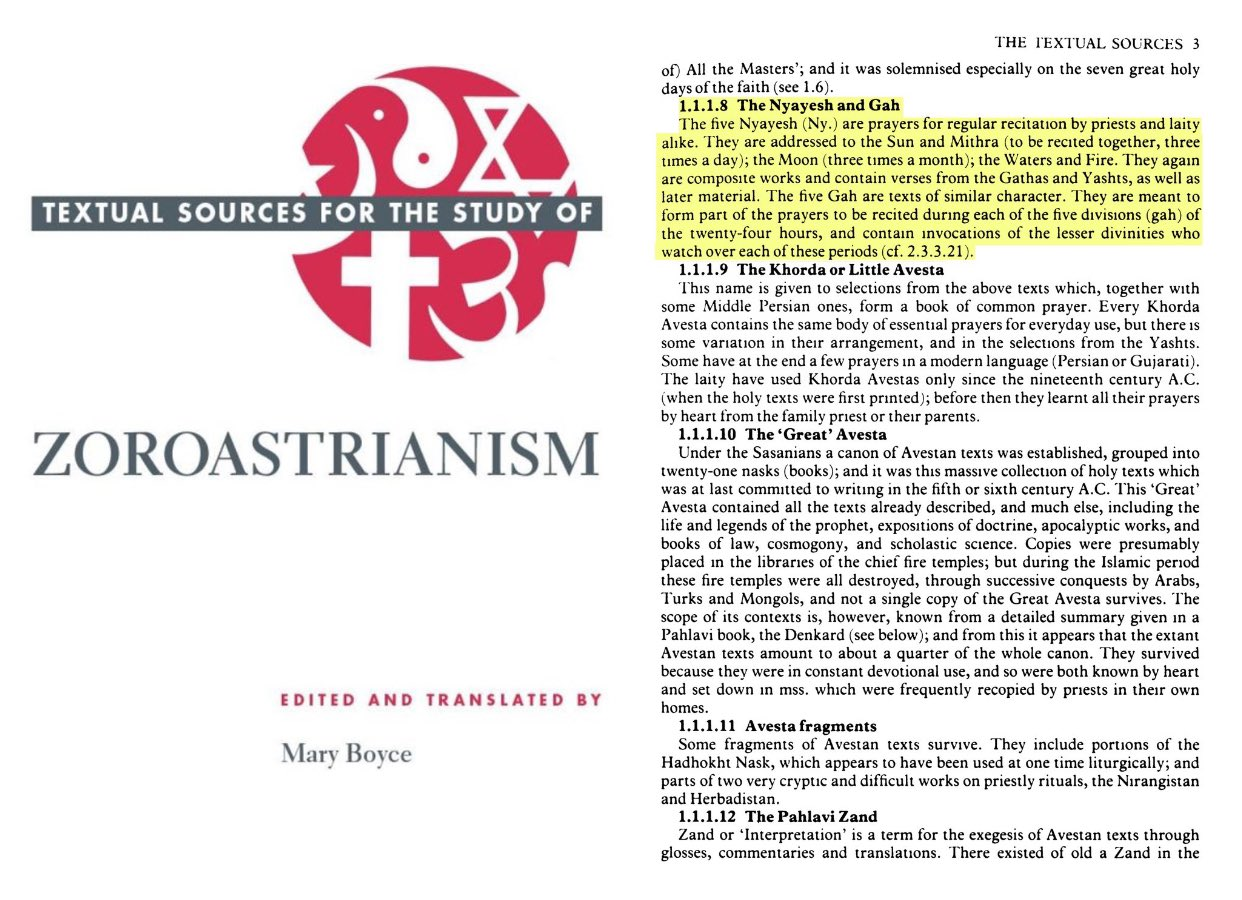
The number of their prayers, although five, is reduced to four in the winter.
We read from the same book, Zoroaster and Zoroastrianism, page 57:
The five prayers are known to the Magi as Guhs, but they are reduced to four prayers in the winter and remain the same in the summer -
The agreement on the daily number of prayers does not require quotation because both religions depend on the movement of the sun, night and day (with no agreement on the times). This happened with other religions, such as the agreement of the Mandaeans with the Jews on three prayers per day.
We read from the index of Ibn al-Nadim, Part Nine, First Section:
((And they said that the sky moves with voluntary and rational movement.
They are required to pray three times each day, the first of which is half an hour or less before sunrise, and ends with sunrise. It consists of eight rak’ahs and three prostrations in each rak’ah. The second ends with the sun’s zenith, which consists of five rak’ahs and three prostrations in each rak’ah. The third is like the second, and ends with sunset. These times were only made obligatory for the three pegs, which are the peg of the east, the peg of the middle of the sky, and the peg of the west. None of them mentioned that it is obligatory to pray at the time of the peg of the earth .
We read from the Jewish Encyclopedia
It may be inferred that organized service was sufficiently well established in the days of the prophets of the eighth and seventh centuries to have drifted into conventionality (comp. Isa. i. 15, xxix. 13, Iviii. 5).
That Daniel “kneeled upon his knees three times a day, and prayed, and gave thanks before his God” (vi. 10), and that Ps. lv. 17 speaks of prayer “evening and morning, and at noon,” would indicate the institution of triple daily services, though
We read from the Book of Daniel, Chapter 6,
10: “And when Daniel knew that the writing was signed, he went to his house, and his windows were open in his upper room toward Jerusalem, and he knelt down on his knees three times a day, and prayed, and gave thanks before his God, as he did before.”
The times of prayer among the Jews are the morning, the middle prayer (which extends from noon to afternoon), and the sunset, except for the days of fasting, when there is an additional prayer.
We read from the Jewish Encyclopedia,
R. Johanan says one may pray all day. Others are of the opinion that the permissible number of prayers is limited to three, and on a fast-day to four, including Ne’ilah (Ber. 21a, 31a).
R. Samuel b. Naḥamani says the three prayers are for the three changes in the day: sunrise, noon, sunset (Yer. Ber. iv. 1). It is advised that Shaḥarit, Minḥah, and Ma’arib should be recited; Nevertheless, the Ma’arib prayer is not obligatory.
https://www.jewishencyclopedia.com/a…s/12331-prayer
…
The middle prayer for them combines the noon and afternoon prayers, unlike Islam, where there is a noon prayer and an afternoon prayer, except when traveling, in which case it is permissible for a Muslim to combine them.
https://www.jewishencyclopedia.com/articles/12331-prayer
{Embed}
https://www.jewishencyclopedia.com/articles/12331-prayer
PRAYER - JewishEncyclopedia.com
Complete contents the 1906 Jewish Encyclopedia.
We read from the Jewish Encyclopedia
Minḥah proper, otherwise known as “Minḥah Gedolah” (major) begins at six and one-half hours of the day (12.30 PM); “Minḥah Ḳeṭannah” (minor), at nine and one-half hours of the day (3.30 PM); and they both end at sunset (6 PM). “Pelag” (split or semi-) Minḥah divides the “Minḥah Ḳeṭannah” in half at ten and three-quarter hours of the day (4.45 PM; Ber. iv. 1, 26a).
- The claim of plagiarism here is contradicted by what we mentioned about the change and distortion of Zoroastrianism and its influence by Christianity and Islam.
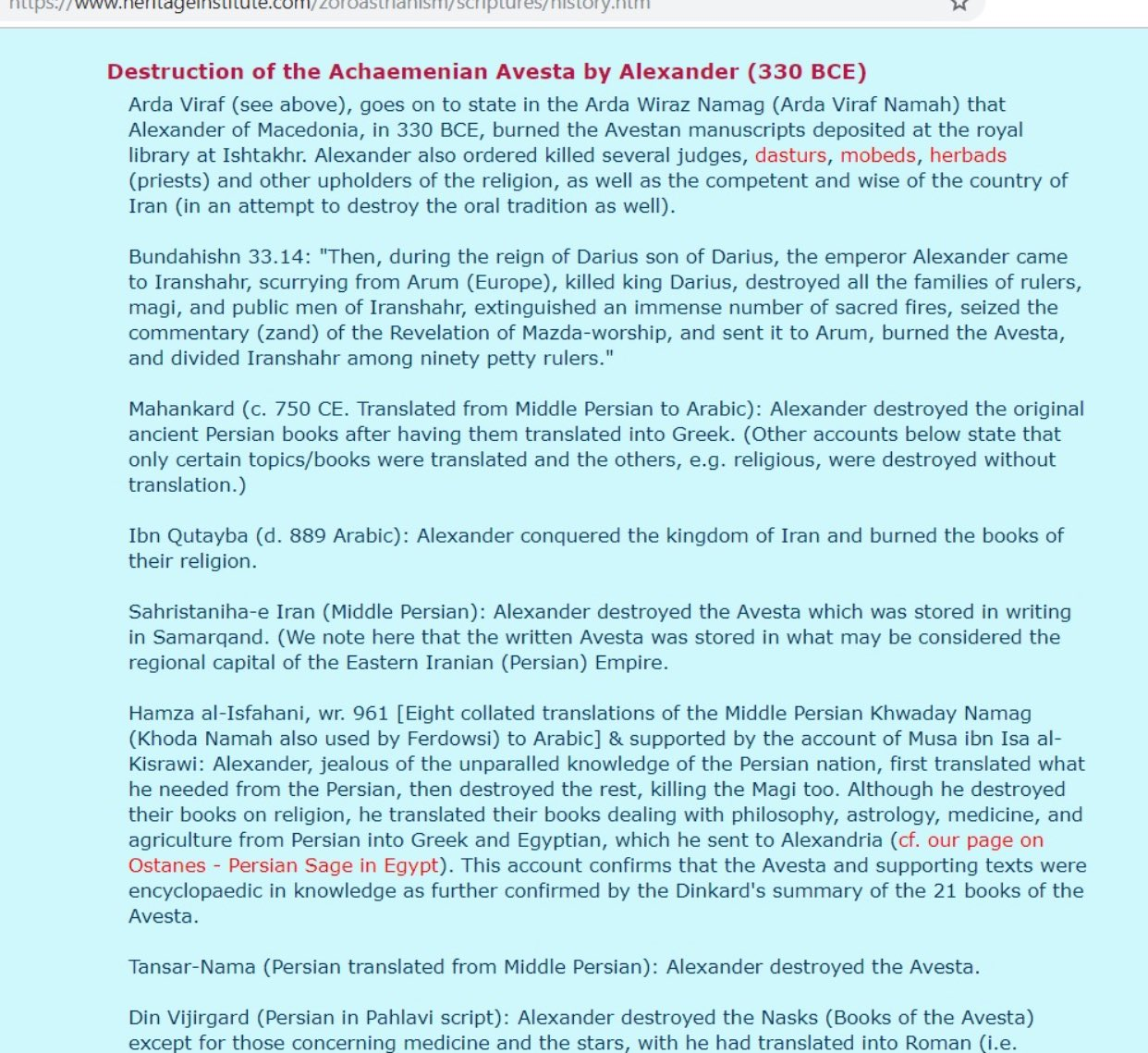
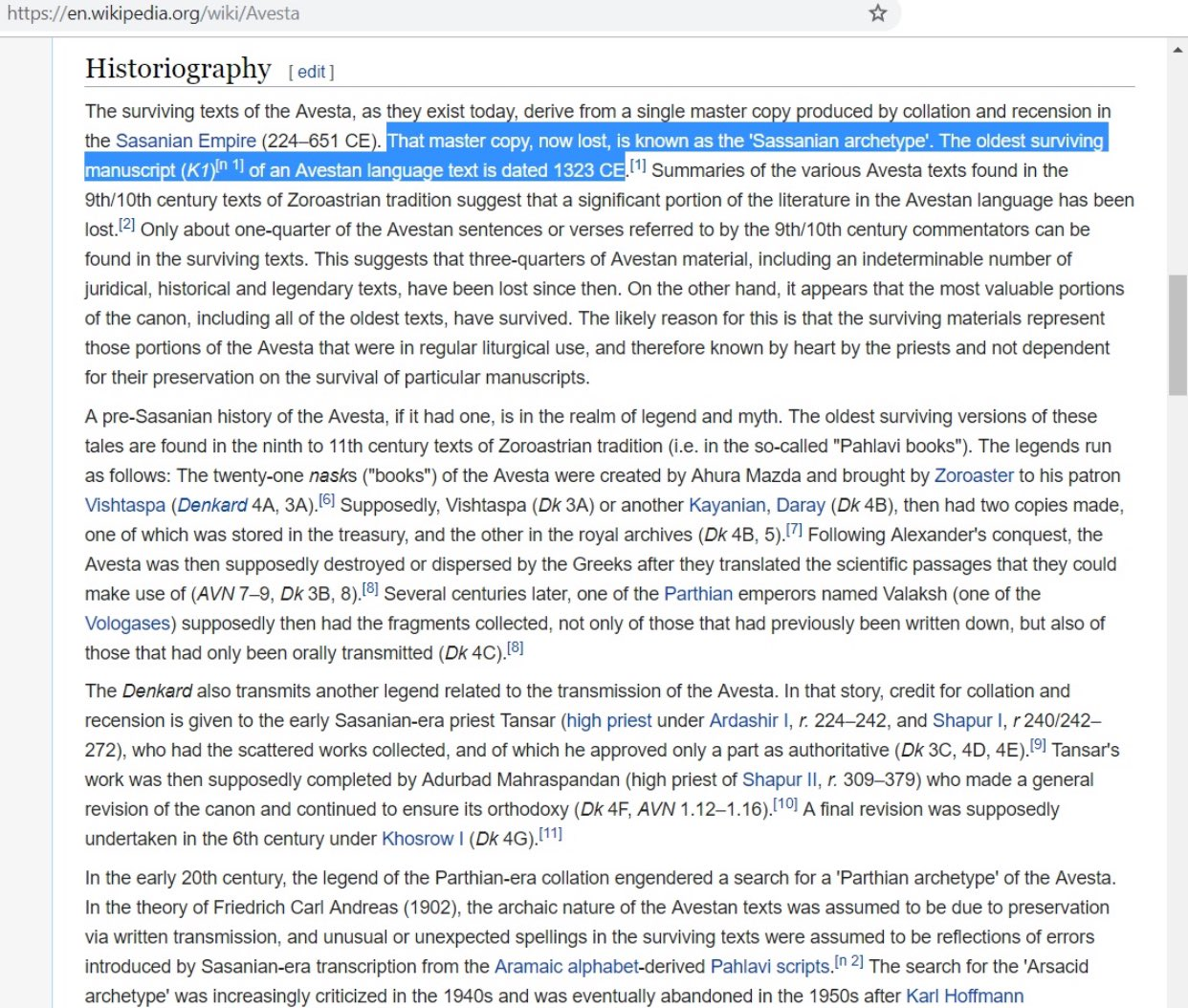
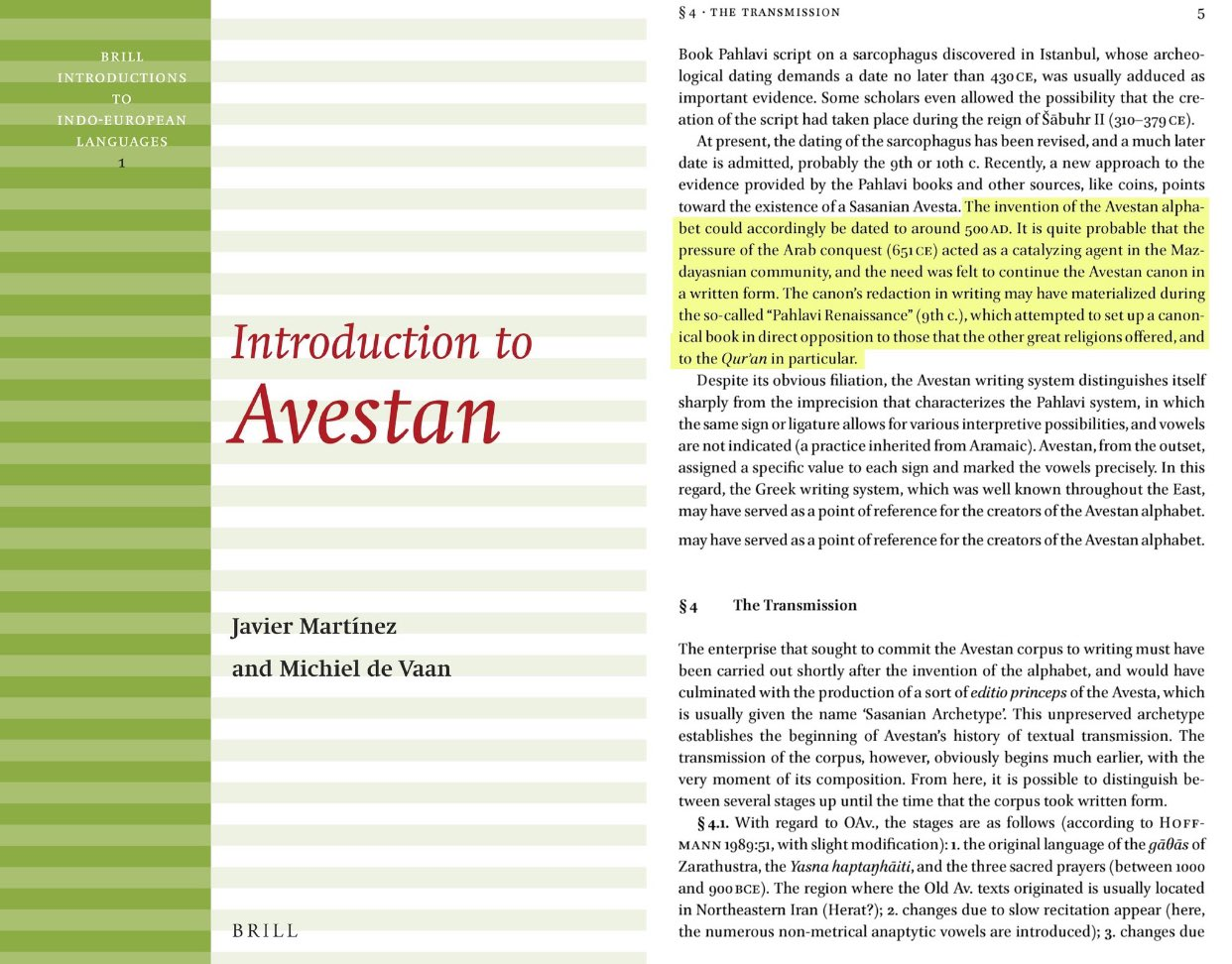
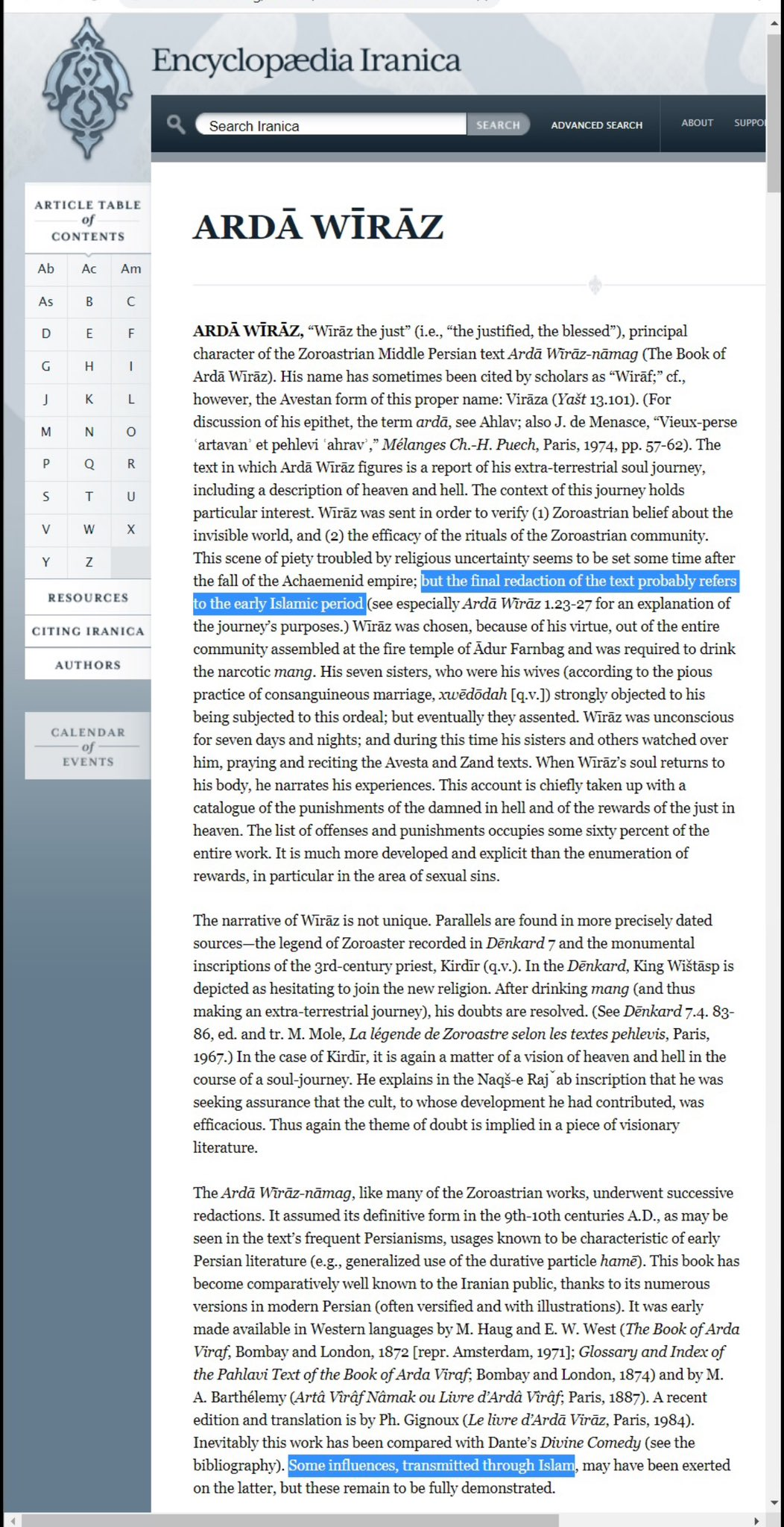
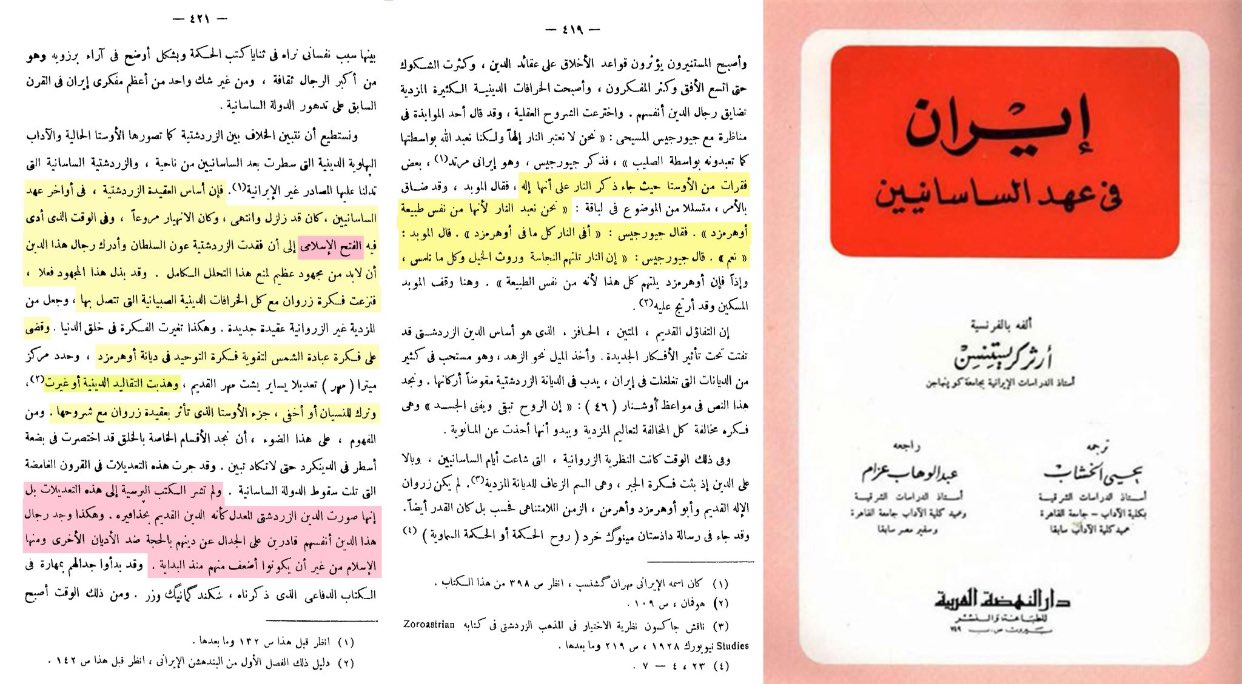
The oral transmission of the Avesta was the origin of its transmission from the third century BC (after Alexander the Great burned the Zoroastrian books, especially those in Estakhr) until the beginning of its re-writing in the Sassanid period (the third century AD). During that period and what followed, the Avesta and Zoroastrianism as a religion continued to change with the change in the environment surrounding the Zoroastrian religion, sometimes receiving some teachings and concepts from Christianity and sometimes from the Mandaeans. Thus, it is not unlikely that it received the idea of the Sirat from Islam and entered it into the Qatha.
We read from the Iranian Encyclopedia: (
(
At the time of Alexander’s conquest, the Avesta was destroyed or dispersed by the Greeks, who translated into their own language the scientific passages of which they could make use. The first attempt at restoring the Avesta was made under the Arsacids, when a king Valaxš had the fragments collected, both those which had been written down as well as those which had been transmitted only orally
. This undertaking was carried on in four phases under the Sasanians: Ardašēr (226-41) ordered the high priest Tansar (or Tōsar) to complete the work of collecting the fragments that had begun under the Arsacids and gave official protection for this undertaking; Šāpūr I (241-72) initiated a search for the scientific documents that had been dispersed by the Greeks and the Indians and had them reintroduced into the Avesta;
under Šāpūr II (309-79) Ādurbād ī Mahraspandān made the general revision of the canon and ensured its orthodox character against sectarian divergences by submitting himself successfully to the ordeal by fire at the time of a general controversy; Finally, a revision of the Pahlavi translation took place under Ḵosrow I (531-79)…
In the last ten years a general consensus has gradually emerged in favor of placing the Gāthās around 1000 BCE and assuming that the composition of the best texts of the recent Avesta is more or less contemporary with the Old Persian monuments. The Vidēvdād seems to be more recent than the Yašts or the Yasna and it has also been suggested that it belongs to a particular liturgical school; however, no linguistic or textual argument allows us to attain any degree of certainty in these matters.
The earliest transmission of the Avesta must have been oral only, since no Iranian people seem to have used writing in early times.
Only with the invention of the cuneiform Old Persian script (probably under Darius) would it have been possible to codify the religious texts. However, there is no evidence that the Achaemenids actually did this.
Until the advent of the Sasanians, and even under their regime, Iran was a country in which written documents were conspicuously rare
, so as far as the religious tradition is concerned, it fully faithful carries on the old Indo-Iranian tradition which established the preeminence of a precise and careful oral textual transmission and made learning by heart of the sacred texts an essential element of an adequate cult.))
http://www.iranicaonline.org/articles/avesta-holy-book
We read from the book Zarathustra and Zoroastrianism, pages 91-92:
((
But the catastrophe that befell them was the burning of the city of Estakhr, the spiritual capital of the country, by Alexander, and the loss of most of the Zoroastrian heritage… It was completely burned and no one was able to save anything from it. Most of the libraries and houses of knowledge were lost due to Alexander’s arrogance and his extreme disregard for human heritage, including the books of the Avesta with their explanations, commentaries, and interpretations.
{Embed}
http://www.iranicaonline.org/articles/avesta-holy-book
Welcome to Encyclopaedia Iranica
The Encyclopaedia Iranica is a comprehensive research tool dedicated to the study of Iranian civilization in the Middle East, the Caucasus, Central Asia, and the Indian subcontinent
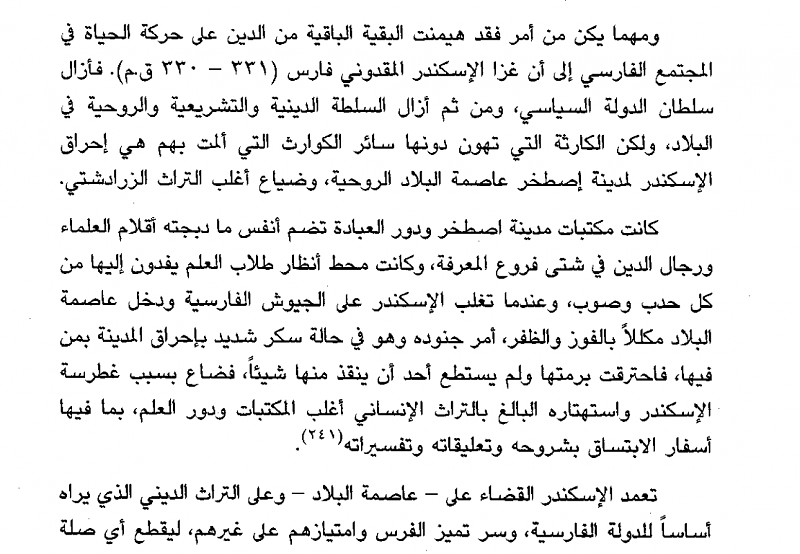
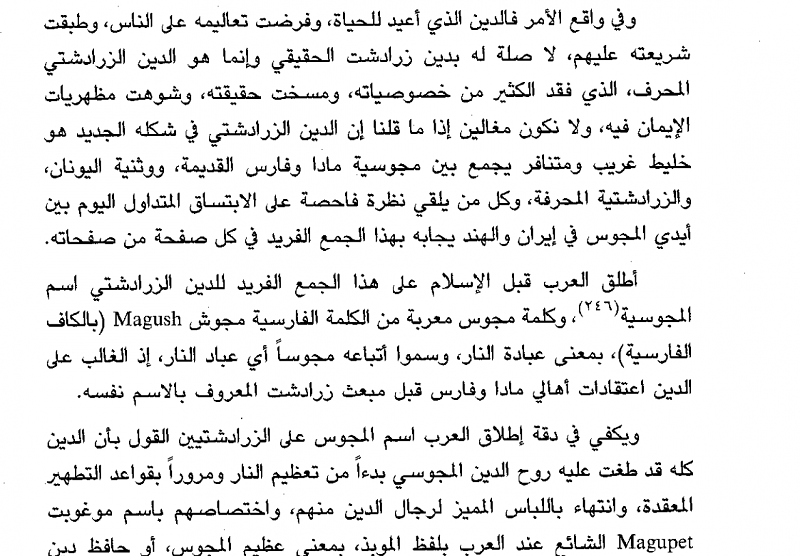
The writer continues, commenting on the Sassanian collection of the Avesta and Zoroastrian laws and the influence of that collection on the surrounding religions and environments on page 93:
((
In fact, the religion that was brought back to life, and its teachings were imposed on the people, and its law was applied to them, has no connection with the true religion of Zoroaster, but rather it is the distorted Zoroastrian religion that has lost many of its characteristics, its truth has been distorted, and the manifestations of faith in it have been disfigured. We would not be exaggerating if we said that the Zoroastrian religion in its new form is a strange and discordant mixture that combines the Zoroastrianism of ancient Mada and Persia, the paganism of Greece, and distorted Zoroastrianism. Anyone who takes a close look at the Avesta circulating today among the Zoroastrians in Iran and India will be confronted with this unique combination on every page of it.
The extant Avesta is all that remains of a much larger body of scripture, apparently Zoroaster’s transformation of a very ancient tradition
.
The voluminous manuscripts of the original are said to have been destroyed when Alexander the Great conquered Persia. The present Avesta was assembled from remnants and standardized under the Sāsānian kings (3rd–7th century)
AD
https://www.britannica.com/topic/Avesta-Zoroastrian-scripture
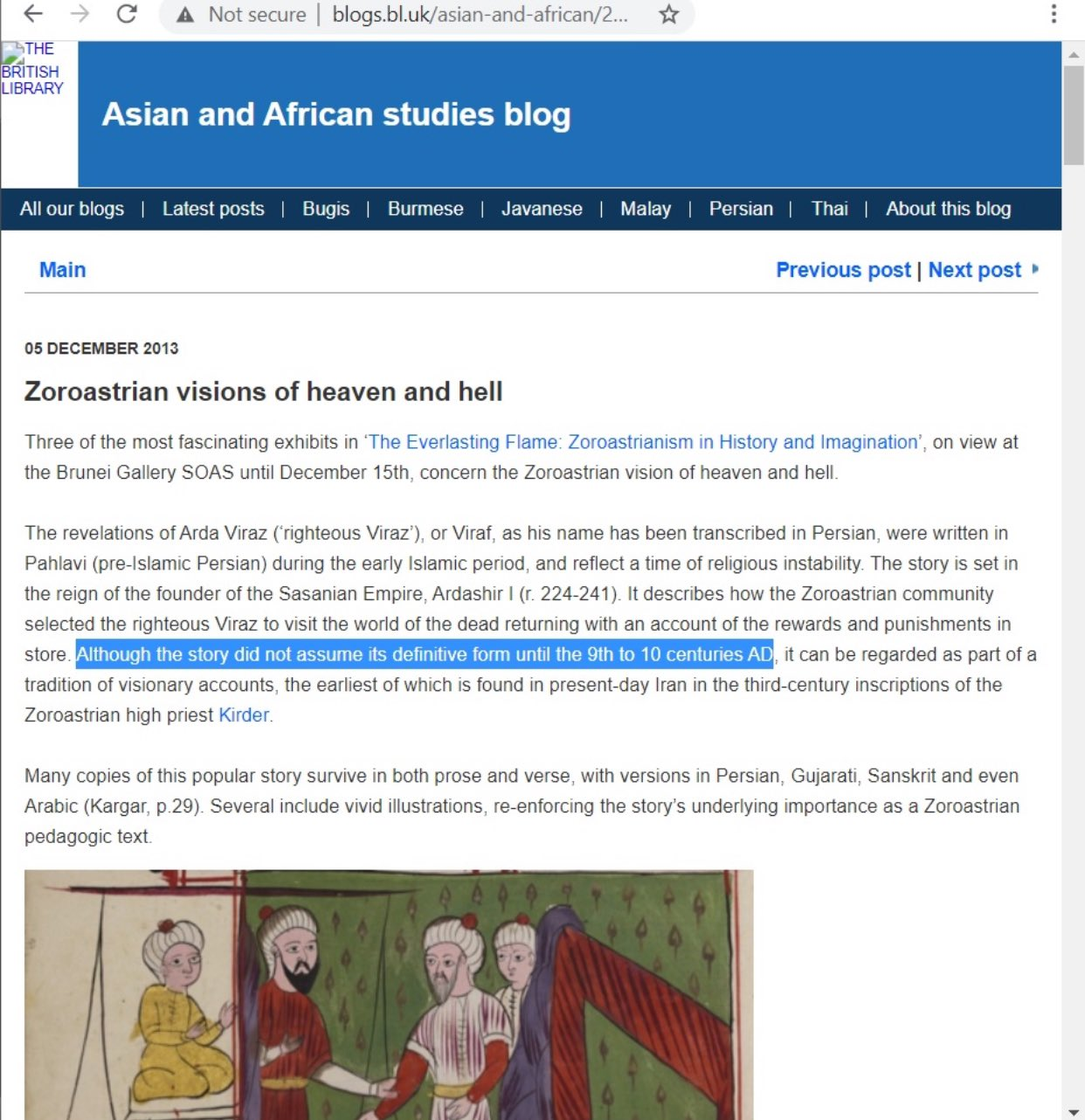
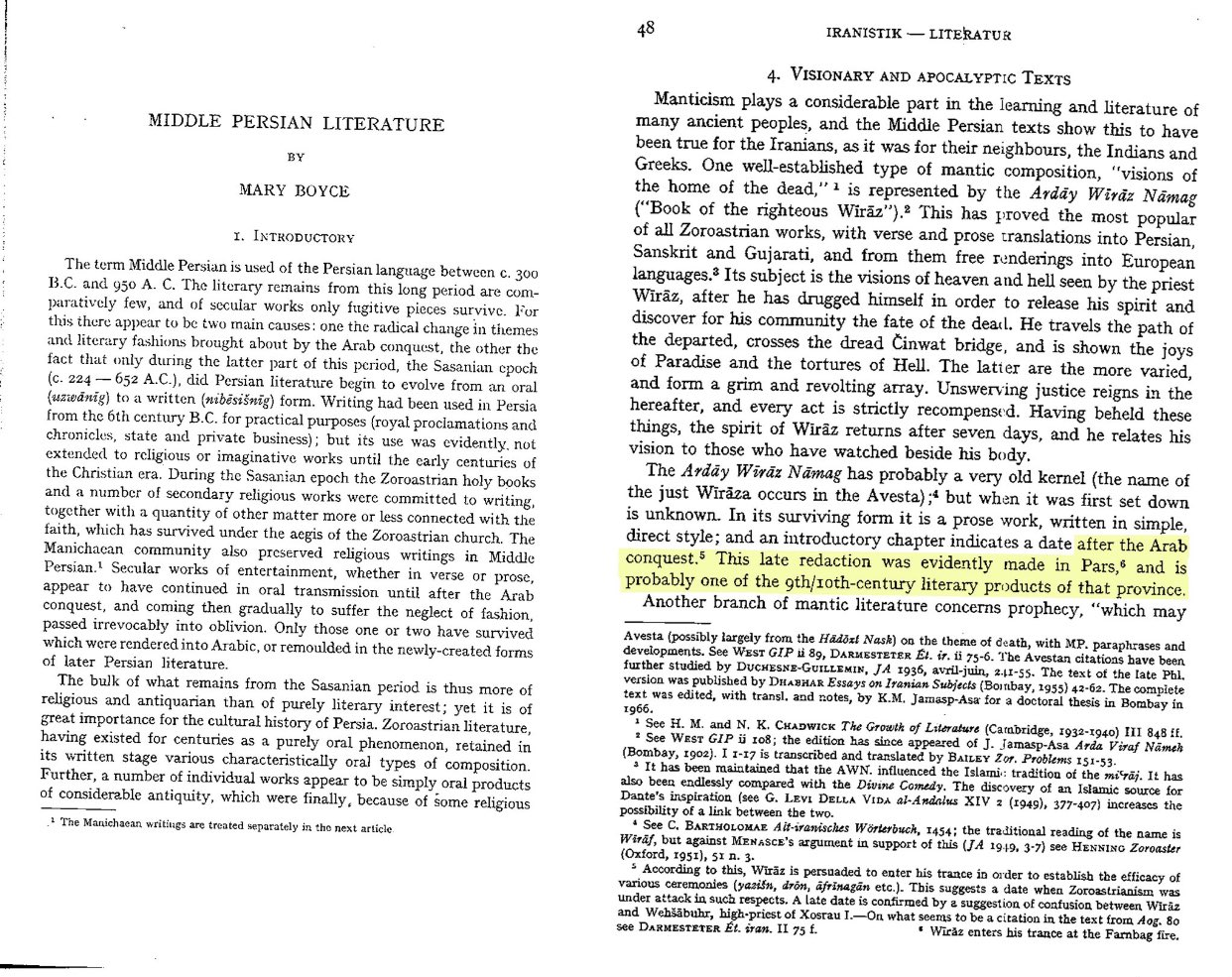
Secularists and atheists always embarrass themselves when discussing religion. The story of Mi’raj was taken from Islam and only written in the 9th and 10th centuries. Zoroastrianism divides the day into five parts but only has three daily prayers. While it’s true that Zoroastrianism borrowed heavily from Islam after the conquest, the number of prayers wasn’t one of them.
{Forwarded Message}
The original Avesta was burned during Alexander’s reign, and its oldest surviving manuscripts date back to 1288 or 1323—over 500 years after Islam. Zoroastrianism suffered after the conquest, not because of persecution, but due to the naivety of its beliefs compared to Islam. In response, its priests modified it by borrowing from Islamic teachings.
Originally sent: 3/11/2025 10:53 AM