Did the Qur’an Say the Sun Literally Sets in a Muddy Spring? Qur’an 18:86 Explained
Did the Qur’an Say the Sun Sets in a Muddy Spring? Full Refutation of the Dhul-Qarnayn Objection
This article responds to the objection that Qur’an 18:86 teaches that the sun literally sets inside a muddy or hot spring.
The response is built on Qur’anic context, Arabic usage, classical tafsir, hadith analysis, and the common visual experience of seeing the sun “set” into a body of water from the observer’s perspective.
Table of Contents
The Verse in Question
{Until, when he reached the setting of the sun, he found it setting in a muddy spring, and he found near it a people. We said, “O Dhul-Qarnayn, either you punish [them] or you adopt among them [a way of] goodness.”}
Al-Kahf / 86
The objection claims that the Qur’an made a scientific mistake by saying that the sun literally sets inside a spring.
- the wording of the verse,
- the perspective of Dhul-Qarnayn,
- classical tafsir,
- Arabic idiom,
- and the obvious visual reality that the sun appears to set into the sea, ocean, lake, or horizon from the observer’s viewpoint.
First Point: The Verse Has Two Valid Readings
Firstly, we would like to point out to the reader that it is read as both “a muddy spring” and “a hot spring,” because the reciters differed in its reading.
Some reciters from Medina and Basra read it as:
في عين حمئة
”in a muddy spring”
while a group of reciters from Medina and most reciters from Kufa read it as:
في عين حامية
”in a hot spring”
All of these readings are correct, according to the hadith of the Messenger of God, peace and blessings be upon him:
“This Qur’an was revealed in seven modes of recitation, so recite whichever is easiest for you.”
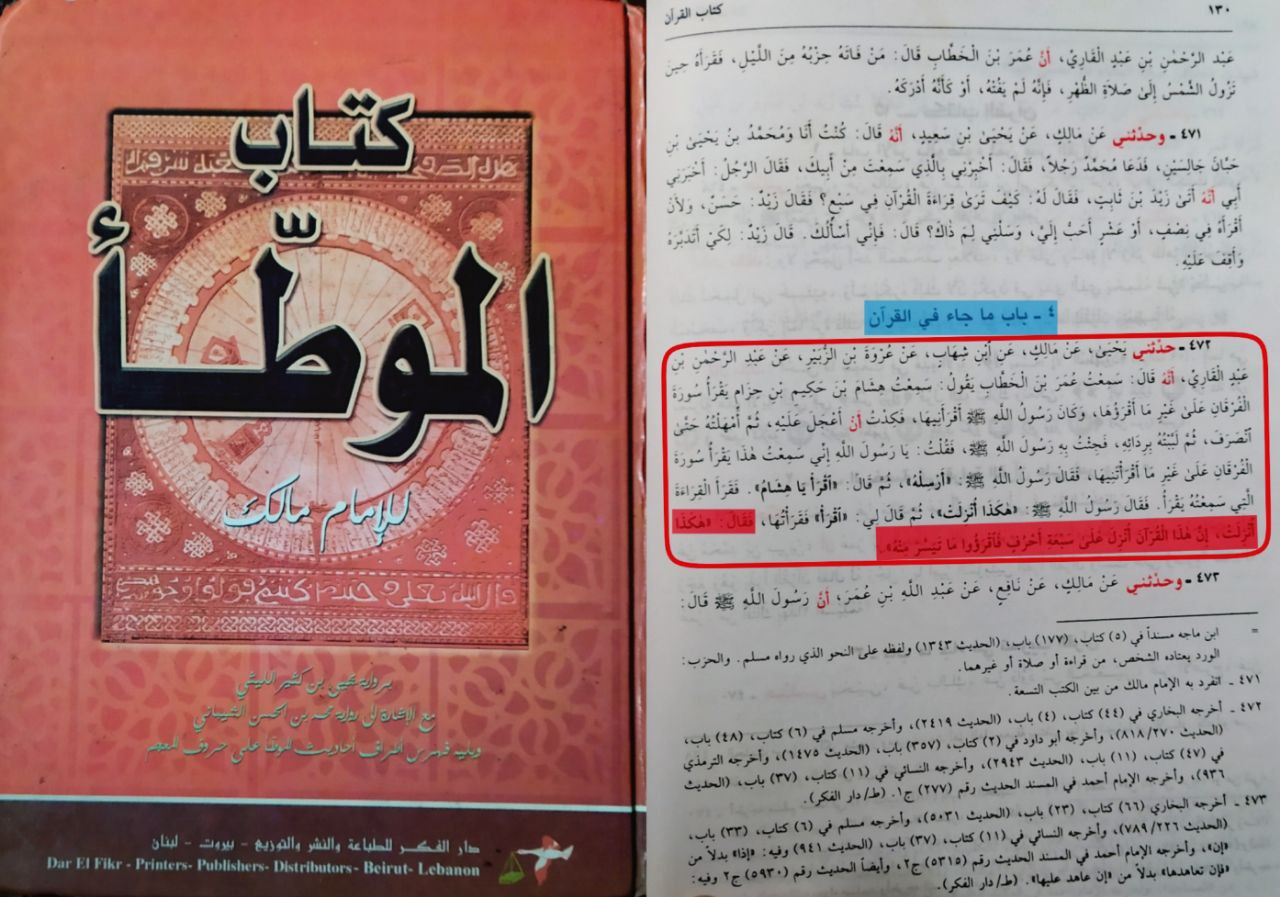
This scan supports the point that the verse has more than one valid qira’ah: one reading gives the meaningmuddy spring, while the other gives the meaning hot spring. The objection becomes weaker because it treats one wording as though it is the only possible reading and then forces a literal scientific meaning onto it.
Second Point: The Verse Describes What Dhul-Qarnayn Saw
Secondly: These verses from Surah Al-Kahf speak about Dhul-Qarnayn, that when he reached the west of the earth, he found the sun setting in a muddy spring:
“that is, setting in the surrounding sea, and this is the case for everyone who reaches its shore”
according to the interpretation of Ibn Kathir.
As is clear, God described the setting of the sun and his vision of it according to what Dhul-Qarnayn saw, that is, from Dhul-Qarnayn’s perspective of that scene.
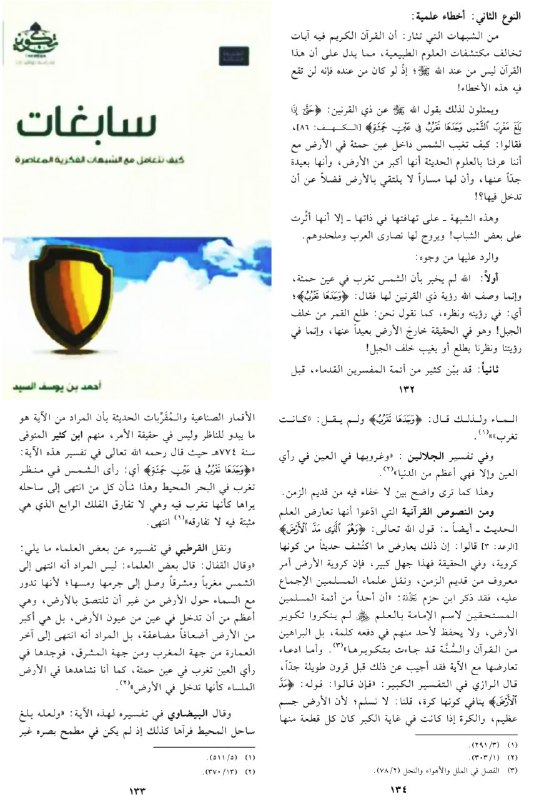
This scan supports the interpretation that Dhul-Qarnayn saw the sunas if it were setting into a body of water. The point is visual perspective, not a claim that the sun physically entered the spring.
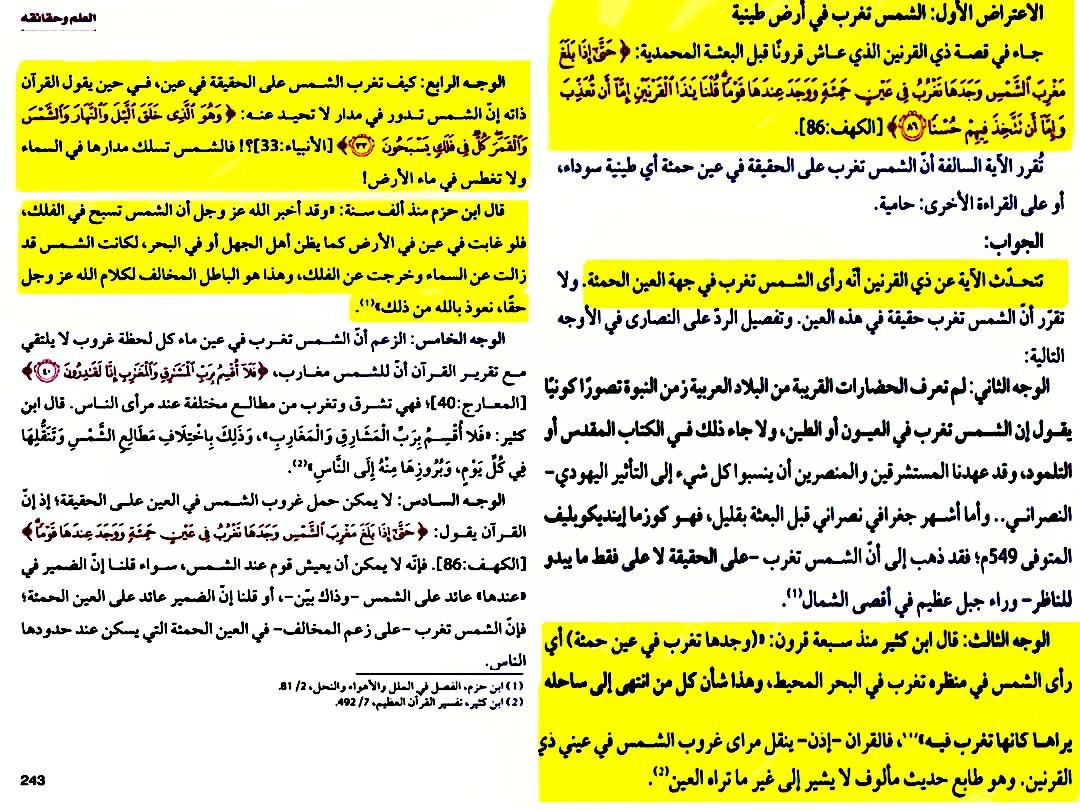
This scan continues the same tafsir argument: the verse reports Dhul-Qarnayn’s observation at the western limit he reached. It is not teaching astronomy.
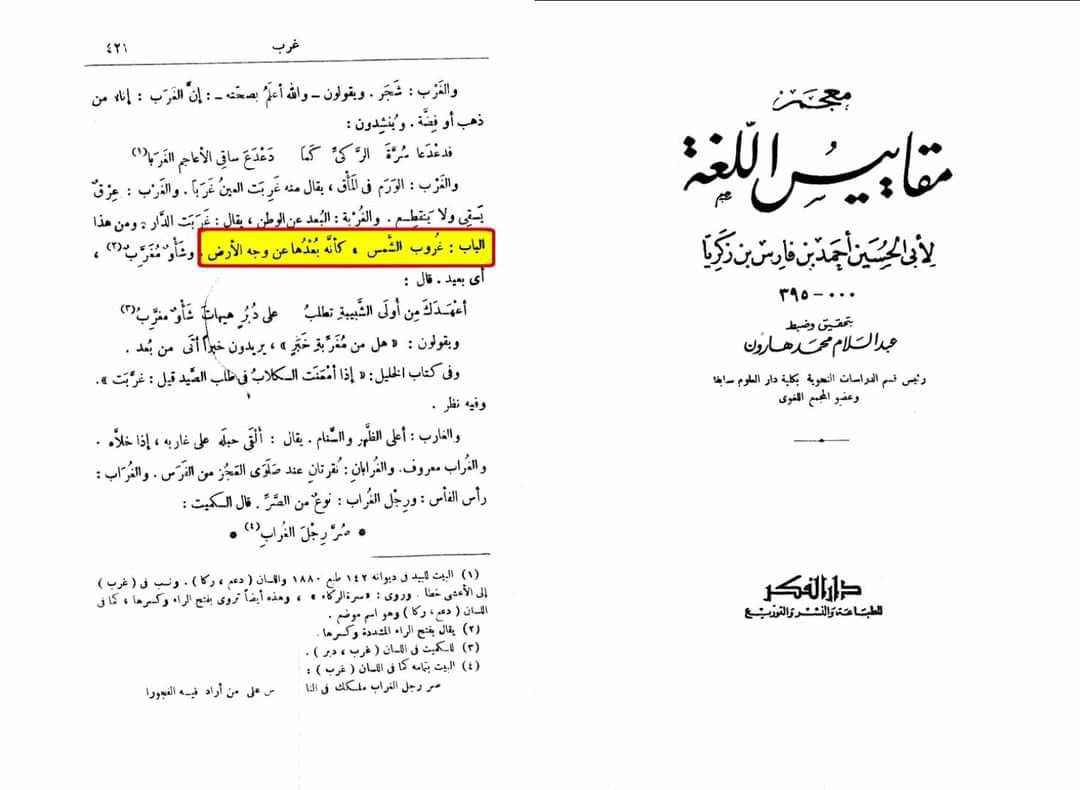
This scan reinforces the same explanation: the expression is tied to what appeared before Dhul-Qarnayn’s sight, just as people commonly say “the sun set into the sea” without meaning literal physical entry.
Third Point: Ka’b al-Ahbar and Isra’iliyyat
Thirdly: Ka’b al-Ahbar’s interpretation of the Isra’iliyyat, meaning Jewish traditions that entered the lexicon.
Ibn Kathir mentions that the statement by some commentators that the sun sets in a muddy spring is Ka’b al-Ahbar’s interpretation.
When Ka’b al-Ahbar was asked about the verse, he said:
“I find in our Torah that the sun sets in a muddy spring, and you know your Quran better.”
Some commentators then adopted this interpretation from Jewish books, and it is from the Isra’iliyyat.
A major mistake in this objection is treating Isra’iliyyat material as though it is the actual Qur’anic doctrine. That is sloppy argumentation.
Fourth Point: The Abu Dharr Hadith and Its Defects
Fourth:
”…Do you know where this sets? I said: Allah and His Messenger know best. He said: It sets in a hot spring.”
This is a hadith narrated by Abu Dharr from the Messenger of Allah, peace and blessings be upon him, who said that the sun sets in a hot spring.
This hadith has three defects:
First, al-Hakam ibn Utbah is the sole narrator of this hadith, and he is a mudallis, meaning one who practices tadlis in hadith transmission.
In this narration, he is the only one who mentions the phrase:
“sets in a muddy spring”
which is an Isra’iliyyat, as we have explained.
Al-Hakam ibn Utbah contradicts the other narrations from trustworthy narrators with this wording.
If a trustworthy narrator contradicts someone more trustworthy than him, his hadith is not accepted. So how can a mudallis contradict a trustworthy narrator?
He contradicts the general narrations from trustworthy narrators, which do not mention the addition of “muddy spring.”
Furthermore, he is the sole narrator of this hadith, and Sufyan ibn al-Husayn also transmitted it from him. Sufyan is also the sole narrator of this hadith from al-Hakam ibn Utbah.
This is the narration that al-Albani mistakenly authenticated, and scholars after him have discussed it, stating that it is not authentic.
These defects are sufficient to silence anyone who still claims that al-Albani authenticated this hadith.
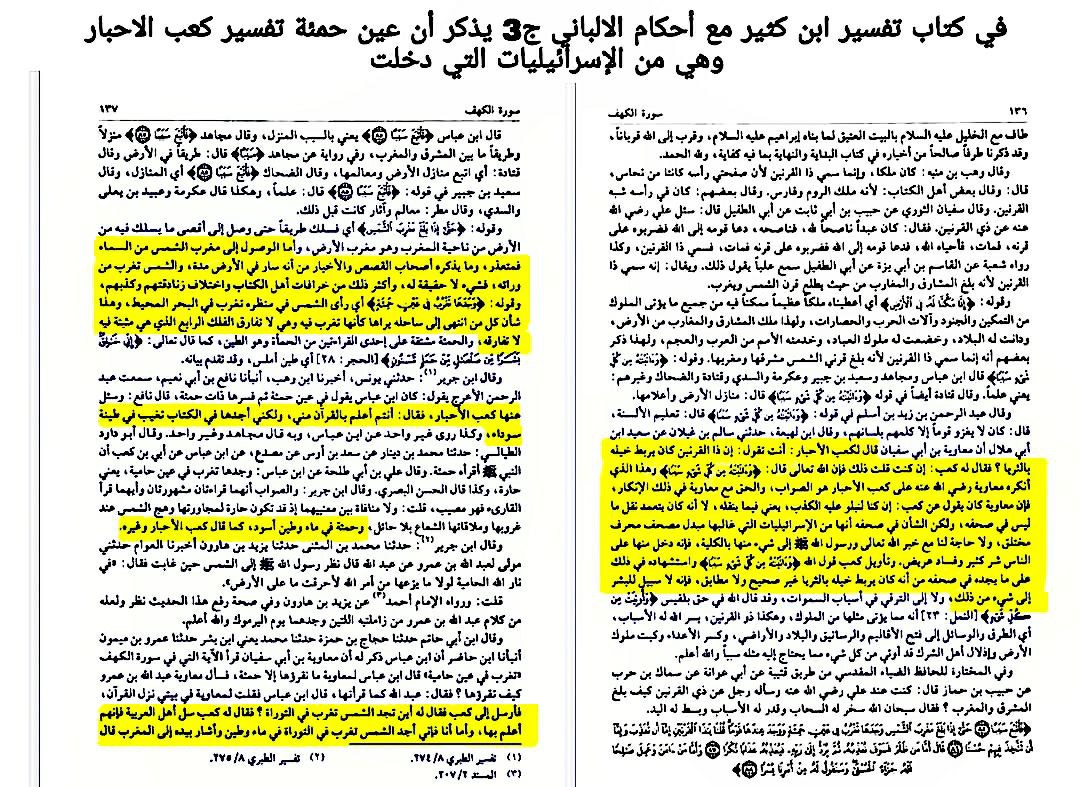
This scan is used for the hadith-analysis point. The argument is that the problematic wording is not established through the strongest route and is linked to a defective transmission.
Sun-prostrating-under-the-throne
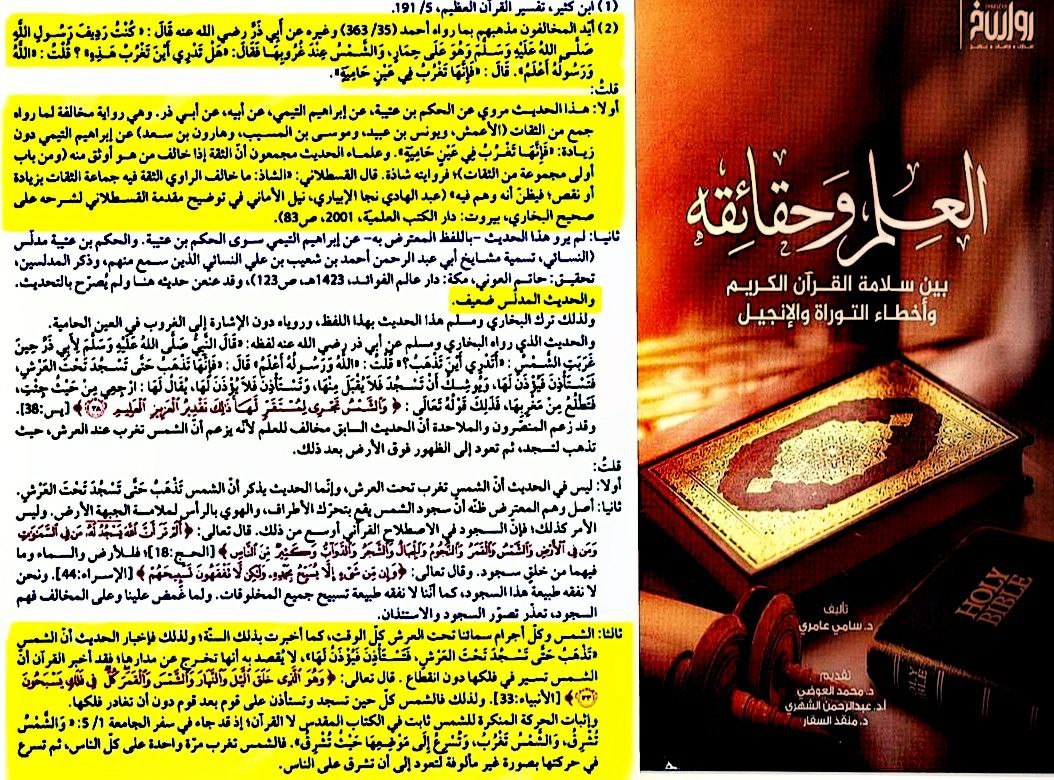
This scan introduces the related objection about the sun’s prostration under the Throne. The discussion is connected because objectors often combine the “muddy spring” claim with the hadith about the sun’s prostration.
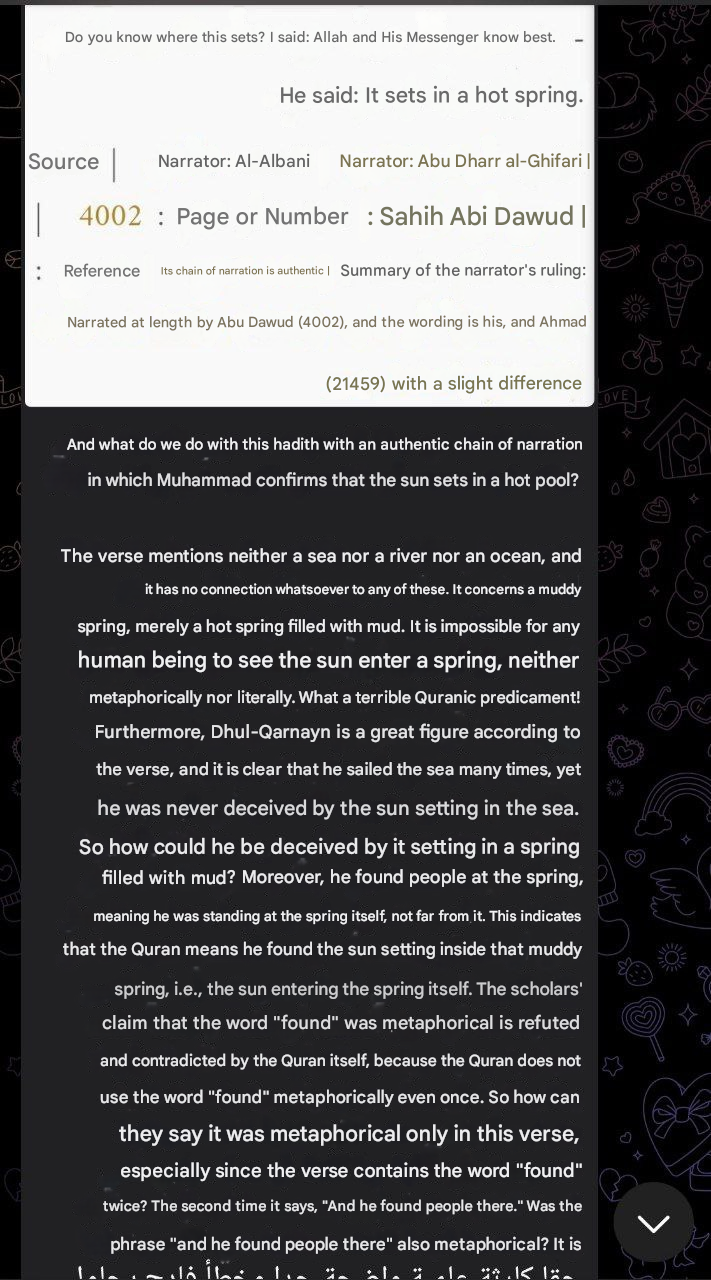
This scan continues the presentation of the objection. The response below separates the issues: the verse about Dhul-Qarnayn is about visual perspective, while the hadith about prostration concerns the sun’s submission to Allah, not a physical stoppage of its orbit.
Response to the Modern Objection
The response to this nonsense:
First, it doesn’t have to be a sea or a large coastline. It could be a large spring from which water flows, forming something resembling a lake. It’s worth noting that “spring” can also refer to a sea, as will be explained in the sources.
Second, he says it’s impossible for a person to see the sun set in a spring. This is absurd.
The problem is that all Arabs understood the verse and hadith this way: that the sun setting in a spring is only in the observer’s eye, not in an actual spring.
It’s established in the Quran and Sunnah that the sun has its own path and doesn’t stop.
So why mislead people?
It’s well-known that the sun can be seen setting in the ocean or a lake; this is common knowledge.
Third, he says that Dhul-Qarnayn was deceived by seeing the sun set in a muddy spring.
Where in the verse does this even exist?
Deceived? Who said he was deceived?
This spring, which contained mud, was near the shore of the spring, meaning one of its edges, and the sun was on the opposite side.
So, the point is that he saw the people near the shore of the spring, and this is a very well-known saying.
Then God said:
“He reached the setting of the sun”
meaning he found the people in the west.
Fourthly: claiming that the word “found” cannot be used according to sight or perception is weak.
If we take the meaning literally, that is also true: he found it with his own eyes. He saw the sun setting in the muddy spring.
A person may say:
“I found the stars small.”
Does this mean they are truly small? Of course not. It is simply how he perceived them.
Then only three verses after the verse about the muddy spring, the Quran says:
“He found it rising upon a people for whom We had not made any shelter from it.”
Does any rational person believe that it rises upon them and physically touches them?
Same context. Same usage.
If “he found it setting” must be literal physical entry, then “he found it rising upon a people” would also have to mean the sun physically rose on top of them. That is obviously not the intended meaning.
Classical Scholars on the Verse
”In A Muddy spring” Meaning upon It, and Its Setting Only in the Eye’s View
In a muddy spring, meaning upon it + its setting only in the eye’s view + at sunset, meaning the place of sunset.
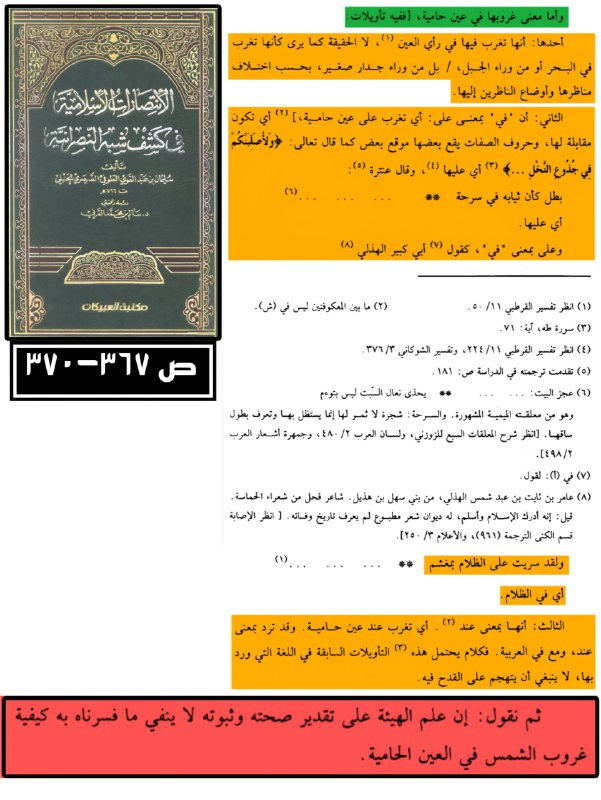
This scan explains that the wording can mean the sun appeared to setat or upon the muddy spring from the observer’s viewpoint. It also connects “the setting of the sun” to the western place reached by Dhul-Qarnayn.
Its Setting in the Viewer’s Eye
Its setting in the viewer’s eye + completely dismantles the doubt.
The essence of the sciences of the Book
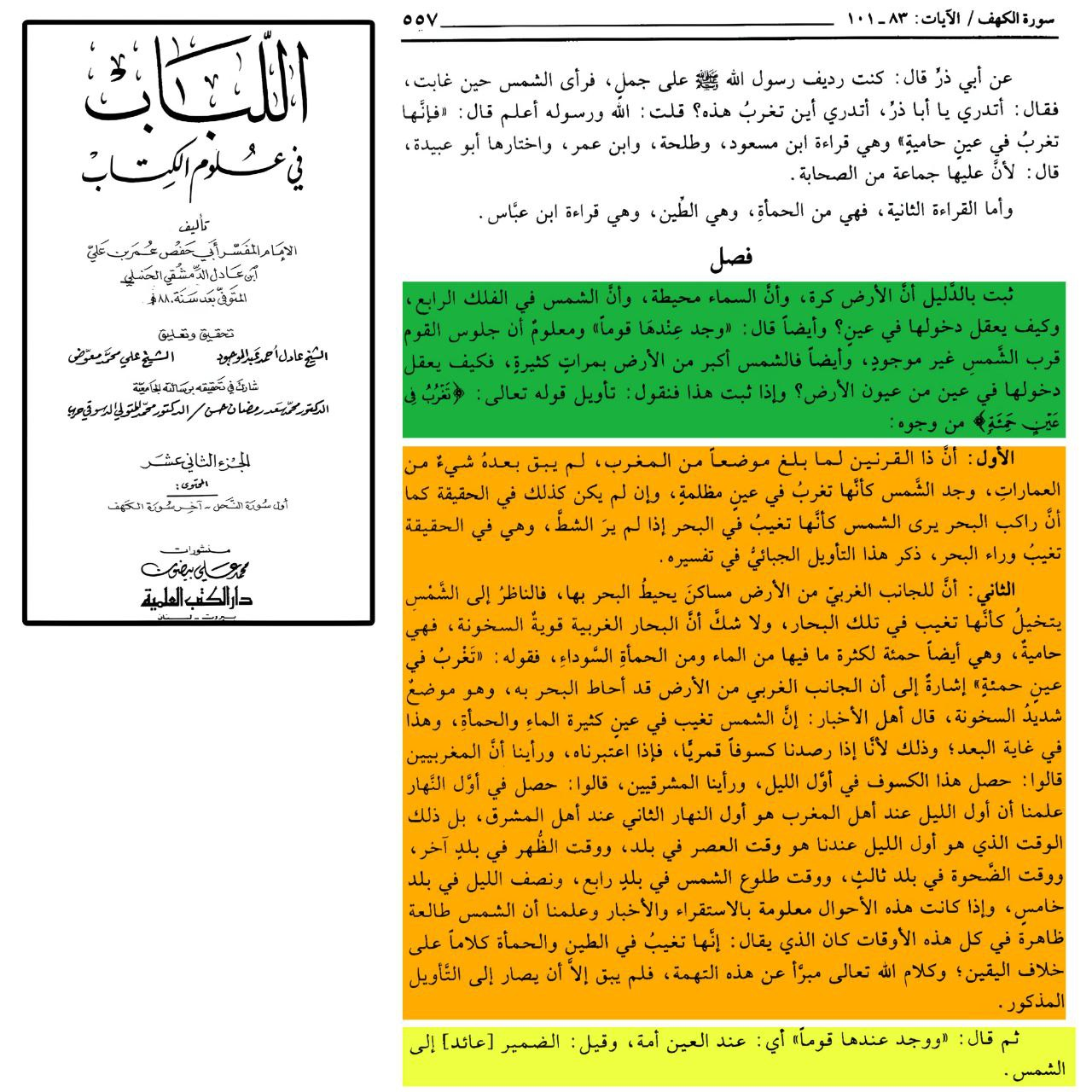
This scan states the core answer directly: the setting wasin the viewer’s eye, meaning according to appearance, not physical reality.
The People Were at the Coast
The people at the coast + its setting in the viewer’s eye.
The illuminating lamp in aid to understanding the words of our wise and knowledgeable Lord.
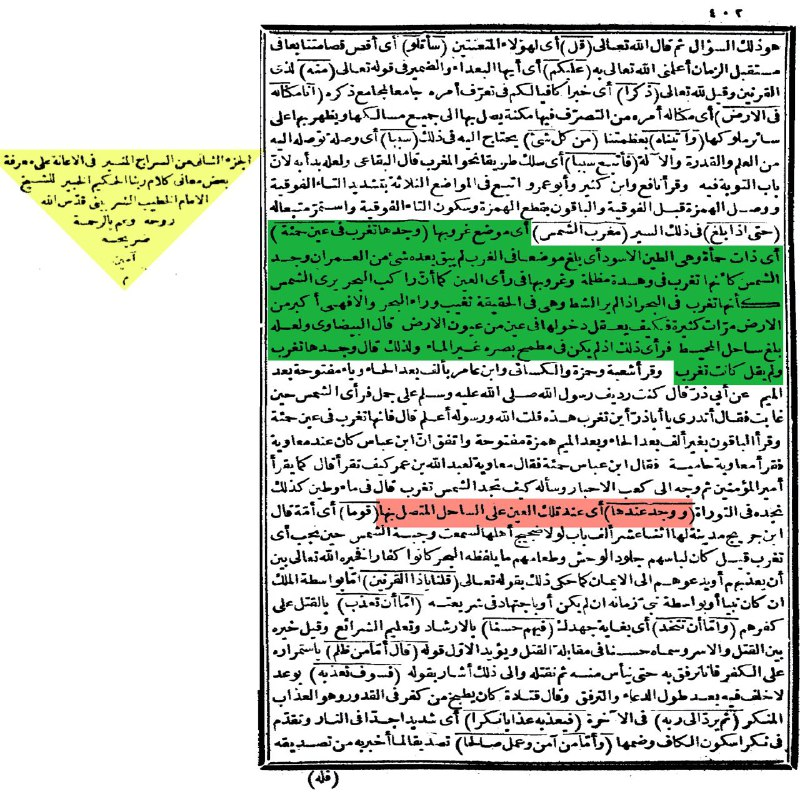
This scan explains that Dhul-Qarnayn found the people near the coast or edge of the body of water. The sun appeared to set there from his visual perspective.
The “spring” Can Mean the Sea
The eye = the sea + its setting in the eye of the beholder + its finding, meaning in his sight.
The Beginning and the End.
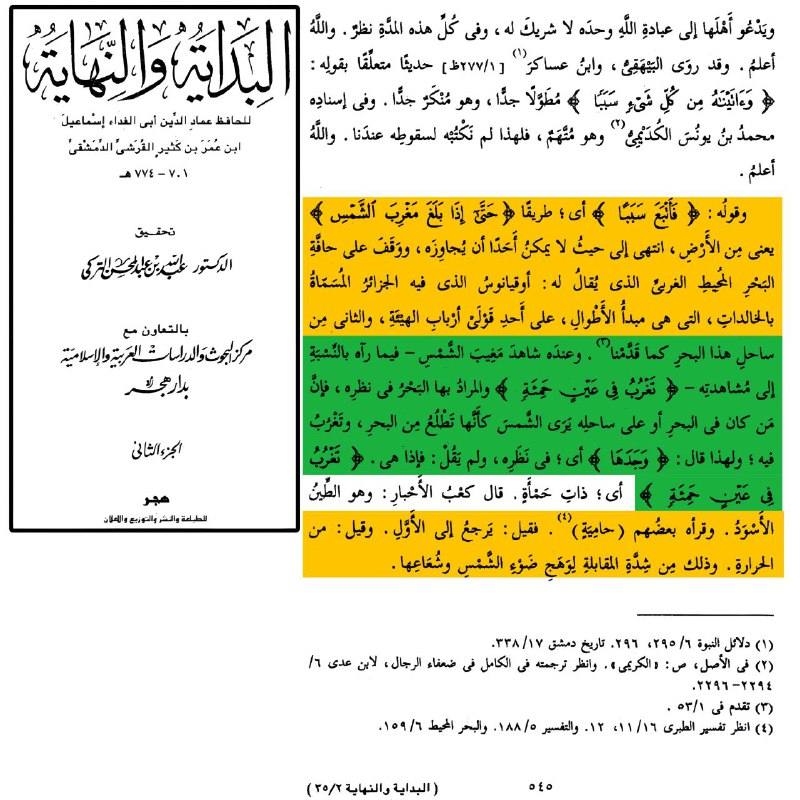
This scan supports two important points:ʿayn can refer to a large body of water, and “he found it” means according to what appeared in Dhul-Qarnayn’s sight.
Meaning: at the Muddy Spring
In a muddy spring, meaning at the muddy spring + its setting in the viewer’s eye.
Tuhfat al-Ahwadhi.
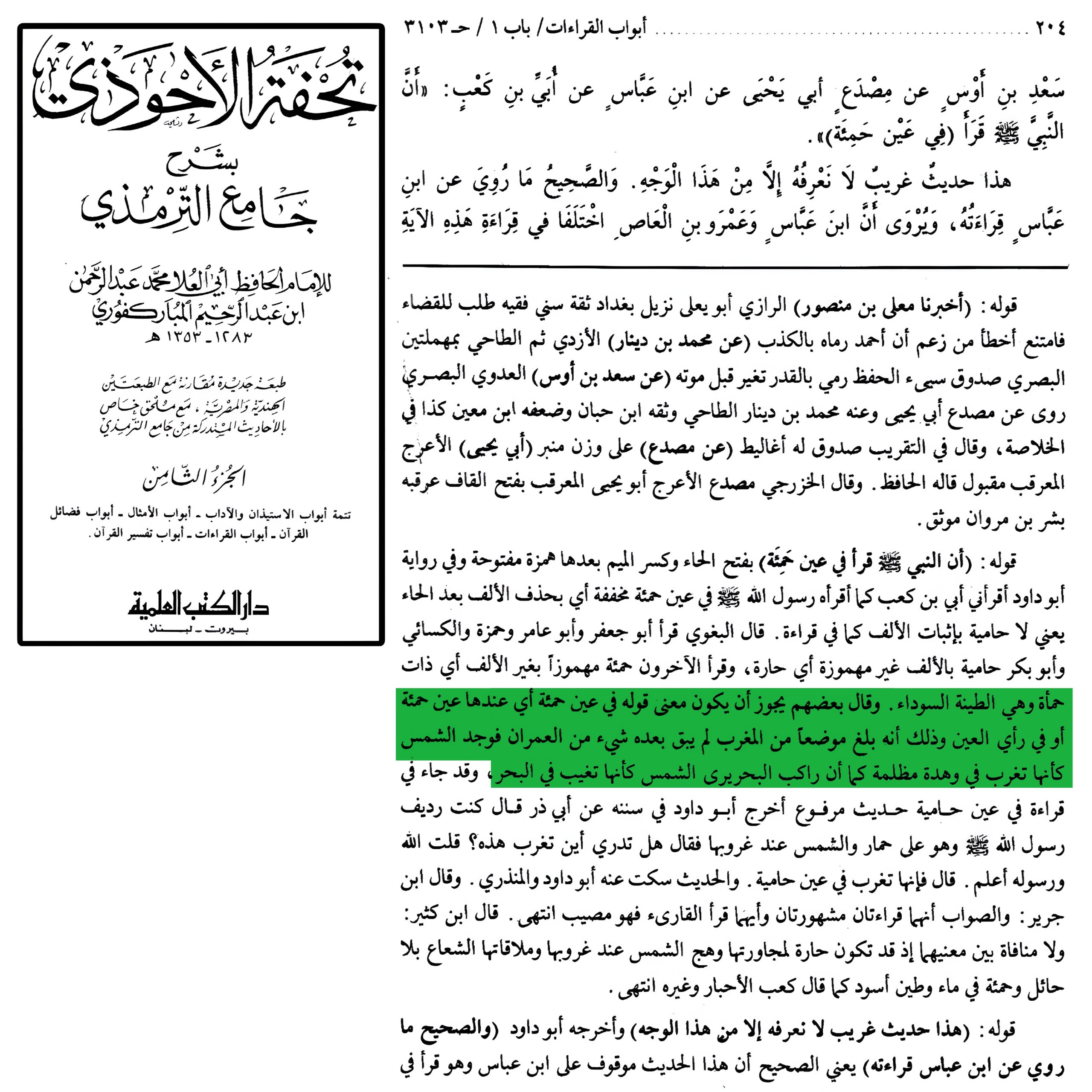
This scan explains the phrase as meaning the sun appeared to setat the muddy spring, not inside it literally.
Concise Explanation of the Meanings of the Qur’an
Its setting in the viewer’s eye.
A concise explanation of the meanings of the Quran.
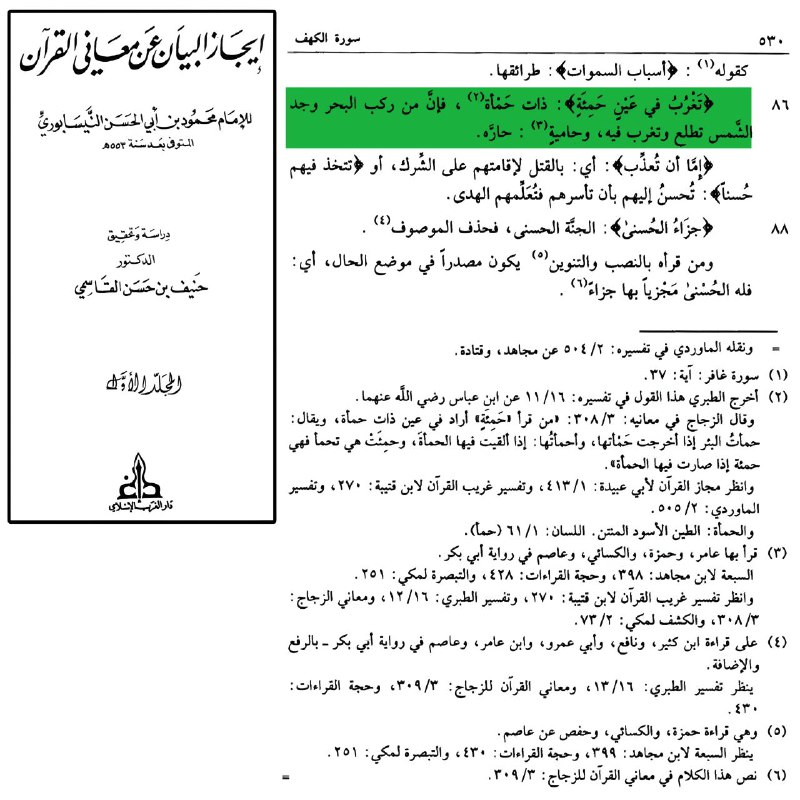
This scan again confirms the mainstream answer: the setting is according to visual appearance, not physical reality.
The Scientific Response
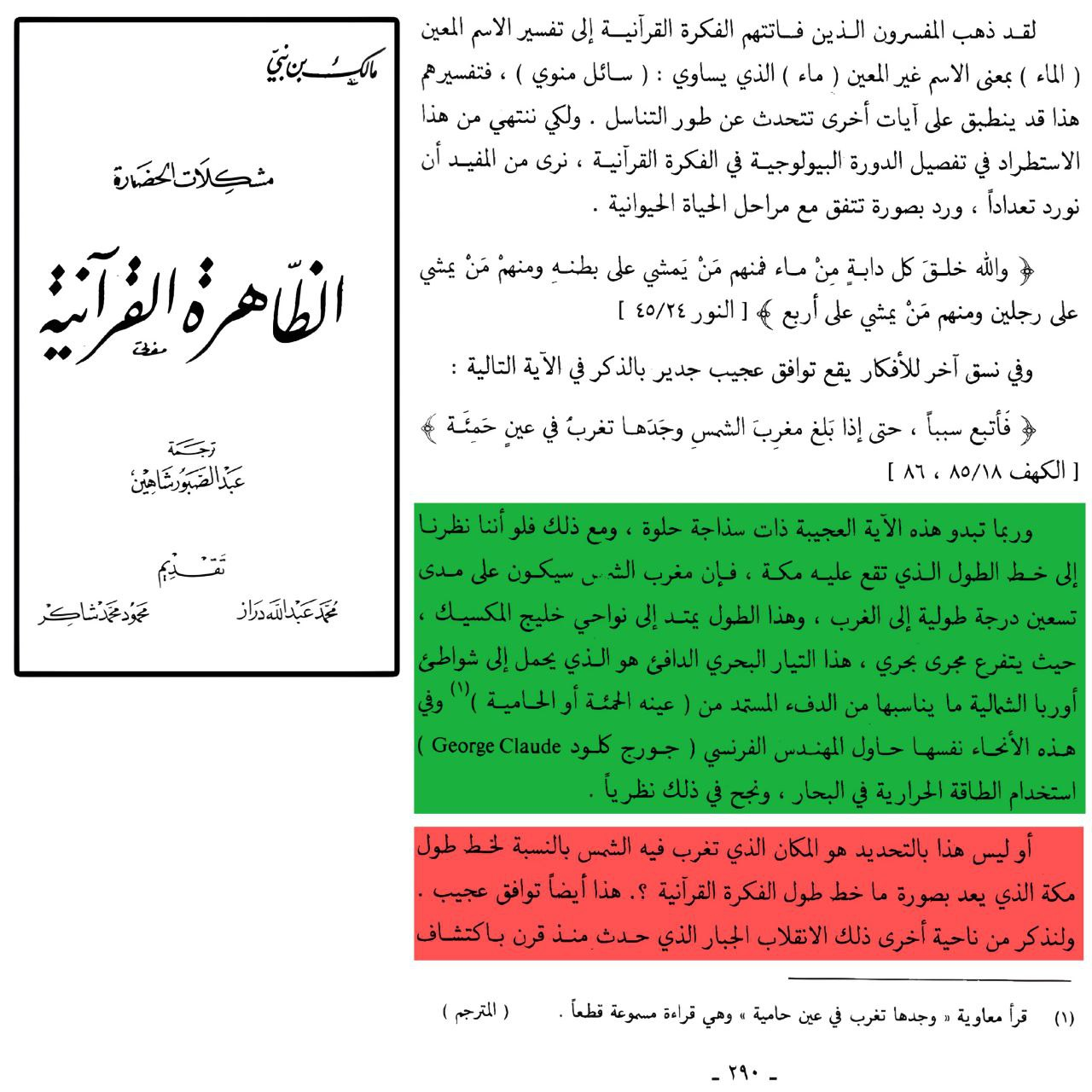
This scan begins the visual/scientific response: humans commonly describe the sun as “setting into” the sea, behind mountains, or below a horizon, even though everyone understands this as appearance from the observer’s position.
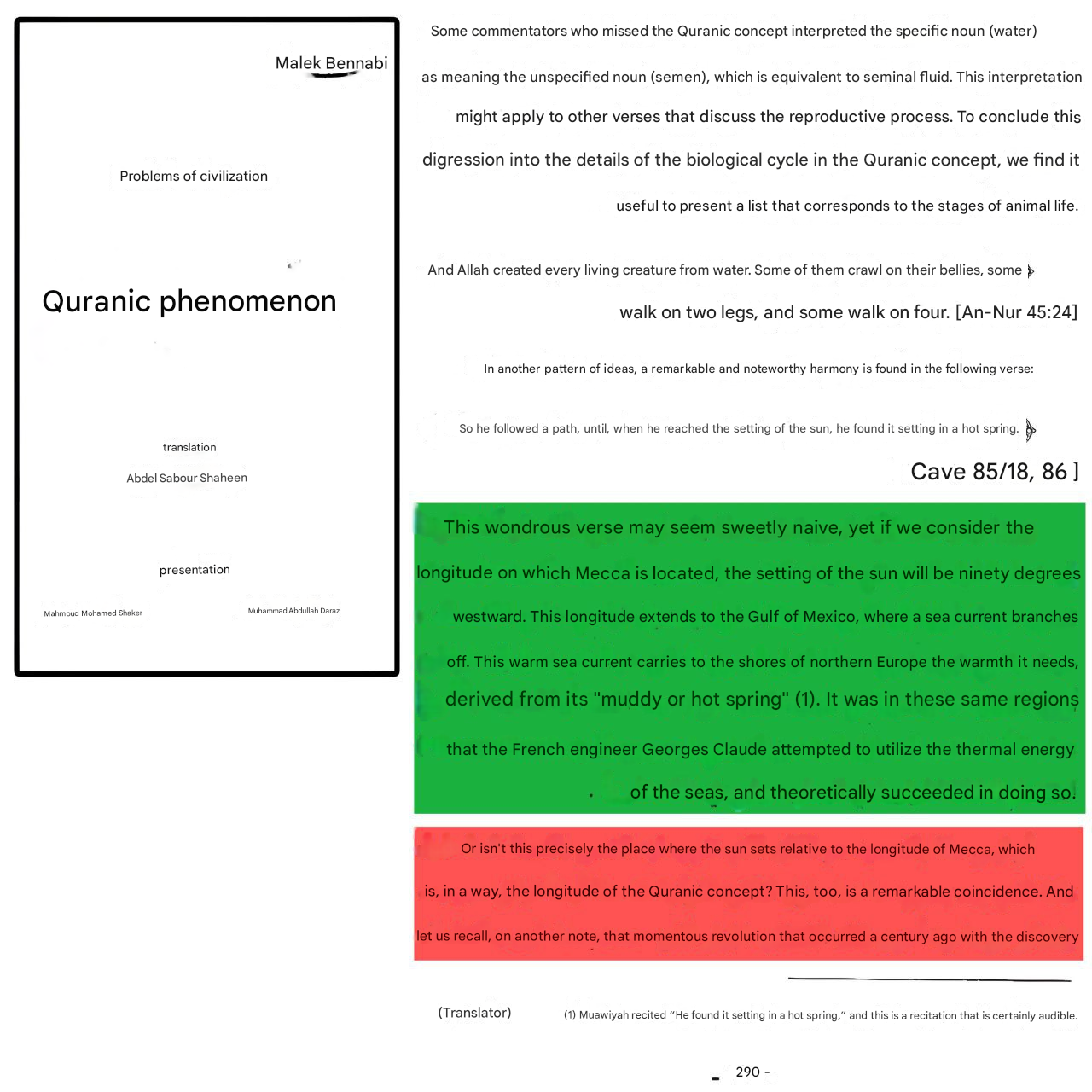
This scan supports the same point through visual analogy. Descriptive language about sunset does not automatically imply a scientific claim about the sun’s physical location.
Ibn Kathir
Reaching the sun is a myth of the People of the Book + its setting in the viewer’s eye + the eye = sea + the sun has its own orbit.
Interpretation of Ibn Kathir.
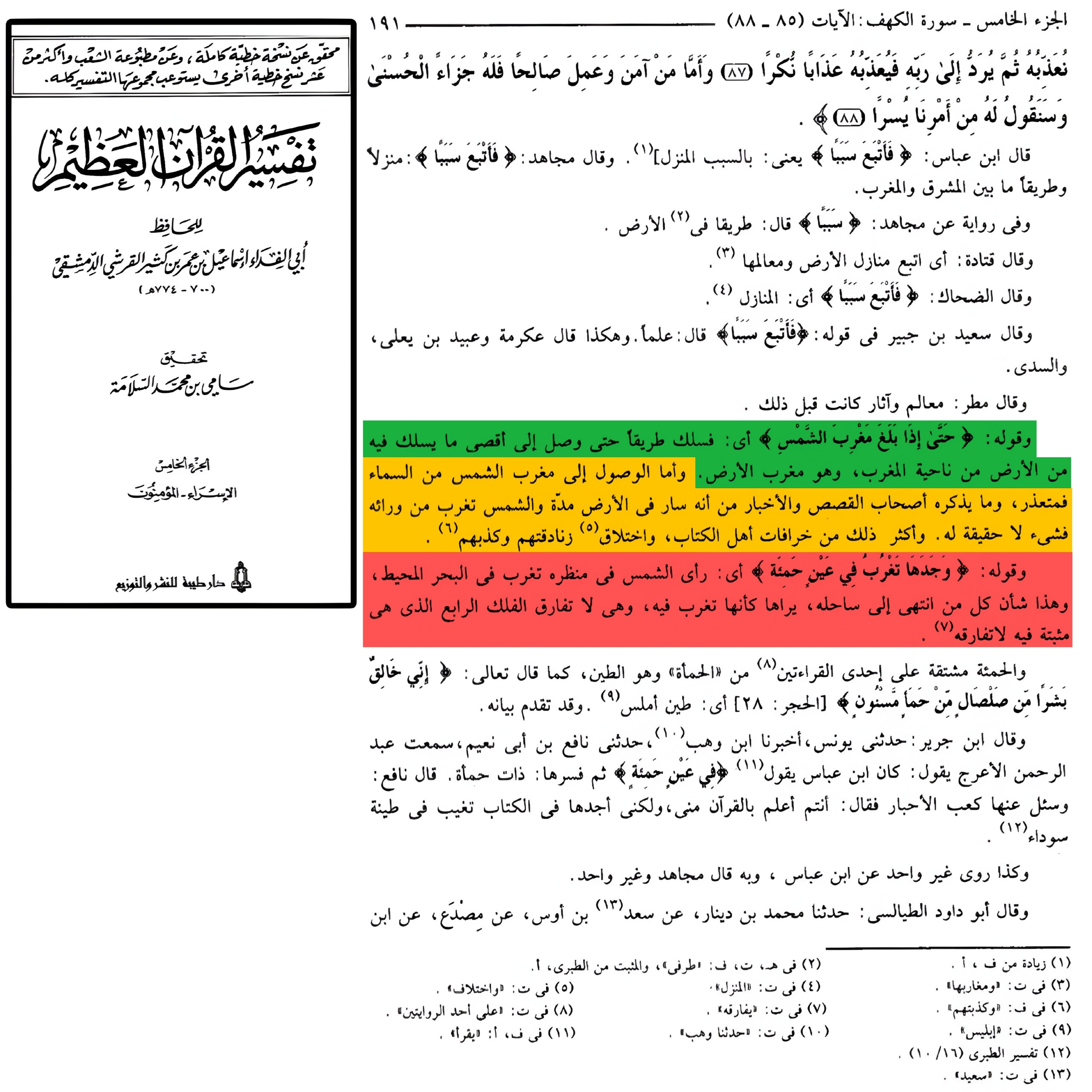
Ibn Kathir explains that the sun appeared to Dhul-Qarnayn as though it were setting in the sea. He also affirms that the sun has its own course and does not literally enter the spring.
Al-Qurtubi
The sun sets in the eye of the beholder, not in itself. The sun has its own orbit. Its setting is in the eye of the beholder. Finding it does not necessarily imply reality. The eye = sea. The people are at the shore of the eye.
Interpretation of Al-Qurtubi.
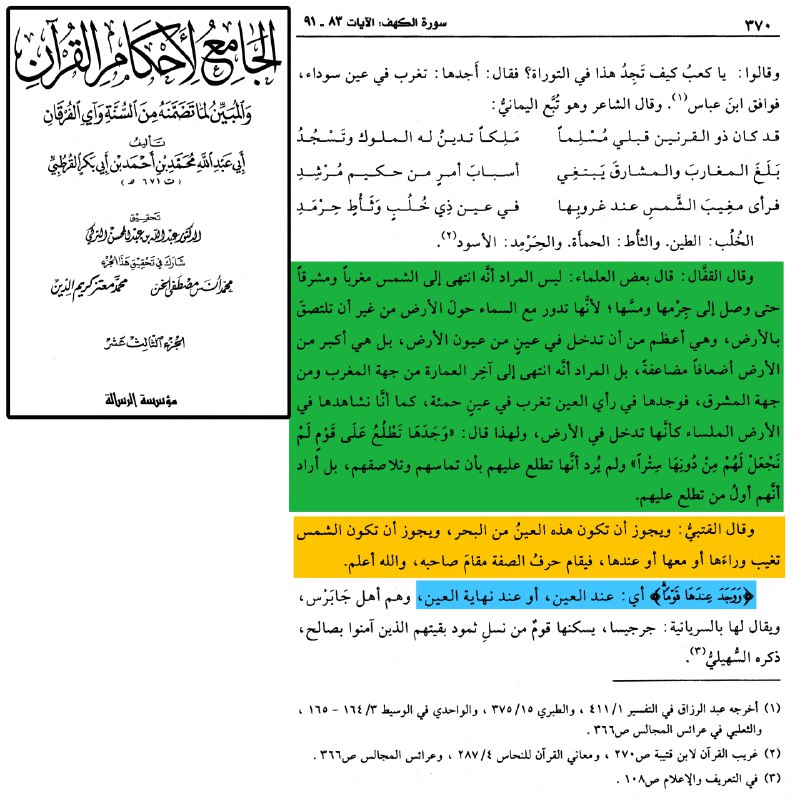
Al-Qurtubi gives one of the strongest responses: the setting is in the eye of the beholder, the sun continues its orbit, and the people were near the shore of the water.
Al-Baydawi
The eye = sea + its setting in the eye of the beholder.
Interpretation of Al-Baydawi.
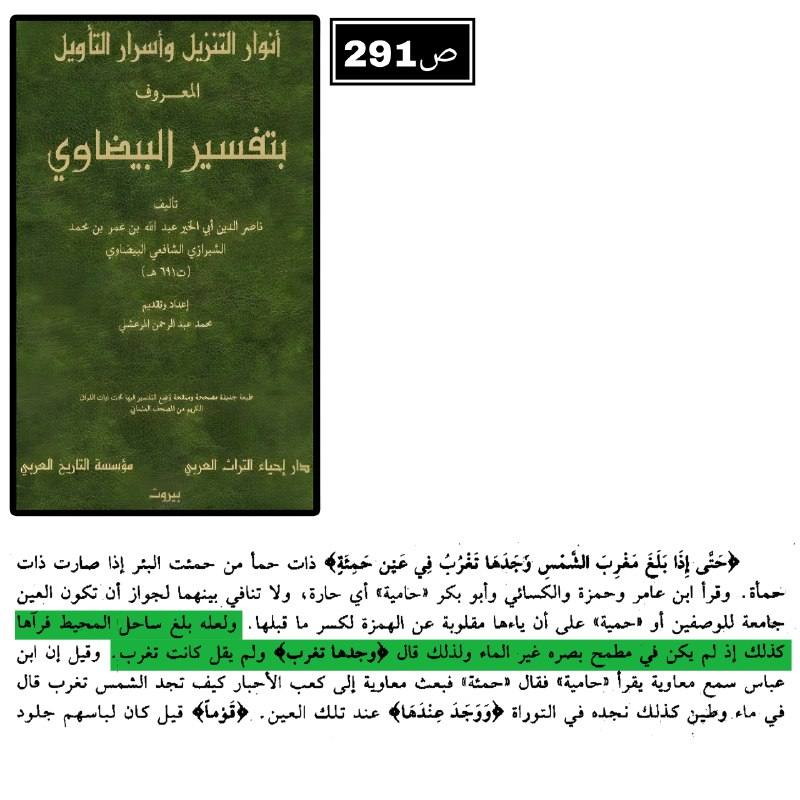
Al-Baydawi explains the phrase as visual appearance from the shore of a large body of water. This directly refutes the literalist objection.
Tafsir al-Jalalayn
Its setting in the eye of the beholder.
Tafsir al-Jalalayn.
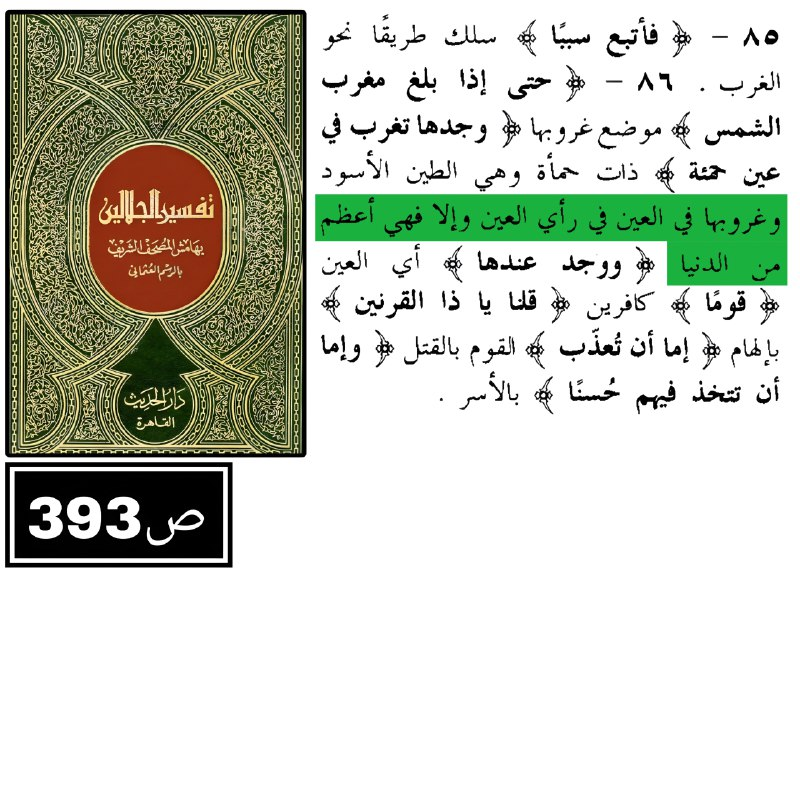
Tafsir al-Jalalayn gives the same explanation: the setting is according to what appeared to Dhul-Qarnayn’s sight.
Al-Saadi
Its setting in the eye of the beholder + the people at sunset.
Interpretation of Al-Saadi.
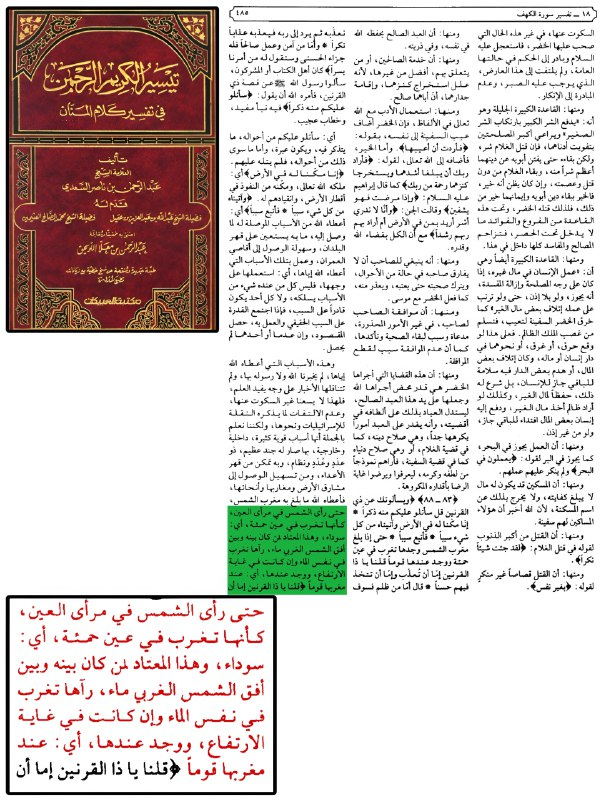
Al-Saadi links the verse to Dhul-Qarnayn reaching a western region where the sun appeared to set, and where he found a people.
Ibn Taymiyyah
He found it setting in a muddy spring — Ibn Taymiyyah.
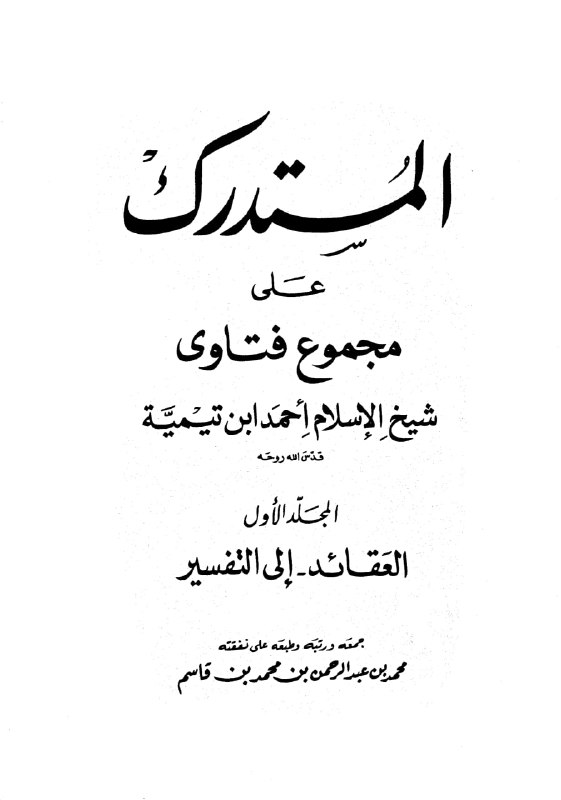
This scan is used to show that major scholars discussed the verse without understanding it as a scientific error. The verse describes what was found from Dhul-Qarnayn’s viewpoint.
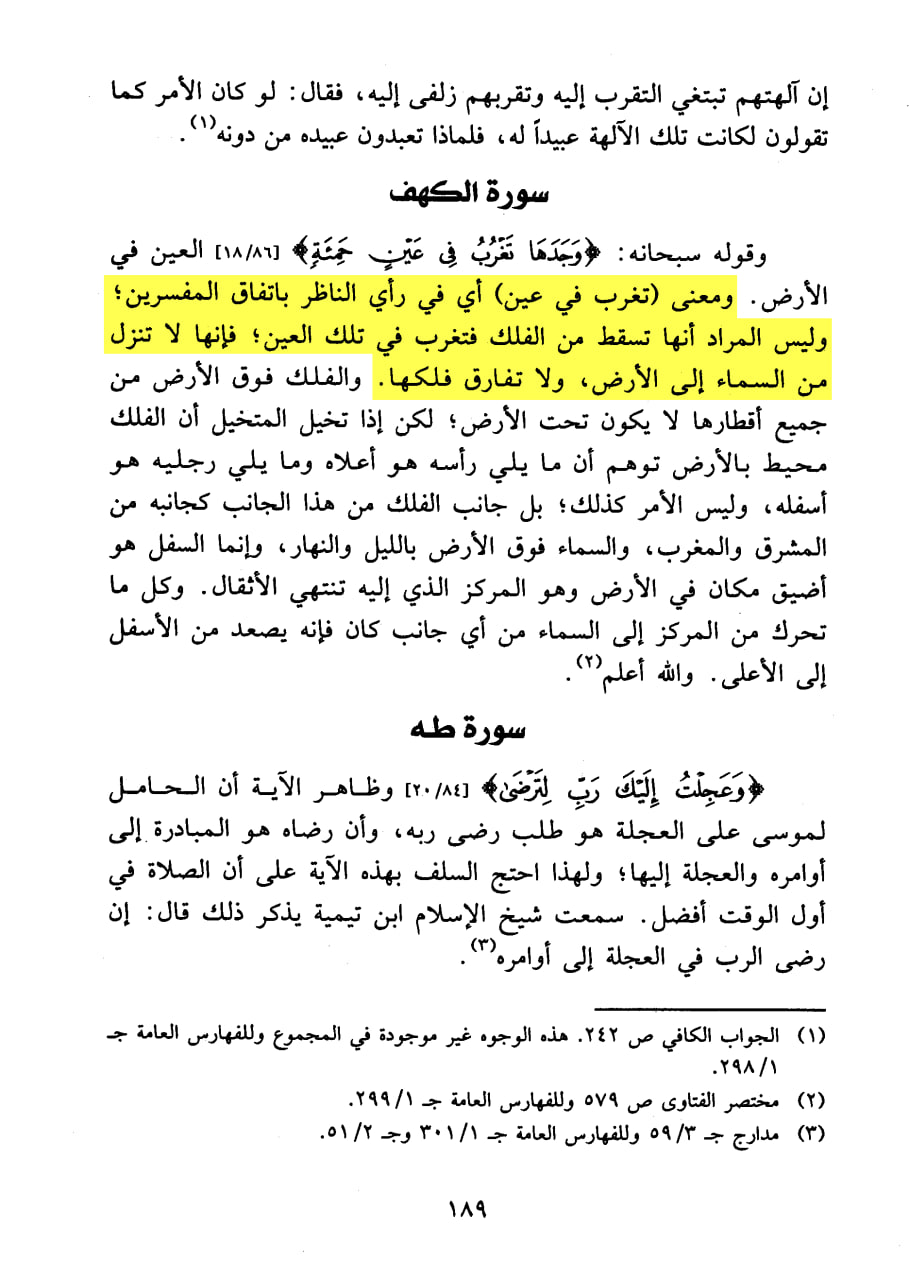
This scan continues the Ibn Taymiyyah-related source material and is placed here because it supports the same argument about perspective and correct interpretation.
Sun Prostrating Under the Throne
And its prostration to its Lord under the Throne does not hinder it from continuing its journey and acting in accordance with what it was created for.
This scan introduces the explanation that the sun’s prostration does not mean it stops moving or abandons its created course. Its submission to Allah is compatible with its continued movement.
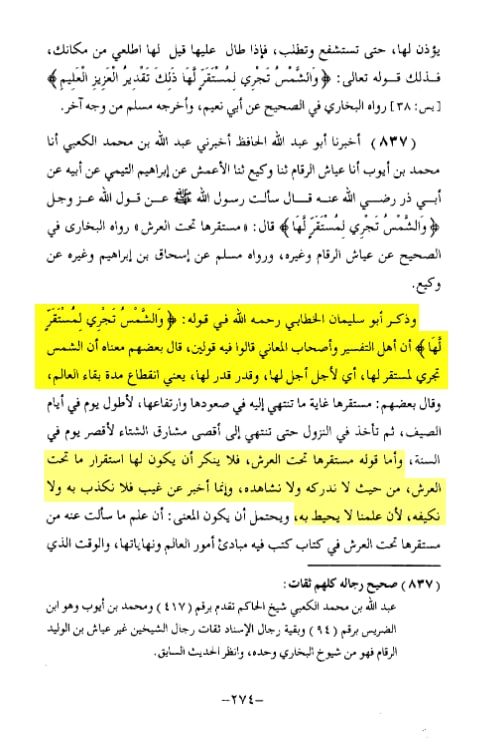
This scan supports the same point: prostration is not being treated as a crude physical interruption of the sun’s course.
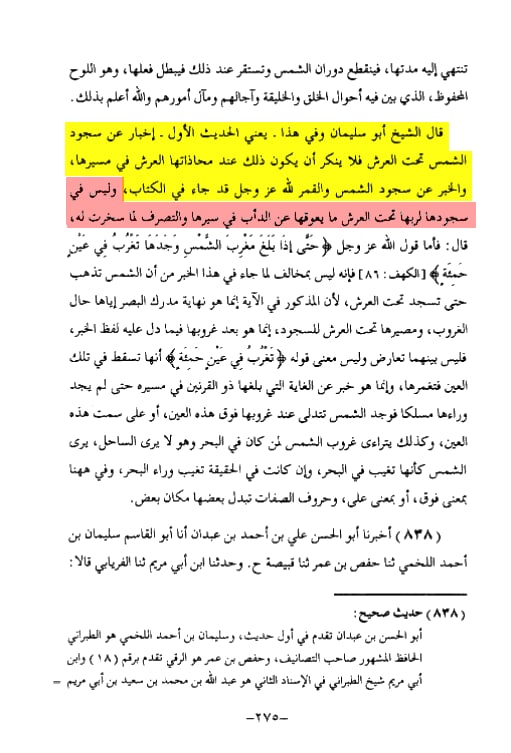
This scan continues the explanation of the sun’s prostration as submission to Allah while remaining within the order Allah created for it.
Meaning: “He Found It Setting in a Muddy Spring” Means “On It”
He found it setting in a muddy spring, meaning on it.
This scan supports the interpretation that the wording can mean the sun appeared to setupon or at the spring, not literally inside it.
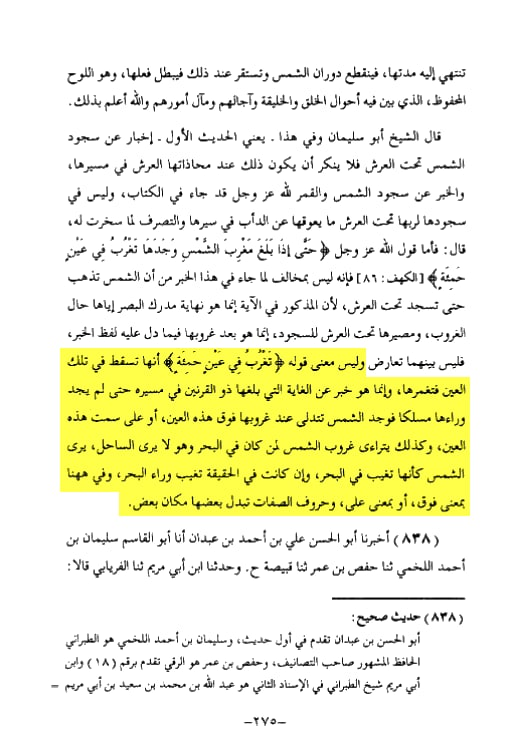
This scan is part of the same source set explaining the phrase through Arabic usage and interpretive context.
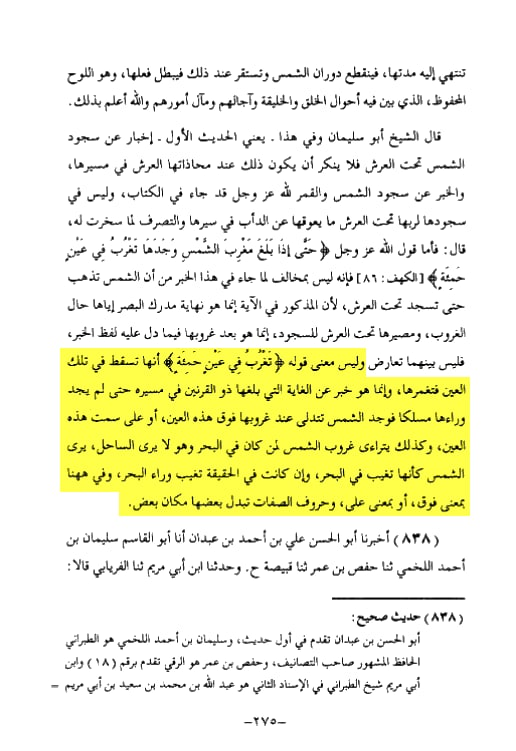
This scan continues the discussion that the Qur’anic wording does not require the sun to physically enter the spring.
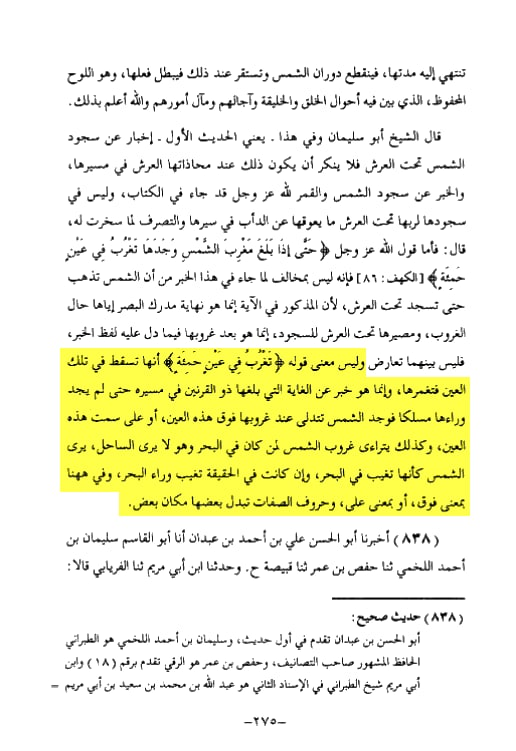
This scan completes the same explanatory set and strengthens the point that the objection is based on forcing the wrong literal meaning onto the text.
Meaning of the Sun’s Prostration
What is meant by prostration here is complete submission, not the prostration of obedience specific to rational beings.
This scan explains that the sun’s prostration means its complete submission to Allah, not the prostration of moral choice that applies to rational beings.
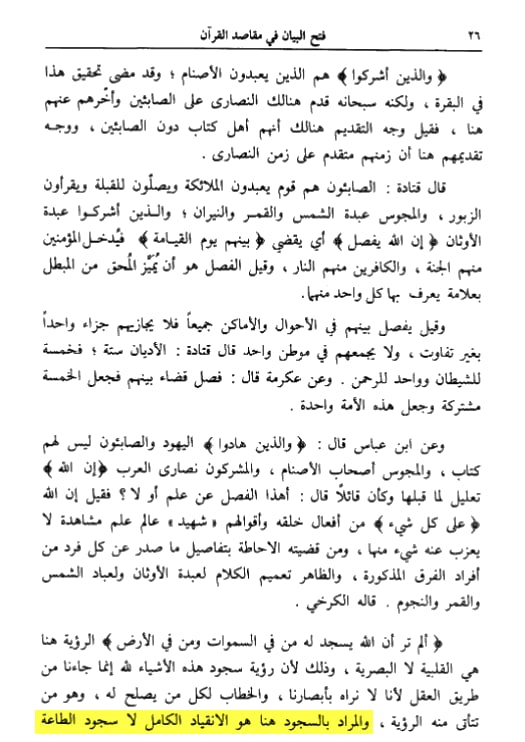
This scan supports the symbolic/theological explanation of prostration: everything in creation submits to Allah in the way appropriate to it.

This scan belongs to the same argument: the sun’s submission to Allah does not imply irrational astronomy or physical stoppage.
Representation of Sunrise, Sunset, and Submission
This statement of the Prophet, peace and blessings be upon him, is a representation of the daily sunrise and sunset, and the prostration of the sun is made a representation of its being subjected to God’s will.

This scan explains the hadith as a representation of the sun’s daily course and its subjection to Allah’s command.
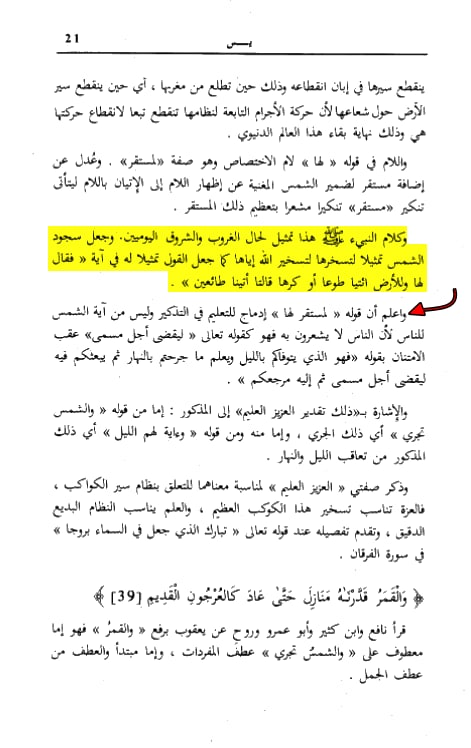
This scan continues the explanation that prostration is tied to divine subjection, not a denial of the sun’s physical movement.
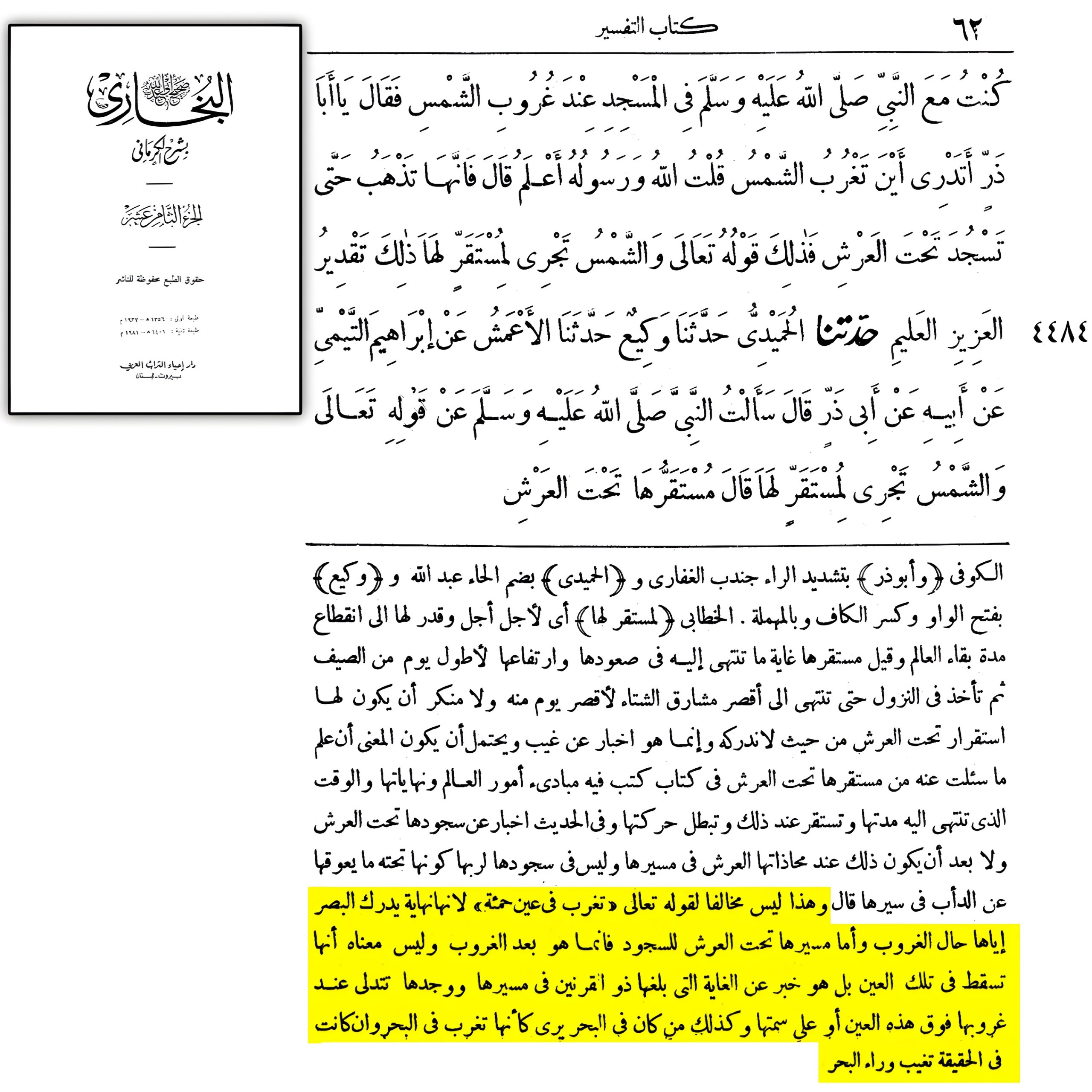
This scan supports the theological reading: created things obey Allah according to the mode Allah assigned to them.
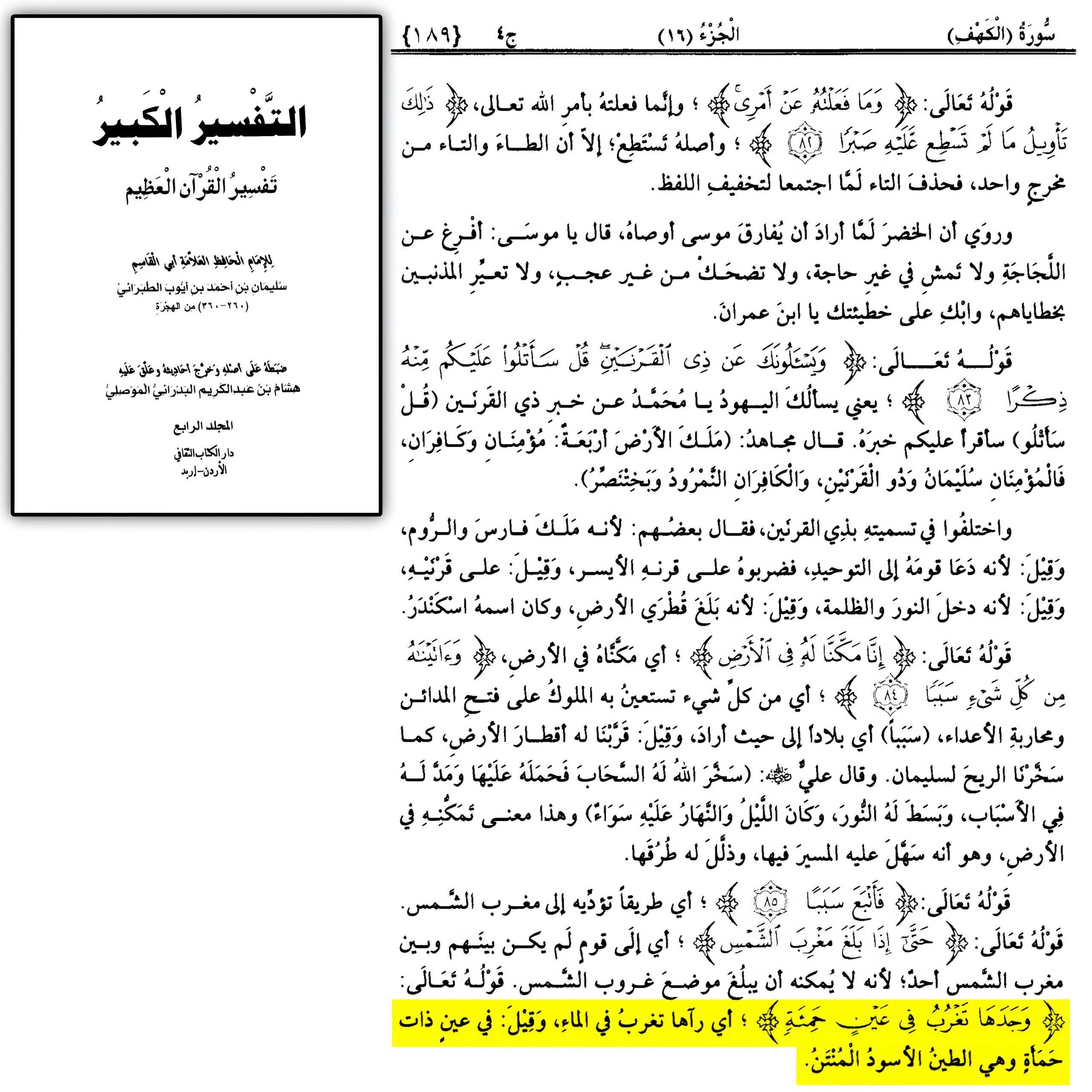
This scan continues the commentary on the hadith of the sun’s prostration and its correct understanding.
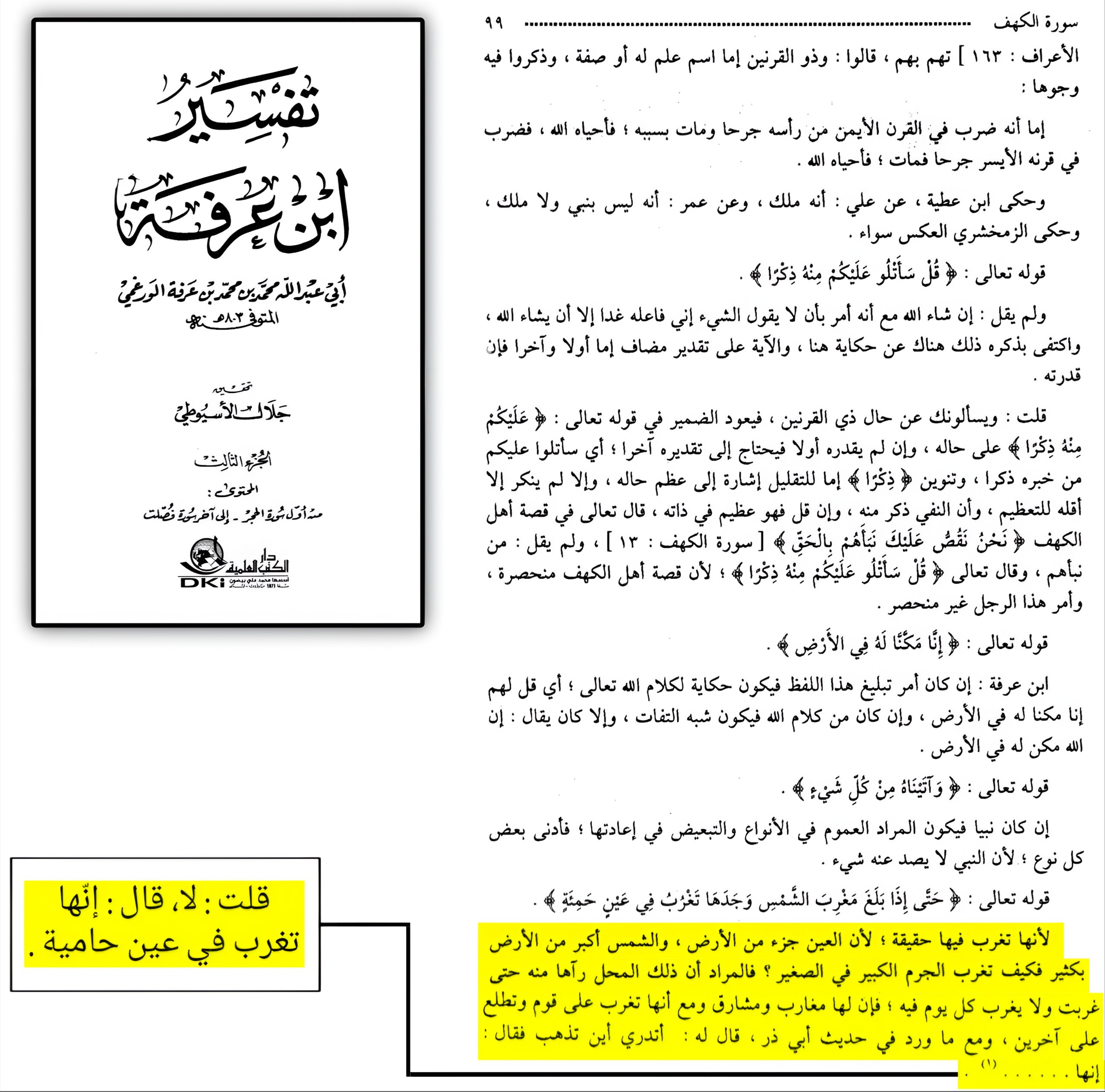
This scan belongs to the closing evidence set showing that the hadith does not require a scientifically false reading.
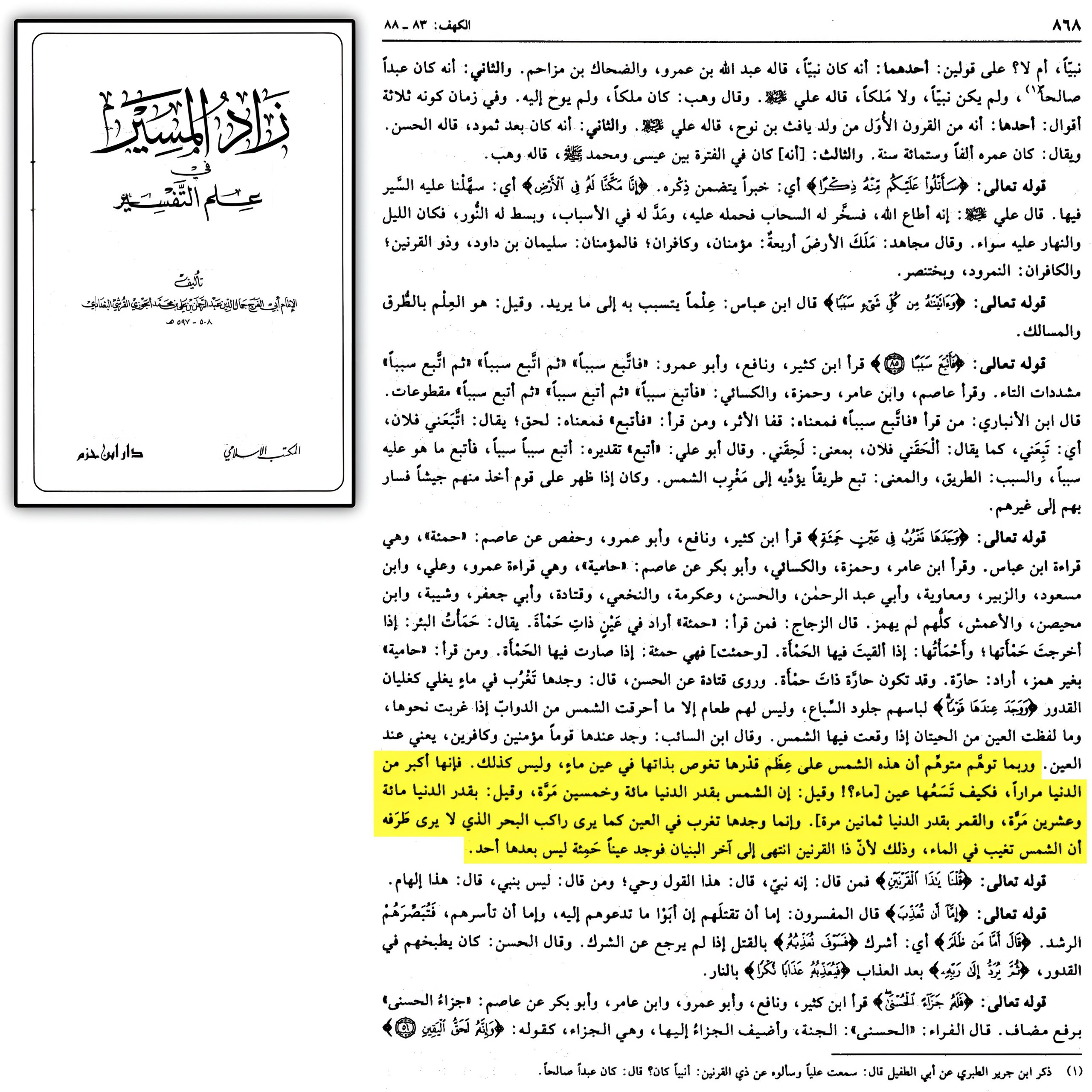
This scan continues the same argument: the sun remains within Allah’s created order while being fully subject to Him.
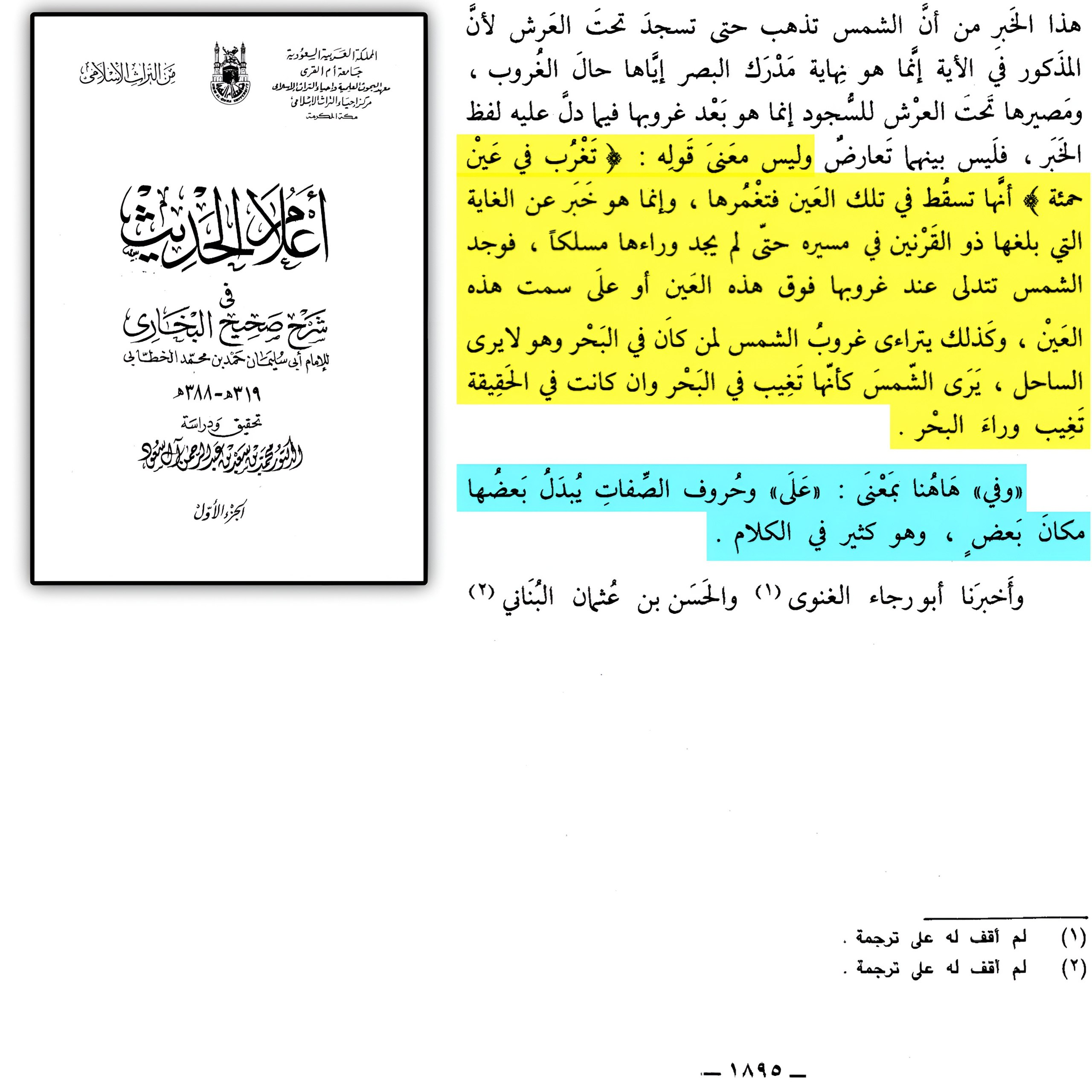
This final scan closes the discussion by reinforcing that the prostration of the sun is understood as submission to Allah, not as a claim that the sun stops moving or physically travels under the Earth in a crude sense.
Conclusion
The objection fails because it forces a crude literal meaning onto a verse that classical scholars explained through visual perspective, Arabic usage, and context.
The Qur’an does not say that the sun physically enters a muddy or hot spring.
Rather:
- Dhul-Qarnayn reached the western limit of his journey.
- He saw the sun appearing to set in a body of water.
- Classical tafsir repeatedly explains this as in his sight or in the eye of the beholder.
- The word ʿayn can be used for a large body of water.
- The Qur’an itself uses the same visual language shortly after when it says he found the sun rising upon a people.
- The related hadith about the sun’s prostration does not mean the sun stops moving, but that it submits to Allah in the way appropriate to creation.
The real error is not in the Qur’an.
The error is in ripping the verse from its language, context, tafsir tradition, and basic human visual experience.