Does Allah Pray on the Prophet? The Meaning of Salawat in Quran 33:56 — Christian Objection Refuted
These people totally ignore what their own God does in their own Bible. So yeah, in this post I will not only refute the argument of Allah praying but I will also turn the tables on them and prove how their own Biblical God aka YHWH prays to… I’ll leave that for you all to decide.
And this time I won’t cite commentaries because they are not enough for satisfaction of these ignorant people. That is why I will jump into the linguistics of the verse and Arabic language and I will use dictionaries and lexicons to prove my point. Even though this argument is logically a very very absurd and stupid argument… Let’s begin anyways…
— @refuting.kufar
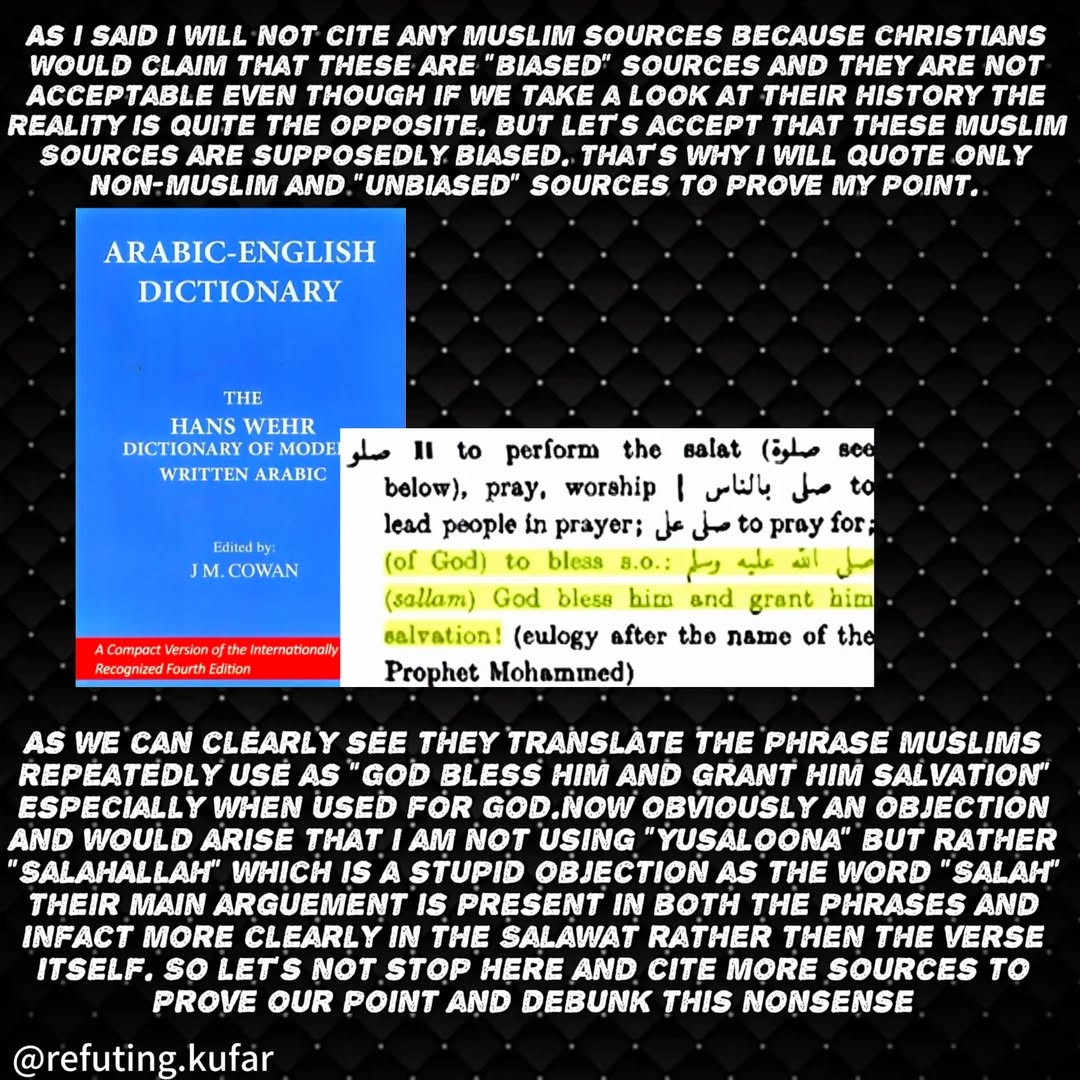
As I said I will not cite any Muslim sources because Christians would claim that these are “biased” sources and they are not acceptable even though if we take a look at their history the reality is quite the opposite. But let’s accept that these Muslim sources are supposedly biased. That’s why I will quote only non-Muslim and “unbiased” sources to prove my point.
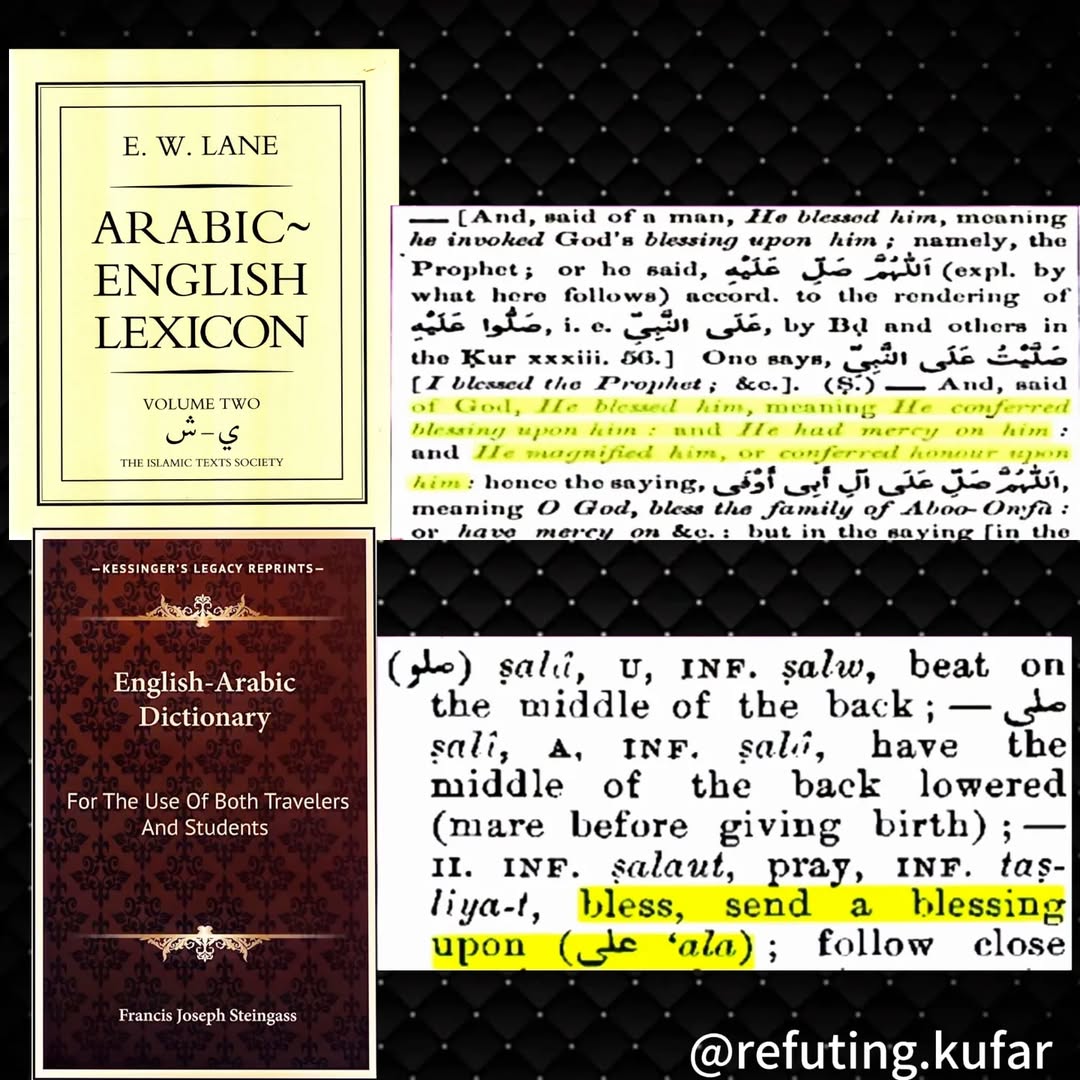
Steingass English-Arabic Dictionary:
Highlighted — “bless, send a blessing upon (على ‘ala)”
As we can clearly see they translate the phrase Muslims repeatedly use as “God bless him and grant him salvation” especially when used for God. Now obviously an objection would arise that I am not using “Yusaloona” but rather “Salahallah” — which is a stupid objection as the word “Salah” their main argument is present in both the phrases and in fact more clearly in the Salawat rather than the verse itself. So let’s not stop here and cite more sources to prove our point and debunk this nonsense.
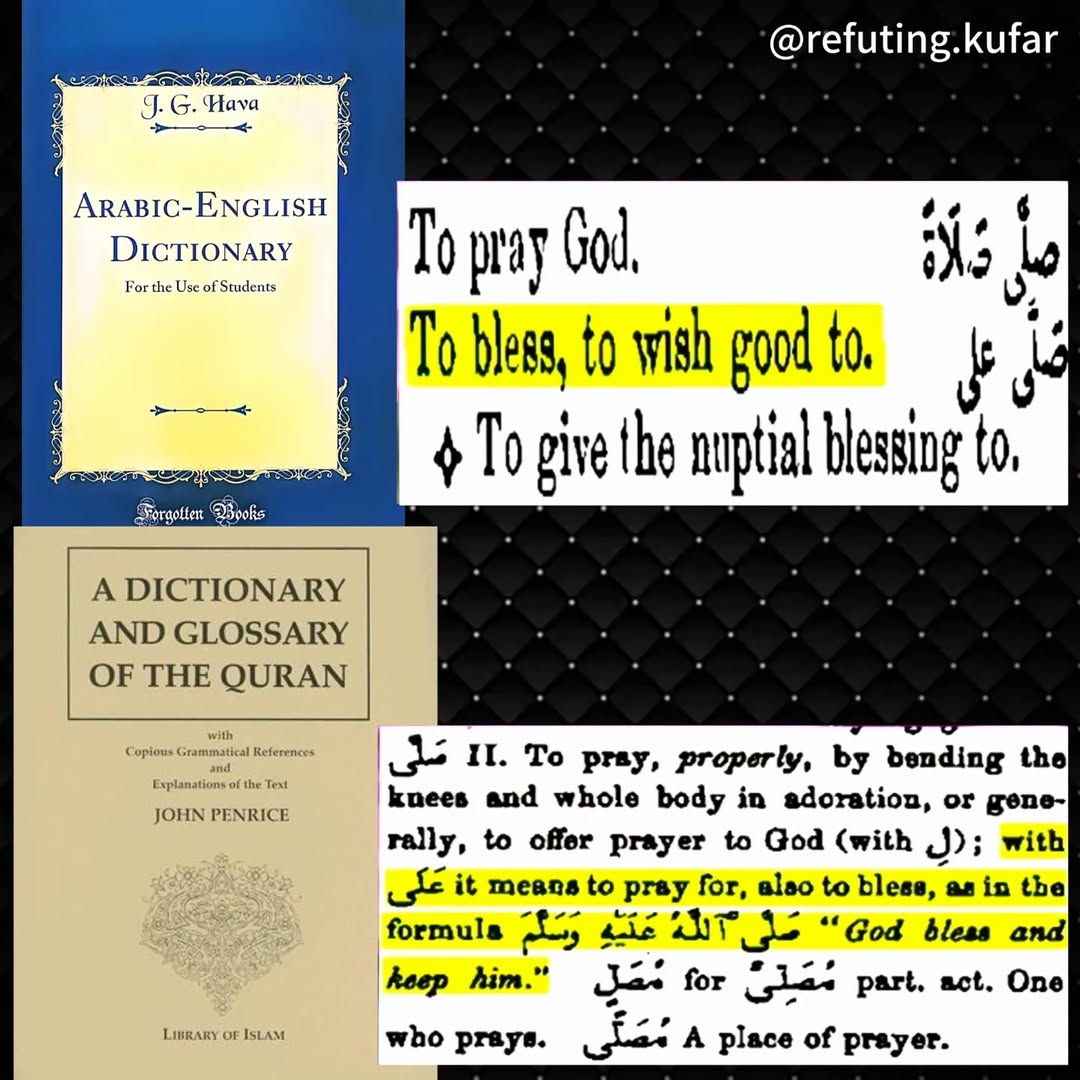
John Penrice:
“with على it means to pray for, also to bless, as in the formula صَلَّى اللَّهُ عَلَيْهِ وَسَلَّمَ — ‘God bless and keep him.’”
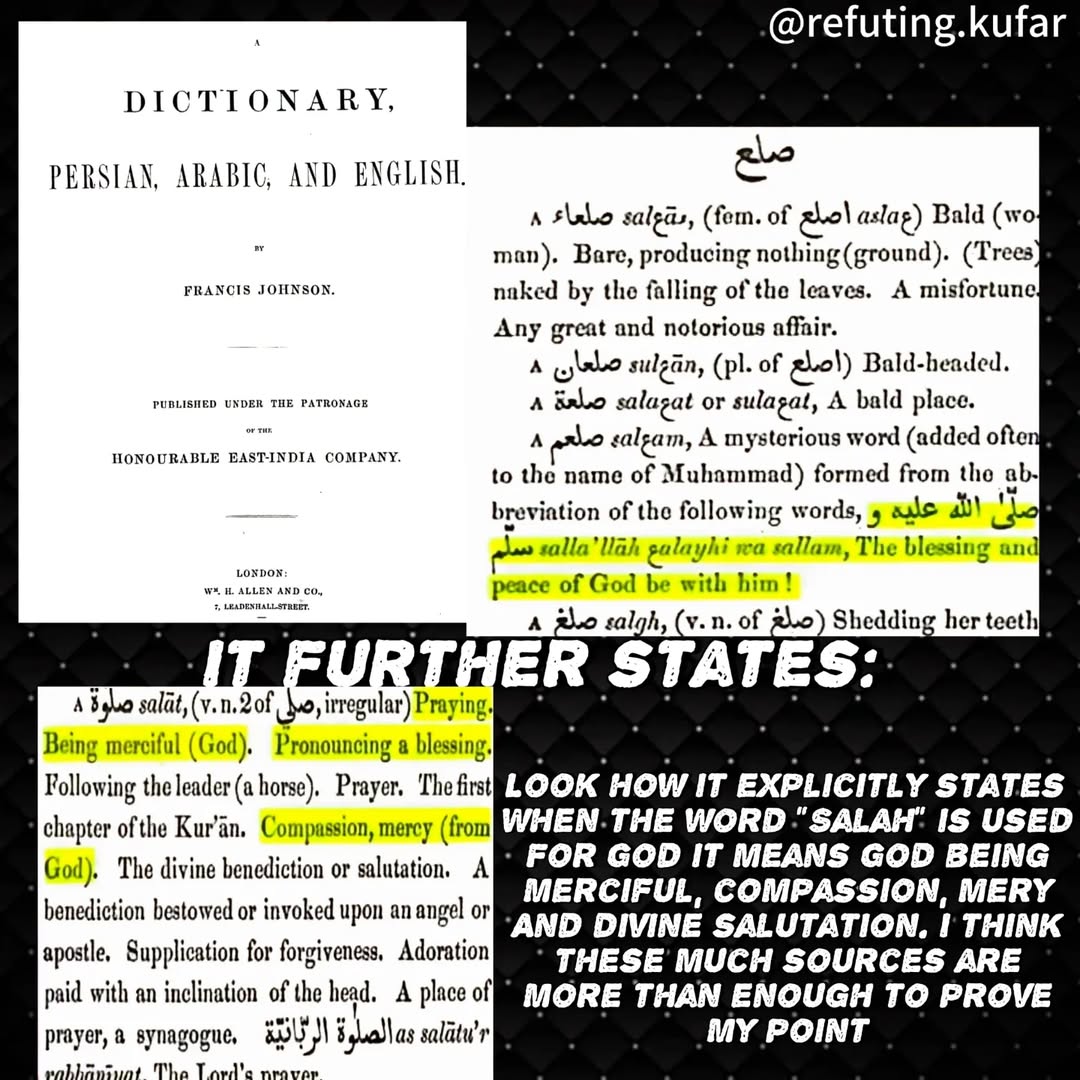
Entry for صَلَاة (Salat) when attributed to God:
“Being merciful (God). Pronouncing a blessing. Compassion, mercy (from God). The divine benediction or salutation.”
Look how it explicitly states when the word “Salah” is used for God it means God being merciful, compassion, mercy and divine salutation. I think these much sources are more than enough to prove my point.
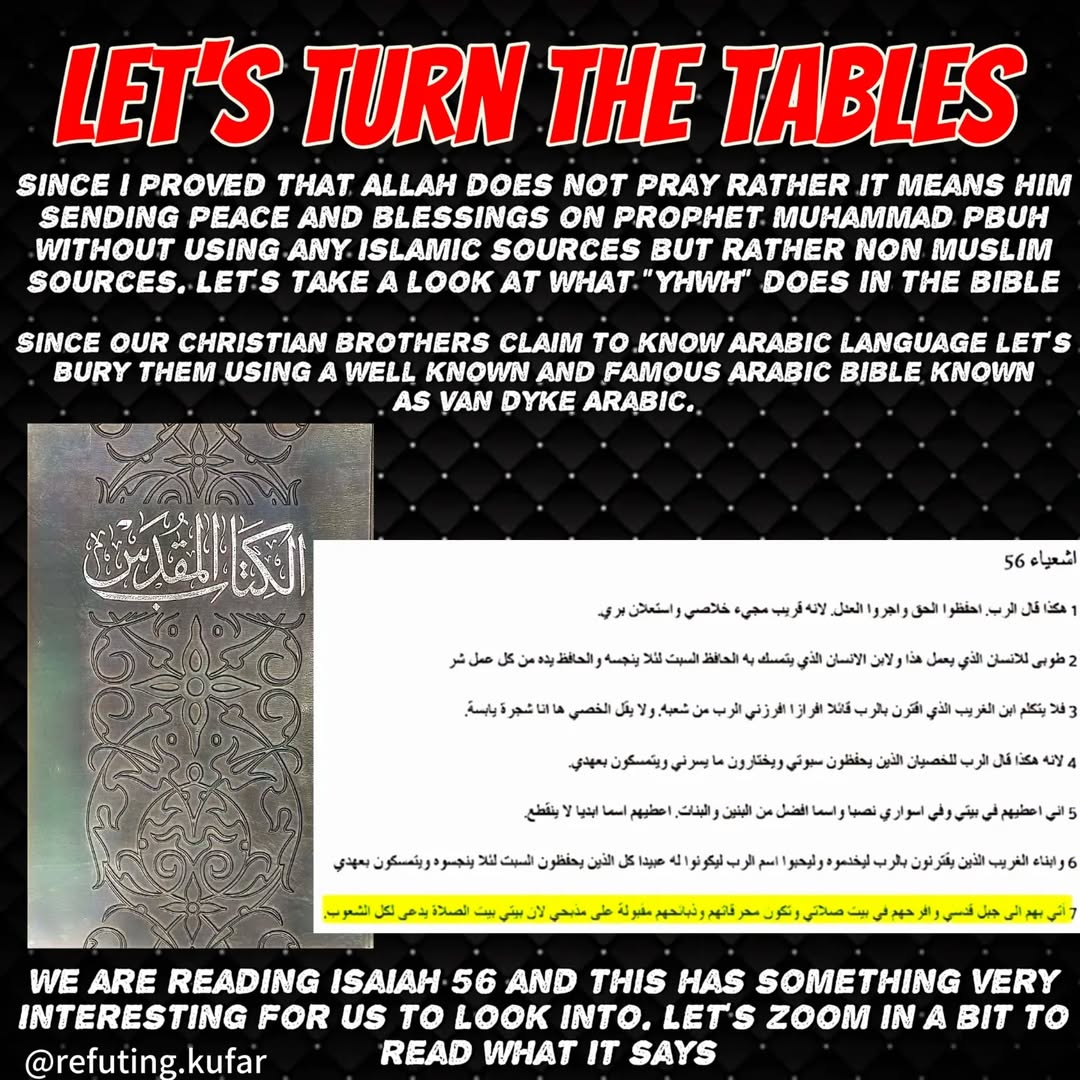
Since our Christian brothers claim to know Arabic language let’s bury them using a well known and famous Arabic Bible known as Van Dyke Arabic.
Isaiah 56:7 — Van Dyke Arabic Bible:
“آتي بهم إلى جبل قدسي وأفرحهم في بيت صلاتي لأن بيتي يُدعى بيت الصلاة لكل الشعوب”
We are reading Isaiah 56 and this has something very interesting for us to look into. Let’s zoom in a bit to read what it says.
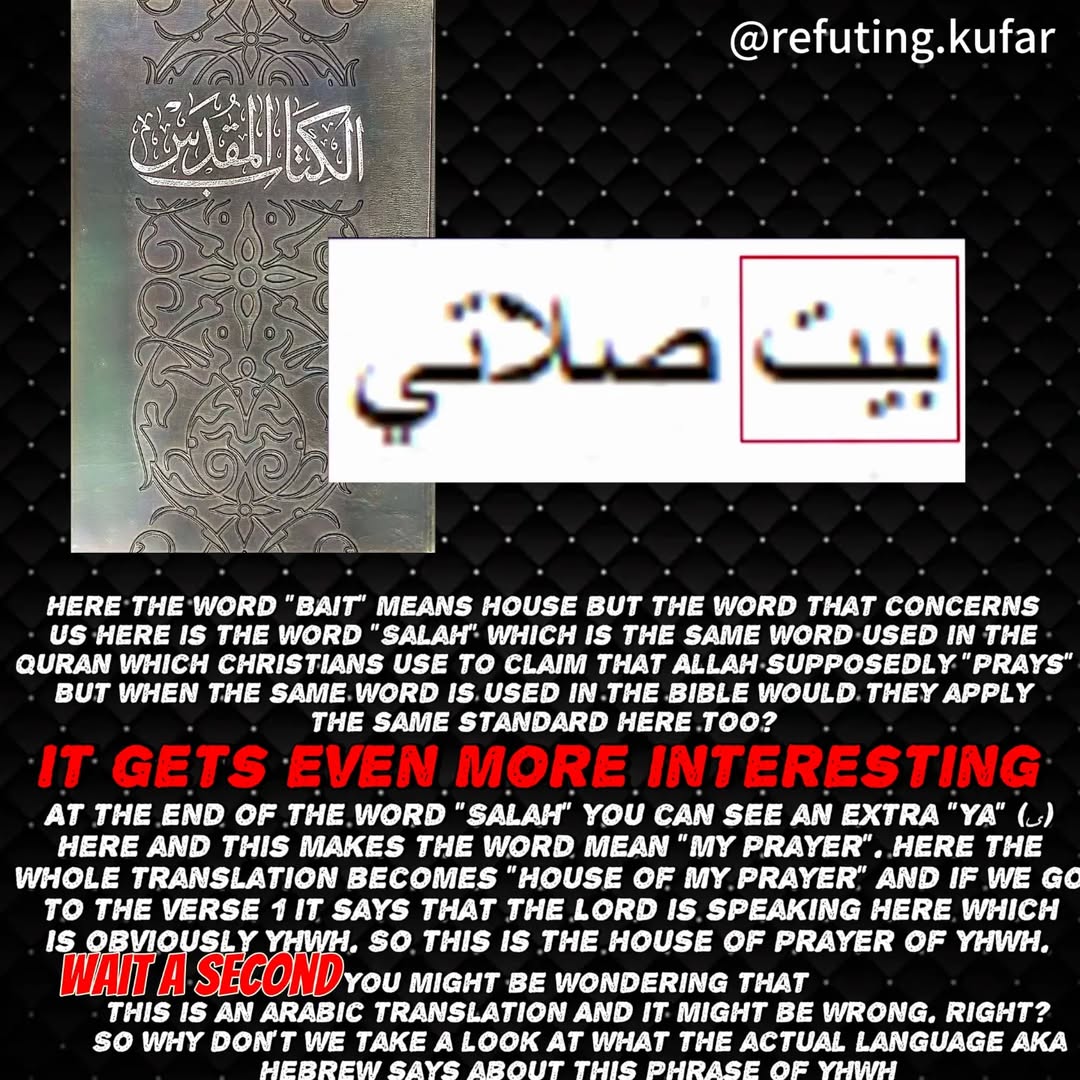
It gets even more interesting:
At the end of the word “Salah” you can see an extra “Ya” (ي) here and this makes the word mean “My Prayer”. Here the whole translation becomes “House of My Prayer” and if we go to verse 1 it says that the Lord is speaking here which is obviously YHWH. So this is the house of prayer of YHWH.
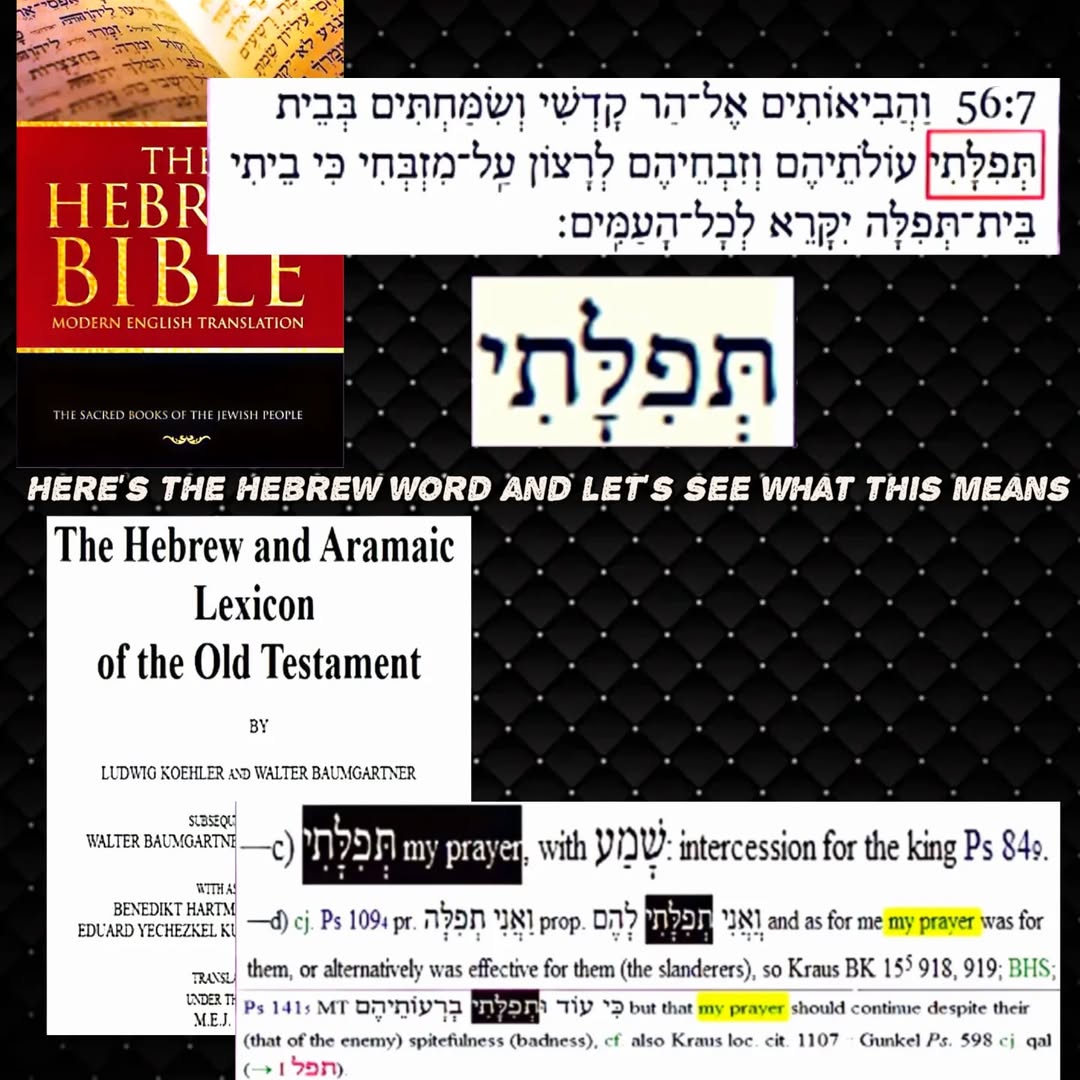
Wait a second — you might be wondering that this is an Arabic translation and it might be wrong, right? So why don’t we take a look at what the actual language aka Hebrew says about this phrase of YHWH.
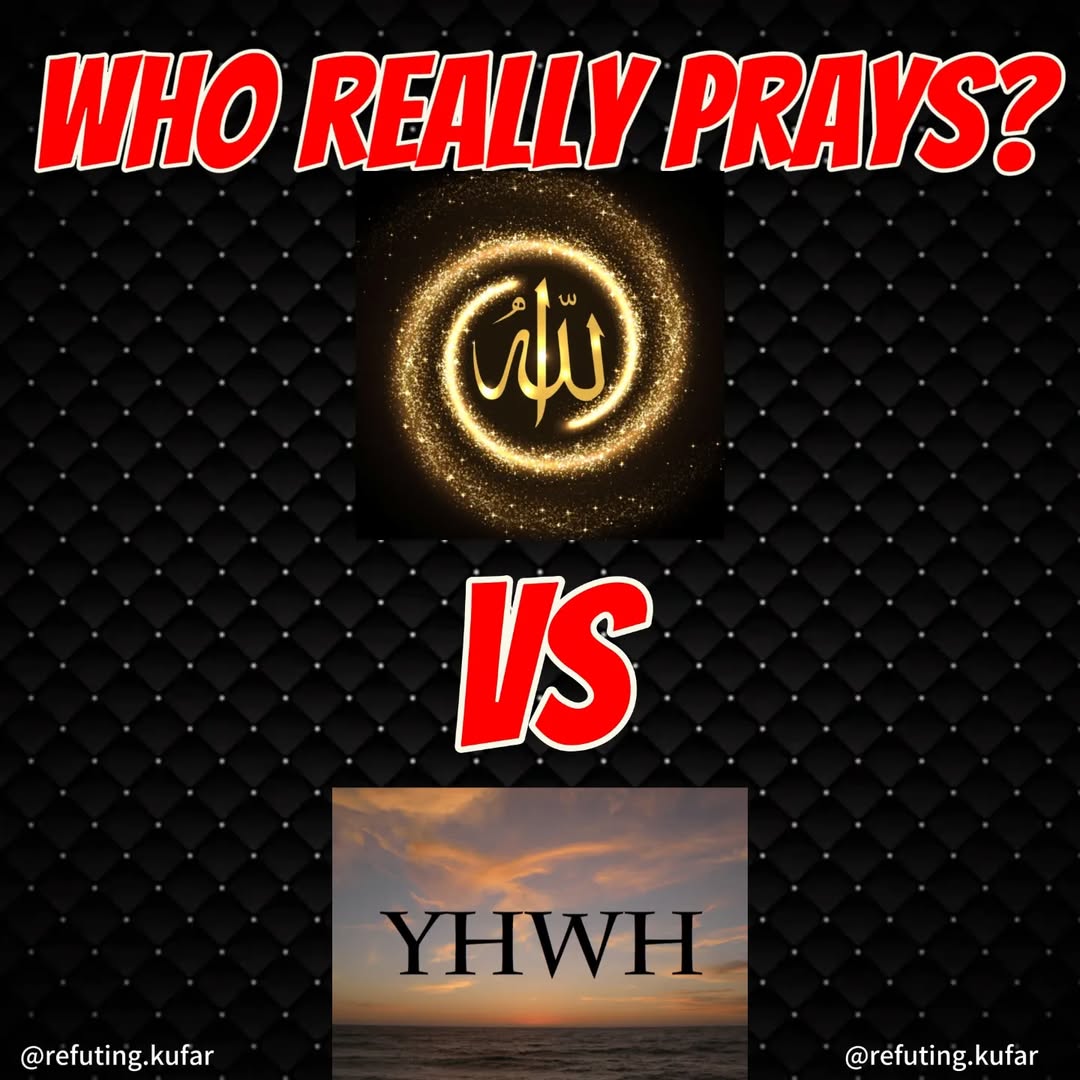
Koehler-Baumgartner — Hebrew and Aramaic Lexicon of the Old Testament:
“תְּפִלָּתִי — my prayer”
The Hebrew word תְּפִלָּתִי (Tephillati) literally means “my prayer” — spoken by YHWH Himself in the original Hebrew text. This is not a translation issue.
Kimberley Christian Patton, Religion of the Gods: Ritual, Paradox, and Reflexivity (Oxford University Press, 2009), p. 266:
“So in b. Berakhot 7a, God’s prayer is his self-communion, and furthermore, it is not a communion without struggle. For the sake of his creation, God prays for one of his divine attributes to overcome the other. Incredibly, he makes himself contingent, limiting and defining his own nature with respect to humankind.”
The only argument Christians had in their defence is that “prayer is communication within the persons of Trinity” — which just got refuted by this. It clearly states here YHWH is praying to Himself for one of His attributes to overcome the other — proving He isn’t all-powerful too.
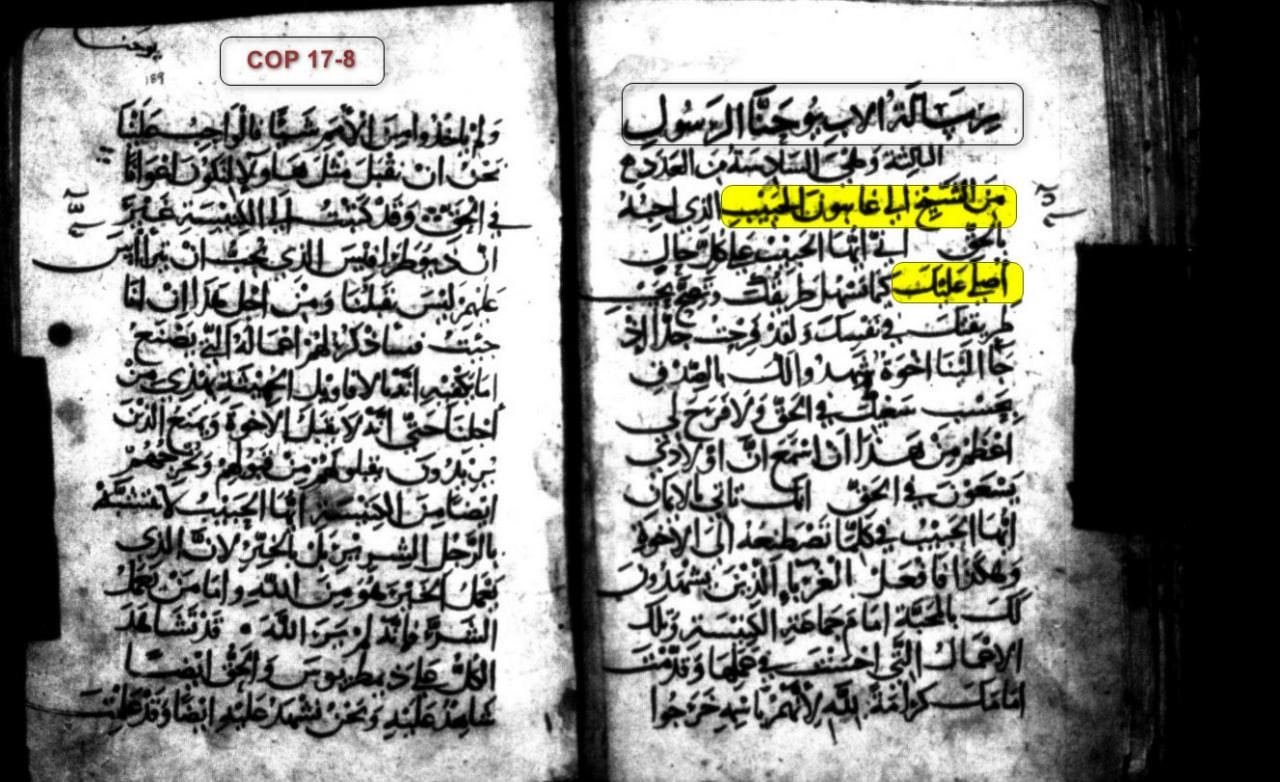
- “من الشيخ أبو غاموت الحبيب” — From Sheikh Abu Ghamout Al-Habib
- “أصلّ عليك” — I bless/pray upon you
A Christian figure in an ancient Christian manuscript uses the word أصلّ (from root صلى — the exact same root as the Quranic Salawat) to mean blessing upon someone — not worshipping them.
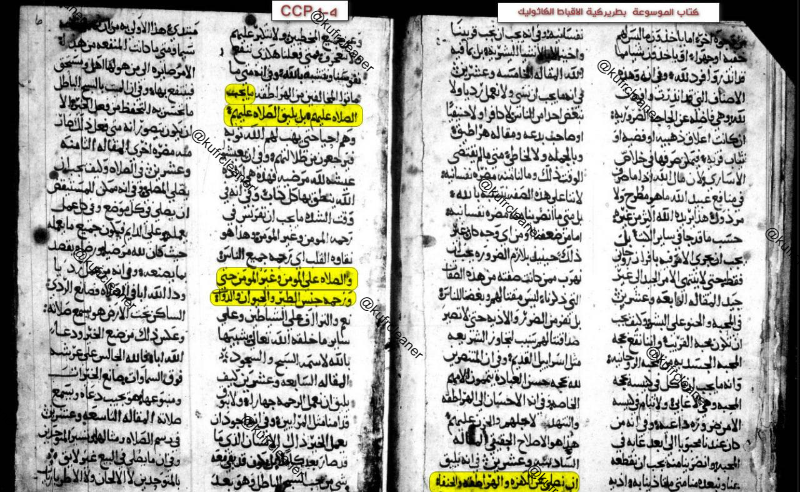
- “الصلاة عليهم يليق الصلاة عليهم؟” — Is it proper to perform salah/blessing upon them?
- “والصلاة عليهم من غير المرحى…” — And the salah/blessing upon them from others…
Even in Catholic Arabic ecclesiastical literature, “الصلاة عليهم” is used in the sense of blessing upon people — same root, same construction as Quran 33:56.
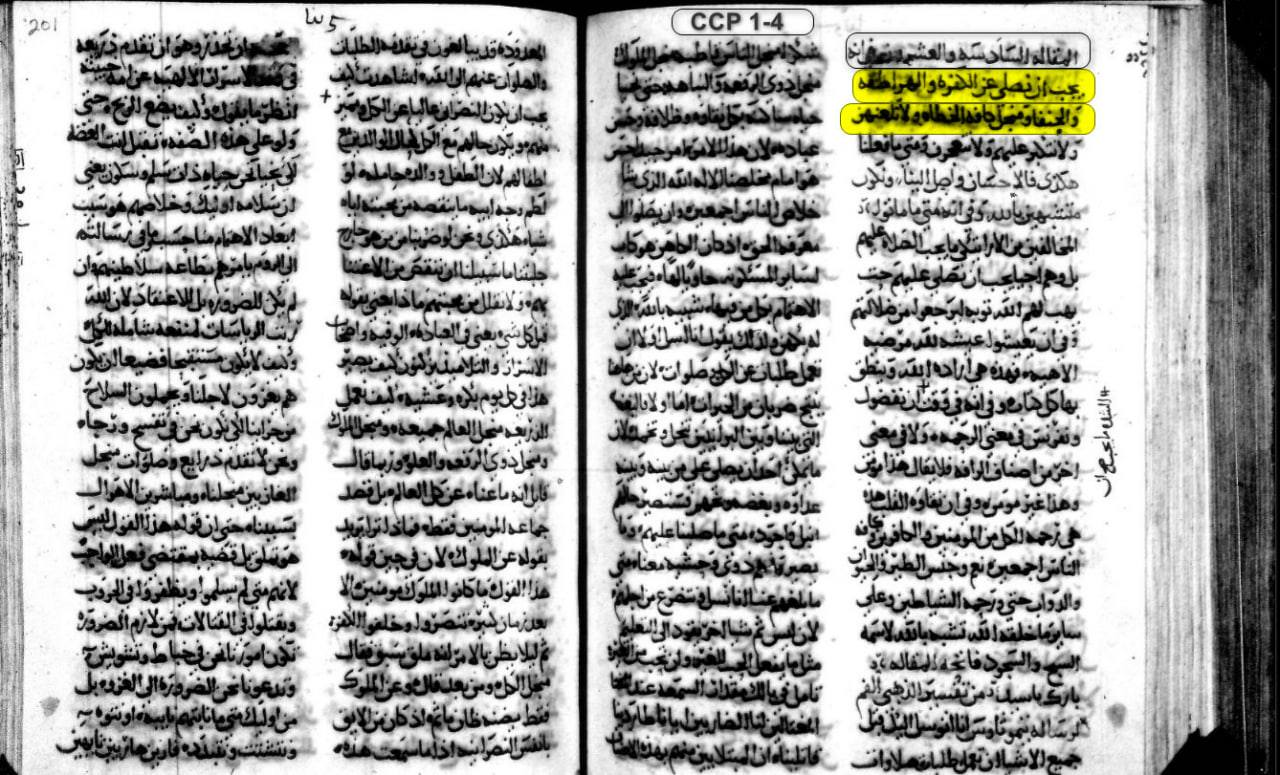
Again, صلى used in a Christian Arabic context to mean blessing upon people.
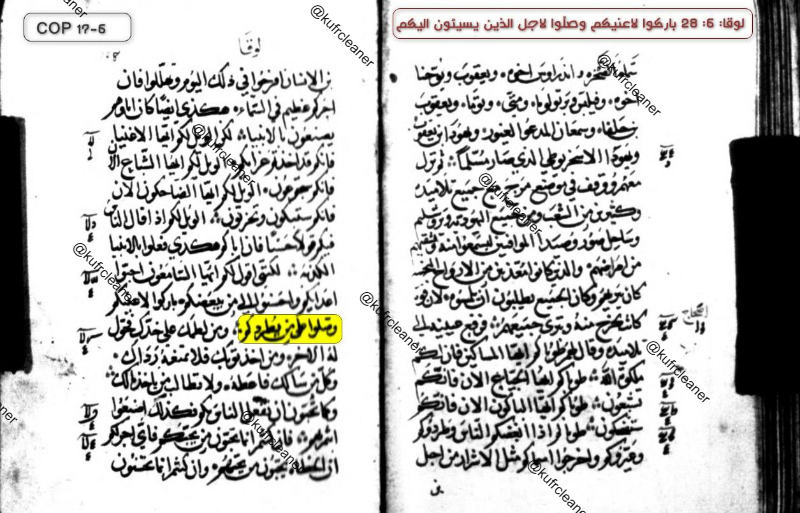
Highlighted: “وصلوا على من يطردكم”
“And bless/pray upon those who persecute you”
In Christianity, it is obligatory for a Christian to pray for those who persecute and oppress their families, according to the Bible!
This ancient Arabic Bible manuscript uses صلوا (from root صلى — exact same root as Quran 33:56) to mean “bless/pray for” persecutors — NOT worship them.
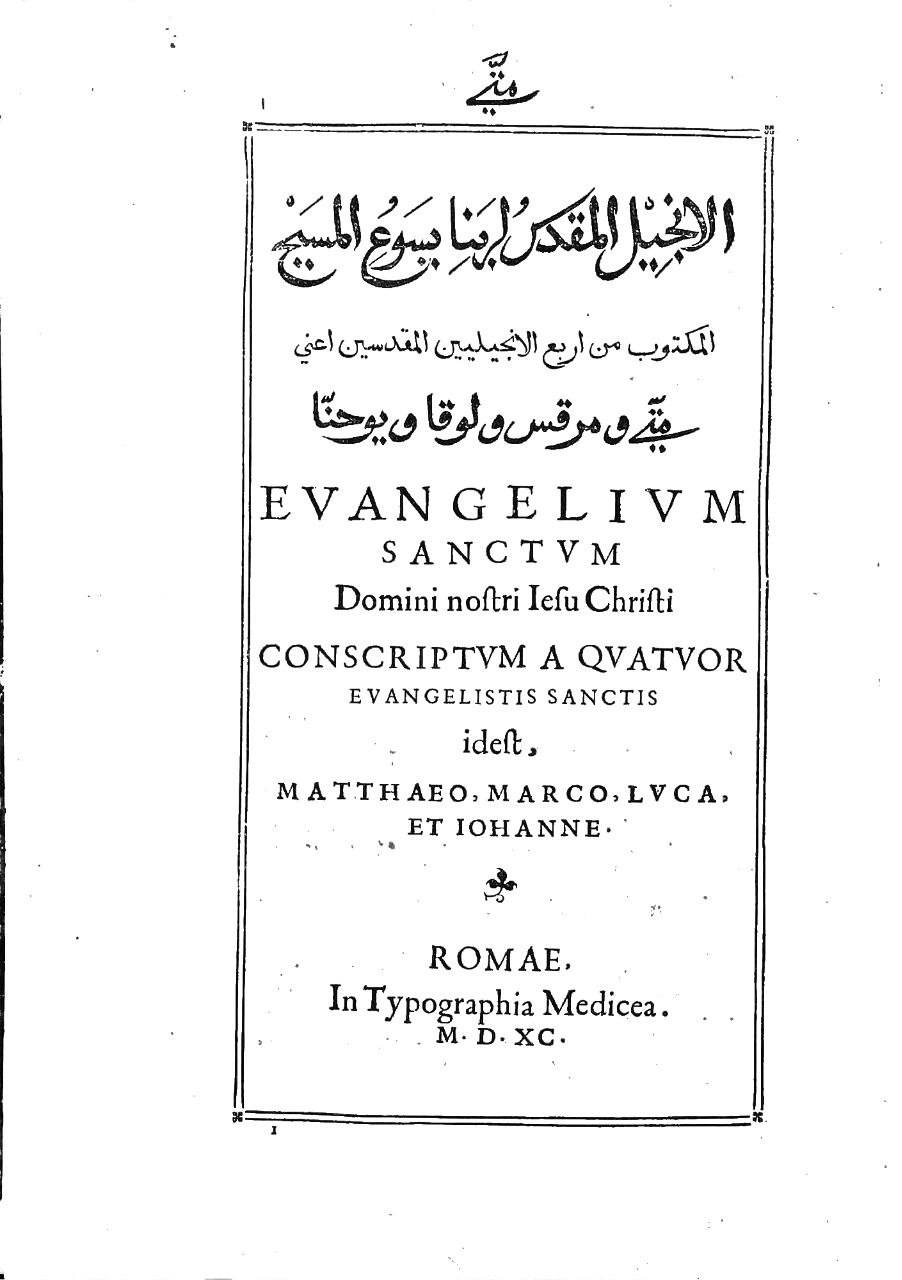
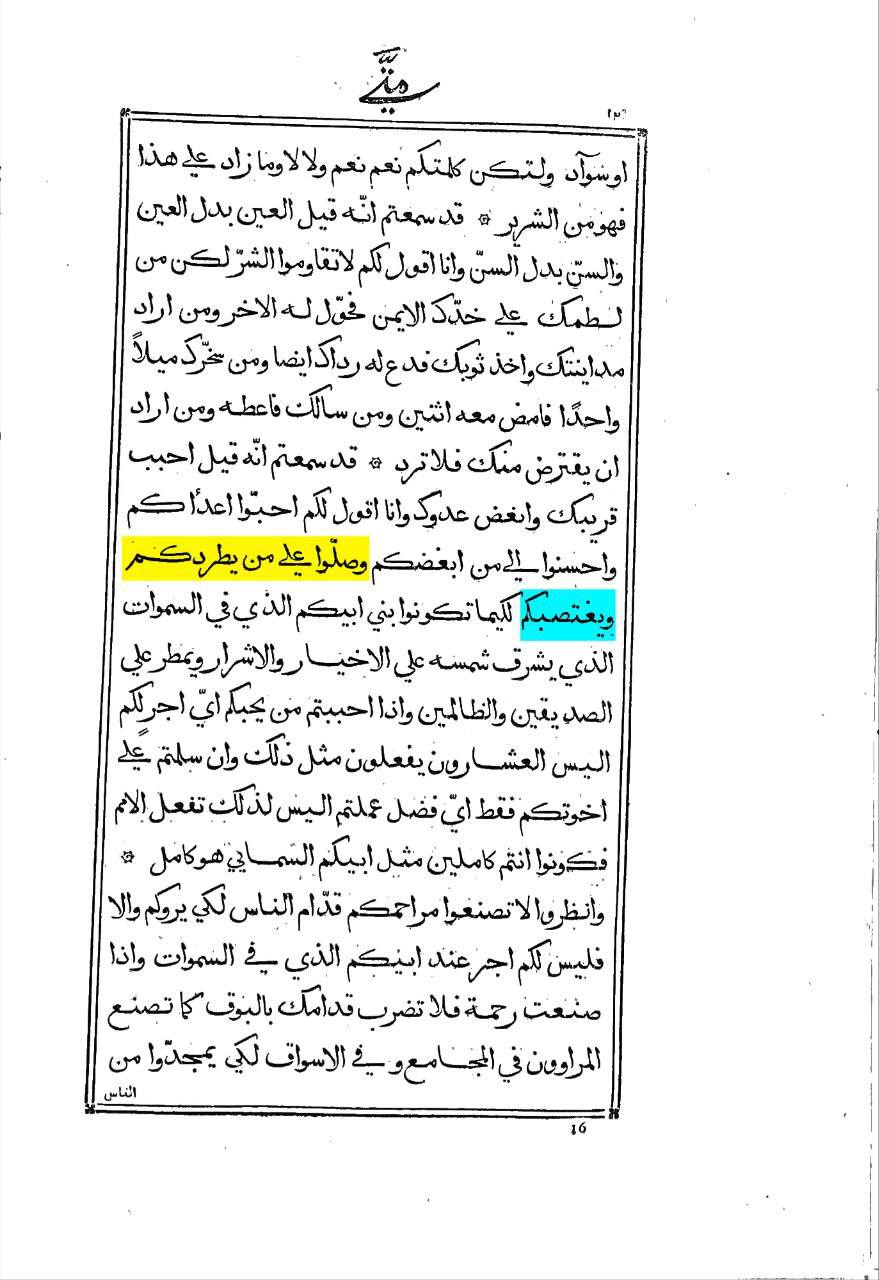
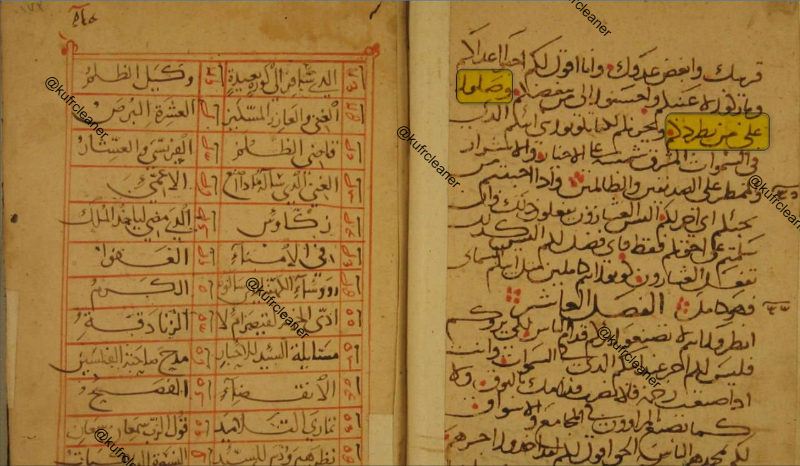
Page 16 — Matthew 5:44 highlighted:
“وصلوا على من يطردكم ويغتصبكم”
“And pray/bless upon those who persecute and oppress you”
The oldest printed Arabic Bible in history uses وصلوا (from صلى — exact same root as Quran 33:56) to mean “bless/pray for” — not worship.
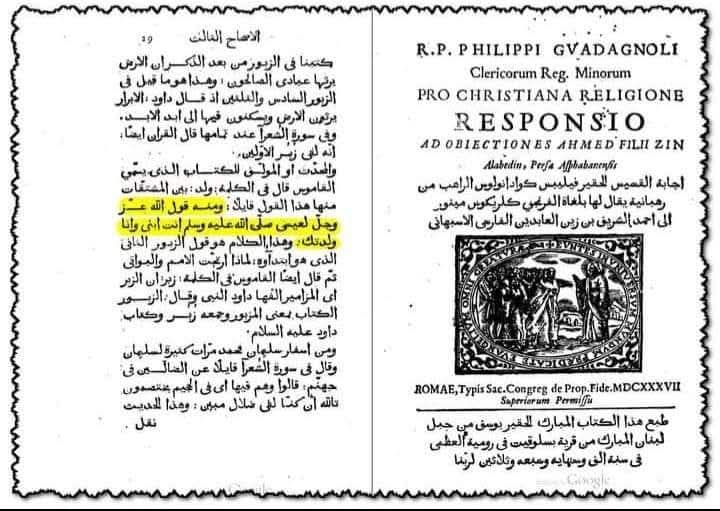
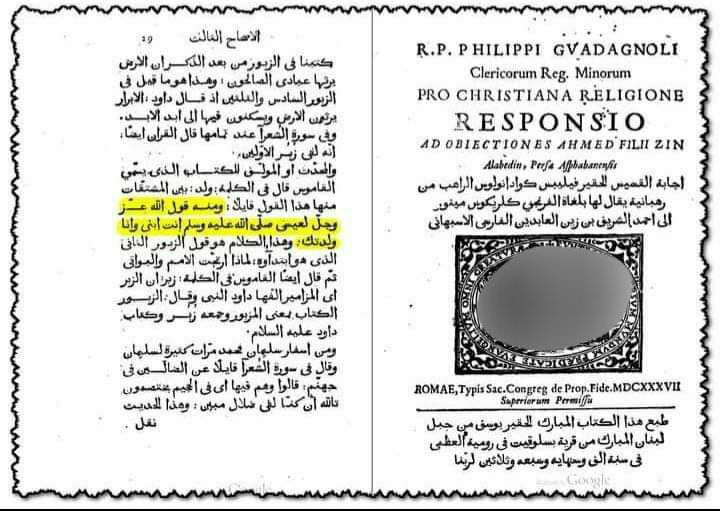
Yellow highlighted Arabic text by Father Guadagnoli himself:
“وعجل لعيسى صلى الله عليه وسلام إني ولدني”
A Catholic priest uses the formula صلى الله عليه وسلام when referring to Jesus — and does not consider it to mean “Allah is worshipping Jesus.” This proves beyond doubt that even Christian scholars understood the phrase to mean blessings and peace of God be upon him.
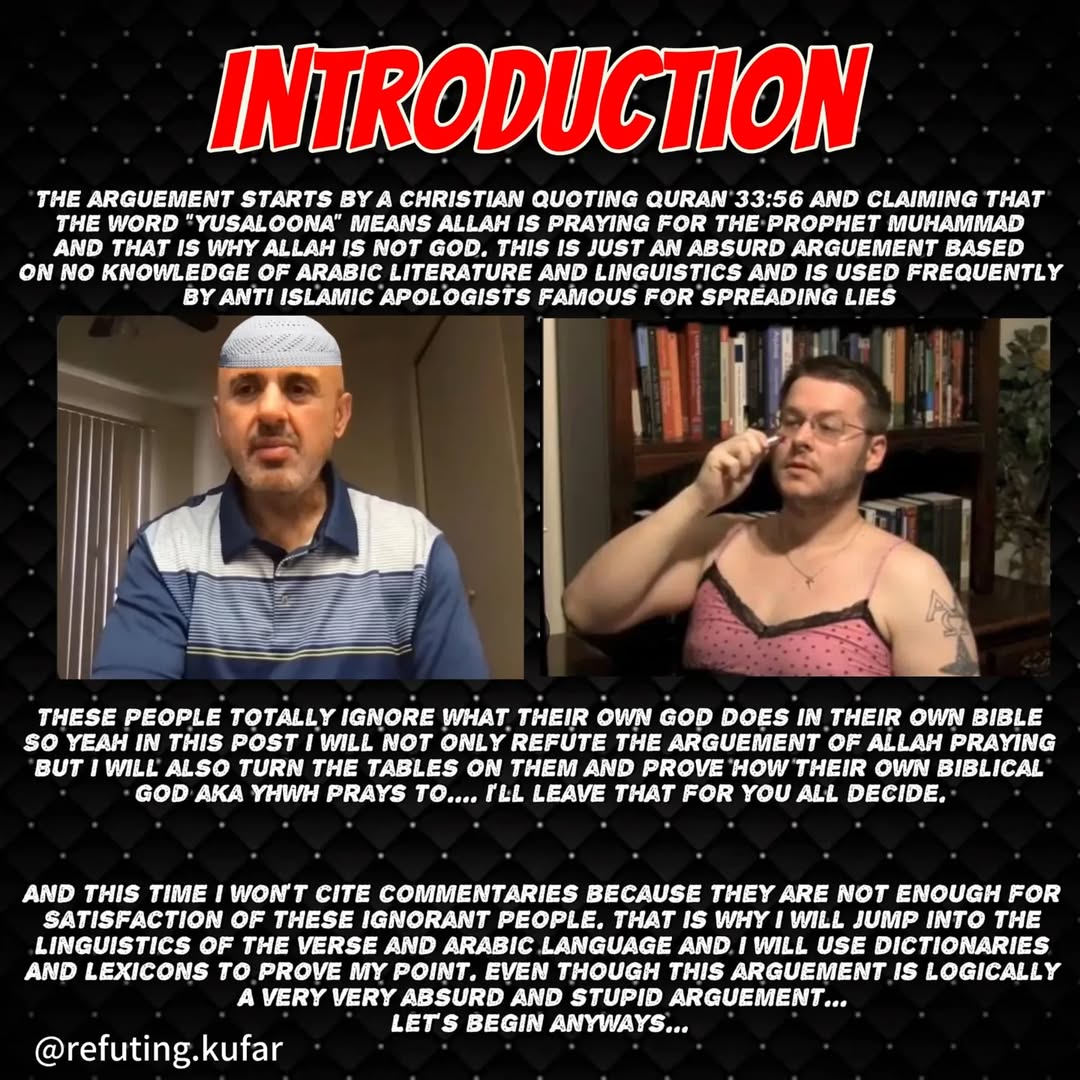
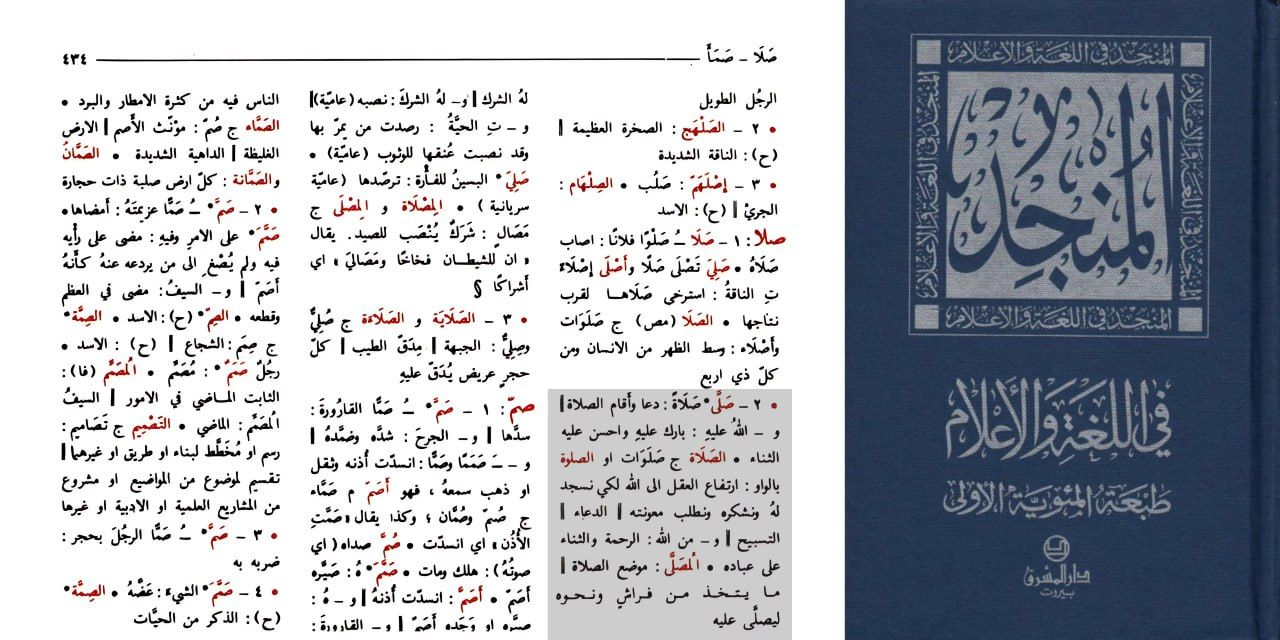
Key entry for صلّى الله عليه:
“بارك عليه وأحسن عليه الثناء”
“Blessed him and praised him well.”
Salah/Salawat entries further define it as:
- الرحمة والثناء على عبده — mercy and praise upon His servant
- الدعاء — supplication/invocation
How does God bless the Prophet Muhammad? Father Philip Guadagnoli says: For example, God Almighty said to Jesus, peace be upon him, “You are my Son, and I begot you.”
Why do Christians criticize God’s BLESSINGS upon the Prophet ﷺ, which signifies mercy and raising of ranks — even though the Prophet Isaiah mentioned that God prays:
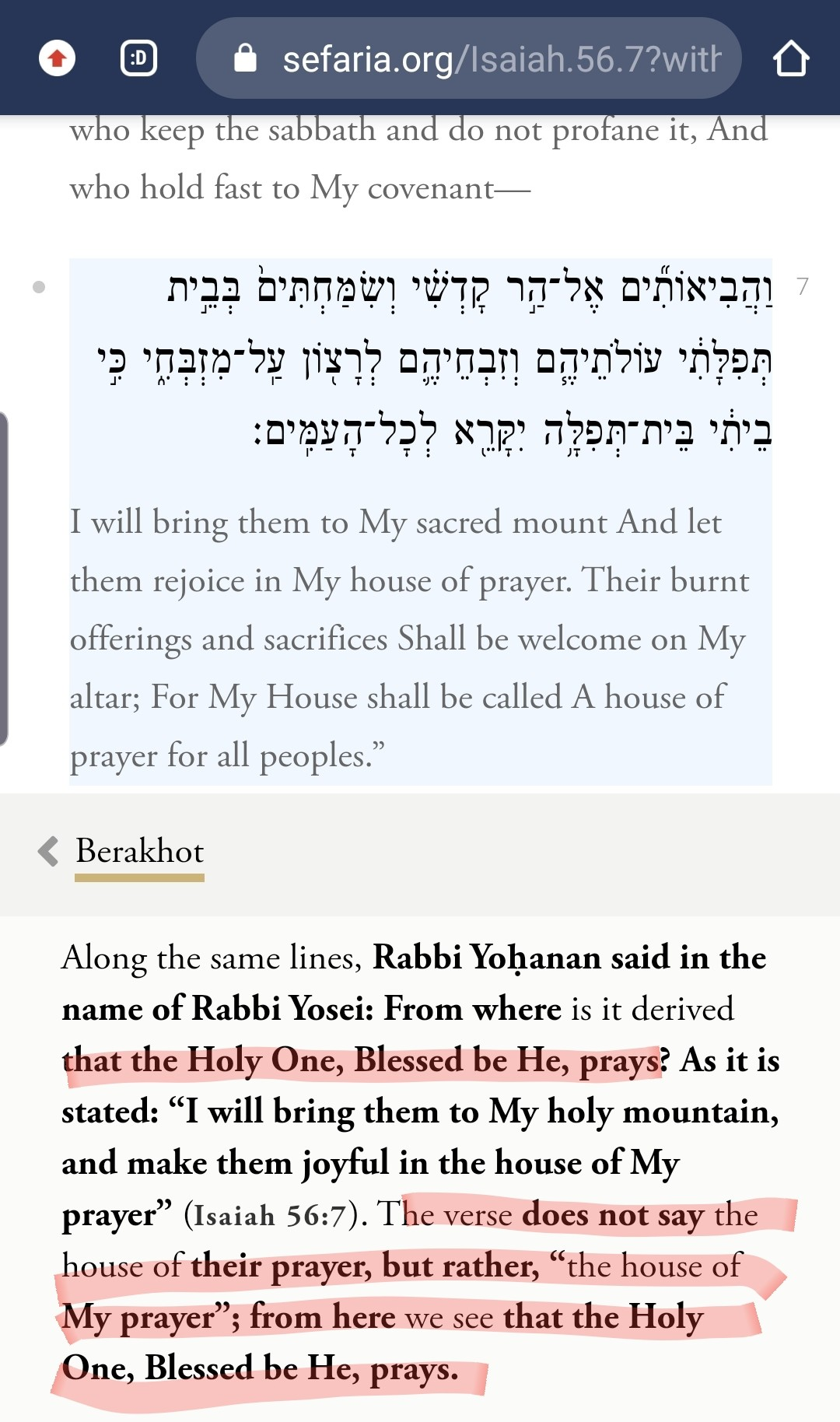
Isaiah 56:7: “I will bring them to my holy mountain, and will make them rejoice in my house of prayer; their burnt offerings and their sacrifices will be acceptable on my altar, for my house will be called a house of prayer for all peoples.”
The meaning of the text, as interpreted by Jewish scholars in the Talmud, is derived from Isaiah 56, which states that the Holy One prays, as it says “the house of His prayer,” not “the house of their prayer” (Berakhot 7a:1).
Rabbi Yohanan said in the name of Rabbi Yosei: From where is it derived that the Holy One, Blessed be He, prays? As it is stated: “I will bring them to My holy mountain, and make them joyful in the house of My prayer” (Isaiah 56:7). The verse does not say “the house of their prayer,” but rather, “the house of My prayer”; from here we see that the Holy One, Blessed be He, prays.
Matthew 14:23-24 — After he had dismissed the crowds, he went up on a mountainside by himself to pray. When evening came, he was there alone.
Mark 1:35 — And very early in the morning he got up, left the house and went away to a solitary place, where he prayed.
Luke 5:16 — But he would withdraw to the deserted places and pray.
To every objector we say: Matthew 7:3
Al-Mu’jam Al-Munjid in Language and Notables — Father Louis Ma’luf, the Jesuit
Try to review the books of Christian heritage and you will find the meaning.