Does Qur’an 33:53 Prove the Prophet Made Up Revelation?
Does Qur’an 33:53 Prove the Prophet Made Up Revelation?
Some critics claim that Qur’an 33:53 proves the Prophet Muhammad ﷺ made up revelation for his own personal comfort. They argue that because the verse tells believers not to enter the Prophet’s houses without permission, not to linger after eating, and not to marry his wives after him, it must have been invented to make his life easier.
This is a lazy argument.
A verse giving a command that protects the Prophet ﷺ, his household, his time, and the sanctity of the Mothers of the Believers does not prove human authorship. It proves that Allah legislated etiquette around the Messenger ﷺ and his family.
The Verse in Question
“O believers, do not enter the houses of the Prophet unless permission is given to you for a meal, without awaiting its readiness. But when you are invited, then enter; and when you have eaten, disperse, without seeking to remain for conversation. Indeed, that was troubling the Prophet, and he is shy of you. But Allah is not shy of the truth. And when you ask them for something, ask them from behind a screen. That is purer for your hearts and their hearts. And it is not for you to harm the Messenger of Allah or to marry his wives after him, ever. Indeed, that would be, in the sight of Allah, enormous.”
Critics claim that because this verse tells people not to overstay in the Prophet’s house and not to marry his wives after him, it proves the Prophet ﷺ fabricated revelation for personal convenience.
This claim is weak because it ignores the Prophet’s character, the social situation, the sanctity of his household, and the wider Qur’anic context.
The Verse Reflects the Prophet’s Shyness, Not Manipulation
The verse itself says:
“Indeed, that was troubling the Prophet, and he is shy of you. But Allah is not shy of the truth.”
This is the entire point.
The Prophet ﷺ was harmed or inconvenienced by people lingering, but his modesty prevented him from directly confronting them. Allah then revealed the ruling to teach the believers proper etiquette.
The verse does not expose fabrication. It exposes the Prophet’s shyness. If he were simply inventing commands for himself, he could have personally told people to leave. Instead, the verse explains that he was too shy to do that, so Allah clarified the truth.
The critic reads the verse backwards. The verse is not evidence of selfishness. It is evidence of restraint.
The Prophet ﷺ Was Exceptionally Modest
The hadith literature confirms that the Prophet ﷺ was extremely shy and modest.
Grade: Sahih.
Grade: Sahih.
These reports fit Qur’an 33:53 perfectly. The Prophet ﷺ was not a blunt, self-serving man who enjoyed embarrassing guests. He was too modest to tell them directly that they had overstayed.
Qur’an 33:53 matches the Prophet’s known character: he was harmed by people lingering, but he was too shy to confront them. Allah then revealed a rule protecting him and teaching the believers etiquette.
This is exactly what we would expect from revelation correcting social behavior around a modest Prophet.
Why Would a Shy Man Invent This?
If the Prophet ﷺ were fabricating the Qur’an, inventing a public verse telling guests to leave would be socially awkward. It could embarrass the guests and make him appear personally annoyed.
A shy person does not naturally create a public confrontation when he could avoid one.
If the Prophet ﷺ simply wanted guests to leave, he could have politely told them. If he feared offending them, inventing a public revelation about their behavior would be even more embarrassing. The better explanation is that Allah revealed the ruling because the Prophet’s modesty prevented him from directly addressing the issue.
The critic’s theory does not explain the Prophet’s shyness. The Islamic explanation does.
This Is Not “Convenience Revelation”
The critic assumes that if a verse benefits the Prophet ﷺ in any way, then the Prophet must have invented it.
That is a fallacy.
Circumstantial ad hominem is when someone dismisses a claim merely because it appears to benefit the person making it, instead of addressing whether the claim is true.
A law benefiting someone does not prove that the person invented it.
If a rule protects a judge from harassment, that does not prove the judge fabricated the legal system. If a law protects a leader’s home from intrusion, that does not prove the law is false. The question is whether the rule is justified.
And this rule is obviously justified.
The Prophet ﷺ Also Received Hard Commands
The claim becomes even weaker when we remember that the Qur’an also gave the Prophet ﷺ commands that made his life harder, not easier.
“And from the night, pray with it as additional worship for you; it may be that your Lord will raise you to a praised station.”
The Prophet ﷺ was commanded to stand in night prayer. That is not self-indulgence.
The Qur’an also did not instantly reveal the clearance of ʿAishah رضي الله عنها during the slander incident. The delay caused severe distress to the Prophet ﷺ, his household, and the Muslim community.
“Indeed, those who came with the slander are a group among you.”
If the Prophet ﷺ were inventing revelation for personal comfort, he would not wait through intense distress during the slander against ʿAishah رضي الله عنها. The Qur’an often placed burdens on him rather than simply serving his immediate comfort.
The critic cherry-picks one verse and ignores the broader Qur’anic pattern.
The Social Problem Was Real
People entered the Prophet’s house, ate with him, and sometimes lingered in conversation after the meal. The Prophet ﷺ was busy with worship, teaching, leadership, judgments, family life, and prophetic duties.
His house was not a public lounge.
Qur’an 33:53 protected the Prophet’s time, privacy, household, and dignity. It also taught the believers basic manners: enter with permission, do not arrive too early for food, do not overstay after eating, and do not casually intrude into the Prophet’s private space.
There is nothing suspicious about this. It is basic etiquette.
Asking From Behind a Screen
The verse also says:
“And when you ask them for something, ask them from behind a screen. That is purer for your hearts and their hearts.”
This is about the Prophet’s wives, who are the Mothers of the Believers. Their status was not ordinary. The ruling protected their dignity and protected the hearts of both sides.
The command to ask from behind a screen is not random. It safeguards the Prophet’s household and establishes a higher standard of purity and respect around the Mothers of the Believers.
The critic wants to reduce the verse to “Muhammad wanted guests gone.” That reading ignores half the verse.
Why Could No One Marry the Prophet’s Wives After Him?
The verse states:
“And it is not for you to harm the Messenger of Allah or to marry his wives after him, ever.”
This was not because the Prophet ﷺ was insecure. It was because his wives had a unique religious status.
“The Prophet is closer to the believers than themselves, and his wives are their mothers.”
The wives of the Prophet ﷺ are the Mothers of the Believers. Marrying them after him would violate their sacred status and harm the Messenger ﷺ.
The Prophet’s wives were not ordinary widows. They were the Mothers of the Believers. Their remarriage to believers after the Prophet ﷺ was forbidden because their status was permanently tied to the Prophet ﷺ and the Muslim community.
The critic ignores their legal and spiritual status.
Al-Qurtubi on the Ruling
The scholars explained the wisdom behind this prohibition.
Al-Qurtubi explained that Allah forbade marrying the wives of the Prophet ﷺ after his death and declared them Mothers of the Believers. This was from the special privileges granted to the Prophet ﷺ, preserving his honor and emphasizing his high status among the Muslims.
This was not about possessiveness. It was about the sanctity of the prophetic household.
Ibn Kathir on Scholarly Agreement
Ibn Kathir also mentions scholarly agreement on this issue.
Ibn Kathir states that the scholars were unanimous that it was forbidden for anyone to marry any of the women who were married to the Messenger of Allah ﷺ at the time of his death, because they are his wives in this world and the Hereafter and are the Mothers of the Believers.
This shows that the ruling was understood within a complete theological and legal framework.
His Wives in Paradise
The source material also mentions the view that the Prophet’s wives remain his wives in Paradise, and that a woman will be with her last husband.
It was narrated that Hudhayfah said to his wife: “If you want to be my wife in Paradise, do not marry anyone after my death. A woman will be with her last husband in Paradise.”
This point is used by scholars to explain why the Prophet’s wives were not to remarry after him. Their bond to the Prophet ﷺ was not treated as an ordinary worldly marriage ending with death.
Christian Comparison
Christian rules differ by denomination and clerical rank. Roman Catholic priests are normally celibate, while Eastern traditions may have married priests but often restrict remarriage after ordination or widowhood.
The Scan Evidence
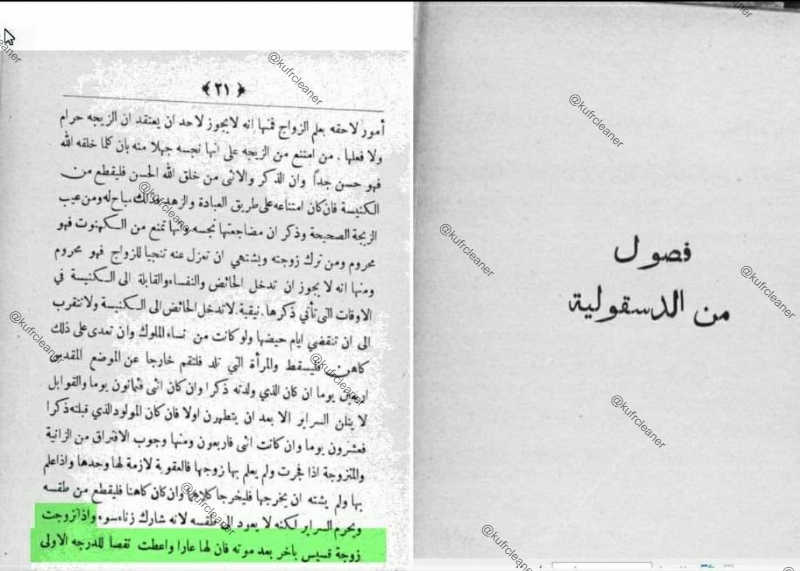
This scan supports the discussion of Qur’an 33:53 and the ruling that believers should not enter the Prophet’s houses without permission, should not linger after meals, should ask the Prophet’s wives from behind a screen, and must never marry his wives after him. The highlighted material is relevant because it frames the verse as etiquette and protection for the Prophet’s household, not evidence that the Prophet ﷺ fabricated revelation for convenience.
Why the “He Made It Up” Claim Fails
The accusation fails for several reasons.
First, the verse itself says the Prophet ﷺ was shy and did not want to confront the people.
Second, authentic hadith confirms that the Prophet ﷺ was extremely modest.
Third, if he simply wanted people to leave, he could have told them directly.
Fourth, inventing a public verse about guests overstaying would be socially awkward for a shy person, not convenient.
Fifth, the Qur’an also gave the Prophet ﷺ difficult commands and did not always immediately remove his hardship.
Sixth, the verse legislates etiquette, household privacy, purity, and the sanctity of the Mothers of the Believers.
Seventh, the prohibition on marrying his wives after him is tied to their unique status as Mothers of the Believers.
Allah revealed Qur’an 33:53 to protect the Prophet’s household, teach manners to the believers, preserve the dignity of the Mothers of the Believers, and address a real social problem that the Prophet ﷺ was too modest to confront directly.
Final Refutation
Qur’an 33:53 does not prove that the Prophet ﷺ made up revelation. It proves the opposite: the Prophet ﷺ was too shy to directly tell people that their behavior was troubling him, so Allah revealed a rule to establish proper etiquette.
The verse does not merely tell people to leave after food. It regulates entry into the Prophet’s house, prevents people from waiting around for meals, tells them not to linger in conversation after eating, commands them to ask the Prophet’s wives from behind a screen, and forbids marrying the Prophet’s wives after him because they are the Mothers of the Believers.
This is not lust, manipulation, or convenience. It is divine regulation of the Prophet’s household and the community’s manners.
The claim that Qur’an 33:53 proves fabrication is baseless. The verse fits the Prophet’s known modest character, solves a real etiquette problem, protects his household, and preserves the status of his wives as Mothers of the Believers. The critic mistakes divine discipline for personal invention.
External Resources
Source Notes
- Sahih Muslim 2320.
- Sahih al-Bukhari 6102.
- Al-Qurtubi on Al-Ahzab 33:53 and the status of the Prophet’s wives.
- Ibn Kathir on the scholarly agreement that the Prophet’s wives could not be married after him.