Gothic Architecture and the Taj Mahal Architecture Are Arab Architectures
The Arab-Andalusian Architecture and the Arabness of Gothic Architecture
Christopher Wren, one of the most prominent figures of the European Renaissance, lived between 1632 and 1723. He was a British architect who graduated in 1653 from the University of Oxford with an MA degree.
Christopher worked on more than 80 construction projects, including St. Paul’s Cathedral in London.
It was indeed his discovery, during restoration works, that there were no buried bodies in the coffins of the sculpted Knights Templar.
Christopher appreciated the beauty of construction in the models of Andalusian and Ottoman mosques, which he studied in detail, and he concluded from them the influences of Arab and Islamic architecture on Western architecture, known as Gothic architecture, founding the “Saracenic Theory.” The term Saracen refers to Arabs, a term by which Arabs were historically known.
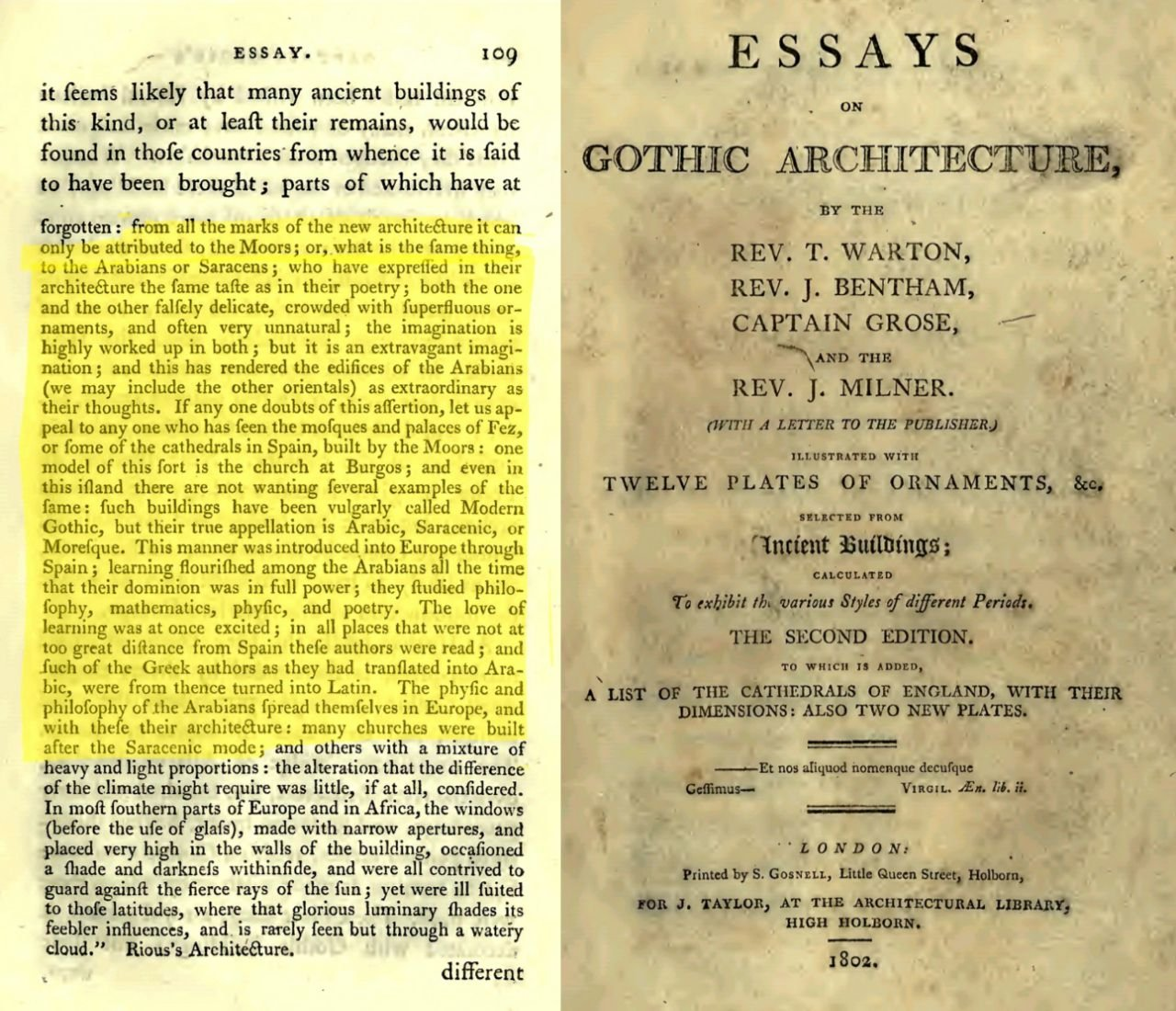
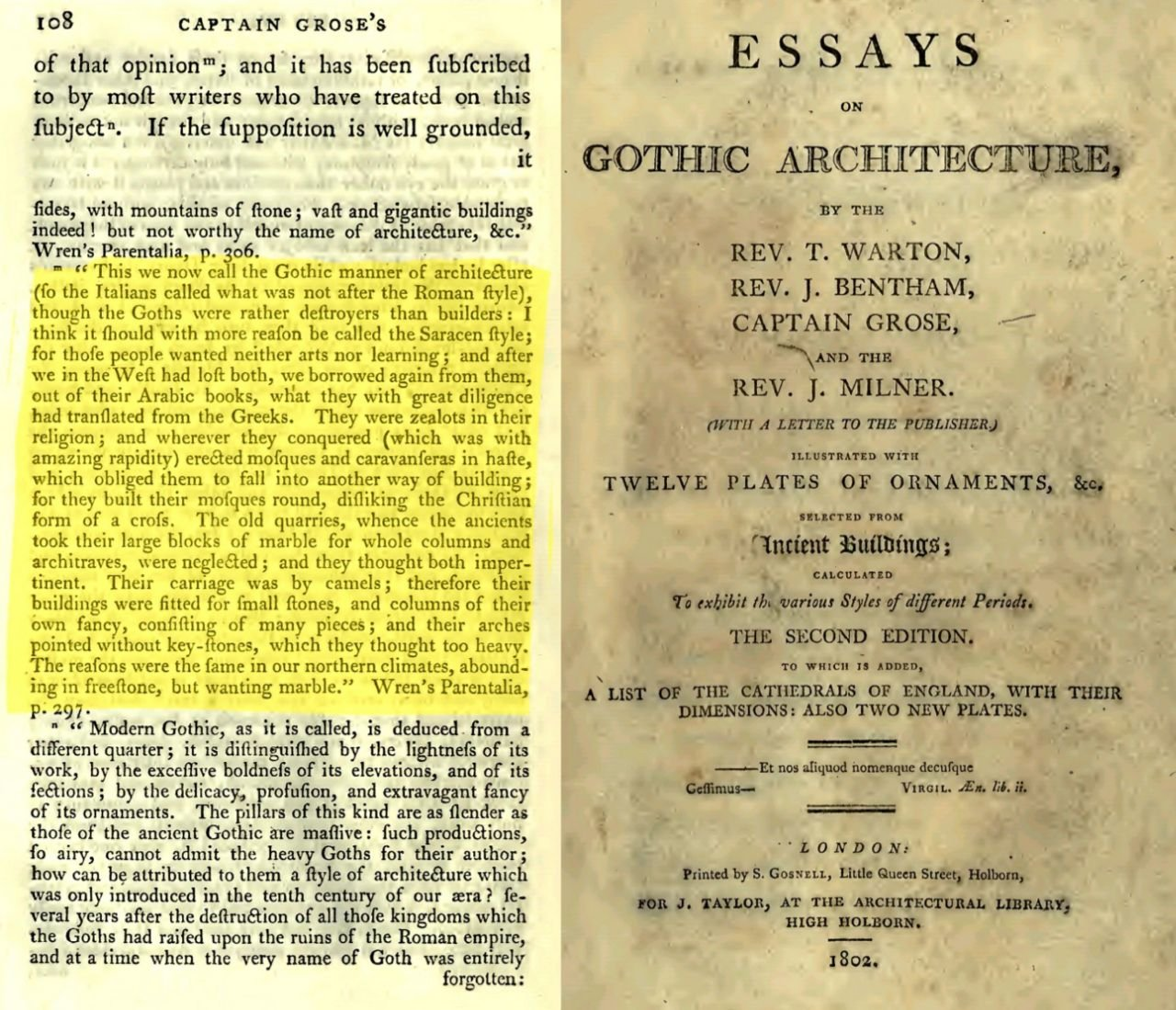
Christopher explained this theory, saying, in an article he wrote in his book PARENTALIA, as quoted by Gross in essays on Gothic architecture, where Christopher Wren states:
“This architecture we now call Gothic architecture, but the Goths were closer to destruction than to building and architecture: I think it is more logical to describe it as the Arab style; for those Goths did not care for the arts or education, whereas the Arabs brought them back to us in the West through their Arabic books, which they translated from the Greeks.
They—the Arabs—were zealous about their religion, and wherever they triumphed and conquered, which was notably with remarkable speed, they built mosques and caravanserais, which forced them to adopt the rounded building style, rejecting the Christian cross shape and bringing their loads by camels. Thus, their buildings were suited to small stones and columns they made themselves, assembling them from a vast number (of stones, that is).
This architecture (i.e., Gothic) can only be attributed to the Arabs (Saracens), or, which is the same thing, the Moors—i.e., the Muslims—who expressed in their architecture the same taste found in their poetry. This refined taste, crowded with excessive decorations and often unnatural (in terms of the degree of ornamentation); the imagination is highly stimulating and played a significant role in both, but it is a grand/extravagant imagination, which made the Arabs (Arabians) as dazzling in their architecture as in their ideas. If anyone doubts this, they should see one of the mosques or palaces in Fez, or one of the churches in Spain built by the Moors, such as Burgos Cathedral. These buildings have been mistakenly named contemporary Gothic style, but their true inspiration and name are Arab (Arabian or Saracenic) and Moresque, brought to Europe via Spain; for the sciences flourished among the Arabs (Arabians) when their kingdom was at its peak. They studied logic, mathematics, physics, and poetry, and what they wrote in Arabic was translated into Latin. The logic and physics of the Arabs (Arabians) spread in Europe, as did their architecture, and several churches were built in the Arab-Islamic (Saracenic) style.
[ ESSAYS ON GOTHIC ARCHITECTURE, Gross p108 - 109, London 1802 ]
Thus, we conclude from Christopher Wren’s words that Gothic architecture is of Arab origin, and it is more accurate to call it Arab/Saracenic rather than Gothic, for the Arabs were builders and masters of architecture, while the Goths were destroyers.