How Did the Ant "Speak" in Surah An-Naml? Science, Arabic Linguistics & Biblical Parallels
The Response to the Doubt About the Ant and Hoopoe Speaking in the Qur’an
Table of Contents
- Content of the Doubt
- First: The Bible Itself Contains Talking Animals
- Second: The Qur’an Never Claims They Spoke Human Language
- Third: Ants Do Communicate — Science Confirms It
- Fourth: The Arabic Word “Said” Encompasses Non-Vocal Communication
- Conclusion
Content of the Doubt
Christians and atheists mock the story of the hoopoe and the ant in the Qur’an, saying: How can an ant or a hoopoe speak human language?
First: The Bible Itself Contains Talking Animals
Christians always challenge the Qur’an without realising that the same objection dismantles their own scripture. The Bible itself mentions multiple accounts of animals speaking in human language.
“And the serpent said to the woman, ‘You will not surely die if you eat from the tree. For the Lord knows that in the day you eat from it, your eyes will be opened, and you will be like the Lord, knowing good and evil.’”
“Then the Lord God said to the serpent, ‘Because you have done this, you are cursed above all livestock and above all beasts of the field. You will crawl on your belly and eat dust all the days of your life.’”
God punished the serpent because it was cunning and deceitful — and it was the one who spoke to Eve. The Bible is explicit on this.
“Then the Lord opened the mouth of the donkey, and the donkey said to Balaam, ‘What have I done to you, that you have beaten me these three times? Am I not your donkey, on which you have ridden all your life to this day? Have I ever done this to you?’”
The story of Balaam’s talking donkey is also confirmed in the New Testament in 2 Peter 2:16, which explicitly states that it spoke with a human voice.
These animals in the Bible spoke in human language — as the Bible itself records. Will a Christian now mock his own book? The objection against the Qur’an applies with far greater force to the Biblical text, where animals literally address human beings directly in their language.
Second: The Qur’an Never Claims They Spoke Human Language
It was Prophet Solomon himself who was given the ability to understand the language of these creatures, as Allah states in Surah An-Naml (27:16). This is analogous to how zoologists study animals in order to understand their communication systems and behaviours — which does not mean the animals are speaking the scientists’ language. The gift was on Solomon’s end, not a transformation of the animals’ speech.
Furthermore, the Qur’an did not originally state that the ant addressed Solomon. The ant was communicating with its own group — which is precisely why it said: “O ants” — not “O Solomon.” The ant had no awareness it was being overheard.
Third: Ants Do Communicate — Science Confirms It
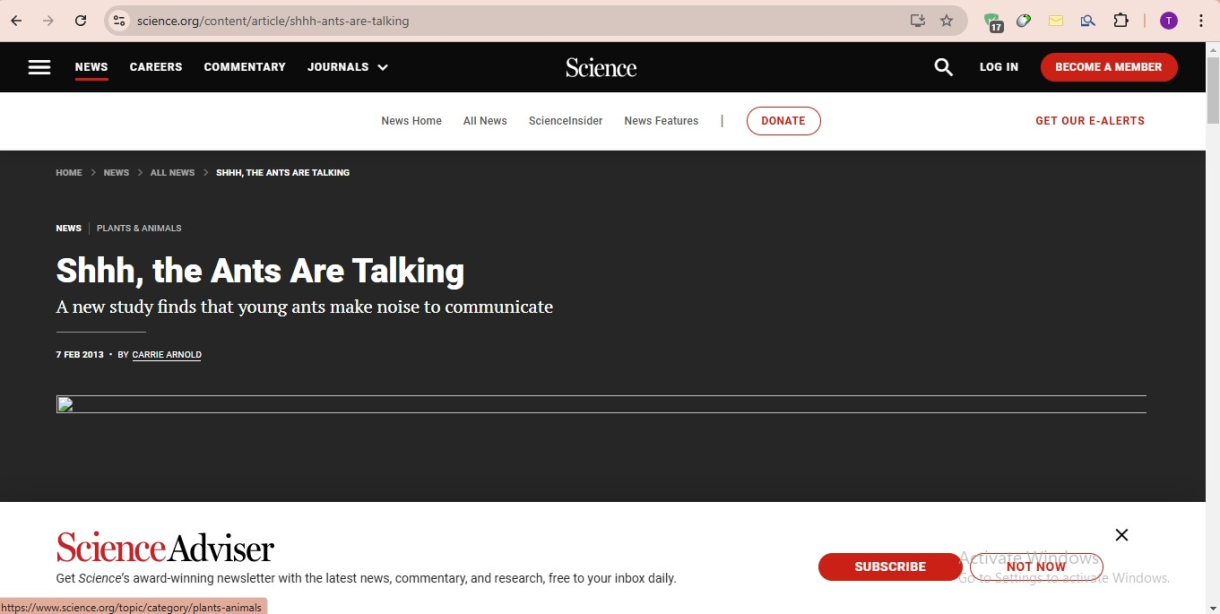
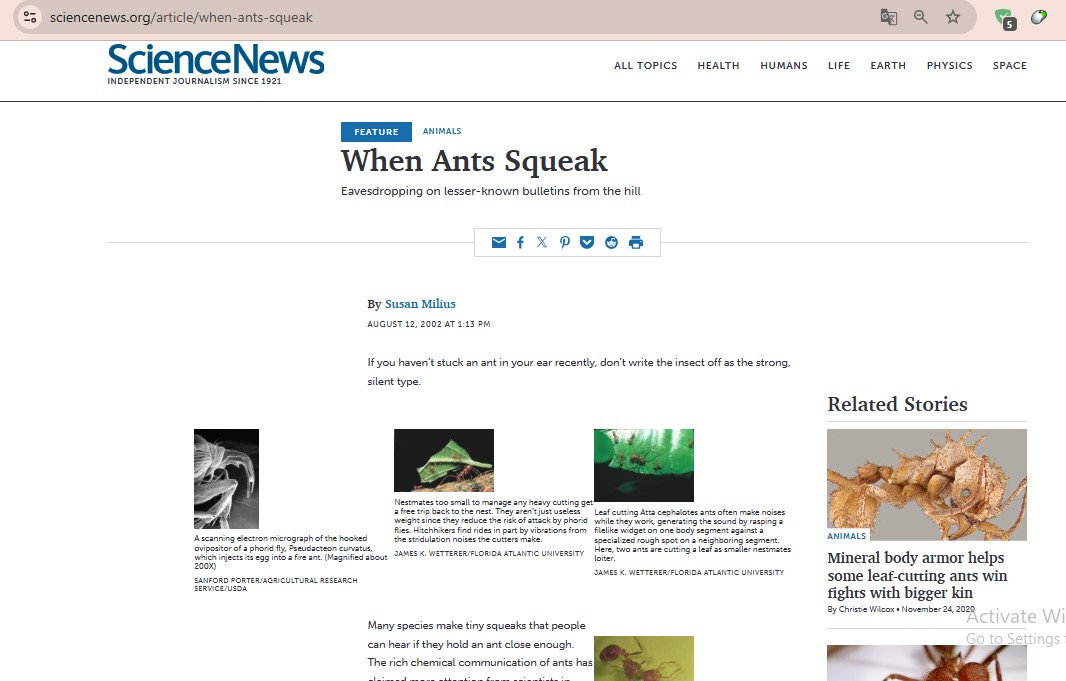
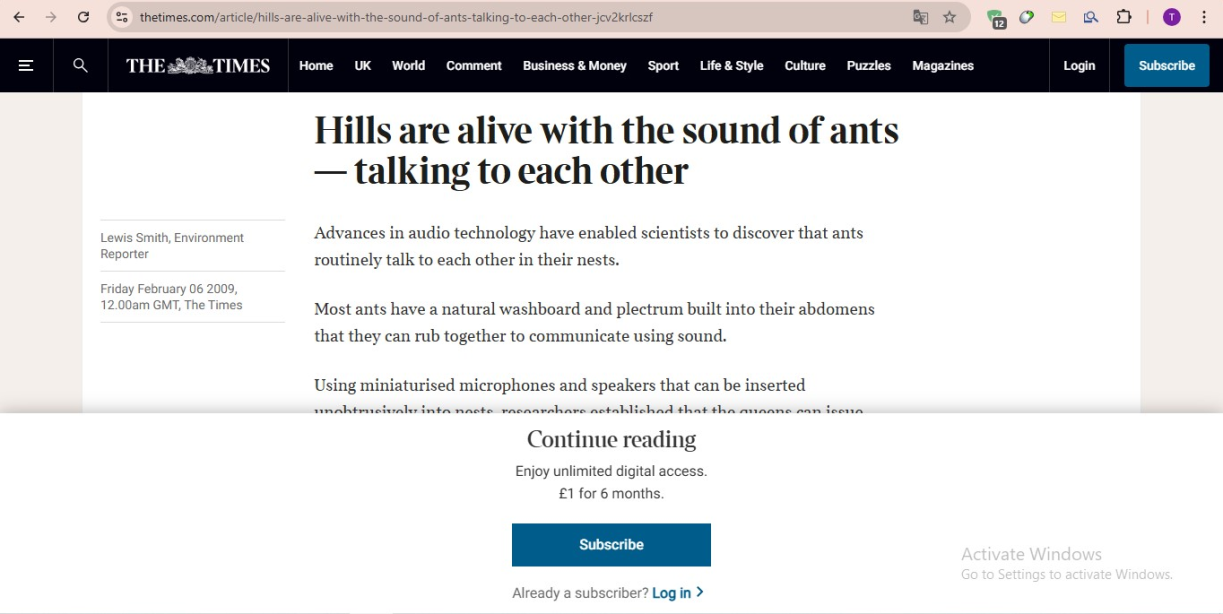
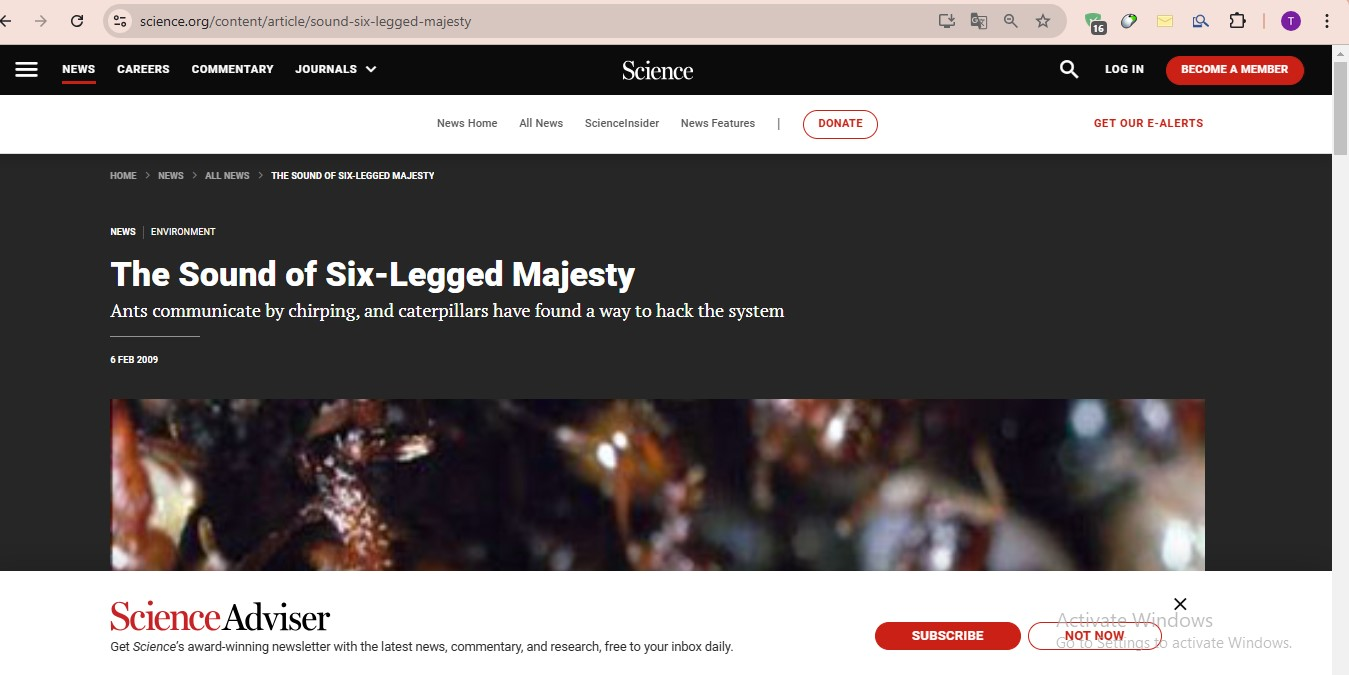
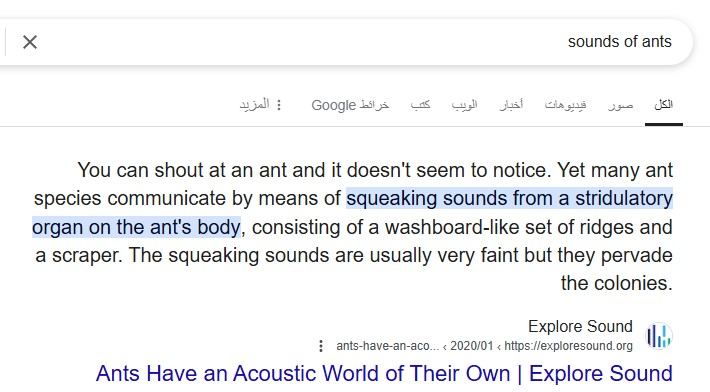
Do ants make sounds? The answer is yes. Ants do produce sounds and communicate with one another. This is well-established in modern science and documented across numerous peer-reviewed sources and scientific platforms.
Fourth: The Arabic Word “Said” Encompasses Non-Vocal Communication
The phrase “an ant said” may also refer to the ant moving parts of its body in order to communicate — which is itself one of the established ways ants interact with one another. In the Arabic language, the word “said” (qāla) extends beyond vocal speech to encompass gestural and physical signals.
“He said with his head: i.e. he pointed with it, and he said with his hand: i.e. he reached with it and took it.”
“He said with his head, and said with his hand, if he moved his head and gestured with his hand.”
“He said with his hand: i.e. he pointed with it, ‘He said with his head.’”
“Because vocal speech indicates a meaning in the soul, its word (speech) is used to indicate something other than the voice, to a meaning, even if it is imaginary… The Arabs make speech an expression for all actions, that is, they express them with it, and they apply it to things other than speech and the tongue, so they say, ‘He said with his hand,’ meaning he took, and ‘He said with his foot,’ meaning he walked.”
The phrase “an ant said” in the Qur’an may therefore indicate the ant communicating through bodily movement — a form of expression the Arabic language explicitly accommodates under the verb qāla. Combined with the scientific fact that ants do produce sounds and signals to communicate, the Qur’anic account is entirely coherent.
Conclusion
It is remarkable that the same atheist who mocks the Qur’anic story of the ant and hoopoe simultaneously believes that irrational, unguided nature produced bacteria, then gradually transformed them into animals with nervous systems and complex vocal organs capable of producing sounds — and that this process ultimately gave rise to a human being who speaks articulate language. If animal communication in the Qur’an is worthy of mockery, the atheist’s own worldview demands far greater scrutiny.
This article is part of the OpenIslam Wiki — Refuting Doubts About the Qur’an series.