If Jesus Forgave Sins, Does That Prove He Is God? A Biblical Refutation
If Jesus Is God Because He Forgave Sins, Then Let the Christian Worship the Jewish Priest
The Christian Argument
If Jesus is God because he forgave sins, then let the Christian worship the Jewish priest because he forgives sins.
Christians claim the divinity of Christ because he forgave sins, although the disciples had the authority to forgive sins and the priest’s uncle forgave sins in the confession room. However, they did not consider them God.
The Problem With This Argument
If forgiving sins proves divinity, then everyone who is given authority to forgive sins would also have to be treated as divine.
But Christians do not apply this argument consistently.
They say Jesus is God because he forgave sins, but they do not say the disciples are gods when the Bible gives them authority to forgive sins.
They also do not say the Jewish priest is God when the priest makes atonement and forgiveness is granted.
The Disciples Were Given Authority to Forgive Sins
— John 20:23
This text gives the disciples authority connected to forgiving and retaining sins.
So if the act of forgiving sins itself proves divinity, then this verse creates a problem for the Christian argument.
Authority Was Given to Jesus
The Bible is very clear that this authority was given to Christ as an ordinary human being who dies, as the Bible says about Christ that all authority in heaven and on earth is given to God.
Is authority given to God!!!
— Matthew 28:18
The one who receives authority is not the original independent possessor of that authority.
The Son of Man Has Authority on Earth
— Luke 5:24
The verse calls him the Son of Man and says he has authority on earth to forgive sins.
This does not prove that he is God.
It proves that he was granted authority.
The Son of Man Came to Serve
— Matthew 20:28
The text describes the Son of Man as one who serves and gives his life.
This is not the language of an independent deity who possesses authority by nature.
The Jewish Priest Also Makes Atonement and Forgiveness
The surprise is that the Jewish priest is able to forgive sins.
— Numbers 15:25
He makes atonement for sins, that is, he forgives them.
In order to close the door on Christians, they may not accept anything but the word forgiveness, so we tell them:
“The judge between us is the original Hebrew word on Jewish websites.”
The word used is:
כָּפַר
And the Hebrew dictionary of the Sefaria website translated it as forgave, which means forgives.
The Hebrew Word כפר
If Jesus forgiving sins proves that he is God, then the priest making atonement and being connected to forgiveness would also have to prove that the priest is God.
But Christians do not accept that conclusion.
So the argument collapses.
Scan Evidence
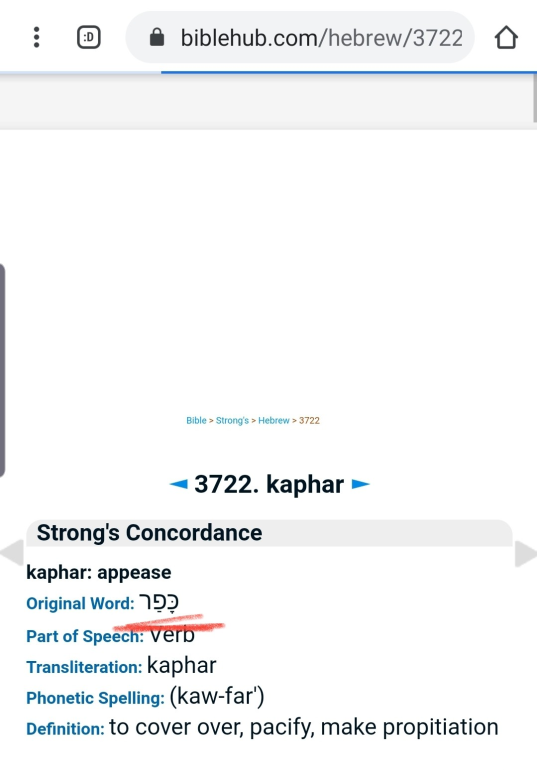
This scan is fromBible Hub, showing Strong’s Hebrew 3722 for the Hebrew word כָּפַר / kaphar. The entry identifies the word as a verb and gives meanings such as to cover over, pacify, and make propitiation. The highlighted part focuses on the Hebrew root used for atonement. This supports the argument that the biblical language of atonement is tied to the priestly act performed in Numbers 15:25, where the priest makes atonement and forgiveness follows.
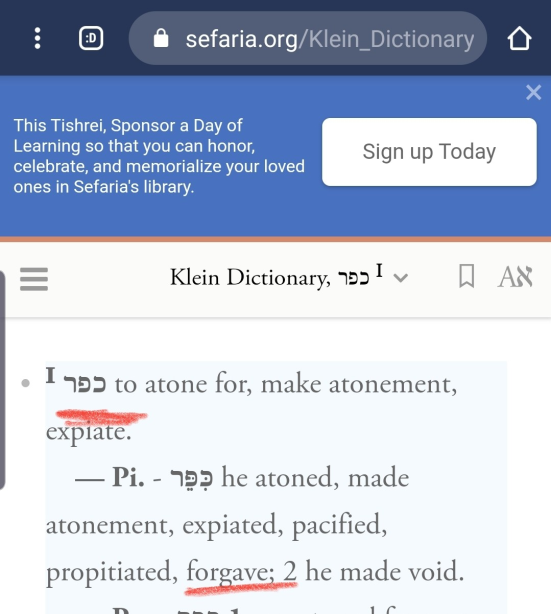
This scan is fromSefaria’s Klein Dictionary entry for כפר. The highlighted section gives meanings such as to atone for, make atonement, expiate, pacify, propitiate, and specifically forgave. This scan is important because it shows that the Hebrew root connected to priestly atonement can be translated with the language of forgiveness. Therefore, the article argues that if Christians insist on connecting forgiveness of sins with divinity, then the priestly role in the Hebrew Bible creates a direct problem for that claim.
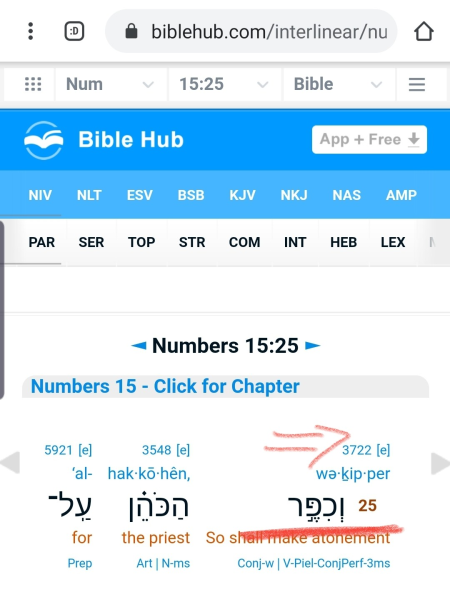
This scan is fromBible Hub’s interlinear display of Numbers 15:25. It shows the Hebrew phrase where the priest makes atonement, with the word connected to כפר / kaphar highlighted. The English line says “So shall make atonement”, and the Hebrew word is linked to Strong’s 3722. This supports the article’s use of Numbers 15:25: the priest performs the atoning act, and the verse then says the congregation will be forgiven. The point is that forgiveness language exists in relation to priestly action, yet Christians do not treat the priest as divine.
Conclusion
If forgiving sins is enough to prove that Jesus is God, then the same logic would force Christians to worship the disciples and the Jewish priest.
But Christians reject that.
Therefore, forgiving sins does not prove divinity by itself.
Authority that is given does not prove independent divinity.