Lucy
Lucy is a species we know as Austrapithecus afarensis and evolutionists often talk about her with certainty and skeletal analyses coupled with an accent that shows the pieces, which gives you the impression that the article here is an established article enlightened by decisive data, and all of that is an illusion. We are not certain of anything about this Lucy, even of her existence, for various reasons: First: establishing major theories about Lucy and skeletal reports is unjustified because we are basically not facing a complete fossil, nor is it carefully preserved or assembled with a definition that cuts off the individual’s uniqueness in itself. As is known, only about 40 percent of Lucy has been found, meaning a percentage that does not allow for building major hypotheses on it.
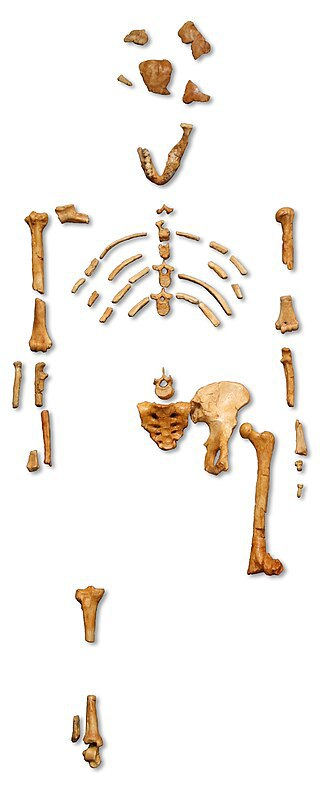
Incomplete fossil image of Lucy
“Lucy’s world: Was Lucy the mother of us all?” SCIENCE ,VOLUME 384 ISSUE 6691 5 APR 2024 : https://www.science.org/content/article/was-lucy-mother-us-all-fifty-years-discovery-famed-skeleton-rivals
The biggest problem here is not the ratio alone, but that these bones were not gathered together at all, but rather scattered in a hill and in different places. This scattering raises a serious question about whether the fossil we have in our hands is the fossil of one individual or even one species or several species, and that is according to the discoverer of the fossil himself, who says, “Because the bones are not found in one place, it is possible that they came from any place higher up the slope, and there is no mold around them. Rather, we are making probabilities about that.”
المرجع : Donald Johanson and James Shreeve “Lucy’ Child: The Discovery of a human ancestor” New York Early Man Publishing, 1989,P 163
Over time, it was found that the vertebral element AL 288-1am falls below the expected size within the vertebral column determined for Lucy’s skeleton and appears more consistent with baboons, which were the most abundant ape species in the KH-1s deposits at Hadar, where she was discovered, indicating that it was introduced from another species. There may be more elements involved in Lucy’s overall skeleton than previously thought: the big question about Lucy is whether the bones attributed to her are from the same species or the same individual.
https://pubmed.ncbi.nlm.nih.gov/26058822/
Research reveals baboon vertebral elements in Lucy
{Embed}
https://pubmed.ncbi.nlm.nih.gov/26058822/
Lucy’s back: Reassessment of fossils associated with the A.L. 288-1…
The Australopithecus afarensis partial skeleton A.L. 288-1, popularly known as “Lucy” is associated with nine vertebrae. The vertebrae were given provisional level assignments to locations within the vertebral column by their discoverers and later workers. The continuity of the thoracic series diffe …

The main reason for considering Lucy an ancestor of humans is her upright posture and the fact that she could walk upright, thus providing evidence for a transitional feature that appeared in the genus Australopithecus, making her a transitional fossil. The response is as follows: Several data showing that Lucy was a knuckle-walking fossil similar to chimpanzees and apes were presented by Dr. Brian G. Richmond of the Department of Anthropology at George Washington University in collaboration with his colleague David S. Strait. Their analyses showed that fossils attributed to Australopithecus anamensis (KNM-ER 20419) and Australopithecus afarensis (AL 288-1) retain a specialized wrist morphology associated with knuckle-walking. Richmond, Brian G. & Strait, David S. “Evidence That Humans Evolved from a Knuckle-Walking Ancestor,” Nature, 404 (2000): 382–385.
https://www.nature.com/articles/35006045
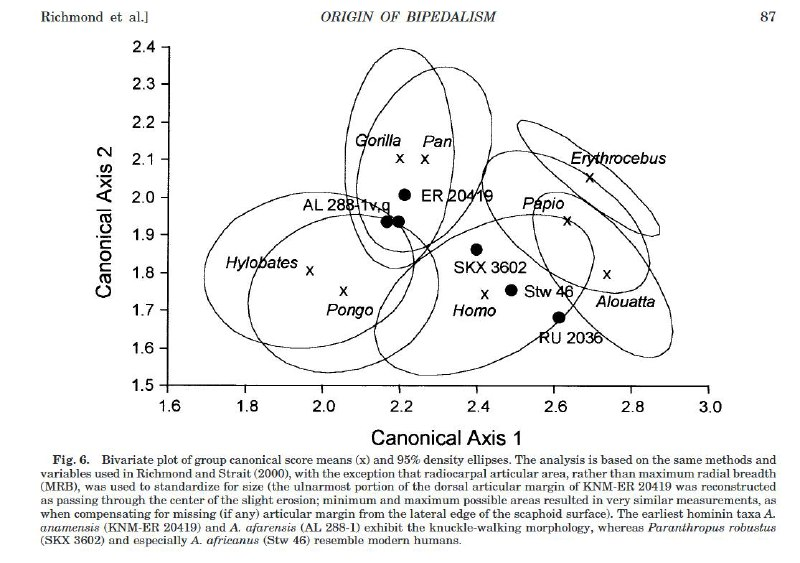
In another paper, it is shown that the diameters of fossils attributed to A. anamensis (KNM-ER 20419) and A. afarensis (AL288-1)j “Lucy” closely resemble African apes in their knuckle-walking morphology, still within the inner range (graph below). Richmond, BG, Begun, DR and Strait, DS (2001), Origin of human bipedalism: The knuckle-walking hypothesis revisited. Am. J. Phys. Anthropol., 116: 70-105. https://doi.org/10.1002/ajpa.10019
Notice in the following graph how Lucy AL 288-1 exhibits the knuckle-walking range…
{Embed}
https://www.nature.com/articles/35006045
Evidence that humans evolved from a knuckle-walking ancestor
Nature - Evidence that humans evolved from a knuckle-walking ancestor
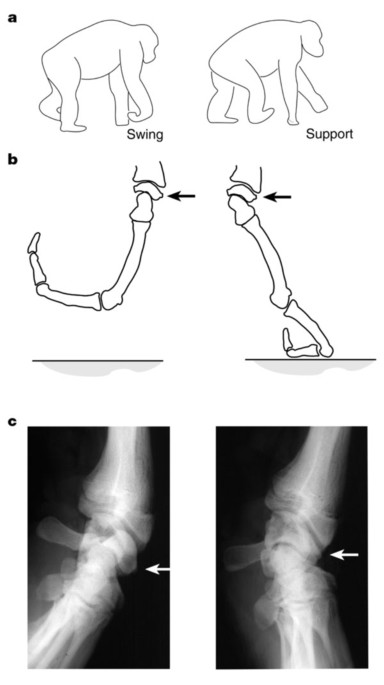
Graphic representation showing that the movement pattern is still within the framework of walking on joints.
Add skin or tongue?
Let’s add more skin.
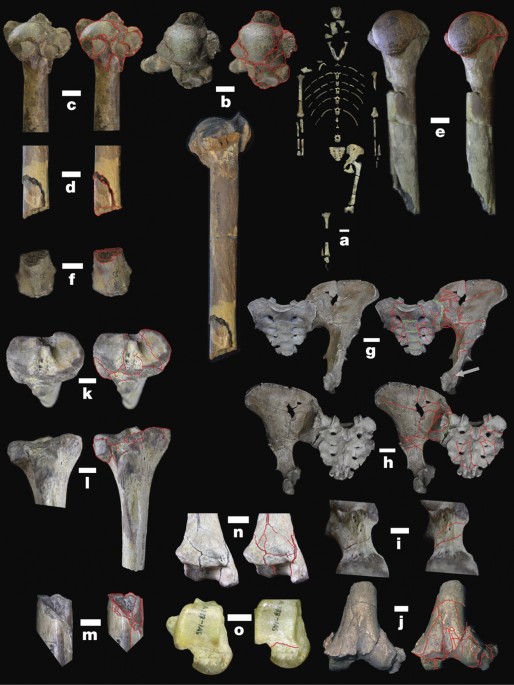
°°°°°°New analyses reveal the distinctive arboreal locomotion of this species. For example, the data show that Lucy’s death was caused by a fall, probably from a tall tree, providing strong evidence for arboreal locomotion and contradicting the upright walking hypothesis. The Nature study notes that this provides unusual evidence for arboreal locomotion: <It is therefore ironic that her death can be attributed to injuries resulting from a fall, probably out of a tall tree, thus offering unusual evidence for the presence of arboreal locomotion in this species.> Original text: Kappelman, J., Ketcham, R., Pearce, S. et al. Perimortem fractures in Lucy suggest mortality from fall out of tall tree. Nature 537, 503–507 (2016). https://doi.org/10.1038/nature19332
Similarly, Bernard Wood suggests that Lucy’s ribcage reconstruction shows climbing adaptations based on M. M. Abitbol’s research, which is very strong evidence for what we have already mentioned. Bernard Wood, Mark Collard, The Human Genus. Science 284, 65-71 (1999). DOI:10.1126/science.284.5411.65
https://www.science.org/doi/10.1126/science.284.5411.65
See also: M. M. Abitbol, J. Hum. Evol. 28, 211 (1994); K. D. Hunt, S. Afr. J. Sci. 92, 77 (1996); P. Schmid, in Origine(s) de la Bipe”die Chez les Hominide”s, Y. Coppens and B. Senut, Eds. (Cahiers de Pale”oanthropologie, Editions du CNRS, Paris, 1991).
{Embed}
https://doi.org/10.1038/nature19332
Perimortem fractures in Lucy suggest mortality from fall out of tal…
Nature - ‘Lucy’ is the well-known partial skeleton of the extinct hominin Australopithecus afarensis. She lived just over three million years ago in what is now Ethiopia. A new analysis of…
Moreover, Austrapithecus afarensis specimens exhibit features that have nothing to do with upright walking. For example, a study published by Bernard Wood states that the features expected to be present in the upper half and balancing organs of Austrapithecus afarensis if it walked upright are more similar to what we have than to what primates (such as chimpanzees and gorillas) have, which rarely, if ever, walk on two feet. Well, this is a very good point and a criterion. Critical, did Australopithecus afarensis meet it? Wood concludes that these traits are different from ours and appear more similar to gorillas and chimpanzees than to humans, thus strongly ruling out upright walking. Wood, B. A precious little bundle. Nature 443, 278–279 (2006).
https://www.nature.com/articles/443278a
Richard Leckie concludes that “they were almost certainly not adapted to fast walking and running, as humans are” and concludes that “what you see in Australopithecus is not what you would want in a bipedal animal capable of efficient running” Richard Leakey and Roger Lewin, Origins Reconsidered: In Search of What Makes Us Human, pp. 193–195 (Anchor books, 1993).
{Embed}
https://www.nature.com/articles/443278a
A precious little bundle
Nature - Much of what makes us human lies in our childhood. Almost nothing is known of the early development of australopithecines, the stock whence Homo is believed to have emerged, but this will…
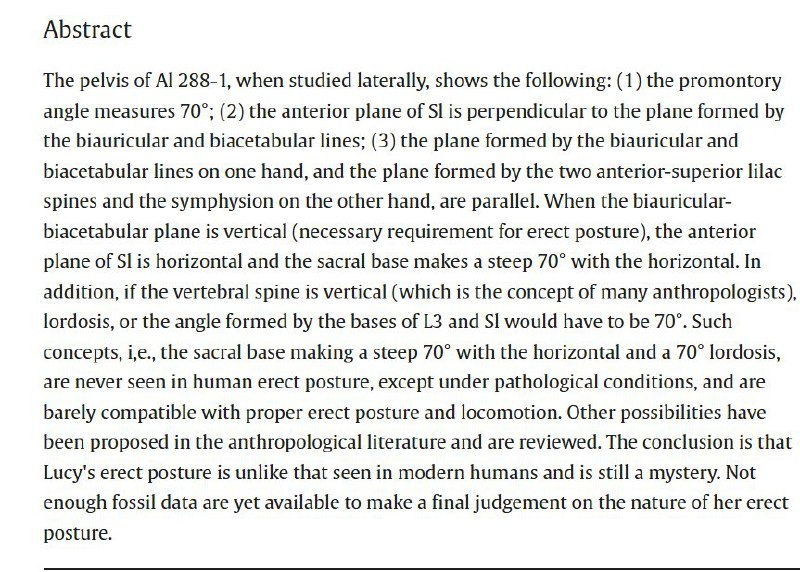
Even those who favored Lucy walking upright (although the evidence is poor) cautioned that such an upright gait and its method are essentially unknown and not like those of humans, and that Lucy afarensis may have invented an obscure, special method. Thus, the feature Lucy afarensis bears here, if it exists, has nothing to do with transitional characteristics and is far from being the transitional feature expected. Abitbol, MM (1995). Lateral view of Australopithecus afarensis: primitive aspects of bipedal positional behavior in the earliest hominids. Journal of Human Evolution, 28(3), 211–229.
M. Maurice Abitbol
points out that Lucy’s gait is unlike that seen in modern humans and remains a mystery, concluding that a final judgment on her upright posture is still elusive due to weak support from specimens and associated features of the fossil.
Text from the research summary of Abitbol, MM
However, what is important for us is that the upright nature of Lucy’s gait is not related to the expected transitional trait, as previously mentioned. A research paper published in the Journal of Human Evolution confirms: “Lucy’s pelvic inlet is very wide, especially in relation to body size. This width, when combined with horizontal rotation of the pelvis, reduces the vertical displacement of the center of mass during bipedal walking. Another way to reduce this vertical displacement and its undesirable effects is to lengthen the lower limbs. Presumably, the adoption of this strategy by early humans allowed for a relatively narrow inlet and thus a narrower distance between the hip joints. Thus, Lucy’s pelvis does not simply represent an intermediate stage between chimpanzees and Homo sapiens, nor does it necessarily represent the pelvis of modern humans. Although Lucy was clearly bipedal and largely terrestrial, she clearly achieved this mode of locomotion through a solution of her own.”
المرجع : Yoel Rak,Lucy’s pelvic anatomy: its role in bipedal gait,Journal of Human Evolution,Volume 20, Issue 4, April 1991, Pages 283-290.
DOI:10.1016/0047-2484(91)90011-J
https://www.sciencedirect.com/science/article/abs/pii/004724849190011J
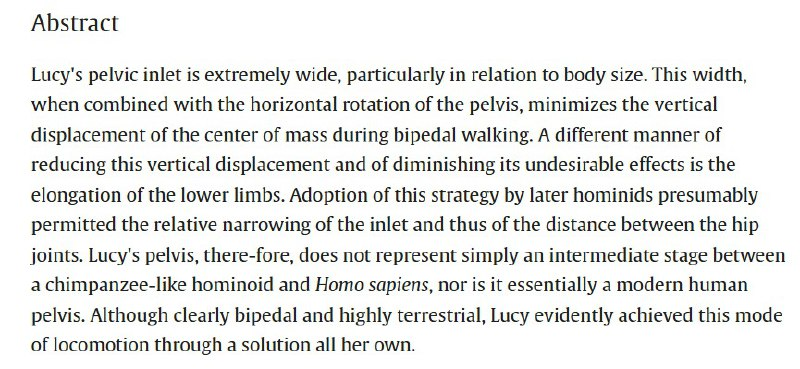
From the research summary
We will be stingy with the mother of the evolutionary Lucy
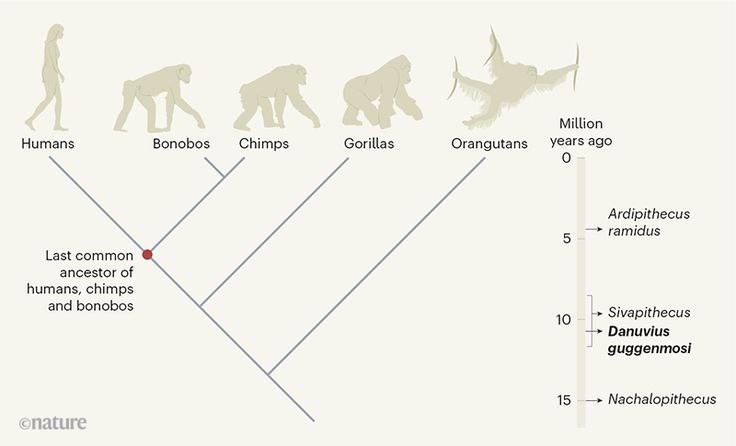
Some features of afarensis, including Lucy, are more closely related to gorillas than to either humans or chimpanzees. This contradicts the evolutionary tree, where gorillas are on a more distant branch (diagram below). Even features that are distinctively gorilla-like and closely related to gorillas are found in afarensis. The best example is the mandibles. While many primate relatives such as chimpanzees—our closest living relatives—share distinctive mandible morphology, gorillas are unique in that they are the exception among many primate species. Lucy is paradoxically related to gorillas in features related to mandibles. Rak, Y.; Ginzburg, A.; Geffen, E. (2007). Gorilla-like anatomy on Australopithecus afarensis mandibles suggests Au. afarensis link to robust australopiths. Proceedings of the National Academy of Sciences
https://www.pnas.org/doi/10.1073/pnas.0606454104
The big problem with this is that it completely removes Australopithecus afarensis, including Lucy, from our own branch. Note that we are talking about an important and normative anatomical feature that is not associated with both chimpanzees and humans, but rather with a distant branch. Yoel Rak’s study points out this problem: “The presence of this morphology in both the latter and Au. afarensis and its absence in modern humans cast doubt on the role of Au. afarensis as a modern human ancestor.”
https://www.pnas.org/doi/10.1073/pnas.0606454104
These data appear to provide a strong case for excluding Lucy and her family.
Notice in this evolutionary tree the gorilla branch is next to the bonobo and chimpanzee.
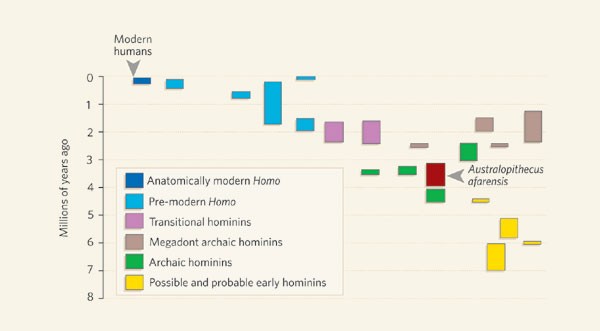
There are serious problems related to the evolutionary status of Lucy, based on the Darwinian prediction of a progression from lower, primitive forms to higher branches. When comparing the specimen OH62, a partial skeleton dating back 1.8 million years, consisting of 302 pieces, attributed to Homo habilis, with the older specimen Australopithecus afarensis AL 288-1 Lucy, dating back 3.2 million years (a difference of 1.4 million years), we find, paradoxically and contrary to the evolutionary scenario, that the Lucy specimen is more developed than the specimen OH62!
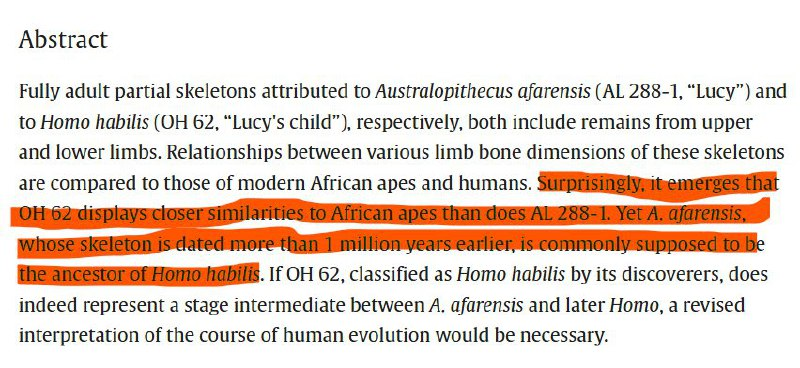
النص من بحث : Hartwig-Scherer, S., & Martin, R. D. (1991). Was “Lucy” more human than her “child”? Observations on early hominid postcranial skeletons. Journal of Human Evolution, 21(6), 439–449.
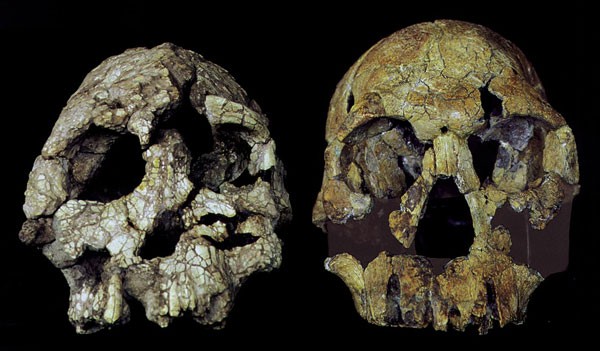
This clearly contradicts the Darwinian gradualism and evolutionary placement of both fossils, because evolution predicts that Homo habilis would have exhibited more advanced features than its ancestor Lucy, which is contrary to what has been observed. Several other fossil discoveries demonstrate an indirect evolutionary relationship to Austrapithecus afarensis. For example, the fossil KNM WT 40000, “Kenya Flat-Faced Man,” dates back 3.5 million years and is therefore contemporary with afarensis or even older than Lucy. However, it exhibits more advanced cranial features, with a small skull and small molars set within a large, flat face—while its contemporary afarensis had large molars and a much smaller face (pictured below). Needless to say, several derived features are shared by this specimen with Homo rodentiles.
Michael Balter,Skull Further Obscures Human Origins,sciance news ,21 Mar 2001
Fossil image: Front view of specimen KNM WT 40000
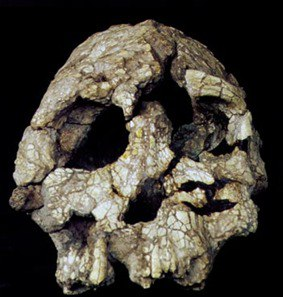
Well, the evolutionary relationships with Afarensis and the rest of Austrapithecus after this discovery appear to be extremely tangled and highly confused. The evolutionary lineage has been thrown into disarray, or as Daniel E. Lieberman puts it: “The evolutionary history of humans is complex and unresolved. Now it looks like it’s about to get even more confused with the discovery of another species and genus dating back 3.5 million years.”
Lieberman, D. Another face in our family tree. Nature 410, 419–420 (2001). https://doi.org/10.1038/35068648
{Embed}
https://doi.org/10.1038/35068648
Another face in our family tree
Nature - The evolutionary history of humans is complex and unresolved. It now looks set to be thrown into further confusion by the discovery of another species and genus, dated to 3.5 million years…
End
Some evolutionists say it walks upright because of: 1) The way the femur connects to the pelvis on one end and to the knee on the other. 2) Its pelvis is more similar to that of humans than to apes.
This argument is based on the shape of the pelvis, although the latter is not a strong indication, as it is incomplete and severely deformed, with signs of crushing, which necessitated a comprehensive reconstruction. Now, in a reconstruction with this level of deformity and incompleteness, various possibilities are required. What informed the evolutionists that the pelvis, with its formation in accordance with the evolutionary origins of bipedalism, is the most correct? This is again a kind of fallacy of begging the question, based on mere speculation and not definitive data at all. It is interesting that Marchal, in his scientific paper, noted the presence of errors in the pelvic reconstruction, especially at the sacral level.
Marchal F. A new morphometric analysis of the hominid pelvic bone. J Hum Evol. 2000 Mar;38(3):347-65. doi: 10.1006/jhev.1999.0360. PMID: 10683305.
Reference link: https://pubmed.ncbi.nlm.nih.gov/10683305/
{Embed}
https://pubmed.ncbi.nlm.nih.gov/10683305/
A new morphometric analysis of the hominid pelvic bone - PubMed
This study is based upon a new morphometric technique providing both size and shape variables. It has been applied to 189 pelvic bones of extant humans and African apes as well as to 13 hominid pelvic bones of various taxonomic status. The main aim of this work is to include such fossil bones in the …
Some of Lucy’s descendants say that footprints were found near her site, which means she had an erect posture and feet adapted to it.
In response to the apes: There is no evidence that these tracks necessarily belong to Lucy or to the genus Austrapithecus. Rather, this is a leap that is not justified by any conclusive evidence. Moreover, similar footprints were found that are identical to human footprints (pictured below) and date back 5.7 million years, meaning they are about two million years older than Austrapithecus afarensis?! And add to what can be added that the place where these fossils were found was west of the island of Crete (Greece), a place that has no connection to the alleged evolution of humans because it is outside the evolutionary stage “Africa.”
Reference:
Gerard D. Gierliński et al, Possible hominin footprints from the late Miocene (c. 5.7 Ma) of Crete?,Proceedings of the Geologists’ Association
Volume 128, Issues 5–6, October 2017, Pages 697-710
https://www.sciencedirect.com/science/article/pii/S001678781730113X
Footprints pictures
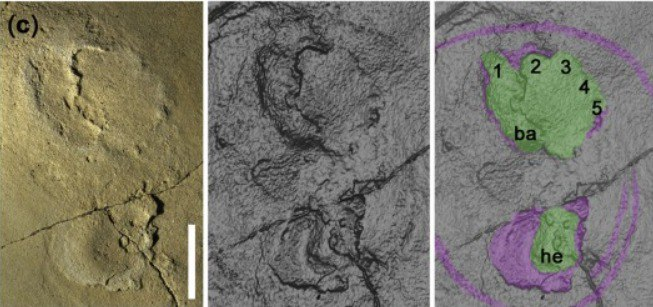
This discovery suggests a good idea for an ancient human presence even older than Austrapithecus afarensis and Afarenx and older than all the genera Homo habilis, Neanderthals, Arctus and Naledi, and thus provides good evidence for a human presence before all these species from which it is supposed to have evolved (whether the relationship is direct lineage or the relationship is shared ancestry without direct lineage), so throw the evolutionary line in the trash.