
Mark 15:28 Was Added by Scribes — Missing from Every Ancient Manuscript and Every Critical Edition
Mark 15:28 — “And the scripture was fulfilled which says, And he was numbered with the transgressors” — does not exist in any of the oldest Greek manuscripts of the New Testament. It is a deliberate scribal insertion, copied from Isaiah 53:12, designed to create the appearance of a fulfilled prophecy. Every major critical edition of the Greek New Testament has deleted it.
Background — Intentional Scribal Alterations
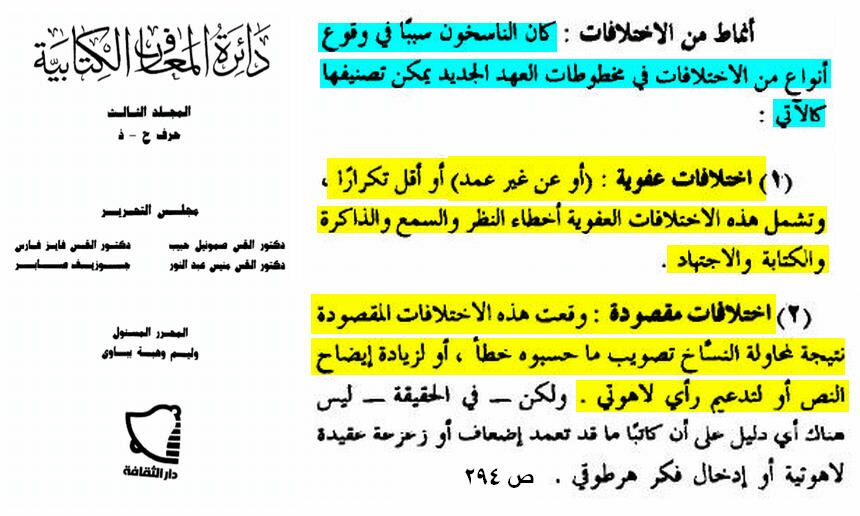
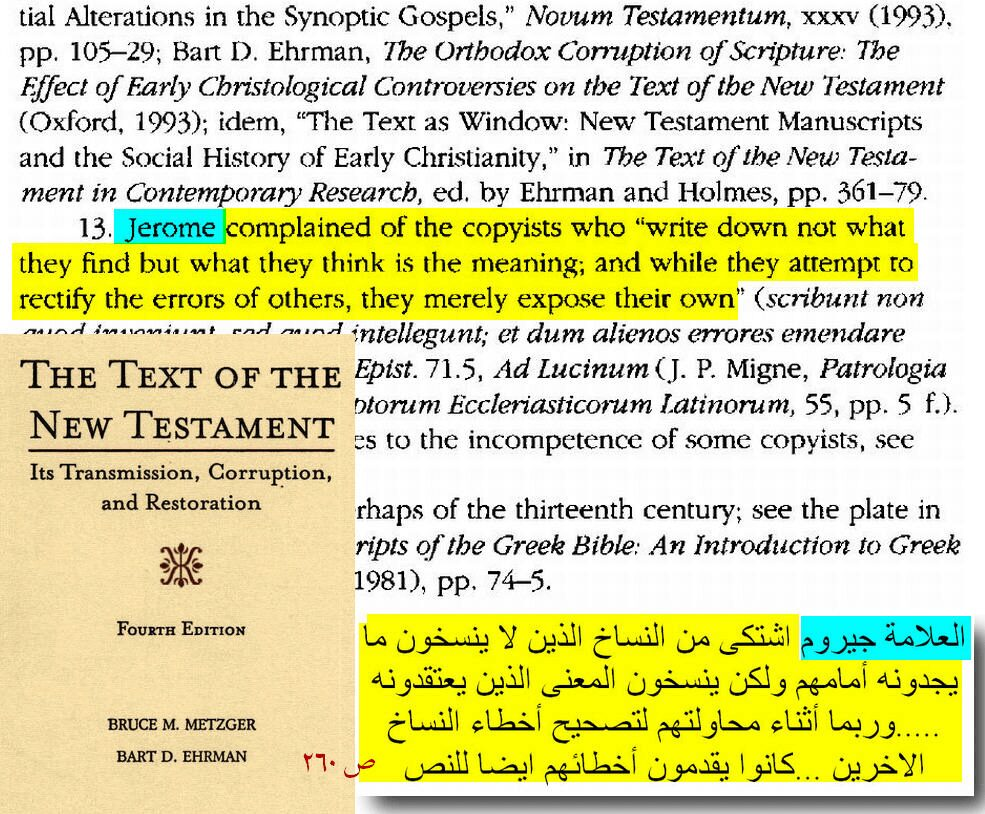
The early Church, backed by its kings, fought all sects that rejected its theological rulings and burned gospels that affirmed the oneness of God. Faced with a shortage of textual support for their doctrines, copyists of the Bible began deliberately altering the text during transmission — not through negligence but by design.
The Interpolation — What Was Added and Why
The scribes took the text of Isaiah 53:12:
And inserted it wholesale into Mark as a complete verse — Mark 15:28 — to make ordinary Christians believe that Isaiah was prophesying about the crucifixion:
The Greek text of this insertion as it appears in the Greek Orthodox Church tradition reads: ἐνόμων ἐλογίσθη. The context of the surrounding text moves directly from verse 27 to verse 29 — with no indication that verse 28 ever existed in the original.
First — Absent from Every Major Ancient Manuscript
The five oldest and most authoritative Greek manuscripts of the New Testament all lack this verse entirely:
Vaticanus Codex
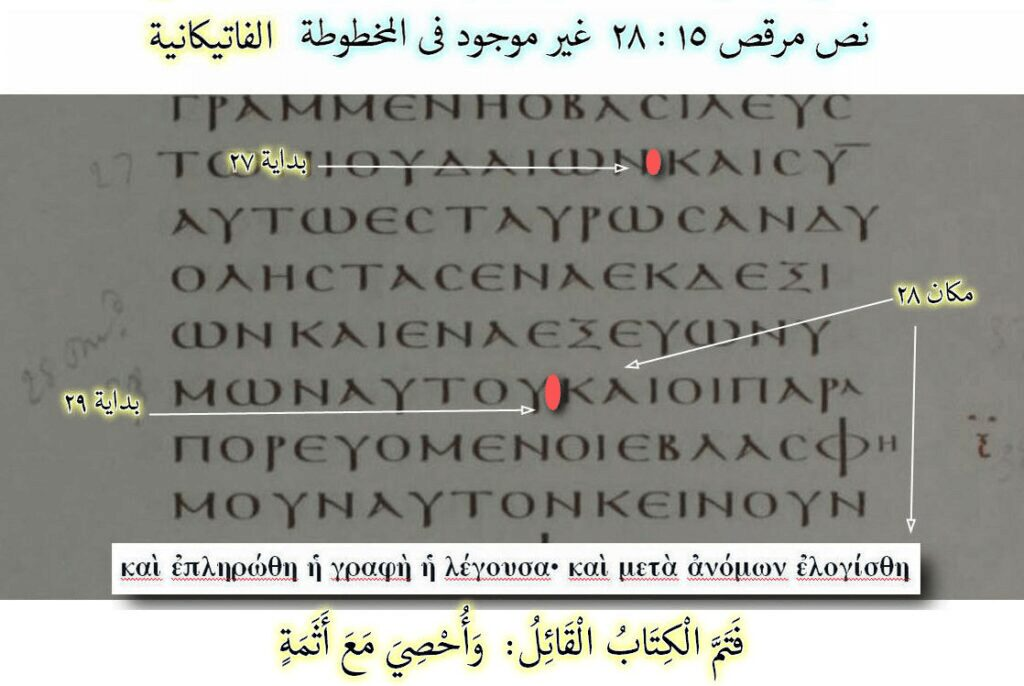
Mark 15:28 is absent from the Vaticanus Codex — one of the two oldest and most authoritative manuscripts of the entire Bible.
Beza Codex
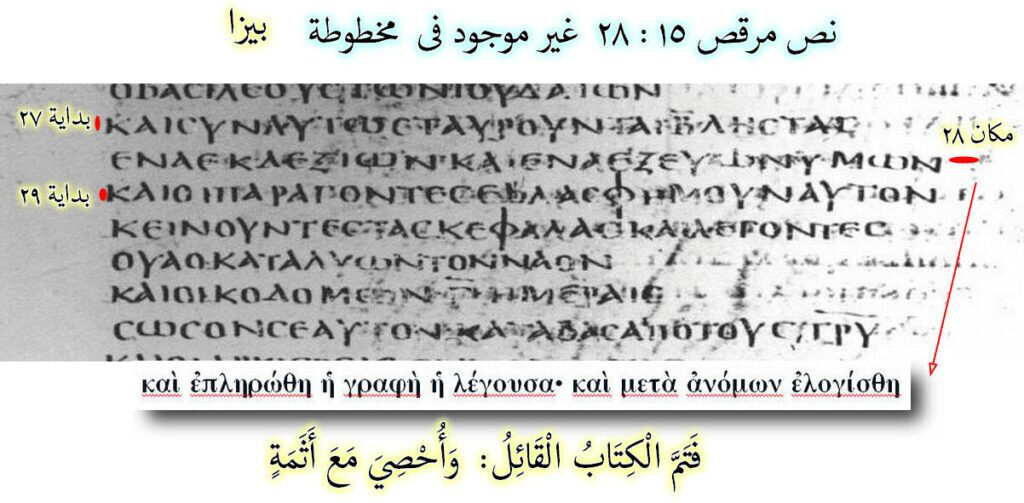
Mark 15:28 is absent from the Beza Codex (Codex Bezae Cantabrigiensis).
Alexandrian Codex
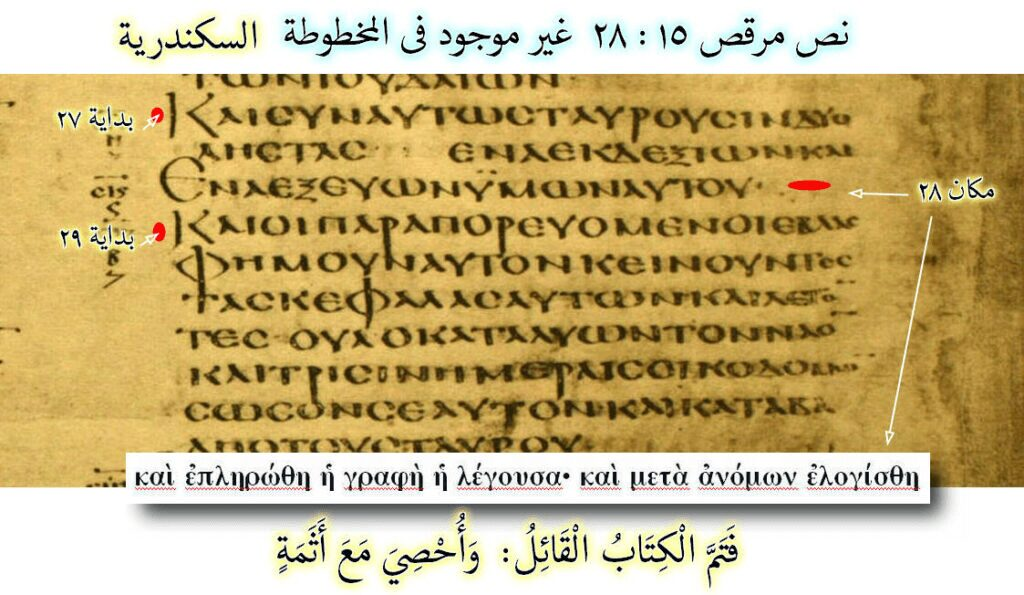
Mark 15:28 is absent from the Alexandrian Codex (Codex Alexandrinus).
Sinaiticus Codex
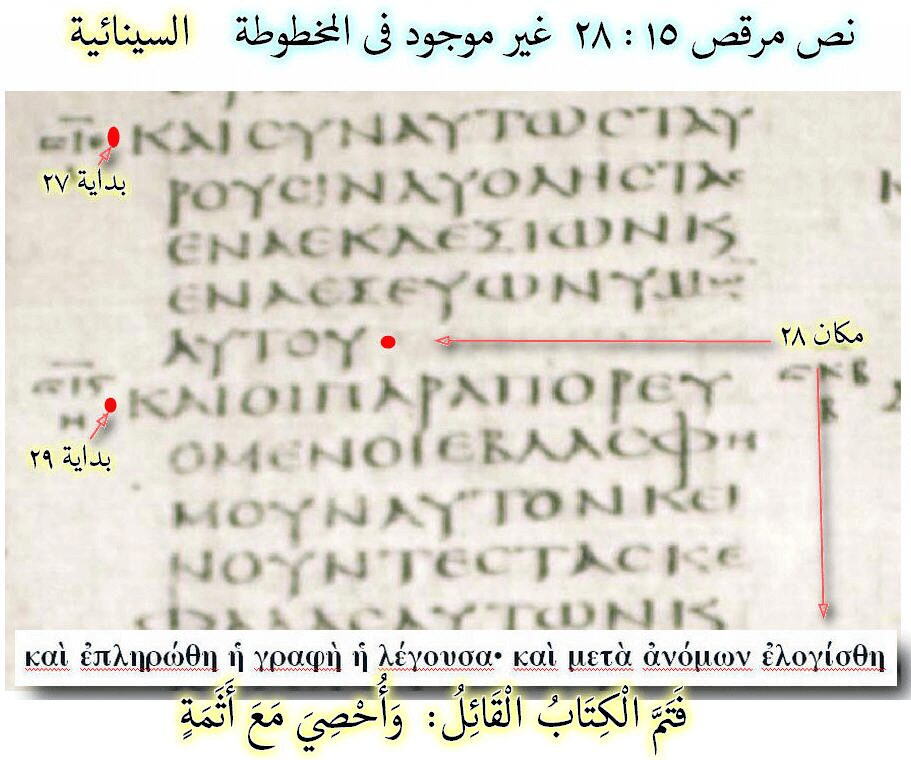
Mark 15:28 is absent from the Sinaiticus Codex — the oldest complete manuscript of the Christian Bible.
This is further documented in Dr. Ahmed al-Shami‘s book Important Differences Between the Sinaiticus Manuscript and the New Testament, page 198:
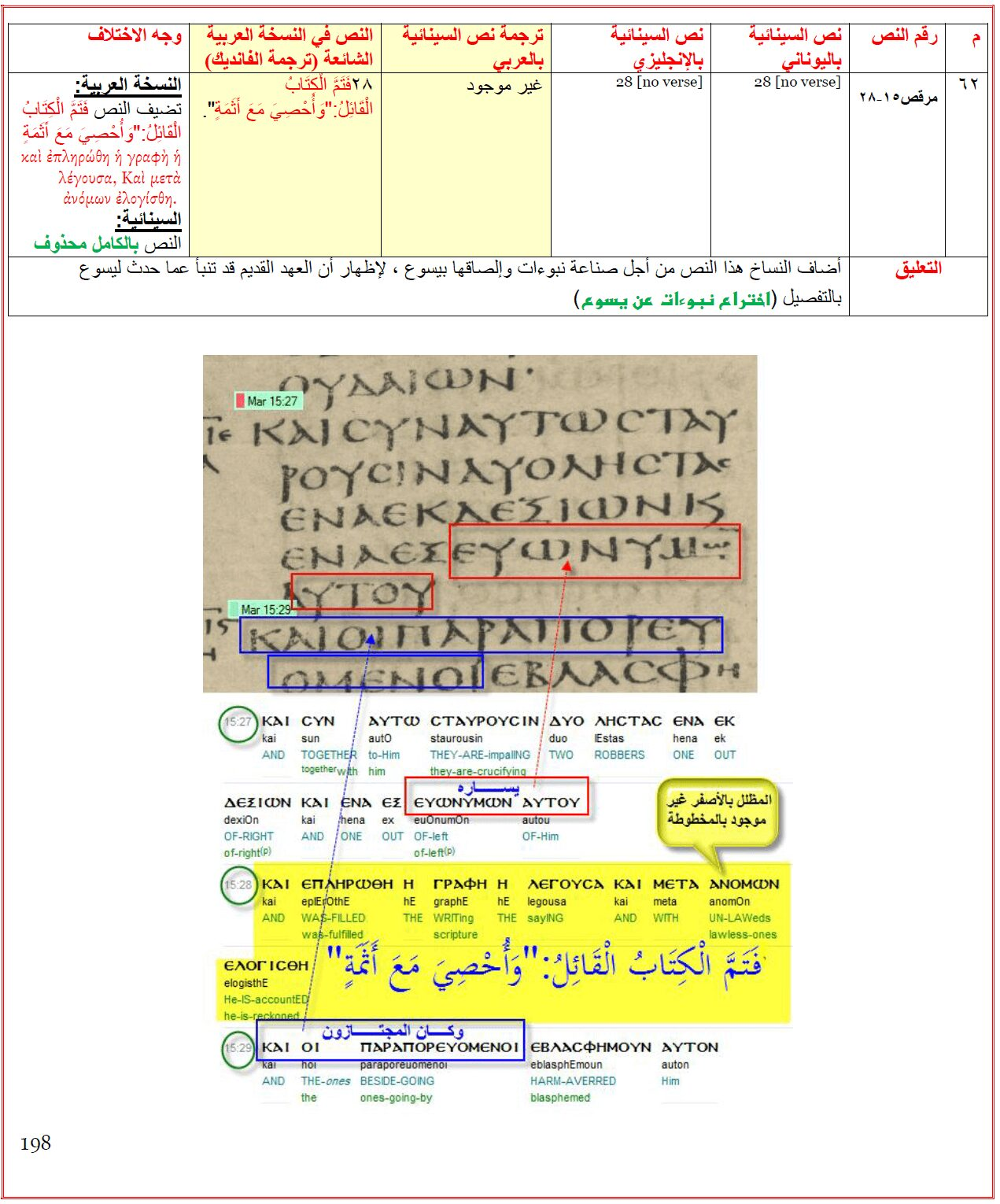
The verse is absent from the Sinaiticus, Vaticanus, Alexandrian, Beza, and Ephraemi Rescriptus codices — the five most important ancient manuscripts of the New Testament.
Second — Deleted from All Critical Editions
Because the verse is absent from all the oldest manuscripts, every major critical edition of the Greek New Testament has removed it. The editors assigned it the “A” rating — meaning they were certain it was a later addition to the original text.
Tischendorf Critical Edition
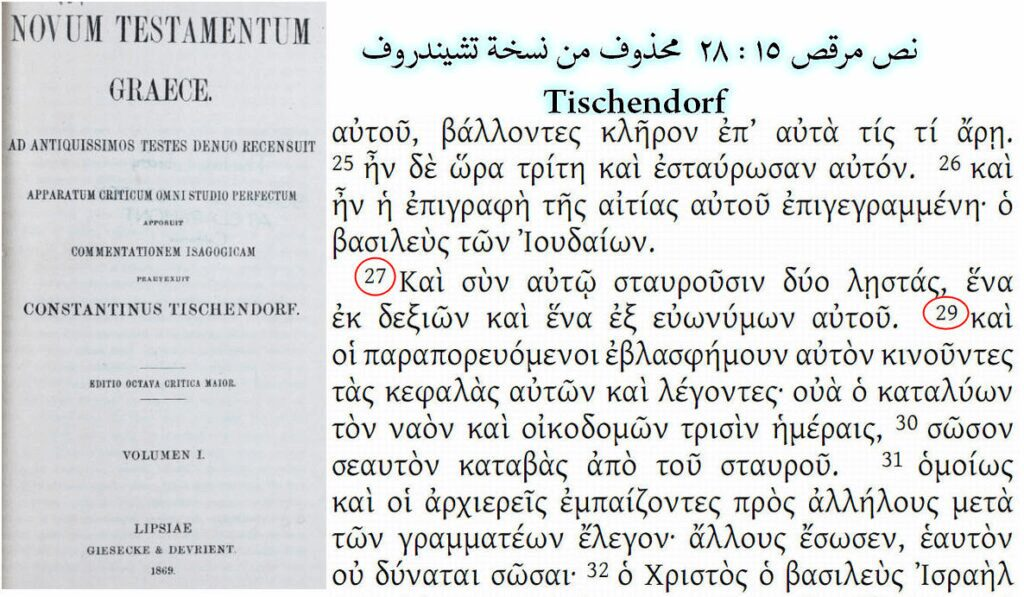
Mark 15:28 is omitted from the Tischendorf critical edition.
UBS Critical Edition
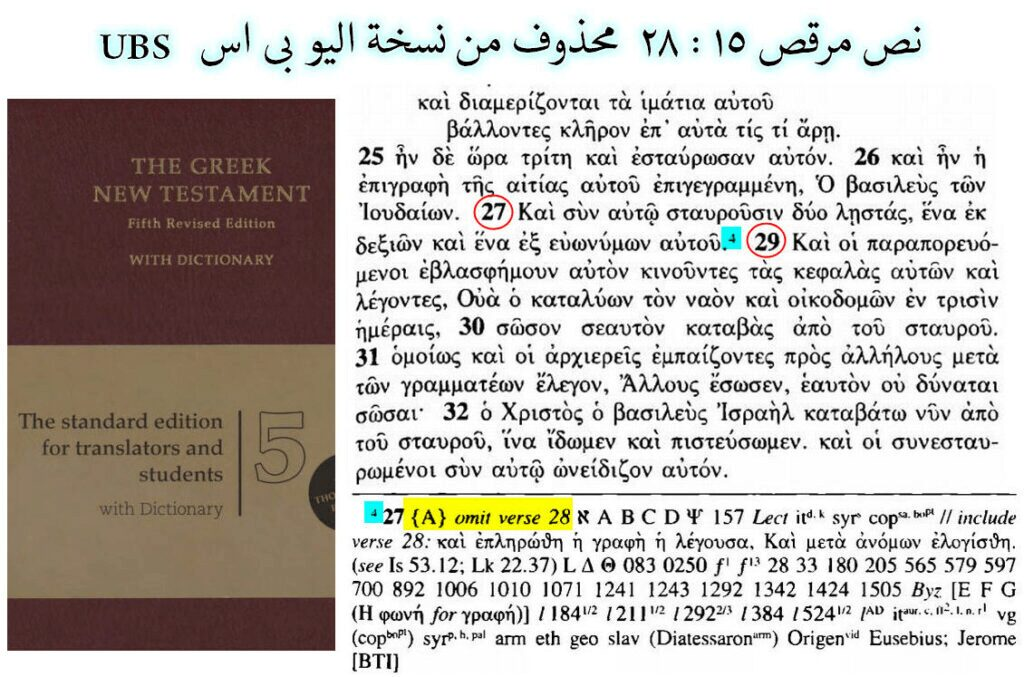
Mark 15:28 is omitted from the United Bible Societies (UBS) critical edition.
Nestle-Aland Critical Edition
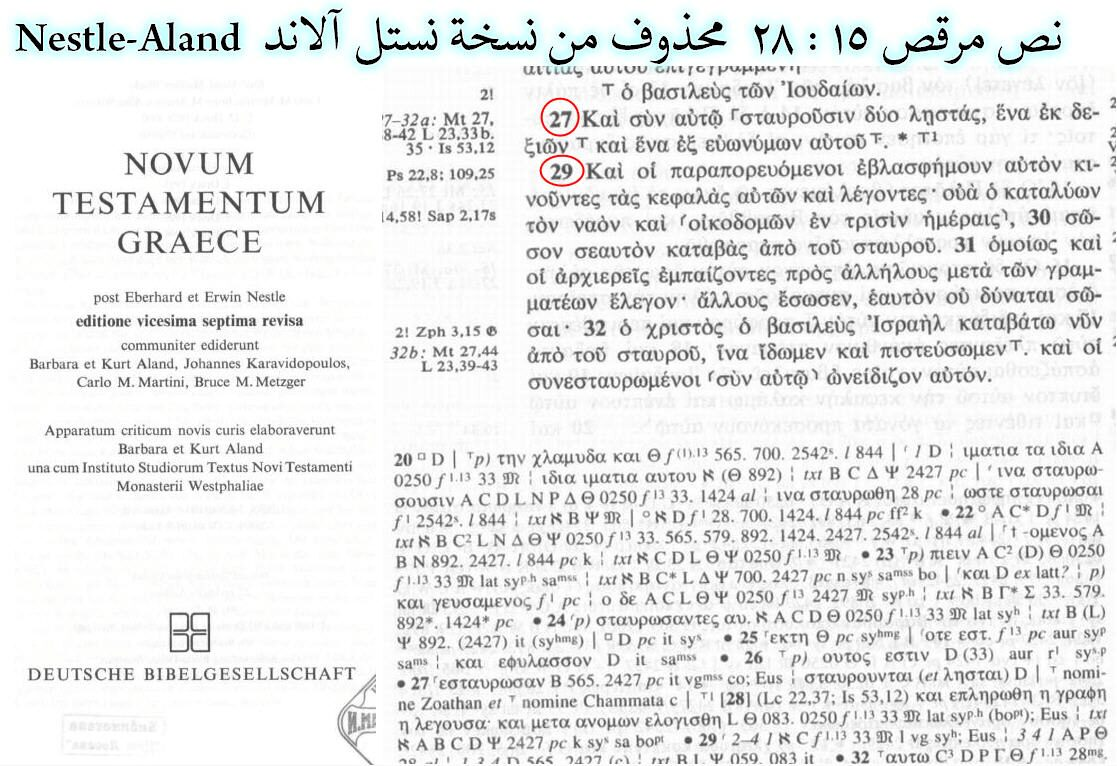
Mark 15:28 is omitted from the Nestle-Aland critical edition — the standard scholarly Greek New Testament used worldwide.
Westcott-Hort Critical Edition
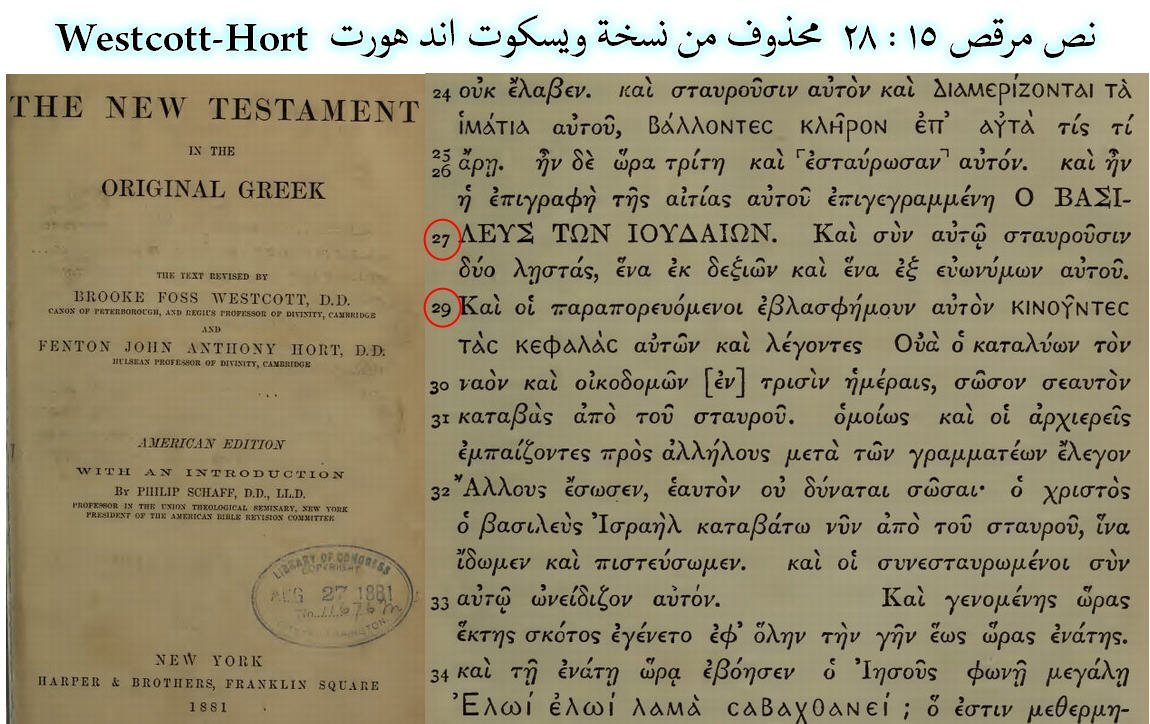
Mark 15:28 is omitted from the Westcott-Hort critical edition. The Samuel Tregelles edition likewise omits it.
Third — How Bible Translations Handle the Deletion
NET Bible (New English Translation)
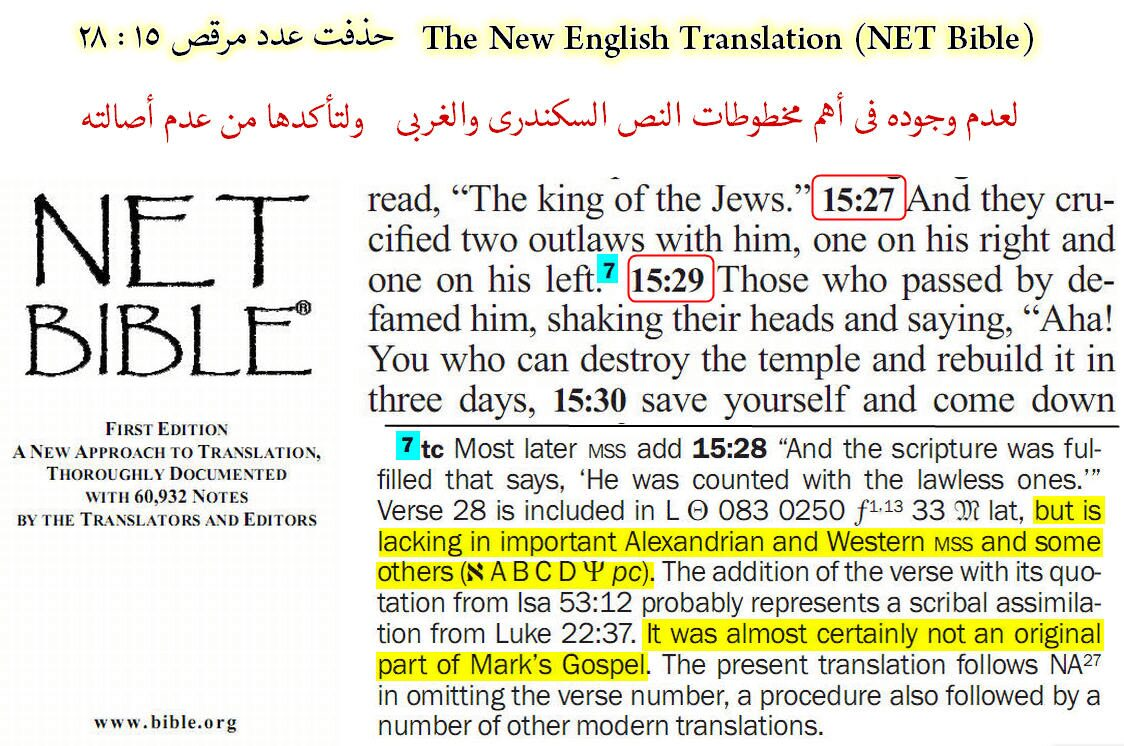
Most later manuscripts added the verse; the most important manuscripts — Alexandrian and Western — do not contain it.
English Translations
The following English versions have deleted the verse entirely: AMP, ASV, RV, RSV, BBE, CEV, GNB, NLT, GW, ISV, NRSV. The Amplified Bible and the NIV place it in brackets to signal its inauthenticity. The KJV — which relies on Erasmus’s received text — includes it without comment or qualification.
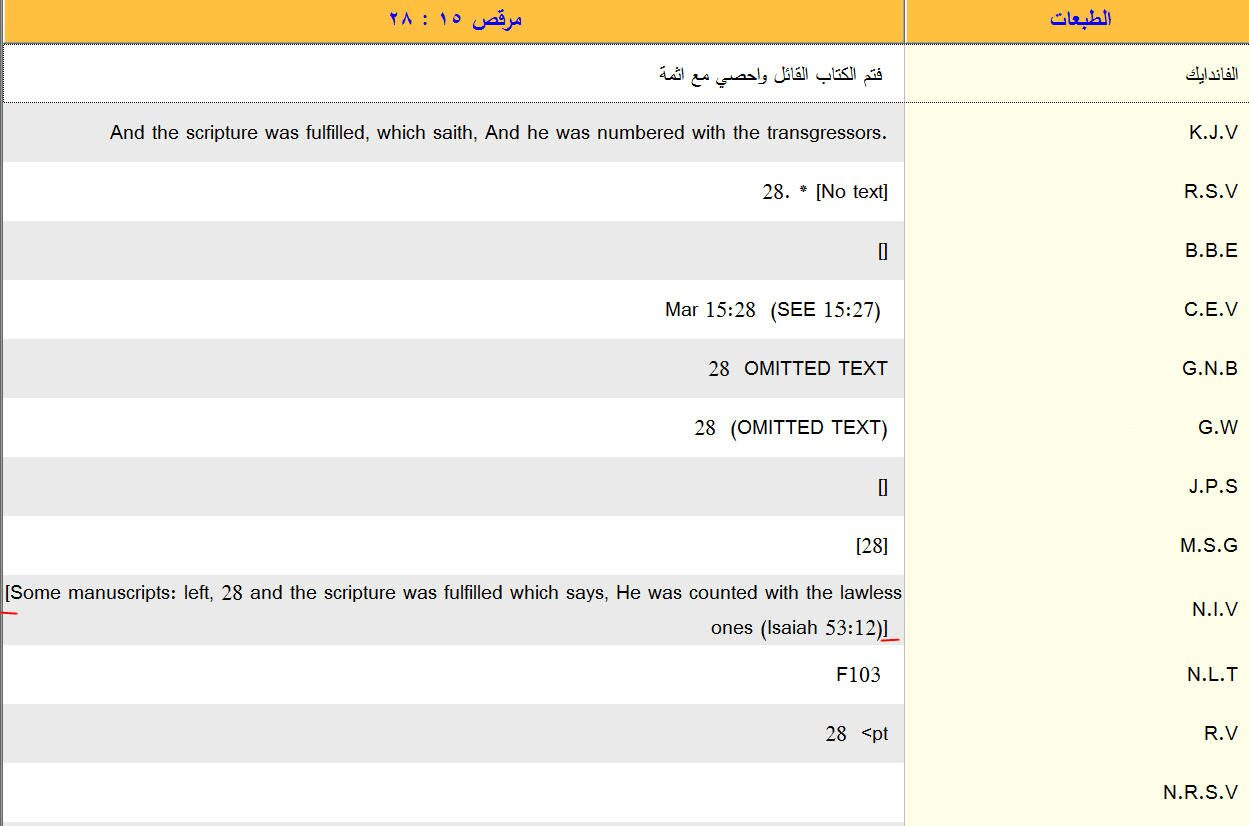
Arabic Translations
The Van Dyck Arabic version — which relied on the received text — includes the verse in full. The Common Arabic Version and the Good Translation place it in brackets. The Jesuit translation deletes it entirely and notes in the margin that this style of citation does not agree with Mark’s established practice in his use of Old Testament texts.
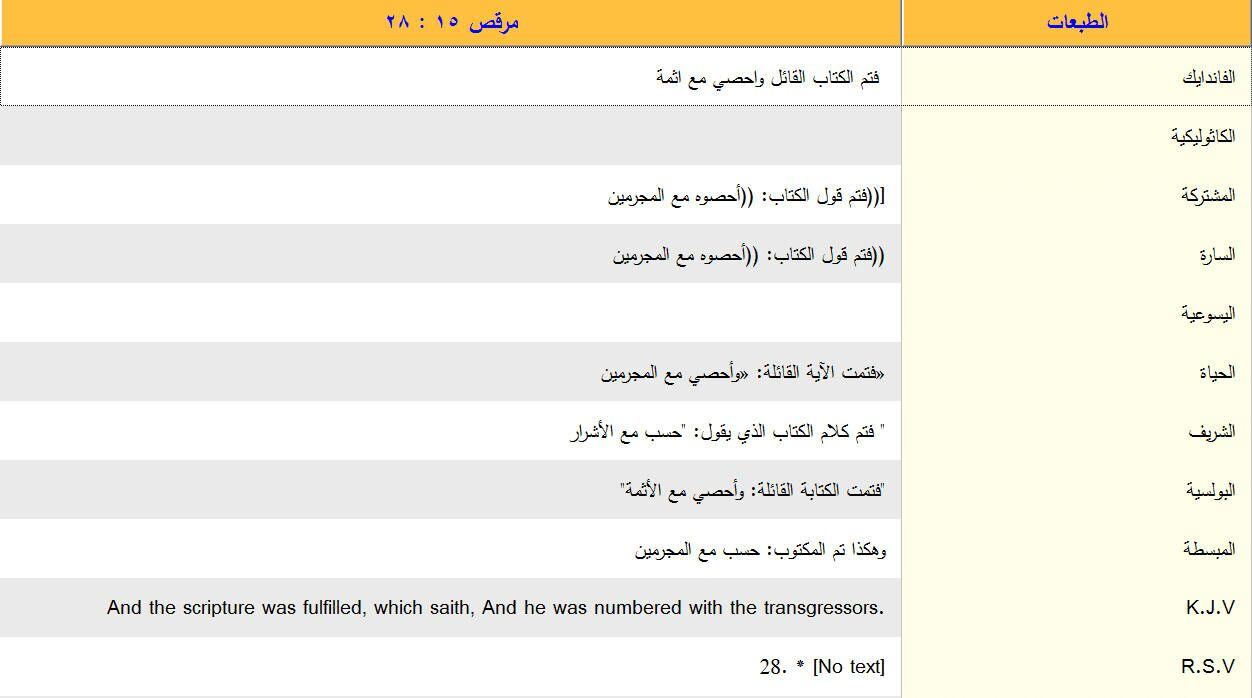
Fourth — The Jews Deny Any Connection Between Isaiah 53 and the Crucifixion
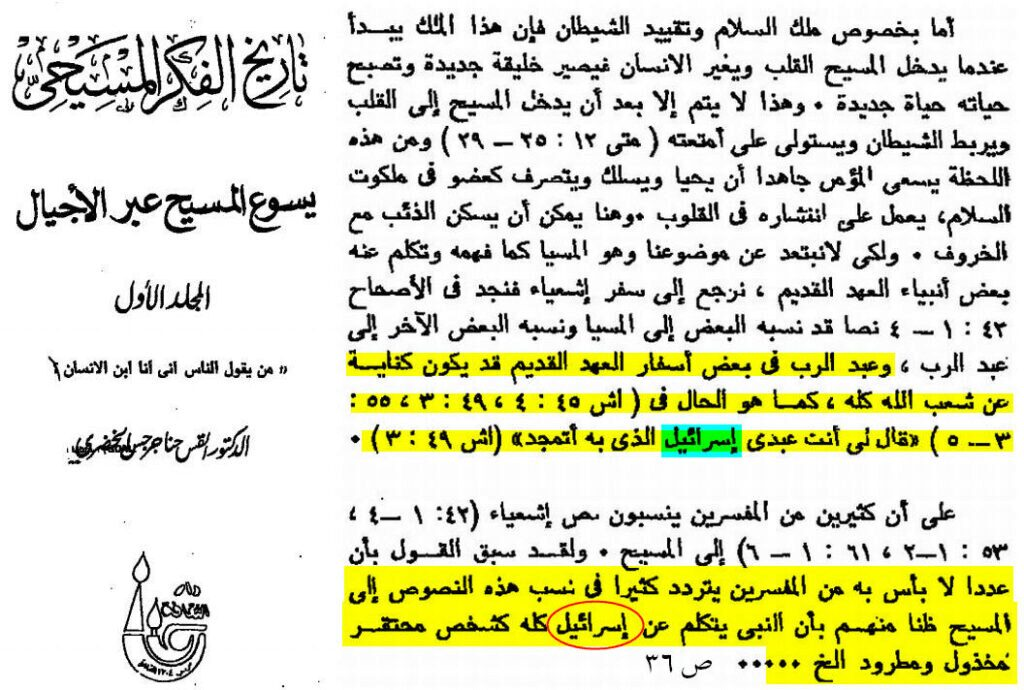
Using the standard Christians set for Muslims — that Jewish understanding of a Jewish text is authoritative — the Jews themselves affirm that Isaiah 53 has no connection to any prophecy about the Messiah, let alone the crucifixion. The chapter speaks in metaphorical terms about the people of Israel: their captivity, humiliation in Babylon, and subsequent salvation.
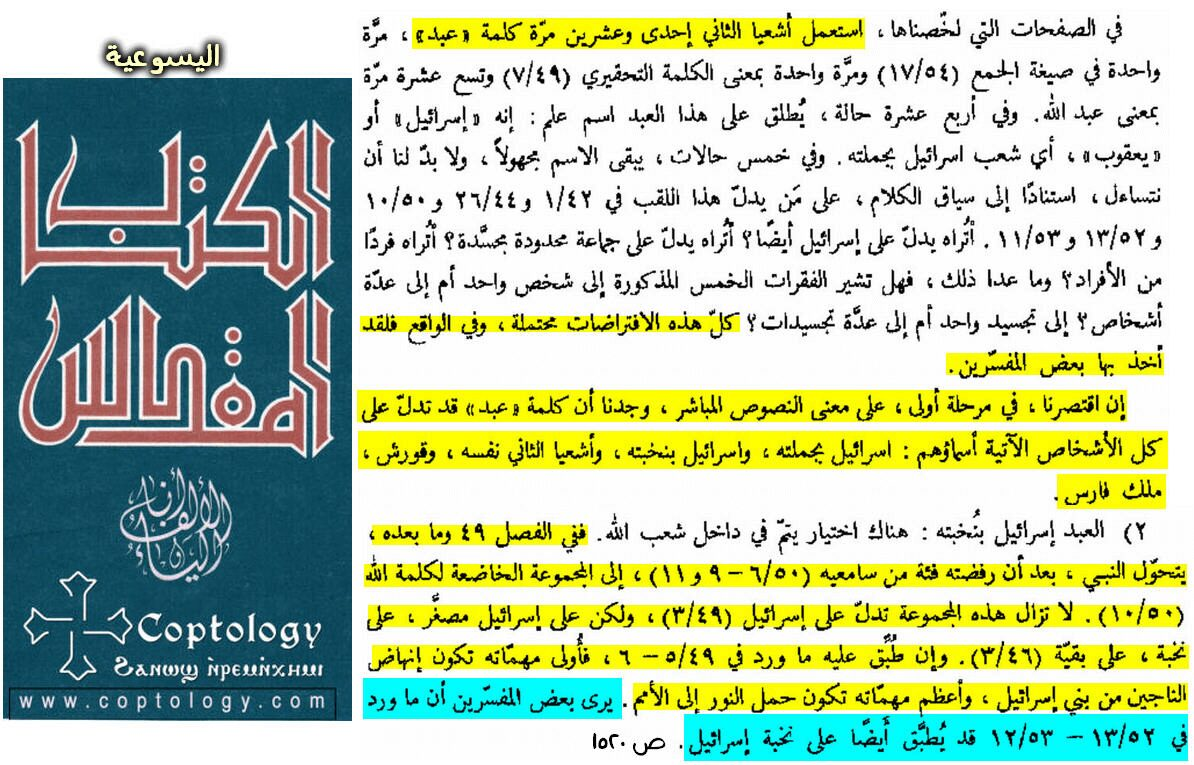
The Jesuit Order of the Catholic Church itself, in the introduction to the Book of Isaiah (Dar al-Mashreq edition, p. 1519), acknowledges this under the heading “Servants of God”:
And on the following page: “Some commentators believe that what is mentioned in 52:13–53:12 may also apply to the elite of Israel.”
Fifth — Isaiah 53 Does Not Describe Jesus
If we know the truth of the text of Isaiah, the distortion of Mark 15:28 and the motive behind it become completely clear. The characteristics of the servant in Isaiah 53 contradict the Gospel accounts of Jesus (peace be upon him) at every point:
The Servant Is a Man — Not God
The text says: “My righteous servant, by his knowledge, will justify many, and he will bear their iniquities.” He is called “servant” explicitly — not God. According to the Christian faith itself, God does not bear iniquities as a servant of God.
The Servant Is Crushed by God — Which Contradicts the Logic of Crucifixion
The text says: “But it pleased the Lord to crush him with grief.” The Christian doctrine of crucifixion rests on the premise of God’s justice — that God could not simply forgive without punishment. But if God was pleased to crush his own son as a punishment, this contradicts the foundation of that argument entirely.
The Servant Is Silent Like a Sheep
The Gospels record Jesus crying out at the top of his voice while on the cross:
Before the crucifixion, he prayed to God:
A silent sheep does not cry out. Jesus (peace be upon him) cried out and prayed. The servant in Isaiah does neither.
The Servant Is Buried with the Wicked
The text says: “And they made his grave with the wicked, and with the rich in his death.” The Gospels record Jesus buried alone in a new garden tomb — with no wicked man and no rich man buried alongside him. This description cannot be applied to Jesus as described by the Gospels themselves.
The Servant Is Despised and Rejected by the People
The text says: “He was despised and rejected by men… despised, and we esteemed him not.” The Gospels describe great crowds calling Jesus a great prophet:
A man hailed by crowds as a great prophet is not the same as one despised and rejected by the people. The two descriptions are irreconcilable.
The Servant Is Explicitly Identified as Israel
Isaiah 49:3 states the identity of the servant directly, leaving no room for interpretation:
The Lord himself says: “You are My servant, Israel.” The chapter speaks in a comprehensive, metaphorical, embodied view of the people of Israel — their captivity, their humiliation in Babylon, and then their salvation. This is the understanding of the Jews, the original authors and custodians of the book.