Miracles of Paul, the Apostle of Christians
Miracles of Paul, the Apostle of Christians
Introduction:
It is known that the true author of the current Christian religion is Paul, the Apostle of the Christians.
It is also known that Paul had followers, including Luke, who wrote the Book of Acts… When we open the Book of Acts, we will find that Luke attributes miracles to Paul. Therefore, we wanted to shed light - this time - on some texts from the Book of Acts, in order to expose the falsity and lies of the miracles that Luke, the follower of Paul, attributed to him… Therefore, I hope you will read the post until the end.
Note that this article is a scientific article mixed with some of the field of comparative religions.
Subject:
The Book of Acts - Chapter 28 says the following:
Acts of the Apostles - Chapter 28:
1 When they had escaped, they found that the island was called Melita.
2 The barbarians there treated us with unusual kindness, for they lit a fire and welcomed us all because of the rain that had fallen on us and
because of the cold. 3 Paul gathered a large number of sticks and put them on the fire, and a viper, because of the heat, came out and fastened itself on his hand.
4 When the barbarians saw the beast hanging by his hand, they said to one another, “This man must be a murderer. Justice would not have let him live, even if he had escaped the sea.”
5 So he shook the beast off into the fire and suffered no harm .
6 But they were waiting for him to swell up or suddenly fall down dead . And when they had waited a long time and saw that nothing harmful had happened to him, they changed their minds and said, “He is a god!”
From the previous texts, we find that Paul and those with him escaped from drowning and found an island called Melita (Malta, an island located in southern Italy). After Paul settled on that island, the people of the island treated him and those with him well and lit a fire for them to warm themselves from the cold and rain. Paul gathered some branches to start the fire. While Paul was throwing the branches into the fire, a snake came out of the fire and bit Paul’s hand, as the snake was lying among the branches that had been brought for the fire. Paul immediately threw the snake into the fire to burn and die. The people of the island were anticipating and expecting that this bite would result in swelling at the site of the bite and then the victim would die. But the people of the island were surprised that Paul performed a miracle and was not harmed by the bite, so they called him a god.
The authors of the Applied Bible Commentary say on page 2367 the following:
God promised Paul’s safe arrival , and He didn’t let the sea or the snake stop His servant. The snake bit Paul, and even though it was poisonous , it didn’t hurt him. Our lives are in God’s hands… Those people believed in superstitions and worshipped many gods, and when they saw that the snake didn’t harm the Apostle Paul, even though it was poisonous , they thought he was a god…
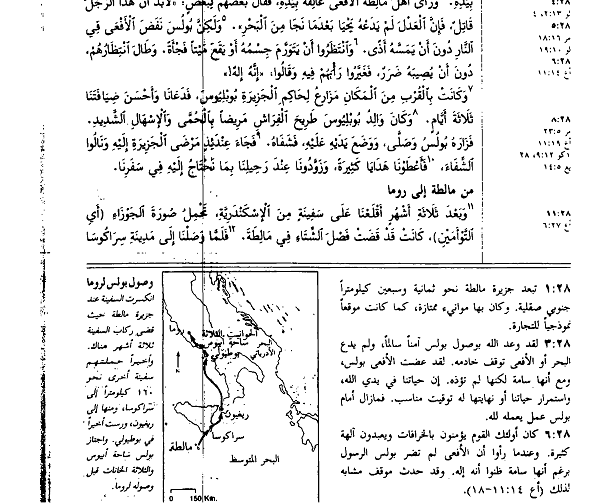
From the above, it becomes clear that the Book of Acts tells us that this snake was so poisonous that its venom could kill a person, but the Lord performed a miracle and prevented the venom of this snake from harming Paul.
According to the same previous texts, it is also clear that the barbarian inhabitants of that island were experienced, knowledgeable, and aware of the types of snakes on their island, and they were aware of the symptoms that result from the bite of that type of snake. Therefore, they expected that the bite of that snake would lead to swelling and then death for the victim. When Paul was not harmed by the bite, they knew that this was a miracle and an extraordinary matter.
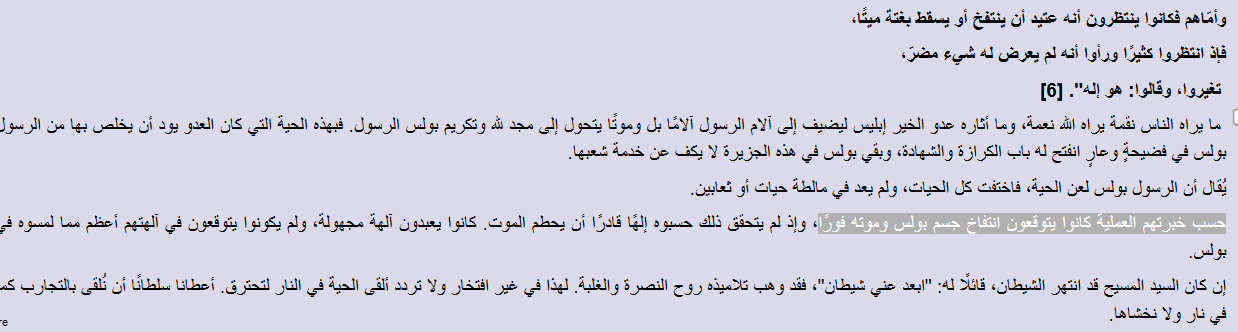
Father Tadros Yacoub Malaty says in his interpretation of the Book of Acts 28:6 the following:
[Based on their practical experience, they expected Paul’s body to swell and he would die immediately. When this did not happen, they considered him a god capable of destroying death .]
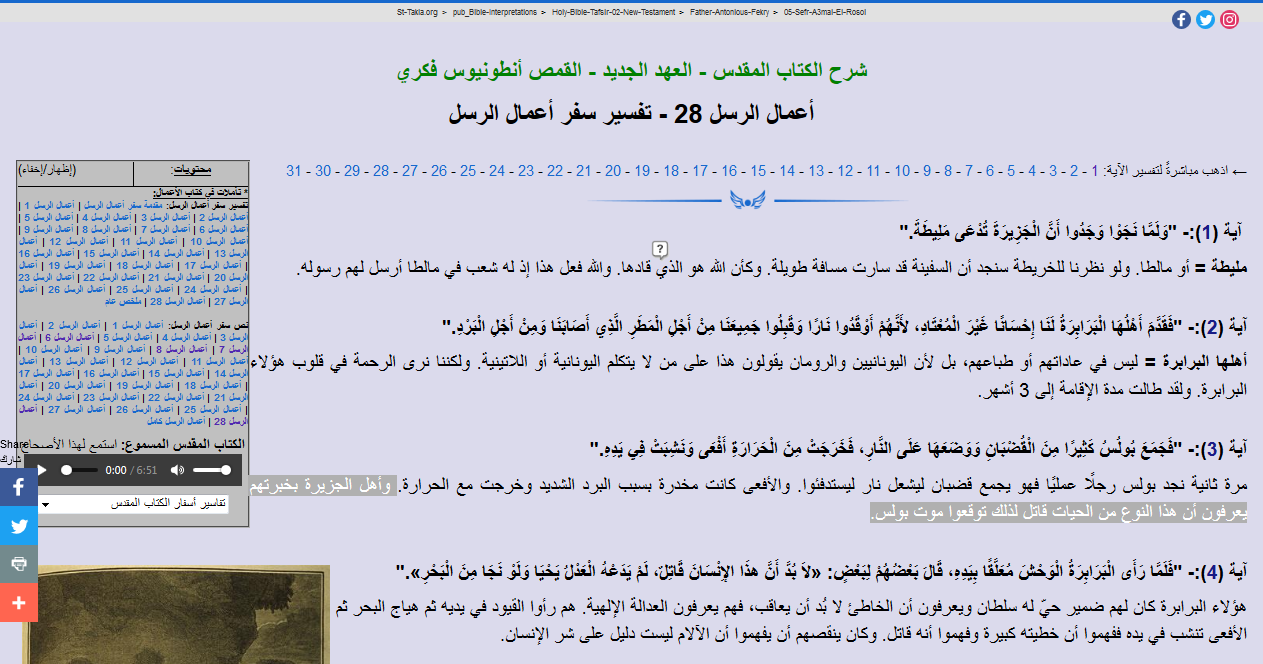
Father Antonius Fikry says in his interpretation of the Book of Acts 28:3 the following:
[ …and the people of the island, with their experience, knew that this type of snake was deadly, so they expected Paul to die.]
But the mistake made by the author of the book is that the island of Malta/ Malta located in southern Italy no no there are hardly any snakes at all, and even if there were snakes there those snakes no no they are not very poisonous but only have weak venom that no no no can lead to serious symptoms such as death in humans. So where did that snake with deadly venom mentioned in the book of Acts come from?!
This is what led some researchers to doubt this story and this fake miracle.
When we search the snake records we do not see any presence of snakes with deadly venom on the island of Malta.
The traveler, Professor Ahmed Faris Al-Shidyaq, says in his book (The Intermediary in Knowing the Conditions of Malta), page 50, the following:
[One of the things that is commendable in Malta is the absence of scorpions, snakes, and other harmful insects. If they are found, they have no poison…]
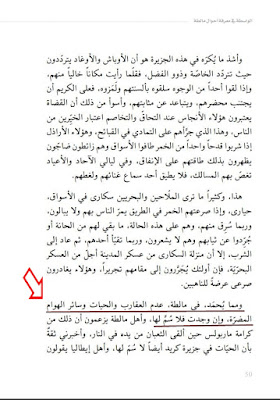

From the above, we know that no, no, there are hardly any snakes on the island of Malta, and even if there are snakes there, those snakes have very weak venom that does not lead to human death.
Many modern researchers have attempted to search Malta for snakes that fit the descriptions in Acts. Ultimately, scientists have found only four species of snakes on Malta, but the descriptions of these four snakes do not match those of Paul’s snake mentioned in Acts.
Knowing that the four species found by scientists belong to the same family (Colubridae), and these snakes are as follows:
1The Western Whip Snake ( Coluber viridiflaviorus, Iswed Serp ) .
2Algerian Whip Snake ( Coluber algirus, Serp Aħdar ) .
3-Leopard Snake ( Elaphe situla, Lifgħa).
4The Cat Snake ( Telescopus fallax, Teleskopu).
’
As we said before, the descriptions of these four snakes do not match the snake of Paul mentioned in the Book of Acts.
As for the Algerian whip snake and the cat snake, they are only found on the main island of Malta and are not very common there. They were brought from North Africa to Malta in timber convoys during the First World War.
That is, these two types of snakes were not present in Malta at the time of Paul. Consequently, only two species remained. These two species are not often seen by people.
In addition, the four previous snakes do not have a strong enough venom, and their venom is only enough to catch the prey they feed on, meaning that their venom does not kill humans.
For example:
The cat snake has rear fangs… It is known that snakes are divided into two types:
1Snakes with front fangs, these snakes often have dangerous and deadly venom.
2Snakes with rear fangs. This type of snakes - in most cases - does not pose a significant danger to the average adult human.
That is, the cat snake found on the island of Malta does not pose a significant threat to humans, because its venom is barely enough to kill its prey (rats, lizards, etc.).
From the above, it becomes clear that the writer of the book tried to surround Paul with some fake miracles in order to polish his character as an apostle of Christ…
Some Christian scholars have tried to solve this dilemma by citing some rumors and folk tales that say that Paul cursed the poisonous snakes on the island and the poison disappeared from their mouths immediately and they became extinct.
I reply to them and say:
This is just a baseless folk legend, invented by the island’s Catholic Christian inhabitants to cover up a blatant error in the Book of Acts. Furthermore, this folk legend is not mentioned in the Book of Acts. If Paul had really done this, then this miracle would have been more appropriate to be mentioned in the Book of Acts.
Which one is more deserving of mention?
The miracle of the lack of effect of the venom of a single snake on Paul’s body, or the miracle of Paul removing the venom from the mouths of all the snakes on the island, making them ineffective against the inhabitants, and even causing those pests to become extinct along with other pests such as scorpions?!
Any sane person will answer and say that the second miracle is more deserving of mention, of course…
So why was this miracle not mentioned in the Book of Acts?!
All of the above is clear evidence that it is just a popular legend invented by the Christian inhabitants of the island in order to cover up the blatant error in the Book of Acts…
In addition, no, no, there is no documented fossil evidence indicating that a dangerous, venomous native snake lived in Malta during historical times, whether before or after Paul’s arrival. This proves the falsity of this rumor.
Of course, there are other Christian scholars who said that there were poisonous snakes in the time of Paul, but they became extinct later on.
I respond to the previous hypothesis and say:
There is no fossil evidence to prove this extinction, as we mentioned before. Furthermore, we do not know the cause of this sudden extinction, nor do we know why only the poisonous species became extinct and not the non-poisonous species.
Some other Christian scholars have postulated that the snake that bit Paul came to Malta via the wood Paul was collecting for his fire, since some reptiles travel through the sea and attach themselves to driftwood. However, other Christian scholars have rejected this hypothesis, since the familiarity of the ancient Maltese islanders with snakes shows that the species was local, easily discounting this theory.
Some other Christian scholars denied that Paul landed on the island of Melita/Malta located in southern Italy, and said that Paul landed on another island called (Melita/Meljet), and this island is located in the Adriatic Sea…
I respond to the previous statement and say:
Most Christian scholars opposed this view and presented historical, maritime and archaeological evidence that Paul landed on the island of Malta located in southern Italy and not on the island of Melita located in the Adriatic Sea …for example:
The Encyclopedia of the Bible says in explaining the word (Malita) the following:
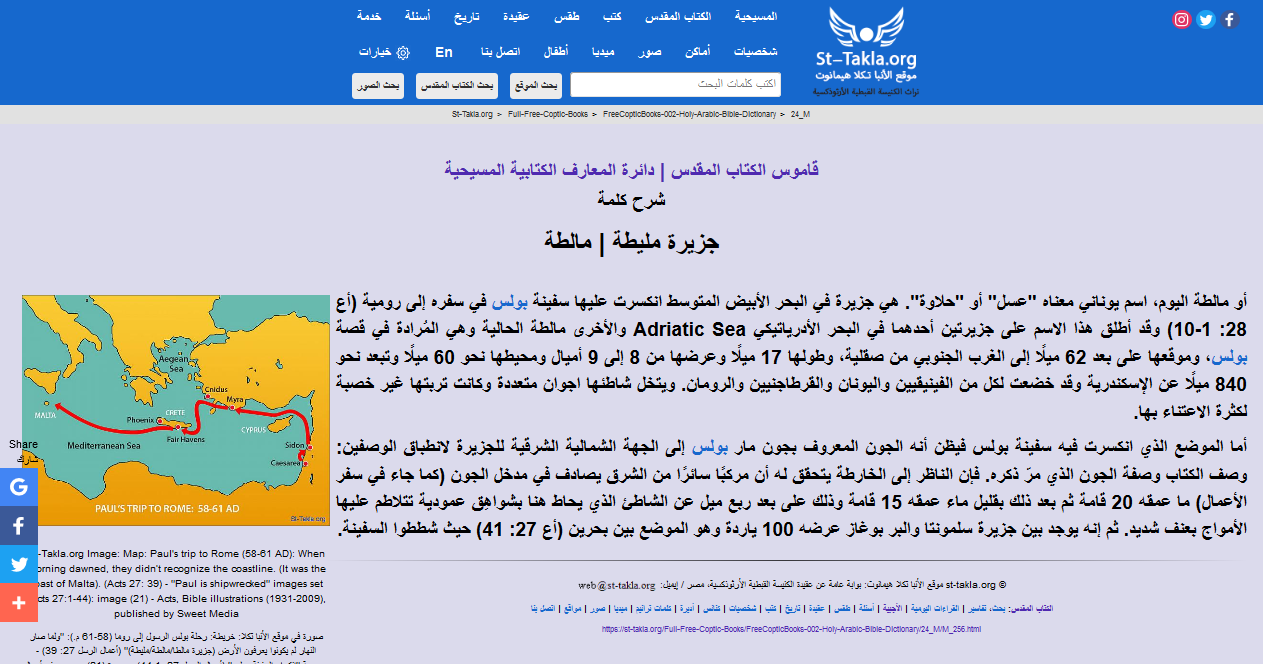
[Malita or Malta today: is a Greek name meaning “honey” or “sweetness.” It is an island in the Mediterranean Sea where Paul’s ship was shipwrecked on his journey to Rome (Acts 28: 1-10). This name was given to two islands, one in the Adriatic Sea and the other is present-day Malta, which is the one referred to in Paul’s story . It is located 62 miles southwest of Sicily, 17 miles long, 8 to 9 miles wide, and about 60 miles in circumference. It is about 840 miles from Alexandria and was subject to the Phoenicians, Greeks, Carthaginians, and Romans. Its coast is riddled with many bays, and its soil was infertile due to over-cultivation. As for the place where Paul’s shipwreck occurred, it is thought to be the bay known as the Bay of Saint Paulus, to the northeast of the island, as both descriptions apply: the biblical description and the description of the bay mentioned above . Anyone looking at the map will realize that a ship sailing from the east encounters at the entrance to the bay (as stated in the Book of Acts) a depth of 20 fathoms, and then a little later water 15 fathoms deep, a quarter of a mile from the shore, which is surrounded here by vertical promontories against which the waves crash violently. Then, between the island of Salmont and the mainland, there is a strait 100 yards wide, which is the place between two seas (Acts 27:41), where they ran the ship aground.
The Church Encyclopedia says, when interpreting the book of Acts 28: verses 1-10, the following:
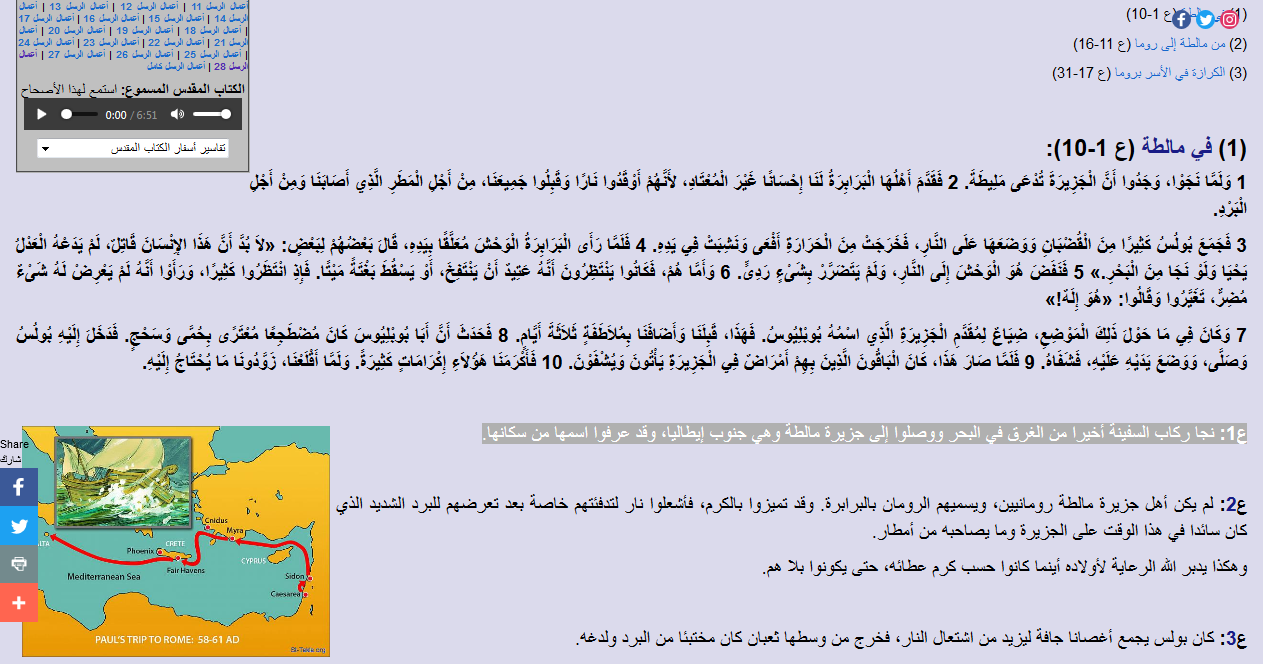
The passengers of the ship finally escaped from sinking at sea and reached the island of Malta, which is south of Italy . They learned its name from its inhabitants.
Father Antonius Fikry says in his interpretation of the Book of Acts 28:1 the following:
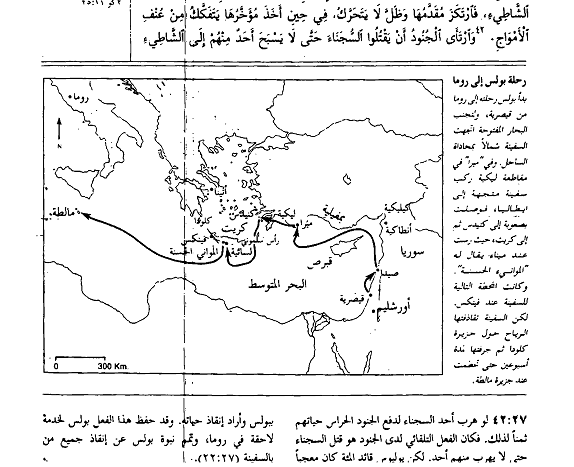
[Melita = or Malta. If we look at the map, we will find that the ship sailed a long distance. It was as if God was the one who guided it. And God did this because He has people in Malta to whom He sent His Messenger.
The authors of the applied interpretation say on page 2367 the following:
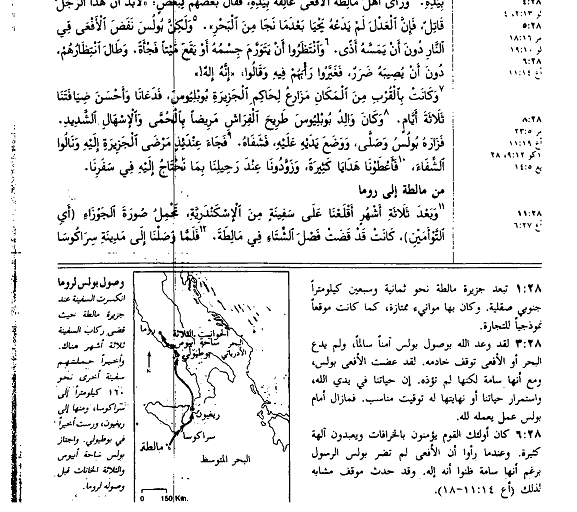
[The island of Malta is about 78 kilometers south of Sicily. It had excellent ports and was a model location for trade. The ship was shipwrecked off the island of Malta , where the passengers spent three months.]
They also say on page 2366 the following:
[But the ship was tossed by the winds around the island of Clauda and then drifted for two weeks until it was wrecked on the island of Malta ]
Conclusion:
After all of the above, it becomes clear that the writer of the book was attributing false miracles to Paul in order to polish his character as an apostle to the Christians.
Footnotes and References:
1-
https://www.thecliffs.com.mt/the-snakes-in-malta-did-you-know-that-one-species-is-venomous-02052020/