Sati Pratha (Widow Burning
Introduction
→Sati Pratha is a Hindu practice where the wife ascends the funeral pyre of her husband and gives up her life. The word Sati may have been derived from the name of Shiva’s wife. Sati, also called Dakshayani, was one of the daughters of Prasuti and Daksha. She loved Shiva, but her father Daksha forbade her marriage to Shiva. She married Shiva anyway, and Daksha got revenge by not inviting Shiva to a festival during his absence. Sati killed herself by self-immolation on a fire. After Shiva returned and found Sati’s body, he killed and decapitated Daksha, later replacing his head with a goat’s.
→Reference:- Shrimad bhagwatam, Canto 4, chapter 2-7
→(While the exact origins of widow sacrifice are unknown, many researchers pose theories as to how it developed and one of the most accepted on is mentioned above.)
History
→From archeological evidence we have found that women those who perform sati were given lot’s of respect and celebrated. Structures were built to honor women who gave up their lives after the death of their husbands.
💀
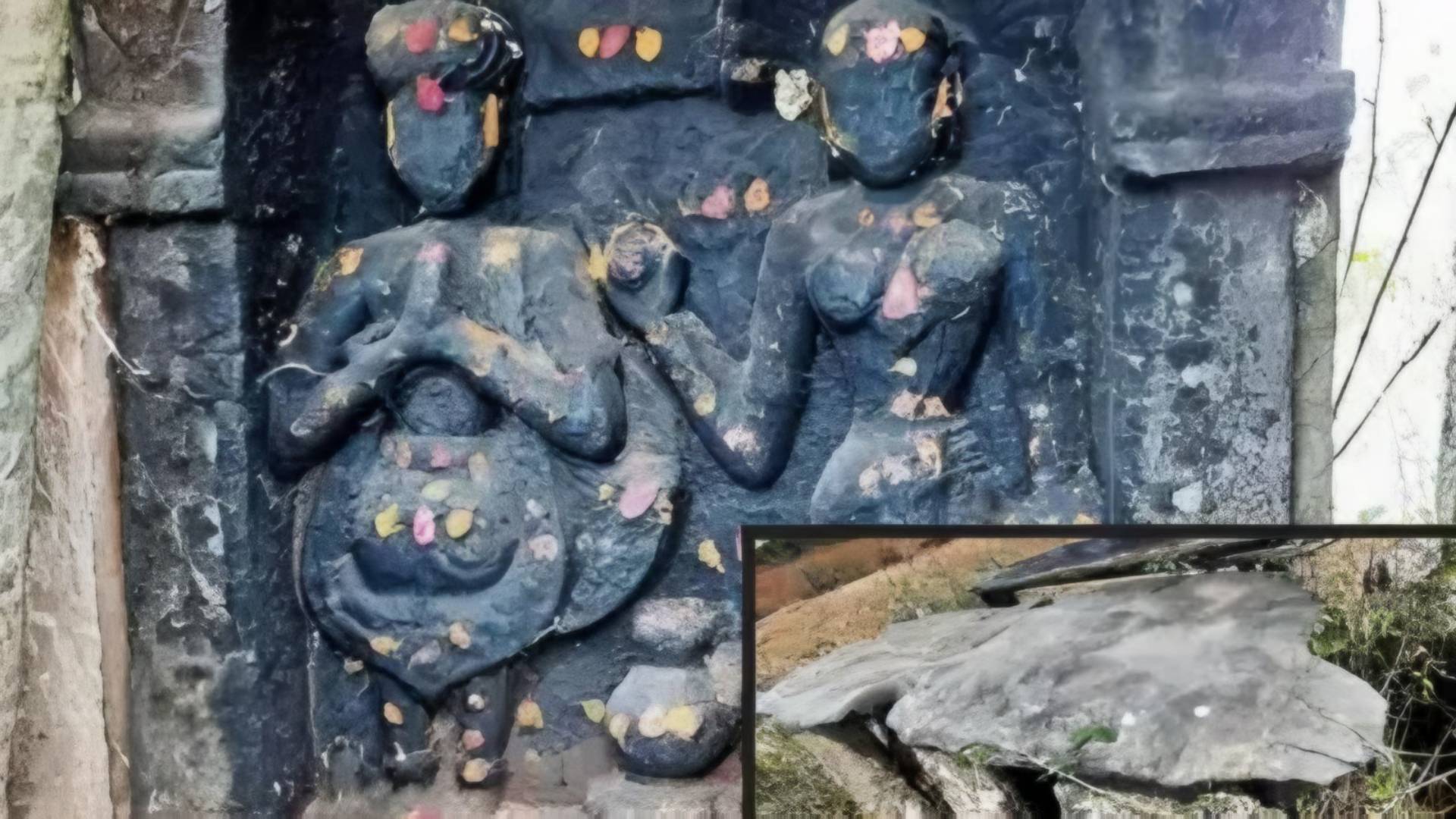
→Mastigallu or maha sati kallu, similar to veeragallu (hero stone) sculptures, were erected for women who gave up their lives after their spouses. Karnataka’s mastigallus are from the period between 5th century CE and the 18th century.
→Reference:- Romila Thapar, The Penguin History of Early India, from the origins to AD 1300 (New Delhi:Penguin Books India Pvt.Ltd, 2002), 380
Travellers
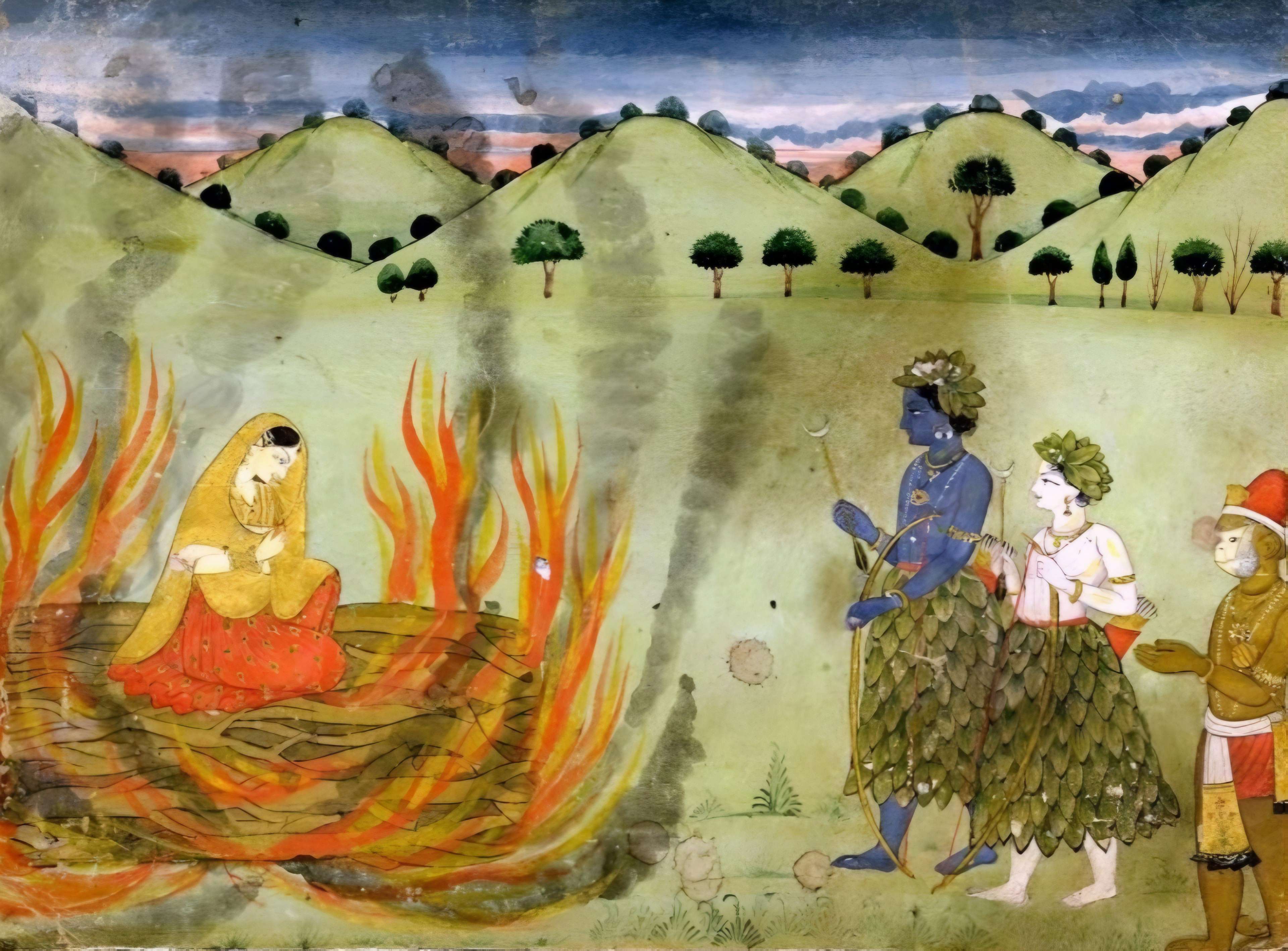
→Globetrotters such as Al Biruni (973-1048 CE), and Ibn Battuta (1304 CE) and many others who travelled to India have mentioned in their travel books about sati being performed openly and publicly. Greek visitors who visited north India while travelling the world, states that Sati was practiced in 4th-century B.C. but others say that this tradition has been practiced since 510 AD, and there are hints in religious texts that indicates it was present even before 510 AD for example Mahabharata also mentions many instances of sati. Pandu’s second wife, named Madri, decides to commit sati, as do the widows of warriors and Vasudeva. Hence, Hindu texts serve as evidence to the existence of sati during the Smriti age.
💔
→Antonio Manutius seems totally unknown in India, even if being one of the first (sept 1538) to describe “Sati”, ritual cremation of the widow in India. There are former mentions (very expedite with no details) in Portuguese officers’ texts, such as in Book of Duarte Barbosa but none seems as lively and detailed as Antonio Manutius.
His mentioning :-
“And when whatever of those small men dies, the widow organize a great banquet for all the familiars and, doing the party, they go dancing their own way towards a place where is organized a big fire, and, wearing the body of her husband in the fire, and the compelling of the parents bearingwith them a pot with some kind of burning grease, extremely hot. The lady of the dead goes on dancing around fire, singing her husband’s honors, giving away a ring to one, to another a cloth, until she stays nude with only a cloth on her nature. Right away she caught the pot with certain grease and throws it in the fire. Then, she jumps in the middle and all the assistants throw her grease pots, for what fire becomes immense and she dies in the instant. Those who do this want to have a good reputation on their name and the ones who don’t are known as sad and of heavy life, and dishonest and they never find back who to marry with.”
→Reference:- The Book of Duarte Barbosa: An Account of the Countries Bordering on the Indian Ocean and Their Inhabitants
(Translated and edited by A. R. (Archer) Hamilton in the early 20th century.)
Ibn Batuta’s account:
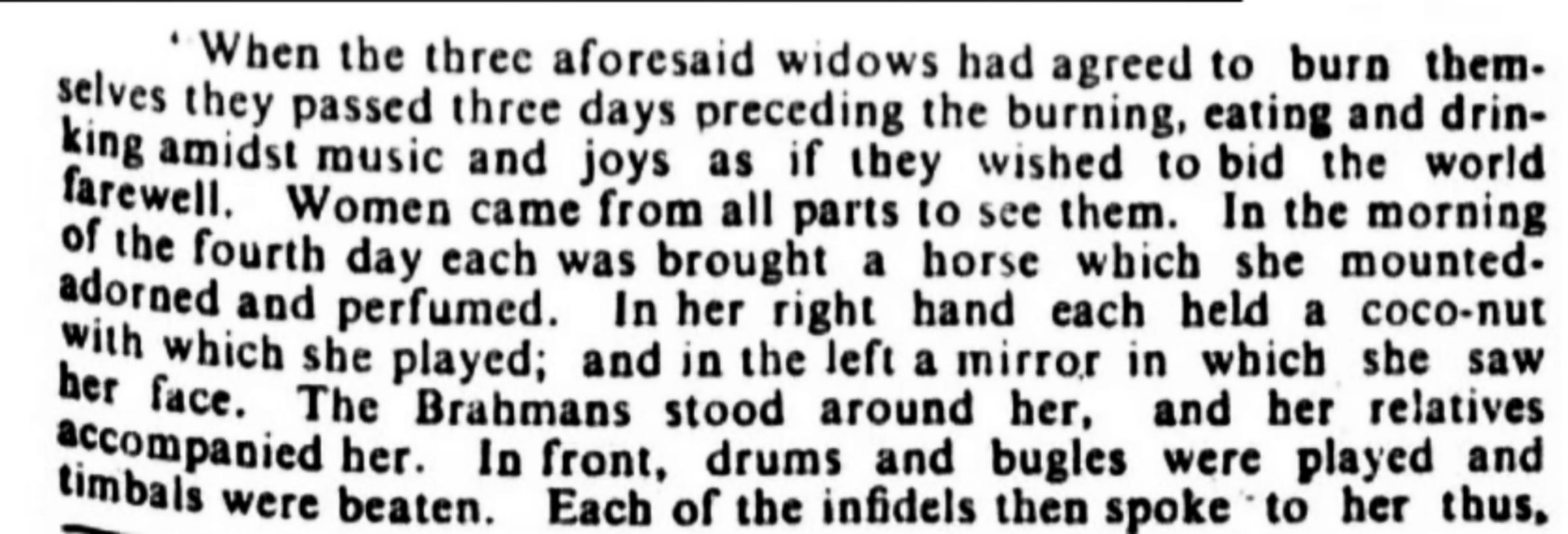
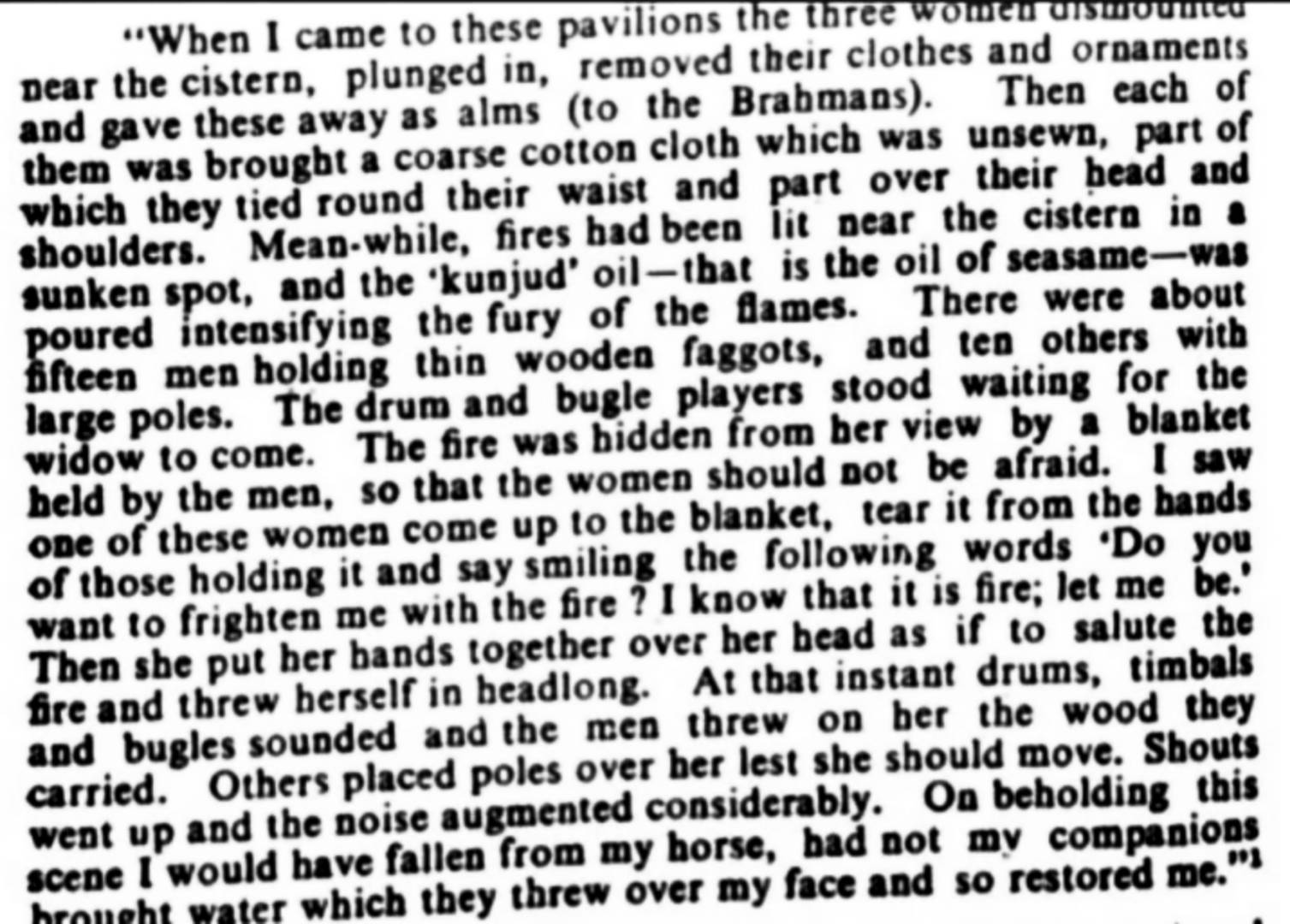
→Batuta Saw the sati of three widows who were wives of three different men who died fighting. All three did anumarana sati Batuta doesn’t use this word but it is clear from the manner of the sati that it was anumarana. Anumarana is a technical term to designate the process. Sahagamana (“going with”) or sahamarana (“dying with”) Anvarohana (“ascension”) to the pyre are some other terms you will find.
Process of sati witnessed by Ibn Batuta
→All three women feast and fast for three days, there’s dancing and singing. On the fourth day the ride horses with Brahmins to a forest where there was also a small lake where they bathe and take off all their jewelry and clothes and wear two coarse garments that were unstitched and these women had tie these garments to their body in order to wear them then three pyres were burnt and there were many men holding blocks of wood and ghee in their hands. The fire was covered from the women so that they dont get scared looking at the fire. Drums start playing as soon as they jump into the fire and ghee, wood etc. are added to the pyre. And Battuta says that from the widow’s cries to the beating of the drums there was so much noise that he almost fell off his horse and Couldn’t even see the rest of the scene.
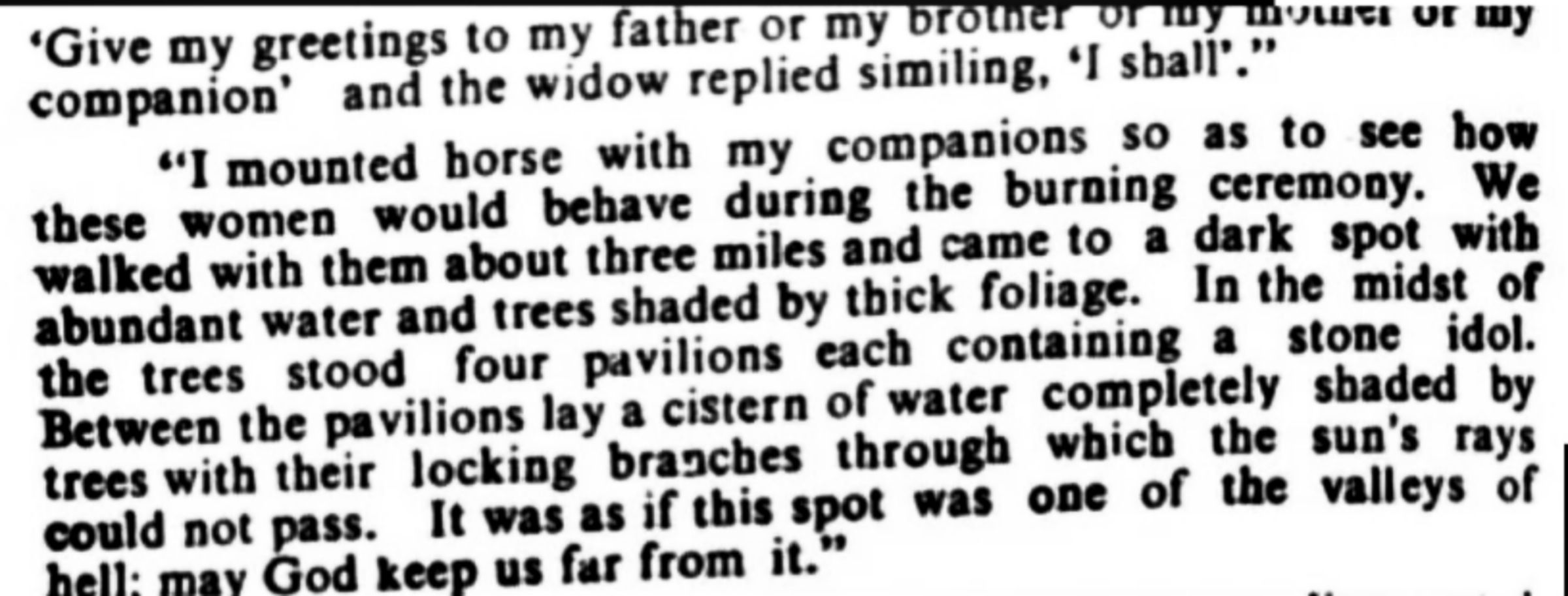
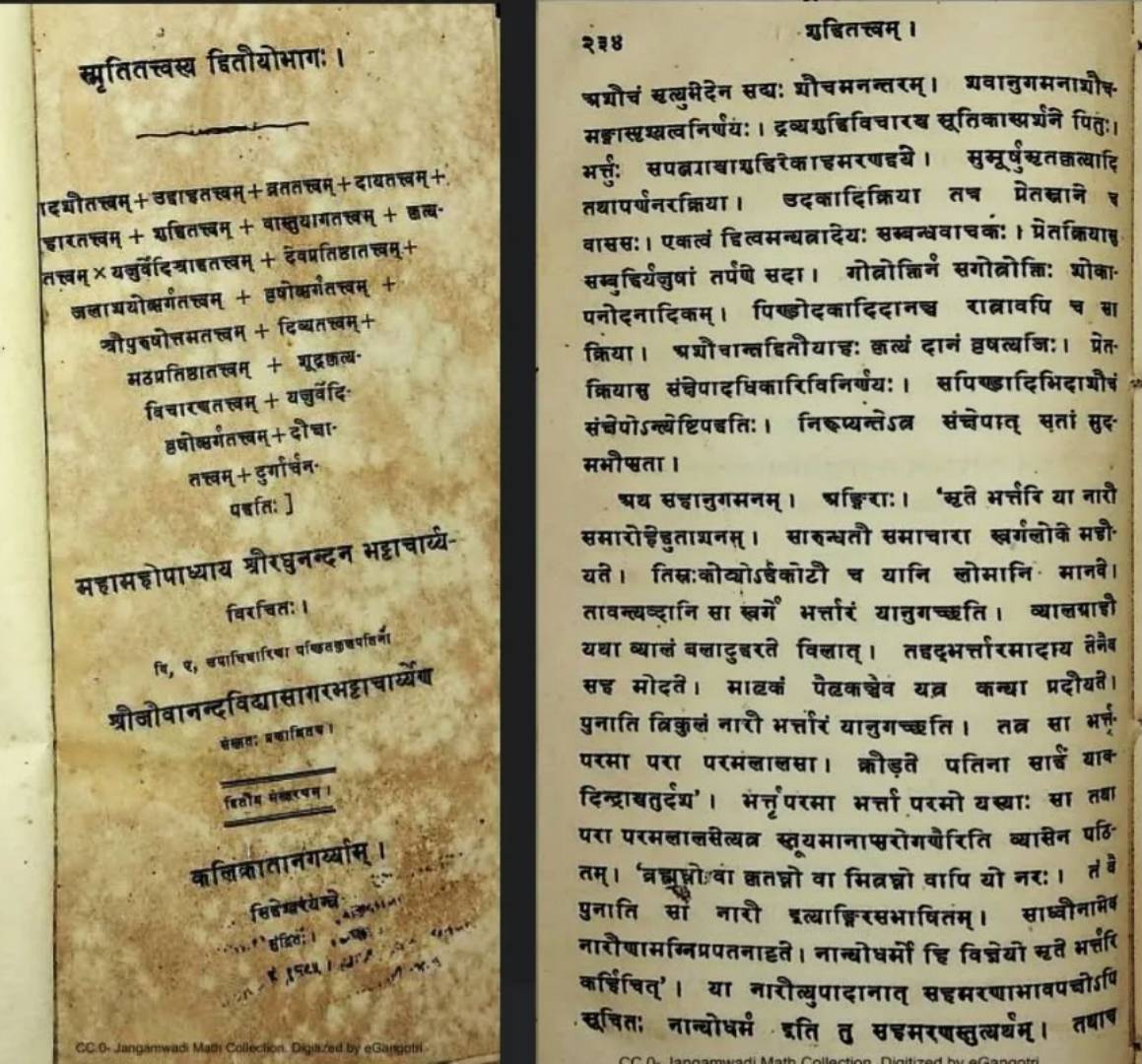
→The procedure of Sati as narrated by Batuta is also in Raghunanda’s book Smriti Tattva in its chapter titled Shuddhi Tatva. This book was written in the 16th century where the widow takes bath, wear white unstitched clothes and resolves to become Sati then summons the Ashta Dikpal, guardians of eight directions like Surya Indra etc to be a witness to her sati. Then takes three rounds around the fire, then mantras from Rig Veda and Puranas are chanted the widow says Namo Namah and jumps into the fire.
__
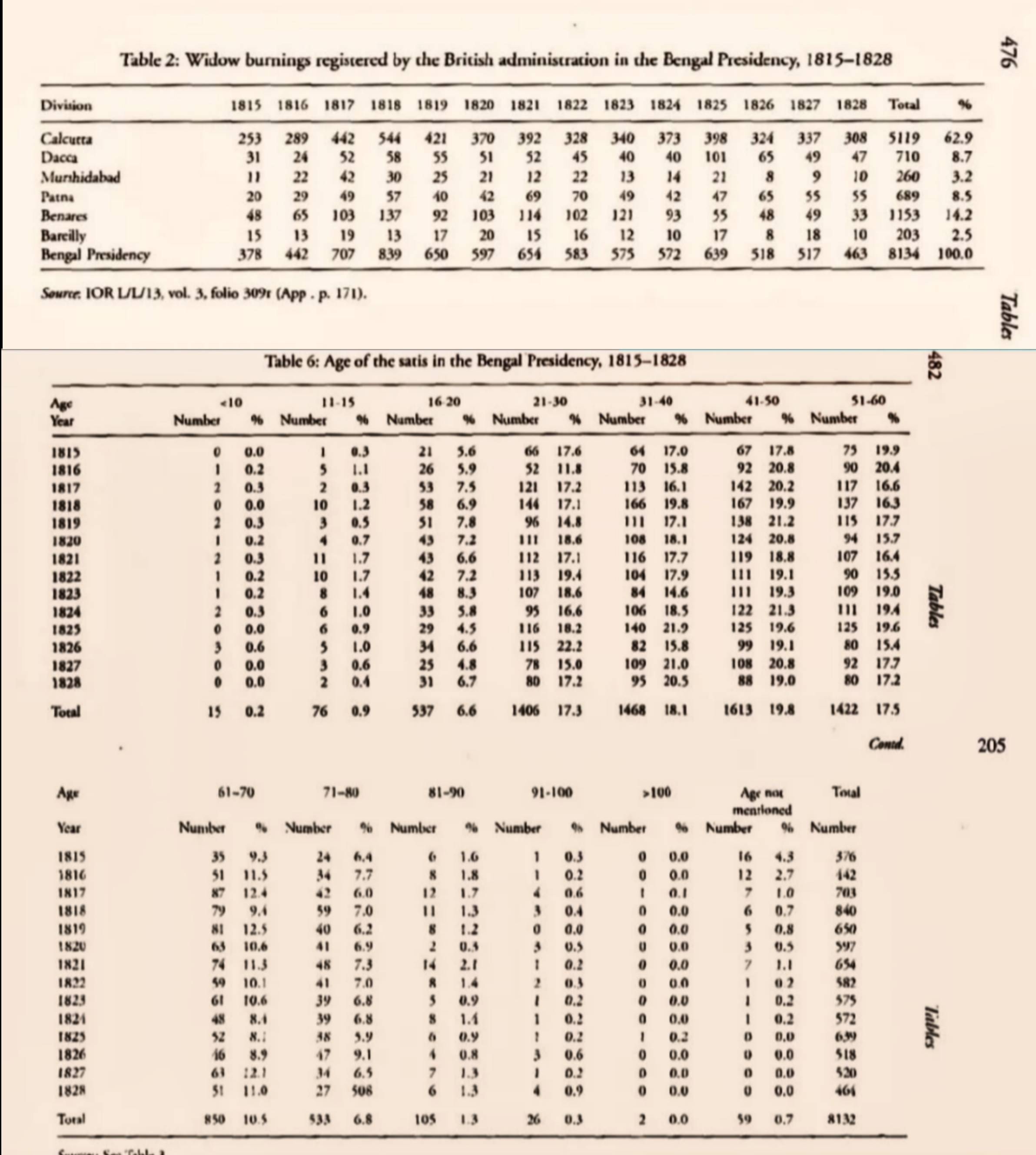
Statistics of widow burning from (1815-1828)
💀
There are still cases of sati or widow buring in independent India due to religion influence and sick mindset.
-) 1 April 2015 Maharashtra: Woman’s body found from husband’s pyre
-) 9 Sep 2009: Indian women still commit ritual suicides
-) 14 October 2008: Relatives arrested after widow burns to death on funeral pyre
-) 22 September 2006: Brothers arrested for throwing 95-year-old mother on funeral pyre
Textual evidence of sati
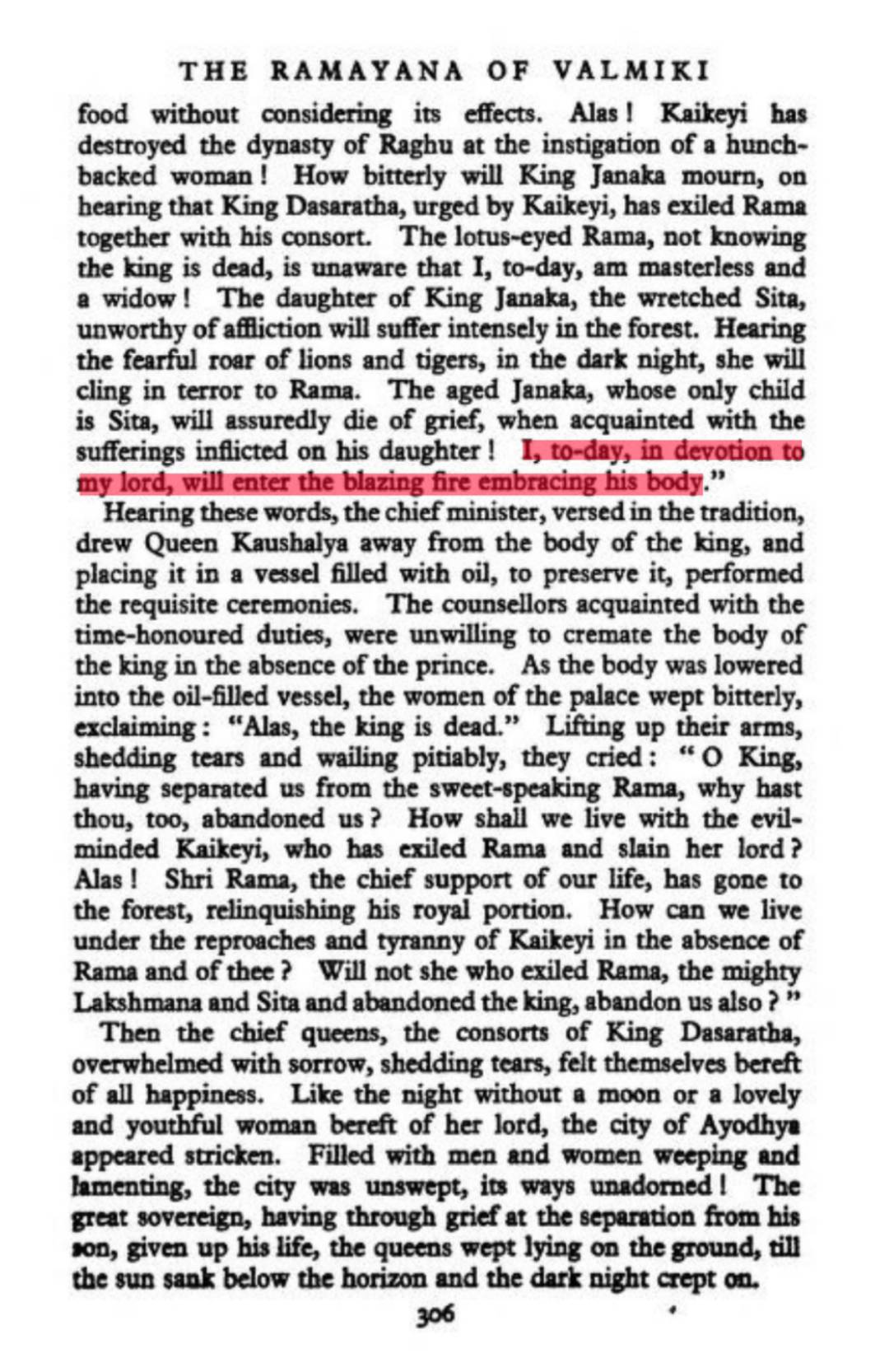
Reference:- valmiki ramayan 2.66.12
“Today itself, I too in devotion to my husband, will meet my appointed end. I shall enter the fire, duly embracing this body of my husband.”
Translator -Shri K.M.K. Murthy
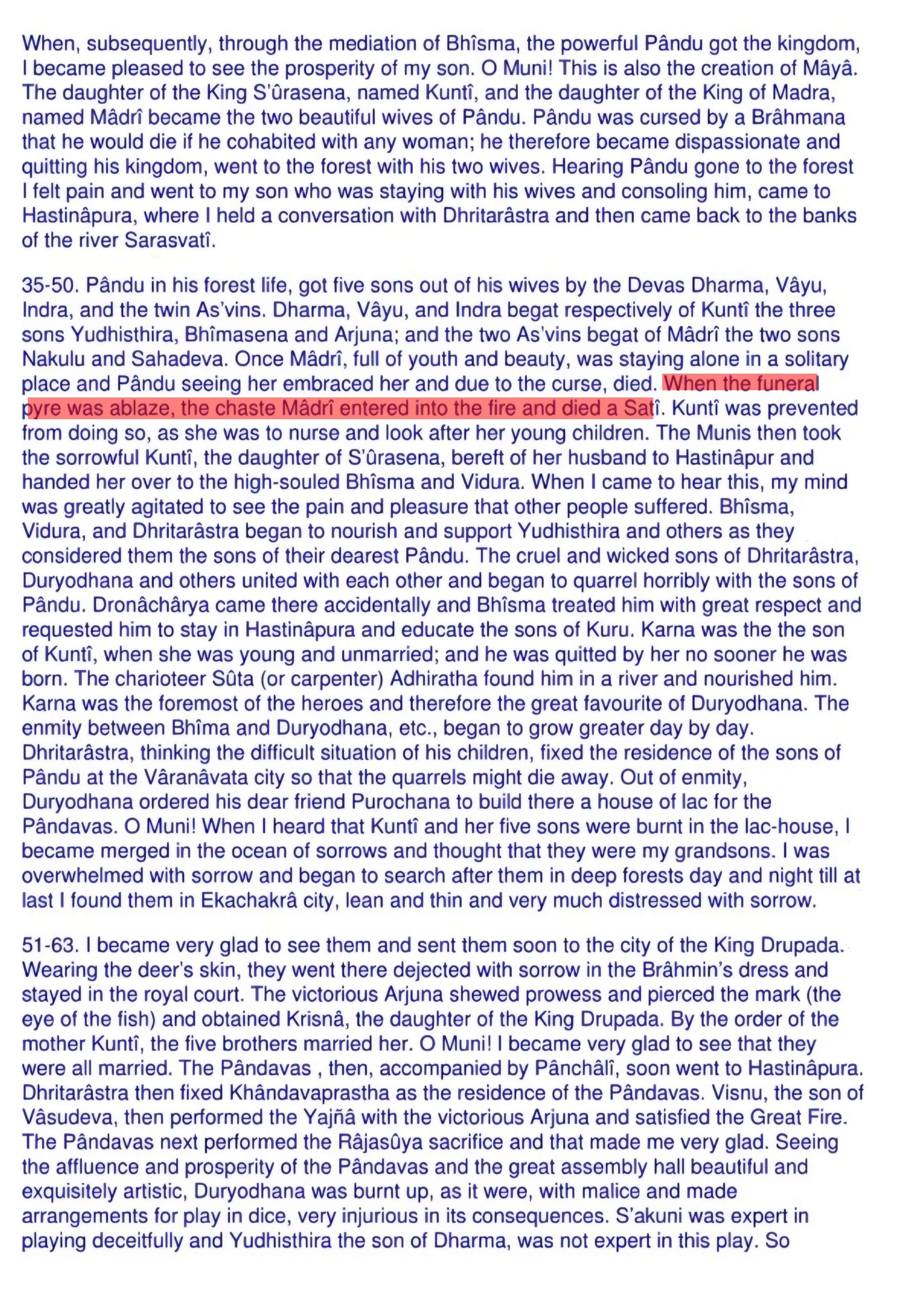
Devi bhagwatam 6.25.35-50
“Once Madri, full of youth and beauty, was staying alone in a solitary place and Pandu seeing her embraced her and due to the curse, died. When the funeral pyre was ablaze, the chaste Madri entered into the fire and died a Sati.”
TranslatorM.N.Dutt
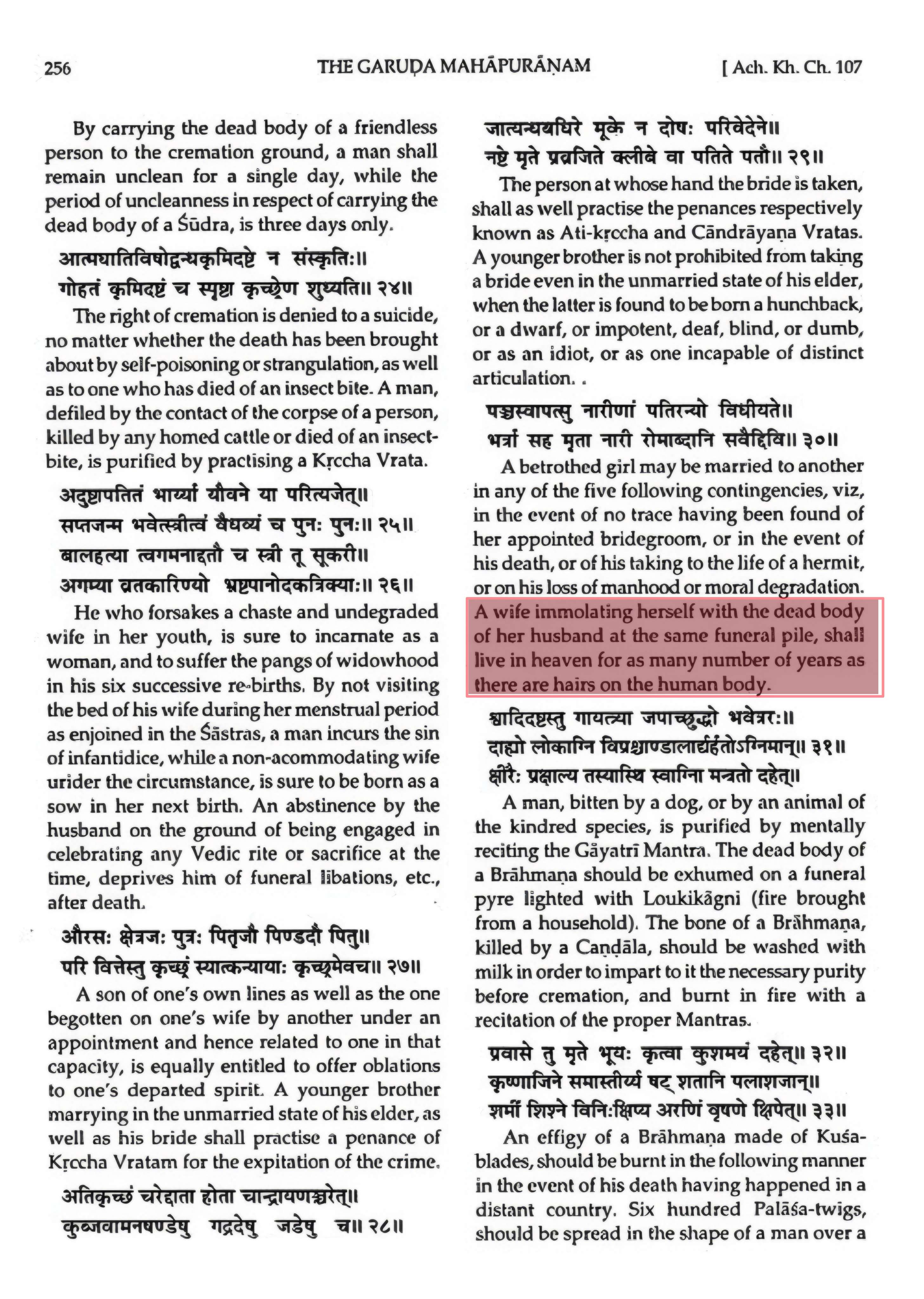
Garuda Purana 1.107.30
“A Wife who dies in the company of her husband shall remain in heaven as many years as there are hairs on his person”
Translator - J.L. Shastri
__
In smritis like:- Parasara Smriti, Brihaspati Smriti, Atri Samhita, Daksha Samhita also sati pratha seems clearly mentioned.
Conclusion:- Sati is deeply rooted in Hinduism and its historical traditions. Numerous textual references from sacred scriptures like the Ramayana, Mahabharata, Garuda Purana, and various Smritis, along with vivid accounts by historical travelers such as Ibn Battuta and Antonio Manutius, confirm the long-standing presence of this practice. Archaeological findings and memorial structures like Mastigallu further reinforce its significance in Hindu cultural memory. Though often portrayed as an act of devotion, it was an embedded social custom, sanctioned and sustained by religious and historical frameworks within Hinduism.