Non Protein Coding DNA You May Have Heard of the Term “Junk DNA
You may have heard of the term “junk DNA,” which evolutionists use as a very strong argument for evolution from a common ancestor — an argument that has held back (much) of the progress in the field of medicine for a period of time.
But when did this term originally originate?
-
This idea was introduced in the late 1940s by Hermann Muller and J.B.S. Haldane , who predicted that only a small percentage of the human genome contained genes that could be destroyed by mutation.
-
In the late 1950s, Susumu Ohno popularized the term junk DNA in a 1972 paper titled “Too Much Junk DNA in Our Genomes.”
-
The discovery of introns in the 1970s seemed to confirm the views of junk DNA advocates, because it meant that genes were very large, and even large genomes could not accommodate large numbers of genes.
-
Junk DNA advocates tended to dismiss intron sequences as mostly nonfunctional (junk) DNA.
📌 Importantly, the rants continued until the priest of junk DNA, Richard Dawkins , said:
🪫 “Why would an intelligent designer create useless genes unless God intended to deceive us?”
{Embed}
The Greatest Show on Earth
Kufrcleaner Library 📚 - 『⚛』evolution-criticism - Non-Protein-Coding DNA You may have heard of the term “junk DNA,” [1389476392508592268].txt_Files\content-b30469d29cbd55eb
🧬 According to Darwinian evolution, there are two driving forces of evolution:
Natural selection : Choosing the fittest to survive, which they use to deny the precision of design.
Genetic drift : It causes genetic diversity and leaves behind genes accumulated by chance, producing useless things over 3.5 billion years, including non-coding genes…
So far, you might think, dear reader, that this is direct evidence of the validity of evolution,
and that’s what they were claiming…
until the thunderbolt came.
⚡ In 2012, Ewen Birney led a team of 400 scientists to re-examine the human genome in a project called “ENCODE” ,
where he revealed that 80% of the DNA they were claiming was useless actually has a specific biochemical importance.
📎 https://www.nature.com/articles/nature11247
🧠 Evolutionary biologist Patrick Phillips of the University of Oregon says:
“Projects like ENCODE show scientists that they don’t really understand how genotypes correlate with phenotypes, or exactly how evolutionary forces shape any given genome.”
📎 https://www.nature.com/articles/496419a
🔍 In 2013, Denis Noble , a professor of physiology, wrote:
🪫 “Clearly, it was too early to call DNA junk.”
📎 https://physoc.onlinelibrary.wiley.com/doi/full/10.1113/expphysiol.2012.071134
🔬 In 2019, the function of the ocu-miR-205 gene was discovered,
and that it has a role in the formation and growth of hair follicles in rabbits.
📎 https://bmcdevbiol.biomedcentral.com/articles/10.1186/s12861-020-00213-5
📎 https://www.ncbi.nlm.nih.gov/pmc/articles/PMC7178635/
🧪 In 2020, researchers from the University of South Florida College of Medicine (USF Health) discovered that the C19MC gene:
-
Supervises placental development
-
Leads to the reprogramming of somatic cells into pluripotent stem cells
-
And other functions…
📎 https://www.nature.com/articles/s41598-020-59812-8
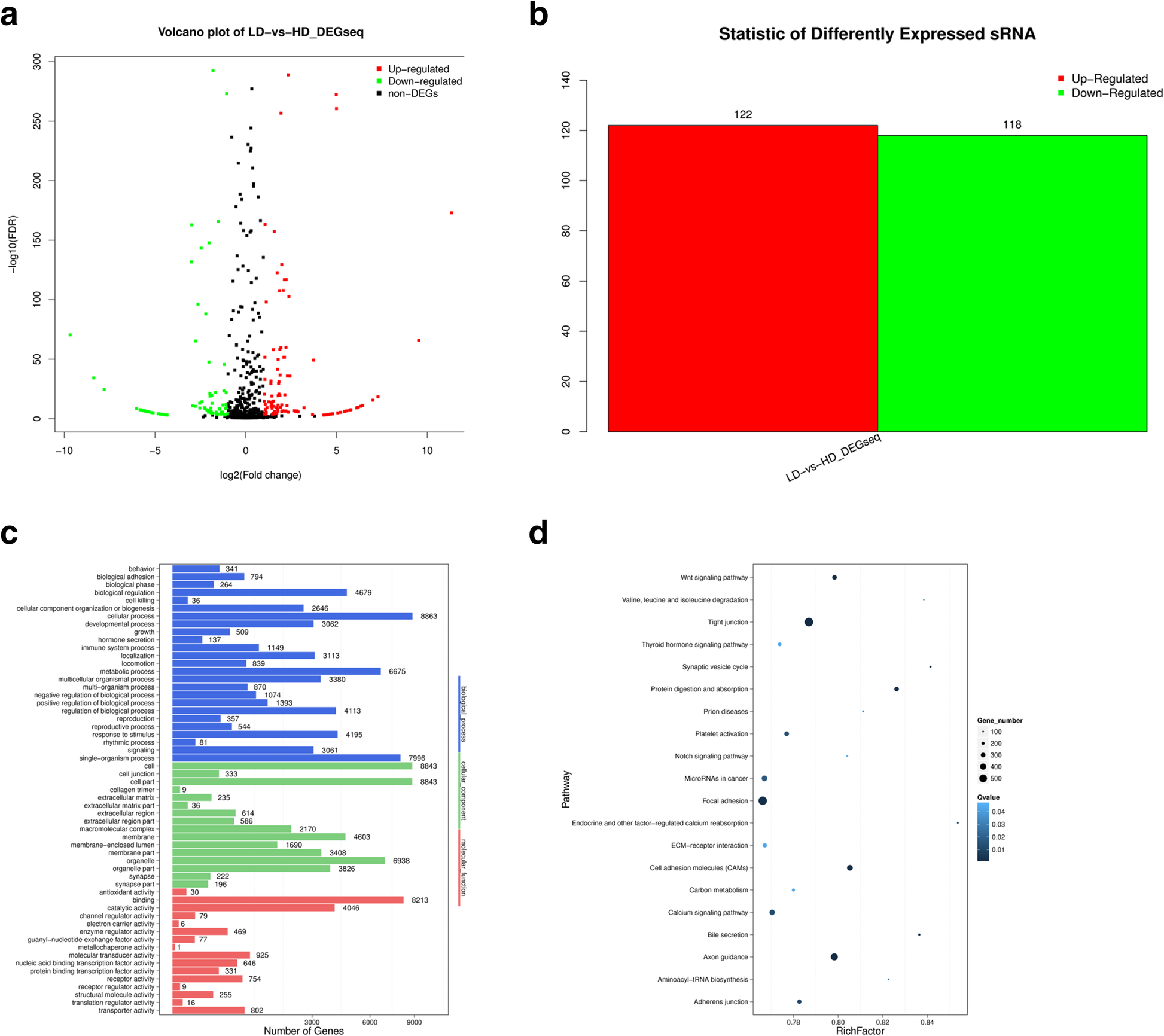
{Embed}
https://www.ncbi.nlm.nih.gov/pmc/articles/PMC7178635/
The functions of ocu-miR-205 in regulating hair follicle developmen…
Hair follicles are an appendage of the vertebrate epithelium in the skin that arise from the embryonic ectoderm and regenerate cyclically during adulthood. Dermal papilla cells (DPCs) are the key dermal component of the hair follicle that directly …

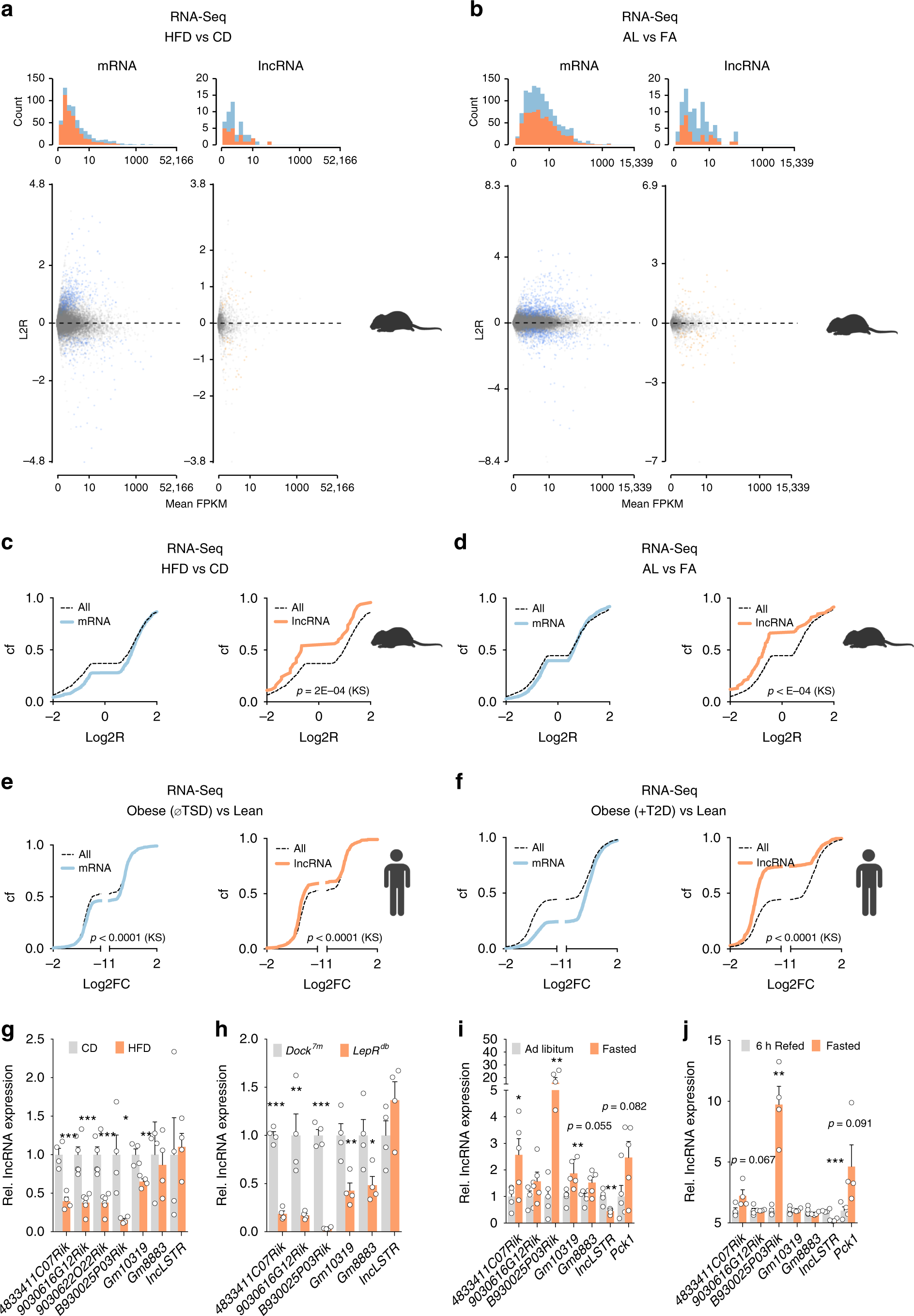
🧬 In the same year (2020), it was discovered in a study published by Nature Communications that the LincIRS2 gene:
-
Is involved in regulating hepatic metabolism
-
Increased MAFG signaling during diet-induced obesity leads to suppressing long non-coding RNA expression
-
Silencing long non-coding RNA in liver cells of obese mice and rats leads to a fasting-like gene expression pattern
-
Meaning that the metabolic rate is reduced
📎 https://www.nature.com/articles/s41467-020-14323-y
🩺 According to a study published in The Journal of Clinical Investigation , the gene mi-RNA-379-5p :
-
Supervises the balance of cellular activity in many tissues
-
Mutations in this gene cause an imbalance and the emergence of cancers
🪫 This discovery opens up broad horizons for cancer treatment through artificial intelligence targeting this gene and then injecting it into patients, and this…
{Embed}
https://www.nature.com/articles/s41467-020-14323-y
A MAFG-lncRNA axis links systemic nutrient abundance to hepatic glu…
Nature Communications - Despite widespread transcription of LncRNA in mammalian systems, their contribution to metabolic homeostasis at the cellular and tissue level remains elusive. Here…
Evidence that this assumption hindered medical progress for a period of time. If they had studied the usefulness of non-coding DNA, they would have discovered its usefulness from the beginning; but they appealed to the authority of evolution, which says that there must be useless things…
https://www.jci.org/articles/view/123396
As usual with evolutionists, they thought that retrotransposons were evidence of genetic junk for a long time; and then it turned out that they are important in responding to the stress that the cell is sometimes exposed to
https://www.pnas.org/content/early/2019/12/18/1917190117
★ So far, have you noticed anything? The more science advances, the more useful the organs that they claimed were junk are proven, but let’s continue because I will give you a surprise at the end of the article. Science continues to discover important roles for what were previously called junk genes. ★ Forgotten junk genes play a role in directing the proper development of the fetus
https://bmcgenomics.biomedcentral.com/articles/10.1186/s12864-017-3566-0
★ Breast cancer prevention
https://www.nature.com/articles/ncomms10406
★ Junk genes protect us from heart failure, responsible for the heart’s adaptation and continued functioning in situations of stress and pressure (stress adaptive regulator), i.e. during exercise or panic. ★ Junk gene called JP2NT, which was previously considered non-functional, turned out to be functional and responsible for the proper functioning of heart cells
http://science.sciencemag.org/content/early/2018/11/07/science.aan3303
https://www.nature.com/articles/ncomms10406
★ Junk genes determine the membrane features of immune cells
https://www.nature.com/articles/nature08750
{Embed}
https://bmcgenomics.biomedcentral.com/articles/10.1186/s12864-017-3566-0
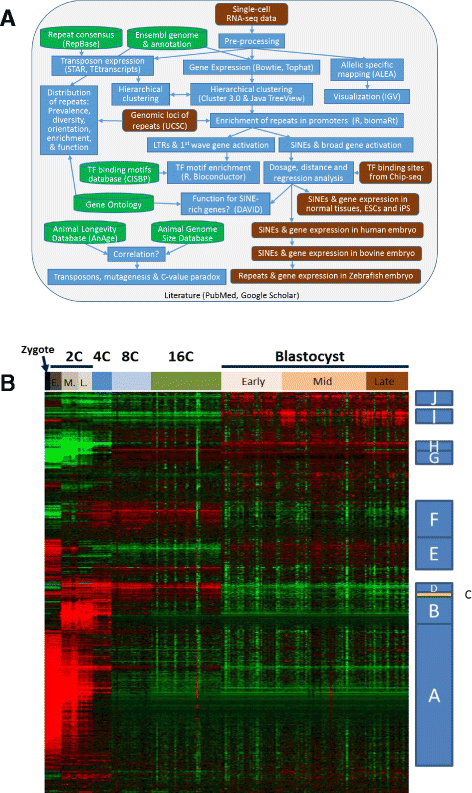
Exploratory bioinformatics investigation reveals importance of “j…
Background Instead of testing predefined hypotheses, the goal of exploratory data analysis (EDA) is to find what data can tell us. Following this strategy, we re-analyzed a large body of genomic data to study the complex gene regulation in mouse pre-implantation development (PD). Results Starting with a single-cell RNA-seq dataset consisting of …
And at the end of the article, here’s a surprise for you atheists: 800 research papers in this link prove the functions of non-coding DNA, or as you call it, junk DNA
https://drive.google.com/file/d/1G15kmdCEZfJdt6mu4pcLtveSLG9ALy7Z/view?usp=drivesdk
Functions of Junk DNA.pdf
🧬 And discoveries are still ongoing…
Then you find someone arguing that some genes were removed and had no effect, so they are useless…
🪫 The short response to this laughter is:
There are dormant genes present that are only activated when needed, such as:
- Genes responsible for muscle growth :
When you exercise regularly, these genes are activated to help build muscle.
- Genes responsible for melanin production :
These genes determine the color of your skin and hair.
Exposure to sunlight can activate these genes to increase melanin production and protect you from ultraviolet rays.
- Genes responsible for the immune system :
When you get sick, your immune system genes are activated to fight infection.
- Genes responsible for metabolism :
These genes control how the body burns energy.
Diet and exercise can influence the activation of these genes.
- Age-related genes :
As we age, gene expression patterns change.
Some genes become more activated, while others are turned off.
This change in gene expression patterns contributes to the aging process.
- Disease-associated genes :
Some genetic diseases are caused by a mutation in a specific gene, causing it to be deactivated or abnormally activated.
- Behavioral-associated genes :
There is evidence that genes play a role in certain human behaviors, such as depression and anxiety.
🪫 And there are many other examples.
🪫 So, after all these scandals,
you still insist that there are junk genes?!?!
In addition, the 2024 Nobel Prize in Physiology or Medicine was awarded for the discovery of the function of microRNA. Evolutionists are still searching for genes with unknown functions, calling them genetic junk and the product of genetic drift. 😁
{Embed}
https://www.nobelprize.org/prizes/medicine/2024/press-release/