

Prophet Muhammad's Fear in the Cave of Hira — A Natural Human Response Consistent with All Prophets
The claim that the Prophet Muhammad’s fear upon the first revelation in the Cave of Hira indicates he encountered a devil rather than an angel is a claim without rational foundation, contradicted by the consistent testimony of every prophet in the Bible, refuted by the plain meaning of the Arabic text of the hadith, and applied by its proponents with a double standard they never apply to their own scriptures. The fear experienced by the Prophet, may God bless him and grant him peace, upon his first encounter with the angel Jibreel — peace be upon him — was the most natural human response possible to an event of that magnitude. It was the same response documented of the prophets before him, and it did not recur across the twenty-three years of revelation that followed.
The Hadith Under Discussion
Then she mentioned the worship of the Prophet, peace and blessings of Allah be upon him, in the cave of Hira, and Jibreel embracing the Prophet, peace and blessings of Allah be upon him.
So the Messenger of Allah, peace and blessings of Allah be upon him, returned with his heart trembling and entered upon Khadija bint Khuwaylid, may Allah be pleased with her, and said: Cover me up, cover me up. So they covered him up until the fear left him.
From this hadith, some Christians — those whose insight Allah has blinded — have concluded that what the Prophet saw in the cave was a devil and not an angel. Some have gone even further and claimed that what afflicted the Prophet, peace and blessings be upon him, was a form of epilepsy.
First — Fear Upon Angelic Encounter is Natural and Prophetically Consistent
The Prophet’s panic, peace and blessings be upon him, upon his first meeting with Jibreel, peace be upon him, was a profoundly natural reaction from a person receiving revelation for the first time.
Consider the situation plainly: a man is worshipping God alone on a mountain in the darkness of night. An angel appears to him, embraces him tightly, and then disappears from his sight. It is entirely natural — expected, even — for such a person to be afraid, disturbed, and shaken. The alternative — that a person should receive the first visitation of a mighty angel without any disturbance whatsoever — would itself be the strange and implausible response.
What happened to the Prophet, peace and blessings be upon him, is precisely what happened to every prophet before him. This is not a Muslim assertion but a Christian one. The scholar of the Coptic Church, Tadros Yacoub Malti, records in his commentary on the Second Chronicles the following words of Saint Cyril of Jerusalem:
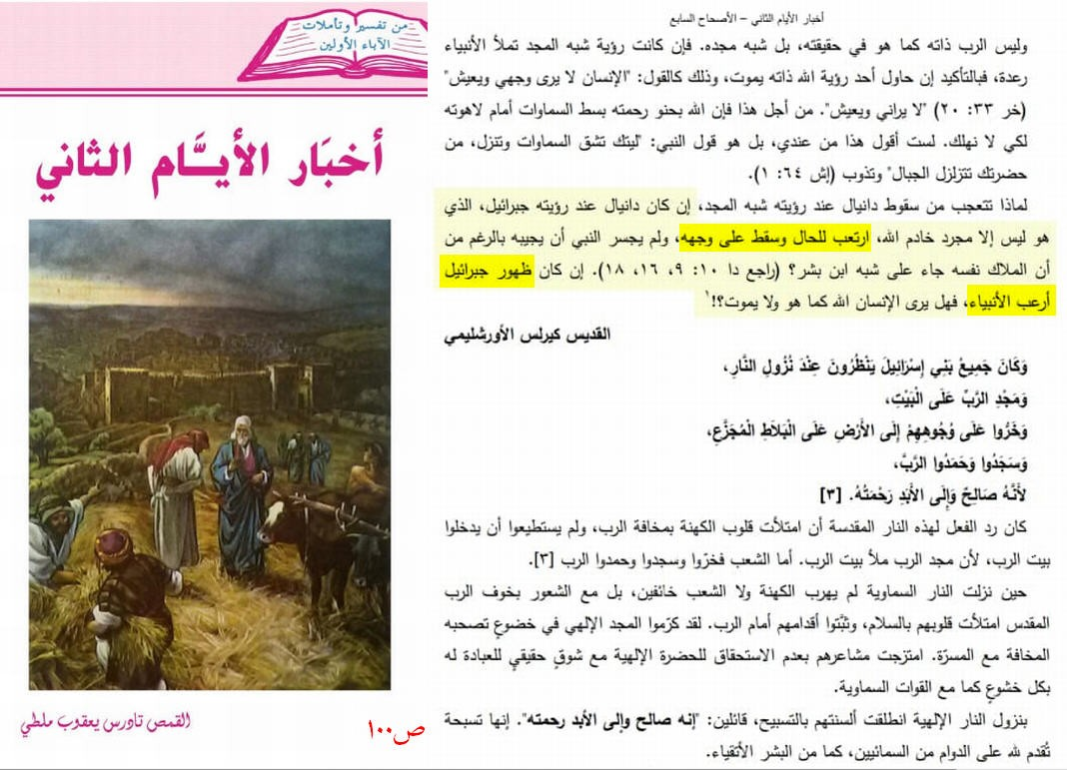
If the prophets of the Bible were terrified of Gabriel even when he appeared to them in human form — a form that diminishes the overwhelming nature of an angel’s true appearance — then what should be expected of a prophet who encountered the angel for the very first time in his original form, as God created him? The reaction of the Prophet Muhammad, peace and blessings be upon him, was the reaction of his brothers the prophets and messengers. It was consistent, it was human, and it was honest.
This last point deserves attention: if the Prophet, peace and blessings be upon him, were fabricating his prophethood and the encounter in the cave were a lie of his own invention, why would he report his own fear and distress? A liar seeking to establish his authority would have constructed a narrative of calm, certainty, and immediate divine confidence. He would not have openly disclosed that he returned to his wife trembling and asked to be covered up. A little reflection is sufficient to expose the absurdity of the accusation.
Second — The Meaning of the Embrace in the Cave
A secondary accusation holds that the being in the cave strangled the Prophet, peace and blessings be upon him — and that this proves the encounter was with a devil, not an angel. This claim misrepresents the Arabic text entirely.
Those who translate this word as “strangled” and build from it an argument about devils are manipulating a single word from a single moment — the first seconds of the first encounter — and using it to dismiss twenty-three years of continuous, uninterrupted revelation. Twenty-three years in which the Prophet, peace and blessings be upon him, received the word of God day and night, with peace of mind, with clarity, with a settled relationship with the Messenger of his Lord. The panic of the first moment did not recur. After that first encounter, the Prophet came to know Jibreel well, received from him with tranquility, and completed the greatest prophetic mission in human history across more than two decades of unbroken divine communication.
To take a few seconds from the beginning of a twenty-three-year mission and present them as evidence against the entire mission is not argument. It is deception.
Third — The Illiterate Prophet and Jewish and Christian Recognition
It would have been more fitting for those from the Jewish and Christian communities who read this hadith to confirm — rather than deny — the prophethood of Muhammad, peace and blessings be upon him. Their own scriptures describe him: he is the illiterate prophet who does not know how to read. The hadith itself records the angel commanding him to “Read,” and his response: “I cannot read.” The Holy Quran informed us that the People of the Book know him as they know their own children. Yet when the very sign by which they should have recognized him appears plainly before them in the text of his hadith, they turn from it and construct accusations from it instead.
Fourth — Applying the Standard Consistently
This is the central challenge. If the standard being applied is that fear upon encountering an angel negates or casts doubt upon prophethood, then this standard must be applied consistently to every figure in the scriptures of those making the accusation. Let us apply it:
If the disturbance of the Prophet, peace and blessings be upon him, when he saw the angel casts doubt on his prophethood — then the disturbance and upset of Jesus, whom Christians call God, casts doubt on his divinity.
If the fear of the Prophet casts doubt on his prophethood, then the grief and terror of the prophet Daniel cast doubt on his prophethood, and those who accuse the Prophet should disbelieve in Daniel as well.
If fear negates prophethood, then Moses — the greatest prophet of the Torah according to Jewish and Christian tradition — must be excluded from prophethood on the basis of Hebrews 12:21.
If fear of an angel casts doubt on the prophethood of Muhammad, peace and blessings be upon him, then by the same logic: fear of an angel casts doubt on the divinity of Jesus — for his mother Mary feared the angel who came to announce him; fear of the prophets of the Bible casts doubt on their prophethood — for Daniel and Moses trembled; and by the accusers’ own reasoning, what Mary saw must have been a devil and not an angel, since she was troubled and afraid.
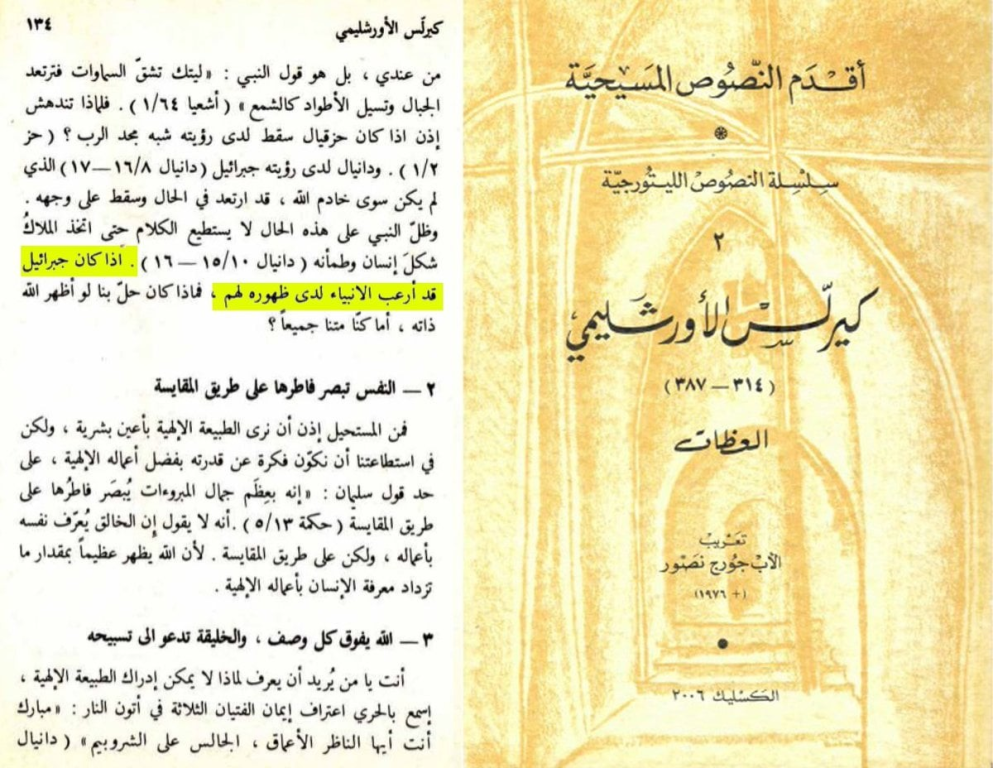
The argument is not being made here that Mary saw a devil, or that Daniel’s visions were from Satan, or that Moses was a liar. The argument is that fear upon encountering the unseen is a universal and documented human response — one that appears consistently across every prophet in every scripture. The standard being applied against the Prophet Muhammad, peace and blessings be upon him, is a standard that destroys the prophets and, on the logic of those applying it, the very divinity of Christ.
Luke 22:43-44 — An Angel Strengthens Jesus in Gethsemane: Four Theological Problems for Christianity
...st likely did not need" the strengthening the text explicitly describes him receiving. The honest reading of the text is simpler: the one who prayed, who did not want this fate, who required an...
...of Allah be upon him, vision of Gabriel in the cave was awake and not in a dream? Also see...