Prophet's Doubt in Islam: What Does Yunus 94 Really Mean
Did the Prophet Muhammad ﷺ Doubt? A Complete Tafsir of Surah Yunus 94
Table of Contents
- Introduction
- The Verse
- Aspects of the Doubt
- Ibn al-Qayyim’s Analysis
- Issue One — Who Is Addressed by This Verse?
- Issue Two — Who Are “Those Who Read the Book”?
- Scholarly Positions in Detail
- The Result — Scholarly Consensus
- Footnotes
Introduction
The Verse
Aspects of the Doubt
- How could the Prophet ﷺ doubt what Allah revealed to him while he is His Messenger?
- How could he ask the People of the Scripture when they denied him?
I will elaborate in responding to these aspects, God willing. 👇🏾👇🏾👇🏾👇🏾
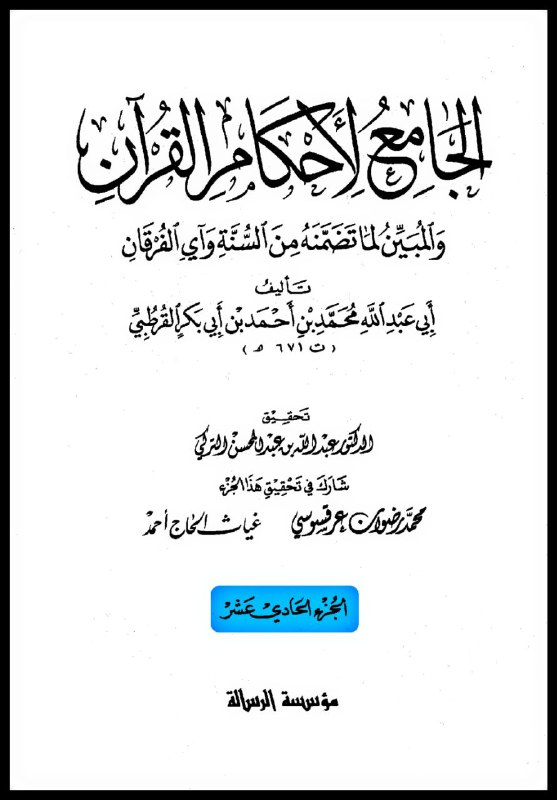
Ibn al-Qayyim’s Analysis
“There is nothing in the verse that indicates that doubt occurred, nor the question at all; because the condition does not indicate the occurrence of the conditioned, nor even its possibility.”
- “If there had been within the heavens and earth gods besides God, they both would have been ruined.” [Al-Anbiya: 22]
- “Say: If there had been with Him gods as they say, then they would have sought a way to the Lord of the Throne.” [Al-Isra: 42]
- “Say: If the Most Gracious had a son, then I would be the first of his worshippers.” [Az-Zukhruf: 81]
- “And it has already been revealed to you and to those before you, if you associate others with Allah, your work will surely become worthless.” [Az-Zumar: 65]
The benefit of this verse is:
- To establish proof against those who deny prophethood and monotheism
- To bring out this meaning in the most concise expression, most indicative of the intended meaning — making the address to his Messenger who never doubted, never asked, and had nothing to suggest that
Issue One — Who Is Addressed by This Verse?
First Statement — Address to the Prophet, No Doubt Implied
This is what Ibn al-Qayyim, may God have mercy on him, preferred.
Ibn Jarir also said: “He did not ﷺ doubt the truth and accuracy of God’s news, and God Almighty is All-Knowing of that from His command. But He, may His praise be exalted, addressed him as his people addressed one another, since the Qur’an was revealed in their language.”
He gives the example: A man among the Arabs says to his slave, “If you are my slave, then obey my command” — and the master does not doubt that the slave is his slave. Likewise a man says to his son, “If you were my son, then show me his righteousness” — and he had no doubt that his son was his son.
Second Statement — Address to the Prophet, Others Are Meant
As the Arab representative says: “I mean you, and listen, neighbor.”
And as God Almighty says: “O Prophet, fear Allah and do not obey the disbelievers and the hypocrites.” [Al-Ahzab: 1] — and what is meant by this address are his followers.
Abu Ishaq said: God Almighty addresses the Prophet ﷺ, and the address is inclusive of all creation. The evidence: God Almighty says at the end of the Surah: “Say, O mankind, if you are in doubt of my religion.” [Yunus: 104]
This is the opinion of most commentators, and the evidence for its authenticity is abundant.
Third Statement — Address to the Doubtful Among the People
Ibn Qutaybah said: People in the era of the Prophet were of different types — among them one who disbelieves and denies it, one who believes and confirms it, and one who doubts the matter and does not know how it is. So God Almighty addressed this type of people.
However — even if it has a point — the context of the speech rejects it, as Ibn al-Qayyim mentioned, because the previous and subsequent addresses are all directed to the Prophet ﷺ.
Issue Two — Who Are “Those Who Read the Book”?
Ibn al-Qayyim responded that this is not consistent with the meaning and intent of the verse, and is not acceptable from a historical perspective — because the Islam of Ibn Salam was only in Medina after the migration, and this surah is Meccan. Also, how is the Messenger of God ﷺ commanded to testify against those who deny his prophethood through his followers?
Al-Alusi said: “What is meant by the relative is the stories — that is, if you are in doubt about the stories revealed to you, which include the story of Pharaoh and his people and the news of the Children of Israel — so ask those who read the Scripture before you; for that is proven by them, established in their books as We have revealed it to you. And the stories were mentioned specifically because the rulings of him ﷺ abrogate their rulings and contradict them; so it is not conceivable that they would ask him about it.”
Scholarly Positions in Detail
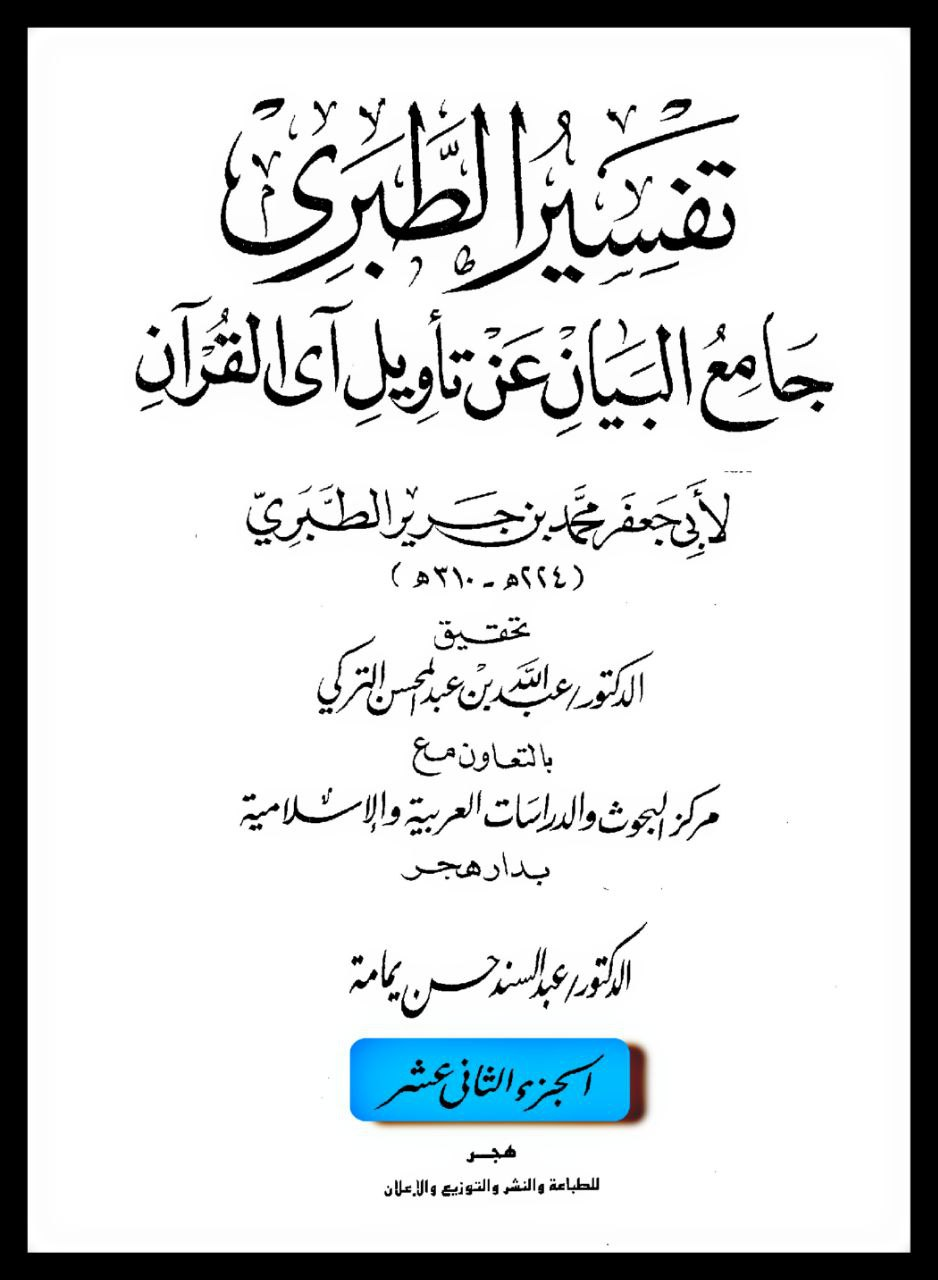
Imam Al-Tabari
First aspect (in green): The address is to the Prophet ﷺ and what is meant is someone else. He supported his statement with the words of the two imams Tha’laba and Al-Mubarrad and the words of Al-Qutbi.
Second aspect (in blue): The address is to the Prophet ﷺ and what is meant is him. He said it was said that doubt means distress — i.e. if you are distressed then be patient and ask the People of the Book to tell you about the patience of the prophets before you.
Third aspect (in yellow): The letter “fa” with the conditional letters does not require the action nor does it prove it. He mentioned the statement of Al-Hussein bin Al-Fadl.
First (in light yellow): He asked the People of the Book, who are the people of truth and faith, like Abdullah bin Salam. He provided evidence with the hadith of Ibn Jurayj when he said that Ibn Abbas mentioned that, and he also mentioned the statement of Ibn Zayd.
Second (in pink): Contains a response to the claim that the Prophet of God ﷺ doubted what was revealed to him, and he mentioned several narrations that support that.
Third (in light green): Contains a response to the claim that he mentioned that without doubt. He provided evidence with the speech of the Arabs and the statement of God Almighty to our Master Jesus, peace be upon him.
Fourth (in blue): Contains a statement that what is meant is the one who utters faith with his tongue but is not certain in his heart. May God reward him on our behalf, as he has expanded on this issue.
Ibn Atiyah
He preferred: “The correct meaning of the verse is that it is addressed to the Prophet ﷺ and means everything else — whoever can doubt or oppose.”
He also decided: Those who read the book before them were those who converted to Islam from the Children of Israel, such as Abdullah bin Salam and others.
Imam Al-Razi
First possibility: The speech is addressed to the Prophet ﷺ. Under this, he elaborated seven meanings for commentators, the most important being two faces:
- First face: The address is to the Prophet ﷺ in appearance, but what is meant is someone else. Evidence:
- God says at end of Surah: “Say, O mankind, if you are in doubt about my religion” [Yunus: 104] — so those mentioned at the beginning as a symbol are those mentioned here by declaration.
- If the Messenger ﷺ doubted his own prophethood, others would be even more deserving of doubt — necessitating the complete abolition of the Sharia.
- How can doubt be removed by informing the People of the Book, when most were infidels, and their books are distorted?
- Second face: “If you are in doubt, then do such and such” is a conditional proposition. A conditional proposition gives no notice at all that the condition has occurred or not. The benefit of this verse is the multiplication of evidence and strengthening it, which increases certainty and peace of mind.
Second possibility: The intended address is the doubtful class of people — what Ibn Qutaybah mentioned.
Imam Al-Qurtubi
He also mentioned: “Doubt is a constriction of the chest; meaning: If your chest is constricted by the disbelief of these people, so be patient, and ask those who read the Scripture before you to tell you about the patience of the prophets before you.”
He concluded his interpretation of the verse by saying: “The address in these two verses is to the Prophet ﷺ and it means something else.”
Ibn Kathir
“It has reached us that the Messenger of God ﷺ said: I do not doubt nor do I ask.”
Then he said: “This is a confirmation for the nation, and informs them that the description of their Prophet ﷺ is available in the advanced books which are in the hands of the People of the Book… then with this knowledge that they know from their books they also know, that their children distort it and change it, and do not believe in it despite the proof being established on them.”
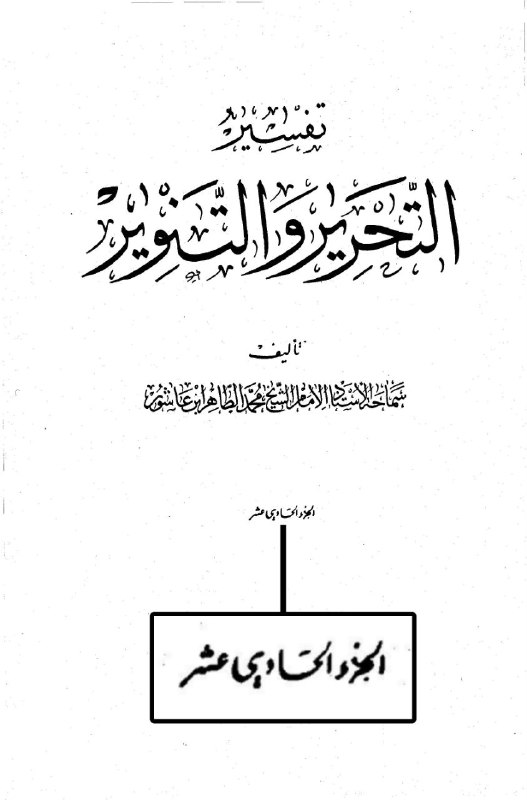
Ibn Ashour
First possibility: “In” remains in its true form, and the doubt is general and intended for its owners — meaning: “If you are in a people who doubt what We have revealed to you, that is, they doubt the occurrence of these stories.” The meaning of asking the People of the Book is: a question of confirmation and testimony. The purpose of the verse is to establish proof against the polytheists.
Second possibility: “Fi” is for the metaphorical circumstance, as in: “So be not in doubt of what these people worship” [Hud: 109]. This dialogue is directed to the Prophet ﷺ on the method of innuendo, with the intention that the polytheists hear it. This is a method of indirect speech that wise people and people of morals follow — when directing speech to the one intended is likely to cause aversion, as in: “If you associate others with Allah, your work will surely become worthless.” [Az-Zumar: 65]
Ibn Ashour said: “Both possibilities are consistent with his statement: ‘So ask those who recite the Book before you.’ This implies that what is being asked about is something that the People of the Book do not conceal and they testify to — and this is only correct in the stories that agree with what is in their books.”
The Result — Scholarly Consensus
- Strengthening the Muslim nation and informing them that the description of their Prophet ﷺ is in the advanced books in the hands of the People of the Book.
- Establishing the argument against those who lied about the Prophet ﷺ and disbelieved in what he brought, whether from the infidel Arabs or from the People of the Book.
Second opinion: The speech is to the Prophet ﷺ, but what is meant is someone else who may be doubted. This is the opinion of most commentators, and the evidence for its authenticity is abundant.
God did not say: “O Muhammad, are you in doubt?” Rather He said: “If you doubt what We have revealed to you” — and this is a matter of strengthening the evidence, not indicating its occurrence.
- A master saying to his slave: “If you are my slave, then listen to my command.”
- God Almighty to His slave Jesus ﷺ: “O Jesus, son of Mary, did you say to the people, ‘Take me and my mother as two deities besides Allah?’” [Al-Ma’idah: 116]
- A man saying: “My name cannot be such and such if I do not do such and such.”
Footnotes
[2] Narrated by Ibn Jarir 15/201.
[3] The Compendium of Statements 15/200-201. There is a difference in some of the vocabulary between the two texts.
[4] Narrated by Ibn Jarir 15/201.
[5] Also narrated by Ibn Jarir 15/201. In its chain of transmission is Al-Husayn ibn Al-Faraj — a sheikh whose narration is not taken into account. Ibn Ma’in said about him: “A liar, a drunkard, and a clever person.” See Shakir’s commentary on Trace No. 2719 in Al-Tabari’s Interpretation 3/408.
[6] A famous proverb, used for someone who relies on others in words but means something else. See Majma’ al-Amthal by Al-Maydani 1/69-70.
[7] The Meanings and Grammar of the Qur’an by Abu Ishaq Al-Zajjaj 3/32.
[8] Interpretation of the Problematic Qur’an, pp. 272-274.
[9] Rulings on the People of the Covenant 1/12-15, The Wonders of Interpretation 2/410-414.
[10] See Jami’ al-Bayan 15/200.
[11] See Al-Muharrir Al-Wajeez 7/217-218.
[12] See the Great Commentary 17/128-130.
[13] Al-Alusi weakened the interpretation of doubt as distress, and ruled that it was very far-fetched. See: The Spirit of Meanings 11/190.
[14] See Al-Jami’ li Ahkam al-Quran 8/382-383.
[15] Al-Alusi agreed with him on this ruling. See Ruh al-Ma’ani 11/190.
[16] See Al-Bahr Al-Muhit 6/105-106.
[17] It was previously graduated recently.
[18] Interpretation of the Great Qur’an 4/1772.
[19] See the editorial. Enlightenment 11/284-285.
[20] The Spirit of Meanings 11/190.
[21] See The Mediator of Al-Wahidi 2/559.
[22] See the meanings of the Qur’an and its grammar by Al-Zajjaj 3/32-33. He stated that this saying is the best of sayings.
[23] See Al-Kashshaf by Al-Zamakhshari 2/203.
[24] This is one of the important principles in this chapter; the surah in which it is proven it was revealed in Mecca, so all of its verses are Meccan, and the claim that any of its verses were revealed in the city is not acceptable except with evidence. The same applies to the Medinan surahs. See the rules of Interpretation by Dr. Khaled Saturday 1/77-78.
[25] Liberation and Enlightenment 11/78.
🔝 Return to Table of Contents