

Sahih al-Bukhari — Transmission Chains, Manuscript History, Authentication Methodology, and the Narrators Who Were Criticized
Sahih al-Bukhari contains 2,620 hadiths — 7,377 including repetitions — extracted from six hundred thousand hadiths over sixteen years of scholarly labor, and its manuscript tradition exceeds 2,000 copies with over 5,000 when commentaries are included.
The study of Sahih al-Bukhari requires situating it within the full landscape of hadith scholarship that preceded it, understanding the manuscript tradition that preserved it across the centuries, and carefully examining the twenty conditions al-Bukhari applied when determining which narrators and which narrations merited inclusion. Critics of the collection — whether Western orientalists or internal hadith critics — have repeatedly failed to account for the sophistication of that methodology, which included the deliberate and masterful selection of authentic narrations even from transmitters whose general reliability was contested by other scholars.
Hadith Books Before Sahih al-Bukhari — The Scholarly Context
Before al-Bukhari compiled the Sahih, a rich tradition of hadith recording and compilation had already developed across more than a century of scholarly activity. For a complete account of everyone who wrote something of the hadiths of the Messenger of God, starting from the time of the Messenger himself, may God bless him and grant him peace, see the research “Writing the Prophetic Sunnah, One Hundred and One Hadith Writers,” which excludes the books of Sunnah and famous compilations.
Specifically, the Sunan books before al-Bukhari — arranged according to the chapters of jurisprudence — and the famous books of compilations and Musnads are:
- Sunan Ibn Jurayj (151 AH)
- Muammar bin Rashid Mosque (153 AH)
- Sufyan al-Thawri Mosque (161 AH)
- Classified by Hammad bin Salamah (167 AH)
- The Effects of Muhammad bin al-Hasan al-Shaibani (189 AH)
- Classified by Wakee’ bin al-Jarrah (197 AH)
- Sufyan ibn Uyaynah Mosque (198 AH)
- Musnad of Abu Dawood al-Tayalisi (204 AH)
- Classified by Abdul Razzaq al-San’ani (211 AH)
- Musnad of Asad bin Musa (212 AH)
- Musnad of Ubaid Allah bin Musa (213 AH)
- Musnad of Abu Ishaq al-Mutawwa’i (213 AH)
- Musnad al-Hamidi (219 AH)
- Musnad Musaddid bin Musarhad (221 AH)
- Sunan Saeed bin Mansour (227 AH)
- Sunan Muhammad bin al-Sabah (227 AH)
- Classified by Ibn Abi Shaybah (235 AH)
- Musnad of Uthman bin Abi Shaybah (239 AH)
- Musnad of Ishaq bin Rahawayh (238 AH)
- Musnad Ahmad (241 AH)
- Sunan al-Darimi (255 AH)
This is in addition to the hadith parts and interpretations that circulated in written form throughout this period.
The Transmission of Sahih al-Bukhari
Al-Bukhari died in 870 AD / 256 AH. Al-Farbari, his primary transmitter, died in 932 AD / 289 AH. Al-Harawi, who transmitted from al-Farbari, died in 1042 AD. The manuscripts of Sahih al-Bukhari exceed 2,000 in number. By adding the manuscripts of its commentaries, the number rises above 5,000.
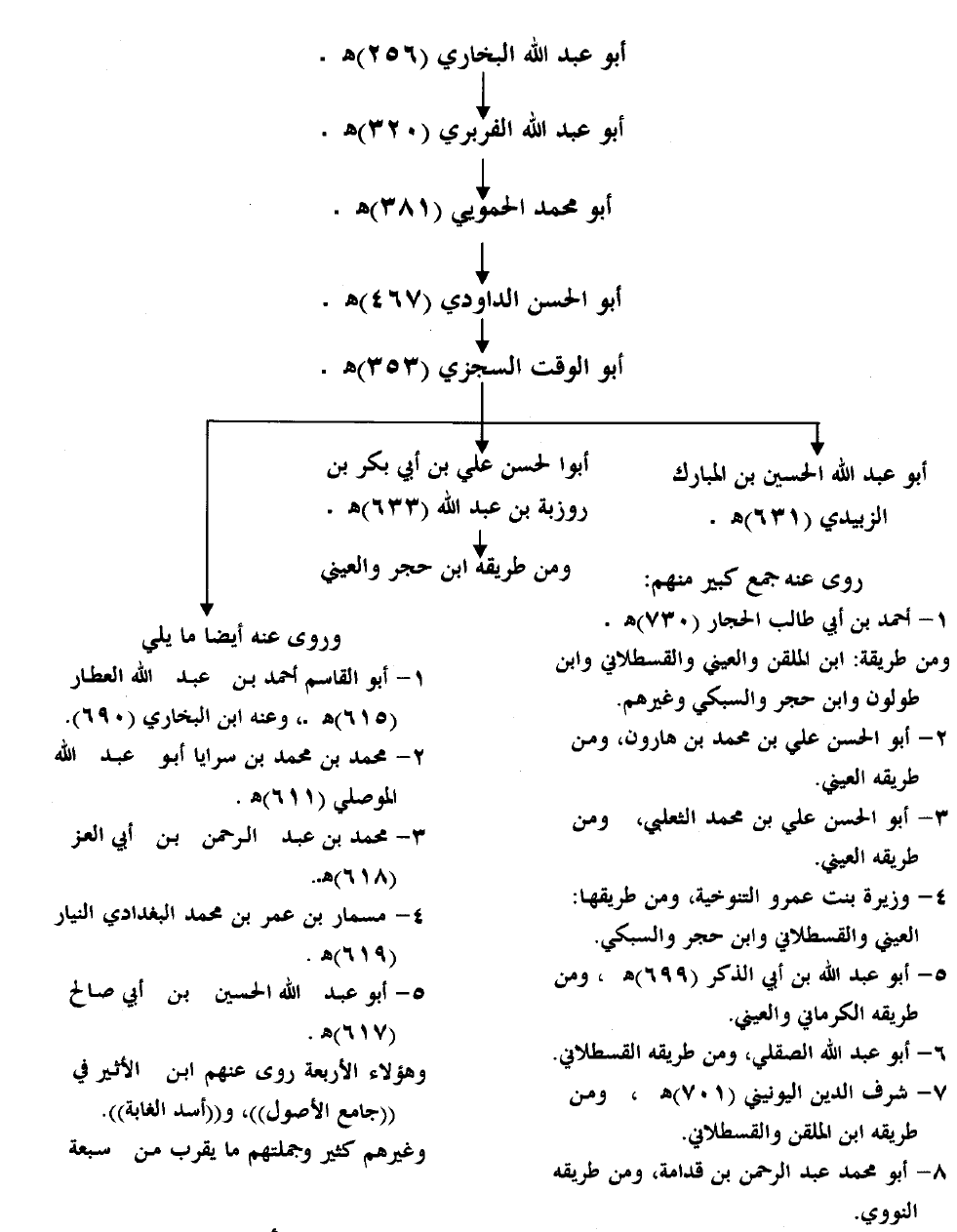
The following images are from the transmission diagram of Sahih al-Bukhari, illustrating the chain of narration from al-Bukhari through al-Farbari and al-Harawi and their students.
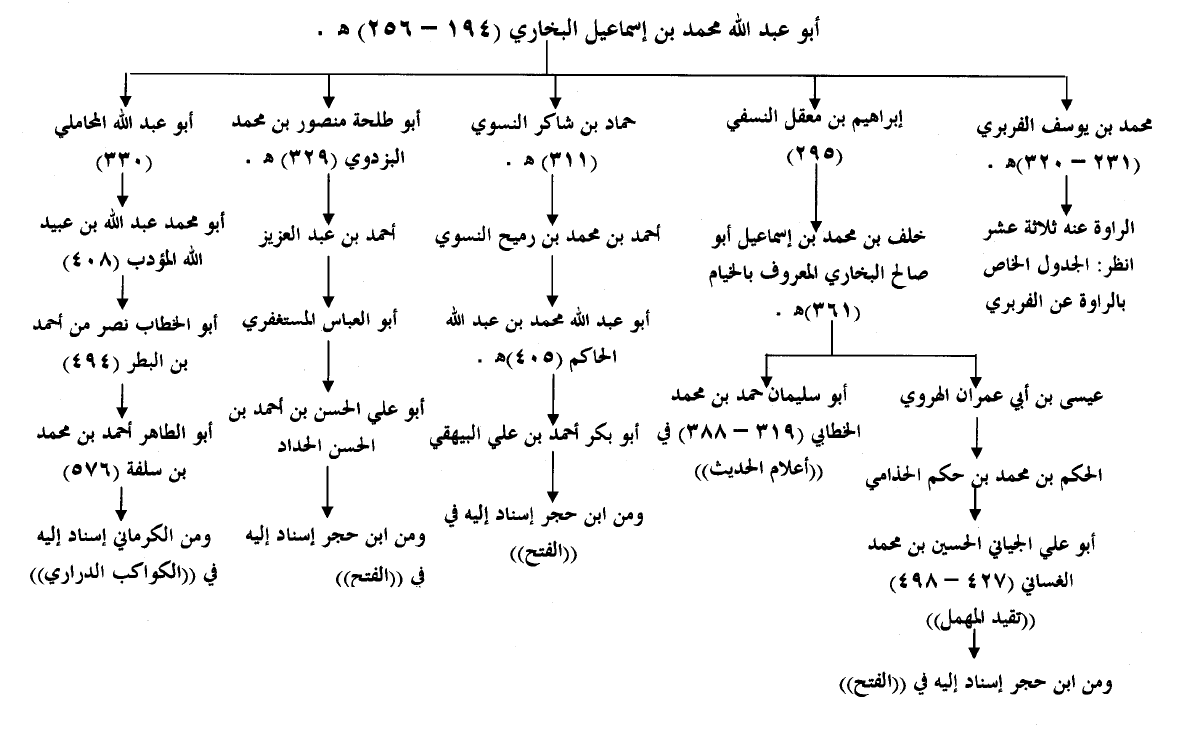
The transmission chain continued through multiple generations of students who heard the Sahih directly, establishing a fully documented oral and written tradition from the time of al-Bukhari himself.
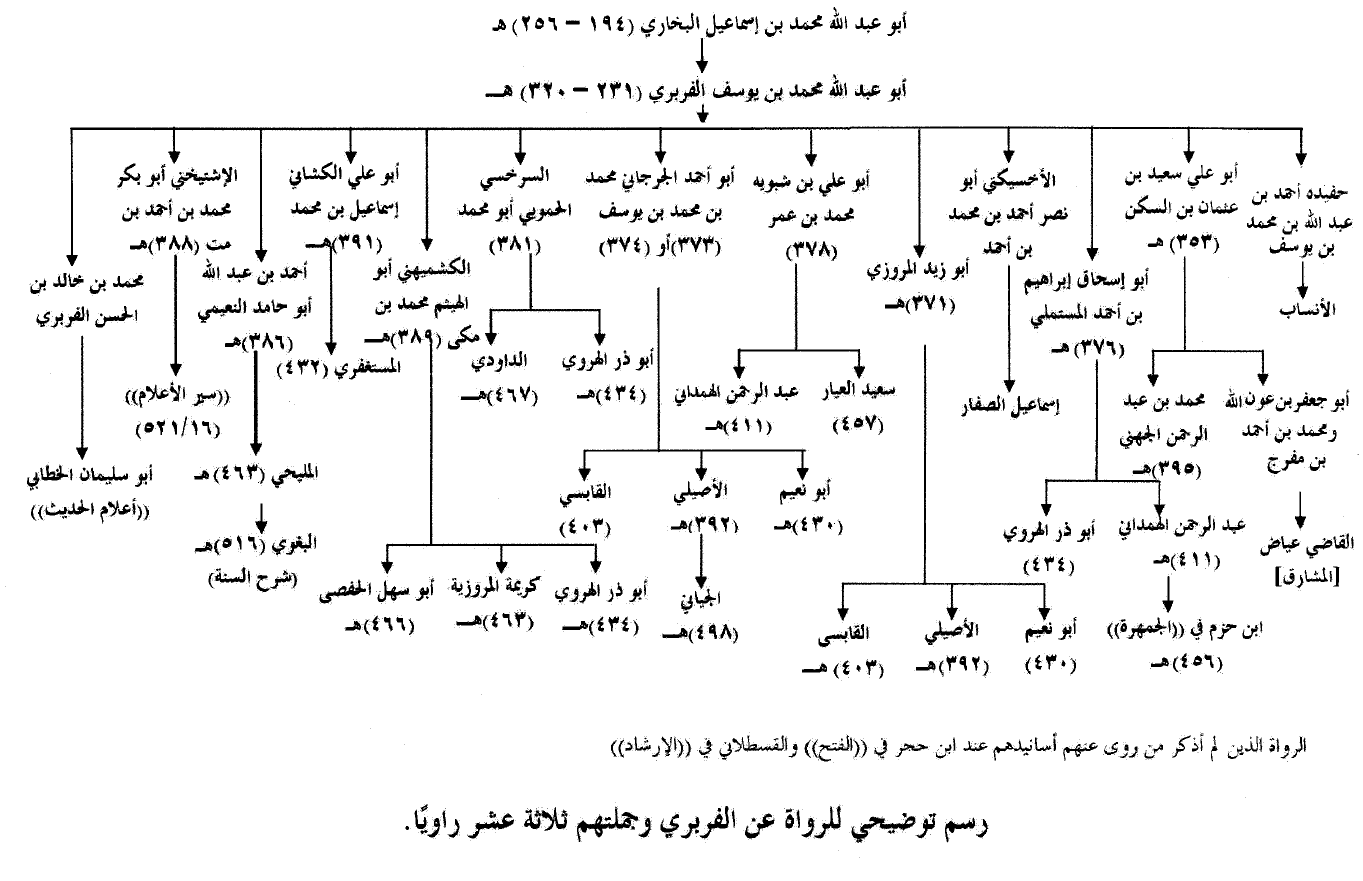
The structure of the transmission network demonstrates that the text of Sahih al-Bukhari was not preserved through a single channel but through multiple independent chains, allowing cross-comparison between copies.
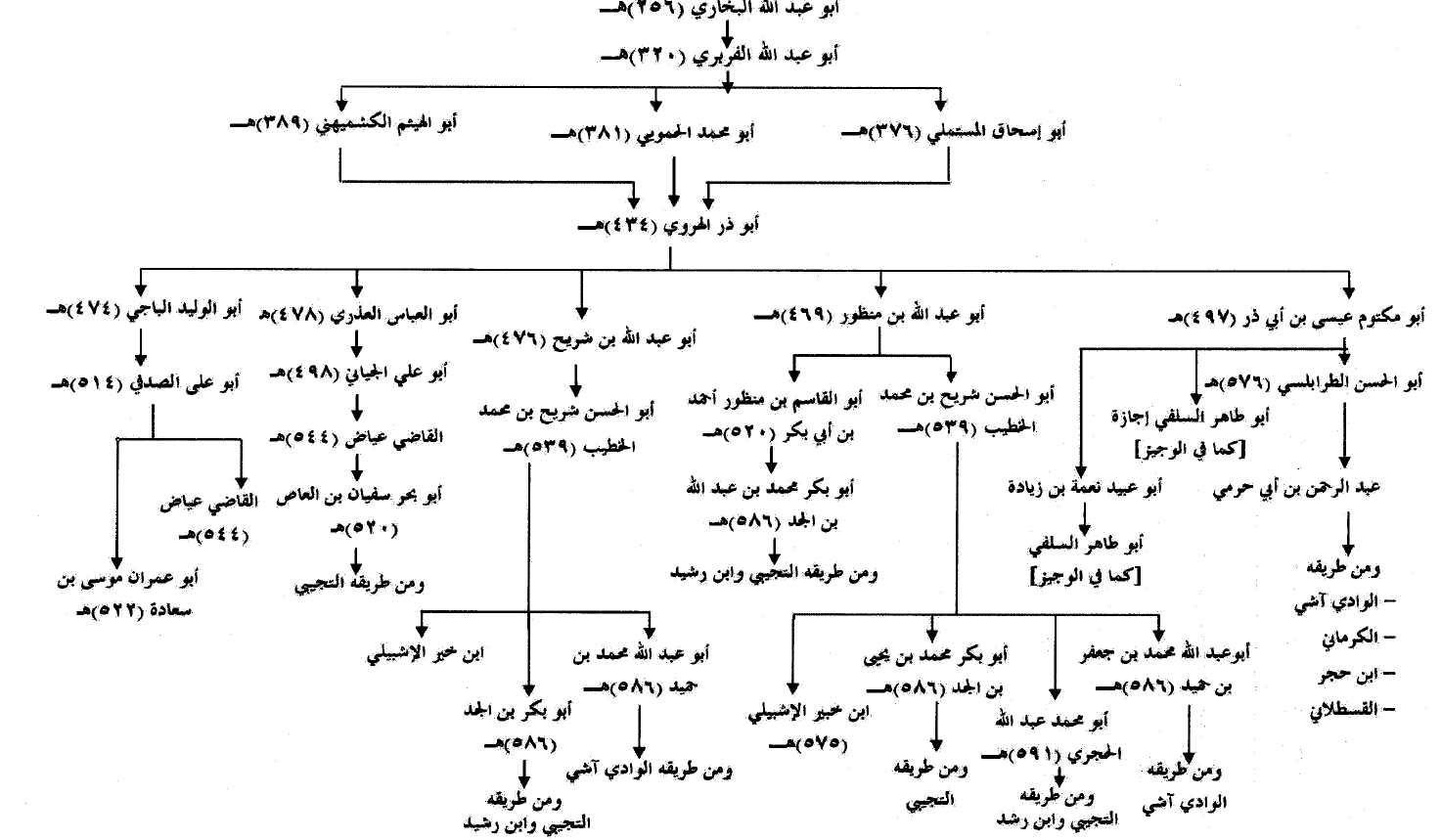
Each link in the chain of transmission was documented with dates of hearing, names of teachers, and in many cases marginal notes recording textual comparisons between different copies.
The transmission reached Andalusia and was read publicly there, demonstrating the geographic reach of the text’s authenticated chain within the classical period.
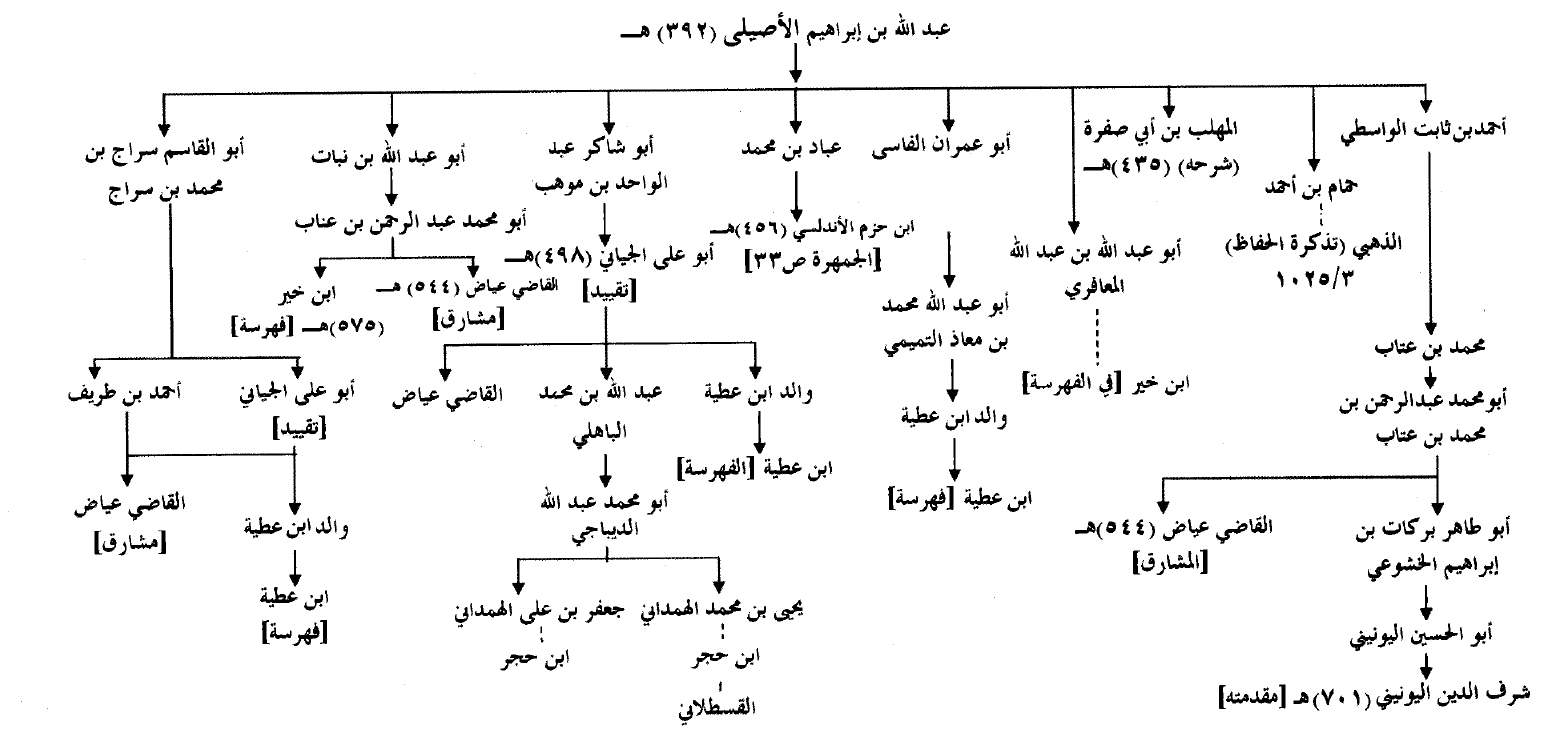
The chain through Abu al-Waqt is among the most important, as he was one of the most reliable copyists and transmitters of the Sahih, and his copy was used as a reference for comparing other manuscripts.
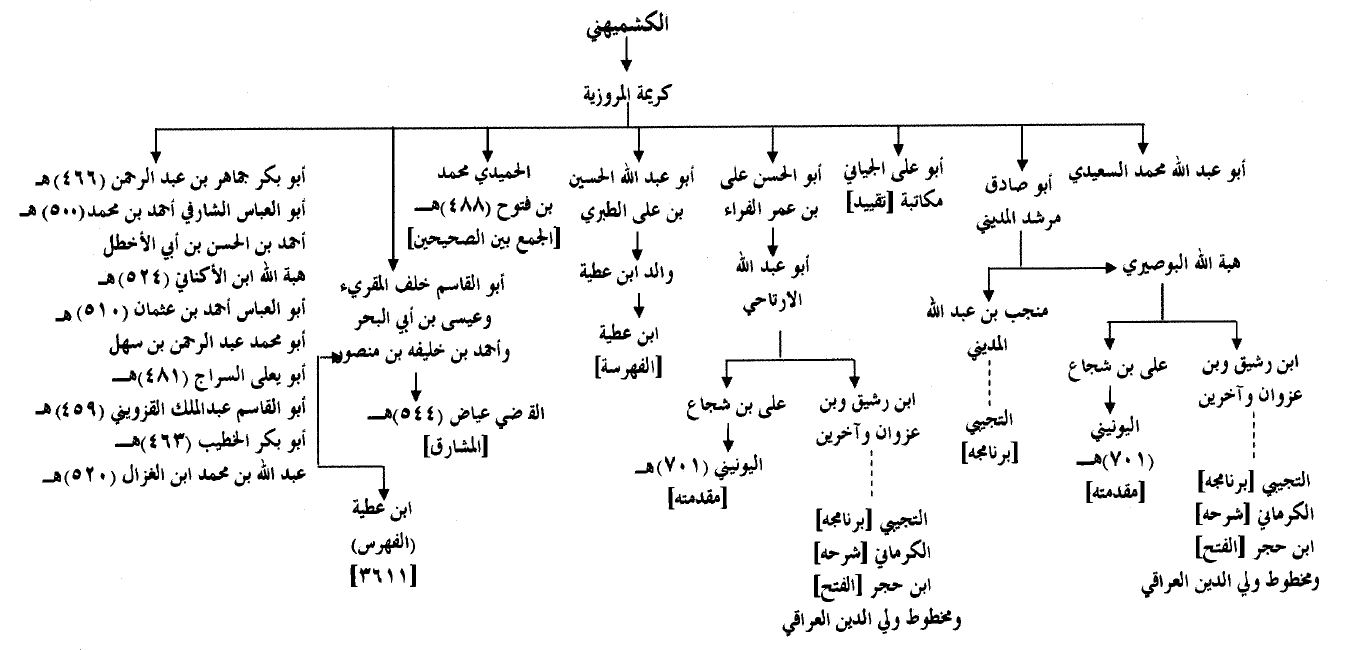
The full network of transmission, when mapped together, shows that Sahih al-Bukhari reaches back to al-Bukhari himself through documented, named, dated chains with no gap.
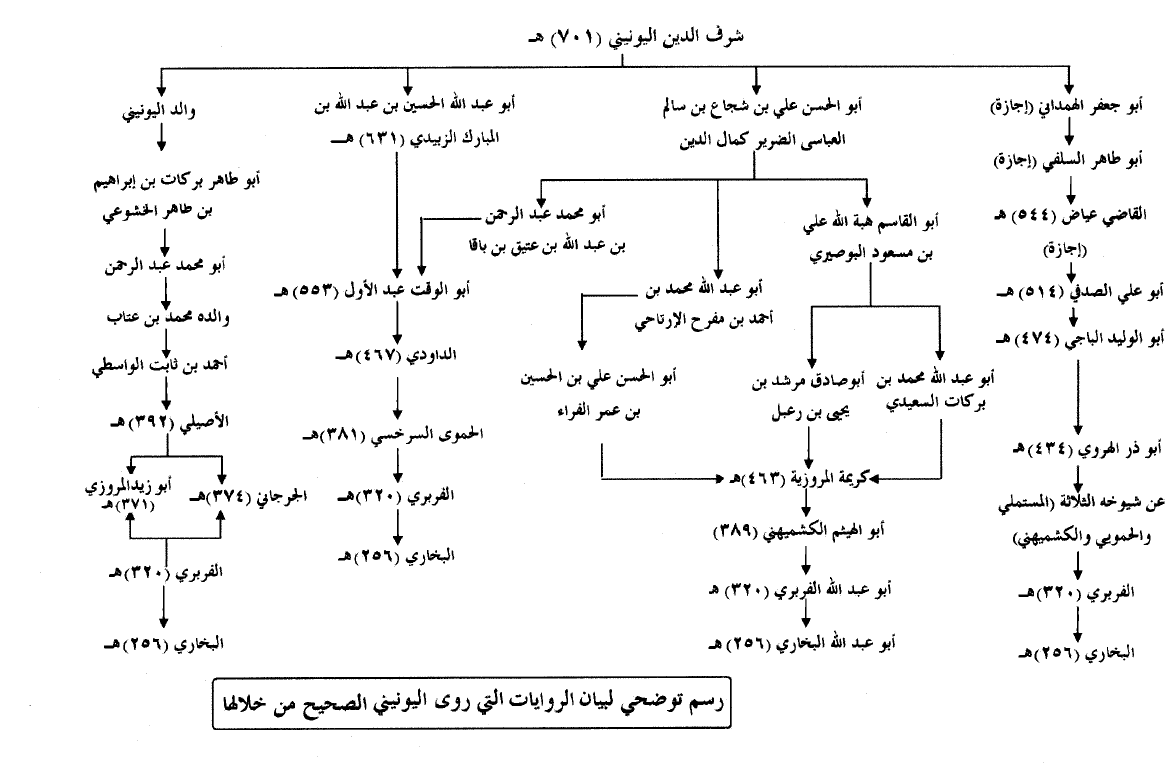
The Manuscripts of Sahih al-Bukhari — History and Description
Islamic Arabic 225 — The Mingana Manuscript
The oldest surviving manuscript of Sahih al-Bukhari is Islamic Arabic 225, now held in the Mingana collection. [1] Its date is the fourth century AH — a few years after the death of al-Bukhari and contemporary with al-Farbari and al-Harawi. [2] Its history is therefore early, from the time of al-Bukhari’s own student, and it is attributed to al-Bukhari through one of the most famous chains of transmission of his manuscripts. It was compared to two important copies attributed to al-Bukhari and reviewed by one of al-Bukhari’s most famous copyists, Abu al-Waqt.
Alfonso Mingana described this manuscript in his study:
[The manuscript forms part of my collection of Islamic Arabic manuscripts, and is numbered Mingana Arab. (Isl.) 225. It is incomplete at the end, and so bears no date, but on palaeographical grounds it may be ascribed to about AD 1000, or to a slightly earlier date, and may thus be considered as probably the earliest MS.]
The manuscript’s chain of hearing runs: “Al-Asili from al-Marwazi from al-Farbari” and “from al-Sarakhsi from al-Farbari from al-Bukhari.”
On the title page there is also a long note written around 1350 AD, containing a list of sources that dealt with the authenticity of al-Bukhari’s text in general. It is very similar to those that preceded many other manuscripts of al-Bukhari, and differs from them only in the identity of the readers, listeners, and memorizers who transmitted the text of the Sahih from time to time, orally or in writing. Mingana preserved the full text of this note, with three illegible proper names indicated by dots in square brackets:
”…Al-Fatimi Al-Hasani Al-Kufi, may God support him, I read it all in Andalusia to Ahmad bin Muhammad bin […] may God have mercy on them, including Al-Muqri Al-Hussein […] and he served me with it from a group of his sheikhs, the closest of them to the teacher Imam Ibn Al-Asba Qusay bin Muhammad bin Abi Aseer Al-Zahri Al-Shantari, and I traveled to […] and I heard it from the jurist Judge Barkash [and] the rest of the hadith scholars in Cordoba Abi Al-Qasim Khalaf bin Abdul Malik bin Bashkuwal Al-Ansari, who said that a group told us about it, including Sheikh Abu Al-Abbas Ahmad bin Abdullah Al-Qunki, known as Al-Attar, who said that the free and virtuous Karima bint Ahmad Al-Kashmihaniya told us in the Noble Sanctuary, by hearing it, she said that I heard it from the writer Abu Al-Haitam Al-Kashmihani, who said that Dhu Al-Nasabain, may God support him and grant us permission, said that Abu Al-Waqt Abdul-Awal bin Isa bin Shuaib Al-Sajzi Al-Sufi said that Jamal Al-Islam Abu Al-Hasan Abdul-Rahman bin Muhammad bin Al-Muzaffar Al-Dawudi read it to me and I heard it in Bushanj in the year four hundred and sixty-five. Abu Muhammad Abdullah bin Ahmad told us. Ibn Hamuwayh al-Sarakhsi said: Abu Abdullah Muhammad ibn Yusuf ibn Matar al-Farbari told us, the hadith master Abu Abdullah Muhammad ibn Ismail ibn al-Mughira al-Bukhari ibn…” [4]
The copyist also said: “Abu Zaid Muhammad ibn Ahmad al-Marwazi told us, he said: Muhammad ibn Yusuf al-Farbari told us, he said: Muhammad ibn Ismail al-Bukhari told us, he said: He told us, etc.” [5]
Mingana concluded his study by stating:
The Copies Used for Comparison
The vertical writing on the right margin of the manuscript records that Muhammad ibn Ahmad al-Mus’abi compared the text of the present manuscript with two other copies. Mingana described this marginal note:
The marginal note itself reads: “Muhammad ibn Ahmad al-Mus’abi said: I compared this copy of mine with a copy corresponding to an original in the handwriting of Abu al-Waqt, and I learned from him the qat and when he had omitted the qat, he would know that. We had with us a copy of the original of Abu Dharr, so whatever was in it of disagreement about it, then it is his, and Allah is the Grantor of success. And whatever was against it, then it is his copy… Abu al-Waqt and Abu Dharr, as we shall see, are two of the best narrators of Sahih al-Bukhari.”
Regarding the manuscript’s review by Abu al-Waqt himself, Mingana stated:
Other Dated Manuscripts
- OP.801, The Popular Library of Cyril and Methodius, Sofia, Bulgaria — from 407 AH / 1016 AD, which is 146 years after al-Bukhari, 84 years after al-Farbari, and contemporary with al-Harawi. [9]
- Berlin 1156 — dated 424 AH / 1033 AD, which is 163 years after al-Bukhari and 100 years after al-Farbari, and contemporary with al-Harawi.
- Mortiz, pl. 128 — dated 495 AH / 1102, which is 232 years after al-Bukhari, 170 years after al-Farbari, and 60 years after al-Harawi.
Al-Bukhari’s Method of Authentication and Weakening — The Twenty General Conditions
Al-Bukhari’s methodology was not a simple binary of trustworthy or weak — it was a sophisticated set of twenty differentiated conditions that governed how he evaluated every narrator and every narration.
The following are the general conditions al-Bukhari applied, derived by induction from the state of his narrators:
- The condition of Islam is the condition of performance, not the burden — as evidenced by two hadiths narrated by Jubayr ibn Mut’im, who bore them as a disbeliever and paid them as a Muslim, the hadith of Surat At-Tur, and the hadith of Al-Hams.
- Mind.
- Justice and precision in all the men in the chain of transmission, and freedom from irregularity and defect (by induction from the state of Bukhari’s narrators).
- In what is neither obligatory nor recommended, the mind is at the time of bearing it and puberty is at the time of performing it — as evidenced by the hadith of al-Mujjah by Mahmoud bin al-Rabi’, who bore it when he was five years old.
- In it are duties, recommended acts, disliked acts, and forbidden acts — puberty in terms of endurance and performance — as evidenced by the hadith of Ibn Abbas about praying in Mina without a wall, and Ibn Abbas had reached puberty.
- Selecting the authentic narrations of the weak narrator.
- The occasional forgetfulness of a trustworthy person does not detract from his integrity — as in the hadith of Amr ibn Dinar on the authority of Abu Ma’bad on the authority of Ibn Abbas regarding the takbir after the prayer. Abu Ma’bad later denied that he had narrated it to Amr; he had forgotten.
- The trustworthy person who enters the Sultan’s council and whose speech is acceptable — such as Hamid al-Tawil, Ahmad bin Waqid al-Harrani, Hamid bin Hilal al-Adawi, Khalid bin Mahran al-Hadha’a, Asim al-Ahwal, Abdullah bin Dhakwan, and Marwan bin al-Hakam.
- It is permissible to narrate from someone who takes a fee for hadith — it was narrated from al-Fadl bin Dukayn, Affan bin Muslim, Yaqoub al-Dawraqi, and Hisham bin Ammar, who were among those who took a fee.
- It is permissible to narrate from the proponents of minor innovations that do not constitute disbelief — he narrated from some Shiites and Murji’ites, and a Shiite here means someone other than a Twelver Shiite.
- Considering the totality of the methods and chains of transmission, not the chain of transmission being documented alone.
- He narrates from al-Muqal on the condition that he follows up on it or links it with trust — as in the case of the narrators who narrated it and were accused of ignorance.
- It is permissible to prove that a companion was a narrator of a single narration, provided that he is followed — he narrated from 10 companions who were not attested to as companions except for one trustworthy follower, and all of them were followed by hadiths from other companions.
- The narration is from a trustworthy person who was weak in a sheikh other than this sheikh — such as al-Rabi’ bin Yahya bin Muqsim, Salam bin Abi Mut’i’ al-Khuza’i, and Muammar bin Rashid.
- Narration from a trustworthy person who is weak in a sheikh from this sheikh, on the condition that it is coupled — such as Khalas bin Amr al-Hijri, who was weak on the authority of Ali bin Abi Talib, and two hadiths were narrated from him coupled with Muhammad bin Sirin.
- Narrating from the weak by selecting the authentic hadith from its written sources — such as Ismail bin Uwais.
- The narration is about a trustworthy person who became confused at a time other than his usual time of confusion — such as Jarir bin Hazim, Hajjaj bin Muhammad al-Awar, and Husayn bin Abdul Rahman al-Salami.
- Narrating from a weak hadith that is not subject to a ruling — that is, in hadiths other than legal rulings — such as narrating the hadith of Uwais bin Abdullah Abu al-Jawza’ for the hadith of Ibn Abbas, “Al-Lat was a man who kneaded gruel,” and the hadith of Abi bin al-Abbas bin Sahl bin Saad on the authority of his father, “The Prophet had a horse in our garden called al-Laheef.”
- The narration of a trustworthy person who was wounded by someone because he narrated from his book and not from memory — because he is not to be criticized for this. Such as Thamama bin Anas.
- The narration is from a trustworthy person who narrates with permission — such as al-Hakam bin Nafi Abu al-Yaman.
Narrators of Bukhari Who Were Criticized — Complete Tables
The following table presents every narrator in Sahih al-Bukhari who was criticized, organized by the category of criticism, along with the scholarly judgment on each and the number of narrations al-Bukhari took from them.
Section One — Those Whose Justice Was Challenged on Grounds of Innovation:
| Sequence | Sheikh’s Name | Judgment | Number of Narrations |
|---|---|---|---|
| 1 | Ismail bin Aban | Trustworthy | 6 |
| 2 | Asid bin Zaid al-Jamal | Weak | 1 |
| 3 | Khaled bin Mukhallad | Honest, Shiite | 28 |
| 4 | Saeed bin Afeir | Honest | 44 |
| 5 | Ibad bin Yaqoub | Honest, Rafidhi | 1 |
| 6 | Ubaidullah bin Musa | Trustworthy, was Shiite | 48 |
| 7 | Ali bin al-Jaad | Proven trust | 14 |
| 8 | al-Fadl bin Dakin | Proven trust | 186 |
| 9 | Malik bin Ismail | Confident master | 28 |
| 10 | Abdullah bin Amr | Proven trust | 68 |
| 11 | Khallad bin Yahya | Honest, accused of murja | 21 |
| 12 | Yahya bin Saleh | Honest | 12 |
| 13 | Ibrahim bin al-Mundhir | Honest | 71 |
| 14 | Ali bin Abi Hashim | Honest | 2 |
| 15 | Rabia opinion | Trust, throws opinion | — |
| 16 | Mohammed bin Abdullah bin Muthanna | Trust, throws opinion | — |
Section Two — Those Whose Justice Was Challenged in Matters Other Than Heresy:
| Sequence | Sheikh’s Name | Judgment | Number of Narrations |
|---|---|---|---|
| 1 | Ahmad bin al-Muqaddam | Honest | 8 |
| 2 | Abdul Rahman bin Younis | Honest | 2 |
Section Three — Those Challenged on Grounds of Ignorance:
| Sequence | Sheikh’s Name | Judgment | Number of Narrations |
|---|---|---|---|
| 1 | Bayan bin Amr | Honest and great | 4 |
| 2 | Abbas bin Hussein | Trustworthy | 2 |
| 3 | Mohammed bin al-Hakam | Trustworthy, virtuous | 2 |
| 4 | Muhammad bin al-Salt Abu Ya’la | Honest | 1 |
Section Four — Those Wounded by Al-Bukhari Yet Included:
| Sequence | Sheikh’s Name | Al-Bukhari’s Judgment | Number of Narrations |
|---|---|---|---|
| 1 | Ayoub bin Aaidh bin Mudlij al-Ta’i | Al-Bukhari said: trustworthy narrator | 1 |
| 2 | Thabit bin Mohammed al-Abed | Al-Bukhari said: weak | 1 |
| 3 | Haseen bin Abdul Rahman al-Hudhali | Bukhari weakened it | 5 |
| 4 | Ibad bin Rashid al-Tamimi | Bukhari weakened it | 1 |
| 5 | Ata bin Abdullah Abu Muslim al-Khorasani | Bukhari weakened it | 1 |
| 6 | Quraish bin Anas | Bukhari weakened it | 1 |
| 7 | Kahams bin al-Munhal al-Sadosi | Bukhari weakened it | 1 |
| 8 | Muqsam bin Bujra | Bukhari weakened it | 1 |
| 9 | al-Nu’man bin Rashid al-Jazari | Bukhari weakened it | 1 |
Section Five — Those Criticized for Sitting with the Sultan (7 people):
Hamid al-Tawil, Ahmad bin Waqid al-Harrani, Hamid bin Hilal al-Adawi, Khalid bin Mahran al-Hadha’a, Asim al-Ahwal, Abdullah bin Dhakwan, Marwan bin al-Hakam.
Section Six — Those Described as Unknown:
| Sequence | Sheikh’s Name | Who Said Unknown | Number of Narrations |
|---|---|---|---|
| 1 | Ahmad bin Asim al-Balkhi | Abu Hatim | 1 |
| 2 | Ibrahim bin Abdul Rahman bin Abdullah bin Rabia al-Makhzoumi al-Madani | Ibn al-Qattan | 1 |
| 3 | Osama bin Hafs al-Madani | al-Kai | 1 |
| 4 | The Tribes of Abu al-Yasa | Abu Hatim | 1 |
| 5 | Bayan bin Amr al-Bukhari | Abu Hatim | — |
| 6 | al-Hassan bin al-Hassan bin Yasar | Abu Hatim | 1 |
| 7 | al-Hakam bin Abdullah | Abu Hatim | 1 |
| 8 | Abbas bin Hussein al-Qantari | Abu Hatim | 2 |
| 9 | Mohammed bin Hassan al-Marwazi | Abu Hatim | 2 |
| 10 | Khaled bin Saad al-Kufi | Ibn Abi Asim | 1 |
Section Seven — Those Described as Weak:
| Sequence | Sheikh’s Name | Verdict | Number of Narrations |
|---|---|---|---|
| 1 | Mohammed bin Abdul Rahman al-Tafawi | It was said about him that he is truthful but important | 3 |
Those Whose Justice Is Challenged for Heresy
The Shiites in al-Bukhari’s usage means those who prefer Ali over Uthman, may God be pleased with him, or who stop at Muawiyah, may God be pleased with him. They do not mean the Shiite Imamis or Twelvers. The rest of the narrators whose innovation was criticized — their innovation does not impugn their truthfulness as long as it is proven, for the point is the truthfulness, and all of them were followed in their hadiths.
Those accused of Shiism — nine people:
- Ismail bin Aban al-Warraq al-Azdi, Abu Ishaq or Abu Ibrahim al-Kufi
- Asid bin Zaid bin Nujayh al-Jamal al-Hashemi
- Khalid bin Mukhallad al-Qatwani, Abu al-Haytham al-Bajali
- Saeed bin Katheer bin Ufayr; Ibn Muslim al-Ansari; Abu Uthman al-Masri
- Ibad bin Yaqoub al-Rawajni; al-Asadi; Abu Saeed al-Kufi
- Ubaid Allah bin Musa bin Abi al-Mukhtar al-Absi; Abu Muhammad al-Kufi
- Ali bin al-Jaad bin Ubaid al-Juhi; Abu al-Hasan al-Baghdadi
- al-Fadl bin Dukayn; Abu Naeem al-Mala’i al-Kufi al-Ahwal
- Malik bin Ismail bin Dirham, and it is said bin Ziyad, bin Dirham, Abu Ghassan, al-Nahdi, their client, al-Kufi, al-Hafiz, Ibn Bint Hammad bin Abi Sulayman (d. 219 AH)
Those accused of predestination:
- Abdullah bin Amr al-Tamimi, al-Minqari, their client, Abu Muammar, al-Maqad, al-Basri (d. 224 AH)
- Khallad bin Yahya bin Safwan al-Salami, Abu Muhammad, al-Kufi (d. 213 AH)
- Yahya bin Saleh al-Wahhazi, Abu Zakariya, and it is said Abu Saleh, al-Shami (d. 222 AH)
Those who stopped on the Quran:
- Ibrahim bin al-Mundhir al-Asadi, al-Hizami, Abu Ishaq, al-Madani (d. 236 AH)
- Ali bin Abi Hashim bin Tabrakh, al-Baghdadi
Those Impugned Because of Ignorance — Individual Analysis
1. Ahmad bin al-Muqaddam bin Sulayman bin al-Ash’ath al-Ajli, Abu al-Ash’ath (d. 253 AH)
Abu Dawud impugned him in terms of his chivalry with the story of the free man, and it is not influential. The verdicts of the major scholars are as follows:
Abu Ahmad ibn Adi al-Jurjani: He is one of the people of truthfulness. The imams of the people narrated from him. Abu Hatim al-Razi: He is trustworthy in hadith and his status is trustworthy. Abu Dawud al-Sijistani: I do not narrate from Abu al-Ash’ath, meaning Ahmad ibn al-Muqaddam. I said why? He said: because he taught the licentious. Abu Arubah al-Harrani: Ahmad ibn Shu’ayb praised him. He is not bad. Ibn Hajar al-Asqalani: He is trustworthy and a hadith narrator. Abu Dawud criticized his chivalry for joking. Ibn Abd al-Barr al-Andalusi: Trustworthy. Salih ibn Muhammad Jazra: Trustworthy. Muhammad ibn Ishaq ibn Khuzaymah: Astute, a hadith narrator. Muslim ibn al-Qasim al-Andalusi: The authors of Tahrir Taqrib al-Tahdhib documented him — trustworthy.
2. Abd al-Rahman ibn Yunus ibn Hashim al-Rumi, Abu Muslim, al-Mustamli, al-Baghdadi, a client of Abu Ja’far al-Mansur (d. 225 AH)
They differed about him. Al-Bukhari only narrated two hadiths from him and they have corroborating evidence.
Abu Ahmad al-Hakim: He is not reliable according to them. Abu Hatim al-Razi: Trustworthy. Abu Dawud al-Sijistani: It is permissible to punish those who consider drinking permissible. Ibn Hajar al-Asqalani: Trustworthy. They criticized him for his opinion. And once: Al-Bukhari narrated one hadith from him — follow-up. Muhammad bin Saad, the scribe of al-Waqidi: He dictated to Ibn Uyaynah and Yazid bin Harun and traveled in search of hadith, and he heard a lot. Muhammad bin Abdul Rahim Sa’iqa: His command is not praised, and he was not satisfied with it.
3. Bayan bin Amr al-Bukhari, Abu Muhammad, the Worshipper (d. 222 AH)
They said that he is unknown, but more than one person authenticated him. Al-Bukhari narrated 4 hadiths from him, all of which were followed by others.
Abu Ahmad bin Adi al-Jurjani: A great scholar. Abu Hatim bin Hibban al-Basti: A follower of the Sunnah and virtue. Ibn Hajar al-Asqalani: A truthful, great worshipper. And once: Abu Hatim ignored him and others recognized him — he is not unknown. Those who narrated from him were al-Bukhari, Abu Zur’ah, and Ubaid Allah bin Wasil. al-Daraqutni responded to Abu Hatim’s statement in al-Mu’talif wa al-Mukhtalif and said: The responsibility for the hadith is on others because he was not the only one who narrated it. Ali bin al-Madini: He praised him.
4. Ismail bin Abdullah bin Abdullah bin Uwais bin Malik bin Abi Aamer al-Asbahi, Abu Abdullah bin Abi Uwais, Malik’s nephew and relative (d. 226 AH)
Al-Bukhari narrated 239 hadiths from him. Al-Bukhari mentioned 217 hadiths that were followed by him. He was followed in 20 hadiths outside of al-Bukhari. He was unique in only two hadiths, and those two have authentic evidence. [10]
5. Abbas bin al-Hussein al-Qantari, Abu al-Fadl, al-Baghdadi, and it is said al-Basri (d. 240 AH)
Abu Hatim did not know him and therefore said that he was unknown. Abdullah bin Ahmad and Ahmad trusted him. Al-Bukhari only narrated two hadiths from him, both of which were followed by him.
Ahmad ibn Hanbal: Ibn Hajar al-Asqalani mentioned him well. Ibn Hajar al-Asqalani: Trustworthy. And once: Abu Hatim said unknown — if he meant the specific, al-Bukhari, Musa ibn Harun al-Hammal, al-Hasan ibn Ali al-Maamari, and others narrated from him; and if he meant the state, Abdullah ibn Ahmad ibn Hanbal trusted him and Ahmad mentioned him well, and he has two hadiths in Sahih. Abdullah ibn Ahmad ibn Hanbal: Trustworthy.
6. Muhammad ibn al-Hakam al-Marwazi, Abu Abdullah, al-Ahwal (d. 223 AH)
Abu Hatim said unknown. Ahmad and his son Abdullah considered him trustworthy, and Ibn Hibban considered him trustworthy, and al-Dhahabi transmitted his trustworthiness, and Ibn Hajar agreed with him. Al-Bukhari narrated two hadiths from him, both of which were followed by him.
Ahmad ibn Muhammad al-Khalal: He had heard from Abu Abdullah, and died before him, and I do not know anyone with a greater understanding than Muhammad ibn al-Hakam al-Ahwal in what he asked — in debate, argumentation, knowledge, and memorization — and Abu Abdullah would reveal some of the fatwas to him but would not reveal them to everyone, and he was special to Abu Abdullah. Ibn Hajar al-Asqalani: One of the teachers of al-Bukhari. Abu Hatim did not know him, so he said that he was unknown. I said that al-Bukhari knew him, but Abu Hatim did not know him, and others knew him — he is trustworthy and virtuous. He said in al-Tahdheeb: The author of al-Zuhrah claimed that he was attributed to his grandfather, and that he is Muhammad ibn Abdah ibn al-Hakam, and that al-Bukhari narrated four hadiths from him. al-Dhahabi: Trustworthy.
7. Muhammad ibn al-Salt al-Basri, Abu Ya’la, al-Tawzi (d. 228 AH)
Ibn Hazm said about him that he is unknown — and Ibn Hazm’s opinion on this is worthless. Others trusted him. Al-Bukhari narrated one narration from him that was followed.
Abu Hatim al-Razi: Trustworthy. Abu Hatim ibn Hibban al-Basti: He was mentioned in al-Thiqat. Abu Zur’ah al-Razi: Trustworthy. He used to dictate to us from memory the interpretation and other things, and perhaps he made a mistake. Abu Muhammad ibn Hazm al-Dhahiri: Unknown. Ibn Hajar al-Asqalani: Trustworthy, but makes mistakes. And once: One of the teachers of al-Bukhari. Abu Zur’ah weakened some of his hadiths. al-Husayn ibn Muhammad al-Jayyani: One of the teachers of al-Bukhari. al-Darqutni: Trustworthy. The compilers of Tahrir Taqrib al-Tahdhib: Trustworthy, as a group of trustworthy people narrated from him, including al-Bukhari in Sahih al-Bukhari and Abu Hatim. As for the statement of Ibn Hazm, it is not worth hearing.
Those Whose Accuracy Is Challenged — Ismail ibn Abi Uwais and Thabit al-Abed
Ismail bin Abdullah bin Uwais (d. 226 AH) — Full Analysis
Al-Bukhari narrated 239 hadiths from him. Al-Bukhari mentioned 217 consecutive hadiths that were followed by him. He was followed in 20 hadiths outside of al-Bukhari. He was unique in only two hadiths, and both of those have authentic evidence. [11]
The two hadiths transmitted exclusively by al-Bukhari on the authority of Ismail bin Uwais — out of 239 total — are only two, and both have supporting evidence from other sources. This means that al-Bukhari’s dependence on Ismail for narrations that cannot be verified elsewhere is essentially zero.
The first unique hadith: Sahih al-Bukhari (1/56, T. al-Baghdadi) — “120 — Ismail narrated to us: My brother narrated to me, on the authority of Ibn Abi Dhi’b, on the authority of Sa’id al-Maqburi, on the authority of Abu Hurairah, who said: I memorized two vessels from the Messenger of God, may God bless him and grant him peace. As for one of them, I spread it, and as for the other, if I spread it, this throat would be cut off.”
The supporting evidence for this hadith from other sources includes:
“Musnad Ahmad” (16/562, al-Risalah edition): “10959 — Ali ibn Thabit narrated to us, Ja’far narrated to me, on the authority of Yazid ibn al-Asamm, who said: Abu Hurairah was told: You have said a lot, you have said a lot. He said: If I were to tell you everything I heard from the Prophet, may God bless him and grant him peace, you would accuse me of being a liar, and you would not have debated me.”
Sahih al-Bukhari (6/2589, T al-Baghdadi): “6649 — Musa ibn Ismail narrated to us: Amr ibn Yahya ibn Sa’id ibn Amr ibn Sa’id narrated to us: My grandfather told me: I was sitting with Abu Hurairah in the mosque of the Prophet, peace and blessings of Allah be upon him, in Medina, and Marwan was with us. Abu Hurairah said: I heard the Truthful, the Trusted One say: ‘The destruction of my nation will be at the hands of young men from Quraysh.’ Marwan said: ‘May the curse of Allah be upon them, young men.’ Abu Hurairah said: ‘If I wanted to say: Banu So-and-so and Banu So-and-so, I would have done so.’ So I used to go out with my grandfather to the Banu Marwan when they were kings in the Levant. When he saw them as young boys, he would say to us: Perhaps these are among them? We said: You know best.”
“Hilyat al-Awliya’ wa-Tabaqat al-Asfiya’ — Sa’ada edition (1/381): Abu Bakr ibn Khallad told us: al-Harith ibn Abi Usamah told us: Katheer ibn Hisham told us: Ja’far ibn Burqan told us: I heard Yazid ibn al-A’sam say: I heard Abu Hurairah say: They say: You have said too much, O Abu Hurairah. By the One in Whose Hand is my soul, if I told you everything I heard from the Messenger of God, may God bless him and grant him peace, I would throw scum on your face, and then you would not debate me.”
“Hilyat al-Awliya’ wa-Tabaqat al-Asfiya’ — Sa’ada edition (1/381): Ibrahim ibn Abdullah told us: Muhammad ibn Ishaq told us: Qutaybah ibn Sa’id told us: Umar ibn Abdullah al-Ru’i told us: My father told me on the authority of Abu Hurairah. He said: I memorized five sacks from the Messenger of God, may God bless him and grant him peace, and I brought out two sacks from them. If I brought out the third, you would have stoned me.”
“Musnad al-Bazzar = al-Bahr az-Zakhar” (15/165): “8517 — Muhammad ibn Jawwan ibn Shu’bah told us: Bahlool ibn Muwarriq told us: Ibn Abi Dhi’b told us, on the authority of Sa’id, on the authority of Abu Hurairah, who said: I memorized from the Messenger of God, may God bless him and grant him peace — I think he said: Two sacks. As for one of them, I spread it among the people, and as for the other, if I spread it, my throat would be cut off.”
The second unique hadith: Sahih al-Bukhari (5/1953, al-Baghdadi edition) — “4789 — Ismail bin Abdullah narrated: My brother narrated to me, on the authority of Sulayman, on the authority of Hisham bin Urwah, on the authority of his father, on the authority of Aisha, may God be pleased with her, who said: I said, O Messenger of God, tell me — if you were to descend into a valley in which there was a tree from which food had been eaten, and you found a tree from which no food had been eaten, in which of them would you graze your camel? He said: In the one from which food had not been grazed. It means that the Messenger of God, may God bless him and grant him peace, did not marry any virgin other than her.”
Al-Bukhari did not narrate from Ismail from his memory — he narrated from his original written sources. Ibn Hajar al-Asqalani stated:
Al-Dhahabi said about Ismail: “He was the scholar of the people of Medina and their encourager of his time, but his memory and mastery were deficient. Had it not been that the two sheikhs used him as evidence, his hadith would have been moved from the level of authentic to the level of good.” [12]
Al-Hafiz Ibn Hajar said: “He is truthful, but made mistakes in the hadiths of those he memorized.” [13]
Thabit bin Muhammad al-Abed, Abu Muhammad, al-Shaibani (d. 215 AH)
Some have criticized his accuracy, but others confirmed it. Al-Bukhari narrated two narrations from him, both of which have corroborating evidence.
Abu Ahmad ibn Adi al-Jurjani: A muezzin from the people of Absikon. In my opinion, he is one of those who do not intentionally lie, but he may make mistakes. He is often confused about his hadiths, so he narrates them according to what he likes. Ascetics and righteous people are often confused about them, so they narrate them according to their good intentions. Abu Hatim al-Razi: Trustworthy. Al-Dhahabi: Trustworthy. Muhammad ibn Sa’d, the scribe of al-Waqidi: Trustworthy. Compilers of Tahrir Taqrib al-Tahdhib: Trustworthy, good in hadith, from the teachers of al-Bukhari. Because of the mistake, he was lowered to the level of the truthful. Muteen al-Hadrami: Trustworthy.
Among Those Al-Bukhari Himself Criticized Yet Included — Narrators Weakened and Selected From
Ibrahim bin Aaidh bin Mudlij al-Ta’i: He was deemed weak by al-Bukhari and al-Tirmidhi due to postponement, and by al-Aqili and al-Tirmidhi. He was deemed trustworthy by Ibn Ma’ni, Abu Hatim, al-Nasa’i, al-Ajli, and Abu Dawud. Al-Bukhari narrated one authentic hadith from him, and it has corroborating evidence from others.
Thabit bin Mohammed al-Abed: It was authenticated by Yahya bin Ma’in, Abu Hatim, and Ibn Hibban. Its weakness was noted by al-Darqutni, al-Bukhari, and al-Hakim. Al-Bukhari narrated the hadith “He is not one of us who strikes the cheeks…” and Abd al-Rahman ibn Mahdi followed him on the authority of Sufyan on the authority of al-A’mash. And the hadith “When the Prophet prayed at night…” and Sufyan al-Thawri and Ibn Jurayj followed him on the authority of Sulayman al-Ahwal.
Husayn bin Abdul Rahman al-Salami, Abu al-Hudhayl al-Kufi: It was authenticated by Ali bin al-Madini, Abu Zur’ah, Ibn Abi Hatim, and Yahya bin Ma’in. Its weakness was noted by al-Bukhari, al-Aqili, and Ibn Adi. Al-Bukhari extracted the following hadiths from him, each with corroborating evidence:
- “O Abdullah bin Omar…” — and he was followed: “And Asim bin Ali said: Asim bin Muhammad told us, I heard this hadith from my father, but I did not memorize it, so Waqid corrected it for me, on the authority of his father, who said: I heard my father saying: Abdullah said.”
- “When we climbed, we grew up.”
- “The nations were presented to me…” — and it is correct for others.
- “The Messenger of God and Abu Marthad sent me…” — He continued: Ali bin Abdullah told us: Sufyan told us: Amr bin Dinar told us.
- “They were named after me…” — He continued: “Malik bin Ismail told us: Zuhair told us, on the authority of Humayd.”
Ibad bin Rashid al-Tamimi: Its weakness was noted by al-Bukhari, Ibn Mahdi, and Yahya bin Saeed al-Qattan. It was authenticated by Ahmad bin Hanbal, al-Ajli, and Ibn Abi Hatim. Al-Bukhari narrated the hadith “I had a sister who was engaged to me…” — narrated by Yunus, on the authority of al-Hasan, on the authority of Maqal.
Ata bin Abdullah Abu Muslim al-Khorasani: It was deemed weak by al-Aqili, Ibn Hibban, and al-Bukhari. It was authenticated by Ibn Aqil, al-Darqutni, Ahmad, al-Nasa’i, and Ya’qub bin Shaybah. Al-Bukhari mentioned it on the authority of Ibn Abbas with the wording “Ata’” and did not clarify which of the two Ata’s was meant — Ibn Abi Rabah or Ibn Abdullah. If it was the second, then it is weak; if it was the first, then it is trustworthy.
Quraish bin Anas: Bukhari weakened him. It was authenticated by Ibn al-Madini and Abu Hatim. He narrated one hadith on the authority of al-Hasan on the authority of Samurah regarding the Aqeeqah, and it is authentic according to others.
Kahams bin al-Munhal: Al-Bukhari narrated one hadith that was not attributed to him alone.
Muhammad bin Salim Abu Hilal al-Rasibi:
Abu Hatim al-Razi: Authentic hadith narrator. Abu Hatim ibn Hibban al-Basti: His nickname is Abu Uthman, and it has also been said Abu Hilal. Ibn Hajar al-Asqalani: Trustworthy. Yahya ibn Ma’in: Trustworthy. Muhammad ibn Ismail al-Bukhari: Weak.
Al-Bukhari did not narrate anything from him, but he mentioned him in some of his commentaries.
Muhammad bin Ajlan Abu Abdullah al-Qurashi: They authenticated him, but al-Bukhari weakened him. Al-Bukhari did not narrate anything from him, but he mentioned him in some of his comments.
Muhammad bin Abdul Karim the Astray:
Abu Hatim al-Razi: His hadith is sound, his position is truthful, but he is not to be relied upon, and he is considered one of the weak narrators of al-Bukhari. Abu Hatim ibn Hibban al-Basti: He mentioned him among the trustworthy and said: He was one of the wise and most knowledgeable people of Basra, and he was only called “the astray” because he went astray on the road to Mecca, so it was said that he was astray. Abu Dawud al-Sijistani: Trustworthy. Ahmad ibn Abi Khaithama al-Nasa’i: Trustworthy. Ahmad ibn Hanbal: Trustworthy. His hadith is the most authentic, his hadith is the most reliable. And once: He is okay. Ahmad ibn Shu’ayb al-Nasa’i: He is okay. Ibn Hajar al-Asqalani: Trustworthy. Al-Dhahabi: There is some weakness in him. Zakariya ibn Yahya al-Saji: Trustworthy. Muhammad ibn Ismail al-Bukhari: I have not seen anyone more intelligent than him. Yahya ibn Ma’in: Trustworthy. Ya’qub ibn Sufyan al-Fasawi: Trustworthy.
Al-Bukhari did not narrate anything from him, but he mentioned him in some of the commentaries.
Muqsam bin Bujra: They authenticated him, but Ibn Saad, al-Bukhari, and Ibn Hazm deemed him weak. He narrated one hadith on the authority of Ibn Abbas: “Those who sit are not equal…” — it was followed by two chains of transmission: Ibrahim on the authority of Hisham on the authority of Ibn Jurayj, and Ishaq on the authority of Abd al-Razzaq on the authority of Ibn Jurayj on the authority of Abd al-Karim al-Jazari on the authority of Muqsim on the authority of Ibn Abbas.
Al-Nu’man bin Rashid al-Jazari: He was weakened by some and authenticated by Ibn Hibban and Ibn Adi. Al-Bukhari narrated the hadith from him, “A man keeps asking people…” — and he followed it with the chain of transmission of “Huyayy ibn Bakir: al-Layth told us, on the authority of Ubayd Allah ibn Abi Ja’far.”
Those Criticized for Sitting with the Sultan
The seven narrators — Hamid al-Tawil, Ahmad ibn Waqid al-Harrani, Hamid ibn Hilal al-Adawi, Khalid ibn Mihran al-Hadha’a, Asim al-Ahwal, Abdullah ibn Dhakwan, and Marwan ibn al-Hakam — were criticized by some because they were among those who frequented the courts of the princes. This criticism is not explained and carries no weight, as the Companions themselves were in the courts of the Caliphs Abu Bakr, Umar, and Uthman, and would visit them — and that alone should not be counted as a blemish on a narrator’s reliability.
Those Described as Unknown — Extended Analysis
Ahmad bin Asim al-Balkhi: The author of al-Hilyah mentioned him as a man of asceticism and worship. He is the only one who has not been authenticated by anyone explicitly. Reliance in authenticating him rests on al-Bukhari’s experience in selecting his narrators — which is confirmed experience.
Ibrahim bin Abdul Rahman bin Abdullah bin Rabia: Ibn Hibban authenticated him. Al-Bukhari narrated one hadith from him in the Book of Foods in the story of Jabir’s dates. It is a well-known hadith that was confirmed by him and transmitted through many chains of transmission other than his.
Osama bin Hafs al-Madani: Al-Bukhari narrated one hadith from him, which was confirmed by Khalid al-Ahmar, and al-Dhahabi authenticated it.
The Tribes of Abu al-Yasa: Al-Bukhari narrated one hadith on sales from Hisham al-Dastawai, coupled with it, but did not narrate it alone.
Bayan bin Amr al-Bukhari the Worshipper: Ibn al-Madini, Ibn Hibban, Ibn Adi, and Ibn Hajar authenticated him — so he is not unknown except according to Abu Hatim.
Al-Hassan bin al-Hassan bin Yasar: Ahmad authenticated him and Muslim and al-Nasa’i cited him as evidence. Al-Bukhari narrated one hadith from him that was followed.
Al-Hakam bin Abdullah: Four trustworthy people narrated from him, and al-Dhuhli authenticated him. He has one hadith on zakat, on the authority of Abu Qudamah, on the authority of Shu’bah — “Those who adhere to the volunteers…” — it was followed up in the book of interpretation from Ghandar, and he was not the only one to narrate it.
Abbas bin Hussein al-Qantari: Ahmad authenticated him. He has two hadiths in Sahih. Al-Bukhari included him in the first and followed him in the second.
Mohammed bin Hassan al-Marwazi: Ibn Hibban authenticated him.
Khaled bin Saad al-Kufi: Authenticated by Ibn Ma’een. Al-Bukhari narrated one hadith on medicine about black seed from him, and it has supporting evidence.
Evidence of Al-Bukhari’s Selection — Proof of His Mastery
The very hadiths that critics attack in Sahih al-Bukhari are the clearest evidence of al-Bukhari’s mastery, because they demonstrate that he was capable of doing what most hadith scholars cannot: filtering the authentic from the weak.
The hadiths that were criticized by al-Bukhari’s critics constitute one of the clearest evidences of his expertise. It proved that al-Bukhari was good at selecting the authentic from the hadiths of weak narrators — and not everyone is able to filter out the authentic from the weak, though everyone is able to transmit from the trustworthy. Al-Bukhari waded into this difficult sea, and the envy of the envious indicated his success. Had it not been for their attack on these hadiths, we would not have read and known about al-Bukhari’s effort in selecting these authentic narrations from among the weak ones their narrators transmitted.
The following are the main cases from this category:
- Ubaid Allah bin Musa — Shiite, weak in Sufyan al-Thawri — al-Bukhari selected from his hadiths only what does not serve his heresy and what is not from the prohibited category.
- Bayan bin Amr al-Bukhari, Abu Muhammad, al-Abid (d. 222 AH) — said to be unknown, but more than one person authenticated him — al-Bukhari narrated 4 hadiths from him, all of which were followed up on.
- Abd al-Rahman ibn Yunus ibn Hashim al-Rumi, Abu Muslim, al-Mustamli, al-Baghdadi (d. 225 AH) — they differed about him — al-Bukhari only narrated two hadiths from him, and he has corroborating reports for them.
- Ismail bin Abi Uwais — al-Bukhari narrated 239 hadiths from him; 217 were followed by others; he was followed in 20 hadiths outside of al-Bukhari; and he was unique in only two hadiths that have authentic evidence.
Four Worked Examples of Al-Bukhari’s Critical Method Regarding Ismail bin Uwais
First example: Al-Bukhari’s argument with the narration of Abdullah bin Yusuf against the narration of Ismail, for the reliability of the first.
Chapter on Prayer between the pillars outside the congregation. Al-Bukhari said: “Abdullah bin Yusuf told us: al-Hajji told us — so he closed it on him and stayed in it, so I asked Bilal when he came out what the Prophet, peace and blessings of Allah be upon him, did. He said: He placed a pillar on his left and a pillar on his right and three pillars behind him, and the House at that time had six pillars, then he prayed.” And Ismail said: “Malik told me — and said two pillars on his right.” Al-Bukhari preferred the narration of Abdullah bin Yusuf over that of Ismail.
Second example: Al-Bukhari’s attention to Ismail’s contradictions with the trustworthy ones in precise wordings.
Al-Bukhari did the same in the book of the call to prayer, Chapter: Placing the right hand on the left. He said: “Abdullah bin Muslimah al-Qa’nabi told us on the authority of Malik on the authority of Abu Hazim on the authority of Sahl bin Sa’d who said: The people were commanded that a man should place his right hand on his left arm in prayer. Abu Hazim said: I do not know that except that it is attributed to the Prophet, peace and blessings of Allah be upon him.” [14] Ismail said: “It is attributed to that” — and he did not say “grow.” [15] Al-Bukhari noted this precise verbal difference as a sign of Ismail’s imprecision.
Third example: Al-Bukhari’s attention to Ismail’s additions beyond what others narrated.
The Book of Sales, Chapter: Selling food before it is received and selling what you do not have. Al-Bukhari said: “Abdullah bin Muslimah told us, Malik told us, on the authority of Nafi’, on the authority of Ibn Umar, may God be pleased with him, that the Prophet, may God bless him and grant him peace, said: ‘Whoever buys food should not sell it until he receives it in full.’” Ismail added: “Whoever buys food should not sell it until he receives it in full.” [16] Al-Bukhari identified this addition and treated it as evidence of Ismail’s tendency to add beyond the text narrated by more reliable transmitters.
Fourth example: Al-Bukhari left the clearly objectionable narrations of Ismail that contradict established hadiths.
Ibn Adi mentioned: “Muhammad ibn Ja’far told us, Ismail ibn Abi Uways told us, Sulayman ibn Bilal told us, Ibrahim ibn Bardan ibn Abi al-Nadr, the freed slave of Umar ibn Ubaydullah, from his father, from Busr ibn Sa’id, from his father, from Zayd ibn Thabit, that the Messenger of God, may God bless him and grant him peace, said: ‘A person’s prayer in his house is better than his prayer in this mosque of mine, except for the obligatory prayers.’” This hadith contradicts the well-established hadith that a prayer in the Prophet’s mosque is worth a thousand prayers — so al-Bukhari left it and did not include it, demonstrating that his selection from Ismail was deliberate and critical, not indiscriminate.
Similarly, what Ibn Abi Hatim mentioned: “I asked my father about a hadith narrated by Ismail ibn Abi Uways, from Muhammad ibn Abd al-Rahman al-Jadaani, from Abd al-Aziz ibn Umar ibn Abd al-Aziz, from his father, that the Messenger of God, may God bless him and grant him peace, said: ‘Three things are amazing in a man: that he meets someone he loves to know and leaves him before asking him about his name and lineage, the second is that he honors him, verifies him and supports him, then returns his honor to him, and the third is in the matter of women.’ I said: What are they? He said: That a man approaches his female slave and has intercourse with her before he has sexual intercourse with her and kissed her, and he has fulfilled his need with her before she has fulfilled her need with him.” Al-Bukhari excluded this narration as well.
Al-Bukhari’s Own Statements on Limiting Himself to the Authentic
Al-Bukhari performed ritual purification and prayed two voluntary rak’ahs before recording every single hadith in the Sahih — a level of care that no other compiler of hadith is reported to have maintained.
Al-Bukhari stated, as recorded by Al-Khatib Al-Baghdadi in Tarikh Baghdad (9/4): “I compiled my book, Sahih, for sixteen years. I extracted it from six hundred thousand hadiths, and I made it an argument between me and God Almighty.”
Al-Farbari narrated from him that he said: “I did not include a hadith in my book, Sahih, except that I washed myself before that and prayed two rak’ahs.” [Ibn Hajar, Hady al-Sari, p. 513]
Al-Farbari narrated from al-Bukhari that he said: “I did not include a hadith in the Sahih except after I sought guidance from Allah the Almighty and was certain of its authenticity.” [Ibn Hajar, Hady al-Sari, p. 513]
On the authority of Ibrahim ibn Ma’qil al-Nasafi, who said: “I heard Muhammad ibn Ismail say: ‘I did not include in the book al-Jami’ except what was authentic, and I left out the authentic ones due to the length.’” [Al-Dhahabi, Siyar A’lam al-Nubala, 12/394]
Al-Albani’s Criticism and His Praise of Sahih al-Bukhari
Al-Albani clarified his own position regarding any apparent tension between his occasional criticism of individual narrators and his overall judgment of Sahih al-Bukhari. He wrote in the introduction to his discussion of a specific narrator:
Al-Albani then stated his full position on the two Sahihs:
The Reason for Differences Between Manuscripts — Three Editions
The differences between the manuscripts of al-Bukhari are primarily in the names of the chapters and al-Bukhari’s comments on some of the narrators. The reason is that al-Bukhari issued three editions of his book — using the terminology of his own time, “three highlights,” with each edition adding some things. Al-Dhahabi reported this from Abu Ja’far Muhammad bin Abi Hatim:
This report from al-Dhahabi explains the manuscript variants fully: they are not errors in transmission nor signs of corruption. They are the natural result of al-Bukhari himself revising his compilation across three separate complete reviews, with additions made in each successive revision.
Al-Bukhari’s Commentaries — Scope and Earliest Examples
Sahih al-Bukhari has generated more than 130 books of commentary, more than 3,000 manuscripts, in addition to commentaries, summaries, and extracts — many of which are attributed to the scholars themselves as independent scholarly works.
The first of these commentaries to have reached us was the explanation of Al-Khattabi, may God have mercy on him (319 AH – 388 AH) — written a few years after the death of al-Bukhari, making it the earliest surviving systematic engagement with the text of the Sahih.
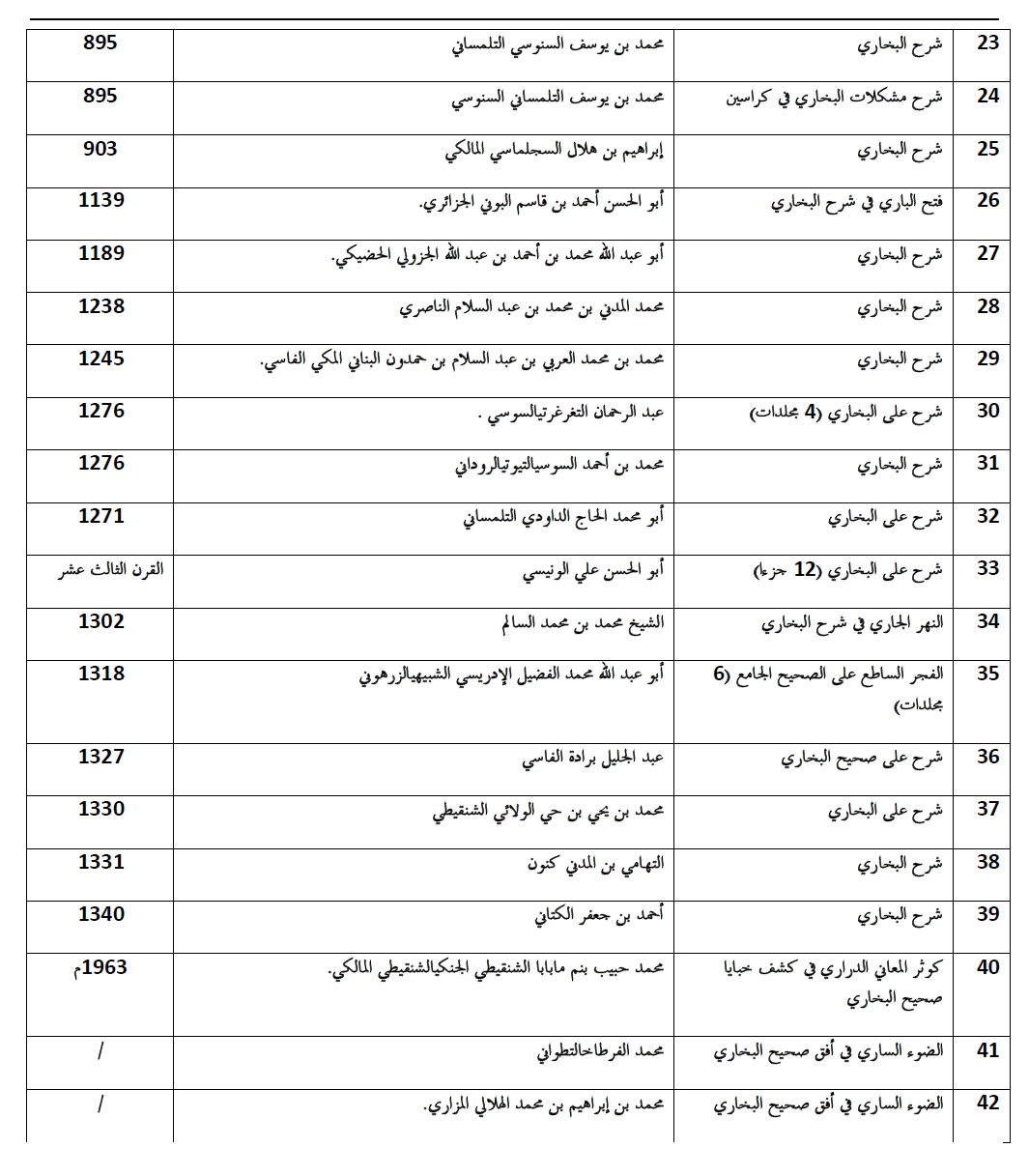
The following images are from the Moroccan commentaries tradition on Sahih al-Bukhari, illustrating the breadth and continuity of the scholarly engagement with the text from the classical period onward.
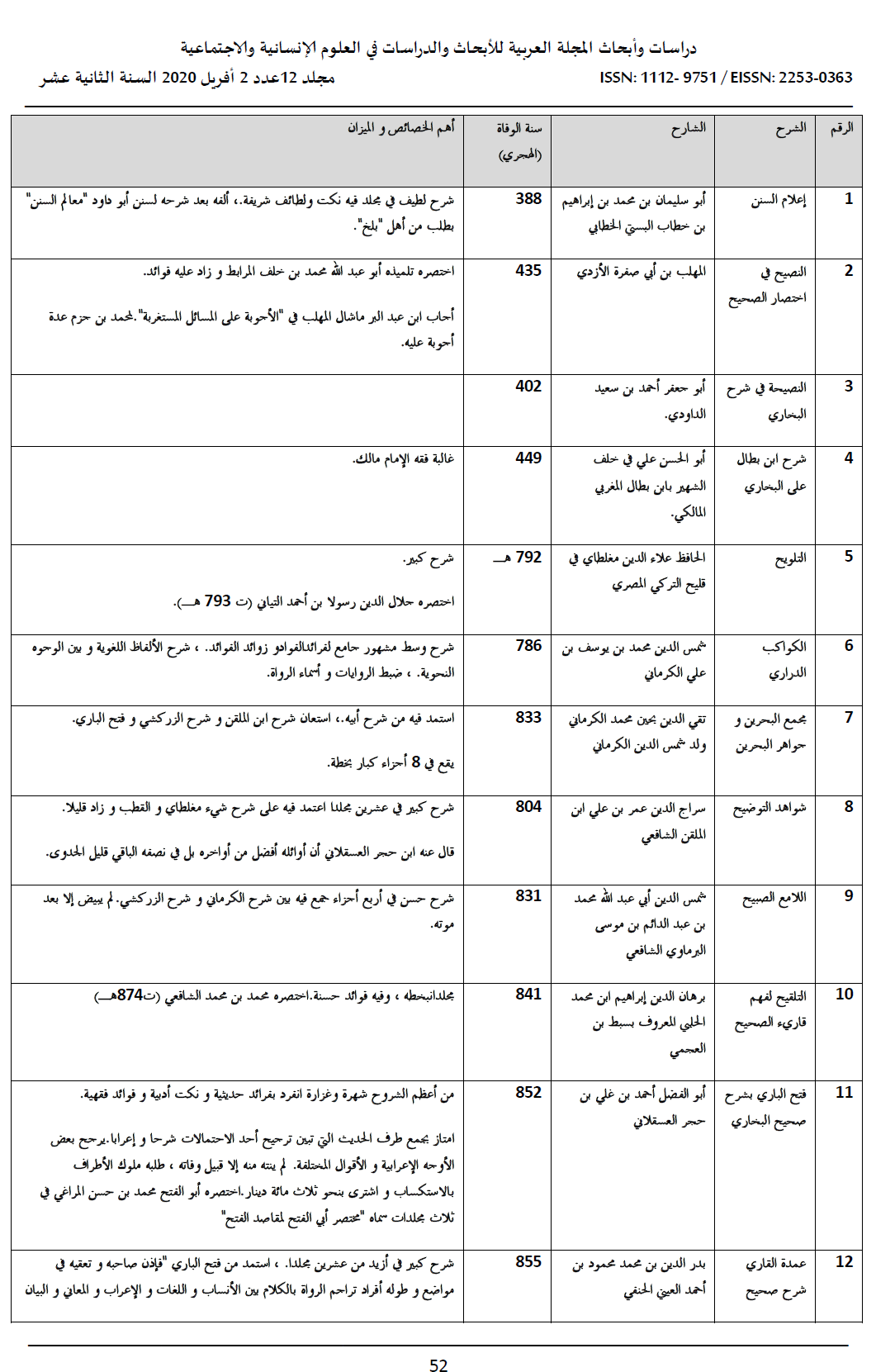
The Moroccan scholarly tradition produced a distinct body of commentary on Sahih al-Bukhari, preserving regional chains of transmission and manuscript comparisons that complement the Eastern and Andalusian traditions.
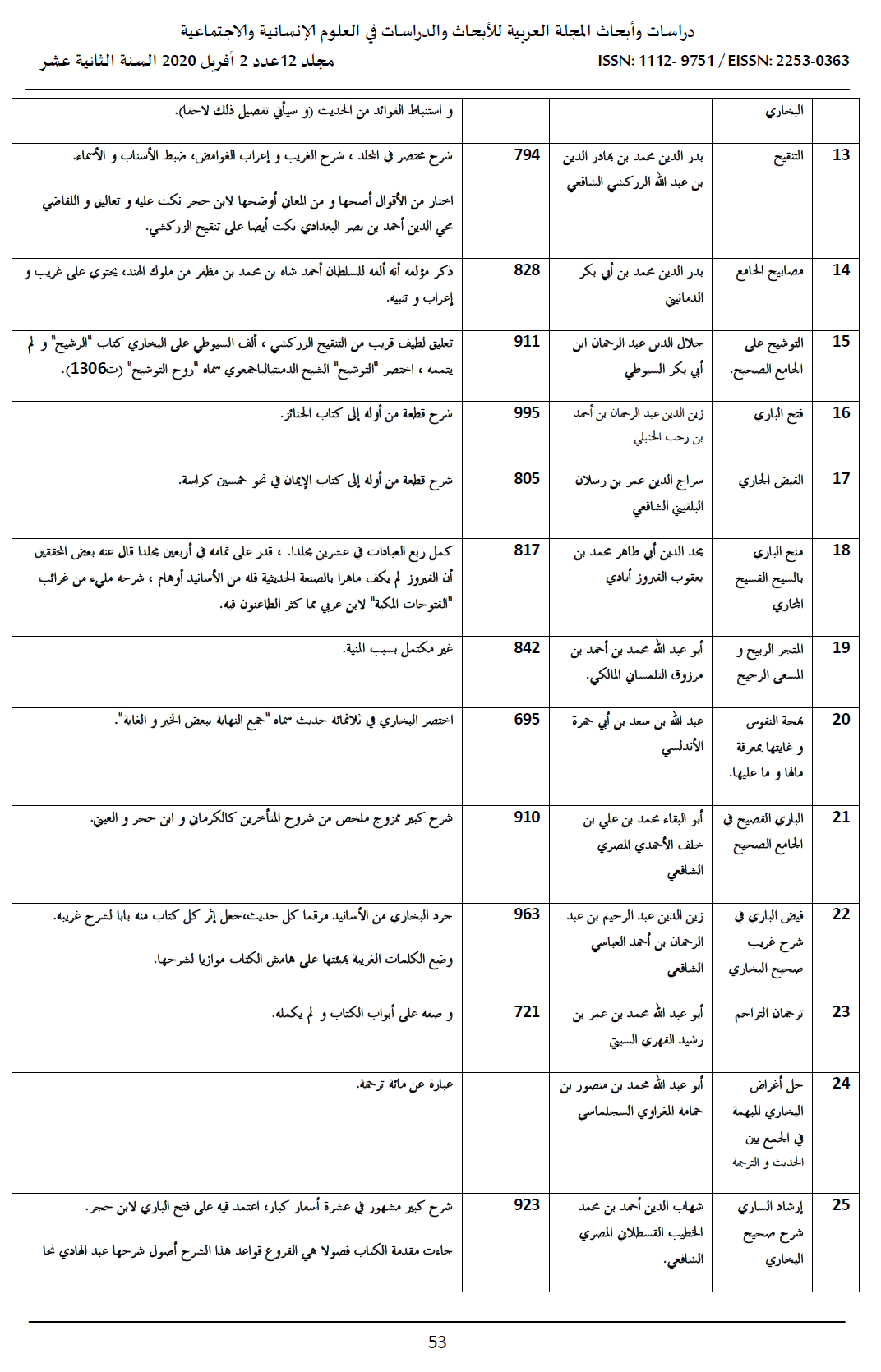
The manuscript tradition of the commentaries exceeds 3,000 items, reflecting the centrality of Sahih al-Bukhari to Islamic scholarly life across every century after al-Bukhari’s death.
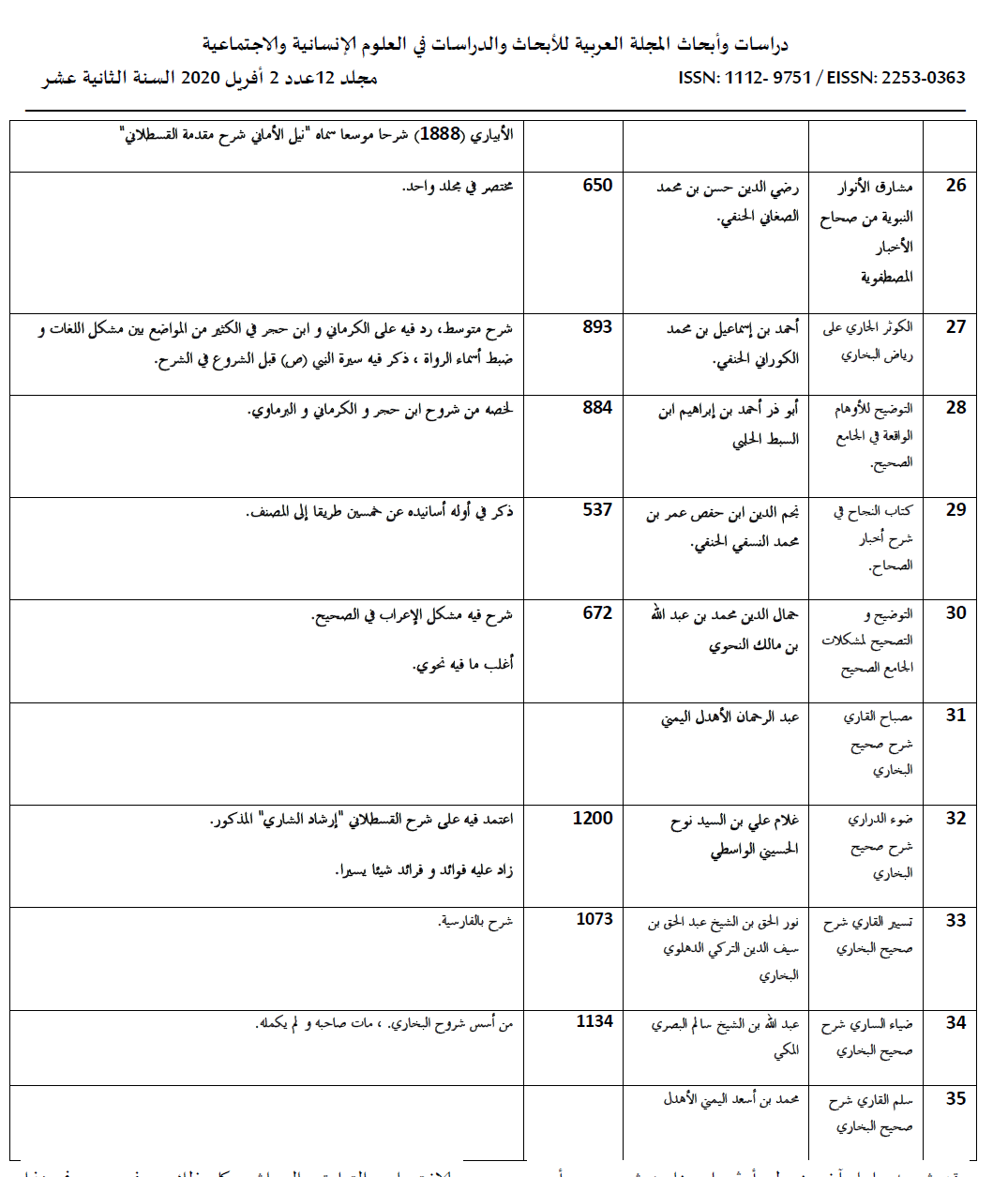
Each major commentary integrated the manuscript tradition, the chains of transmission, and the scholarly debates over narrators — building on the work of the preceding generation rather than treating the text in isolation.
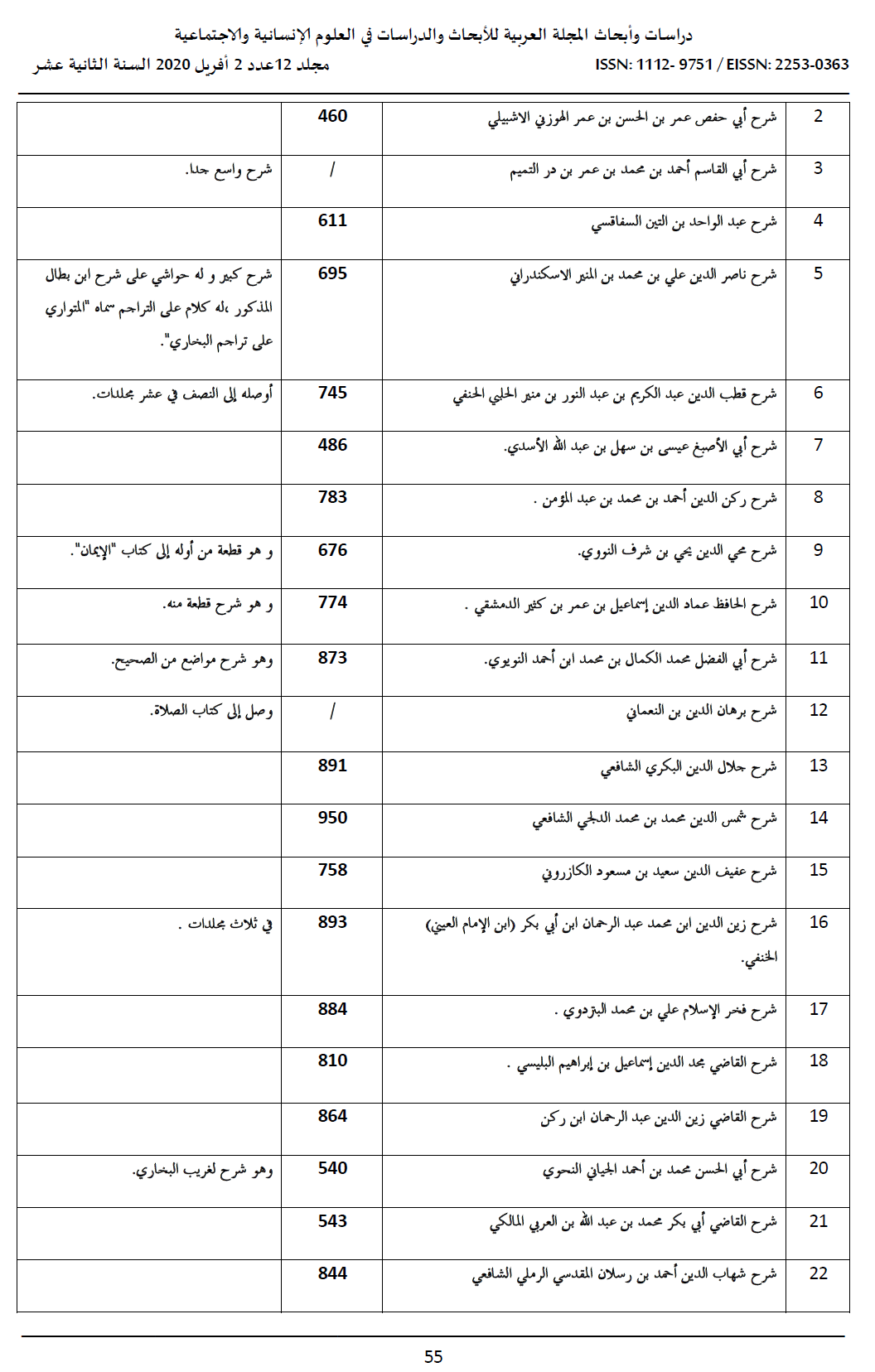
The commentaries also preserved the regional variations between manuscripts, recording in their margins the differences between copies attributed to Abu al-Waqt, Abu Dharr, and other major transmitters.
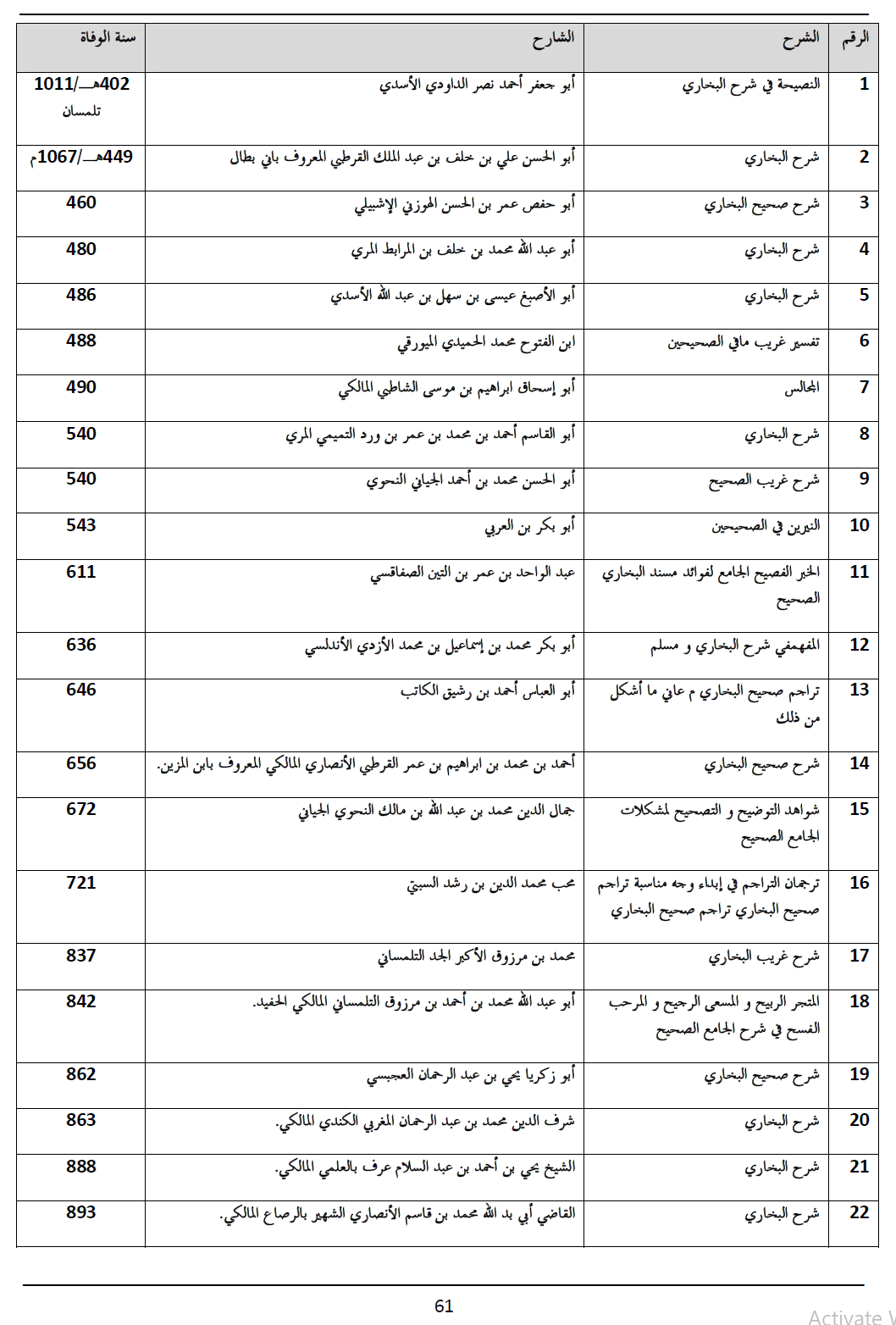
The continuous tradition of commentary from al-Khattabi in the fourth century AH down through the Moroccan scholars demonstrates an unbroken chain of scholarly engagement with the text of Sahih al-Bukhari across more than a thousand years.
Footnotes:
[1] https://www.fihrist.org.uk/catalog/manuscript_3801 [2] https://www.fihrist.org.uk/catalog/manuscript_3801 [3] An Important Manuscript of the Traditions of Bukhari, by A. Mingana, p. 1 [4] An Important Manuscript of the Traditions of Bukhari, by A. Mingana, p. 4 [5] An Important Manuscript of the Traditions of Bukhari, by A. Mingana, p. 7 [6] An Important Manuscript of the Traditions of Bukhari, by A. Mingana, p. 8 [7] An Important Manuscript of the Traditions of Bukhari, by A. Mingana, p. 5 [8] An Important Manuscript of the Traditions of Bukhari, by A. Mingana, p. 5 [9] Index of Arabic Manuscripts Preserved in the National Library: Kirill and Methodius, in the capital of the Bulgarian People’s Republic (two parts in one volume: Part One: The Qur’an and its Sciences, and Hadith and its Sciences, and Part Two: Linguistics and Composition Sciences, prepared by: Al-Darwish, Adnan, published by: Ministry of Culture, Tourism and National Guidance, Damascus, 1969 AD) [10] Haitham Abdul Ghafoor, Ismail bin Abi Uways and his narrations in Sahih Al-Bukhari (Master’s Thesis at the University of Islamic Sciences), p. 6 [11] Haitham Abdul Ghafoor, Ismail bin Abi Uways and his narrations in Sahih Al-Bukhari (Master’s Thesis at the University of Islamic Sciences), p. 6 [12] See: Siyar A’lam al-Nubala’ by al-Dhahabi, Vol. 10, p. 392 [13] See: Taqrib al-Tahdhib (460), Vol. 1, p. 135 [14] It is attributed to the Prophet, peace be upon him — that is, attributed to him [15] See: Al-Fath, H. 740, Vol. 2, p. 285 [16] Al-Fath, Vol. 4, p. 439 [17] The Weak Chain, Dar Al-Maarif, Riyadh, 1st ed. 1412 AH – 1992 AD, Vol. 3, p. 485 [18] Explanation of the Creed of Al-Tahawiyyah — Introduction, Islamic Office, Beirut, 1st ed. 1399 AH, pp. 14–15 [19] Siyar A’lam al-Nubala’ (12/402)