Sects That Did Not Believe in Jesus Crucifiction
Since the first century AD, many Christian sects believed that Christ was not crucified but was made to appear so to onlookers.
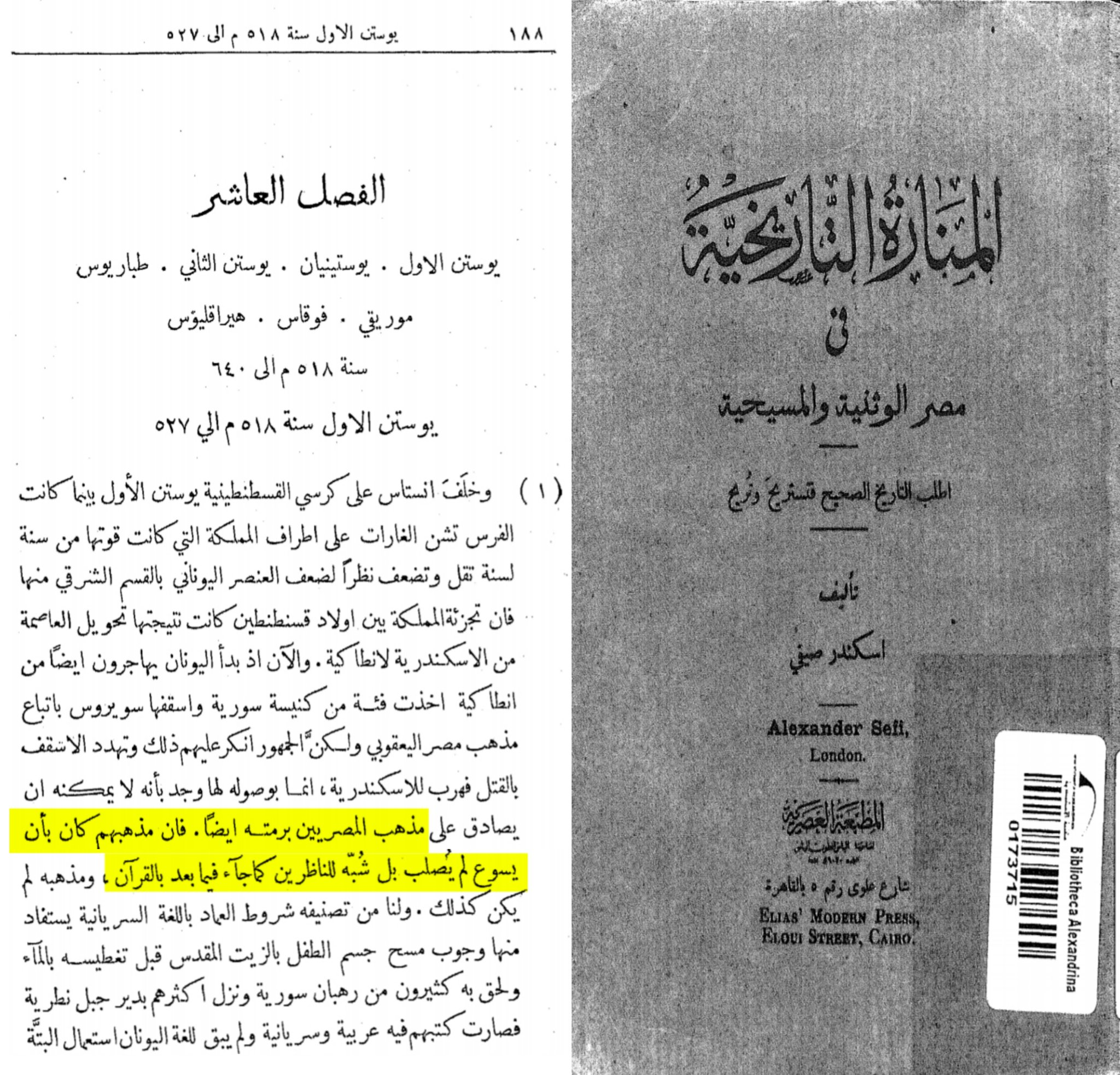
It was common among the Gnostics, a Christian sect, that (Judas Iscariot) was crucified instead of (Christ).
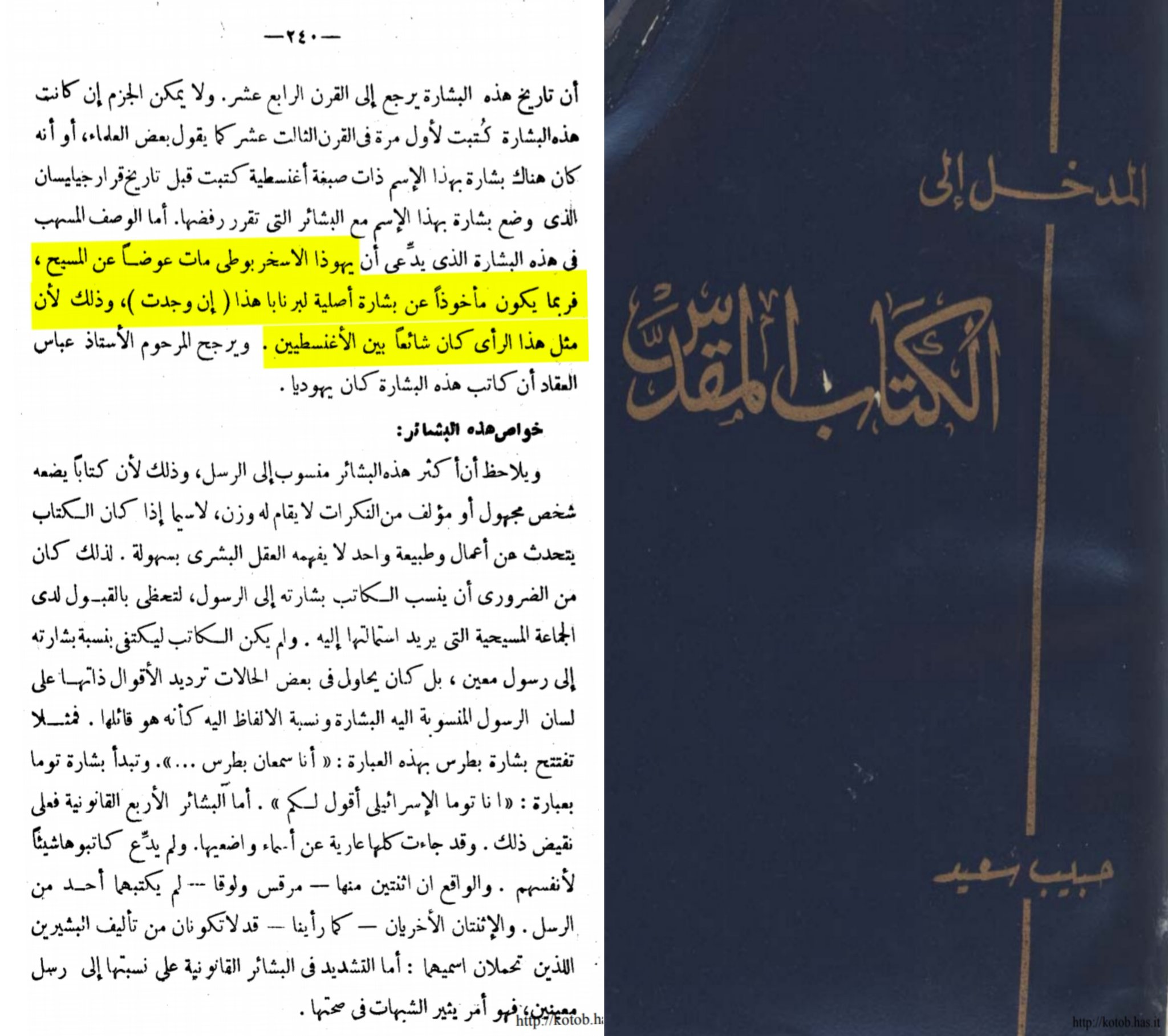
Rather, the Entire Belief of the Egyptians in the Fifth Century during Justinian’s Reign Was that Jesus Was Not Crucified but Was Made to Appear so to the Onlookers
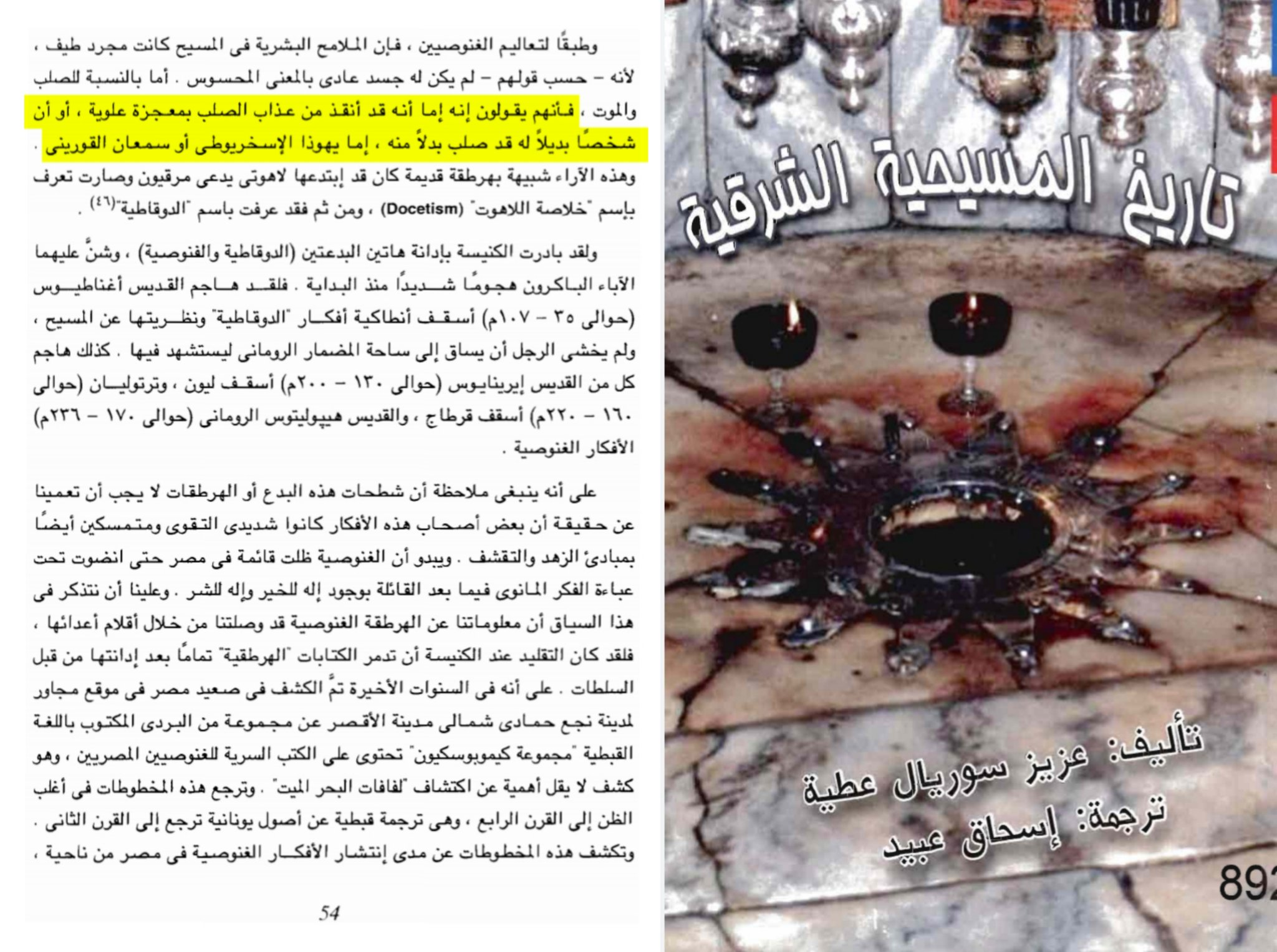
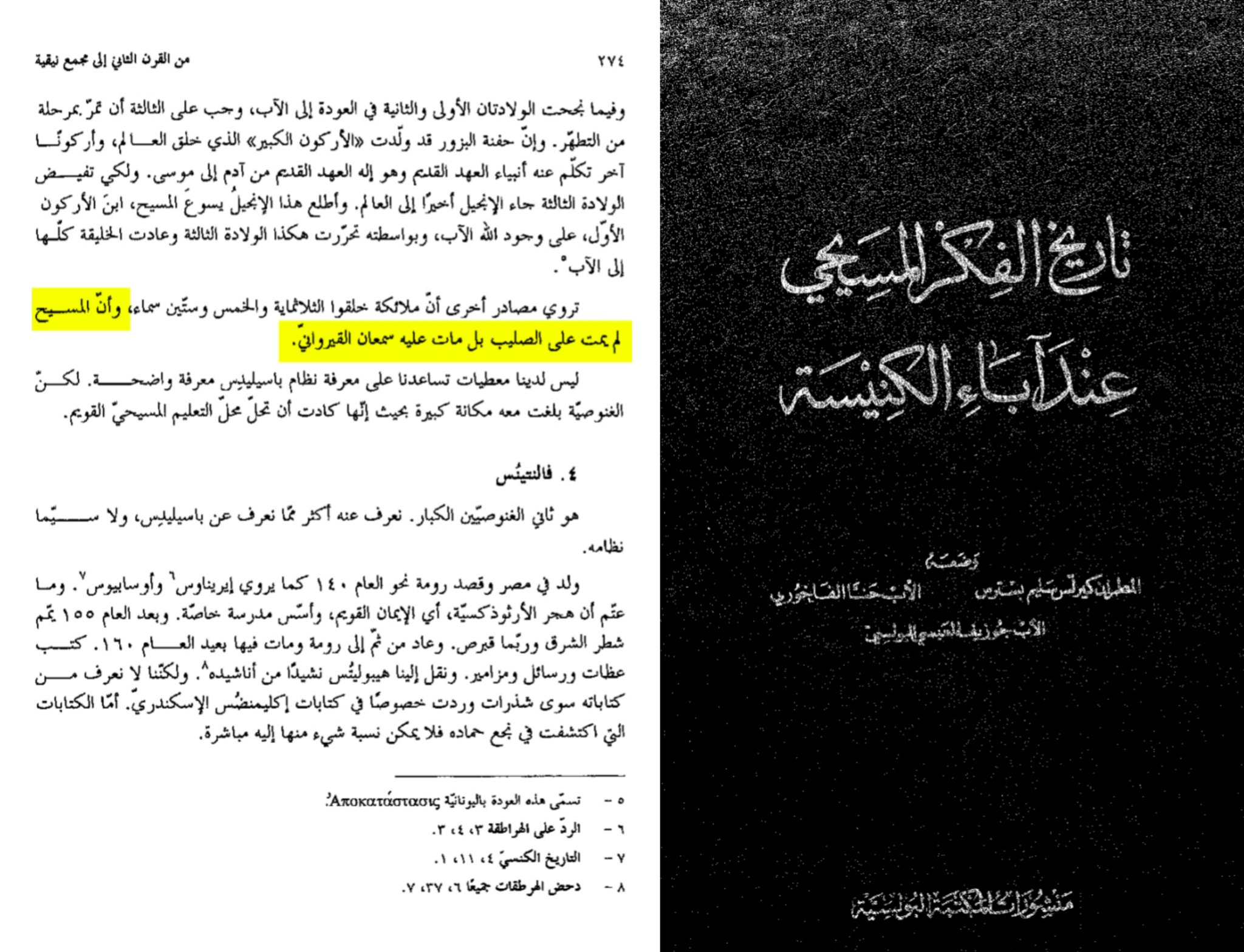
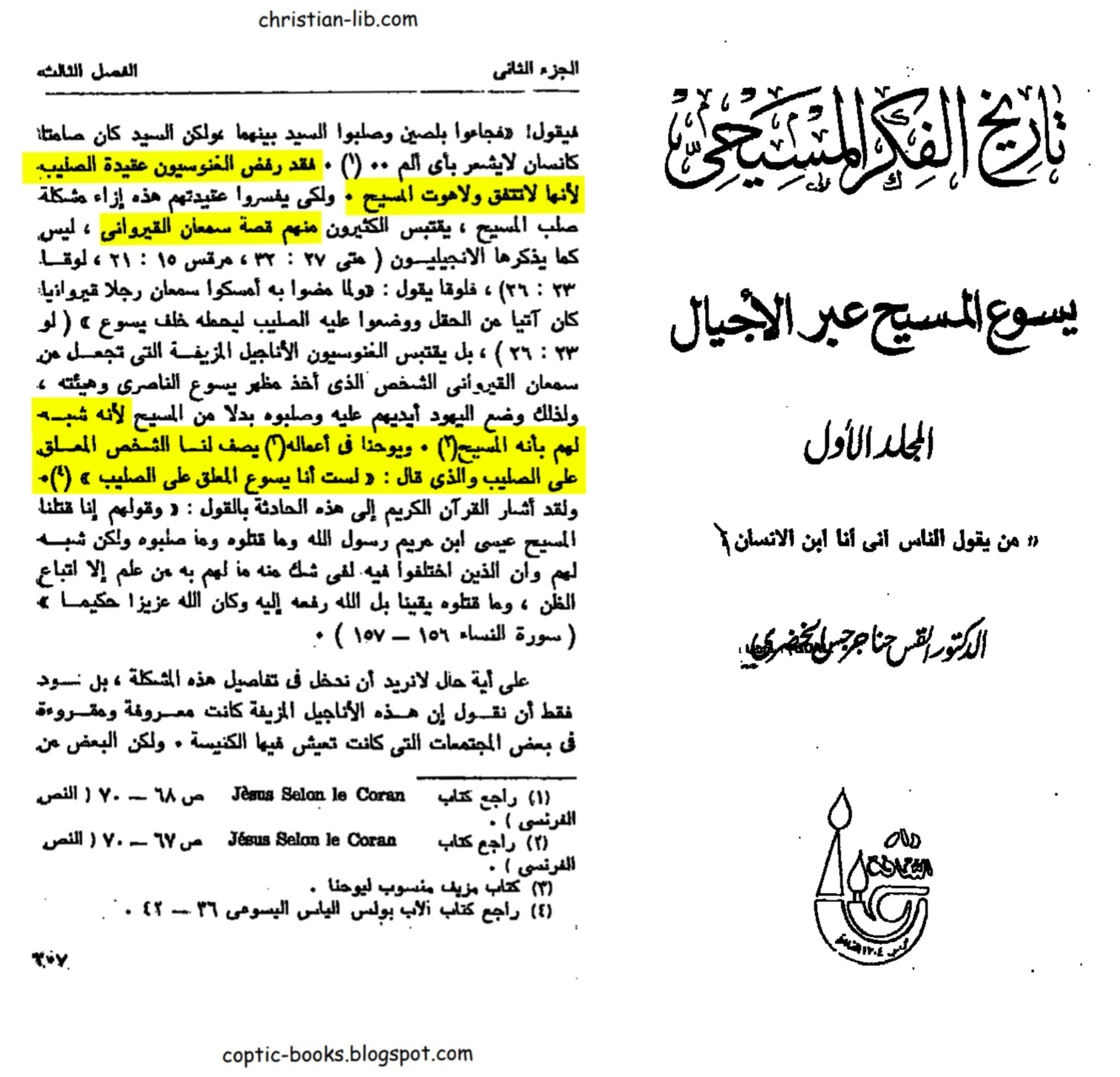
At the end of the first century AD, Gnostic thought spread, and one of their most prominent beliefs was: that Christ was not crucified, but rather the one crucified in his place was either Judas Iscariot or Simon of Cyrene, while Christ was saved from crucifixion by a divine miracle.
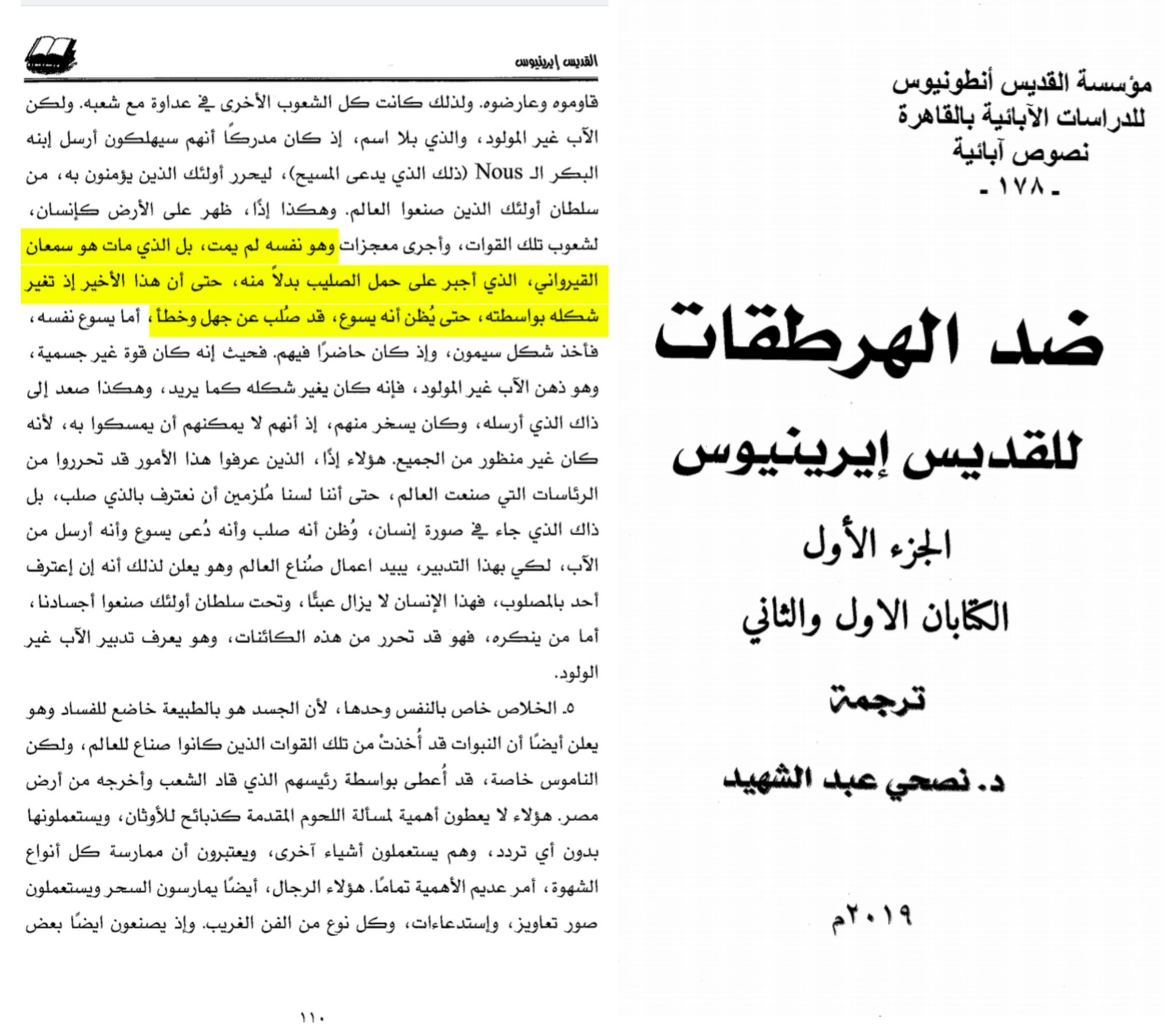
Basilides in the first century AD claimed that Christ escaped crucifixion and that the one crucified in his place was (Simon of Cyrene), and that Simon took on the likeness of Christ. He believed that Christ had the ability to become invisible and change his form, and thus was saved from crucifixion.
Saint Irenaeus strove to combat this heresy, which was widespread according to his belief.
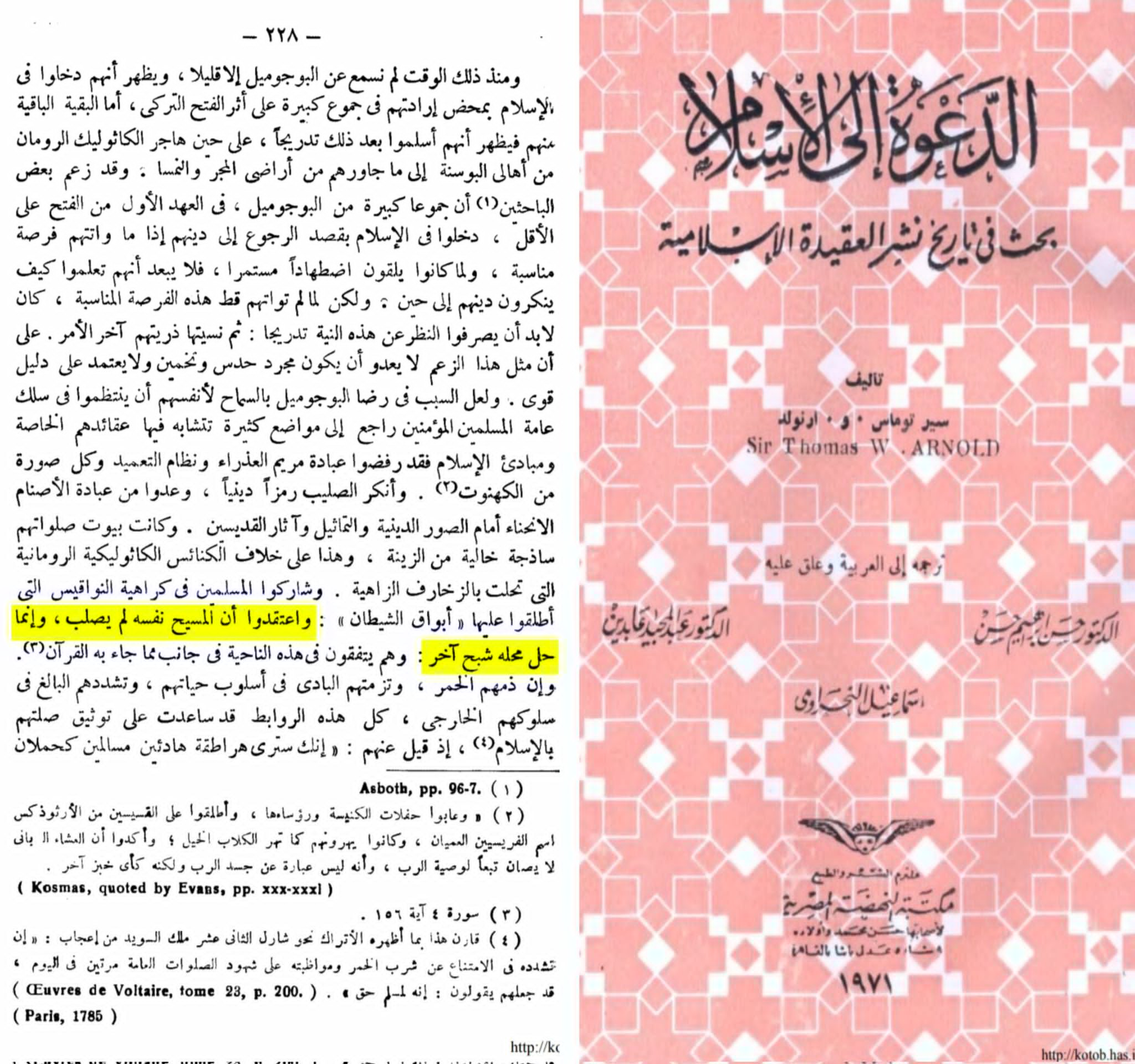
The Bogomil sect, which inhabited Bosnia, claimed that Christ escaped crucifixion. They believed that it was his likeness, not him, that was crucified.
The Bogomils rejected the worship and veneration of icons. They rejected the worship of Mary and the symbol of the cross.
So they were persecuted and tortured, and they became Muslims.
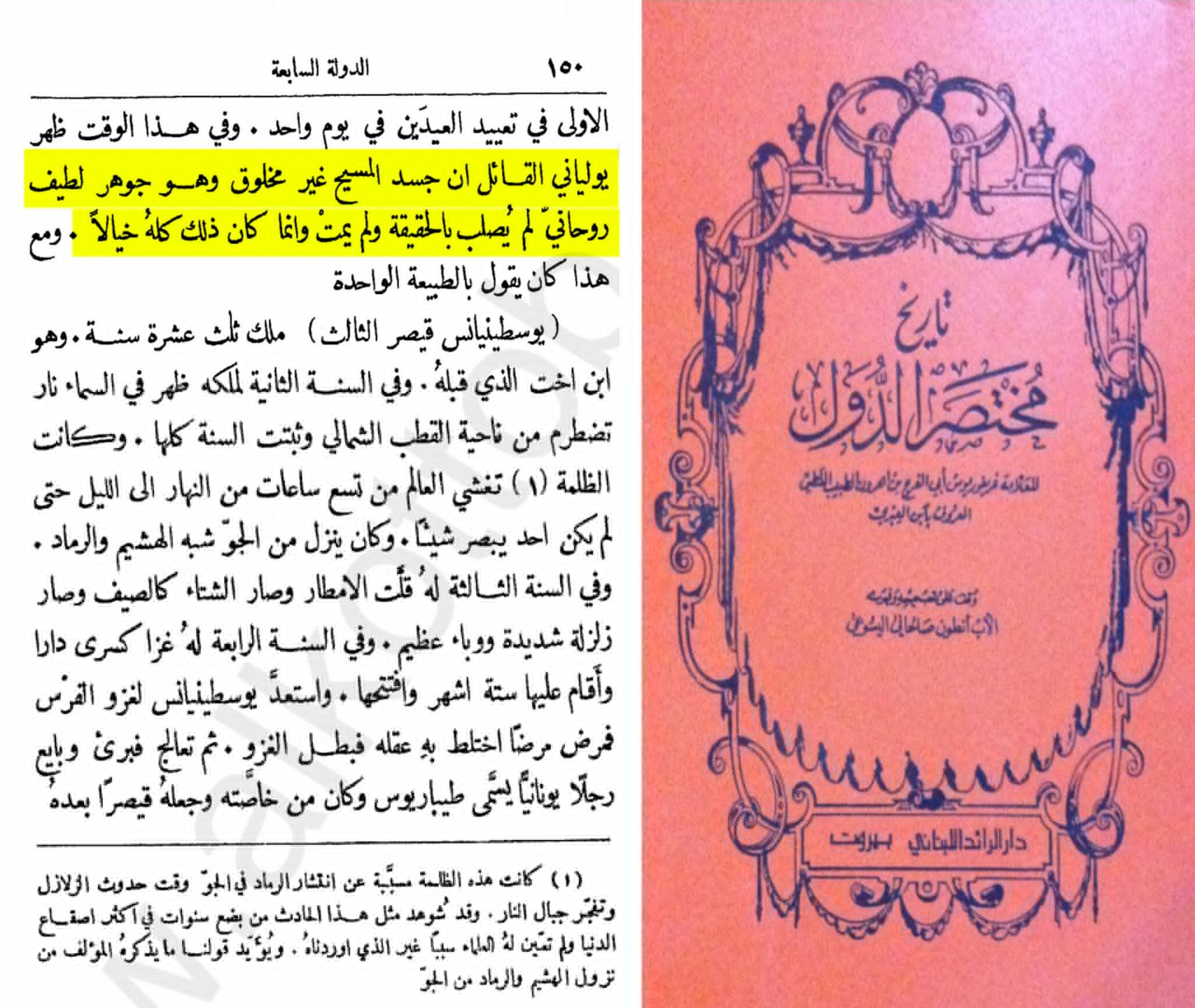
Yuliani and other Christians who emerged in the second century claimed that Christ escaped crucifixion because they believed He did not have a real body but was a phantom capable of concealment, escape, and transformation.
They rely in proving this doctrine on gospels considered by traditional churches to be apocryphal to the New Testament.
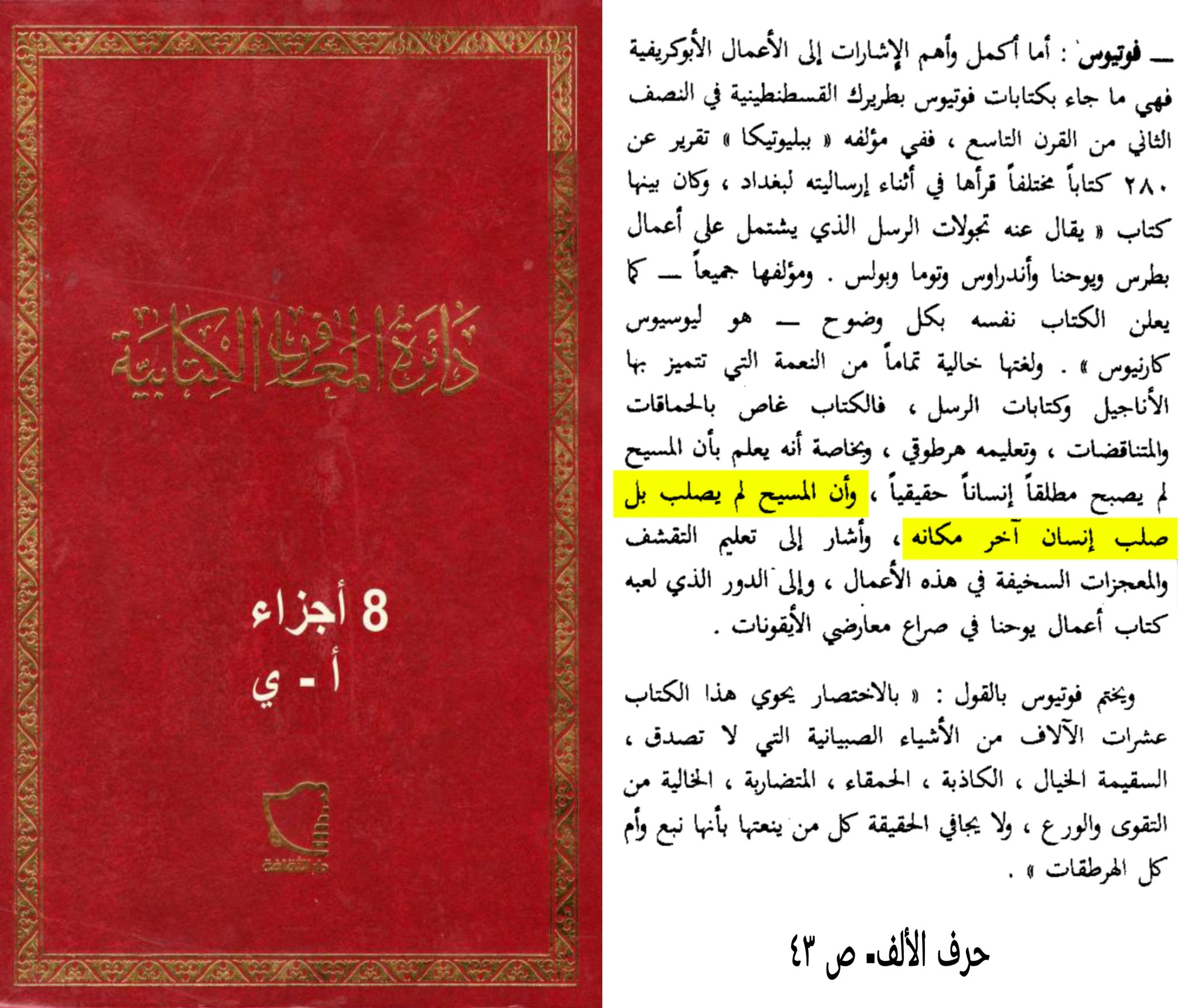
One of the apocryphal books rejected by the early church is the book (Travels of the Apostles), which includes the acts of Peter, Andrew, Thomas, and Paul.
One of the most prominent teachings of this book was that Christ was not crucified, but another person was crucified in his place.
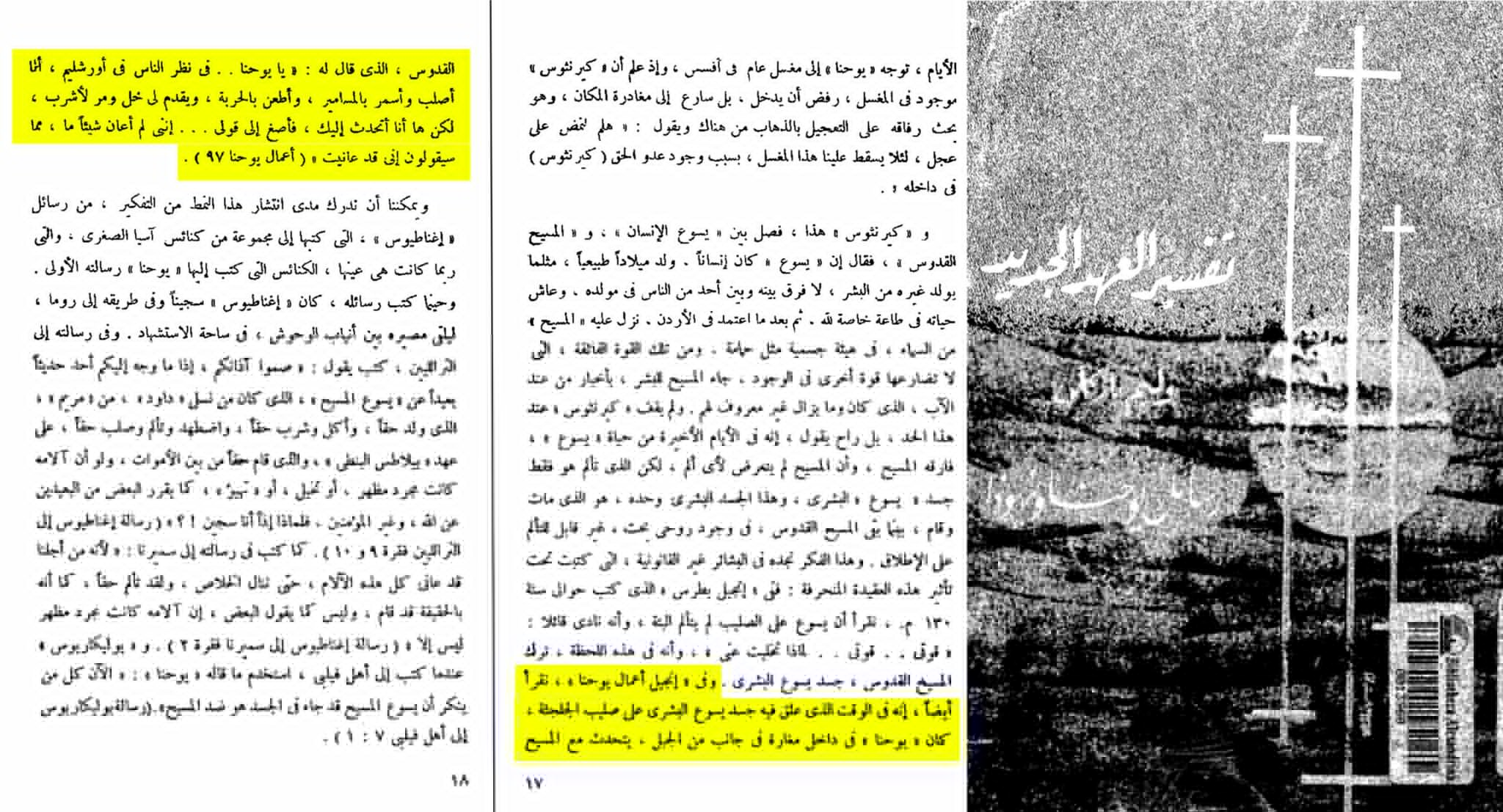
It is stated in (The Acts of John), which the Church rejected: that John was, at the time of the crucifixion, in a cave on the side of the mountain, and Christ was speaking to him, saying:-
O John, in the eyes of the people in Jerusalem, I am being crucified and nailed… but behold, I am speaking to you… so listen to my words… I have not suffered anything of what they will say I have suffered .
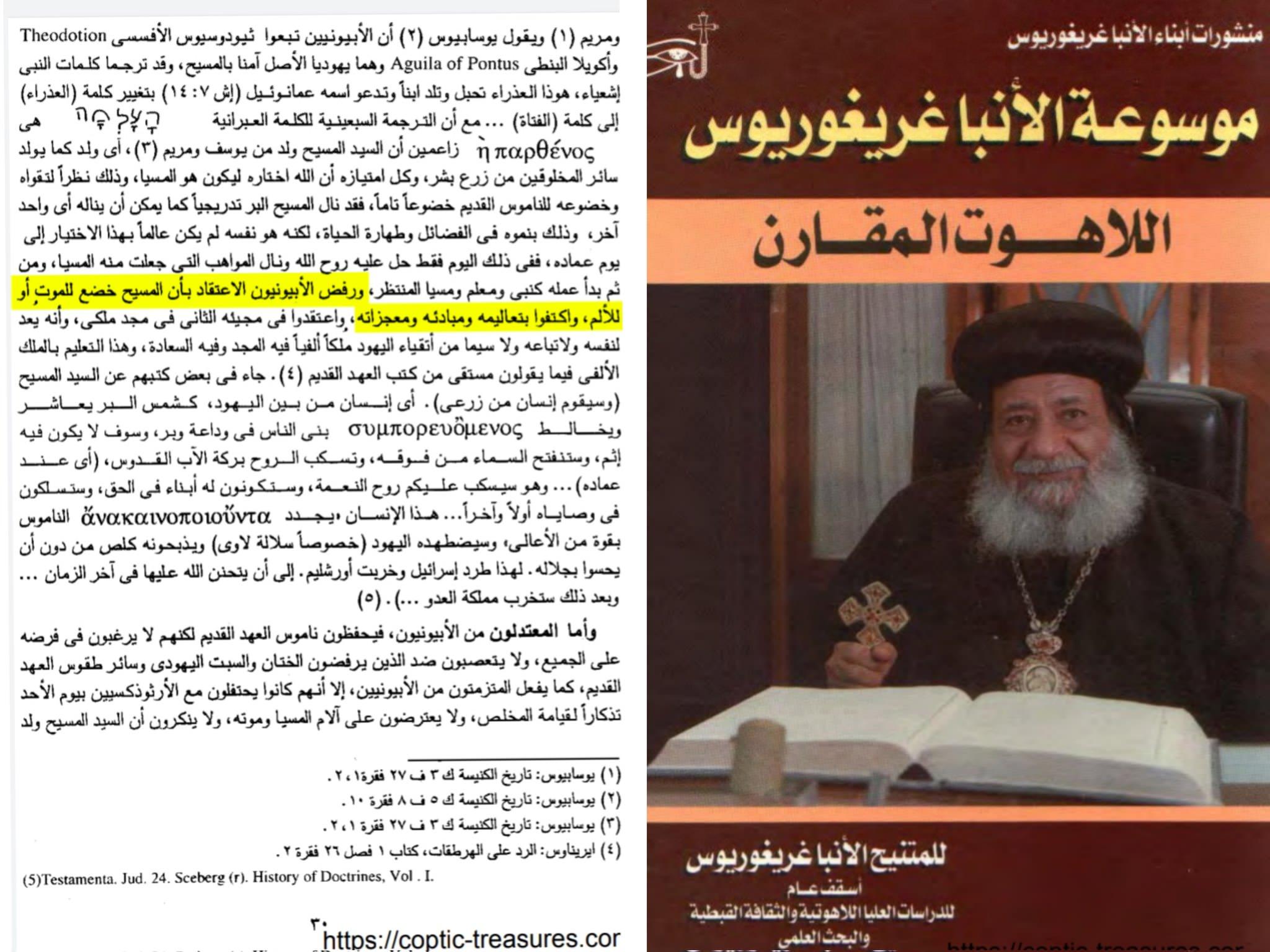
The Ebionites (Christ was not crucified)
The Ebionite sect emerged in the first century AD, and one of their most prominent beliefs was that Christ did not submit to death or suffering, that he was a prophet sent to the Children of Israel and not a god, and they believed that Paul was an apostate from the Law, and they absolutely rejected all of Paul’s epistles.
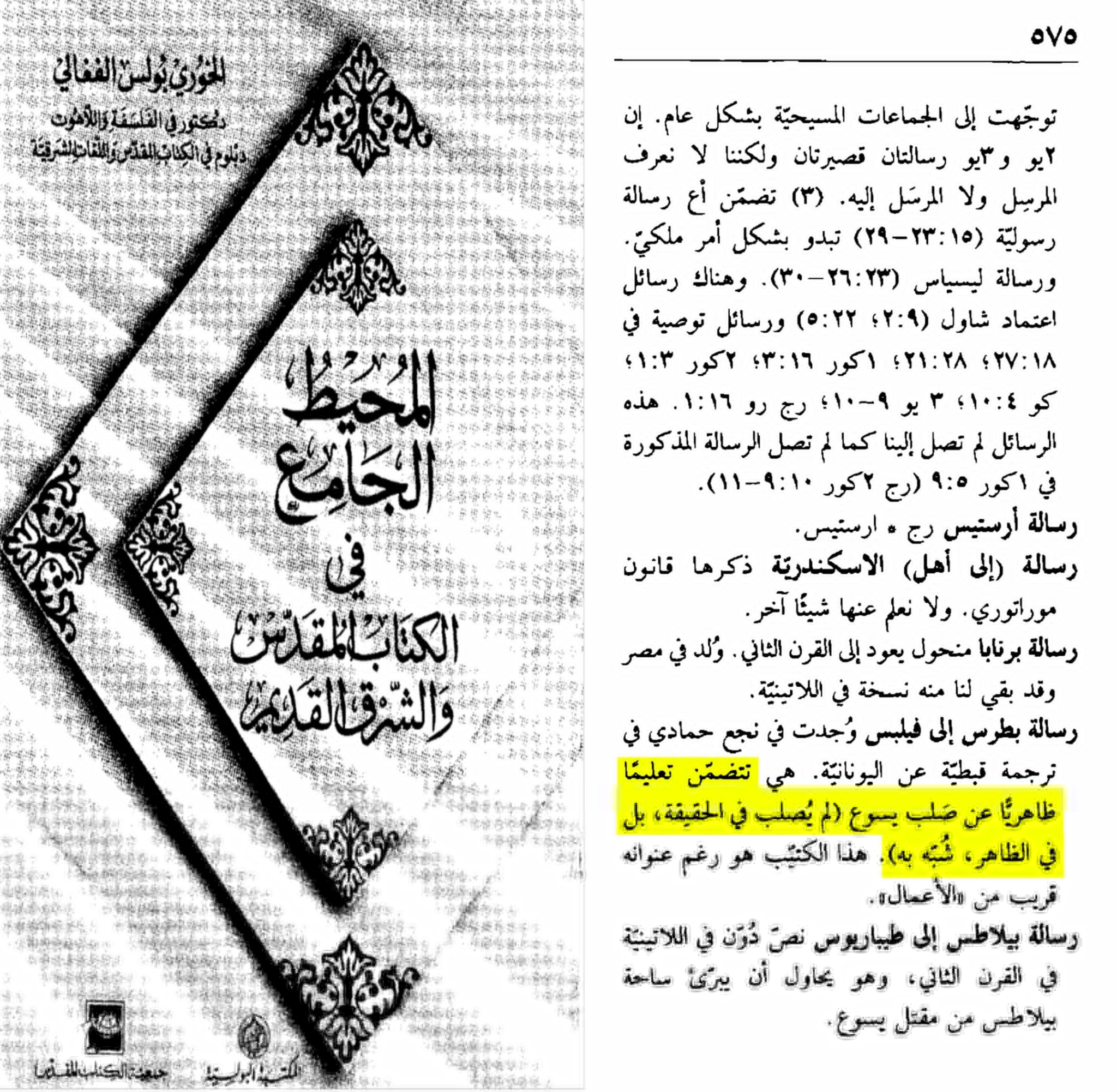
The Letter of Peter to Philip: One of the New Testament letters rejected by the Church, which includes an apparent teaching that Christ was not truly crucified but was made to appear so.
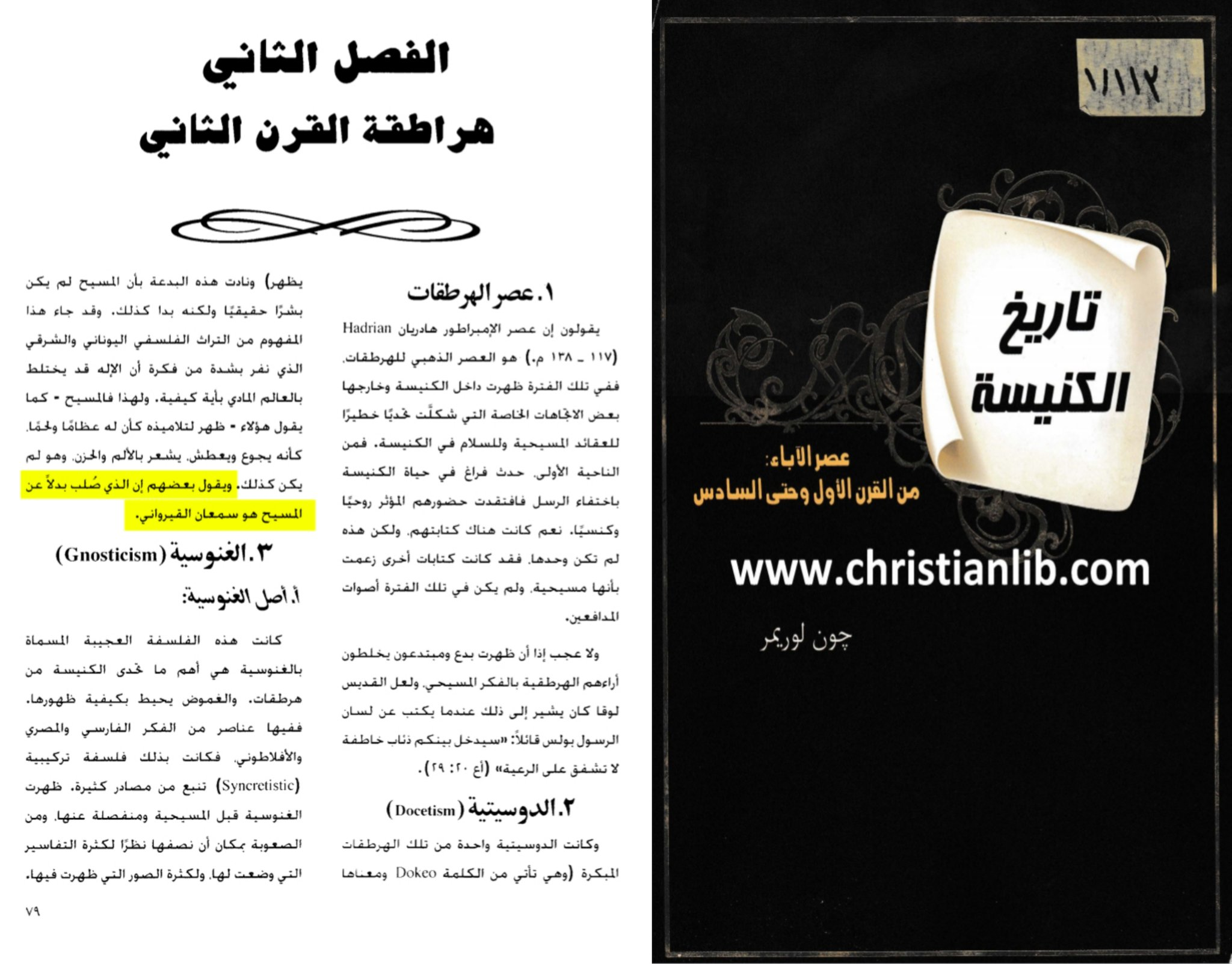
The Docetist sect in the second century AD believed that Christ was not crucified, but rather Simon of Cyrene was crucified in his place.
The Gnostics in the first century relied on numerous gospels that completely denied the crucifixion of Christ.
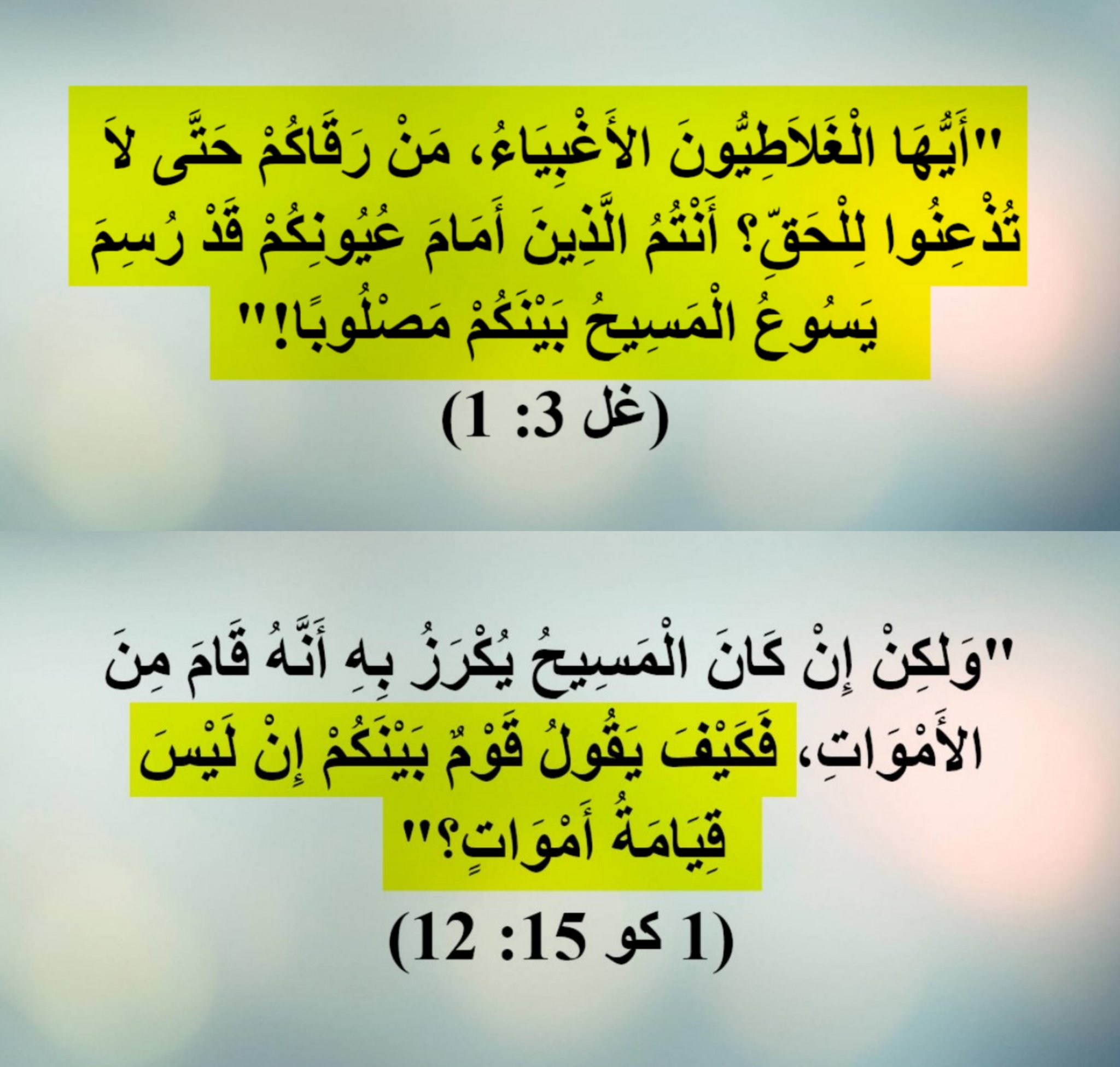
A belief spread among the people of Galatia, preaching another gospel that denies the crucifixion of Christ. Paul fought against this belief and this gospel and warned those who advocated it.
Likewise, in Corinth, there was a reference to people who did not believe in the crucifixion or the resurrection from the dead. Thus, the most prominent of Paul’s teachings was proclaiming the crucifixion and resurrection among them.
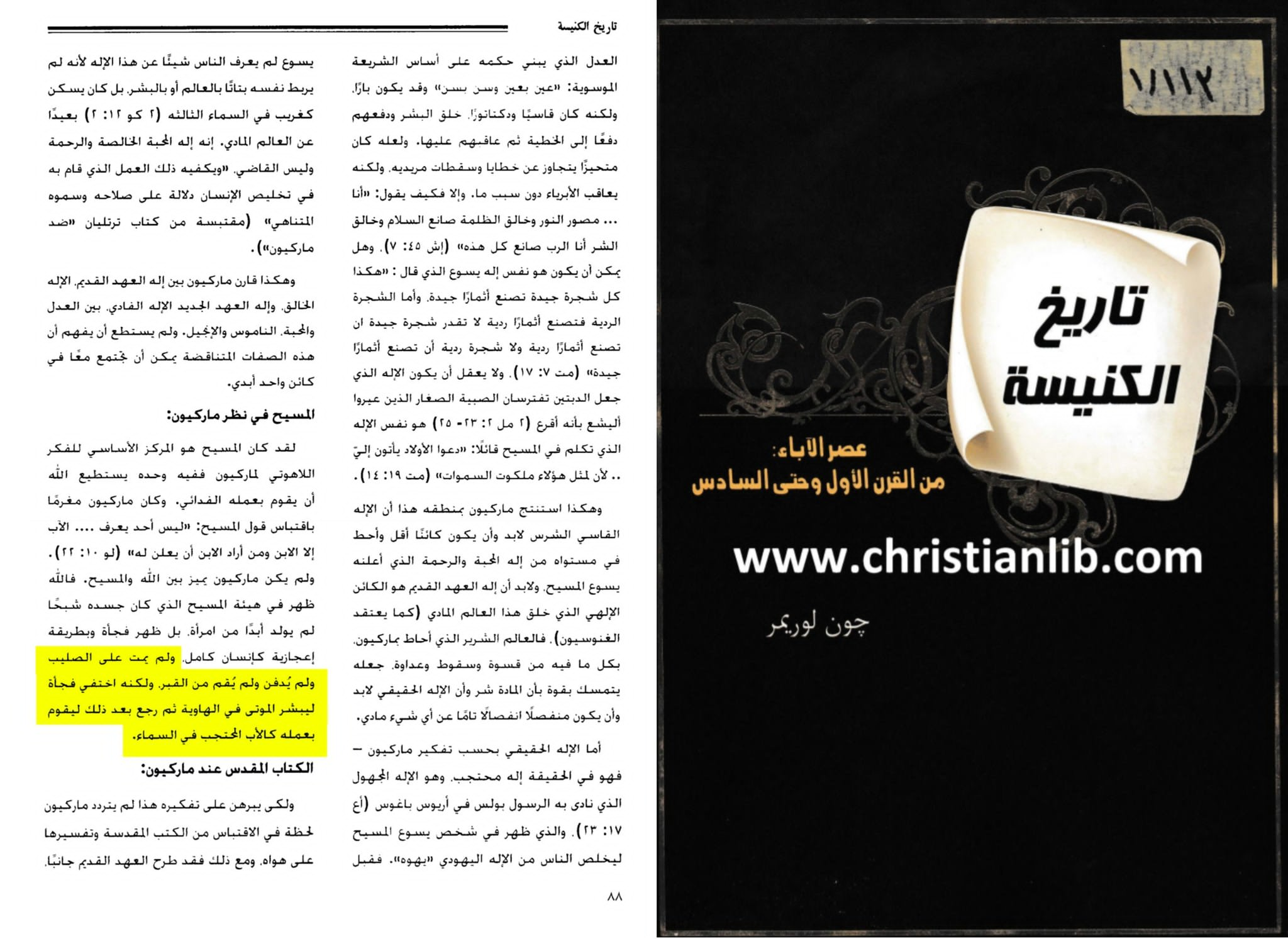
Marcion in the second century CE taught that Christ did not die on the cross, was not buried, and did not rise from the house of the dead.
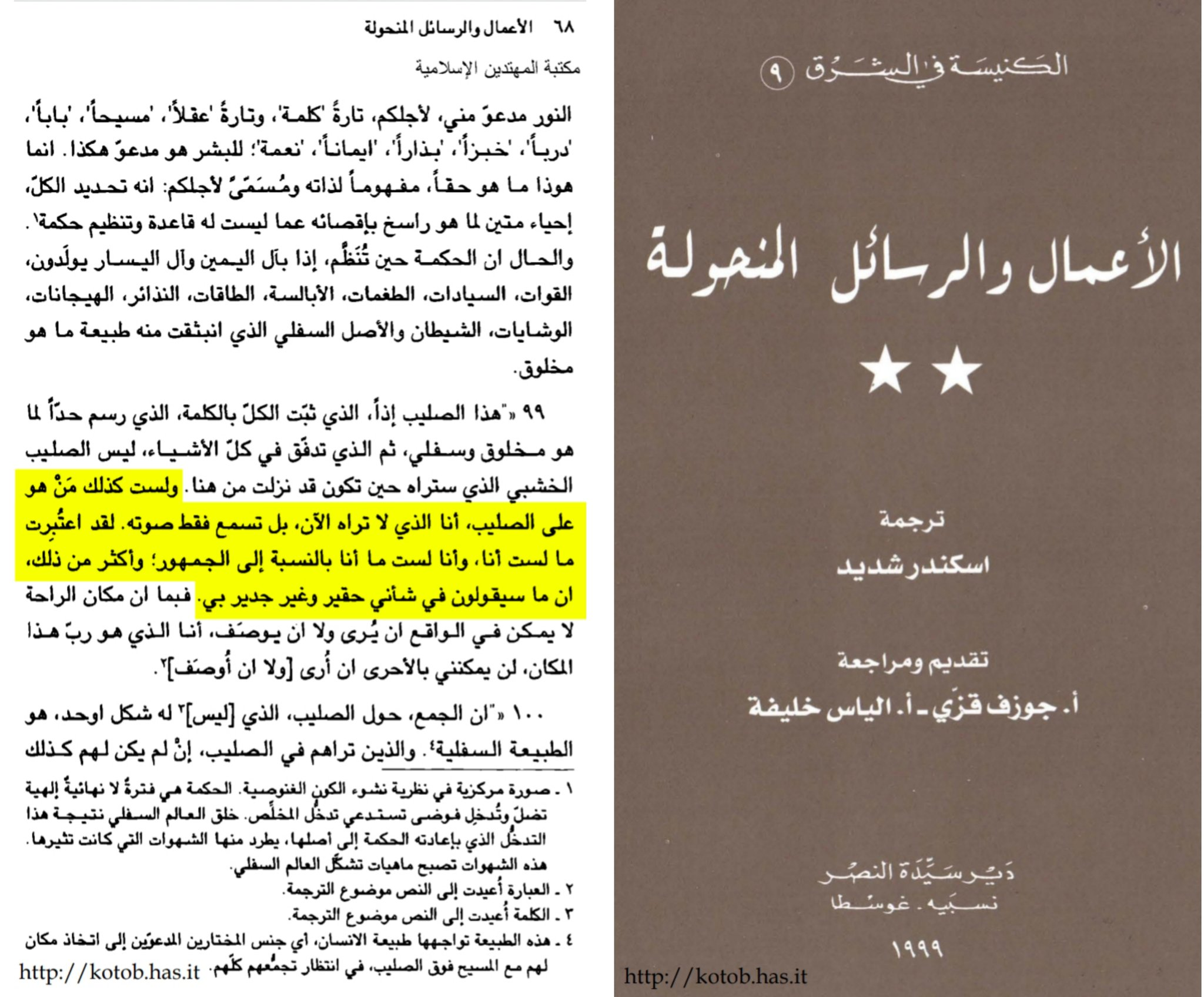
It was mentioned in some of the letters rejected by the early Church that Christ was not crucified and did not undergo the despicable things that would be attributed to Him.
“And I am not the one on the cross; I am the one you do not see now but only hear His voice. I have been considered what I am not, and I am not what I am to the masses. And moreover, what they will say about me is despicable and unworthy of me.”
In the first century, before John wrote his Gospel, people were talking about the crucifixion of Simon of Cyrene instead of Christ, and they were served by passages from the Gospels.
John wrote his Gospel in 98 CE, changing the narrative to make Christ the one carrying his cross, not the Cyrenean, so as not to contribute to the spread of that narrative.
Doesn’t this point to a hidden truth,
namely, Christ’s escape from crucifixion?

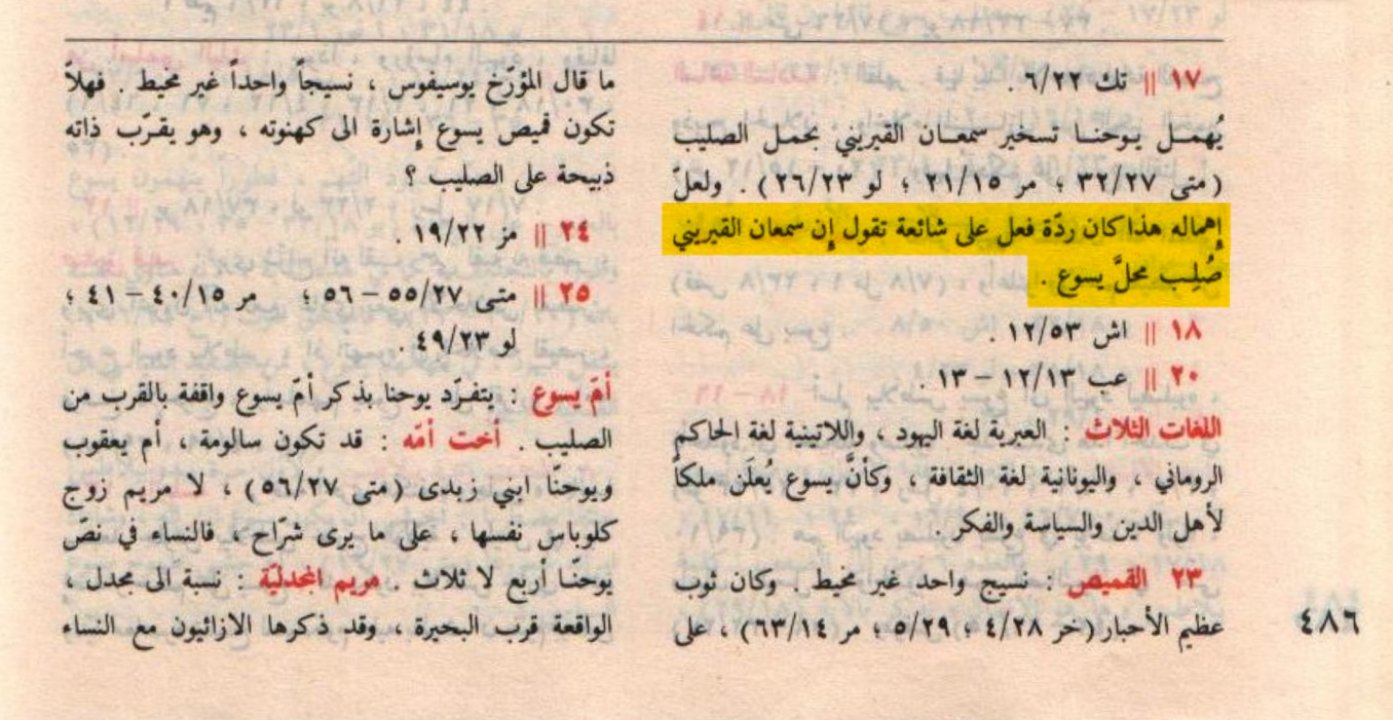
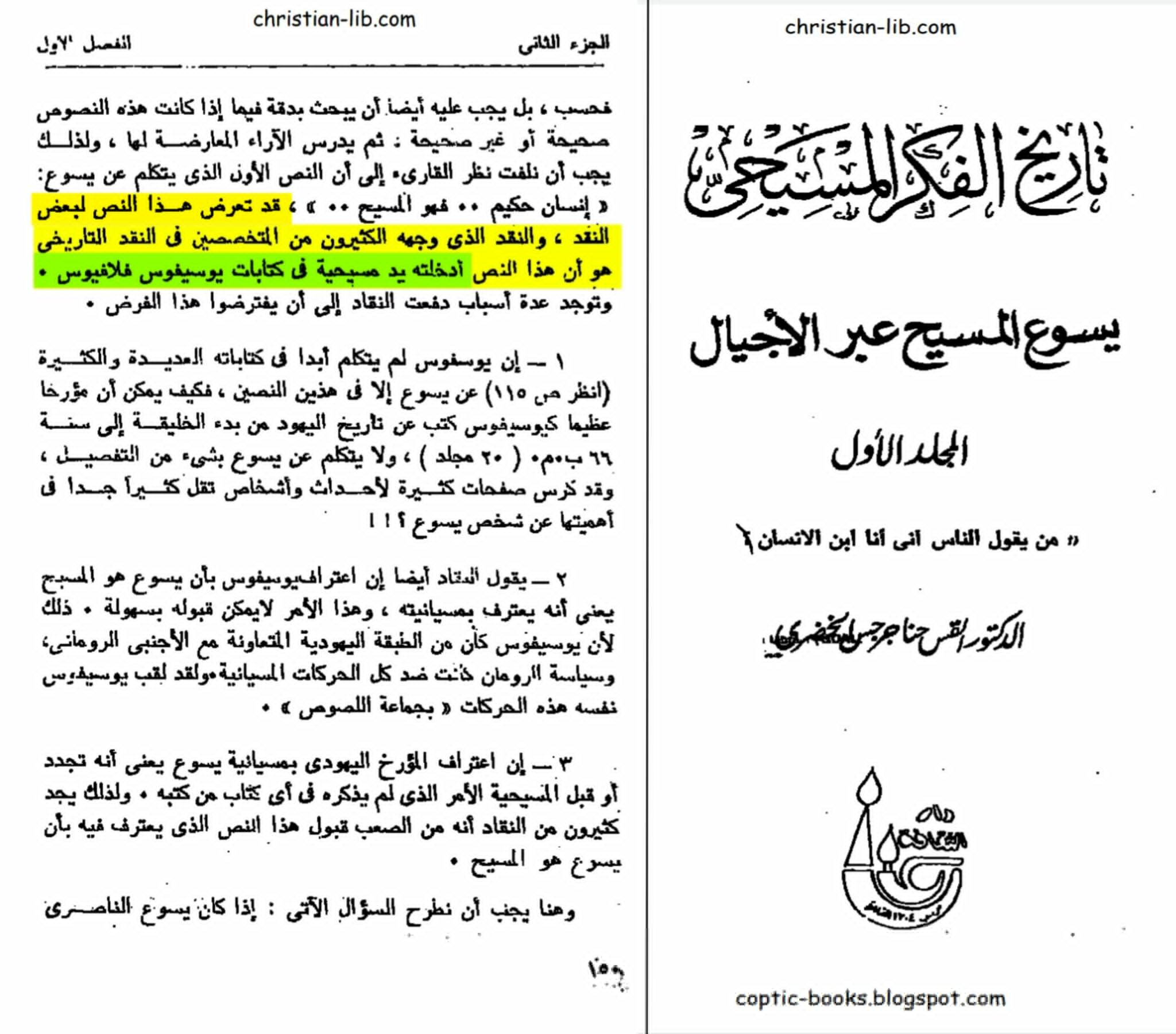
Christians cite the historical crucifixion of Christ, alongside the writings of the New Testament (whose authors were not eyewitnesses), based on a text by the Jewish historian Josephus, who lived in the first century, in which he speaks about the crucifixion of Christ.
Pastor Hanna Gerges Al-Khadari mentions that this text has been subject to criticism, as it may have been altered by Christian hands in Josephus’s writings.
TOP
@everyone SECTS THAT DIDN’T BELIEVE IN CRUCIFIXION
✅