Secularism Cannot Respect Other Opinions
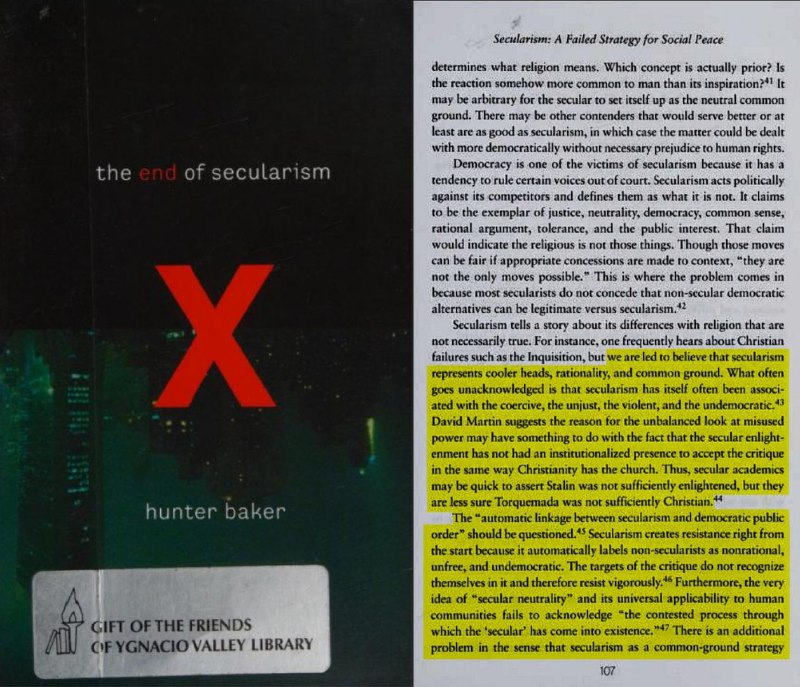
What is not often acknowledged is that secularism itself has often been associated with coercion, injustice, and undemocratic violence. David Martin suggests that the reason for the unbalanced outlook and abuse of power may have to do with the fact that the secular Enlightenment did not have the institutional presence to accept criticism in the same way that Christians accepted the Church. Thus, secular academics may be quick to assert that Stalin was not sufficiently enlightened. The automatic association between secularism and the democratic public order should be questioned. Secularism creates resistance from the outset because it automatically labels non-secularists as irrational, unfree, and undemocratic. The targets of criticism do not recognize themselves in it and therefore actively resist it. Furthermore, the idea of “secular neutrality” and its universal applicability to human societies fails to acknowledge “the contested process by which ‘the secular’ came into being.” — Common Ground Strategy. — Hunter Baker, J.D., Dean of the College of Arts and Sciences and Professor of Political Science at Union University.