

Slavery, Concubines, and War Captives in the Bible: The Christian Double Standard
Slavery and Concubinage Endorsed by the Bible
Table of Contents
- Introduction
- What Christian Sources Say About Concubines
- Concubines Were Often Slave Women
- Christian Commentators on Biblical Concubinage
- Concubinage in the Torah and Biblical Law
- Captivity Through War
- Legal Sources of Captivity: War
- Women and Children as Spoils of War
- The Captive Woman in Deuteronomy
- Concubinage in Christian Legal Sources
- Captivity Through Kidnapping
- Selling Daughters as Slaves
- Examples of the Law of Concubinage in the Bible
- Christianity and the Obedience of Slaves
- The Law of Slavery in Leviticus
- The Law of Spoils in the Bible
- Was Marrying Concubines and Having Children With Them Permitted in Biblical Law?
- Augustine, Aquinas, and Slavery as a Result of Sin
- The Islamic Contrast
- Christian Colonial Slavery
- Conclusion
Introduction
However, a closer examination of biblical texts, Christian encyclopedias, church law, and historical Christian sources proves otherwise.
The issue is not merely that slavery existed historically among biblical people.
The issue is stronger than that:
Christian sources also admit that concubines were often slave women, bought women, or captives of war.
What Christian Sources Say About Concubines
The Christian Encyclopedia defines a concubine as a slave woman of lower status than a wife.
Examples include:
- Judges 8:31
- 2 Samuel 5:13
- 1 Kings 11:3
- 2 Chronicles 11:21
Sarah gave Hagar to Abraham for children, and Laban gave his daughters slave women when they married Jacob.
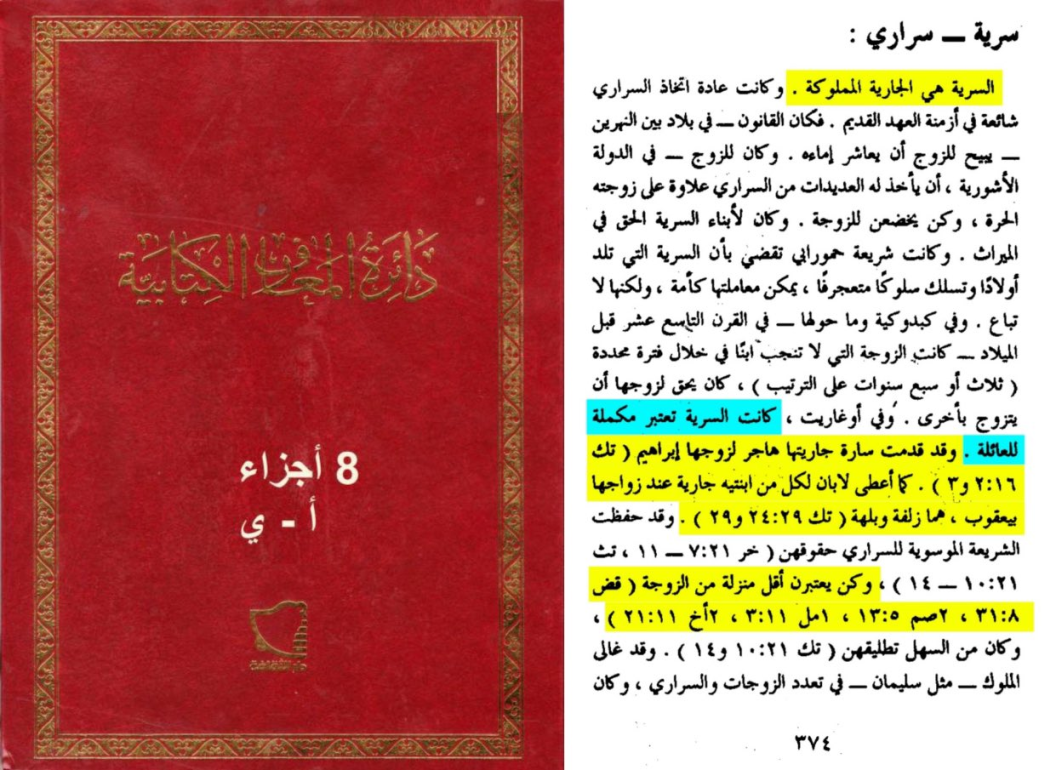
SEE PROOF HERE
Slave as Second Wife in Christianity
Concubines Were Often Slave Women
According to the Bible Dictionary, concubines were usually taken from slaves and bought for a price.
Sometimes they were girls sold by their fathers, and sometimes they were prisoners of war.
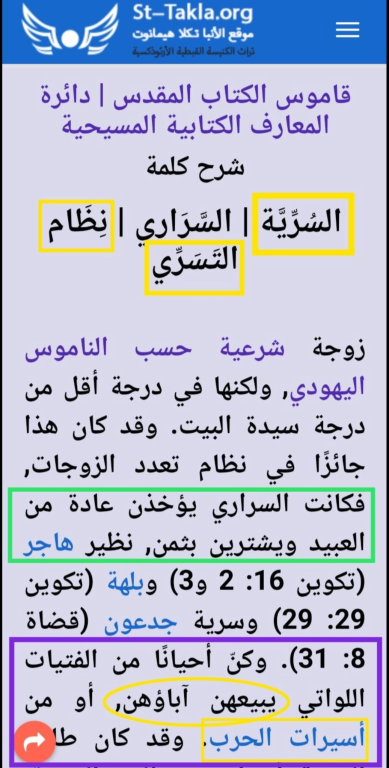
For your info: This scan explains that concubines in biblical usage were commonly taken from enslaved women. It mentions three sources of concubinage: slave ownership, purchase, and war captivity. This is important because it destroys the modern apologetic claim that biblical concubinage was merely normal marriage under another name. The source itself links concubinage to women of reduced status, often acquired through slavery or conquest.
Christian Commentators on Biblical Concubinage
The Bible’s position on concubines, as explained by Father Tadros Yacoub Malti and Father Antonius Fikry, is that a concubine was a legitimate wife, though of lower rank.
She was often a slave bought for a price or a prisoner of war.
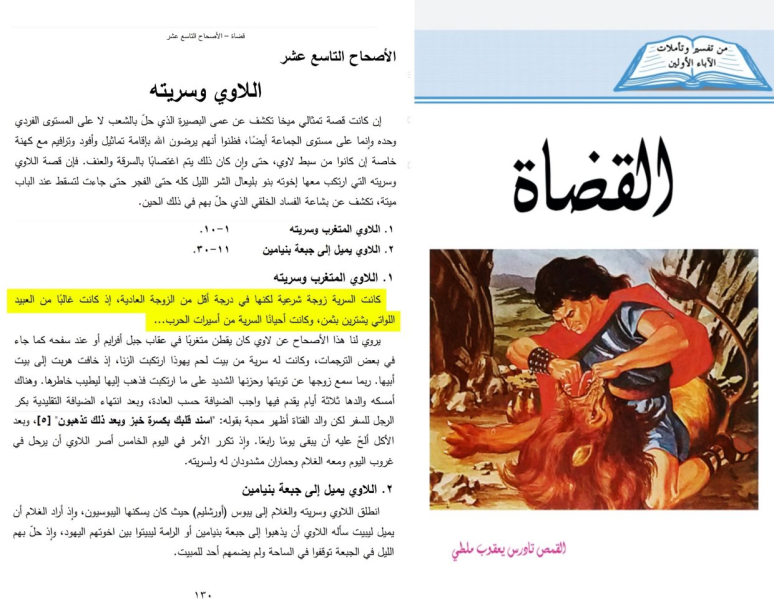
For your info: This scan presents a Christian explanation of concubinage as a recognized lower-ranking marital arrangement. The key point is that the concubine was treated as lawful within the biblical framework but did not possess the same rank as a full wife. The scan is important because it shows that Christian interpreters do not deny the existence of this system; rather, they explain it as part of the social and legal order of the biblical world.
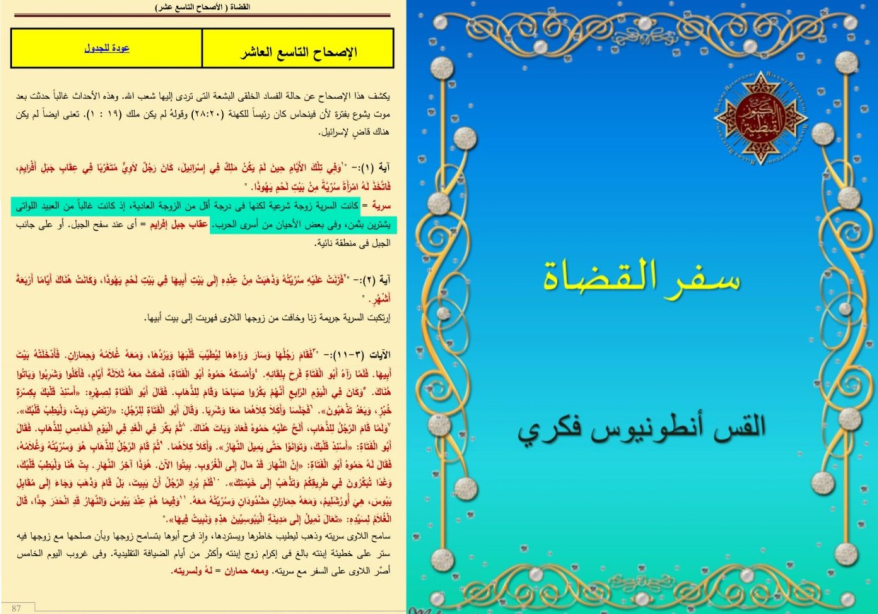
For your info: This scan continues the Christian commentary on concubinage. It reinforces the same point: a concubine could be considered legitimate in the biblical social order while remaining beneath the status of a full wife. The importance of this page is that it confirms the distinction between wife and concubine and shows that the difference was not imaginary; it had real consequences for social status and rights.
Bishop Salim Bustros states that the Torah allowed a man to take a sariya — a concubine — as a slave for bearing children.
The Encyclopedia of the Bible notes that in polygamy, the firstborn was recognized whether from a wife or a jariya — slave woman.
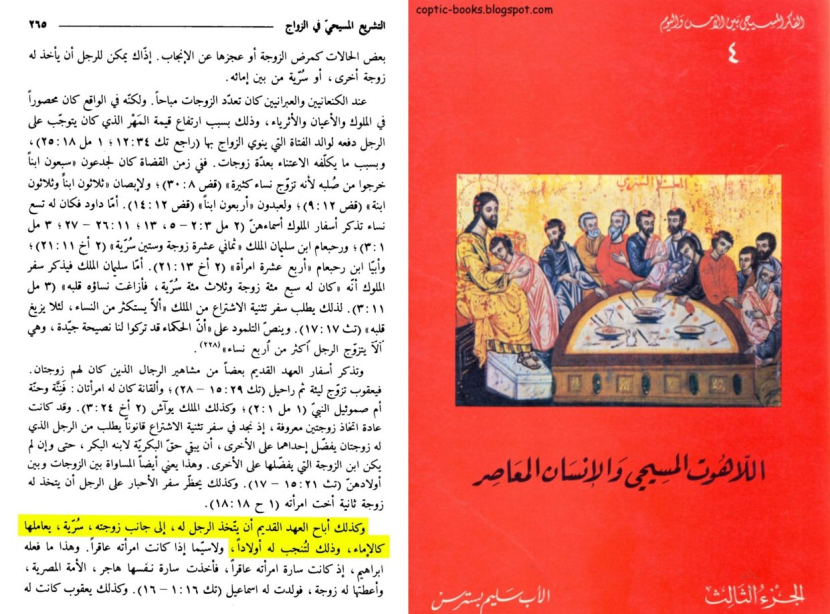
For your info: This scan records the statement that the Torah allowed a man to take a concubine or slave woman for the purpose of having children. The significance is obvious: the issue is not just historical practice, but something described as allowed within biblical law. This scan directly supports the article’s argument that concubinage was not outside the biblical system.
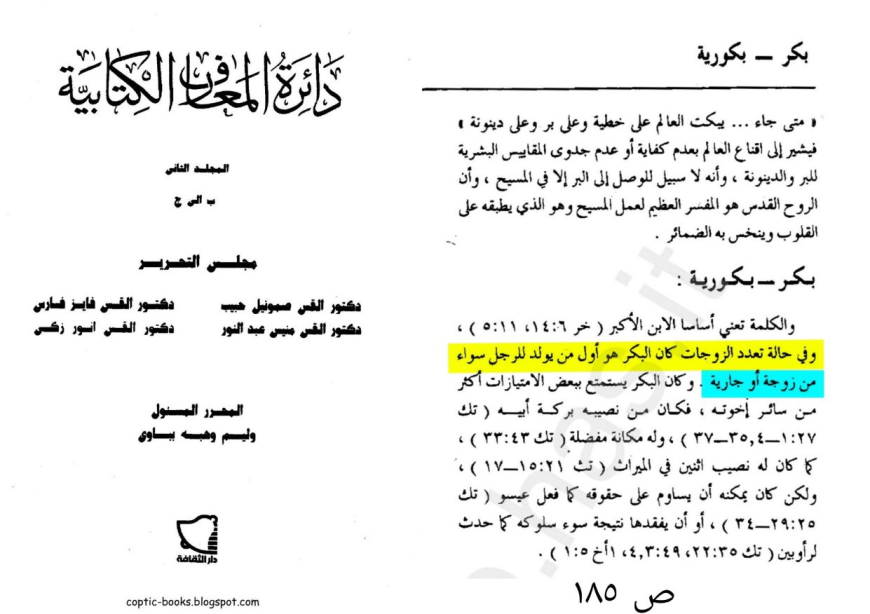
For your info: This scan discusses inheritance and children born from wives and slave women. The point being made is that biblical family law recognized children born through such relationships. This matters because it shows that concubinage was not a hidden or marginal practice; it entered the legal and genealogical structure of biblical society.
Father Roland Dufau states that Abraham and Jacob took female slaves as concubines at their wives’ request, but they remained slaves unless freed.
Exodus law even allowed a father to sell his daughter as a concubine.
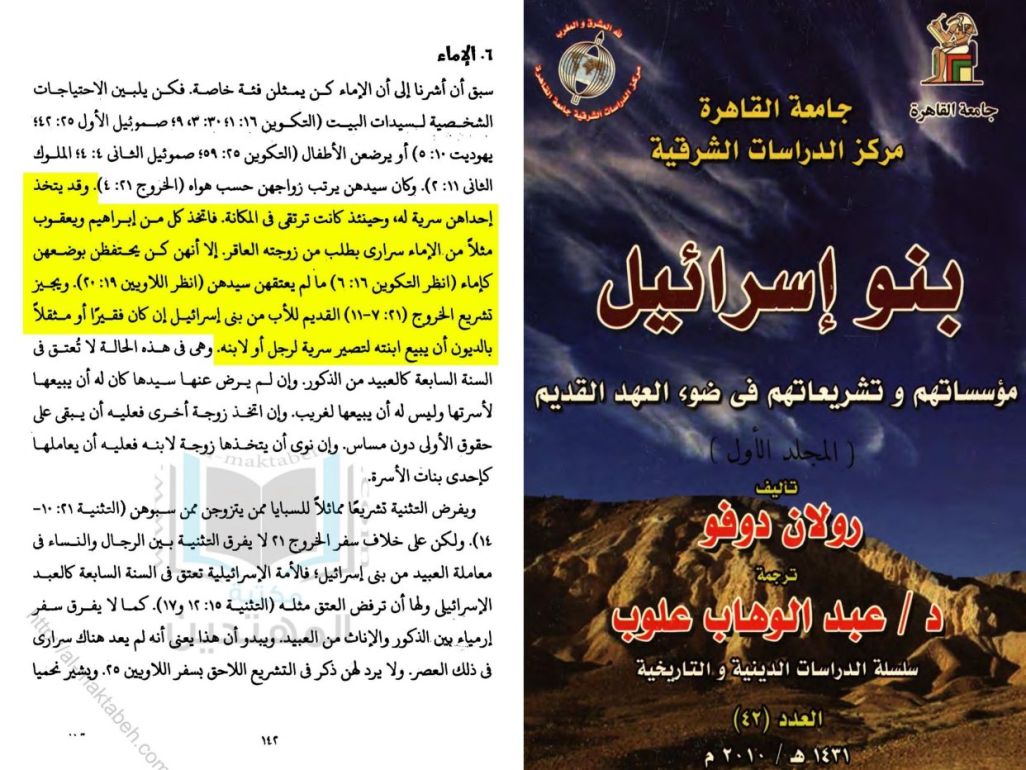
For your info: This scan states that female slaves could be given as concubines, as in the cases connected to Abraham and Jacob. It also notes that such women remained slaves unless they were freed. This is a crucial detail because it refutes the attempt to sanitize biblical concubinage into ordinary marriage. The woman’s status could remain servile even while she was used in a concubinage arrangement.
Father Antonius Fikry mentions that polygamy was widespread in the Old Testament.
The husband had the right to take a concubine, but the concubine did not have the same status or rights as the wife, and the man had the right to have intercourse with his concubine.
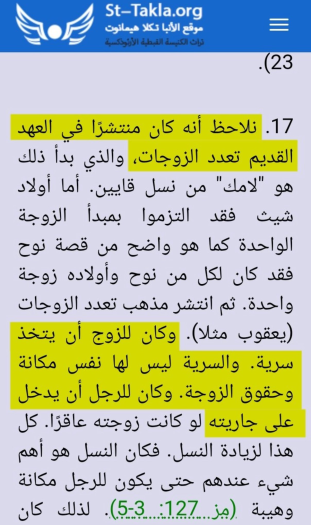
For your info: This scan explains that polygamy and concubinage existed in the Old Testament world and that the concubine had a lower status than the wife. It also states that the man had marital access to the concubine. This scan is central because it shows that Christian commentators themselves acknowledge the sexual and legal reality of concubinage in the Bible.
Concubinage in the Torah and Biblical Law
It contains laws and social arrangements in which slave women, captive women, and concubines are treated as part of the legal order.
This is the real problem for the Christian polemicist.
If he attacks Islam merely because it historically regulated slavery or concubinage, then he has attacked his own Bible first.
Captivity Through War
Legal Sources of Captivity: War
The Book of Deuteronomy commands the destruction of resisting nearby cities, leaving no survivors.
Distant cities are offered surrender.
If they accept, all are enslaved.
If they resist, the men are killed, and women and children are taken as spoils.
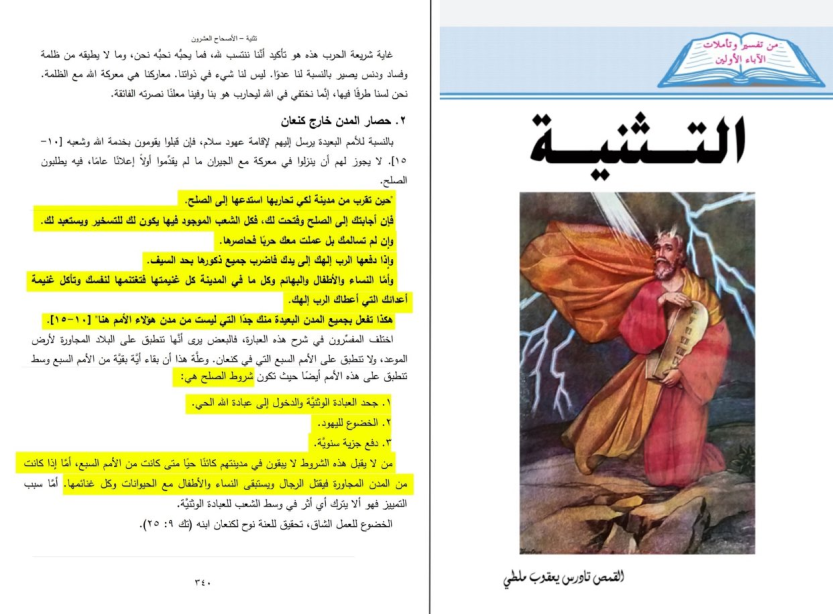
For your info: This scan introduces the biblical laws of war captivity. It shows that the Bible distinguishes between nearby and distant cities and gives instructions for what happens when a city accepts surrender or resists. The key point is that enslavement is presented as part of the war outcome, not merely as a later human abuse outside scripture.
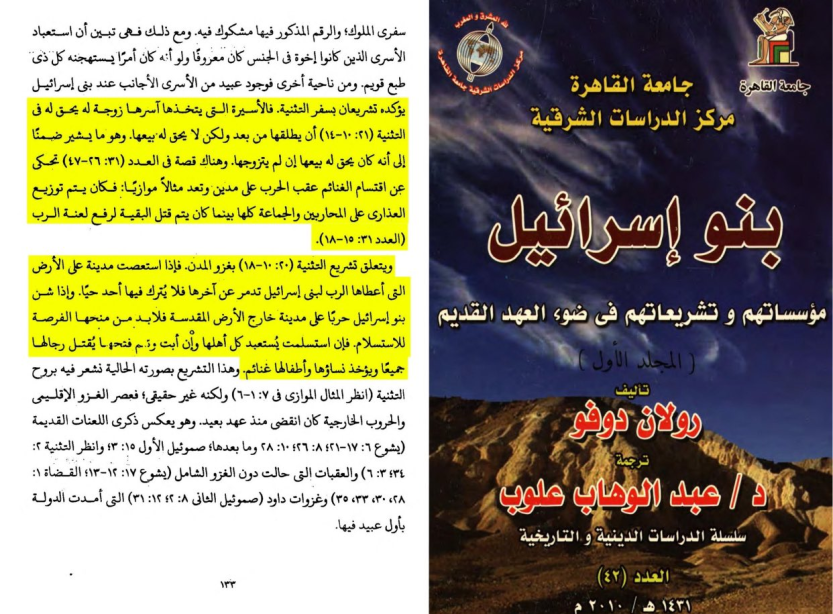
For your info: This scan continues the discussion of Deuteronomic warfare. The argument supported here is that biblical war law allows conquest, killing of male combatants, and the taking of women, children, and property as spoils. This is a direct counter to claims that the Bible contains no system of captivity or enslavement connected to holy war.
Women and Children as Spoils of War
Women were divided as battle spoils, with each man receiving one or two.
“Have they not found and divided the spoil? To every man a girl or two?”
After the Midianite campaign:
- Numbers 31:13
- Numbers 31:18
- Numbers 31:27
The virgins were split between warriors and the people.
A captive woman remained a slave unless taken as a wife.
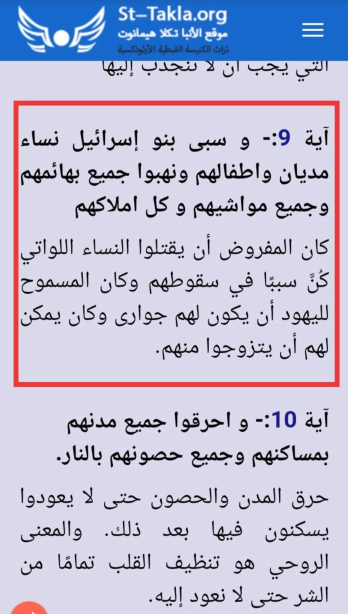
For your info: This scan discusses women as part of war spoils in biblical texts. It points to the idea that captured women were counted among the spoils distributed after battle. This matters because the objection often raised against Islam is that war captivity existed; this scan shows that the same issue exists explicitly in the Bible.
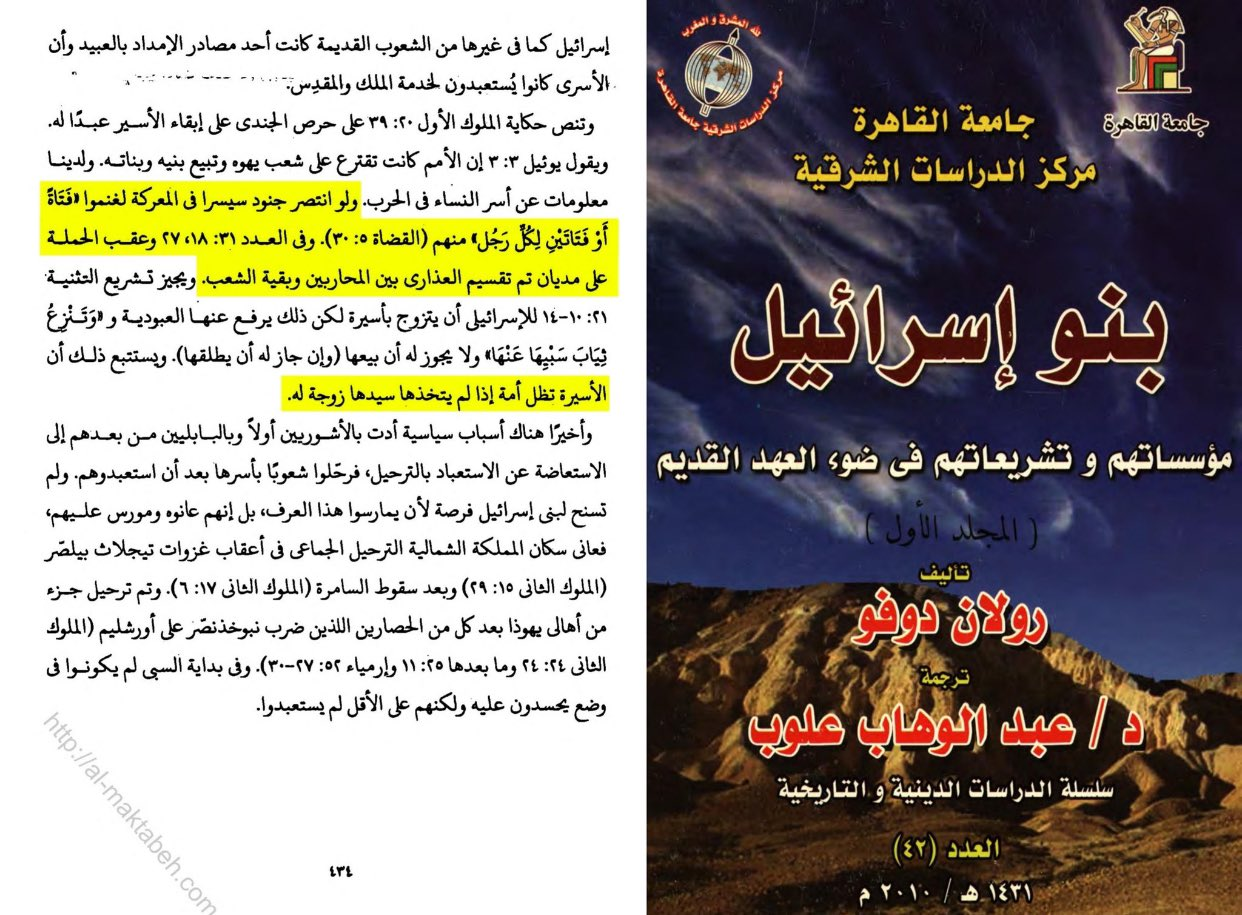
For your info: This scan continues the discussion of Numbers 31 and the division of captured women. The key point is that the captives were not merely released immediately; they were divided between the warriors and the wider community. This strengthens the article’s claim that biblical law contains a formal system for distributing war captives.
The Captive Woman in Deuteronomy
If one of the captives pleases a warrior, he has the right to take her as a wife.
Before that, he must wait for her for a month.
She must shave her head, cut her nails, and mourn her father and mother for a month.
After that, he may consummate the marriage with her.
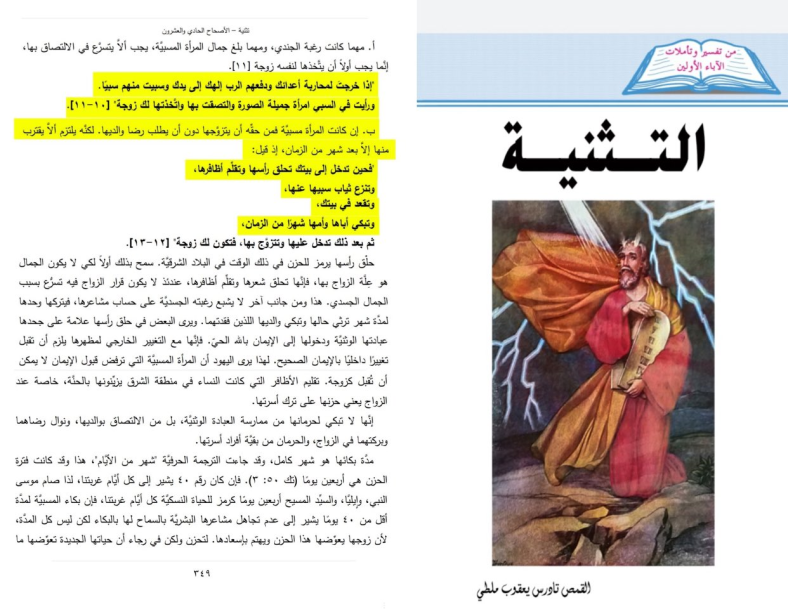
For your info: This scan discusses the captive woman in Deuteronomy 21. It explains the procedure given for a warrior who desires a captive woman: she is brought into his house, given a mourning period, and then becomes his wife. The scan is important because it shows that the Bible regulates sexual access to captive women after war.
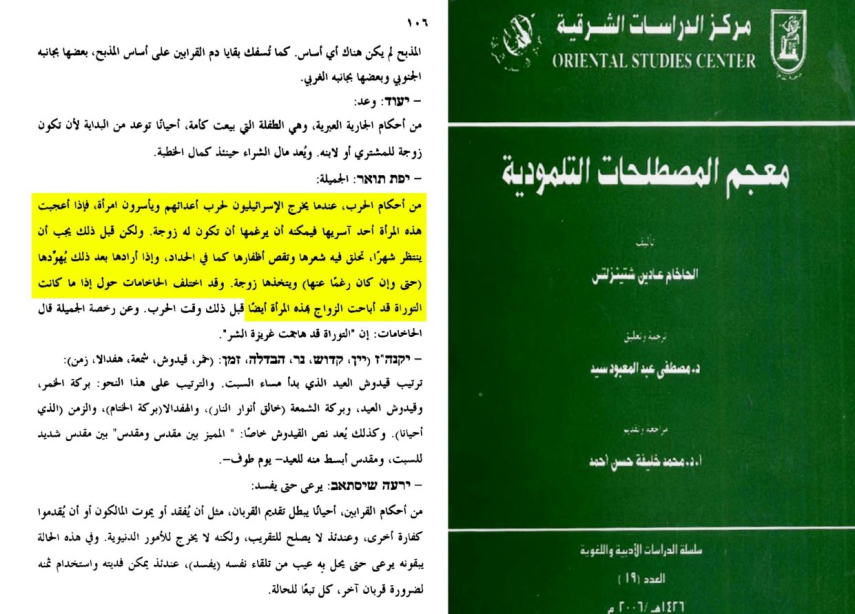
For your info: This scan continues the explanation of Deuteronomy’s law concerning captive women. The relevant point is that the woman’s entry into the household follows from military captivity. This is not a romantic modern marriage scenario; it is a legal arrangement created after conquest.
Concubinage in Christian Legal Sources
It is mentioned in the book The Legal Summary of Personal Status by Hegumen Philotheos:
Marriage of free men to their believing slaves.
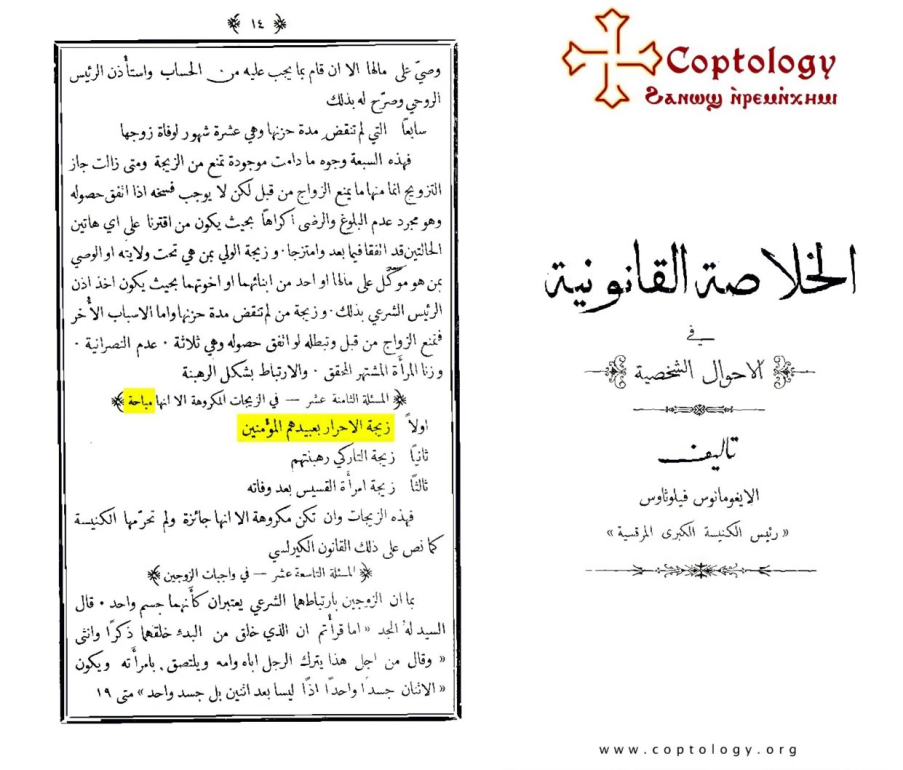
For your info: This scan is from a Christian personal-status legal source. It mentions marriage between free men and their believing slave women as a disliked but permissible type of marriage. The importance of this page is that the discussion is not only ancient biblical narrative; later Christian legal literature also dealt with slave women as a recognized legal category.
In the book The Coptic Laws of Hippolytus by Father Athanasius Al-Maqari:
A Christian who has a concubine — a slave — and has given birth to a child from her may not marry another woman except if she has committed adultery.
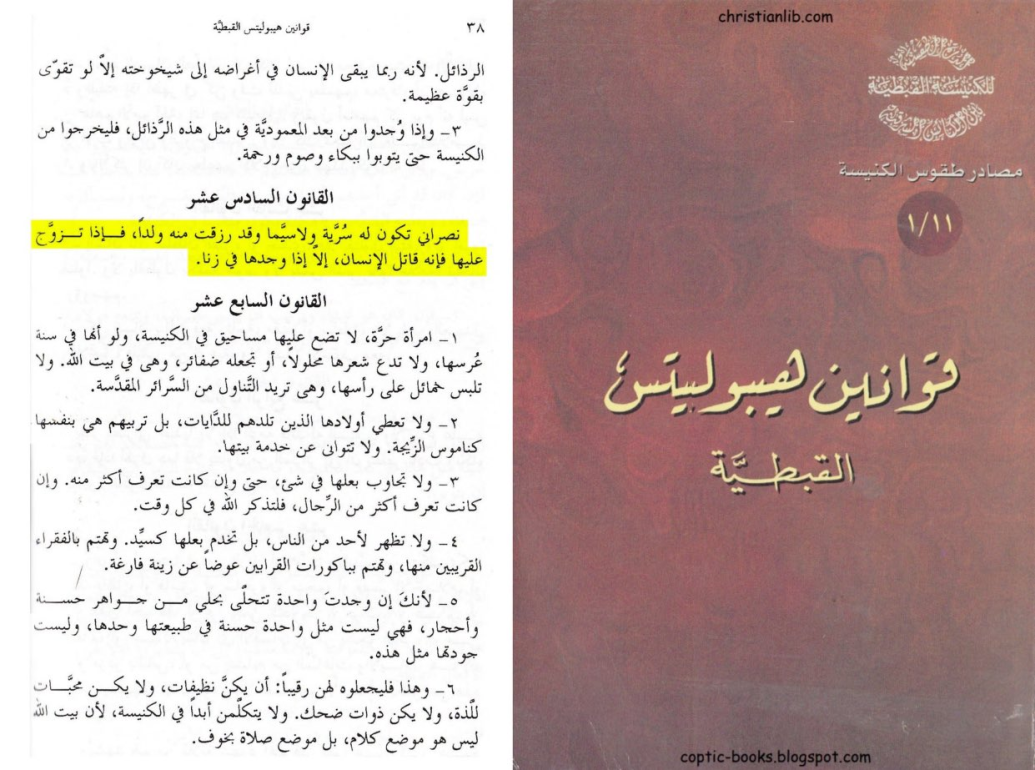
For your info: This scan from the Coptic Laws of Hippolytus discusses a Christian man who has a concubine or slave woman and has a child from her. The ruling treats that relationship as having legal consequences, including restricting his ability to marry another woman unless adultery occurs. This proves that concubinage was not simply dismissed as irrelevant or impossible in Christian legal memory.
Father John Lorimer, in his book Church History, states that taking a concubine or slave was normal among Christians.
In 400 AD, a Spanish synod ruled that if a man remained faithful to his concubine as to a wife, their relationship did not prevent them from receiving the sacrament.
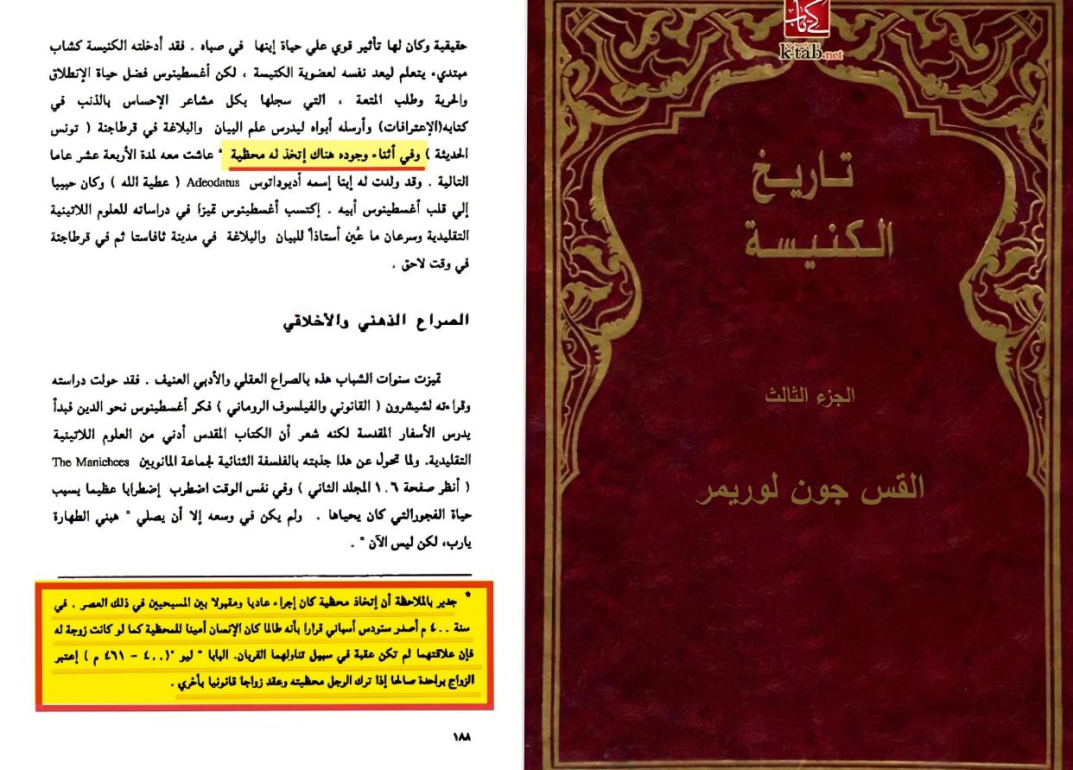
For your info: This scan states that concubinage or slave-concubinage was known among Christians and that a Spanish synod allowed such a man to receive the sacrament if he remained faithful to the concubine as to a wife. This is significant because it shows church-level accommodation of concubinage rather than a simple universal condemnation.
Captivity Through Kidnapping
Sometimes captivity is by kidnapping.
“Go and lie in wait in the vineyards and watch. When the daughters of Shiloh come out to dance, then come out of the vineyards and catch each of you a wife from the daughters of Shiloh and go to the land of Benjamin.”
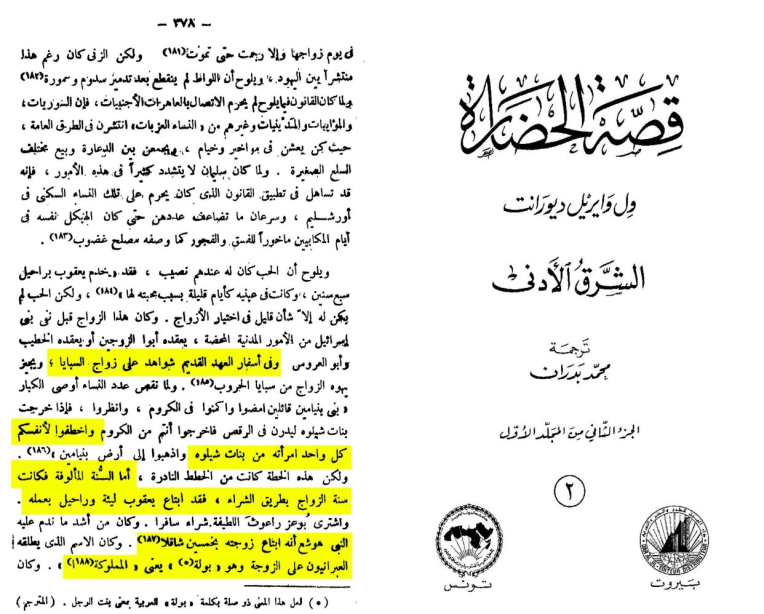
For your info: This scan presents Judges 21, where men are instructed to lie in wait and seize women from Shiloh as wives. The argument here is that the Bible contains a narrative in which women are taken through seizure, not through ordinary consent-based marriage. This is used as a counterexample to Christian polemics that act as if biblical marriage law is morally simple and free from such issues.
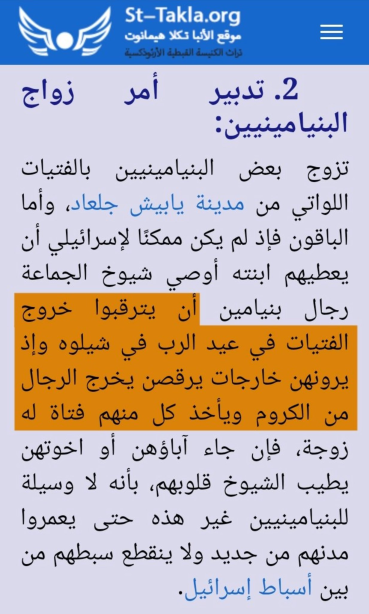
For your info: This scan continues the Judges 21 passage and its explanation. It reinforces that the daughters of Shiloh were taken in a situation of tribal crisis and used to provide wives. This matters because it shows that biblical narratives themselves include seizure of women as a solution to social and tribal problems.
Selling Daughters as Slaves
The Bible allows a man to sell his daughter as a slave.
“If a man sells his daughter as a slave, she shall not go out as the slaves go out.”
Girls sold as slaves to become concubines to their master or his son are not freed like other slaves, similar to captives in Deuteronomy 21:10–14.
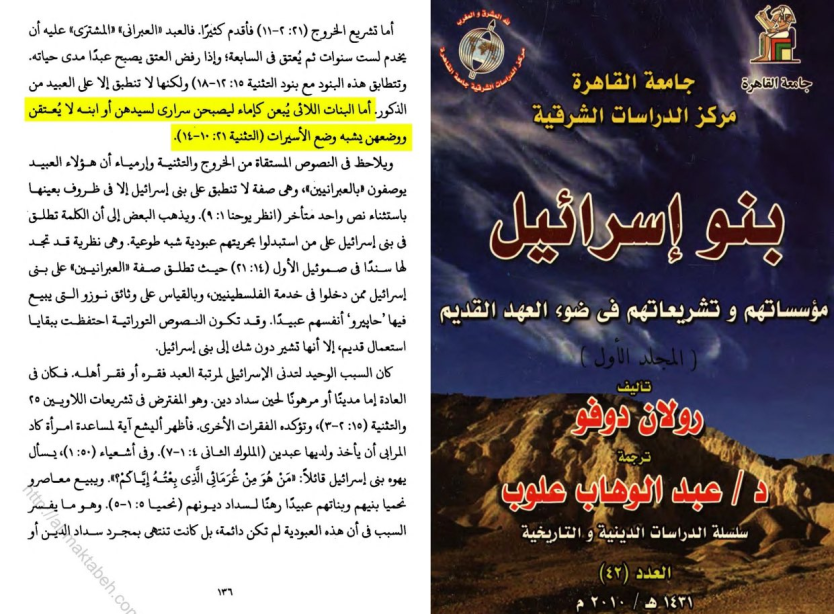
For your info: This scan discusses Exodus 21:7, where a father sells his daughter as a slave. The key point is that this female slave does not go out like male slaves, because her case is connected to marriage or concubinage with the master or his son. This is one of the strongest biblical texts showing the legal sale of a girl into a household arrangement involving sexual or marital expectations.
The captivity of women and children and the taking of spoils is presented as a divine reward in biblical war literature, with spoils distributed among the warriors and the people.
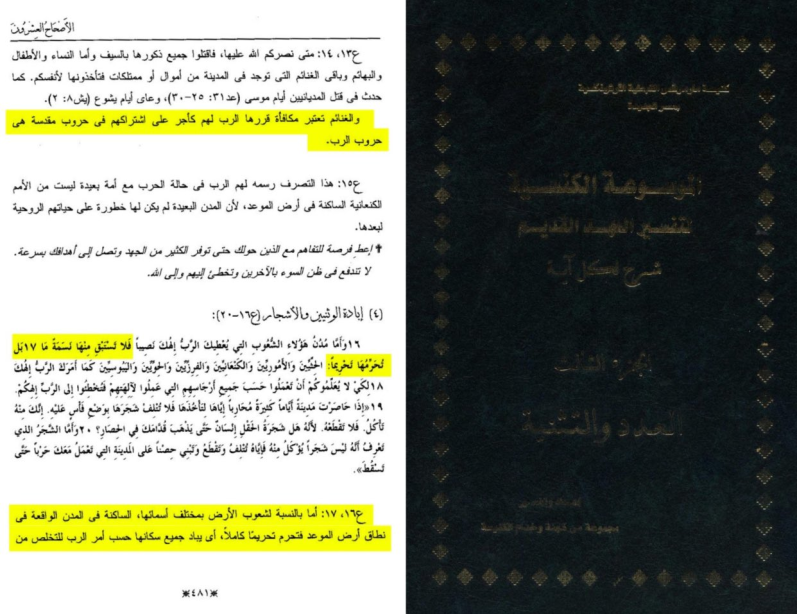
For your info: This scan discusses the taking of captives and spoils as part of biblical warfare. It frames the spoils as something granted after victory. This scan supports the argument that biblical war law includes property, captives, and distribution as part of the divinely regulated aftermath of war.
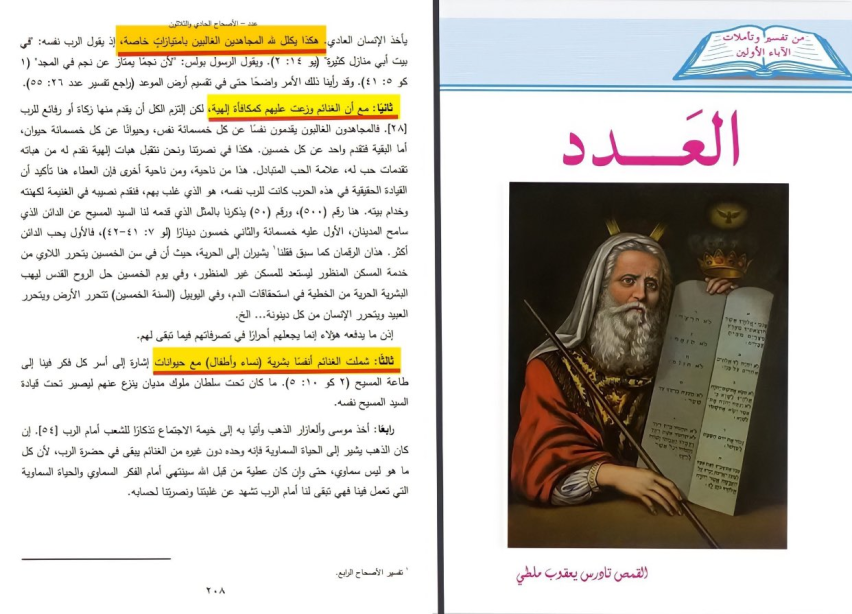
For your info: This scan continues the discussion of biblical spoils and captives. The relevant point is that the biblical framework does not merely mention spoils in passing; it contains laws and examples where captives, women, children, animals, and goods are counted and distributed. This is central to exposing the double standard of attacking Islamic law while ignoring biblical law.
Examples of the Law of Concubinage in the Bible

For your info: This scan introduces examples of concubinage in the Bible. It functions as a reference page collecting biblical cases where concubines appear as part of family, inheritance, or sexual arrangements. The scan helps transition from general legal principles to concrete biblical examples.
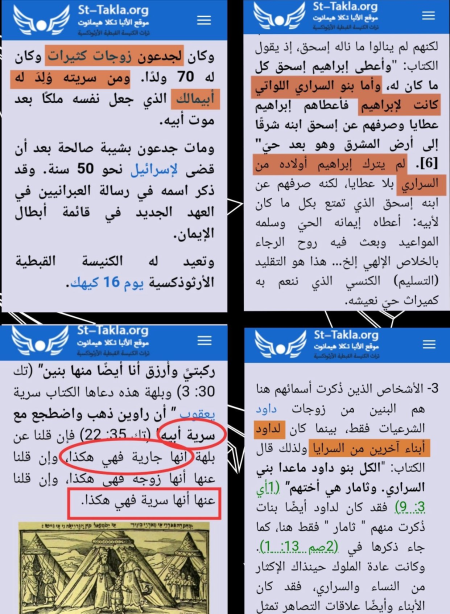
For your info: This scan continues listing biblical examples of concubinage. The important point is cumulative: concubinage is not a rare accidental detail in the Bible. It appears repeatedly across patriarchal, royal, and legal contexts, making it impossible to claim that the Bible has no relationship to concubinage.
Christianity and the Obedience of Slaves
The Church Fathers approved of slavery, seeing it as a result of human corruption.
Saint Thomas believed the weak were destined by nature to serve the strong.
Paul commanded slaves to obey their masters with fear and trembling, as they obey God.
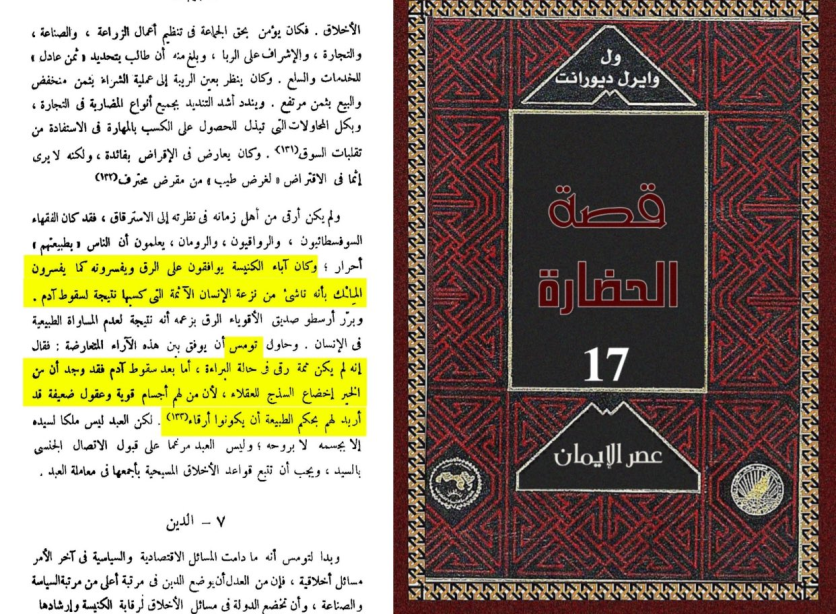
For your info: This scan discusses Christian theological acceptance of slavery, especially through the idea that slavery resulted from sin and human corruption. It also mentions New Testament commands for slaves to obey their masters. The scan is important because it moves the argument from Old Testament law into Christian reception and interpretation.
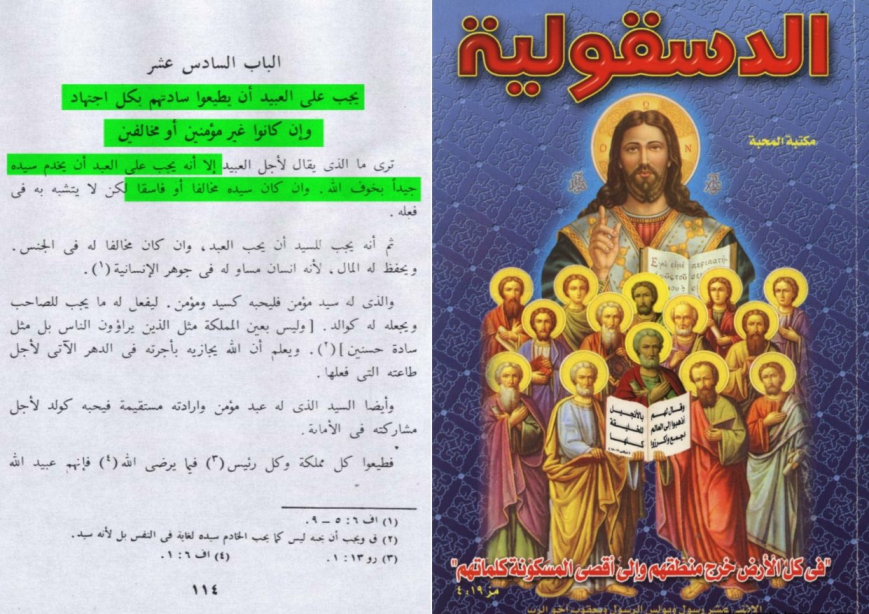
It was mentioned in the Encyclopedia Al-Dasqulia:
A slave must serve his master well with the fear of God even if his master is disobedient or immoral.
The Law of Slavery in Leviticus
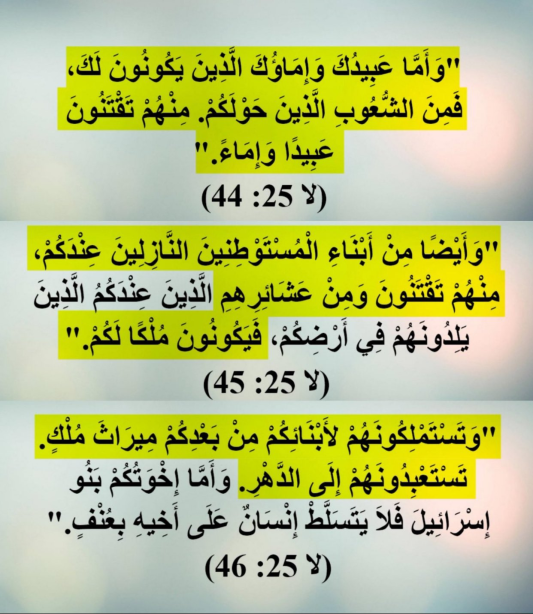
For your info: This scan introduces the slavery law in Leviticus. It points to the biblical distinction between Israelite brothers and foreign slaves. This is significant because Leviticus allows the acquisition of male and female slaves from surrounding nations and treats them as inheritable property.
For your info: This scan continues the Leviticus slavery law. The core point is that foreign slaves could be acquired, possessed, and passed down as inheritance to children. This is one of the clearest biblical legal endorsements of permanent slave ownership.
In the Didache, which early fathers included in the New Testament:
“But you, servants, submit to your masters, as to the Lord, with reverence and fear.”
Here, slaves are commanded to submit to their masters with the same reverence and fear as to God.
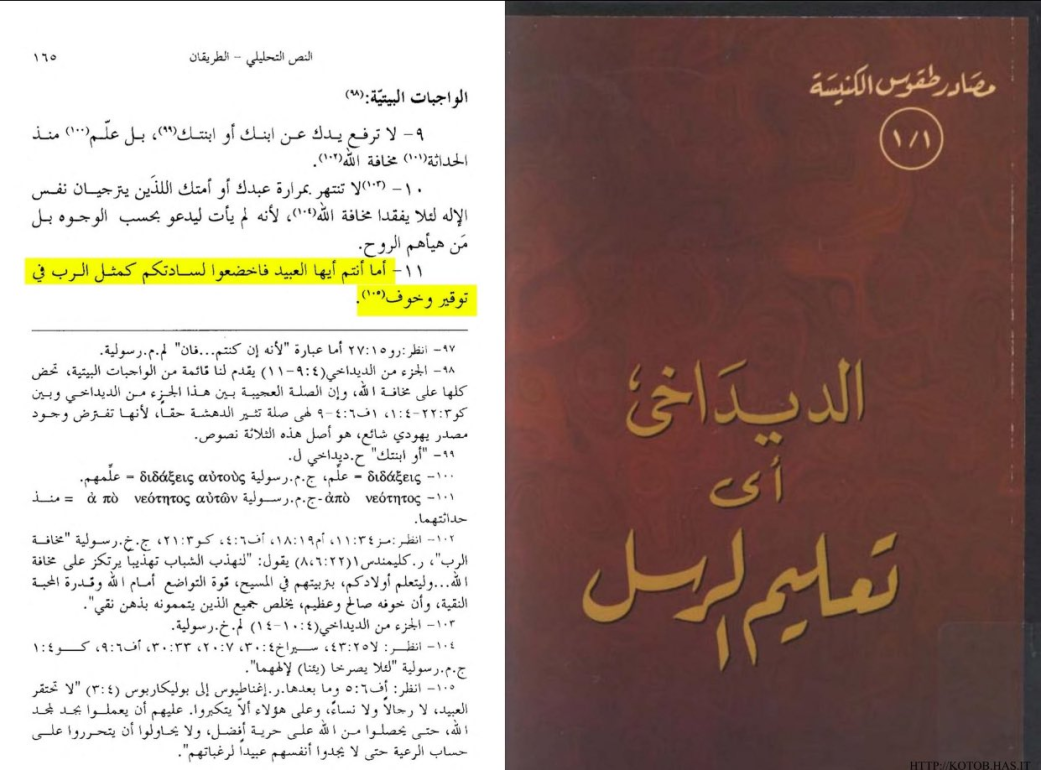
For your info: This scan discusses the Didache and its instruction to servants or slaves to submit to masters as to the Lord, with fear and reverence. The point is that early Christian literature did not simply command abolition. It often taught obedience within the slave system.
The Bible Dictionary notes that Christianity accepted slavery, urging slaves to obey masters:
- 1 Corinthians 7:21
- Ephesians 6:5–8
- Colossians 3:22–25
- 1 Timothy 6:1–2
- 1 Peter 2:18–21
It also worked to return runaway slaves:
- Philemon 10–16
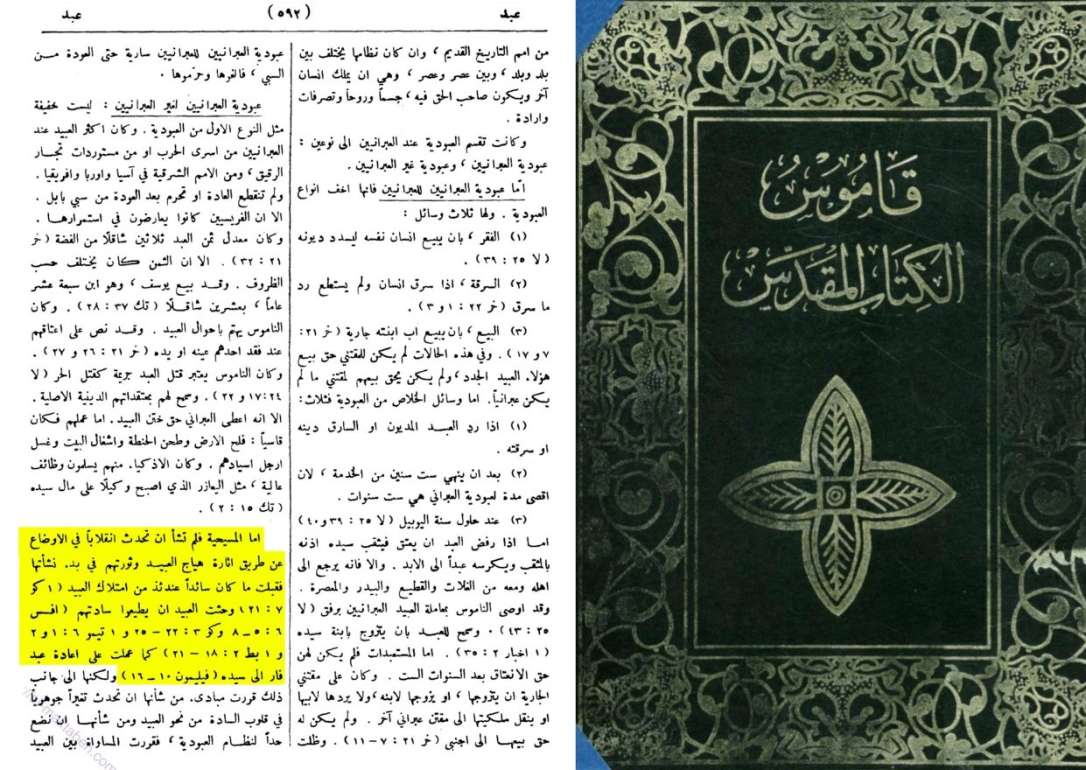
For your info: This scan states that Christianity accepted slavery as a social reality and instructed slaves to obey their masters. It cites several New Testament passages and also mentions Philemon, where a runaway slave is returned. This scan is essential because it shows that the New Testament does not abolish slavery; it regulates behavior within it.
The Church Fathers believed that slavery was inevitable due to sin and a corrupt nature.
Early fathers such as Saint Augustine, John Chrysostom, Ambrose, and Gelasius I established and approved laws and legislation for slaves based on religion and reality.
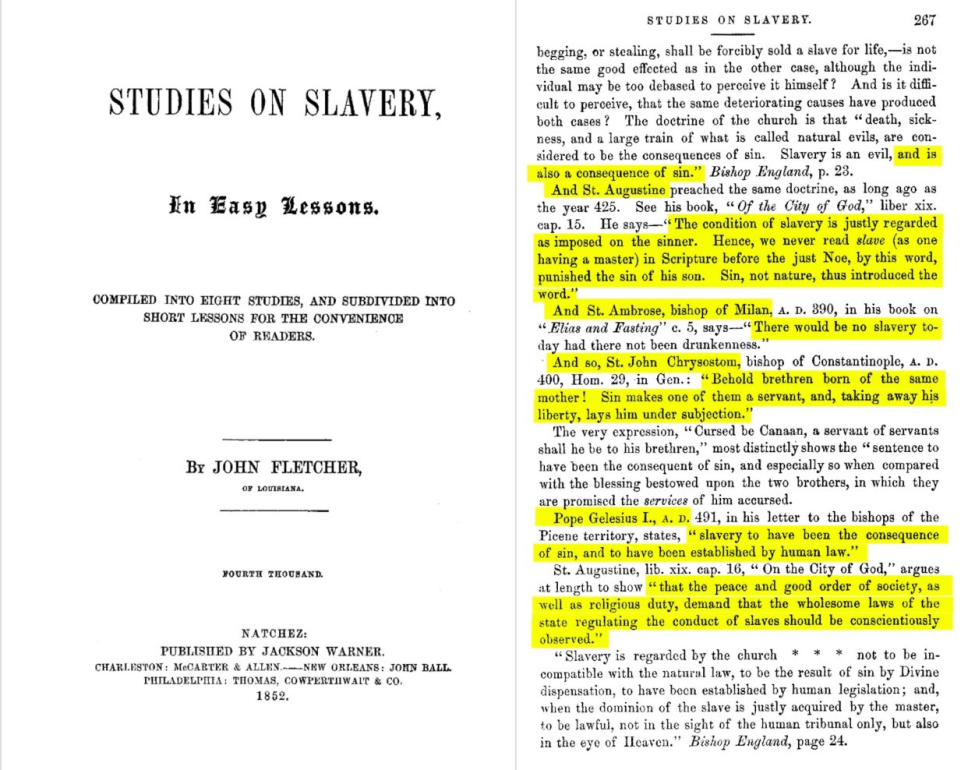
For your info: This scan discusses the Church Fathers and their treatment of slavery as an inevitable result of sin or corrupted human nature. It names major figures such as Augustine, Chrysostom, Ambrose, and Gelasius. The page supports the argument that Christian tradition did not uniformly reject slavery; many influential theologians accepted or regulated it.
The Law of Spoils in the Bible
The God of the Bible commanded the division of the spoils and laid down a complete law in the Bible for the distribution of spoils among warriors and the people, including the share of soldiers and the share of the people.
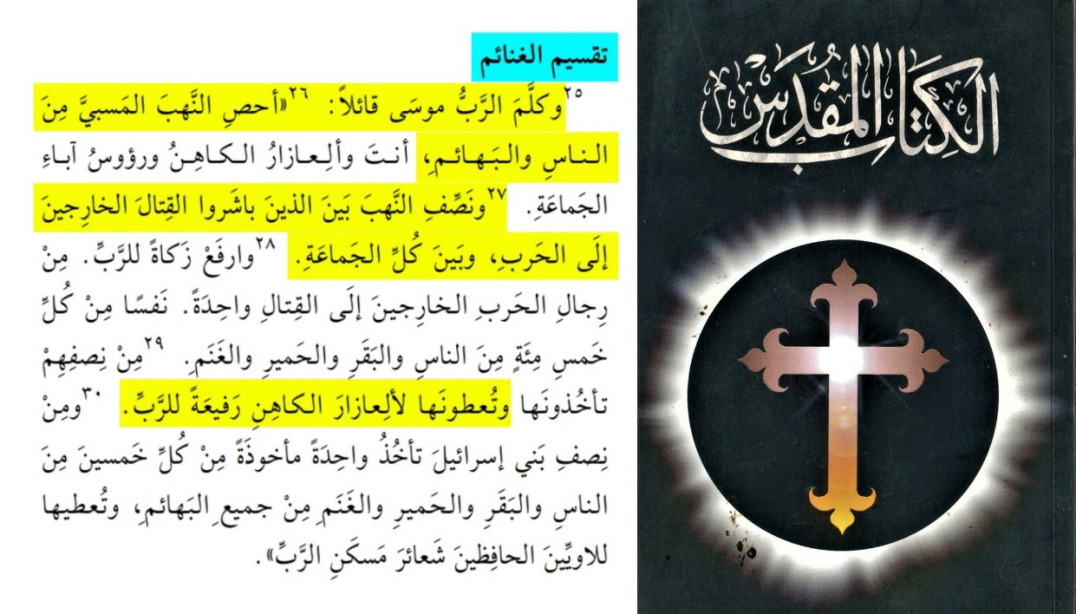
For your info: This scan introduces the biblical law of spoils. It discusses the division of captured property and people after battle. The importance of this scan is that it shows the Bible does not merely record spoils as an accidental historical event; it contains instructions for how they are to be divided.
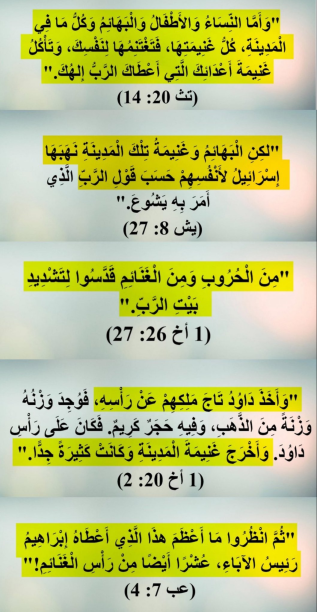
For your info: This scan continues the biblical law of spoil distribution. It supports the point that the captured goods and captives were divided between different groups, including warriors and the wider community. This is part of the article’s argument that biblical holy war includes formalized captivity and distribution.
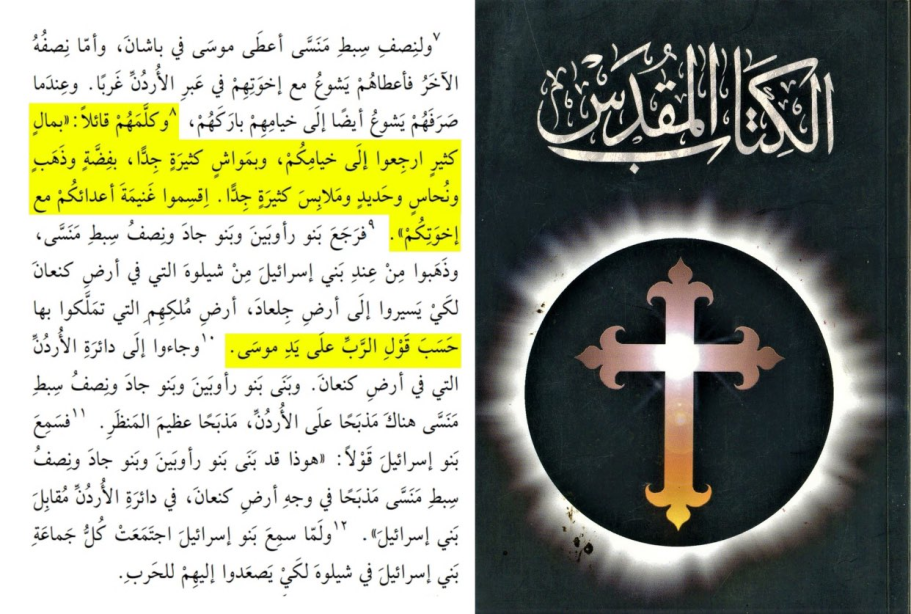
For your info: This scan adds further evidence on the division of spoils. The cumulative argument is that the biblical system included captives, goods, animals, and women within the spoils of war. It strengthens the response to anyone pretending that such ideas are uniquely Islamic.
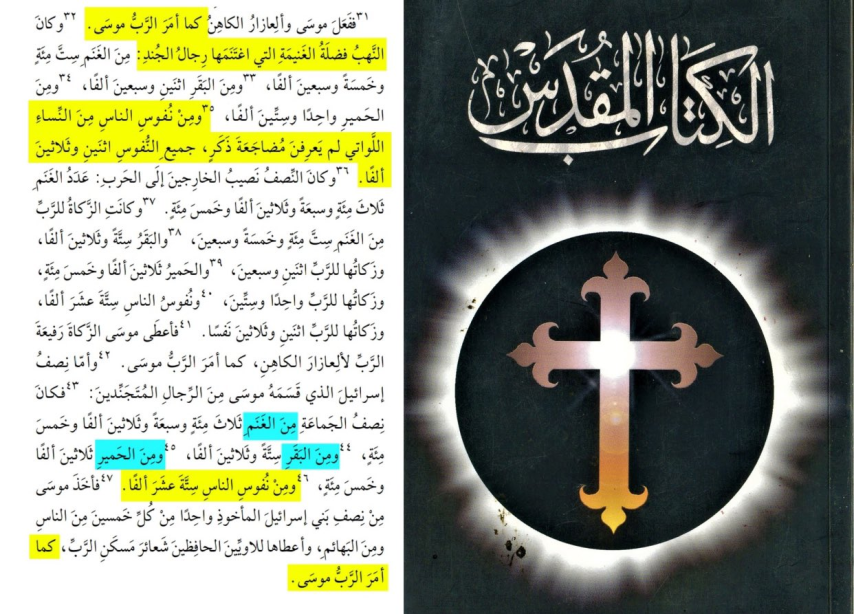
For your info: This scan continues the same discussion. It reinforces that biblical spoils were treated with legal precision, including distribution shares. This matters because a structured distribution system means the practice was not merely tolerated chaos; it was regulated as part of biblical war law.
The army seized people and goods as spoils.
Deuteronomy says all captured spoils belonged to the Lord’s soldiers:
“And you shall eat the spoil of your enemies which the Lord your God has given you.”
Moses ordered an equal split between warriors and the people.
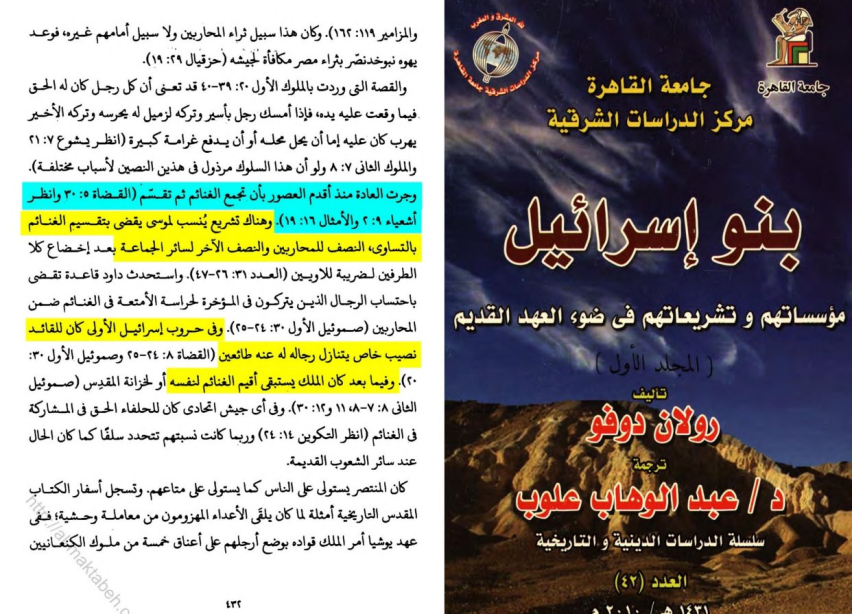
For your info: This scan discusses Deuteronomy’s statement about consuming the spoil of enemies that God gives. The page is used to show that the Bible presents spoils as something divinely granted after warfare. This includes the broader context of property and captives taken from defeated enemies.
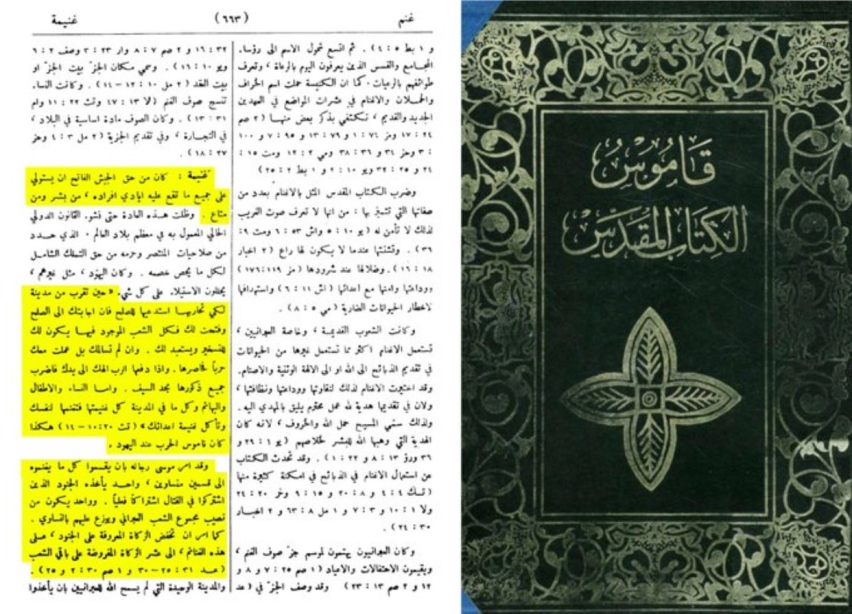
For your info: This scan continues the discussion of Moses ordering the division of spoils. It supports the claim that biblical law distributed captured goods and captives between soldiers and the people. The point is direct: the Bible has its own laws of war spoils.
Was Marrying Concubines and Having Children With Them Permitted in Biblical Law?
The Orthodox Church Encyclopedia answers:
Sarai gave Hagar her handmaid to her husband, and it was permitted at this time of polygamy and concubinage.
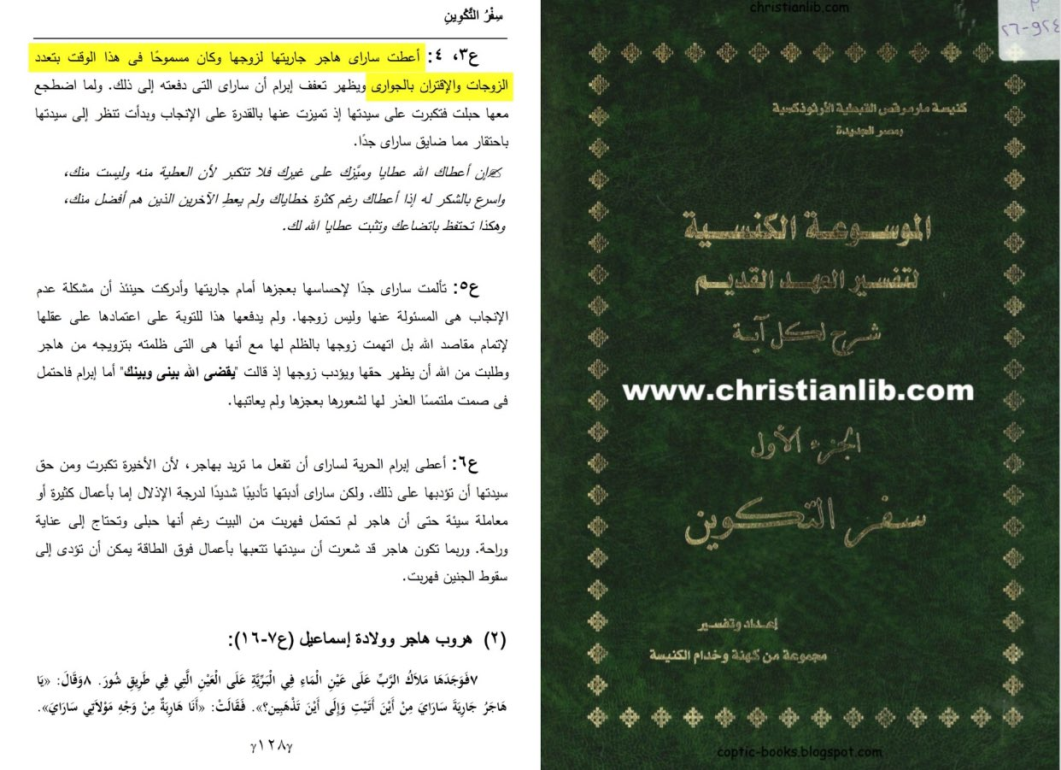
For your info: This scan from an Orthodox Christian source discusses Sarah giving Hagar to Abraham and explains that polygamy and concubinage were permitted at that time. The scan is important because it is not an Islamic claim imposed on the Bible; it is a Christian explanation acknowledging biblical concubinage.
Augustine, Aquinas, and Slavery as a Result of Sin
Is slavery moral in Christianity?
Saint Augustine says yes — it is just because the victor can enslave the defeated.
Why?
He says it is due to original sin.
So Christian law kept slavery, while merely easing some of its harshness.
All because Adam ate from a tree?
Think about that.
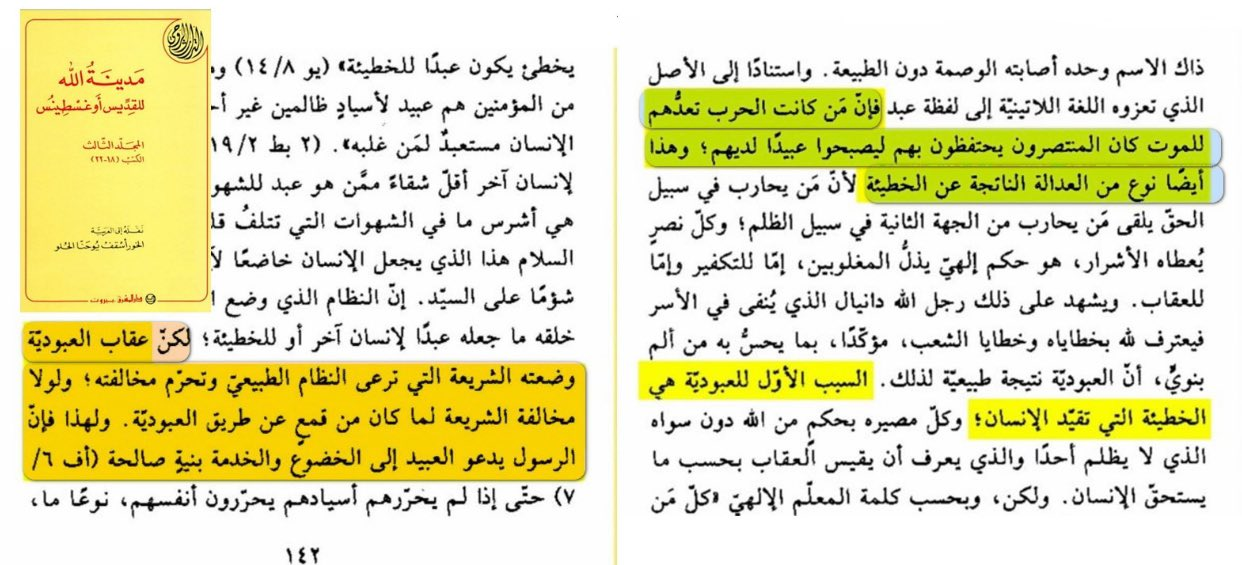
For your info: This scan discusses Saint Augustine’s view of slavery. It presents slavery as connected to sin, conquest, and the right of victors over the defeated. The scan is used to show that one of Christianity’s most influential theologians did not treat slavery as inherently impossible under Christian thought; he explained it through the doctrine of sin and social punishment.
The following claims are then presented:
- Saint Nilus: The slave who neglects his master’s work should prepare himself to be flogged.
- Saint Augustine: Whoever disobeys the order and declares himself an enemy of domestic peace should be reprimanded and physically punished, and every just and legitimate punishment should be used against him.
- The Didascalia about the son: an anonymous quote on the tongue of Solomon says to break his sides as long as he does not disobey and please you.
- An anonymous quote attributed by Saint Augustine to the Holy Bible.
The Islamic Contrast
The Prophet Muhammad, may God bless him and grant him peace, said:
I came to Ibn Umar and he had freed a slave.
He said: So he took a stick or something from the ground and said:
“There is no reward in it that is worth this, except that I heard the Messenger of God, may God bless him and grant him peace, say:
Whoever slaps his slave, or hits him, then his expiation is to free him.”
Narrated by Abdullah ibn Umar
Sahih Muslim 1657
Authentic
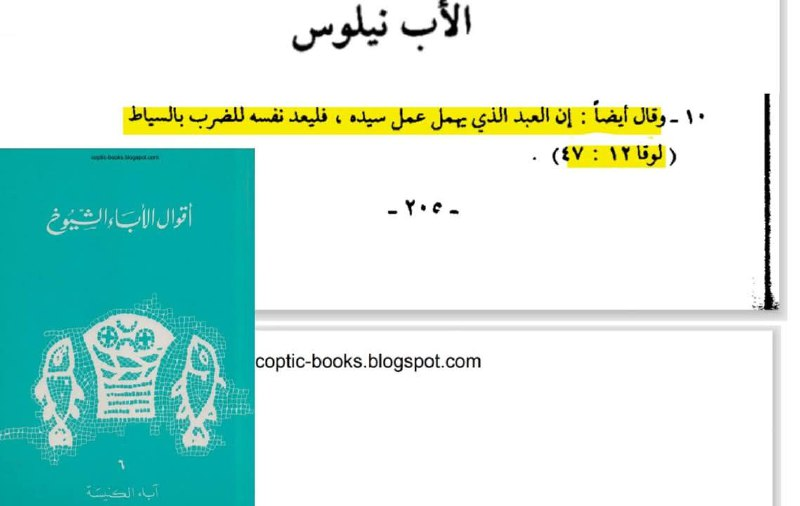
For your info: This scan contrasts Christian statements about disciplining slaves with the Islamic narration in Sahih Muslim that expiation for striking or slapping a slave is to free him. The point is that Islam built manumission into the response to mistreatment, while many Christian texts focused on obedience and discipline within slavery.
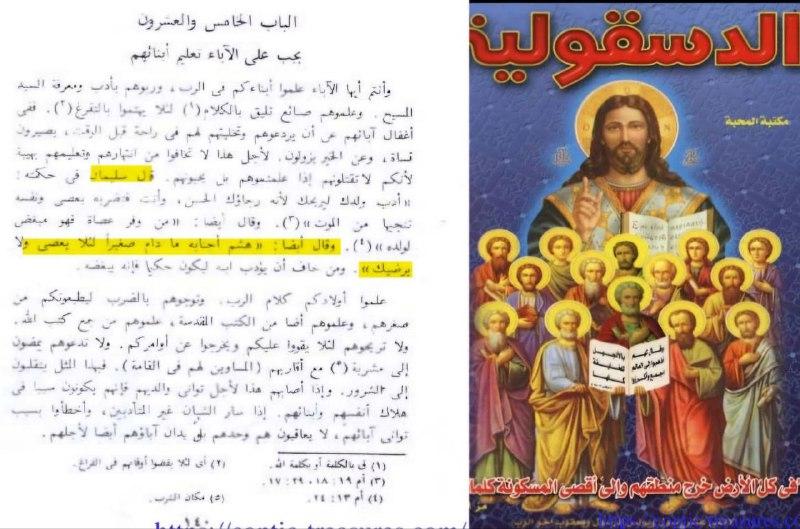
For your info: This scan continues the comparison between Christian treatments of slavery and Islamic manumission ethics. It supports the argument that Islamic law created multiple paths to freeing slaves and attached religious reward or expiation to emancipation.
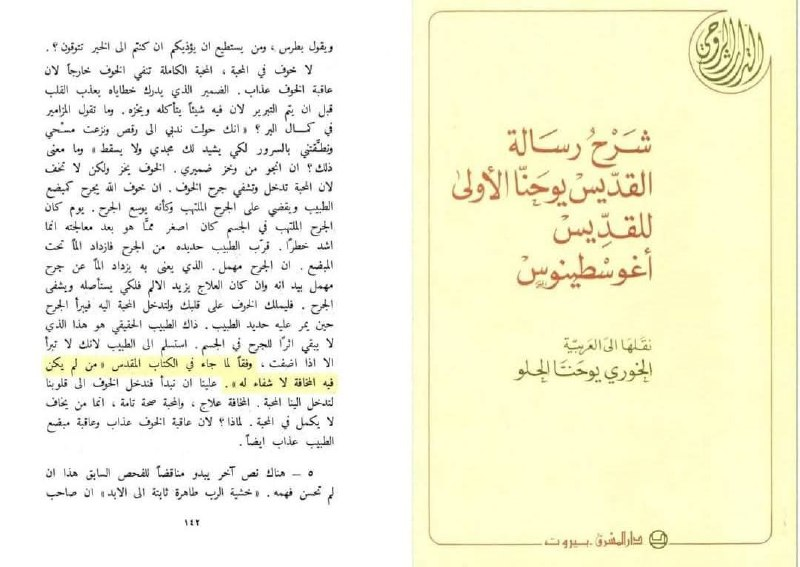
For your info: This scan further supports the contrast between systems that normalize slave obedience and Islamic reports encouraging emancipation, especially when a slave is wronged. It belongs in the article as evidence that the Islamic moral trajectory cannot be reduced to the same framework as biblical slave inheritance and Christian slave obedience.
Saint Isidore, Bishop of Seville, was one of the great Fathers who defended the system of slavery.
He not only considered slavery legitimate and necessary, but also advised slaves not to seek freedom, even if their masters wanted to free them.
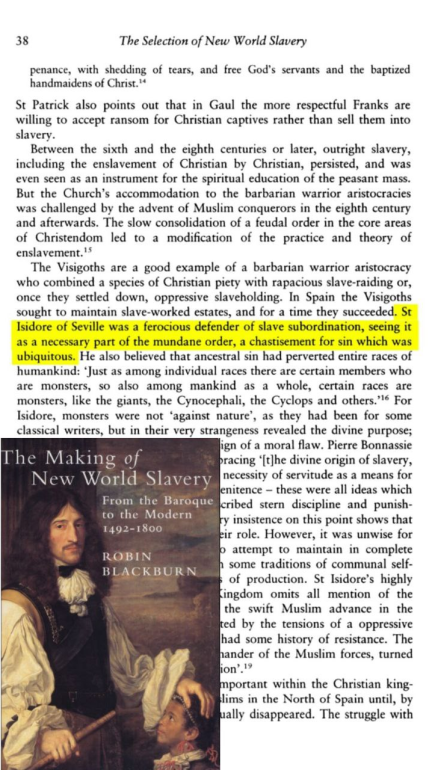
For your info: This scan discusses Saint Isidore of Seville and his defense of slavery. It states that he saw slavery as legitimate and necessary and even advised slaves not to seek freedom. This is a devastating citation against the idea that Christian tradition was always abolitionist or morally opposed to slavery.
All the Church Fathers accepted the system of slavery and considered it legitimate and necessary in the hierarchy of society, supporting their words with biblical texts that supported the system of slavery.
Slavery was considered a necessary consequence of sin.
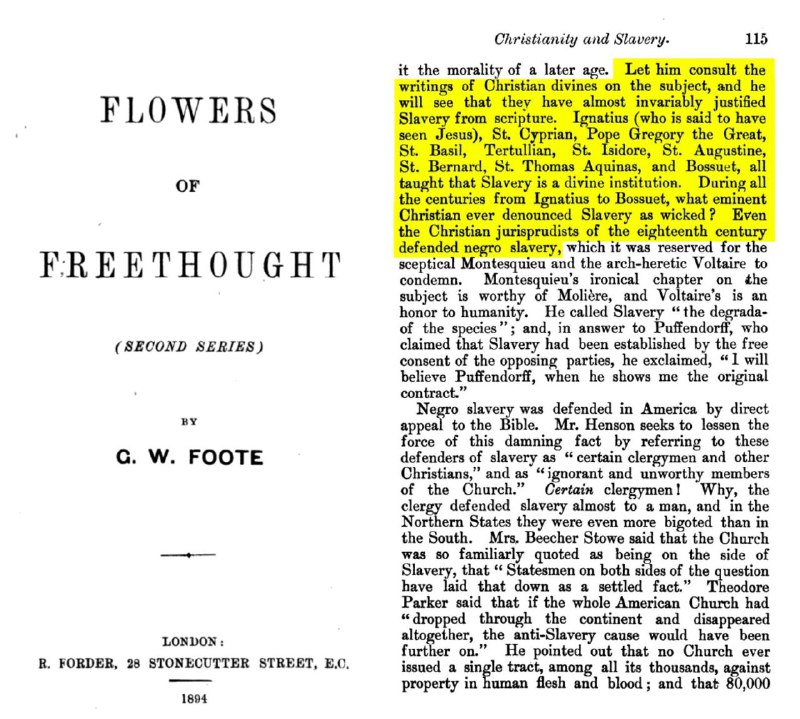
For your info: This scan gives a broad summary of the Church Fathers’ acceptance of slavery. It argues that slavery was treated as legitimate, necessary, and rooted in the consequences of sin. The significance is that the problem is not just a few isolated biblical verses; it extends into Christian theological tradition.
Christian Colonial Slavery
The Church, especially in South America, backed the enslavement of locals and the theft of their lands.
In 1493, a papal decree justified war on anyone refusing to convert.
Orthodox Christians defended slavery as divine law, citing biblical texts.
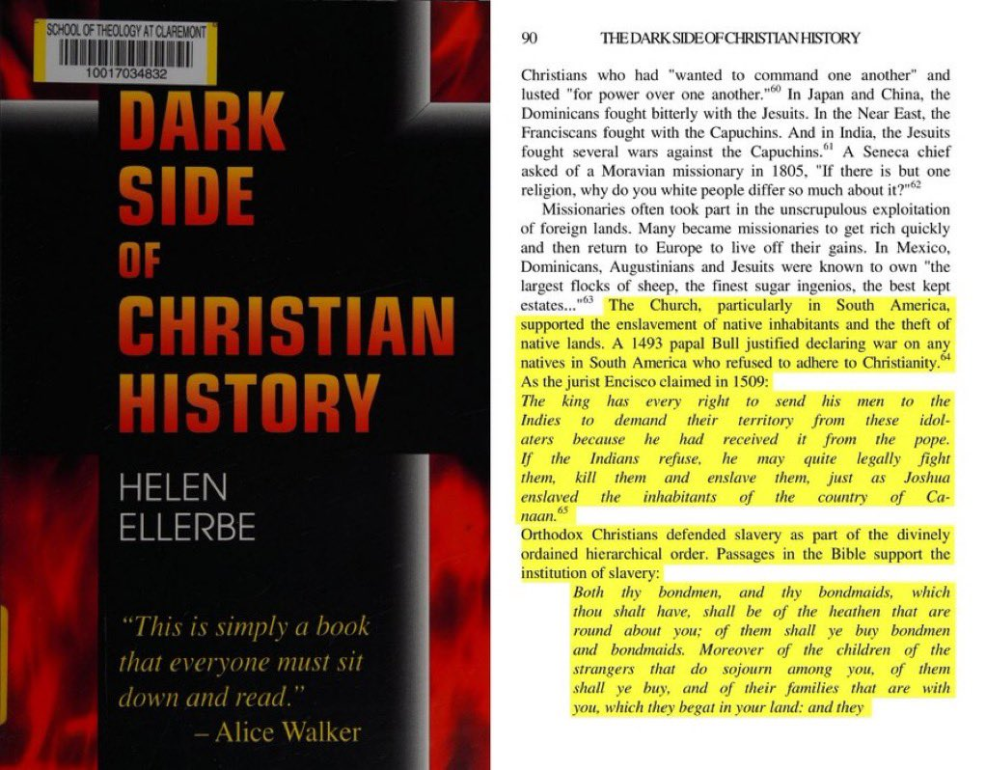
For your info: This scan discusses Christian involvement in colonial enslavement, especially in South America. It mentions papal authorization, war against those who refused conversion, and Christian defenses of slavery through biblical texts. The scan is used to show that Christian support for slavery was not merely theoretical; it had historical and colonial consequences.
It is possible for children to be tortured if they are not baptized.
Saint Anselm believes that the suffering of unbaptized children in hell does not violate reason, just as the imposition of slavery on the children of slaves is not considered a violation of reason and logic.
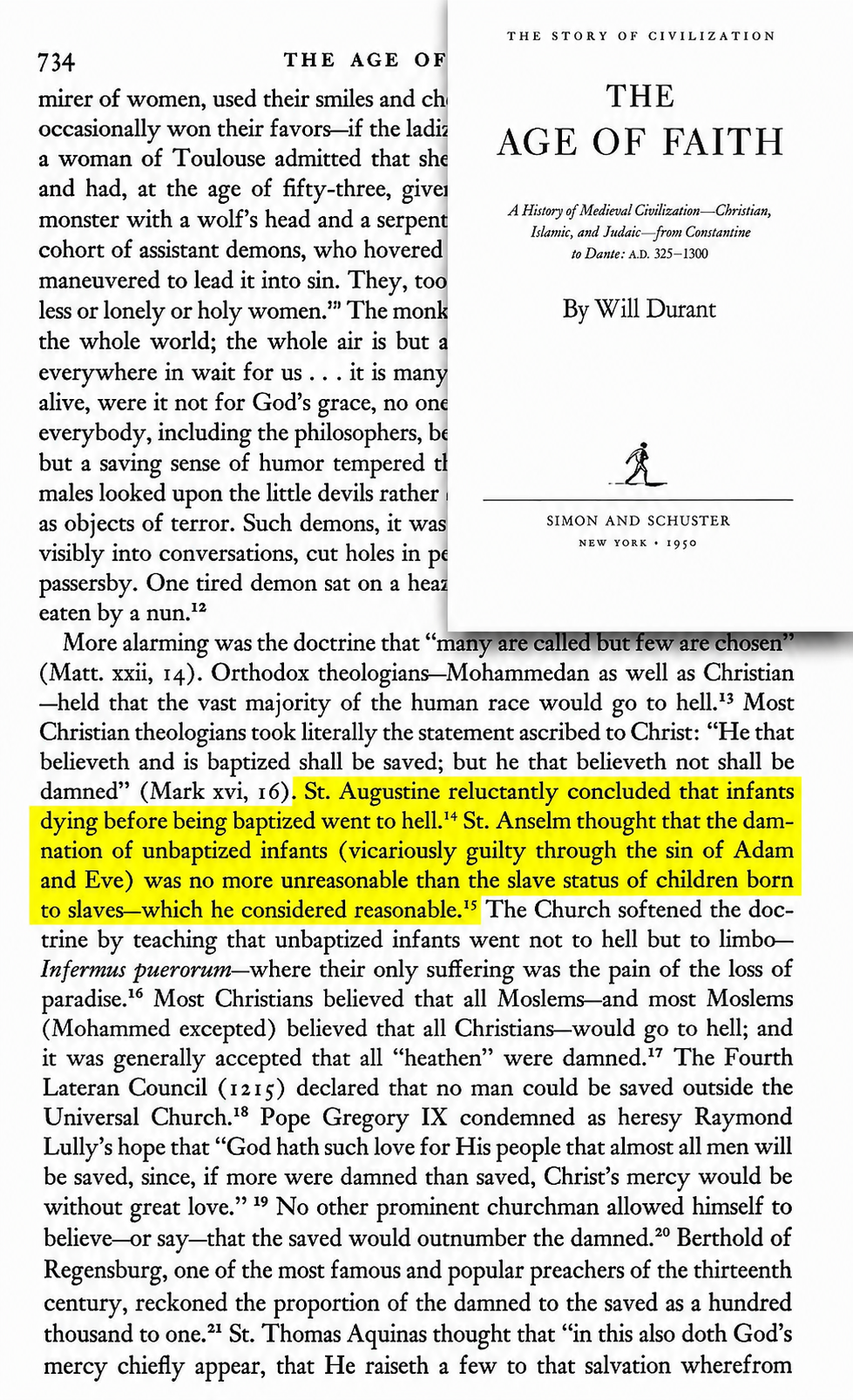
For your info: This scan discusses Saint Anselm’s reasoning concerning unbaptized children and compares it to inherited slavery. The point being made is that some Christian theological arguments treated inherited suffering and inherited servile status as rationally acceptable. This scan is used to show how deeply slavery could be justified within certain Christian theological frameworks.
Christianity saw that slavery was a necessary result due to the corruption of nature.
The Church Fathers agreed on slavery and believed it to be an inevitable result due to the corruption of human nature.
Saint Thomas Aquinas believed that it is good to subject the simple and the weak to the strong, so those who are destined by nature and original sin become slaves and servants.
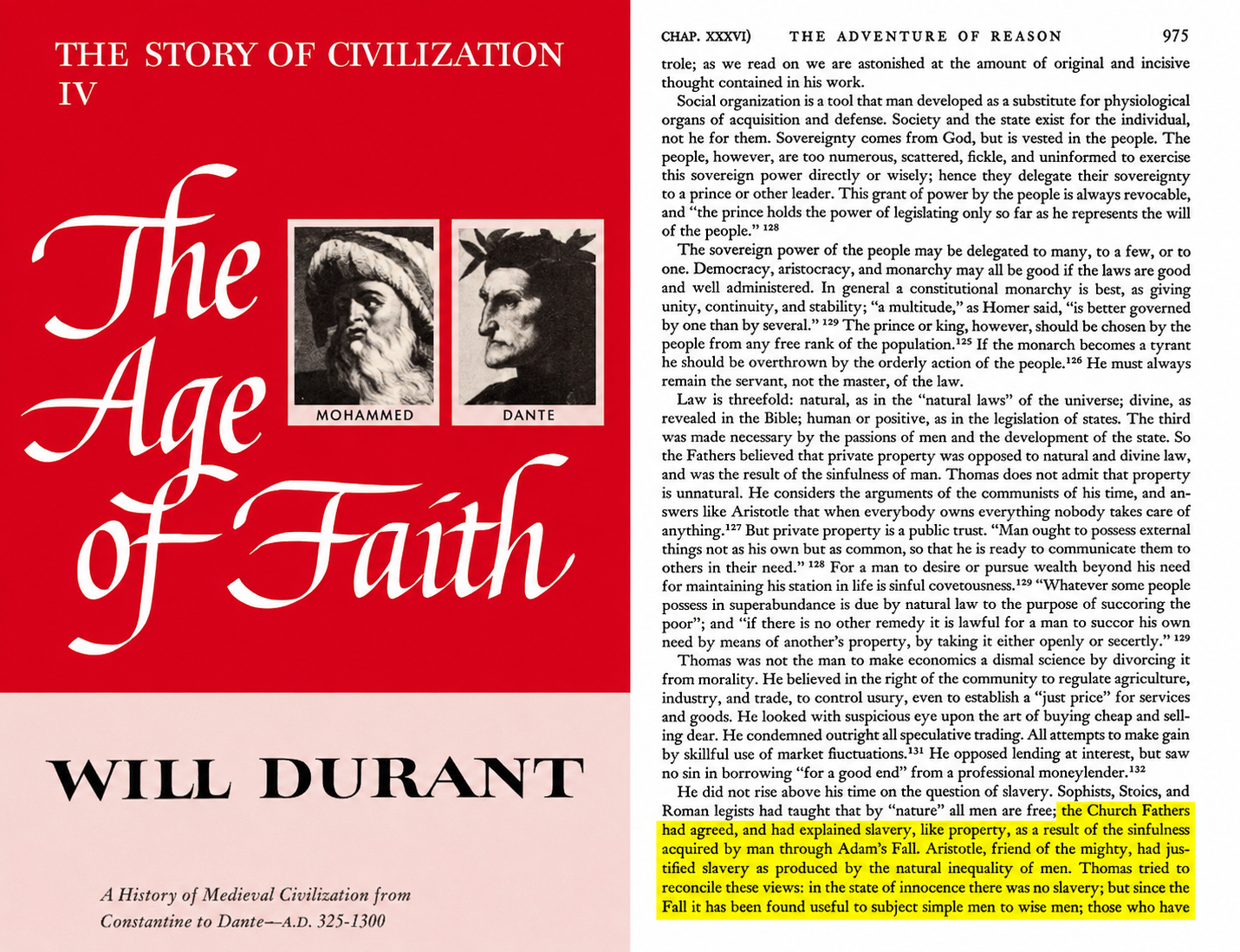
For your info: This scan discusses Saint Thomas Aquinas and the idea that the simple or weak may naturally serve the strong. It links slavery to corrupted human nature and original sin. The scan closes the theological argument: major Christian thinkers did not simply condemn slavery as immoral in itself, but often explained or justified it as part of the fallen social order.
Conclusion
Christian sources themselves define concubines as lower-ranking women, often slaves, bought women, or captives of war.
Biblical law allows the acquisition of slaves, the inheritance of foreign slaves, the selling of daughters, the taking of captive women, and the division of spoils after war.
Christian legal and historical sources show that concubinage and slavery continued to be discussed, regulated, and accepted in Christian societies.
The New Testament does not abolish slavery. It commands slaves to obey their masters.
The Church Fathers often treated slavery as a consequence of sin, a social necessity, or a divinely tolerated order.
Therefore, the Christian polemicist who attacks Islam over slavery or concubinage while pretending the Bible is innocent has not made an argument.
He has exposed his own double standard.
...d commanding servants to submit even to harsh masters. Related Posts See also:...
...r concubines. The queen is set at your right hand with abundant gold." The question may then be asked: Who, if anyone, fulfilled this description more completely than Prophet Muhammad, peace and...
...o into captivity. Then shame and disgrace will come upon you because of all your polytheism."...
...etation that prevents condemnation. In short: we do not know that the incident occurred in a manner that forecloses ijtihad, and attacking a person with such a claim is speaking without knowledge —...