Sodom and Gomorrah in the Qur’an: Historical Evidence and the Tall el-Hammam Discovery
The Historical Miracle in the Qur’an and the Destruction of Sodom and Gomorrah
This article discusses the historical and geological claims connected to the destruction of the villages of Lot, and the proposed connection between the Qur’anic account and the archaeological site of Tall el-Hammam.
Table of Contents
- The Historical Miracle in the Qur’an
- Earlier Archaeological Discussions About Sodom
- The Tall el-Hammam Airburst Claim
- The Scientific Reports Article
- Media Coverage of the Claim
- Salt, Fire, and Destruction
- Was This the Destruction of Sodom?
- Important Caution
The Historical Miracle in the Qur’an
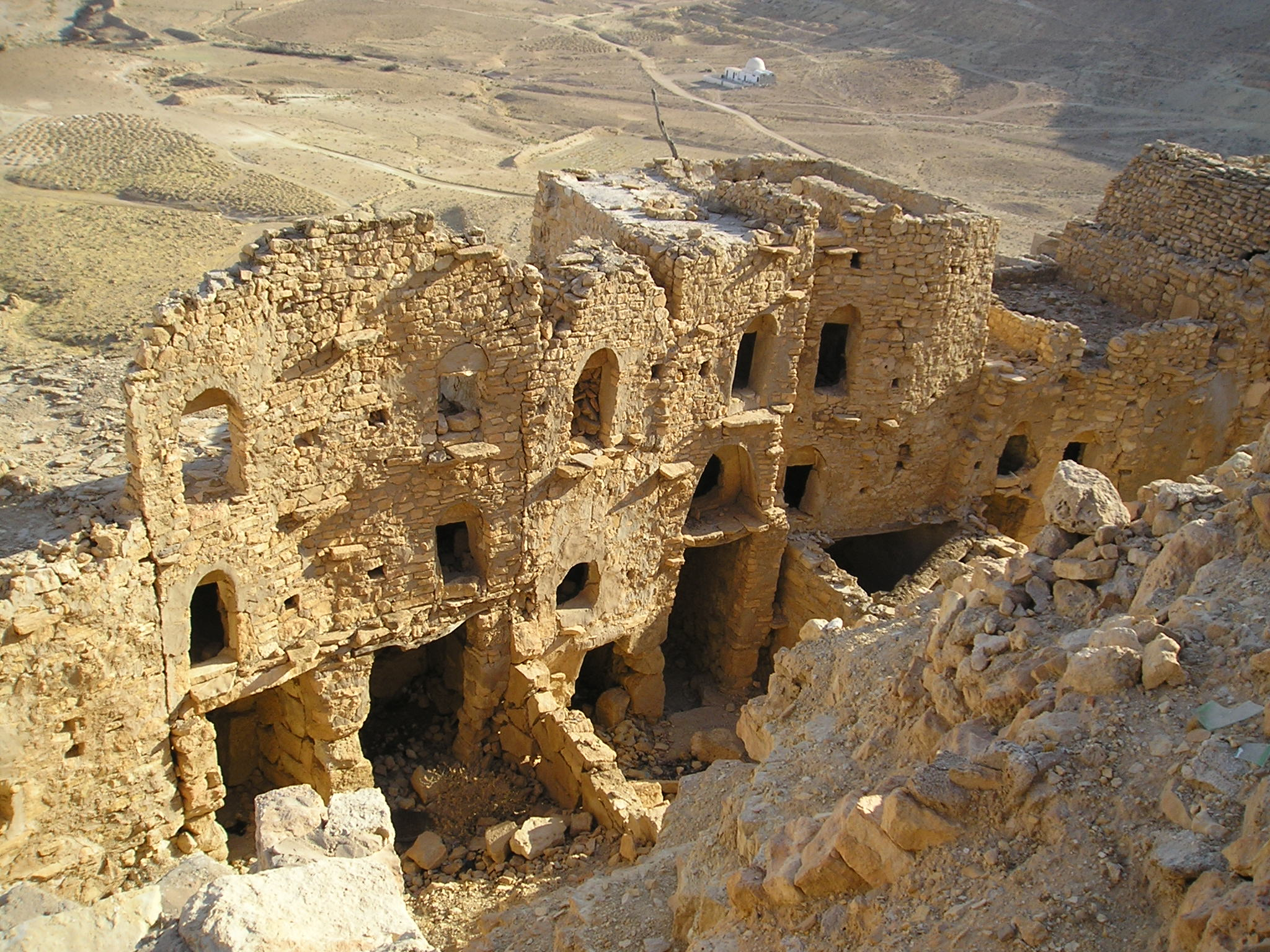
The historical miracle in the Qur’an
The villages of Lot, upon which God sent down a punishment of baked clay and turned them upside down until they were wiped out, were recently discovered with historical and geological evidence that supports the historical narrative of the story. Even atheist scholars have strongly pointed out the similarity between what happened in the destroyed city and what happened in Sodom and Gomorrah, the cities of Lot’s people.
Earlier Archaeological Discussions About Sodom
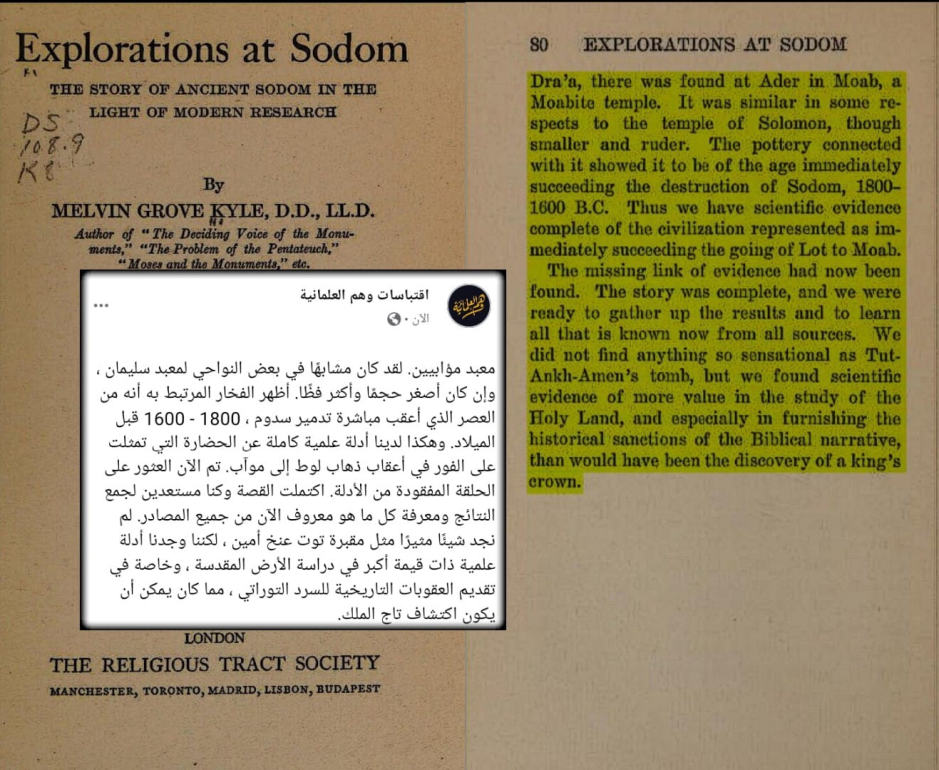
For your info: This scan is from Explorations at Sodom: The Story of Ancient Sodom in the Light of Modern Research by Melvin Grove Kyle. The highlighted English text says that at Ader in Moab, a Moabite temple was discovered. It was similar in some respects to the temple of Solomon, though smaller and rougher. The pottery connected with it was dated to the period immediately following the destruction of Sodom, around 1800–1600 B.C. The author says this provides scientific evidence of civilization immediately after the reign of Lot in Moab. He then says the missing link of evidence had been found, and that this scientific evidence was more valuable for studying the Holy Land and supporting the historical sanctions of the Biblical narrative than even the discovery of a king’s crown.
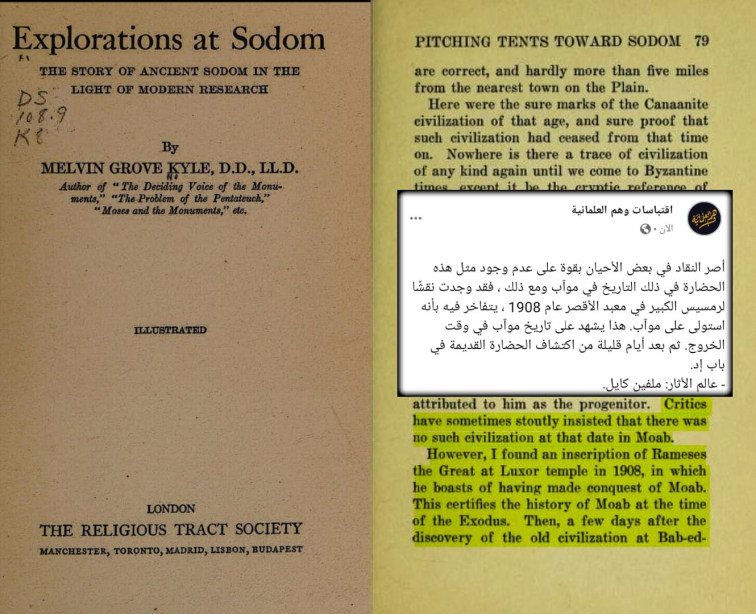
For your info: This scan is also from Explorations at Sodom. The highlighted section says critics sometimes insisted there was no civilization at that date in Moab, but the author says this claim was proven wrong. He mentions the discovery of an inscription of Rameses the Great at Luxor in 1908, in which Rameses boasts of conquering Moab. This confirmed the history of Moab around the time of the Exodus. The scan is used to show that older archaeological discussions argued against the claim that the region lacked civilization during the relevant historical period.
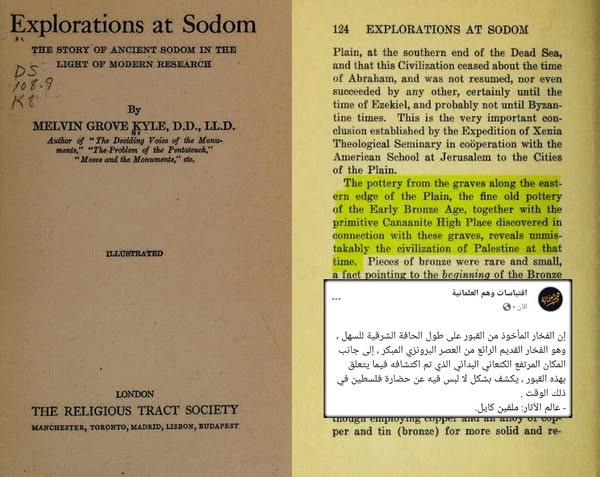
For your info: This scan discusses pottery from graves along the eastern edge of the plain south of the Dead Sea. The highlighted passage says that old pottery from the Early Bronze Age and primitive Canaanite high-place pottery connect with the graves and unmistakably point to civilization in Palestine at that time. The Arabic note summarizes that the pottery taken from the area south of the Dead Sea suggests the existence of ancient civilization during the relevant period.
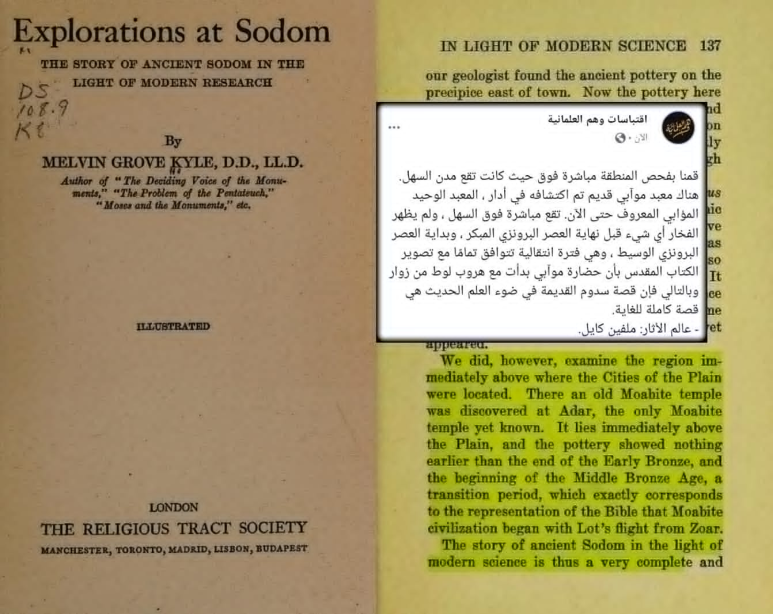
For your info: This scan continues from Explorations at Sodom. The highlighted English text says that the author examined the region immediately above where the Cities of the Plain were located. An old Moabite temple was discovered at Ader, and the pottery showed nothing earlier than the end of the Early Bronze Age and the beginning of the Middle Bronze Age. The author connects this transition period with the Biblical representation that Moabite civilization began with Lot’s flight from Zoar. The scan is being used to support the argument that older archaeological writers saw the region’s material remains as fitting the historical setting of the Lot/Sodom narrative.
The Tall el-Hammam Airburst Claim
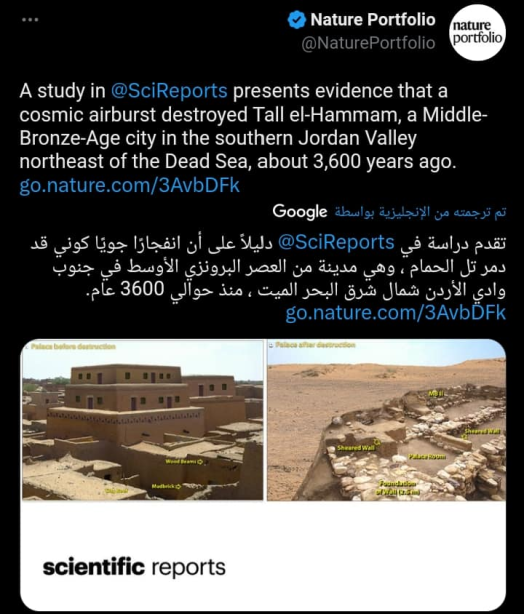
For your info: This scan shows a Nature Portfolio post stating that a study in Scientific Reports presented evidence that a cosmic airburst destroyed Tall el-Hammam, a Middle Bronze Age city in the southern Jordan Valley northeast of the Dead Sea, around 3,600 years ago. The Arabic text repeats the same point: a cosmic explosion destroyed Tall el-Hammam, a Middle Bronze Age city in southern Jordan Valley near the Dead Sea, about 3,600 years ago.
The Scientific Reports Article
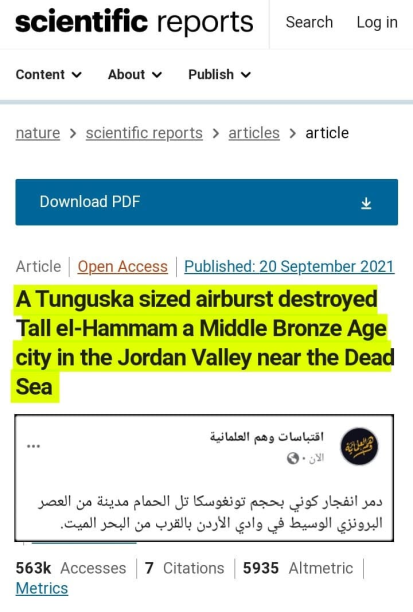
For your info: This scan shows the Scientific Reports article titled “A Tunguska sized airburst destroyed Tall el-Hammam a Middle Bronze Age city in the Jordan Valley near the Dead Sea.” The highlighted title itself states the central claim: that a Tunguska-sized airburst destroyed Tall el-Hammam, a Middle Bronze Age city near the Dead Sea. The Arabic note underneath summarizes the claim as a cosmic explosion the size of Tunguska destroying Tall el-Hammam near the Dead Sea.
Important update: This article must be used carefully because the Scientific Reports paper has since been marked as a retracted article. So this scan can document what was claimed, but it should not be presented as uncontested proof.
Source:
https://www.nature.com/articles/s41598-021-97778-3
Media Coverage of the Claim
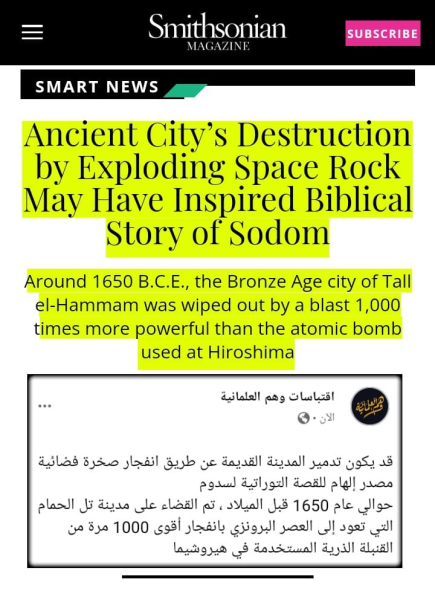
For your info: This scan shows Smithsonian Magazine’s headline: “Ancient City’s Destruction by Exploding Space Rock May Have Inspired Biblical Story of Sodom.” The highlighted subheading says that around 1650 C.E., the Bronze Age city of Tall el-Hammam was wiped out by a blast 1,000 times more powerful than the atomic bomb used at Hiroshima. The Arabic note summarizes that the ancient city may have been destroyed by a space rock explosion, inspiring the Sodom story, and that Tall el-Hammam was destroyed by a blast far more powerful than Hiroshima.
Sources:
Salt, Fire, and Destruction
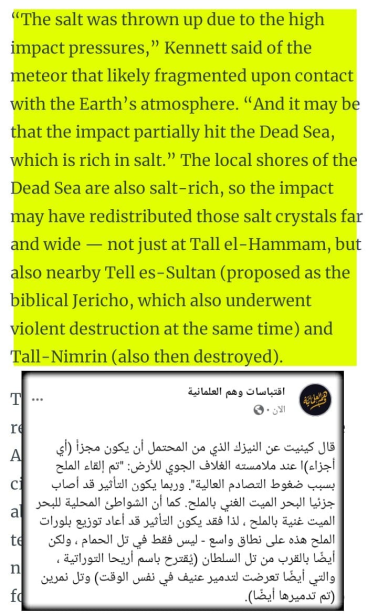
For your info: This scan highlights a passage explaining that salt may have been thrown up because of the high pressures from the meteor/airburst event. The text says the object likely fragmented upon contact with the Earth’s atmosphere, and that the impact may have partially hit the Dead Sea, which is rich in salt. The local shores are also salt-rich, so the explosion may have redistributed salt crystals across a wide area, not only over Tall el-Hammam but also nearby sites such as Tell es-Sultan, proposed as Biblical Jericho, and Tall-Nimrin. The Arabic note summarizes that the salt found in the area may have come from the Dead Sea and its shores because of the shock pressure from the cosmic collision.
Was This the Destruction of Sodom?
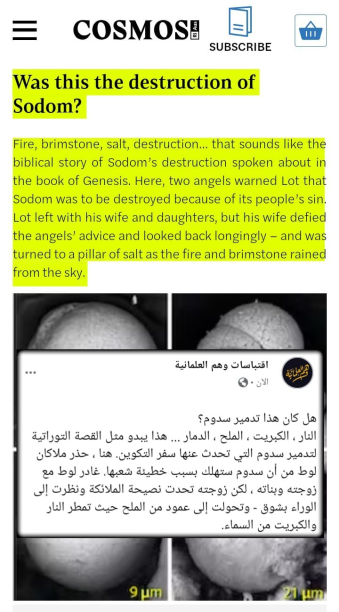
For your info: This scan from Cosmos Magazine asks: “Was this the destruction of Sodom?” The highlighted text says that fire, brimstone, salt, and destruction sound like the Biblical story of Sodom’s destruction in Genesis. It summarizes the Biblical story: two angels came to Lot, the people of Sodom were to be destroyed because of their sin, Lot left with his wife and daughters, but his wife looked back and became a pillar of salt, while fire and brimstone rained from the sky. The Arabic note underneath summarizes the same point, saying that this appears similar to the Biblical account of Sodom’s destruction.
Important Caution
- Ancient sources and older archaeological discussions connected the southern Dead Sea region with the Sodom narrative.
- Tall el-Hammam was claimed to show signs of sudden high-temperature destruction.
- Multiple media outlets reported that researchers compared the event to the Sodom narrative.
- But the scientific article behind the strongest version of this claim has been retracted.
Therefore, this should be presented as a proposed historical/geological correspondence, not as an uncontested scientific proof.
The Qur’anic narrative of the destruction of the people of Lot remains historically significant, and the archaeological discussions around the Dead Sea region continue to be relevant. But the strongest presentation must avoid exaggeration: the evidence may support a discussion, but the retracted paper should not be treated as conclusive proof.