Tawassul Archive
https://shamela.ws/book/9944/36319
{Embed}
https://shamela.ws/book/9944/36319
ص356 - كتاب المصنف ابن أبي شيبة ت الحوت - ما ذكر في فضل عمر بن الخط…
ص356 - كتاب المصنف ابن أبي شيبة ت الحوت - ما ذكر في فضل عمر بن الخطاب رضي الله عنه - المكتبة الشاملة
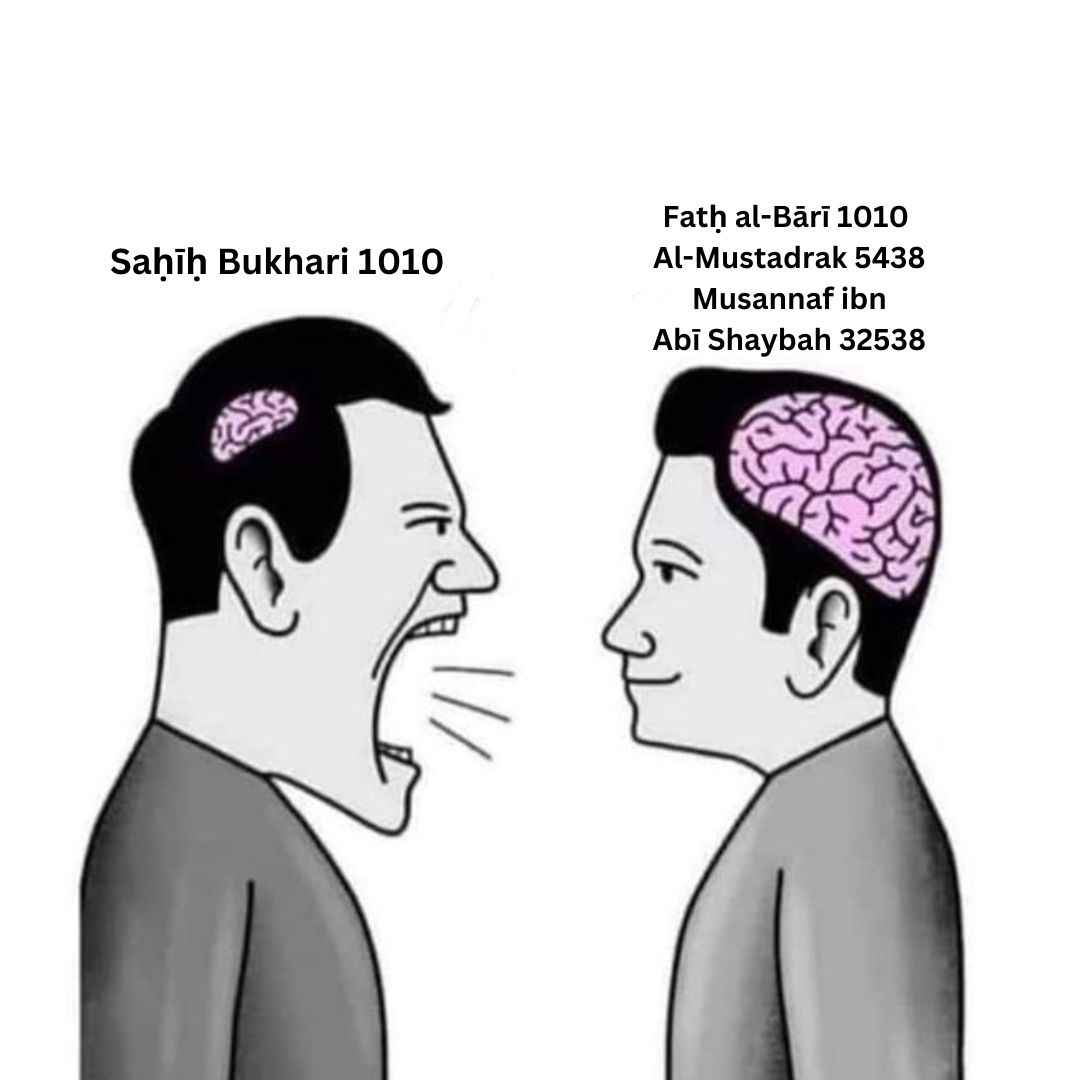
Imam Ibn Hajr under bhukari 1010 the same hadith brings this athar from musanaf ibn abi shaybah and authenticates it.
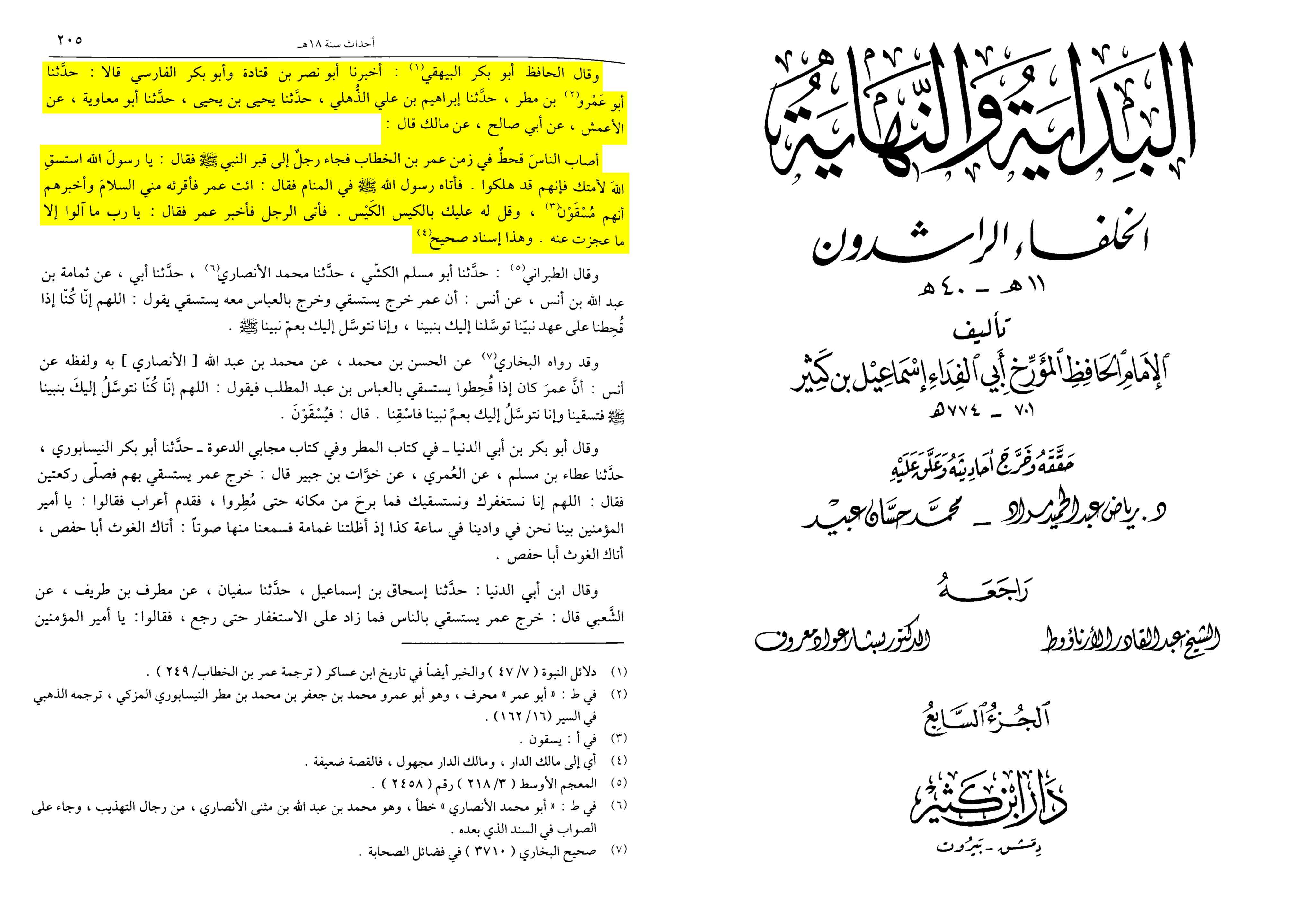
Ibn kathir said : Isnad is Sahih
However Ibn Hajar opinion ends all the discussion
Yapping about Malik dar
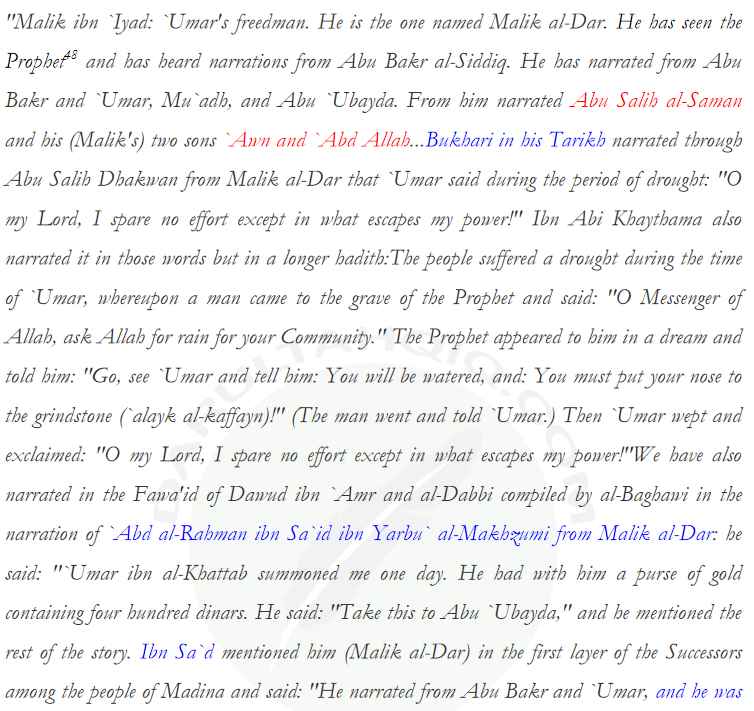

A sahabi is thiqaa, saadiq and 3adil by default
Anyone who says otherwise is no longer a sunni (taken from the muqadimah of al isabah)
It’s fine let them cope because haafiz ibn hajr also identifed who was the person who did the act and not only that, Sayyiduna Umar did iqraar of his action and didn’t do zajr. This shows the salaf didn’t consider it shirk
Imām Abū Bakr Aĥmad ibn Ĥusayn al-Bayhaqī al-Shāfiýī [384-458 AH / 994-1066 CE] records the same narration in his book Dalā’il al-Nubuwwah.
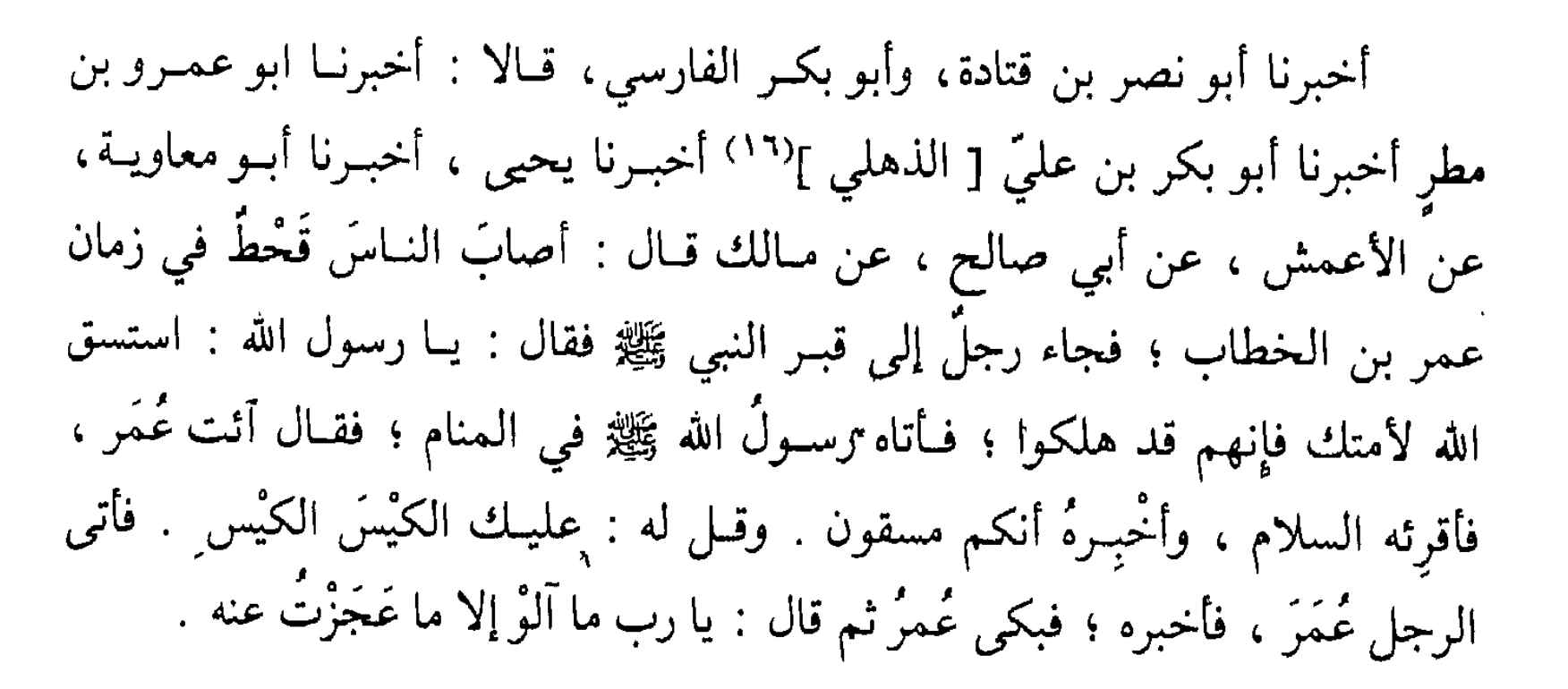
Abdul Wahab claims tawassul is makrooh and acknowledges that it’s mujtahad feeh
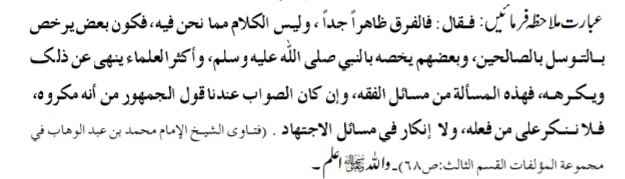
This is Ibn al-Qayyim in Jalā ul-Afhām, after quoting tawassul through the grave he said: “salaf acted upon it!”
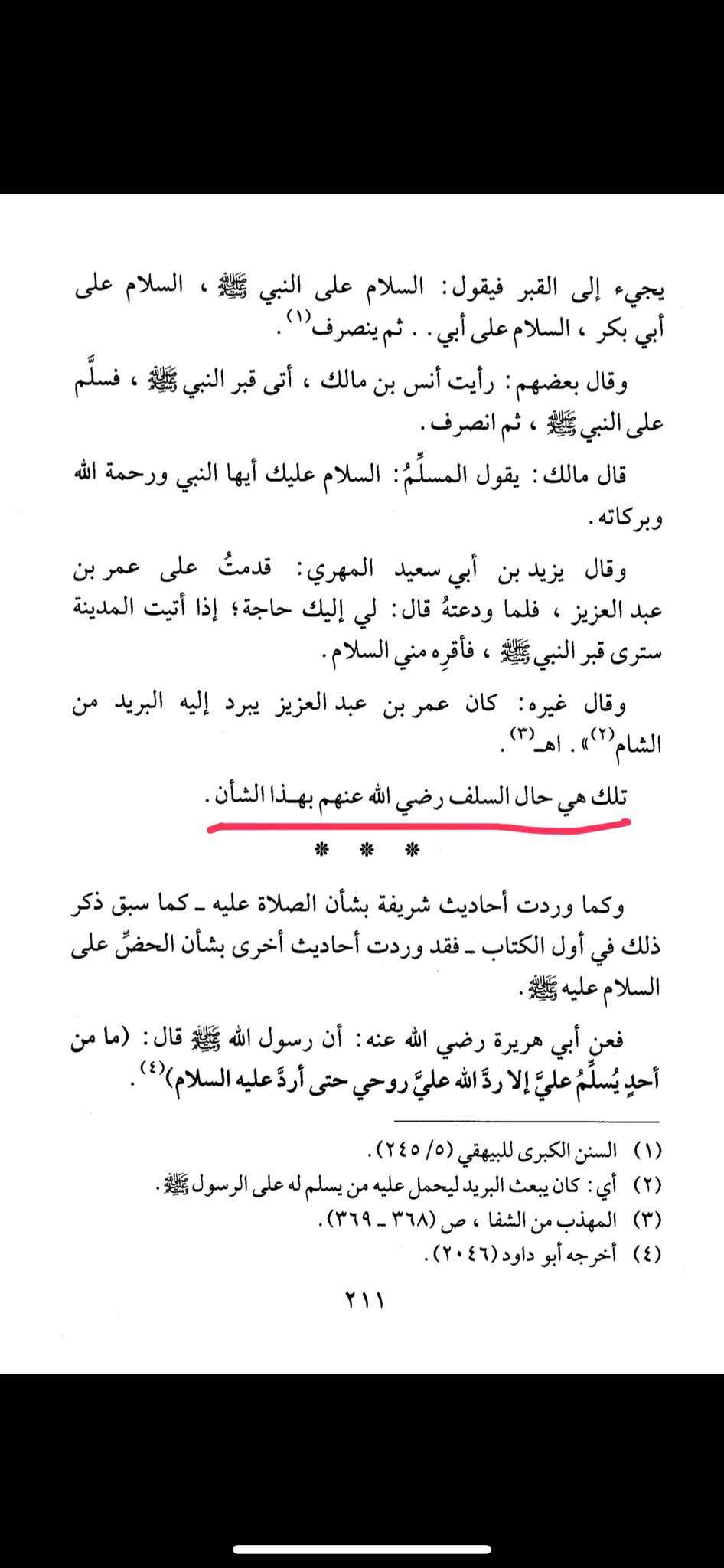
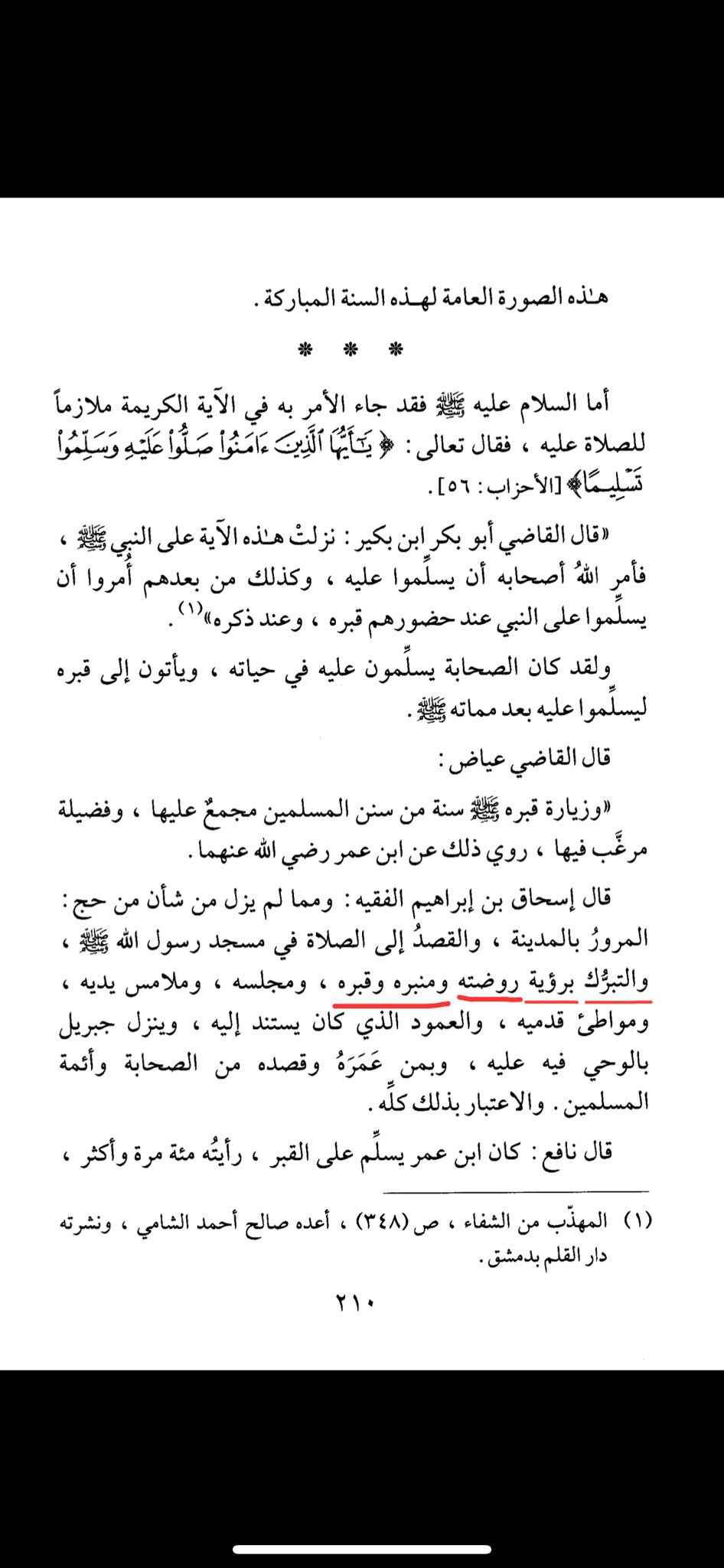
Shaykh Abdul Qadir suggested that we may say:
“O Messenger of Allah! Verily, I have turned by you to my Lord to forgive me my sins!”
Wahabi final boss opinion
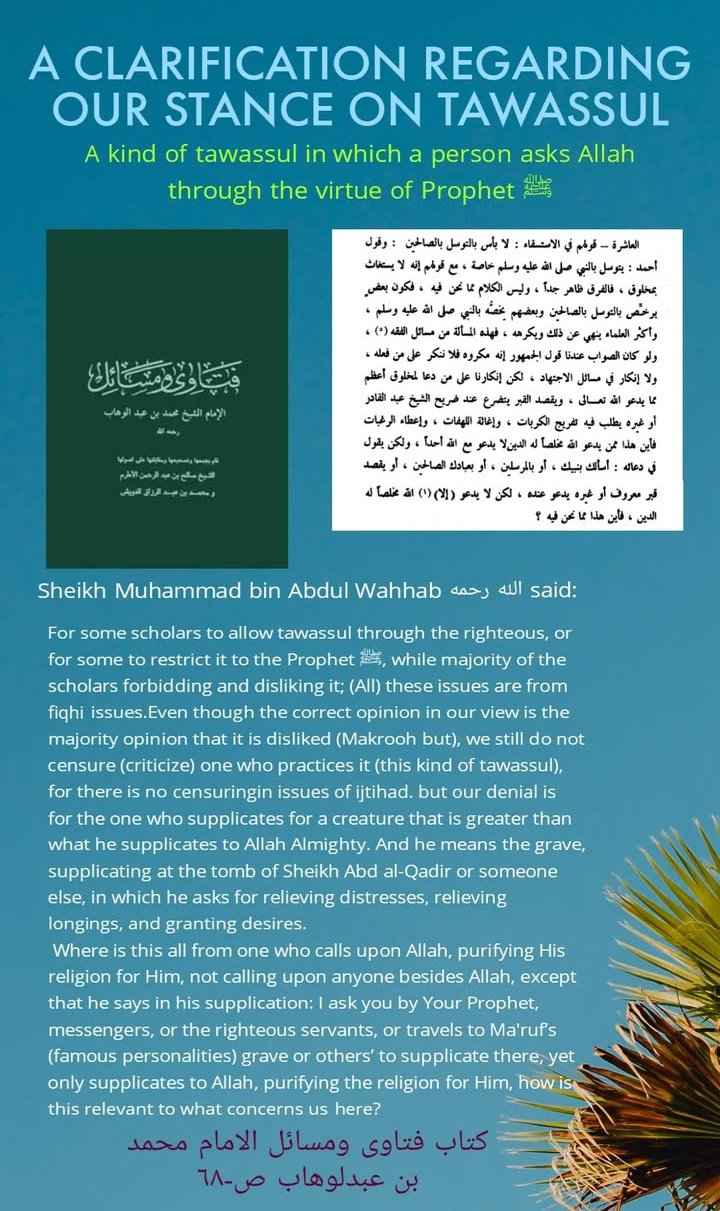
https://shamela.ws/book/11324/64
{Embed}
https://shamela.ws/book/11324/64
ص68 - كتاب فتاوى ومسائل مطبوع ضمن مؤلفات الشيخ محمد بن عبد الوهاب ا…
ص68 - كتاب فتاوى ومسائل مطبوع ضمن مؤلفات الشيخ محمد بن عبد الوهاب الجزء الرابع - المسألة الرابعة عشرة - المكتبة الشاملة
Imām Ibn Qudamāh Muwaffaq ad-Dīn al-Ḥanbalī on doing Tawassul.
He writes in his book Al-Wasiyyah :
“If you have a need that you want to ask God Almighty for, perform wudu properly, pray two rak’ahs, praise Allāh the Exalted and Magnificent, send blessings upon the Prophet Muḥammad, and then say:
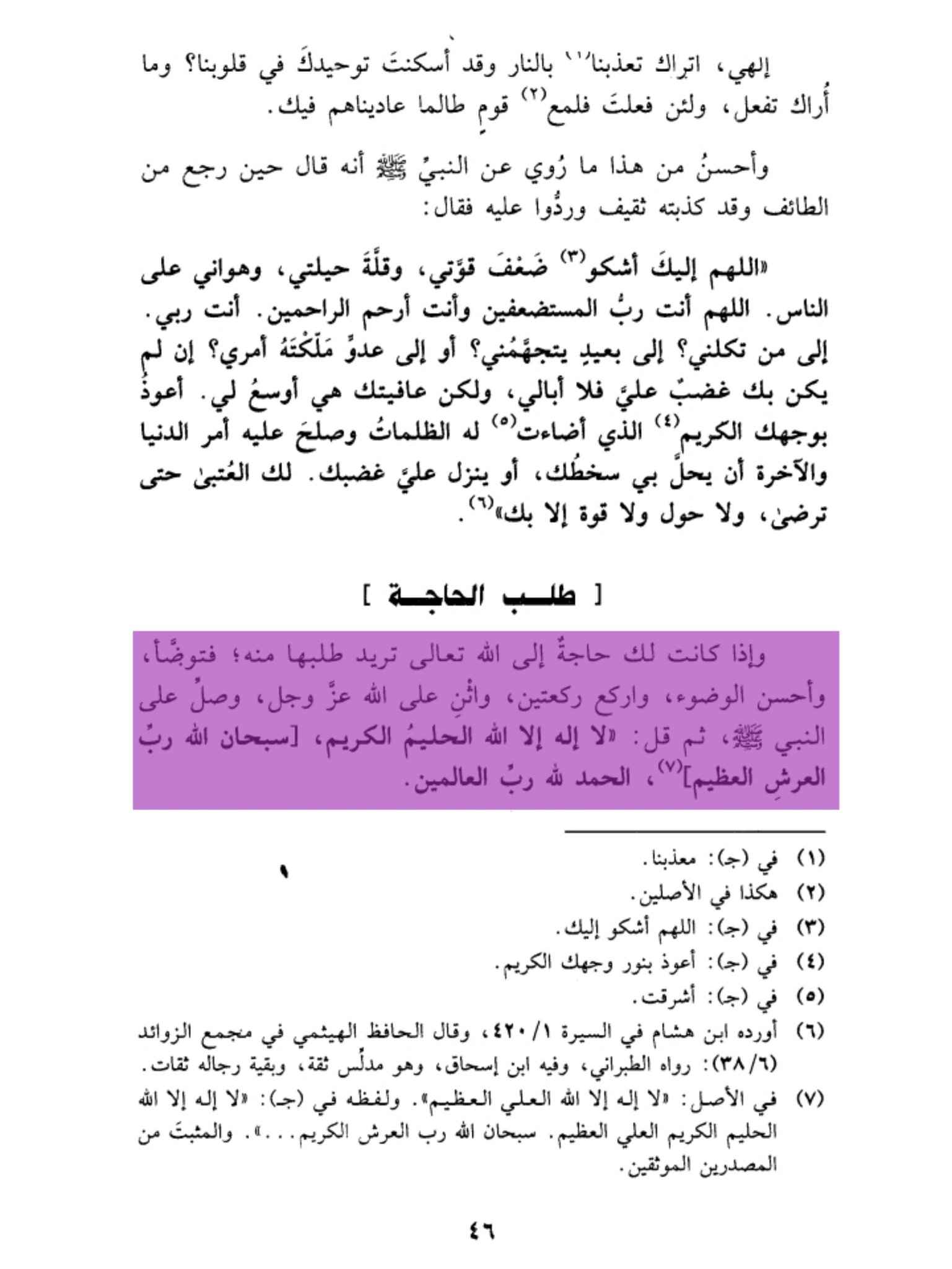
“There is no god but Allāh, the Clement, the Most Generous. Glory be to Allāh, Lord of the Great Throne. Praise be to Allāh, Lord of the Worlds. O Allāh, I ask You for the necessities of Your mercy, the firmness of Your forgiveness, the reward of every good deed,
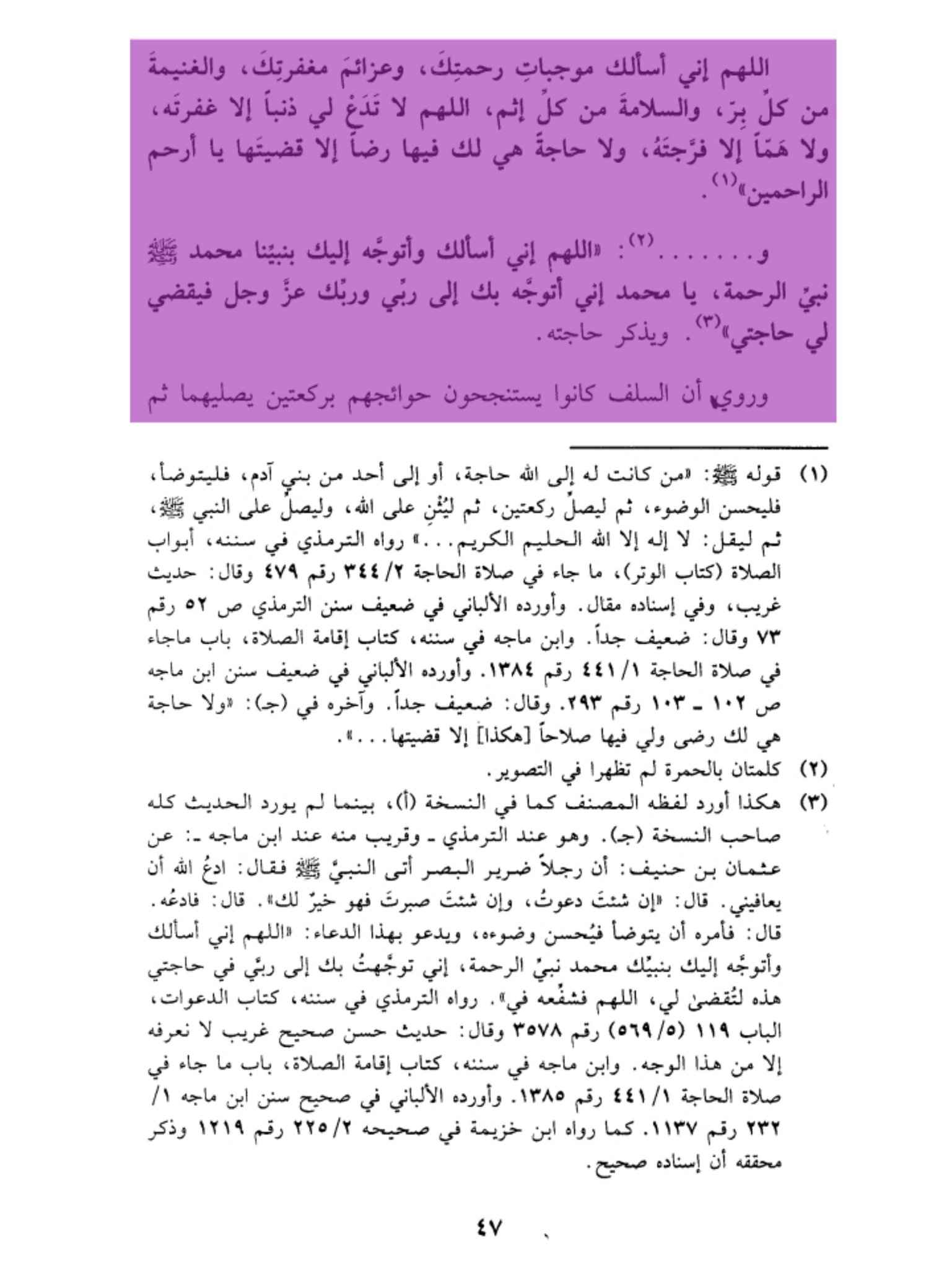
and safety from every sin. O Allah, do not leave me with a sin that You have not forgiven, nor a worry that You have not relieved, nor a need that You have not fulfilled in which You find pleasure, O Most Merciful of the Merciful.”
“O Allāh, I ask You and turn to You through our Prophet Muḥammad, the Prophet of Mercy. O Muḥammad, I turn to You to intercede with my Lord and Your Lord, the Exalted and Magnificent, so that He may fulfill my need.”
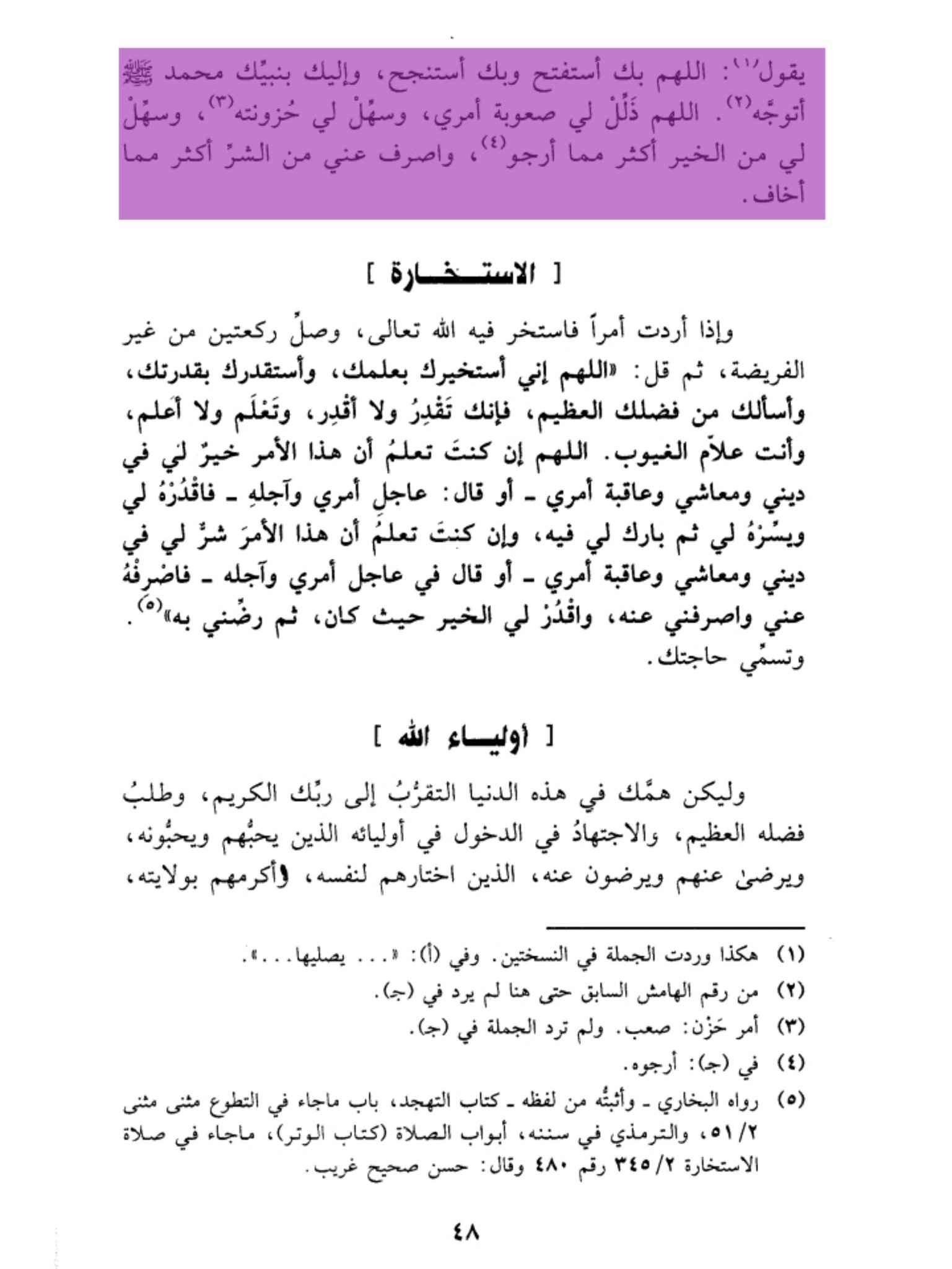
It is narrated that the early Muslims would seek success for their needs by praying two rak’ahs and then saying :
“O Allāh, I open with You and I seek success with You. I turn to You through Your Prophet Muḥammad, peace be upon him.”
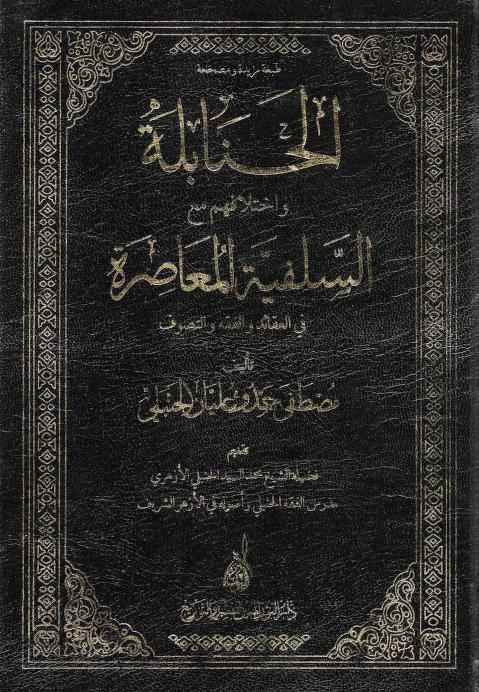
Sh Muṣṭafā Ḥamdū ʿUlayyān al-Ḥanbalī:
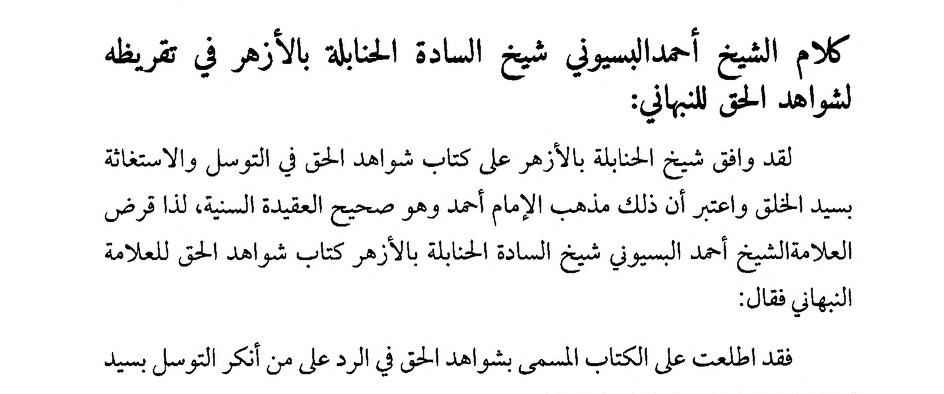
“The S͟hayk͟h al-Ḥanābilah at ʾAl-Azhar endorsed the book S͟hawāhid al-Ḥaqq fī al-Tawassul wal-ʾistig͟hat͟hah bi-Sayyid al-K͟halq (Evidences of Truth in Tawassul and ʾistig͟hat͟hah through the Master of Creation) and considered it to represent the doctrine of ʾImām ʾAḥmad and the sound Sunni creed. For this reason, the esteemed scholar, S͟hayk͟h ʾAḥmad al-Basyūnī, S͟hayk͟h of the Ḥanbalī’s at ʾAl-Azhar, commended the book by al-Nabhānī, saying:
“I reviewed the book titled S͟hawāhid al-Ḥaqq fī al-Radd—ʿalā Man ʾAnkar al-Tawassul bi-Sayyid al-K͟halq (Evidences of Truth in Refuting Those Who Deny Tawassul through the Master of Creation, ﷺ), and I found it adorned with the ornament of S͟harīʿah evidence, speaking in favor of the sound Sunni creed, and decisively refuting the—innovations of those who have deviated, who have divided their religion and become sects, each party rejoicing in what it has [Qurʾān 30:32]. They have made their attachment to innovations their religion, by which they worship and trade, and many people have followed them in—this. But soon, they will know who among them is the saved and who is the doomed: Its affluent ones said: Indeed, we found our forefathers upon a religion, and indeed, we are following in their footsteps [Qurʾān 43:23]. They are far removed from what is correct for us and them—
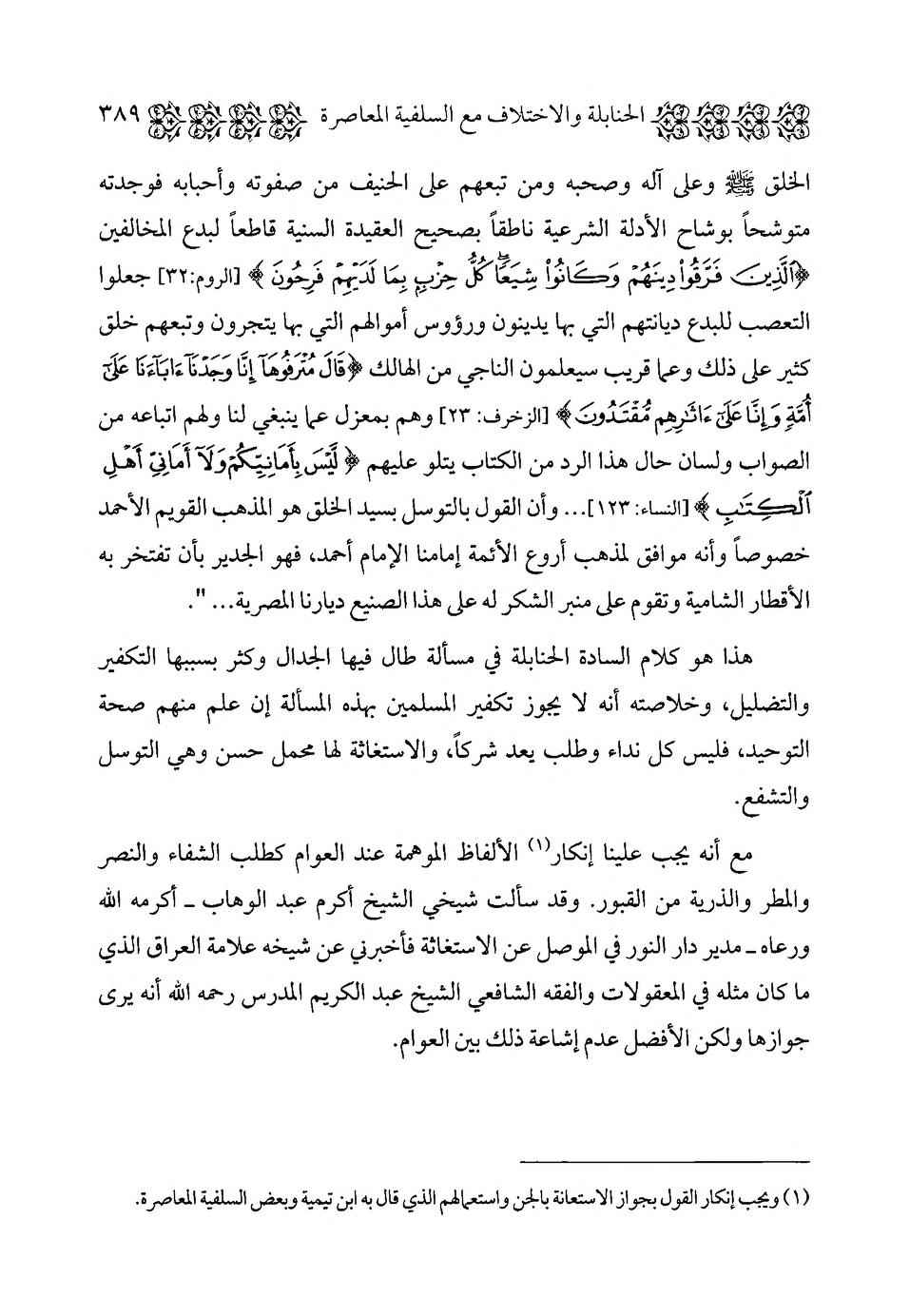
to follow, and the tone of this book’s response declares to them: It will not be according to your wishes, nor the wishes of the People of the Scripture [Qurʾān 4:123].
The statement that Tawassul through the Master of Creation is the upright and praiseworthy doctrine
particularly as it aligns with the doctrine of the most exemplary of ʾimams, our ʾImām ʾAḥmad. It is worthy that the Levantine regions take pride in this position and that our Egyptian lands stand on the pulpit of gratitude for this accomplishment.”
This is the statement of—
the Ḥanbalī scholars on a matter that has been the subject of much debate, leading to accusations of disbelief and misguidance. The conclusion is that it is impermissible to declare Muslims as disbelievers on this matter if they are known to uphold the truth of monotheism.
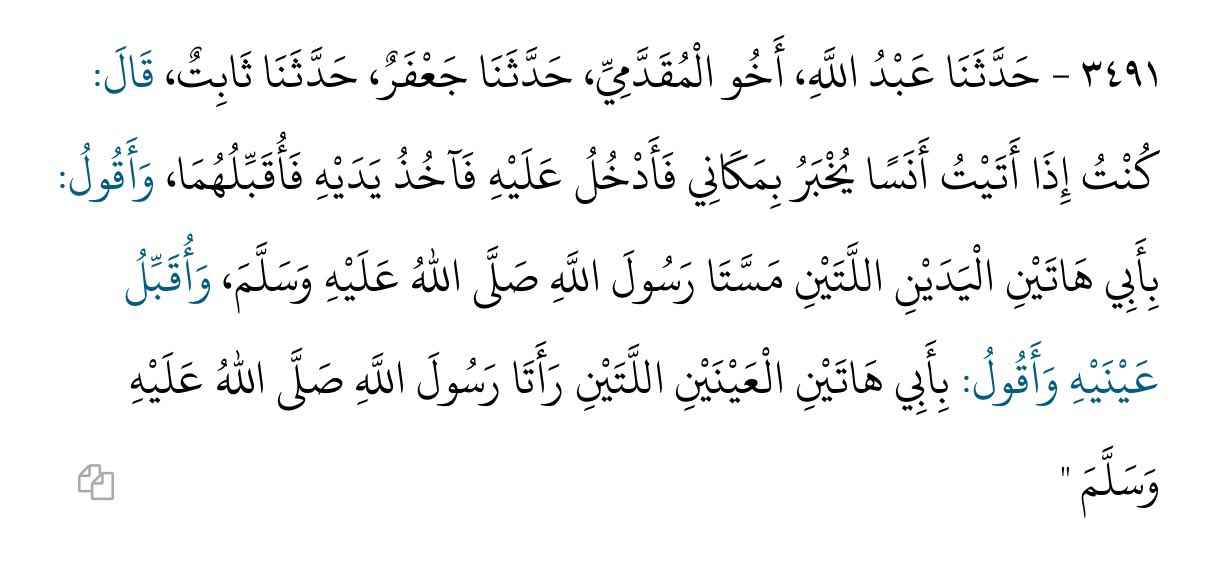
Thabit Al Bunani says when I used to meet Sayyiduna Anas, I used to hold his hands and kiss them saying: ‘my father be sacrificed, these hands that touched Rasool Allah ﷺ.’
I would then kiss his eyes and say: ‘my father be sacrificed, these eyes that saw Rasool Allah ﷺ’
Thabit Al Bunani also said: I came to Sayyiduna Anas, ‘Did this hand of yours touch the hand of Rasool Allah ﷺ?’ He said: ‘Yes.’ So, I kissed his hand.”
Imam Ibn Hummam recommends that when you go to the rawdah you face the blessed grave and say: “O Rasool Allah ﷺ i ask you for your intercession and I make tawassul through you to Allah that I die a muslim”
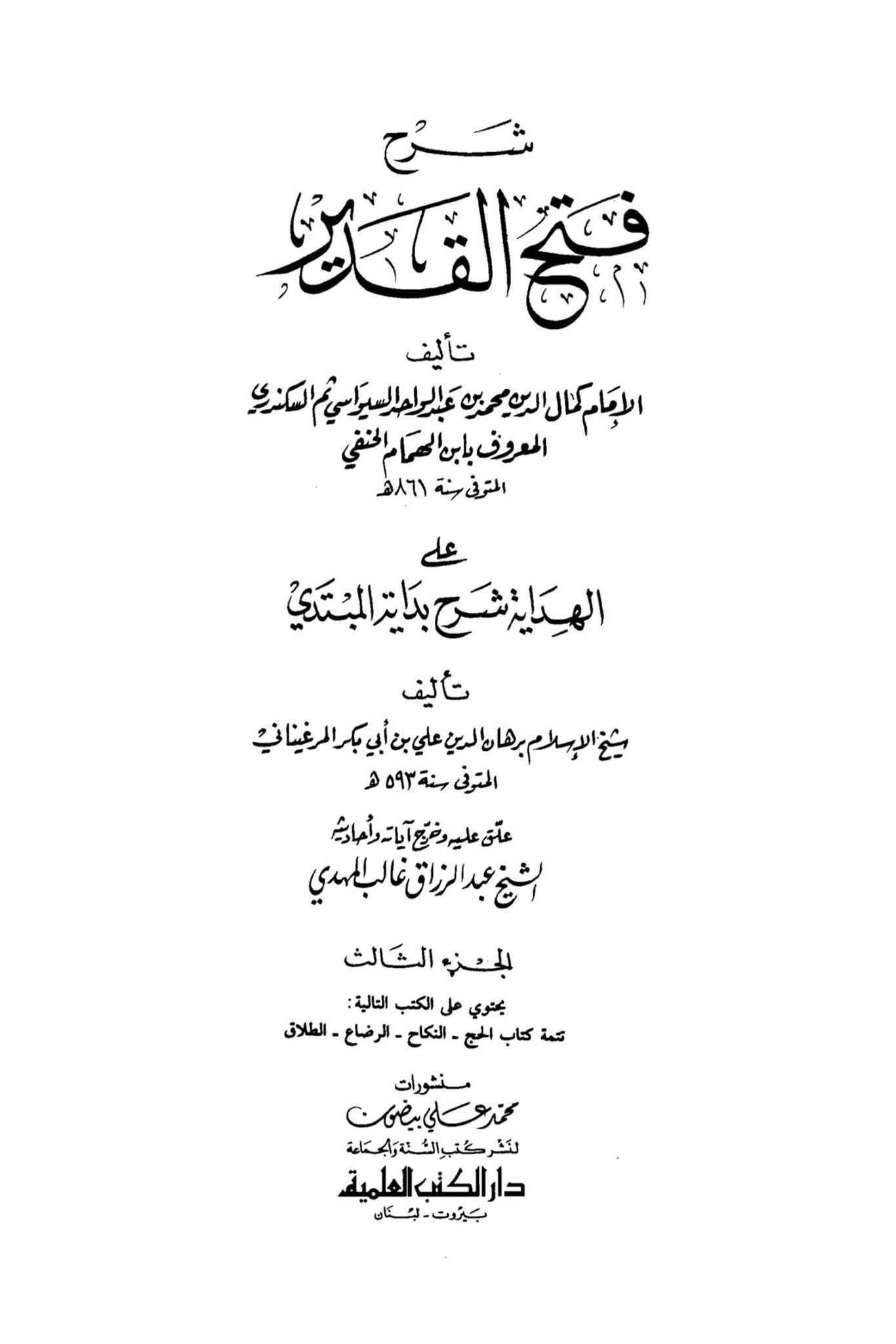
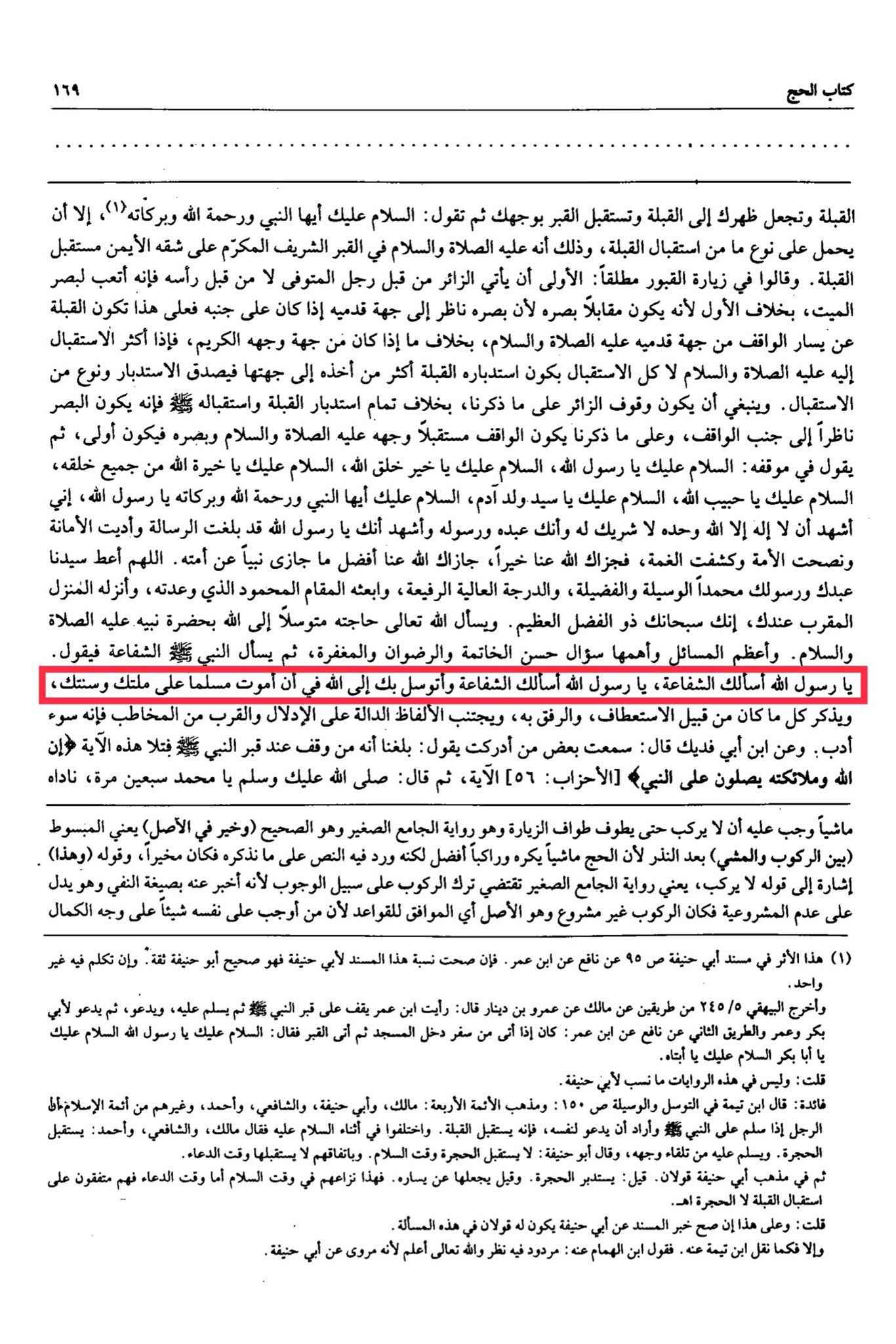
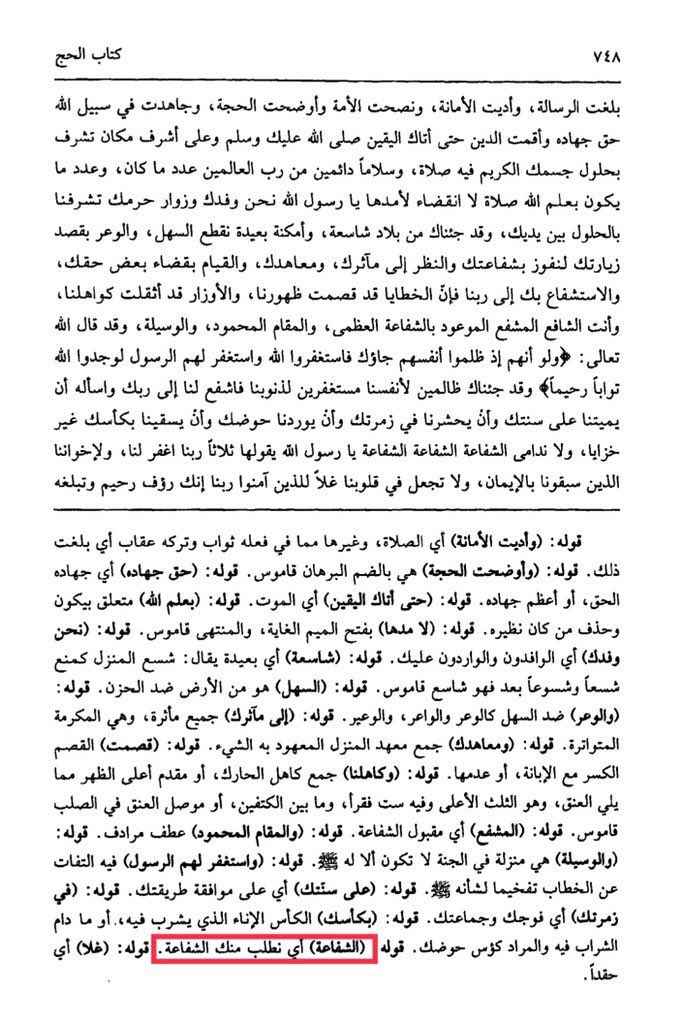
Imam Tahtawi approves this in the hashiya
Imam Ibn Taymīyah رحمه الله:
“Sayyid Ibn al-Musayyib heard the call to prayer from the grave of the Prophet ﷺ and this is TRUE!”
Ibn Taymīyah, Iqtidā us-Sirāt il-Mustaqīm
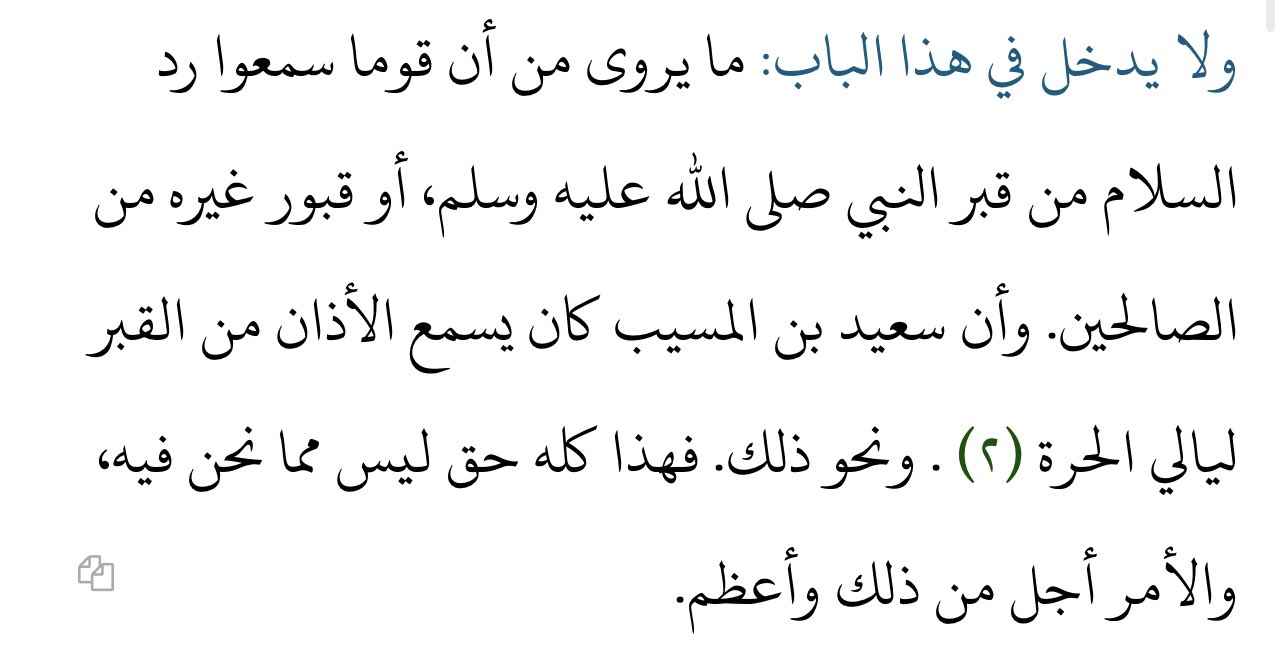
https://shamela.ws/book/11620/792#p1
{Embed}
https://shamela.ws/book/11620/792
ص254 - كتاب اقتضاء الصراط المستقيم لمخالفة أصحاب الجحيم - تفنيد ما …
ص254 - كتاب اقتضاء الصراط المستقيم لمخالفة أصحاب الجحيم - تفنيد ما ورد في استحباب الدعاء عند القبر - المكتبة الشاملة
” Although this hadith is considered daif”
But It’s Sahih according to Ibn Tamiya
Ibn al-Qāsim (student of al-Imām Mālik) said:
❝I saw that the people of Madīnah, when they leave the city, would visit the grave of the Prophet ﷺ and greet him, and they would do the same when they entered it.❞
It’s in Al Shifa
Of Qadi ala
https://shamela.ws/book/21744/1231
{Embed}
https://shamela.ws/book/21744/1231
ص181 - كتاب فتح القدير للكمال بن الهمام ط الحلبي - مسائل منثورة - ا…
ص181 - كتاب فتح القدير للكمال بن الهمام ط الحلبي - مسائل منثورة - المكتبة الشاملة
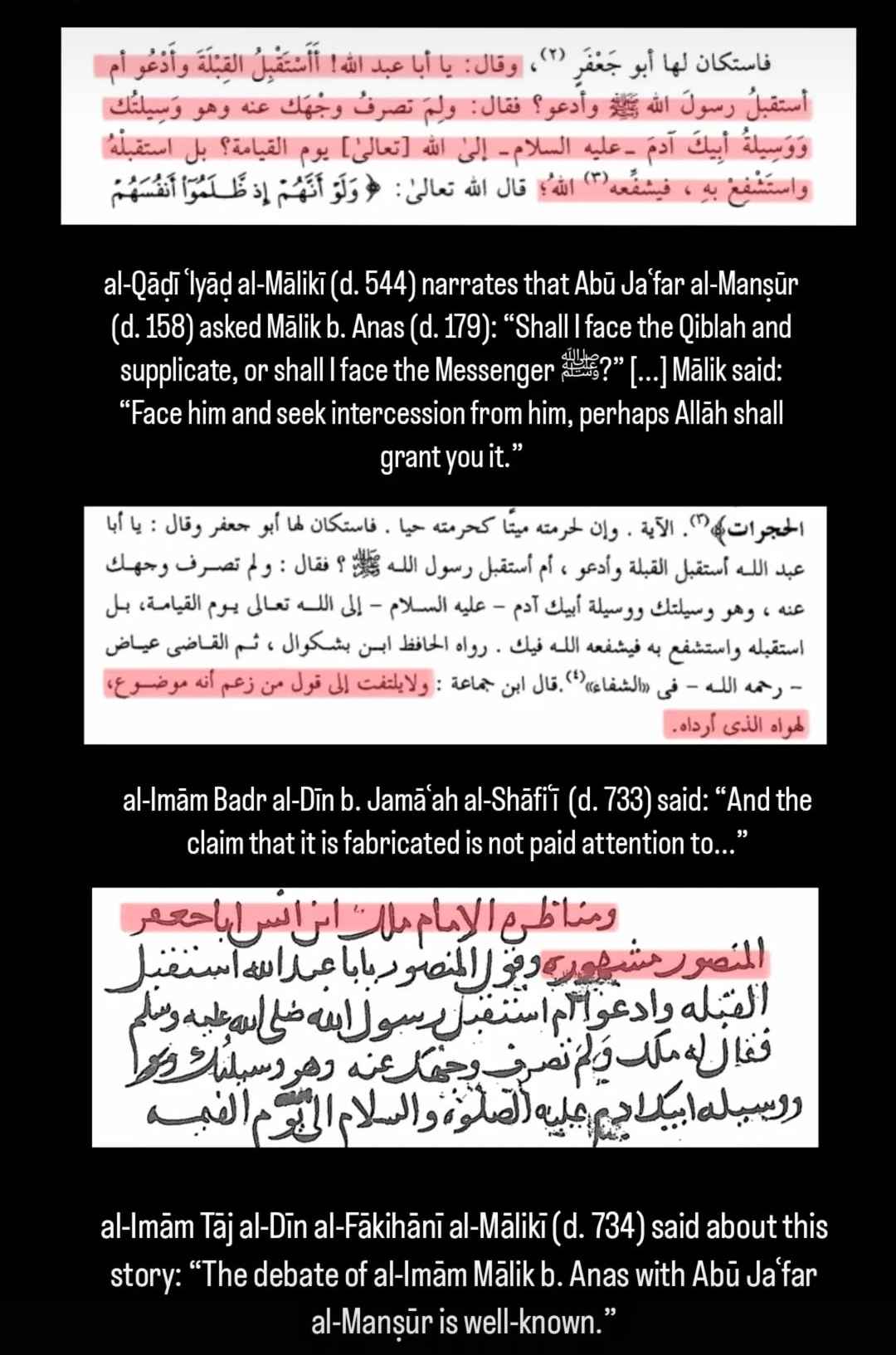
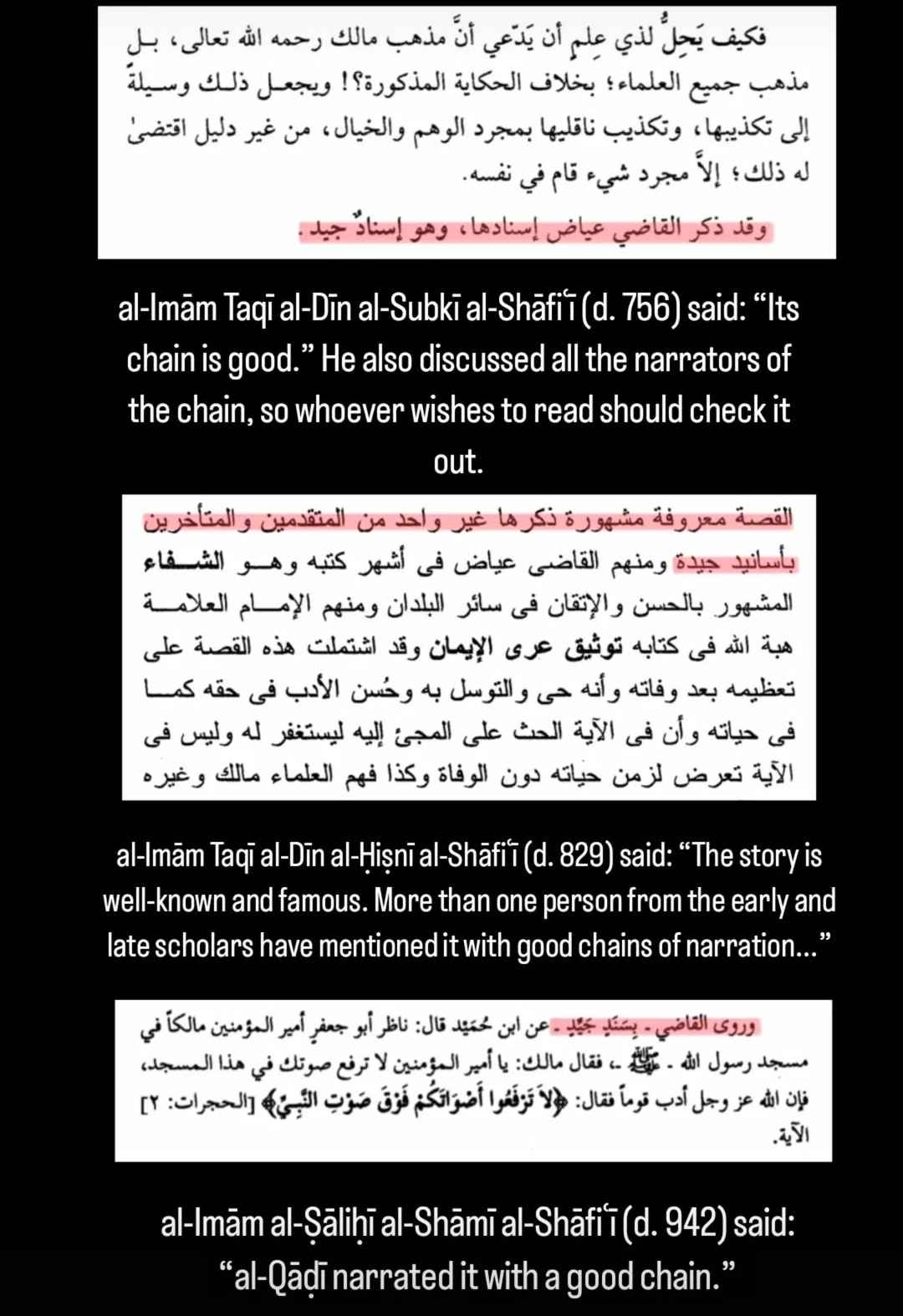
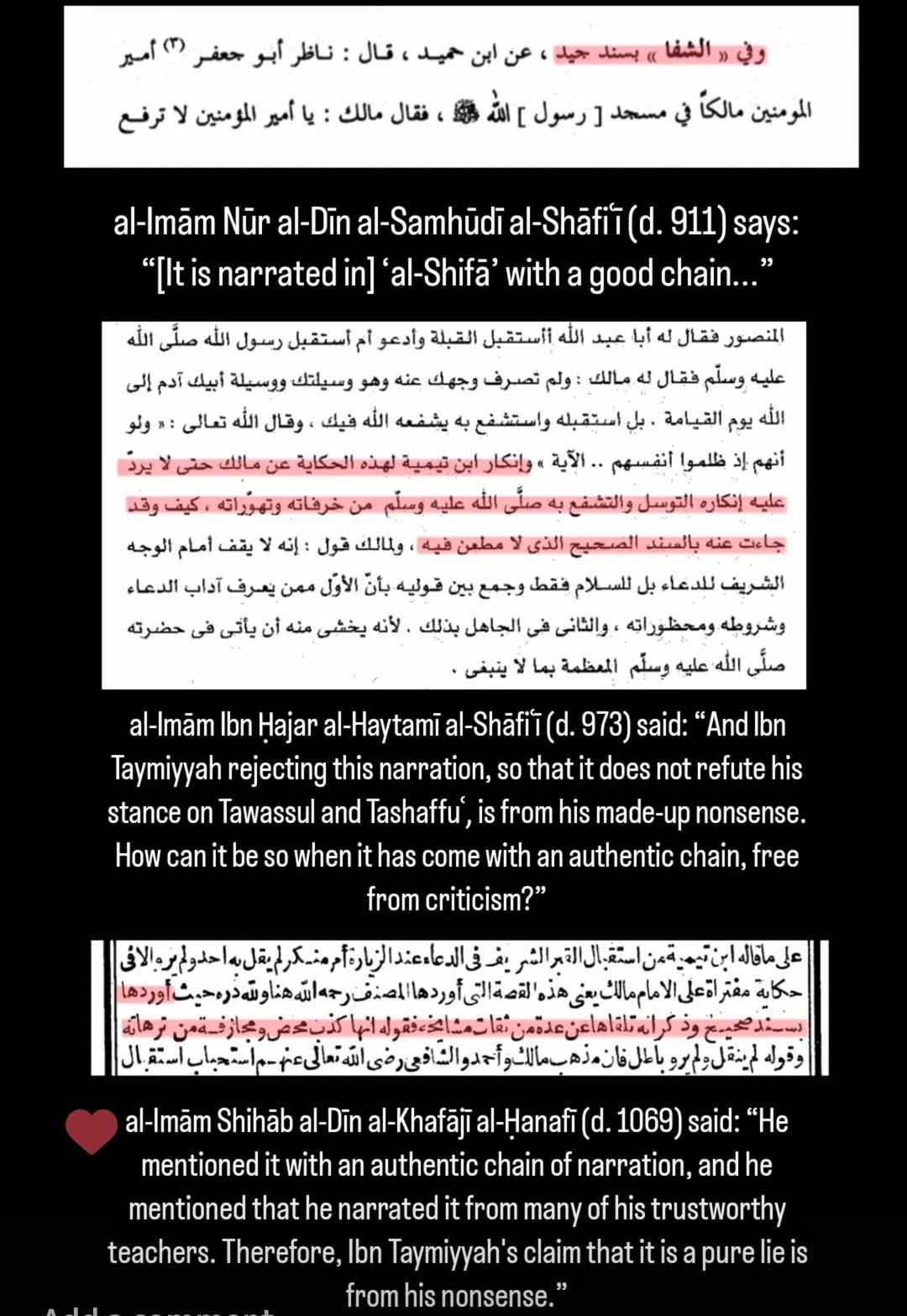
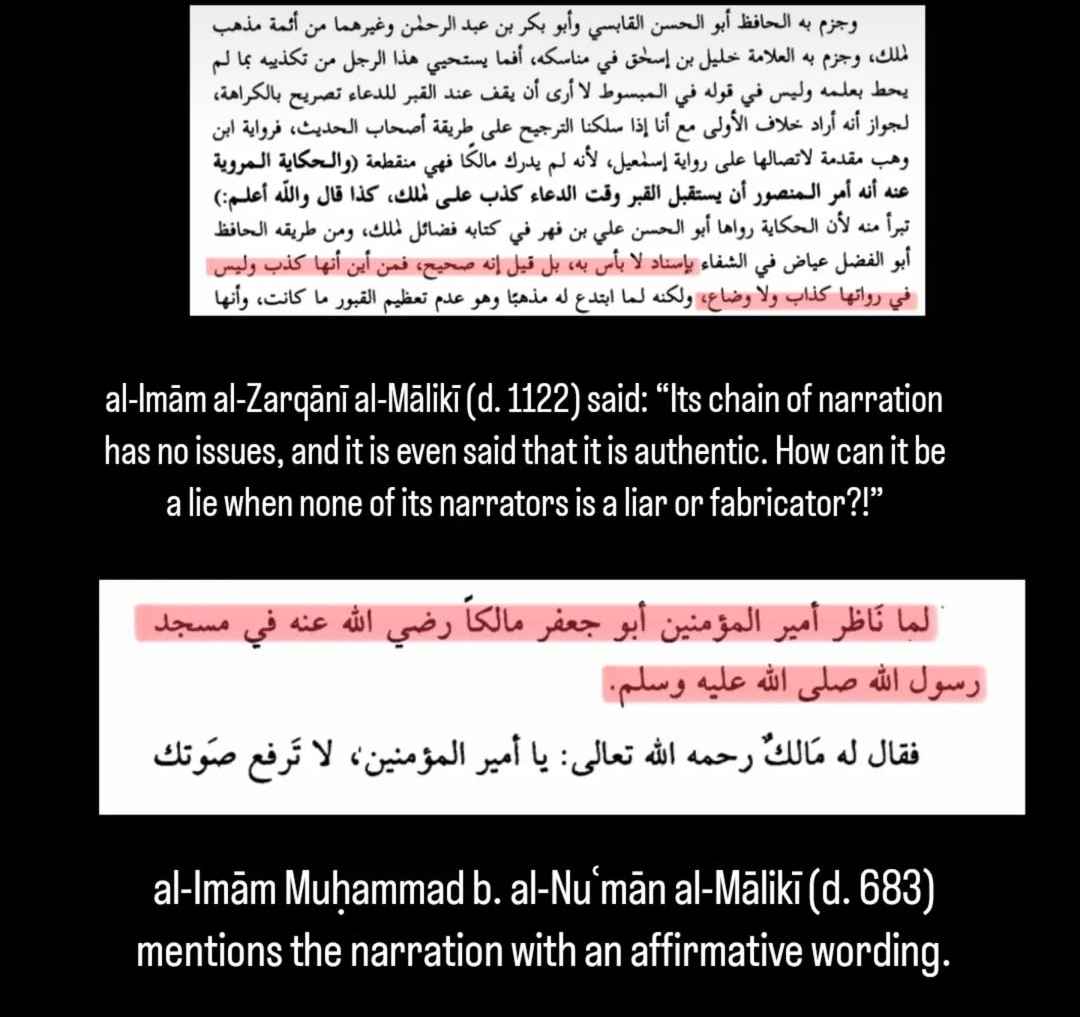
al-Imām Mālik b. Anas (d. 179) on seeking intercession from Sayyid al-Mursalīn ﷺ
{Embed}
admin = @fezmustafaa
https://www.darultahqiq.com/the-blazing-star-in-defence-of-a-narration-from-malik-al-dar/
{Embed}
admin
https://www.darultahqiq.com/the-blazing-star-in-defence-of-a-narration-from-malik-al-dar/
The Blazing Star in Defence of a Narration from Malik al-Dar - Daru…
The following work by Dr. Abul Hasan Hussain Ahmed is a defence of the authenticity of the following narration: It is related from Malik al-Dar,Umar’s treasurer, that the people suffered a drought during the time of Umar (his khilafah), whereupon a man came to the grave of the Prophet and said: “O Messenger of Allah, …
Some scans
Ibn kathir writes:
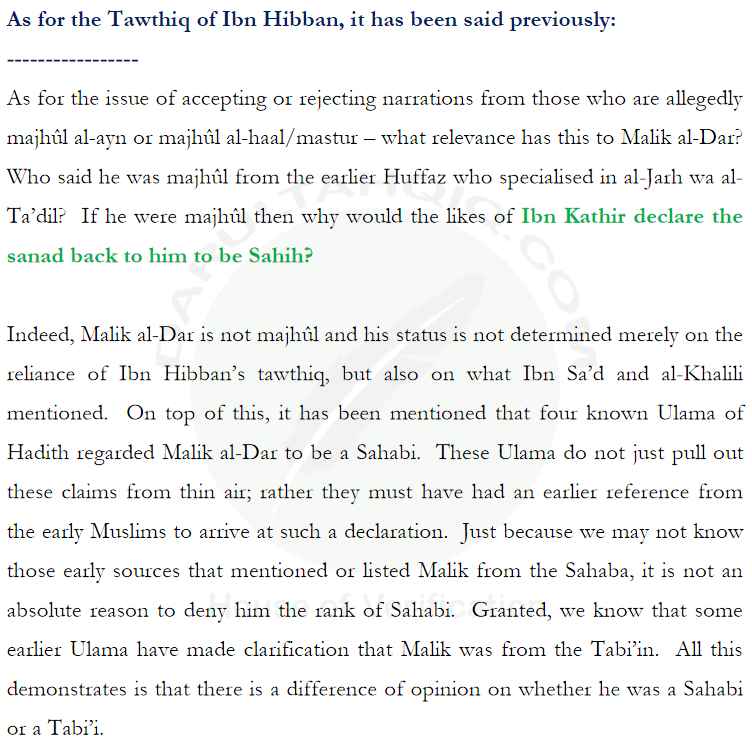
“Hafidh Abu Bakr Al-Bayhaqi said […] from Malik (Ad-Dar): “The people were affected by drought during the caliphate of ‘Umar Ibn al-Khattab. A man then came to the grave of the Prophet (صلى الله عليه وسلم) and said: “O Messenger of Allah, ask for rain for your community, they have suffered a lot of losses.” This man then saw in the dream the Messenger of Allah (صلى الله عليه وسلم) saying to him [in the sense]: “Give the salaam to ‘Umar and inform him that they will receive rain and say to him: “Take care of the community well.” The man then went to ‘Umar and told him this. ‘Umar then started crying and said: “O Lord, I will do everything in my power to serve the community.” And the chain of narration of this hadith is sahih.”
Al Bidhayah Wal Nihayah under the chapter of drought.
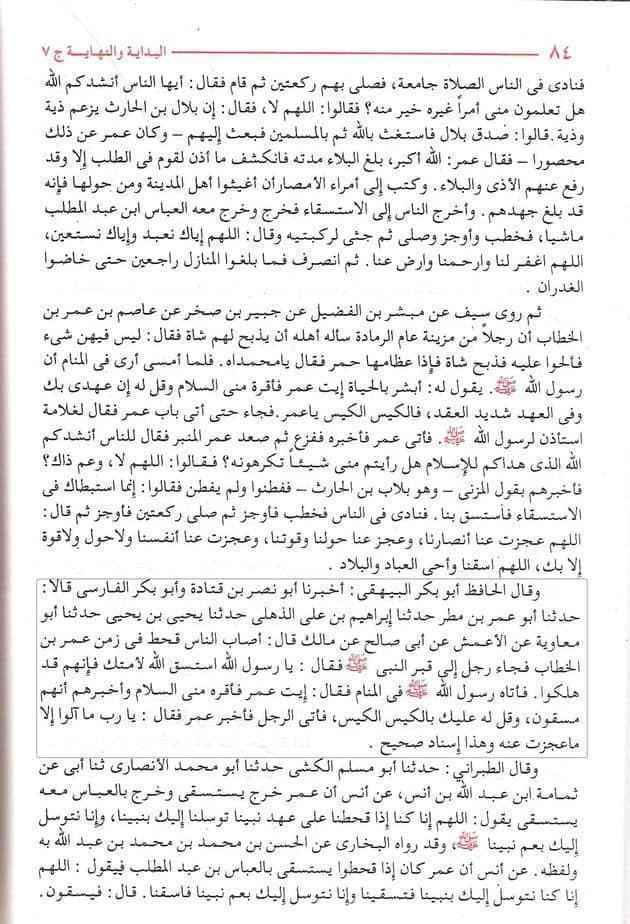
If this is the case
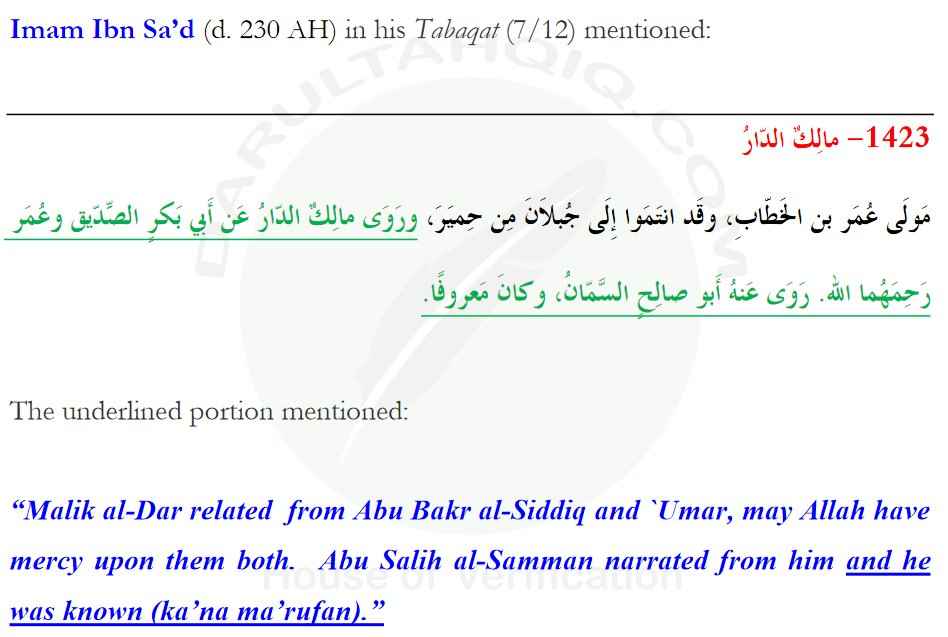
Ibn Sa’d (d. 230 AH) in his Tabaqat al-Kubra (7/12, no. 1423):
“Malik al-Dar related from Abu Bakr al-Siddiq and `Umar, may Allah have mercy upon them both. Abu Salih al-Samman narrated from him and he was known (ka’na ma’rufan).”
Ahmed Ibn Hanbal (d. 241 AH) in his al-I’lal wa ma’rifat al-rijal (1/289)
riwâya (transmission) of his son Abdullah:
“And Malik al-Dar, Abu Salih al-Samman related from him.
Abu Bakr Ibn Abi Khaythama (d. 279 AH) in al-Ta’rikh al-Kabir (2/80):
“Related from Malik al-Dar: Abu Salih Dhakwan.”
Ibn Abi Hatim al-Razi (d. 327 AH) in al-Kitab al-Jarh wa’l Ta’dil (8/213,
no. 944) mentioned that Abu Salih al-Samman related from Malik
Abu Ya’la al-Khalili (367-446 AH) mentioned in his al-Irshad (1/313):
إن أبا صالح سمع مالك الدار هذا الحديث
Meaning: “Indeed, Abu Salih heard from Malik al-Dar this hadith.”
Ibn Asakir (d. 571 AH) in his Ta’rikh Dimashq (56/489):
Ibn Asakir mentioned that Malik al-Dar heard from the following Sahaba: Abu Bakr al-Siddiq, Umar ibn al-Khattab, Abu Ubayda ibn al-Jarrah and Mu’adh ibn Jabal, radiallahu anhum. Those who related from Malik al-Dar included Abu Salih al-Samman, Abdar Rahman ibn Sa’eed ibn Yarbu, and the sons of Malik al-Dar – Awn and Abdullah.
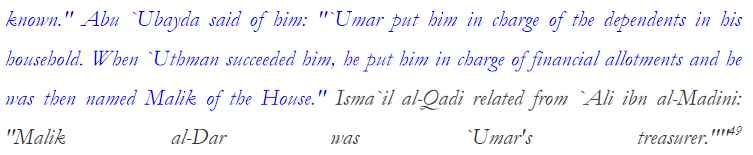
Imam Ibn Sa’ad said: “Malik ad-Dar was a slave freed by ‘Umar bin al-Khattab. He reported traditions from Abu Bakr as-Siddiq and ‘Umar, and Abu Salih Samman reported traditions from him. He was “WELL KNOWN (MAROOF)”
Reference: Ibn Sa’d, at-Tabaqat-ul-kubra Volume 006, Page No. 12, Narrator Number. 1423
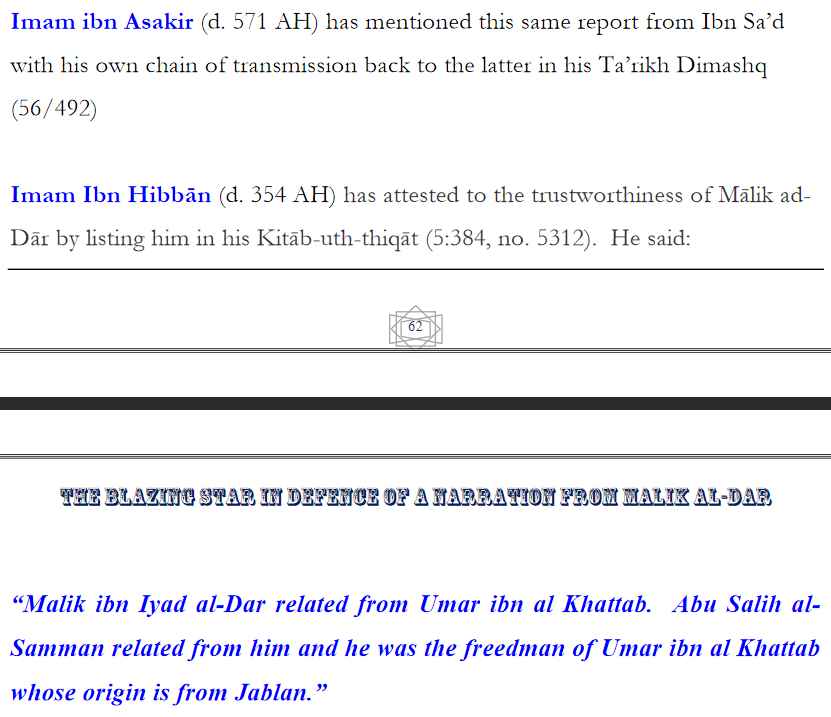
Imam ibn Asakir (d. 571 AH) has mentioned this same report from Ibn Sa’d
with his own chain of transmission back to the latter in his Ta’rikh Dimashq
(56/492)
Imam Ibn Hibbān (d. 354 AH) has attested to the trustworthiness of Mālik ad-Dār by listing him in his Kitāb-uth-thiqāt (5:384, no. 5312). He said: “Malik ibn Iyad al-Dar related from Umar ibn al Khattab. Abu Salih al-Samman related from him and he was the freedman of Umar ibn al Khattab whose origin is from Jablan.”
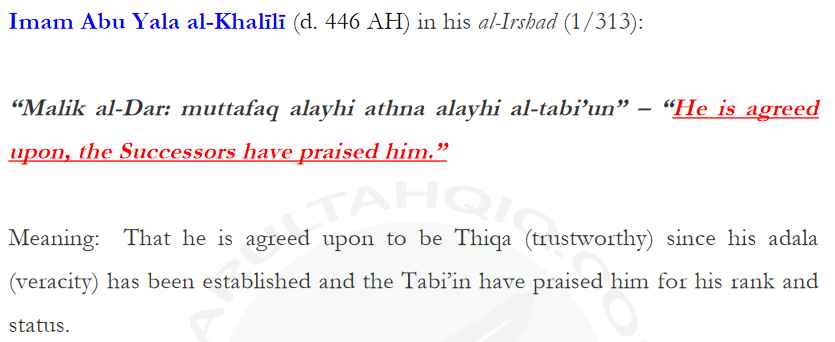
Imam Abu Yala al-Khalīlī (d. 446 AH) in his al-Irshad (1/313):
“Malik al-Dar: muttafaq alayhi athna alayhi al-tabi’un” – “He is agreed
upon, the Successors have praised him.”
Imam Muslim ibn al-Hajjaj (d. 261 AH) who is the author of the famous
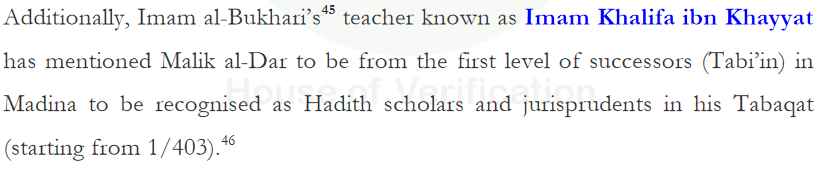
Sahih hadith collection has listed Malik al-Dar as being from the Tabi’in from Madina in his Tabaqat (p. 628, no.669)
In the same Ta’rikh Dimashq (56/491) of Ibn Asakir there is mention of Malik al-Dar being known as a Tabi’i (successor to the Sahaba) and that he was known as a Muhaddith (hadith scholar) to the famous expert on hadith narrators known as
Imam Yahya ibn Ma’een (d. 233 AH
AD-DAHABEE SAID :-
He is mudallis, and sometimes he narrates in this manner from a weak narrator without realising it. When he says haddathana [he told us], there is no problem with that, but when he says ‘an [narrating from], there is the possibility of tadlees except in the case of narration from the shuyookh from whom he narrated a great deal, such as Ibraaheem, Abu Waa’il and Abu Saalih al-Sammaan. His narration from these shaykhs is to be understood as meaning that he heard directly from them and there is no interruption in the chain.
(MIZAAN AL-I’TIDAAL 2/224)
حَدَّثَنَا عُمَرُ بْنُ حَفْصِ بْنِ غِيَاثٍ، حَدَّثَنِي أَبِي، حَدَّثَنَا الأَعْمَشُ، قَالَ سَمِعْتُ أَبَا صَالِحٍ، عَنْ أَبِي هُرَيْرَةَ، عَنِ النَّبِيِّ ﷺ قَالَ
” لَعَنَ اللَّهُ السَّارِقَ، يَسْرِقُ الْبَيْضَةَ فَتُقْطَعُ يَدُهُ، وَيَسْرِقُ الْحبلَ فَتُقْطَعُ يَدُهُ ”. قَالَ الأَعْمَشُ كَانُوا يَرَوْنَ أَنَّهُ بَيْضُ الْحَدِيدِ، وَالْحَبْلُ كانُوا يَرَوْنَ أَنَّهُ مِنْهَا مَا يَسْوَى دَرَاهِمَ
Sahih al-Bukhari 6783
Narrated Abu Huraira:
The Prophet ﷺ said, “Allah curses a man who steals an egg and gets his hand cut off, or steals a rope and gets his hands cut off.” Al-A’mash said, “People used to interpret the Baida as an iron helmet, and they used to think that the rope may cost a few dirhams.”
al-Dhahabi mentioned in his Ta’rikh Islam
(3/189, Awwad end) and in his Siyar a’lam an Nubala (5/36), that Abu Khalid al-
Ahmar heard al-A’mash saying that he heard 1000 hadiths from Abu Salih alSamman
ijma of Shafii School
Kufrcleaner Library 📚 - Qadyanis - tawassul-archive [1329330953323282493].txt_Files\the_permissibility_and_desirability__threa-a1ee9b1ed670f5c2.pdf
Story of Umar rz
Kufrcleaner Library 📚 - Qadyanis - tawassul-archive [1329330953323282493].txt_Files\Tawassul-cdeab67631ed9d45.pdf
Kufrcleaner Library 📚 - Qadyanis - tawassul-archive [1329330953323282493].txt_Files\100_great_scholars_of__thread_by_leayalkuf-691a9385a50fad46.pdf
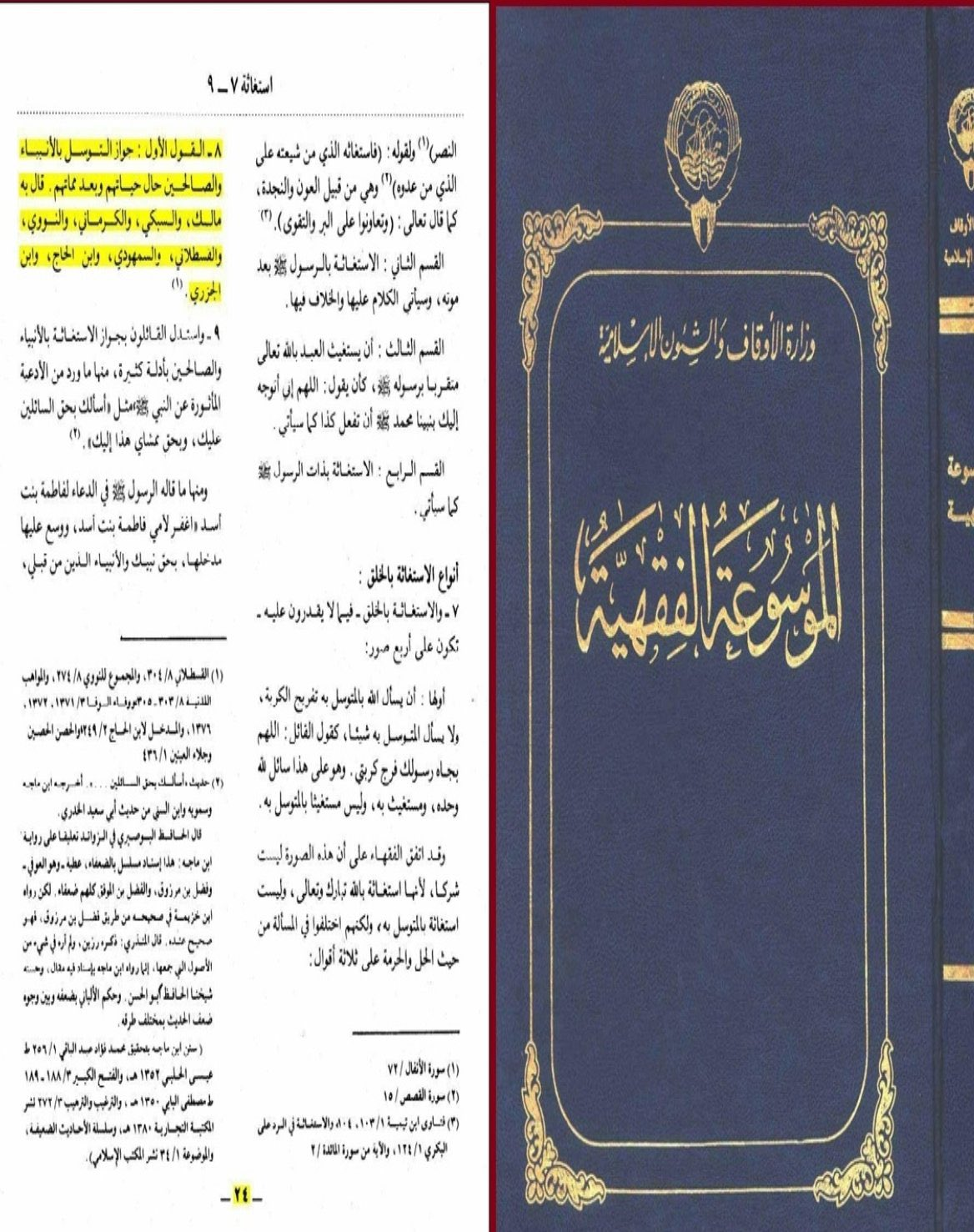
In the Kuwaiti Jurisprudential Encyclopedia, it is stated: Scholars permit seeking intercession through prophets and righteous people:
Permissibility of seeking intercession through prophets and righteous people during their lifetime and after their death: This was held by Mālik, al-Subkī, al-Kirmānī, al-Nawawī, al-Qasṭallānī, al-Samhūdī, Ibn al-Ḥājj, and Ibn al-Jazarī.
May God have mercy on them and be pleased with them
Tawassul is a supplication to our Lord ﷻ while seeking intercession through something He loves, in hopes that our Lord ﷻ will answer our supplication.
Among its forms is what is observed, as shown in the two pictures,
where we say after the supplication:
O Allah, I seek tawassul and turn to You through our Prophet Muhammad ﷺ
and it is endorsed by the four jurisprudential schools.