The 360 Joints Hadith and the Claim of Chinese Origins
The Prophet ﷺ mentioned that the human body has 360 joints. This is important because the statement is not a vague spiritual metaphor; it gives a specific number regarding the human body. Modern sources repeatedly mention the human body as having 360 joints, while the objection that “the Chinese knew this before Islam” collapses once the actual Chinese material is examined carefully.
The Chinese sources do not present a clean anatomical discovery equivalent to the hadith. Rather, many of them speak in symbolic, cosmological language, connecting the body to Heaven, Earth, days of the year, qi, channels, and metaphysical correspondences. Some Chinese sources even state 365 joints, not 360, and some explain that the “joints” being discussed are not skeletal bone joints at all.
The core argument is simple: modern medical and anatomical sources commonly affirm the figure of 360 joints, while the Chinese objection does not prove prior anatomical knowledge of the same claim. The Chinese material is inconsistent, symbolic, and often based on cosmology rather than empirical anatomy.
The Prophetic Statement About 360 Joints
The article begins with the claim that the Prophet ﷺ mentioned humans having 360 joints in the body. The challenge is then raised: how could the Prophet ﷺ, who was not an anatomist and did not have modern tools for studying the human body, know such a specific detail?
The argument should not be exaggerated. Do not claim that every anatomist before the 1950s agreed on 240 joints unless a direct academic source is provided. The stronger argument is that modern references repeatedly use the figure of 360 joints, and that the Chinese-copying objection does not succeed.
Modern Sources Mentioning 360 Joints
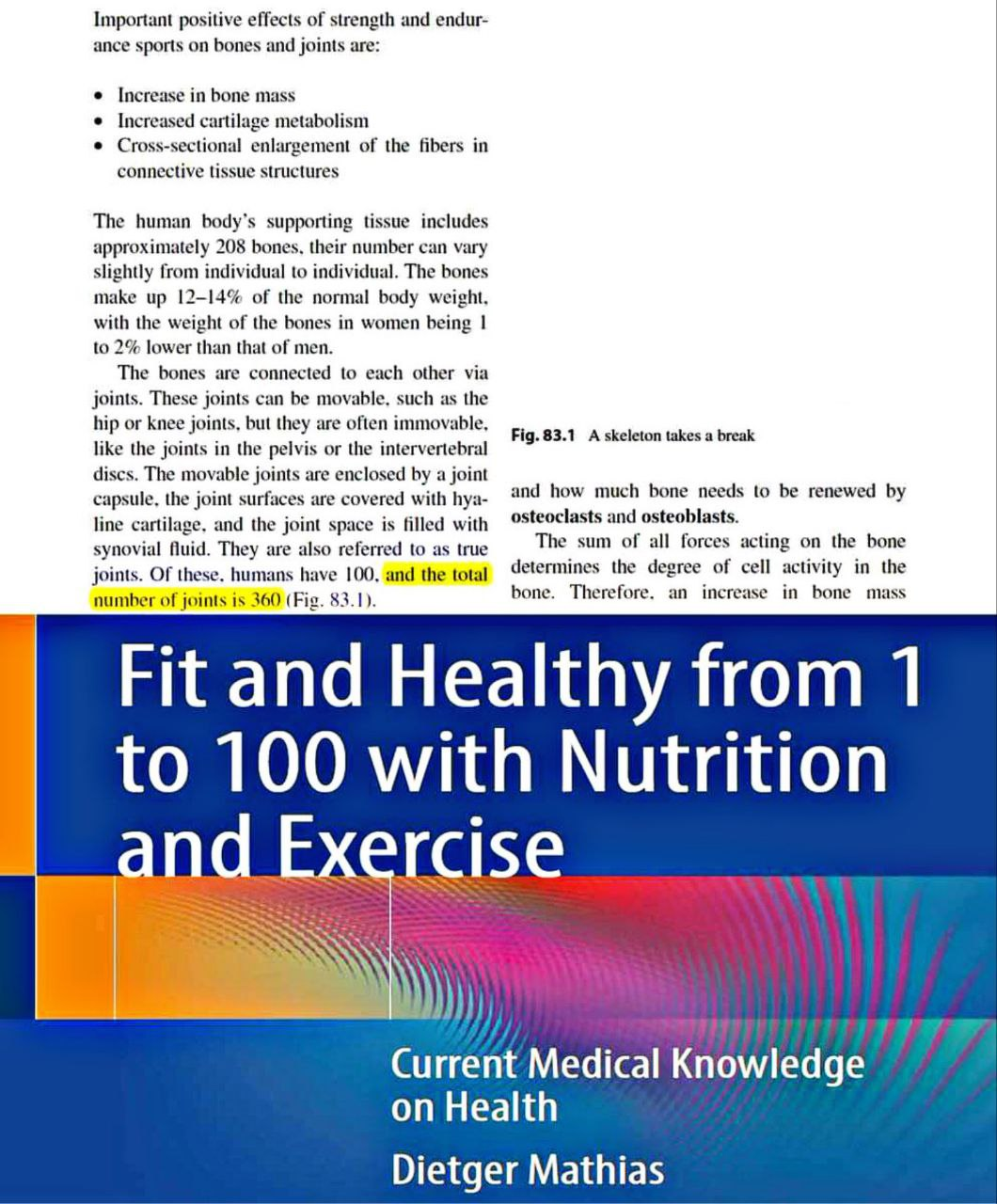
This scan is from a modern health, nutrition, and exercise book. The highlighted section explains that the body’s supporting tissue includes around 208 bones, though the number can vary slightly between individuals. It then explains that bones are connected through joints, some movable and some immovable, and states that while humans have around100 movable joints, the total number of joints is 360. This scan supports the claim that modern medical and health literature uses the figure of 360 total joints, while distinguishing between total joints and movable joints.
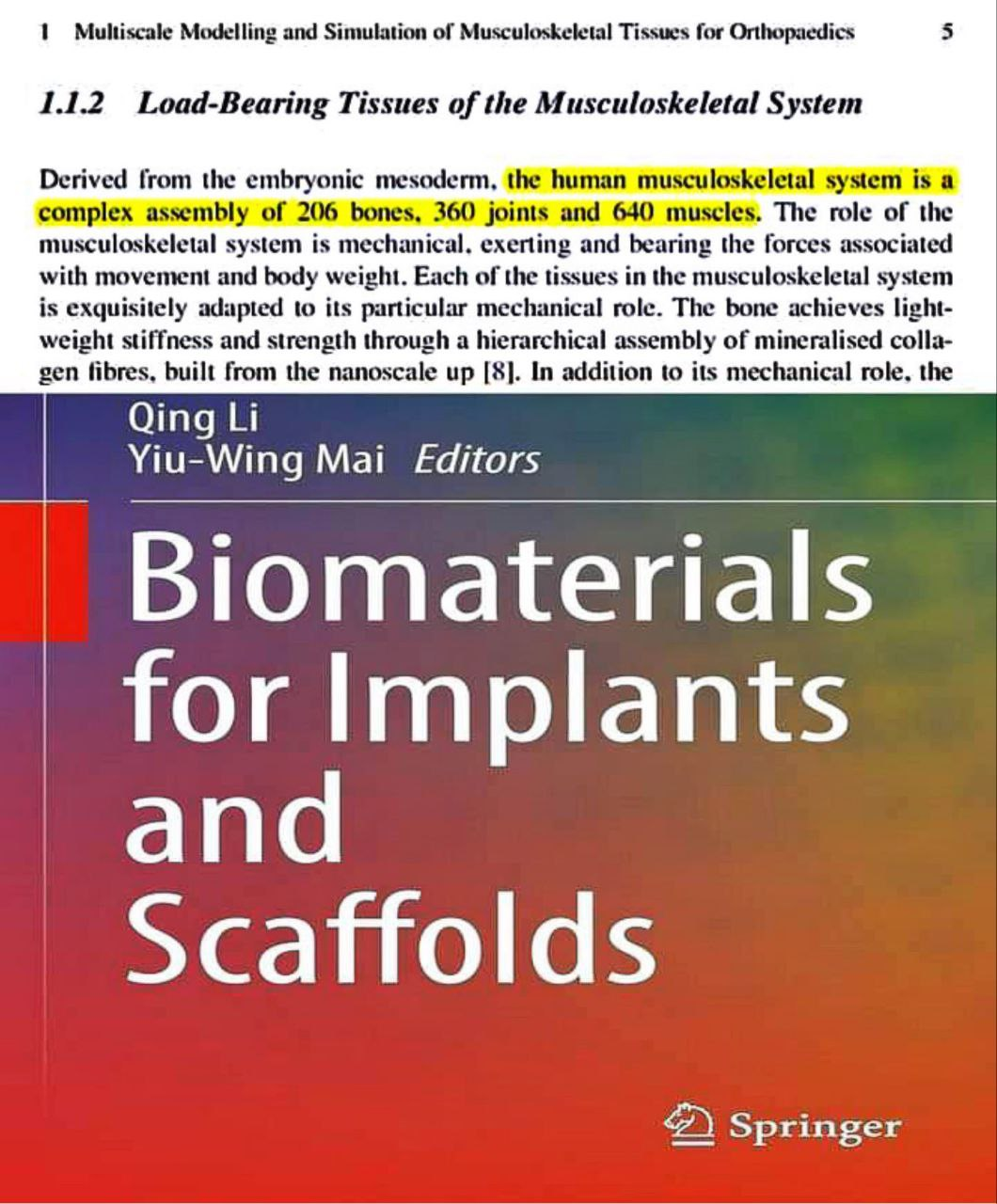
This scan comes from a technical musculoskeletal and orthopaedic context. The highlighted sentence states that the human musculoskeletal system is a complex assembly of206 bones, 360 joints, and 640 muscles. The surrounding passage discusses the role of the musculoskeletal system in movement, load-bearing, body weight, and mechanical adaptation. This is useful because it is not merely a popular apologetic source; it is a biomedical/engineering-style source mentioning the 360-joint figure in a technical context.

This scan shows an orthopaedic clinic FAQ answering the question: “How many joints are there in the human body?” The answer given is:640 muscles, 206 bones, 360 joints. This is a simple medical-clinic reference supporting the same modern count. It is not a detailed academic proof by itself, but it is useful as a straightforward contemporary medical reference.
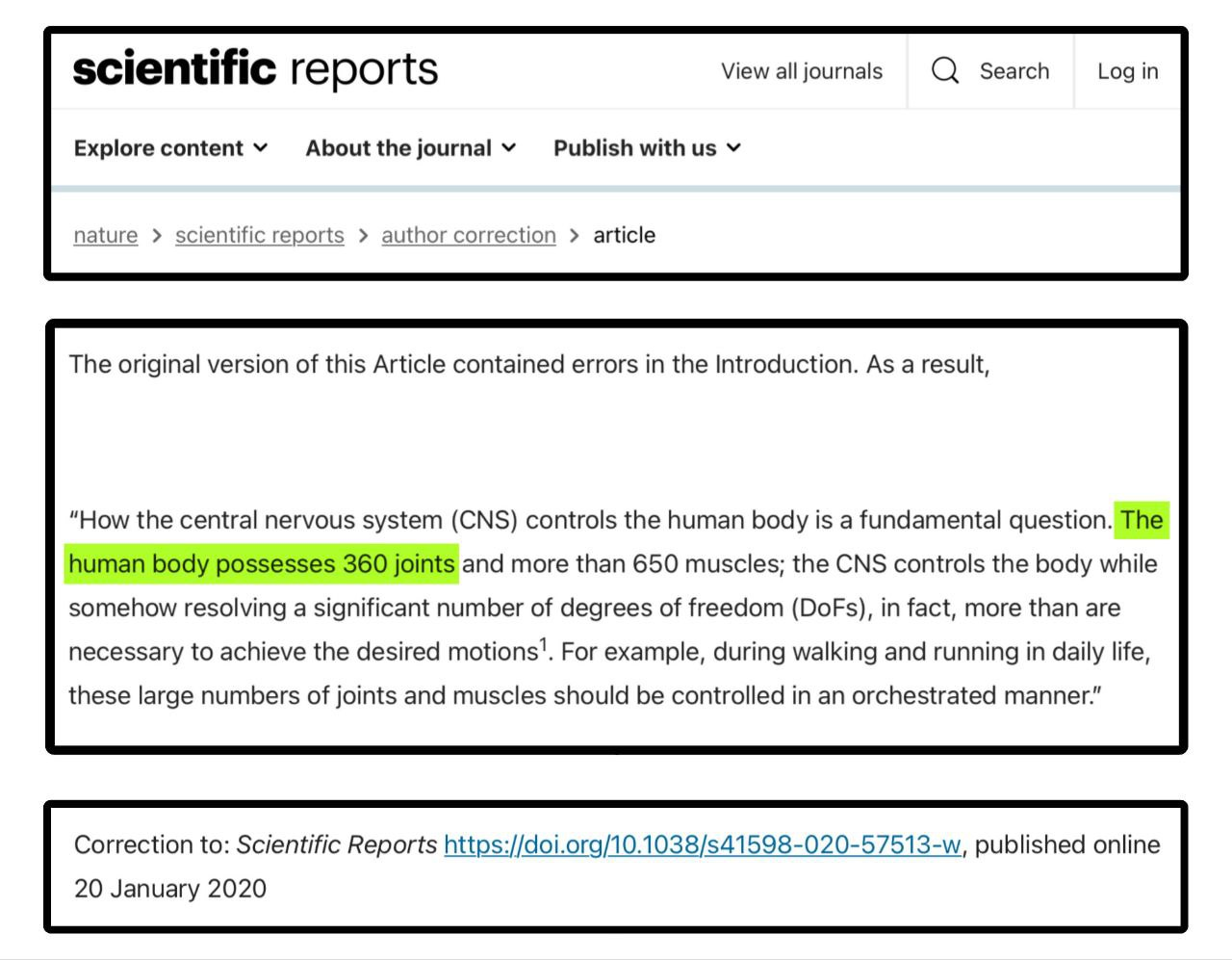
This scan shows aScientific Reports author correction. The highlighted passage says that the human body possesses 360 joints and more than 650 muscles, and that the central nervous system controls the body while managing a large number of degrees of freedom. This scan is valuable because it comes from a Nature-family journal page, although it is specifically an author-correction notice rather than a full anatomical article focused only on joint-counting.
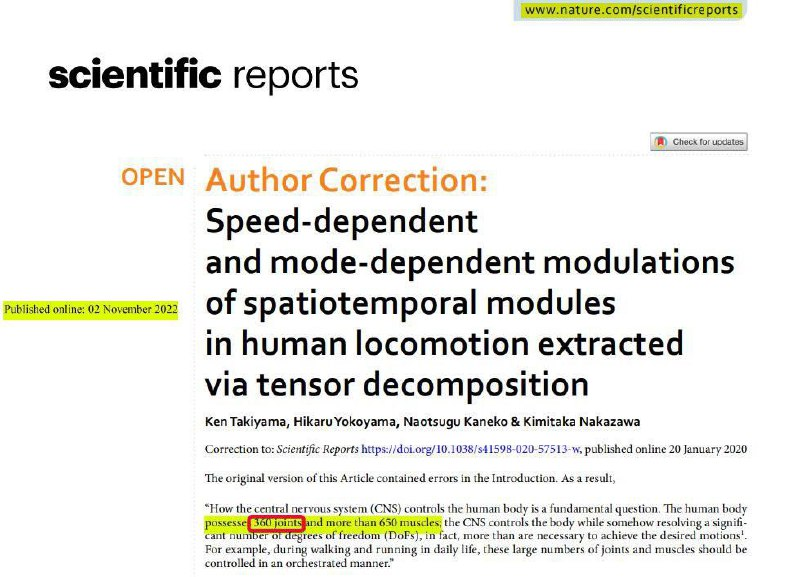
This scan shows the broader page for theScientific Reports author correction titled “Speed-dependent and mode-dependent modulations of spatiotemporal modules in human locomotion extracted via tensor decomposition.” The highlighted portion again contains the corrected sentence stating that the human body possesses 360 joints and more than 650 muscles. This scan supports the previous one by showing the article title, authors, publication context, and where the 360-joint statement appears.
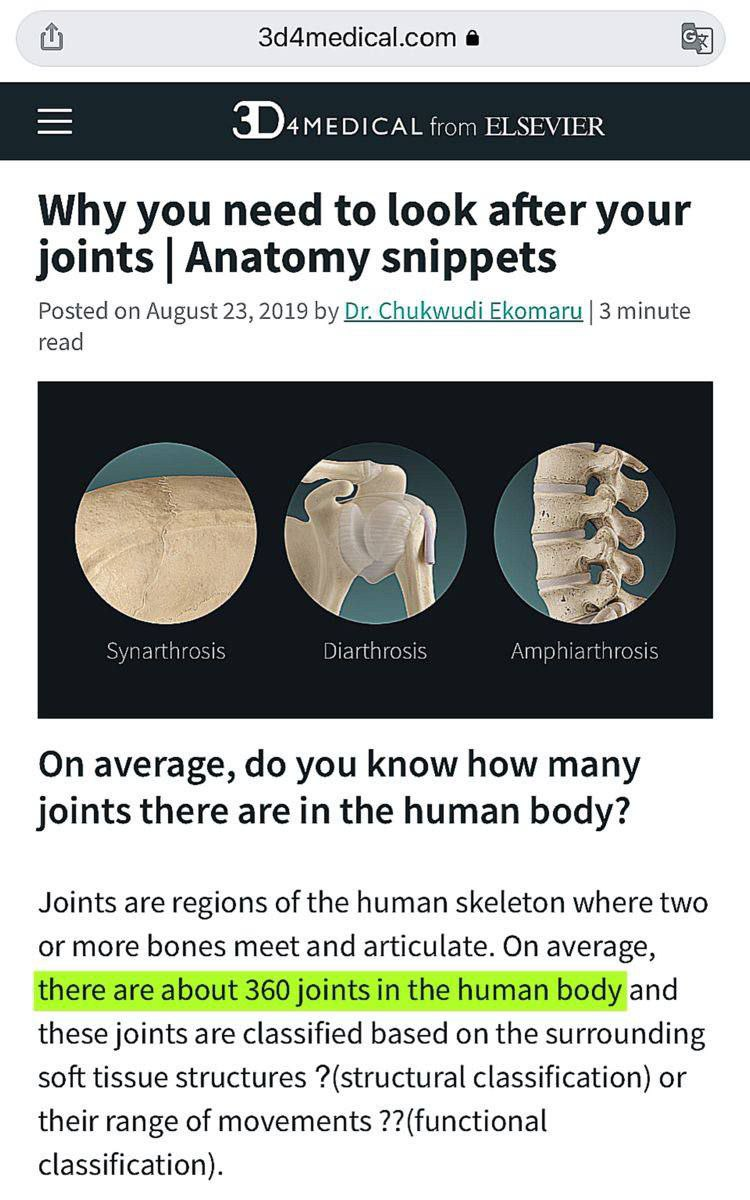
This scan is from a 3D Medical/Elsevier anatomy article about looking after joints. It explains that joints are regions where two or more bones meet and articulate. The highlighted sentence says there areabout 360 joints in the human body. It also notes that joints are classified according to surrounding soft tissue structures and range of movement. This scan is useful as a modern anatomy/health reference, though it uses approximate wording: “about 360.”

This scan explains joints as movable connections between the ends of two bones. The highlighted sentence states that there are360 joints in the human body. The surrounding text describes cartilage, synovial fluid, and how these allow smooth joint movement, then gives examples such as ball-and-socket joints in the hip and shoulder, and hinge joints in the knee and elbow. This scan is useful for showing that medical-facing educational material commonly presents the 360-joint figure.
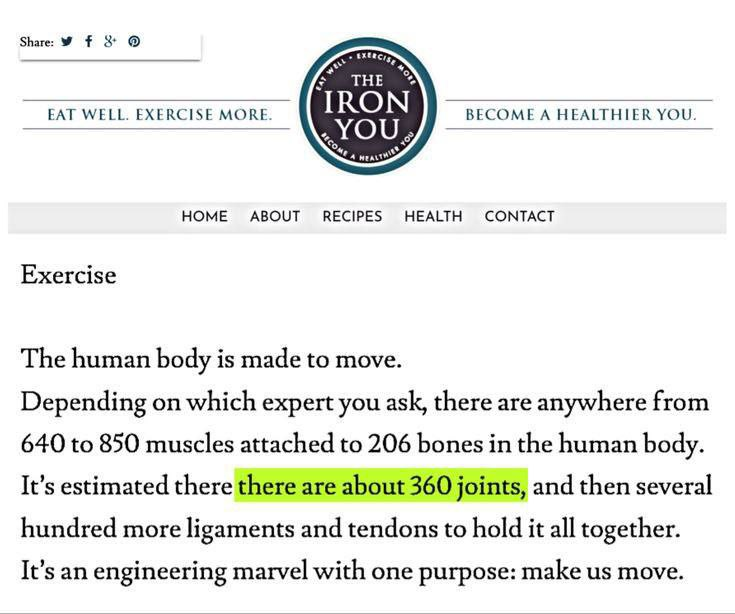
This scan is from an exercise and health page. The highlighted passage says that the human body hasabout 360 joints, along with 206 bones and hundreds of muscles, ligaments, and tendons. The context is not a technical anatomy discussion but a general-health discussion about the body being made to move. Use this as minor supporting material only, not as a primary academic source.
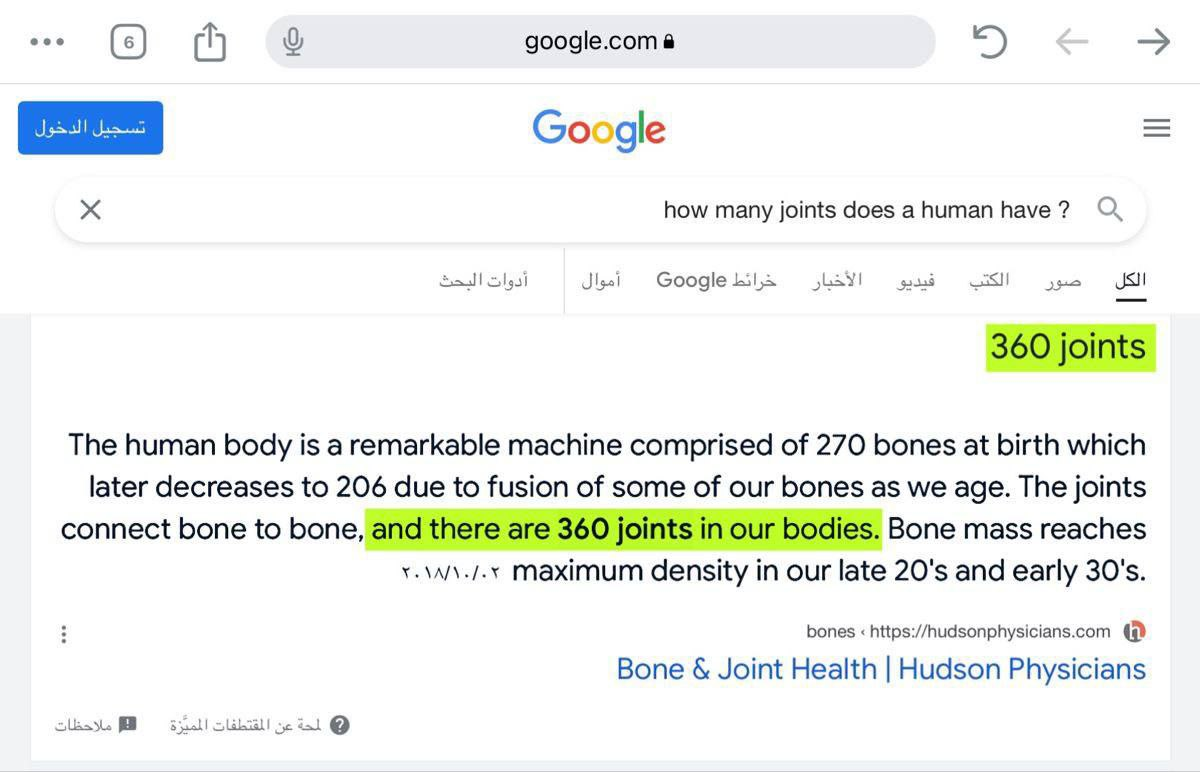
This scan shows a Google result for “how many joints does a human have?” The result states that the human body has 270 bones at birth, later decreasing to 206 because some bones fuse, and that there are360 joints in our bodies. The source shown is Hudson Physicians’ “Bone & Joint Health” page. This is useful as a public-facing medical reference, but because it is a search-result snippet, it should not be treated as stronger than the underlying source page itself.
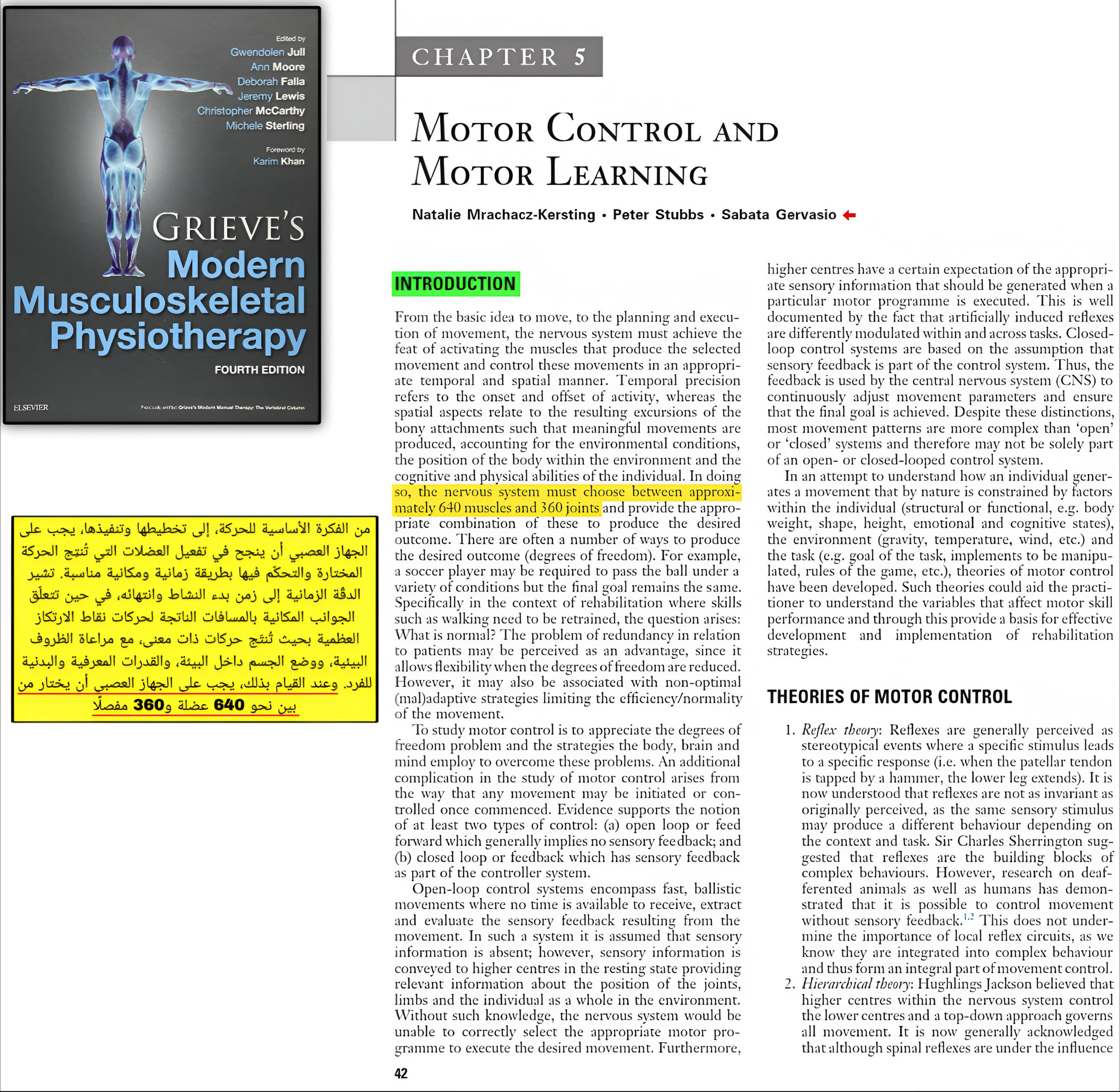
This scan is from a modern physiotherapy textbook, in a chapter on motor control and motor learning. The highlighted sentence says the nervous system must choose between approximately640 muscles and 360 joints when planning and executing movement. The Arabic note summarizes that movement requires neural planning, coordination, sensory feedback, and environmental adaptation. This scan is useful because it places the number 360 in a professional physiotherapy context connected to motor control, not merely a popular health website.
Additional Modern References
This scan is from a commercial health/supplement-style website discussing joint pain. It states that, with some360 joints in the human body, there are many opportunities for pain, and then discusses joint pain, arthritis, bursitis, gout, and general remedies. This scan can be used only as weak supporting evidence because the source is not academically strong. It is useful to show that the 360-joint figure appears in common health literature, but it should not be treated as a primary authority.
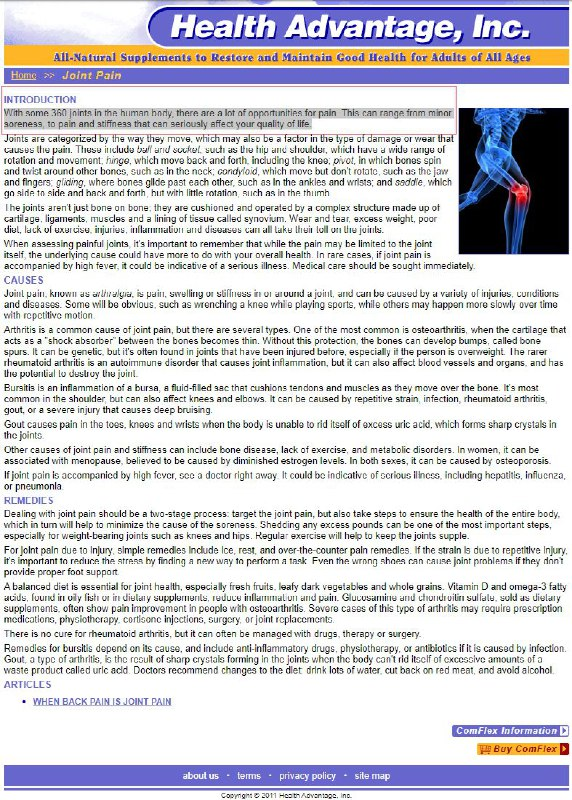
This scan duplicates the Health Advantage joint-pain page. It again states that there are around360 joints in the body and discusses causes of joint pain, including arthritis, bursitis, gout, cartilage damage, ligament sprains, dislocations, and other conditions. Since it is a duplicate of the earlier commercial-health source, do not overuse it. One instance is enough.
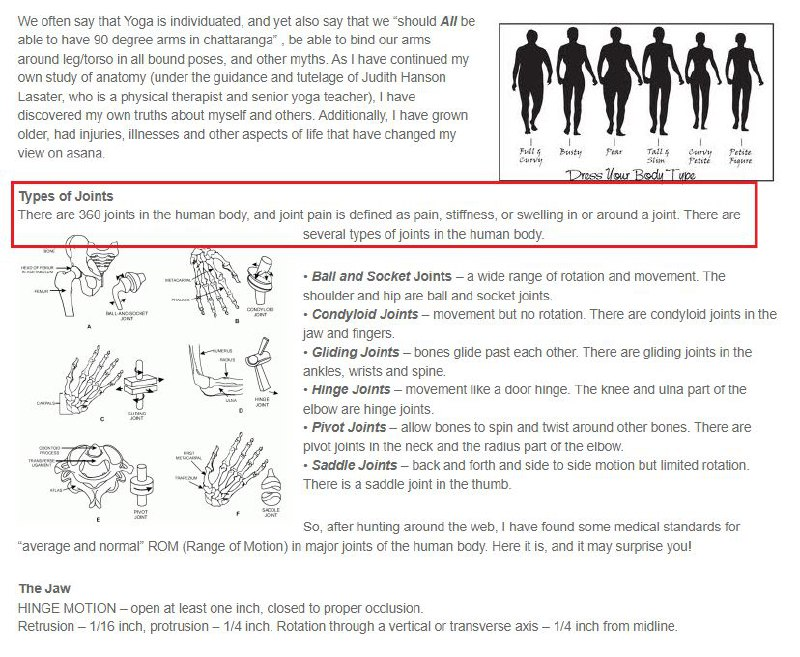
This scan discusses types of joints and states that there are360 joints in the human body. It then lists joint categories such as ball-and-socket, condyloid, gliding, hinge, pivot, and saddle joints. This scan is useful as a general educational explanation of joint classification, but it appears to be from a yoga/anatomy web page rather than a high-level medical textbook. Use it as supplementary, not primary, evidence.
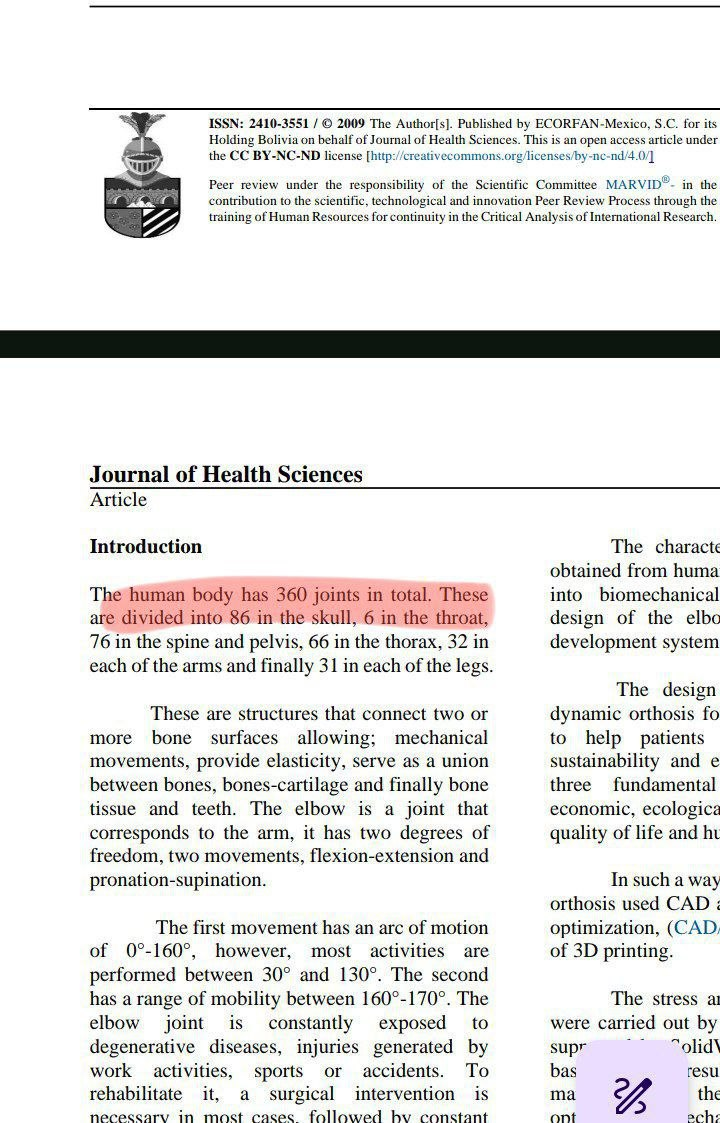
This scan could not be read clearly from the available image. However, the attached PDF link points to aJournal of Health Sciences article about the sustainable design of a dynamic elbow orthosis for adult rehabilitation. According to the supplied notes, the article states that the human body has 360 joints in total, then gives a regional distribution: 86 in the skull, 6 in the throat, 76 in the spine and pelvis, 66 in the thorax, 32 in each arm, and 31 in each leg. This is one of the more detailed modern references because it gives a breakdown by body region, but it should still be used as supporting evidence rather than the single foundation of the argument.
Journal of Health Sciences PDF
The Chinese Objection
Some may argue that ancient Chinese sources already knew the number of human joints before the Prophet ﷺ. However, this objection is weak for several reasons.
First, Chinese sources are not consistent. Some mention 360, while others mention 365 or 365¼. Second, the numbers are often tied to cosmology, such as the number of days in the year, Heaven, Earth, yin and yang, and qi. Third, some sources explicitly show that the “joints” in question were not anatomical bone joints, but symbolic points of communication in the body.
Critics may claim: “The ancient Chinese already knew the human body had 360 joints, so the Prophet ﷺ could have copied it from them.”
This objection fails. The Chinese material does not give a stable anatomical claim equivalent to the hadith. Some Chinese texts say 365 joints, not 360. Other sources connect the number to Heaven, the calendar, qi, and metaphysical body-cosmos correspondences. In some contexts, the word translated as “joints” does not refer to skeletal bone joints at all.
Chinese Cosmology and the Number of Joints
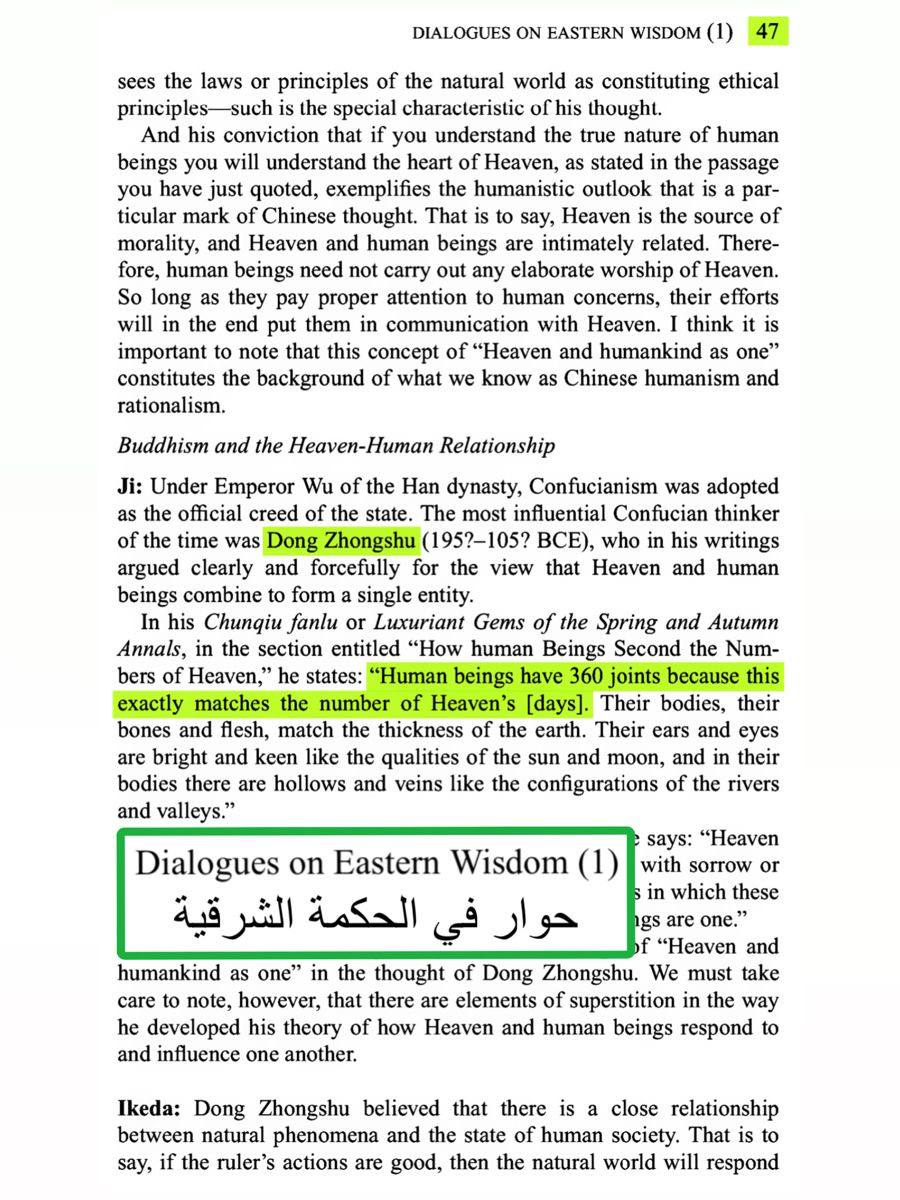
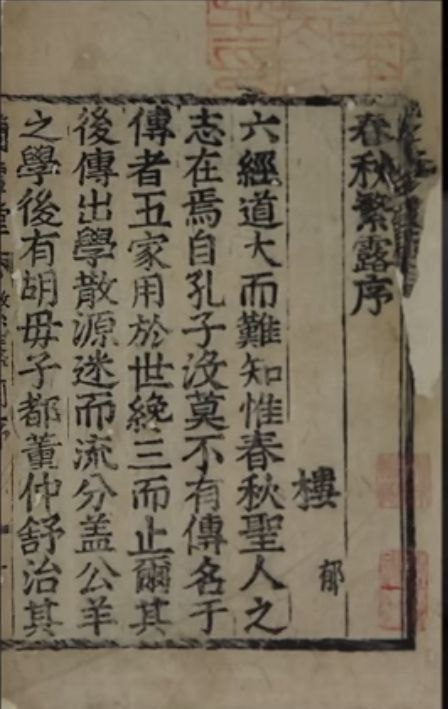
This scan discusses Dong Zhongshu, a Han-dynasty Confucian thinker, and quotes a passage fromChunqiu fanlu / Luxuriant Gems of the Spring and Autumn Annals. The highlighted passage says that human beings have 360 joints because this exactly matches the number of Heaven’s days. The important point is the context: this is not presented as anatomical dissection or empirical medical counting. It is part of a symbolic Chinese cosmological argument where the human body mirrors Heaven and Earth. So this scan is useful against the claim that the Chinese “scientifically discovered 360 joints” before Islam. The number is being used in a Heaven-human correspondence framework.
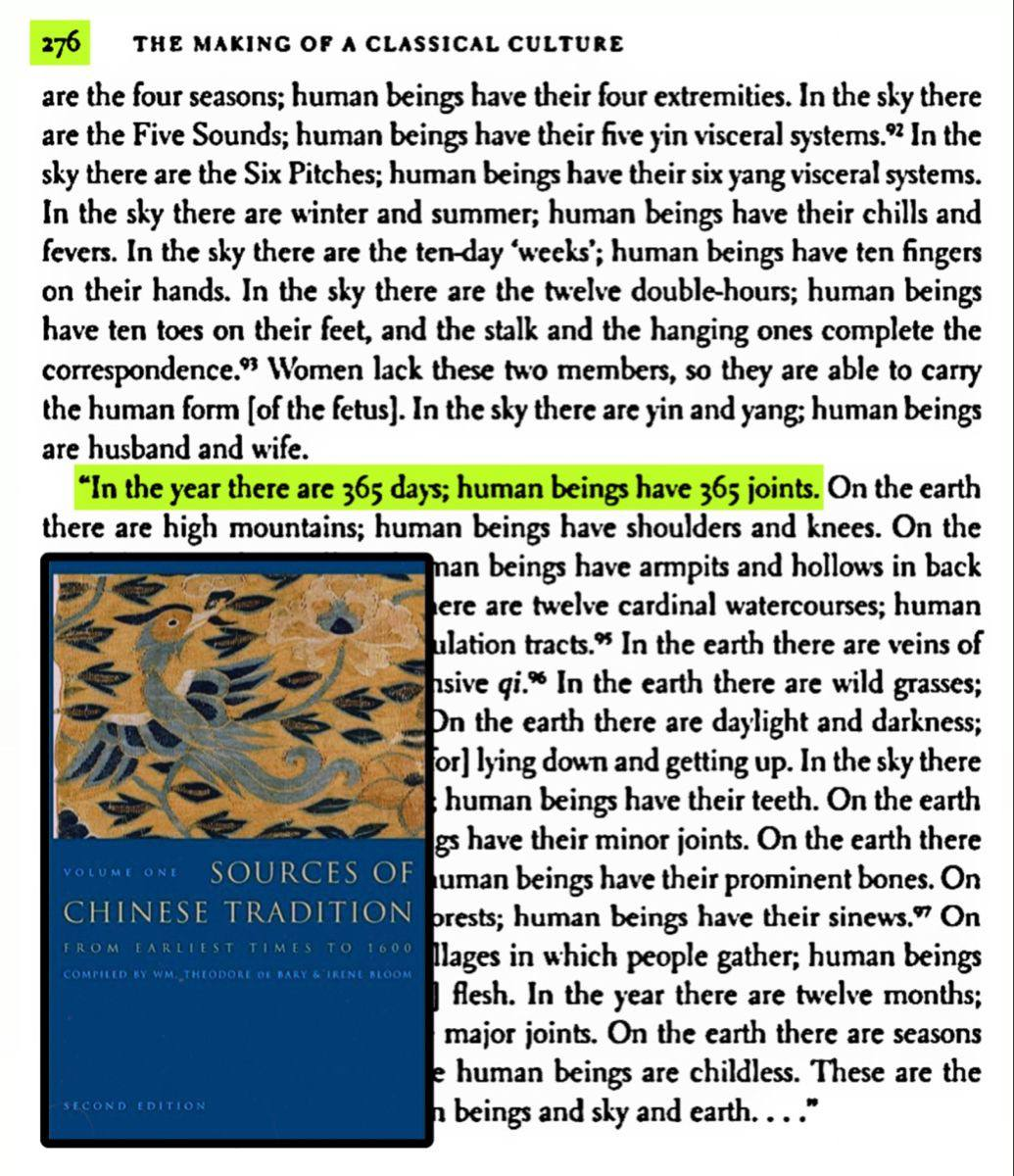
This scan gives another Chinese cosmological passage. The highlighted line says:“In the year there are 365 days; human beings have 365 joints.” The surrounding text repeatedly compares features of the human body to features of the sky, earth, seasons, yin and yang, fingers, toes, mountains, rivers, and other cosmic correspondences. This is very important because it shows that Chinese tradition did not consistently teach “360 joints” in the anatomical sense. Here the number is 365, tied directly to the number of days in the year. This supports the argument that the Chinese material is symbolic and cosmological, not a precise anatomical precedent for the hadith.
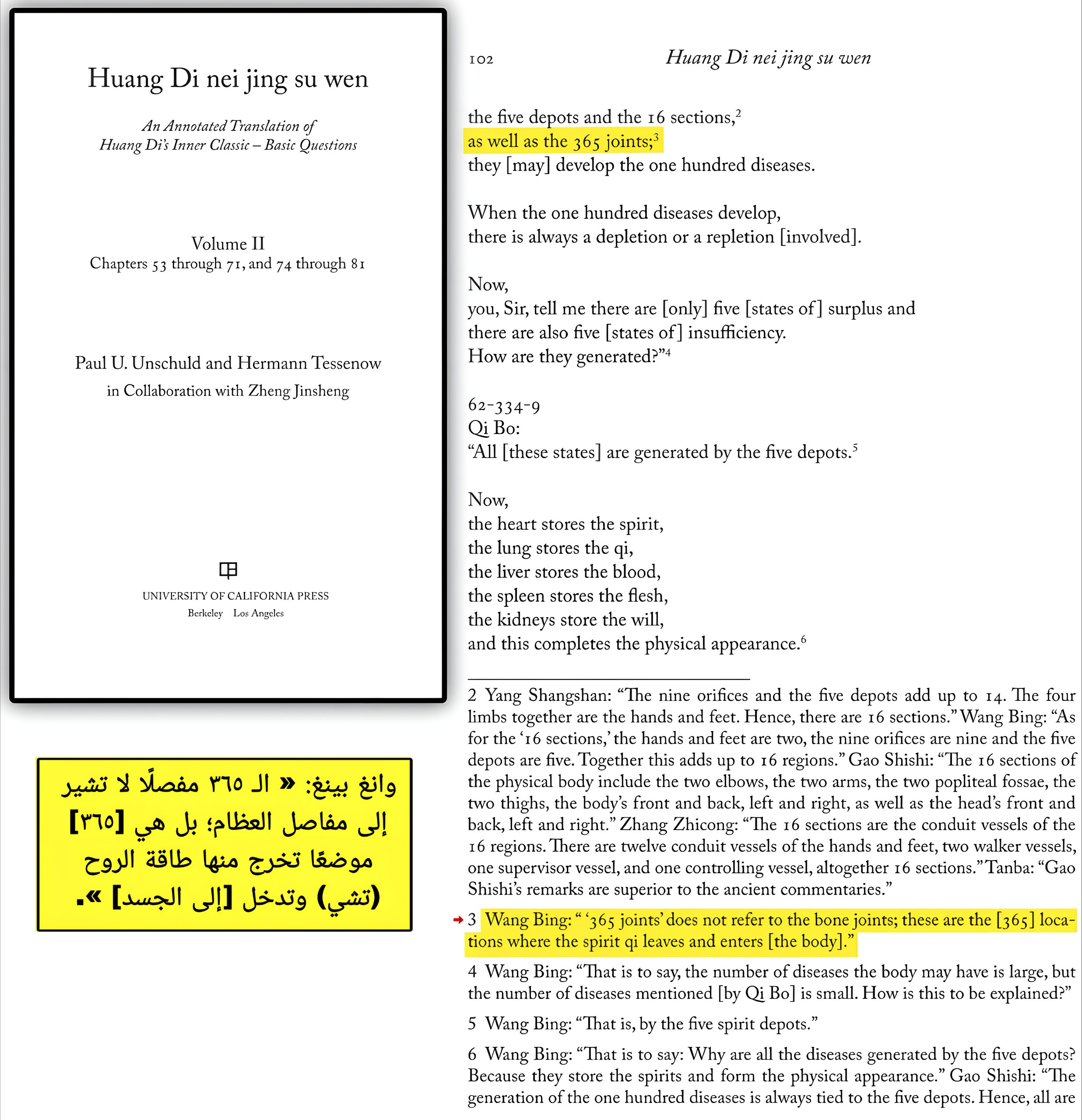
This scan is especially strong for refuting the “Chinese already knew it” objection. The highlighted text mentions365 joints, but the footnote by Wang Bing explains that “365 joints” does not refer to bone joints. Instead, it refers to locations where the spirit qi leaves and enters the body. This means the term being translated as “joints” in this Chinese medical context is not the same as anatomical skeletal joints. It is tied to traditional Chinese medical and metaphysical concepts about qi, not modern anatomy.
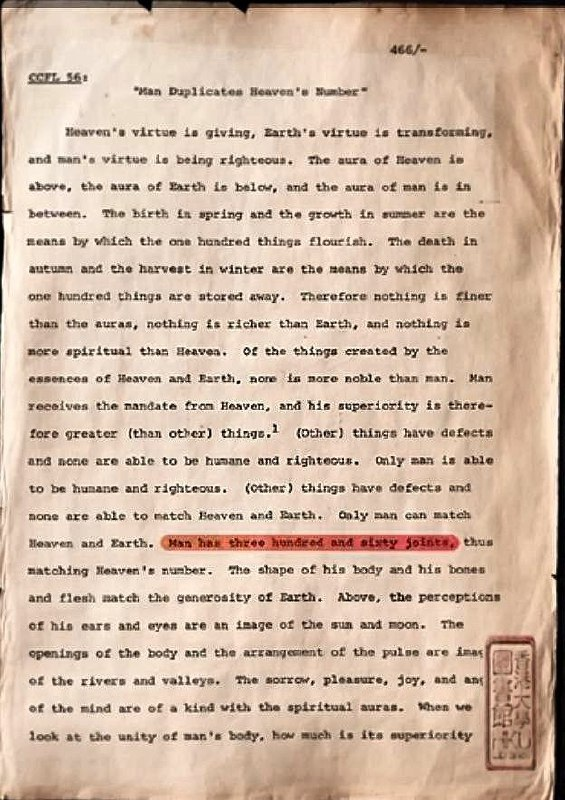
The upper part of this scan appears to continue the Health Advantage page, but the lower half shows a Chinese cosmological passage. The highlighted line ties a human bodily number to “Heaven’s number,” and the surrounding text describes how the body mirrors Heaven and Earth. The key value of this scan is not that it proves an anatomical count, but the opposite: it shows that the Chinese discussion is framed through symbolic macrocosm/microcosm correspondence. It treats the human body as a reflection of cosmic order, not as a modern anatomical inventory.
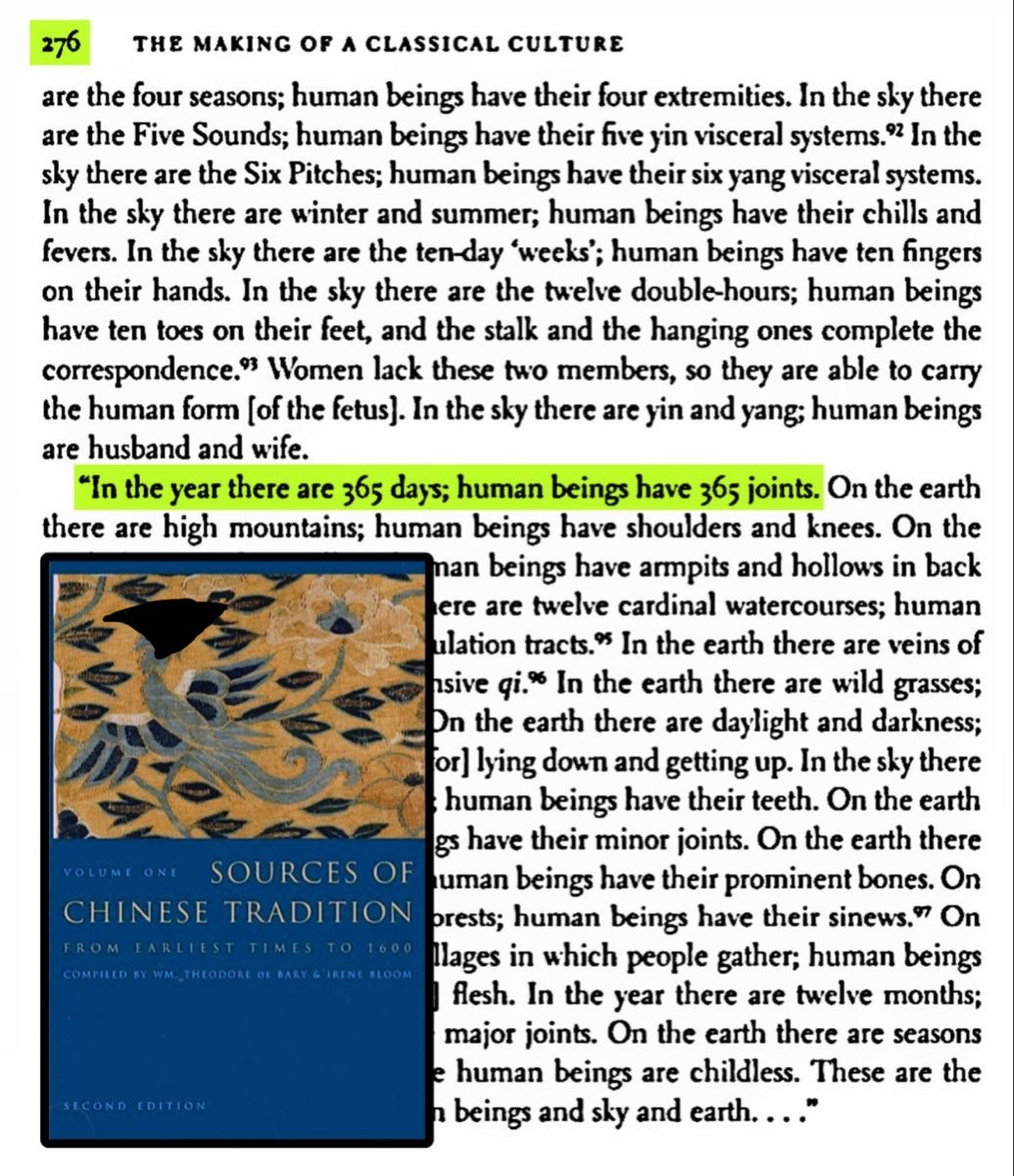
This scan duplicates the earlierSources of Chinese Tradition page. It states that in the year there are 365 days, and human beings have 365 joints. The wider passage is clearly structured around correspondences between the human body and cosmic/natural phenomena. This is valuable because it directly weakens the objection that Chinese sources simply preserved the same 360-joint anatomical fact. Here the number is 365, and the reasoning is symbolic.
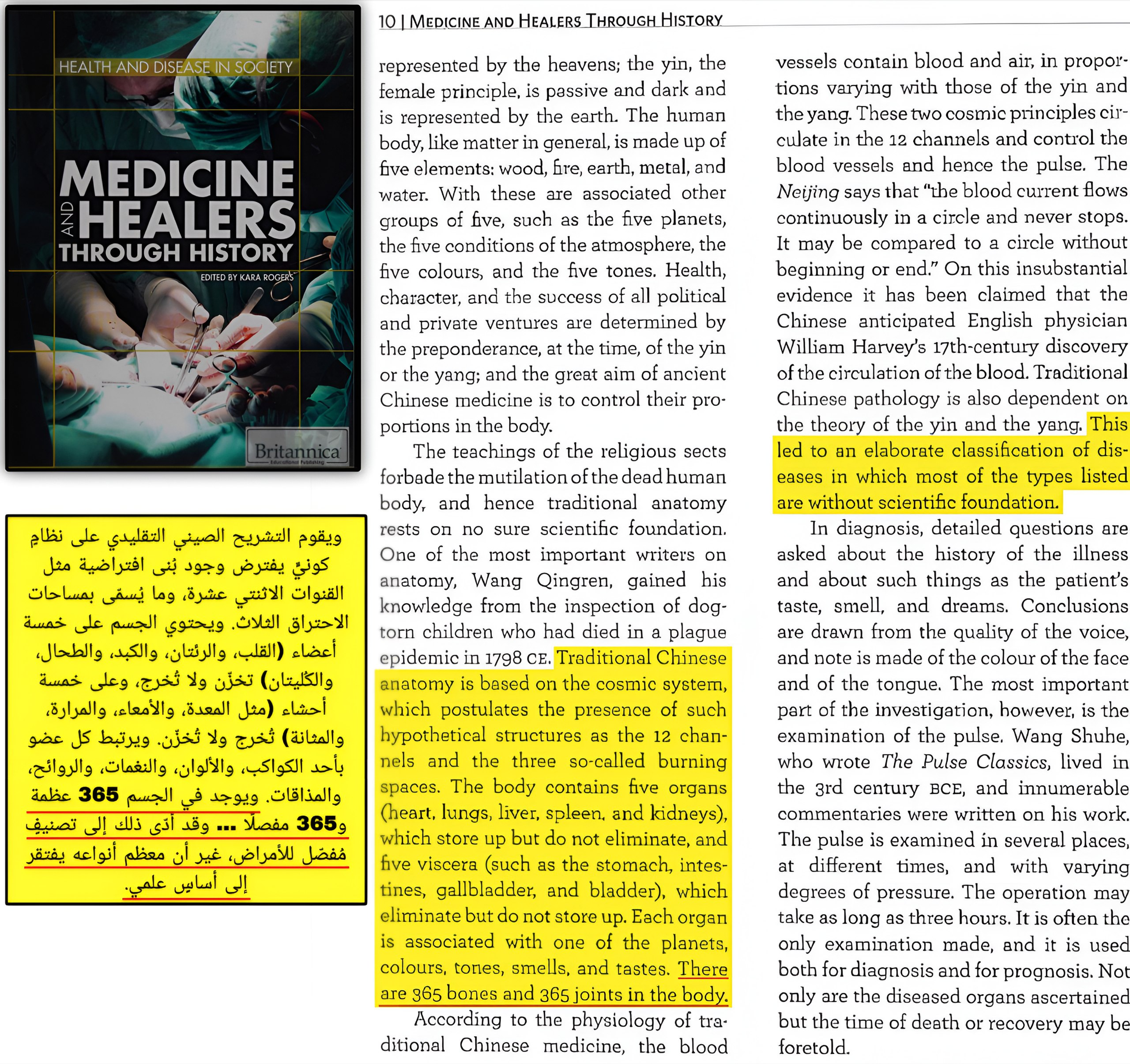
This scan explains that traditional Chinese anatomy was based on acosmic system. The highlighted text mentions hypothetical structures such as the 12 channels and the three burning spaces, along with five organs and five viscera connected to planets, colours, tones, smells, and tastes. It then states that there are 365 bones and 365 joints in the body, and the page also notes that this system led to classifications of disease without scientific foundation. This scan is one of the strongest against the Chinese-copying objection because it shows that the Chinese framework was symbolic, cosmological, and not equivalent to modern anatomical joint-counting.

This is a cover/title scan for the bookGraphics and Text in the Production of Technical Knowledge in China: The Warp and the Weft, edited by Francesca Bray, Vera Dorofeeva-Lichtmann, and Georges Métailié. The cover itself does not prove the joint-count argument, but it identifies the source context for the following scan. Do not treat this cover as evidence by itself; it is only bibliographic/source identification.
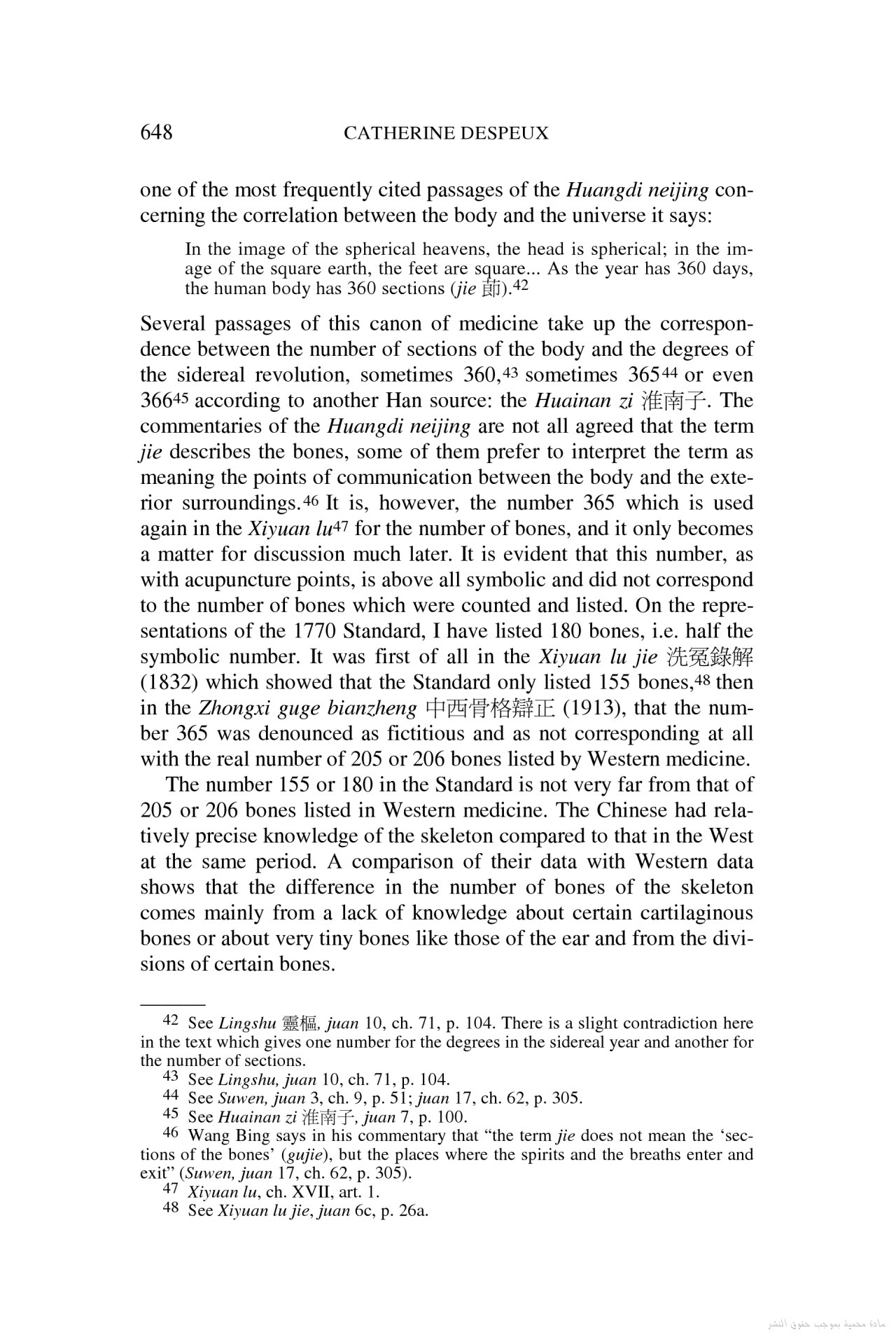
This scan is highly relevant and nuanced. It quotes a passage from theHuangdi neijing saying that as the year has 360 days, the human body has 360 cun/jie. But the page immediately explains that Chinese sources vary: some passages use 360, some 365¼, and some 365. It also explains that the term jie can refer not simply to bones or skeletal joints, but to points of communication between the body and the exterior. The author further notes that 365 acupuncture points were symbolic and did not correspond to listed bones, and that later Western medicine criticized the Chinese number of 365 bones as fictitious. This scan is probably the best one for a careful argument: Chinese sources had body-cosmos number correspondences, but they were not making the same claim as the hadith about anatomical joints.
Why the Chinese Objection Fails
The Chinese objection fails because it treats all uses of the number 360 as if they mean the same thing. That is bad argumentation. A number appearing in a Chinese cosmological framework does not automatically equal anatomical knowledge of skeletal joints.
The Chinese material itself shows instability in the number. Some sources speak of 360, others of 365, and others of 365¼. This is not how a precise anatomical discovery would normally be preserved. Instead, the numbers are tied to cosmic symbolism: days of the year, Heaven’s order, yin and yang, channels, qi, and the correspondence between the body and the universe.
The critic must prove more than the existence of the number 360 in a Chinese text. He must prove that the Chinese source meant skeletal anatomical joints, that the figure was known in a medically accurate sense, that it was accessible in Arabia, and that the Prophet ﷺ copied from it. The scans provided do not establish any of that.
The Meaning of Qi and Why It Matters
The Chinese concept of qi is central here. Qi is a traditional Chinese philosophical and medical concept referring to vital energy or breath that permeates the body and the universe. In traditional Chinese medicine, bodily structures were often interpreted through channels, flows, correspondences, and energetic locations.
This matters because some Chinese sources do not use “joints” in the same sense as modern skeletal anatomy. One scan explicitly explains that the so-called 365 joints are not bone joints, but places where spirit qi leaves and enters the body.
Qi refers to a traditional Chinese concept of vital energy or life-force. In this context, the Chinese discussion of bodily “joints” or points may belong to a metaphysical and medical-symbolic worldview, not to a modern anatomical count of skeletal joints.
- The Prophet ﷺ mentioned 360 joints.
- Modern medical and anatomical references commonly state that the human body has 360 joints.
- Critics claim the number was already known from ancient Chinese sources.
- The Chinese material does not support that objection cleanly.
- Chinese sources vary between 360, 365, and 365¼.
- These numbers are often linked to cosmology, the calendar, Heaven, Earth, and qi.
- Some Chinese material explicitly says that the “joints” do not refer to bone joints.
- Therefore, the Chinese-copying argument is weak and does not explain the Prophetic statement.
Conclusion
The hadith’s mention of 360 joints remains significant because the number is specific and is repeatedly reflected in modern references. The attempt to dismiss it by appealing to Chinese sources is weak. The Chinese sources are inconsistent in number, often symbolic in method, and sometimes not even referring to skeletal bone joints.
The Chinese-copying objection does not succeed. The critic has not shown that ancient Chinese sources taught the same anatomical claim as the hadith, nor that such material reached the Prophet ﷺ, nor that the Chinese usage even meant skeletal joints in the modern anatomical sense. The scans instead show that Chinese discussions were frequently cosmological, symbolic, and inconsistent, while modern references repeatedly mention 360 joints in the human body.