The Arabs in Palestine and the Arab Identity of Palestine
Testimonies arranged chronologically
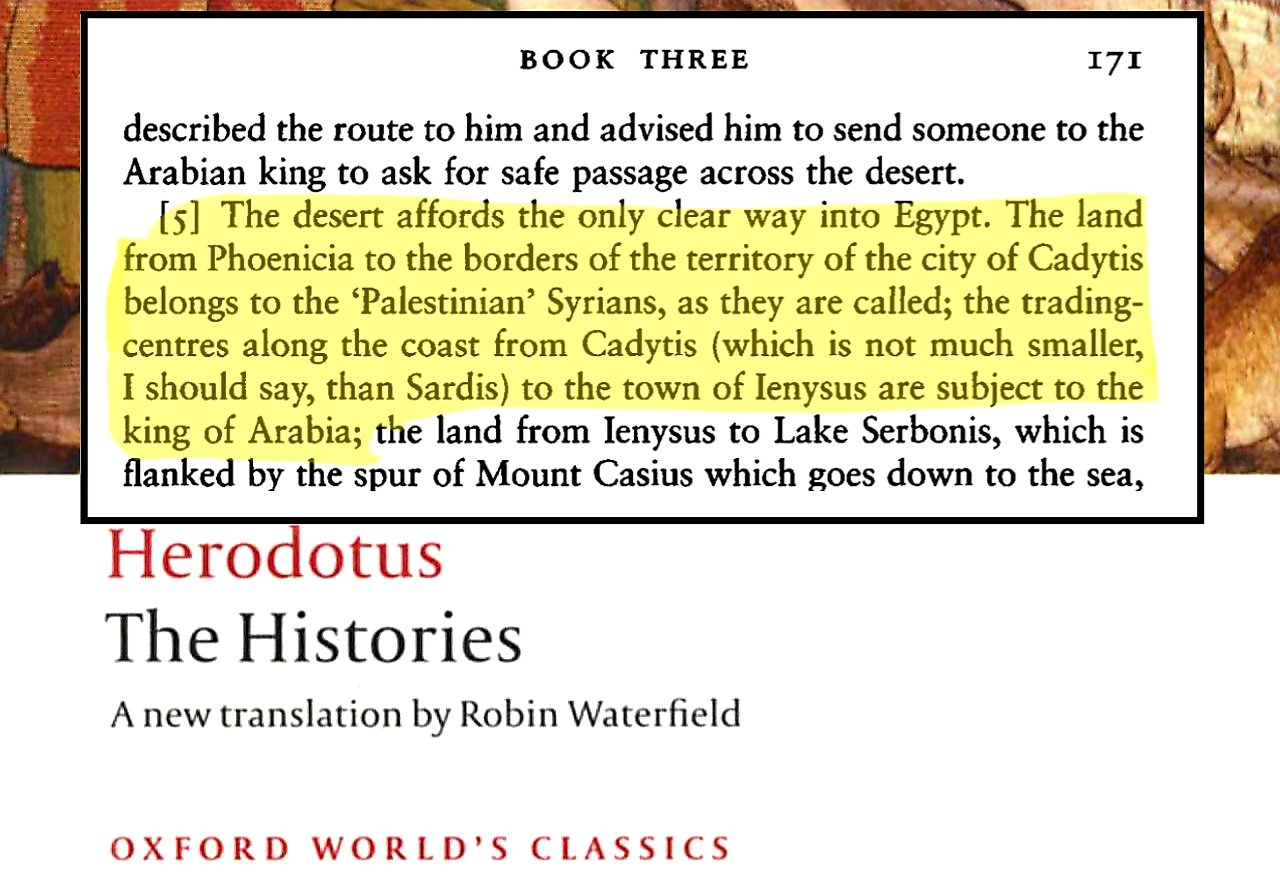
1 - The historian Herodotus (5th century BCE) explicitly mentioned the name Palestine several times in his history and noted that its inhabitants were called “Philistines.”
He added that the southern half, starting from Gaza, falls within the scope of Arab rule.
[ Herodotus 3.5 ]
2 - In addition, the coast extending from southern Palestine (Gaza) to Pelusium (Al-Farma) near the Nile River was named the Arabian Coast, as mentioned in Pseudo-Skylax (4th century BCE).
[ Pseudo-Skylax 105/106 ]
3 - The Book of 2 Chronicles (26:7) mentions a region called Gur Baal, meaning “the dwelling of Baal,” located in the Negev, whose primary inhabitants were Arabs.
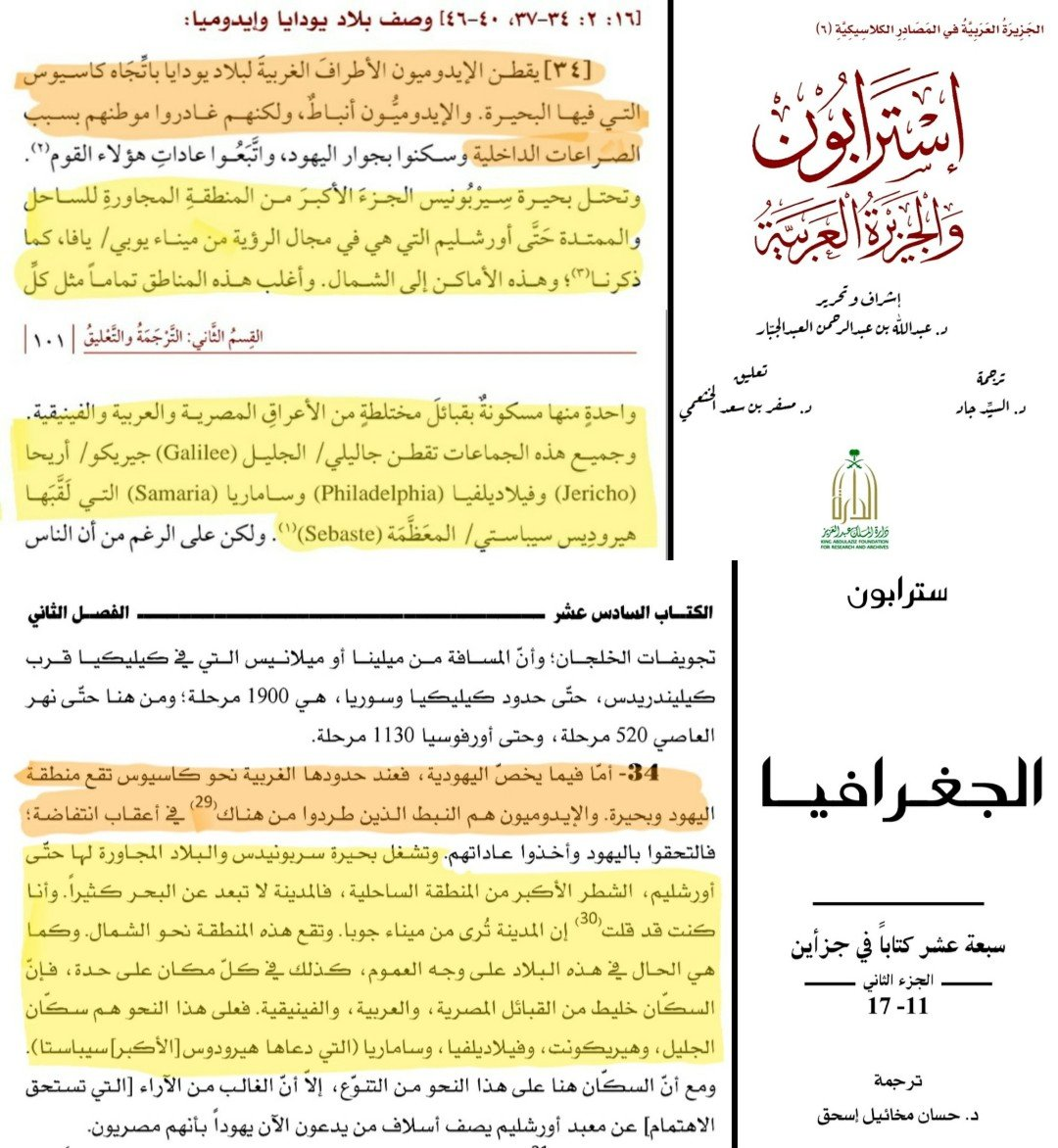
4 - Strabo (1st century CE) stated that Arabs are widespread throughout all parts of Palestine and are its inhabitants. He noted that Egyptian, Arab, and Phoenician communities inhabit Galilee, Samaria, and Jericho (Herikont), and that the Edomite Arabs reside in all the regions west of the Jewish area (Judea).
He mentions that the areas from Jaffa and the places located to the north, in addition to the land extending from Jerusalem to the coasts of Palestine, were inhabited by Egyptian and Arab populations.
This indicates that Galilee, Samaria, and generally the west and north of Palestine, along with Jaffa and Jericho, were heavily populated by Arabs, including Edomites and others, alongside an Egyptian community.
[ Strabo 16.2.34 ]
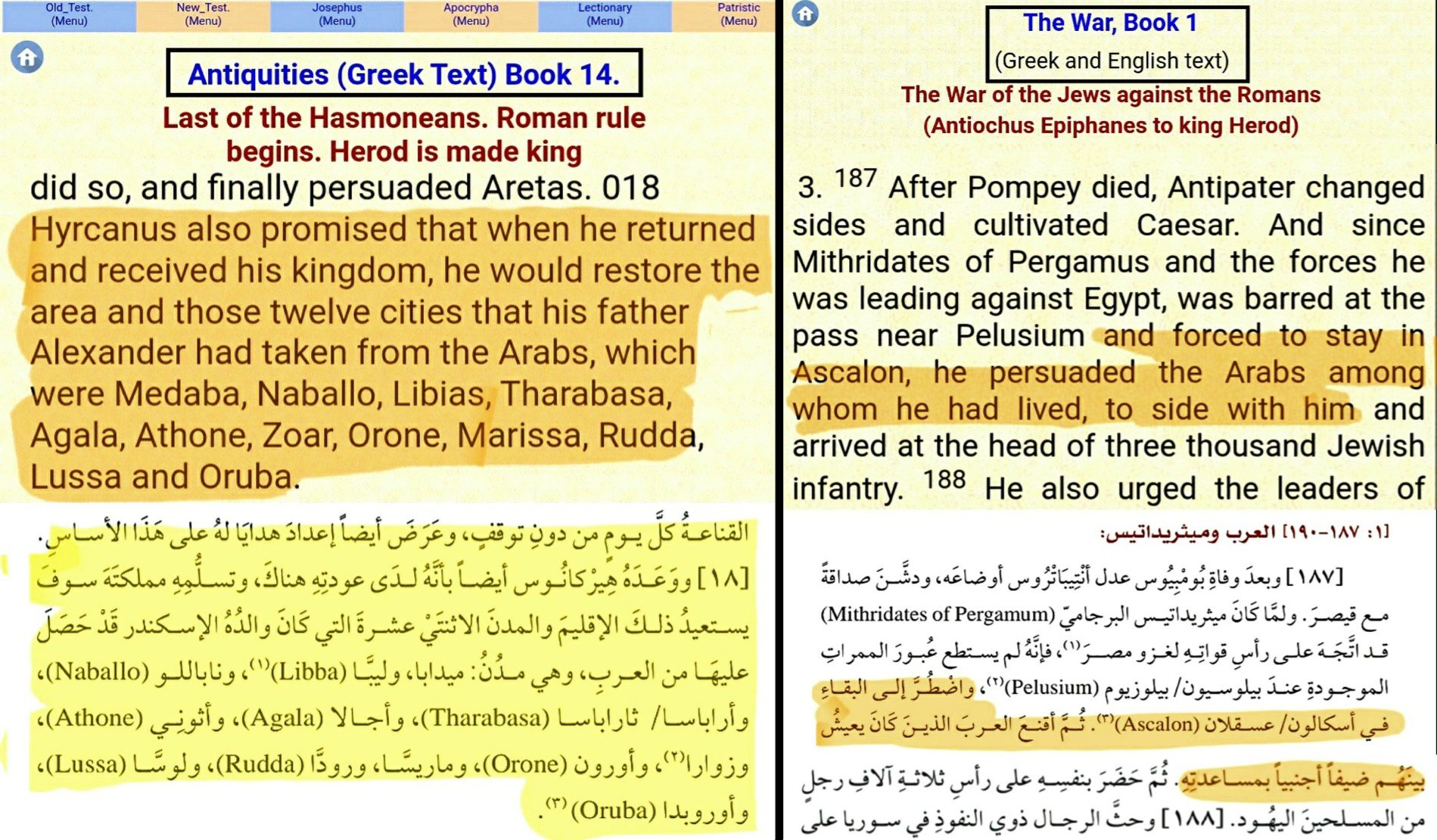
5 - And Josephus (from the first century AD) mentioned that Mithridates resided in Ascalon and persuaded the Arabs, among whom he stayed as a guest in Ascalon, to assist him in the war, and they helped him.
This is evidence of the presence of Arabs in the land of Ascalon and the Palestinian coast, and that it was not only the Jews who had a presence there.
[ The Arabian Peninsula and Josephus pp. 54-55 ]
[ The War, Josephus 1.187-188 ]
6 - And Josephus narrates that Hyrcanus, the king of the Jews, confirmed the existence of thirteen Arab cities in Palestine and Jordan, and that the Jews took them from the Arabs. Hyrcanus promised the Arabs that he would return the occupied cities to them, and among those cities were Marisa in the Hebron Valley in central Palestine and Madaba in eastern Jordan.
This indicates that a significant part of central Palestine was Arab, and that the Arabs and the Israelites shared it.
[ Josephus Antiquities 14.18-19 ]
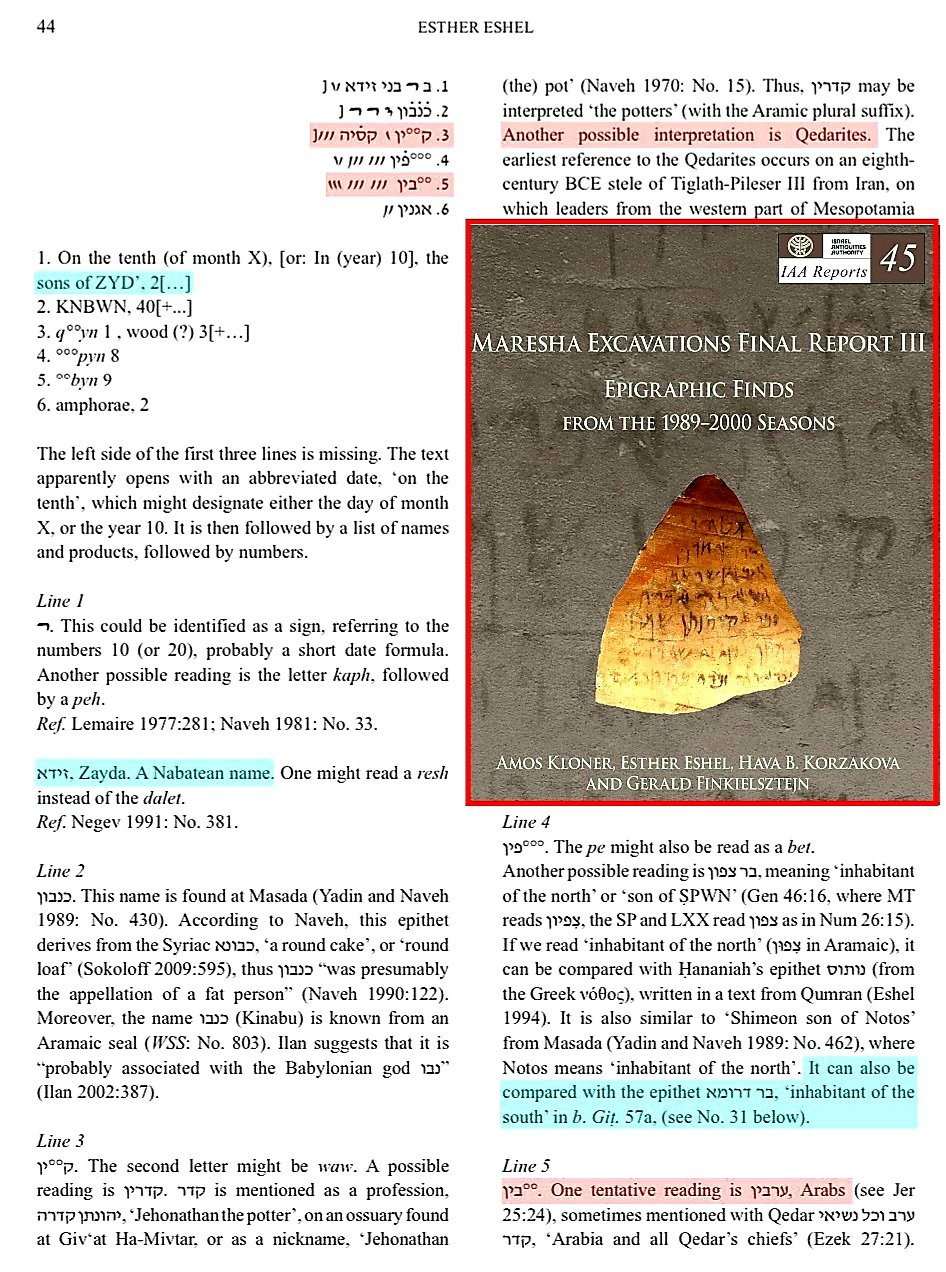
7 - And this reminds us of inscriptions mentioning Arabs in southern and central Palestine.
There are writings mentioning Arab names in southern and central Palestine (from the fourth century BC).
An inscription from Marisa, one of the inscriptions dating back to the Achaemenid period, was mentioned. Although the text is damaged, it appears to speak of “the sons of Zayd, the Qedarites, inhabitants of the southern Arabs,” indicating an Arab presence in southern and central Palestine.
[ Maresha Excavations Final Report III p44 ]
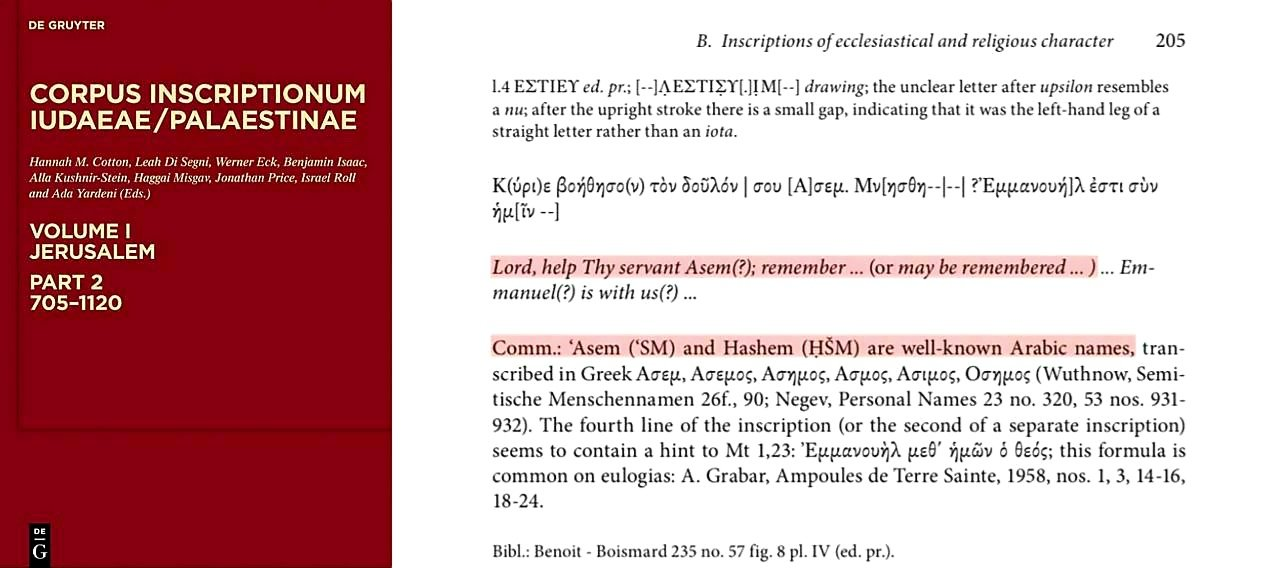
8 - And a Greek inscription from (the fourth century AD) for an Arab man from the city of Al-Eizariya in the Jerusalem area states: “O Lord, help your servant Asim: God is with us (Emmanuel).”
[ CORPUS INSCRIPTIONUM IUDAEAE/PALAESTINAE, VOLUME 1 JERUSALEM PART 2 705-1120 p44 ]
This inscription is evidence of an Arab presence in the Roman province of Jerusalem before the mission, as well as evidence of the spread of naming with Arab names.
These sources demonstrate a strong Arab presence in Palestine and confirm the Arab identity of the Jebusite tribe that resided in central Palestine.
9 - And Procopius (from the sixth century AD) mentioned that the third Palestine was called by the Arabic name.
[ PROCOPIUS, ON BUILDINGS 5.8.1 ]
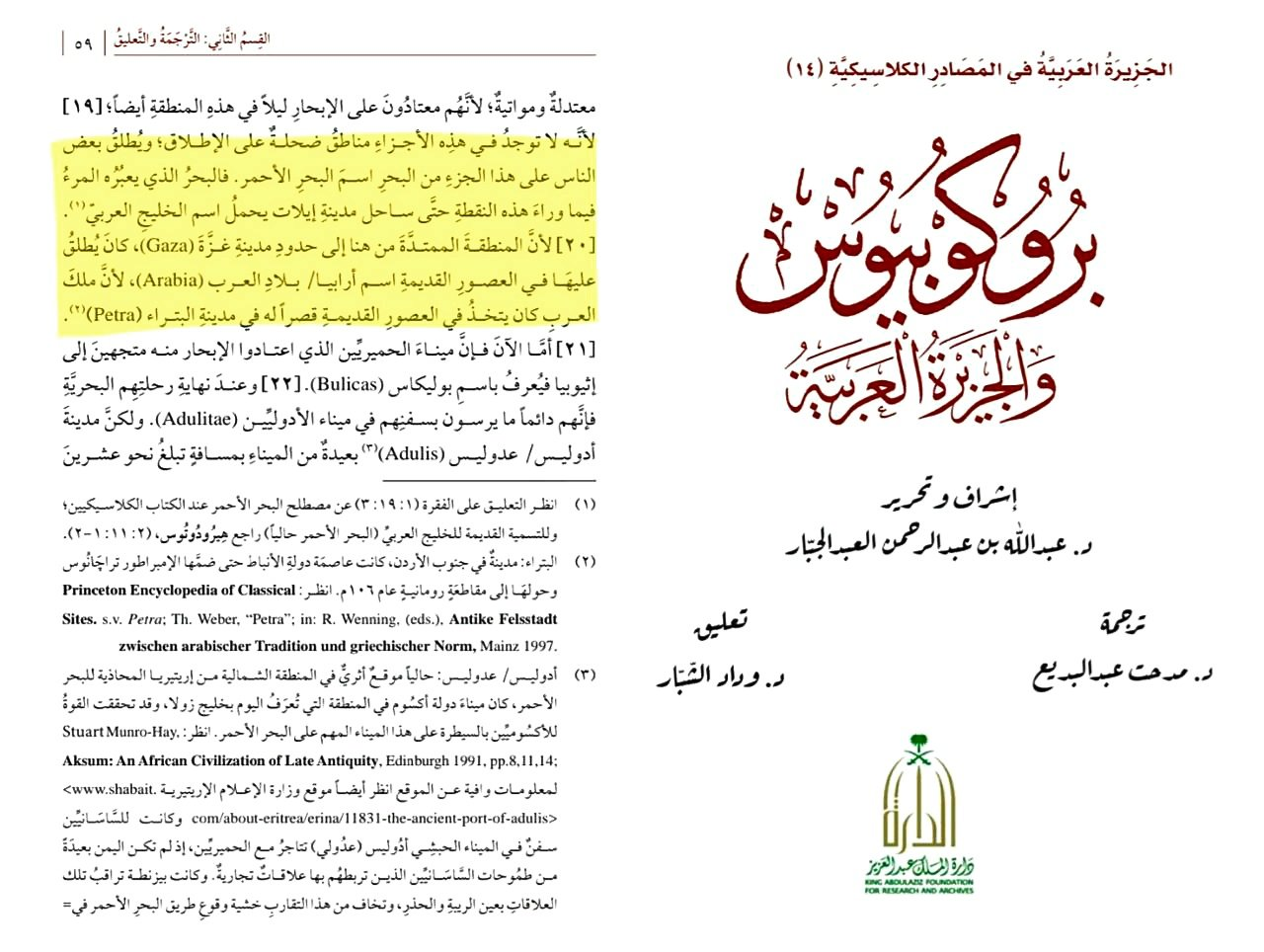
And Procopius stated that the land extending from Eilat to Gaza was called the land of the Arabs.
[ PROCOPIUS, The WARS 1.19.19-20 ]
This means that the land of Palestine, from its plains and seas, from Jericho, Jaffa, Samaria, Galilee, and generally central, southern, and northern Palestine, as well as its coast, was inhabited by Arabs alongside Jewish and Egyptian communities, and the land had a predominantly Arab majority, as is evident.