

The Peshitta — An Anonymous 5th-Century Translation with No Known Author, Date, or Origin
The Peshitta is one of the most important sources Christians rely on to confirm the authenticity and infallibility of the Bible — represented by the symbol sy rp in textual commentaries. But textual critics confirm that the Peshitta is nothing but an anonymous copy of the New Testament in Syriac, dating back to the fifth century AD.
Question 1 — Who Prepared the Peshitta, When, and Where?
The answer to these questions is impossible. Our information about the Peshitta = zero.
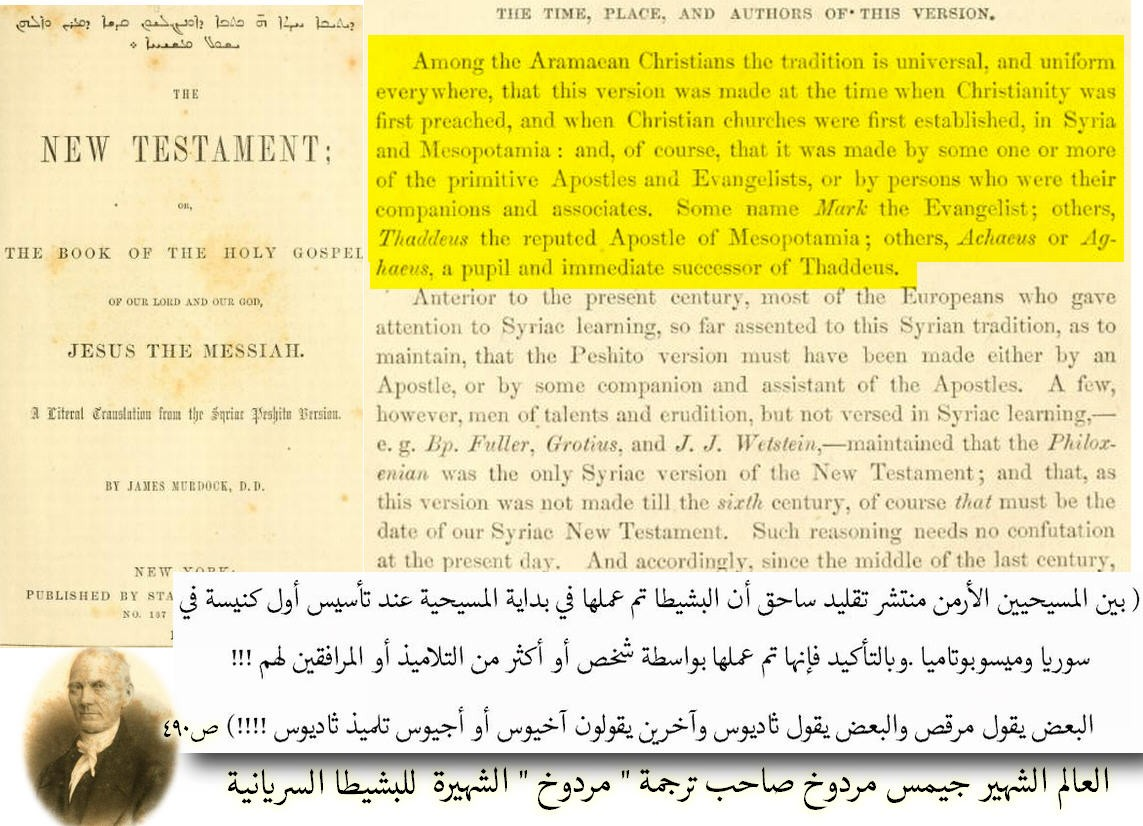
Among Armenian Christians there is an overwhelming tradition that the Peshitta was made at the beginning of Christianity when the first church was founded in Syria and Mesopotamia — and that it was certainly made by one or more of the disciples or their companions. Some say Mark, some say Thaddeus, and others say Achaeus or Agkaeus, a pupil and immediate successor of Thaddeus.
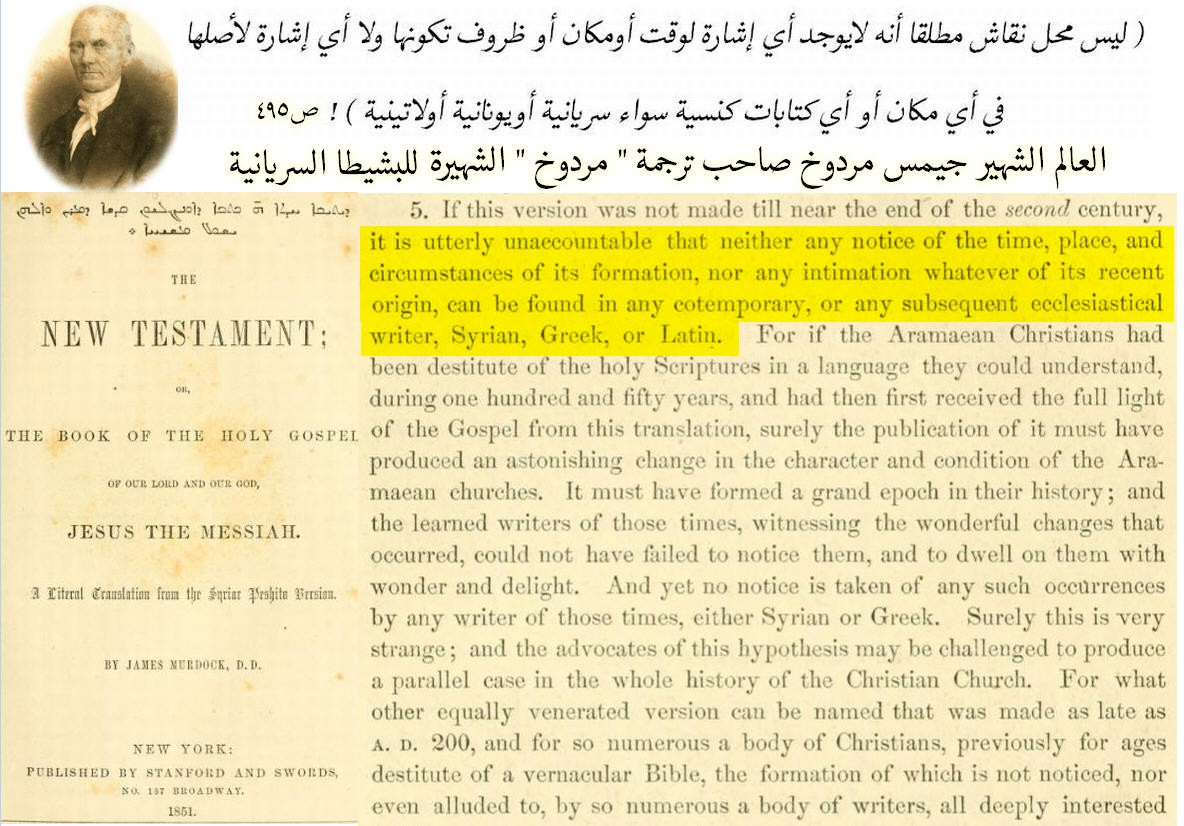
However, James Murdoch also says in his translation of the Syriac Peshitta, p. 495:
It is not debatable at all — there is no indication of the time, place, or circumstances of the Peshitta’s formation, nor any indication of its origin anywhere or in any church writings, whether Syriac, Greek, or Latin.
The question of who prepared the Peshitta translation of the New Testament may never be answered.
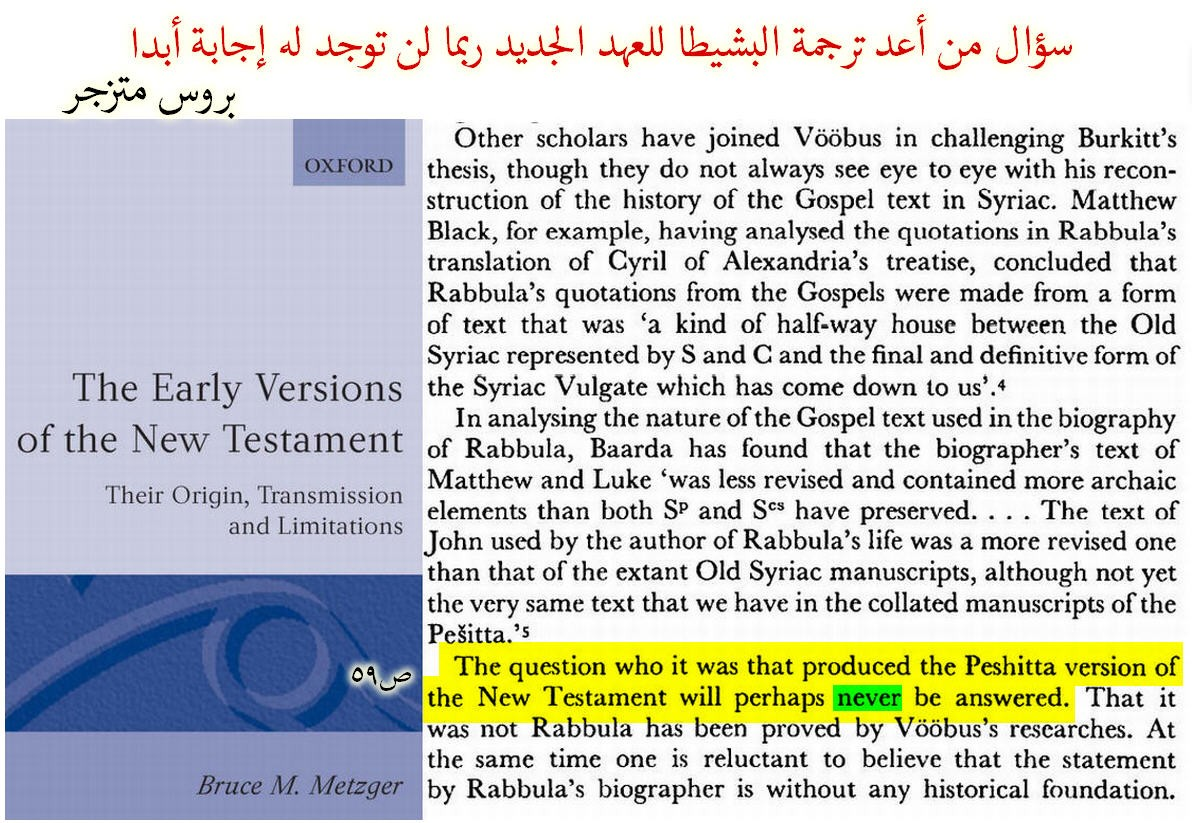
The origin, place, and author of the Peshitta — all unknown.
Question 2 — Is There Any Evidence of the Antiquity of the Peshitta Manuscripts?
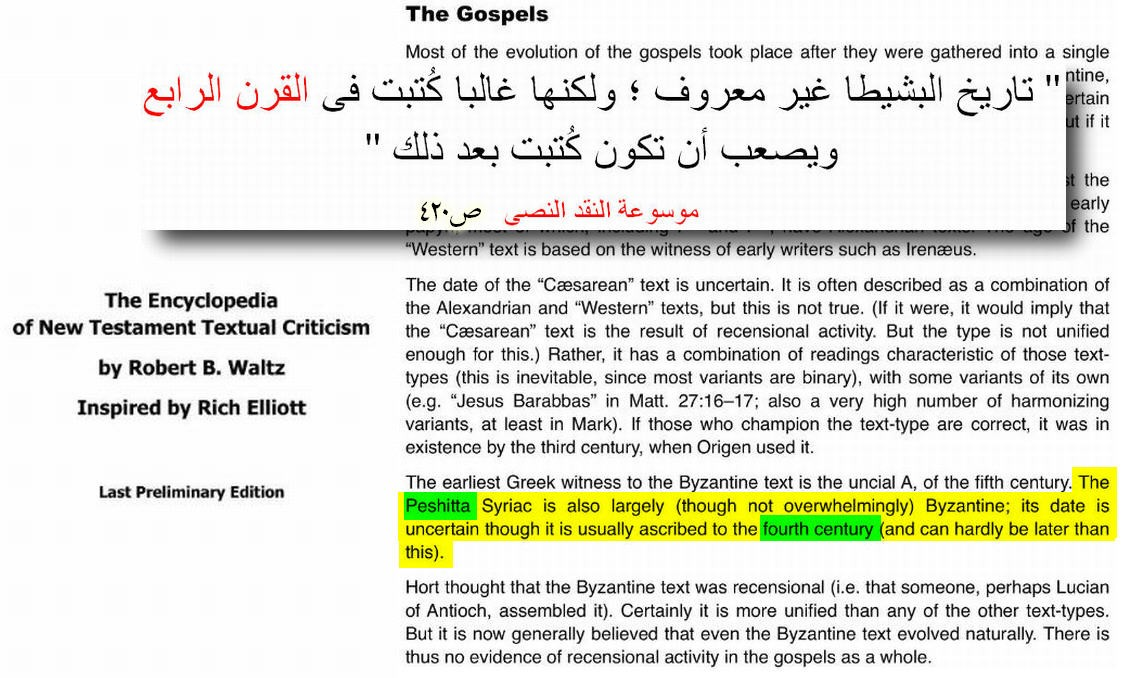
The delay in the date of the Peshitta until the late fourth or fifth century is a matter of agreement since the beginning of the twentieth century — with the discovery of more manuscripts and the development of the science of textual criticism.
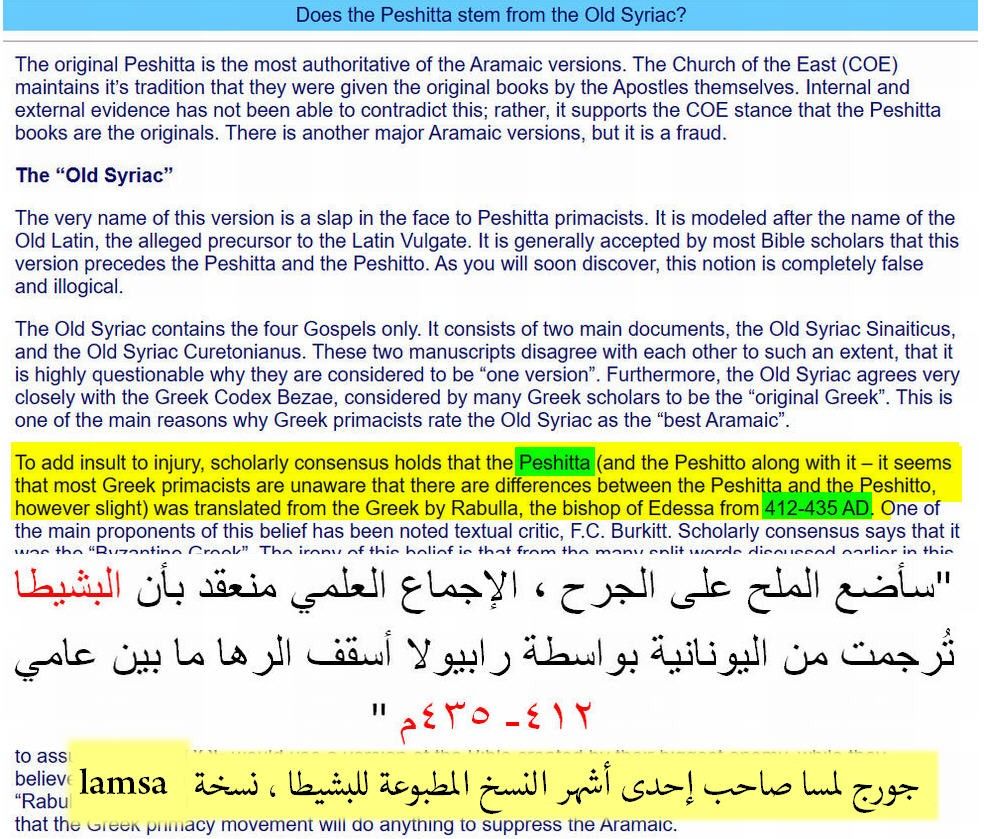
George Lamsa, the owner of one of the most famous printed versions of the Peshitta, himself confirms the consensus of scholars that the Peshitta dates back to the fifth century:
I will add salt to the wound: the scholarly consensus is that the Peshitta was translated from the Greek by Rabulla, the bishop of Edessa, between 412 and 435 AD.
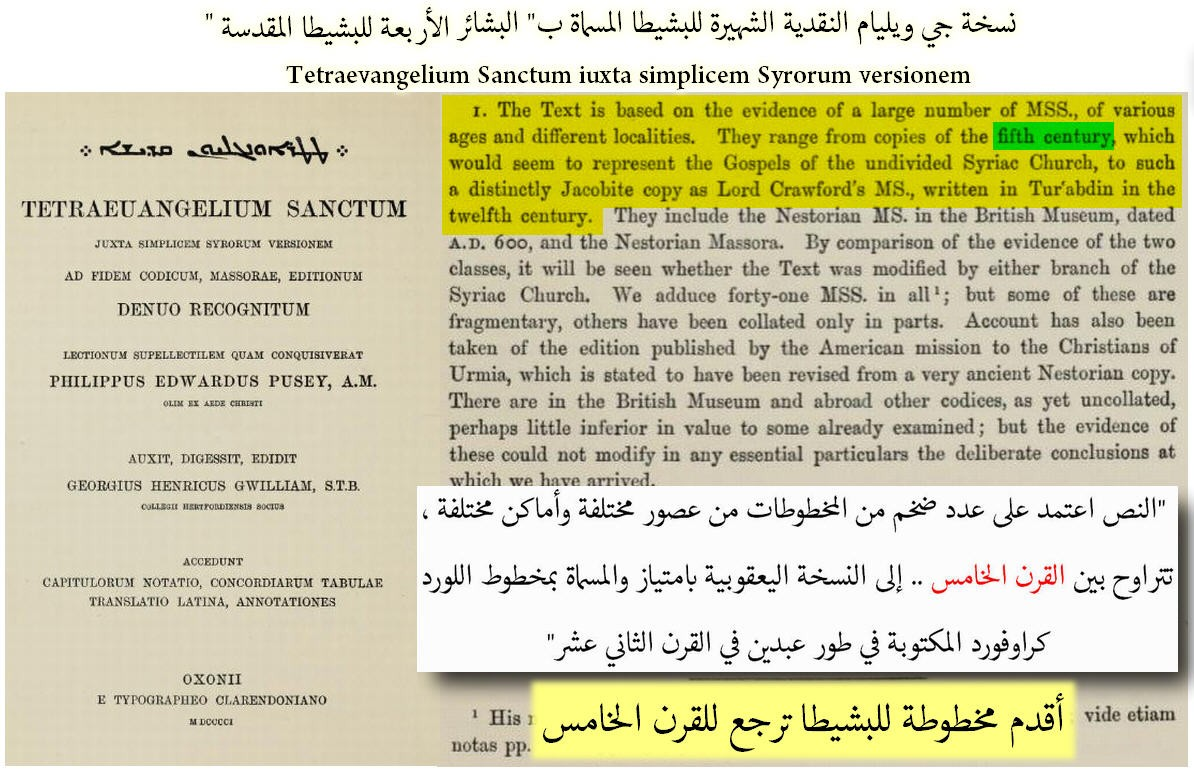
The text is based on a large number of manuscripts from different eras and places, ranging from the fifth century to such a distinctly Jacobite version as Lord Crawford’s MS., written in Tur’abdin in the twelfth century.
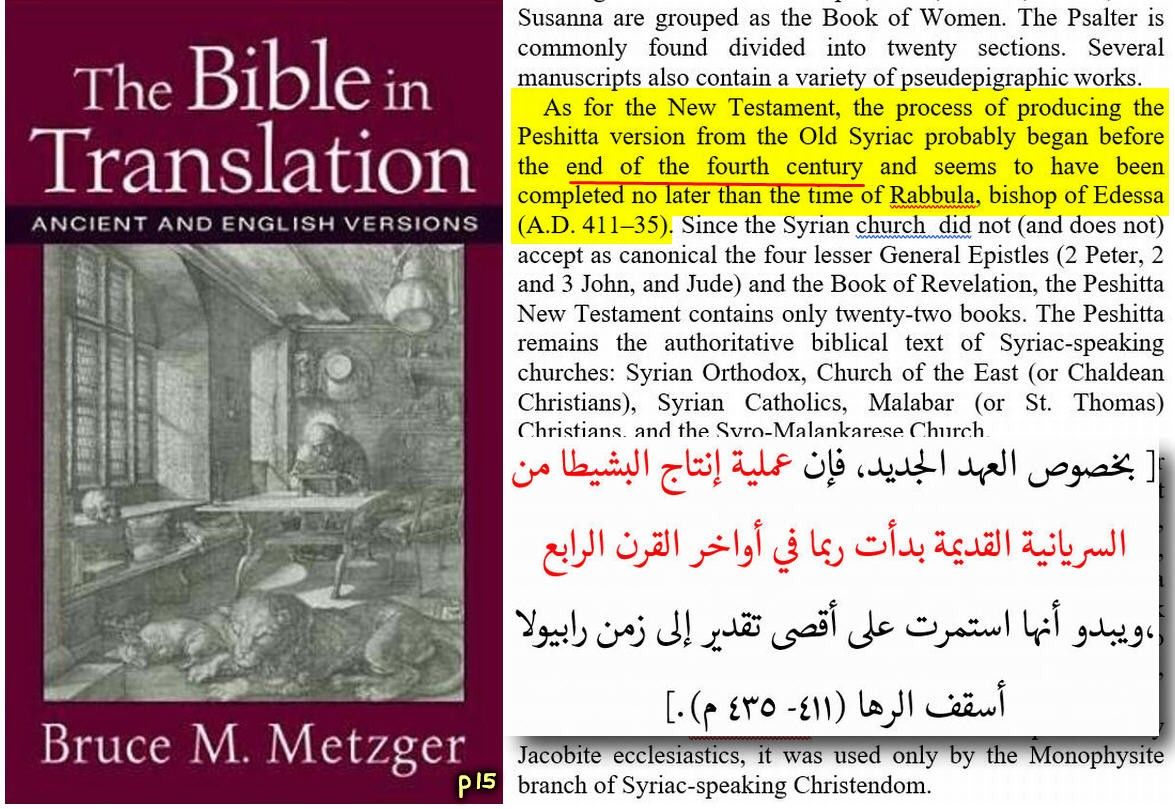
Regarding the New Testament, the process of producing the Peshitta from the Old Syriac probably began in the late fourth century and seems to have continued at the latest until the time of Rabbula, bishop of Edessa (AD 411–435).
Two Clear Rational Proofs of the Peshitta’s Late Date
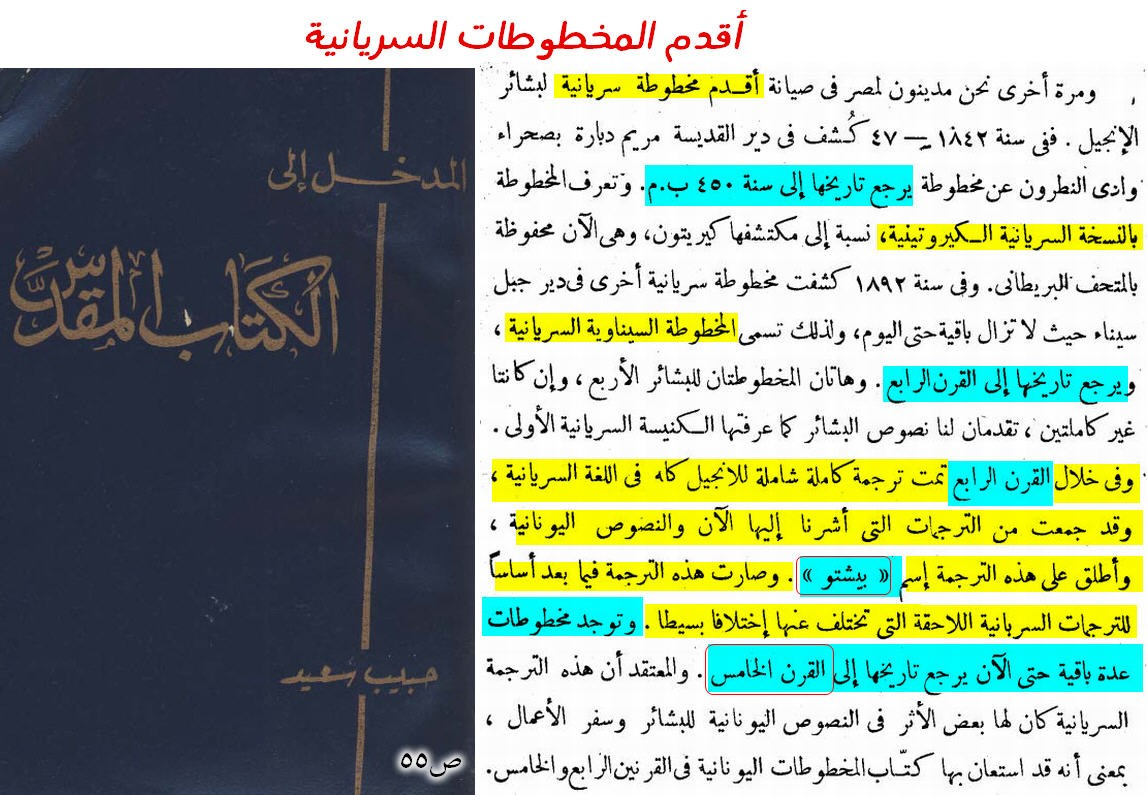
^^First: All the Peshitta manuscripts that have been discovered — numbering more than 300 manuscripts — are all from after the fifth century. There is not a single Peshitta manuscript from before the fifth century.^^
Second: All the fathers and Syriac writers in the first four centuries, when they quoted from the New Testament, their quotes were in agreement with the ancient Syriac manuscripts — and not with the Peshitta. If the Peshitta were early, their quotes would have been in agreement with it.
The Peshitta is nothing but a late translation that appeared in the fifth century and has no value in the science of textual criticism or benefit in trying to retrieve the original text — at all.
Question 3 — Does the Peshitta Canon Agree with the Current Bible Canon?
The Peshitta canon differs from the current Bible canon. It consists of only 22 books of the New Testament and does not include five letters: 2 John, 3 John, 2 Peter, Jude, and the Book of Revelation. It therefore follows the canon of the Gospels according to the Antiochian Church in the fourth and fifth centuries AD.
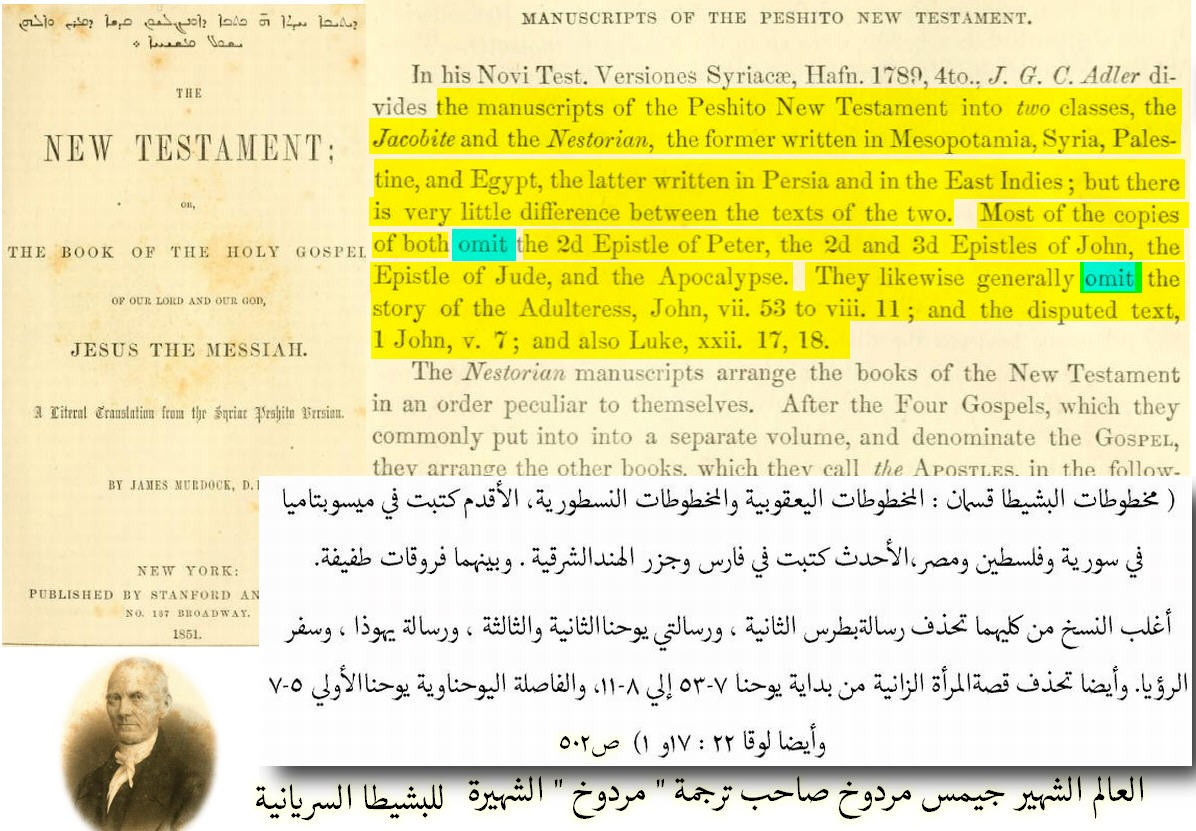
The Peshitta manuscripts are divided into two parts — the Jacobite manuscripts and the Nestorian manuscripts. The oldest were written in Mesopotamia, in Syria, Palestine, and Egypt; the newest were written in Persia and the East Indies. There are slight differences between them. Most versions of both omit 2 Peter, 2 and 3 John, Jude, and the Book of Revelation. They also omit the story of the adulterous woman from John 7:53 to 8:11, the Johannine Comma (1 John 5:7), and Luke 22:17.
Final Assessment
Scholars say that the Peshitta is a Byzantine text in the four Gospels but a Western text in the remaining 22 books of the New Testament — with five books omitted entirely. There have therefore been desperate attempts by Christians to prove that the Byzantine text — from which the Erasmus translation, the King James translation, and the Van Dyck translation came — has ancient origins and original manuscripts. This is especially pressing since there is not a single manuscript containing the Byzantine text before the Alexandrian manuscript in the fifth century.
But it has now become known to scholars and students that the Peshitta — which common Christians claim was written by one of the disciples or a disciple of the disciples — is nothing but a foundling copy and an unknown translation. No one knows who wrote it, when, or where.
It also differs from the current text in five complete books. Those who defend it and cite it as evidence confirm — without realising it — the possibility of deletion, addition, and distortion of the texts of their book.