The Qur’an and Camels in Joseph’s Time: A Historical Miracle, Not an Error
The Camel Mention in the Qur’an: A Proof of Prophecy, Not Error 🐪✨
Table of Contents
- Introduction
- The Objection
- 1 The Meaning of “Camel” in Classical Arabic
- 2 Historical Context No Camels in Canaan During Joseph’s Time
- 3 Contradiction in the Bible
- 4 The Qur’an Corrects the Biblical Narrative
- 5 Did Muhammad PBUH Know This?
- Final Thought Suspicion Becomes Proof
- Scientific Study Link
- Conclusion
Introduction
The Camel Mention in the Qur’an: A Proof of Prophecy, Not Error 🐪✨
Allah Almighty says in the Qur’an:
(Surah Yusuf, 12:72)
The Objection
This verse has been twisted by some atheists — especially those who mock Islam — to claim that the Qur’an contains historical inaccuracies. They argue that camels did not exist in Canaan (Palestine) during the time of Prophet Joseph (peace be upon him), and therefore the mention of camels is anachronistic.
But this so-called “evidence” falls apart under scrutiny — and in fact, becomes clear proof of prophethood, not error.
1 The Meaning of “Camel” in Classical Arabic
The word “camel” in Arabic does not always mean what we know today as a camel. In classical Arabic usage:
Ibn Manzur (author of Lisan al-Arab) states:
“The camel also means the donkey.”
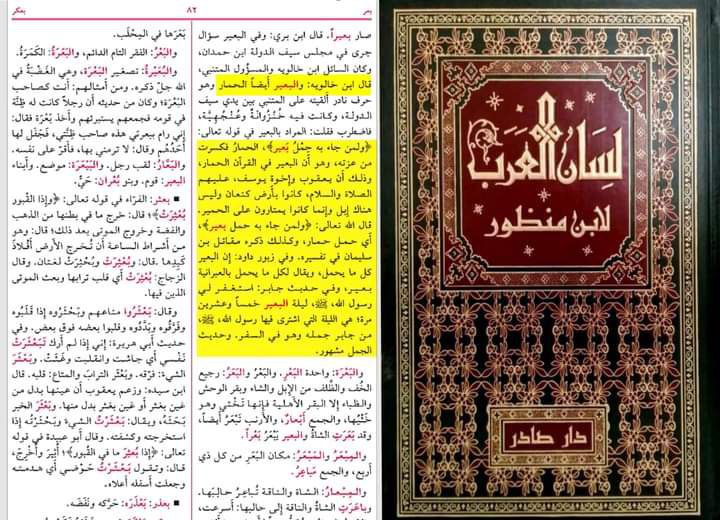
The scan is used here to support the argument that the Qur’anic phrase “camel-load” in Surah Yusuf does not necessarily have to mean a literal camel in the modern restricted sense. The point being made is linguistic: Arabic words related to camels and load-bearing animals can have broader usage depending on context, and therefore the objection that the verse must refer to domesticated camels in Canaan is not decisive.
Al-Zajjaj explains:
“And everything that carries burdens is called ghayr, whether it is a camel, donkey, or mule.”
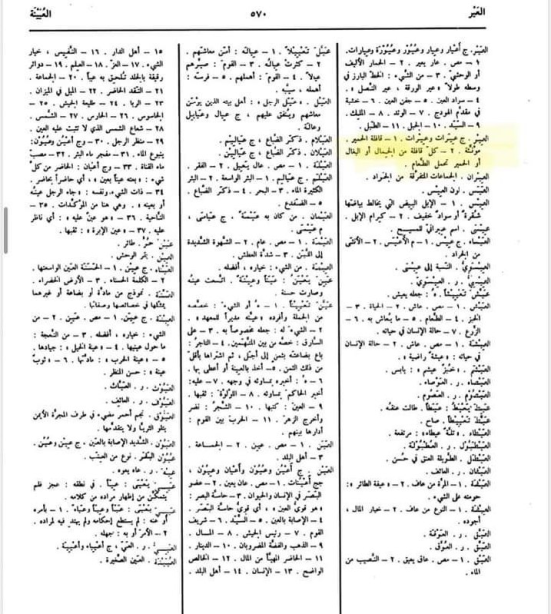
The scan is used here to strengthen the linguistic point that Arabic has terms for burden-bearing animals that are not always limited to one modern technical meaning. In the context of the Joseph story, this supports the claim that the wording can be understood through classical Arabic usage connected to animals that carry loads, especially donkeys.
Muqatil ibn Sulayman (Qur’anic exegete) wrote:
“In the Psalms of David, ‘camel’ refers to anything that carries burdens. In Hebrew, anything that carries is called a ‘camel.’”
Thus, the word “camel” in the verse could simply refer to a donkey, which was the actual beast of burden used in the land of Canaan at that time.
2 Historical Context No Camels in Canaan During Joseph’s Time
This is confirmed by archaeological evidence:
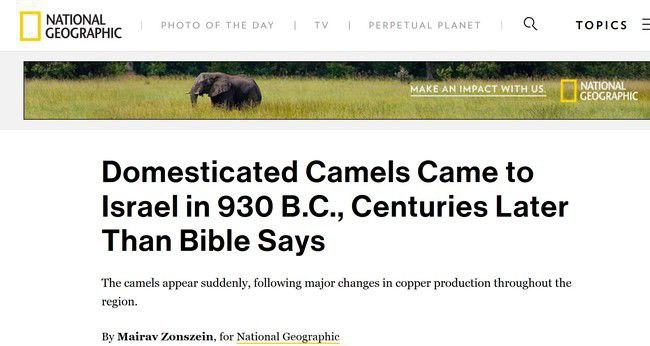
National Geographic Study 2014
A study published in National Geographic stated:
“Camels were not domesticated in the Levant until around the 10th century BC — centuries after the time of Abraham, Isaac, and Jacob.”
The study analyzed camel bones found in the Levant using radiocarbon dating, and concluded:
- The oldest remains of domesticated camels date back no earlier than 930–900 BC.
- Earlier bones, from around 9,700 years ago, belonged to wild camels, not domesticated ones.
- Donkeys were the primary beasts of burden before camels were domesticated.
Yet the Qur’an, though quoting from the same story, did not repeat the error.
3 Contradiction in the Bible
The Torah says:
“Their camels were laden with balm and myrrh, as they went to carry them down to Egypt.”
This is problematic because camels were not domesticated for transportation until after 1000 BC, long after the time of Joseph (peace be upon him).
Because the Qur’an was not copied from the Torah — rather, it corrected it.
4 The Qur’an Corrects the Biblical Narrative
Muslim scholars like Al-Qurtubi and Al-Tha’labi narrate:
“The term ‘camel-load’ here refers to a donkey-load, since there were no camels in Canaan at that time.”
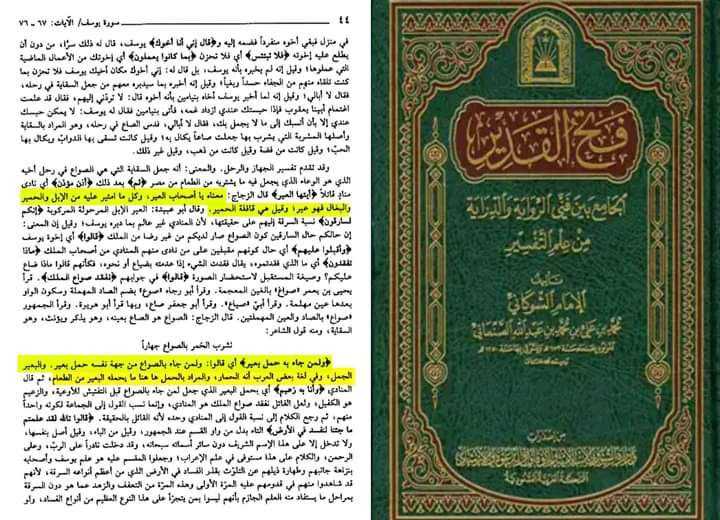
The highlighted discussion is important because it directly connects the Qur’anic wording with the historical setting of the Joseph narrative. The scan shows that classical Muslim exegesis already recognized this linguistic possibility and did not force the verse into the later or narrower meaning of camel. This supports the article’s argument that the Qur’an preserved historically appropriate wording.
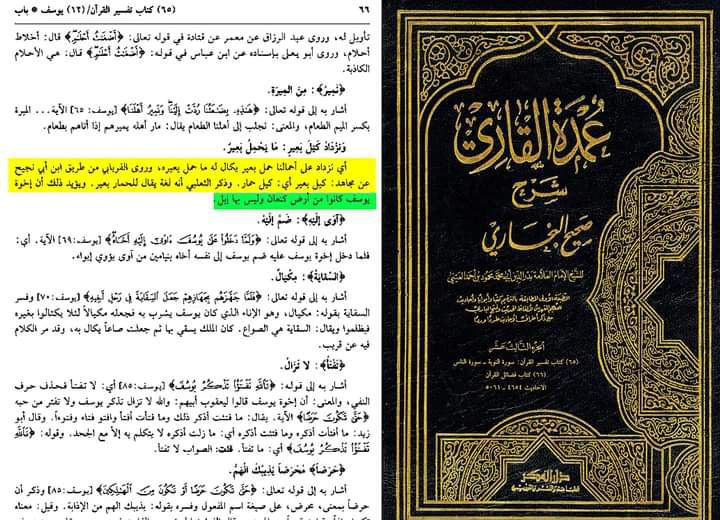
The scan supports the same point as the previous tafsir evidence: Muslim exegetes recognized that the term in this verse could be understood according to broader Semitic and Arabic usage connected with burden-bearing animals. This reading fits the historical context in which donkeys, not domesticated camels, were the normal transport animals.
This aligns perfectly with modern archaeology.
Instead, it preserved the correct historical context: donkeys, not camels, were used in Canaan during the time of Joseph (peace be upon him).
5 Did Muhammad PBUH Know This?
Critics claim that the Prophet Muhammad (peace be upon him) learned from Jews and Christians.
If the Prophet (PBUH) was copying the Torah, he would have repeated its mistake.
Instead, the Qur’an presents the historically accurate version.
How could an unlettered man living in the 7th century Arabia know this?
Only through divine revelation.
Final Thought Suspicion Becomes Proof
The Bible incorrectly describes camels in the time of Joseph.
The Qur’an avoids this error by using a word that can mean donkey, which was historically accurate.
Modern science confirms the Qur’an’s version.
So, far from being a mistake, this is evidence of divine knowledge beyond human comprehension.
As Allah says:
(Surah Al-Isra, 17:9)
Scientific Study Link
Let us close with the words of the disbelievers themselves:
“Being more efficient than donkeys, which were previously used as a means of transportation, the study predicts that camels were first domesticated and used for transportation in the Arabian Peninsula approximately 1,000 years BC.”
Which means:
- Donkeys were the main carriers before camels.
- The Qur’an correctly described the reality of the time.
And Allah knows best.
Link to the scientific study:
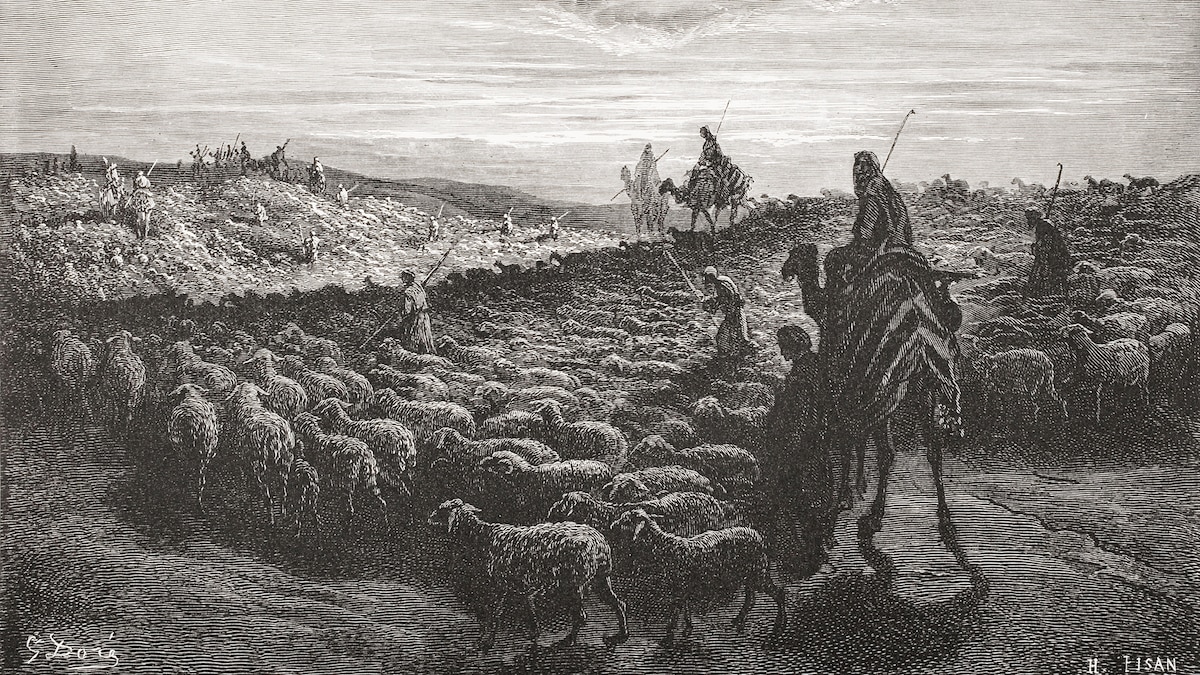
Domesticated camels weren’t known in Israel until about 900 B.C., when there were major changes in copper production throughout the region.
Conclusion
Classical Arabic and tafsir evidence show that the term can refer to a donkey or a burden-bearing animal.
Archaeology confirms that donkeys were the primary carriers before domesticated camels became common in the Levant.
Therefore, the Qur’an does not repeat the Biblical anachronism. Rather, it preserves the historically accurate setting.