Response to the Suspicion That Embryology in the Qur’An Was Borrowed From Galen and Al Harith Bin Ka
First Axis: Refuting Borrowing from Al-Harith Ibn Kalda
- The First Axis Refuting the Lie that the Quran Borrowed from Al-Harith ibn Kalda
- The First Narration
- Verification
- The Second Narration
- The Third Narration
- Meeting with Al-Harith Was After the Conquest
- Did Al-Harith Study at Jundishapur
- The Beginnings of Western Science
Second Axis: Response to the Galen Claim
- The Second Axis The Response to the Lie that the Quran Quoted Galens Ideas
- First
- Sahih al-Bukhari Book of Fasting
- Sahih Ibn Habban
- Sahih Muslim
- Al-Sunan Al-Kubra of Al-Bayhaqi
- First Translation of Galen into Arabic
Differences Between Galen and the Qur’an
- 1
- 2 Galen did not mention the stages of the clot and the lump of flesh and he did not mention that the bones like primary cartilage are formed first before the flesh
Classical Support
Conclusion
Response to the Suspicion that Embryology in the Qur’an Was Borrowed from Galen and Al-Harith Bin Kalda
In the name of Allah, the Most Gracious, the Most Merciful
Allah the Almighty said: Then We made the sperm-drop into a clinging clot, then We made the clot into a lump of flesh, then We made the lump of flesh into bones, then We covered the bones with flesh; then We developed it into another creation. So blessed be Allah, the best of creators.
[abundantly] of every beautiful pair.))
And the Most High said: Indeed, We created man from a sperm-drop mixture that We may try him; and We made him hearing and seeing.
We Read from Sahih al-Bukhari, Book of the Virtues of the Helpers
Ibn Salam said: That is the enemy of the Jews from the angels.
He said:
“As for the first sign of the Hour, it is a fire that will gather them from the east to the west.
As for the first food that the people of Paradise will eat, it is the extra liver of a fish.
As for the child, if the man’s water precedes the woman’s water, the child will be born, and if the woman’s water precedes the man’s water, the child will be born.”
He said:
I bear witness that There is no god but Allah, and that you are the Messenger of Allah.
He said -[70]- O Messenger of Allah, the Jews are a people of slander, so ask them about me before they know about my Islam.
So the Jews came and the Prophet, may Allah bless him and grant him peace, said:
“Which man is Abdullah ibn Salam among you?”
They said:
The best of us and the son of the best of us, the most excellent of us and the son of the most excellent of us.
So the Prophet, may Allah bless him and grant him peace, said:
The Messenger of Allah (peace and blessings of Allah be upon him) said:
“What do you think if Abdullah ibn Salam embraces Islam?”
They said:
“May Allah protect him from that.”
“So he did it again to them.”
They said:
“The same.”
So Abdullah went out to them and said:
…
Response to the suspicion that embryology in the Qur’an was borrowed from Galen and Al-Harith bin Kalda
In the name of Allah, the Most Gracious, the Most Merciful
Allah the Almighty said: Then We made the sperm-drop into a clinging clot, then We made the clot into a lump of flesh, then We made the lump of flesh into bones, then We covered the bones with flesh; then We developed it into another creation. So blessed be Allah, the best of creators.
[abundantly] of every beautiful pair.))
And the Most High said: Indeed, We created man from a sperm-drop mixture that We may try him; and We made him hearing and seeing.
We Read from Sahih al-Bukhari, Book of the Virtues of the Helpers
Ibn Salam said: That is the enemy of the Jews from the angels.
He said:
“As for the first sign of the Hour, it is a fire that will gather them from the east to the west.
As for the first food that the people of Paradise will eat, it is the extra liver of a fish.
As for the child, if the man’s water precedes the woman’s water, the child will be born, and if the woman’s water precedes the man’s water, the child will be born.”
He said:
I bear witness that There is no god but Allah, and that you are the Messenger of Allah.
He said -[70]- O Messenger of Allah, the Jews are a people of slander, so ask them about me before they know about my Islam.
So the Jews came and the Prophet, may Allah bless him and grant him peace, said:
“Which man is Abdullah ibn Salam among you?”
They said:
The best of us and the son of the best of us, the most excellent of us and the son of the most excellent of us.
So the Prophet, may Allah bless him and grant him peace, said:
The Messenger of Allah (peace and blessings of Allah be upon him) said:
“What do you think if Abdullah ibn Salam embraces Islam?”
They said:
“May Allah protect him from that.”
“So he did it again to them.”
They said:
“The same.”
So Abdullah went out to them and said:
I bear witness that there is no god but Allah and that Muhammad is the Messenger of Allah.”
They said:
“He is the worst of us and the son of the worst of us,”
and they belittled him.
He said:
“This is what I feared, O Messenger of Allah.”
))
The enemies of Islam, atheists and missionaries, claim that the Quran and Sunnah borrowed all of the above-mentioned ideas from the Greek physician Galen via the physician of the Arabs in the Arabian Peninsula at the time of the Prophet, may God bless him and grant him peace, “Al-Harith ibn Kalda,” may God be pleased with him, as they claim that he received Galen’s ideas from Jundishapur. This is a blatant lie and a clear fabrication that does not come from the mind!
Response
The First Axis: Refuting the Lie that the Quran Borrowed from Al-Harith Ibn Kalda, May God Be Pleased with Him
We say that the claim that the Prophet, may God bless him and grant him peace, borrowed the previous verses about the fetus from Al-Harith ibn Kalda, may God be pleased with him, is rejected for the following reasons:
First
It has not been proven that the Prophet, may God bless him and grant him peace, met Al-Harith ibn Kalda, may God be pleased with him, during the Meccan period in which the previous verses were revealed. It has also not been proven that he met him during the Medinan period, and no one has mentioned that, even though hadiths have been narrated about Al-Harith meeting the Prophet, may God bless him and grant him peace, that are not proven due to the weakness of their chains of transmission.
The First Narration
2073 - Ahmad ibn Bundar narrated to us, Abu Bakr ibn Abi Asim narrated to us, Muhammad ibn Ali ibn Maymun narrated to us, Abd al-Aziz ibn Yahya al-Harrani Abu al-Asbagh narrated to us, Muhammad ibn Salamah narrated to us, on the authority of Muhammad, Ishaq narrated to us, on the authority of Ismail ibn Muhammad ibn Sa`d ibn Abi Waqqas, on the authority of his father, who said:
Sa`d, may God be pleased with him, fell ill while he was with the Messenger of God, may God bless him and grant him peace, during the Farewell Pilgrimage, and the Messenger of God, may God bless him and grant him peace, visited him.
He said:
O Messenger of Allah, I see myself only because of what is wrong with me.
The Prophet, may Allah bless him and grant him peace, said:
“I hope that Allah will heal you, so that some people may be harmed by you and others may benefit from you.”
Then he said to Al-Harith ibn Kaldah Al-Thaqafi:
“Treat Sa`d from what is wrong with him.”
He said:
By Allah, I hope that he will be healed in what he has in his baggage…
So he made him a portion, mixed dates with fenugreek, then added ghee to it, then made him drink it, and it was as if he had been freed from shackles.
It was narrated by Sufyan ibn Uyaynah, on the authority of Ibn Abi Najih, on the authority of Mujahid, on the authority of Saeed, similarly.
He said:
So the Messenger of Allah, may Allah bless him and grant him peace, placed his hand between my breasts, until I felt its coolness on my heart, and he said:
“You are a man of refuge, go to Al-Harith bin Kalada, the brother of Thaqeef, for he is a physician.”
Verification
The narration is not authentic due to the defect of Muhammad bin Ishaq’s chain of transmission, and he is a mudallis, and his narration is not accepted unless he explicitly states that he heard it and is not the only one to narrate the hadith.
Fath Al-Bari
And Ad-Daraqutni said: Its chain of transmission is good and continuous. And Al-Bayhaqi said: Its chain of transmission is good and authentic. And Ibn Al-Turkmani commented on it by saying that he said in the chapter on the prohibition of killing someone who has a soul after mentioning a hadith in which Ibn Ishaq is mentioned: The hadith masters are cautious about what he alone transmitted. I said: And this is a valid objection because this addition was transmitted by Ibn Ishaq alone…
Siyar A’lam al-Nubala’
((And Ahmad said: Ibn Ishaq used to conceal, except that the book of Ibrahim ibn Sa’d, if it was a hearing, he would say: He narrated to me, and if it was not, he would say: He said. And Ahmad said: Ibn Ishaq came to Baghdad, and he did not care about who he narrated from, on the authority of al-Kalbi, And on the authority of someone else, and he said: It is not an argument.
Response to the suspicion that embryology in the Qur’an was borrowed from Galen and Al-Harith bin Kalda
In the name of Allah, the Most Gracious, the Most Merciful
Allah the Almighty said: Then We made the sperm-drop into a clinging clot, then We made the clot into a lump of flesh, then We made the lump of flesh into bones, then We covered the bones with flesh; then We developed it into another creation. So blessed be Allah, the best of creators.
[abundantly] of every beautiful pair.))
And the Most High said: Indeed, We created man from a sperm-drop mixture that We may try him; and We made him hearing and seeing.
We Read from Sahih al-Bukhari, Book of the Virtues of the Helpers
Ibn Salam said: That is the enemy of the Jews from the angels.
He said:
“As for the first sign of the Hour, it is a fire that will gather them from the east to the west.
As for the first food that the people of Paradise will eat, it is the extra liver of a fish.
As for the child, if the man’s water precedes the woman’s water, the child will be born, and if the woman’s water precedes the man’s water, the child will be born.”
He said:
I bear witness that There is no god but Allah, and that you are the Messenger of Allah.
He said -[70]- O Messenger of Allah, the Jews are a people of slander, so ask them about me before they know about my Islam.
So the Jews came and the Prophet, may Allah bless him and grant him peace, said:
“Which man is Abdullah ibn Salam among you?”
They said:
The best of us and the son of the best of us, the most excellent of us and the son of the most excellent of us.
So the Prophet, may Allah bless him and grant him peace, said:
The Messenger of Allah (peace and blessings of Allah be upon him) said:
“What do you think if Abdullah ibn Salam embraces Islam?”
They said:
“May Allah protect him from that.”
“So he did it again to them.”
They said:
“The same.”
So Abdullah went out to them and said:
I bear witness that there is no god but Allah and that Muhammad is the Messenger of Allah.”
They said:
“He is the worst of us and the son of the worst of us,”
and they belittled him.
He said:
“This is what I feared, O Messenger of Allah.”
))
The enemies of Islam, atheists and missionaries, claim that the Quran and Sunnah borrowed all of the above-mentioned ideas from the Greek physician Galen via the physician of the Arabs in the Arabian Peninsula at the time of the Prophet, may God bless him and grant him peace, “Al-Harith ibn Kalda,” may God be pleased with him, as they claim that he received Galen’s ideas from Jundishapur. This is a blatant lie and a clear fabrication that does not come from the mind!
Response
The First Axis: Refuting the Lie that the Quran Borrowed from Al-Harith Ibn Kalda, May God Be Pleased with Him
We say that the claim that the Prophet, may God bless him and grant him peace, borrowed the previous verses about the fetus from Al-Harith ibn Kalda, may God be pleased with him, is rejected for the following reasons:
First
It has not been proven that the Prophet, may God bless him and grant him peace, met Al-Harith ibn Kalda, may God be pleased with him, during the Meccan period in which the previous verses were revealed. It has also not been proven that he met him during the Medinan period, and no one has mentioned that, even though hadiths have been narrated about Al-Harith meeting the Prophet, may God bless him and grant him peace, that are not proven due to the weakness of their chains of transmission.
The First Narration
2073 - Ahmad ibn Bundar narrated to us, Abu Bakr ibn Abi Asim narrated to us, Muhammad ibn Ali ibn Maymun narrated to us, Abd al-Aziz ibn Yahya al-Harrani Abu al-Asbagh narrated to us, Muhammad ibn Salamah narrated to us, on the authority of Muhammad, Ishaq narrated to us, on the authority of Ismail ibn Muhammad ibn Sa`d ibn Abi Waqqas, on the authority of his father, who said:
Sa`d, may God be pleased with him, fell ill while he was with the Messenger of God, may God bless him and grant him peace, during the Farewell Pilgrimage, and the Messenger of God, may God bless him and grant him peace, visited him.
He said:
O Messenger of Allah, I see myself only because of what is wrong with me.
The Prophet, may Allah bless him and grant him peace, said:
“I hope that Allah will heal you, so that some people may be harmed by you and others may benefit from you.”
Then he said to Al-Harith ibn Kaldah Al-Thaqafi:
“Treat Sa`d from what is wrong with him.”
He said:
By Allah, I hope that he will be healed in what he has in his baggage…
So he made him a portion, mixed dates with fenugreek, then added ghee to it, then made him drink it, and it was as if he had been freed from shackles.
It was narrated by Sufyan ibn Uyaynah, on the authority of Ibn Abi Najih, on the authority of Mujahid, on the authority of Saeed, similarly.
He said:
So the Messenger of Allah, may Allah bless him and grant him peace, placed his hand between my breasts, until I felt its coolness on my heart, and he said:
“You are a man of refuge, go to Al-Harith bin Kalada, the brother of Thaqeef, for he is a physician.”
Verification
The narration is not authentic due to the defect of Muhammad bin Ishaq’s chain of transmission, and he is a mudallis, and his narration is not accepted unless he explicitly states that he heard it and is not the only one to narrate the hadith.
Fath Al-Bari
And Ad-Daraqutni said: Its chain of transmission is good and continuous. And Al-Bayhaqi said: Its chain of transmission is good and authentic. And Ibn Al-Turkmani commented on it by saying that he said in the chapter on the prohibition of killing someone who has a soul after mentioning a hadith in which Ibn Ishaq is mentioned: The hadith masters are cautious about what he alone transmitted. I said: And this is a valid objection because this addition was transmitted by Ibn Ishaq alone…
Siyar A’lam al-Nubala’
((And Ahmad said: Ibn Ishaq used to conceal, except that the book of Ibrahim ibn Sa’d, if it was a hearing, he would say: He narrated to me, and if it was not, he would say: He said. And Ahmad said: Ibn Ishaq came to Baghdad, and he did not care about who he narrated from, on the authority of al-Kalbi, And on the authority of someone else, and he said: It is not an argument.
Abu al-Abbas ibn Uqdah said: I heard Abdullah ibn Ahmad ibn Hanbal: My father used to follow the hadith of Ibn Ishaq, and he would write it a lot with high and low chains of transmission, and he would include it in (al-Musnad), and I never saw him leave his hadith.
It was said to him:
Is it an argument?
He said:
It was not an argument in the Sunan.
Ayyub ibn Ishaq ibn Safiri said:
I asked Ahmad ibn Hanbal, and I said: If Ibn Ishaq narrates a hadith alone, do you accept it?
He said:
No, by God, I saw him narrating a single hadith from a group, and he did not separate the words of one from the words of another.
Al-Uqaili:
Al-Khadir bin Dawud told me, Ahmad bin Muhammad told us: I said to Abu Abdullah: What do you say about Ibn Ishaq?
He said:
He is very prone to tadlees…
))
The Second Narration
[3875] Ishaq bin Ismail narrated to us, Sufyan narrated to us, on the authority of Ibn Abi Nujayh, on the authority of Mujahid, on the authority of Sa`d, who said:
I fell ill with an illness.
The Messenger of God, may God bless him and grant him peace, came to visit me and put his hand between my breasts until I felt its coolness on my heart.
He said:
You are a man who has a broken heart.
Go to Al-Harith bin Kalda, the brother of Thaqeef, for he is a man who practices medicine.
Let him take seven dates from the Ajwa dates of Madinah and crush them with their pits, then let him give birth to you with them.
Verification
The narration is weak due to the interruption between Mujahid and Sa`d, may God be pleased with him.
Al-Marasil
((756 - I heard my father say: Mujahid, on the authority of Suraqah, is a mursal.
757 - I heard my father say: Mujahid did not meet Saad, but rather he narrated on the authority of Mus`ab bin Saad on the authority of Saad.
758 - I heard my father say: Mujahid narrated from Aishah in a mursal hadith and from Abu Dharr in a mursal hadith.))
Weak
Shu’ayb Al-Arna’ut
Ibn Sa`d included it in Al-Tabaqat Al-Kubra…
Al-Tabarani included it in Al-Kabeer…
Ibn Al-Athir said in Usd Al-Ghabah…
Ibn Al-Qattan said in Bayan Al-Wahm wa Al-Iham…
Response to the suspicion that embryology in the Qur’an was borrowed from Galen and Al-Harith bin Kalda
In the name of Allah, the Most Gracious, the Most Merciful
Allah the Almighty said: Then We made the sperm-drop into a clinging clot, then We made the clot into a lump of flesh, then We made the lump of flesh into bones, then We covered the bones with flesh; then We developed it into another creation. So blessed be Allah, the best of creators.
[abundantly] of every beautiful pair.))
And the Most High said: Indeed, We created man from a sperm-drop mixture that We may try him; and We made him hearing and seeing.
We Read from Sahih al-Bukhari, Book of the Virtues of the Helpers
Ibn Salam said: That is the enemy of the Jews from the angels.
He said:
“As for the first sign of the Hour, it is a fire that will gather them from the east to the west.
As for the first food that the people of Paradise will eat, it is the extra liver of a fish.
As for the child, if the man’s water precedes the woman’s water, the child will be born, and if the woman’s water precedes the man’s water, the child will be born.”
He said:
I bear witness that There is no god but Allah, and that you are the Messenger of Allah.
He said -[70]- O Messenger of Allah, the Jews are a people of slander, so ask them about me before they know about my Islam.
So the Jews came and the Prophet, may Allah bless him and grant him peace, said:
“Which man is Abdullah ibn Salam among you?”
They said:
The best of us and the son of the best of us, the most excellent of us and the son of the most excellent of us.
So the Prophet, may Allah bless him and grant him peace, said:
The Messenger of Allah (peace and blessings of Allah be upon him) said:
“What do you think if Abdullah ibn Salam embraces Islam?”
They said:
“May Allah protect him from that.”
“So he did it again to them.”
They said:
“The same.”
So Abdullah went out to them and said:
I bear witness that there is no god but Allah and that Muhammad is the Messenger of Allah.”
They said:
“He is the worst of us and the son of the worst of us,”
and they belittled him.
He said:
“This is what I feared, O Messenger of Allah.”
))
The enemies of Islam, atheists and missionaries, claim that the Quran and Sunnah borrowed all of the above-mentioned ideas from the Greek physician Galen via the physician of the Arabs in the Arabian Peninsula at the time of the Prophet, may God bless him and grant him peace, “Al-Harith ibn Kalda,” may God be pleased with him, as they claim that he received Galen’s ideas from Jundishapur. This is a blatant lie and a clear fabrication that does not come from the mind!
Response
The First Axis: Refuting the Lie that the Quran Borrowed from Al-Harith Ibn Kalda, May God Be Pleased with Him
We say that the claim that the Prophet, may God bless him and grant him peace, borrowed the previous verses about the fetus from Al-Harith ibn Kalda, may God be pleased with him, is rejected for the following reasons:
First
It has not been proven that the Prophet, may God bless him and grant him peace, met Al-Harith ibn Kalda, may God be pleased with him, during the Meccan period in which the previous verses were revealed. It has also not been proven that he met him during the Medinan period, and no one has mentioned that, even though hadiths have been narrated about Al-Harith meeting the Prophet, may God bless him and grant him peace, that are not proven due to the weakness of their chains of transmission.
The First Narration
2073 - Ahmad ibn Bundar narrated to us, Abu Bakr ibn Abi Asim narrated to us, Muhammad ibn Ali ibn Maymun narrated to us, Abd al-Aziz ibn Yahya al-Harrani Abu al-Asbagh narrated to us, Muhammad ibn Salamah narrated to us, on the authority of Muhammad, Ishaq narrated to us, on the authority of Ismail ibn Muhammad ibn Sa`d ibn Abi Waqqas, on the authority of his father, who said:
Sa`d, may God be pleased with him, fell ill while he was with the Messenger of God, may God bless him and grant him peace, during the Farewell Pilgrimage, and the Messenger of God, may God bless him and grant him peace, visited him.
He said:
O Messenger of Allah, I see myself only because of what is wrong with me.
The Prophet, may Allah bless him and grant him peace, said:
“I hope that Allah will heal you, so that some people may be harmed by you and others may benefit from you.”
Then he said to Al-Harith ibn Kaldah Al-Thaqafi:
“Treat Sa`d from what is wrong with him.”
He said:
By Allah, I hope that he will be healed in what he has in his baggage…
So he made him a portion, mixed dates with fenugreek, then added ghee to it, then made him drink it, and it was as if he had been freed from shackles.
It was narrated by Sufyan ibn Uyaynah, on the authority of Ibn Abi Najih, on the authority of Mujahid, on the authority of Saeed, similarly.
He said:
So the Messenger of Allah, may Allah bless him and grant him peace, placed his hand between my breasts, until I felt its coolness on my heart, and he said:
“You are a man of refuge, go to Al-Harith bin Kalada, the brother of Thaqeef, for he is a physician.”
Verification
The narration is not authentic due to the defect of Muhammad bin Ishaq’s chain of transmission, and he is a mudallis, and his narration is not accepted unless he explicitly states that he heard it and is not the only one to narrate the hadith.
Fath Al-Bari
And Ad-Daraqutni said: Its chain of transmission is good and continuous. And Al-Bayhaqi said: Its chain of transmission is good and authentic. And Ibn Al-Turkmani commented on it by saying that he said in the chapter on the prohibition of killing someone who has a soul after mentioning a hadith in which Ibn Ishaq is mentioned: The hadith masters are cautious about what he alone transmitted. I said: And this is a valid objection because this addition was transmitted by Ibn Ishaq alone…
Siyar A’lam al-Nubala’
((And Ahmad said: Ibn Ishaq used to conceal, except that the book of Ibrahim ibn Sa’d, if it was a hearing, he would say: He narrated to me, and if it was not, he would say: He said. And Ahmad said: Ibn Ishaq came to Baghdad, and he did not care about who he narrated from, on the authority of al-Kalbi, And on the authority of someone else, and he said: It is not an argument.
Abu al-Abbas ibn Uqdah said: I heard Abdullah ibn Ahmad ibn Hanbal: My father used to follow the hadith of Ibn Ishaq, and he would write it a lot with high and low chains of transmission, and he would include it in (al-Musnad), and I never saw him leave his hadith.
It was said to him:
Is it an argument?
He said:
It was not an argument in the Sunan.
Ayyub ibn Ishaq ibn Safiri said:
I asked Ahmad ibn Hanbal, and I said: If Ibn Ishaq narrates a hadith alone, do you accept it?
He said:
No, by God, I saw him narrating a single hadith from a group, and he did not separate the words of one from the words of another.
Al-Uqaili:
Al-Khadir bin Dawud told me, Ahmad bin Muhammad told us: I said to Abu Abdullah: What do you say about Ibn Ishaq?
He said:
He is very prone to tadlees…
))
The Second Narration
[3875] Ishaq bin Ismail narrated to us, Sufyan narrated to us, on the authority of Ibn Abi Nujayh, on the authority of Mujahid, on the authority of Sa`d, who said:
I fell ill with an illness.
The Messenger of God, may God bless him and grant him peace, came to visit me and put his hand between my breasts until I felt its coolness on my heart.
He said:
You are a man who has a broken heart.
Go to Al-Harith bin Kalda, the brother of Thaqeef, for he is a man who practices medicine.
Let him take seven dates from the Ajwa dates of Madinah and crush them with their pits, then let him give birth to you with them.
Verification
The narration is weak due to the interruption between Mujahid and Sa`d, may God be pleased with him.
Al-Marasil
((756 - I heard my father say: Mujahid, on the authority of Suraqah, is a mursal.
757 - I heard my father say: Mujahid did not meet Saad, but rather he narrated on the authority of Mus`ab bin Saad on the authority of Saad.
758 - I heard my father say: Mujahid narrated from Aishah in a mursal hadith and from Abu Dharr in a mursal hadith.))
Weak
Shu’ayb Al-Arna’ut
Ibn Sa`d included it in Al-Tabaqat Al-Kubra…
Al-Tabarani included it in Al-Kabeer…
Ibn Al-Athir said in Usd Al-Ghabah…
Ibn Al-Qattan said in Bayan Al-Wahm wa Al-Iham…
((And it is as he mentioned, but I doubt its connection, because it is from the narration of Mujahid, from Saad Ibn Abi Waqqas, and I do not know of his hearing from him, and I only know that he narrates from Aamer Ibn Saad Ibn Abi Waqqas, from his father Saad…
and the death of Saad Ibn Abi Waqqas was in the year fifty-eight, and Mujahid at that time was about thirty-eight…
(571) And he mentioned on the authority of Abu Dawud…
“Go to Al-Harith ibn Kaldah, the brother of Thaqif, for he is a man who practices medicine.”
…and Mujahid only narrates it on the authority of Sa`d.))
The Third Narration
2071 - Muhammad ibn Ishaq said:
Some of those who do not I accuse, on the authority of Abdullah bin Mukram, on the authority of a man from Thaqeef, who said:
“When the people of Taif embraced Islam, some of them spoke about those slaves.
The Messenger of God, may God bless him and grant him peace, said:
‘Those are the ones freed by God.’
Among those who spoke about them was Al-Harith bin Kalada.”
Verification
-
The ambiguity in Sheikh Ibn Ishaq who narrated it to him.
-
The narrator’s ambiguity, which is also considered unknown.
Second
Assuming the authenticity of the narrations, they talk about the Prophet’s meeting, may God bless him and grant him peace, with Al-Harith bin Kalda after the conquest of Mecca.
“Saad, may Allah be pleased with him, fell ill while he was with the Messenger of Allah… during the Farewell Pilgrimage.”
“When the people of Taif embraced Islam…”
This was undoubtedly after the conquest of Mecca, because the people of Taif did not embrace Islam until after Hunayn, Awtas, and the siege of Thaqeef…
Al-Itqan Fi Ilm Al-Quran by Al-Suyuti
Yamut ibn al-Muzari` told me…
I asked Ibn Abbas about that, and he said:
“Surat Al-An’am was revealed in Mecca all at once…
And the Surahs Al-A’raf, Yunus, Hud, Yusuf, Ar-Ra’d, Ibrahim, Al-Hijr, and An-Nahl were revealed in Mecca…
And the Surahs of Bani Israel, Al-Kahf, Maryam, Ta-Ha, Al-Anbiya, and Al-Hajj - except for three verses:
Response to the suspicion that embryology in the Qur’an was borrowed from Galen and Al-Harith bin Kalda
In the name of Allah, the Most Gracious, the Most Merciful
Allah the Almighty said: Then We made the sperm-drop into a clinging clot, then We made the clot into a lump of flesh, then We made the lump of flesh into bones, then We covered the bones with flesh; then We developed it into another creation. So blessed be Allah, the best of creators.
[abundantly] of every beautiful pair.))
And the Most High said: Indeed, We created man from a sperm-drop mixture that We may try him; and We made him hearing and seeing.
We Read from Sahih al-Bukhari, Book of the Virtues of the Helpers
Ibn Salam said: That is the enemy of the Jews from the angels.
He said:
“As for the first sign of the Hour, it is a fire that will gather them from the east to the west.
As for the first food that the people of Paradise will eat, it is the extra liver of a fish.
As for the child, if the man’s water precedes the woman’s water, the child will be born, and if the woman’s water precedes the man’s water, the child will be born.”
He said:
I bear witness that There is no god but Allah, and that you are the Messenger of Allah.
He said -[70]- O Messenger of Allah, the Jews are a people of slander, so ask them about me before they know about my Islam.
So the Jews came and the Prophet, may Allah bless him and grant him peace, said:
“Which man is Abdullah ibn Salam among you?”
They said:
The best of us and the son of the best of us, the most excellent of us and the son of the most excellent of us.
So the Prophet, may Allah bless him and grant him peace, said:
The Messenger of Allah (peace and blessings of Allah be upon him) said:
“What do you think if Abdullah ibn Salam embraces Islam?”
They said:
“May Allah protect him from that.”
“So he did it again to them.”
They said:
“The same.”
So Abdullah went out to them and said:
I bear witness that there is no god but Allah and that Muhammad is the Messenger of Allah.”
They said:
“He is the worst of us and the son of the worst of us,”
and they belittled him.
He said:
“This is what I feared, O Messenger of Allah.”
))
The enemies of Islam, atheists and missionaries, claim that the Quran and Sunnah borrowed all of the above-mentioned ideas from the Greek physician Galen via the physician of the Arabs in the Arabian Peninsula at the time of the Prophet, may God bless him and grant him peace, “Al-Harith ibn Kalda,” may God be pleased with him, as they claim that he received Galen’s ideas from Jundishapur. This is a blatant lie and a clear fabrication that does not come from the mind!
Response
The First Axis: Refuting the Lie that the Quran Borrowed from Al-Harith Ibn Kalda, May God Be Pleased with Him
We say that the claim that the Prophet, may God bless him and grant him peace, borrowed the previous verses about the fetus from Al-Harith ibn Kalda, may God be pleased with him, is rejected for the following reasons:
First
It has not been proven that the Prophet, may God bless him and grant him peace, met Al-Harith ibn Kalda, may God be pleased with him, during the Meccan period in which the previous verses were revealed. It has also not been proven that he met him during the Medinan period, and no one has mentioned that, even though hadiths have been narrated about Al-Harith meeting the Prophet, may God bless him and grant him peace, that are not proven due to the weakness of their chains of transmission.
The First Narration
2073 - Ahmad ibn Bundar narrated to us, Abu Bakr ibn Abi Asim narrated to us, Muhammad ibn Ali ibn Maymun narrated to us, Abd al-Aziz ibn Yahya al-Harrani Abu al-Asbagh narrated to us, Muhammad ibn Salamah narrated to us, on the authority of Muhammad, Ishaq narrated to us, on the authority of Ismail ibn Muhammad ibn Sa`d ibn Abi Waqqas, on the authority of his father, who said:
Sa`d, may God be pleased with him, fell ill while he was with the Messenger of God, may God bless him and grant him peace, during the Farewell Pilgrimage, and the Messenger of God, may God bless him and grant him peace, visited him.
He said:
O Messenger of Allah, I see myself only because of what is wrong with me.
The Prophet, may Allah bless him and grant him peace, said:
“I hope that Allah will heal you, so that some people may be harmed by you and others may benefit from you.”
Then he said to Al-Harith ibn Kaldah Al-Thaqafi:
“Treat Sa`d from what is wrong with him.”
He said:
By Allah, I hope that he will be healed in what he has in his baggage…
So he made him a portion, mixed dates with fenugreek, then added ghee to it, then made him drink it, and it was as if he had been freed from shackles.
It was narrated by Sufyan ibn Uyaynah, on the authority of Ibn Abi Najih, on the authority of Mujahid, on the authority of Saeed, similarly.
He said:
So the Messenger of Allah, may Allah bless him and grant him peace, placed his hand between my breasts, until I felt its coolness on my heart, and he said:
“You are a man of refuge, go to Al-Harith bin Kalada, the brother of Thaqeef, for he is a physician.”
Verification
The narration is not authentic due to the defect of Muhammad bin Ishaq’s chain of transmission, and he is a mudallis, and his narration is not accepted unless he explicitly states that he heard it and is not the only one to narrate the hadith.
Fath Al-Bari
And Ad-Daraqutni said: Its chain of transmission is good and continuous. And Al-Bayhaqi said: Its chain of transmission is good and authentic. And Ibn Al-Turkmani commented on it by saying that he said in the chapter on the prohibition of killing someone who has a soul after mentioning a hadith in which Ibn Ishaq is mentioned: The hadith masters are cautious about what he alone transmitted. I said: And this is a valid objection because this addition was transmitted by Ibn Ishaq alone…
Siyar A’lam al-Nubala’
((And Ahmad said: Ibn Ishaq used to conceal, except that the book of Ibrahim ibn Sa’d, if it was a hearing, he would say: He narrated to me, and if it was not, he would say: He said. And Ahmad said: Ibn Ishaq came to Baghdad, and he did not care about who he narrated from, on the authority of al-Kalbi, And on the authority of someone else, and he said: It is not an argument.
Abu al-Abbas ibn Uqdah said: I heard Abdullah ibn Ahmad ibn Hanbal: My father used to follow the hadith of Ibn Ishaq, and he would write it a lot with high and low chains of transmission, and he would include it in (al-Musnad), and I never saw him leave his hadith.
It was said to him:
Is it an argument?
He said:
It was not an argument in the Sunan.
Ayyub ibn Ishaq ibn Safiri said:
I asked Ahmad ibn Hanbal, and I said: If Ibn Ishaq narrates a hadith alone, do you accept it?
He said:
No, by God, I saw him narrating a single hadith from a group, and he did not separate the words of one from the words of another.
Al-Uqaili:
Al-Khadir bin Dawud told me, Ahmad bin Muhammad told us: I said to Abu Abdullah: What do you say about Ibn Ishaq?
He said:
He is very prone to tadlees…
))
The Second Narration
[3875] Ishaq bin Ismail narrated to us, Sufyan narrated to us, on the authority of Ibn Abi Nujayh, on the authority of Mujahid, on the authority of Sa`d, who said:
I fell ill with an illness.
The Messenger of God, may God bless him and grant him peace, came to visit me and put his hand between my breasts until I felt its coolness on my heart.
He said:
You are a man who has a broken heart.
Go to Al-Harith bin Kalda, the brother of Thaqeef, for he is a man who practices medicine.
Let him take seven dates from the Ajwa dates of Madinah and crush them with their pits, then let him give birth to you with them.
Verification
The narration is weak due to the interruption between Mujahid and Sa`d, may God be pleased with him.
Al-Marasil
((756 - I heard my father say: Mujahid, on the authority of Suraqah, is a mursal.
757 - I heard my father say: Mujahid did not meet Saad, but rather he narrated on the authority of Mus`ab bin Saad on the authority of Saad.
758 - I heard my father say: Mujahid narrated from Aishah in a mursal hadith and from Abu Dharr in a mursal hadith.))
Weak
Shu’ayb Al-Arna’ut
Ibn Sa`d included it in Al-Tabaqat Al-Kubra…
Al-Tabarani included it in Al-Kabeer…
Ibn Al-Athir said in Usd Al-Ghabah…
Ibn Al-Qattan said in Bayan Al-Wahm wa Al-Iham…
((And it is as he mentioned, but I doubt its connection, because it is from the narration of Mujahid, from Saad Ibn Abi Waqqas, and I do not know of his hearing from him, and I only know that he narrates from Aamer Ibn Saad Ibn Abi Waqqas, from his father Saad…
and the death of Saad Ibn Abi Waqqas was in the year fifty-eight, and Mujahid at that time was about thirty-eight…
(571) And he mentioned on the authority of Abu Dawud…
“Go to Al-Harith ibn Kaldah, the brother of Thaqif, for he is a man who practices medicine.”
…and Mujahid only narrates it on the authority of Sa`d.))
The Third Narration
2071 - Muhammad ibn Ishaq said:
Some of those who do not I accuse, on the authority of Abdullah bin Mukram, on the authority of a man from Thaqeef, who said:
“When the people of Taif embraced Islam, some of them spoke about those slaves.
The Messenger of God, may God bless him and grant him peace, said:
‘Those are the ones freed by God.’
Among those who spoke about them was Al-Harith bin Kalada.”
Verification
-
The ambiguity in Sheikh Ibn Ishaq who narrated it to him.
-
The narrator’s ambiguity, which is also considered unknown.
Second
Assuming the authenticity of the narrations, they talk about the Prophet’s meeting, may God bless him and grant him peace, with Al-Harith bin Kalda after the conquest of Mecca.
“Saad, may Allah be pleased with him, fell ill while he was with the Messenger of Allah… during the Farewell Pilgrimage.”
“When the people of Taif embraced Islam…”
This was undoubtedly after the conquest of Mecca, because the people of Taif did not embrace Islam until after Hunayn, Awtas, and the siege of Thaqeef…
Al-Itqan Fi Ilm Al-Quran by Al-Suyuti
Yamut ibn al-Muzari` told me…
I asked Ibn Abbas about that, and he said:
“Surat Al-An’am was revealed in Mecca all at once…
And the Surahs Al-A’raf, Yunus, Hud, Yusuf, Ar-Ra’d, Ibrahim, Al-Hijr, and An-Nahl were revealed in Mecca…
And the Surahs of Bani Israel, Al-Kahf, Maryam, Ta-Ha, Al-Anbiya, and Al-Hajj - except for three verses:
{These two are opponents} until the end of the three verses. They were revealed in Medina…
And Surat Al-Mu’minun, Al-Furqan, and Surat Ash-Shu’ara…
And Surah An-Naml, Al-Qasas, Al-Ankaboot, Ar-Rum, and Luqman…
And Surah Saba, Fatir, Yaseen, As-Saffat, Sad, and Az-Zumar…
and the seven Ha’s, Mims, Qaf, Ad-Dariyyat, At-Tur…
and Al-Muddaththir to the end of the Qur’an…
And the Surahs Al-Anfal, Bara’ah, An-Nur, Al-Ahzab, Muhammad, Al-Fath, Al-Hujurat, Al-Hadid…
This is how he narrated it in its entirety, and its chain of transmission is good.
All of its men are trustworthy, well-known scholars of Arabic.
As for the hadith of the conversion of Abdullah bin Salam, may God be pleased with him, to Islam, it was at the beginning of the Prophet’s descent into Medina after the migration, ten years before the Farewell Pilgrimage.
Third
Some sources mentioned that Al-Harith bin Kalda, may God be pleased with him, learned medicine in Persia and Yemen, especially from the Jundishapur School, but this is not proven due to the lateness of these sources.
Tabaqat Al-Atbaa’
Al-Harith bin Kalda Al-Thaqafi had studied in the region of Persia and Yemen and trained there and learned medicine and played the oud. He also learned that in Persia and Yemen and lived during the days of the Messenger of God, may God bless him and grant him peace, Abu Bakr, Omar, Othman, Ali bin Abi Talib, and Muawiyah, may God be pleased with them.
Ibn Juljul, may God have mercy on him, was an Andalusian Muslim physician who lived in Andalusia in the fourth century AH. Ibn Abi Usaybi’a wrote a biography of him.
Uyun al-Anbaa Fi Tabaqat al-Atibba
He explained the names of individual medicines from Dioscorides’ book…
Hunayn ibn Ishaq reviewed and corrected the translation…
Whatever Istifan knew of those Greek names in his time had a name in Arabic he explained in Arabic…
Ibn Juljul said: This book came to Andalusia…
the king Arminius, king of Constantinople, wrote to him in the year 337 AH…
Among his gifts was the book of Dioscorides…
So,
between Ibn Juljul and Al-Harith bin Kalda, may God be pleased with him, there are more than three hundred years, and he did not provide a chain of transmission for his words, so it is not proven that Al-Harith bin Kalda, may God be pleased with him, learned medicine in Persia
Response to the suspicion that embryology in the Qur’an was borrowed from Galen and Al-Harith bin Kalda
In the name of Allah, the Most Gracious, the Most Merciful
Allah the Almighty said: Then We made the sperm-drop into a clinging clot, then We made the clot into a lump of flesh, then We made the lump of flesh into bones, then We covered the bones with flesh; then We developed it into another creation. So blessed be Allah, the best of creators.
[abundantly] of every beautiful pair.))
And the Most High said: Indeed, We created man from a sperm-drop mixture that We may try him; and We made him hearing and seeing.
We Read from Sahih al-Bukhari, Book of the Virtues of the Helpers
Ibn Salam said: That is the enemy of the Jews from the angels.
He said:
“As for the first sign of the Hour, it is a fire that will gather them from the east to the west.
As for the first food that the people of Paradise will eat, it is the extra liver of a fish.
As for the child, if the man’s water precedes the woman’s water, the child will be born, and if the woman’s water precedes the man’s water, the child will be born.”
He said:
I bear witness that There is no god but Allah, and that you are the Messenger of Allah.
He said -[70]- O Messenger of Allah, the Jews are a people of slander, so ask them about me before they know about my Islam.
So the Jews came and the Prophet, may Allah bless him and grant him peace, said:
“Which man is Abdullah ibn Salam among you?”
They said:
The best of us and the son of the best of us, the most excellent of us and the son of the most excellent of us.
So the Prophet, may Allah bless him and grant him peace, said:
The Messenger of Allah (peace and blessings of Allah be upon him) said:
“What do you think if Abdullah ibn Salam embraces Islam?”
They said:
“May Allah protect him from that.”
“So he did it again to them.”
They said:
“The same.”
So Abdullah went out to them and said:
I bear witness that there is no god but Allah and that Muhammad is the Messenger of Allah.”
They said:
“He is the worst of us and the son of the worst of us,”
and they belittled him.
He said:
“This is what I feared, O Messenger of Allah.”
))
The enemies of Islam, atheists and missionaries, claim that the Quran and Sunnah borrowed all of the above-mentioned ideas from the Greek physician Galen via the physician of the Arabs in the Arabian Peninsula at the time of the Prophet, may God bless him and grant him peace, “Al-Harith ibn Kalda,” may God be pleased with him, as they claim that he received Galen’s ideas from Jundishapur. This is a blatant lie and a clear fabrication that does not come from the mind!
Response
The First Axis: Refuting the Lie that the Quran Borrowed from Al-Harith Ibn Kalda, May God Be Pleased with Him
We say that the claim that the Prophet, may God bless him and grant him peace, borrowed the previous verses about the fetus from Al-Harith ibn Kalda, may God be pleased with him, is rejected for the following reasons:
First
It has not been proven that the Prophet, may God bless him and grant him peace, met Al-Harith ibn Kalda, may God be pleased with him, during the Meccan period in which the previous verses were revealed. It has also not been proven that he met him during the Medinan period, and no one has mentioned that, even though hadiths have been narrated about Al-Harith meeting the Prophet, may God bless him and grant him peace, that are not proven due to the weakness of their chains of transmission.
The First Narration
2073 - Ahmad ibn Bundar narrated to us, Abu Bakr ibn Abi Asim narrated to us, Muhammad ibn Ali ibn Maymun narrated to us, Abd al-Aziz ibn Yahya al-Harrani Abu al-Asbagh narrated to us, Muhammad ibn Salamah narrated to us, on the authority of Muhammad, Ishaq narrated to us, on the authority of Ismail ibn Muhammad ibn Sa`d ibn Abi Waqqas, on the authority of his father, who said:
Sa`d, may God be pleased with him, fell ill while he was with the Messenger of God, may God bless him and grant him peace, during the Farewell Pilgrimage, and the Messenger of God, may God bless him and grant him peace, visited him.
He said:
O Messenger of Allah, I see myself only because of what is wrong with me.
The Prophet, may Allah bless him and grant him peace, said:
“I hope that Allah will heal you, so that some people may be harmed by you and others may benefit from you.”
Then he said to Al-Harith ibn Kaldah Al-Thaqafi:
“Treat Sa`d from what is wrong with him.”
He said:
By Allah, I hope that he will be healed in what he has in his baggage…
So he made him a portion, mixed dates with fenugreek, then added ghee to it, then made him drink it, and it was as if he had been freed from shackles.
It was narrated by Sufyan ibn Uyaynah, on the authority of Ibn Abi Najih, on the authority of Mujahid, on the authority of Saeed, similarly.
He said:
So the Messenger of Allah, may Allah bless him and grant him peace, placed his hand between my breasts, until I felt its coolness on my heart, and he said:
“You are a man of refuge, go to Al-Harith bin Kalada, the brother of Thaqeef, for he is a physician.”
Verification
The narration is not authentic due to the defect of Muhammad bin Ishaq’s chain of transmission, and he is a mudallis, and his narration is not accepted unless he explicitly states that he heard it and is not the only one to narrate the hadith.
Fath Al-Bari
And Ad-Daraqutni said: Its chain of transmission is good and continuous. And Al-Bayhaqi said: Its chain of transmission is good and authentic. And Ibn Al-Turkmani commented on it by saying that he said in the chapter on the prohibition of killing someone who has a soul after mentioning a hadith in which Ibn Ishaq is mentioned: The hadith masters are cautious about what he alone transmitted. I said: And this is a valid objection because this addition was transmitted by Ibn Ishaq alone…
Siyar A’lam al-Nubala’
((And Ahmad said: Ibn Ishaq used to conceal, except that the book of Ibrahim ibn Sa’d, if it was a hearing, he would say: He narrated to me, and if it was not, he would say: He said. And Ahmad said: Ibn Ishaq came to Baghdad, and he did not care about who he narrated from, on the authority of al-Kalbi, And on the authority of someone else, and he said: It is not an argument.
Abu al-Abbas ibn Uqdah said: I heard Abdullah ibn Ahmad ibn Hanbal: My father used to follow the hadith of Ibn Ishaq, and he would write it a lot with high and low chains of transmission, and he would include it in (al-Musnad), and I never saw him leave his hadith.
It was said to him:
Is it an argument?
He said:
It was not an argument in the Sunan.
Ayyub ibn Ishaq ibn Safiri said:
I asked Ahmad ibn Hanbal, and I said: If Ibn Ishaq narrates a hadith alone, do you accept it?
He said:
No, by God, I saw him narrating a single hadith from a group, and he did not separate the words of one from the words of another.
Al-Uqaili:
Al-Khadir bin Dawud told me, Ahmad bin Muhammad told us: I said to Abu Abdullah: What do you say about Ibn Ishaq?
He said:
He is very prone to tadlees…
))
The Second Narration
[3875] Ishaq bin Ismail narrated to us, Sufyan narrated to us, on the authority of Ibn Abi Nujayh, on the authority of Mujahid, on the authority of Sa`d, who said:
I fell ill with an illness.
The Messenger of God, may God bless him and grant him peace, came to visit me and put his hand between my breasts until I felt its coolness on my heart.
He said:
You are a man who has a broken heart.
Go to Al-Harith bin Kalda, the brother of Thaqeef, for he is a man who practices medicine.
Let him take seven dates from the Ajwa dates of Madinah and crush them with their pits, then let him give birth to you with them.
Verification
The narration is weak due to the interruption between Mujahid and Sa`d, may God be pleased with him.
Al-Marasil
((756 - I heard my father say: Mujahid, on the authority of Suraqah, is a mursal.
757 - I heard my father say: Mujahid did not meet Saad, but rather he narrated on the authority of Mus`ab bin Saad on the authority of Saad.
758 - I heard my father say: Mujahid narrated from Aishah in a mursal hadith and from Abu Dharr in a mursal hadith.))
Weak
Shu’ayb Al-Arna’ut
Ibn Sa`d included it in Al-Tabaqat Al-Kubra…
Al-Tabarani included it in Al-Kabeer…
Ibn Al-Athir said in Usd Al-Ghabah…
Ibn Al-Qattan said in Bayan Al-Wahm wa Al-Iham…
((And it is as he mentioned, but I doubt its connection, because it is from the narration of Mujahid, from Saad Ibn Abi Waqqas, and I do not know of his hearing from him, and I only know that he narrates from Aamer Ibn Saad Ibn Abi Waqqas, from his father Saad…
and the death of Saad Ibn Abi Waqqas was in the year fifty-eight, and Mujahid at that time was about thirty-eight…
(571) And he mentioned on the authority of Abu Dawud…
“Go to Al-Harith ibn Kaldah, the brother of Thaqif, for he is a man who practices medicine.”
…and Mujahid only narrates it on the authority of Sa`d.))
The Third Narration
2071 - Muhammad ibn Ishaq said:
Some of those who do not I accuse, on the authority of Abdullah bin Mukram, on the authority of a man from Thaqeef, who said:
“When the people of Taif embraced Islam, some of them spoke about those slaves.
The Messenger of God, may God bless him and grant him peace, said:
‘Those are the ones freed by God.’
Among those who spoke about them was Al-Harith bin Kalada.”
Verification
-
The ambiguity in Sheikh Ibn Ishaq who narrated it to him.
-
The narrator’s ambiguity, which is also considered unknown.
Second
Assuming the authenticity of the narrations, they talk about the Prophet’s meeting, may God bless him and grant him peace, with Al-Harith bin Kalda after the conquest of Mecca.
“Saad, may Allah be pleased with him, fell ill while he was with the Messenger of Allah… during the Farewell Pilgrimage.”
“When the people of Taif embraced Islam…”
This was undoubtedly after the conquest of Mecca, because the people of Taif did not embrace Islam until after Hunayn, Awtas, and the siege of Thaqeef…
Al-Itqan Fi Ilm Al-Quran by Al-Suyuti
Yamut ibn al-Muzari` told me…
I asked Ibn Abbas about that, and he said:
“Surat Al-An’am was revealed in Mecca all at once…
And the Surahs Al-A’raf, Yunus, Hud, Yusuf, Ar-Ra’d, Ibrahim, Al-Hijr, and An-Nahl were revealed in Mecca…
And the Surahs of Bani Israel, Al-Kahf, Maryam, Ta-Ha, Al-Anbiya, and Al-Hajj - except for three verses:
{These two are opponents} until the end of the three verses. They were revealed in Medina…
And Surat Al-Mu’minun, Al-Furqan, and Surat Ash-Shu’ara…
And Surah An-Naml, Al-Qasas, Al-Ankaboot, Ar-Rum, and Luqman…
And Surah Saba, Fatir, Yaseen, As-Saffat, Sad, and Az-Zumar…
and the seven Ha’s, Mims, Qaf, Ad-Dariyyat, At-Tur…
and Al-Muddaththir to the end of the Qur’an…
And the Surahs Al-Anfal, Bara’ah, An-Nur, Al-Ahzab, Muhammad, Al-Fath, Al-Hujurat, Al-Hadid…
This is how he narrated it in its entirety, and its chain of transmission is good.
All of its men are trustworthy, well-known scholars of Arabic.
As for the hadith of the conversion of Abdullah bin Salam, may God be pleased with him, to Islam, it was at the beginning of the Prophet’s descent into Medina after the migration, ten years before the Farewell Pilgrimage.
Third
Some sources mentioned that Al-Harith bin Kalda, may God be pleased with him, learned medicine in Persia and Yemen, especially from the Jundishapur School, but this is not proven due to the lateness of these sources.
Tabaqat Al-Atbaa’
Al-Harith bin Kalda Al-Thaqafi had studied in the region of Persia and Yemen and trained there and learned medicine and played the oud. He also learned that in Persia and Yemen and lived during the days of the Messenger of God, may God bless him and grant him peace, Abu Bakr, Omar, Othman, Ali bin Abi Talib, and Muawiyah, may God be pleased with them.
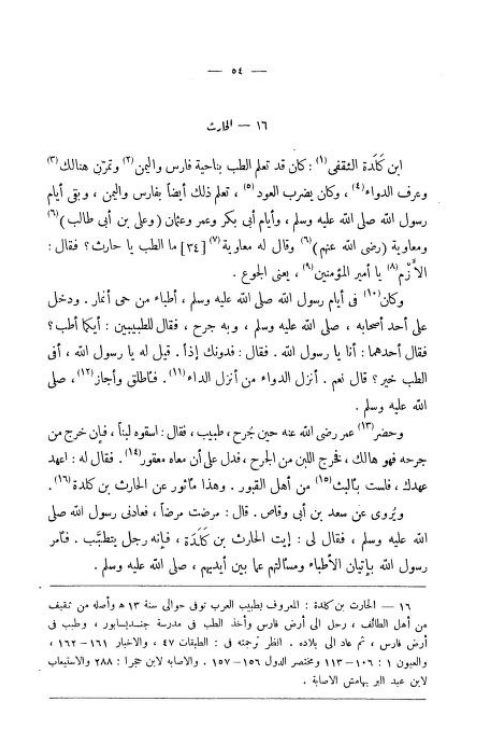
Ibn Juljul, may God have mercy on him, was an Andalusian Muslim physician who lived in Andalusia in the fourth century AH. Ibn Abi Usaybi’a wrote a biography of him.
Uyun al-Anbaa Fi Tabaqat al-Atibba
He explained the names of individual medicines from Dioscorides’ book…
Hunayn ibn Ishaq reviewed and corrected the translation…
Whatever Istifan knew of those Greek names in his time had a name in Arabic he explained in Arabic…
Ibn Juljul said: This book came to Andalusia…
the king Arminius, king of Constantinople, wrote to him in the year 337 AH…
Among his gifts was the book of Dioscorides…
So,
between Ibn Juljul and Al-Harith bin Kalda, may God be pleased with him, there are more than three hundred years, and he did not provide a chain of transmission for his words, so it is not proven that Al-Harith bin Kalda, may God be pleased with him, learned medicine in Persia
The oldest sources that state that Al-Harith bin Kalda, may God be pleased with him, learned medicine in particular from the city of Jundishapur are:
Akhbar al-Ulama bi-Akhbar al-Hukama
((Al-Harith bin Kalda bin Omar bin Alaj al-Thaqafi, the doctor of the Arabs in his time, originally from Thaqif from the people of Taif, traveled to the land of Persia and learned medicine from the people of that country from the people of Jundishapur and others in the pre-Islamic era and before Islam.
He excelled in this craft and practiced medicine in the land of Persia…
The people of Persia who saw him testified to his knowledge…
Al-Harith ibn Kalda embraced Islam and the Messenger of God, may God bless him and grant him peace, used to order whoever had an illness to come to him and ask him about his illness.))
Jamal al-Din al-Qifti is one of the prominent figures of the sixth century AH, and Imam Al-Dhahabi wrote a biography of him.
Siyar A’lam Al-Nubala
He was a versatile scholar, who collected many books that go beyond description.
He died in Ramadan, in the year 646 AH.))
So there are more than five hundred years between Al-Qifti and Al-Harith bin Kalda, may God be pleased with him, and he did not provide any evidence for his words, so it is not proven that Al-Harith bin Kalda studied in Jundishapur.
Fourth
New studies have begun to deny the claim that there was a school or university in Jundishapur to teach medicine before the eighth century.
The Beginnings of Western Science, Page 164
((An influential mythology has developed around Nestorian activity in the city of Gondishapur (often written Jundishapur) in southwestern Persia.
According to the often-repeated legend, the Nestorians turned Gondeshapur into a major intellectual center by the sixth century…
It is alleged that Gondeshapur had a medical school…
We have no persuasive evidence for the existence of a medical school or a hospital at Gondeshapur…
it is doubtful that it ever became a major center of medical education or of translating activity.
Nestorian influence, though not focused on Gondeshapur, did play a vital role…
There is no question that Nestorians were foremost among the early translators…
and as late as the ninth century… the practice of medicine in Baghdad seems to have been dominated by Christian (probably Nestorian) physicians.))
…
The second axis: The response to the lie that the Qur’an quoted Galen’s ideas .
The Response to This Claim is through the following Points
First
The illiteracy of the Prophet, may God bless him and grant him peace, which prevented him from quoting from Galen’s books, most of which were in Greek and some of which were translated into Syriac in the sixth century. How could it be possible for an illiterate person who could neither read nor write in Arabic to master Syriac and Greek !!!
And you did not recite before it any scripture, nor did you inscribe it with your right hand. Then the falsifiers would have had doubts. (48) Rather, it is clear signs within the breasts of those who have been given knowledge. And none reject Our signs except the wrongdoers. (49)
Sahih al-Bukhari
Book of Fasting
Chapter on the Saying of the Prophet
“We do not write nor do we calculate.”
“We are an illiterate nation. We do not write nor do we calculate. The month is like this and like this,” meaning sometimes twenty-nine and sometimes thirty.
Sahih Ibn Habban
Book of Biographies
Chapter on Truce and Compromise
Hadith No. 4982
“The Prophet, may God bless him and grant him peace, performed the minor pilgrimage in Dhul-Qa’dah, but the people of Mecca refused to let him enter Mecca until he had settled the matter with them, on the condition that he would stay there for three days.
When they wrote the letter, they wrote:
This is what Muhammad, the Messenger of God, has decided.
They said:
We do not acknowledge this. If we knew that you were the Messenger of God, we would not have prevented you from anything. But you are Muhammad ibn Abdullah.
He said:
I am the Messenger of God, and I am Muhammad ibn Abdullah.
He said to Ali:
Erase the Messenger of God.
He said:
By God, no. I will erase you forever.
So the Messenger of Allah, may Allah bless him and grant him peace, took the book, and he was not good at writing.
So he ordered, and he wrote in the place of the Messenger of Allah, Muhammad.
So he wrote:
This is what Muhammad ibn Abdullah has decreed, that he will not enter Mecca with weapons except the sword, and he will not leave it with anyone following him, and he will not prevent any of his companions if he wants to stay in it.
So when he entered it and the time passed, they came to Ali…”
Sahih Muslim
Book of Jihad and Expeditions
Chapter of the Treaty of Hudaybiyyah
Isa bin Yunus informed us, Zakariya informed us, on the authority of Abu Ishaq, on the authority of Al-Baraa, who said:
When the Prophet, may God bless him and grant him peace, was besieged at the House, the people of Mecca made peace with him on the condition that he would enter it and stay there for three days…
He said to Ali:
Write the condition between us: In the name of God, the Most Gracious, the Most Merciful. This is what Muhammad, the Messenger of God, has agreed upon.
The polytheists said:
If we knew that you were the Messenger of God, we would follow you, but write Muhammad bin Abdullah.
So he ordered Ali to erase it.
Ali said:
No, by God, I will not erase it.
So the Messenger of God said:
Show me its place.
So he showed him its place, and he erased it and wrote:
Ibn Abdullah.
Sahih Muslim
Book of Jihad and Expeditions
Chapter of the Treaty of Hudaybiyyah
When the Prophet, may God bless him and grant him peace, was besieged at the House, the people of Mecca made peace with him on the condition that he would enter it and stay there for three days, and would not enter it except with the armor of the sword and its sheath, and would not take anyone of its people with him, and would not prevent anyone of those who were with him from staying there.
He said to Ali:
Write the condition between us: In the name of God, the Most Gracious, the Most Merciful. This is what Muhammad, the Messenger of God, has agreed upon.
The polytheists said to him:
If we knew that you were the Messenger of God, we would follow you, but write Muhammad bin Abdullah.
So he ordered Ali to erase it, and Ali said:
No, by God, I will not erase it.
So the Messenger of God, may God bless him and grant him peace, said:
Show me its place.
so he showed me its place, so he erased it and wrote Ibn Abdullah.
Al-Sunan Al-Kubra of Al-Bayhaqi
Book of Marriage
Hadith 12916
Allah the Almighty said:
(And We did not teach him poetry, nor is it befitting for him)
and He said:
(So believe in Allah and His Messenger, the unlettered Prophet)
The unlettered is the one who does not read the book, nor write with his right hand.
This is the saying of Muqatil bin Sulayman, and others of the people of interpretation.
(And you did not recite before it any book, nor did you inscribe it with your right hand)
he said:
The Messenger of Allah — may Allah bless him and grant him peace — did not read nor write.
…
First Translation of Galen into Arabic
And it is known that the first translation of Galen’s books into Arabic was done by Hunayn bin Ishaq in the ninth century AD .
Tabaqat al-Atibba — Ibn Juljul (p.69)
And Hunayn served in medicine Al-Mutawakkil Ala Allah, and he was fortunate in his days and he used to wear a belt, and he learned the Greek language in Alexandria, and he was great in his translation and he is the one who clarified the meanings of the books of Hippocrates and Galen and summarized them in the best summary and revealed what was difficult from them and clarified and clarified their problems and he has useful, perfect and brilliant compositions and he took to the books of Galen and imitated the Alexandrians in them and made them in the form of question and answer and he did well in that
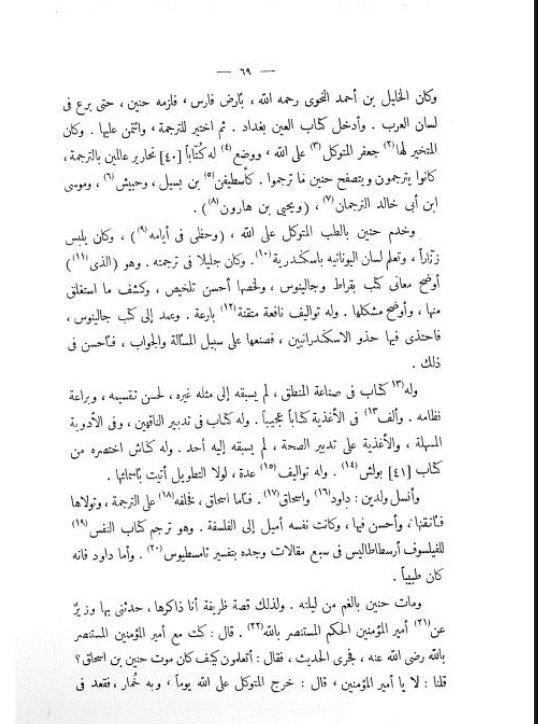
و نقرا من الموسوعة البريطانية
By 500 CE his works were being taught and summarized at Alexandria.
Greek manuscripts began to be collected and translated by enlightened Arabs in the 9th century, and about 850 ibn Isḥāq, an Arab physician at the court of Baghdad, prepared an annotated list of 129 works of Galen that he and his followers had translated from Greek into Arabic or Syriac heavily based upon the commentary, exposition, and understanding of Galen.))
https://www.britannica.com/biography/Galen
Britannica
Galen, Greek physician, writer, and philosopher who exercised a dominant influence on medical theory and practice in Europe from the Middle Ages until the mid-17th century. His authority in the Byzantine world and the Muslim Middle East was similarly long-lived.
Second: The Six Differences between the Qur’anic Details in the Science of Algebra and Those Explained by Galenus
And above These Differences
1
- It consists of male semen
- The section consists of female blood
Meyer Essays on the History of Embryology Volume 2
This classification of Galen continued in use for several hundred years, and well illustrates the danger of speculation.))
Genitals are the product of male and female sperm together and have nothing to do with female blood.
Tafsir Citation
Ibn Katheer (may Allaah have mercy on him) said:
“I created man from the sperm of a bird.”
Ibn ‘Abbas said in the Qur’an:
“The water of a man or a woman if she has intercourse and it is mixed, then it moves from tour to tour, and state to state, and moon to moon.”
The man said to the woman:
“Nabtalia It may be from obedience and disobedience.”
Sahih al-Bukhari 3938
I am going to ask you about three things that no one knows except a prophet:
What is the first sign of the Hour?
What is the first food that the people of Paradise will eat?
And why does the child gravitate towards his father or his mother?
He said:
“Gabriel told me about it just now.”
Ibn Salam said:
That is the enemy of the Jews from the angels.
He said:
“As for the first sign of the Hour, it is a fire that will gather them from the east to the west.
As for the first food that the people of Paradise will eat, it is the extra liver of a fish.
As for the child, if a man’s water precedes the woman’s semen produces the child, and if the woman’s semen precedes the man’s semen, the child is produced.”
He said:
“I bear witness that there is no god but Allah and that you are the Messenger of Allah.”
He said:
“O Messenger of Allah, the Jews are a people of slander, so ask them about me before they know about my Islam.”
So the Jews came and the Prophet, may Allah bless him and grant him peace, said:
“What kind of man is Abdullah ibn Salam among you?”
They said:
“The best of us and the son of the best of us, the most excellent of us and the son of the most excellent of us.”)))
“What do you think if Abdullah ibn Salam embraces Islam?”
They said:
“May Allah protect him from that.”
“And he does it again to them.”
They said:
“The same.”
Then Abdullah went out to them and said:
“I bear witness that there is no god but Allah and that Muhammad is the Messenger of Allah.”
They said:
“The worst of us.”
And the son of our evil, and they belittled him, he said:
“This is what I feared, O Messenger of God.”
And the false belief continued among medical scholars until the last centuries in the belief that the fetus originates from the man’s semen alone, and therefore a group of scholars rejected their statement and presented what was mentioned in the Book and the authentic Sunnah.
Fath Al-Bari
Explanation of Sahih Al-Bukhari
Part Eleven, Book of Destiny
In the semen of a man there is the power of action, and in the semen of a woman there is the power of reaction.
So when Mixing makes the man’s semen like rennet for milk.
It has been said that each of them has the power of action and reaction, but the first is more in the man and the opposite in the woman.
Many of the people of anatomy claimed that the man’s semen has no effect on the child except in its contract and that it is only formed from menstrual blood.
The hadiths of the chapter invalidate that, and what was mentioned first is closer.
To agree with the hadith, and God knows best.))
Al-Qurtubi’s Interpretation
Surat Al-Hujurat
Some of the early people believed that the fetus is only from the man’s water alone, and is raised in the mother’s womb, and is derived from the blood in which it is.
They argued with the words of God Almighty:
Did We not create you from a despised water? Then We placed him in a firm lodging [Al-Mursalat: 21]
And His words, the Most High:
Then He made his offspring From a lineage of despised water [As-Sajdah: 8]
And His statement:
Was he not a drop of ejaculated semen? [Al-Qiyamah: 37]
This indicates that creation is from a single water.
The correct view is that creation is from the water of the man and the woman, according to this verse, as it is a text that does not allow for interpretation.
And His statement, the Most High:
He was created from a gushing water. It emerges from between the backbone and the ribs. [At-Tariq: 37:6]
What is meant by it are the loins of men and the collarbones of women, as will be explained.
As for what they have used as evidence, it does not contain more than that Allah the Most High mentioned the creation of man from water, progeny, and sperm, and He did not attribute it to one of the parents without the other.
This indicates that the water and progeny belong to them and the sperm is from them, as indicated by what we have mentioned.
And that a woman desires as a man desires, and this is where the resemblance comes from, as was explained at the end of Ash-Shura.”
Tuhfat al-Mawdud bi-Ahkam al-Mawlud
Ibn al-Qayyim — Chapter Seventeen
A Jew passed by the Messenger of God, may God bless him and grant him peace, while he was speaking to his companions, so a man from Quraysh said:
O Jew, this one claims that he is a prophet.
So he said:
I will ask him about something that only a prophet knows.
So he came until he sat down, then he said:
O Muhammad, from what is man created?
He said:
O Jew, from each is created:
from the sperm of the man
and from the sperm of the woman.
As for the sperm of the man, it is a coarse sperm from which the bones and nerves are formed,
and as for the sperm of the woman, the sperm of the woman is a delicate sperm from which the flesh and blood are formed.
So the Jew stood up and said:
This is what those before you…”
use> [!quote]
…had to say. These hadiths contain matters, one of which is that the fetus is created from the sperm of the man and the sperm of the woman, contrary to those naturalists who claim that it is only created from the sperm of the man alone.
And God Almighty said:
{So let man see from what he was created. He was created from a fluid ejected, emerging from between the backbone and the ribs.}
At-Tariq 7-5Al-Zajjaj said:
The linguists said: The ribs are the place of the necklace in the chest, and the plural is ribs.
Abu Ubaidah said:
The ribs are the place where the jewelry is hung from the chest, and this is the saying of all the linguists.
Ata’ said on the authority of Ibn Abbas:
He means the backbone of the man and the ribs of the woman, and it is the place of her necklace.
…
2. Galen Did Not Mention the Stages of the Clot and the Lump of Flesh, and He Did Not Mention that the Bones, like Primary Cartilage, Are Formed First before the Flesh
We Read from the Same Previous Source
The first of which he called geniture.
During this stage the conceptus was said to be unformed and white like semen.
In the second stage it became a fetus, but was said to be without liver, brain, and heart although vascularized.
Galen seems to have suggested no special name for the third stage, in which the heart, liver, and brain were well formed, but in which the external features still were largely unformed.
In his fourth stage of prenatal life, puer, all of the organs were well formed and the joints freely movable.
From this it is evident that this stage occurred relatively late in fetal life.))
While the Qur’an states in places that the fetus passes inside the mother’s womb through the stages of the clot and then the formed and unformed lump of flesh.
Qur’anic Texts
(( Then We made the sperm-drop into a clinging clot, then We made the clot into a lump of flesh, then We made the lump of flesh into bones, then We covered the bones with flesh; then We developed it into another creation.
So blessed be Allah, the best of creators.))
((O mankind, if you are in doubt about the Resurrection —
then indeed, We created you from dust,
then from a sperm-drop,
then from a clot,
then from a lump of flesh, formed and unformed, that We may make clear to you.
And We cause whom We will to remain in the wombs for a specified term.
Then We bring you forth as a child,
and then [this is] [a period], that you may reach your [full] strength.
And among you is he who is taken [in death],
and among you is he who is returned to the most decrepit old age [in life] so that he does not know, after [having] knowledge, a thing.
And you see the earth lifeless, but when We send down upon it water, it quivers and swells and grows [abundantly] of every beautiful pair.))
((Read in the name of your Lord who created (1)
Created man from a clot (2)))
So where is the alleged quote????