THREAD 🧵Did Early Christians Even Agree on What the Bible Is
Most Christians today assume the Bible was always one book, agreed on by all. But the early Church? It was anything but united on that.
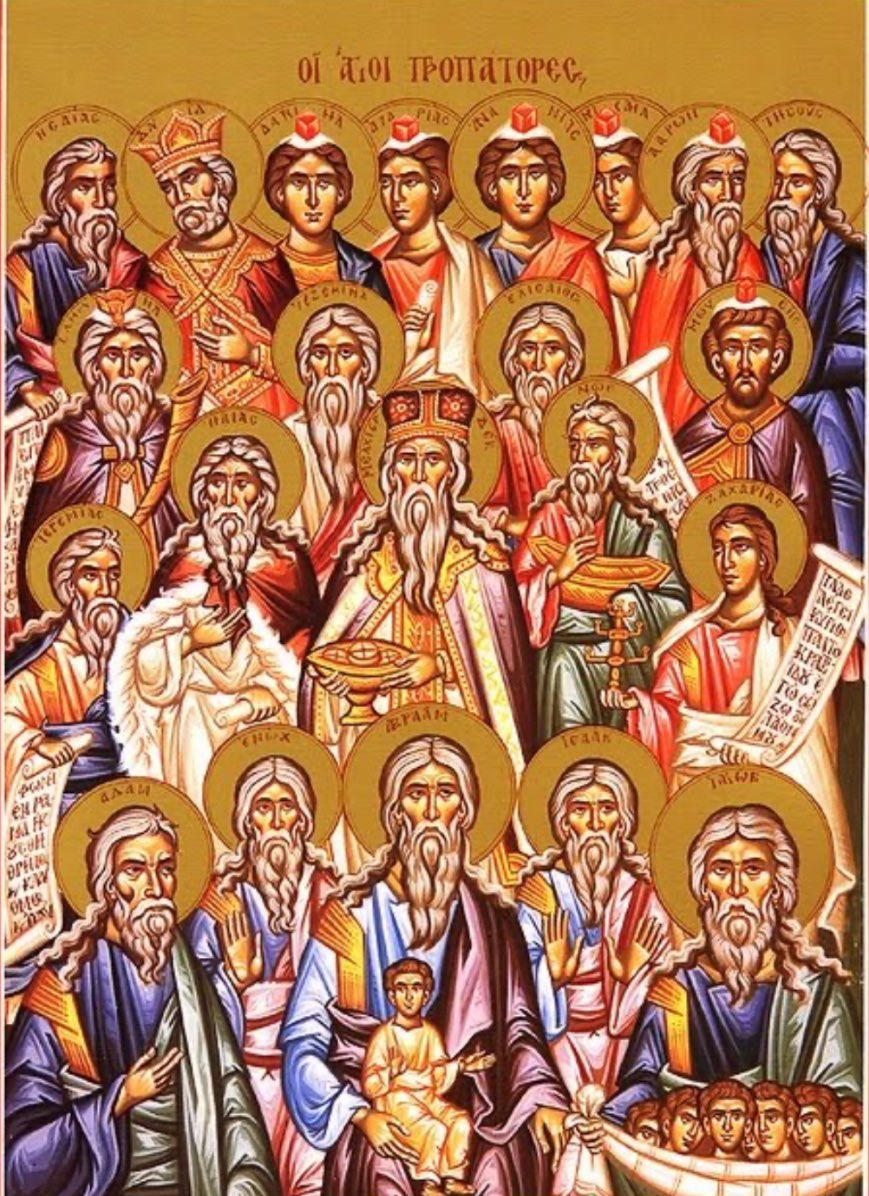
Father Fahim Aziz explains that the canonicity of the book wasn’t decided in a single moment Instead, it was a long and gradual process during which different churches held varying opinions about which books were authoritative This lack of consensus persisted for quite some time.
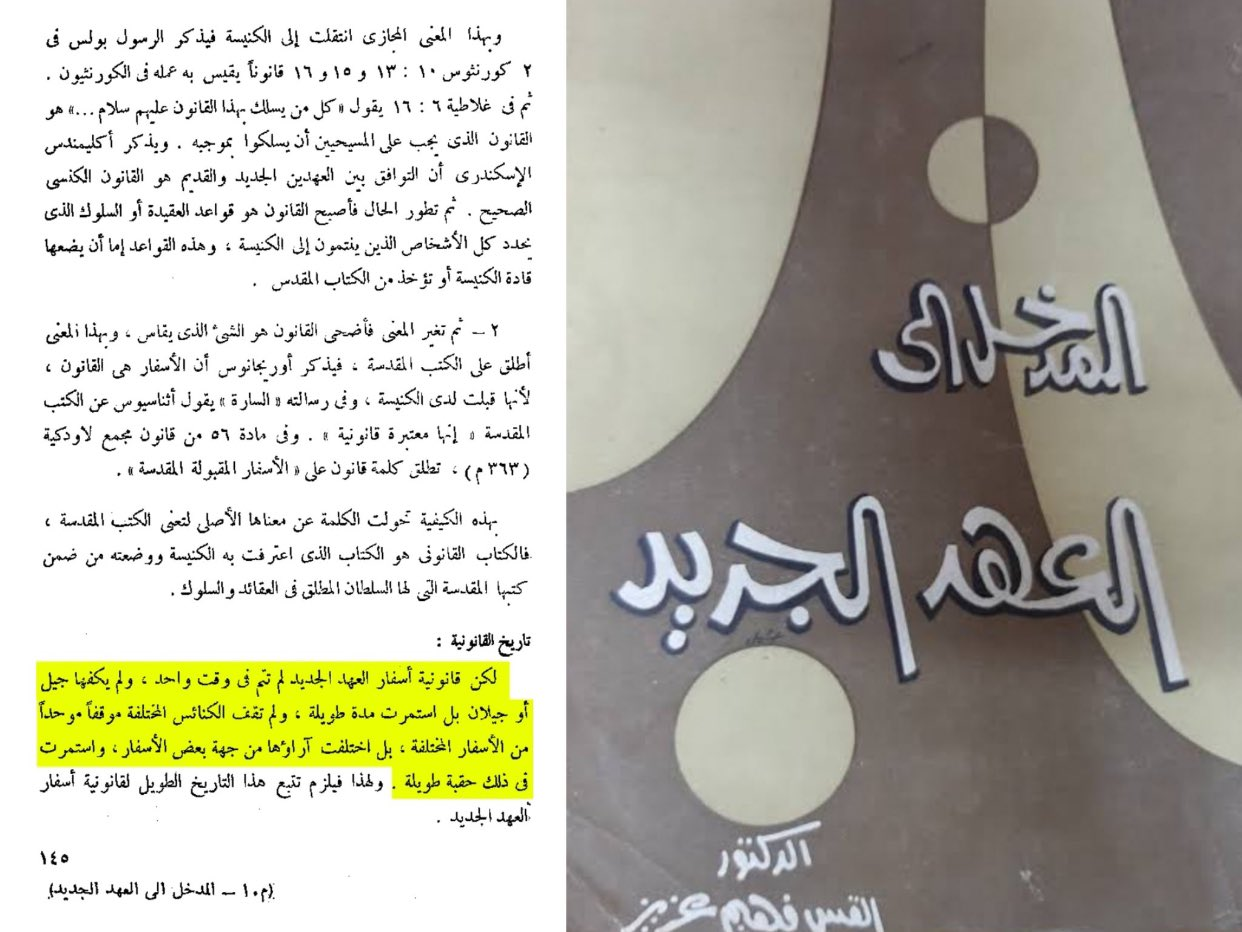
For example, the Western Church didn’t recognize the canonicity of Hebrews and only accepted three Catholic Epistles (1 and 2 John, and 1 Peter). Meanwhile, the Eastern Church rejected the Book of Revelation as canonical.
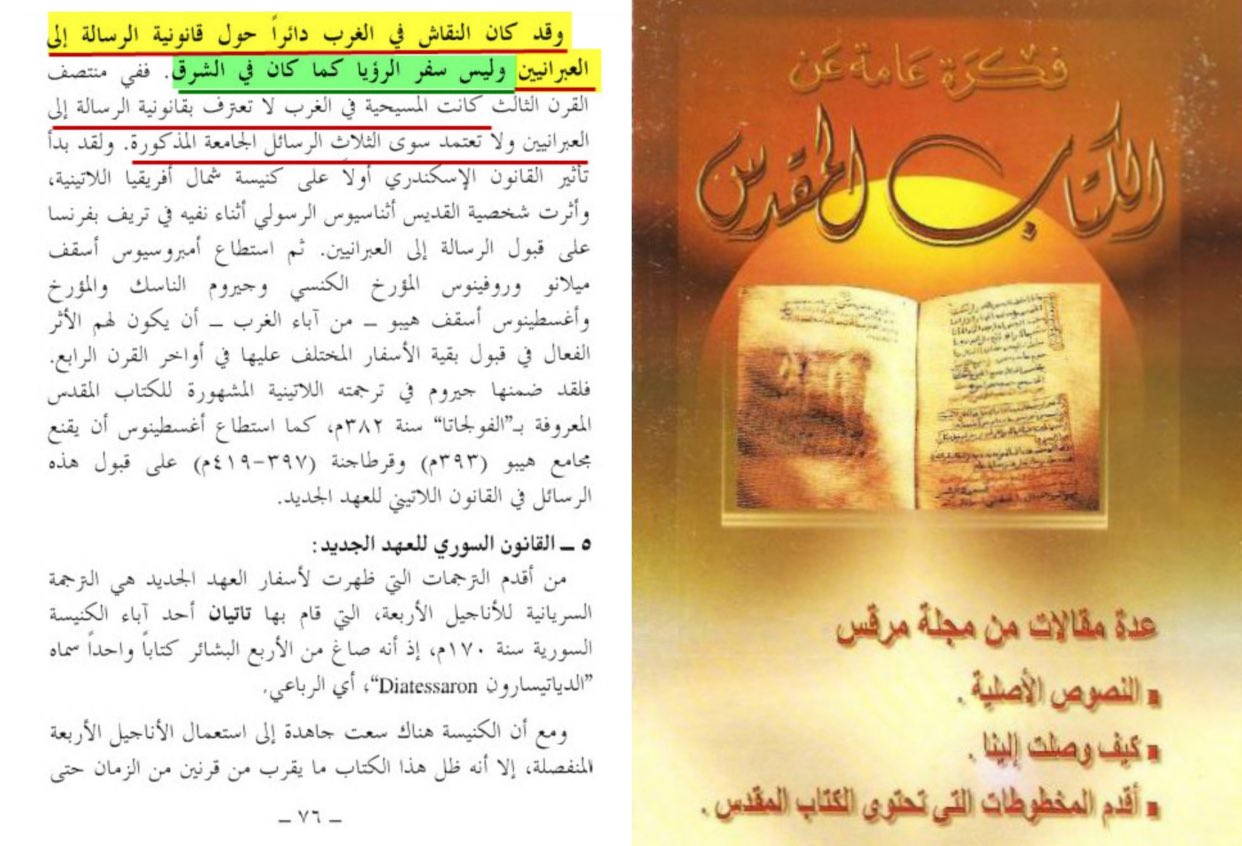
The Syrian Church accepted the Diatessaron instead of the four Gospels and rejected all the universal letters. Revelation wasn’t even considered a revealed book. They also added a now-lost “Third Epistle to the Corinthians.”
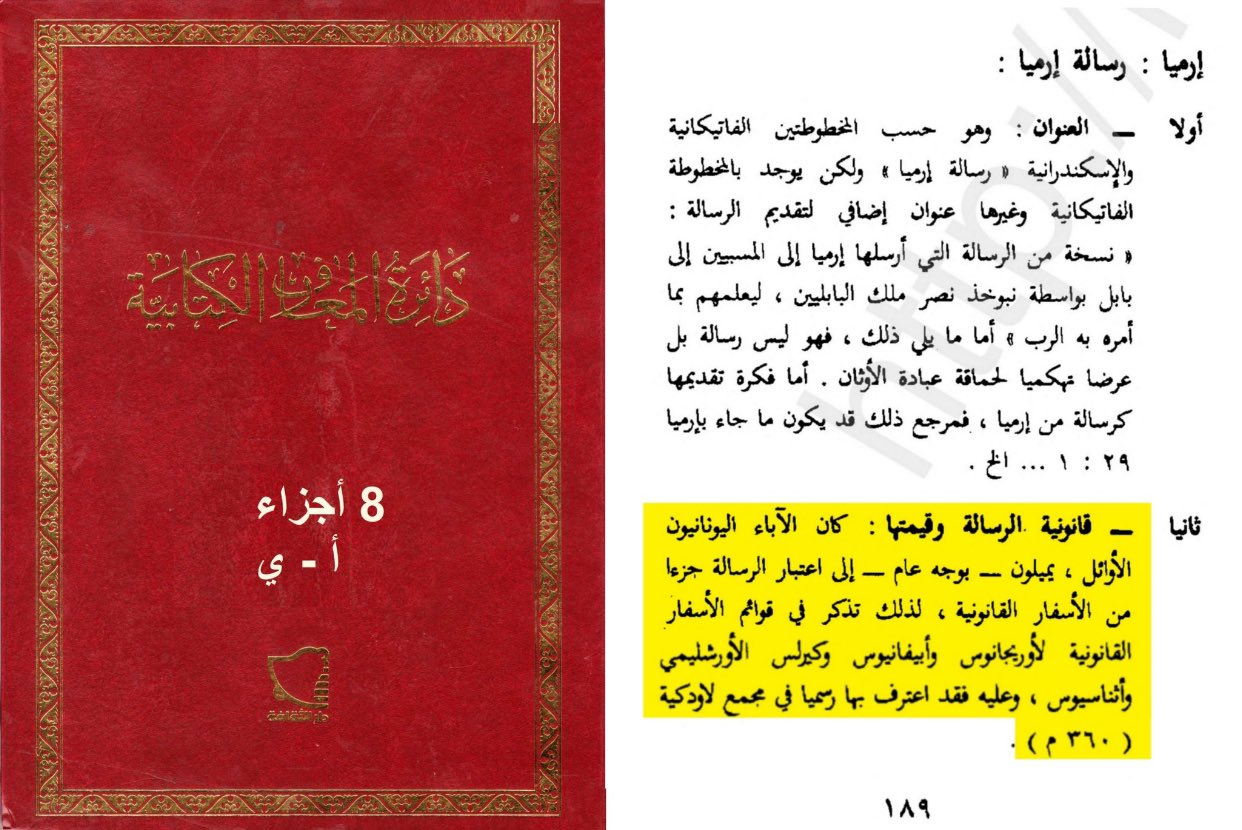
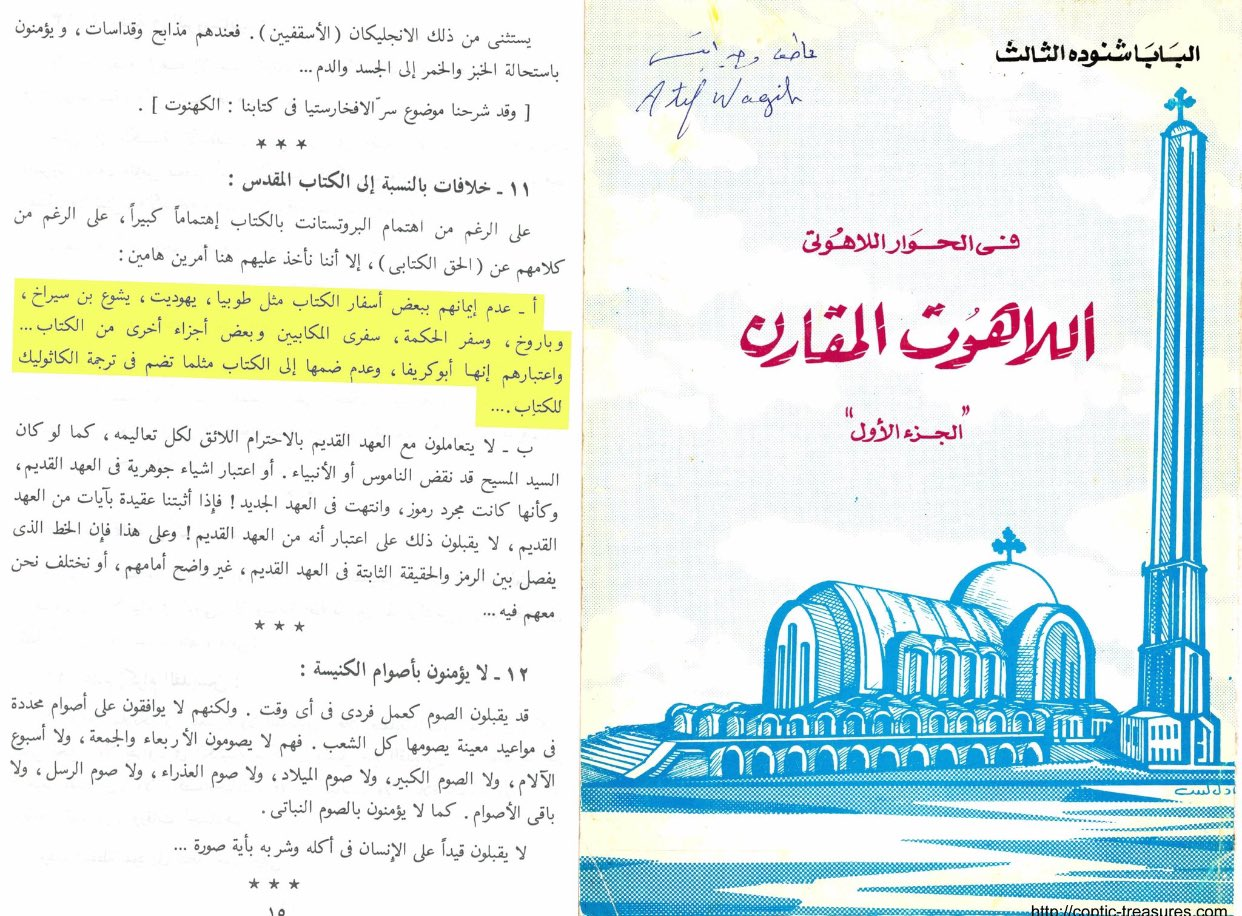
Then we find that the early fathers believed in the legitimacy of Jeremiah’s message, while the contemporary fathers do not believe in the legitimacy of Jeremiah’s message.!!!
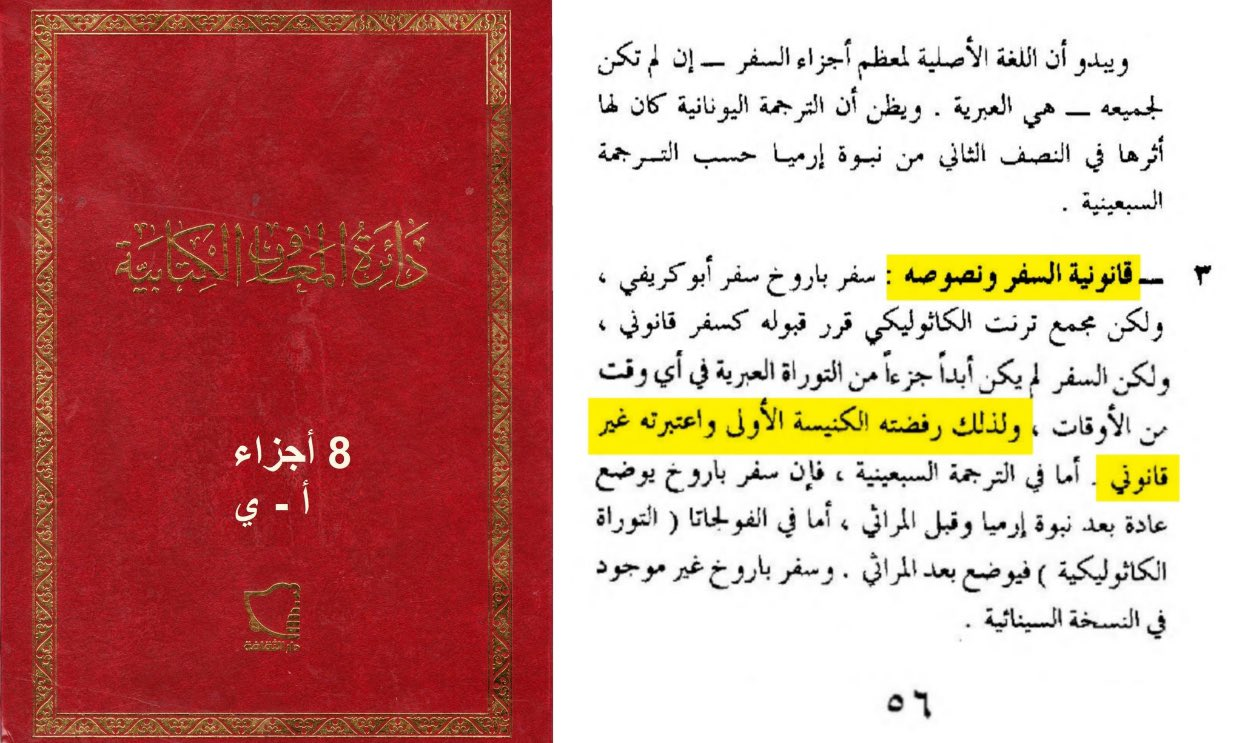
Then the Christian Encyclopedia surprises us by saying that the early church rejected the Book of Baruch and considered it non-canonical, while we find that the church now believes in the canonical nature of the Book of Baruch!!
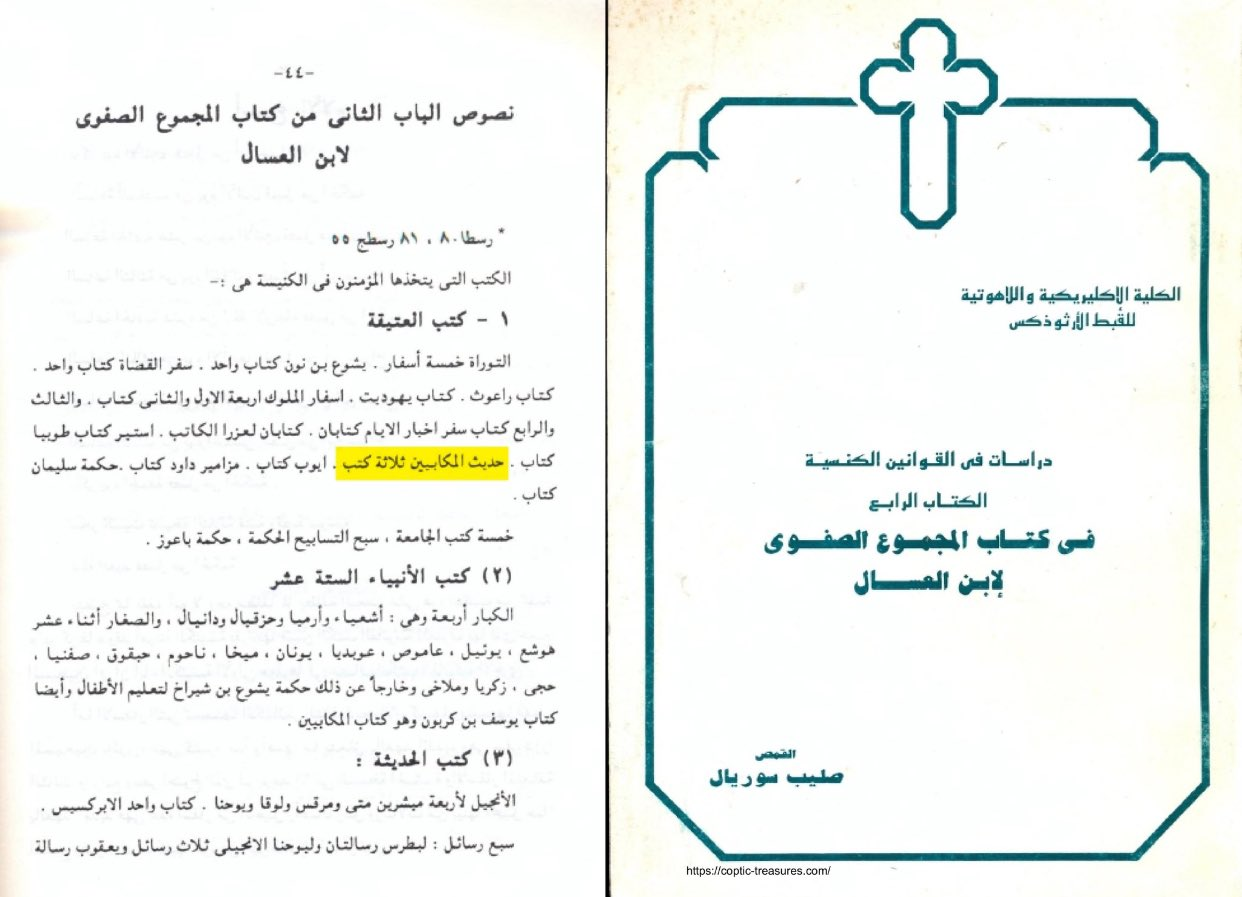
The surprises keep coming—according to Ibn Al-Assal’s Safawi Collection, early church believers accepted three books of Maccabees. Today’s church, however, only recognizes two.
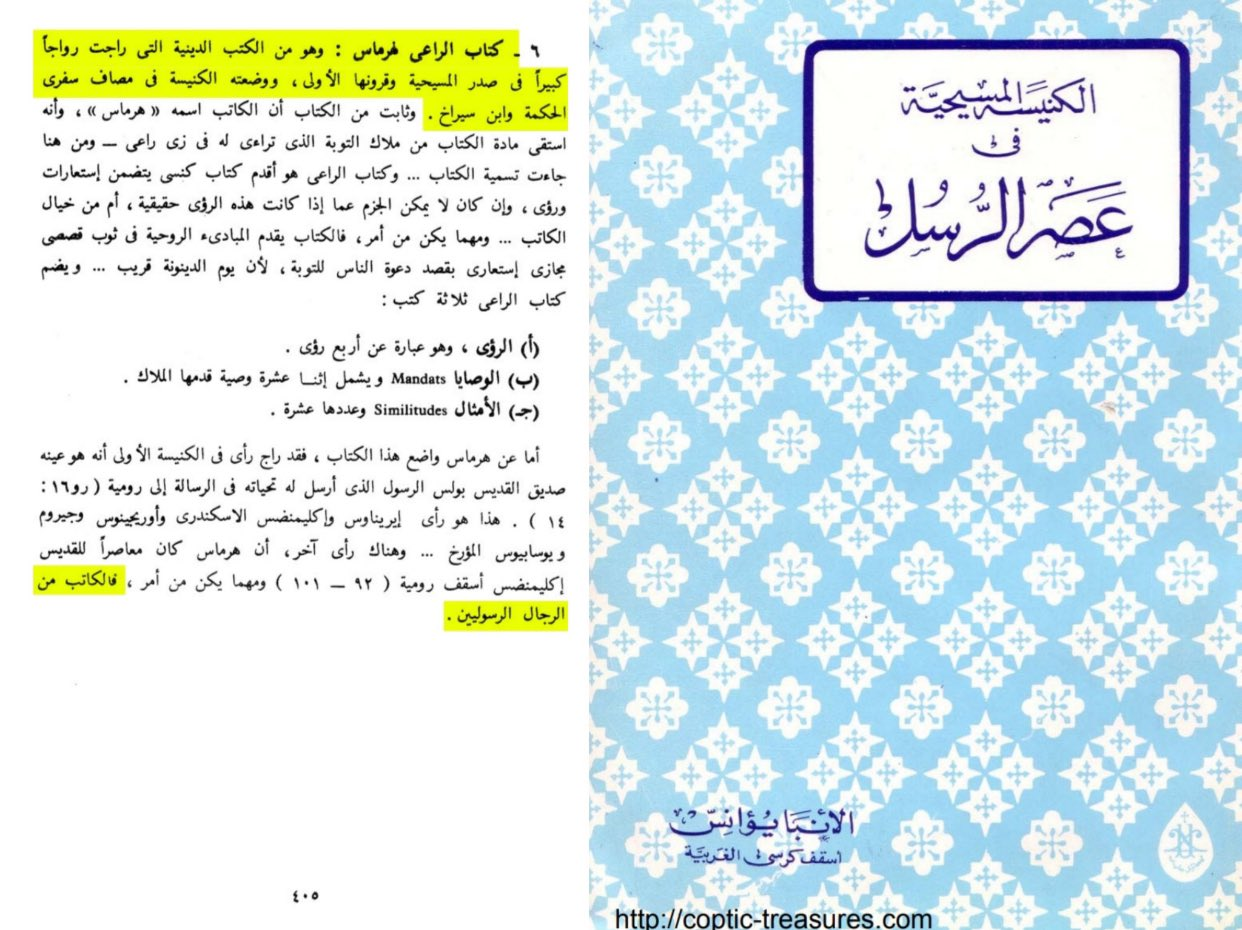
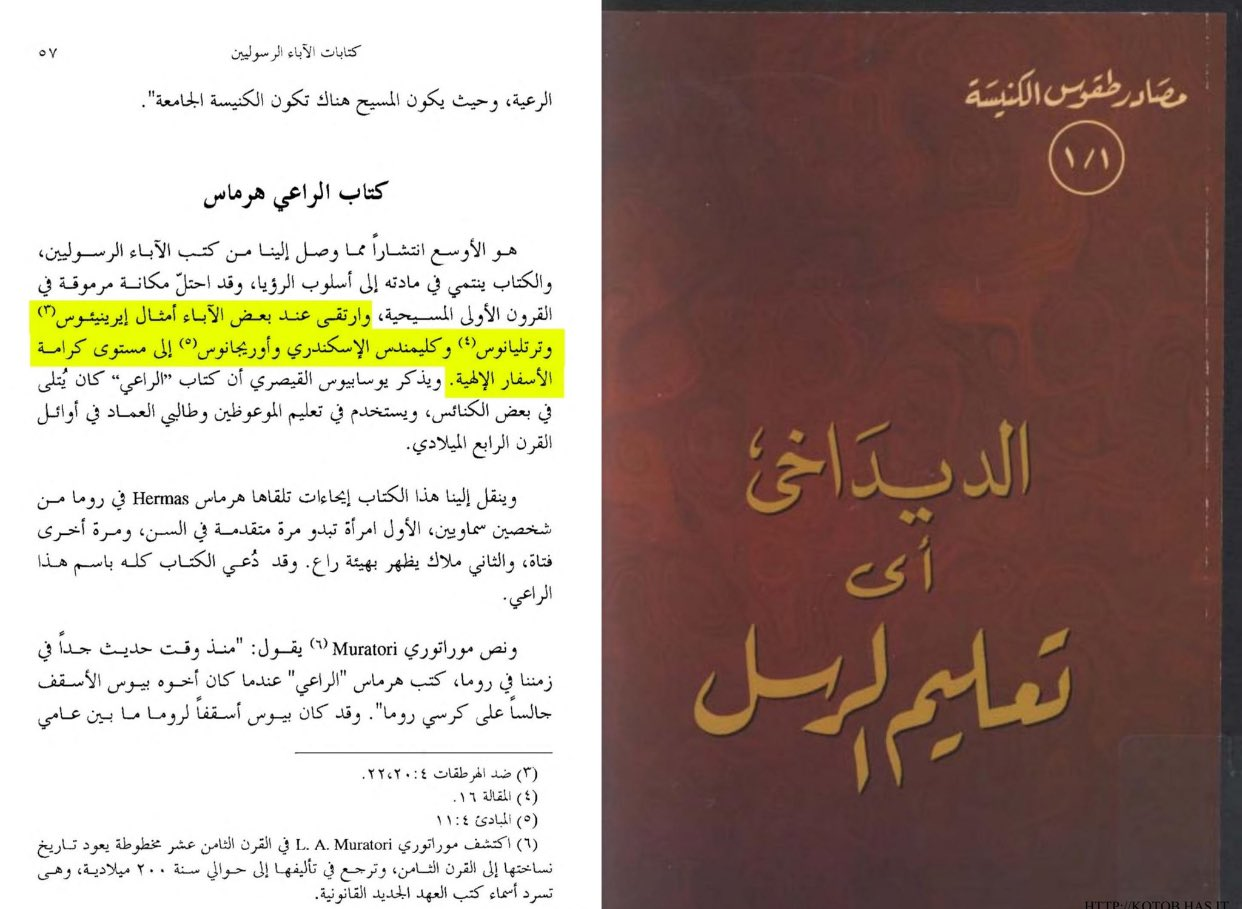
Interestingly, the early church regarded The Shepherd of Hermas as canonical—placing it on par with the Books of Wisdom and Sirach—and considered its author to be an apostolic figure. Today, however, the church no longer accepts it as part of the canon.
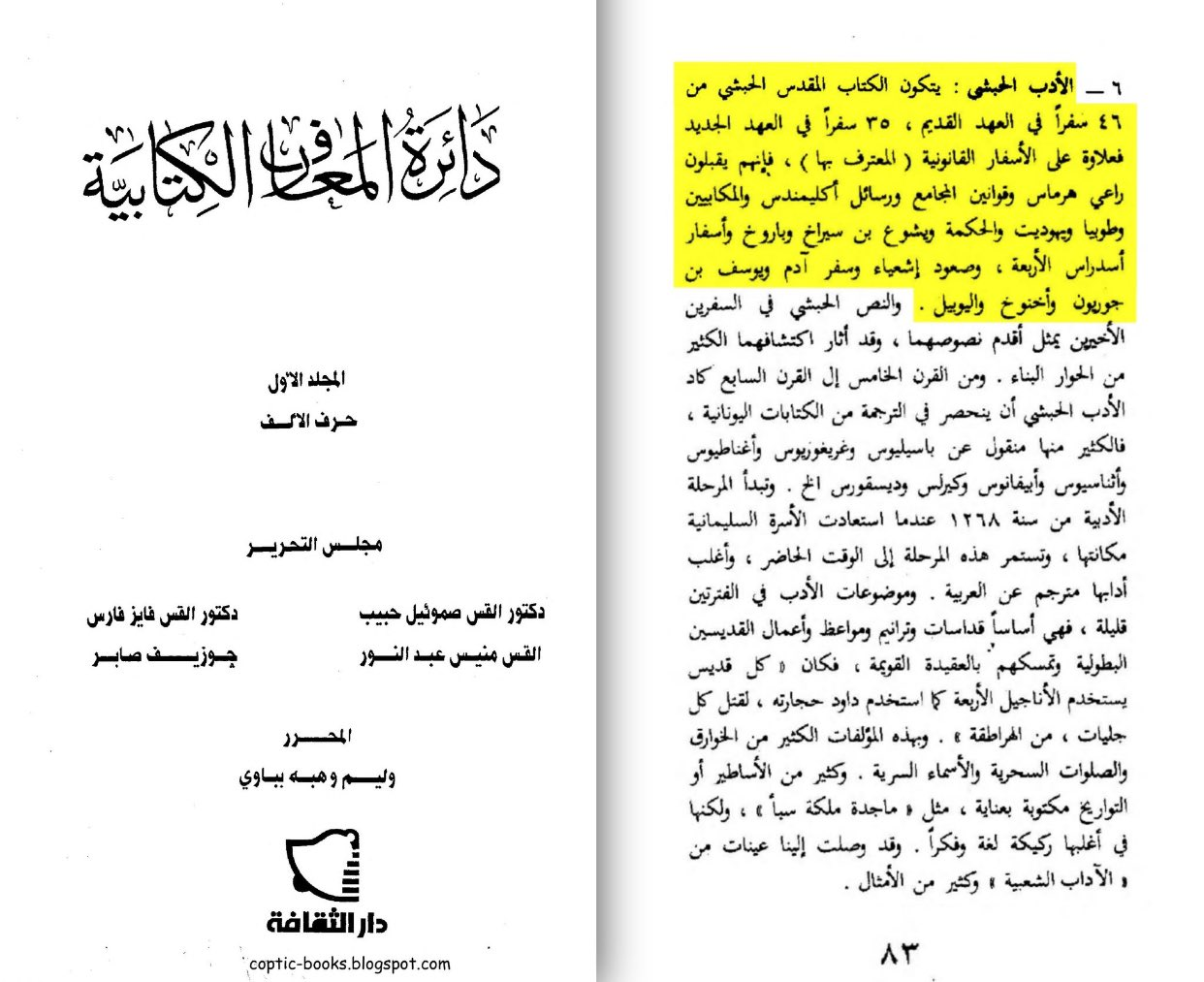
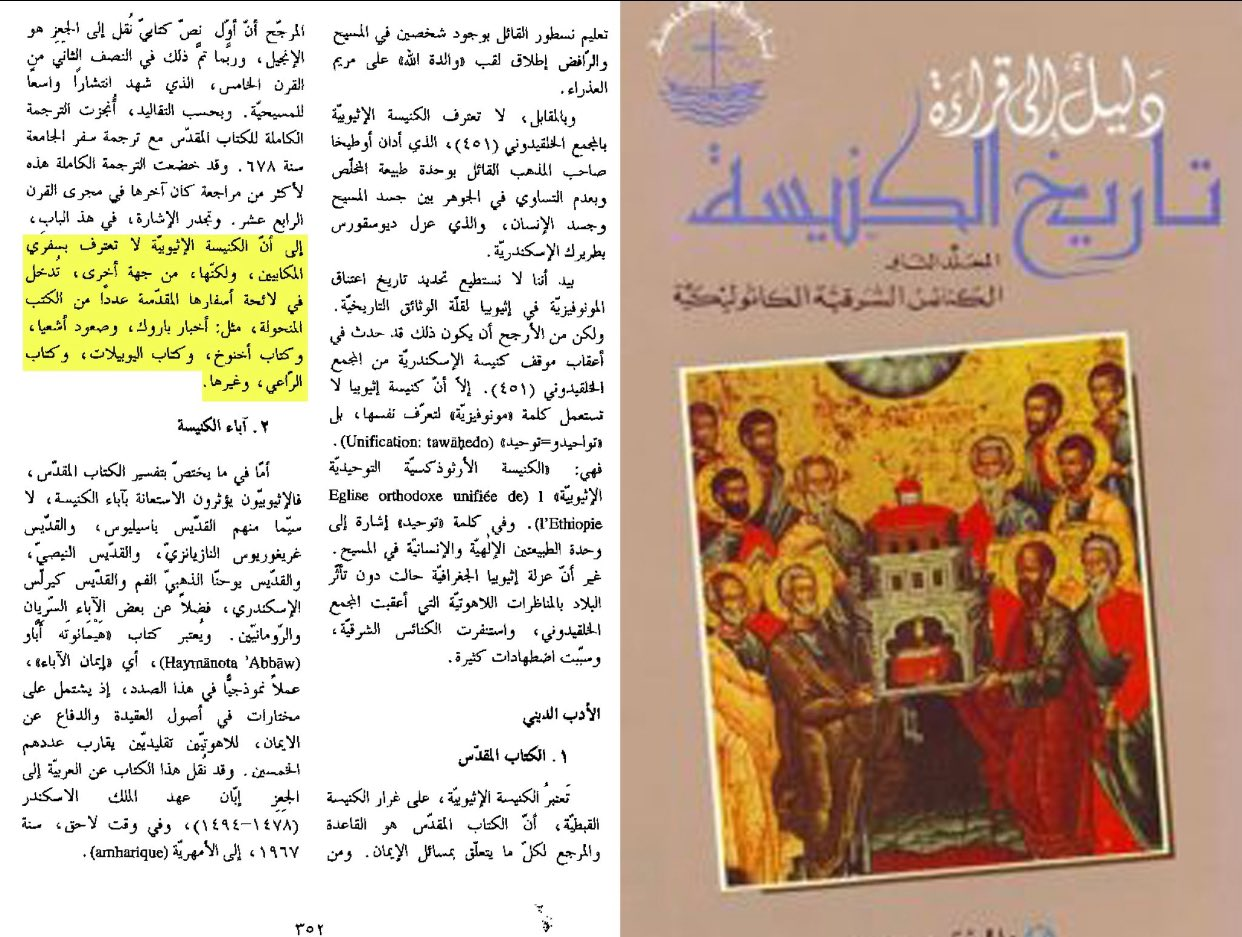
The Ethiopian Church rejects the canonical Maccabees books, yet includes several apocryphal texts like the Chronicles of Baruch, Ascension of Isaiah, Book of Enoch, Jubilees, and Shepherd of Hermas. So… should we follow their canon or someone else’s?
Or should we follow the Protestant Church, which rejects all the Deuterocanonical books—like Tobit, Judith, Baruch, Sirach, the Maccabees—and labels them all as Apocrypha?
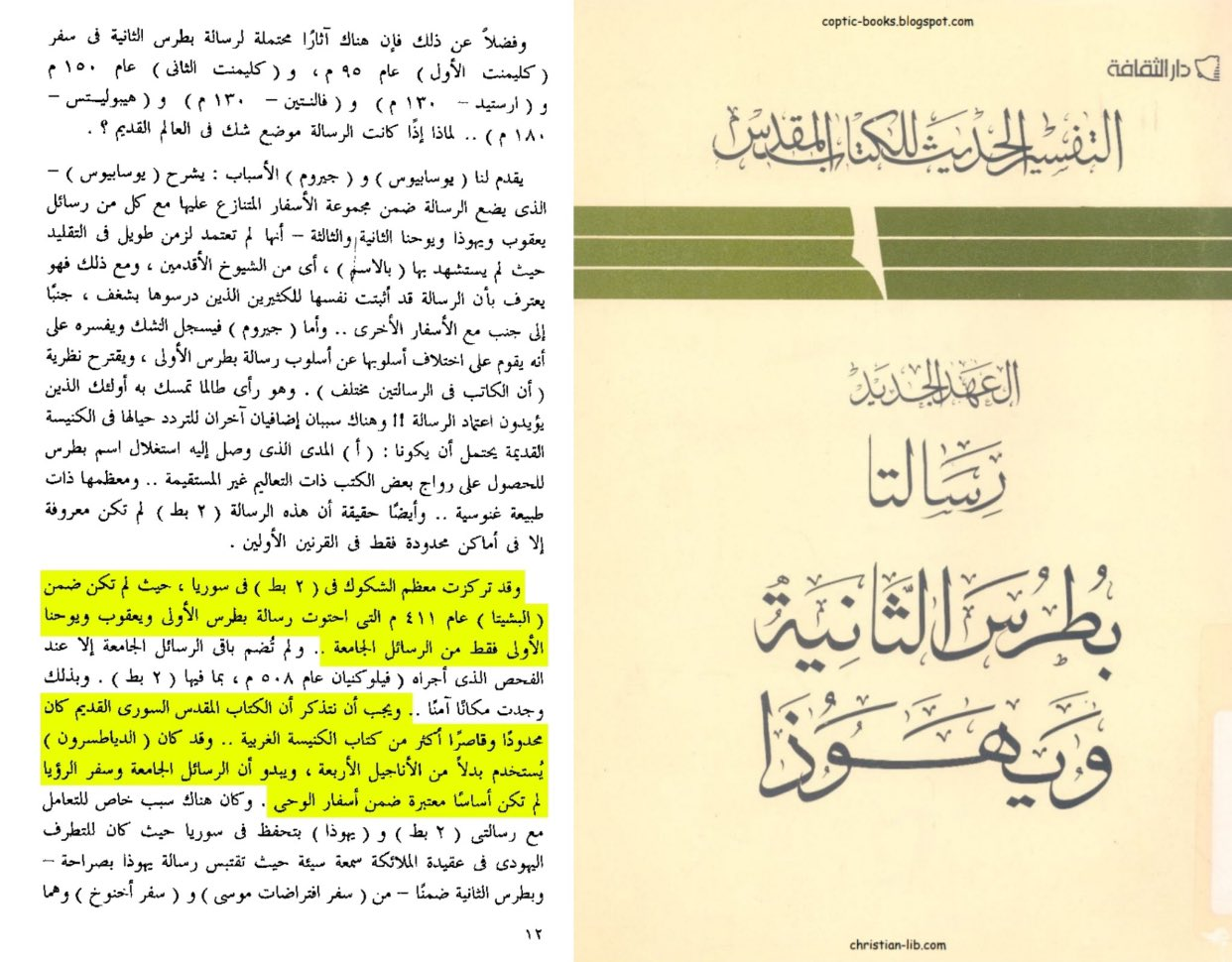
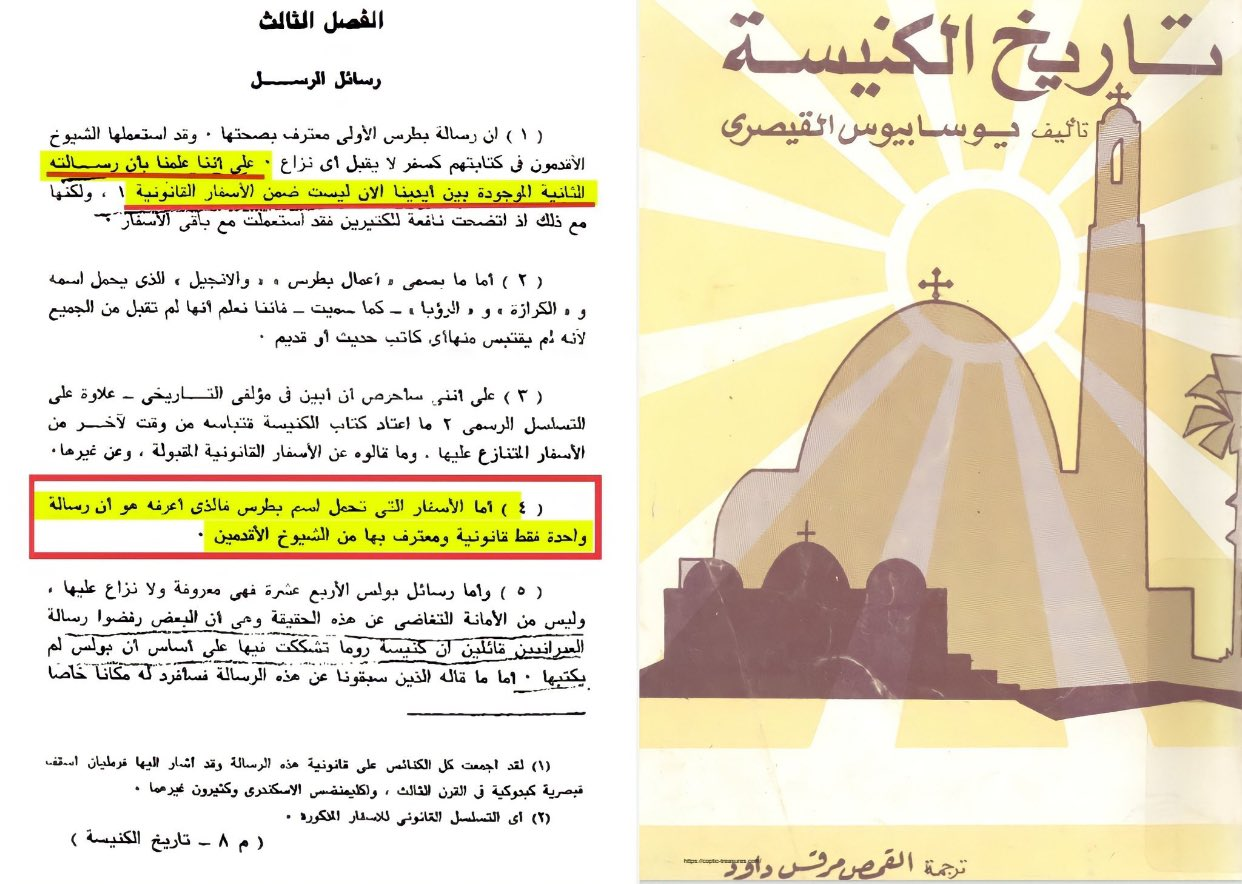
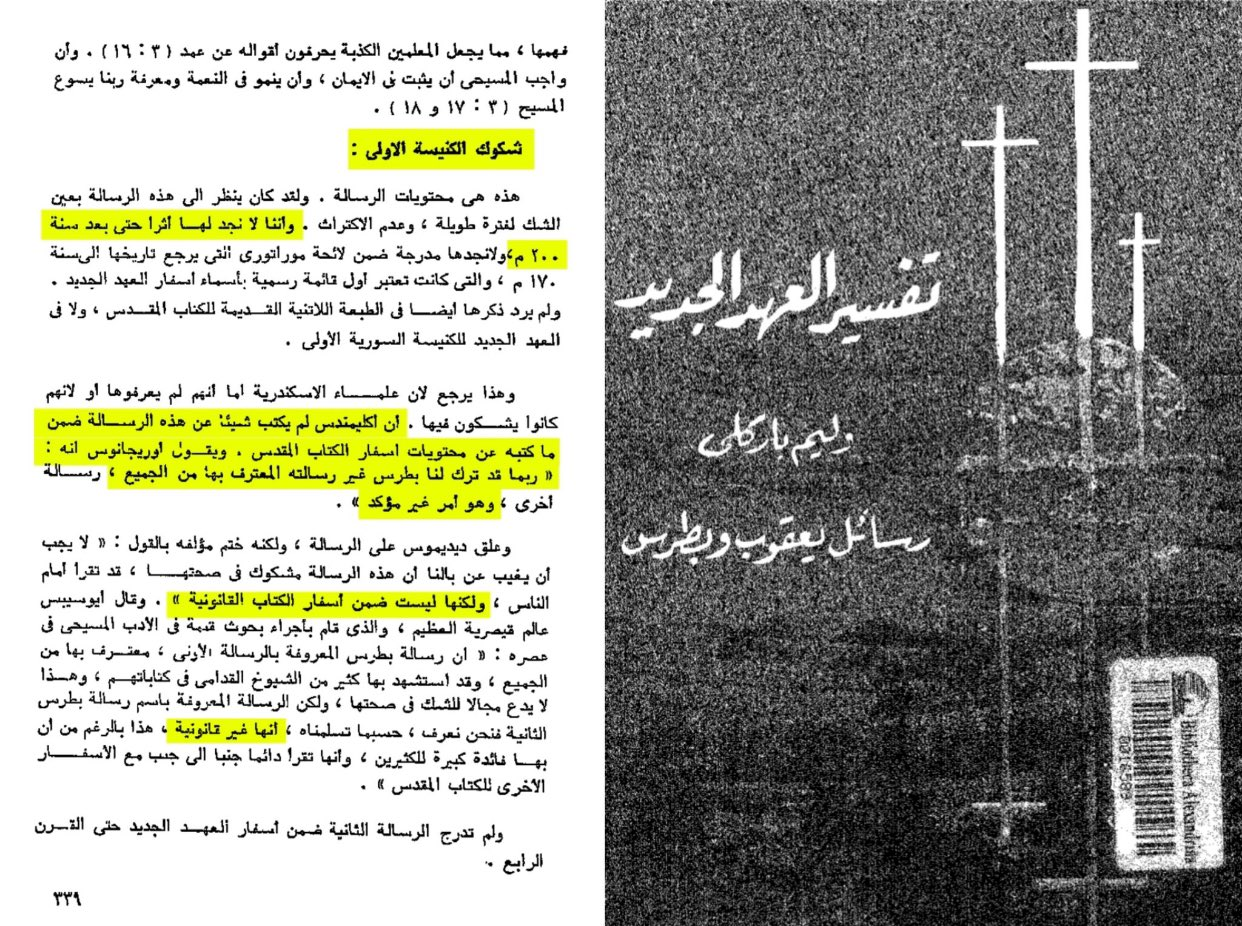
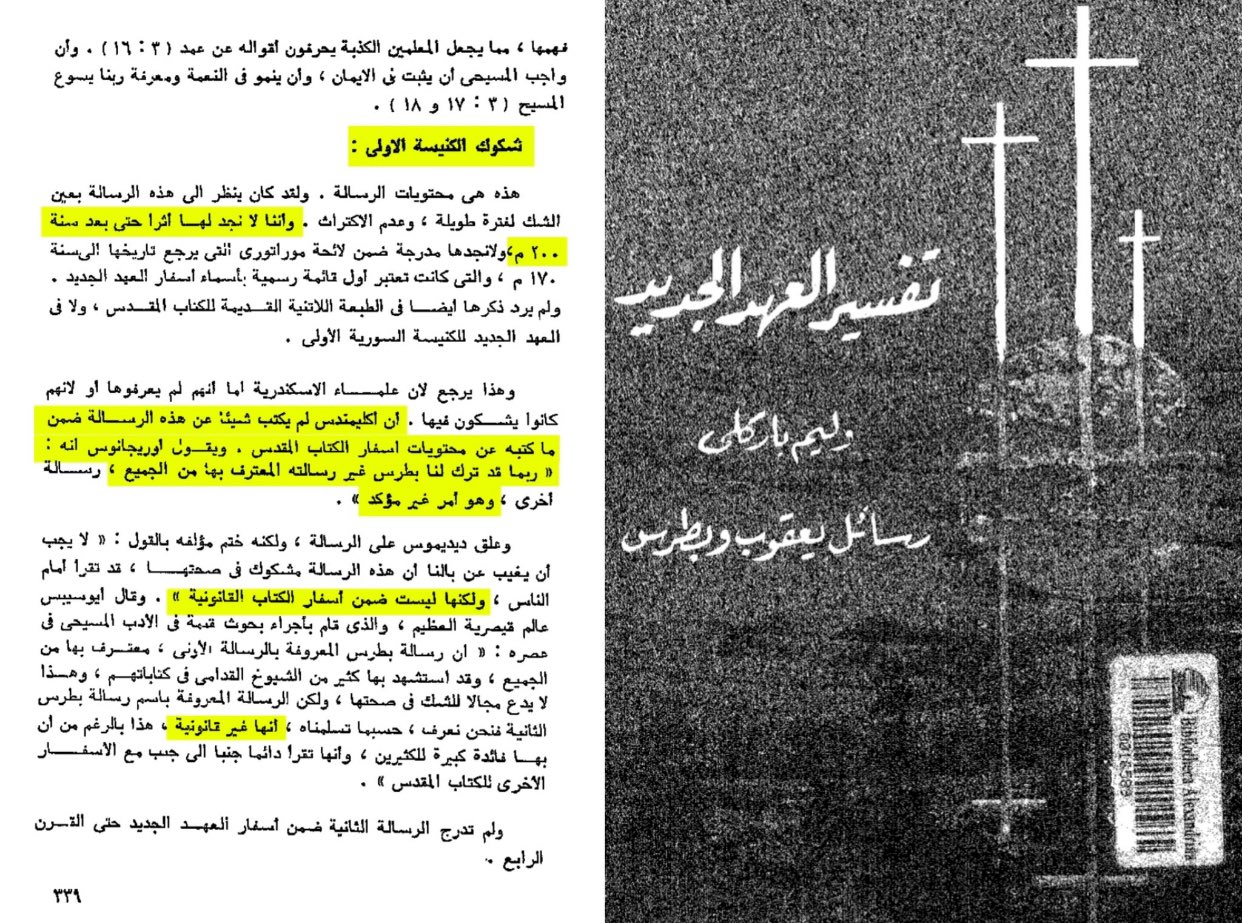
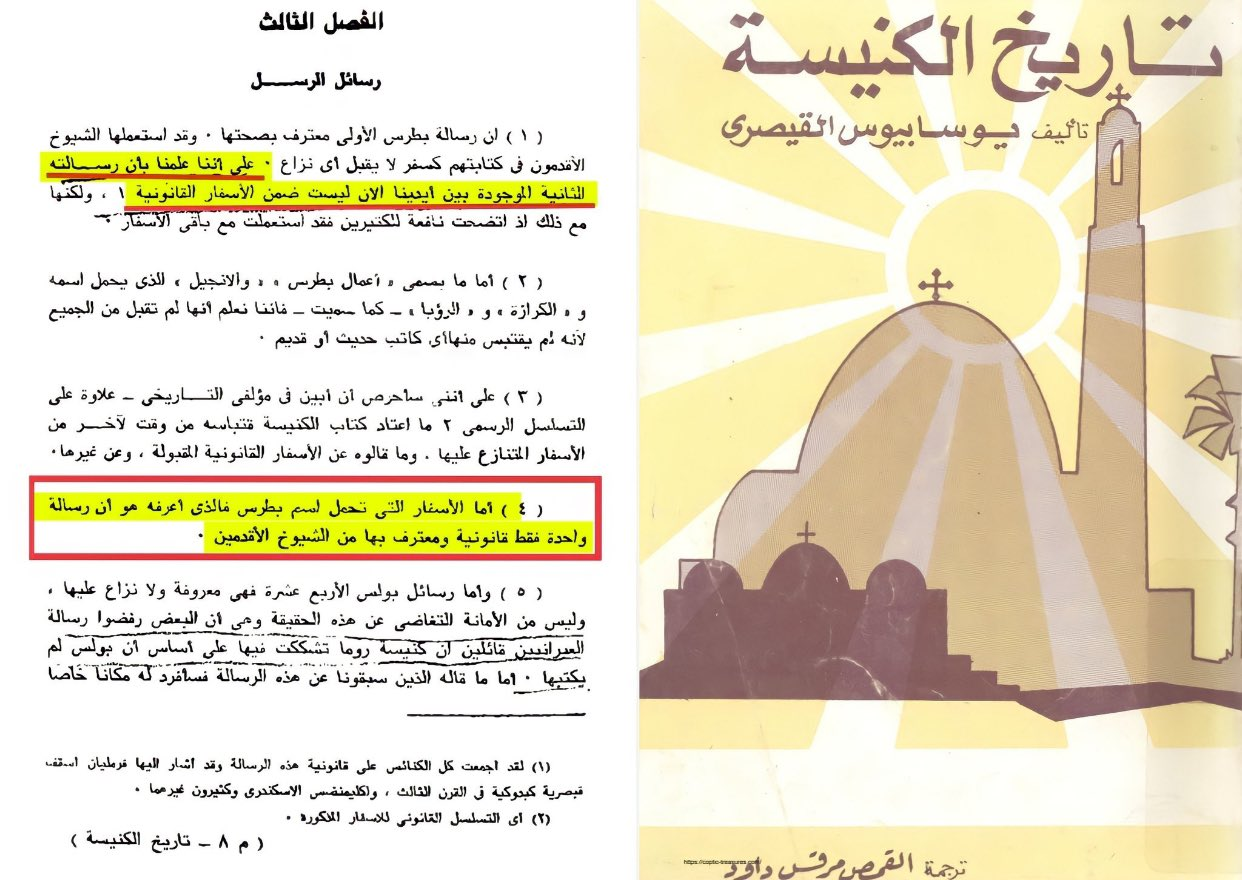
Then he conveys to us the argument of church history (Eusebius of Caesarea) about the early church that it rejected the second letter of Peter…and did not consider it legal, while we find the church now believing in the legality of the second letter of Peter.
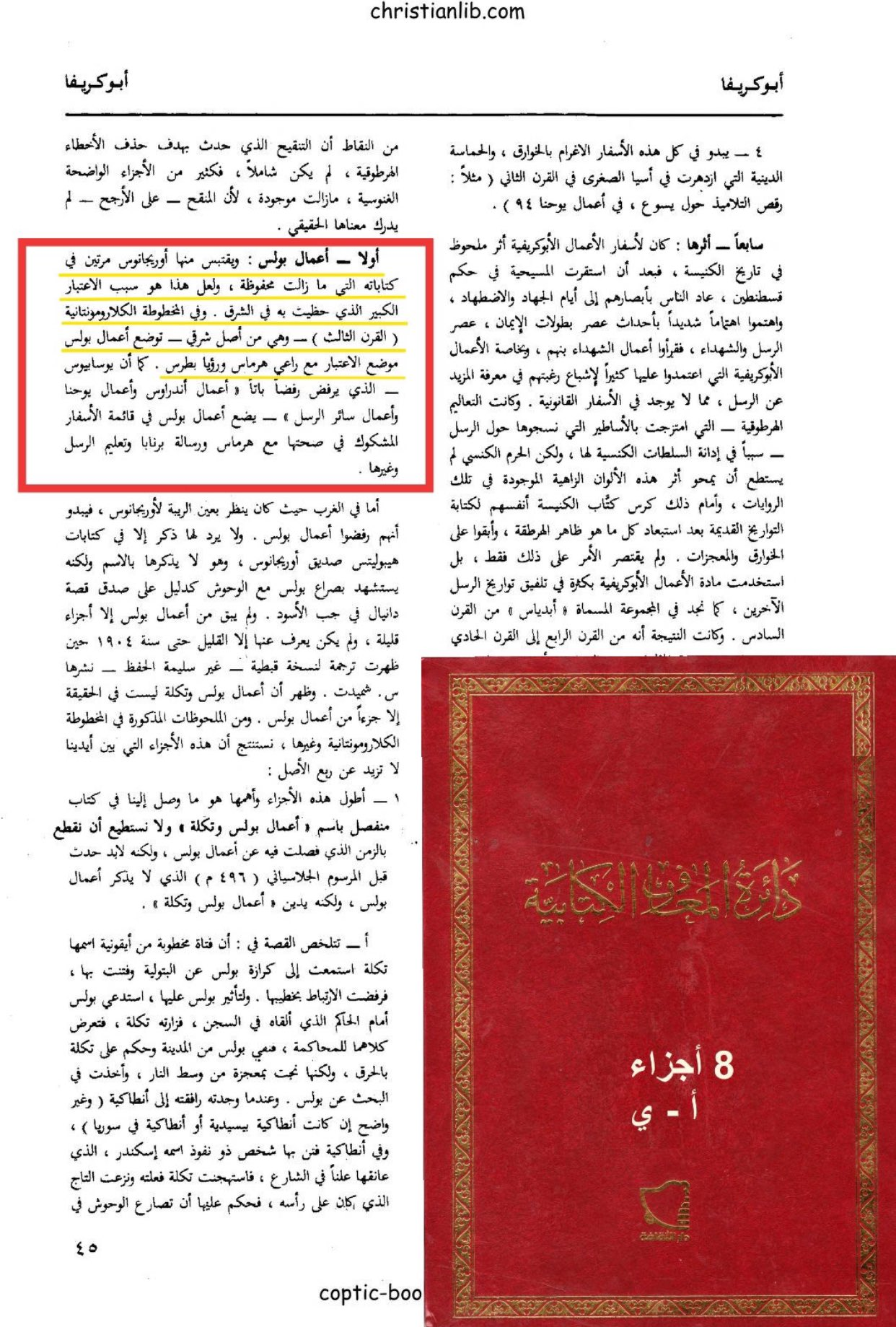
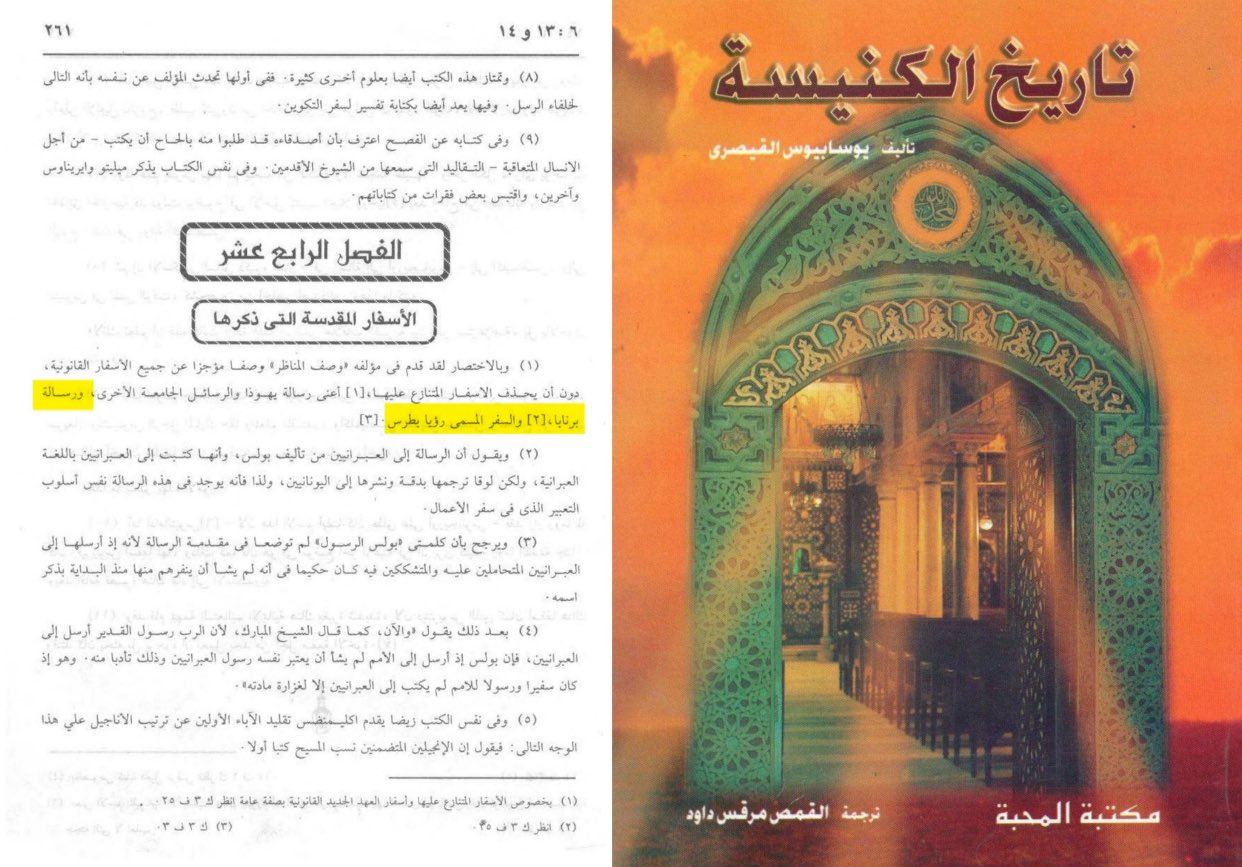
Each Church Father had their own version of the canon. For example, Origen rejected 2 & 3 John, 2 Peter, Hebrews, and 1 Maccabees—but accepted Barnabas, the Shepherd of Hermas, and Acts of Paul as scripture. So… where are those books now?
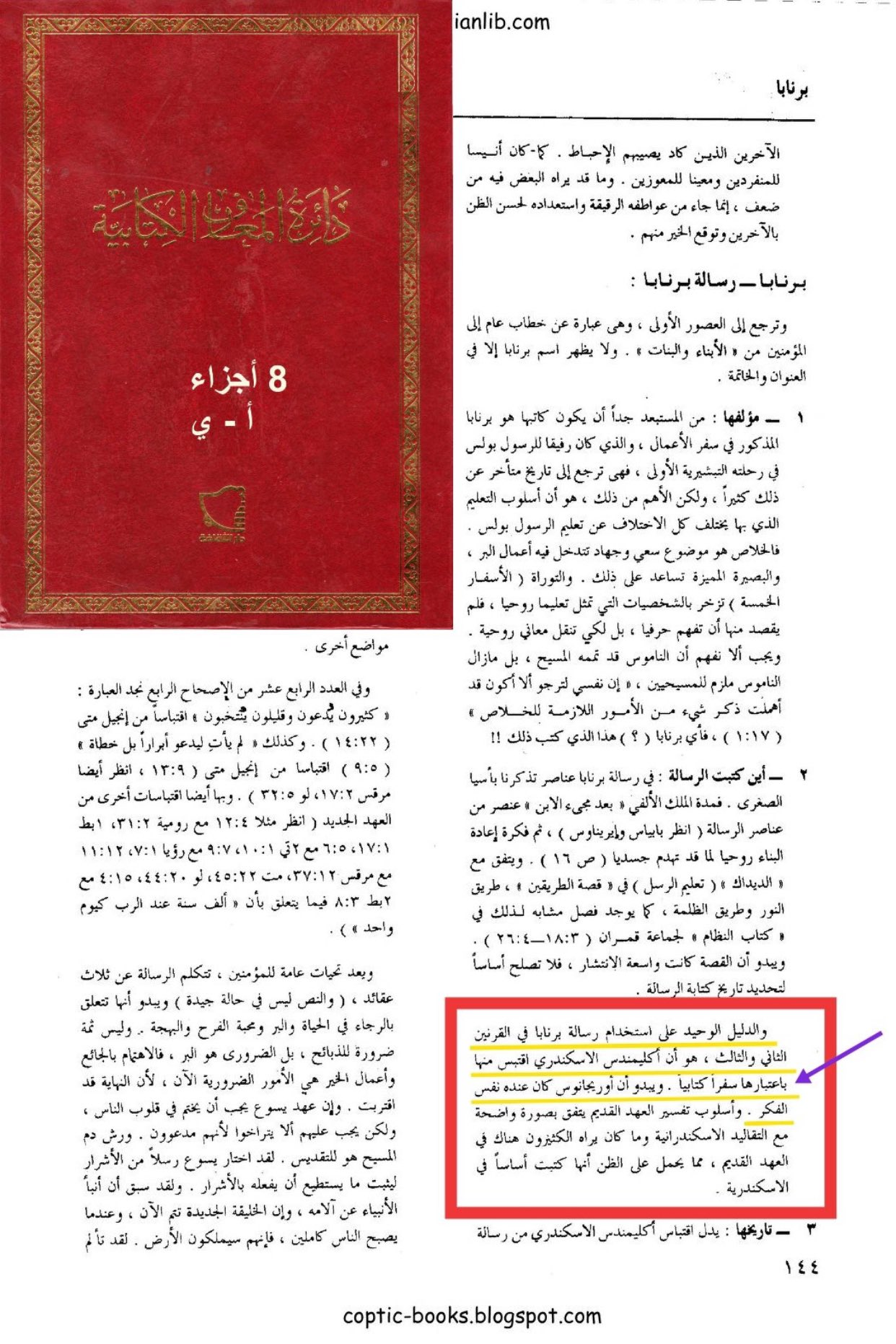
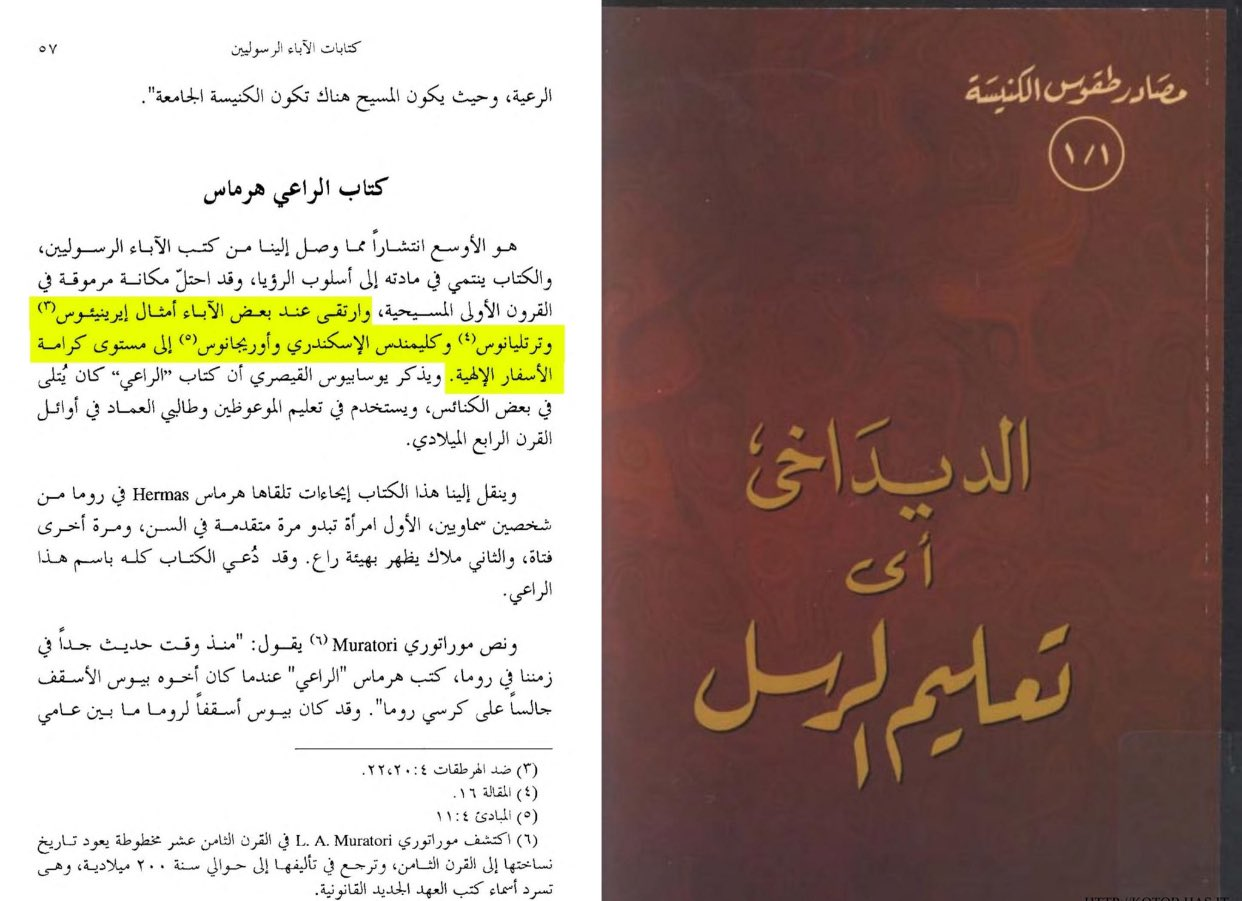
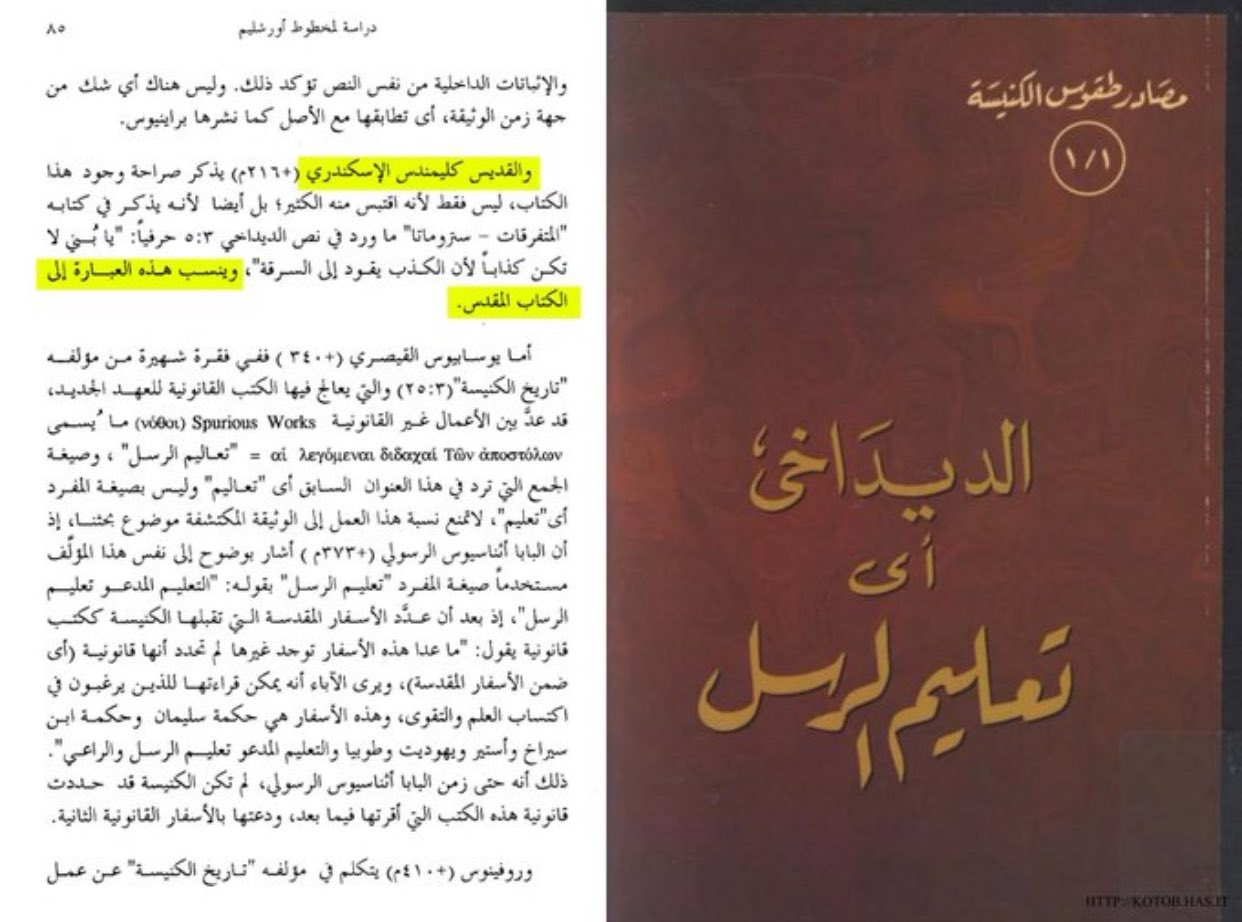
Saint Clement of Alexandria accepted the Didache, Barnabas, Shepherd of Hermas, and Revelation of Peter as scripture—books no longer in the canon today. Yet, he rejected 2 Peter, which the Church now accepts.
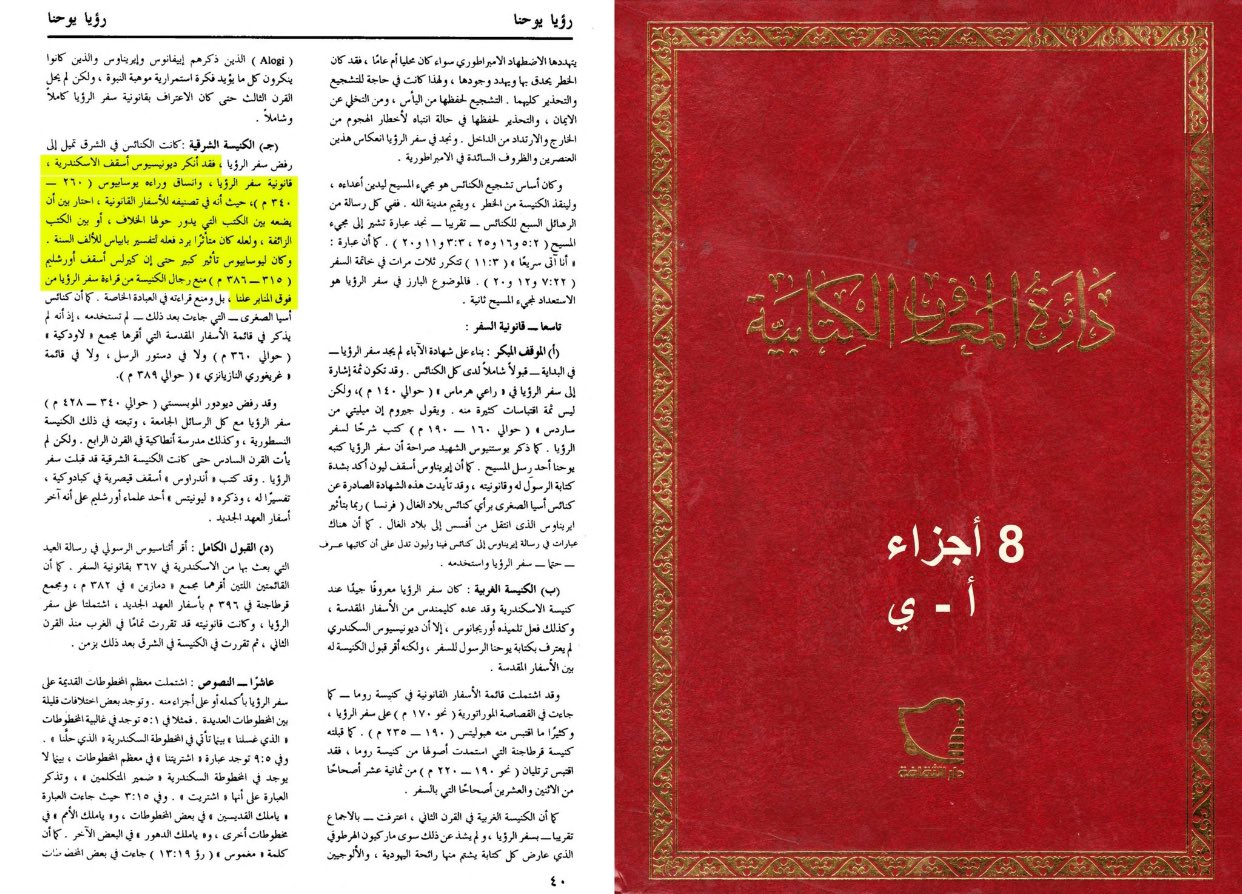
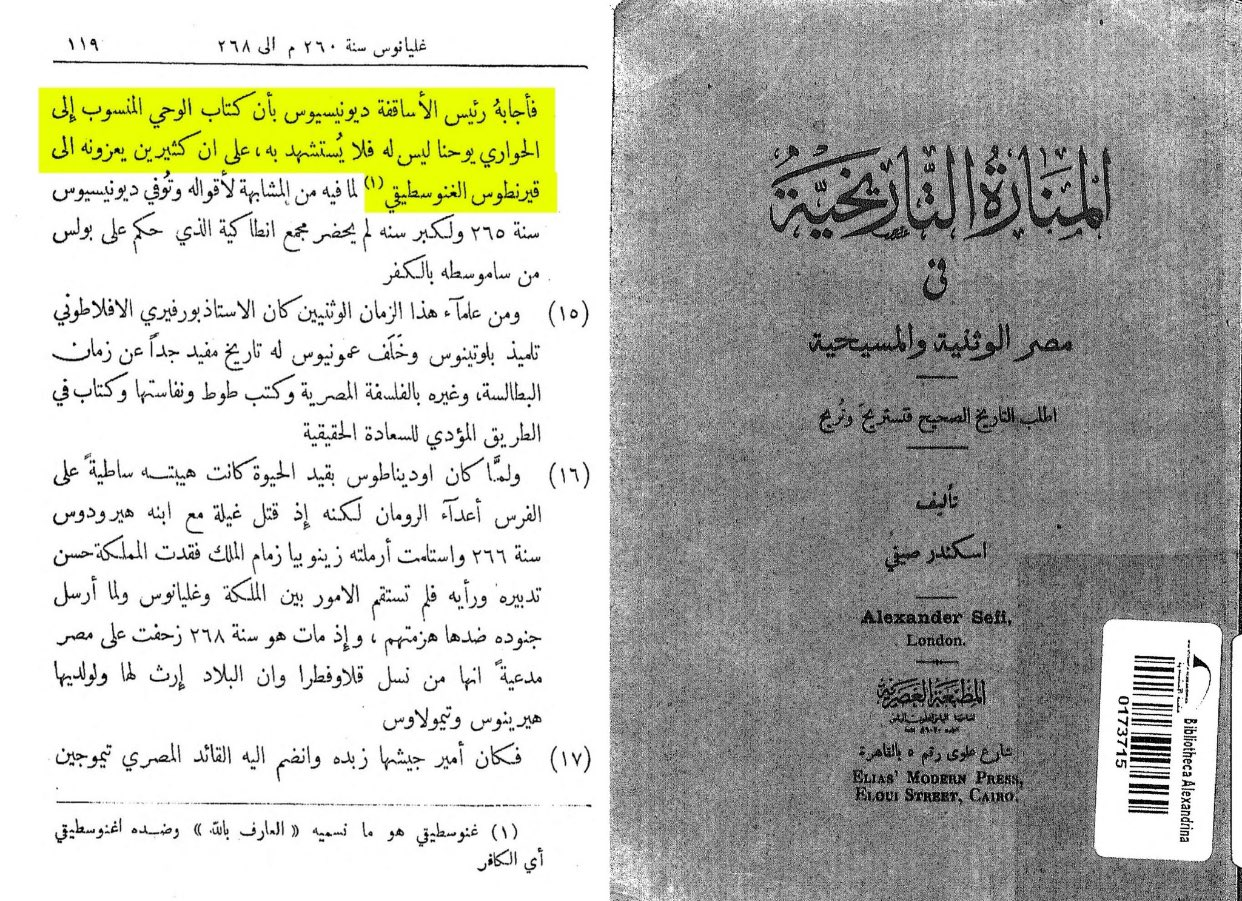
As for Saint Dionysius, Patriarch of Alexandria, he followed Eusebius of Caesarea in denying the legitimacy of the Second Epistle of Peter and the Revelation of John the Theologian, describing them as works of the heretic Cerinthus…and we find Christians believing in them today
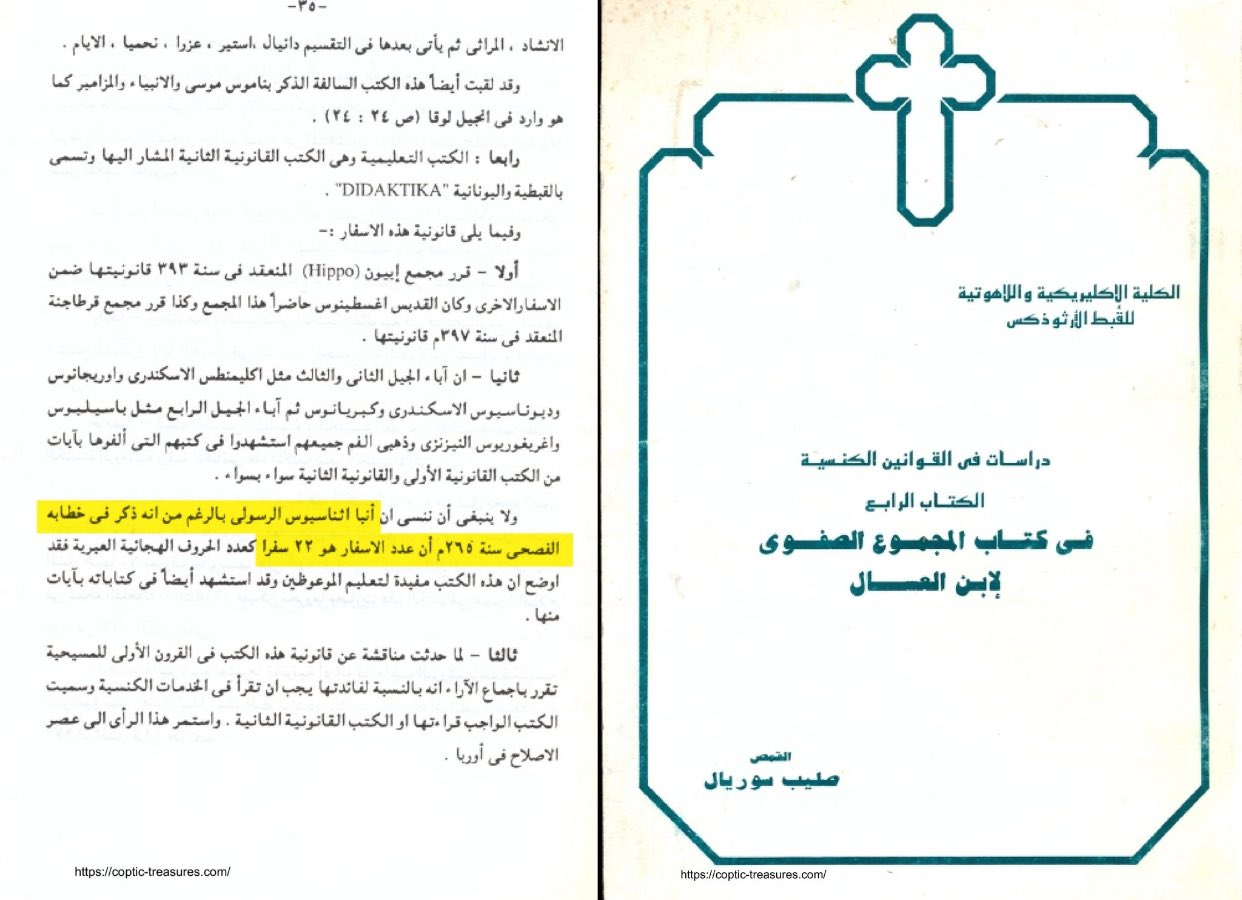
Then we find that Saint Athanasius the Apostolic believed that the number of books in the Old Testament was only 22 books and did not recognize the canonical nature of all the second canonical books of the Holy Bible in its Old and New Testaments.
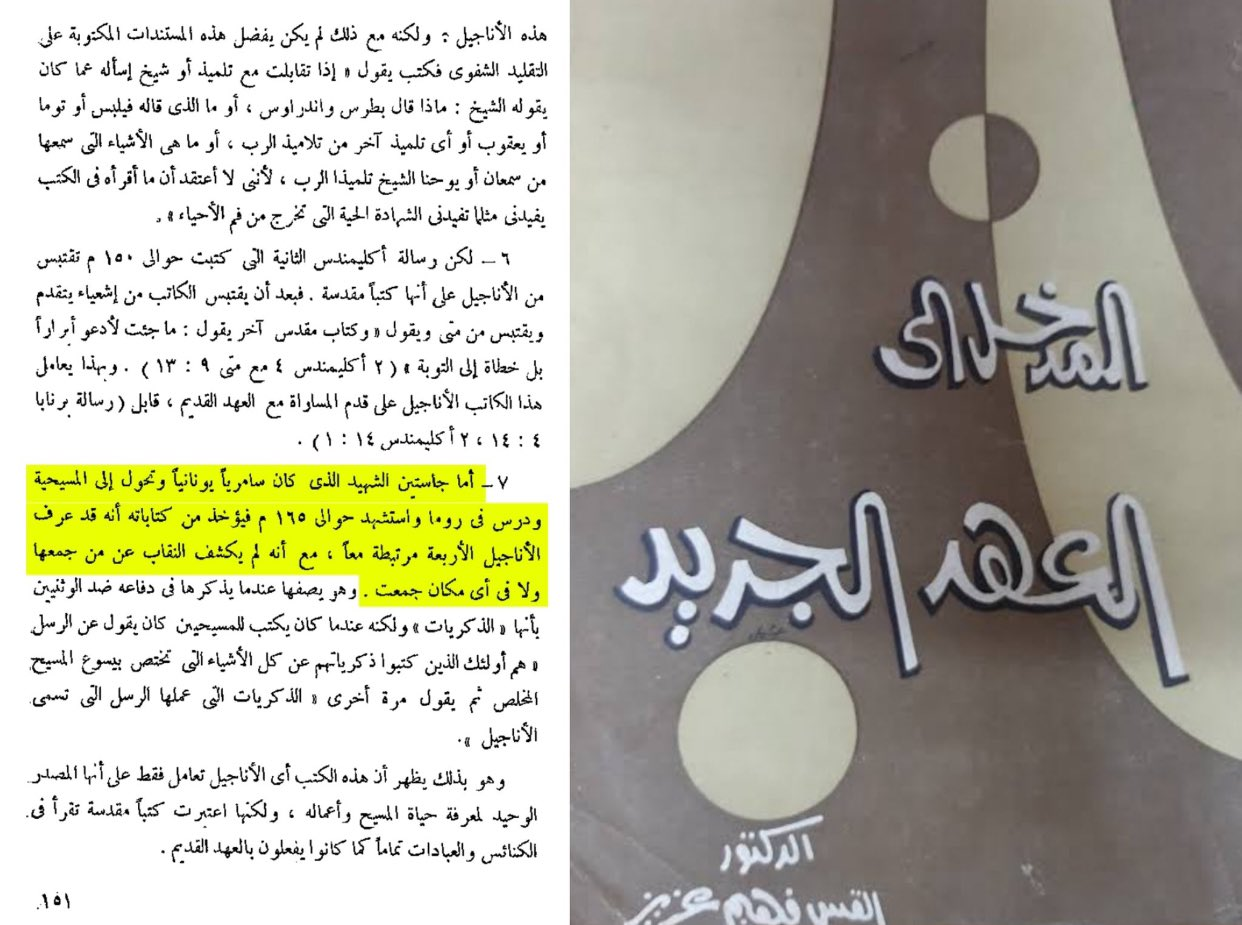
Testimonies continue, and we find that Saint Justin the Martyr He knew the four Gospels were linked together…but he did not reveal who collected them and when they were collected. He described it as memories.
@here
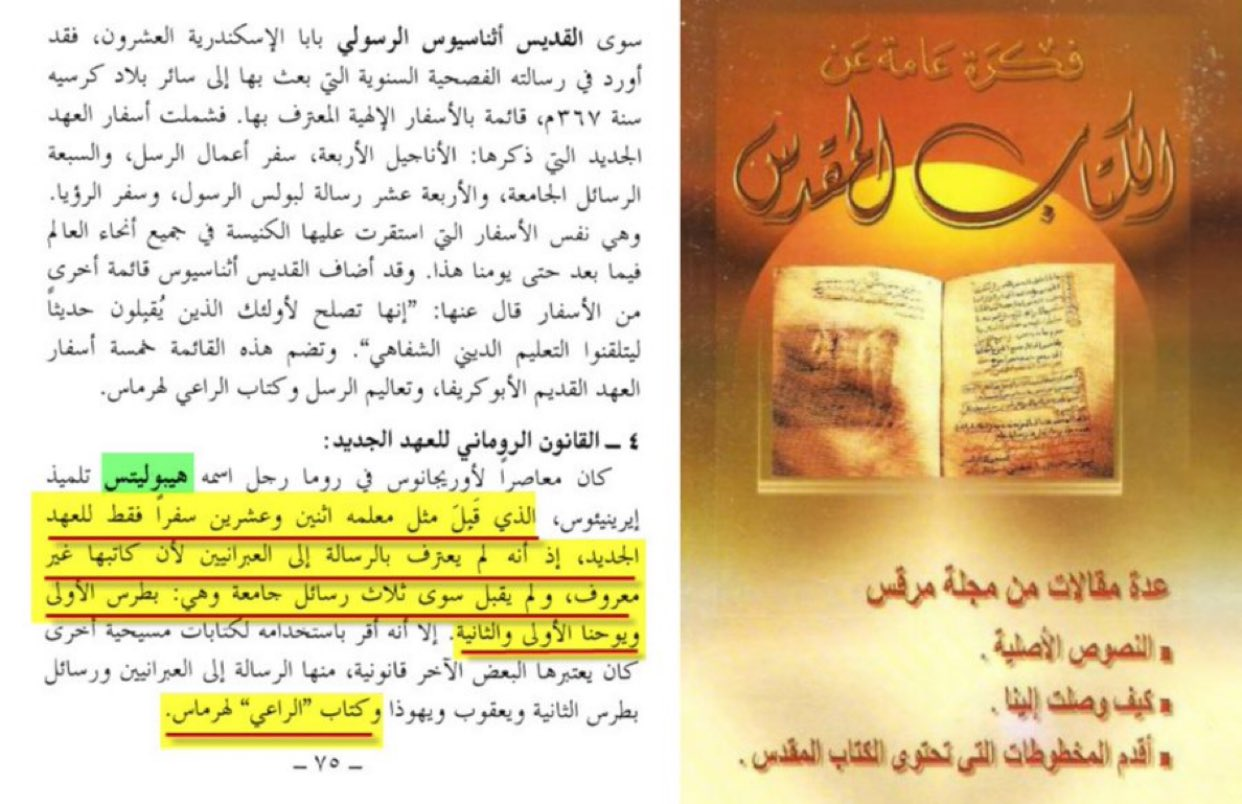
Saint Hippolytus of Rome, a prominent Church Father, recognized only 22 Old Testament books. He rejected Hebrews due to its unknown authorship, and also denied 2 and 3 John, 2 Peter, James, and Jude.
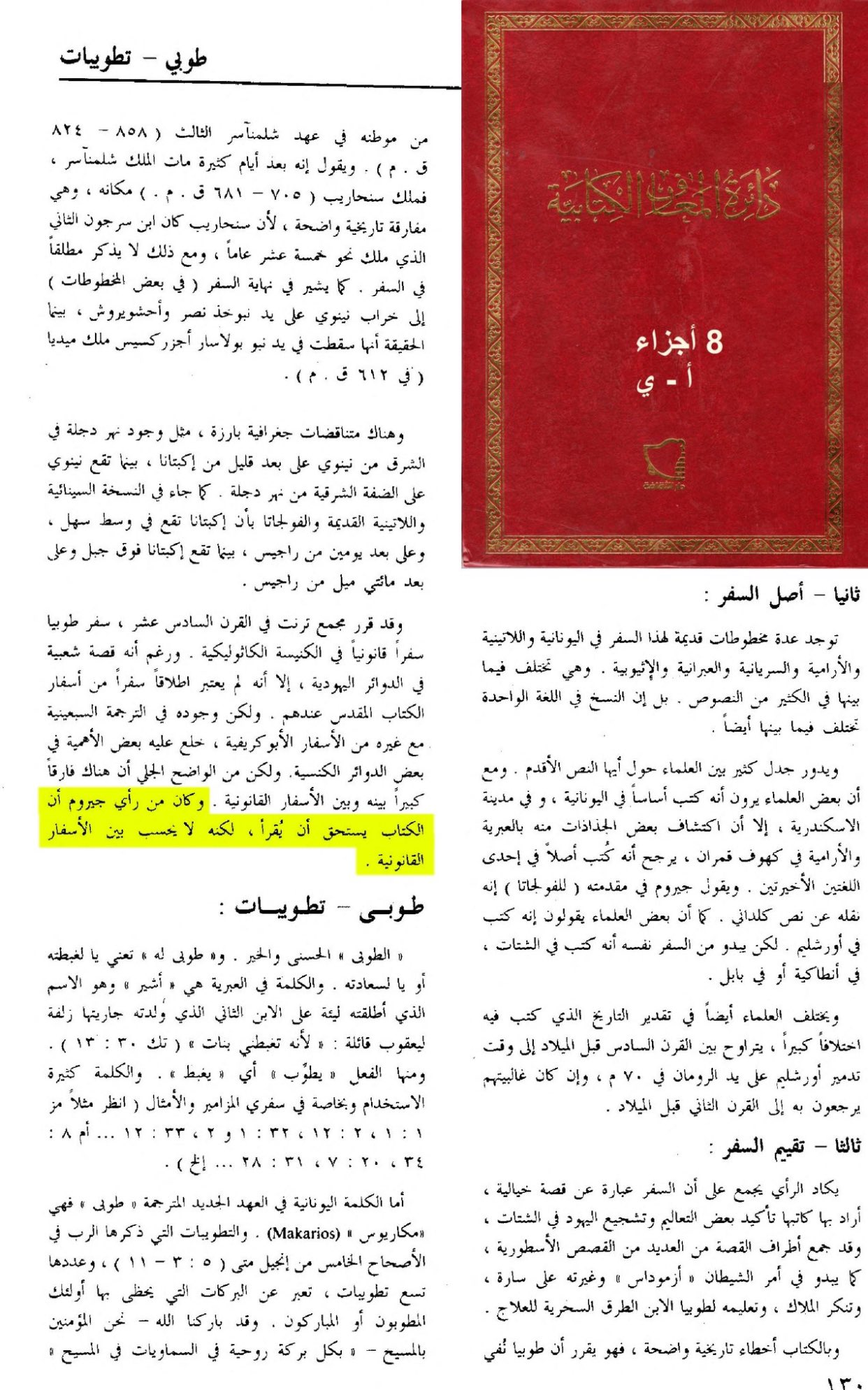
As for Saint Jerome, he did not consider the Book of Tobit to be a canonical book. The Ethiopian Church and the Protestant Church also consider this book to be non-canonical. While we find that the Catholic and Orthodox Churches believe in the canonical nature of the book!!
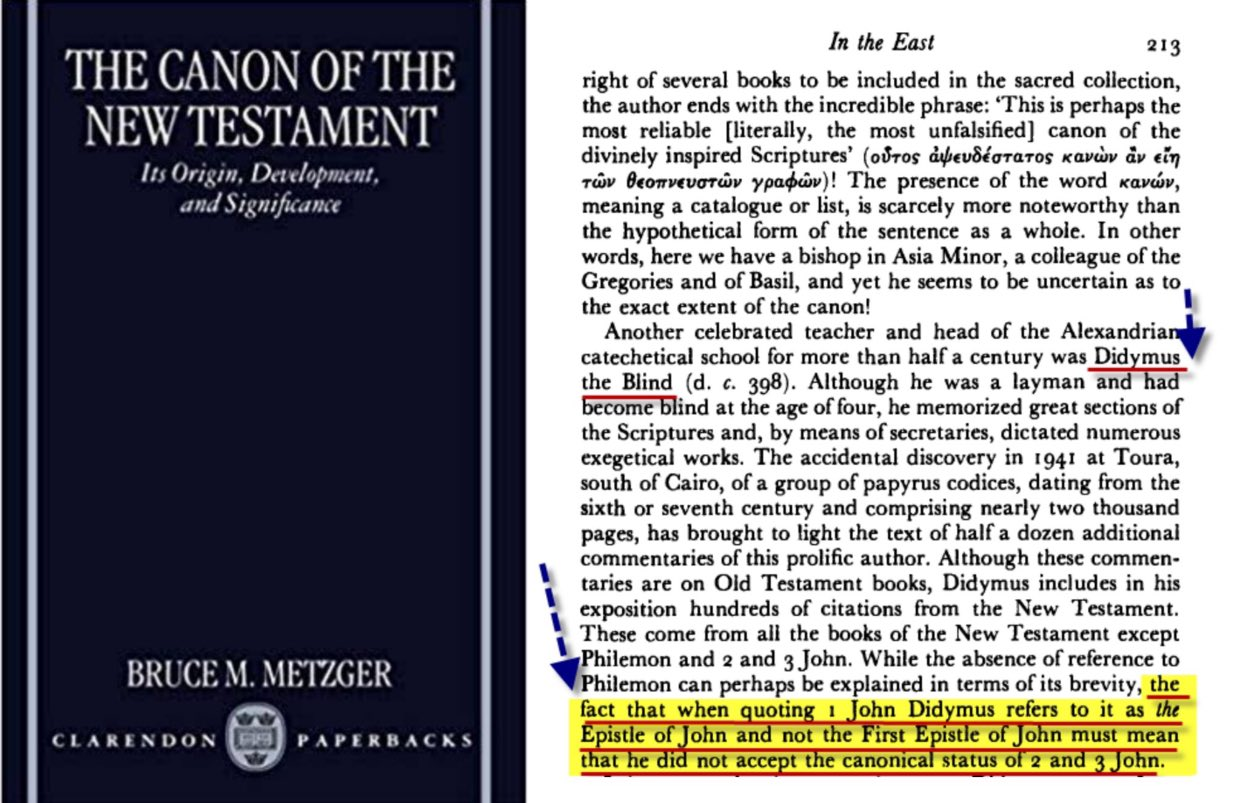
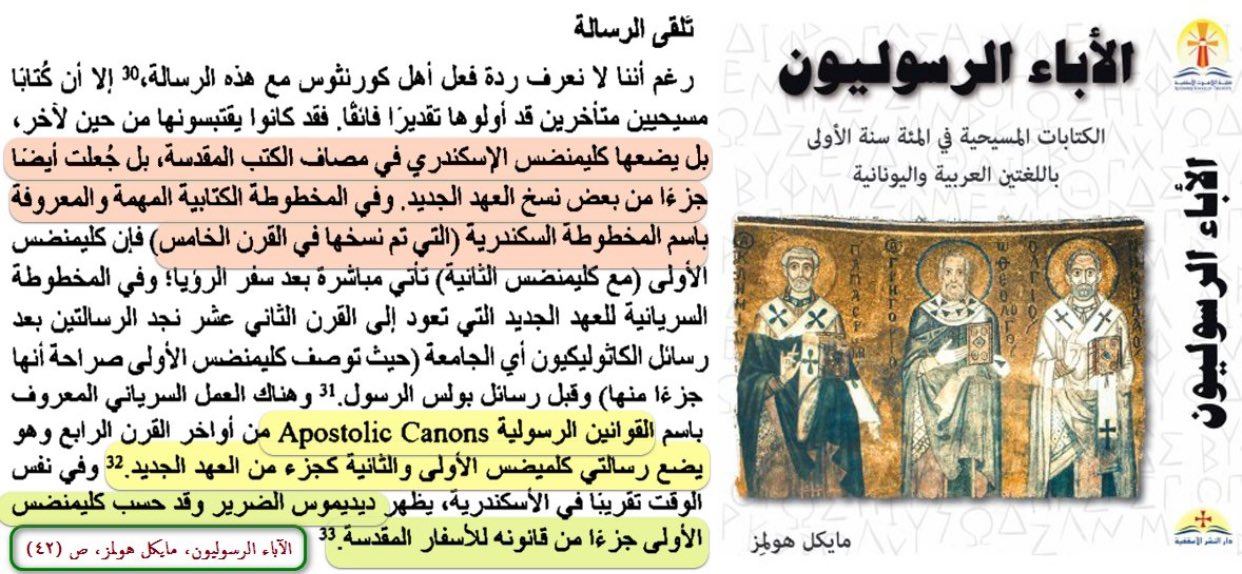
Saint Didymus the Blind and Clement of Alexandria accepted the letters of Clement of Rome as legitimate, and these letters appear in key 5th-century manuscripts. Yet, Didymus did not accept 2 and 3 John, recognizing only the first as canonical.
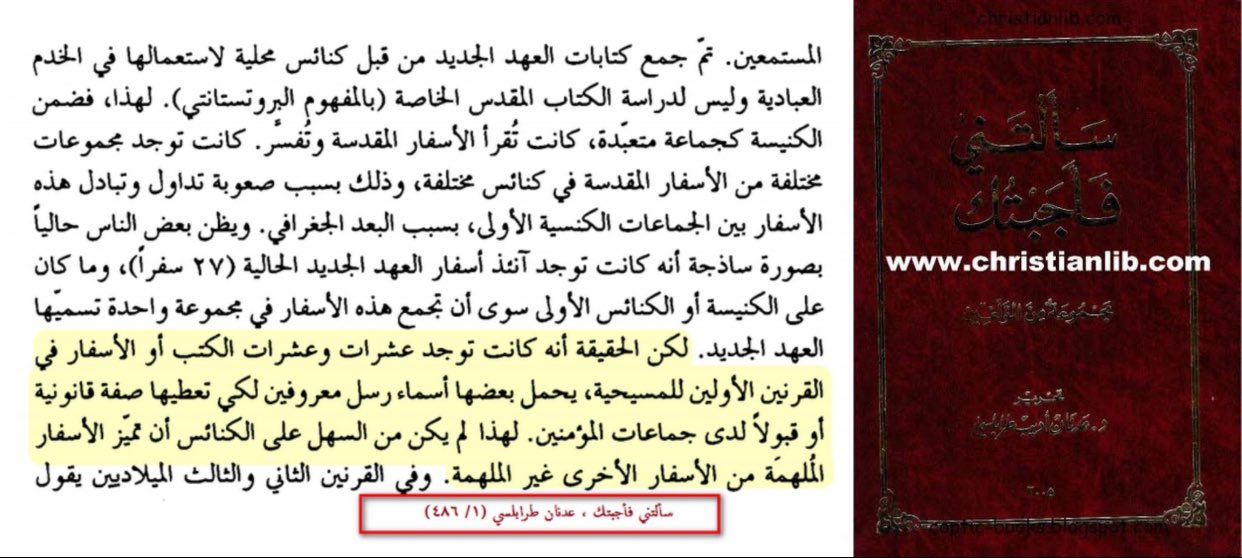
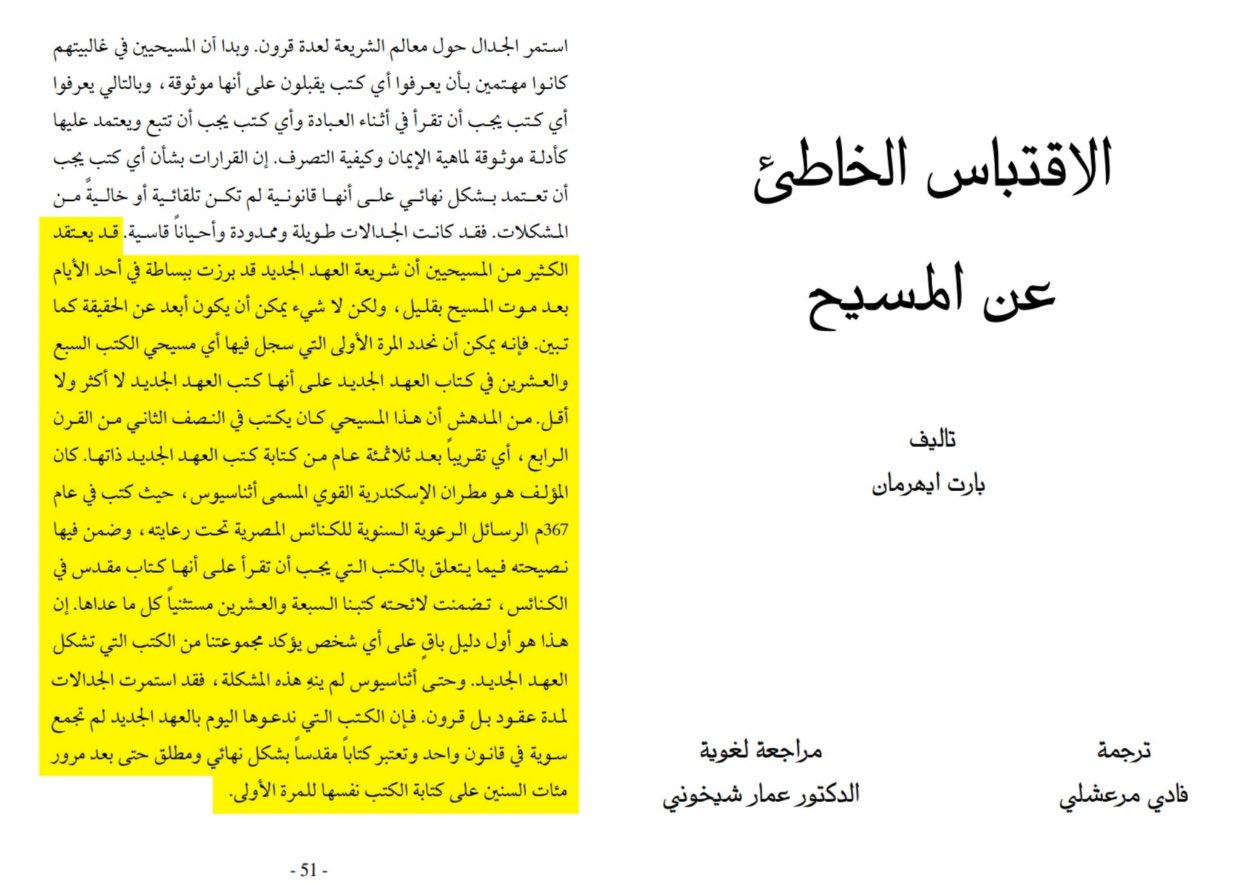
Some naively believe—Father Adnan Traboulsi’s words—that the early church had a fixed New Testament of 27 books. In reality, the 2nd-century church had dozens of texts bearing the names of Christ’s apostles and disciples, widely circulated among Christian groups.
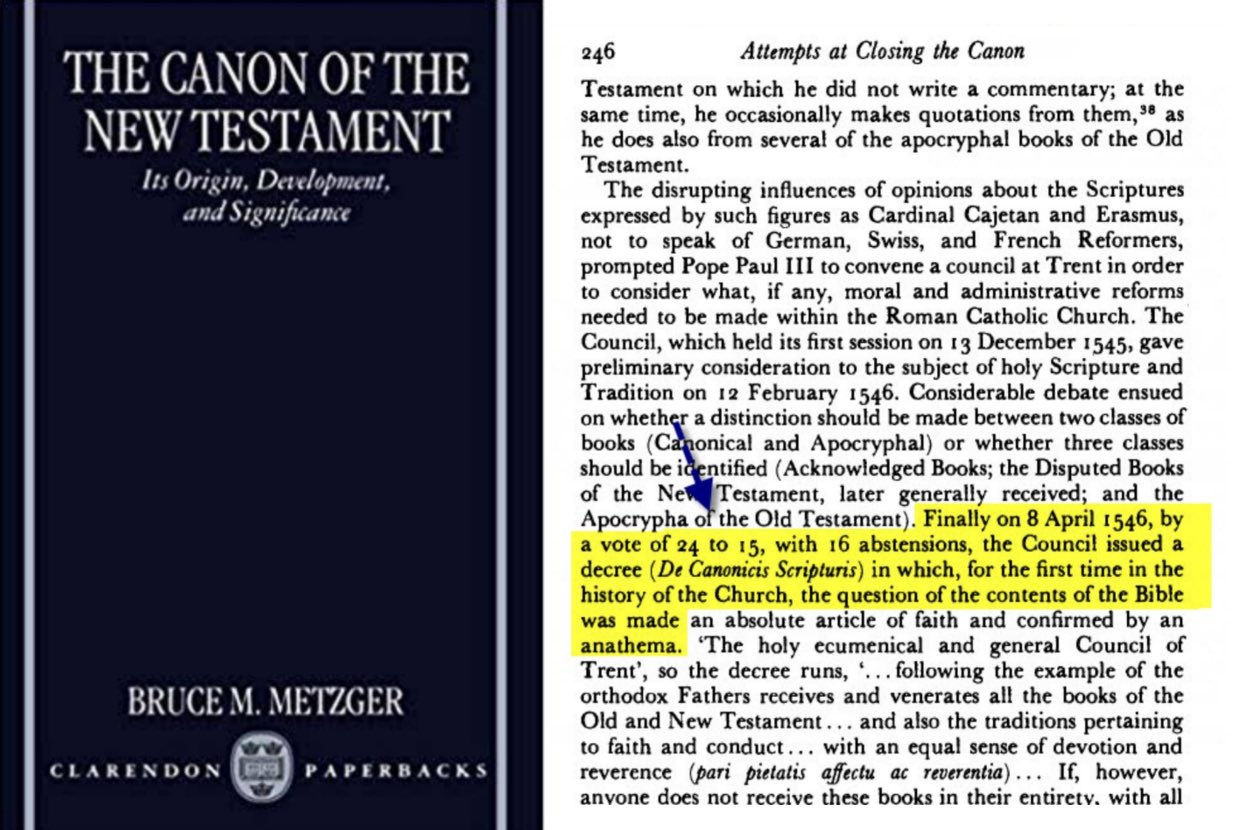
The Bible was elected, consisting of 27 books, at the end of the third century. Then the conflict continued between the sects regarding the canonical nature of the books until the Council of Trent in the 15th century… and the number of canonical books was decided by voting.
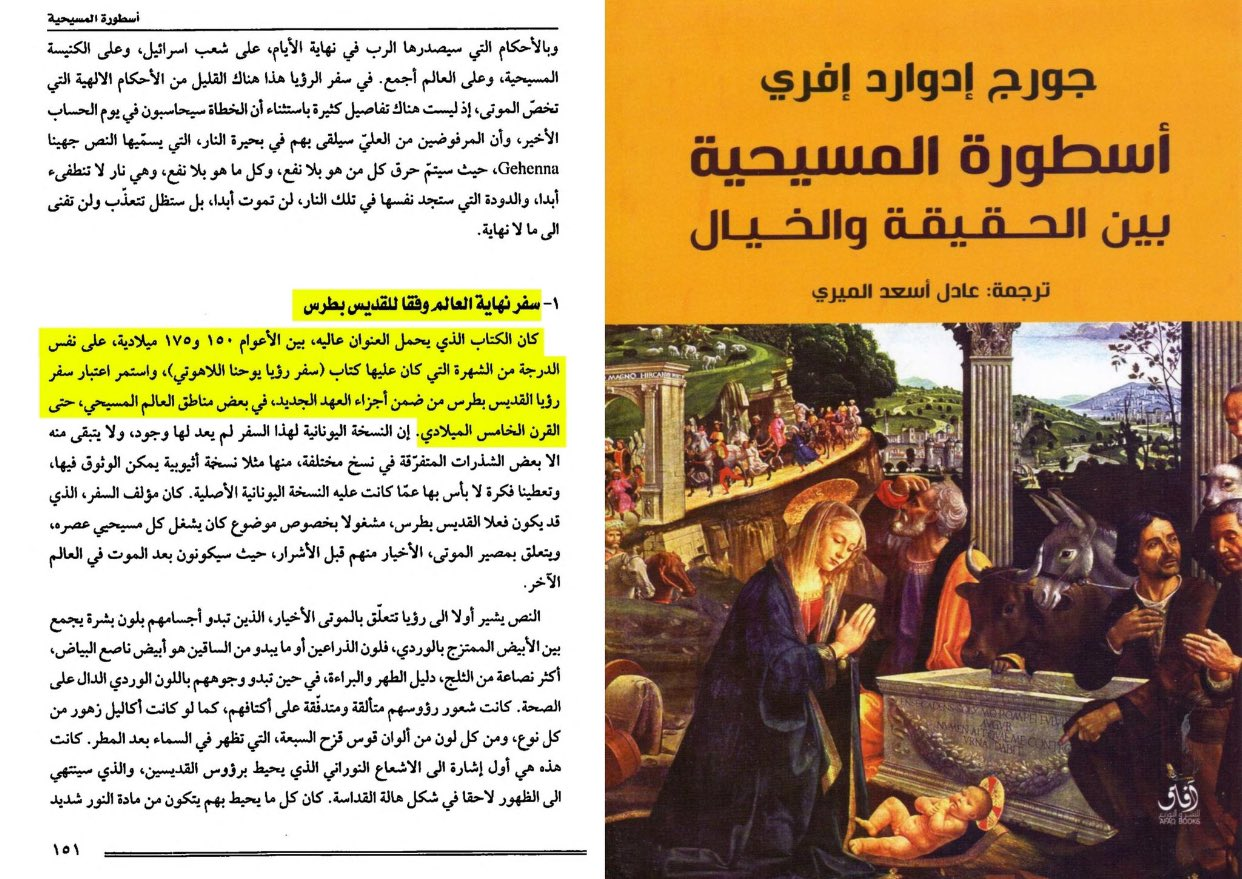
Who first knew the New Testament had 27 books? Bart Ehrman notes it took centuries to finalize the list. Peter’s Apocalypse was once more popular than Revelation and seen as sacred until the 5th century—then suddenly, it wasn’t.
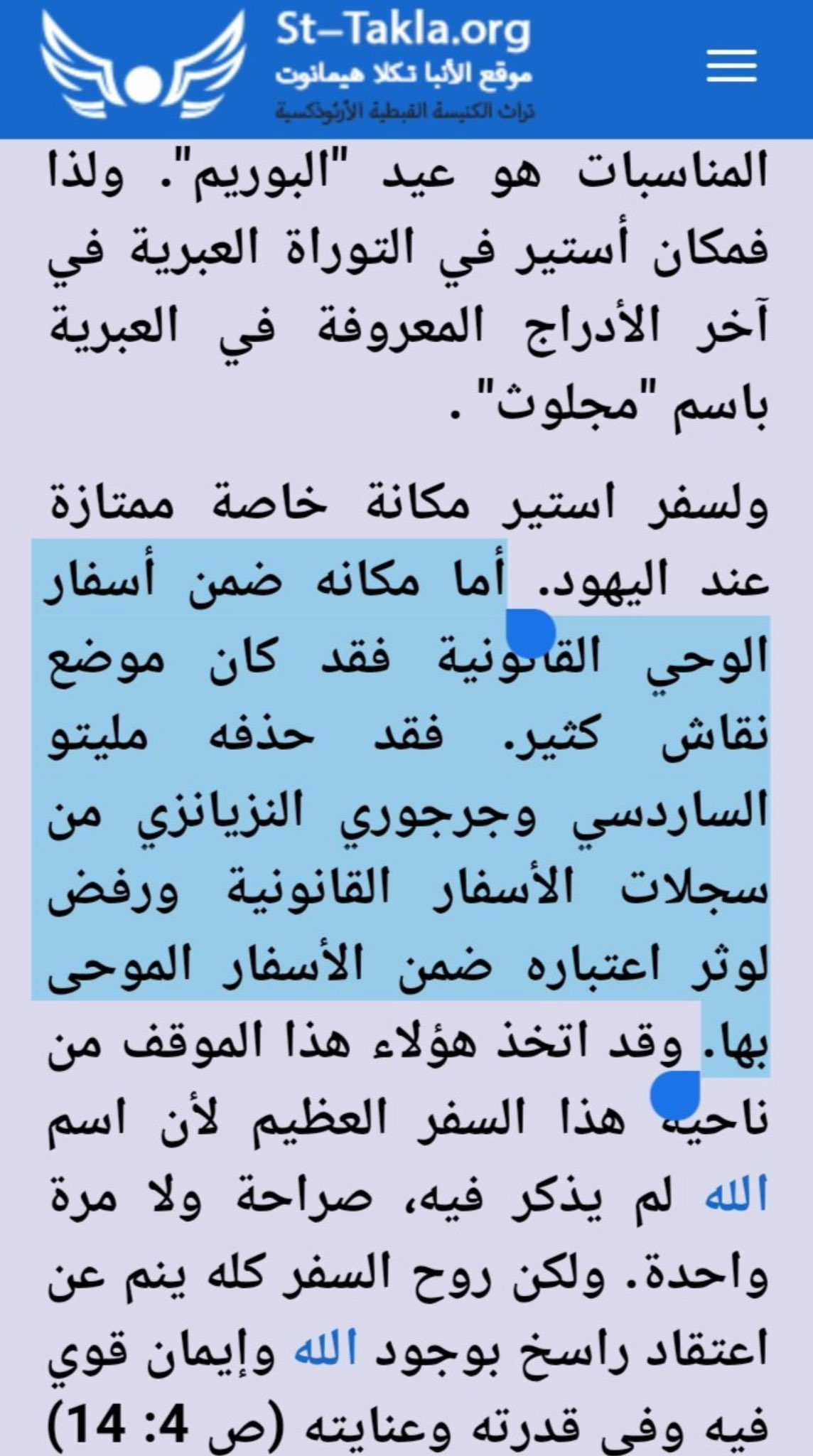
Book of Esther
Many Church Fathers rejected the sanctity of this book and did not consider it canonical (sacred).
Then the days turned, and the journey turned into a holy journey.
This book has many problems, including that the Hebrew text never mentions the name of God.
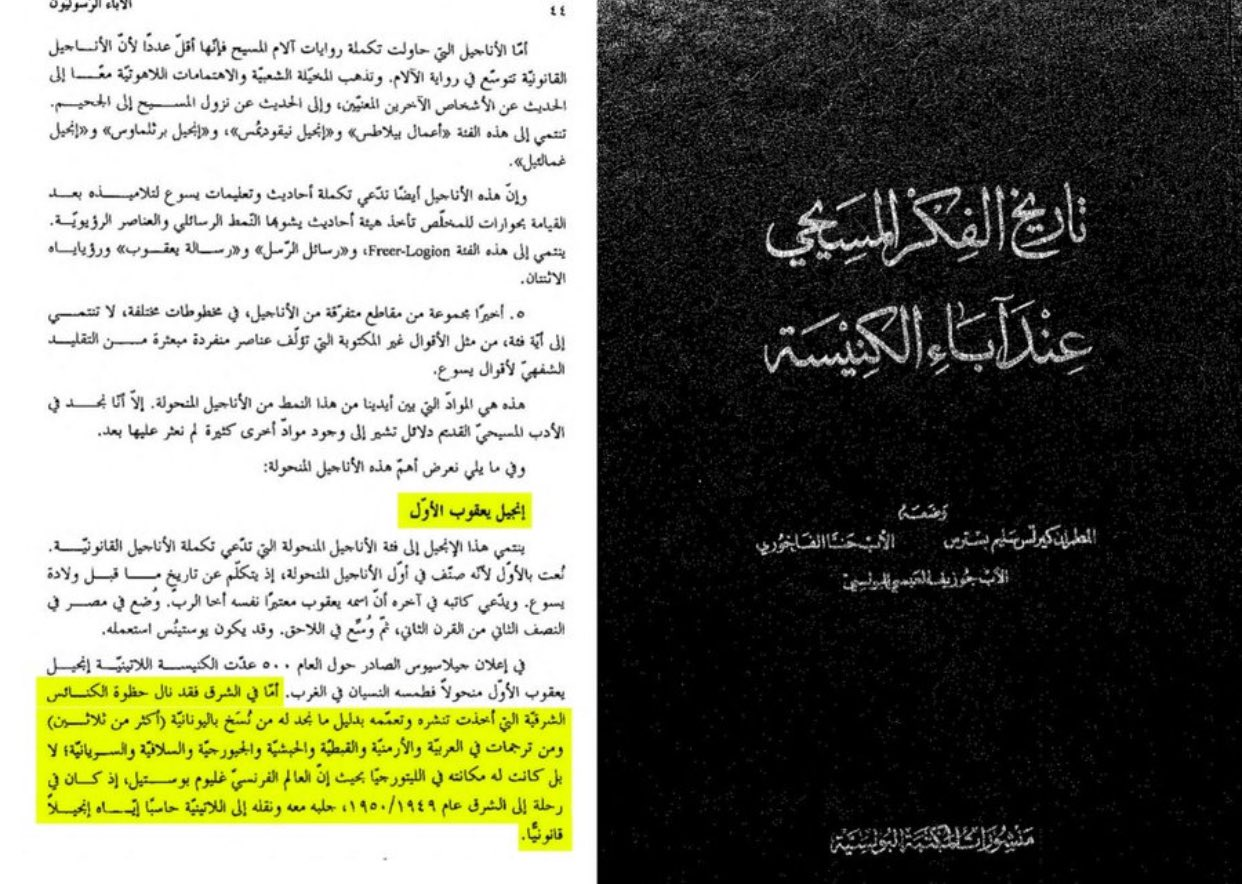
The Gospel of James was once sacred in the East but later dropped.
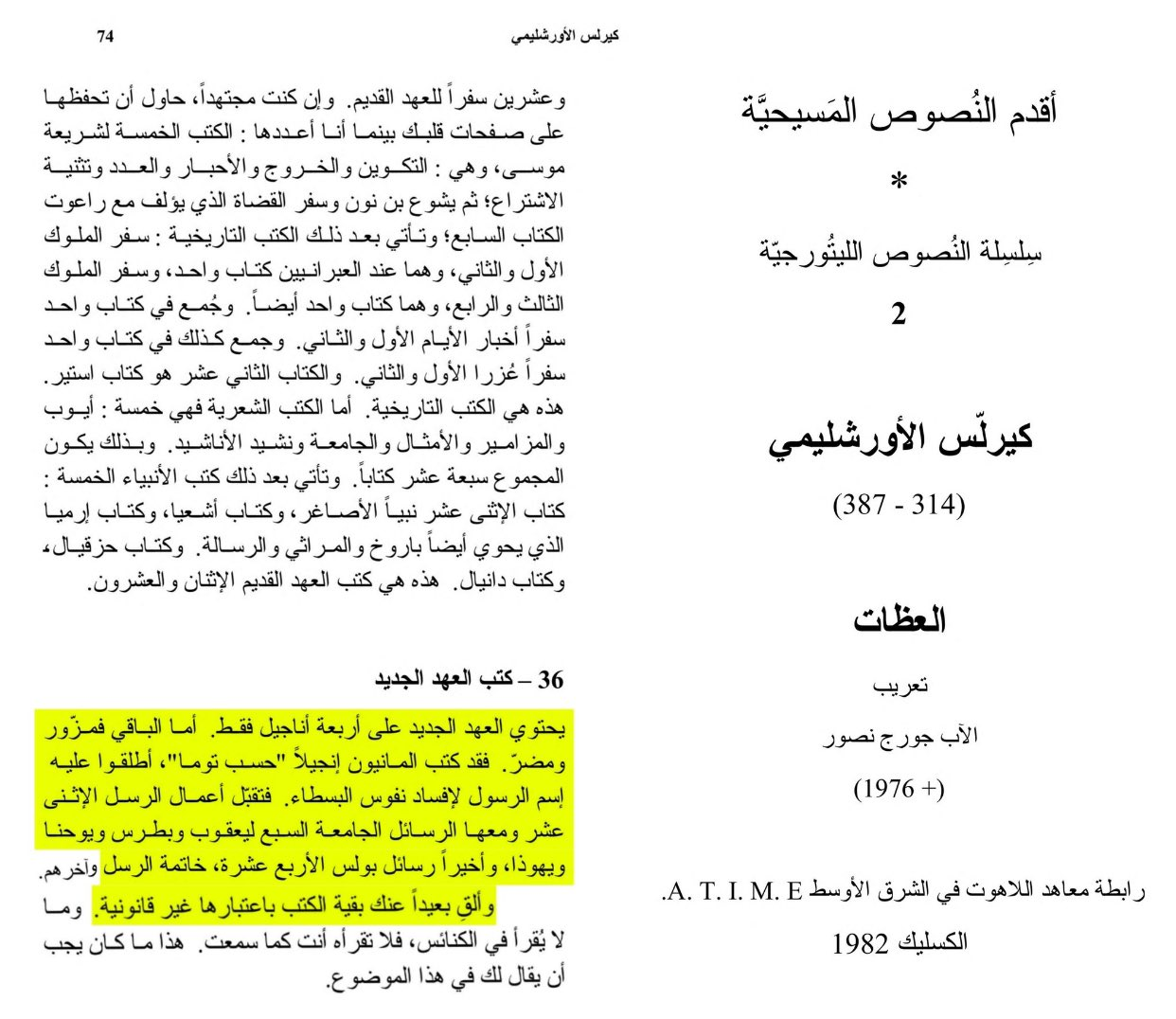
Saint Cyril listed only 26 New Testament books, rejecting Revelation.
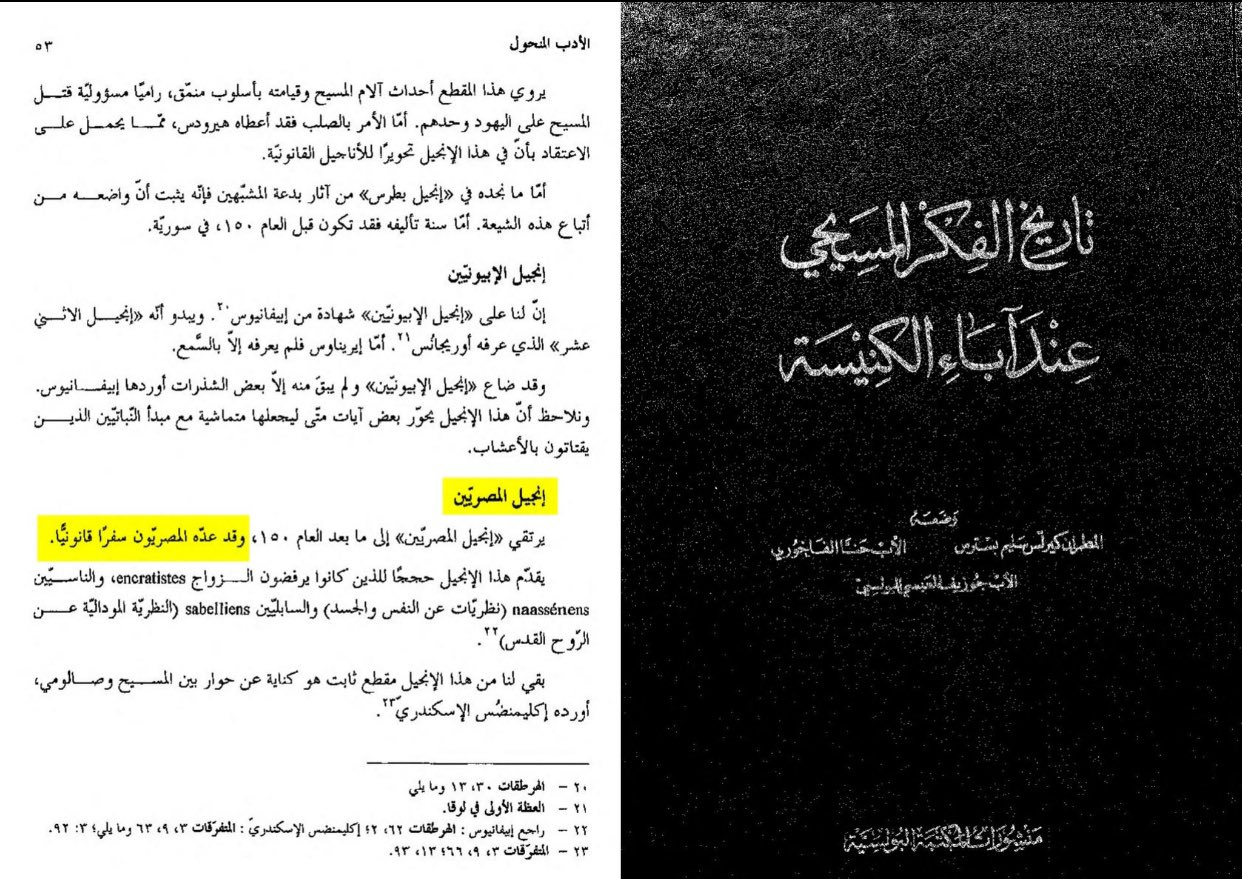
The Egyptian Church accepted lost texts like the Gospel of the Hebrews and Egyptians.
Who decided what counted as scripture—and why?
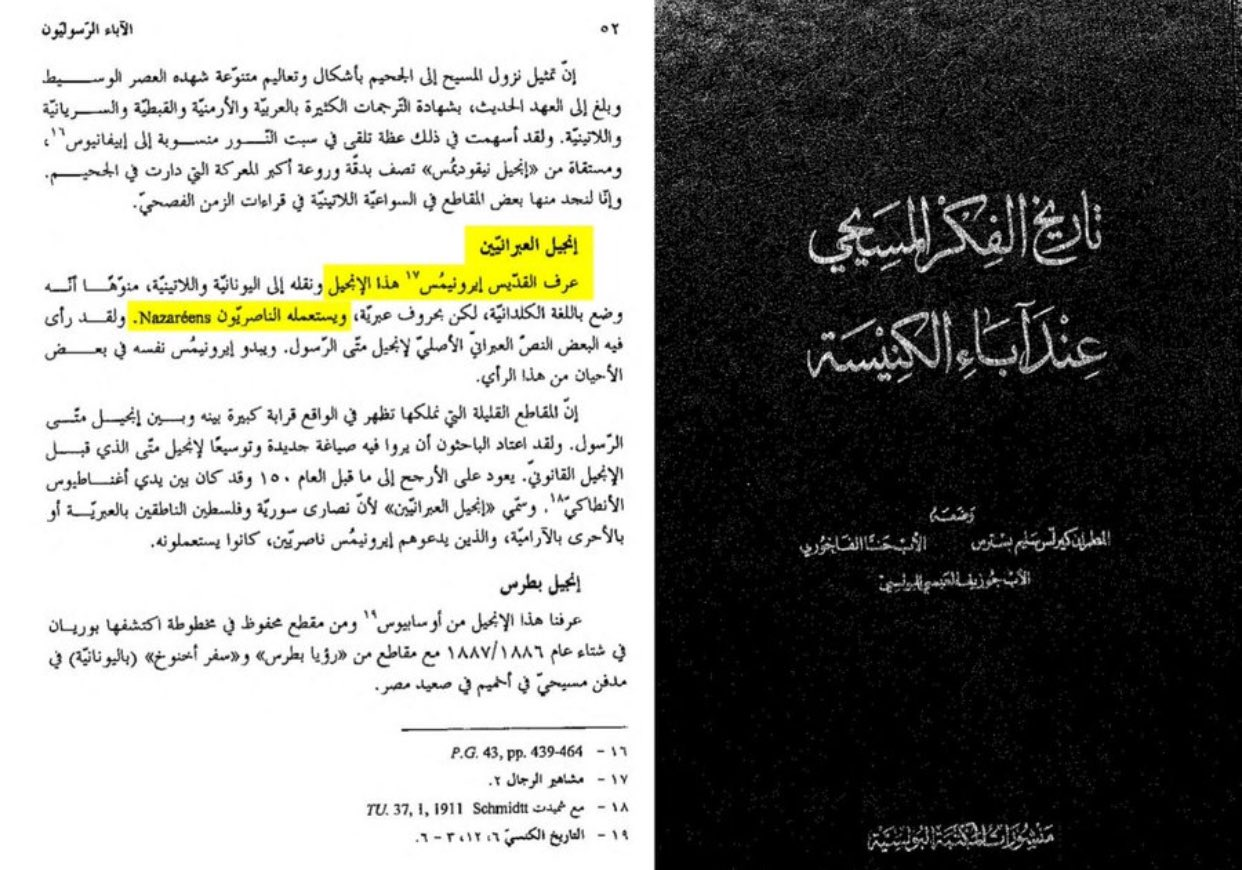
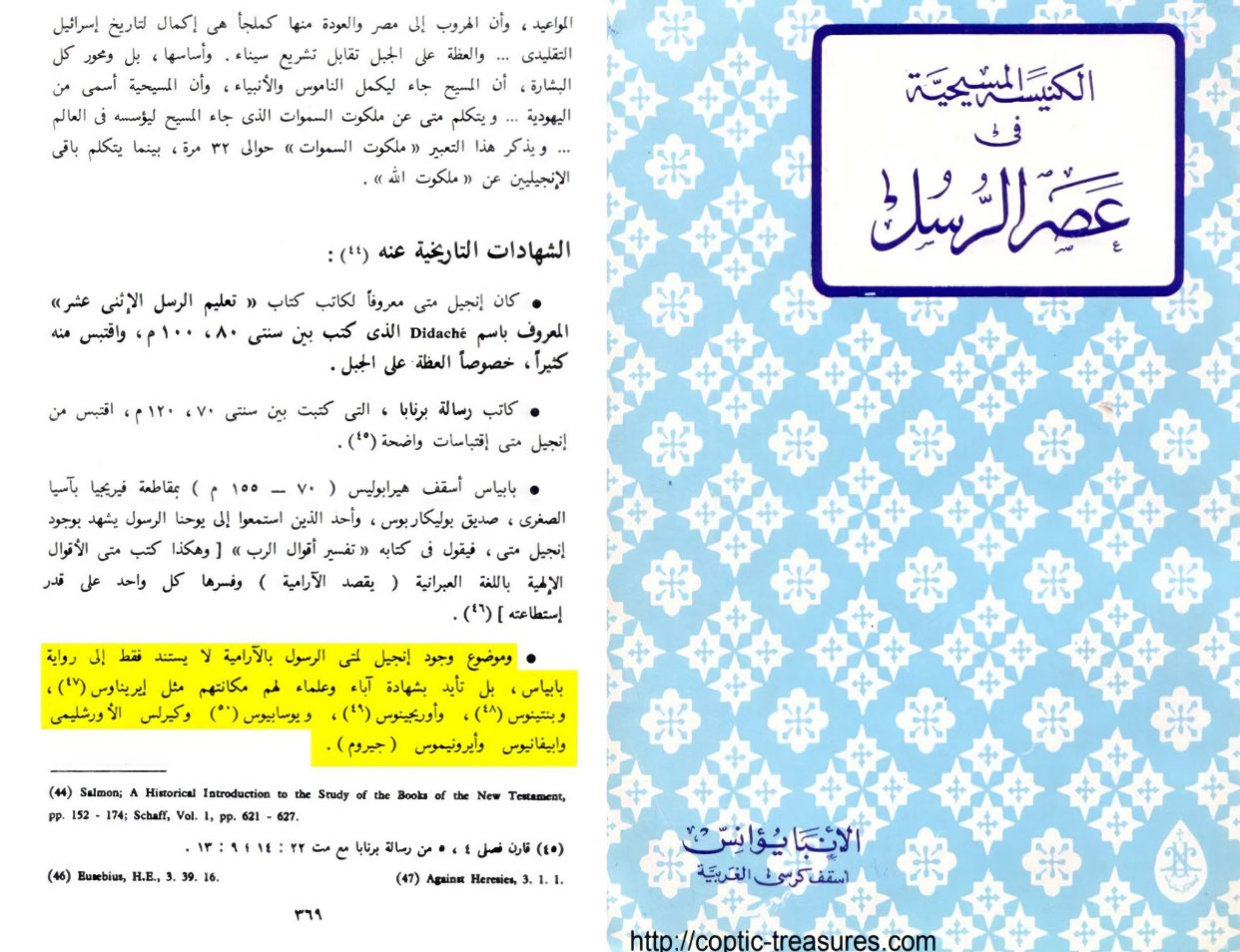
Early Church Fathers like Papias, Irenaeus, and Jerome believed in a Hebrew Gospel of Matthew—so where is it now?
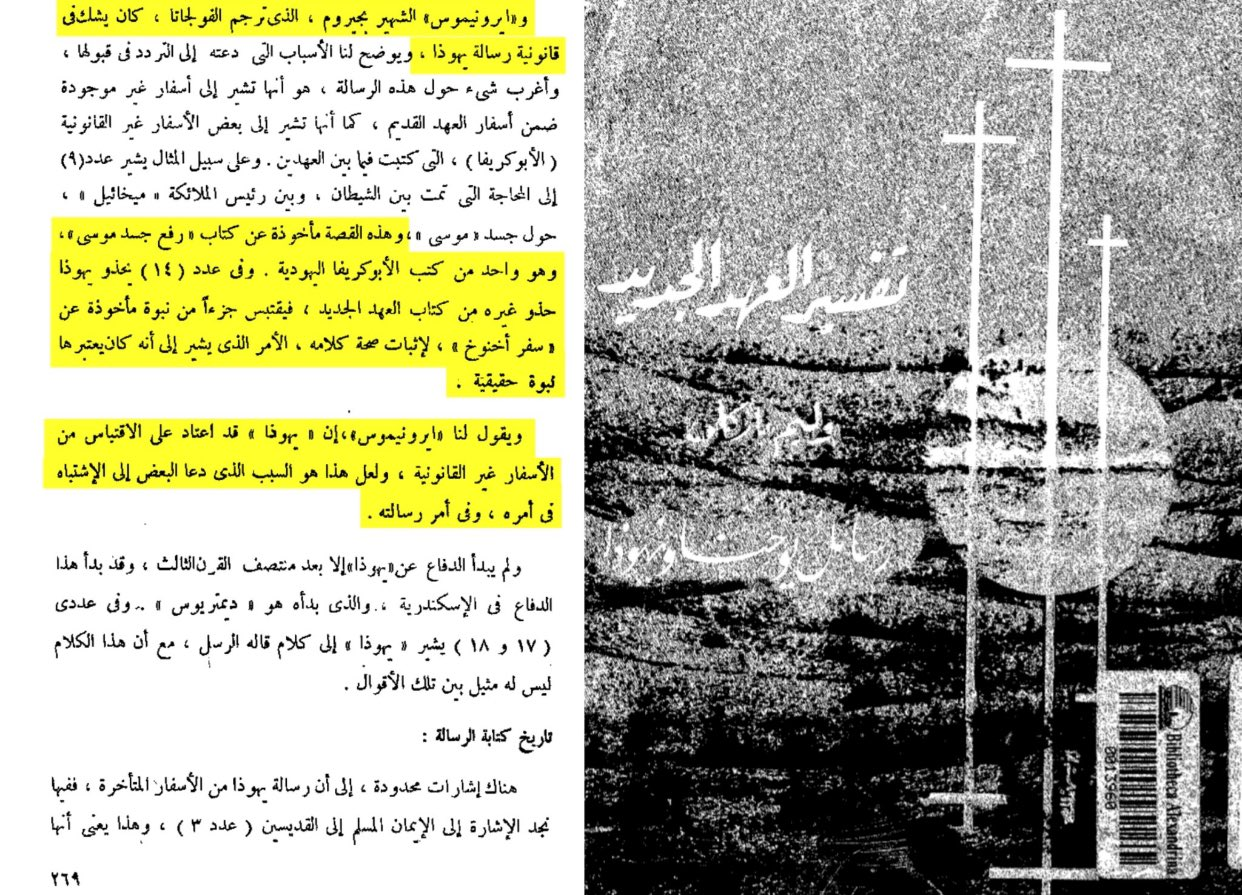
Jerome also doubted Jude for quoting apocryphal texts.
The Ethiopian Church accepts 81 books—many rejected by others, and rejects some that others accept.