Yes, Jesus Is Son of God






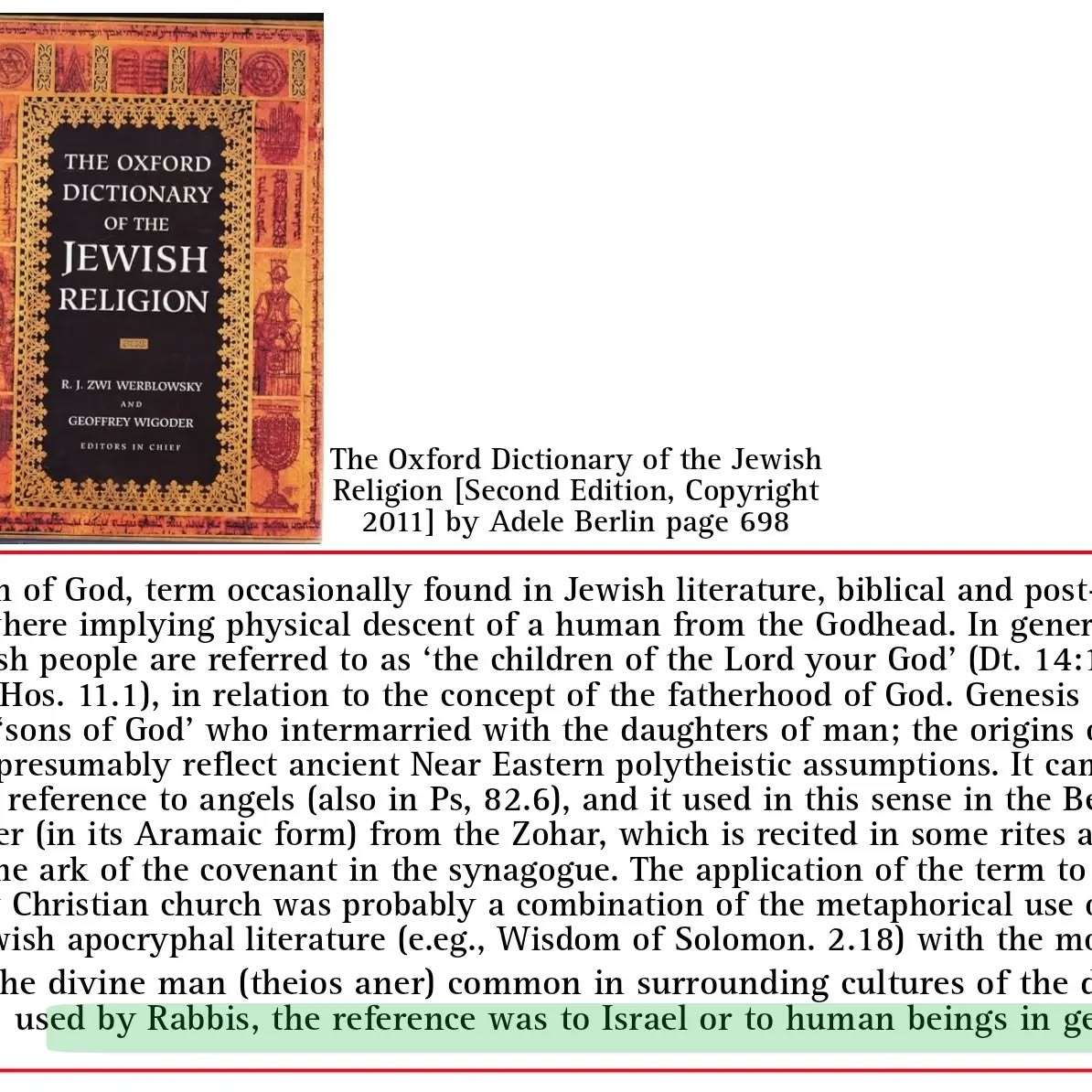

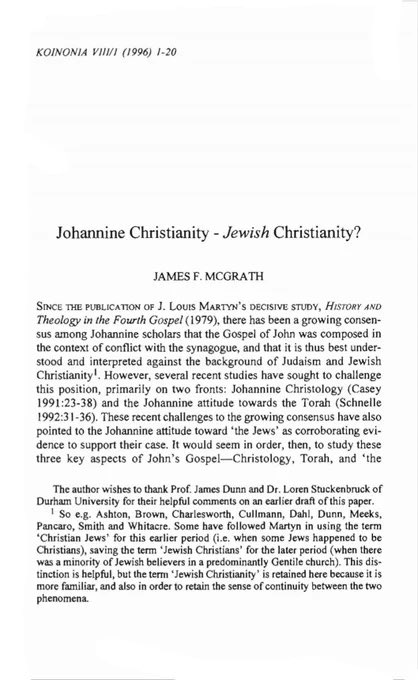
Historian James F. McGrath notes that while early Jewish Christians accepted the title “Son of God” for Jesus, they understood it differently. Groups like the Ebionites rejected Jesus as the divine Son, viewing him instead as a human prophet chosen by God.
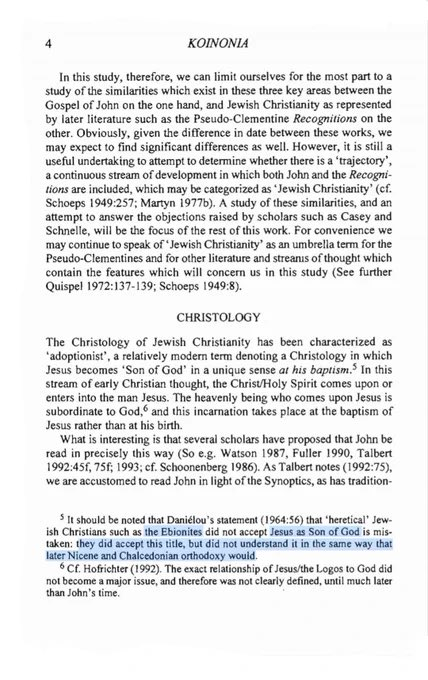
New Testament scholar Bart Ehrman explains that Jesus saw himself as the “Son of God” in a metaphorical sense, much like other figures of his time. Ehrman argues that Jesus viewed himself as a prophet chosen by God, rather than a divine figure.
In the cultural context of the time, others, such as the King of Israel and priests, were also referred to as “Sons of God.” This title, for Jesus, did not imply divinity but rather a special relationship with God.
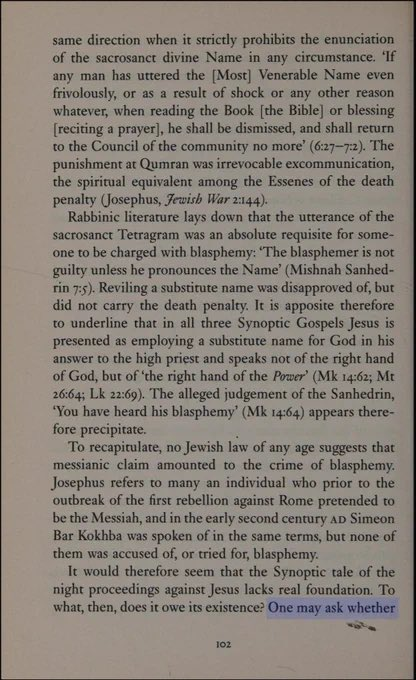
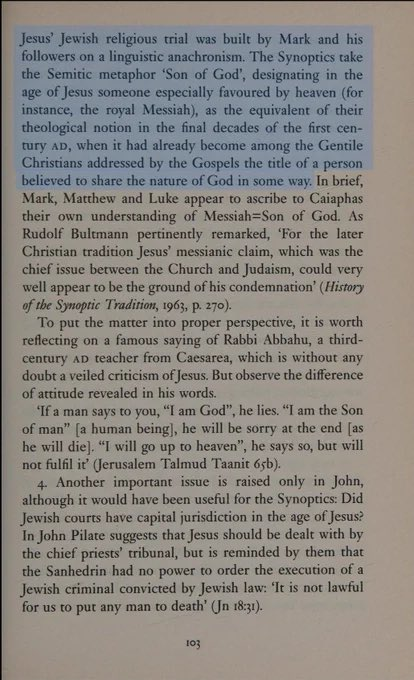
EP Sanders, a leading scholar on the historical Jesus, argues that the New Testament’s portrayal of Jesus’ trial and the charge of blasphemy for claiming to be the “Son of God” should not be accepted as historically accurate.
He suggests that the trial narrative, especially the exchange between Jesus and the high priest, is likely a later Christian composition designed to align with the church’s Christology, rather than a reflection of Jesus’ actual trial.


Geza Vermes argues that “Son of God” originally referred to someone favored by heaven, like the Messiah, not a literal divine being. This shows that Jesus was not understood as the literal Son of God during his time, and the concept was later developed by Christians.

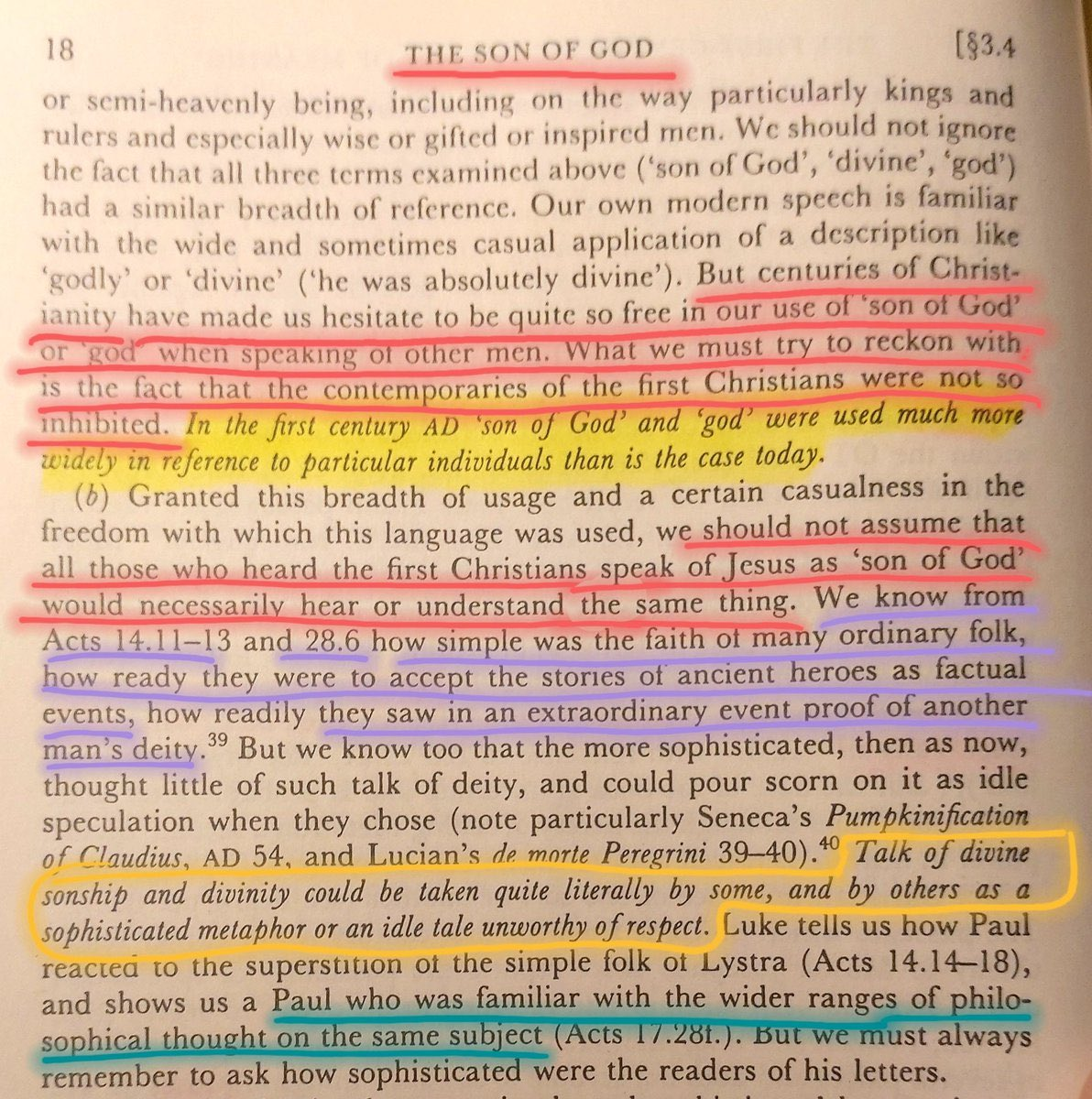
Historian James D. G. Dunn explains that in the first century, terms like “Son of God” and “god” were used more freely to describe individuals, unlike today. He notes that early Christians’ audiences likely understood these terms differently, with some taking them literally,
while others saw them as metaphors or stories. Dunn stresses that not everyone would have interpreted “Son of God” the same way, showing how varied the understanding of Jesus’ divinity was in early Christianity.
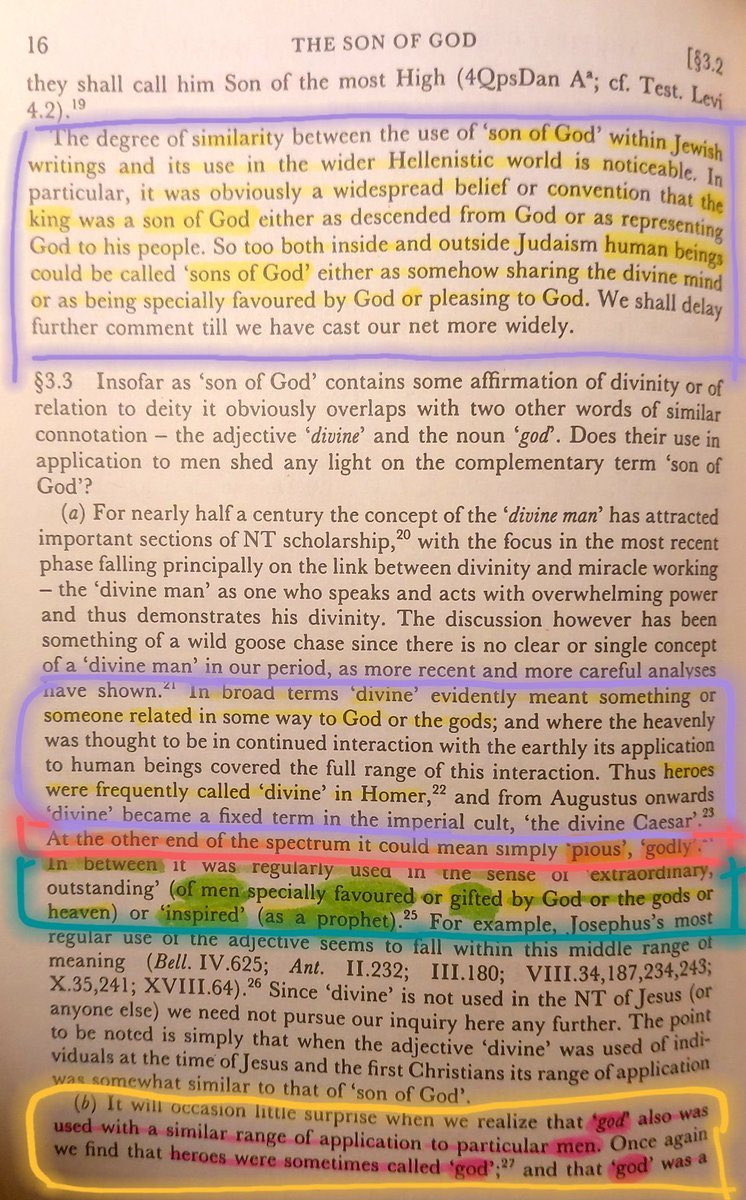
James D. G. Dunn highlights the similarity between the use of “Son of God” in Jewish writings and its wider Hellenistic context, particularly in the belief that kings were seen as sons of God. This title was often used to describe individuals who were considered especially favored or inspired by God. Dunn explains that “divine” was applied broadly, from pious to extraordinary, and could refer to someone who shared the divine mind or was divinely gifted. He notes that this concept was common in both Jewish and Hellenistic
thought, showing the flexibility of the term and how it was used to describe human beings in different ways, often without implying literal divinity.
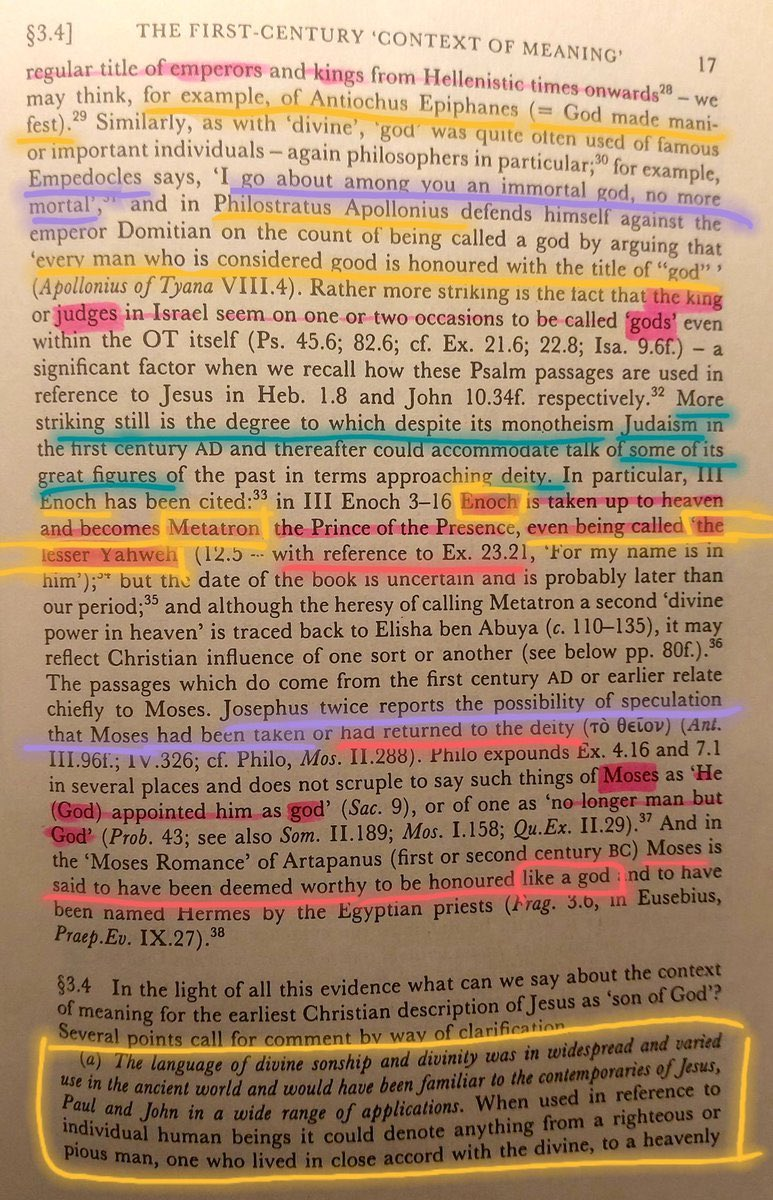
James D. G. Dunn notes that the term “Son of God” was widely used in the ancient world. Legendary figures like Dionysus and Heracles were called sons of God, and rulers, especially in Egypt, were also given this title.
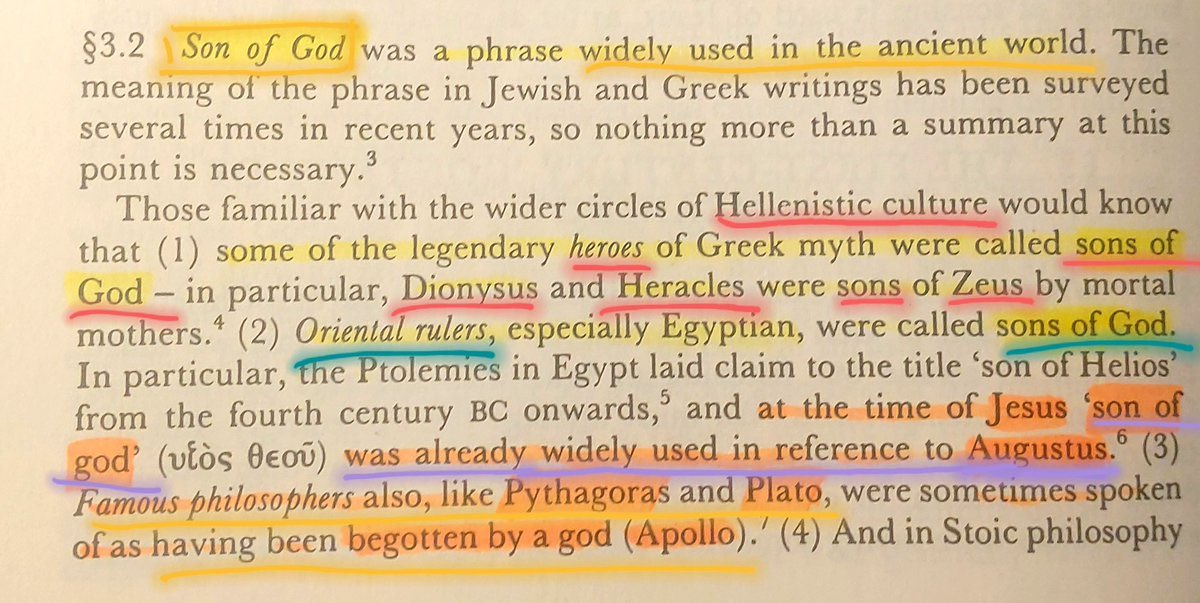
Augustus was referred to as “Son of God,” and philosophers like Pythagoras and Plato were believed to have been begotten by gods like Apollo. This demonstrates that the phrase had a broad, culturally varied meaning beyond Christianity.
In conclusion, the claim that Jesus is the “Son of God” is not supported by historical evidence. Scholars and historians, including James F. McGrath, Bart Ehrman, and James D. G. Dunn, emphasize that the title was widely used in various cultural and religious contexts during Jesus’ time, often in metaphorical or symbolic ways. Jesus himself did not view himself as literally divine, and the concept of his divine sonship evolved later in Christian theology.
Therefore, the idea of Jesus as the literal “Son of God” was a later development rather than a claim made by Jesus himself.
Top
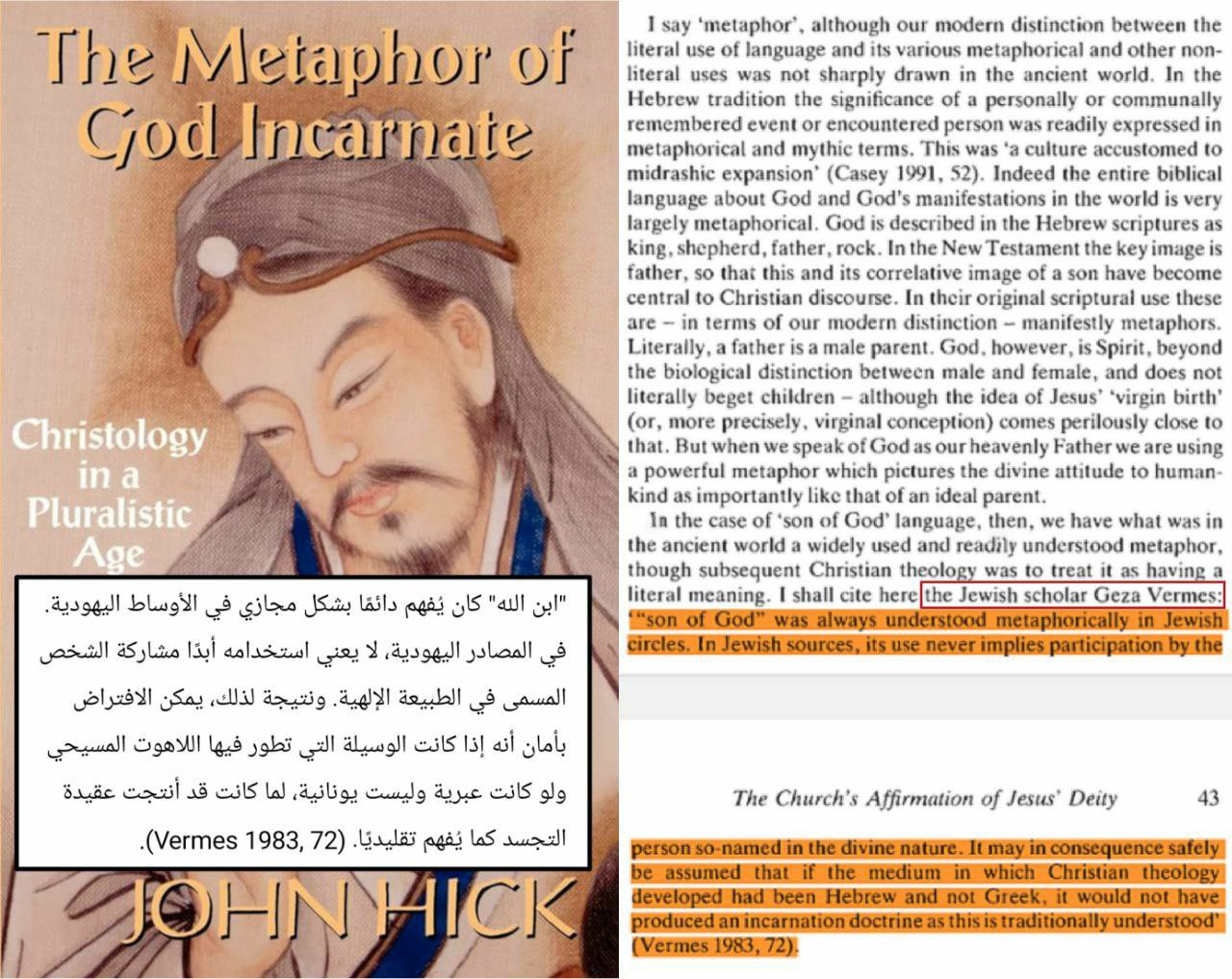
The Jewish scholar Geza Vermes says:
“‘Son of God’ was always understood metaphorically in Jewish circles. In Jewish sources, its use never implied that the person so named shared in the divine nature. As a result, it can be safely assumed that if the medium through which Christian theology developed had been Hebrew rather than Greek, it would not have produced the doctrine of the Incarnation as it is traditionally understood.”
(Vermes 1983, p. 72).
The Metaphor of God Incarnate: Christology in a Pluralistic Age, John Hick, pp. 42–43.
...f “Son of God” and “Christ / Anointed One” automatically mean divinity, then David would also have to be treated as divine. But Christians do not treat David as divine. So these titles by themselves do not prove that Jesus is God.