Update; December 2024
.
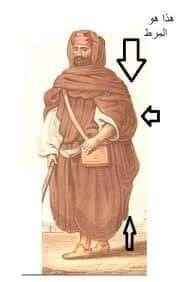
Hadith of Aisha’s Cloak
Some atheists and their followers are trying to undermine the integrity of the wife of the Prophet Muhammad, may God bless him and grant him peace, the Mother of the Believers, Aisha, may God be pleased with her, based on some narrations that tell of some of the Prophet’s companions entering upon him, and he received his visitors while wearing his wife’s cloak, so they claimed that his wife, may God bless him and grant him peace, was naked, God forbid. It
was reported in Sahih Muslim on the authority of Saeed bin Al-Aas that Aisha, the wife of the Prophet, and Uthman told him that Abu Bakr asked permission to see the Messenger of God while he was lying on his bed wearing Aisha’s cloak, so he gave permission to Abu Bakr while he was in that state, so he satisfied his need and then left, then Umar asked permission and he gave him permission while he was in that state, so he satisfied his need and then left, Uthman said: Then I asked permission to see him, so he sat down and said to Aisha: “Gather your clothes around you,” so I satisfied my need and then left, so Aisha said: O Messenger of God, why did I not see you panic for Abu Bakr and Umar as you panic for Uthman? The Messenger of God said: “Uthman is a shy man, and I feared that if I gave him permission in that condition, he would not tell me what he needed.” The atheists concluded
by saying: “It is clear from the hadith that the Messenger was lying in his bed, wearing Aisha’s garment or dress. When Uthman came, he gave the cloak to Aisha and sat down and said to her: ‘Gather your clothes around you.’ The rest of the details are
clear in the hadith.
The answer to this doubt is to say that the confusion occurred in two places:
ATheir interpretation of the meaning of the cloak.
BTheir interpretation of the meaning of the Prophet’s saying, may God bless him and grant him peace: ‘Gather your clothes around you.’
Their deviant thinking led them to say that Aisha, may God be pleased with her, was not wearing any clothing to cover her.
The answer to that is to say:
First: The hadith scholars who explained these narrations, and the linguists who clarified the meanings of the Arabs’ speech, agreed that the cloak is the garment.
Imam al-Nawawi said in his explanation of Sahih Muslim: “‘Wearing Aisha’s cloak’”: It is with a kasra on the meem, and it is a woolen garment.
-Ibn Manzur said in “Lisan al-Arab”: “A cloak is a garment made of silk, wool, or linen, and its plural is murut. In the hadith: That he, may God bless him and grant him peace, used to pray in the muruts of his women, meaning their garments, the singular is mirt, which is made of wool, and it may be made of silk or something else, and it is used as a waist wrapper. In the hadith: That the Prophet, may God bless him and grant him peace, used to pray at dawn, and the women would leave wrapped in their muruts, so that they would not be recognized due to the darkness. A mirt is any unstitched garment.
This garment is not sewn, as is clear from the words of the linguists, and it is shared by men and women, so there is no specificity for one of the two genders. Imam Muslim and al-Tirmidhi narrated that the Prophet, may God bless him and grant him peace, “went out one morning wearing a cloak made of black hair.”
If this is the case, then it is not correct to say that the cloak is the “dress.”
Secondly: The unstitched garment is worn by the Arabs as a cover or as a spread out garment on the ground, so how could the Prophet’s, may God bless him and grant him peace, wearing Aisha’s cloak be considered defective?
Third: A note regarding the word “wearing.” The word “wearing” means covering oneself, spreading out, and using. In the two Sahihs: “Abdullah bin Yusuf told us, he said, Malik told us, on the authority of Ishaq bin Abdullah bin Abi Talhah, on the authority of Anas bin Malik, that his grandmother, Mulaykah, invited the Messenger of Allah, may Allah bless him and grant him peace, to a meal that she had prepared for him. He ate from it, then said, ‘Get up, so that I may lead you in prayer.’ Anas said, ‘So I got up and went to a mat of ours that had turned black from being worn for a long
time.’” End quote.
Al-Hafiz said : Ibn Hajar
said: “His statement, ‘From the length of time it has been worn, that spreading out is called wearing. ’” End quote. Ibn Rajab al-Hanbali said: “His statement, ‘It has turned black from the length of time it has been worn,’ indicates that wearing each thing is according to its nature. Wearing a mat is spreading it out and using it to sit on.”
End quote. Fourth: His statement, may Allah bless him and grant him peace, ‘Gather your clothes around you,’ means: Take this cloak from me. It does not mean that she was naked, Allah forbid. This is indicated by the following:
Fifth: The hadith does not mention any of the clothes except the cloak that the Prophet, may Allah bless him and grant him peace, was wearing, which indicates that what is meant by his statement, ‘Gather your clothes around you,’ is that garment, which is the cloak. If it had been meant by it something else, then there would have been no benefit in mentioning the Prophet, may Allah bless him and grant him peace, placing Aisha’s cloak on him at the beginning of the hadith, and we would have needed to estimate that the clothes refer to clothes not mentioned in the context, which is an apparent contradiction. The wording and the implication of Arabic speech.
Sixth: If Aisha (may Allah be pleased with her) was not covered, there would have been no benefit in her covering herself after Omar saw her not covered, and this is impossible under any circumstances.
Seventh: The focus of the hadith was to explain the condition of the Prophet (peace and blessings of Allah be upon him), not to explain the condition of Aisha or anyone else. It was narrated from Abu Ya’la with a saheeh chain of narration that the Prophet (peace and blessings of Allah be upon him) said: “I feared that if I gave him permission while I was in that condition, he would not be able to fulfill his need.” This is evidence that shyness from Uthman was due to his condition (peace and blessings of Allah be upon him), not to Aisha (may Allah be pleased with her
Eighth: The one who narrated this incident was Uthman and Aisha . Is it conceivable that Aisha would narrate an incident that would offend her or Uthman (may Allah be pleased with them)? If that were the case, they would have agreed to conceal the news, not to broadcast it and publish it.
Therefore, the meaning of the hadith is that the Prophet, may God bless him and grant him peace, was sitting in his house, lying down, and Aisha’s blanket, may God be pleased with her, was placed on him. It is the custom of people not to make an effort to prepare and receive special people and those who enter frequently. This was the case with Abu Bakr and Umar , but Uthman, may God be pleased with him, was very shy. Here, the Prophet, may God bless him and grant him peace, feared that Uthman would see him sitting with the blanket on him, and he would think that the sitting was special, or that he was in a state in which he could not receive anyone, and his shyness would prevent him from asking for what he needed. Therefore, the Prophet, may God bless him and grant him peace, sat up straight, lifted his wife’s blanket from him and ordered her to take it, and he rushed to his visitor and welcomed
🚨🚨