Vishnu
In this subsection, Viṣṇu is examined through the lens of lust as presented in Purāṇic narratives. The episode in which Viṣṇu is described as being deluded by Kāma through the power of Śiva’s Māyā portrays him as repeatedly violating the modesty of other men’s wives—an act fundamentally rooted in uncontrolled desire. Such behavior aligns more closely with morally flawed human impulses than with the ethical restraint traditionally associated with a preserver of cosmic order. By highlighting Viṣṇu’s susceptibility to lust, this discussion critiques the moral character attributed to him and questions the coherence of venerating a deity whose actions, as depicted here, mirror transgressive human conduct
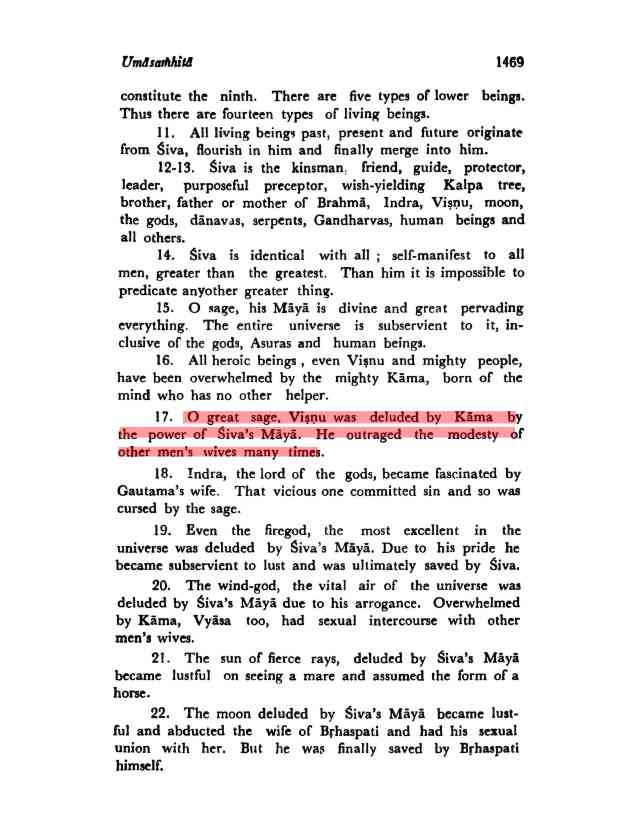
Reference of above mention:- Shiv Purana, umasamhita, chapter:- 4
the story of Viṣṇu and Vṛndā (later known as Tulasī) is narrated as follows. Vṛndā was a deeply devoted and chaste woman, the wife of the asura king Jālandhara. Her unwavering fidelity (pativrata-dharma) granted Jālandhara extraordinary power, making him invincible even against the gods. As Jālandhara’s tyranny became unbearable and no deity could defeat him, the gods sought a means to break the source of his strength. Viṣṇu then intervened by employing deception rather than direct force. He assumed the exact form of Jālandhara and approached Vṛndā in her hermitage. Believing him to be her lawful husband, Vṛndā welcomed him, and through this act—performed under false identity—her chastity was broken.
Later then Vṛndā renounced her body, and from her ashes emerged the Tulasī plant, which became sacred and eternally associated with Viṣṇu worship.
Before she renounced her body Viṣṇu declared that he would forever be worshipped with Tulasī leaves and that Tulasī herself would be honored as his consort in ritual form.
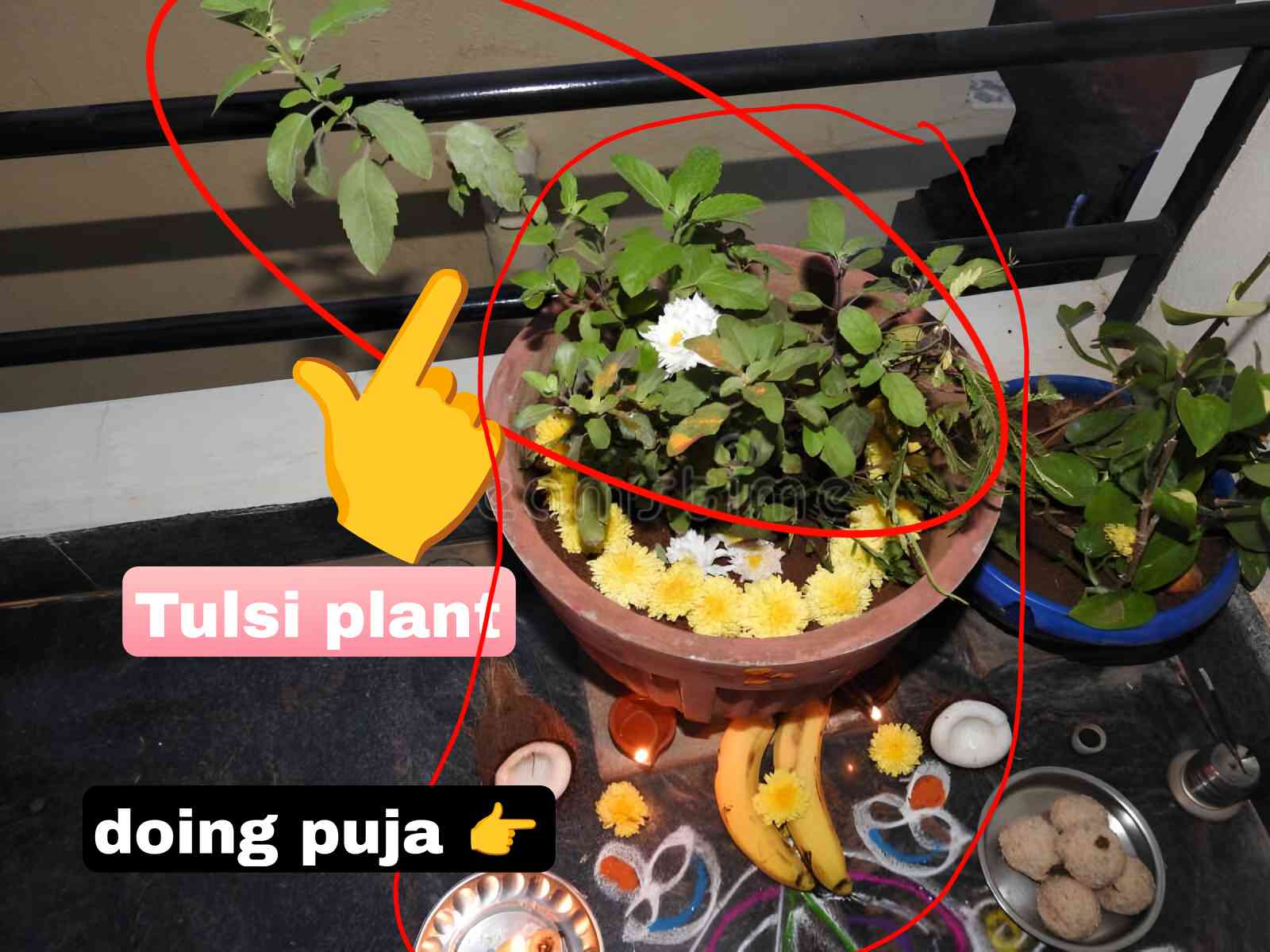
The narrative presents a moral contradiction: A figure described as violating a woman’s modesty through deception is nevertheless worshipped and upheld as the supreme authority. If taken literally, such an act would be condemned in any ethical system, making it difficult to reconcile divine supremacy with moral accountability. Elevating power or cosmic purpose above consent and ethical restraint risks weakening the idea of the divine as a moral ideal. This tension invites critical reflection on whether authority without consistent moral standards can legitimately serve as the foundation of righteousness and justice.
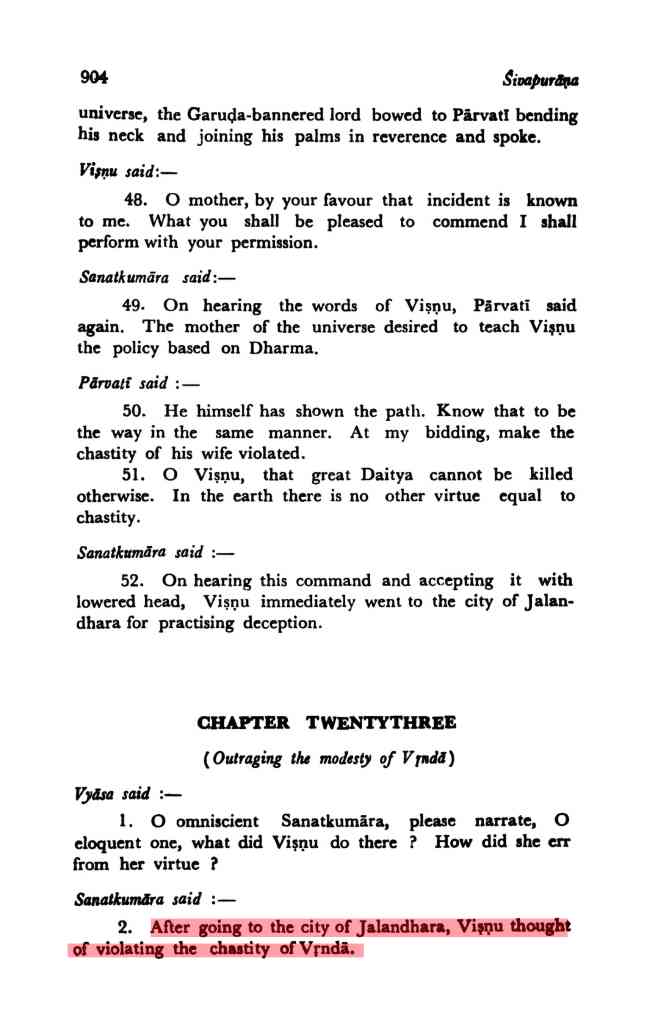
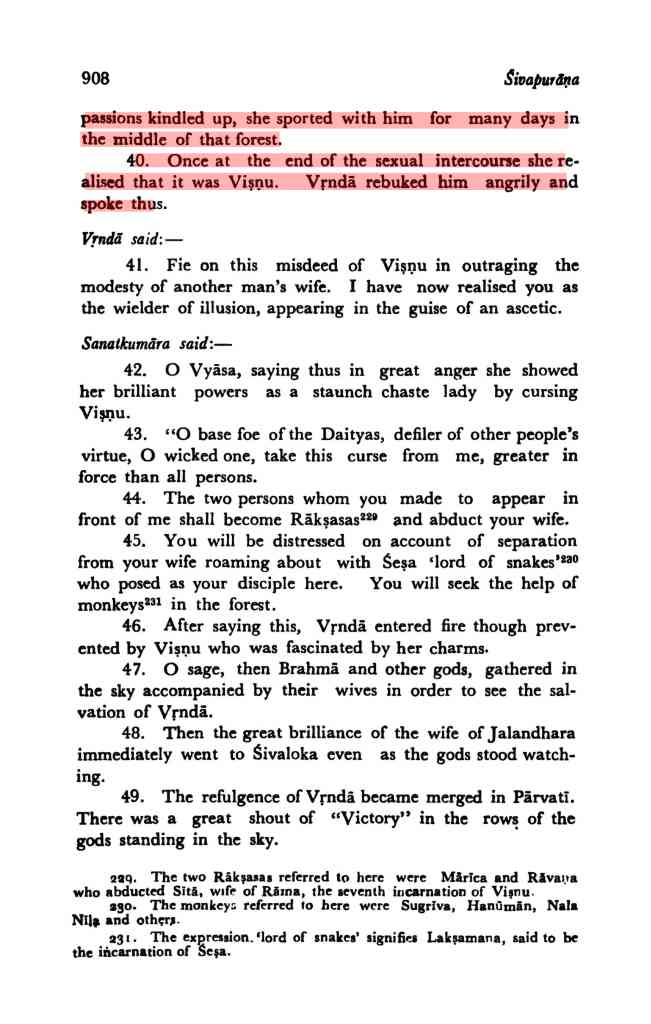
Reference of above mention:- shiv Purana, rudra samhita, chapter 23
@debunks