Were the Islamic Conquests Oppressive? How Rome and Persia Actually Treated Egypt, Syria, and the Levant
The Condition of Peoples and Countries Under Roman and Persian Rule Before the Islamic Conquest
Table of Contents
- The Byzantine and Sasanian Empires — An Overview
- The Economic Wealth of Egypt, the Levant, and the Maghreb
- Brutal Oppression of the Subject Peoples
- Persecution of Monophysite Christians
- Life Under Byzantine Rule Was Unbearable
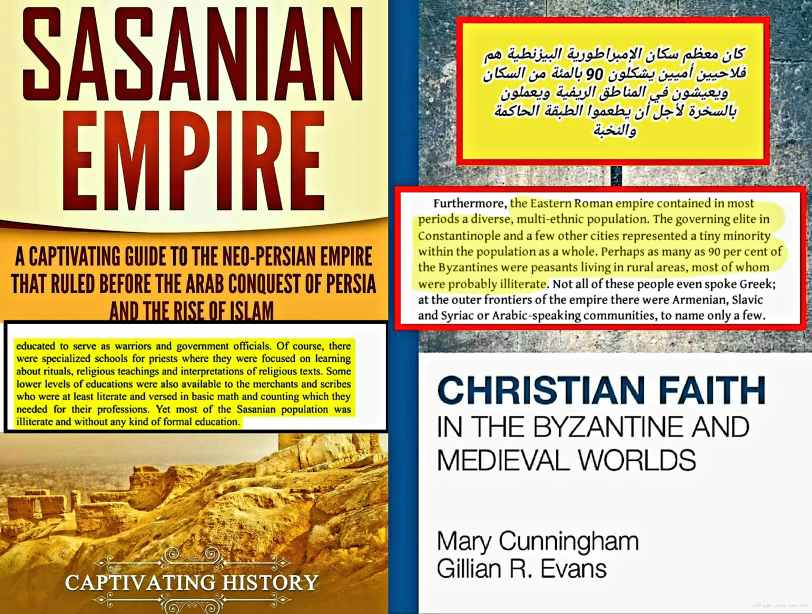
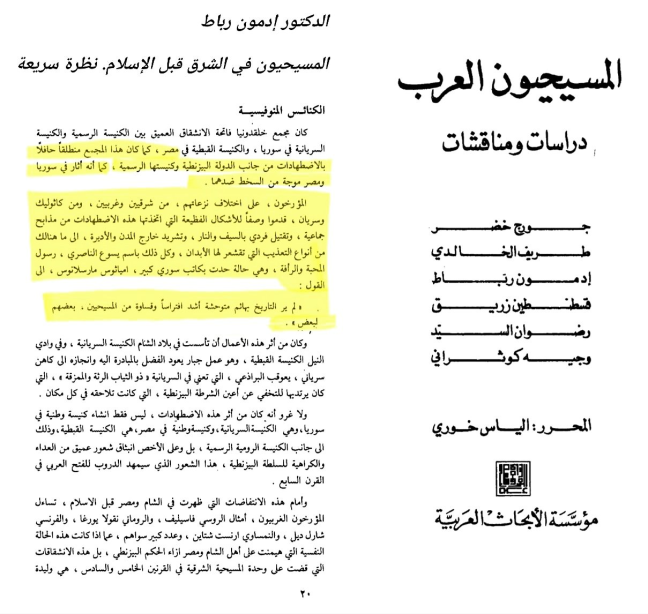
- Illiteracy Under Roman Rule
- Illiteracy Under Sasanian Rule
- The Brutality of Christian Roman Rule — Edmond Rabbath
- The Roman Vow to Exterminate the Levant’s Inhabitants
- The Romans Destroyed Their Own Cities Before Retreating
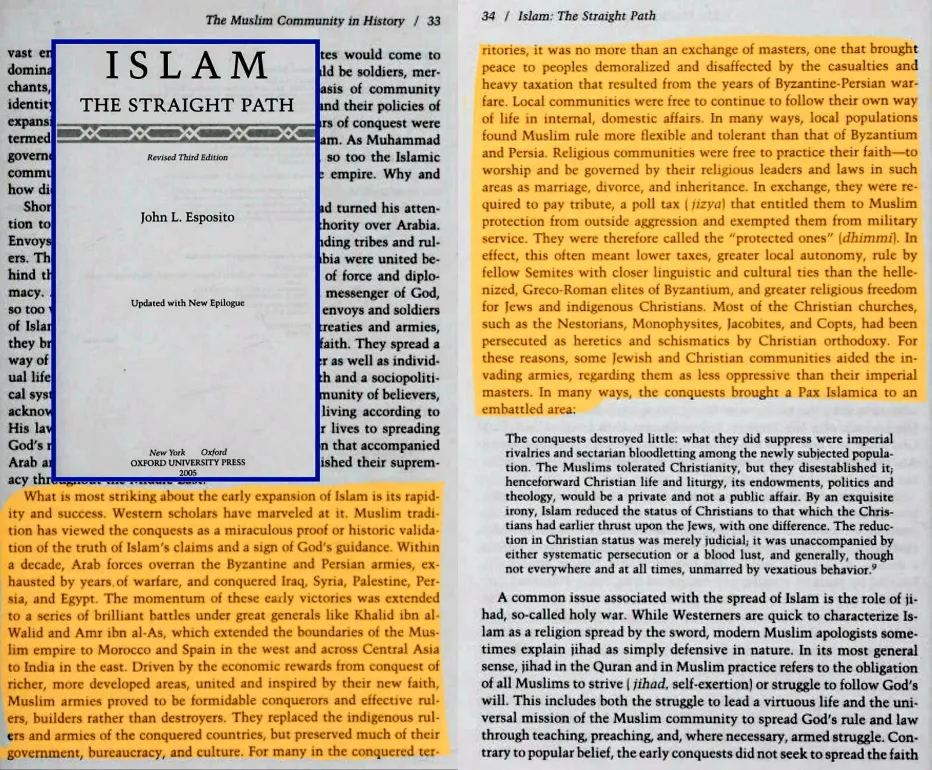
- The Arab Islamic Conquest as Liberation
- Michael the Syrian — God Sent the Sons of Ishmael
- John Bar Penkaye — Peace and Prosperity Under Arab Rule
- The Arab Islamic Rule as Universal Justice
- Syria Before and After the Islamic Conquest
- The Conquests Did Not Destroy — They Preserved
- Justice, Development, and Prosperity Under Islamic Rule
- Agriculture, Irrigation, and Global Trade
- Just Armies of Liberation
- Arab Literacy — The Highest in the Ancient World
- The Ghassanids and Lakhmids as Barriers Against Ignorance
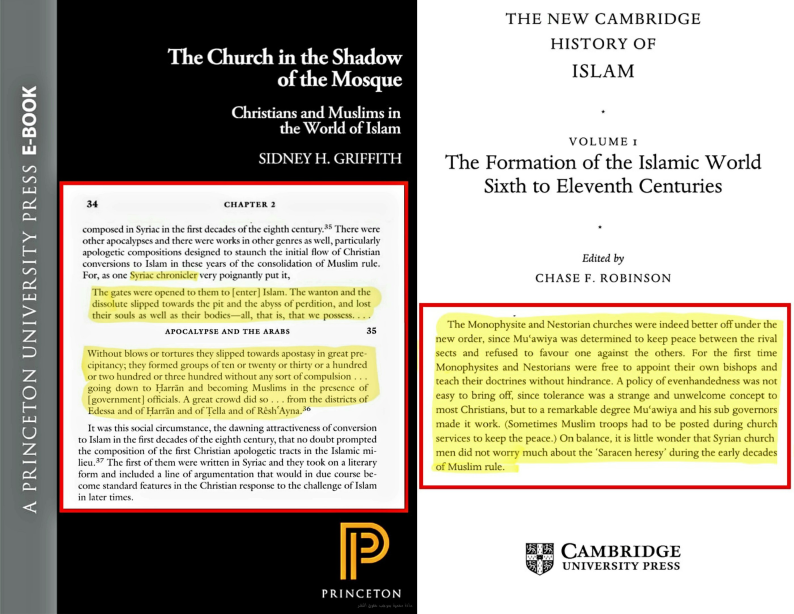
- The End of Sectarian Conflict
- Conclusion — The Peoples Embraced Islam Freely
The Byzantine and Sasanian Empires — An Overview
1 — The Byzantine Empire was a kingdom that began in the year 330 CE, and its first king was Constantine I.
The empire ruled, starting from the mid-sixth century CE, the lands of the Maghreb, the Levant, Egypt, Anatolia, Italy, and the Balkans, and the empire’s borders at that time were at their greatest extent.
As for the Sasanian state, it began in the year 226 CE, with its first king being Ardashir and its last being Yazdegerd, and its greatest extent included Egypt, the Levant, most of Anatolia, and all the eastern lands extending to the borders of India and China.
The Economic Wealth of Egypt, the Levant, and the Maghreb
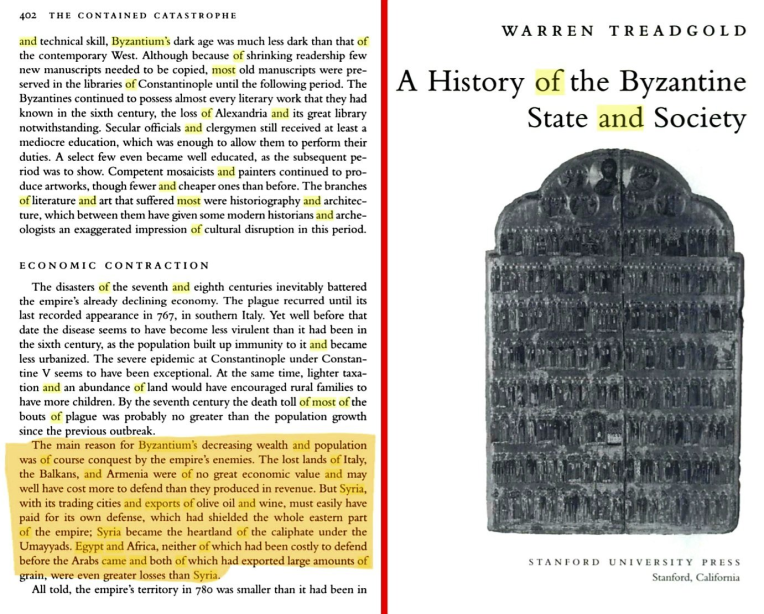
2 — The regions of Egypt, the Arab Maghreb, and the Levant had high revenues and economies in the Byzantine Empire, such that most of the Byzantine economy came from these regions.
In contrast, the regions of Armenia, the Balkans, and Italy were poor areas with low revenues.
Brutal Oppression of the Subject Peoples
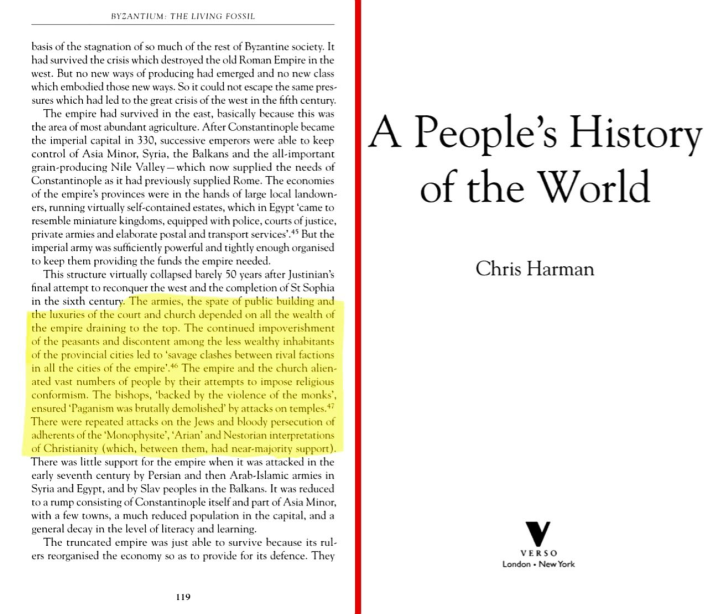
3 — Despite the contributions of the Levant, Egypt, and the Arab Maghreb to the Byzantine Empire, the populations of these regions were brutally oppressed.
The Byzantine ruling elite and armies impoverished the inhabitants and peasants, both Chalcedonian and non-Chalcedonian Christians, and spent all the empire’s wealth on themselves, building lavish structures and churches from that wealth.
- The peasants who adhered to Arianism and the Monophysite doctrine were religiously oppressed.
- The peasants in the Levant and Egypt were Jacobites, while those in the Arab Maghreb were Arians.
- The Byzantine ruling elite, who followed Chalcedonian Christianity, oppressed all of these groups.
- The common Chalcedonian Christians were oppressed materially.
- All non-Chalcedonian Christians were oppressed both religiously and materially.
Persecution of Monophysite Christians
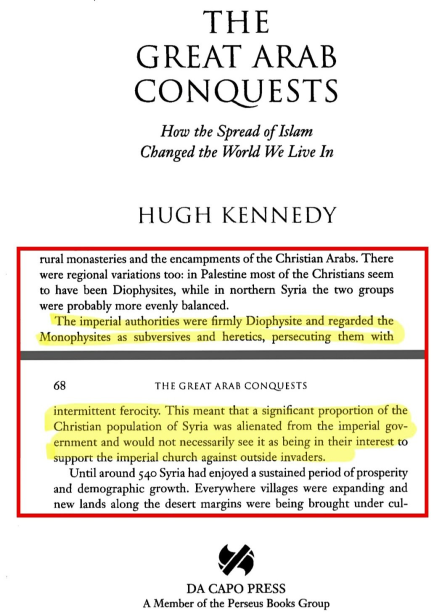
4 — The adherents of the Monophysite doctrine among the Christians were brutally and intermittently persecuted and were deprived of positions and jobs in the Byzantine Empire in the Levant and Egypt.
Life Under Byzantine Rule Was Unbearable
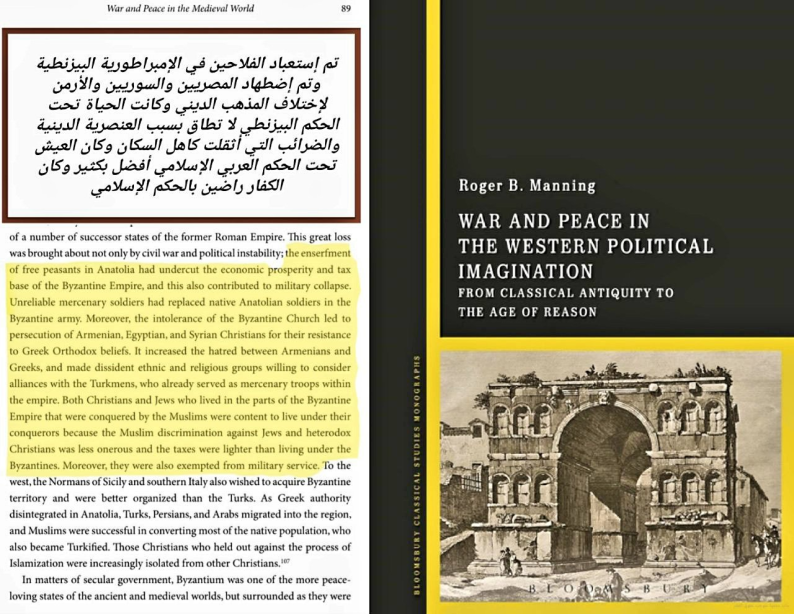
5 — Free peasants in the Byzantine Empire were enslaved, and Egyptians, Syrians, and Armenians were oppressed due to differences in religious doctrine.
Illiteracy Under Roman Rule
6 — Most of the inhabitants of the Roman Empire were illiterate peasants, constituting 90 percent of the population, living in rural areas and working under forced labor to feed the ruling class and the elite.
Illiteracy Under Sasanian Rule
7 — Most of the subjects of the Sasanian Empire were illiterate and deprived of education.
The Brutality of Christian Roman Rule — Edmond Rabbath
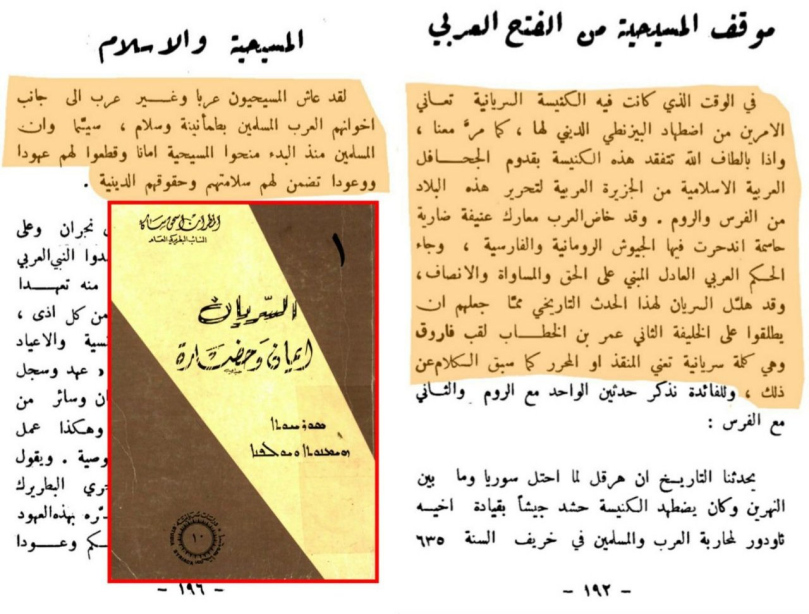
8 — Regarding the brutality of Christian Roman rule over the Levant and Egypt, Edmond Rabbath says:
Historians, both Western and Eastern, Catholic and Syriac, provided descriptions of the horrific forms these persecutions took:
- From mass massacres
- To individual killings by sword and fire
- To the displacement of populations outside cities and monasteries due to religious disputes
- And so on, with types of torture that make the body shudder
The Roman Vow to Exterminate the Levant’s Inhabitants
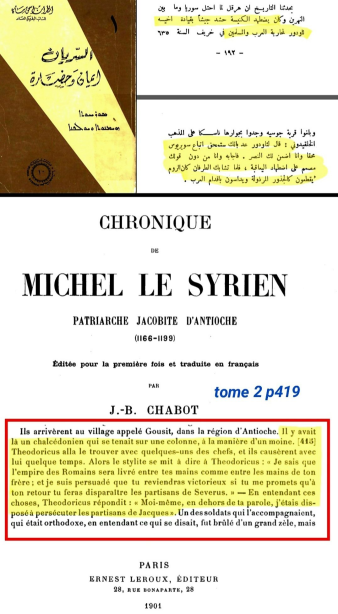
9 — The matter did not stop there. For the Christian Romans vowed to exterminate the inhabitants of the Levant and Egypt.
- السريان إيمان وحضارة، 193/1
- Michel le Syrien, Chabot, tome 2, p. 419
The Romans Destroyed Their Own Cities Before Retreating
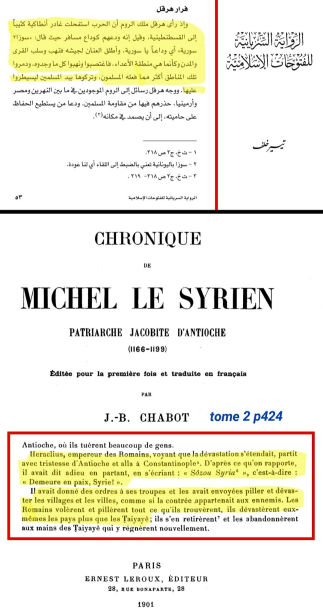
10 — The Romans went so far that when they saw the Muslims had defeated them, they destroyed the cities and villages in the Levant and then abandoned them for the Muslims to take, ruined and shattered.
- الرواية السريانية للفتوحات الإسلامية، تيسير خلف، ص. ٥٣
- Michel le Syrien, Chabot, tome 2, p. 424
The Arab Islamic Conquest as Liberation
11 — A Baghdad priest from the twelfth century AD mentions that before the advent of Islam, the Zoroastrian Persians and the Christian Romans viewed the blood of a Christian who opposed them as the blood of a dog and as an offering.
Michael the Syrian — God Sent the Sons of Ishmael
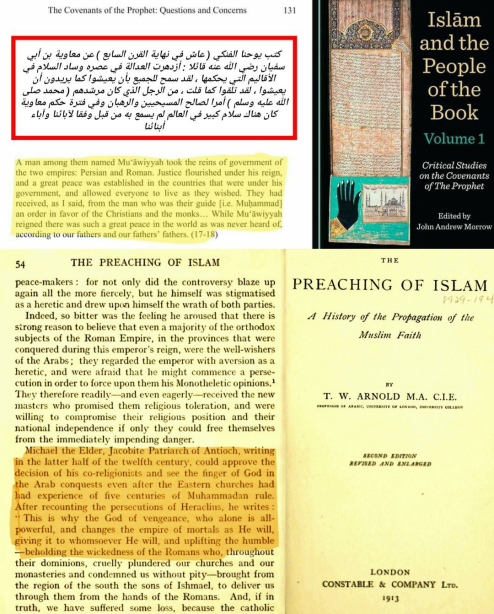
12 — Michael the Syrian confirmed that the inhabitants of the Levant and Egypt lived the worst life under Roman rule, and that God Almighty sent the sons of Ishmael from the south (the Muslim Arabs) to liberate the oppressed Arab Levantines and Egyptians from the Roman yoke.
John Bar Penkaye — Peace and Prosperity Under Arab Rule
13 — It was only a matter of years before the era of the Muslim Arabs and their rule became the only era in which the nations, both Arab and non-Arab, experienced peace and prosperity unlike any era before or after.
John Bar Penkaye, who lived at the end of the seventh century, states that the rule of the Muslim Arabs was an era of peace and prosperity, and no era knew prosperity and peace like the era when the Arabs ruled the world.
The Arab Islamic Rule as Universal Justice
14 — The Arab Islamic rule was a just and great rule, as the Arab and non-Arab peoples under the yoke of the Romans and Persians were liberated from that great oppression and severe torment.
Syria Before and After the Islamic Conquest
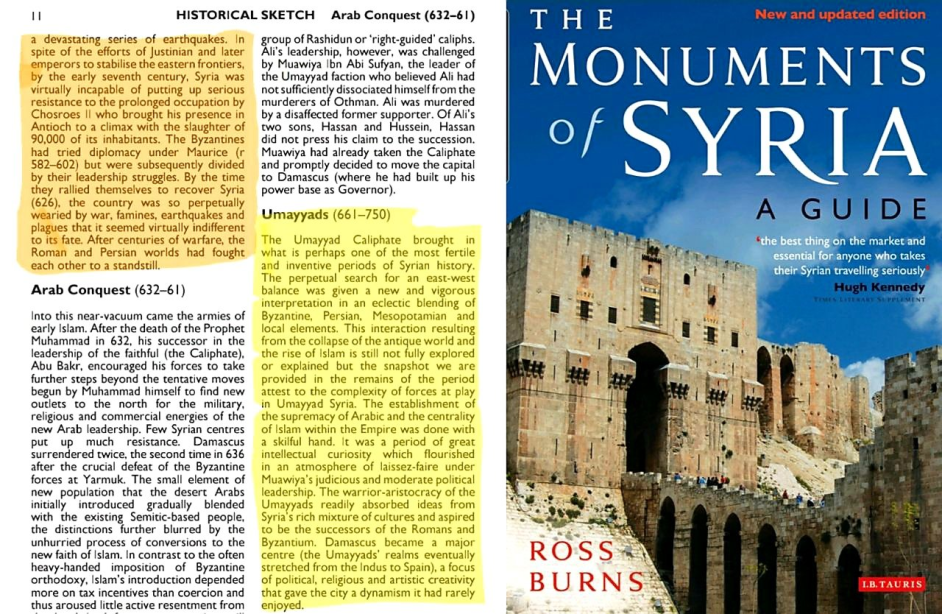
15 — Syria had always suffered due to the Roman-Sasanian wars from the third to the seventh century AD, with famines and plagues spreading because of the wars. Several earthquakes struck, and Syria’s condition deteriorated to the worst degree just before the Islamic conquest, to the point that the country’s inhabitants no longer cared about their fate after all the destruction that befell their land.
The Umayyad Arabs provided a period considered one of the greatest eras of prosperity and creativity for Syria. Damascus became the greatest city in the world at that time and a center for political, artistic, and religious creativity.
- Syria became a great country under the rule of the Muslim Arabs.
- While it was in ruins under the rule of the Christian Romans before the Islamic conquest.
The Conquests Did Not Destroy — They Preserved
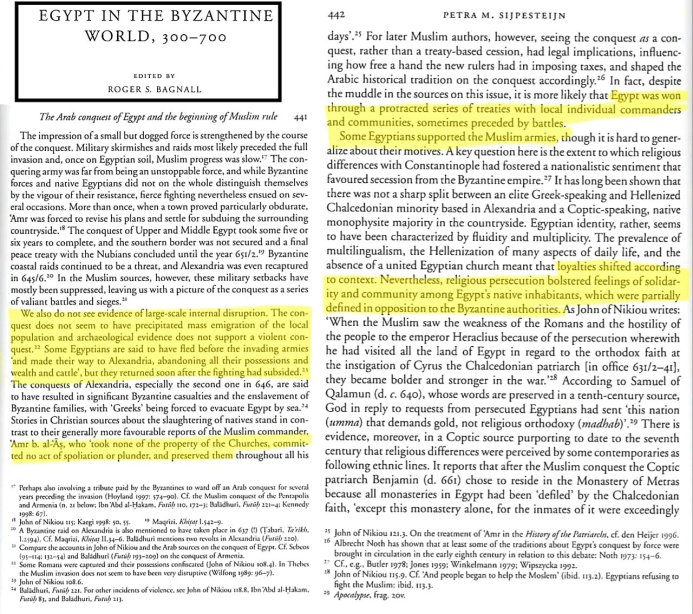
16 — The conquests did not cause the destruction of homes as the wars of the Persians and Romans did.
Anyone who left their home and farm out of fear of war returned after its end to find their properties preserved by the Muslims as they were and returned to their owners.
Justice, Development, and Prosperity Under Islamic Rule
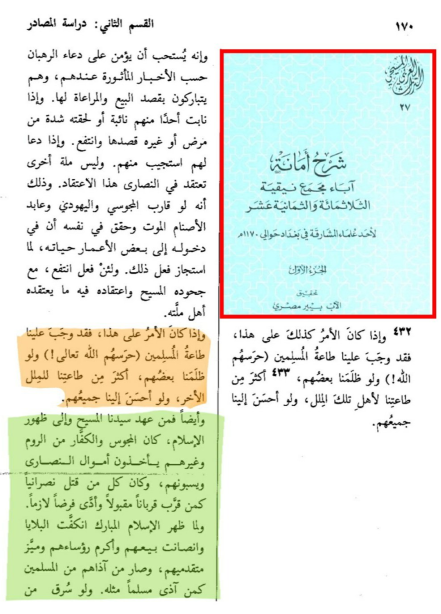
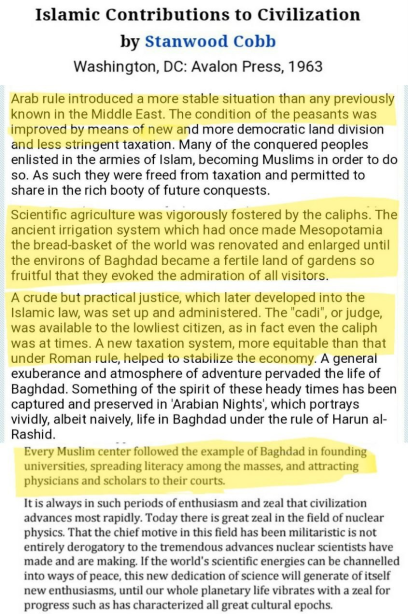
17 — The lands conquered by the Arab Muslims experienced justice, fairness, and development unlike anything they had known before.
- The Middle East under Arab Islamic rule witnessed stability and peace that it had not seen throughout the previous centuries as a whole.
- Agriculture was developed, and Mesopotamia became one of the richest regions in the world.
- The Arab economic system was more just and superior to the Roman system, and it was the reason for the economic stability of the conquered lands.
- The Islamic centers established by the Arab Muslims widely spread reading, writing, and knowledge among the peoples of the caliphate.
18 — Culture and prosperity were available to the general population of the Arab Islamic caliphate, and history has never known prosperity like that of the Arab Muslim state in all ages.
Agriculture, Irrigation, and Global Trade
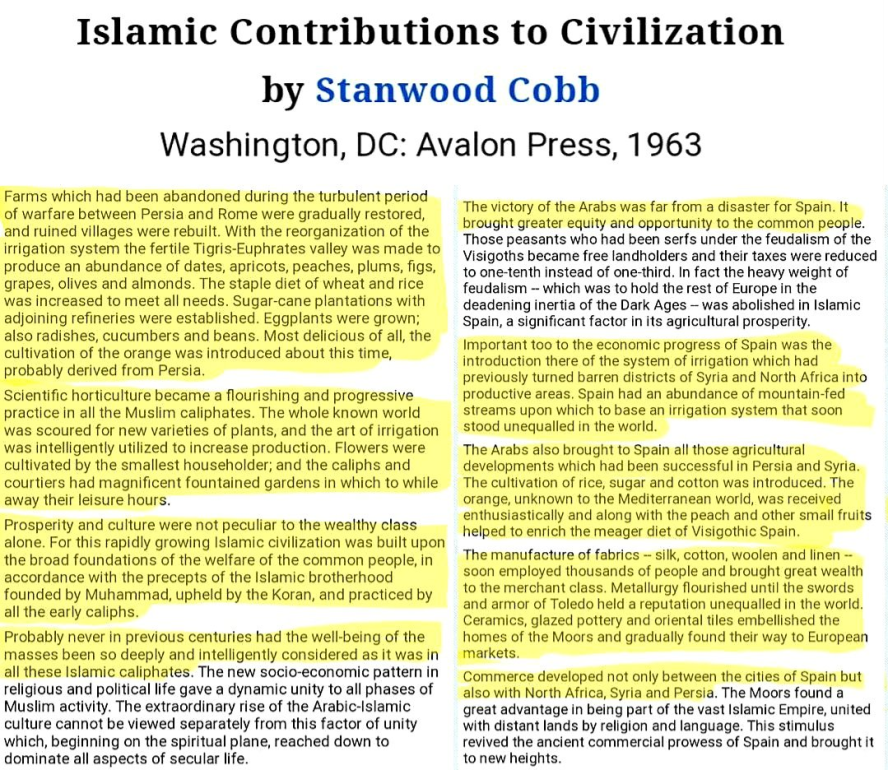
19 — The Arabs restored farms and rebuilt villages destroyed by the wars of Rome and Persia.
- They developed the irrigation system and used it intelligently to increase production.
- Various types of plants were cultivated in the Euphrates and Tigris valleys, making the valley fertile and prosperous.
- Horticulture flourished and became a thriving practice in all the lands of the caliphate.
- The Arab Islamic irrigation system was unlike any other system — it was the reason for the economic advancement of Al-Andalus and the transformation of arid regions in the Levant and North Africa into productive areas.
- Global trade flourished because of the Arab Muslims.
Just Armies of Liberation
20 — The armies of the Arab Muslims built the lands they conquered and did not destroy them. They were just armies led by just Arab Muslim kings who liberated people from disbelief and oppression and brought them into Islam and justice.
Arab Literacy — The Highest in the Ancient World
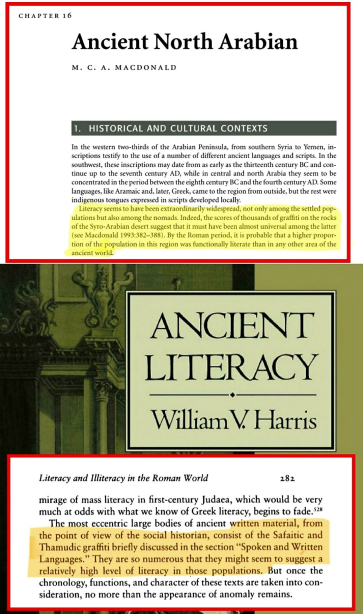
26 — The Arabs possessed the highest literacy rate in the ancient world, as indicated by inscriptions, which experts have described as a strange and unique phenomenon.
This was not a sudden event in Arab history; rather, Arab history testifies that they were among the most literate peoples, enjoying an exceptionally high level of reading and writing proficiency and widespread literacy. This is evidenced by the numerous Safaitic and Thamudic inscriptions.
All goodness came from those conquering Muslim Arabs.
The Ghassanids and Lakhmids as Barriers Against Ignorance
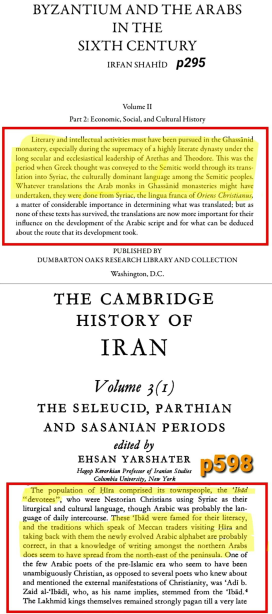
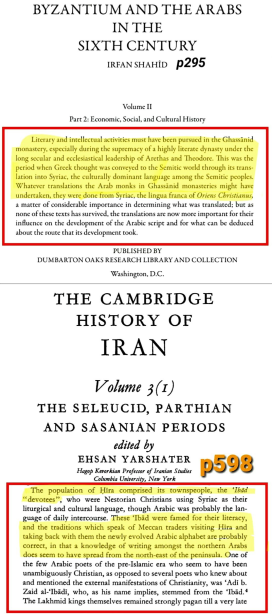
27 — Reading and writing were well-known among the Ghassanid Arabs (allies of the Romans) and the Lakhmid Arabs (allies of the Persians). They were renowned for their literacy and high cultural level compared to the Roman and Persian peoples or their subjects.
The Ghassanids and Lakhmids contributed to spreading literacy among the Arabs of the Levant and Iraq.
Thus, the Arabs of the Levant and Iraq served as a barrier against the ignorance and backwardness spread by the Roman Empire and the Sasanian Empire.
- Irfan Shahid, Byzantium and the Arabs in the Sixth Century, vol. 2, part 2, p. 295
- The Cambridge History of Iran, vol. 3(1): The Seleucid, Parthian and Sasanian Periods, ed. Ehsan Yarshater, p. 598
The End of Sectarian Conflict
28 — One of the blessings of the Islamic Arab conquest was that it put an end to religious and ethnic conflicts, leading to peace.
Conclusion — The Peoples Embraced Islam Freely
29 — The renowned Syrian historian, Bishop Jacob of Edessa, who lived in the first Hijri century and witnessed the era of the Islamic conquests, confirmed that the Christian inhabitants of the conquered lands converted to Islam in large numbers without any form of coercion, beating, or torture.
Liberation From Oppression]] [[Islamic Conquests After Prophet]]