What Did Arius Actually Believe? — Christian Sources Confirm He Denied the Divinity of Christ and Affirmed God's Oneness
The claim that Arius believed in a lesser or secondary divinity of Christ is a misrepresentation of history contradicted by Christian sources themselves. What the evidence actually shows — drawn from Pope Shenouda III, multiple Coptic priests, and the standard reference works of Christian thought — is that Arius denied the divinity of Christ entirely and affirmed the oneness of God. The theology of a “secondary god” or “lesser god” belongs not to Arius but to the early Church Fathers of the second and third centuries: Justin Martyr, Origen, and Tertullian. This note establishes that distinction through eight primary source images and nine footnoted references.
Five Witnesses That Arius Denied the Divinity of Christ
First Witness — Pope Shenouda III
The following image presents the relevant passage from Pope Shenouda III’s book The Nature of Christ, confirming that Arius denied the divinity of Jesus and considered him a creature who did not reach the level of divinity or equality with the Father.
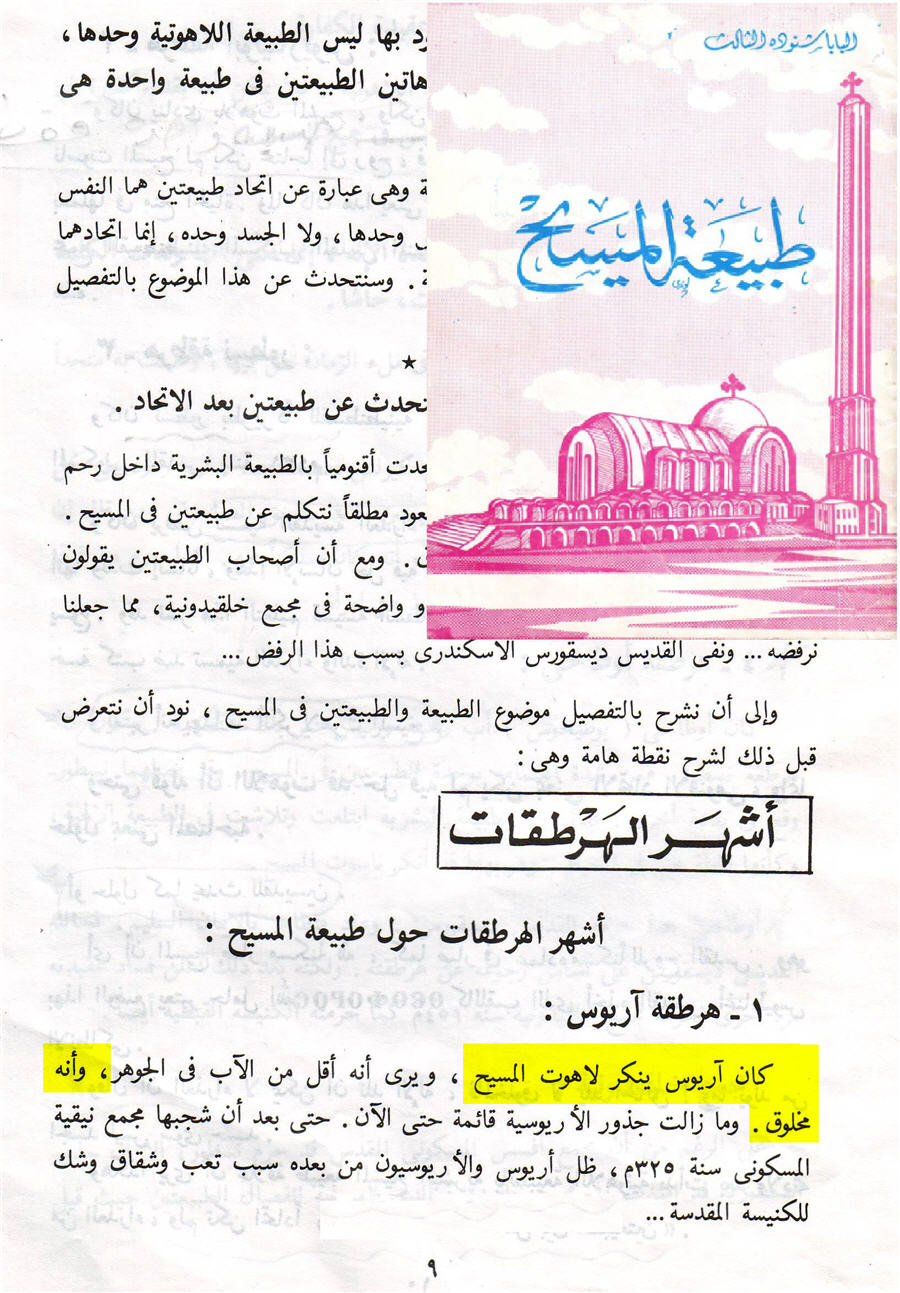
Pope Shenouda III confirmed that Arius denied the divinity of Christ and considered him a creature who did not reach the level of divinity or the level of the Father and was not equal to the Father.
Second Witness — Father Kyrollos El-Antony
The following image presents the relevant passage from Father Kyrollos El-Antony’s book The Age of Councils, confirming the same position on Arius.
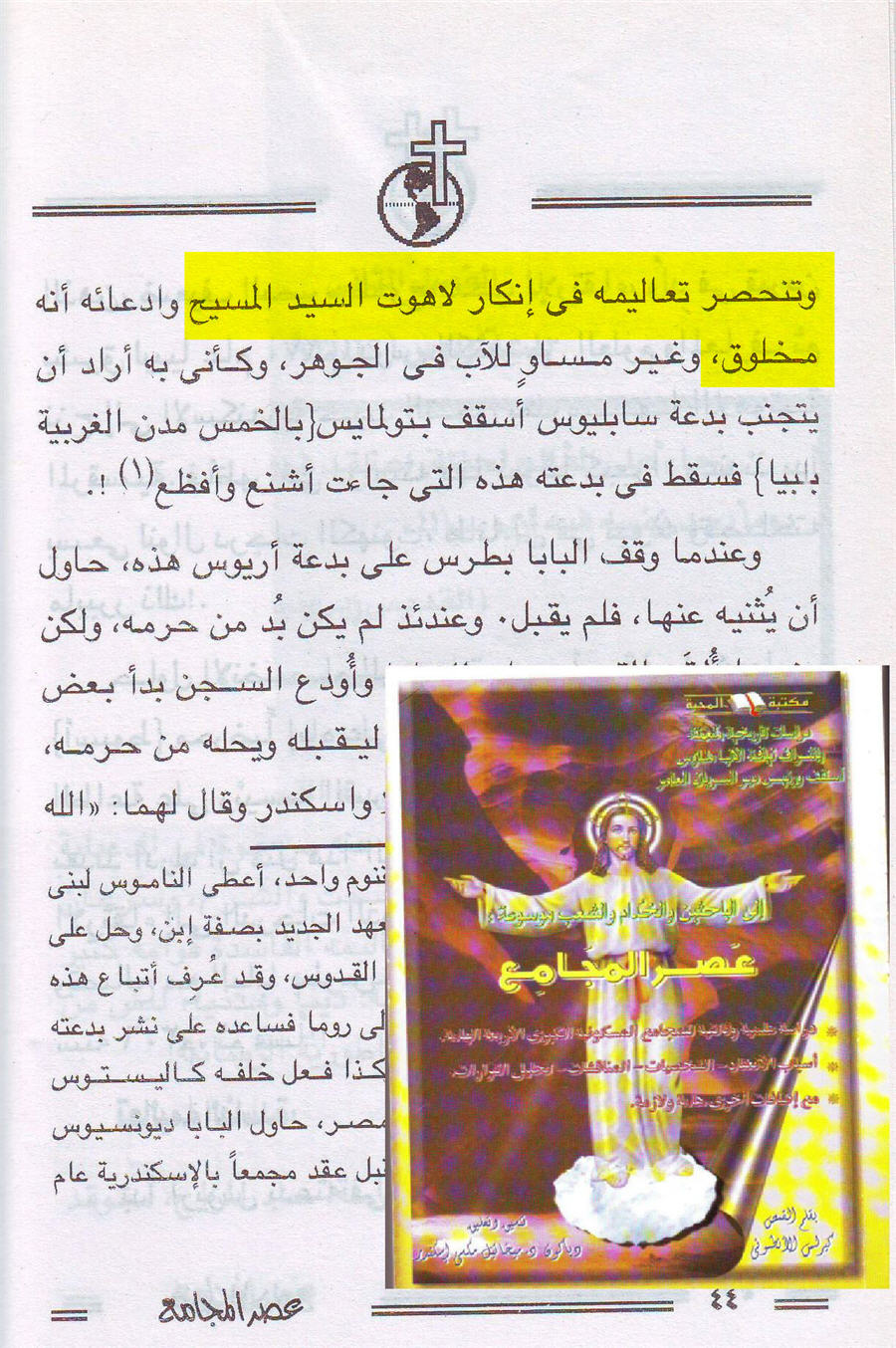
Father Kyrollos El-Antony confirmed the same words: Arius denied the divinity of Jesus.
Third Witness — Father Mina Gad
The following image presents the relevant passage from Father Mina Gad Girgis, a priest in the city of Esna, from his book My Church: Doctrine and Faith.
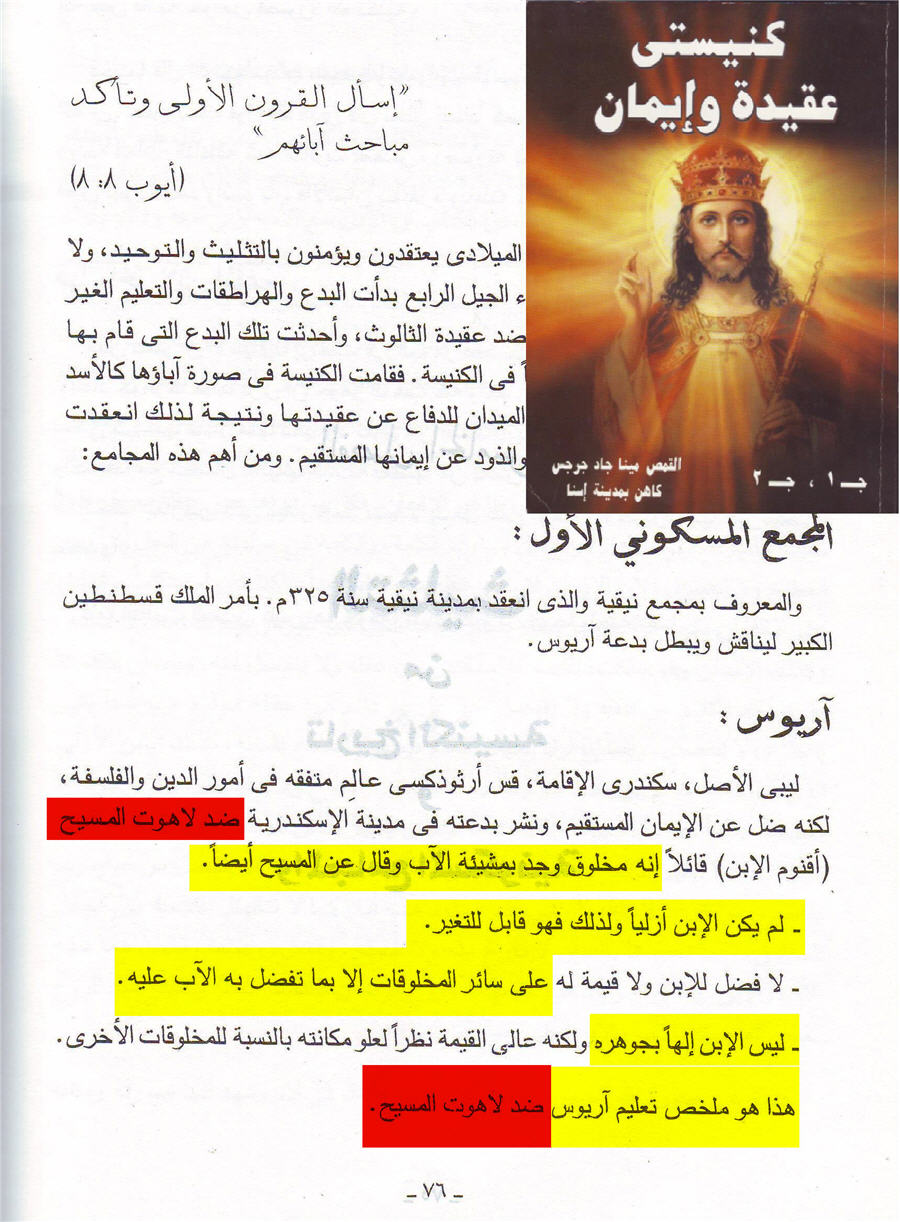
Father Mina Gad confirmed Arius’ denial of the divinity of Christ.
Fourth Witness — Dr. Father Hanna Al-Khudari
The following image presents the relevant passage from Dr. Father Hanna Al-Khudari’s book The History of Christian Thought, in which he testifies that Arius denied both the divinity and the eternity of Christ.
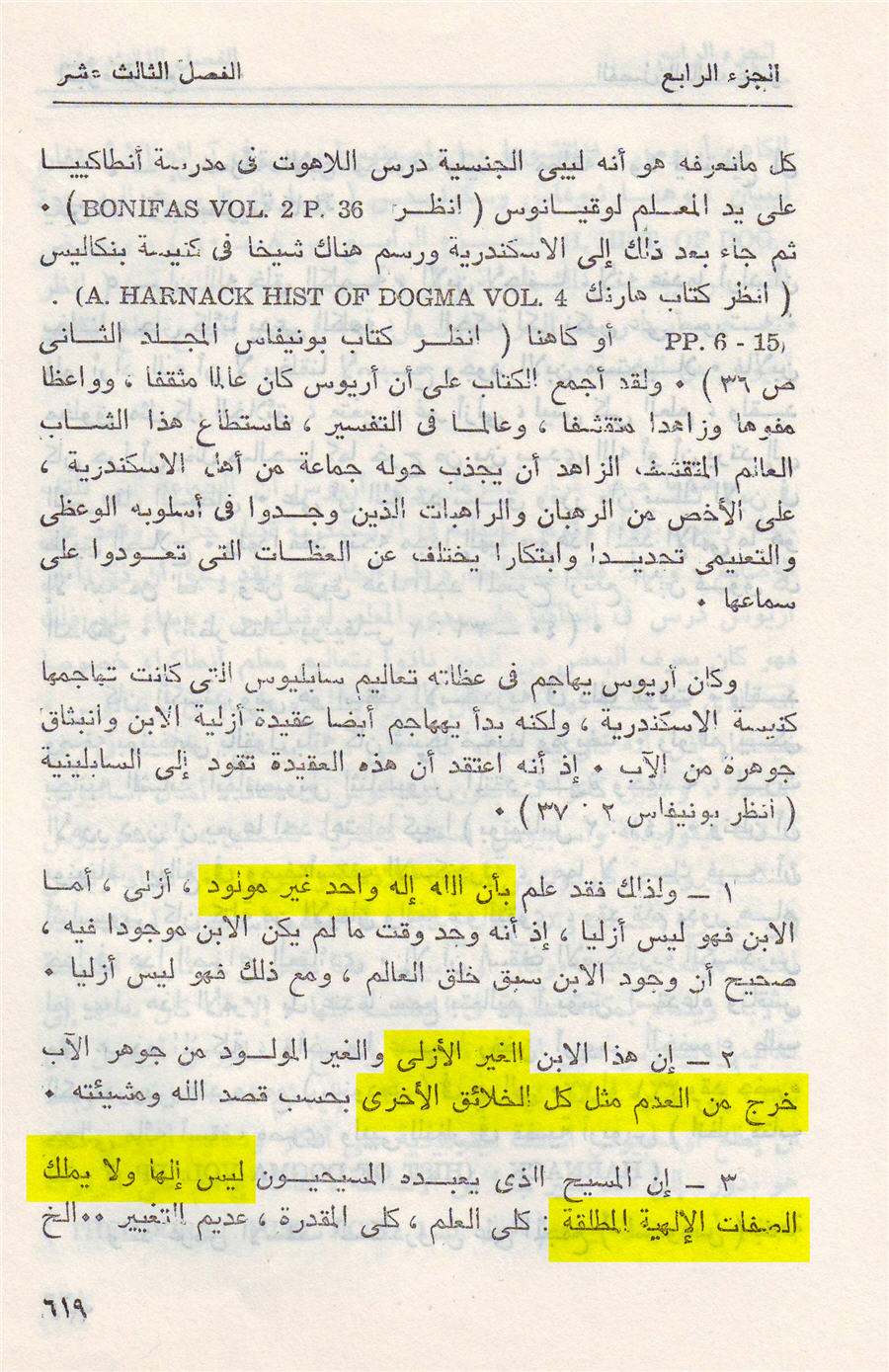
Dr. Father Hanna Al-Khudari testified that Arius denied the divinity and eternity of Christ.
Fifth Witness — Father Fadil Sidarus
“Arius does not doubt the humanity of Christ, but rather his divinity, asking: Is it reasonable that this human being who suffered and died could be a god? But there is a difference between Arius and those who doubted the divinity of Christ before him: in his view, acknowledging the divinity of Christ contradicts the oneness of God, and this is something that the Jews and Greeks — and Muslims as well — do not accept. Christ cannot be considered a god due to the intensity of Arius’ belief in the transcendence of God, his teachings, and his oneness. No human being can be God because God is one and very exalted.”
Five Christian sources — including the Pope of the Coptic Orthodox Church himself — confirm that Arius denied the divinity of Christ and believed in the oneness and transcendence of God.
The Doctrine of Arius — A Summary
From the collective testimony of these five witnesses, the doctrine of Arius can be summarized across five positions:
God is one and He is eternal and the Creator of everything. Christ is a creature like all creatures. Christ is not eternal, and the word “Son of God” means the pious, not the divine. Christ has no superiority over creatures except through what God Almighty has given him. The divinity of Christ is denied, and the attributes of Christ do not indicate his divinity at all.
What Happened to Arius and His Followers
The pagan emperor Constantine, who believed in polytheism and refused to believe in monotheism, hated Arius intensely because Arius was a monotheist. Constantine ordered the killing of his followers, the burning of his books, and declared that whoever followed Arius and hid his writings would be killed. After killing the believers and the true followers of Christ who believed in the oneness of God, when Constantine found a man with many others who still believed in the oneness of God, he had them persecuted.
The following image presents the words of John Lorimer from The History of the Church, Part Three, p. 50 (Deposit No. 8378/1988), on the campaign of Constantine against Arius and his followers.
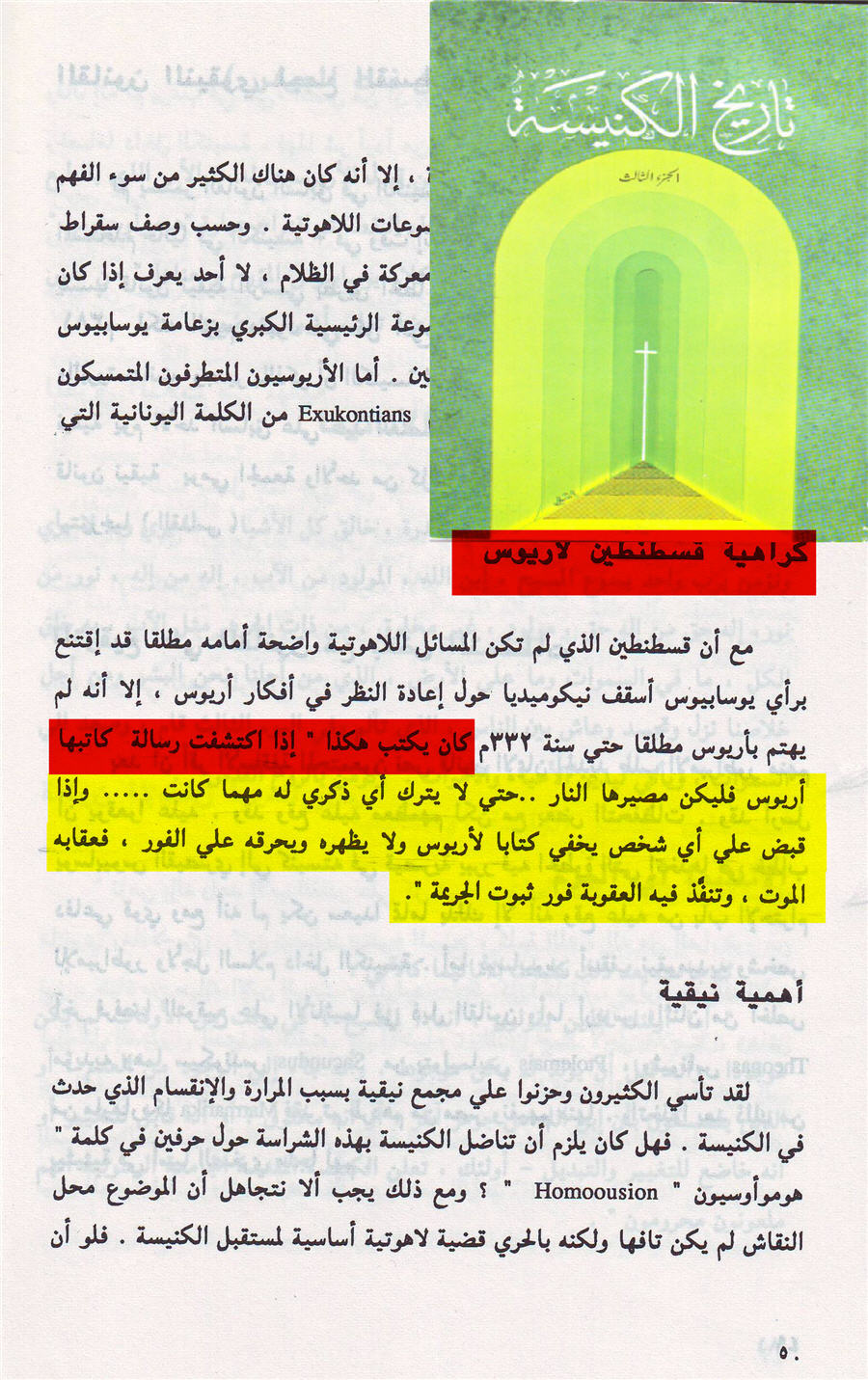
All of Arius’ books were burned. Everything that remains about Arius has passed through the hands of his enemies. All information that has reached us about Arius has not reached the true level that Arius was at. Even if some of the writings of Athanasius the Apostolic concern Arius, this does not constitute evidence that condemns Arius — it constitutes evidence produced by his opponents.
Who Actually Believed in a “Secondary God”? — The Early Church Fathers
The theology that describes Christ as a god of a lower degree than God the Father does not belong to Arius. It belongs to the Fathers of the second and third centuries. Three examples establish this.
Justin Martyr — Early 2nd Century
The following image presents the relevant passage from Dr. Father Hanna Al-Khudari’s The History of Christian Thought, p. 453, on Justin Martyr’s belief that Christ was a god of a lower degree than God the Creator.
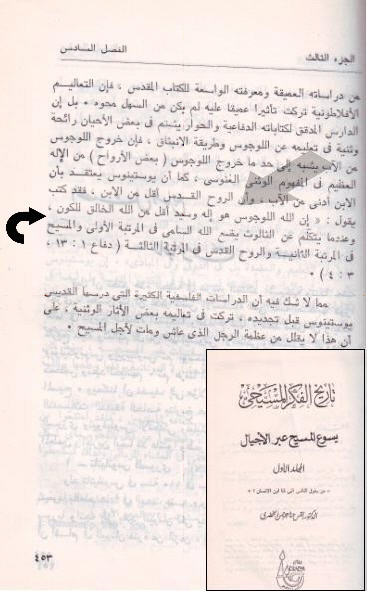
Justin Martyr believed that Christ was a god of a lower degree than God the Creator.
Origen — Approximately 100 Years After John the Evangelist
The following image presents the relevant passage from Dr. Father Hanna Al-Khudari’s The History of Christian Thought, p. 560, on Origen’s belief that Jesus was a second-class god.
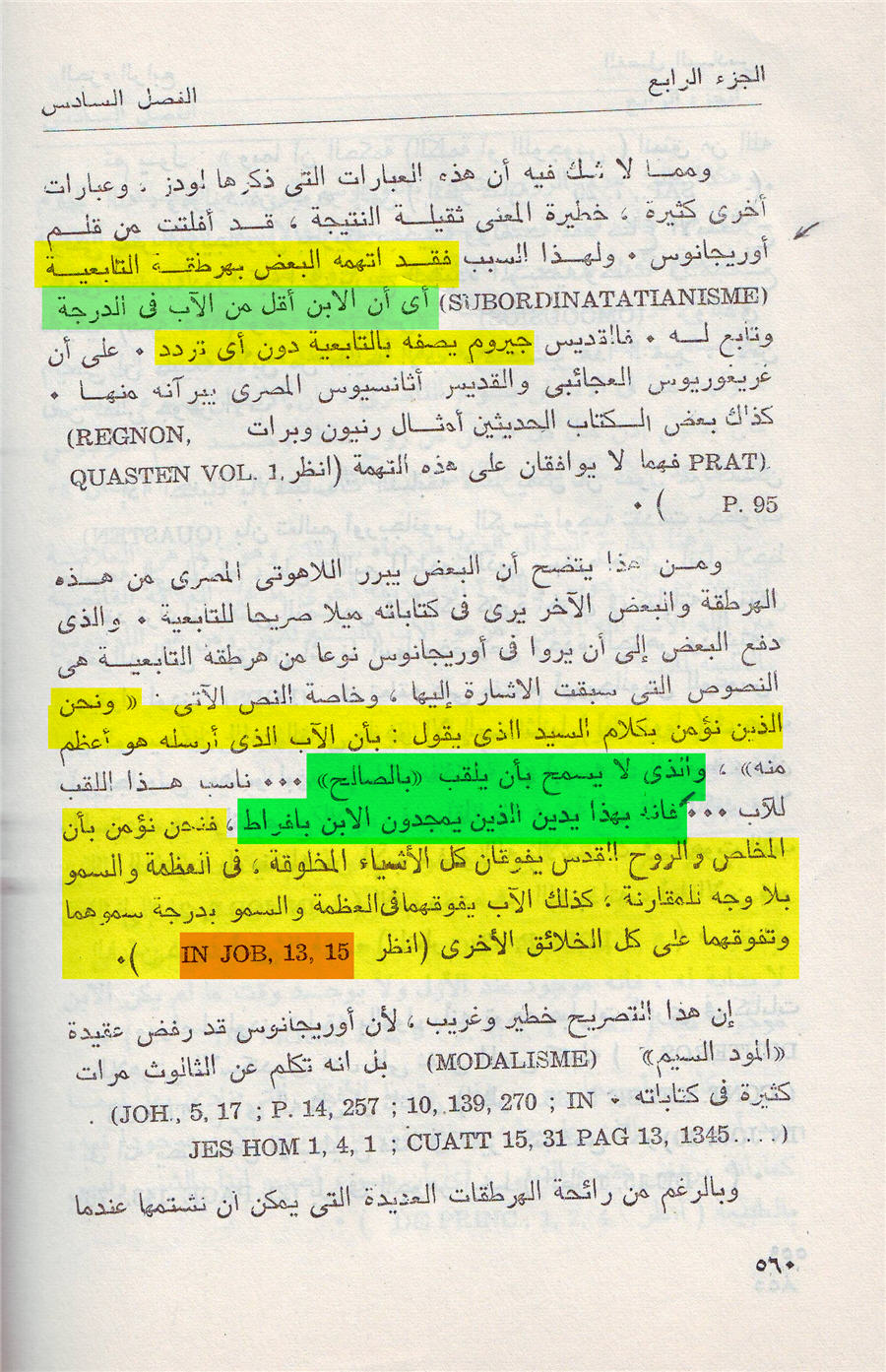
The scholar Origen believed that Jesus was a second-class god.
Tertullian — 155 CE
The following image presents the relevant passage from Dr. Father Hanna Al-Khudari’s The History of Christian Thought, p. 529, on Tertullian’s belief that Christ is a partial God of the total God.
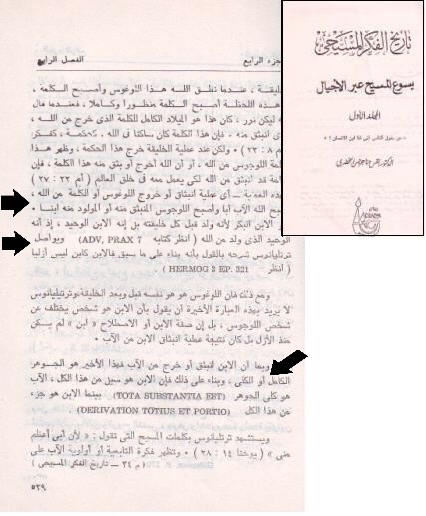
Tertullian believed that Christ is a partial God of the total God.
The faith that describes Christ as a lesser god is not the faith of Arius — it is the faith of Origen, Justin Martyr, and the Fathers of the second and third centuries.
Footnotes
(1) The book The Divinity of Christ: A Gospel Truth or a Product of the Council of Nicaea? By Father Abdel-Masih Basit Abu El-Khair, page 43.
(2) The book The Nature of Christ, by Pope Shenouda III, page 9. Deposit No. 7005/1999.
(3) The book The Age of Councils, by Father Kyrollos El-Antony, presented by Dr. Mikhail Maksy Iskandar, page 44.
(4) The book My Church: Doctrine and Faith, by Father Mina Gad Girgis, a priest in the city of Esna, page 76. Deposit No. 7363/2002.
(5) The book The History of Christian Thought, by Father Dr. Hanna El-Khodary, page 619.
(6) The book Jesus Christ in the Tradition of the Church, by Father Fadel Sidarus, page 48.
(7) The History of the Church, by John Lorimer, Part Three, page 50. Deposit No. 8378/1988.
(8) The History of Christian Thought, by Dr. Hanna Al-Khadri, page 453.
(9) The History of Christian Thought, by Dr. Hanna Al-Khadri, page 560.
(10) The History of Christian Thought, by Dr. Hanna Al-Khadri, page 529.
The attempt to mischaracterize Arius as someone who believed in a lesser divinity of Christ is refuted by Christian sources themselves. Pope Shenouda III, Father Kyrollos El-Antony, Father Mina Gad, Dr. Father Hanna Al-Khudari, and Father Fadil Sidarus all confirm that Arius denied the divinity of Christ entirely and affirmed the oneness and transcendence of God — the very position that the Jews, Greeks, and Muslims hold. Arius’ five-point doctrine is clear: God is one, Christ is a creature, Christ is not eternal, Christ has no inherent superiority over creatures, and the attributes of Christ do not indicate divinity. The “secondary god” theology belongs to Justin Martyr, Origen, and Tertullian — Fathers of the second and third centuries — not to Arius. Constantine, whom the sources identify as a pagan who believed in polytheism, had Arius’ books burned and his followers killed precisely because Arius preached monotheism. What reached posterity about Arius passed entirely through the hands of his enemies.