

Who Wrote the Gospel of Matthew? — Scholars Confirm the Author Is Unknown and Was Not the Apostle Matthew
The Gospel of Matthew was not written by Matthew the Apostle. This is the position of mainstream biblical scholarship across Catholic, Protestant, and secular academic sources. The Gospel was written anonymously, its author is unknown, it was composed decades after the events it describes, and the attribution to Matthew only emerged in the mid-second century — approximately seventy years after the Gospel was written. What follows is a compiled presentation of six primary scholarly sources establishing these conclusions, followed by the decisive argument from William Barclay.
Dating and Anonymous Authorship — Six Sources
Most scholarly sources date the Gospel of Matthew to after 80 CE. The following images present six sources confirming that the author of the Gospel is unknown.
The following image presents the relevant passage from the Jesuit Translation’s Introduction to the Bible.
“Since we do not know the name of the author accurately…”
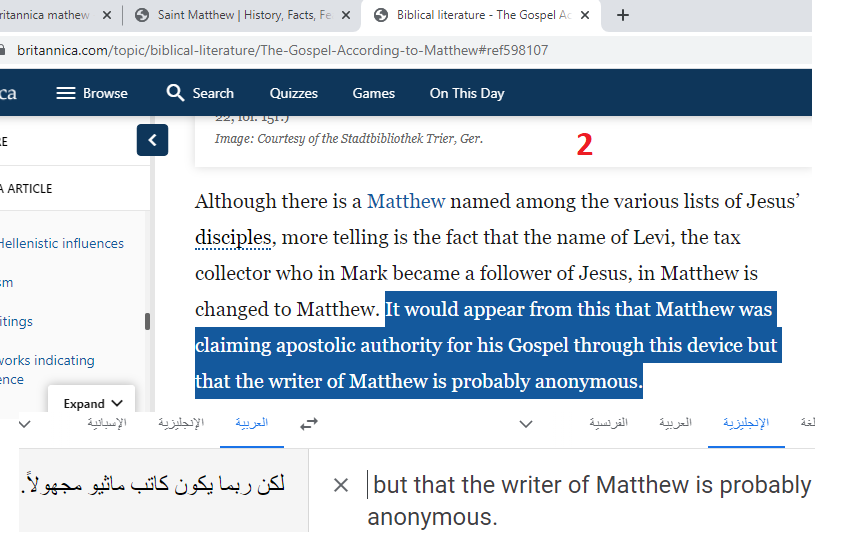
The following image presents the relevant passage from Encyclopedia Britannica on the authorship of the Gospel of Matthew.
The author is unknown.
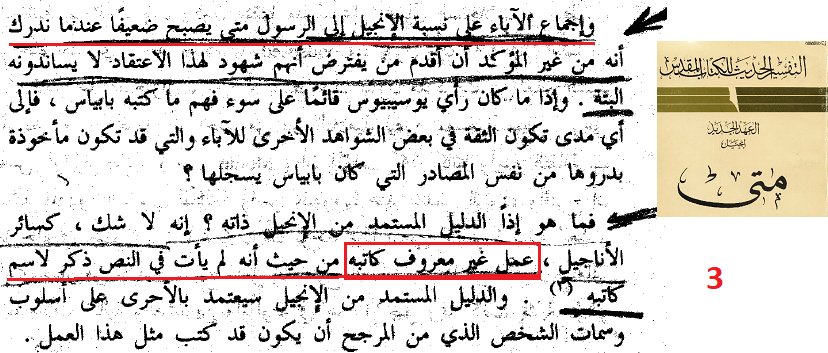
The following image presents the relevant passage from the Modern Commentary on the Bible.
A work whose author is unknown.
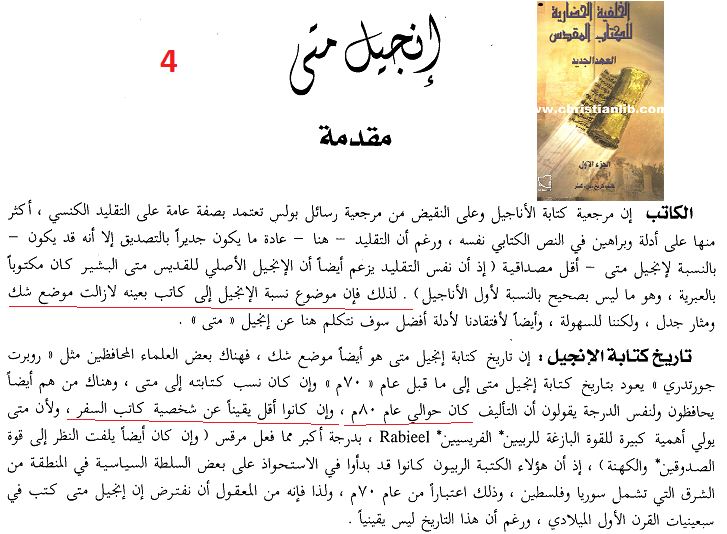
The following image presents the relevant passage from The Cultural Background of the Bible.
“The issue of attributing the Gospel to a specific writer is still a matter of doubt and controversy.”
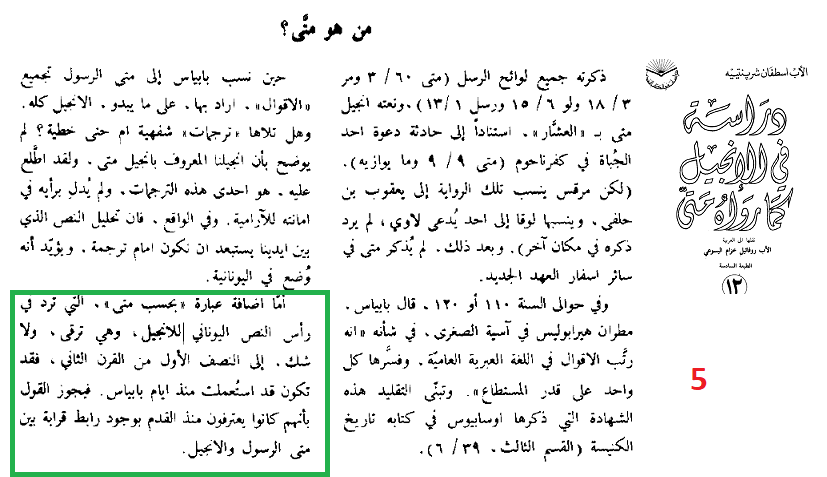
The following image presents the relevant passage from Stephan Sherbinyeh’s The Study of the Gospel as Narrated by Matthew.
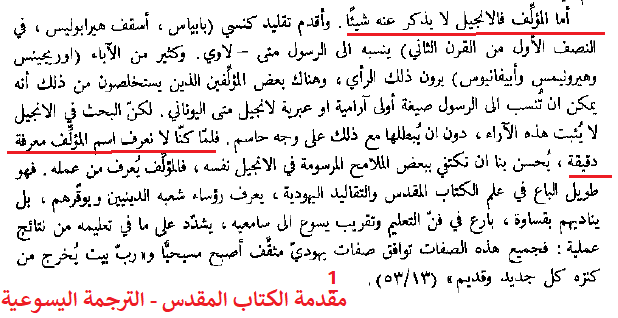
“The name of the Gospel was given in the middle of the second century” — that is, about seventy years after the date of writing the Gospel. It can be said that they acknowledge the existence of a strong link between Matthew the Apostle and Matthew the Evangelist, but no more than that.
The Gospel of Matthew was named approximately seventy years after it was written. No one in the first century attributed it to the Apostle Matthew.
The following image presents the relevant passage from Bart Ehrman’s The New Testament, Chapter Nine.
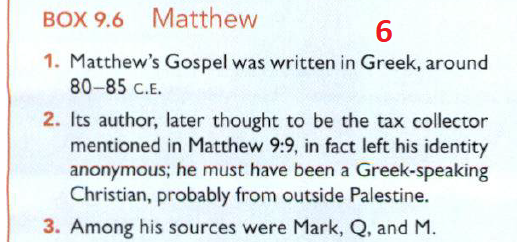
“Matthew: The Gospel of Matthew was written in Greek around 80–85 CE. Its author, who was believed to be the tax collector mentioned in Matthew 9:9, left his identity unknown; he must have been a Greek-speaking Christian, perhaps from outside Palestine. Among his sources are Mark, Q, and M.”
William Barclay — The Decisive Argument from Eyewitness Logic
The following two images present the relevant passages from William Barclay, Professor of Biblical Studies, on why the Gospel of Matthew could not have been written by the Apostle Matthew.
The following image presents the continuation of Barclay’s statement.
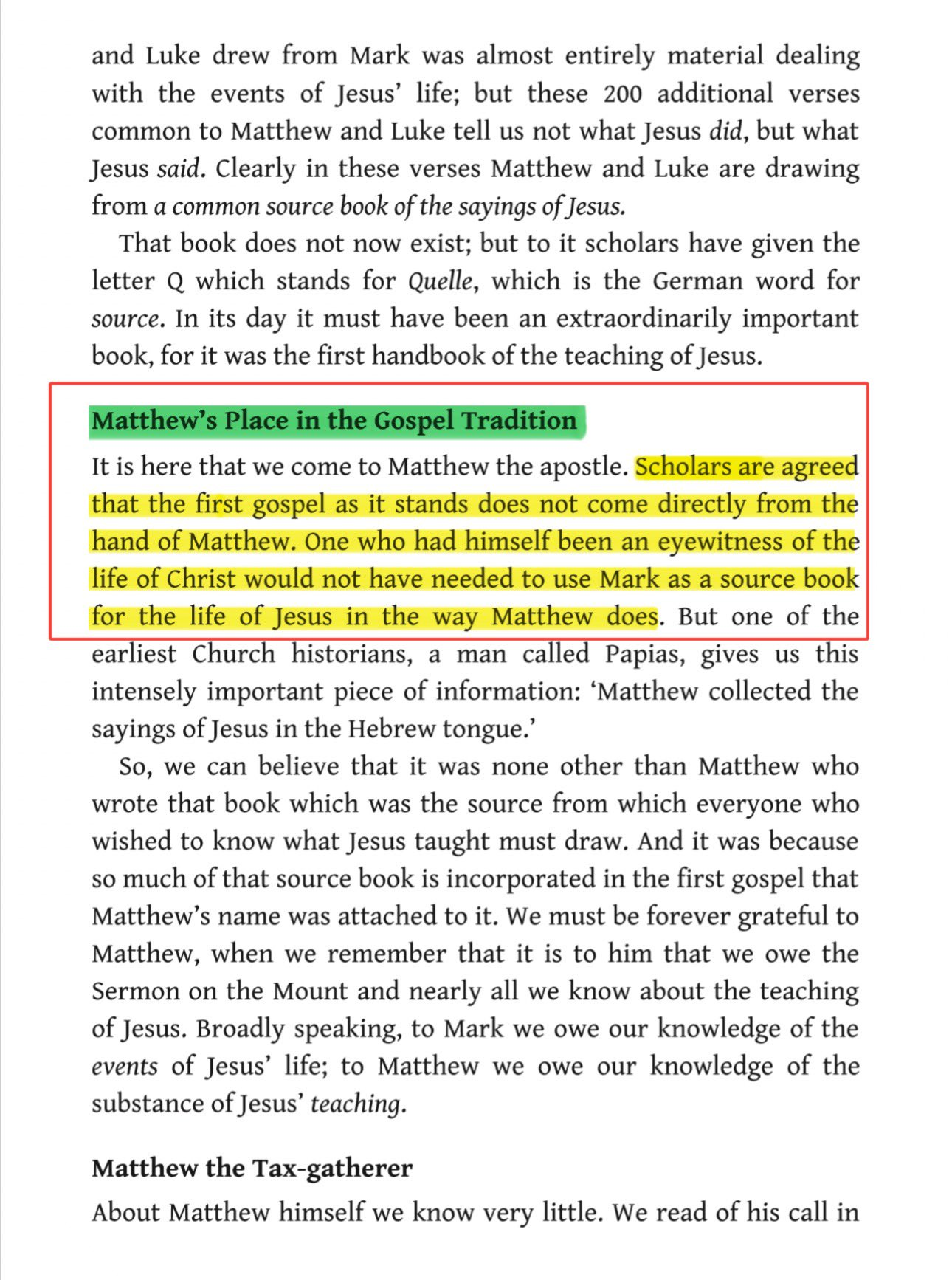
“Scholars agree that Matthew, Christ’s disciple, did not write the first Gospel in its current form, since it is inconceivable that someone who witnessed Christ’s life would rely on the Gospel of Mark — who was not a contemporary of Christ — as a primary source for documenting the events of his life.”
The following image presents the same statement from Barclay in its second sourced form.
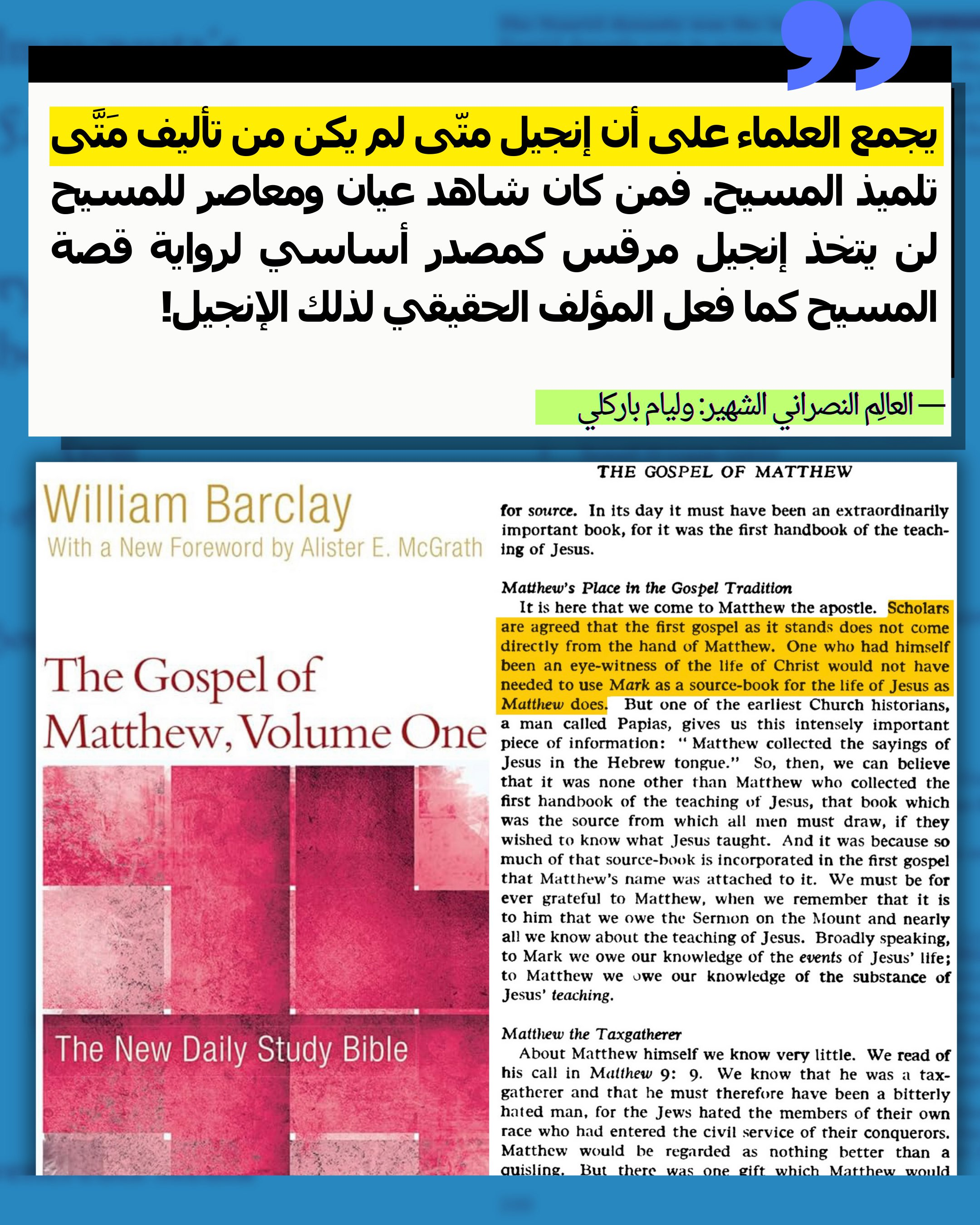
“Scholars agree that the Gospel of Matthew was not written by Matthew, a disciple of Christ. Anyone who was an eyewitness and contemporary of Christ would not have taken the Gospel of Mark as the primary source for telling the story of Christ, as the true author of that Gospel did.”
The internal logic is decisive: the Gospel of Matthew uses the Gospel of Mark as its primary source, borrowing approximately 90% of Mark’s content. An eyewitness apostle who lived through the events of Christ’s ministry would have no reason to depend on the account of Mark — who was not an eyewitness — as his primary authority.
The Gospel of Matthew was written anonymously around 80–85 CE by an unknown Greek-speaking Christian, likely from outside Palestine. The attribution to Matthew the Apostle — the tax collector of Matthew 9:9 — emerged only in the mid-second century, approximately seventy years after the Gospel was composed. This attribution is rejected by mainstream biblical scholarship across Catholic, Protestant, and secular academic sources: the Jesuit Translation’s Introduction to the Bible, Encyclopedia Britannica, the Modern Commentary on the Bible, The Cultural Background of the Bible, Stephan Sherbinyeh, and Bart Ehrman all confirm the author is unknown. The decisive argument belongs to William Barclay: an eyewitness apostle who personally lived through the ministry of Christ would never have relied on the Gospel of Mark — written by someone who was not an eyewitness — as his primary source. The true author of the Gospel did exactly that. Therefore the true author was not Matthew the Apostle.