

Abrogation in Islam Explained: Refuting Christian Claims About Naskh and Qur’an Preservation
Abrogation in Islam and the Refutation of Christian Objections
Table of Contents
- Definition of Abrogation in Islam
- Al-Sa’di and Al-Baghawi on Abrogation
- Types of Abrogation
- Abrogation Existed in Previous Laws
- Do Not Speak About What You Do Not Understand
- Things in Which Abrogation Occurred
- Abrogation Ended With the Death of the Messenger
- The Qur’an Was Not Lost or Reduced
- Evidence from Sahih Al-Bukhari
- Some Divine Wisdoms Behind Abrogation
- Examples of Abrogation from Daily Life
- Supplementary Detailed Notes on Abrogation
- Definition of Abrogation
- Conditions of Abrogation
- Wisdom Behind the Occurrence of Abrogation
- Types of Abrogation in the Holy Quran
- Abrogation to a Substitute and to Something Other Than a Substitute
- Types of Abrogation Between Quran and Sunnah
- Al-Suyuti on the Abrogated Verses
- Explanation of the Abrogated Verses
- The Abrogator and the Abrogated in the Holy Bible
Definition of Abrogation in Islam
First: Definition of abrogation in Islam: Abrogation is the removal of a legal ruling by another ruling or its cancellation.
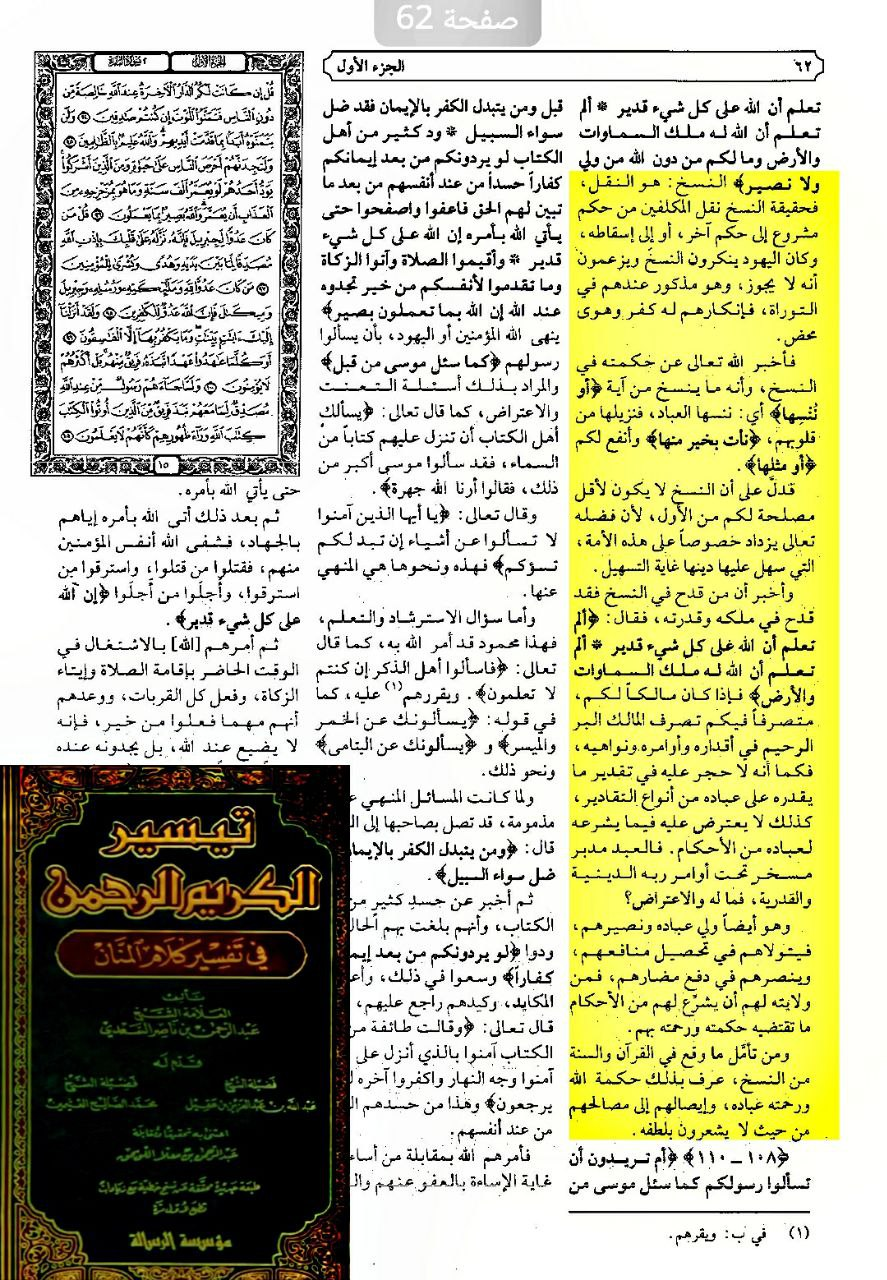
This scan is being used as the opening evidence for the technical definition of abrogation. It explains that abrogation is not a contradiction, ignorance, or a change in divine knowledge. Rather, it is the lifting, removal, transfer, or cancellation of a legal ruling by another legal ruling. The page supports the basic Islamic definition: a ruling can be valid for a particular time, people, or legal stage, and then Allah replaces it with another ruling according to wisdom. This establishes the foundation of the article before answering objections from Jews or Christians who accuse Islamic abrogation of implying that Allah changes His mind.
Al-Sa’di and Al-Baghawi on Abrogation
Al-Sa’di said inTaysir al-Kalam al-Rahman: “Abrogation is transfer. The reality of abrogation is transferring those responsible from one legitimate ruling to another ruling, or to its cancellation.”
Al-Baghawi said in his interpretation: “Abrogation in the language has two meanings: The first means transfer and transportation, and from it is the abrogation of the book, which is that it is transferred from one book to another. So in this way, the entire Qur’an is abrogated because it was abrogated from the Preserved Tablet. The second is in the meaning of removal. It is said: the sun abrogated the shadow, meaning it took it away and nullified it. So in this way, some of the Qur’an is abrogating and some of it is abrogated, and this is what is meant by the verse.”
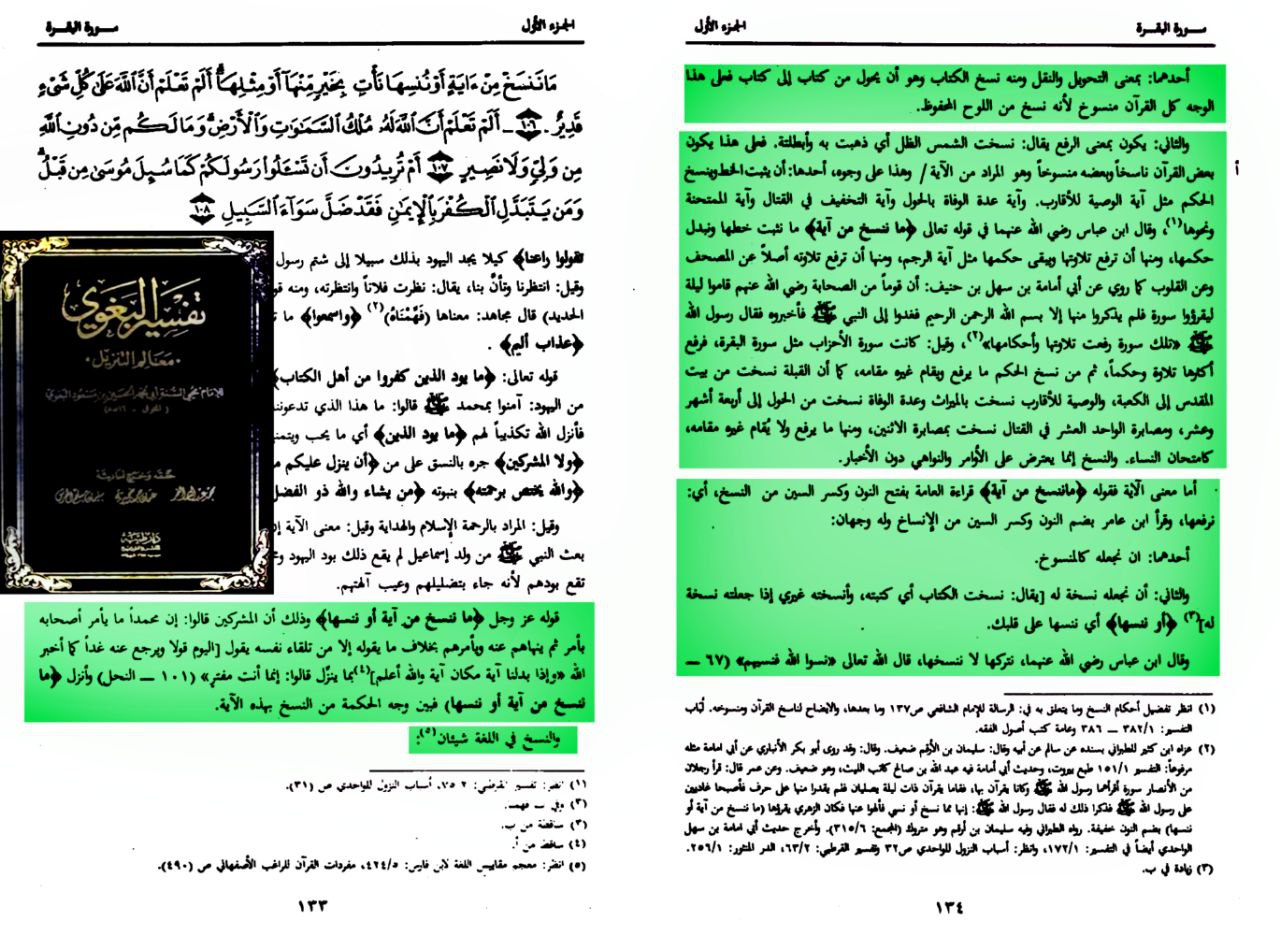
This scan gives the lexical and exegetical explanation of abrogation. It records that abrogation can mean transfer, as in copying or transferring something from one place to another, and it can also mean removal, as when the sun removes the shadow. The important point is that the scholars distinguish between linguistic usage and technical legal usage. When applied to Islamic law, abrogation refers to the removal or replacement of a legal ruling, not the corruption of revelation. This page therefore answers the common confusion where opponents treat “abrogation” as if it means textual loss or divine error, when classical Islamic usage defines it as a lawful legislative transition.
Types of Abrogation
Second: Types of abrogation: Al-Qurtubi mentioned inAl-Mufhim the types of abrogation, which are three:
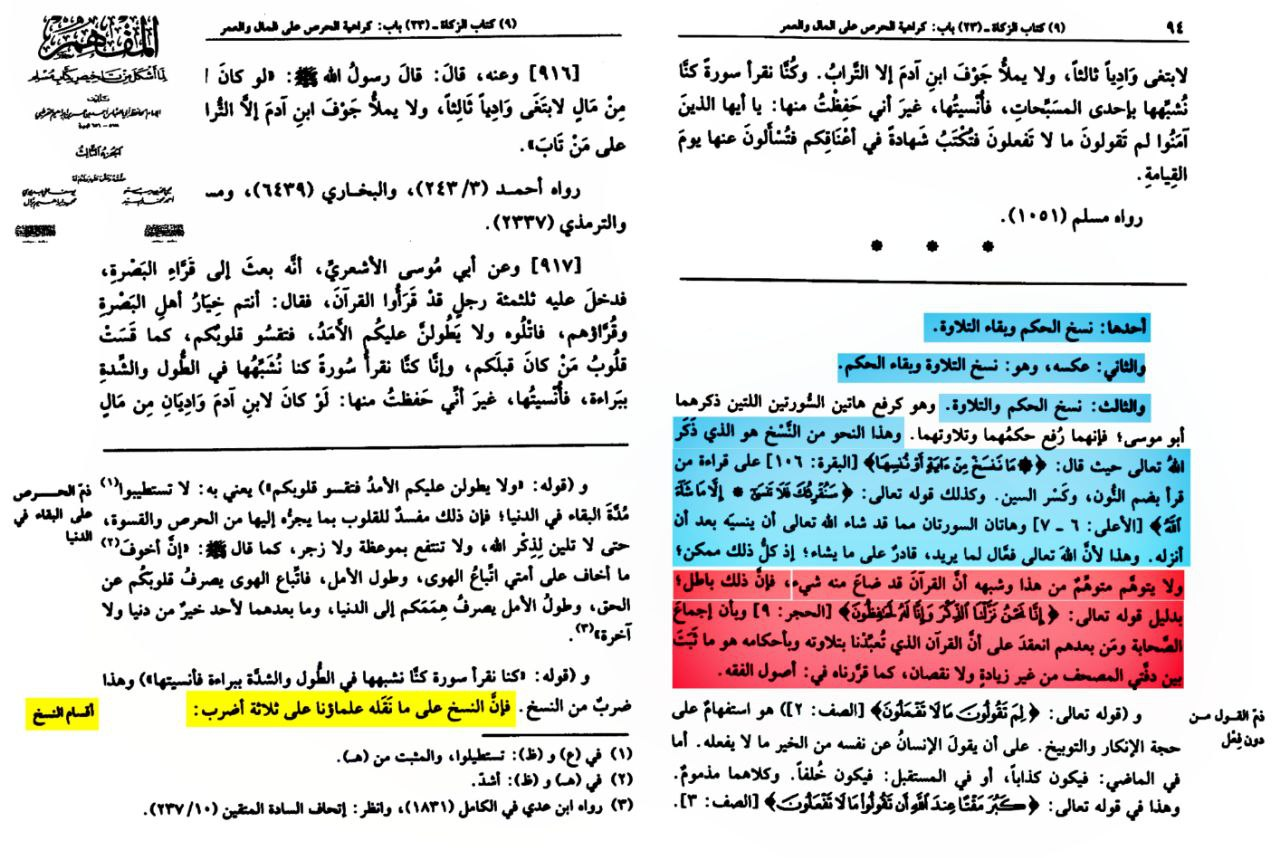
This scan summarizes Al-Qurtubi’s classification of abrogation into three categories. The first is abrogation of recitation and ruling together, meaning the text is no longer recited and the legal ruling is no longer acted upon. The second is abrogation of recitation while the ruling remains, meaning the wording is no longer part of the recited Qur’an, but the legal ruling remains established by transmitted evidence. The third is abrogation of the ruling while the recitation remains, meaning the verse is still recited as Qur’an, but the original legal obligation has been lifted by later revelation. This scan is central because it shows that Muslim scholarship already categorizes the issue carefully and does not confuse abrogation with loss, contradiction, or textual corruption.
Abrogation Existed in Previous Laws
Third: Abrogation existed in previous laws: Some Jews and Christians come to us to deny abrogation in the Qur’an and claim that it is not permissible, and that God Almighty changes His mind — God forbid — although the matter, as mentioned by both Al-Suyuti and Al-Sa’di, also existed in their own laws.
We give, for example, the story of Abraham’s marriage, peace be upon him, to his sister Sarah “according to the Christian holy book,” and how this law was later abrogated.
In Genesis 20:12, a person is permitted to marry his sister: “And indeed she is my sister, the daughter of my father, but not the daughter of my mother; and she has become my wife.”
In Leviticus 18:9, this ruling was abrogated by the prohibition of incest: “The nakedness of your sister, the daughter of your father or the daughter of your mother, whether born at home or born outside, you shall not uncover her.”
Do Not Speak About What You Do Not Understand
Fourth: Do not speak about what you do not understand!
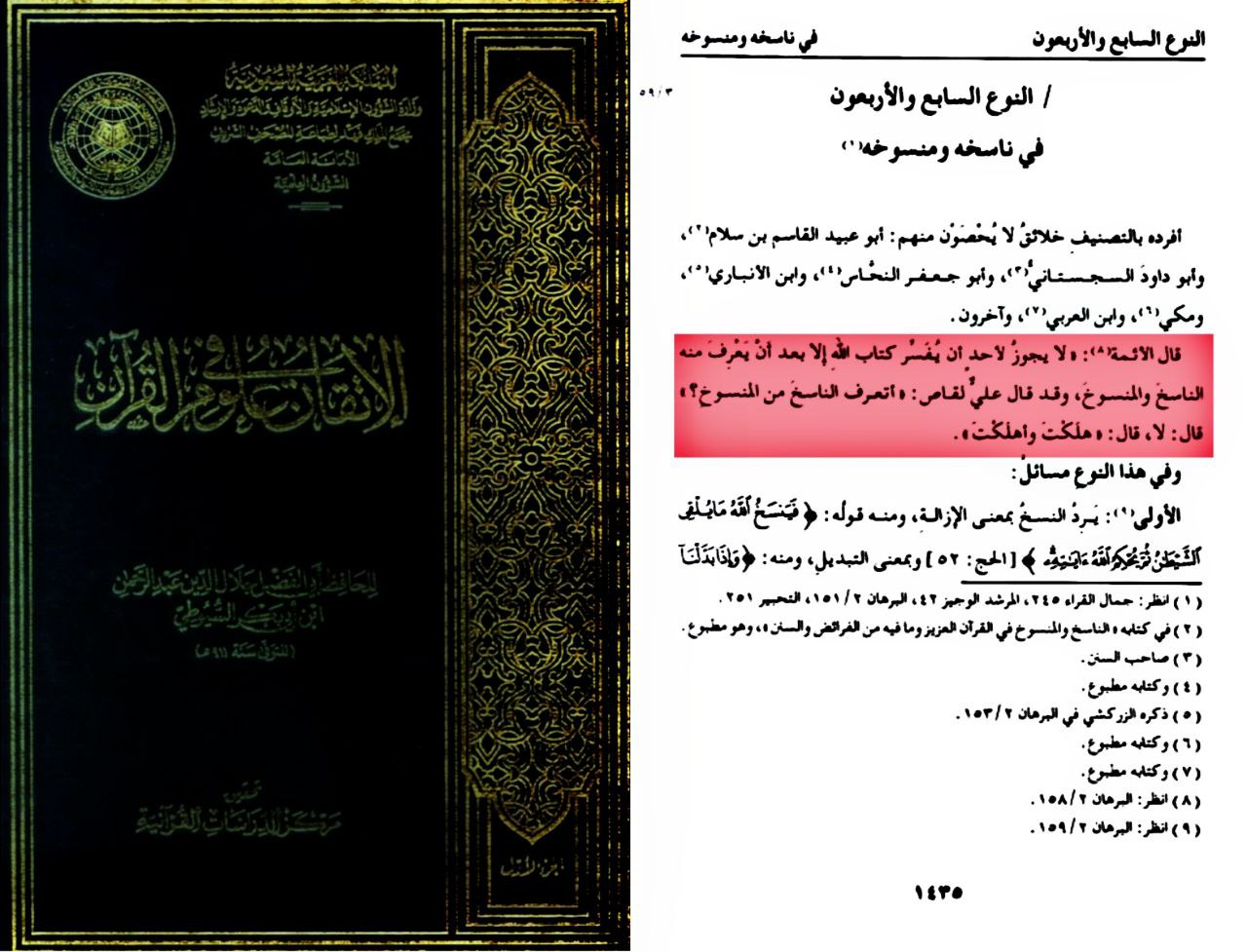
This scan is being used to warn that abrogation is not a subject to be handled by random polemicists or people without knowledge of Qur’anic sciences, hadith, legal theory, chronology, and the statements of the early scholars. The page supports the argument that speaking about abrogation requires knowing the difference between abrogated rulings, abrogated recitations, specification, restriction, exceptions, gradual legislation, and revealed legal sequence. The point of the scan is that many objections collapse because the critic does not understand the technical rules ofnaskh and speaks as though every change in legal ruling is contradiction or corruption.
It is only spoken about by the Companions, may God be pleased with them:
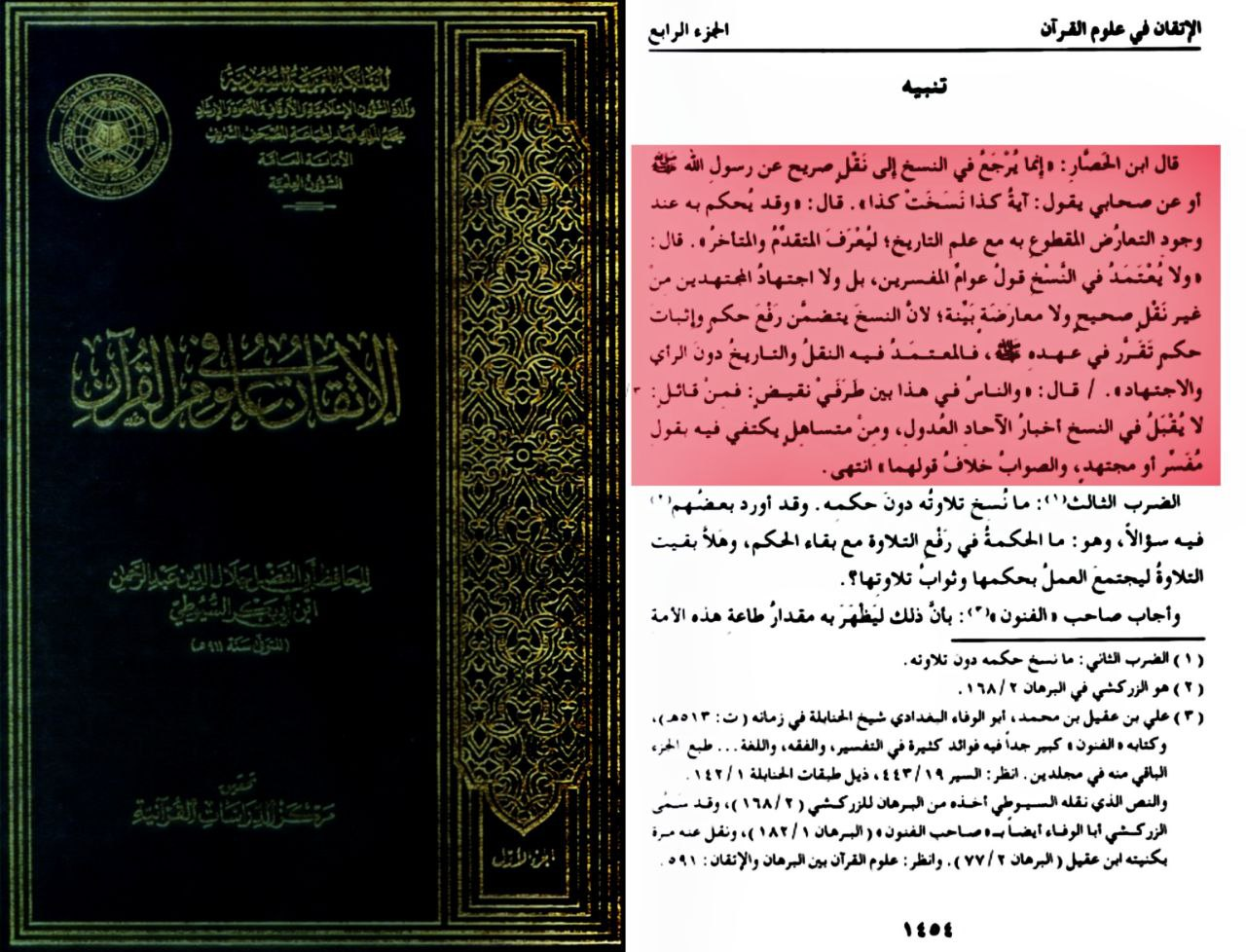
This scan emphasizes that the matter of identifying abrogation is not left to speculation. It is tied to transmitted knowledge from the Companions, may Allah be pleased with them, because they witnessed revelation, knew the circumstances of revelation, and understood which rulings came earlier and which came later. The highlighted idea is that abrogation must be established by reliable evidence and not by personal guessing. This supports the article’s argument that critics cannot simply point to two texts and declare contradiction; they must prove chronology, legal subject, and the recognized scholarly basis for abrogation.
Things in Which Abrogation Occurred
Things in which abrogation occurred:
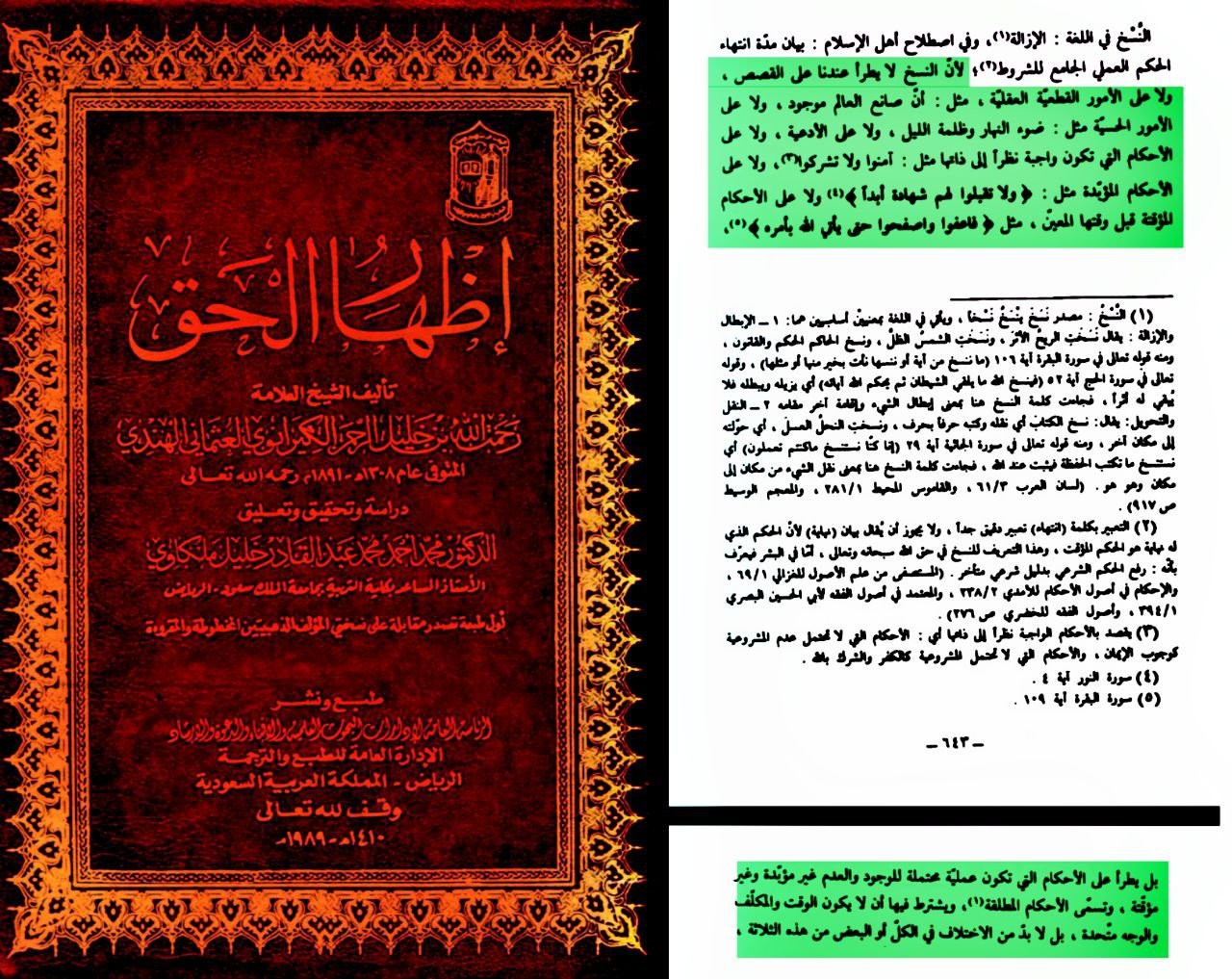
This scan explains the proper scope of abrogation. It shows that abrogation occurs in legal rulings, commands, prohibitions, obligations, permissions, and similar legislative matters. It does not occur in Allah’s eternal knowledge, in historical reports, in factual statements, or in creed. This distinction matters because many objections falsely assume that abrogation means Allah first said something factually true and later changed it to something else. The scan supports the point thatnaskh belongs to the domain of law and obligation, not to divine ignorance or factual contradiction.
Abrogation Ended With the Death of the Messenger
The abrogation ended with the death of the Messenger, may God bless him and grant him peace.
Jalal al-Din Abd al-Rahman ibn Abi Bakr al-Suyuti said inAl-Dibaj: “…so God would make people forget it after they had memorized it and erase it from their hearts, and that was especially during the time of the Prophet, as there was no abrogation after him.”
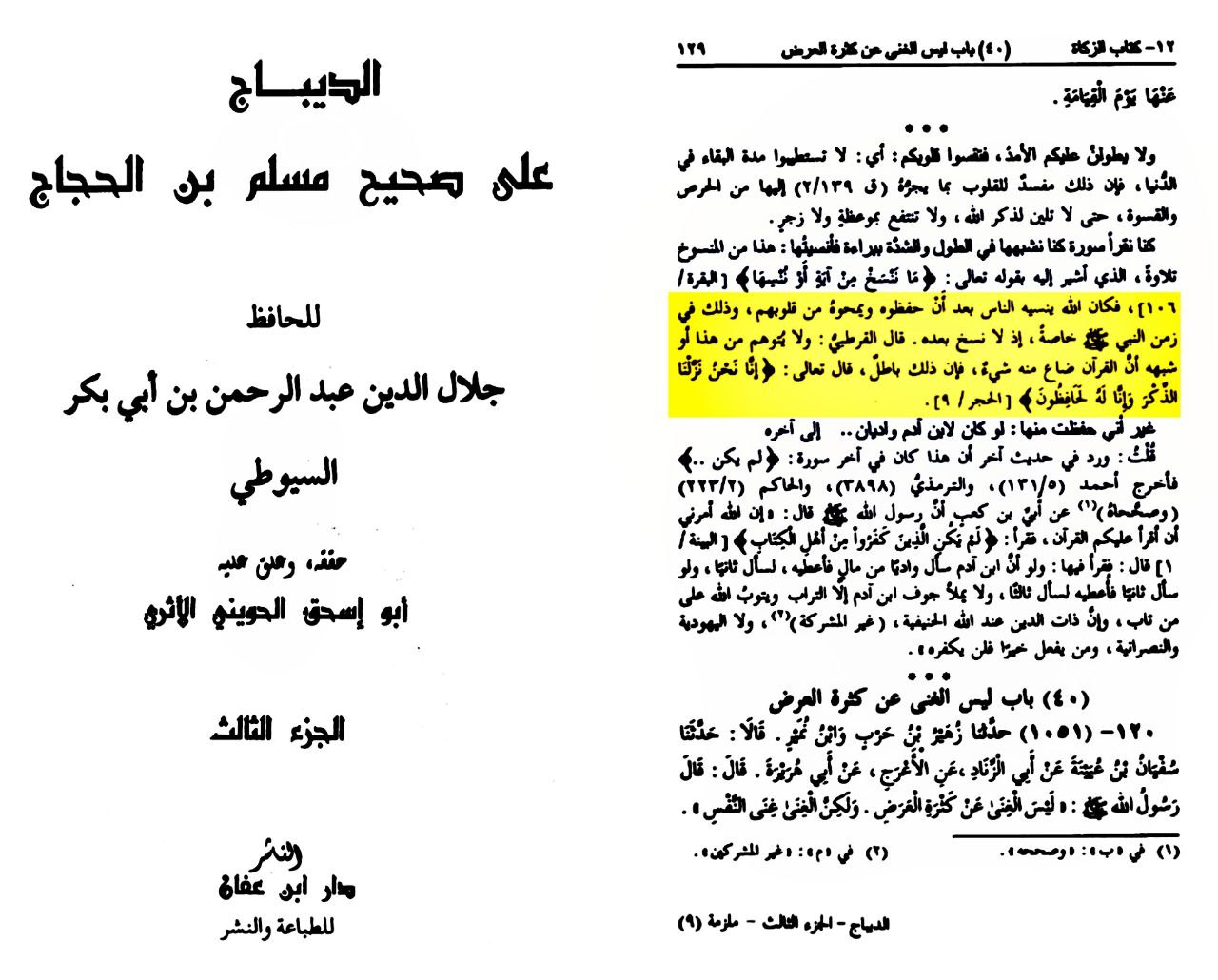
This scan presents the statement of Al-Suyuti that abrogation was specific to the time of the Prophet, may Allah bless him and grant him peace. It explains that Allah could cause people to forget a recitation after it had been memorized and erase it from their hearts during the prophetic period, because revelation was still active. The key point is that abrogation did not continue after the death of the Messenger, may Allah bless him and grant him peace. This directly blocks the false claim that Muslims believe Qur’anic text can keep disappearing or changing after the Prophet’s death.
The Qur’an Was Not Lost or Reduced
Al-Qurtubi said inAl-Mufhim: “Let no one who thinks of this or something similar imagine that anything from the Qur’an has been lost, for that is false. God Almighty said: {Indeed, it is We who sent down the Qur’an and indeed, We will be its guardian.} [Al-Hijr: 9] and that the consensus of the Companions and those who came after them was established that the Qur’an that we are commanded to recite and to follow its rulings is that which is established between the two covers of the Mushaf, without any addition or subtraction, as we have stated in the Principles of Jurisprudence.”
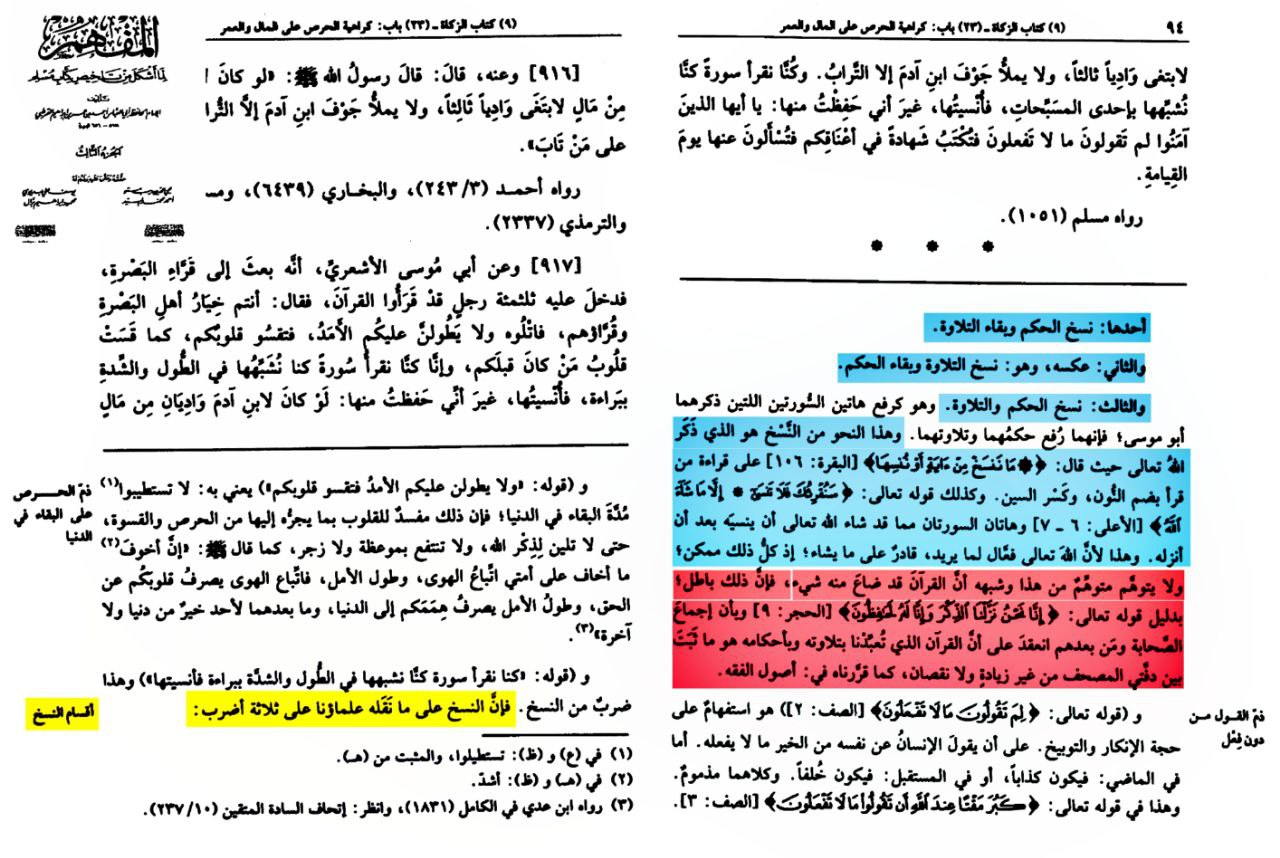
This scan contains Al-Qurtubi’s clarification that abrogation must not be misunderstood as meaning that anything from the Qur’an was lost. He explicitly rejects that idea as false and cites the preservation verse: {Indeed, it is We who sent down the Qur’an and indeed, We will be its guardian} [Al-Hijr: 9]. The page also states that the consensus of the Companions and those after them is that the Qur’an which Muslims are commanded to recite and follow is what is preserved between the two covers of the Mushaf, without addition or subtraction. This scan is one of the strongest pieces in the article because it directly separates the doctrine of abrogation from the charge of Qur’anic corruption.
Evidence from Sahih Al-Bukhari
We quote from Sahih Al-Bukhari what indicates this statement more:
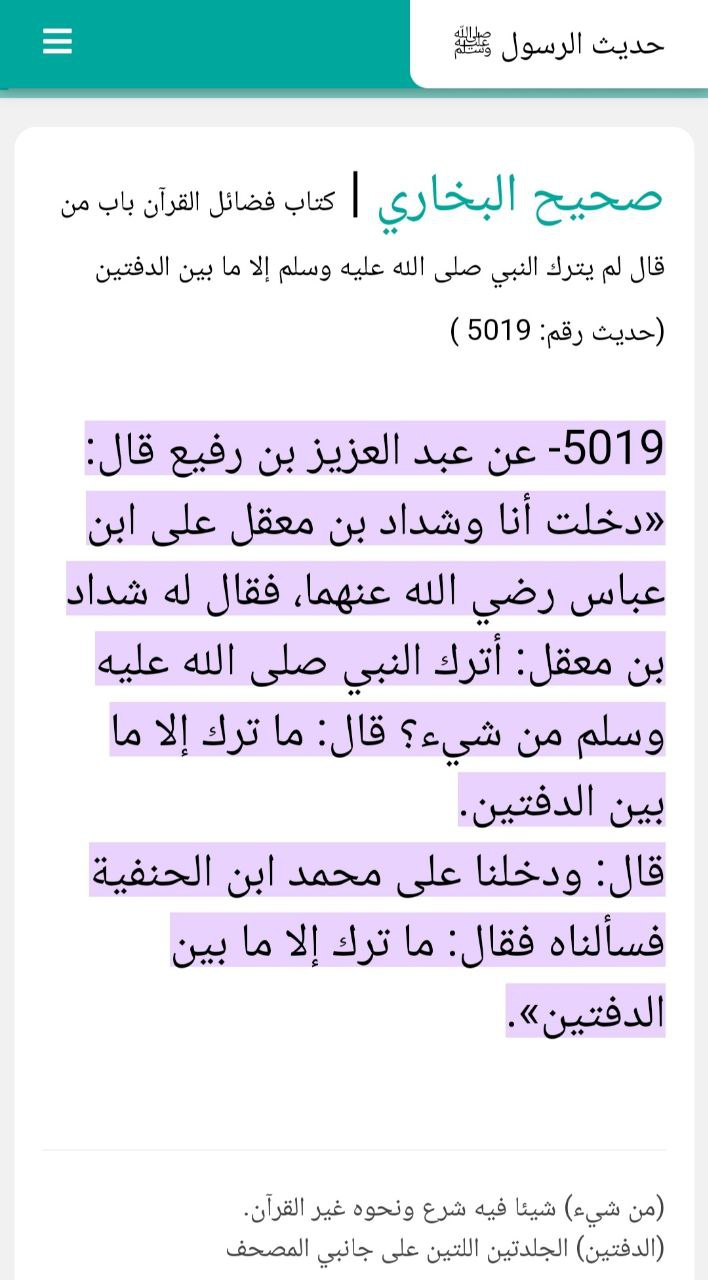
This scan cites evidence from Sahih Al-Bukhari to support the principle that abrogation and prophetic-era changes in recitation or ruling are matters of revealed instruction, not accidental loss. The page is used to reinforce that the Qur’an known, recited, and transmitted by the Companions was preserved through authoritative transmission. It shows that the Islamic position is not that people randomly lost parts of scripture, but that whatever was removed, changed, or left was by divine command during the period of revelation, while the final Qur’an remained established and preserved.
Some Divine Wisdoms Behind Abrogation
Fifth: Some divine rulings and wisdoms behind abrogation:
Facilitating This Nation
Facilitating this nation:
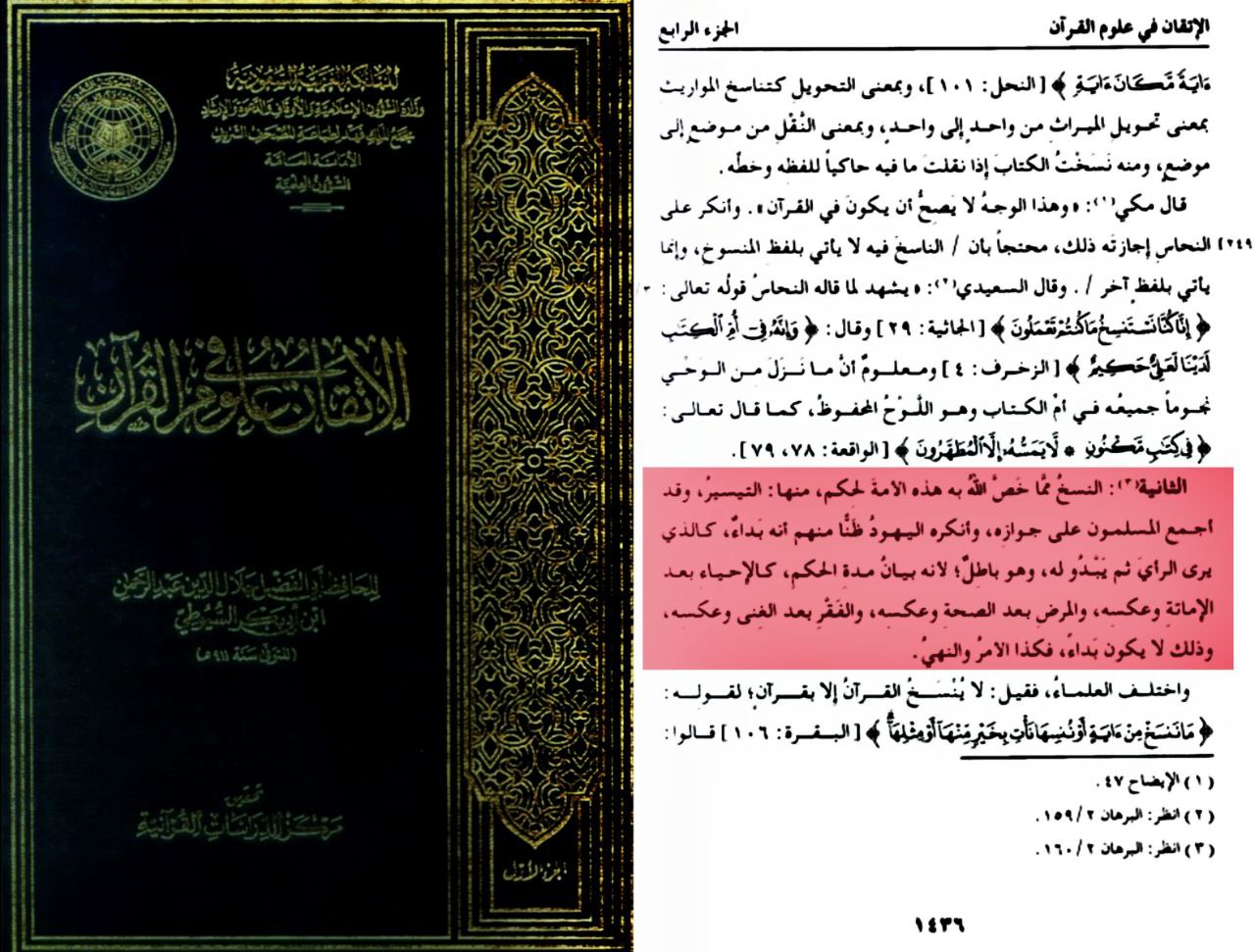
This scan explains one of the divine wisdoms behind abrogation: easing the burden on the Muslim nation. The page supports the idea that some rulings were initially heavier and later lightened, not because Allah discovered new information, but because Allah legislated in stages according to wisdom, mercy, and the condition of the believers. This is the same principle seen in examples like the reduction of burdens in worship, fighting, or other legal responsibilities. The scan directly answers the claim that abrogation is irrational by showing that gradual legal easing is itself a sign of mercy and divine wisdom.
Establishing Faith in the Hearts
To establish faith in the hearts of those who were polytheists, because they were still newly emerging from the customs of the Age of Ignorance. Therefore, abrogation was the best way to establish faith in their hearts and ensure the disappearance of the customs of the Age of Ignorance, as we mentioned previously. We will provide you here with an example of the issue of prohibiting visiting graves and then permitting it:
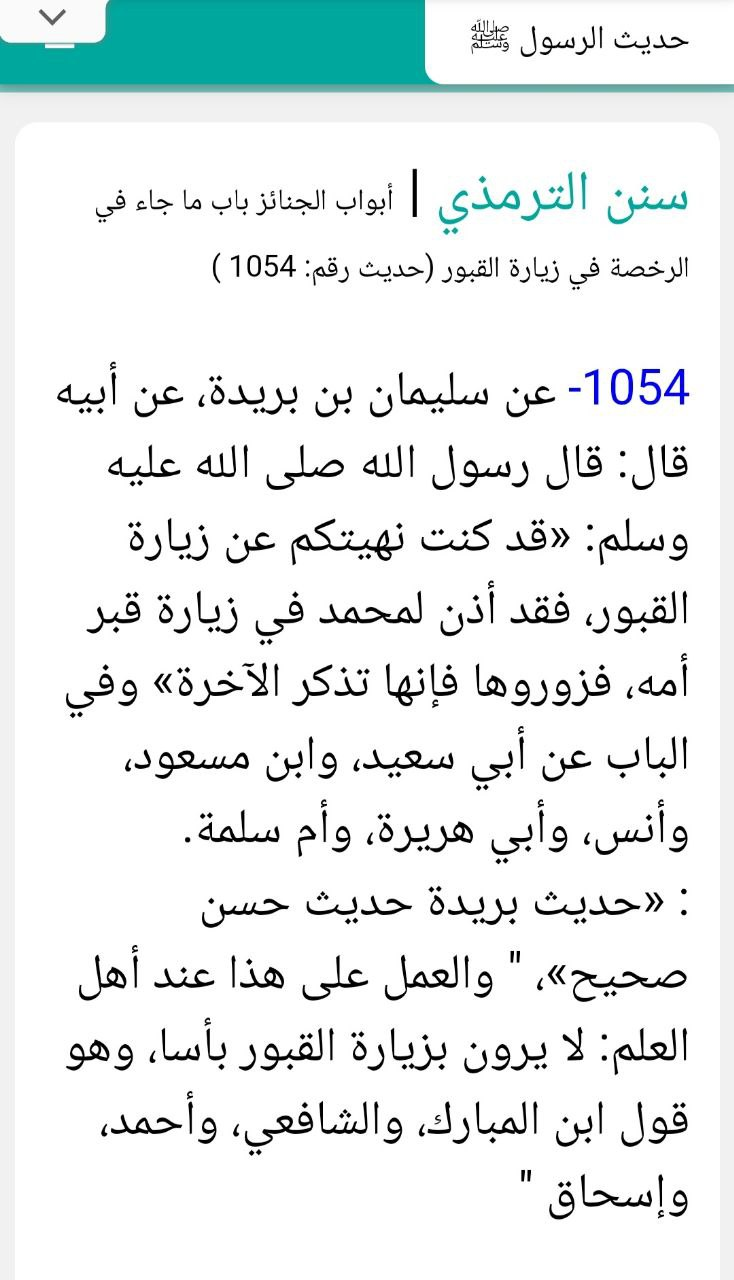
This scan gives the example of visiting graves. At first, visiting graves was prohibited because the early Muslims had recently come out of Jahiliyyah, where grave-related practices could easily lead to shirk, wailing, superstition, and pagan customs. Later, when faith had become established and the danger was controlled, the prohibition was lifted and visiting graves was permitted because it reminds people of death and the Hereafter. This scan shows the practical wisdom of abrogation: it trains a community gradually, removes corrupt customs first, then allows beneficial practices once the religious foundation is secure.
Examples of Abrogation from Daily Life
Sixth: Examples of abrogation from daily life:
Abrogation is compatible with reason, and the evidence for this is that we use it in daily life. Al-Hindi, may God have mercy on him, gave some examples of this in his bookIzhar al-Haqq:
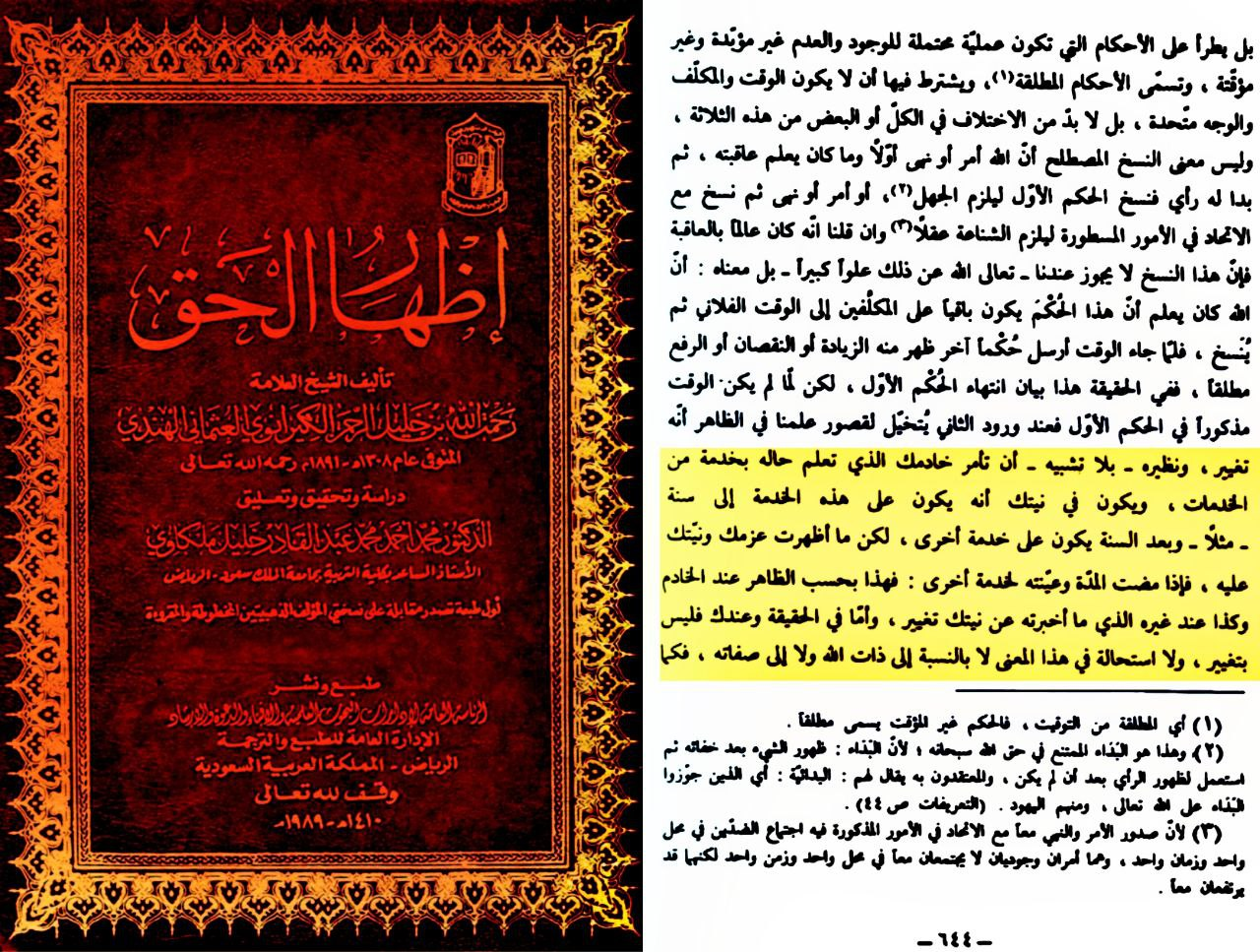
This scan fromIzhar al-Haqq uses ordinary rational examples to show that replacing one instruction with another does not mean ignorance, contradiction, or regret. In daily life, a teacher, ruler, physician, parent, or manager may give one instruction for a specific stage and later replace it with another because the condition has changed or the intended training has been completed. The first instruction was correct for its time, and the second instruction is correct for its time. The page supports the argument that abrogation is not only religiously established but also rationally understandable.
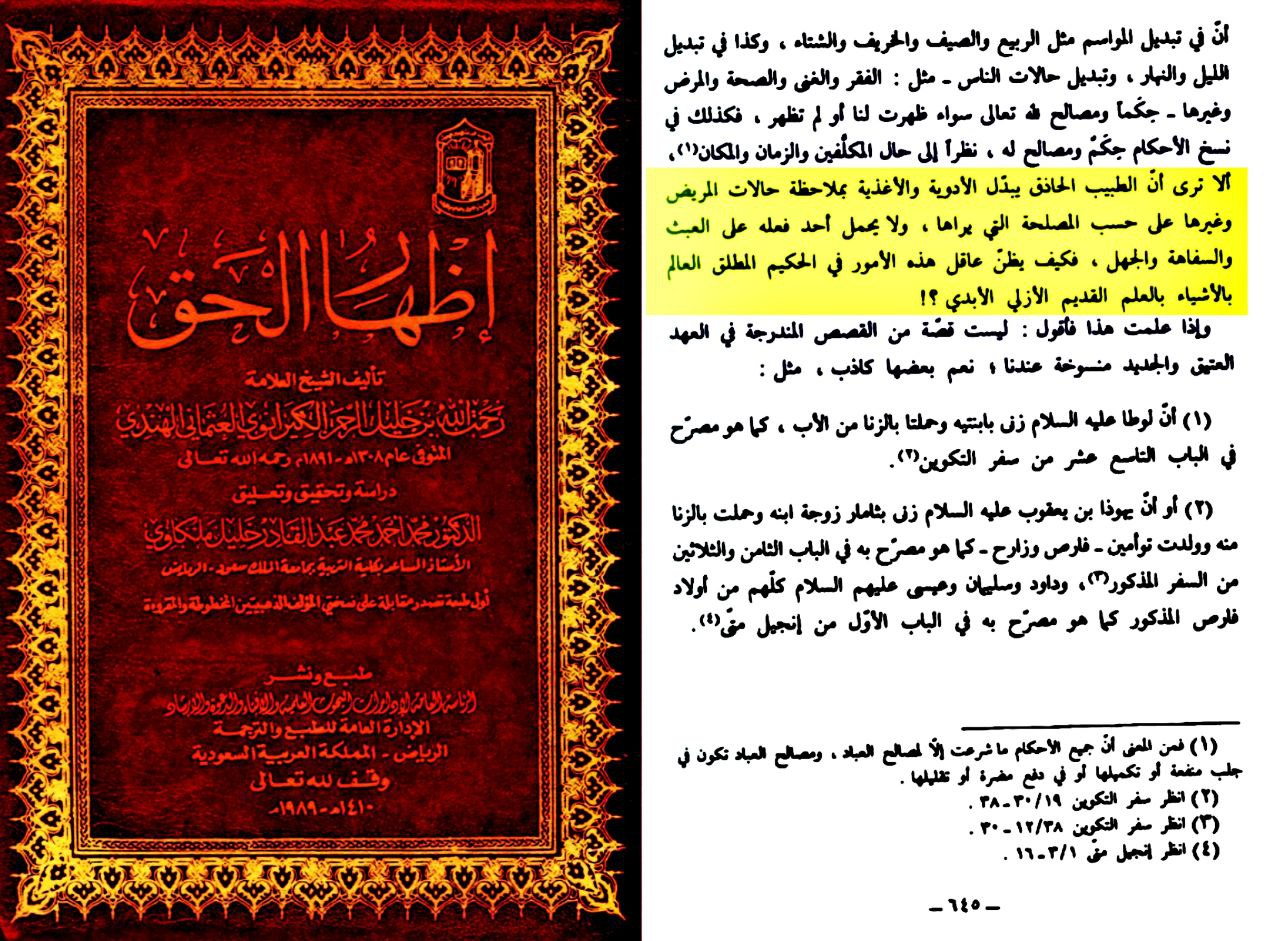
This second scan fromIzhar al-Haqq continues the rational examples for abrogation. It strengthens the argument that changing a command due to wisdom, sequence, training, or benefit is not a defect. The point is that abrogation is not an admission that the earlier ruling was false; rather, the earlier ruling fulfilled its purpose in its appointed context, then a later ruling took its place. This page is useful against Christian and Jewish polemics because the same logic exists in their own scriptures and in ordinary human governance, education, medicine, and law.
Supplementary Detailed Notes on Abrogation
Definition of Abrogation
Linguistically: Removal. It is said: The sun abrogated the shadow, meaning it removed it. It also means replacement and transformation, as evidenced by the Almighty’s saying: {And when We substitute one verse for another} [An-Nahl: 101].
Technically: Lifting the legal ruling by a later legal evidence. The lifted ruling is called: the abrogated, and the lifting evidence is called: the abrogator, and the lifting is called: abrogation. So the process of abrogation according to this requires an abrogated one, which is the ruling that was previously established, and necessitates an abrogator, which is the later evidence.
Conditions of Abrogation
B- Conditions of abrogation:
The abrogated ruling must be legal.
The evidence for the lifting of the ruling must be legal evidence that is later than the discourse whose ruling is abrogated.
The ruling of the elevated speech should not be restricted to a specific time, such as the Almighty’s saying: {So pardon and overlook until Allah brings about His command} [Al-Baqarah: 109]. Forgiveness and pardon are restricted to the coming of Allah’s command. Thus, abrogation does not occur in the Quranic stories nor in the news about previous nations, but rather abrogation occurs in the legal rulings.
Wisdom Behind the Occurrence of Abrogation
C- The wisdom behind the occurrence of abrogation:
The details of this are: that the human species has changed as a child changes in different roles, and for each of these roles there is a state that suits it other than the state that suits another role. So, at the beginning of their existence, humans were like a newborn at the beginning of his existence, naive, simple, weak, and ignorant. Then they began to change from this state gradually, and in this change they passed through or experienced different symptoms, from the weakness of the mind, the blindness of ignorance, the recklessness of youth, and the oppression of strength.
The difference in this among them necessitated the existence of different laws for them according to this difference. Even if the world reached the time of its maturity and its balance, and its civilization linked its countries and peoples, this true religion came as a conclusion to the religions and a completion of the laws, and a collection of the elements of vitality and the interests of humanity and the flexibility of the rules, a collection that reconciled the demands of the soul and the body, and brought together science and religion, and organized the relationship of man with God and with the entire world of individuals, families, groups, nations, peoples, animals, plants, and inanimate objects, which made it truly a universal religion until God inherits the earth and those on it.
Another rule is to make things easier and more lenient. For example, Allah the Almighty ordered one companion to be steadfast for ten in His saying: {If there are twenty of you, patient, they will overcome two hundred} [Al-Anfal: 65], then He abrogated it after that with His saying: {Now Allah has lightened your burden, and He knows that there is weakness in you. But if there are one hundred of you, patient, they will overcome two hundred} [Al-Anfal: 66], so this example clearly indicates lightening, making things easier, and removing hardship, so that the Muslim remembers Allah’s blessing upon him.
Considering the interests of the servants.
Testing and testing the person responsible according to the development of the call and the condition of the people.
Types of Abrogation in the Holy Quran
D- Types of abrogation in the Holy Quran:
It is not permissible to recite the abrogated recitation and ruling in prayer or to act upon it, because it has been completely abrogated. However, the five abrogated recitation rulings remain in the Shafi’i school of thought.
For this reason, Umar said: If people did not say that Umar added to the Book of Allah, I would have written it with my own hand. These two sections — abrogation of the ruling and recitation, and abrogation of recitation while the ruling remains — are few in the Noble Qur’an, and it is rare to find such two sections in it, because Allah, the Almighty, revealed His Glorious Book so that people would worship Him by reciting it and applying its rulings.
Abrogation of the ruling and the continuation of recitation. This section is common in the Holy Quran, and it is in sixty-three Surahs.
Abrogating: The Almighty’s saying: {Indeed, your Lord knows that you stand [in prayer] nearly two-thirds of the night, or half of it, or a third of it, and [so do] a party of those with you. And Allah measures the night and the day. He knows that you cannot enumerate it, so He has turned to you in forgiveness. So recite what is easy of the Qur’an.} [Al-Muzzammil: 20].
Abrogation: The reason for abrogation is that the obligation of standing at night was lifted as much as was easy, meaning it is no longer obligatory.
Abrogating: The Almighty’s saying: {Allah does not charge a soul except [with that within] its capacity} [Al-Baqarah: 286].
Abrogation: Its reason is that the accountability for the thoughts of the souls in the first verse was lifted by the following verse.
Abrogating: The Almighty’s saying: {So fear Allah as much as you are able} [At-Taghabun: 16].
Abrogation: Lifting the right of piety with the piety that is possible.
What is the wisdom behind abrogating a ruling and keeping the recitation?
Just as the Qur’an is recited to know the ruling from it and act upon it, it is also recited because it is the word of Allah, the Most High, and one is rewarded for it. So, the recitation was left for this wisdom.
Abrogation is often for the sake of making things easier, so the recitation was kept as a reminder of the blessing and to remove hardship, so that the servant may remember Allah’s blessing upon him.
Abrogation to a Substitute and to Something Other Than a Substitute
E- Abrogation to a substitute and to something other than a substitute:
Abrogation to a similar substitute, such as abrogating the turning of your face toward the heaven from the Holy House: {We have certainly seen the turning of your face toward the heaven. So We will surely turn you to a qiblah with which you will be pleased.} [Al-Baqarah: 144].
Abrogation to a heavier alternative, such as confining adulterers to their homes, stoning for the married, and flogging for the unmarried. Another example is abrogating the fast of Ashura with the fast of Ramadan.
Abrogation to a non-exchangeable alternative, such as abrogating charity in the presence of the Prophet’s private conversations.
Abrogation to a lighter alternative, as we saw in the previous examples of night prayer.
Types of Abrogation Between Quran and Sunnah
Types of abrogation:
Abrogating the Qur’an with the Qur’an, and it is agreed upon that it is permissible and occurs.
Abrogating the Qur’an with the Sunnah. It is of two types:
Abrogating the Qur’an with a single Sunnah, and the majority say that it is not permissible.
This verse was abrogated by the well-known hadith, which is the saying of the Prophet, peace and blessings of Allah be upon him: “There is no bequest for an heir.” There is nothing that abrogates except the Sunnah. And other evidences.
Imam Al-Shafi’i forbade it and another narration from Ahmad, and they provided evidence with the words of Allah the Almighty: {We do not abrogate a verse or cause it to be forgotten except that We bring forth [one] better than it or similar to it} [Al-Baqarah: 106]. They said: The Sunnah is not better than the Qur’an nor similar to it.
Abrogation of the Sunnah by the Qur’an: The majority of scholars permitted it, and they gave an example of it by abrogating the direction towards Jerusalem, which was established by the Sunnah, by directing it towards the Sacred Mosque. Another example is abrogating the fast of Ashura by fasting Ramadan.
Al-Suyuti on the Abrogated Verses
Imam al-Suyuti, may Allah have mercy on him, said in Al-Itqan fi Ulum al-Qur’an (2/50):
And they have entered into it signs that cannot be limited.
Here is the editing of verses that have no more to say.
Twenty liberated by the clever and the old.
The verses of orientation wherever a person is.
A dying person makes a will to his family.
And the sanctity of eating after sleeping with obscenity.
A ransom for someone who is able to fast and is famous.
And the truth of his piety is in what is authenticated in the hadith.
And in the forbidden there is fighting for those who disbelieve.
And the waiting period is one year with her will.
And that the self-talk and thoughts are condemned.
And the oath and imprisonment for the adulterer and leaving the guardians.
Disbelief, their witnessing, patience and aversion.
And preventing the marriage of a male or female adulterer.
And the Chosen One is not restricted in the contract.
And paying a dowry to the one who came and a sign of success.
And so the night prayer is written.
And the verse of asking permission from what you own was increased.
And the verse of the best division for those who are present.
Explanation of the Abrogated Verses
Explanation:
The verse of facing wherever a person may be refers to the Almighty’s saying: {So wherever you turn, there is the Face of Allah}, abrogated according to the opinion of Ibn Abbas, may Allah be pleased with them, by the Almighty’s saying: {So turn your face toward Al-Masjid Al-Haram}.
And if he makes a bequest to his family: He indicated by it that the verse {Prescribed for you, when death approaches any of you, if he leaves goods, is to make a bequest}, the verse, was abrogated. It was said: by the verse of inheritance, and it was said: by the hadith “There is no bequest for an heir,” and it was said: by consensus, narrated by Ibn Al-Arabi.
The prohibition of eating after sleeping with obscenity indicates that the verse {Fasting has been prescribed for you}, which includes the prohibition of eating and intercourse after sleeping as in the fasting of those before us, was abrogated by the verse {Lawful to you on the night of the fast is the intimacy with your wives}.
And a ransom for one who is able indicates that the verse {And for those who are able to do it - a ransom of feeding a poor person} was abrogated by the verse {So whoever sights the month - let him fast it}, and it was said: It is decisive, and “no” is understood, meaning: And for those who are not able to do it.
The right of His piety indicates that the Almighty’s saying {Fear Allah as He should be feared} was abrogated by His saying {So fear Allah as much as you are able}, and it was said: It is decisive.
And in the forbidden is fighting indicates that the Almighty’s saying {They ask you about fighting in the sacred month}, and His saying {nor the sacred month}, were abrogated by His saying {And fight against the polytheists entirely}, the verse. It was narrated by Ibn Jarir on the authority of Ata’ bin Maysarah.
And the waiting period of a year with her will means that the Almighty’s saying {And those of you who die and leave wives behind them - a bequest for their wives}, the verse, was abrogated by the saying {And those of you who die and leave wives behind them - they shall wait concerning themselves four months and ten days}.
And that the talk of the soul and thoughts be judged refers to the Almighty’s saying {Whether you disclose what is in your souls or conceal it, Allah will bring you to account for it}, which was abrogated by the Almighty’s saying {Allah does not charge a soul except [with that within] its capacity}.
The oath, meaning the alliance, refers to the Almighty’s saying {And those with whom you have made a covenant, then give them their share}, abrogated by the Almighty’s saying {And those of kinship are nearer to one another in the decree of Allah}, the verse.
And imprisonment for the adulterer refers to the Almighty’s saying {So keep them in their houses until death takes them}, abrogated by the Almighty’s saying {Then flog each of them with a hundred lashes}.
And leaving the unbelievers alone refers to the Almighty’s saying {Then judge between them or turn away from them}, abrogated by the Almighty’s saying {And judge between them by what Allah has revealed}.
And their witnessing indicates that the Almighty’s statement {or two others from among you} was abrogated by the Almighty’s statement {and bring to witness two just men among you}.
And patience indicates by it the Almighty’s statement {If there are twenty among you, patient, they will overcome two hundred}, the verse, was abrogated by what came after it, which is the Almighty’s statement {Now Allah has lightened your burden, and He knows that there is weakness in you. So if there are a hundred among you, patient, they will overcome two hundred. And if there are a thousand among you, they will overcome two thousand by permission of Allah. And Allah is with the patient}.
And the group indicates that the Almighty’s saying {Go forth, whether light or heavy} was abrogated by the Almighty’s saying {There is no blame upon the weak or upon the ill}, the verse, or {There is no blame upon the blind}, the verse, or the Almighty’s saying {And it is not for the believers to go forth all together}, the verse.
And the prohibition of the marriage contract of a fornicator or a fornicatress indicates the Almighty’s saying {The fornicator marries not except a fornicatress or a polytheist, and the fornicatress none marries except a fornicator or a polytheist}, the verse, was abrogated by the Almighty’s saying {And marry those among you who are single}, the verse.
And what is upon the Chosen One concerning the contract is not restricted refers to the Almighty’s saying {It is not lawful for you to take other women after that}, the verse, abrogated by the Almighty’s saying {Indeed, We have made lawful for you your wives}, the verse.
And paying a dowry to the one who has come refers to the Almighty’s saying {Then give those whose wives have gone the like of what they spent}, abrogated, it was said: by the verses of the sword, and it was said: by the verses of the spoils.
And the sign of his secret conversation refers to the Almighty’s saying {Then offer before your secret conversation a charity}, abrogated by the Almighty’s saying {But if you cannot find [anything], then indeed, Allah is Forgiving and Merciful}, and by His saying {But if you do not and Allah has turned to you in forgiveness}.
Likewise is the standing in prayer at night indicates that His saying {O you who are wrapped in garments, stand in prayer at night} was abrogated by the Almighty’s saying {He knew that you would not be able to enumerate it, so He turned to you in forgiveness. So recite what is easy of the Qur’an}, and by the Almighty’s saying {Then recite what is easy of it}. This abrogating verse was also abrogated by the five daily prayers.
And the verse of asking permission from what you possess was added. The verse of asking permission {Let those whom you possess ask your permission} and the most correct opinion regarding it is that it was not abrogated, but people were lenient in acting upon it.
And the verse of division {And when relatives, orphans, and the needy are present at the division, provide for them from it}, and the correct opinion regarding it is also that it was not abrogated.
An example of abrogating the abrogator is the end of Surat Al-Muzzammil, as it was abrogated by the obligation of the five daily prayers.
And His statement {Go forth, whether light or heavy}, as it abrogates the verse of restraint, and was abrogated by the verse of excuse.
The Abrogator and the Abrogated in the Holy Bible
The Abrogator and the Abrogated in the Holy Bible by Anba Shenouda and Anba Bishoy.
...stitution of verses | Allah may replace one revealed ruling with another according to His wisdom. | [[Abrogation in Islam Explained: Refuting Christian Claims About Naskh and Qur’an Preservation]] These...
...radiction-claim|No Changing Allah's Words vs Abrogation: Refuting the Quran Contradiction Claim]] -...