Disjointed Letters in the Quran ( Huroof E Muqata At
As we all know, the Qur’an begins several of its chapters (surahs) with isolated letters (الحروف المقطعة) such as:
- ص
- الم
- كهيعص
and others.
There are 29 surahs that open with these mysterious letters ✅
But the question that arises is:
What is the purpose of these letters? Why did Allah place them at the beginning of those chapters in the Qur’an?
Here is the English translation of your Arabic text, with only the ✅ emoji included:
- First: Is it permissible to speak about these isolated letters (الحروف المقطعة)?
People have differed regarding the permissibility of discussing the isolated letters at the beginning of Qur’anic chapters.
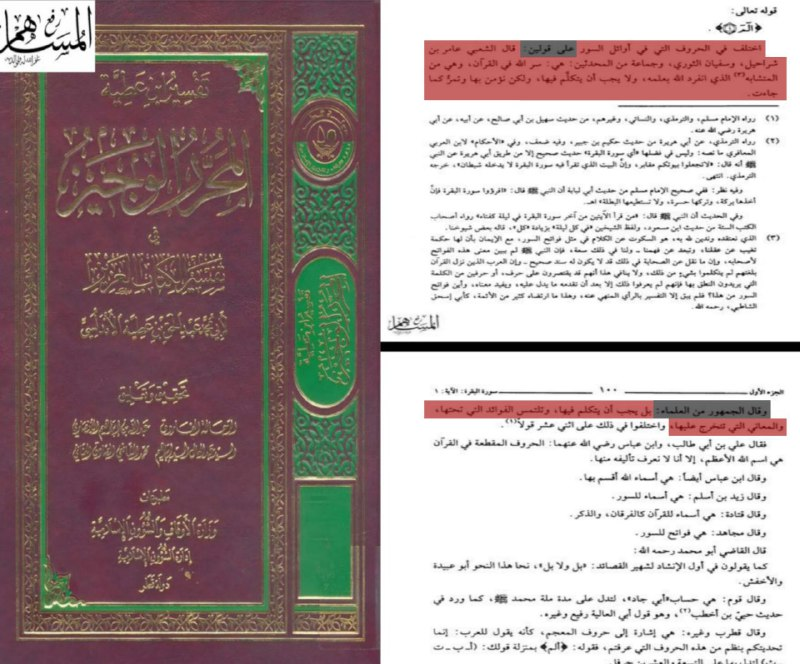
- Ibn Atiyyah (رحمه الله) mentioned in Al-Muharrar al-Wajiz:
“There are two opinions concerning the letters at the beginning of the surahs:
According to Al-Sha’bi (Amir ibn Shurahil), Sufyan al-Thawri, and a group of hadith scholars:
These are the secret of Allah in the Qur’an, part of the mutashabihat (ambiguous verses), whose full meaning is known only to Allah. It is not appropriate to speak about them, they should simply be believed in and passed over as they are.But the majority of scholars say:
It is permissible to discuss them, and we should seek the benefits and meanings that lie beneath them.”
Then he went on to mention various interpretations and explanations offered by scholars.
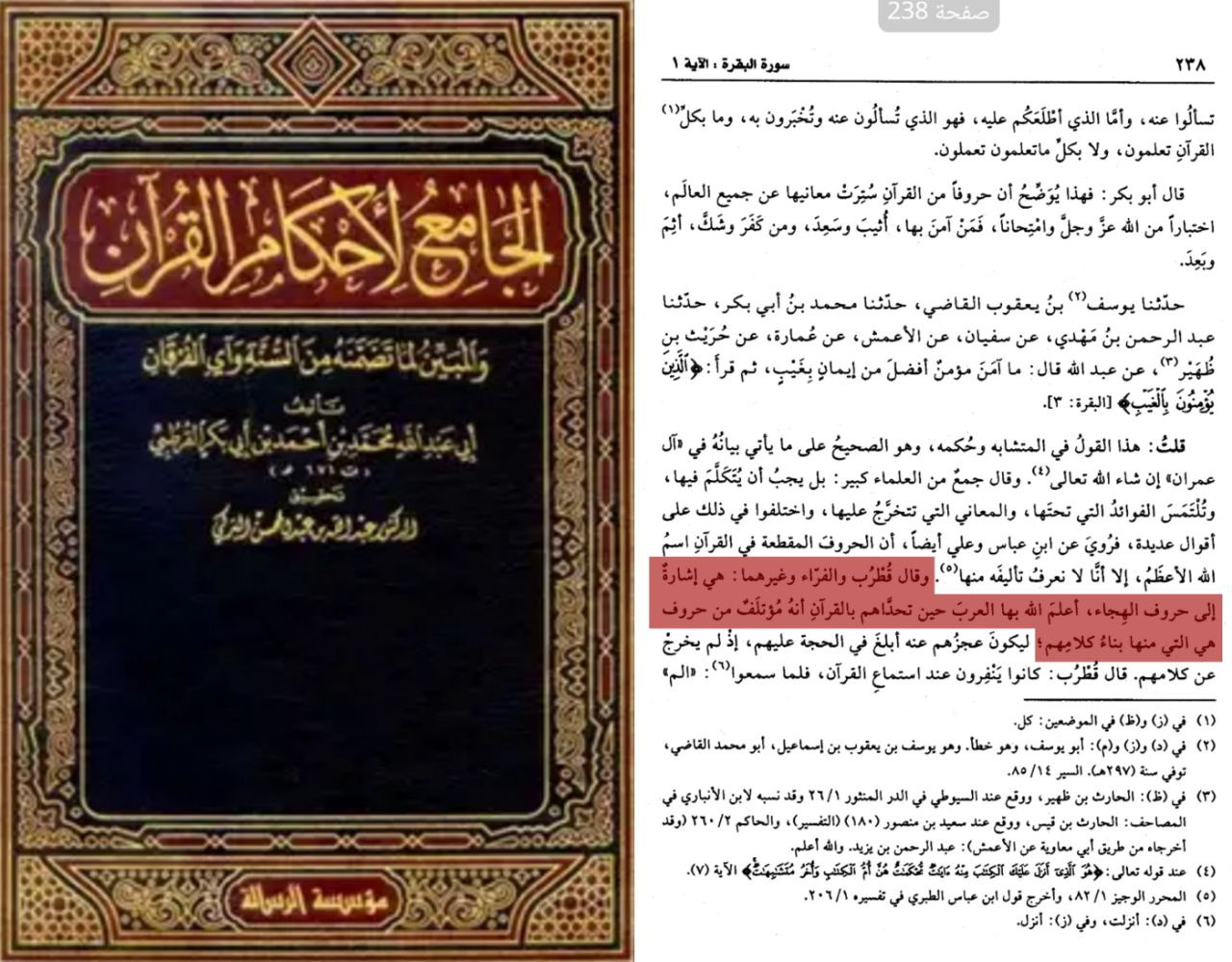
- Al-Qurtubi (رحمه الله) said in Al-Jami’ li Ahkam al-Qur’an:
”…A group of prominent scholars have said: Rather, it is necessary to speak about them, and to seek the benefits and meanings hidden within them.” ✅
Therefore, our first conclusion is:
Speaking and researching these letters is permissible, according to the opinion of the majority of scholars.
However, we must emphasize that what is false and unacceptable is what is known as the “Science of the Disjointed Letters” — this has no connection to Islam whatsoever, and is nothing but magic and deception.
- Al-Suyuti (رحمه الله) stated in Al-Itqan fi ‘Ulum al-Qur’an:
”…Al-Sahili said: Perhaps the number of letters at the beginning of the surahs — without repeating duplicates — indicates the duration of time this nation will remain strong.”
Ibn Hajar commented:
This is false and cannot be relied upon. It has been authentically reported that Ibn Abbas (رضي الله عنه) discouraged counting the letters of Abjad, and indicated that such practice is part of magic — which is not far-fetched, since it has no basis in Islamic law.”Al-Qadi Abu Bakr Ibn al-Arabi also said in Fawa’id Rihlatihi:
“Among the falsehoods is the so-called ‘science of the disjointed letters’ at the beginning of the surahs.”
- Second: What is the purpose behind them?
Scholars and researchers have differed in explaining the true purpose of these disjointed letters (الحروف المقطعة) .
However, there is a general agreement that the main purpose is to highlight the inimitability (إعجاز) of the Qur’an — specifically, challenging the Arab masters of eloquence and language with it.
Below, we will share what some well-known tafsir books have stated regarding this matter: ✅
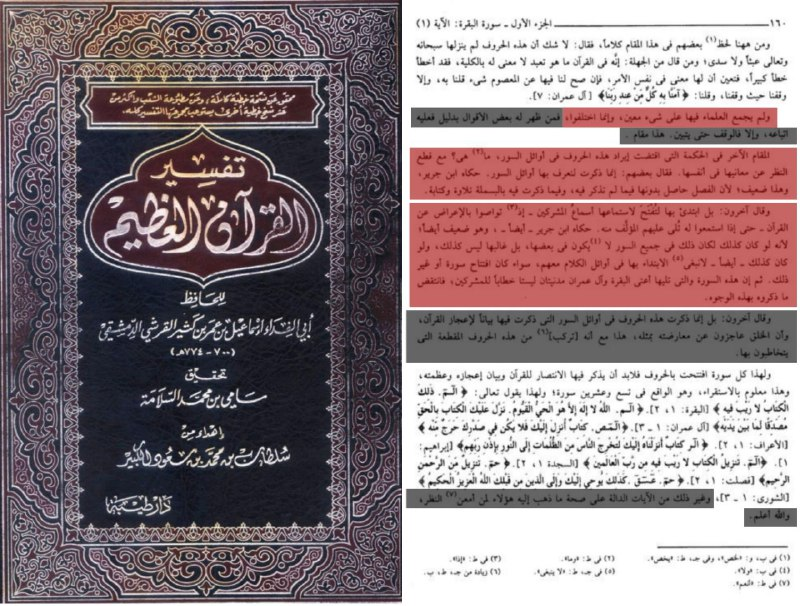
⭕ Tafsir al-Qur’an al-‘Adhim (by Ibn Kathir):
Ibn Kathir (may Allah have mercy on him) said:
“The scholars have not reached a definitive conclusion about these letters — rather, they differ in their interpretations. If someone finds a particular opinion supported by evidence, then he should follow it. Otherwise, one should remain silent until the truth becomes clear — this is the proper stance.” ✅
He then mentioned various interpretations regarding this issue, including the one that has been widely accepted, saying:
“Others have said: Indeed, these letters were placed at the beginning of certain surahs to demonstrate the inimitability (إعجاز) of the Qur’an, and to challenge humanity — showing that even though the Qur’an is composed of the very same letters that people use in their daily speech, no one can match its miraculous nature.”
Ibn Kathir agreed with this view, presenting supporting evidence for this interpretation, and concluded:
“…and other verses like this clearly support what these scholars have stated, for whoever examines them closely. And Allah knows best.”
⭕ Al-Itqan fi ‘Ulum al-Qur’an (by Al-Suyuti):
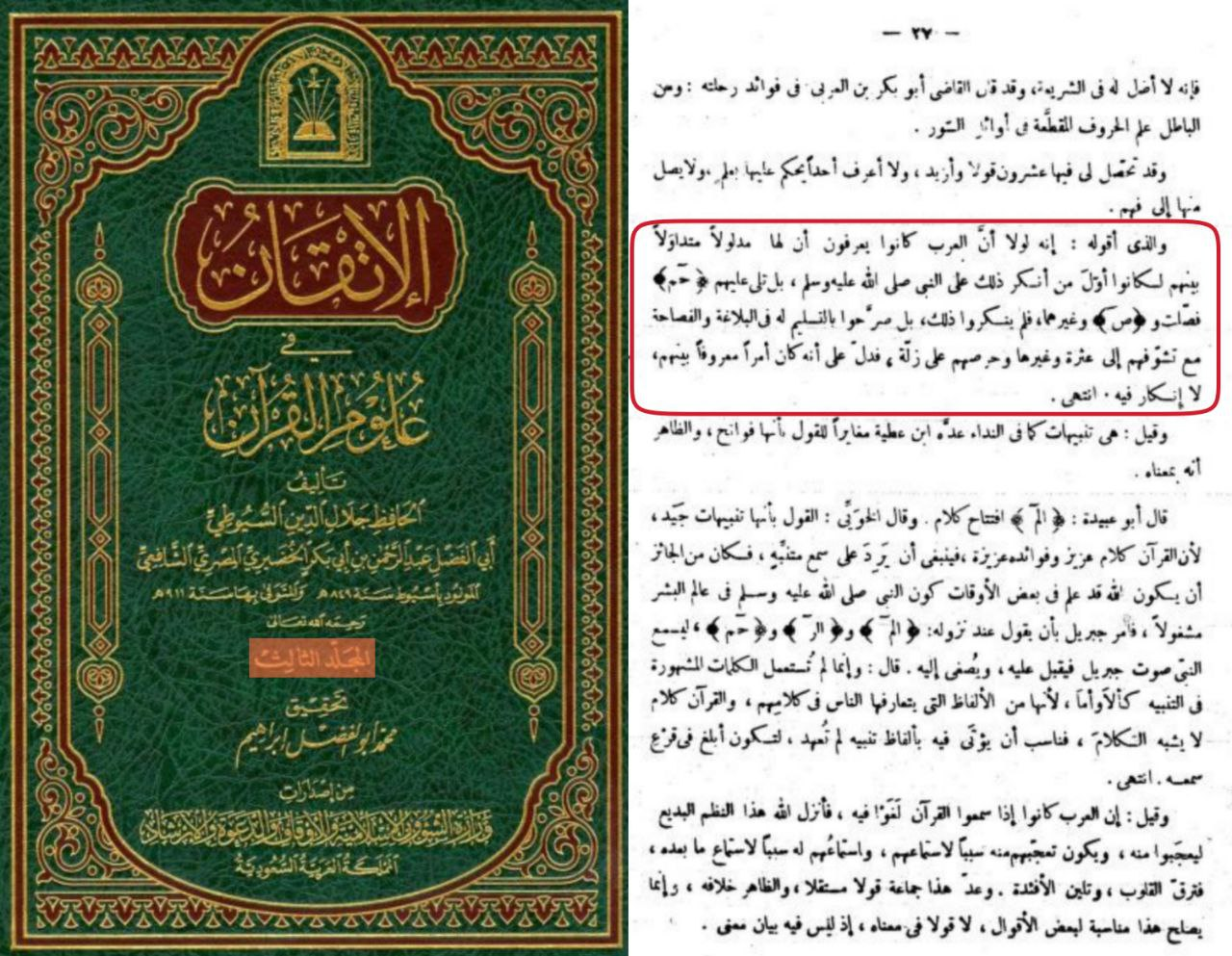
Al-Suyuti (may Allah have mercy on him) said:
”…I have gathered about twenty opinions or more regarding these letters, and I do not know of anyone who can claim to fully understand them with certainty.”
He then added:
What I believe is this:
“If the Arabs had not known that these letters carried some known meaning among them, they would have been the first to object to the Prophet ﷺ. Yet he recited to them surahs like Ham-Mim Sajdah, Al-Fussilat, Al-A’raf, and others containing these letters — and they did not object. Rather, they openly admitted his unmatched eloquence and linguistic excellence, despite their eagerness to find any fault or slip-up.
This clearly shows that these letters were something familiar to them, and there was no reason to reject or question them.” ✅
⭕ Al-Jami’ li Ahkam al-Qur’an (by Al-Qurtubi):
Al-Qurtubi (may Allah have mercy on him) said:
”…Qatrub and Al-Farra’, among others, said:
These letters are a reference to the letters of the alphabet.
Allah informed the Arabs — when He challenged them with the Qur’an — that it is composed from the very same letters they use in their speech, to make clear that their inability to match it is a stronger proof against them, since it did not come from anything outside their own language.” ✅
This explanation supports the widely accepted view that the disjointed letters were meant to highlight the miraculous nature of the Qur’an by showing that even though it was formed from the very letters the Arabs used daily, they were still unable to produce anything like it.
- Third:
We present to you further confirmation of the widely accepted explanation — the reaction of one of the Quraysh leaders upon hearing these disjointed letters. That man was Utaybah ibn Rabee’ah.
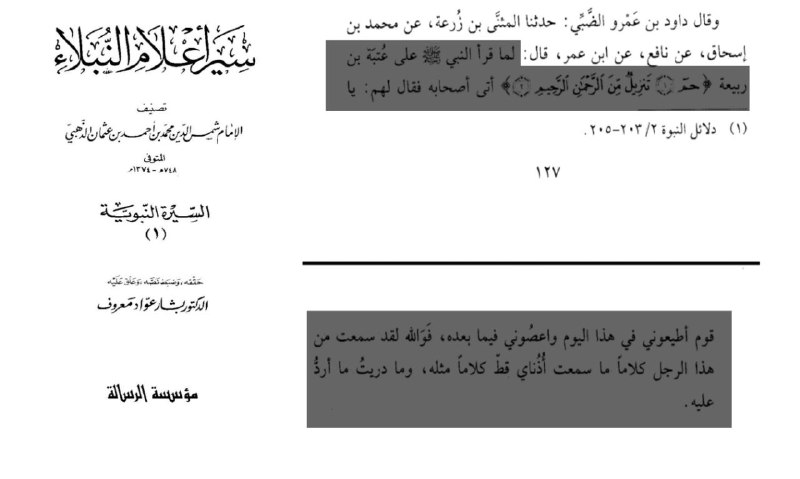
✅ Dawud ibn ‘Amr al-Dabbi said:
We were told by Al-Muthanna ibn Zur’ah, from Muhammad ibn Ishaq, from Nafi’, from Ibn Umar (رضي الله عنهما), that when the Prophet ﷺ recited to Utaybah ibn Rabee’ah the beginning of Surah Fussilat:{حم تَنزِيلٌ مِّنَ الرَّحْمَنِ الرَّحِيمِ}
“Ha Mim. A revelation from the Most Gracious, the Most Merciful.” (Surah Fussilat 41:1-2)
Utaybah went to his people and said:
“O people! Obey me today and disobey me in all that comes after this. By Allah, I have heard from this man words unlike anything my ears have ever heard. I do not know how to respond to it.”
📚 Source: Siyar A’lam al-Nubala’ / Al-Sirah al-Nabawiyyah, pages 127–128 ✅
This narration powerfully supports the view that these letters — though simple in form — had a profound effect on even the most eloquent of Arabs, highlighting the miraculous nature of the Qur’an.