Are Fruit Fly Mutations Evidence of Evolution
Are Fruit Fly Mutations Evidence of Evolution?
A famous example that Drosophila scientists have used to demonstrate microevolution is the mutation of the fruit fly, Drosophila melanogaster . What exactly happened?
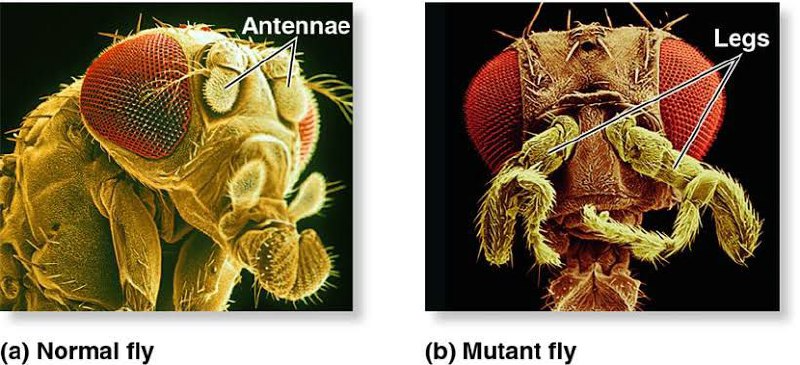
In a nutshell: Scientists introduced forced mutations into the fly in an attempt to observe evolutionary changes. This resulted in a number of mutations, including one that led to an increase in the number of wings (four-winged flies), and another that caused legs to grow from the head—known as the “Antennapedia” mutation.
Isn’t this clear evidence of evolution? Before answering that question, let’s ask another:
Are These Mutations Beneficial?
A body of evidence indicates that the accumulation of mutations over time tends to disrupt the integrity of genetic information, often leading to harmful consequences for organisms rather than providing novel, beneficial traits (Eyre-Walker and Keightley, 2007; Kryukov et al., 2007; Boyko et al., 2008). This suggests that accidental advantageous mutations are the exception, not the rule.
This conclusion aligns with results from large-scale studies assessing the effects of artificially induced mutations in plants exposed to radiation or chemical mutagens. Rather than producing improved crops, these experiments largely yielded sterile, deformed, or sickly plants:
“Vast numbers of mutants were produced and screened, collectively representing many billions of mutation events. A huge number of small, sterile, diseased, deformed, aberrant plants were produced… Almost no meaningful crop improvement resulted.”
— J. Sanford (2008)
The Case of Extra Wings
The four-winged fruit fly was found to be flightless and devoid of functional flight muscles. Moreover, the development of the indirect flight musculature was impaired, leaving the fly unable to move its wings in a controlled manner.
Halteres — the tiny structures that act as biological gyroscopes — help stabilize flight by detecting rotational movements and modulating wing motion via sensory feedback. In four-winged flies, this system was disrupted, further compromising their ability to fly effectively.
https://www.sciencedirect.com/science/article/abs/pii/S0960982224008509
The Antennapedia Mutation
The Antennapedia mutation involves a defect in the regulatory region of a Hox gene. This led to legs growing in place of antennae on the fly’s head, and even those legs replaced the normal sensory structures.
This was not a gain of new information or structure, but rather a misregulation of existing genetic instructions — essentially a copying error that misplaced pre-existing anatomical features.
As Stated in Scientific Literature:
In systematic searches for embryonic lethal mutants of Drosophila melanogaster , researchers identified 15 loci which, when mutated, alter the segmental pattern of the larva. When a mutation occurs in one of these locations, it causes a defect or distortion in the normal pattern of larval body divisions — a disruption, not an advancement.
Source: Study in Nature
https://www.nature.com/articles/287795a0
{Embed}
https://www.nature.com/articles/287795a0
Mutations affecting segment number and polarity in Drosophila
Nature - Mutations affecting segment number and polarity in Drosophila
So, Where Is Evolution in All This?
The mutations observed did not produce new or useful genetic information. Instead, they were errors in gene regulation — either relocating existing structures (like legs or wings) to inappropriate places or impairing essential functions like flight.
In both cases, the resulting organisms were handicapped. Even if such mutations allowed reproduction, they would likely result in deformed or degenerate offspring — not evolutionary progress.
What’s striking is that all these outcomes occurred due to random, artificial mutations. If spontaneous mutations in our own bodies occurred randomly like these lab-induced ones, we’d expect similar catastrophic outcomes in nature.
Final Thoughts
While mutations can lead to observable changes — even dramatic ones — in Drosophila , the scientific evidence shows that most mutations are neutral or harmful. True evolutionary innovation requires the addition of new, functional genetic information — something not demonstrated in these experiments.
Mutations may drive variation, but without selection and functional benefit, they do not equate to evolution in the upward, progressive sense often implied.
References
Eyre-Walker, A., & Keightley, P. D. (2007)
Kryukov, G. V., Pennacchio, L. A., & Sunyaev, S. R. (2007)
Boyko, A. R., et al. (2008)
Sanford, J. (2008)
ScienceDirect – Embryonic lethal mutants in Drosophila
https://www.sciencedirect.com/science/article/pii/S0079610723000111#bib82
Nature – Mutations affecting segment number and polarity in Drosophila
https://www.nature.com/articles/287795a0
Cell Reports – Halteres and flight mechanics
https://www.sciencedirect.com/science/article/abs/pii/S0960982224008509
Genetics – OUP
https://academic.oup.com/genetics/article/220/1/iyab191/6428543
{Embed}
https://www.nature.com/articles/287795a0
Mutations affecting segment number and polarity in Drosophila
Nature - Mutations affecting segment number and polarity in Drosophila
{Embed}
https://academic.oup.com/genetics/article/220/1/iyab191/6428543
Wing hearts in four-winged Ultrabithorax-mutant flies—the role of…
Abstract. Wings are probably the most advanced evolutionary novelty in insects. In the fruit fly Drosophila melanogaster, proper development of wings requi
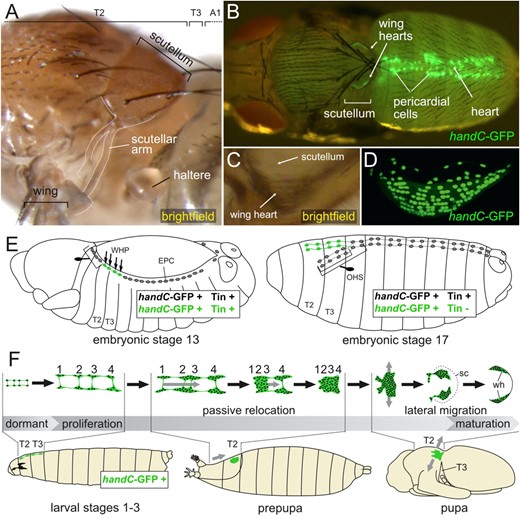
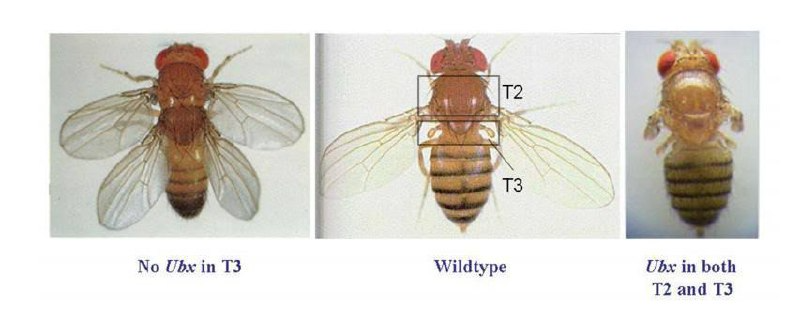
This image shows the loss of the Haltere organ, which acts like a gyroscope to maintain balance, and its replacement with flightless wings.
This shows the replacement of antennae with legs.