Black Seed in Islam: Nigella Sativa, Prophetic Medicine, and Modern Scientific Research
Black Seed (Nigella Sativa): Prophetic Medicine and Modern Research
This article gathers claims, scans, and modern medical-review references related to the famous Prophetic statement about black seed and its therapeutic potential.
Table of Contents
- The Prophetic Statement on Black Seed
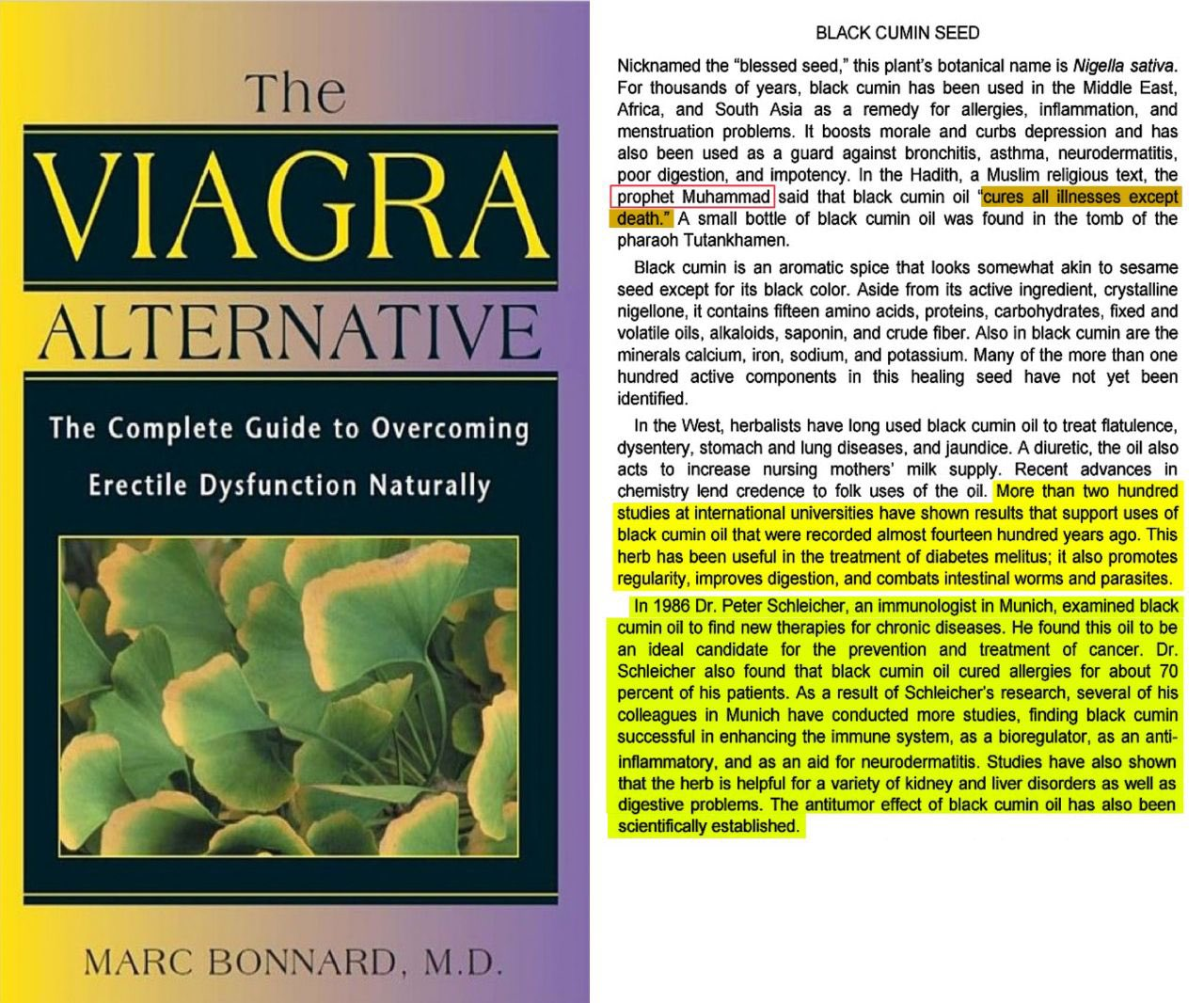
- Dr. Marc Bonnard on Black Seed
- The Scan
- American Journal of Medical Sciences Review
- Clarifying Nigella Sativa
- Second Medical Review on Clinical Trials
- Conclusion
- PubMed Central Review: Therapeutic Potential of Nigella Sativa
- Second Review: Clinical Trials of Black Seed and Thymoquinone
- Corrected Polemical Point
The Prophetic Statement on Black Seed
“Black seed heals every disease except death.”
Dr. Marc Bonnard on Black Seed
In 1986, Dr. Peter Schleicher, an immunologist in Munich, studied black seed oil to find new treatments for chronic illnesses. He found it to be a promising candidate for cancer prevention and treatment. Dr. Schleicher also discovered that black seed oil relieved allergies in around 70% of his patients. Inspired by Schleicher’s findings, many of his colleagues in Munich conducted further studies and confirmed that black seed effectively boosts the immune system, works as a biological regulator, has anti-inflammatory properties, and assists in treating neurodermatitis.
Studies also showed that the herb benefits various kidney and liver disorders as well as gastrointestinal problems. The anti-tumor effects of black seed oil have also been scientifically proven.”
The Scan
American Journal of Medical Sciences Review
“Therapeutic Potential of Nigella Sativa: The Miracle Herb”
Nigella sativa (N. sativa) (Family Ranunculaceae) is a widely used medicinal plant throughout the world. It is very popular in various traditional systems of medicine like Unani and Tibb, Ayurveda and Siddha. Seeds and oil have a long history of …

Clarifying Nigella Sativa
More precise wording:
Nigella sativa = scientific name
Black seed / black cumin = common English names
Ḥabbat al-barakah = Arabic name meaning blessed seed
Second Medical Review on Clinical Trials
Nigella sativa (black seed or black cumin), which belongs to the Ranunculacea family, is an annual herb with many pharmacological properties. Among its many active constituents, thymoquinone (TQ) is the most abundant constituent of the volatile oil …
Conclusion
The correct argument is not that black seed replaces all medicine or cures every disease in a crude literalistic way.
Rather, the argument is that modern research continues to uncover serious medicinal properties in this blessed seed, which aligns with the Prophetic praise of it fourteen centuries ago.# Modern Medical Reviews on Black Seed / Nigella Sativa
It is also sometimes called black cumin, though this name can be ambiguous in English because different plants may be called “black cumin.”
PubMed Central Review: Therapeutic Potential of Nigella Sativa
“A review on therapeutic potential of Nigella sativa: A miracle herb”
discusses the historical and medicinal use of Nigella sativa in traditional medical systems, including Unani and Tibb, Ayurveda, Siddha, and Tibb-e-Nabawi / Prophetic Medicine.
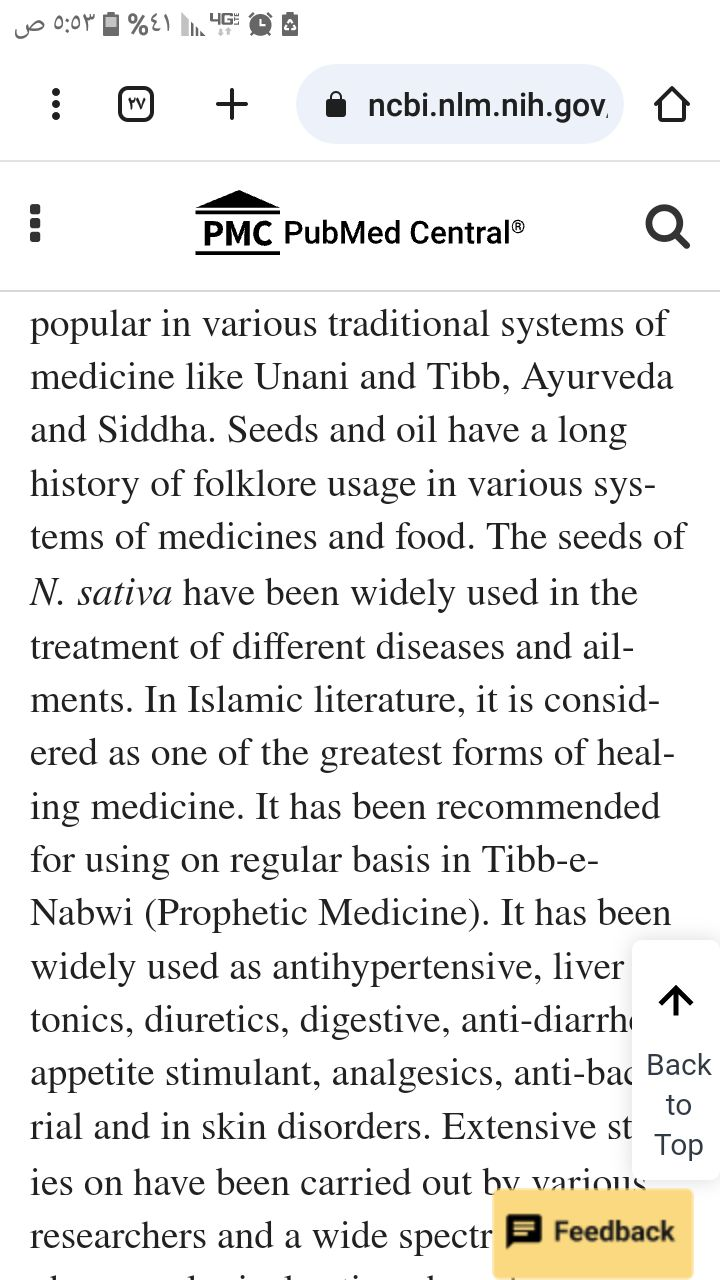
It also mentions that in Islamic literature, black seed is regarded as one of the greatest healing medicines and has been recommended in Tibb-e-Nabawi / Prophetic Medicine.
Second Review: Clinical Trials of Black Seed and Thymoquinone
“Review on Clinical Trials of Black Seed (Nigella sativa) and Its Active Constituent, Thymoquinone”
discusses clinical trials on black seed and thymoquinone, one of its major active constituents.
Corrected Polemical Point
Modern medical literature itself discusses Nigella sativa / black seed as a plant with a long history of medicinal use and a broad range of pharmacological properties.
The Prophetic statement about black seed is therefore not something Muslims invented after modern science. Rather, modern research continues to examine the medicinal value of what the Prophet Muhammad ﷺ praised over fourteen centuries ago.