Cardiocentrism in the Quran Heart Thinks
In this thread, I will analyze the claim that the Qur’an contains a ‘Scientific Error’ insofar as it associates the locus of the intellect with the heart, as opposed to the brain.
I’ll cover it from three different perspectives, (1) - Philosophical, (2) - Scientific, and (3) - Scholarly precedence. I do not take a metaphorical meaning which negates the relation between the real, physical heart and the ‘aql as some do (as will be mentioned later).
(1) - Philosophical Perspective
At face value the argument seems pretty straightforward, the Qur’an locates ‘aql (intellect) with the heart as opposed to the brain, and science says ‘aql = brain (or is identified with brain-processes, etc).
But the claim is nonetheless contentious, and relies on a philosophical doctrine about the relation between mind and matter; that is, mind is, simply put, matter. The entirety of cognition, including the phenomenal aspects of it, are reducible to the physical [1].
Consider for a second that, if it is not the case that physicalism is true, then the very easy argument given here fails. Why? Well, if it is not the case that the intellect is purely reducible to the brain/brain states/etc.,
and is merely related to it in whatever complex ways it may be, then it does not follow that the Qur’an has committed an error by moving the locus of intellect from the brain to the heart,
since intellection would have three components (the non-physical, the physical, and the relations obtaining between them) and could very well include not only the heart, but the entire body in its production of consciousness.
1.1.1 - The Mind-Body Problem stated simply, Contra Physicalism
Simply put, there is a gap between phenomenal (and mental) properties and with physical properties. Physical properties deal with things like size, shape, weight and on a more basic level, things like spin, charge, etc) and so on; whereas mental properties seem to be a whole different category of properties, entirely irreducible to physical ones, such as intentionality, beliefs, phenomenal experiences (what it is to be like …).
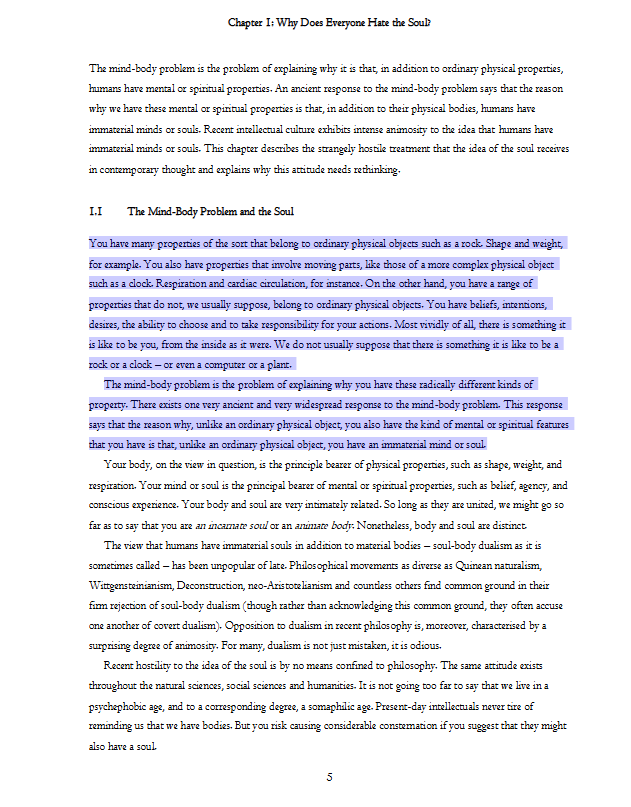
This gap is in principle impossible to bridge. Physical properties will not one day change from their quantitative profile to adopt a new, qualitative profile and neither will the reverse happen with mental properties.
1.1.2 - The Vagueness Problem, Contra Physicalism
Physical phenomena are open to vagueness, that is, they are open to borderline cases. There is no pure, determinate point at which red becomes orange, or vice versa, but things are, in Tye’s words, ‘borderline red’.
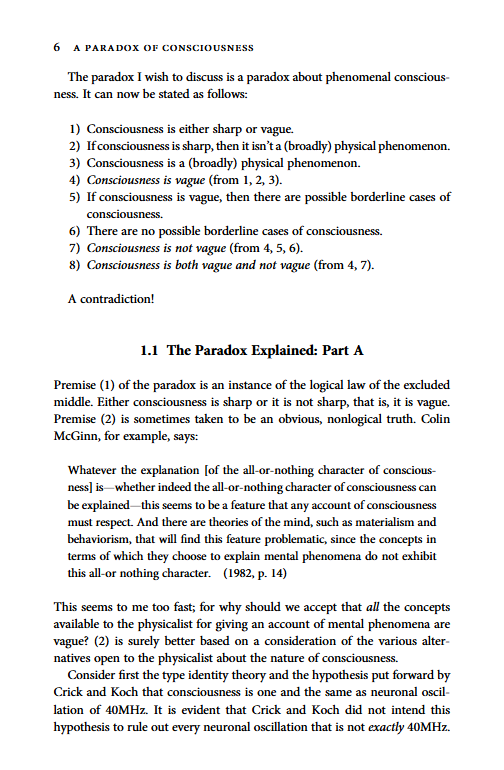
Likewise with the biological components thought to be the constituents of consciousness, neurons. At what point is it not a neuron, after stripping away atom after atom? This too, allows for borderline cases. If consciousness is physical,then borderline cases of consciousness are possible. But this is not the case! Consciousness is aptly analogized with a light switch, the lights are either on or off; there is simply no in-between with consciousness - it is a sharp phenomena, therefore, it is not physical.
1.1.3 - The Zombie Argument, Contra Physicalism
Consider the idea of a Philosophical Zombie, a being that is a 1:1 physical copy of you, but lacks the phenomenal aspect of experience (i.e. they are also psychologically identical).
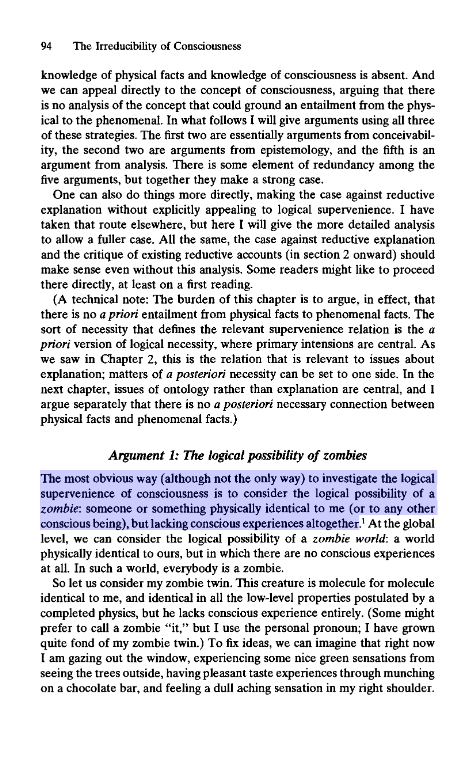
Prima Facie, this concept implies no contradiction, so that gives us a good reason to think it’s possible [2]. But its mere possibility would imply the falsity of physicalism since, if all atoms are the exact same, necessarily due to the logical supervenience of the mental on the physical), the experience would be the same (but in this case, its stipulated that its not there at all). Therefore, if zombies are possible (as they prima facie seem to be), physicalism is false.
1.2.1 - Where to go from here?
Now that we’ve moved on from physicalism, it’s also important to look at the alternative account that I’ll be positing. Given that the mental is not the physical/does not logically supervene on the physical. Where (or ‘how’) is it?
The mental on my view subsists in its own category of substance, as opposed to being physical (i.e. it’s located in a ‘spirit’ or ‘soul’, etc., these are all just terms for an immaterial bearer of mental properties). This view is typically called ‘Substance Dualism’. On this view
the role the brain (and in Qur’anic hermeneutics, the heart, plays is that it engages in indispensable relations with the second substance (spirit, soul, etc.) and the result of these interactions is the complete mental and cognitive experience that makes up the ‘intellect’.
So the body is a sort of engine or placeholder for the results of consciousness. On this view, the heart, being a part of this complex engine, can play its own unique role in interacting with the soul to produce consciousness, rendering the objection to the Qur’an questionable.
1.2.2 - What about the problems?!
It should firstly be noted that dealing with all the objections to physicalism, its defenses, the defenses of Substance Dualism (henceforth, SD), and its objections will be impossible within the scope of this thread. For the sake of brevity,
I will look at one famous (thought to-be-knockdown) objection to SD, that is, the interaction problem [3].
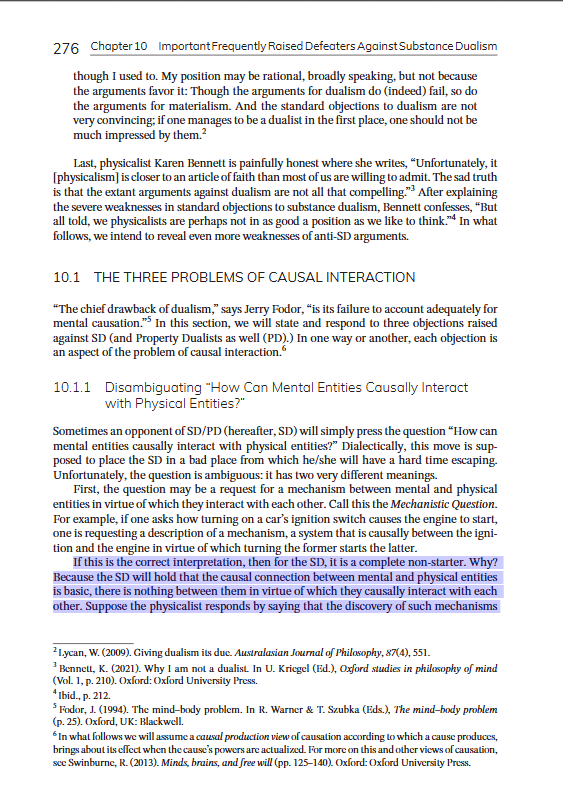
How can two fundamentally different types of entities (mental and physical) interact? J.P. Moreland splits this question into two different types of questions, Mechanistic
and Skeptical. Concerning the mechanistic question, it’s a non-starter, since it assumes the very sort of relation (physical-mechanistic) being denied in the first place.
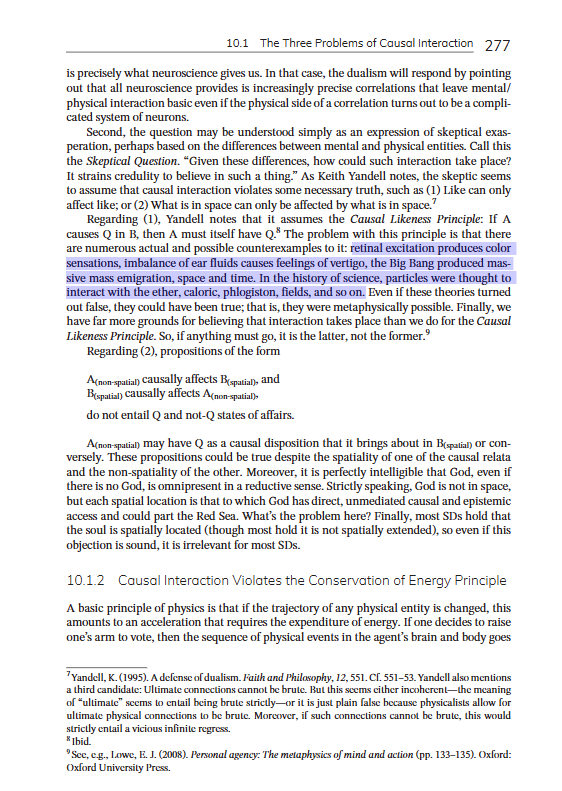
As for the skeptical question, it seems to presuppose a Causal likeness principle (If A causes Q in B, then A must itself have Q.) — this principle is easily refuted with counter examples such as the ones provided below.
(2) - Scientific Perspective
It is simply presupposed in these discussions that the heart plays no role in producing consciousness or cognition (even as far as playing a role in decision making, and this will be important later), but is this really true?
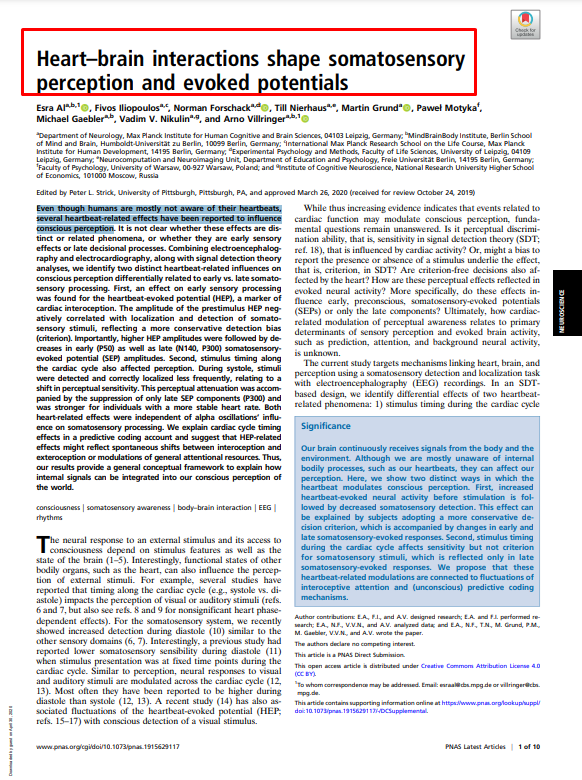
Not in the slightest, the idea that the whole of consciousness is located purely in the brain is utter claptrap and pseudoscience; and studies exist which demonstrate effects the heart have perceptive experiences.
So far, this coheres perfectly with the hypothesis we are positing.
But it’s also important to mention the game being played here by opponents of the Qur’an; that is, they are appealing to a wildly incomplete science to foot-stomp their view of what-causes-what.
As science moves in the direction of showing a more holistic view on cognition which incorporates the physical heart and its functions, will they abandon this argument? Less than likely!
Cross Reference
https://discord.com/channels/1310948573768319047/1334750230851092522
(3) - Scholarly Precedence
Maybe some ignoramus will remain unsatisfied, objecting that my hypothesis has no basis in traditional Islamic Scholarship. Good news for them, it does. Shaykh al-Islam Ibn Taymiyyah says: “And the Tahqiq is that the Ruh (soul) which is the Nafs (spirit) has a relation with this and that (i.e. the heart and the brain), and what is described as ‘Aql has relation to both of those. As for the basis of thinking (Fikr), it is based in the brain, and the basis for intentionality (iradah) is in the heart.”
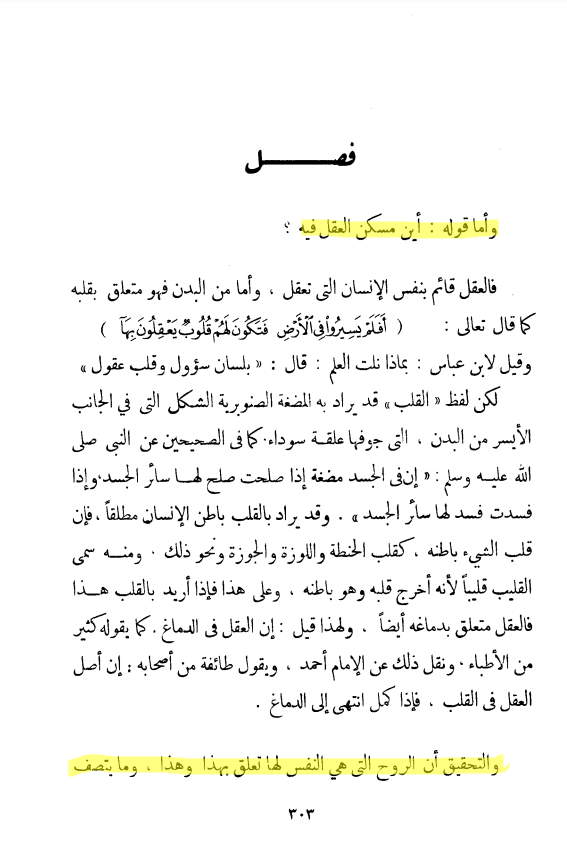
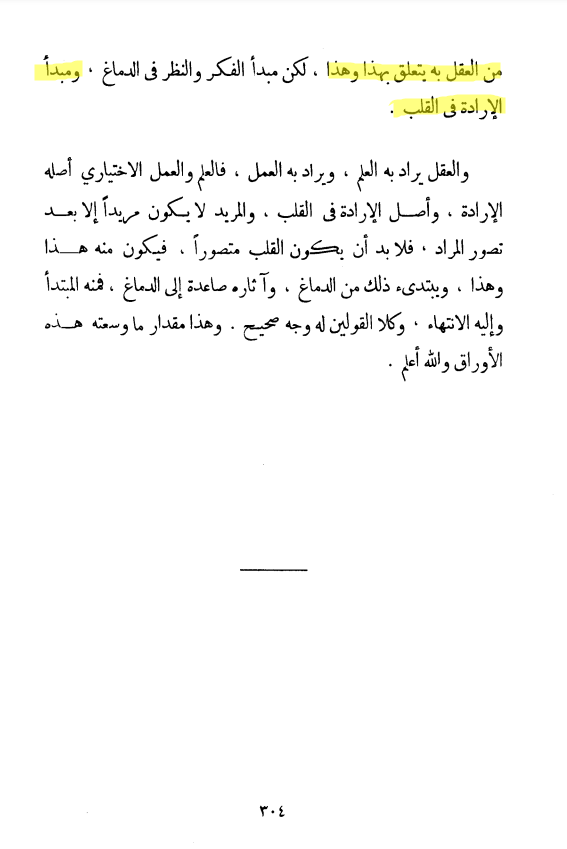
Here, Ibn Taymiyyah outline the view that the Ruh interacts with the brain and heart to produce ‘Aql, which can be broken down into numerous things, some of which subsist in the heart, and others (mainly the more psychological notions, in the brain).
Thus, Ibn Taymiyyah vindicates the view I have outlined here. Without moving away from the text and assuming that ‘heart’ here is metaphorical, he also vindicates a literalist reading of the Qur’an.
And with this, a silly objection to Islam is put to rest.