

Did the Prophet Say Black People Steal When Hungry? A Hadith Refutation
Does the Hadith About an Abyssinian Ruler Prove Racism in Islam?
Addendum: The Weak Narrations Used Against Black People
The claim collapses from two angles:
- The authentic Islamic principle is that no race has superiority over another except through piety.
- The narrations used to claim otherwise are weak or fabricated according to hadith scholars.
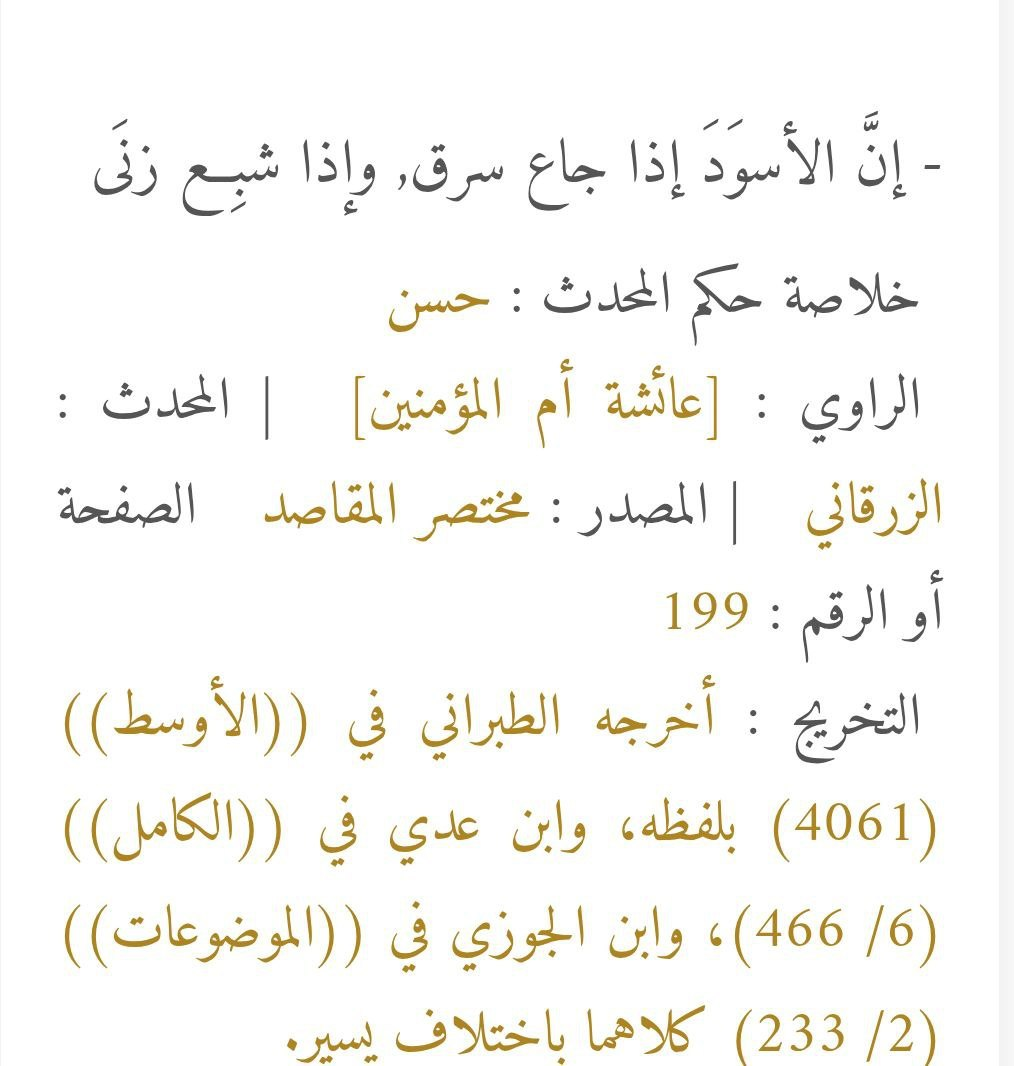
For your info: This Arabic scan states that the narration “If the black person becomes hungry, he steals, and if he becomes full, he commits zina” was graded hasan by some, but the scan also lists major scholars who rejected or weakened it. It mentions that Al-Albani weakened it in al-Awsat, and that Ibn al-Qayyim mentioned it in al-Manar al-Munif, while Ibn al-Jawzi listed it among fabricated narrations in al-Mawdu‘at. The scan is being used to show that this report is not reliable evidence against Islam.
Al-Albani deemed all these narrations weak, as did Ibn al-Qayyim and Ibn al-Jawzi, may God have mercy on them all, before him.
This is the cover page of Silsilat al-Ahadith al-Da‘ifah wa al-Mawdu‘ah wa Atharuha al-Sayyi’ fi al-Ummah by Shaykh Muhammad Nasir al-Din al-Albani. It identifies the source being used for the following hadith criticism.
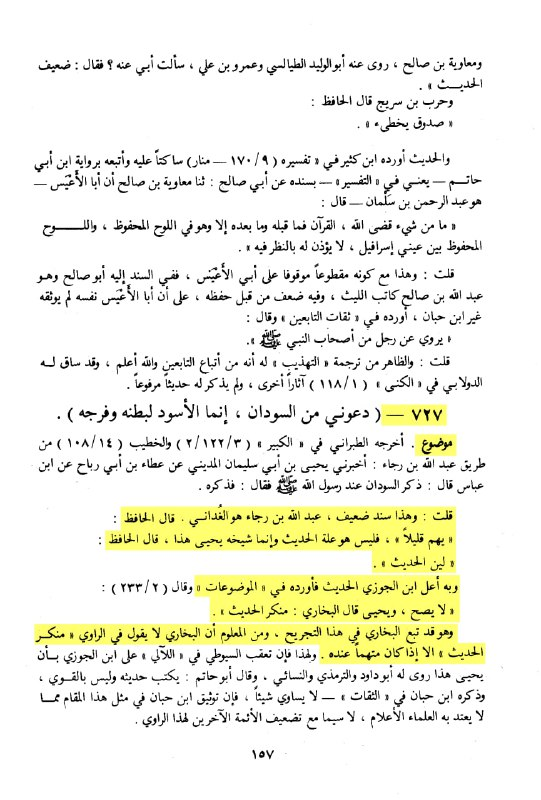
For your info: This Arabic scan is from Al-Albani’s discussion in Silsilat al-Ahadith al-Da‘ifah wa al-Mawdu‘ah. The highlighted narration is the report: “If the black person becomes hungry, he steals, and if he becomes full, he commits zina.” Al-Albani states that the chain is weak, because it contains Abdullah ibn Raja al-Harawi, who was described by al-Hafiz as truthful but makes many mistakes, and because of Awsajah, the freed slave of Ibn Abbas. The scan also notes that Al-Bukhari said regarding Awsajah’s narration from Ibn Abbas that his hadith is not authentic. This directly supports the argument that the narration cannot be used as proof against Islam.
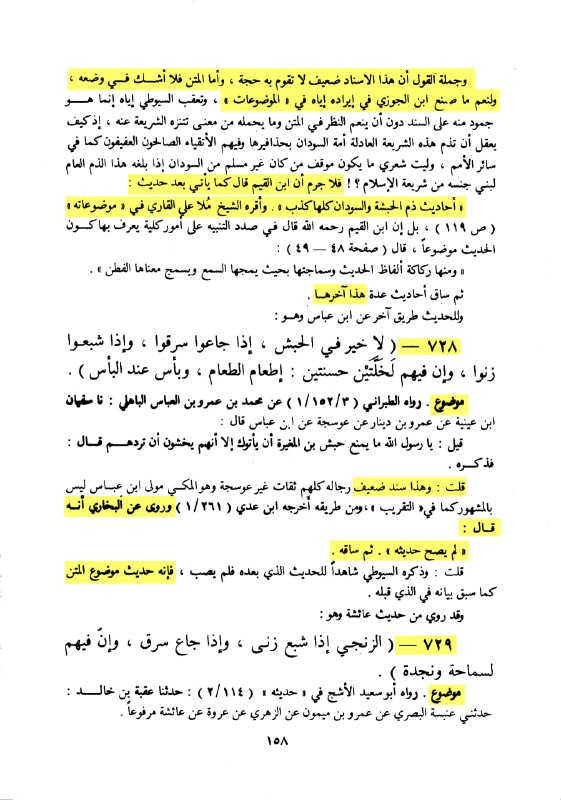
For your info: This Arabic scan continues Al-Albani’s discussion of weak and fabricated narrations. The highlighted section says that when a chain is weak, it does not necessarily mean the wording itself must be fabricated, but in this specific case the narration is still not acceptable as proof. The page also mentions examples of other narrations that are weak or fabricated and shows Al-Albani’s method of separating weak chains from fabricated content. The relevance here is that the anti-Black narration is not authentic and cannot be attributed confidently to the Prophet, peace and blessings be upon him.
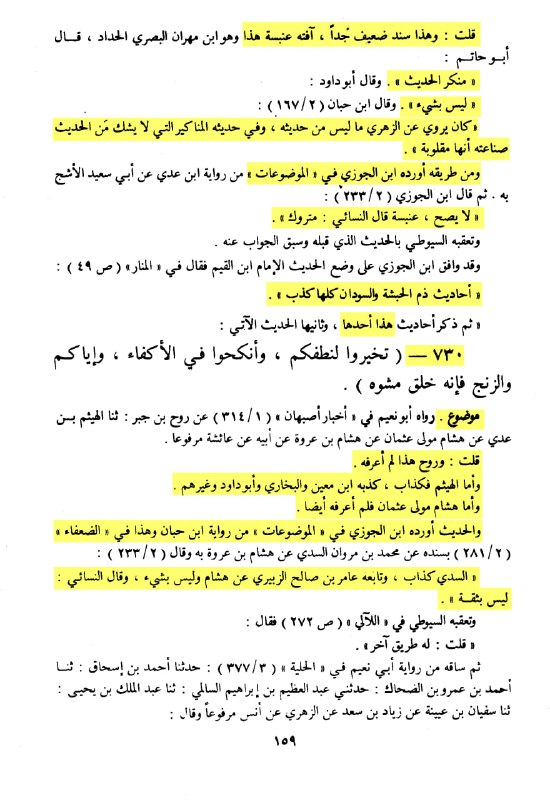
For your info: This Arabic scan further shows Al-Albani’s treatment of narrations listed in the weak and fabricated category. The highlighted portions include statements such as “this is a very weak chain”, references to narrators accused of fabricating or transmitting rejected reports, and references to Ibn al-Jawzi placing certain narrations in al-Mawdu‘at. It reinforces the point that not every report found in later books is automatically authentic, and that hadith scholars actively rejected reports with defective chains.
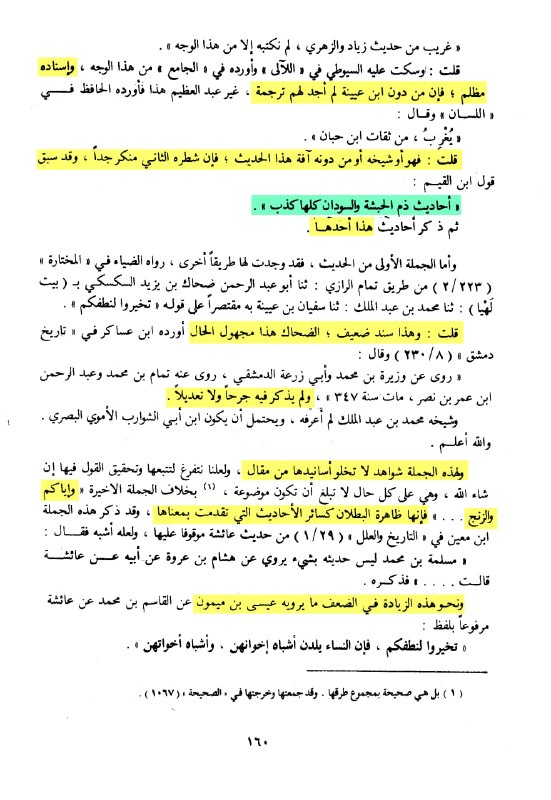
For your info: This Arabic scan discusses another narration and labels it weak or fabricated. The highlighted section mentions that one of the narrators is unknown and that the narration is not acceptable. It also includes Al-Albani’s criticism that the wording contains signs of fabrication. The page is relevant because it demonstrates the broader hadith-critical context: offensive or strange narrations are not simply accepted; they are examined through their chains and rejected when defective.
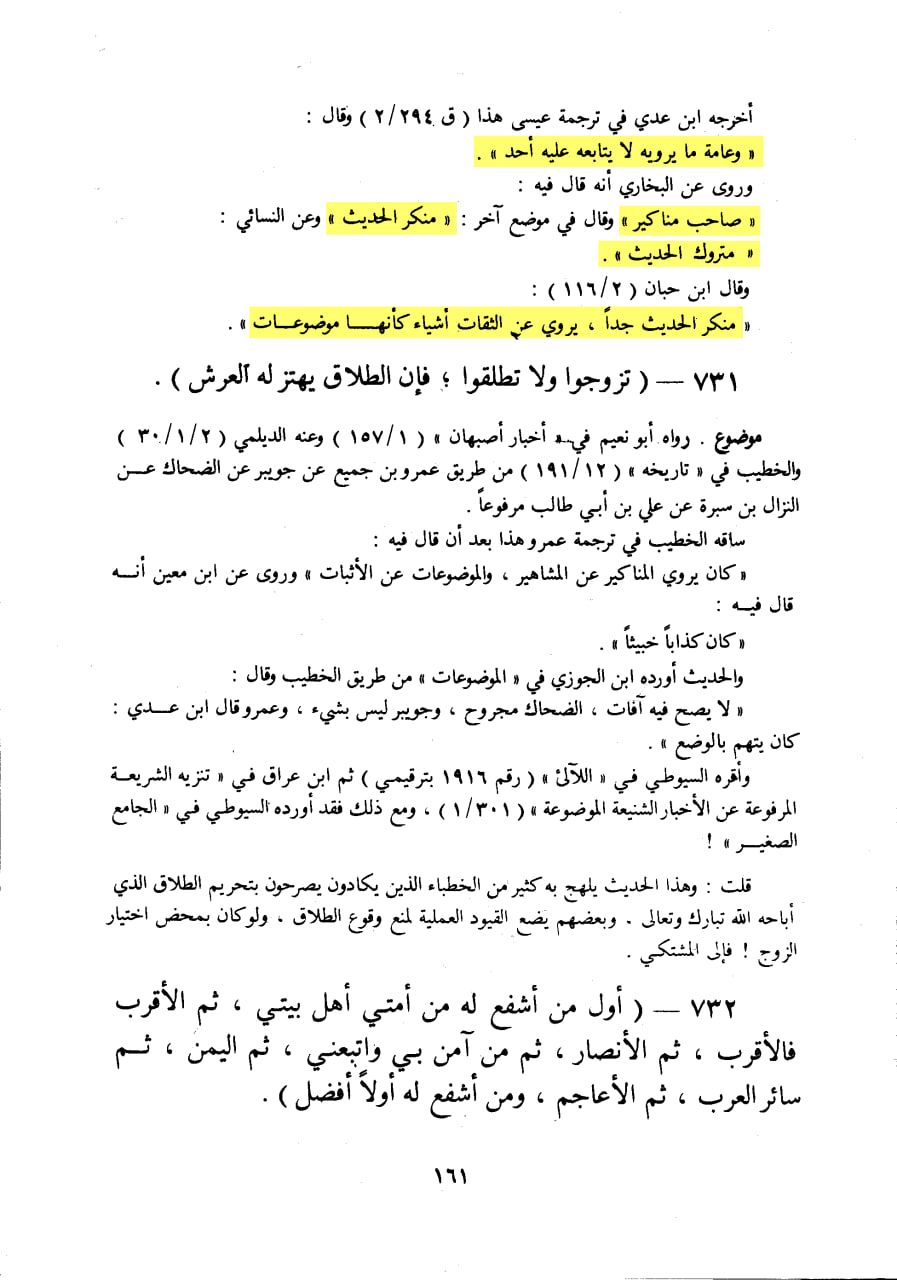
For your info: This Arabic scan continues the same discussion from Al-Albani. It includes a highlighted report about divorce and states that Ibn al-Jawzi placed it in al-Mawdu‘at. It also quotes criticism of narrators such as Sahib Manakir, Munkar al-Hadith, and Matruk al-Hadith. The scan is used to show how hadith scholars identify rejected narrations and why weak/fabricated narrations cannot be used to attack Islamic doctrine.
The Defective Narrator: Awsajah
Awsajah, the freed slave of Ibn Abbas, is the narrator of this hadith. Al-Bukhari said about him that his hadith is not authentic.
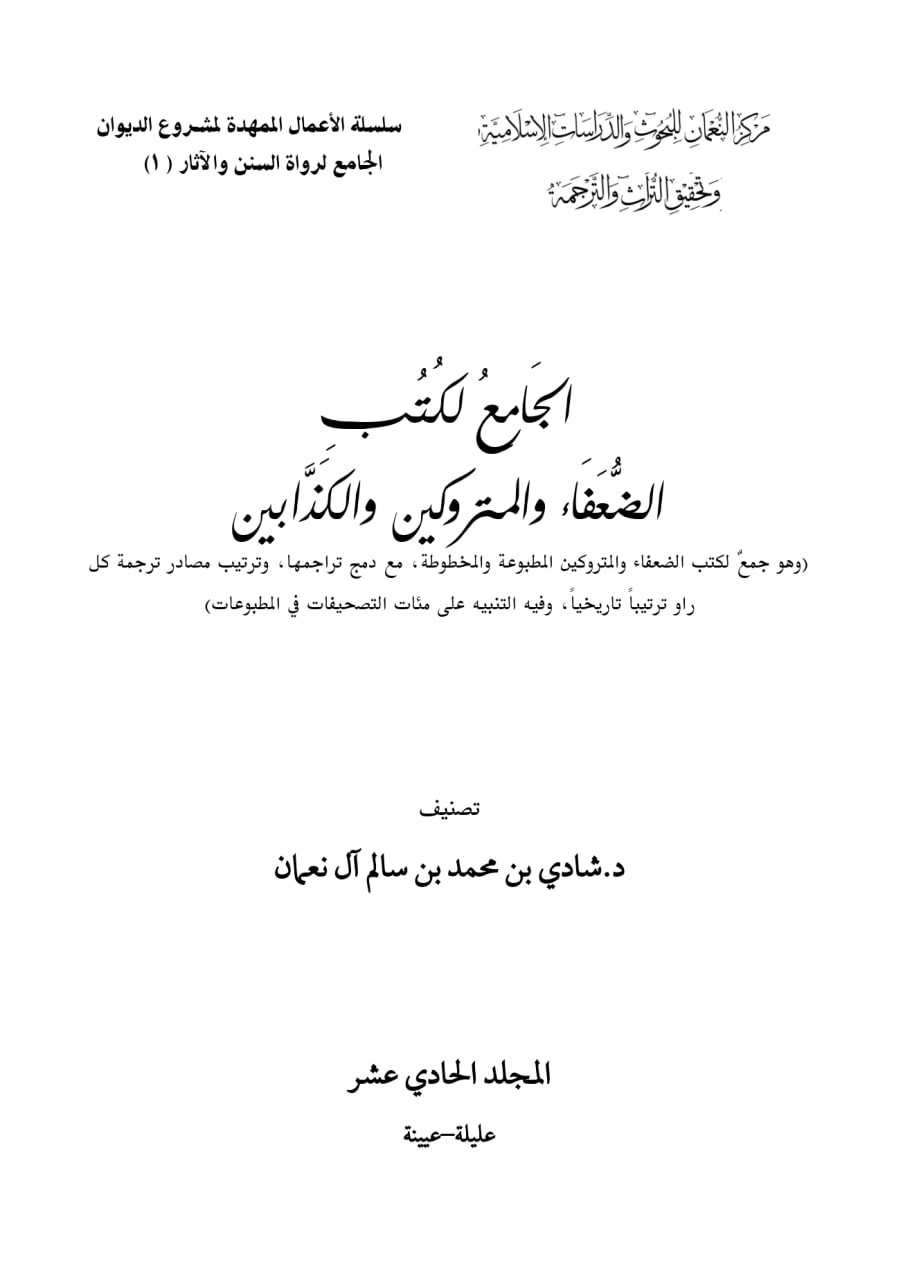
This is the cover page of al-Jami‘ li Kutub al-Du‘afa wa al-Matrukin wa al-Kadhdhabin by Shaykh Shadi ibn Muhammad ibn Salim Al Nu‘man. It identifies the rijal source used for the following biographical criticism.
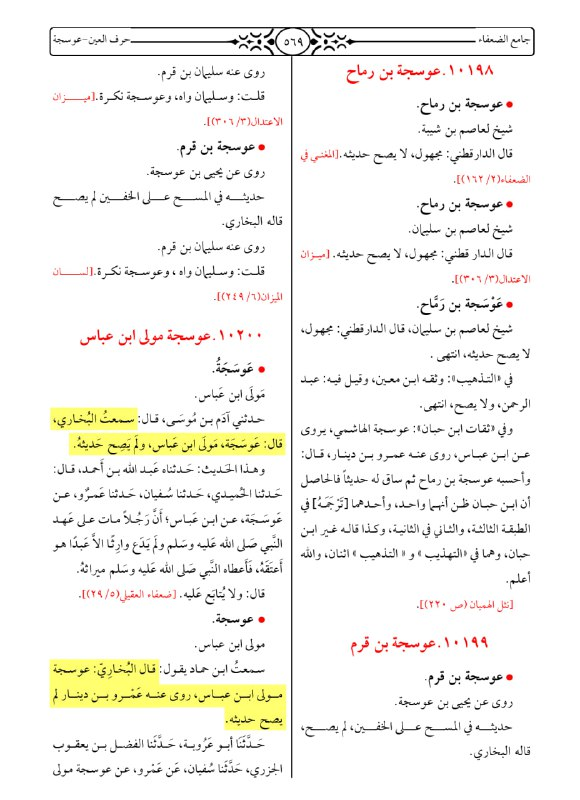
For your info: This Arabic scan is from a rijal/weak narrators reference and discusses Awsajah, the freed slave of Ibn Abbas. The highlighted section states that he narrated from Ibn Abbas and that Al-Bukhari said: “His hadith is not authentic.” It also mentions that this specific hadith is not sound. This directly supports the argument that the report being used against Black people is defective because one of its narrators is criticized.
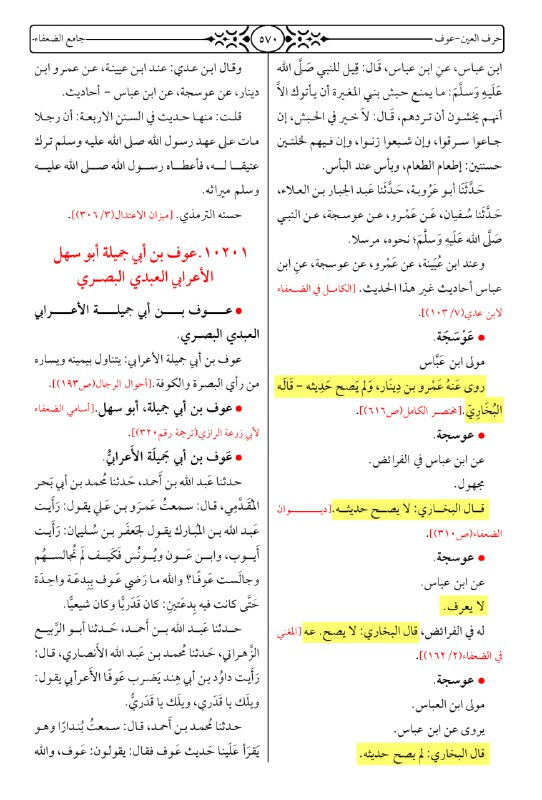
For your info: This Arabic scan continues the biographical entry on Awsajah. The highlighted areas again cite Al-Bukhari’s statement that the narration from Amr ibn Dinar from Awsajah is not authentic. The page also mentions that Awsajah is not widely known and that his reports are not dependable for establishing a claim. This strengthens the refutation: the anti-Black narration has a weak route and cannot be treated as a prophetic statement.
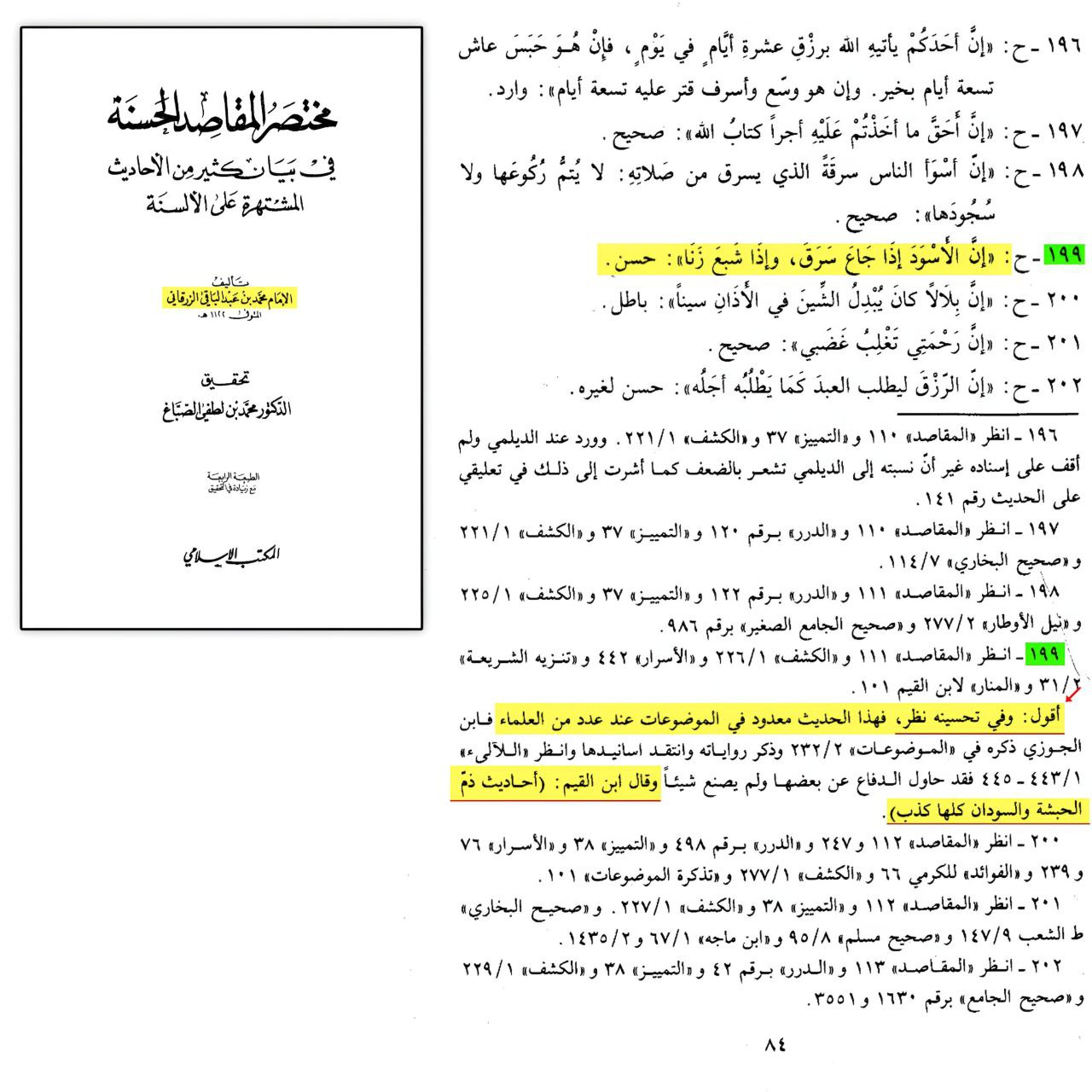
For your info: This Arabic scan is from Mukhtasar al-Maqasid al-Hasanah by Imam al-Zurqani. The highlighted narration is again: “If the black person becomes hungry, he steals, and if he becomes full, he commits zina.” The highlighted commentary states that this hadith is counted among fabricated narrations by a number of scholars. It mentions Ibn al-Jawzi’s inclusion of it in al-Mawdu‘at and Ibn al-Qayyim’s statement that the narrations attacking Abyssinians and Black people are all lies. This is one of the clearest scans in the pack because it directly rejects the narration as unreliable.
DAIF.
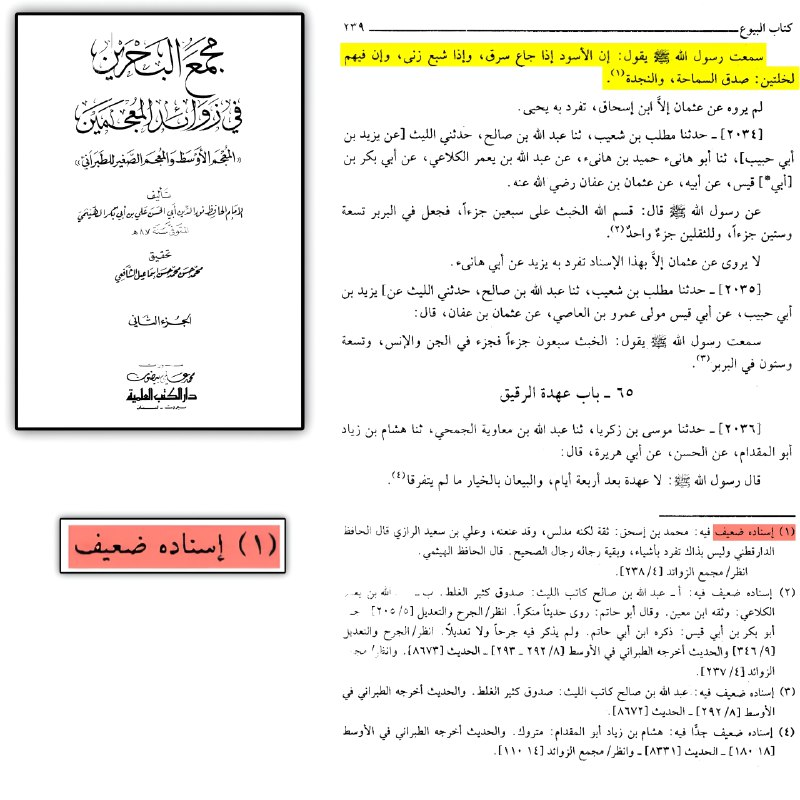
For your info: This Arabic scan is from Mu‘jam al-Tabarani, and the highlighted section contains a narration whose chain is marked weak. The footnote explains that the weakness is due to narrators such as Muhammad ibn Ishaq, who is described as truthful but a mudallis, and Abdullah ibn Salih, who is criticized for poor memory and mistakes. The scan supports the broader point that some narrations used polemically are not reliable because their chains contain defects.
Imam al-Bukhari deemed the narration of Amr ibn Dinar from Awsajah weak.
This is the cover page of al-Kamil fi Du‘afa al-Rijal by Imam Ibn ‘Adi. It identifies the rijal source used for the next scan concerning Awsajah.
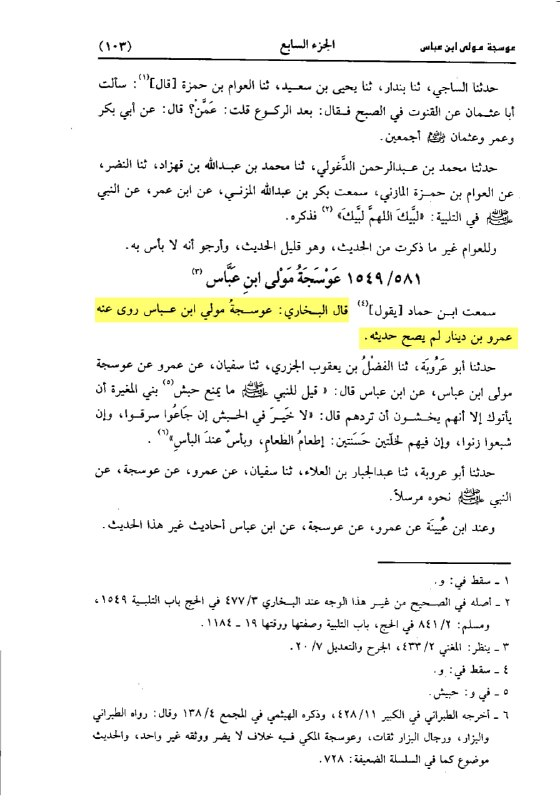
For your info: This Arabic scan is from al-Kamil fi Du‘afa al-Rijal by Ibn ‘Adi. The highlighted section identifies Awsajah, the freed slave of Ibn Abbas, and quotes Al-Bukhari’s criticism that Awsajah’s narration from Amr ibn Dinar is not authentic. The scan also contains a footnote stating that the narration is found through this route and that the report is not established. This is being used as rijal evidence against the authenticity of the anti-Black narration.
The Authentic Islamic Principle on Race
There is no superiority for an Arab over a non-Arab, nor for a non-Arab over an Arab, nor for a red person over a black person, nor for a black person over a red person, except through piety.
Narrated by Jabir ibn Abdullah.
Source: Ghayat al-Maram, p. 313.
Al-Albani ruled it authentic.
Source: Sharh al-Tahawiyyah, p. 361
Hadith ruling: Authentic according to Al-Albani
The weak and fabricated narrations collapse.
The authentic prophetic teaching remains: racial superiority is false, and superiority is only by taqwa.
Who Actually Respected Black People?
The objector tries to use weak narrations to attack Islam, while ignoring the historical role Islam played in giving dignity, religious equality, and spiritual status to Black people.
This is the cover page of al-Da‘wah ila al-Islam: Bahth fi Tarikh Nashr al-‘Aqidah al-Islamiyyah by Sir Thomas W. Arnold. It identifies the historical source used for the following pages about the spread of Islam and its effect among African peoples.
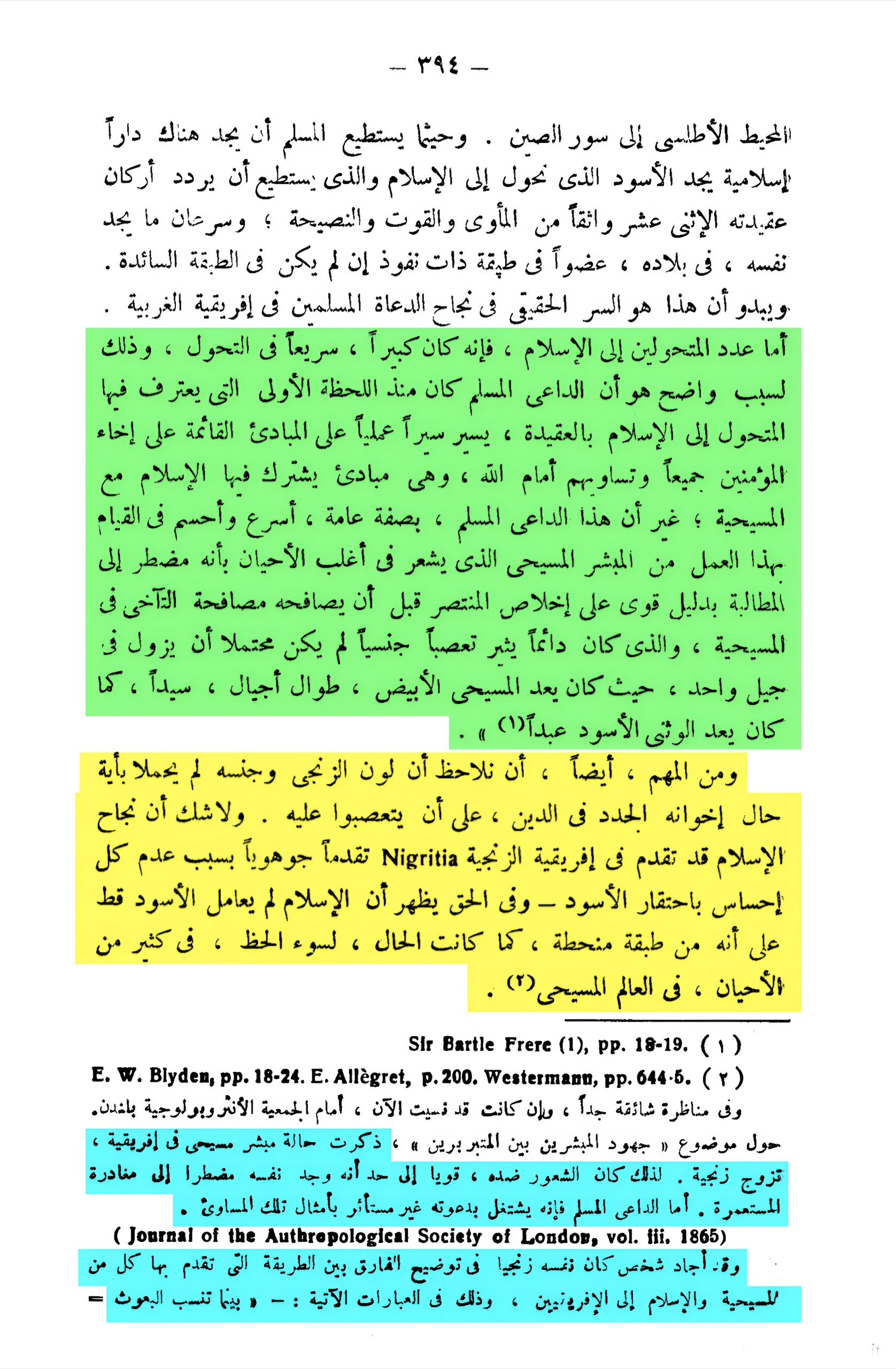
For your info: This Arabic scan from Sir Thomas Arnold’s work discusses the spread of Islam among Black African communities. The highlighted section explains that conversion to Islam was often connected to social and moral transformation, not forced racial humiliation. It mentions that the Black person who entered Islam took on a new religious and social identity, joined the community of believers, and was treated as a brother among Muslims. The scan also notes that Islam did not treat Black people as merely an inferior class, unlike common racial attitudes in other societies. This supports the argument that Islam historically elevated Black converts rather than degrading them.
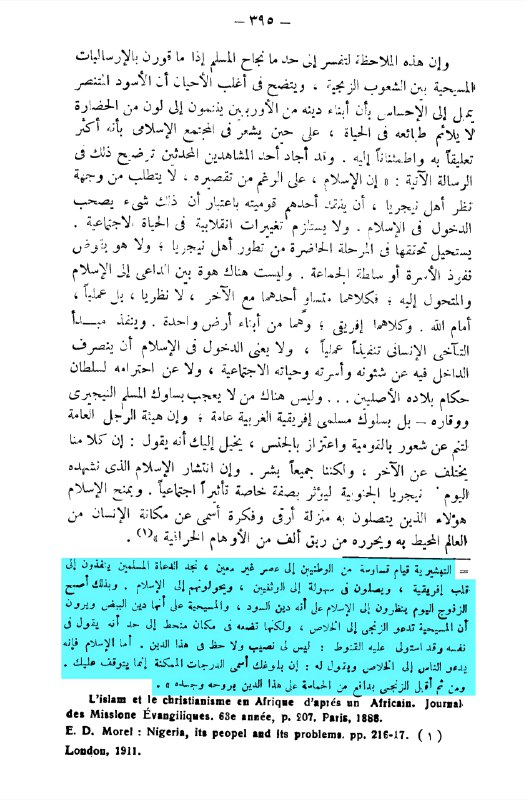
For your info: This Arabic scan continues Arnold’s discussion. The highlighted section explains that when Africans entered Islam, they were not required to abandon their ethnic identity or become socially inferior to Arab Muslims. Rather, the convert stood before Allah as an equal believer with other Muslims. The page contrasts this with missionary environments where race and colonial status often shaped treatment. The scan is used to argue that Islam gave Black African converts a status of religious brotherhood and dignity.

For your info: This Arabic scan states that Islamic narrations and historical reports include examples of Black people attaining religious and social honor. It mentions poetry and statements showing that virtue is not tied to skin color, and that a Black person who enters Islam stands with believers on equal footing. The scan also argues that Islam helped many African peoples move away from practices considered uncivilized by the author and toward a structured religious and moral life. The central point used here is that Islam did not make skin color the measure of human worth.
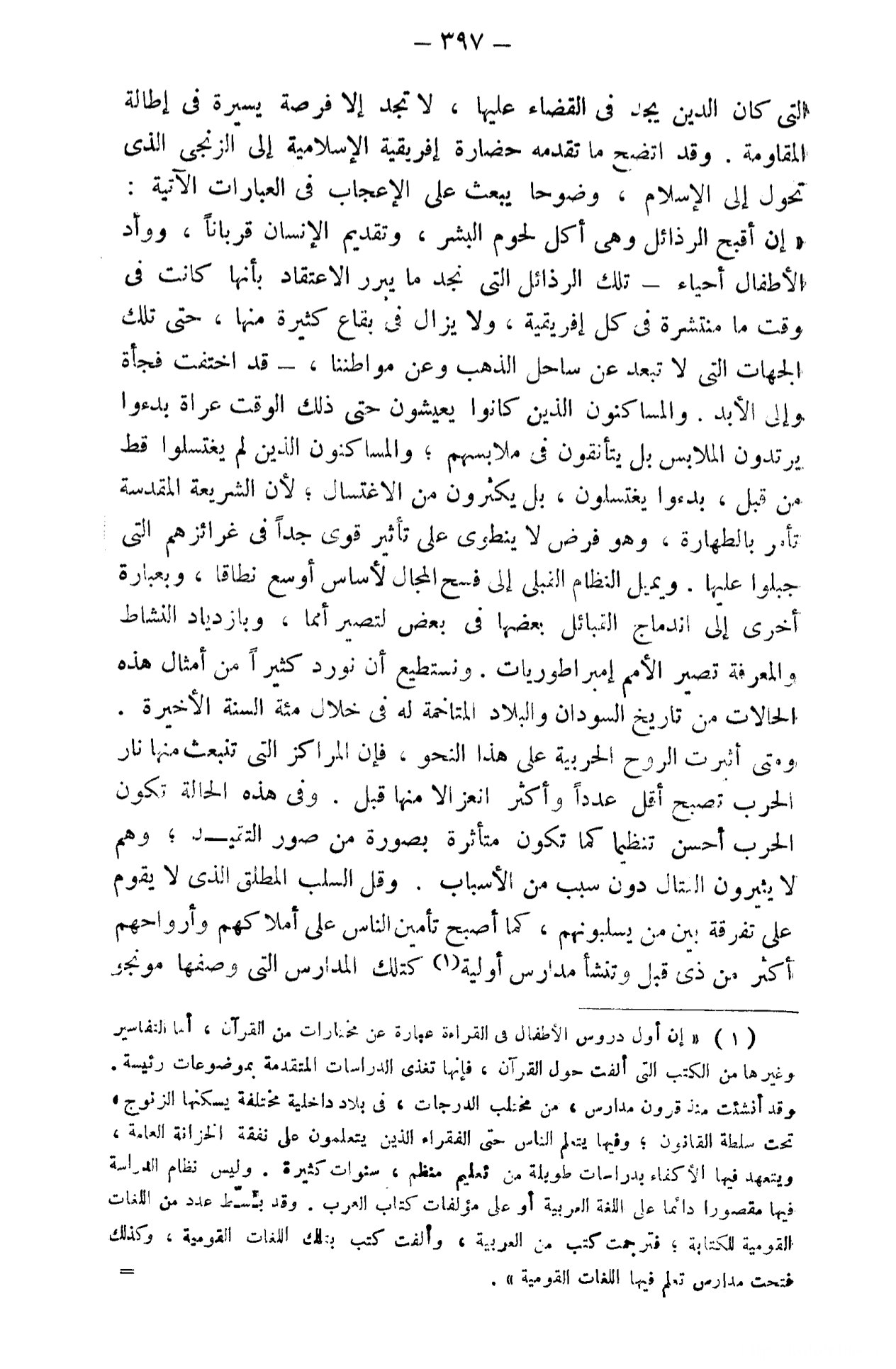
For your info: This Arabic scan describes the civilizational and moral effect of Islam among African peoples. It discusses education, Qur’an study, religious discipline, and social refinement. The scan emphasizes that Islam created a framework in which Africans could participate in a wider religious civilization, not as a racially degraded group, but as members of the Muslim community. It is being used to show that Islam’s historical effect was integration into religious brotherhood, not racial exclusion.
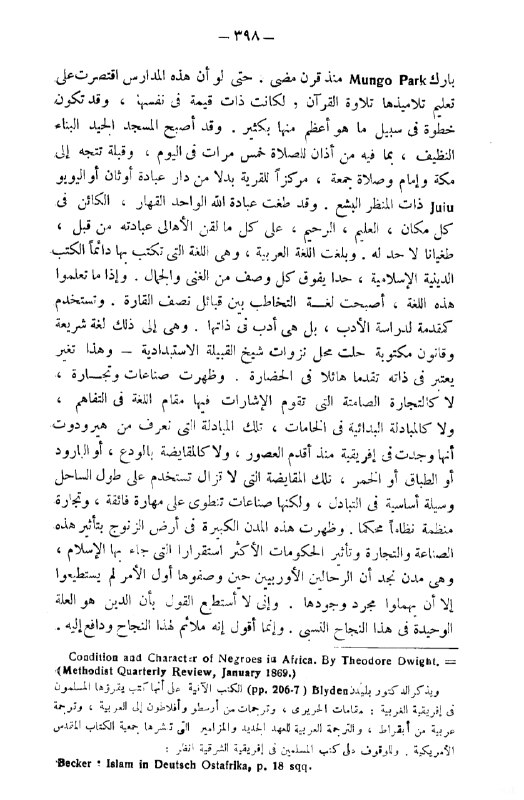
For your info: This Arabic scan continues the historical discussion and speaks about Islam’s impact on African societies through prayer, religious practice, education, literacy, and social order. The page mentions the spread of mosques, Qur’anic learning, and the use of Arabic as a religious and educational language. The point being supported is that Islam gave African Muslims access to a larger intellectual and spiritual civilization, rather than treating them as racially inferior.
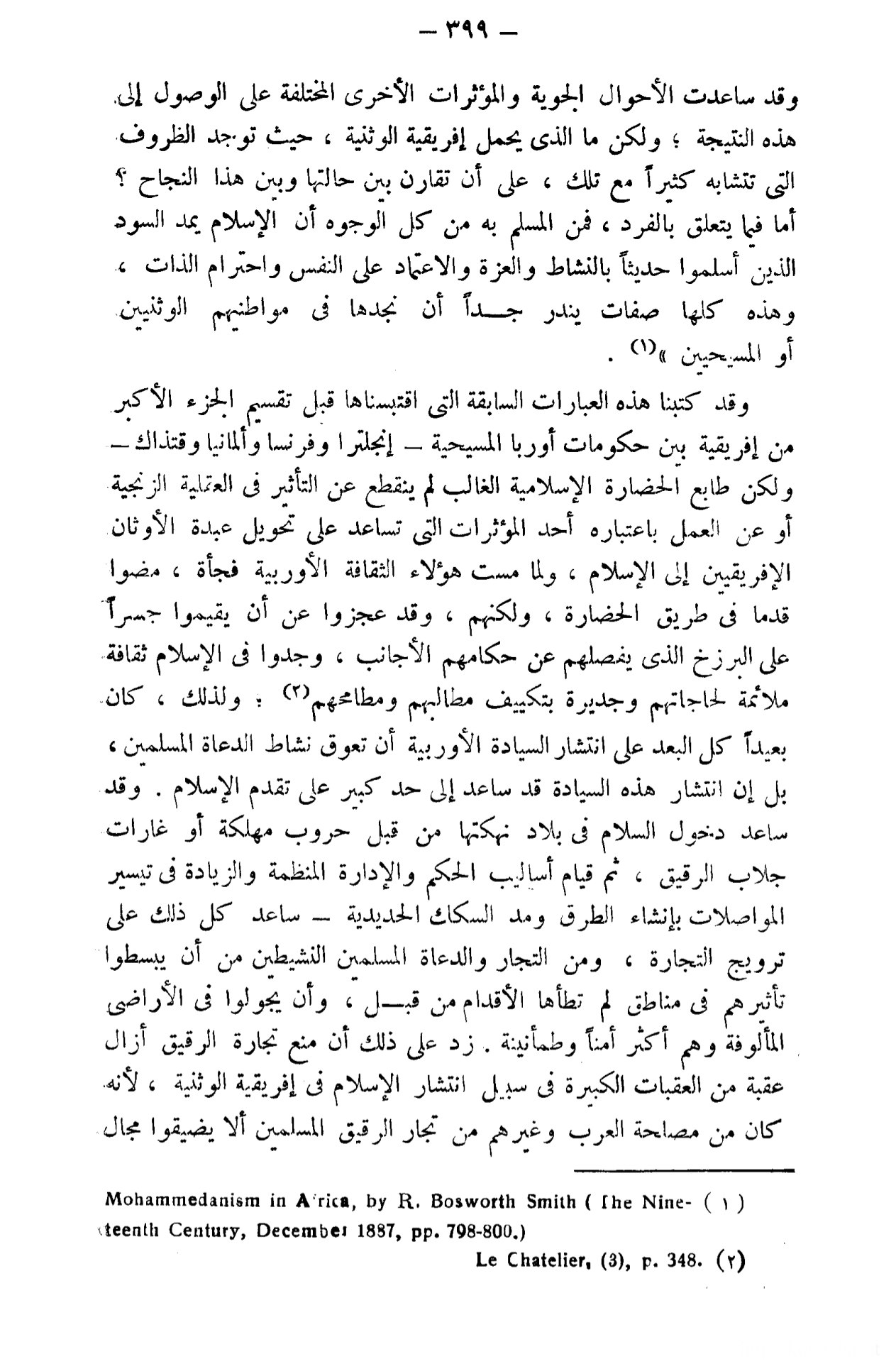
For your info: This Arabic scan explains that Islam spread among African peoples not merely through conquest or political domination, but also through trade, preaching, social contact, and the conduct of Muslim communities. It argues that the spread of Islam was helped by Muslim merchants, scholars, and preachers, and that Black African Muslims found in Islam a culture suited to their needs and social realities. The scan is being used to show that Islam’s influence among Black peoples was not built on racial contempt, but on religious brotherhood, dignity, and community formation.
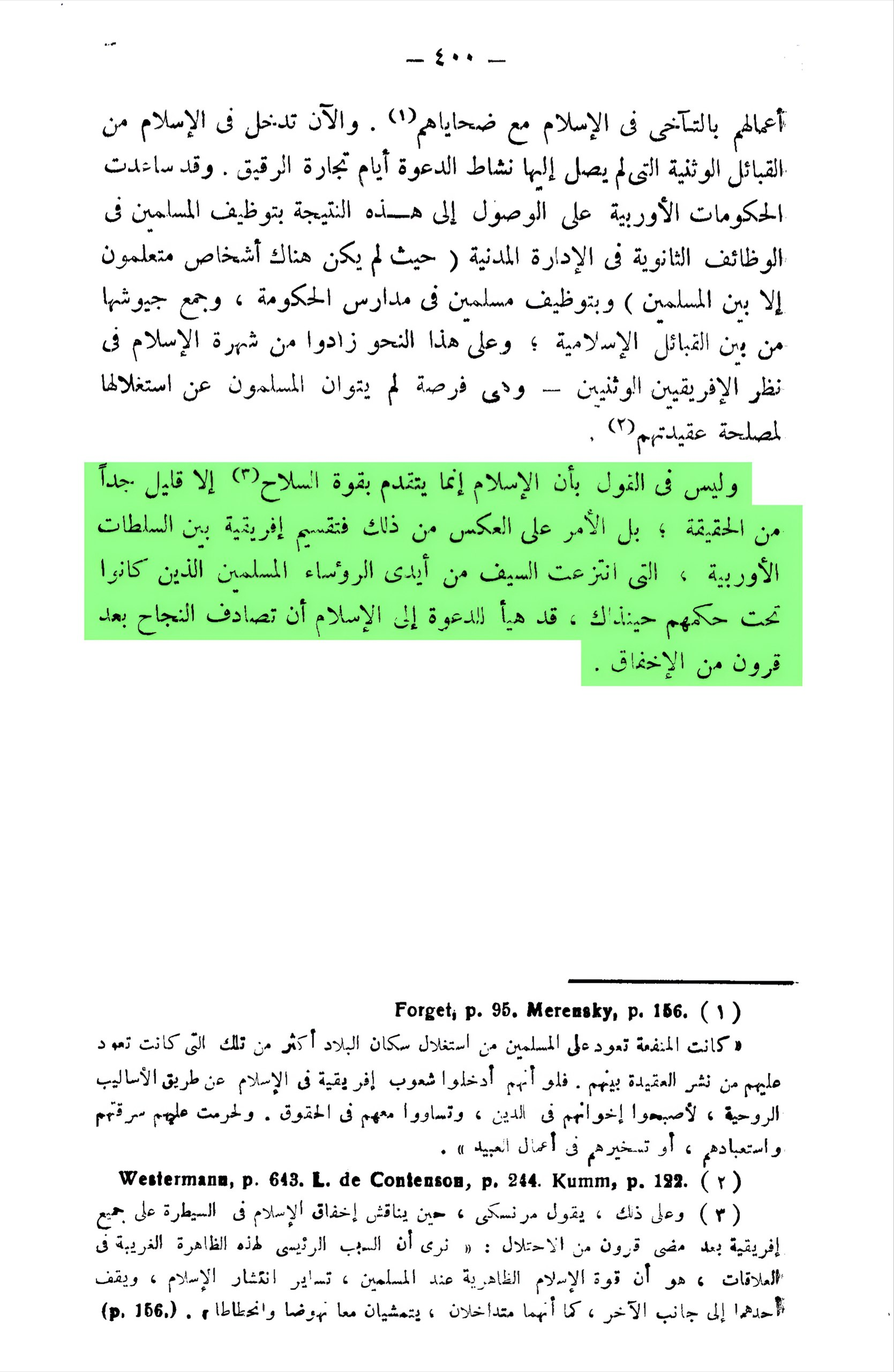
For your info: This Arabic scan concludes the discussion by stating that Islam does not advance through the force of weapons alone, but through sincere acceptance and conviction. The highlighted passage says that the matter is the opposite of what colonial authorities feared: even when European colonial powers removed Muslim rulers from authority, Black Muslims who had lived under them remained firm in Islam and did not turn away from it after decades. This is used to argue that Islam’s hold among Black African Muslims was not racial oppression, but genuine religious attachment.
Final Point
The narrations used to attack Islam regarding Black people are weak or fabricated.
The authentic Islamic texts explicitly reject racial superiority.
The Prophet, peace and blessings be upon him, taught that no Arab is superior to a non-Arab, and no white person is superior to a Black person, except through piety.
Historically, Islam gave Black Muslims religious dignity, brotherhood, and social belonging.
Therefore, the attempt to portray Islam as anti-Black collapses both in hadith criticism and in historical reality.
...ves-in-the-bible-the-christian-double-standard|Slavery and Concubinage: Endorsed by the Bible]]