Refutations

Do Muslims Worship the Kaaba? — The Qibla Accusation Refuted with Christian & Biblical Evidence

10 min read 2081 words

Do Muslims Worship the Kaaba? — The Qibla Doubt Refuted


Introduction

The Accusation Many enemies of Islam — especially Christians — mock Muslims for praying towards the Kaaba, accusing them of being pagans who worship a stone structure. This note exposes the flaws in this accusation, including what direction Christians themselves pray in, and what the Jewish and Christian prophets did in their prayers.

Part One — What Direction Do Christians Pray In?

The Christian Qibla — Facing East Pope Shenouda states in Comparative Theology (p. 146):

“We build our churches facing east, and we pray facing east.”

He continues on the same page:

“Before God created man, He prepared for him the east as a source of light… The rising of the sun is a symbol of the Lord Christ and his light, and the Lord was called ‘the Sun of Righteousness’: ‘The Sun of Righteousness shall arise, with healing in his wings.’” (Malachi 4:2)
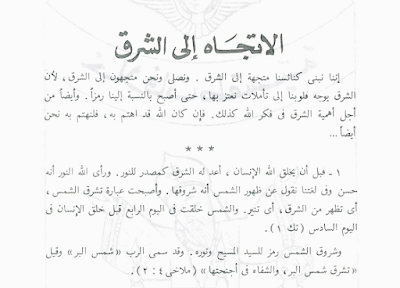
D98AD98AD98A 708620cd8c89e4bd


Praying East = Sun Worship — According to Their Own Scripture

Facing East Was a Major Sin in the Bible The Bible itself condemns praying towards the east as an act of sun worship:

Book of Ezekiel — Chapter 8:

“15 Then he said to me, ‘Son of man, have you seen this? Yet you will see greater abominations than these.’ 16 Then he brought me into the inner court of the house of the Lord. And behold, at the door of the temple of the Lord, between the porch and the altar, were about 25 men, with their backs toward the temple of the Lord and their faces toward the east, and they were bowing down to the sun toward the east. 17 And he said to me, Do you see, O son of man, is it a small thing for the house of Judah to do the abominations which they have done here?… 18 So I also deal with them in anger. My eye does not spare, nor do I forgive. Even if they cry aloud in my ear, I will not hear them.”


Father Tadros Yacoub Malti — Commentary on Ezekiel 8 “The prophet Ezekiel saw twenty-five men standing between the portico and the temple, turning their backs to the temple and facing the sun, worshipping it. Perhaps these men were the high priest and the twenty-four priests, heads of the twenty-four Jewish priestly divisions… They turned their backs on Him, becoming a barrier and an obstacle to knowing God. Spiritual leadership had deviated at the highest level. This is what aroused God’s wrath against the Jews.”

3 c3dfdb360421ae43
3 c3dfdb360421ae43

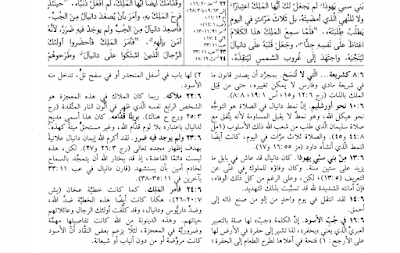
Father Antonius Fikry — Commentary on Ezekiel 8 “There were 25 men, most likely priests, who were standing between the portico and the altar where the holiest religious rites were performed. They were worshipping the sun, facing east — that is, with their backs to the temple, because the Jewish temple faced west, not east.”

4 a1578bdc91c163e9
4 a1578bdc91c163e9

The Conclusion Prostrating towards the east was a sign of sun worship in ancient times — one of the greatest sins committed by the Children of Israel. This is the same act that Christians perform today.
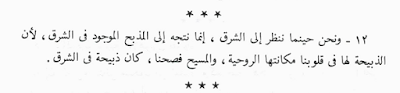
Pope Shenouda — Comparative Theology (p. 148) “When we look to the East, we are turning to the altar in the East, because the sacrifice has a spiritual place in our hearts.”

5 8c9694b556b17288
5 8c9694b556b17288


Christians Also Pray Towards the Cross

Praying Before the Cross Father Matta El Meskeen states in The Holy Cross (p. 9):

“And here is our church that still maintains the hymns and praises that were offered to ‘the wood of the Holy Cross,’ but now it offers them before any cross.”

6 73c6109c1002dea3
6 73c6109c1002dea3


Part Two — The Jewish and Christian Prophets Prayed Towards the Temple

Praying Towards a Direction Is an Ancient Prophetic Practice The Bible itself records that the prophets prayed and prostrated towards the Temple — and God was pleased with that.

Prophet Solomon ﷺ

1 Kings — Chapter 8 “44 If your people go out to fight against their enemy on the way that you send them, and they pray to the Lord toward the city that you have chosen and the house that I have built for your name, 45 So hear from heaven their prayer and their supplication and fulfill their judgment.”
1 Kings — Chapter 9 (God’s Response) “3 And the Lord said to him, ‘I have heard your prayer and your supplication which you have made before me. I have sanctified this house which you have built to put my name there forever; my eyes and my heart will be there forever.’”

Prophet Daniel ﷺ

The Book of Daniel — Chapter 6 “10 When Daniel learned that the writing was signed, he went to his house, and his windows were open in his upper room toward Jerusalem. He knelt down three times a day and prayed and gave thanks before his God, as he had done before.”
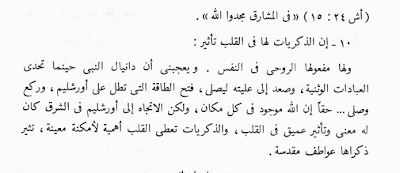
Pope Shenouda — Comparative Theology (p. 148) “I like that when the Prophet Daniel challenged pagan worship and went up to his upper room to pray, he opened the window overlooking Jerusalem, knelt down and prayed… God is truly present everywhere, but the direction towards Jerusalem in the east had a profound meaning and impact on the heart.”

8 1ff3a76385066f68
8 1ff3a76385066f68

Father Tadros Yacoub Malati — Commentary on Daniel 6 “Furthermore, he prayed according to God’s command, and according to the words of Solomon, who urged the people to pray facing the temple. We are required to bow down to God three times a day.”

9 e55070e2ee01f6ea
9 e55070e2ee01f6ea

Dr. Reverend John MacArthur — Interpretation of the Holy Bible (p. 1349) “Towards Jerusalem: Daniel’s pattern of prayer is to turn towards the temple of God, and it is an uncompromising pattern because it agrees with the prayer of Solomon, who asked that method from God’s people.”

11 16c82c104c32f9f7
11 16c82c104c32f9f7

Al-Khawlaji — The Three Masses (pp. 35–36) “And I, according to the multitude of your mercy, will enter your house and bow down toward your holy temple. I will sing praises to you before the angels and bow down toward your holy temple.”

13 b755694cf459fbe3
13 b755694cf459fbe3

The Question That Must Be Asked After all of this — why do Christians not accuse themselves of paganism? And why do they not accuse their own prophets of paganism despite their prayers towards the Temple?

Part Three — The Islamic Response

First — Muslims Do Not Worship the Kaaba

The Kaaba Is a Qibla — Not a God Muslims treat the Kaaba as a direction of prayer that unifies Muslims worldwide toward a single central point — rather than praying in random directions. We intend to worship Allah alone when we bow, not the Kaaba itself.
The Atheist’s Logical Trap — Turned Back on Them If simply kneeling towards something constitutes worship, then by that logic:
  • Kneeling in front of a car to check the tires = worshipping the car
  • Kneeling in front of a person to tie your shoelaces = worshipping that person
  • Kneeling under a table to find a pen = worshipping the table

The atheist will say: “But we don’t intend to worship those things.”

The reply: Neither do we. We intend to worship Allah alone — and intention is what determines worship.


Second — Worshipping the Kaaba Is Explicitly Kufr in Islam

Islamic Law Is Clear Worshipping the Kaaba itself is kufr (disbelief) in Islam — not just discouraged, but a nullifier of Islam.
Imam Alaa al-Din al-Haskafi — Al-Durr al-Mukhtar (p. 61) “Even if he prostrated to the Kaaba itself, he would be committing blasphemy.”
Imam Ibn Abidin — Al-Durr al-Mukhtar and Ibn Abidin’s Commentary (Vol. 1, p. 427) “Even if he prostrated to the Kaaba itself, he would be an unbeliever.”
Sheikh Abd al-Rahman ibn Qasim — Hashiyat al-Rawd al-Murbi’ (Vol. 4, p. 246) “It is forbidden to use names such as (Abd al-Kaaba), (Abd al-Nabi), and (Abd al-Masih).”
Sheikh Ibn Baz — Fatwas of Sheikh Ibn Baz (Vol. 28, p. 377) “It is obligatory to change names such as (Abd al-Nabi) or (Abd al-Kaaba) to (Abdullah) or (Abd al-Rahman) or legitimate Islamic names. No one has the right to worship other than Allah.”
Historical Evidence Sheikh Bakr Abu Zaid mentions in Dictionary of Verbal Prohibitions (p. 366) that Abd al-Rahman ibn Abi Bakr’s name in the pre-Islamic era was (Abd al-Kaaba) — and the Prophet ﷺ changed it to Abd al-Rahman.
Hadith — Narrated by al-Tirmidhi (Oaths and Vows) Ibn Umar heard a man say: “No, by the Kaaba.” Ibn Umar said to him: “Do not swear by anyone other than Allah, for I heard the Messenger of Allah ﷺ say: ‘Whoever swears by anyone other than Allah has committed an act of disbelief or polytheism.’”
Imam al-Nawawi in Riyadh al-Salihin He devoted a full chapter entitled: “The prohibition of swearing by a created being such as the Prophet, the Kaaba, the angels, the heavens, the fathers, life, the soul, and the head…”

Third — Muslims First Prayed Towards Jerusalem

The Qibla Was Changed by Divine Command The first Muslims prayed towards Jerusalem in Palestine. Then Allah revealed a command to change the direction of prayer to the Kaaba in Mecca.

If Muslims had been worshipping the Kaaba, they would have prayed facing it from the very beginning. The change of qibla proves that the direction is a divine instruction — not an object of worship.


Fourth — Even If the Kaaba Were Destroyed, We Would Still Pray in That Direction

The Direction — Not the Structure Even if the Kaaba were destroyed stone by stone, Muslims would still pray in that direction. This demonstrates beyond doubt that what we face is a direction — not a deity.

Fifth — The Kaaba Is the Inheritance of Prophet Ibrahim ﷺ — Not the Pagan Quraysh

The Origin of the Kaaba Some claim Muslims inherited the Kaaba ritual from the pagan Quraysh. This is false.
Surah Al-Baqarah (2:127) “And when Abraham and Ishmael were raising the foundations of the House, saying, ‘Our Lord, accept from us. Indeed, You are the Hearing, the Knowing.’”
Surah Al-Hajj (22:26–27) “And remember when We assigned to Abraham the site of the House, saying, ‘Do not associate with Me anything and purify My House for those who go around it and those who stand up and those who bow and prostrate.’ And proclaim to the people the Hajj; they will come to you on foot and on every lean camel from every distant pass.”
The True History Prophet Ibrahim ﷺ called the people of the Arabian Peninsula to worship Allah alone. Monotheism spread, but over centuries paganism crept in — until Prophet Muhammad ﷺ came and restored monotheism and destroyed the idols the Quraysh had placed around the Kaaba.

The Kaaba is not a pagan inheritance from the Quraysh — it is our inheritance from Prophet Ibrahim ﷺ, whom Allah commanded to build it.


Conclusion

Summary — The Doubt Collapses

1 — Christians have a qibla too: They pray facing east — which their own scripture (Ezekiel 8) condemns as sun worship. They also pray before the cross.

2 — The prophets prayed towards the Temple: Solomon urged it, Daniel practiced it, and God approved it. Facing a direction in prayer is an ancient prophetic tradition.

3 — Muslims do not worship the Kaaba: It is a qibla — a direction. Worshipping the Kaaba is explicitly kufr in Islam. Swearing by it is forbidden. Being named after it is forbidden.

4 — Muslims first prayed towards Jerusalem: The qibla was changed by divine command — proof that the direction is obedience to Allah, not worship of a building.

5 — The Kaaba was built by Ibrahim ﷺ: It is not a pagan inheritance — it is a prophetic one, purified by Muhammad ﷺ when he destroyed the idols placed around it.

Circumambulating the Kaaba Is Paganism? — The Bible Answers

...uilt by Ibrahim ﷺ. "You hypocrite! First remove the plank from your own eye." — Matthew 7:5 [[[posts/do-muslims-worship-the-kaaba-the-qibla-accusation-refuted-with-christian-biblical-evidence|Do Muslims Worship the Kaaba? — The Qibla Accusation Refuted with]]

Referenced in this post